CN110977974B - Admittance control method, device and system for avoiding singular position type of robot - Google Patents
Admittance control method, device and system for avoiding singular position type of robot Download PDFInfo
- Publication number
- CN110977974B CN110977974B CN201911266517.4A CN201911266517A CN110977974B CN 110977974 B CN110977974 B CN 110977974B CN 201911266517 A CN201911266517 A CN 201911266517A CN 110977974 B CN110977974 B CN 110977974B
- Authority
- CN
- China
- Prior art keywords
- robot
- target
- performance index
- determining
- joint angle
- Prior art date
- Legal status (The legal status is an assumption and is not a legal conclusion. Google has not performed a legal analysis and makes no representation as to the accuracy of the status listed.)
- Active
Links
Images


Classifications
-
- B—PERFORMING OPERATIONS; TRANSPORTING
- B25—HAND TOOLS; PORTABLE POWER-DRIVEN TOOLS; MANIPULATORS
- B25J—MANIPULATORS; CHAMBERS PROVIDED WITH MANIPULATION DEVICES
- B25J9/00—Program-controlled manipulators
- B25J9/16—Program controls
- B25J9/1602—Program controls characterised by the control system, structure, architecture
Landscapes
- Engineering & Computer Science (AREA)
- Automation & Control Theory (AREA)
- Robotics (AREA)
- Mechanical Engineering (AREA)
- Manipulator (AREA)
Abstract
本发明实施例提供了一种机器人规避奇异位型的导纳控制方法、装置及系统,该导纳控制方法首先根据目标机器人的当前关节角,确定所述目标机器人的性能指标,所述性能指标至少包括平移性能指标以及旋转性能指标。即实现了在笛卡尔空间平移和旋转运动的解耦。然后基于所述平移性能指标以及所述旋转性能指标,确定虚拟约束的形变量以及刚度向量。基于所述虚拟约束的形变量以及所述刚度向量,确定目标虚拟约束力。基于所述目标虚拟约束力,确定出目标关节角。可见,本方案采用机器人雅克比矩阵最小奇异值衡量机器人性能指标,判断机器人是否接近奇异位型,由于本方案中性能指标的梯度方差小,能够避免在人机交互过程中虚拟约束力施加瞬间产生抖动。

Embodiments of the present invention provide an admittance control method, device and system for a robot to avoid singular positions. The admittance control method first determines the performance index of the target robot according to the current joint angle of the target robot, and the performance index At least translation performance indicators and rotation performance indicators are included. That is, the decoupling of translational and rotational motions in Cartesian space is realized. Then, based on the translational performance index and the rotational performance index, a deformation amount and a stiffness vector of the virtual constraint are determined. Based on the deformation amount of the virtual constraint and the stiffness vector, a target virtual constraint force is determined. Based on the target virtual binding force, a target joint angle is determined. It can be seen that this scheme uses the minimum singular value of the robot Jacobian matrix to measure the performance index of the robot, and judges whether the robot is close to the singular position type. Because the gradient variance of the performance index in this scheme is small, it can avoid the instantaneous generation of virtual restraint force in the process of human-computer interaction. jitter.
Description
技术领域technical field
本发明涉及机器人控制技术领域,具体涉及一种机器人规避奇异位型的导纳控制方法、装置及系统。The invention relates to the technical field of robot control, in particular to a method, device and system for an admittance control of a robot avoiding singular position type.
背景技术Background technique
随着智能制造的发展,协作机器人在辅助工业操作、协作装配、家务劳动、娱乐、医疗等领域都得到了广泛应用。由于人类和机器人需要在同一工作空间内紧密合作,因此在人机交互过程中的安全性与可靠性至关重要。为保证柔顺的人机交互,通常采用机器人导纳控制来控制机器人运动。然而,在人机交互过程中,机器人不可避免的会出现奇异位型,当机器人接近奇异位型时,会导致机器人运动不稳定,甚至停机,严重影响到人机交互的体验甚至发生危险,因此在人机交互过程中实时的对奇异位型进行规避至关重要。With the development of intelligent manufacturing, collaborative robots have been widely used in auxiliary industrial operations, collaborative assembly, housework, entertainment, medical care and other fields. Since humans and robots need to work closely together in the same workspace, safety and reliability during human-robot interaction are critical. In order to ensure the smooth human-machine interaction, the robot admittance control is usually used to control the robot motion. However, in the process of human-computer interaction, the robot will inevitably have a singular position. When the robot is close to the singular position, it will cause the robot to move unstable and even stop, which seriously affects the experience of human-computer interaction and even is dangerous. Therefore, It is very important to avoid singularity in real time in the process of human-computer interaction.
目前,在人机交互过程中常用的奇异位型的规避方法主要有:At present, the commonly used methods to avoid singularity types in the process of human-computer interaction are as follows:
1:当机器人运动到奇异位型附近时,则立即停止机器人运动。1: When the robot moves to the vicinity of the singular position, the robot movement will be stopped immediately.
2:在人机交互过程中,采用可操作度来衡量是否奇异,如果临近奇异位型,则在机器人末端增加虚拟约束力来规避奇异。2: In the process of human-computer interaction, the degree of operability is used to measure whether it is singular. If the singularity is approached, a virtual constraint is added at the end of the robot to avoid singularity.
发明人发现,方式1操作简单,但是极大的影响了人机交互的体验,并且需要重新启动机器人。方式2虽然可以让机器人无法到达奇异位型,但是采用可操作度来判断机器人是否奇异,存在较大方差,会导致人机交互过程中不稳定,会出现在施加虚拟约束力的瞬间由于加速度不连续导致的抖动;另外,该方法没有对平移和旋转运动进行解耦,从而导致平移和旋转运动耦合在一起,无法单独控制,影响用户体验。The inventor found that the operation of
因此,如何提供一种机器人规避奇异位型的导纳控制方法,避免在人机交互过程中虚拟约束力施加瞬间产生抖动,是本领域技术人员亟待解决的一大技术难题。Therefore, how to provide an admittance control method for a robot to avoid the singular position type and avoid jitter when the virtual constraint force is applied during the human-computer interaction process is a major technical problem to be solved urgently by those skilled in the art.
发明内容SUMMARY OF THE INVENTION
有鉴于此,本发明实施例提供了一种机器人规避奇异位型的导纳控制方法,能够避免在人机交互过程中虚拟约束力施加瞬间产生抖动,且能实现在笛卡尔空间平移和旋转运动的解耦。In view of this, the embodiment of the present invention provides an admittance control method for a robot to avoid a singular position type, which can avoid jitter when the virtual constraint force is applied during the human-computer interaction process, and can realize translation and rotation in Cartesian space. decoupling.
为实现上述目的,本发明实施例提供如下技术方案:To achieve the above purpose, the embodiments of the present invention provide the following technical solutions:
一种机器人规避奇异位型的导纳控制方法,包括:An admittance control method for a robot to avoid singular position type, comprising:
根据目标机器人的当前关节角,确定所述目标机器人的性能指标,所述性能指标至少包括平移性能指标以及旋转性能指标;According to the current joint angle of the target robot, the performance index of the target robot is determined, and the performance index at least includes a translation performance index and a rotation performance index;
基于所述平移性能指标以及所述旋转性能指标,确定虚拟约束的形变量以及刚度向量;based on the translational performance index and the rotational performance index, determining a deformation amount and a stiffness vector of the virtual constraint;
基于所述虚拟约束的形变量以及所述刚度向量,确定目标虚拟约束力;determining a target virtual constraint force based on the deformation amount of the virtual constraint and the stiffness vector;
基于所述目标虚拟约束力,确定出目标关节角。Based on the target virtual binding force, a target joint angle is determined.
可选的,所述根据目标机器人的当前关节角,确定所述目标机器人的性能指标,包括:Optionally, determining the performance index of the target robot according to the current joint angle of the target robot, including:
根据所述目标机器人的当前关节角,确定所述目标机器人的关节空间速度到所述目标机器人的末端笛卡尔空间速度的映射矩阵,所述映射矩阵包括平移矩阵以及旋转矩阵;According to the current joint angle of the target robot, a mapping matrix from the joint space velocity of the target robot to the Cartesian space velocity at the end of the target robot is determined, and the mapping matrix includes a translation matrix and a rotation matrix;
确定所述平移矩阵的最小奇异值为所述平移性能指标;determining that the minimum singular value of the translation matrix is the translation performance index;
确定所述旋转矩阵的最小奇异值为所述旋转性能指标。The minimum singular value of the rotation matrix is determined to be the rotation performance index.
可选的,所述根据所述目标机器人的当前关节角,确定所述目标机器人的关节空间速度到所述目标机器人的末端笛卡尔空间速度的映射矩阵,包括:Optionally, determining a mapping matrix from the joint space velocity of the target robot to the Cartesian space velocity at the end of the target robot according to the current joint angle of the target robot, including:
将所述目标机器人的当前关节角代入公式


可选的,所述基于所述平移性能指标以及所述旋转性能指标,确定虚拟约束的形变量以及刚度向量,包括:Optionally, determining the deformation variable and stiffness vector of the virtual constraint based on the translation performance index and the rotation performance index, including:
判断所述性能指标是否大于第一阈值,如果是,确定所述虚拟约束的形变量以及所述刚度向量均为第一预设值;Determine whether the performance index is greater than a first threshold, and if so, determine that the deformation variable of the virtual constraint and the stiffness vector are both first preset values;
如果否,根据公式
可选的,所述计算所述目标机器人移动预设位移后的性能指标梯度,包括:Optionally, the calculating the gradient of the performance index after the preset displacement of the target robot moves, including:
获取所述目标机器人移动预设位移后的第一关节角;obtaining the first joint angle of the target robot after moving the preset displacement;
确定所述第一关节角对应的性能指标;determining the performance index corresponding to the first joint angle;
基于所述第一关节角对应的性能指标,确定出所述目标机器人移动预设位移后的性能指标梯度。Based on the performance index corresponding to the first joint angle, the gradient of the performance index after the target robot moves with the preset displacement is determined.
可选的,所述确定所述性能指标梯度中每个方向梯度的最大值为所述刚度向量,包括:Optionally, the determining that the maximum value of each direction gradient in the performance index gradient is the stiffness vector, including:
根据公式

可选的,所述基于所述虚拟约束的形变量以及所述刚度向量,确定目标虚拟约束力,包括:Optionally, determining the target virtual constraint force based on the deformation amount of the virtual constraint and the stiffness vector, including:
根据公式

可选的,所述基于所述目标虚拟约束力,确定出目标关节角,包括:Optionally, determining the target joint angle based on the target virtual binding force includes:
将所述目标虚拟约束力代入动力学模型
基于当前速度,根据公式

一种机器人规避奇异位型的导纳控制装置,包括:An admittance control device for robot avoiding singular position type, comprising:
第一确定模块,用于根据目标机器人的当前关节角,确定所述目标机器人的性能指标,所述性能指标至少包括平移性能指标以及旋转性能指标;a first determination module, configured to determine a performance index of the target robot according to the current joint angle of the target robot, where the performance index at least includes a translation performance index and a rotation performance index;
第二确定模块,用于基于所述平移性能指标以及所述旋转性能指标,确定虚拟约束的形变量以及刚度向量;a second determination module, configured to determine the deformation variable and the stiffness vector of the virtual constraint based on the translation performance index and the rotation performance index;
第三确定模块,用于基于所述虚拟约束的形变量以及所述刚度向量,确定目标虚拟约束力;a third determination module, configured to determine a target virtual constraint force based on the deformation amount of the virtual constraint and the stiffness vector;
第四确定模块,用于基于所述目标虚拟约束力,确定出目标关节角。The fourth determination module is configured to determine the target joint angle based on the target virtual constraint force.
一种机器人规避奇异位型的导纳控制系统,包括上述的机器人规避奇异位型的控制装置。An admittance control system for robot avoiding singular position type, including the above control device for robot avoiding singular position type.
基于上述技术方案,本发明实施例提供了一种机器人规避奇异位型的导纳控制方法、装置及系统,该导纳控制方法首先根据目标机器人的当前关节角,确定所述目标机器人的性能指标,所述性能指标至少包括平移性能指标以及旋转性能指标。即实现了在笛卡尔空间平移和旋转运动的解耦。然后基于所述平移性能指标以及所述旋转性能指标,确定虚拟约束的形变量以及刚度向量。基于所述虚拟约束的形变量以及所述刚度向量,确定目标虚拟约束力。基于所述目标虚拟约束力,确定出目标关节角。可见,本方案采用机器人雅克比矩阵最小奇异值衡量机器人性能指标,判断机器人是否接近奇异位型,由于本方案中性能指标的梯度方差小,能够避免在人机交互过程中虚拟约束力施加瞬间产生抖动。Based on the above technical solutions, the embodiments of the present invention provide an admittance control method, device and system for a robot to avoid singular positions. The admittance control method first determines the performance index of the target robot according to the current joint angle of the target robot , the performance indicators include at least translation performance indicators and rotation performance indicators. That is, the decoupling of translational and rotational motions in Cartesian space is realized. Then, based on the translational performance index and the rotational performance index, a deformation amount and a stiffness vector of the virtual constraint are determined. Based on the deformation amount of the virtual constraint and the stiffness vector, a target virtual constraint force is determined. Based on the target virtual binding force, a target joint angle is determined. It can be seen that this scheme uses the minimum singular value of the robot Jacobian matrix to measure the performance index of the robot, and judges whether the robot is close to the singular position type. Because the gradient variance of the performance index in this scheme is small, it can avoid the instantaneous generation of virtual restraint force in the process of human-computer interaction. jitter.
附图说明Description of drawings
为了更清楚地说明本发明实施例或现有技术中的技术方案,下面将对实施例或现有技术描述中所需要使用的附图作简单地介绍,显而易见地,下面描述中的附图仅仅是本发明的实施例,对于本领域普通技术人员来讲,在不付出创造性劳动的前提下,还可以根据提供的附图获得其他的附图。In order to explain the embodiments of the present invention or the technical solutions in the prior art more clearly, the following briefly introduces the accompanying drawings that need to be used in the description of the embodiments or the prior art. Obviously, the accompanying drawings in the following description are only It is an embodiment of the present invention. For those of ordinary skill in the art, other drawings can also be obtained according to the provided drawings without creative work.
图1为本发明实施例提供的一种机器人规避奇异位型的导纳控制方法的流程示意图;FIG. 1 is a schematic flowchart of an admittance control method for a robot to avoid a singular position type provided by an embodiment of the present invention;
图2为本发明实施例提供的一种机器人规避奇异位型的导纳控制方法的又一流程示意图;FIG. 2 is another schematic flowchart of a method for controlling the admittance of a robot to avoid a singular position type provided by an embodiment of the present invention;
图3为本发明实施例提供的一种机器人规避奇异位型的导纳控制方法的又一流程示意图;FIG. 3 is another schematic flowchart of a method for controlling an admittance of a robot to avoid a singular position type provided by an embodiment of the present invention;
图4为本发明实施例提供的一种机器人规避奇异位型的导纳控制方法的又一流程示意图;FIG. 4 is another schematic flowchart of a method for controlling an admittance of a robot to avoid a singular position type provided by an embodiment of the present invention;
图5为本发明实施例提供的一种机器人规避奇异位型的导纳控制方法的又一流程示意图;FIG. 5 is another schematic flowchart of a method for controlling an admittance of a robot to avoid a singular position type provided by an embodiment of the present invention;
图6为本发明实施例提供的一种机器人规避奇异位型的导纳控制方法的又一流程示意图;FIG. 6 is another schematic flowchart of a method for controlling an admittance of a robot to avoid a singular position type provided by an embodiment of the present invention;
图7为本发明实施例提供的一种机器人规避奇异位型的导纳控制方法的又一流程示意图;FIG. 7 is another schematic flowchart of a method for controlling an admittance of a robot to avoid a singular position type provided by an embodiment of the present invention;
图8为本发明实施例提供的一种机器人规避奇异位型的导纳控制方法的又一流程示意图;FIG. 8 is another schematic flowchart of a method for controlling an admittance of a robot to avoid a singular position type provided by an embodiment of the present invention;
图9为本发明实施例提供的一种机器人规避奇异位型的导纳控制方法的又一流程图;FIG. 9 is another flowchart of a method for controlling an admittance of a robot to avoid a singular position type provided by an embodiment of the present invention;
图10为本发明基于机器人雅克比矩阵最小奇异值,实时规避奇异位型流程图;10 is a flow chart of the present invention, based on the minimum singular value of the robot Jacobian matrix, to avoid singularity in real time;
图11为本发明计算虚拟约束力流程图;Fig. 11 is the flow chart of calculating virtual binding force of the present invention;
图12为本发明实施例提供的一种机器人规避奇异位型的导纳控制装置的结构示意图;12 is a schematic structural diagram of an admittance control device for a robot avoiding singular position type provided by an embodiment of the present invention;
图13为本发明实施例提供的一种机器人规避奇异位型的导纳控制系统的硬件图。FIG. 13 is a hardware diagram of an admittance control system for a robot avoiding singular positions according to an embodiment of the present invention.
具体实施方式Detailed ways
请参阅图1,图1为本发明实施例提供的一种机器人规避奇异位型的导纳控制方法的流程示意图,该导纳控制方法包括步骤:Please refer to FIG. 1. FIG. 1 is a schematic flowchart of an admittance control method for a robot to avoid a singular position type provided by an embodiment of the present invention. The admittance control method includes steps:
S101、根据目标机器人的当前关节角,确定所述目标机器人的性能指标。S101. Determine the performance index of the target robot according to the current joint angle of the target robot.
其中,所述性能指标至少包括平移性能指标以及旋转性能指标。具体的,如图2所示,本发明实施例还提供了一种根据目标机器人的当前关节角,确定所述目标机器人的性能指标的具体实现方式,包括步骤:Wherein, the performance indicators include at least translation performance indicators and rotation performance indicators. Specifically, as shown in FIG. 2 , an embodiment of the present invention also provides a specific implementation method for determining the performance index of the target robot according to the current joint angle of the target robot, including the steps:
S201、根据所述目标机器人的当前关节角,确定所述目标机器人的关节空间速度到所述目标机器人的末端笛卡尔空间速度的映射矩阵,所述映射矩阵包括平移矩阵以及旋转矩阵;S201, according to the current joint angle of the target robot, determine a mapping matrix from the joint space velocity of the target robot to the Cartesian space velocity at the end of the target robot, where the mapping matrix includes a translation matrix and a rotation matrix;
S202、确定所述平移矩阵的最小奇异值为所述平移性能指标;S202, determining that the minimum singular value of the translation matrix is the translation performance index;
S203、确定所述旋转矩阵的最小奇异值为所述旋转性能指标。S203. Determine the minimum singular value of the rotation matrix for the rotation performance index.
结合上述实施例,如图3所示,本发明实施例还提供了一种所述根据所述目标机器人的当前关节角,确定所述目标机器人的关节空间速度到所述目标机器人的末端笛卡尔空间速度的映射矩阵的具体实现步骤,包括:In combination with the above embodiments, as shown in FIG. 3 , an embodiment of the present invention further provides a Cartesian method of determining the joint space velocity of the target robot to the end of the target robot according to the current joint angle of the target robot The specific implementation steps of the spatial velocity mapping matrix include:
S301、将所述目标机器人的当前关节角代入公式


S102、基于所述平移性能指标以及所述旋转性能指标,确定虚拟约束的形变量以及刚度向量;S102, based on the translation performance index and the rotation performance index, determine the deformation variable and the stiffness vector of the virtual constraint;
具体的,如图4所示,本发明实施例提供了一种基于所述平移性能指标以及所述旋转性能指标,确定虚拟约束的形变量以及刚度向量的具体实现方式,包括:Specifically, as shown in FIG. 4 , an embodiment of the present invention provides a specific implementation method for determining the deformation variable and stiffness vector of a virtual constraint based on the translation performance index and the rotation performance index, including:
S401、判断所述性能指标是否大于第一阈值,如果是,确定所述虚拟约束的形变量以及所述刚度向量均为第一预设值;S401. Determine whether the performance index is greater than a first threshold, and if so, determine that the deformation variable of the virtual constraint and the stiffness vector are both first preset values;
如果否,根据公式
其中,所述计算所述目标机器人移动预设位移后的性能指标梯度可以通过如图5所示的方式确定,包括步骤:Wherein, the performance index gradient after calculating the preset displacement of the target robot can be determined in the manner shown in FIG. 5 , including the steps:
S501、获取所述目标机器人移动预设位移后的第一关节角;S501, obtaining the first joint angle after the target robot moves with a preset displacement;
S502、确定所述第一关节角对应的性能指标;S502, determining the performance index corresponding to the first joint angle;
S503、基于所述第一关节角对应的性能指标,确定出所述目标机器人移动预设位移后的性能指标梯度。S503. Determine, based on the performance index corresponding to the first joint angle, a gradient of the performance index after the target robot moves with a preset displacement.
具体的,如图6所示,本发明实施例还提供了一种确定所述性能指标梯度中每个方向梯度的最大值为所述刚度向量的具体实现步骤,包括:Specifically, as shown in FIG. 6 , an embodiment of the present invention further provides a specific implementation step of determining the maximum value of each direction gradient in the performance index gradient as the stiffness vector, including:
S601、根据公式

S103、基于所述虚拟约束的形变量以及所述刚度向量,确定目标虚拟约束力;S103, determining a target virtual constraint force based on the deformation amount of the virtual constraint and the stiffness vector;
具体的,如图7所示,本发明实施例还提供了一种基于所述虚拟约束的形变量以及所述刚度向量,确定目标虚拟约束力的具体实现方式,包括步骤:Specifically, as shown in FIG. 7 , an embodiment of the present invention also provides a specific implementation method for determining a target virtual constraint force based on the deformation variable of the virtual constraint and the stiffness vector, including the steps:
S701、根据公式

S104、基于所述目标虚拟约束力,确定出目标关节角。S104. Determine a target joint angle based on the target virtual constraint force.
具体的,如图8所示,本发明实施例还提供了一种所述基于所述目标虚拟约束力,确定出目标关节角的具体实现方式,包括步骤:Specifically, as shown in FIG. 8 , an embodiment of the present invention further provides a specific implementation manner of determining the target joint angle based on the target virtual constraint force, including the steps:
S801、将所述目标虚拟约束力代入动力学模型
S802、基于当前速度,根据公式

结合上述步骤,可知,本发明实施例提供的一种机器人规避奇异位型的导纳控制方法,该方法基于导纳控制模型来控制机器人运动,采用机器人雅克比矩阵最小奇异值衡量机器人性能指标,并且在奇异规避过程中实现了平移和旋转运动解耦。Combining the above steps, it can be seen that the embodiment of the present invention provides an admittance control method for a robot to avoid singular positions, the method is based on an admittance control model to control the motion of the robot, and the minimum singular value of the robot Jacobian matrix is used to measure the performance index of the robot, And the decoupling of translational and rotational motions is achieved in the singularity avoidance process.
示意性的,结合图9-图11,其中,图9为本发明实施例提供的一种机器人规避奇异位型的导纳控制方法的流程图;图10为本发明基于机器人雅克比矩阵最小奇异值,实时规避奇异位型流程图;图11为本发明计算虚拟约束力流程图。本实施例的具体实现步骤如下:Schematically, with reference to FIGS. 9-11 , wherein, FIG. 9 is a flowchart of a method for controlling the admittance of a robot to avoid singular positions provided by an embodiment of the present invention; FIG. 10 is the minimum singularity based on the Jacobian matrix of the robot according to the present invention. value, the flow chart of avoiding singularity type in real time; FIG. 11 is the flow chart of calculating virtual binding force according to the present invention. The specific implementation steps of this embodiment are as follows:
步骤S1:确定机器人的导纳控制模型为:
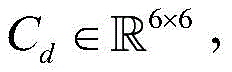

步骤S2:为避免机器人运动到奇异位型,添加作用于末端的虚拟约束力

步骤S3:根据当前机器人的关节角

S3中所述末端执行器的性能指标w采用如下方式确定:The performance index w of the end effector described in S3 is determined as follows:
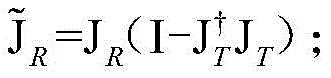
S31:根据当前机器人的关节角q,计算所述机器人关节空间速度到机器人末端笛卡尔空间速度的映射矩阵,即雅克比矩阵


S32:分别计算


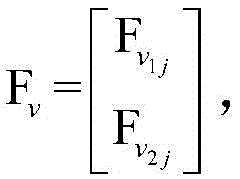
步骤S4:将约束力等效为非线性弹簧,根据S3中所得性能指标wT和wR,计算虚拟约束的形变量ki(w),以及刚度向量Aij;其中i=1,2,i=1时代表平移分量,i=2时代表旋转分量;j=1,2,3,为机器人末端坐标系的3个方向矢量,分别为

S41:如果wi>wthi,则ki(w)=0,弹簧刚度向量Aij=0;S41: If w i >w thi , then k i (w)=0, and the spring stiffness vector A ij =0;
S42:如果wi≤wthi,则
步骤S5:分别对机器人末端在笛卡尔空间的3个坐标轴方向给定微小位移ds,计算机器人移动+ds和-ds后的性能指标梯度▽w+和▽w-,获得每个方向梯度的最大值Aij;Step S5: The micro-displacement ds is given to the robot end in the directions of the three coordinate axes in the Cartesian space, respectively, and the performance index gradient ▽w + and ▽w - after the robot moves +ds and -ds are calculated, and the gradient of each direction is obtained. maximum value A ij ;
S5中所述机器人性能指标梯度最大值Aij采用如下方式确定:The maximum value A ij of the robot performance index gradient described in S5 is determined in the following way:
S51:假定在jk方向给定一个虚拟微小位移,ds=jke-5;其中k=1,2,k=1代表jk与j坐标轴正向相同,k=2代表其与j坐标轴正向相反;S51: Suppose a virtual micro-displacement is given in the j k direction, ds=j k e -5 ; wherein k=1, 2, k=1 represents that j k is the same as the j coordinate axis, and k=2 represents that it is the same as j The coordinate axis is in the opposite direction;
S52:根据S31计算当前q对应的速度雅克比矩阵的逆为:
S53:末端移动ds后的关节角为
S54:重复步骤S3计算当前关节角q对应的末端执行器的性能指标
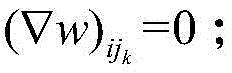
S55:计算机器人性能指标梯度:如果


S56:计算机器人性能指标梯度最大值为:S56: Calculate the maximum value of the gradient of the robot performance index as:


步骤S6:根据S4中弹簧形变量ki(w)以及弹簧刚度向量Aij,计算作用于末端的虚拟约束力为


步骤S7:重复进行步骤S3到S6实现在导纳控制中奇异位型的实时规避。Step S7: Repeat steps S3 to S6 to realize real-time avoidance of singularity patterns in admittance control.
可见,本实施例采用机器人雅克比矩阵最小奇异值衡量机器人性能指标,判断机器人是否接近奇异位型;可以更加柔顺,准确的规避奇异位型,避免在人机交互过程中虚拟约束力施加瞬间产生抖动。It can be seen that in this embodiment, the minimum singular value of the robot Jacobian matrix is used to measure the performance index of the robot to determine whether the robot is close to the singular position; the singular position can be avoided more compliantly and accurately, and the instantaneous generation of virtual restraint force during the human-computer interaction process is avoided. jitter.
除此,本实施例可以实现在奇异规避过程中,末端执行器在笛卡尔空间平移和旋转运动的解耦;除了可以实现耦合运动之外,还可以单独控制平移和旋转运动,在运动过程中设置不同的参数,实现更加柔顺的运动。In addition, this embodiment can realize the decoupling of the translational and rotational motion of the end effector in Cartesian space during the singularity avoidance process; in addition to realizing the coupled motion, the translational and rotational motion can also be controlled independently. Set different parameters to achieve a more supple movement.
在上述实施例的基础上,本发明实施例还提供了一种机器人规避奇异位型的导纳控制装置,如图12所示,包括:On the basis of the above embodiment, the embodiment of the present invention also provides an admittance control device for a robot to avoid singular positions, as shown in FIG. 12 , including:
第一确定模块121,用于根据目标机器人的当前关节角,确定所述目标机器人的性能指标,所述性能指标至少包括平移性能指标以及旋转性能指标;The first determination module 121 is configured to determine the performance index of the target robot according to the current joint angle of the target robot, and the performance index at least includes a translation performance index and a rotation performance index;
第二确定模块122,用于基于所述平移性能指标以及所述旋转性能指标,确定虚拟约束的形变量以及刚度向量;The second determination module 122 is configured to determine the deformation amount and the stiffness vector of the virtual constraint based on the translation performance index and the rotation performance index;
第三确定模块123,用于基于所述虚拟约束的形变量以及所述刚度向量,确定目标虚拟约束力;The third determination module 123 is configured to determine the target virtual constraint force based on the deformation amount of the virtual constraint and the stiffness vector;
第四确定模块124,用于基于所述目标虚拟约束力,确定出目标关节角。The fourth determination module 124 is configured to determine the target joint angle based on the target virtual constraint force.
该装置的工作原理请参见上述方法实施例,在此不重复叙述。For the working principle of the device, please refer to the above method embodiments, which will not be repeated here.
除此,本发明实施还提供了一种机器人规避奇异位型的导纳控制系统,包括上述的机器人规避奇异位型的控制装置。该系统的工作原理请参见上述装置的工作原理。In addition, the implementation of the present invention also provides an admittance control system for a robot avoiding singular position type, including the above-mentioned control device for robot avoiding singular position type. For the working principle of the system, please refer to the working principle of the above-mentioned device.
上述控制装置包括处理器和存储器,上述第一确定模块、第二确定模块、第三确定模块以及第四确定模块等均作为程序单元存储在存储器中,由处理器执行存储在存储器中的上述程序单元来实现相应的功能。The above-mentioned control device includes a processor and a memory, and the above-mentioned first determination module, second determination module, third determination module, and fourth determination module are all stored in the memory as program units, and the processor executes the above-mentioned program stored in the memory. unit to achieve the corresponding function.
处理器中包含内核,由内核去存储器中调取相应的程序单元。内核可以设置一个或以上,通过调整内核参数来避免在人机交互过程中虚拟约束力施加瞬间产生抖动。The processor includes a kernel, and the kernel calls the corresponding program unit from the memory. The kernel can be set to one or more, by adjusting the kernel parameters to avoid jitter when the virtual constraint force is applied in the process of human-computer interaction.
本发明实施例提供了一种存储介质,其上存储有程序,该程序被处理器执行时实现所述导纳控制方法。An embodiment of the present invention provides a storage medium on which a program is stored, and when the program is executed by a processor, the admittance control method is implemented.
本发明实施例提供了一种处理器,所述处理器用于运行程序,其中,所述程序运行时执行所述导纳控制方法。An embodiment of the present invention provides a processor for running a program, wherein the admittance control method is executed when the program runs.
本发明实施例提供了一种设备,如图13所示,设备包括至少一个处理器131、以及与处理器连接的至少一个存储器132、总线133;其中,处理器、存储器通过总线完成相互间的通信;处理器用于调用存储器中的程序指令,以执行上述的屏幕显示装置方法。本文中的设备可以是服务器、PC、PAD、手机等。An embodiment of the present invention provides a device. As shown in FIG. 13 , the device includes at least one
本申请还提供了一种计算机程序产品,当在数据处理设备上执行时,适于执行初始化有如下方法步骤的程序:The application also provides a computer program product that, when executed on a data processing device, is adapted to execute a program initialized with the following method steps:
一种机器人规避奇异位型的导纳控制方法,包括:An admittance control method for a robot to avoid singular position type, comprising:
根据目标机器人的当前关节角,确定所述目标机器人的性能指标,所述性能指标至少包括平移性能指标以及旋转性能指标;According to the current joint angle of the target robot, the performance index of the target robot is determined, and the performance index at least includes a translation performance index and a rotation performance index;
基于所述平移性能指标以及所述旋转性能指标,确定虚拟约束的形变量以及刚度向量;based on the translational performance index and the rotational performance index, determining a deformation amount and a stiffness vector of the virtual constraint;
基于所述虚拟约束的形变量以及所述刚度向量,确定目标虚拟约束力;determining a target virtual constraint force based on the deformation amount of the virtual constraint and the stiffness vector;
基于所述目标虚拟约束力,确定出目标关节角。Based on the target virtual binding force, a target joint angle is determined.
可选的,所述根据目标机器人的当前关节角,确定所述目标机器人的性能指标,包括:Optionally, determining the performance index of the target robot according to the current joint angle of the target robot, including:
根据所述目标机器人的当前关节角,确定所述目标机器人的关节空间速度到所述目标机器人的末端笛卡尔空间速度的映射矩阵,所述映射矩阵包括平移矩阵以及旋转矩阵;According to the current joint angle of the target robot, a mapping matrix from the joint space velocity of the target robot to the Cartesian space velocity at the end of the target robot is determined, and the mapping matrix includes a translation matrix and a rotation matrix;
确定所述平移矩阵的最小奇异值为所述平移性能指标;determining that the minimum singular value of the translation matrix is the translation performance index;
确定所述旋转矩阵的最小奇异值为所述旋转性能指标。The minimum singular value of the rotation matrix is determined to be the rotation performance index.
可选的,所述根据所述目标机器人的当前关节角,确定所述目标机器人的关节空间速度到所述目标机器人的末端笛卡尔空间速度的映射矩阵,包括:Optionally, determining a mapping matrix from the joint space velocity of the target robot to the Cartesian space velocity at the end of the target robot according to the current joint angle of the target robot, including:
将所述目标机器人的当前关节角代入公式


可选的,所述基于所述平移性能指标以及所述旋转性能指标,确定虚拟约束的形变量以及刚度向量,包括:Optionally, determining the deformation variable and stiffness vector of the virtual constraint based on the translation performance index and the rotation performance index, including:
判断所述性能指标是否大于第一阈值,如果是,确定所述虚拟约束的形变量以及所述刚度向量均为第一预设值;Determine whether the performance index is greater than a first threshold, and if so, determine that the deformation variable of the virtual constraint and the stiffness vector are both first preset values;
如果否,根据公式
可选的,所述计算所述目标机器人移动预设位移后的性能指标梯度,包括:Optionally, the calculating the gradient of the performance index after the preset displacement of the target robot moves, including:
获取所述目标机器人移动预设位移后的第一关节角;obtaining the first joint angle of the target robot after moving the preset displacement;
确定所述第一关节角对应的性能指标;determining the performance index corresponding to the first joint angle;
基于所述第一关节角对应的性能指标,确定出所述目标机器人移动预设位移后的性能指标梯度。Based on the performance index corresponding to the first joint angle, the gradient of the performance index after the target robot moves with the preset displacement is determined.
可选的,所述确定所述性能指标梯度中每个方向梯度的最大值为所述刚度向量,包括:Optionally, the determining that the maximum value of each direction gradient in the performance index gradient is the stiffness vector, including:
根据公式

可选的,所述基于所述虚拟约束的形变量以及所述刚度向量,确定目标虚拟约束力,包括:Optionally, determining the target virtual constraint force based on the deformation amount of the virtual constraint and the stiffness vector, including:
根据公式

可选的,所述基于所述目标虚拟约束力,确定出目标关节角,包括:Optionally, determining the target joint angle based on the target virtual binding force includes:
将所述目标虚拟约束力代入动力学模型
基于当前速度,根据公式

综上,本发明实施例提供了一种机器人规避奇异位型的导纳控制方法、装置及系统,该导纳控制方法首先根据目标机器人的当前关节角,确定所述目标机器人的性能指标,所述性能指标至少包括平移性能指标以及旋转性能指标。即实现了在笛卡尔空间平移和旋转运动的解耦。然后基于所述平移性能指标以及所述旋转性能指标,确定虚拟约束的形变量以及刚度向量。基于所述虚拟约束的形变量以及所述刚度向量,确定目标虚拟约束力。基于所述目标虚拟约束力,确定出目标关节角。可见,本方案采用机器人雅克比矩阵最小奇异值衡量机器人性能指标,判断机器人是否接近奇异位型,由于本方案中性能指标的梯度方差小,能够避免在人机交互过程中虚拟约束力施加瞬间产生抖动。To sum up, the embodiments of the present invention provide an admittance control method, device and system for a robot to avoid a singular position type. The admittance control method first determines the performance index of the target robot according to the current joint angle of the target robot. The above performance indicators include at least translation performance indicators and rotation performance indicators. That is, the decoupling of translational and rotational motions in Cartesian space is realized. Then, based on the translational performance index and the rotational performance index, a deformation amount and a stiffness vector of the virtual constraint are determined. Based on the deformation amount of the virtual constraint and the stiffness vector, a target virtual constraint force is determined. Based on the target virtual binding force, a target joint angle is determined. It can be seen that this scheme uses the minimum singular value of the robot Jacobian matrix to measure the performance index of the robot, and judges whether the robot is close to the singular position type. Because the gradient variance of the performance index in this scheme is small, it can avoid the instantaneous generation of virtual restraint force in the process of human-computer interaction. jitter.
本说明书中各个实施例采用并列或递进的方式描述,每个实施例重点说明的都是与其他实施例的不同之处,各个实施例之间相同相似部分互相参见即可。对于实施例公开的装置而言,由于其与实施例公开的方法相对应,所以描述的比较简单,相关之处参见方法部分说明即可。The various embodiments in this specification are described in a juxtaposed or progressive manner, and each embodiment focuses on the differences from other embodiments, and the same and similar parts between the various embodiments may be referred to each other. As for the device disclosed in the embodiment, since it corresponds to the method disclosed in the embodiment, the description is relatively simple, and the relevant part can be referred to the description of the method.
专业人员还可以进一步意识到,结合本文中所公开的实施例描述的各示例的单元及算法步骤,能够以电子硬件、计算机软件或者二者的结合来实现,为了清楚地说明硬件和软件的可互换性,在上述说明中已经按照功能一般性地描述了各示例的组成及步骤。这些功能究竟以硬件还是软件方式来执行,取决于技术方案的特定应用和设计约束条件。专业技术人员可以对每个特定的应用来使用不同方法来实现所描述的功能,但是这种实现不应认为超出本发明的范围。Professionals may further realize that the units and algorithm steps of each example described in conjunction with the embodiments disclosed herein can be implemented in electronic hardware, computer software, or a combination of the two, in order to clearly illustrate the possibilities of hardware and software. Interchangeability, the above description has generally described the components and steps of each example in terms of functionality. Whether these functions are performed in hardware or software depends on the specific application and design constraints of the technical solution. Skilled artisans may implement the described functionality using different methods for each particular application, but such implementations should not be considered beyond the scope of the present invention.
结合本文中所公开的实施例描述的方法或算法的步骤可以直接用硬件、处理器执行的软件模块,或者二者的结合来实施。软件模块可以置于随机存储器(RAM)、内存、只读存储器(ROM)、电可编程ROM、电可擦除可编程ROM、寄存器、硬盘、可移动磁盘、CD-ROM、或技术领域内所公知的任意其它形式的存储介质中。The steps of a method or algorithm described in conjunction with the embodiments disclosed herein may be directly implemented in hardware, a software module executed by a processor, or a combination of the two. A software module can be placed in random access memory (RAM), internal memory, read only memory (ROM), electrically programmable ROM, electrically erasable programmable ROM, registers, hard disk, removable disk, CD-ROM, or any other in the technical field. in any other known form of storage medium.
对所公开的实施例的上述说明,使本领域专业技术人员能够实现或使用本发明。对这些实施例的多种修改对本领域的专业技术人员来说将是显而易见的,本文中所定义的一般原理可以在不脱离本发明的精神或范围的情况下,在其它实施例中实现。因此,本发明将不会被限制于本文所示的这些实施例,而是要符合与本文所公开的原理和新颖特点相一致的最宽的范围。The above description of the disclosed embodiments enables any person skilled in the art to make or use the present invention. Various modifications to these embodiments will be readily apparent to those skilled in the art, and the generic principles defined herein may be implemented in other embodiments without departing from the spirit or scope of the invention. Thus, the present invention is not intended to be limited to the embodiments shown herein, but is to be accorded the widest scope consistent with the principles and novel features disclosed herein.
Claims (7)








Priority Applications (1)
| Application Number | Priority Date | Filing Date | Title |
|---|---|---|---|
| CN201911266517.4A CN110977974B (en) | 2019-12-11 | 2019-12-11 | Admittance control method, device and system for avoiding singular position type of robot |
Applications Claiming Priority (1)
| Application Number | Priority Date | Filing Date | Title |
|---|---|---|---|
| CN201911266517.4A CN110977974B (en) | 2019-12-11 | 2019-12-11 | Admittance control method, device and system for avoiding singular position type of robot |
Publications (2)
| Publication Number | Publication Date |
|---|---|
| CN110977974A CN110977974A (en) | 2020-04-10 |
| CN110977974B true CN110977974B (en) | 2021-06-01 |
Family
ID=70092319
Family Applications (1)
| Application Number | Title | Priority Date | Filing Date |
|---|---|---|---|
| CN201911266517.4A Active CN110977974B (en) | 2019-12-11 | 2019-12-11 | Admittance control method, device and system for avoiding singular position type of robot |
Country Status (1)
| Country | Link |
|---|---|
| CN (1) | CN110977974B (en) |
Families Citing this family (11)
| Publication number | Priority date | Publication date | Assignee | Title |
|---|---|---|---|---|
| CN112428263B (en) * | 2020-10-16 | 2022-06-10 | 北京理工大学 | Mechanical arm control method and device and cluster model training method |
| CN113021347A (en) * | 2021-03-23 | 2021-06-25 | 深圳市优必选科技股份有限公司 | Mechanical arm control method and device, operation control equipment and readable storage medium |
| CN113814985B (en) * | 2021-10-29 | 2023-04-14 | 遨博(北京)智能科技股份有限公司 | Robot control method, control cabinet and system |
| CN114260896B (en) * | 2021-12-20 | 2024-01-09 | 广东省科学院智能制造研究所 | Flexible force control method and system for cooperative robot |
| CN114177008B (en) * | 2022-01-12 | 2022-12-02 | 上海大学 | A control method and system for an upper limb rehabilitation robot based on a variable virtual fixture |
| CN114932557B (en) * | 2022-06-24 | 2023-07-28 | 合肥工业大学 | An adaptive admittance control method based on energy consumption under kinematic constraints |
| CN116000928B (en) * | 2022-12-29 | 2025-03-14 | 深圳市优必选科技股份有限公司 | Singular avoidance method and device for mechanical arm, terminal equipment and storage medium |
| CN116061188B (en) * | 2023-03-07 | 2024-12-13 | 遨博(北京)智能科技股份有限公司 | A method and device for determining the joint movement increment of a robot |
| CN116766228B (en) * | 2023-06-30 | 2024-09-17 | 埃斯顿(南京)医疗科技有限公司 | Robot interaction control method, equipment and medium |
| CN119795187B (en) * | 2025-02-14 | 2025-10-28 | 法奥意威(苏州)机器人系统有限公司 | Robot motion control method and device |
| CN121018602B (en) * | 2025-10-30 | 2026-01-06 | 杭州景业智能科技股份有限公司 | A Robot Singularity Control Method and System Based on Admittance Algorithm |
Citations (4)
| Publication number | Priority date | Publication date | Assignee | Title |
|---|---|---|---|---|
| CN105005381A (en) * | 2015-07-08 | 2015-10-28 | 西安电子科技大学 | Shake elimination method for virtual robot arm interaction |
| CN107234617A (en) * | 2017-07-10 | 2017-10-10 | 北京邮电大学 | A kind of obstacle-avoiding route planning method of the unrelated Artificial Potential Field guiding of avoidance task |
| CN108608427A (en) * | 2018-06-05 | 2018-10-02 | 中科新松有限公司 | Unusual method and device is kept away in Robot Force control distraction procedure |
| CN109249394A (en) * | 2018-09-27 | 2019-01-22 | 上海电气集团股份有限公司 | Robot control method and system based on admittance control algorithms |
Family Cites Families (2)
| Publication number | Priority date | Publication date | Assignee | Title |
|---|---|---|---|---|
| JP2015085427A (en) * | 2013-10-30 | 2015-05-07 | 株式会社デンソーウェーブ | Each axis angle determination method for 6-axis robot and controller for 6-axis robot |
| JP6201126B2 (en) * | 2013-11-07 | 2017-09-27 | 株式会社人機一体 | Master-slave system |
-
2019
- 2019-12-11 CN CN201911266517.4A patent/CN110977974B/en active Active
Patent Citations (4)
| Publication number | Priority date | Publication date | Assignee | Title |
|---|---|---|---|---|
| CN105005381A (en) * | 2015-07-08 | 2015-10-28 | 西安电子科技大学 | Shake elimination method for virtual robot arm interaction |
| CN107234617A (en) * | 2017-07-10 | 2017-10-10 | 北京邮电大学 | A kind of obstacle-avoiding route planning method of the unrelated Artificial Potential Field guiding of avoidance task |
| CN108608427A (en) * | 2018-06-05 | 2018-10-02 | 中科新松有限公司 | Unusual method and device is kept away in Robot Force control distraction procedure |
| CN109249394A (en) * | 2018-09-27 | 2019-01-22 | 上海电气集团股份有限公司 | Robot control method and system based on admittance control algorithms |
Also Published As
| Publication number | Publication date |
|---|---|
| CN110977974A (en) | 2020-04-10 |
Similar Documents
| Publication | Publication Date | Title |
|---|---|---|
| CN110977974B (en) | Admittance control method, device and system for avoiding singular position type of robot | |
| CN108015763B (en) | Anti-noise-interference redundant manipulator path planning method | |
| CN113319857B (en) | Mechanical arm force-position hybrid control method, device, electronic device and storage medium | |
| US11724393B2 (en) | Robotic arm space position adjustment method, robotic arm controller and computer readable storage medium | |
| CN109311155B (en) | Method and device for calibrating tool coordinate system origin of industrial robot | |
| WO2024183371A1 (en) | Ultrasonic robot scanning control method and apparatus, device, and storage medium | |
| CN113787518B (en) | Robot tail end attitude control method, device, equipment and storage medium | |
| CN118636153B (en) | Robust self-adaptive shear thickening fluid admittance control method under characteristic space | |
| CN115502979A (en) | A method and system for active, compliant and precise control of manipulator torque | |
| CN115533883B (en) | Singularity prediction and motion control method of under-freedom manipulator and robot | |
| CN114454166B (en) | Impedance control method and device for mechanical arm | |
| CN109333520A (en) | A kind of four axis SCARA robot inverse solution methods | |
| CN118744431A (en) | A variable impedance control method for a robotic arm based on an energy tank containing an obstacle function | |
| CN117464667B (en) | Seven-axis mechanical arm movement planning method and device and mechanical arm | |
| Jalendra et al. | Robot vision-based control strategy to suppress residual vibration of a flexible beam for assembly | |
| CN121061890B (en) | An adaptive preset time control method and system for flexible robotic arms | |
| CN113814985B (en) | Robot control method, control cabinet and system | |
| US9925668B2 (en) | Robot, control unit, and control method | |
| CN114179089B (en) | A Robust Region Tracking Control Method for Manipulator | |
| CN107520838B (en) | Mechanical arm and control method and device thereof | |
| CN112264993B (en) | Robot end control method, robot, and storage medium | |
| CN119407781A (en) | Method, system and equipment for solving inverse kinematics of seven-degree-of-freedom manipulator based on numerical iteration | |
| CN114800505B (en) | Robot operation control method and device | |
| CN119897853B (en) | Robust self-adaptive admittance-changing control method based on different intentions under characteristic space | |
| WO2020093254A1 (en) | Motion control method for robot, control system, and storage device |
Legal Events
| Date | Code | Title | Description |
|---|---|---|---|
| PB01 | Publication | ||
| PB01 | Publication | ||
| SE01 | Entry into force of request for substantive examination | ||
| SE01 | Entry into force of request for substantive examination | ||
| GR01 | Patent grant | ||
| GR01 | Patent grant | ||
| CP03 | Change of name, title or address |
Address after: Room 407, building 5, yard 98, lianshihu West Road, Mentougou District, Beijing 102300 Patentee after: AUBO (Beijing) Intelligent Technology Co.,Ltd. Address before: 102300 301a1, building 5, Shilong Yangguang building, 98 lianshihu West Road, Mentougou District, Beijing Patentee before: AUBO (BEIJING) ROBOTICS TECHNOLOGY Co.,Ltd. |
|
| CP03 | Change of name, title or address |