CN1170638A - Impregnation process for substrate material and impregnated substrate material and articles made thereof - Google Patents
Impregnation process for substrate material and impregnated substrate material and articles made thereof Download PDFInfo
- Publication number
- CN1170638A CN1170638A CN97102981A CN97102981A CN1170638A CN 1170638 A CN1170638 A CN 1170638A CN 97102981 A CN97102981 A CN 97102981A CN 97102981 A CN97102981 A CN 97102981A CN 1170638 A CN1170638 A CN 1170638A
- Authority
- CN
- China
- Prior art keywords
- host material
- resin combination
- resin
- continuous
- dipping
- Prior art date
- Legal status (The legal status is an assumption and is not a legal conclusion. Google has not performed a legal analysis and makes no representation as to the accuracy of the status listed.)
- Granted
Links
- 239000000463 material Substances 0.000 title claims abstract description 218
- 238000000034 method Methods 0.000 title claims abstract description 52
- 238000005470 impregnation Methods 0.000 title description 15
- 239000000758 substrate Substances 0.000 title description 3
- 229920005989 resin Polymers 0.000 claims description 142
- 239000011347 resin Substances 0.000 claims description 142
- 238000007598 dipping method Methods 0.000 claims description 55
- 239000011324 bead Substances 0.000 claims description 20
- PPBRXRYQALVLMV-UHFFFAOYSA-N Styrene Chemical compound C=CC1=CC=CC=C1 PPBRXRYQALVLMV-UHFFFAOYSA-N 0.000 claims description 18
- 239000000203 mixture Substances 0.000 claims description 18
- 239000007788 liquid Substances 0.000 claims description 15
- 239000011342 resin composition Substances 0.000 claims description 12
- 229920001971 elastomer Polymers 0.000 claims description 10
- 239000003822 epoxy resin Substances 0.000 claims description 10
- 229920000647 polyepoxide Polymers 0.000 claims description 10
- 239000005060 rubber Substances 0.000 claims description 10
- 229920001567 vinyl ester resin Polymers 0.000 claims description 10
- 239000000178 monomer Substances 0.000 claims description 9
- 238000010526 radical polymerization reaction Methods 0.000 claims description 9
- 238000006243 chemical reaction Methods 0.000 claims description 8
- 230000033228 biological regulation Effects 0.000 claims description 7
- SMZOUWXMTYCWNB-UHFFFAOYSA-N 2-(2-methoxy-5-methylphenyl)ethanamine Chemical compound COC1=CC=C(C)C=C1CCN SMZOUWXMTYCWNB-UHFFFAOYSA-N 0.000 claims description 6
- NIXOWILDQLNWCW-UHFFFAOYSA-N 2-Propenoic acid Natural products OC(=O)C=C NIXOWILDQLNWCW-UHFFFAOYSA-N 0.000 claims description 6
- 208000034189 Sclerosis Diseases 0.000 claims description 6
- 239000011521 glass Substances 0.000 claims description 5
- 229910052751 metal Inorganic materials 0.000 claims description 5
- 239000002184 metal Substances 0.000 claims description 5
- CERQOIWHTDAKMF-UHFFFAOYSA-M Methacrylate Chemical compound CC(=C)C([O-])=O CERQOIWHTDAKMF-UHFFFAOYSA-M 0.000 claims description 4
- 125000003178 carboxy group Chemical group [H]OC(*)=O 0.000 claims description 4
- 239000007870 radical polymerization initiator Substances 0.000 claims description 4
- 230000000694 effects Effects 0.000 claims description 3
- 239000011152 fibreglass Substances 0.000 claims description 3
- 239000003365 glass fiber Substances 0.000 claims description 2
- 125000002924 primary amino group Chemical group [H]N([H])* 0.000 claims description 2
- 229920003244 diene elastomer Polymers 0.000 claims 1
- 229920001187 thermosetting polymer Polymers 0.000 claims 1
- 239000000805 composite resin Substances 0.000 abstract 5
- 239000002966 varnish Substances 0.000 description 72
- 230000000052 comparative effect Effects 0.000 description 16
- 239000000835 fiber Substances 0.000 description 11
- 238000010438 heat treatment Methods 0.000 description 8
- 239000002904 solvent Substances 0.000 description 7
- 238000000576 coating method Methods 0.000 description 6
- 238000010586 diagram Methods 0.000 description 5
- -1 Fypro Substances 0.000 description 4
- 239000002253 acid Substances 0.000 description 4
- 238000001035 drying Methods 0.000 description 4
- 238000007654 immersion Methods 0.000 description 4
- AYEKOFBPNLCAJY-UHFFFAOYSA-O thiamine pyrophosphate Chemical compound CC1=C(CCOP(O)(=O)OP(O)(O)=O)SC=[N+]1CC1=CN=C(C)N=C1N AYEKOFBPNLCAJY-UHFFFAOYSA-O 0.000 description 4
- CERQOIWHTDAKMF-UHFFFAOYSA-N Methacrylic acid Chemical compound CC(=C)C(O)=O CERQOIWHTDAKMF-UHFFFAOYSA-N 0.000 description 3
- OKKJLVBELUTLKV-UHFFFAOYSA-N Methanol Chemical compound OC OKKJLVBELUTLKV-UHFFFAOYSA-N 0.000 description 3
- 150000002118 epoxides Chemical class 0.000 description 3
- 230000014759 maintenance of location Effects 0.000 description 3
- 238000002360 preparation method Methods 0.000 description 3
- 238000007493 shaping process Methods 0.000 description 3
- 239000007921 spray Substances 0.000 description 3
- CSCPPACGZOOCGX-UHFFFAOYSA-N Acetone Chemical compound CC(C)=O CSCPPACGZOOCGX-UHFFFAOYSA-N 0.000 description 2
- 239000004925 Acrylic resin Substances 0.000 description 2
- 229920002799 BoPET Polymers 0.000 description 2
- VTYYLEPIZMXCLO-UHFFFAOYSA-L Calcium carbonate Chemical compound [Ca+2].[O-]C([O-])=O VTYYLEPIZMXCLO-UHFFFAOYSA-L 0.000 description 2
- 238000006424 Flood reaction Methods 0.000 description 2
- 229920000459 Nitrile rubber Polymers 0.000 description 2
- VYPSYNLAJGMNEJ-UHFFFAOYSA-N Silicium dioxide Chemical compound O=[Si]=O VYPSYNLAJGMNEJ-UHFFFAOYSA-N 0.000 description 2
- 230000015572 biosynthetic process Effects 0.000 description 2
- 238000009835 boiling Methods 0.000 description 2
- 239000003795 chemical substances by application Substances 0.000 description 2
- 239000011248 coating agent Substances 0.000 description 2
- 238000001704 evaporation Methods 0.000 description 2
- 230000008020 evaporation Effects 0.000 description 2
- 230000002344 fibroplastic effect Effects 0.000 description 2
- 239000011888 foil Substances 0.000 description 2
- 230000005484 gravity Effects 0.000 description 2
- 239000004519 grease Substances 0.000 description 2
- 125000000687 hydroquinonyl group Chemical class C1(O)=C(C=C(O)C=C1)* 0.000 description 2
- 238000009940 knitting Methods 0.000 description 2
- 238000002803 maceration Methods 0.000 description 2
- 229920000728 polyester Polymers 0.000 description 2
- 239000003505 polymerization initiator Substances 0.000 description 2
- 238000007789 sealing Methods 0.000 description 2
- 239000007787 solid Substances 0.000 description 2
- XKZQKPRCPNGNFR-UHFFFAOYSA-N 2-(3-hydroxyphenyl)phenol Chemical compound OC1=CC=CC(C=2C(=CC=CC=2)O)=C1 XKZQKPRCPNGNFR-UHFFFAOYSA-N 0.000 description 1
- FRIBMENBGGCKPD-UHFFFAOYSA-N 3-(2,3-dimethoxyphenyl)prop-2-enal Chemical compound COC1=CC=CC(C=CC=O)=C1OC FRIBMENBGGCKPD-UHFFFAOYSA-N 0.000 description 1
- ULKLGIFJWFIQFF-UHFFFAOYSA-N 5K8XI641G3 Chemical compound CCC1=NC=C(C)N1 ULKLGIFJWFIQFF-UHFFFAOYSA-N 0.000 description 1
- 235000003301 Ceiba pentandra Nutrition 0.000 description 1
- 244000146553 Ceiba pentandra Species 0.000 description 1
- 229920003043 Cellulose fiber Polymers 0.000 description 1
- RYGMFSIKBFXOCR-UHFFFAOYSA-N Copper Chemical compound [Cu] RYGMFSIKBFXOCR-UHFFFAOYSA-N 0.000 description 1
- VGGSQFUCUMXWEO-UHFFFAOYSA-N Ethene Chemical compound C=C VGGSQFUCUMXWEO-UHFFFAOYSA-N 0.000 description 1
- 229920000877 Melamine resin Polymers 0.000 description 1
- 239000004640 Melamine resin Substances 0.000 description 1
- ZWEHNKRNPOVVGH-UHFFFAOYSA-N Methyl ethyl ketone Natural products CCC(C)=O ZWEHNKRNPOVVGH-UHFFFAOYSA-N 0.000 description 1
- XYFCBTPGUUZFHI-UHFFFAOYSA-N Phosphine Chemical compound P XYFCBTPGUUZFHI-UHFFFAOYSA-N 0.000 description 1
- 239000004743 Polypropylene Substances 0.000 description 1
- 229910000831 Steel Inorganic materials 0.000 description 1
- HVVWZTWDBSEWIH-UHFFFAOYSA-N [2-(hydroxymethyl)-3-prop-2-enoyloxy-2-(prop-2-enoyloxymethyl)propyl] prop-2-enoate Chemical compound C=CC(=O)OCC(CO)(COC(=O)C=C)COC(=O)C=C HVVWZTWDBSEWIH-UHFFFAOYSA-N 0.000 description 1
- 150000001298 alcohols Chemical class 0.000 description 1
- 229910000019 calcium carbonate Inorganic materials 0.000 description 1
- 239000003054 catalyst Substances 0.000 description 1
- 239000000919 ceramic Substances 0.000 description 1
- 238000001816 cooling Methods 0.000 description 1
- 239000011889 copper foil Substances 0.000 description 1
- 125000000853 cresyl group Chemical class C1(=CC=C(C=C1)C)* 0.000 description 1
- 238000004132 cross linking Methods 0.000 description 1
- 230000006837 decompression Effects 0.000 description 1
- 238000000151 deposition Methods 0.000 description 1
- 150000001470 diamides Chemical class 0.000 description 1
- 239000006185 dispersion Substances 0.000 description 1
- 150000002148 esters Chemical class 0.000 description 1
- 238000011156 evaluation Methods 0.000 description 1
- 210000000887 face Anatomy 0.000 description 1
- 239000006260 foam Substances 0.000 description 1
- 239000007789 gas Substances 0.000 description 1
- 239000011086 glassine Substances 0.000 description 1
- 210000003128 head Anatomy 0.000 description 1
- 150000002466 imines Chemical class 0.000 description 1
- 239000003112 inhibitor Substances 0.000 description 1
- 239000011256 inorganic filler Substances 0.000 description 1
- 229910003475 inorganic filler Inorganic materials 0.000 description 1
- 238000007689 inspection Methods 0.000 description 1
- 150000002576 ketones Chemical class 0.000 description 1
- 239000004922 lacquer Substances 0.000 description 1
- 229920002521 macromolecule Polymers 0.000 description 1
- 238000002844 melting Methods 0.000 description 1
- 230000008018 melting Effects 0.000 description 1
- 238000012856 packing Methods 0.000 description 1
- 239000000123 paper Substances 0.000 description 1
- WXZMFSXDPGVJKK-UHFFFAOYSA-N pentaerythritol Chemical compound OCC(CO)(CO)CO WXZMFSXDPGVJKK-UHFFFAOYSA-N 0.000 description 1
- ISWSIDIOOBJBQZ-UHFFFAOYSA-N phenol group Chemical group C1(=CC=CC=C1)O ISWSIDIOOBJBQZ-UHFFFAOYSA-N 0.000 description 1
- 239000005011 phenolic resin Substances 0.000 description 1
- 239000009719 polyimide resin Substances 0.000 description 1
- 229920000642 polymer Polymers 0.000 description 1
- 238000006116 polymerization reaction Methods 0.000 description 1
- 229920001155 polypropylene Polymers 0.000 description 1
- 239000004814 polyurethane Substances 0.000 description 1
- 229920002635 polyurethane Polymers 0.000 description 1
- 238000003825 pressing Methods 0.000 description 1
- 150000003254 radicals Chemical class 0.000 description 1
- 238000010992 reflux Methods 0.000 description 1
- 230000000630 rising effect Effects 0.000 description 1
- 239000000377 silicon dioxide Substances 0.000 description 1
- 238000002791 soaking Methods 0.000 description 1
- 239000010959 steel Substances 0.000 description 1
- 238000003860 storage Methods 0.000 description 1
- 230000000153 supplemental effect Effects 0.000 description 1
- 230000009469 supplementation Effects 0.000 description 1
- 239000000725 suspension Substances 0.000 description 1
- 239000004753 textile Substances 0.000 description 1
- 229920001169 thermoplastic Polymers 0.000 description 1
- 239000004416 thermosoftening plastic Substances 0.000 description 1
- 229920006337 unsaturated polyester resin Polymers 0.000 description 1
- 238000009941 weaving Methods 0.000 description 1
- 238000005303 weighing Methods 0.000 description 1
Images


Classifications
-
- B—PERFORMING OPERATIONS; TRANSPORTING
- B29—WORKING OF PLASTICS; WORKING OF SUBSTANCES IN A PLASTIC STATE IN GENERAL
- B29B—PREPARATION OR PRETREATMENT OF THE MATERIAL TO BE SHAPED; MAKING GRANULES OR PREFORMS; RECOVERY OF PLASTICS OR OTHER CONSTITUENTS OF WASTE MATERIAL CONTAINING PLASTICS
- B29B15/00—Pretreatment of the material to be shaped, not covered by groups B29B7/00 - B29B13/00
- B29B15/08—Pretreatment of the material to be shaped, not covered by groups B29B7/00 - B29B13/00 of reinforcements or fillers
- B29B15/10—Coating or impregnating independently of the moulding or shaping step
- B29B15/12—Coating or impregnating independently of the moulding or shaping step of reinforcements of indefinite length
- B29B15/122—Coating or impregnating independently of the moulding or shaping step of reinforcements of indefinite length with a matrix in liquid form, e.g. as melt, solution or latex
-
- H—ELECTRICITY
- H05—ELECTRIC TECHNIQUES NOT OTHERWISE PROVIDED FOR
- H05K—PRINTED CIRCUITS; CASINGS OR CONSTRUCTIONAL DETAILS OF ELECTRIC APPARATUS; MANUFACTURE OF ASSEMBLAGES OF ELECTRICAL COMPONENTS
- H05K1/00—Printed circuits
- H05K1/02—Details
- H05K1/03—Use of materials for the substrate
- H05K1/0313—Organic insulating material
- H05K1/032—Organic insulating material consisting of one material
- H05K1/0326—Organic insulating material consisting of one material containing O
Landscapes
- Engineering & Computer Science (AREA)
- Mechanical Engineering (AREA)
- Reinforced Plastic Materials (AREA)
- Laminated Bodies (AREA)
Abstract
The present invention provides an impregnating method which can impregnate the continuous host material with resin composite by a high impregnating property at a high speed. As the long continuous host material (1) is fed, the surface is impregnated with the resin composite (2). At the moment, the resin composite (2) flows down along a panel (3) inclined at a fixed angle, and as the continuous host material (1) is conveyed on the panel (3) in parallel, the surface of the continuous host material (1) is contacted with the resin composite (2) flowing down along the panel (3). While being pressed, the resin composite (2) is impregnated into the continuous host material (1) by capillarity.
Description
The invention relates to and have the host material of opening, particularly continuous host material, as by in various fibroplastic intersections or the bundle fiber goods, the method of the liquid village oil/fat composition of dipping as lacquer shape, thus the dipping that obtains of method the host material of resin combination, and the article of making by this host material, for example so-called preimpregnation material (dipping host material) and laminate.
Alleged resin combination is to contain the composition that at least a resin forms in this specification, and resin combination can contain other composition, as add solvent, polymerisable monomer and/or polymerization initiator etc. in this resinous principle.Said liquid resin composition is that such a composition is liquid under the temperature of implementing the inventive method.Though it is more satisfactory that resin combination is the solution shape,, also can be dispersion liquid or suspension so long as do not produce specific question.Specifically, adding further is dissolved in resultant composition in the solvent with such liquid resin composition contain the resin combination that itself is liquid in the liquid resin composition of this specification beyond, or solid resinous composition is dissolved in resultant composition in the solvent.For example, one example of the liquid resin composition in this specification is that varnish (being dissolved in the resin combination in the solvent) and so-called " varnish gum " (also are the resin combinations of intrinsic liquid when not dissolving in solvent, for example, contain vinylester resin and styrene and the thermally curable resin composition that forms).
Used preimpregnation material (dipping host material) in laminate is made usually can be by impregnating varnish resin in the stratiform host material with tiny (or open) continuously air bubble-shaped opening, and dry again and/or sclerosis is prepared.As such host material, make by a series of series-operation, the general continuous host material that uses principal, this continuous host material is sent on one side continuously, one side impregnating varnish resin, and then the continuous host material that will flood varnish gum sends into heating furnace continuously, carries out drying and/or sclerosis, makes preimpregnation material with this.
Wherein, method as impregnating varnish resin in above-mentioned continuous host material has, continuous host material is sent on the limit continuously, and the impregnation method that the limit is flooded in the varnish gum groove utilizes spray that varnish gum is coated in spray mode on the continuous host material etc.
The problem that adopts impregnation method is because varnish gum enters the inside opening of host material from the both sides of continuous host material and since varnish gum with the air obturation in inside, so easily produce the remaining position of dipping that has, this causes because of bubble.And the problem of spray mode is to be difficult to dipping at a high speed.
A kind of method of touching coating is proposed in No. 4076867, the US Patent specification.This coating method that touches, with reference to Fig. 6, be in the varnish groove 10 of varnish gum 2 is provided, to be provided with to touch roller 11, send into continuously in the direction of arrows, at continuous host material 1, the side face that makes itself and this touch roller 11 contacts, and by touching roller 11 varnish gum 2 is coated on the surface of continuous host material 1 gently simultaneously.We say this coating method that touches, owing to varnish gum 2 soaks into from the surface to continuous host material, so maximum problem is the inside that bubble is enclosed in continuous host material 1.
Yet, used this coating method that touches that touches roller 11, because continuous host material is under authorized pressure (contact pressure), with the enforceable host material inside that is pressed into of varnish gum, flood not really abundant, so the problem that produces is the still remaining part of dipping that has.
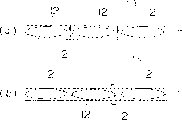
Promptly, the glass of the continuous host material that is made of glass strand 12 with reference to Fig. 7 (a) and (b) intersects 1 section, when coating method is touched in use, continuously the surface (lower surface) of host material 1 under contact pressure with touch roller 11 and contact, shown in arrow among Fig. 7 (a), under this contact pressure, varnish gum 2 enters into another surface (upper surface) of continuous host material 1 at short notice by opening broad between the strand 12, strand 12 forms sealing state by varnish gum 2, in strand 12, the air that constitutes opening (not shown) place narrow between the filament of strand is closed, and owing to air can not discharge, so varnish gum 2 also just can not be impregnated into the inside of strand 12, thereby cause the still remaining part of dipping that has.
Continuously host material 1, can affact on the surface of continuous host material 1 because the wind and other the air former thereby surrounding environment that exerts an influence that bring of the conveying of host material 1 flows continuously often vertically sending in addition.Like this, when the wind shown in the middle arrow acts on the surface of continuous host material 1 as Fig. 7 (b), be immersed in the varnish gum 2 on the continuous host material 1, low boiling point component wherein is easy to evaporate from exposed surface, as a result, making, the surface of impregnating varnish resin 2 (that is the part that at first contacts with air) viscosity uprises, soak into to strand 12 inside by capillarity and to be suppressed, be easy to the remaining part of not flooding.For example, in the varnish gum 2 that is combined with the crosslinking styrene monomer, when wind-force acted on continuous host material 1 surperficial, styrene monomer was easy to evaporation, and the result problem of easy generation is that the viscosity of varnish gum 2 uprises.
The present invention makes in view of the above problems, provides a kind of host material that contains, opening, the continuous host material that particularly contains continuous air bubbles shape opening, can be with high degree of impregnation impregnating resin composition, varnish gum for example, and to implement the dipping method of this dipping at a high speed.
Method provided by the invention, be to have opening, in fact according to two relatively to first type surface, method at the opening place of the host material of stipulating stratiform dipping liquid resin composition, it is characterized in that making side's first type surface and resin combination to contact, host material remains in the state of upside.In the present invention, said first type surface can be thought the stratiform host material is made whole regulation, the level and smooth face of supposing, and the concrete meaning is upper side 1a and the downside 1b as regulation shape host material 1 pattern of describing among Fig. 7 (a).
In the methods of the invention, do not have another first type surface of the host material that contacts with resin combination, be actually freely (free).Therefore, another first type surface like this, in fact just and the gas of depositing thereon (as air) contact.
In the inventive method, said host material is positioned at the upside state, be meant, when a certain first type surface of host material and the interface of resin combination body are level, host material is positioned at the state of upside, perhaps, be the state of inclination by level (being referred to as 0 ° of state) interface, host material still is positioned at the state of upside, that is, employed state comprises the axle that begins contained interface from level, and preferably use and host material is vertically perpendicular, contain the interface axle around be included in, make the state interface is inclination in+90 ° to-90 ° scope after.In other words, suppose that resin combination body and host material do not have under the condition of the power effect beyond the gravity fully, the masterpiece that produces except the gravity that acts on the resin combination body is used for the state of host material, just uses the state of implication like this.Here said resin combination body is meant and the contacted resin combination integral body of host material first type surface, during with reference to Fig. 7 (a), when implementing the inventive method, is meant the resin combination that is positioned at downside 1b place.Therefore, irrelevant about the resin combination that floods in the contact condition of host material and resin combination and the host material.Host material keep and the contacted state of resin combination under, host material, at least a portion, best major part is more preferably and all is flat condition basically in fact, and is ideal.Such host material can join with above-mentioned horizontal attitude or inclination attitude and resin combination.
In the present invention, opening is connected between two first type surfaces of the host material of the regulation number of plies, therefore, be the best of continuous air bubbles shape, have the host material of such opening, it can be fibre, as textile, knitting, group establishment product, the on-woven goods of not weaving are also passable, or so-called foam form.In the present invention, it is very long that host material is actually, preferably successional.Net this, in the methods of the invention, host material for example is the fibre that is rolled into web-like, ideal form, and host material is successional and is provided in the dipping method of the present invention.
Specifically, host material of the present invention, so long as have opening, can be constituted by the fibroplastic strand of any kind (promptly constituting the silk of host material), for example, can use inorfil such as glass fibre, ceramic fibre and, organic fiber such as polyester fiber, Fypro, polypropylene fibre, poly-imine fiber and used the braid, paper, aperture plate etc. of natural fibers such as cellulose fibre, kapok.Constituting the strand of host material, both can be the ultimate fibre strand, also can be the multifilament strand.The host material that is made of the multifilament strand particularly when being applied to the inventive method, the most advantageously enters into the resin combination in big space between strand, also can flood effectively in the space trickleer between each fiber of formation strand into.
Among the present invention, used resin combination, the necessary liquid resin composition of dipping does not have particular determination in host material, for example, the shown resin combination that in laminate is made, uses.As the concrete resin that constitutes resin combination, can list epoxy resin, phenol resin, poly-imide resin, melamine resin, and contain the polymerisable double bonds unsaturated group of free radical, the resin (as radical polymerization type hardening resin) that radical polymerization by this unsaturated group hardens, for example, unsaturated polyester resin, Epocryl, two propylene phthalic acid ester resins, vinylester resin, polyester acrylate resin, polyurethane acrylate resin and spirane tree resin etc.Resin combination can contain polymerisable monomer (for example styrene monomer) and/or polymerization initiator outside this resinoid, join in these resins as bridging agent.The viscosity that resin combination also can contain inorganic filler (for example silica, calcium carbonate) and both can regulate resin combination, can make the solvent (for example alcohols, the N of the ketone of acetone etc., methyl alcohol etc., the amide-type of dinethylformamide etc.) of its liquefaction again.
The resin combination that is suitable for the inventive method especially is to contain the resin combination that following composition forms.
(A) (a) epoxy resin
(b) contain amino and/or carboxyl conjugated system rubber polymer (for example acrylonitrile-butadiene rubber of carboxyl terminal etc.) and
(c) the rubber modified vinylester resin that the reaction of acrylic acid and/or methacrylate is obtained,
(B) free radical polymerization monomer (for example styrene, acrylic acid, methacrylate etc.) and
(C) free radical polymerization initiator (butanone peroxide, cumene hydroperoxide etc.).
This resin combination is heat cured, details is documented in the spy and opens in the flat 3-73339 communique (corresponding to open 3512791A1 number of the fair 5-29548 of spy number, No. 4866134, US Patent specification, No. 2158830, BP and Deutsche Bundespatent), these files by reference, wherein the disclosed content of patent documentation also writes in this specification.
In this resin combination, use the ideal resin combination of the inventive method, feature is to contain free radical polymerization monomer, this monomer has styrene and the OH base (for example acrylic acid, methacrylate, pentaerythritol triacrylate, pentaerythrite TIB acid esters etc.) as (B) composition, and the ratio with free radical polymerization monomer of this OH base is 4-8 (w) % of resin combination gross weight.It is ideal that this resin combination is used to make laminate, for example copper-clad laminate.This ideal resin combination is disclosed in Japan Patent and puts down into 8 in flat No. 64322, quotes by this, also disclosed content in this patent is write in this specification.
These resin combinations use old technical method dipping host material because ratio of viscosities is higher, do not reach desirable degree of impregnation, but use the inventive method is when flooding, and degree of impregnation has obtained raising.
In the present invention, host material and resin combination being kept in touch time of state, generally is exactly the time that reaches the regulation degree of impregnation.This is subjected to the influence of various factors, for example, the kind (viscosity, contained one-tenth grade) of the kind of used host material (size of thickness, opening, the character of host materials such as contained formation strand), resin combination, provide speed etc. according to dipping temperature and situation host material.If those of ordinary skill in the art according to the disclosed content of this specification, just can determine used host material and resin combination and operating condition etc., to select the suitable retention time (for example by examination inspection method).As method of the present invention, to host material impregnating resin composition the time, generally need the regular hour, therefore, in the inventive method, this retention time is not the very of short duration time usually.Though change according to used resin combination and host material, want 5 seconds at least as the time of keeping in touch state in the inventive method, best 10 seconds, 15 seconds were better.In the optimal form of implementation, dipping method provided by the present invention, feature be with the long a certain first type surface of host material of the stratiform that provides continuously and the resin combination of main dipping, make it state that host material is positioned at upside and contact and keep.
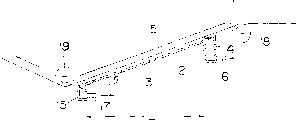
Such form of implementation as shown in Figure 1, stratiform host material 1 is preferably to provide continuously to the angle that tilts with level.This situation is equipped with the container 3 of resin combination, preferably as shown in the figure, have the tabular end and plate face form, when host material tilted, this plate face also tilted with identical angle.Therefore, the angle of inclination of host material might as well be thought of as and practically identical angle, θ as shown in fig. 1 (be the angle of inclination that the resin combination container is housed, level is equivalent to θ=0 ° to state).
When level when state is 0 °, the angle of inclination, can be according to character of used host material and resin combination etc., select and the above-mentioned identical contact condition retention time, generally angle being fixed on 0-90 ° (comprising 0 ° and 90 °), be preferably 10 °-70 °, is well 25 °-60 °, 30 °-45 ° especially good, for example is chosen as 30 °.As shown in the figure, in fact container 3 with the above-mentioned angle best ideal that tilts.Therefore, the distance between host material and the plate face bottom, just the thickness of resin combination itself or the degree of depth are subjected to using the influence of host material and resin combination properties, are generally 0.5-30mm, best 1-5mm, 1.5-3mm is better, for example optional 2mm.
Specifically, dipping method of the present invention, be to send into long continuous host material on one side, on one side from its downside first type surface impregnating resin composition, the angle of inclination of defined can make the resin combination in the long slab face of packing into flow well, and forms the resin combination surface that covers, therefore, can send into host material frequently continuously, in fact be parallel shape with the plate face.At this moment, the host material that infeeds continuously is owing to take away resin combination in the slave plate face continuously, so supplemental tree oil/fat composition in the plate face continuously.At this moment, when host material and the inclination of plate face, because resin combination flows to plate face lower end, so must reclaim the resin combination that flows to plate face lower end, and it is looped back the upper end of plate face, simultaneously, by replenishing the resin combination that reduces because of dipping, guarantee that varnish gum flows downward continuously on the plate face.
In the inclination form of host material and plate face, when slave plate face upper end supply resin combination, the groove of storage resin combination is set, make resin combination from this supply tank to the bottom of plate face automatic overflow, along the flow direction of resin combination infeed continuous host material (therefore, host material to send into direction identical with the resin flow direction, promptly, so-called also stream), just can keep in touch state well with this simple operations.
In level when sending into host material, because host material taken away resin combination, so essential continuous supplementation resin combination.Much less, provide resin combination though can reflux,, at this moment,, reduces plate owing to coiling interior resin combination, and host material must reduce to the bottom surface of plate face slightly.
The better implement form, when making continuous host material and resin combination keep in touch state, with first type surface one side of the continuous host material of the opposite side of first type surface of resin combination contact deep bead is being set, in fact the first type surface of an opposite side is separated with surrounding environment, so just suppressed the influence of surrounding environment, for example the influence of air stream.
Another good form of implementation is to contact back (therefore, the host material that has flooded resin combination is separated afterwards with the resin combination body) with resin combination, and two first type surfaces and the surrounding environment of host material separate.
Following with reference to accompanying drawing, the best form of implementation of flooding host material with varnish gum is an example, illustrates in greater detail the present invention.
Fig. 1 shows when implementing the inventive method, the simulative example of the immersion system of use.Illustrated immersion system has the plate face 3 of supply varnish gum 2, and this plate face can tilt with arbitrarily angled (θ) with level to being 0 °.This plate face 3, the groove 4 of varnish gum is accommodated in the end thereon, and the groove 15 that receive to flow and be soaked with the varnish gum (resin combination body) of dipping is arranged in its lower end.Varnish gum 2 for example, is provided in the accepting groove 4 with certain flow, and is mobile along the bottom surface of plate face 3 with the thickness of regulation from accepting groove 4 overflow downwards, is stored in the receiving slit 15.The varnish gum of storing is flowed out by outlet 17, and recirculation is reclaimed in the tank 4 usually.As shown in the figure because the plate face is as slide unit, with level to tilting, so varnish gum just can flow downward on the plate face by self weight with the θ angle.
Flooded the continuous host material 1 of varnish gum, it can be the glass knitting of long ribbon shape, glassine paper, glass aperture plate etc., by suitable host material supply centre (not shown) to plate face 3, for example the speed with regulation infeeds continuously, the roller 18 of the front by plate face 3 and the roller 19 of plate face 3 back, reach plate face 3 upper ends at host material 1, during reaching plate face lower end by the plate face, the varnish gum body that keeps a certain first type surface always and flow down on the plate face is contact condition, at least keep in touch state (promptly the downside at host material adheres to a spot of varnish gum state) with a part of varnish gum, guiding makes it to leave plate face 3.
In illustrated form, θ is about 30 °, just as described above, method of the present invention, in fact θ is 0 °-90 °.
In method shown in Figure 1, host material 1 is sent into by the direction of arrow among Fig. 1 continuously, and the lower surface of host material 1 and the liquid level (varnish gum body) of the varnish gum 2 on the plate face 3 contact varnish gum 2 immersion below continuous host material 1 continuously.Because varnish gum 2 immerses below continuous host material 1 at leisure upward, immersion along with varnish gum 2, air in the host material 1 will be from top discharge continuously, air just can not remain in the inside of continuous host material 1 like this, and varnish gum 2 is flooding with the degree of impregnation that makes progress in the host material 1 continuously.
Like this, reach the upwards principle of degree of impregnation in the inventive method, though be readily appreciated that according to following consideration, this consideration does not form any constraint to the present invention, and a feasible scheme of effect of the present invention only more reasonably is described.The present invention and this consideration do not have any relation, and the essential characteristic that the present invention paid is that host material is positioned at upside when a certain first type surface of host material and resin combination are contact condition.
Be that the lower surface of continuous host material 1 and the liquid level (body) of varnish gum 2 contact, because resin combination does not press on one's own initiative, partly be appreciated that from the oblique line shown in Fig. 4 pattern, from the lower surface of continuous host material 1 surface impregnation upwards slowly, the dipping of host material so carries out varnish gum 2 with capillarity.That is, the varnish gum elder generation head part that can think to be immersed in the host material is flooded to another surface of host material at leisure.
Therefore, shown in Fig. 7 (a), when being pressed into varnish gum, roomy opening part at first is full of by varnish gum between the strand 12 of host material 1, when reaching the first type surface of an opposite side, because varnish gum is to the sealing of strand, air in the strand in the small spaces is closed, the place that does not have escape, the result can prevent that air is closed in this phenomenon in the strand 12.According to inferring that according to this reason the varnish gum 2 that arrives strand 12 inside can flood by capillarity, can residual not impregnated part, varnish gum 2 can all soak in the continuous host material 1.
And then, as shown in Figure 6, when roller 11 is touched in use, though touching roller 11 can be with on the continuous host material 1 of varnish gum 2 with the coating of wire form of limiting the quantity of, but, the inventive method can be guaranteed, the upper end of host material 1 slave plate face 3 is between the lower end continuously, varnish gum 2 can keep flooding with continuous host material 1 contacted state, for example, even the speed of sending into of host material 1 is very fast continuously, also can provide the varnish gum 2 of capacity frequently to continuous host material 1, as a result, can think and to realize at a high speed dipping.
Fig. 2 shows another form of implementation of the inventive method, therefore host material 1 and varnish gum 2 contacted parts, are actually the part on plate face 3 continuously, continuous host material 1 side opposite with varnish gum 2 contact-making surfaces, promptly the upside at continuous host material 1 centers on deep bead 5.Like this, when continuous host material 1 is enclosed by deep bead 5, the exposed surface that just may prevent continuous host material 1 is not subjected to the influence of surrounding environment, the particularly influence of air-flow also can suppress to evaporate in the varnish gum 2 first head part of low boilers from be impregnated into continuous host material 1 of styrene monomer one class.Therefore, as shown in Figure 4, can think, rise, also just can not hinder varnish gum 2 to be immersed in the inside of strand 12 by capillarity owing to prevented to enter the viscosity of the varnish gum 2 first head part (being the top of oblique line part) in the continuous host material 1.
Fig. 3 is the another form of implementation of the inventive method, as shown in the figure, the deep bead 5 in addition at the upside place of plate face 3, and on continuous host material 1 gusset with deep bead, make by the continuous host material 1 that comes out in the plate face 3 directly by in the deep bead 6, host material 1 limit is centered on by deep bead 6 continuously, and carry on the limit, is not vulnerable to the influence of surrounding environment.This host material 1 is carried around one side by deep bead 6 on one side, the upper and lower surface that just can prevent continuous host material 1 is subjected to wind action, the same with the situation of above-mentioned deep bead 5, the first end face and the residual viscosity of exposing face attached to the varnish gum below the host material 1 continuously that have prevented the continuous host material by varnish gum rise, thereby have impelled varnish gum 2 to be immersed in the inside of strand 12 by capillarity.That is, in plate face 3, when dipping was endless during host material moved,,, still can carry out the remnants dipping owing to be not subjected to the influence of surrounding environment by during the deep bead 6.Therefore, the present invention's dipping made by above-mentioned dipping method also is provided host material of resin combination.
Therefore, as mentioned above, pass through the inventive method, after in continuous host material 1, having flooded varnish gum 2, make the continuous host material 1 that has flooded this varnish gum 2 again, make its heat drying by heating furnace, in case of necessity, can make preimpregnation material by partially hardened at least.Equally, with the overlapping heating of one or more layers this preimpregnation material, exert pressure in case of necessity again, make the laminate (but one deck preimpregnation material also can be made the shaping thing) of an integral body by the sclerosis that is shaped.In addition, on one or more overlapping preimpregnation material single or double, by various other layers in the heating or the overlapping shaping of according to circumstances pressurizeing, for example metal level such as Copper Foil is made metal foil laminate.And then the metal forming of this metal foil laminate is carried out printed wire and is processed to form the loop, thereby can be made into printed substrate.
In other method, under the state that has flooded varnish gum, by overlapping at least one host material or according to circumstances overlapping at least one other thin layer, heating shaping (by pressurization) sclerosis needn't be passed through the preimpregnation state, also can directly obtain the integral layer pressing plate.
Therefore, the present invention, the host material by above-mentioned dipping method is obtained carries out heat drying and/or sclerosis, makes preimpregnation material, and then the laminate of being made by at least one host material that has flooded resin combination.
Below further specify the present invention by specific embodiment:
Utilize device shown in Figure 1 to continuous host material 1 impregnating varnish resin 2.At this, as varnish gum 2, use the radical polymerization type heat reactive resin of modulation, after having mixed following complex, the decompression de-bubble is 30 minutes under 0.1atm.
Ethene fat resin (clear and macromolecule (strain) system " S510 ") 100 weight portions
Free radical polymerization initiator (Japanese grease (strain) system " パ-Block チ Le 0 ")
1 weight portion
As continuous host material used thickness is 0.18mm, and the fiberglass braided product of wide 1000mm (rising sun シ ュ ュ-ベ Le (strain) system " 7628 ", ASTM specification D579 and stipulate type mouth 7628 types) are sent into continuously with 2 meters/minute speed.Further adjust, the tilt angle theta of plate face 3=30 ℃, making the level of plate face 3 is L=1m to length, the about 2mm in gap between host material 1 and the plate face 3 continuously, the supply of varnish gum 2 is 10 liters/minute.
Use device shown in Figure 2 to continuous host material 1 impregnating varnish resin 2, at this, use the plate that forms with the PET film as deep bead 5, deep bead 5 is set the upper surface 50mm place of host material 1 continuously in distance, host material 1 covers on the plate face 3 comprehensively continuously.Other condition is identical with embodiment 1.
Embodiment 3
Use device shown in Figure 3 to continuous host material 1 impregnating varnish resin 2.At this, use the plate of making by the PET film as deep bead 6, apart from continuous host material 1 upper and lower surface 50mm place deep bead 6 is being set respectively, the upper and lower surface place at continuous host material 1 covers 1m on the longitudinal direction, and other condition is identical with embodiment 2.
Comparative example 1
Use and shown in Figure 5 touch roller device continuous host material 1 impregnating varnish resin 2.At this, the diameter that respectively touches roller 11 among Fig. 5 is 130mm, and the distance of touching between the roller 11 is set at 2000mm.The varnish gum 2 that uses, host material 1 is identical with embodiment 1-3 continuously, and the speed of sending into of the continuous host material 1 that sets is also identical with embodiment 1-3.
In the foregoing description 1-3 and comparative example, (plate face 3 exits among the embodiment 1-3, final position at the continuous host material 1 of distance impregnating varnish resin 2, touch roller 11 places after in the comparative example 1), 3m place to next process, with the naked eye detect continuous host material 1, obtain the evaluation of impregnation state shown in the table 1.
Table 1
| | | Embodiment 3 | Comparative example 1 |
| Dipping portion is not divided into several few | Dipping portion is not divided into number still less | In fact the dipping part does not have | Dipping portion is not divided into number a lot |
Declare from table 1 and to know, in the comparative example 1, from beginning to be coated with varnish gum 2 to continuous host material 1, during through 3m, the dipping part is a lot, and dipping property is very poor, but among each embodiment, the dipping part does not seldom almost have, and dipping property is fine.
Embodiment 4-6
At first prepare disclosed 3 kinds of resin combinations in Japan Patent 8-64322 number.
[making rubber modified vinylester resin]
The rubber modified vinylester resin that in resin combination, uses, synthetic with composition shown in the table 2 and deal by following program.
Acrylonitrile-butadiene rubber CTBN1300 * 8 of the carboxyl terminal that weighing is aqueous (trade name of emerging product society of space portion system) and CTBN1300 * 13 (the emerging trade name of producing society's system of space portion), (Dongdu changes into the trade name of society's system to epoxy resin YDB-400, epoxide equivalent 400) and the polymerization inhibitor hydroquinones, pack in 4 mouthfuls of bottles heating and melting into.Then, only add the catalysts triphen hydrogen phosphide (to call TPP in the following text) of the 1st section reacting dose shown in the table 2,, end (the 1st section reaction) below 1.0 to becoming to acid value 100 ℃ of reactions down.Subsequently, add the methacrylic acid (レ of Mitsubishi-ョ Application society system) and the TPP (the just amount of the 2nd section reaction) of the amount of Table 2 again, 120 ℃ of reactions down, till acid value becomes below 10.0, obtain rubber modified vinylester resin, measure acid number according to JISK6901.
Table 2
| Rubber modified vinylester resin | ||||
| Embodiment 4 | | | ||
| ?CTBN1300×13 | ????49.8 | ????18.7 | ?????31.2 | |
| ?CTBN1300×8 | ????49.8 | ????18.7 | ?????31.2 | |
| Cooperate (gram) | Epoxy resin (YDB-400) | ????583.6 | ????635.4 | ?????614.7 |
| Hydroquinones | ????0.2 | ????0.2 | ?????0.2 | |
| TPP (1 section reaction) | ????0.34 | ????0.34 | ?????0.34 | |
| Methacrylic acid | ????116.8 | ????127.2 | ?????123.1 | |
| TPP (2 sections reactions) | ????0.4 | ????0.4 | ?????0.4 | |
| Contain the polymeric ratio of rubber (W%) | ????12.45 | ????4.68 | ?????7.80 | |
[preparation resin combination]
In the ratio shown in the table 3, the above-mentioned rubber modified vinylester resin that obtains and other composition are mixed, make disclosed resin combination in Japan Patent 8-64322 number.Prepare resin combination, can contain the free radical polymerization initiator (trade name: パ-Network ミ Le H Japan grease society system) of 1 weight portion at the total amount of composition shown in the table 3.The polymeric ratio of rubber-like is also remembered in table 2 and table 3 in the lump in the resin combination of trying to achieve according to calculating.
Table 3
| Embodiment 4 | | | ||
| Cooperate weight % | Rubber modified vinylester resin | ????64 | ????64 | ????64 |
| Styrene | ????22 | ????25 | ????27 | |
| Acrylic acid | ????6 | ????6 | ????0 | |
| Methacrylic acid | ????0 | ????0 | ????6 | |
| The polymeric ratio of rubber-like (weight %) in the resin combination | ????8 | ????5 | ????3 | |
Styrene: chemistry society of Nippon Steel system
Acrylic acid: oiling society of Mitsubishi system repeats embodiment 1 except outside the resin combination and host material transporting velocity 1m/ branch that use above-mentioned preparation.
Comparative example 2-4
Replace to use the inventive method, use the device that uses in the comparative example 1, except the transporting velocity of host material be 1m/ exceptionally, other implement the dipping identical with embodiment 4-6.
The same with the foregoing description 1-3 with the situation of comparative example 1, detect degree of steeping by naked eyes.The results are shown in table 4 and table 5.
Table 4
| Embodiment 4 | | |
| Dipping portion is not divided into number seldom | Dipping portion is not divided into number still less | Do not flood that part is actual not to be had |
Table 5
| Comparative example 2 | Comparative example 3 | Comparative example 4 |
| Dipping portion is not divided into number a lot | Dipping portion is not divided into number a lot | Dipping portion is not divided into number a lot |
Declare from these results and to know, use dipping method of the present invention, when touching roller, can obtain to improve degree of impregnation than use.
Embodiment 7-9
When using following resin combination, except changing the transporting velocity of continuous host material, outside the angle of inclination that changes host material, other are with the condition identical with embodiment 1, behind host material impregnating resin composition, be heated to 180 ℃, drying, dried weight resin is about 51 (w) % of preimpregnation material.[preparation resin combination]
Epoxy resin (1): epoxide equivalent is 500 tetrabromo diphenol A type epoxy resin (Dongdu changes into society's system, trade name YDB-500) 94 weight portions
Epoxy resin (2): epoxide equivalent is 220 cresols thermoplastic phenolic type epoxy resin (Dongdu changes into society's system, trade name YDCN-220) 13 weight portions
Curing agent: dicyano diamides 2.8 weight portions
Hardening accelerator: 2-ethyl 4-methylimidazole 0.1 weight portion
Solvent: N, dinethylformamide 25 weight portions
Epoxy resin (1) and (2) are solids.Press the transporting velocity of the continuous host material of change shown in the table 6 and the angle of inclination of host material.Table 6
| Embodiment 7 | Embodiment 8 | Embodiment 9 | |
| The host material transporting velocity | The 5m/ branch | The 5m/ branch | The 5m/ branch |
| The angle of inclination | 30° | ??10° | ????90° |
Comparative example 5
Use the device (touching roller) of comparative example 1, utilize resin combination dipping host material used among the embodiment 7-9.The transporting velocity of host material is the 3m/ branch.
The preimpregnation material that the dipping heating obtains from the foregoing description 7-9 and comparative example 5 cuts the test film of 10cm * 10cm, hangs in electric furnace, and heating is after 15 minutes down at 163 ℃, and cooling is with the naked eye estimated fiberglass braided product and had or not the part of not flooded by resin.The results are shown in table 7.
Table 7
| Embodiment 7 | Embodiment 8 | Embodiment 9 | Comparative example 5 |
| In fact the dipping part does not have | It is fewer that dipping portion is not divided into number | Dipping portion is not divided into number seldom | Dipping portion is not divided into number a lot |
As what know from this result, use the inventive method, even the angle of inclination is 90 °, compare when touching roller with use, also can obtain degree of impregnation and improve.And, even the transporting velocity of increase host material and use were compared when touching roller, also can obtain the raising of degree of impregnation.
Use the invention described above, carry host material on one side with opening, one side is from the lower surface of its surface impregnation resin combination host material and the contact condition of resin combination body, because host material remains in upside, so can reduce active force limitedly to host material, resin combination can immerse in the host material by capillarity, thereby has suppressed the residual part of dipping that has.
In addition, resin combination flows down on the plate face, and continuous host material one side and the parallel conveying of this plate face upper surface are Yi Bian make the surface of continuous host material contact with the resin combination that the plate face flows down above.Tilt with predetermined angular, when keeping host material and resin combination to be contact condition, the upper end of slave plate face is between the lower end, resin combination contacts with continuous host material continuously, and floods, even host material is with very fast transporting velocity continuously, can both be present in frequently with the resin combination of sufficient quantity on the lower surface of continuous host material, and flood, the result, dipping becomes possibility at a high speed.
And then, upper end at the plate face is provided with the supply tank that resin combination is provided, from this supply tank, the resin combination automatic overflow goes out, and flows down along the upper surface of plate face, on the plate face, cover with the liquid level of equal thickness on the transverse direction of dish (flowing down direction and vertical direction), can guarantee that resin combination flows, resin combination laterally evenly covers on the continuous host material, can flood at an easy rate.
Have again, keep in touch in the state at host material and resin combination, when the contact-making surface of host material and resin combination and opposing face center on deep bead continuously, can limitedly prevent that the surface of continuous host material is subjected to the strong influence of evil of surrounding environment, also prevented to rise because of the low boiling point component evaporation makes the viscosity of the resin combination (or soaking into face) of dipping host material, and can pass through capillarity, resin combination is immersed in the inside of continuous host material effectively, has improved dipping greatly.
Fig. 1 is a routine form of implementation skeleton diagram of expression the inventive method.
Fig. 2 is another routine form of implementation skeleton diagram of expression the inventive method.
Fig. 3 is the another routine form of implementation skeleton diagram of expression the inventive method.
Fig. 4 is the broad cross-section map of maceration among explanation the present invention.
Fig. 5 is an equipment therefor skeleton diagram in the comparative example.
Fig. 6 is the skeleton diagram of honest example.
Fig. 7 (a) and (b) be that the broad cross-section map of the maceration of example in the past is described respectively.
Symbol description
1 continuous host material
2 resin combinations
3 plate faces
4 supply with groove
5 deep beads
6 deep beads
Claims (13)
1 one kinds of impregnating resin method for compositions in host material, be to have opening, in fact form the host material opening of regulation stratiform by 2 apparent surfaces, the dipping liquid resin composition, when it is characterized in that a certain first type surface contacts with resin combination, keep making host material be positioned at the state of upside.
2 methods according to claim 1 is characterized in that host material is the elongate objects that infeeds continuously.
3 methods according to claim 2, it is characterized in that host material by level to, tilt with the predetermined angular in 0 ° of-90 ° of scope, contact with resin combination.
4 methods according to claim 3 is characterized in that in fact resin combination flows down with the host material equal angular, and host material and the same direction of the composition that flows down are sent into, and keep host material and resin combination to be contact condition with this.
5 according to the method described in each of claim 1-4, it is characterized in that flooding the host material of resin combination, utilizes deep bead device and surrounding environment to isolate.
6 methods according to claim 5 is characterized in that deep bead device space behavior, are contact condition to keep resin combination and host material.
7 according to claim 5 or 6 described methods, it is characterized in that the deep bead device, after keeping resin combination and host material to be contact condition, to having flooded the host material generation effect of resin combination.
8 according to the method described in each of claim 1-7, it is characterized in that host material is selected from the netted thing of fiberglass braided product, all-glass paper or glass fibre.
9 according to the method described in each of claim 1-8, it is characterized in that as resin combination, uses the resin combination that contains following composition,
(A) (a) epoxy resin
(b) contain amino and/or carboxyl conjugated diene rubber condensate and
(c) the rubber modified vinylester resin that the reaction of acrylic acid and/or methacrylate is obtained,
(B) free radical polymerization monomer and
(c) free radical polymerization initiator.
10 methods according to claim 9 is characterized in that using the free radical polymerization monomer with styrene and OH as (B) composition, and the contained ratio with free radical polymerization monomer of OH base is the 4-8 weight % of resin combination total amount.
The host material of the 11 resinous compositions that make according to claim 1-10 method described in each.
12 according to claim 1-10 method described in each, by the host material that has flooded resin combination being heated dry and/or sclerosis, the preimpregnation material that makes.
13 according to claim 1-10 method described in each, and the host material and at least a metal level that have flooded resin combination by one deck at least are overlapping, add the thermosetting one, and the laminate that makes.
Applications Claiming Priority (6)
| Application Number | Priority Date | Filing Date | Title |
|---|---|---|---|
| JP430796 | 1996-01-12 | ||
| JP004307/1996 | 1996-01-12 | ||
| JP004307/96 | 1996-01-12 | ||
| JP064322/1996 | 1996-03-21 | ||
| JP6432296A JPH09255739A (en) | 1996-03-21 | 1996-03-21 | Resin composition for laminate and copper-clad laminate produced by using the same |
| JP064322/96 | 1996-03-21 |
Publications (2)
| Publication Number | Publication Date |
|---|---|
| CN1170638A true CN1170638A (en) | 1998-01-21 |
| CN1118338C CN1118338C (en) | 2003-08-20 |
Family
ID=26338053
Family Applications (1)
| Application Number | Title | Priority Date | Filing Date |
|---|---|---|---|
| CN97102981A Expired - Fee Related CN1118338C (en) | 1996-01-12 | 1997-01-12 | Impregnation process for substrate material and impregnated substrate material and articles made thereof |
Country Status (5)
| Country | Link |
|---|---|
| US (1) | US6143369A (en) |
| EP (1) | EP0783946B1 (en) |
| CN (1) | CN1118338C (en) |
| DE (1) | DE69714482T2 (en) |
| TW (1) | TW343210B (en) |
Cited By (3)
| Publication number | Priority date | Publication date | Assignee | Title |
|---|---|---|---|---|
| CN102781592A (en) * | 2009-12-18 | 2012-11-14 | 化学工业有限公司 | Product and process for simultaneous cleaning, painting, and impregnation of an aqueous base for plastic pieces |
| TWI381925B (en) * | 2006-11-16 | 2013-01-11 | Sumitomo Bakelite Co | Prepreg manufacturing method and prepreg |
| CN108291044A (en) * | 2015-12-25 | 2018-07-17 | 东丽株式会社 | Prepreg and its manufacturing method |
Families Citing this family (22)
| Publication number | Priority date | Publication date | Assignee | Title |
|---|---|---|---|---|
| US6964749B2 (en) * | 2001-06-04 | 2005-11-15 | Polymer Group, Inc. | Three-dimensional nonwoven substrate for circuit board |
| DE10134302C1 (en) * | 2001-07-14 | 2002-12-12 | Technocell Dekor Gmbh & Co Kg | Preimpregnate, process for its production and decorative impregnates or decorative coating materials obtainable therefrom |
| WO2008059603A1 (en) * | 2006-11-15 | 2008-05-22 | Sumitomo Bakelite Co., Ltd. | Prepreg manufacturing method and prepreg |
| US8569876B2 (en) | 2006-11-22 | 2013-10-29 | Tessera, Inc. | Packaged semiconductor chips with array |
| US7791199B2 (en) * | 2006-11-22 | 2010-09-07 | Tessera, Inc. | Packaged semiconductor chips |
| EP2135280A2 (en) | 2007-03-05 | 2009-12-23 | Tessera, Inc. | Chips having rear contacts connected by through vias to front contacts |
| KR101538648B1 (en) | 2007-07-31 | 2015-07-22 | 인벤사스 코포레이션 | Semiconductor packaging process using through silicon vias |
| SK287845B6 (en) * | 2007-09-18 | 2012-01-04 | Stu Fakulta Chemickej A Potravinarskej Technologie | Multifunction device for modification of cellulose materials and method for modification of cellulose materials |
| US8791575B2 (en) | 2010-07-23 | 2014-07-29 | Tessera, Inc. | Microelectronic elements having metallic pads overlying vias |
| US9640437B2 (en) | 2010-07-23 | 2017-05-02 | Tessera, Inc. | Methods of forming semiconductor elements using micro-abrasive particle stream |
| US8796135B2 (en) | 2010-07-23 | 2014-08-05 | Tessera, Inc. | Microelectronic elements with rear contacts connected with via first or via middle structures |
| US8847380B2 (en) | 2010-09-17 | 2014-09-30 | Tessera, Inc. | Staged via formation from both sides of chip |
| US8610259B2 (en) | 2010-09-17 | 2013-12-17 | Tessera, Inc. | Multi-function and shielded 3D interconnects |
| KR101059490B1 (en) | 2010-11-15 | 2011-08-25 | 테세라 리써치 엘엘씨 | Conductive pads constructed by embedded traces |
| US8736066B2 (en) | 2010-12-02 | 2014-05-27 | Tessera, Inc. | Stacked microelectronic assemby with TSVS formed in stages and carrier above chip |
| US8637968B2 (en) | 2010-12-02 | 2014-01-28 | Tessera, Inc. | Stacked microelectronic assembly having interposer connecting active chips |
| US8587126B2 (en) | 2010-12-02 | 2013-11-19 | Tessera, Inc. | Stacked microelectronic assembly with TSVs formed in stages with plural active chips |
| US8610264B2 (en) | 2010-12-08 | 2013-12-17 | Tessera, Inc. | Compliant interconnects in wafers |
| DE102016202337A1 (en) * | 2016-02-16 | 2017-08-17 | Rolls-Royce Deutschland Ltd & Co Kg | Process for the production of semi-finished textile products and semi-finished textile products |
| US10953598B2 (en) * | 2016-11-04 | 2021-03-23 | Continuous Composites Inc. | Additive manufacturing system having vibrating nozzle |
| US11358347B2 (en) * | 2019-02-21 | 2022-06-14 | Johns Manville | Manufacturing fiber-reinforced thermoplastic concentrates |
| CA3131502A1 (en) * | 2019-02-27 | 2020-09-03 | Kuraray Co., Ltd. | Reinforcing fiber, method for manufacturing same, and molded body using same |
Family Cites Families (14)
| Publication number | Priority date | Publication date | Assignee | Title |
|---|---|---|---|---|
| US3526536A (en) * | 1967-08-28 | 1970-09-01 | Scott Paper Co | Process and apparatus for bead coating a web |
| US3632374A (en) * | 1968-06-03 | 1972-01-04 | Eastman Kodak Co | Method of making photographic elements |
| US4076867A (en) * | 1975-02-28 | 1978-02-28 | Armstrong Cork Company | Multilevel embossing of foamed-sheet materials |
| US4116162A (en) * | 1977-08-31 | 1978-09-26 | Hoechst Aktiengesellschaft | Coating device |
| DE2921163A1 (en) * | 1979-05-25 | 1980-12-04 | Bayer Ag | SELF-HARDENING MATERIAL FOR PRODUCING A WEATHER-RESISTANT, NON-YELLOWING SUPPORT ASSEMBLY |
| DE3033264C2 (en) * | 1980-09-04 | 1984-06-20 | Dynamit Nobel Ag, 5210 Troisdorf | Process for the production of porous textile carrier webs impregnated with thermoplastic plastic pastes |
| GB8329289D0 (en) * | 1983-11-02 | 1983-12-07 | Otty M | Resin impregnation method |
| JPS60217232A (en) | 1984-04-11 | 1985-10-30 | Matsushita Electric Works Ltd | Rubber-modified vinyl ester and thermosetting resin composition containing the same |
| US4767643A (en) * | 1986-07-22 | 1988-08-30 | Westinghouse Electric Corp. | Method of continuously vacuum impregnating fibrous sheet material |
| JPH0373339A (en) | 1990-08-09 | 1991-03-28 | Matsushita Electric Works Ltd | Electrical metal foil clad laminated sheet |
| AT397387B (en) * | 1991-06-24 | 1994-03-25 | Isovolta | METHOD FOR IMPREGNATING A SURFACE, FIBROUS SUPPORT MATERIAL WITH SYNTHETIC RESIN, DEVICES FOR IMPLEMENTING THIS METHOD, PRODUCTS PRODUCED BY THIS METHOD AND THE USE THEREOF |
| JPH0529548A (en) * | 1991-07-23 | 1993-02-05 | Matsushita Electric Ind Co Ltd | Semiconductor device and method of manufacturing semiconductor device |
| US5354376A (en) * | 1992-03-11 | 1994-10-11 | Institute Of Paper Science And Technology | Flotation coating device for traveling webs |
| AT400550B (en) * | 1992-05-15 | 1996-01-25 | Isovolta | COMPRESSIBLE PREPREG ON THE BASIS OF SURFACE MATERIALS IMPREGNATED WITH DUROMER SYNTHETIC RESINS, A METHOD FOR THE PRODUCTION AND THE USE THEREOF |
-
1996
- 1996-12-10 TW TW085115342A patent/TW343210B/en not_active IP Right Cessation
- 1996-12-30 US US08/773,947 patent/US6143369A/en not_active Expired - Lifetime
-
1997
- 1997-01-08 DE DE69714482T patent/DE69714482T2/en not_active Expired - Lifetime
- 1997-01-08 EP EP97100174A patent/EP0783946B1/en not_active Expired - Lifetime
- 1997-01-12 CN CN97102981A patent/CN1118338C/en not_active Expired - Fee Related
Cited By (3)
| Publication number | Priority date | Publication date | Assignee | Title |
|---|---|---|---|---|
| TWI381925B (en) * | 2006-11-16 | 2013-01-11 | Sumitomo Bakelite Co | Prepreg manufacturing method and prepreg |
| CN102781592A (en) * | 2009-12-18 | 2012-11-14 | 化学工业有限公司 | Product and process for simultaneous cleaning, painting, and impregnation of an aqueous base for plastic pieces |
| CN108291044A (en) * | 2015-12-25 | 2018-07-17 | 东丽株式会社 | Prepreg and its manufacturing method |
Also Published As
| Publication number | Publication date |
|---|---|
| DE69714482T2 (en) | 2003-05-08 |
| EP0783946A2 (en) | 1997-07-16 |
| CN1118338C (en) | 2003-08-20 |
| DE69714482D1 (en) | 2002-09-12 |
| US6143369A (en) | 2000-11-07 |
| TW343210B (en) | 1998-10-21 |
| EP0783946B1 (en) | 2002-08-07 |
| EP0783946A3 (en) | 1998-09-16 |
Similar Documents
| Publication | Publication Date | Title |
|---|---|---|
| CN1118338C (en) | Impregnation process for substrate material and impregnated substrate material and articles made thereof | |
| US11015047B1 (en) | Moldings of fiber-reinforced thermoplastic resin | |
| CN1077118C (en) | Cross-linked polyolefinic foams and process for their production | |
| Dairi et al. | Morphological, mechanical, and physical properties of composites made with wood flour‐reinforced polypropylene/recycled poly (ethylene terephthalate) blends | |
| EP2371897A1 (en) | Fiber-reinforced propylene resin composition | |
| CN1813022A (en) | Microparticle containing silicone release coatings having improved anti-block and release properties | |
| KR102435612B1 (en) | Eco-friendly buoy and its manufacturing method | |
| CN1699457A (en) | Silicane crosslinked low-retraction polyethylene plastic and its preparation method and use | |
| JPS58169521A (en) | Coated elongated chain polyolefin fiber | |
| JP2013173811A (en) | Resin composition, molding material and method for producing the same | |
| CN105255329B (en) | A kind of modification bamboo fibre of UV-cured resin cladding and preparation method thereof | |
| CN1265165A (en) | Non-woven fabric treatment | |
| CN1413814A (en) | Chopped strand and unsaturated polyester resin BMC moulding product made by it | |
| CN1089778C (en) | Polymer product manufacture | |
| JP2012091418A (en) | Method for manufacturing fiber reinforced resin sheet | |
| CN1270968A (en) | Process for preparing foam resin product | |
| Shibata et al. | Preparation and properties of biocomposites composed of glycerol‐based epoxy resins, tannic acid, and wood flour | |
| JP2014096252A (en) | Wire and cable using silane crosslinked polyethylene and method of producing the same | |
| US11421119B2 (en) | Resin composition, and three-dimensional moulding production method | |
| Rahman et al. | Jute reinforced polypropylene composite: effect of surface pretreatment by photocuring with acrylic monomers | |
| KR20200079329A (en) | Liquid composition for application of SMC-molded thermoplastic composites | |
| CN1304467C (en) | In-mold foam molding method of polyolefin resin foam | |
| JP2013194338A (en) | Carbon fiber bundle and composite material formed by the same | |
| JP6554815B2 (en) | Fiber-reinforced thermoplastic resin molded article and fiber-reinforced thermoplastic resin molding material | |
| CN1526526A (en) | Resin composition for impregnating wood and impregnated wood |
Legal Events
| Date | Code | Title | Description |
|---|---|---|---|
| C10 | Entry into substantive examination | ||
| SE01 | Entry into force of request for substantive examination | ||
| C06 | Publication | ||
| PB01 | Publication | ||
| C14 | Grant of patent or utility model | ||
| GR01 | Patent grant | ||
| REG | Reference to a national code |
Ref country code: HK Ref legal event code: WD Ref document number: 1008505 Country of ref document: HK |
|
| CF01 | Termination of patent right due to non-payment of annual fee |
Granted publication date: 20030820 Termination date: 20160112 |
|
| CF01 | Termination of patent right due to non-payment of annual fee |