EP0002067A1 - Procédé pour la fabrication de corps denses polycristallins en carbure de bore par frittage sans compression à chaud - Google Patents
Procédé pour la fabrication de corps denses polycristallins en carbure de bore par frittage sans compression à chaud Download PDFInfo
- Publication number
- EP0002067A1 EP0002067A1 EP78101417A EP78101417A EP0002067A1 EP 0002067 A1 EP0002067 A1 EP 0002067A1 EP 78101417 A EP78101417 A EP 78101417A EP 78101417 A EP78101417 A EP 78101417A EP 0002067 A1 EP0002067 A1 EP 0002067A1
- Authority
- EP
- European Patent Office
- Prior art keywords
- boron carbide
- carbon
- sintering
- density
- sintered
- Prior art date
- Legal status (The legal status is an assumption and is not a legal conclusion. Google has not performed a legal analysis and makes no representation as to the accuracy of the status listed.)
- Granted
Links
- 229910052580 B4C Inorganic materials 0.000 title claims abstract description 85
- INAHAJYZKVIDIZ-UHFFFAOYSA-N boron carbide Chemical compound B12B3B4C32B41 INAHAJYZKVIDIZ-UHFFFAOYSA-N 0.000 title claims abstract description 84
- 238000000034 method Methods 0.000 title claims abstract description 45
- 230000008569 process Effects 0.000 title claims abstract description 27
- 238000004519 manufacturing process Methods 0.000 title claims abstract description 8
- 238000001272 pressureless sintering Methods 0.000 title claims description 3
- OKTJSMMVPCPJKN-UHFFFAOYSA-N Carbon Chemical compound [C] OKTJSMMVPCPJKN-UHFFFAOYSA-N 0.000 claims abstract description 85
- 229910052799 carbon Inorganic materials 0.000 claims abstract description 70
- 239000000843 powder Substances 0.000 claims abstract description 39
- 239000000654 additive Substances 0.000 claims abstract description 26
- 230000000996 additive effect Effects 0.000 claims abstract description 23
- 238000000465 moulding Methods 0.000 claims abstract description 10
- 229920001568 phenolic resin Polymers 0.000 claims abstract description 7
- 238000007493 shaping process Methods 0.000 claims abstract description 6
- 239000006229 carbon black Substances 0.000 claims abstract description 5
- SLGWESQGEUXWJQ-UHFFFAOYSA-N formaldehyde;phenol Chemical compound O=C.OC1=CC=CC=C1 SLGWESQGEUXWJQ-UHFFFAOYSA-N 0.000 claims abstract description 4
- 239000007859 condensation product Substances 0.000 claims abstract description 3
- 239000011294 coal tar pitch Substances 0.000 claims abstract 2
- 238000005245 sintering Methods 0.000 claims description 43
- 229910003481 amorphous carbon Inorganic materials 0.000 claims description 13
- 239000011368 organic material Substances 0.000 claims description 7
- 230000001681 protective effect Effects 0.000 claims description 5
- 238000009826 distribution Methods 0.000 claims description 3
- 230000015572 biosynthetic process Effects 0.000 claims description 2
- 241000872198 Serjania polyphylla Species 0.000 claims 1
- 229910002804 graphite Inorganic materials 0.000 abstract description 16
- 239000010439 graphite Substances 0.000 abstract description 16
- 239000000203 mixture Substances 0.000 abstract description 11
- CSCPPACGZOOCGX-UHFFFAOYSA-N Acetone Chemical compound CC(C)=O CSCPPACGZOOCGX-UHFFFAOYSA-N 0.000 description 13
- 229910052796 boron Inorganic materials 0.000 description 13
- ZOXJGFHDIHLPTG-UHFFFAOYSA-N Boron Chemical compound [B] ZOXJGFHDIHLPTG-UHFFFAOYSA-N 0.000 description 12
- IJGRMHOSHXDMSA-UHFFFAOYSA-N Atomic nitrogen Chemical compound N#N IJGRMHOSHXDMSA-UHFFFAOYSA-N 0.000 description 8
- 239000000243 solution Substances 0.000 description 8
- 229920003986 novolac Polymers 0.000 description 7
- 239000000725 suspension Substances 0.000 description 7
- XKRFYHLGVUSROY-UHFFFAOYSA-N Argon Chemical compound [Ar] XKRFYHLGVUSROY-UHFFFAOYSA-N 0.000 description 6
- UQVOJETYKFAIRZ-UHFFFAOYSA-N beryllium carbide Chemical compound [Be][C][Be] UQVOJETYKFAIRZ-UHFFFAOYSA-N 0.000 description 6
- 239000011230 binding agent Substances 0.000 description 5
- 239000007789 gas Substances 0.000 description 5
- 238000010438 heat treatment Methods 0.000 description 5
- 239000002245 particle Substances 0.000 description 5
- 238000005452 bending Methods 0.000 description 4
- 238000002474 experimental method Methods 0.000 description 4
- 238000004898 kneading Methods 0.000 description 4
- 229910052757 nitrogen Inorganic materials 0.000 description 4
- 229910052582 BN Inorganic materials 0.000 description 3
- PZNSFCLAULLKQX-UHFFFAOYSA-N Boron nitride Chemical compound N#B PZNSFCLAULLKQX-UHFFFAOYSA-N 0.000 description 3
- XEEYBQQBJWHFJM-UHFFFAOYSA-N Iron Chemical compound [Fe] XEEYBQQBJWHFJM-UHFFFAOYSA-N 0.000 description 3
- 238000004458 analytical method Methods 0.000 description 3
- 229910052786 argon Inorganic materials 0.000 description 3
- QVGXLLKOCUKJST-UHFFFAOYSA-N atomic oxygen Chemical compound [O] QVGXLLKOCUKJST-UHFFFAOYSA-N 0.000 description 3
- 230000008901 benefit Effects 0.000 description 3
- 125000004432 carbon atom Chemical group C* 0.000 description 3
- JKWMSGQKBLHBQQ-UHFFFAOYSA-N diboron trioxide Chemical compound O=BOB=O JKWMSGQKBLHBQQ-UHFFFAOYSA-N 0.000 description 3
- 238000005516 engineering process Methods 0.000 description 3
- 238000007731 hot pressing Methods 0.000 description 3
- 238000012986 modification Methods 0.000 description 3
- 230000004048 modification Effects 0.000 description 3
- 239000001301 oxygen Substances 0.000 description 3
- 229910052760 oxygen Inorganic materials 0.000 description 3
- 239000002904 solvent Substances 0.000 description 3
- 239000007858 starting material Substances 0.000 description 3
- 238000005482 strain hardening Methods 0.000 description 3
- KXGFMDJXCMQABM-UHFFFAOYSA-N 2-methoxy-6-methylphenol Chemical compound [CH]OC1=CC=CC([CH])=C1O KXGFMDJXCMQABM-UHFFFAOYSA-N 0.000 description 2
- FYYHWMGAXLPEAU-UHFFFAOYSA-N Magnesium Chemical compound [Mg] FYYHWMGAXLPEAU-UHFFFAOYSA-N 0.000 description 2
- 239000004372 Polyvinyl alcohol Substances 0.000 description 2
- QAOWNCQODCNURD-UHFFFAOYSA-N Sulfuric acid Chemical compound OS(O)(=O)=O QAOWNCQODCNURD-UHFFFAOYSA-N 0.000 description 2
- -1 boron halides Chemical class 0.000 description 2
- 239000000919 ceramic Substances 0.000 description 2
- 239000007795 chemical reaction product Substances 0.000 description 2
- 238000005056 compaction Methods 0.000 description 2
- 230000000052 comparative effect Effects 0.000 description 2
- 230000006835 compression Effects 0.000 description 2
- 238000007906 compression Methods 0.000 description 2
- 230000006866 deterioration Effects 0.000 description 2
- 229910003460 diamond Inorganic materials 0.000 description 2
- 239000010432 diamond Substances 0.000 description 2
- 238000007723 die pressing method Methods 0.000 description 2
- 230000000694 effects Effects 0.000 description 2
- 238000000227 grinding Methods 0.000 description 2
- 239000012535 impurity Substances 0.000 description 2
- 238000000462 isostatic pressing Methods 0.000 description 2
- 229910052749 magnesium Inorganic materials 0.000 description 2
- 239000011777 magnesium Substances 0.000 description 2
- 239000000463 material Substances 0.000 description 2
- 238000002844 melting Methods 0.000 description 2
- 230000008018 melting Effects 0.000 description 2
- 239000003960 organic solvent Substances 0.000 description 2
- 239000005011 phenolic resin Substances 0.000 description 2
- 229920002451 polyvinyl alcohol Polymers 0.000 description 2
- 238000003825 pressing Methods 0.000 description 2
- 238000012545 processing Methods 0.000 description 2
- 239000000126 substance Substances 0.000 description 2
- 238000004438 BET method Methods 0.000 description 1
- UGFAIRIUMAVXCW-UHFFFAOYSA-N Carbon monoxide Chemical compound [O+]#[C-] UGFAIRIUMAVXCW-UHFFFAOYSA-N 0.000 description 1
- UFHFLCQGNIYNRP-UHFFFAOYSA-N Hydrogen Chemical compound [H][H] UFHFLCQGNIYNRP-UHFFFAOYSA-N 0.000 description 1
- 239000002202 Polyethylene glycol Substances 0.000 description 1
- 235000021355 Stearic acid Nutrition 0.000 description 1
- RTAQQCXQSZGOHL-UHFFFAOYSA-N Titanium Chemical compound [Ti] RTAQQCXQSZGOHL-UHFFFAOYSA-N 0.000 description 1
- 239000006096 absorbing agent Substances 0.000 description 1
- 238000010521 absorption reaction Methods 0.000 description 1
- 239000006230 acetylene black Substances 0.000 description 1
- 230000002411 adverse Effects 0.000 description 1
- 150000001298 alcohols Chemical class 0.000 description 1
- 125000001931 aliphatic group Chemical group 0.000 description 1
- 239000007864 aqueous solution Substances 0.000 description 1
- UORVGPXVDQYIDP-UHFFFAOYSA-N borane Chemical class B UORVGPXVDQYIDP-UHFFFAOYSA-N 0.000 description 1
- 229910000085 borane Inorganic materials 0.000 description 1
- KGBXLFKZBHKPEV-UHFFFAOYSA-N boric acid Chemical compound OB(O)O KGBXLFKZBHKPEV-UHFFFAOYSA-N 0.000 description 1
- 239000004327 boric acid Substances 0.000 description 1
- 229910052810 boron oxide Inorganic materials 0.000 description 1
- 229910002091 carbon monoxide Inorganic materials 0.000 description 1
- 238000004939 coking Methods 0.000 description 1
- 150000001875 compounds Chemical class 0.000 description 1
- 239000000356 contaminant Substances 0.000 description 1
- 238000011109 contamination Methods 0.000 description 1
- 238000001816 cooling Methods 0.000 description 1
- 230000007123 defense Effects 0.000 description 1
- 230000008021 deposition Effects 0.000 description 1
- 239000006185 dispersion Substances 0.000 description 1
- 229920001971 elastomer Polymers 0.000 description 1
- 238000000866 electrolytic etching Methods 0.000 description 1
- 230000008020 evaporation Effects 0.000 description 1
- 238000001704 evaporation Methods 0.000 description 1
- 238000001125 extrusion Methods 0.000 description 1
- 230000002349 favourable effect Effects 0.000 description 1
- 238000004108 freeze drying Methods 0.000 description 1
- 239000001307 helium Substances 0.000 description 1
- 229910052734 helium Inorganic materials 0.000 description 1
- SWQJXJOGLNCZEY-UHFFFAOYSA-N helium atom Chemical compound [He] SWQJXJOGLNCZEY-UHFFFAOYSA-N 0.000 description 1
- 229930195733 hydrocarbon Natural products 0.000 description 1
- 150000002430 hydrocarbons Chemical class 0.000 description 1
- 239000001257 hydrogen Substances 0.000 description 1
- 229910052739 hydrogen Inorganic materials 0.000 description 1
- 230000001771 impaired effect Effects 0.000 description 1
- 230000006698 induction Effects 0.000 description 1
- 230000002401 inhibitory effect Effects 0.000 description 1
- 238000011835 investigation Methods 0.000 description 1
- 229910052742 iron Inorganic materials 0.000 description 1
- 238000011031 large-scale manufacturing process Methods 0.000 description 1
- 239000007788 liquid Substances 0.000 description 1
- 238000001000 micrograph Methods 0.000 description 1
- 229910052756 noble gas Inorganic materials 0.000 description 1
- 150000002835 noble gases Chemical class 0.000 description 1
- 238000005025 nuclear technology Methods 0.000 description 1
- QIQXTHQIDYTFRH-UHFFFAOYSA-N octadecanoic acid Chemical compound CCCCCCCCCCCCCCCCCC(O)=O QIQXTHQIDYTFRH-UHFFFAOYSA-N 0.000 description 1
- OQCDKBAXFALNLD-UHFFFAOYSA-N octadecanoic acid Natural products CCCCCCCC(C)CCCCCCCCC(O)=O OQCDKBAXFALNLD-UHFFFAOYSA-N 0.000 description 1
- 229920003023 plastic Polymers 0.000 description 1
- 239000004033 plastic Substances 0.000 description 1
- 229920001223 polyethylene glycol Polymers 0.000 description 1
- 238000012805 post-processing Methods 0.000 description 1
- 238000004663 powder metallurgy Methods 0.000 description 1
- 230000009467 reduction Effects 0.000 description 1
- 238000011946 reduction process Methods 0.000 description 1
- 229920003987 resole Polymers 0.000 description 1
- 238000005488 sandblasting Methods 0.000 description 1
- 238000007569 slipcasting Methods 0.000 description 1
- 239000007787 solid Substances 0.000 description 1
- 239000007921 spray Substances 0.000 description 1
- 238000001694 spray drying Methods 0.000 description 1
- 239000008117 stearic acid Substances 0.000 description 1
- 239000002344 surface layer Substances 0.000 description 1
- 230000003746 surface roughness Effects 0.000 description 1
- 239000011271 tar pitch Substances 0.000 description 1
- 239000010936 titanium Substances 0.000 description 1
- 229910052719 titanium Inorganic materials 0.000 description 1
- 231100000331 toxic Toxicity 0.000 description 1
- 230000002588 toxic effect Effects 0.000 description 1
- 238000001721 transfer moulding Methods 0.000 description 1
- 239000007966 viscous suspension Substances 0.000 description 1
- 238000005303 weighing Methods 0.000 description 1
Images

Classifications
-
- C—CHEMISTRY; METALLURGY
- C04—CEMENTS; CONCRETE; ARTIFICIAL STONE; CERAMICS; REFRACTORIES
- C04B—LIME, MAGNESIA; SLAG; CEMENTS; COMPOSITIONS THEREOF, e.g. MORTARS, CONCRETE OR LIKE BUILDING MATERIALS; ARTIFICIAL STONE; CERAMICS; REFRACTORIES; TREATMENT OF NATURAL STONE
- C04B35/00—Shaped ceramic products characterised by their composition; Ceramics compositions; Processing powders of inorganic compounds preparatory to the manufacturing of ceramic products
- C04B35/515—Shaped ceramic products characterised by their composition; Ceramics compositions; Processing powders of inorganic compounds preparatory to the manufacturing of ceramic products based on non-oxide ceramics
- C04B35/56—Shaped ceramic products characterised by their composition; Ceramics compositions; Processing powders of inorganic compounds preparatory to the manufacturing of ceramic products based on non-oxide ceramics based on carbides or oxycarbides
- C04B35/563—Shaped ceramic products characterised by their composition; Ceramics compositions; Processing powders of inorganic compounds preparatory to the manufacturing of ceramic products based on non-oxide ceramics based on carbides or oxycarbides based on boron carbide
Definitions
- US Pat. No. 4,005,235 also describes dense boron carbide sintered bodies which, however, contain beryllium carbide.
- submicron powders of boron carbide and beryllium carbide were mixed, pressed under shaping and then sintered without pressure at temperatures in the range from 2200 to 2280 ° C. to densities of at least 85% TD.
- the shaped bodies obtained in this way are polycrystalline, the grain structure is two-phase and has round boron carbide grains of 30 to 300 ⁇ m in diameter in addition to smaller beryllium carbide grains. No information is given about the strength values. In addition, it was demonstrated by comparative experiments (cf.
- the object is therefore to provide an improved process for the production of polycrystalline moldings made of boron carbide by pressure-free sintering. which the disadvantages mentioned above are avoided.
- the polycrystalline moldings produced by the process according to the invention consist practically exclusively of boron and carbon.
- the process therefore offers the advantage of the so-called self-bonding of boron carbide, which has so far only been achievable by hot pressing, since apart from the boron and carbon atoms already present in the starting material, no foreign elements or compounds are introduced which lead to externally bound sintered bodies.
- the quantitative proportion of the boron and carbon atoms in the sintered body can correspond to the stoichiometric composition B 4 C, which is advantageously achieved by using a boron-rich boron carbide powder with a B: C atomic ratio of about 4.1 to 4.5: 1 and the carbon-containing additive is added in an amount corresponding to the stoichiometric composition, that is to say in an amount corresponding to approximately 0.5 to 2% free carbon, based on the total weight of the boron carbide.
- the free carbon content (detectable as graphite inclusions by X-ray) can be varied in the range from 0.1 to 8 percent by weight.
- a boron carbide powder with a purity of at least 98.5 percent by weight is advantageously used, which means that the total analysis of boron and carbon is at least 98.5 percent by weight with a B: C atomic ratio in Range from 3.5 to 4.5: 1.
- a total of up to 0.5 percent by weight of metallic contaminants can be tolerated.
- the remaining amount of difference up to 100 percent by weight is divided between oxygen and nitrogen in the form of adhering boron oxide and boron nitride, the total analysis of oxygen + nitrogen being ⁇ 1 percent by weight.
- the specific surface is expediently used (measured by the BET method), since experience has shown that the grain sizes themselves can no longer be determined with sufficient accuracy in the submicron range.
- Surface in m / g Powder density in g / cm 3 can be approximately calculated. Boron carbide powder with a specific surface area in the range from 10 to 50 m 2 / g has proven particularly useful.
- the boron carbide powder used can be amorphous or crystalline, which can be obtained in the required submicron fineness directly by deposition from the gas phase, for example from boron halides or boranes and gaseous hydrocarbons.
- gas phase for example from boron halides or boranes and gaseous hydrocarbons.
- the carbon-containing additive in the form of amorphous carbon or an organic material which can be carbonized to form amorphous carbon is of crucial importance for carrying out the process according to the invention.
- Our own experiments have shown that when sintering boron carbide powders in submicron fineness and B: C atomic ratios in the range from 4.5 to 3.5: 1, no dense moldings could be obtained at temperatures up to 2200 ° C. Densities close to 90% TD were only achieved at temperatures in the vicinity of the melting point of boron carbide, which means that the reduction in the grain size of the boron carbide powder alone without the carbon-containing additive does not play a decisive role, which is in accordance with the information according to the prior art .
- amorphous carbon for example in the form of carbon black, such as acetylene black, which advantageously has a specific surface area in the range from 10 to 400 m 2 / g.
- a temporary binder are advantageously used. Examples of such temporary binders are polyvinyl alcohol, stearic acid and polyethylene glycol. These binders can be used in amounts of up to about 1%, based on the weight of the boron carbide used.
- the carbon-containing additive is preferably used in the form of an organic material which can be coked at temperatures up to about 1000 ° C. to form amorphous carbon.
- the carbon-containing organic material can be solid or liquid at room temperature. Examples of this are phenolic resins and Steinko h len tar pitch, with phenol-formaldehyde condensation products of the novolaks and the resols have proven particularly useful in the range of 100 ° to 900 ° C to form amorphous carbon, approximately 35 to 50% -yield to be decomposed.
- the carbon-containing additive is used by definition and regardless of the form in an amount that corresponds to 0.5 to 10% free carbon, based on the total weight of the boron carbide. Amounts less than 0.5% are practically no longer effective in the desired sense, which means that it was no longer possible to achieve adequate compaction of the boron carbide. Amounts greater than 10% by weight of carbon are of no advantage since they can already lead to hypereutectic C contents in the sintered body, as a result of which the properties, such as density and flexural strength, are adversely affected. The best results are achieved with additives containing carbon, the free C content of which is in the range from 0.5 to 7 percent by weight and in particular about 3 percent by weight.
- the carbon-containing additive When used in the form of the carbonizable organic material, it is coked during the heating process, so that the carbon is in amorphous form in the temperature range given at the start of the actual sintering process.
- the preformed bodies can also be preheated in a separate process step, which is particularly advantageous if sintered bodies with a geometrically complicated shape are to be produced, since the preformed bodies after preheating have greater strength and can therefore be machined more easily than immediately after cold working.
- the preheating is preferably carried out in the presence of an inert atmosphere and temperatures in the range between 100 ° and 1500 ° C.
- the preformed bodies can also be subjected to the sintering process immediately after the cold working.
- the surface roughness of the sintered shaped body depends on that of the preformed or preheated body, that is, if the latter have a smooth surface due to processing, the resulting sintered body also exhibits an essentially smooth surface, since this is practically not changed by the sintering process.
- the dimensions after sintering depend on the density of the preformed or preheated body and can be calculated therefrom in a known manner. For example, starting from green compact densities of around 60% TD . to consider a shrinkage of 15 to 18%.
- the sintering process in the specified temperature range is preferably carried out in a graphite tube resistance or induction furnace.
- a horizontal push-through furnace is advantageously used in which the preformed bodies are transported through the heating zone of the furnace in such a way that they are kept at the desired temperature for a specified period of time.
- the temperature program required for the sintering process depends on the size of the shaped bodies to be sintered. Small moldings weighing only a few grams are generally quite insensitive to the temperature program and can be heated quickly, that is to say in about 45 minutes, to the sintering temperature and kept at this temperature for about 15 minutes. Larger moldings require a longer heating program to avoid temperature gradients in the sintered bodies.
- tablets are, for example, with a weight of about 100 g at first in the course of one hour to 400 ° C, then heated over one hour to 1500 0, and finally in the course of a further hour at 2150 ° C and held at this temperature for about 30 minutes .
- residence times in the range from about 10 to 60 minutes are in most cases sufficient to achieve the desired sintered density of over 90% TD.
- Excessively long dwell times at the sintering temperature in the range from 2100 to 2200 ° C should, however, be avoided if possible, since they can lead to a coarsening of the grain structure in the sintered body and thus to a deterioration in the mechanical strength properties.
- the preformed bodies to be sintered are expediently accommodated in an inert container, for example in a crucible made of graphite or titanium boride and surrounded by an inert atmosphere or vacuum.
- an inert atmosphere which is to be understood as a protective gas atmosphere inert to boron carbide
- the sintering process is advantageously carried out at normal pressure, that is to say at a pressure of approximately 1.01 bar.
- Noble gases such as argon or helium but also carbon monoxide, hydrogen or nitrogen can be used as the protective gas atmosphere.
- the molded bodies are preferably sintered in vacuo, a pressure of ⁇ 1.3 mbar having proven particularly useful.
- Working in a vacuum removes sinter-inhibiting surface layers of the boron carbide particles, such as, in particular, boron trioxide and boron nitride, at temperatures below 16000C, so that the sintering process can no longer be disrupted even in the specified temperature range.
- the molded articles produced by the process according to the invention from pure boron carbide with the stoichiometric composition of B 4 C or from graphite-containing boron carbide with an excess C content in the range from 0.1 to 8 percent by weight have a density of at least 90% TD, preferably of at least 95 % TD, bending strength of over 300 N / mm 2 despite and low residual porosity.
- the lack of metallic contamination phases, the extremely fine-grained structure (average grain size max. 10 ⁇ m, preferably ⁇ 5 ⁇ m) and the occurrence of transcrystalline fractures are responsible for these high mechanical strength properties.
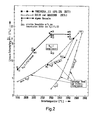
- Figure 2 is one. graphic representation from which the sintered densities of the shaped bodies achieved by the method according to the invention can be seen in comparison with those according to the prior art.
- the values for the sintering temperature are plotted in ° C on the abscissa .
- the numbers entered next to the points of the value pairs shrinkage / sintering temperature indicate the sintering densities achieved in% TD.
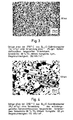
- Figures 3 and 4 show micrographs on a scale of 1: 500.
- Figure 3 shows a microstructure of a sintered body produced by the method according to the invention
- Figure 4 shows a microstructure of a sintered body that was produced without the addition of carbon. The differences with regard to the grain size as well as with regard to the uniformity of the structure itself can be clearly seen from this.
- the outstanding properties of the molded bodies made of pure boron carbide or graphite-containing boron carbide, which are sintered without pressure by the process according to the invention, enable their use in the field of wear technology (sandblasting nozzles, dressing tools, lining of grinding units, lightweight armor for projectile defense) and the core technology for neutron absorption (control rods, shields).
- a boron carbide submicron powder with a specific surface area of 15.1 m 2 / g, a commercially available powdered phenol formaldehyde resin of the novolak type and acetone as solvent for the novolak powder were used as the starting material.
- the boron carbide powder was single-phase radiographically and had the following chemical composition: Taking into account the boron bound in the form of B 2 O 3 and BN, a B: C ratio of 4.1: 1 results.
- novolak powder corresponding to a carbon additive of around 3% by weight
- acetone solution 10.5 parts of novolak powder (corresponding to a carbon additive of around 3% by weight) in the form of an acetone solution were added to 100 parts by weight of the boron carbide powder, and the viscous paste was kneaded in air until virtually all of the solvent had evaporated and only a weak one Odor of acetone was noticeable.
- about 100 ml of novolak solution were used per 100 g of boron carbide powder, and the kneading time was about 60 minutes.
- the furnace was switched off and the sintered bodies in the furnace were cooled to room temperature.
- the sintered bodies experienced an 18% shrinkage, based on the diameter of the unsintered green compacts, and showed a density of 2.42 g / cm 3, corresponding to 96% of the theoretical density of the boron carbide (density of pure B 4 C: 2.52 g / cM 3 ).
- the analysis showed a carbon content of 24.85% C, an oxygen content of 800 ppm, a nitrogen content of 200 ppm and a content of metallic impurities ⁇ 3000 ppm.
- Weak graphite is detectable alongside rhombohedral boron carbide by X-ray.
- the bending strength was 350 N / mm 2 and was x 4 x 30 mm according to the three-point method at a Aufla on prismatic rod of dimensions 4 g eweite of 25 mm measured.
- Figure 3 shows the structure of the polished sintered body obtained by electrolytic etching with dilute sulfuric acid at a magnification of 500. This shows a very homogeneous, extremely fine-grained structure with an average particle size of around 4 ⁇ m. A second phase corresponding to the free carbon content of about 3% by weight could not be detected microscopically.
- Example 2 The procedure according to Example 1 was repeated, with the modification that instead of the acetone novolak solution, 3% by weight of elemental amorphous carbon in the form of carbon black (BET surface area: 150 m 2 / g) and 1% by weight of polyvinyl alcohol as Temporary binder were processed in the form of an aqueous solution with the boron carbide powder.
- the green body had a density of 53%, the resulting sintered body 92% TD.
- the total carbon content of the sintered body was 24.80% C.
- Example 2 The process according to Example 1 was repeated with the modification that 1.75 parts of a commercially available phenolic resin of resol level A (corresponding to 0.5% by weight of carbon additive) were used per 100 parts by weight of the boron carbide powder and the green body production under a pressure of 2500 cash was made. A green compact density of 61%, a sintered density of 96% TD of the boron carbide, a flexural strength of 340 N / mm 2 and a grain size of about 5 ⁇ m were obtained. 21.84% carbon was analyzed in the sintered body; Free carbon in the form of graphite could not be detected either by X-ray or by ceramic.
- a commercially available phenolic resin of resol level A corresponding to 0.5% by weight of carbon additive
- boron carbide sintered bodies of composition B 4.0 C can be produced starting from a boron-rich boron carbide powder to which stoichiometrically equivalent amounts of amorphous carbon have been added as sintering aids.
- the boron content exceeding the boron / carbon atomic ratio of 4: 1 apparently reacts with the added carbon during the sintering to form stoichiometric boron carbide.
- Example 4 (for comparison) The procedure according to Example 1 was repeated with the modification that none. Carbon additive was used. The green compacts were produced under a pressure of 1500 or 6000 bar. This resulted in green densities of 50 or 65% and sintered densities of 78 or 83% TD.
- Example 1 The procedure of Example 1 was repeated, except that the amount of carbon addition, the sintering temperature and the sintering atmosphere were varied. The results are summarized in Table 1, taking into account the results of Examples 1 and 4. Table 1 clearly shows the sinter-promoting effect of C additives in the amount of 1 to 3% by weight, based on the amount of boron carbide used.
- the sintered bodies obtained at 2050 ° C still have insufficient compaction (Example 7)
- the sintered bodies obtained at the high sintering temperature of 2250 ° C show high densities, but a coarse-grained structure with average grain sizes between 20 to 300 pm.
- the bending strengths tested on these coarse-grained sintered bodies on a case-by-case basis are correspondingly low, namely in the range from approximately 50 to 200 N / mm 2 .
- Figure 4 shows the structure obtained during sintering without the addition of carbon at 2250 ° C. in a vacuum (according to Example 9) at a 500-fold magnification (average grain size approx. 60 ⁇ m, sintered density 88% TD).
- the comparison of this illustration with Figure 3 clearly shows the difference to the sintered body produced according to the invention (according to ' Example 1). Without the addition of carbon, only densities below 90% TD are achieved even at the high sintering temperature of 2250 ° C (Examples 9 and 15). If one looks at the influence of the sintering atmosphere, the experiments clearly show the advantage of using vacuum over argon protective gas.
- a boron carbide submicron powder with the following chemical composition was used:
- Example 18 As can be seen from Table 2, a comparatively low density is achieved at the sintering temperature of 2150 ° C. without the addition of carbon, and the bodies show a low strength comparable to blackboard chalk (Example 18).
- Example 22 already shows the negative influence of an addition of carbon in the amount of 11% by weight.
- Example 23 A carbon-rich boron carbide powder from large-scale production with a carbon content of 23.98% by weight of C and a specific surface area of 13.1 m 2 / g was assumed. In addition to boron carbide, graphite was clearly detectable by X-ray. The B: C atomic ratio was 3.5: 1, which corresponds to a free graphite content of about 2.3% by weight.
- this boron carbide powder was pressed isostatically under a pressure of 1500 bar to give a green compact with a density of 61% TD without adding the carbon additive according to the invention. The sintering was carried out as described in Example 1 at 2150 ° C. The sintered body obtained had a density of only 85% TD.
- Example 24 In a control experiment (Example 24) carried out with the same boron carbide powder using a carbon additive of 4% by weight C under otherwise identical conditions, however, a density of 91% of the theoretical density of the boron carbide could be achieved.
- Example 23 proves that the free carbon present in the form of graphite in carbon-rich boron carbide alone does not show any sinter-promoting effect.
Landscapes
- Engineering & Computer Science (AREA)
- Chemical & Material Sciences (AREA)
- Ceramic Engineering (AREA)
- Manufacturing & Machinery (AREA)
- Materials Engineering (AREA)
- Structural Engineering (AREA)
- Organic Chemistry (AREA)
- Ceramic Products (AREA)
- Pharmaceuticals Containing Other Organic And Inorganic Compounds (AREA)
Applications Claiming Priority (2)
| Application Number | Priority Date | Filing Date | Title |
|---|---|---|---|
| DE19772751998 DE2751998A1 (de) | 1977-11-22 | 1977-11-22 | Verfahren zur herstellung von polykristallinen dichten formkoerpern aus borcarbid durch drucklose sinterung |
| DE2751998 | 1977-11-22 |
Publications (2)
| Publication Number | Publication Date |
|---|---|
| EP0002067A1 true EP0002067A1 (fr) | 1979-05-30 |
| EP0002067B1 EP0002067B1 (fr) | 1981-01-07 |
Family
ID=6024267
Family Applications (1)
| Application Number | Title | Priority Date | Filing Date |
|---|---|---|---|
| EP78101417A Expired EP0002067B1 (fr) | 1977-11-22 | 1978-11-21 | Procédé pour la fabrication de corps denses polycristallins en carbure de bore par frittage sans compression à chaud |
Country Status (10)
| Country | Link |
|---|---|
| US (1) | US4195066A (fr) |
| EP (1) | EP0002067B1 (fr) |
| JP (1) | JPS5830263B2 (fr) |
| AT (1) | AT363696B (fr) |
| AU (1) | AU520255B2 (fr) |
| CA (1) | CA1115506A (fr) |
| DE (2) | DE2751998A1 (fr) |
| ES (1) | ES475258A1 (fr) |
| IT (1) | IT1111370B (fr) |
| NO (1) | NO144922C (fr) |
Cited By (6)
| Publication number | Priority date | Publication date | Assignee | Title |
|---|---|---|---|---|
| DE3105012A1 (de) * | 1981-02-12 | 1982-08-19 | Sintec Keramik GmbH, 8950 Kaufbeuren | Verfahren zur herstellung hochverdichteter borkarbidformteile |
| FR2503695A1 (fr) * | 1981-04-13 | 1982-10-15 | Commissariat Energie Atomique | Procede de fabrication de pastilles en carbure de bore poreux, utilisable pour la realisation de barres de commande pour reacteur nucleaire |
| EP0104336A3 (en) * | 1982-09-28 | 1984-11-28 | Elektroschmelzwerk Kempten Gmbh | Thermoelectric element of the thermopair graphite/borium carbide |
| WO2000068165A1 (fr) * | 1999-05-07 | 2000-11-16 | The Secretary Of State For Defence | Corps coulés à base de carbure de bore |
| CN105294105A (zh) * | 2015-12-03 | 2016-02-03 | 大连金玛硼业科技集团有限公司 | 一种碳结合碳化硼、石墨复合材料的制备方法 |
| AT526625A2 (de) * | 2022-10-27 | 2024-05-15 | Sk Enpulse Co Ltd | Sinterkörper und teile damit |
Families Citing this family (29)
| Publication number | Priority date | Publication date | Assignee | Title |
|---|---|---|---|---|
| DE3711871A1 (de) * | 1987-04-08 | 1988-10-20 | Jochen Prof Dr Kriegesmann | Verfahren zur herstellung von formkoerpern aus borcarbid |
| US5545687A (en) * | 1990-02-21 | 1996-08-13 | Dow Corning Corporation | Preparation of high density boron carbide ceramics with preceramic polymer binders |
| US5330942A (en) * | 1993-01-22 | 1994-07-19 | Martin Marietta Energy Systems, Inc. | Composite of refractory material |
| DE4320102A1 (de) * | 1993-06-17 | 1994-12-22 | Kempten Elektroschmelz Gmbh | Verfahren zur Herstellung von polykristallinen dichten Formkörpern auf der Basis von Borcarbid durch drucklose Sinterung |
| GB9418817D0 (en) * | 1994-09-19 | 1994-11-09 | Secr Defence | Sintered boron carbide articles |
| JP3667062B2 (ja) * | 1997-12-01 | 2005-07-06 | 京セラ株式会社 | 炭化ホウ素焼結体の製造方法 |
| JP5146895B2 (ja) * | 2000-11-29 | 2013-02-20 | Toto株式会社 | 保護部材の製造方法および装置の製造方法 |
| AU2001244679A1 (en) * | 2000-03-31 | 2001-10-08 | Toto Ltd. | Method for wet forming of powder, method for producing powder sintered compact, powdery sintered compact, and apparatus using powdery sintered compact |
| EP1641727A4 (fr) * | 2003-06-12 | 2009-04-01 | Georgia Tech Res Inst | Procedes et methodes de fabrication de carbure de bore et de composants en carbure de bore |
| IL162676A (en) * | 2004-06-22 | 2009-12-24 | Rafael Advanced Defense Sys | Process for manufacturing high density boron carbide articles |
| US8377369B2 (en) * | 2004-12-20 | 2013-02-19 | Georgia Tech Research Corporation | Density and hardness pressureless sintered and post-HIPed B4C |
| US20060141237A1 (en) * | 2004-12-23 | 2006-06-29 | Katherine Leighton | Metal-ceramic materials |
| KR100636798B1 (ko) | 2005-02-21 | 2006-10-20 | 한국원자력연구소 | 저밀도 b4c 소결체 제조기술 |
| CN101193663A (zh) * | 2005-04-11 | 2008-06-04 | 佐治亚技术研究公司 | 碳化硼部件及其制备方法 |
| JP4812462B2 (ja) * | 2006-02-27 | 2011-11-09 | 京セラ株式会社 | 炭化硼素質焼結体およびこれを用いた防護部材 |
| US7557054B2 (en) * | 2006-02-27 | 2009-07-07 | Kyocera Corporation | Boron carbide sintered body and protective member |
| US7419925B1 (en) * | 2006-08-23 | 2008-09-02 | Ut-Battelle, Llc | Lightweight high performance ceramic material |
| JP4854482B2 (ja) * | 2006-11-29 | 2012-01-18 | 京セラ株式会社 | 炭化硼素質焼結体およびその製造方法 |
| US20100184583A1 (en) * | 2007-06-15 | 2010-07-22 | Takeshi Kumazawa | Dense boron carbide ceramic and process for producing the same |
| EP2181078A2 (fr) * | 2007-08-08 | 2010-05-05 | Saint-Gobain Ceramics & Plastics, Inc. | Procédé de préparation de carbure de bore à densité élevée, préparé par frittage de poudre non comprimée |
| US20120171098A1 (en) * | 2008-01-22 | 2012-07-05 | Ppg Industries Ohio, Inc | Method of consolidating ultrafine metal carbide and metal boride particles and products made therefrom |
| US9162929B2 (en) * | 2008-12-02 | 2015-10-20 | Verco Materials, Llc | SiC bodies and process for the fabrication of SiC bodies |
| US8598057B1 (en) * | 2009-05-04 | 2013-12-03 | Verco Materials, Llc | Multi-hit unitary seamless, and continuous ceramic ballistic body for armor including body armor, vehicle armor, and aircraft armor |
| JP5561512B2 (ja) * | 2009-05-18 | 2014-07-30 | 日立化成株式会社 | 炭化硼素焼結体の製造方法 |
| JP2013500227A (ja) * | 2009-07-24 | 2013-01-07 | サン−ゴバン セラミックス アンド プラスティクス,インコーポレイティド | 焼結炭化ホウ素の形成方法 |
| GB201220765D0 (en) * | 2012-11-19 | 2013-01-02 | Univ Birmingham | Production of boron carbide powder |
| NO345193B1 (en) * | 2017-12-28 | 2020-11-02 | Fiven Norge AS | A SiC based sinterable powder, a manufacturing method thereof, a slurry comprising the said SiC based sinterable powder, and a manufacturing method of a SiC pressureless sintered body. |
| US20200051793A1 (en) | 2018-08-13 | 2020-02-13 | Skc Solmics Co., Ltd. | Ring-shaped element for etcher and method for etching substrate using the same |
| CN111960825B (zh) * | 2020-08-10 | 2022-07-19 | 宁波普莱斯帝金属制品有限公司 | 一种致密碳化硼材料的制备方法及应用 |
Citations (5)
| Publication number | Priority date | Publication date | Assignee | Title |
|---|---|---|---|---|
| FR1235791A (fr) * | 1958-09-17 | 1960-07-08 | Kempten Elektroschmelz Gmbh | Procédé de fabrication d'articles de forme déterminée à partir de carbures |
| US3632710A (en) * | 1969-03-14 | 1972-01-04 | Avco Corp | Use of alumina alone or with silica as sintering aid for boron carbide |
| DE2624641A1 (de) * | 1975-06-05 | 1976-12-23 | Carborundum Co | Sinterkeramischer koerper und verfahren zu seiner herstellung |
| US4005235A (en) * | 1975-11-17 | 1977-01-25 | General Electric Company | Dense sintered boron carbide containing beryllium carbide |
| FR2324590A1 (fr) * | 1975-02-03 | 1977-04-15 | Ppg Industries Inc | Poudre sous-micronique de borure de metal refractaire et procede pour sa preparation |
Family Cites Families (3)
| Publication number | Priority date | Publication date | Assignee | Title |
|---|---|---|---|---|
| US2027786A (en) * | 1933-10-20 | 1936-01-14 | Norton Co | Method of making boron carbide articles |
| US2938807A (en) * | 1957-08-13 | 1960-05-31 | James C Andersen | Method of making refractory bodies |
| US3914371A (en) * | 1973-12-27 | 1975-10-21 | Us Energy | Method for preparing boron-carbide articles |
-
1977
- 1977-11-22 DE DE19772751998 patent/DE2751998A1/de not_active Withdrawn
-
1978
- 1978-10-18 JP JP53127447A patent/JPS5830263B2/ja not_active Expired
- 1978-11-15 AU AU41615/78A patent/AU520255B2/en not_active Expired
- 1978-11-15 US US05/960,778 patent/US4195066A/en not_active Expired - Lifetime
- 1978-11-17 CA CA316,384A patent/CA1115506A/fr not_active Expired
- 1978-11-20 IT IT51964/78A patent/IT1111370B/it active
- 1978-11-21 DE DE7878101417T patent/DE2860443D1/de not_active Expired
- 1978-11-21 AT AT0830878A patent/AT363696B/de not_active IP Right Cessation
- 1978-11-21 NO NO783915A patent/NO144922C/no unknown
- 1978-11-21 ES ES475258A patent/ES475258A1/es not_active Expired
- 1978-11-21 EP EP78101417A patent/EP0002067B1/fr not_active Expired
Patent Citations (5)
| Publication number | Priority date | Publication date | Assignee | Title |
|---|---|---|---|---|
| FR1235791A (fr) * | 1958-09-17 | 1960-07-08 | Kempten Elektroschmelz Gmbh | Procédé de fabrication d'articles de forme déterminée à partir de carbures |
| US3632710A (en) * | 1969-03-14 | 1972-01-04 | Avco Corp | Use of alumina alone or with silica as sintering aid for boron carbide |
| FR2324590A1 (fr) * | 1975-02-03 | 1977-04-15 | Ppg Industries Inc | Poudre sous-micronique de borure de metal refractaire et procede pour sa preparation |
| DE2624641A1 (de) * | 1975-06-05 | 1976-12-23 | Carborundum Co | Sinterkeramischer koerper und verfahren zu seiner herstellung |
| US4005235A (en) * | 1975-11-17 | 1977-01-25 | General Electric Company | Dense sintered boron carbide containing beryllium carbide |
Cited By (6)
| Publication number | Priority date | Publication date | Assignee | Title |
|---|---|---|---|---|
| DE3105012A1 (de) * | 1981-02-12 | 1982-08-19 | Sintec Keramik GmbH, 8950 Kaufbeuren | Verfahren zur herstellung hochverdichteter borkarbidformteile |
| FR2503695A1 (fr) * | 1981-04-13 | 1982-10-15 | Commissariat Energie Atomique | Procede de fabrication de pastilles en carbure de bore poreux, utilisable pour la realisation de barres de commande pour reacteur nucleaire |
| EP0104336A3 (en) * | 1982-09-28 | 1984-11-28 | Elektroschmelzwerk Kempten Gmbh | Thermoelectric element of the thermopair graphite/borium carbide |
| WO2000068165A1 (fr) * | 1999-05-07 | 2000-11-16 | The Secretary Of State For Defence | Corps coulés à base de carbure de bore |
| CN105294105A (zh) * | 2015-12-03 | 2016-02-03 | 大连金玛硼业科技集团有限公司 | 一种碳结合碳化硼、石墨复合材料的制备方法 |
| AT526625A2 (de) * | 2022-10-27 | 2024-05-15 | Sk Enpulse Co Ltd | Sinterkörper und teile damit |
Also Published As
| Publication number | Publication date |
|---|---|
| DE2751998A1 (de) | 1979-05-23 |
| US4195066A (en) | 1980-03-25 |
| CA1115506A (fr) | 1982-01-05 |
| EP0002067B1 (fr) | 1981-01-07 |
| NO144922C (no) | 1981-12-09 |
| JPS5830263B2 (ja) | 1983-06-28 |
| JPS5495612A (en) | 1979-07-28 |
| AU4161578A (en) | 1979-05-31 |
| DE2860443D1 (en) | 1981-02-26 |
| AU520255B2 (en) | 1982-01-21 |
| ATA830878A (de) | 1981-01-15 |
| IT1111370B (it) | 1986-01-13 |
| NO144922B (no) | 1981-08-31 |
| AT363696B (de) | 1981-08-25 |
| IT7851964A0 (it) | 1978-11-20 |
| NO783915L (no) | 1979-05-23 |
| ES475258A1 (es) | 1979-04-16 |
Similar Documents
| Publication | Publication Date | Title |
|---|---|---|
| EP0002067B1 (fr) | Procédé pour la fabrication de corps denses polycristallins en carbure de bore par frittage sans compression à chaud | |
| EP0004031B1 (fr) | Corps très denses en carbure de silicium polycristallin et procédé pour leur fabrication par frittage sans pression | |
| EP0094591B1 (fr) | Corps frittés polycrystallins pratiquement sans pores d'alpha carbure de silicium, de carbure de bore, et de carbone, et procédé de fabrication | |
| EP0628525B1 (fr) | Composites à base de carbure de bore, borure de titane et carbone élémentaire et procédé de leur fabrication | |
| DE2734425C2 (de) | Polykristalliner Sinterkörper auf der Basis von Siliziumcarbid und Borcarbid und Verfahren zum Herstellen | |
| EP0629594B1 (fr) | Procédé de fabrication de corps moulés denses et polycristallins à base de carbure de bore par frittage sans pression | |
| EP0021239B1 (fr) | Procédé pour la fabrication de produits denses en carbure de silicium alpha polycristallin par frittage sous pression et produit dense obtenu par ce procédé | |
| EP0237072A2 (fr) | Corps pratiquement sans pores en nitrure d'aluminium polycrystallin et son procédé de fabrication sans utilisation d'agents de frittage | |
| EP1999087A1 (fr) | Matériau à base de borure fritté résistant a l'usure, mélange poudreux frittable destiné à la fabrication de ce matériau, procédé de fabrication du materiau et son utilisation | |
| DE2627856A1 (de) | Gesinterter siliziumkarbid-koerper und verfahren zu dessen herstellung | |
| EP0131884A2 (fr) | Matériaux réfractaires conducteurs d'électricité et leurs procédés de fabrication par pressage isostatique à chaud | |
| EP0204962B1 (fr) | Corps polycristallin fritté à base d'hexaborure de lanthane et son procédé de fabrication | |
| EP0022522B1 (fr) | Corps moulés denses en carbure de silicium bêta polycristallin et procédé pour leur fabrication par frittage sous pression | |
| DE3705907A1 (de) | Elektrisch leitfaehiges keramikerzeugnis und verfahren zu dessen herstellung | |
| DE2923729C2 (fr) | ||
| DE3630369C2 (fr) | ||
| EP0052851B1 (fr) | Corps en carbure de silicium polycristalline et procédé pour sa fabrication | |
| DE19704910C2 (de) | Flüssigphasengesinterter elektrisch leitfähiger und oxidationsresistenter keramischer Werkstoff, ein Verfahren zu seiner Herstellung und dessen Verwendung | |
| EP0116851B1 (fr) | Corps frittés polycrystallins à base d'hexaborure d'europium et procédé de fabrication | |
| DE3853629T2 (de) | Hochfeste beta-typ-siliziumkarbidsinter und herstellung. | |
| DE1950260C3 (de) | Verwendung einer gesinterten Molybdän-Bor-Legierung | |
| DE2751851A1 (de) | Sinterfaehiges pulver aus siliciumcarbid-pulver, sinterkeramische produkte aus diesem pulver und verfahren zur herstellung der produkte | |
| DE3902528C2 (fr) | ||
| DE102024139653A1 (de) | Keramischer Sinterkörper und plasmaerzeugende Elektrode | |
| EP0180924A2 (fr) | Matière constituée de particules contenant du silicium élémentaire et liées par réaction en présence de carbone et son procédé de fabrication |
Legal Events
| Date | Code | Title | Description |
|---|---|---|---|
| PUAI | Public reference made under article 153(3) epc to a published international application that has entered the european phase |
Free format text: ORIGINAL CODE: 0009012 |
|
| AK | Designated contracting states |
Designated state(s): BE CH DE FR GB NL SE |
|
| 17P | Request for examination filed | ||
| GRAA | (expected) grant |
Free format text: ORIGINAL CODE: 0009210 |
|
| AK | Designated contracting states |
Designated state(s): BE CH DE FR GB NL SE |
|
| REF | Corresponds to: |
Ref document number: 2860443 Country of ref document: DE Date of ref document: 19810226 |
|
| PGFP | Annual fee paid to national office [announced via postgrant information from national office to epo] |
Ref country code: NL Payment date: 19871130 Year of fee payment: 10 |
|
| PG25 | Lapsed in a contracting state [announced via postgrant information from national office to epo] |
Ref country code: GB Effective date: 19891121 |
|
| PG25 | Lapsed in a contracting state [announced via postgrant information from national office to epo] |
Ref country code: NL Effective date: 19900601 |
|
| NLV4 | Nl: lapsed or anulled due to non-payment of the annual fee | ||
| GBPC | Gb: european patent ceased through non-payment of renewal fee | ||
| EAL | Se: european patent in force in sweden |
Ref document number: 78101417.0 |
|
| PGFP | Annual fee paid to national office [announced via postgrant information from national office to epo] |
Ref country code: SE Payment date: 19951016 Year of fee payment: 18 |
|
| PGFP | Annual fee paid to national office [announced via postgrant information from national office to epo] |
Ref country code: CH Payment date: 19951019 Year of fee payment: 18 |
|
| PGFP | Annual fee paid to national office [announced via postgrant information from national office to epo] |
Ref country code: BE Payment date: 19951020 Year of fee payment: 18 |
|
| PG25 | Lapsed in a contracting state [announced via postgrant information from national office to epo] |
Ref country code: SE Effective date: 19961122 |
|
| PG25 | Lapsed in a contracting state [announced via postgrant information from national office to epo] |
Ref country code: CH Effective date: 19961130 Ref country code: BE Effective date: 19961130 |
|
| BERE | Be: lapsed |
Owner name: ELEKTROSCHMELZWERK KEMPTEN G.M.B.H. Effective date: 19961130 |
|
| REG | Reference to a national code |
Ref country code: CH Ref legal event code: PL |
|
| EUG | Se: european patent has lapsed |
Ref document number: 78101417.0 |
|
| PGFP | Annual fee paid to national office [announced via postgrant information from national office to epo] |
Ref country code: FR Payment date: 19971021 Year of fee payment: 20 |
|
| PGFP | Annual fee paid to national office [announced via postgrant information from national office to epo] |
Ref country code: DE Payment date: 19971204 Year of fee payment: 20 |
|
| PLBE | No opposition filed within time limit |
Free format text: ORIGINAL CODE: 0009261 |
|
| STAA | Information on the status of an ep patent application or granted ep patent |
Free format text: STATUS: NO OPPOSITION FILED WITHIN TIME LIMIT |