EP0004031A1 - Corps très denses en carbure de silicium polycristallin et procédé pour leur fabrication par frittage sans pression - Google Patents
Corps très denses en carbure de silicium polycristallin et procédé pour leur fabrication par frittage sans pression Download PDFInfo
- Publication number
- EP0004031A1 EP0004031A1 EP79100600A EP79100600A EP0004031A1 EP 0004031 A1 EP0004031 A1 EP 0004031A1 EP 79100600 A EP79100600 A EP 79100600A EP 79100600 A EP79100600 A EP 79100600A EP 0004031 A1 EP0004031 A1 EP 0004031A1
- Authority
- EP
- European Patent Office
- Prior art keywords
- silicon carbide
- aluminum
- carbon
- sintering
- powder
- Prior art date
- Legal status (The legal status is an assumption and is not a legal conclusion. Google has not performed a legal analysis and makes no representation as to the accuracy of the status listed.)
- Granted
Links
- HBMJWWWQQXIZIP-UHFFFAOYSA-N silicon carbide Chemical compound [Si+]#[C-] HBMJWWWQQXIZIP-UHFFFAOYSA-N 0.000 title claims description 75
- 238000000034 method Methods 0.000 title claims description 58
- 238000001272 pressureless sintering Methods 0.000 title claims description 7
- 229910021420 polycrystalline silicon Inorganic materials 0.000 title description 2
- 238000002360 preparation method Methods 0.000 title 1
- OKTJSMMVPCPJKN-UHFFFAOYSA-N Carbon Chemical compound [C] OKTJSMMVPCPJKN-UHFFFAOYSA-N 0.000 claims abstract description 55
- 229910052799 carbon Inorganic materials 0.000 claims abstract description 54
- 239000000654 additive Substances 0.000 claims abstract description 50
- 229910052782 aluminium Inorganic materials 0.000 claims abstract description 44
- XAGFODPZIPBFFR-UHFFFAOYSA-N aluminium Chemical compound [Al] XAGFODPZIPBFFR-UHFFFAOYSA-N 0.000 claims abstract description 43
- 239000000843 powder Substances 0.000 claims abstract description 42
- 230000000996 additive effect Effects 0.000 claims abstract description 36
- 229910021431 alpha silicon carbide Inorganic materials 0.000 claims abstract description 28
- 238000000465 moulding Methods 0.000 claims abstract description 25
- IJGRMHOSHXDMSA-UHFFFAOYSA-N Atomic nitrogen Chemical compound N#N IJGRMHOSHXDMSA-UHFFFAOYSA-N 0.000 claims abstract description 20
- 229910052757 nitrogen Inorganic materials 0.000 claims abstract description 10
- -1 aluminum compound Chemical class 0.000 claims abstract description 8
- 238000004519 manufacturing process Methods 0.000 claims abstract description 8
- 229920001568 phenolic resin Polymers 0.000 claims abstract description 8
- 238000005452 bending Methods 0.000 claims abstract description 7
- 239000006229 carbon black Substances 0.000 claims abstract description 5
- SLGWESQGEUXWJQ-UHFFFAOYSA-N formaldehyde;phenol Chemical compound O=C.OC1=CC=CC=C1 SLGWESQGEUXWJQ-UHFFFAOYSA-N 0.000 claims abstract description 4
- 239000011294 coal tar pitch Substances 0.000 claims abstract description 3
- 239000007859 condensation product Substances 0.000 claims abstract description 3
- 229910010271 silicon carbide Inorganic materials 0.000 claims description 75
- 238000005245 sintering Methods 0.000 claims description 48
- 230000008569 process Effects 0.000 claims description 38
- 239000012298 atmosphere Substances 0.000 claims description 15
- 229910003481 amorphous carbon Inorganic materials 0.000 claims description 11
- 239000007789 gas Substances 0.000 claims description 9
- 239000002245 particle Substances 0.000 claims description 9
- PMHQVHHXPFUNSP-UHFFFAOYSA-M copper(1+);methylsulfanylmethane;bromide Chemical compound Br[Cu].CSC PMHQVHHXPFUNSP-UHFFFAOYSA-M 0.000 claims description 8
- 238000010438 heat treatment Methods 0.000 claims description 6
- 238000012986 modification Methods 0.000 claims description 6
- 230000001681 protective effect Effects 0.000 claims description 6
- 238000009826 distribution Methods 0.000 claims description 5
- 239000000463 material Substances 0.000 claims description 5
- 238000007493 shaping process Methods 0.000 claims description 5
- CAVCGVPGBKGDTG-UHFFFAOYSA-N alumanylidynemethyl(alumanylidynemethylalumanylidenemethylidene)alumane Chemical compound [Al]#C[Al]=C=[Al]C#[Al] CAVCGVPGBKGDTG-UHFFFAOYSA-N 0.000 claims description 3
- 238000004939 coking Methods 0.000 claims description 3
- 241000872198 Serjania polyphylla Species 0.000 claims description 2
- QVGXLLKOCUKJST-UHFFFAOYSA-N atomic oxygen Chemical compound [O] QVGXLLKOCUKJST-UHFFFAOYSA-N 0.000 abstract description 7
- 239000001301 oxygen Substances 0.000 abstract description 7
- 229910052760 oxygen Inorganic materials 0.000 abstract description 7
- CSCPPACGZOOCGX-UHFFFAOYSA-N Acetone Chemical compound CC(C)=O CSCPPACGZOOCGX-UHFFFAOYSA-N 0.000 description 12
- ZOXJGFHDIHLPTG-UHFFFAOYSA-N Boron Chemical compound [B] ZOXJGFHDIHLPTG-UHFFFAOYSA-N 0.000 description 12
- 229910052796 boron Inorganic materials 0.000 description 12
- 238000012360 testing method Methods 0.000 description 11
- XKRFYHLGVUSROY-UHFFFAOYSA-N Argon Chemical compound [Ar] XKRFYHLGVUSROY-UHFFFAOYSA-N 0.000 description 8
- 239000000203 mixture Substances 0.000 description 7
- 229920003986 novolac Polymers 0.000 description 7
- 239000011368 organic material Substances 0.000 description 7
- XUIMIQQOPSSXEZ-UHFFFAOYSA-N Silicon Chemical compound [Si] XUIMIQQOPSSXEZ-UHFFFAOYSA-N 0.000 description 6
- 239000011230 binding agent Substances 0.000 description 6
- 238000005056 compaction Methods 0.000 description 6
- 239000000243 solution Substances 0.000 description 6
- 239000007858 starting material Substances 0.000 description 6
- 229910002804 graphite Inorganic materials 0.000 description 5
- 239000010439 graphite Substances 0.000 description 5
- 229910052710 silicon Inorganic materials 0.000 description 5
- 239000010703 silicon Substances 0.000 description 5
- 229910052786 argon Inorganic materials 0.000 description 4
- 230000008901 benefit Effects 0.000 description 4
- 238000005516 engineering process Methods 0.000 description 4
- 238000007731 hot pressing Methods 0.000 description 4
- 238000004898 kneading Methods 0.000 description 4
- 239000002904 solvent Substances 0.000 description 4
- KXGFMDJXCMQABM-UHFFFAOYSA-N 2-methoxy-6-methylphenol Chemical compound [CH]OC1=CC=CC([CH])=C1O KXGFMDJXCMQABM-UHFFFAOYSA-N 0.000 description 3
- 230000015572 biosynthetic process Effects 0.000 description 3
- 238000007906 compression Methods 0.000 description 3
- 238000010276 construction Methods 0.000 description 3
- 239000013078 crystal Substances 0.000 description 3
- 238000002474 experimental method Methods 0.000 description 3
- 230000004048 modification Effects 0.000 description 3
- 238000012545 processing Methods 0.000 description 3
- 239000000725 suspension Substances 0.000 description 3
- 229910052580 B4C Inorganic materials 0.000 description 2
- 229910052581 Si3N4 Inorganic materials 0.000 description 2
- VYPSYNLAJGMNEJ-UHFFFAOYSA-N Silicium dioxide Chemical compound O=[Si]=O VYPSYNLAJGMNEJ-UHFFFAOYSA-N 0.000 description 2
- AZDRQVAHHNSJOQ-UHFFFAOYSA-N alumane Chemical class [AlH3] AZDRQVAHHNSJOQ-UHFFFAOYSA-N 0.000 description 2
- 238000004458 analytical method Methods 0.000 description 2
- INAHAJYZKVIDIZ-UHFFFAOYSA-N boron carbide Chemical compound B12B3B4C32B41 INAHAJYZKVIDIZ-UHFFFAOYSA-N 0.000 description 2
- 238000006243 chemical reaction Methods 0.000 description 2
- 239000007795 chemical reaction product Substances 0.000 description 2
- 150000001875 compounds Chemical class 0.000 description 2
- 230000006835 compression Effects 0.000 description 2
- 238000001816 cooling Methods 0.000 description 2
- 238000007723 die pressing method Methods 0.000 description 2
- 238000001035 drying Methods 0.000 description 2
- 238000004870 electrical engineering Methods 0.000 description 2
- 239000011261 inert gas Substances 0.000 description 2
- 238000000462 isostatic pressing Methods 0.000 description 2
- 239000003960 organic solvent Substances 0.000 description 2
- 230000003647 oxidation Effects 0.000 description 2
- 238000007254 oxidation reaction Methods 0.000 description 2
- TWNQGVIAIRXVLR-UHFFFAOYSA-N oxo(oxoalumanyloxy)alumane Chemical compound O=[Al]O[Al]=O TWNQGVIAIRXVLR-UHFFFAOYSA-N 0.000 description 2
- 239000005011 phenolic resin Substances 0.000 description 2
- 238000012805 post-processing Methods 0.000 description 2
- FGIUAXJPYTZDNR-UHFFFAOYSA-N potassium nitrate Chemical compound [K+].[O-][N+]([O-])=O FGIUAXJPYTZDNR-UHFFFAOYSA-N 0.000 description 2
- 229920003987 resole Polymers 0.000 description 2
- HQVNEWCFYHHQES-UHFFFAOYSA-N silicon nitride Chemical compound N12[Si]34N5[Si]62N3[Si]51N64 HQVNEWCFYHHQES-UHFFFAOYSA-N 0.000 description 2
- 239000006104 solid solution Substances 0.000 description 2
- 229920003002 synthetic resin Polymers 0.000 description 2
- 239000000057 synthetic resin Substances 0.000 description 2
- 230000009466 transformation Effects 0.000 description 2
- DSSYKIVIOFKYAU-XCBNKYQSSA-N (R)-camphor Chemical compound C1C[C@@]2(C)C(=O)C[C@@H]1C2(C)C DSSYKIVIOFKYAU-XCBNKYQSSA-N 0.000 description 1
- 238000004438 BET method Methods 0.000 description 1
- 229910052582 BN Inorganic materials 0.000 description 1
- PZNSFCLAULLKQX-UHFFFAOYSA-N Boron nitride Chemical compound N#B PZNSFCLAULLKQX-UHFFFAOYSA-N 0.000 description 1
- UGFAIRIUMAVXCW-UHFFFAOYSA-N Carbon monoxide Chemical compound [O+]#[C-] UGFAIRIUMAVXCW-UHFFFAOYSA-N 0.000 description 1
- 241000723346 Cinnamomum camphora Species 0.000 description 1
- 239000004372 Polyvinyl alcohol Substances 0.000 description 1
- 235000021355 Stearic acid Nutrition 0.000 description 1
- 238000002441 X-ray diffraction Methods 0.000 description 1
- 239000006230 acetylene black Substances 0.000 description 1
- 239000002253 acid Substances 0.000 description 1
- 238000013019 agitation Methods 0.000 description 1
- 239000012300 argon atmosphere Substances 0.000 description 1
- 238000009835 boiling Methods 0.000 description 1
- 229960000846 camphor Drugs 0.000 description 1
- 229930008380 camphor Natural products 0.000 description 1
- 125000004432 carbon atom Chemical group C* 0.000 description 1
- 229910002091 carbon monoxide Inorganic materials 0.000 description 1
- 230000008859 change Effects 0.000 description 1
- 238000012512 characterization method Methods 0.000 description 1
- 238000002485 combustion reaction Methods 0.000 description 1
- 238000005520 cutting process Methods 0.000 description 1
- 238000000354 decomposition reaction Methods 0.000 description 1
- 230000007423 decrease Effects 0.000 description 1
- 230000006866 deterioration Effects 0.000 description 1
- 239000006185 dispersion Substances 0.000 description 1
- 230000000694 effects Effects 0.000 description 1
- 229920001971 elastomer Polymers 0.000 description 1
- 238000001704 evaporation Methods 0.000 description 1
- 230000008020 evaporation Effects 0.000 description 1
- 238000001125 extrusion Methods 0.000 description 1
- 230000002349 favourable effect Effects 0.000 description 1
- YAGKRVSRTSUGEY-UHFFFAOYSA-N ferricyanide Chemical compound [Fe+3].N#[C-].N#[C-].N#[C-].N#[C-].N#[C-].N#[C-] YAGKRVSRTSUGEY-UHFFFAOYSA-N 0.000 description 1
- 230000004907 flux Effects 0.000 description 1
- 238000004108 freeze drying Methods 0.000 description 1
- 238000000227 grinding Methods 0.000 description 1
- 239000001307 helium Substances 0.000 description 1
- 229910052734 helium Inorganic materials 0.000 description 1
- SWQJXJOGLNCZEY-UHFFFAOYSA-N helium atom Chemical compound [He] SWQJXJOGLNCZEY-UHFFFAOYSA-N 0.000 description 1
- 238000000265 homogenisation Methods 0.000 description 1
- 239000001257 hydrogen Substances 0.000 description 1
- 229910052739 hydrogen Inorganic materials 0.000 description 1
- 125000004435 hydrogen atom Chemical class [H]* 0.000 description 1
- 230000006698 induction Effects 0.000 description 1
- 238000011031 large-scale manufacturing process Methods 0.000 description 1
- 239000007788 liquid Substances 0.000 description 1
- 238000012423 maintenance Methods 0.000 description 1
- 239000011159 matrix material Substances 0.000 description 1
- 238000011089 mechanical engineering Methods 0.000 description 1
- 238000001000 micrograph Methods 0.000 description 1
- 229910052756 noble gas Inorganic materials 0.000 description 1
- 150000002835 noble gases Chemical class 0.000 description 1
- QIQXTHQIDYTFRH-UHFFFAOYSA-N octadecanoic acid Chemical compound CCCCCCCCCCCCCCCCCC(O)=O QIQXTHQIDYTFRH-UHFFFAOYSA-N 0.000 description 1
- OQCDKBAXFALNLD-UHFFFAOYSA-N octadecanoic acid Natural products CCCCCCCC(C)CCCCCCCCC(O)=O OQCDKBAXFALNLD-UHFFFAOYSA-N 0.000 description 1
- 229920003023 plastic Polymers 0.000 description 1
- 239000004033 plastic Substances 0.000 description 1
- 229920002451 polyvinyl alcohol Polymers 0.000 description 1
- 239000004323 potassium nitrate Substances 0.000 description 1
- 235000010333 potassium nitrate Nutrition 0.000 description 1
- 238000004663 powder metallurgy Methods 0.000 description 1
- 238000003825 pressing Methods 0.000 description 1
- 229920005989 resin Polymers 0.000 description 1
- 239000011347 resin Substances 0.000 description 1
- 239000004065 semiconductor Substances 0.000 description 1
- 230000035939 shock Effects 0.000 description 1
- 239000000377 silicon dioxide Substances 0.000 description 1
- 238000007569 slipcasting Methods 0.000 description 1
- 239000010802 sludge Substances 0.000 description 1
- 239000007787 solid Substances 0.000 description 1
- 239000007921 spray Substances 0.000 description 1
- 238000001694 spray drying Methods 0.000 description 1
- 239000008117 stearic acid Substances 0.000 description 1
- 238000005482 strain hardening Methods 0.000 description 1
- 238000000859 sublimation Methods 0.000 description 1
- 230000008022 sublimation Effects 0.000 description 1
- 239000000126 substance Substances 0.000 description 1
- 238000012546 transfer Methods 0.000 description 1
- 238000001721 transfer moulding Methods 0.000 description 1
- 239000007966 viscous suspension Substances 0.000 description 1
- 238000005303 weighing Methods 0.000 description 1
Images


Classifications
-
- C—CHEMISTRY; METALLURGY
- C04—CEMENTS; CONCRETE; ARTIFICIAL STONE; CERAMICS; REFRACTORIES
- C04B—LIME, MAGNESIA; SLAG; CEMENTS; COMPOSITIONS THEREOF, e.g. MORTARS, CONCRETE OR LIKE BUILDING MATERIALS; ARTIFICIAL STONE; CERAMICS; REFRACTORIES; TREATMENT OF NATURAL STONE
- C04B35/00—Shaped ceramic products characterised by their composition; Ceramics compositions; Processing powders of inorganic compounds preparatory to the manufacturing of ceramic products
- C04B35/515—Shaped ceramic products characterised by their composition; Ceramics compositions; Processing powders of inorganic compounds preparatory to the manufacturing of ceramic products based on non-oxide ceramics
- C04B35/56—Shaped ceramic products characterised by their composition; Ceramics compositions; Processing powders of inorganic compounds preparatory to the manufacturing of ceramic products based on non-oxide ceramics based on carbides or oxycarbides
- C04B35/565—Shaped ceramic products characterised by their composition; Ceramics compositions; Processing powders of inorganic compounds preparatory to the manufacturing of ceramic products based on non-oxide ceramics based on carbides or oxycarbides based on silicon carbide
Definitions
- Polycrystalline moldings made of silicon carbide are already known. They are characterized by a combination of valuable properties, such as resistance to oxidation and thermal shock, favorable creep behavior, relatively low density, low thermal expansion, as well as high thermal conductivity and great hardness. Because of these properties, they can therefore be used, for example, as materials for combustion pipes, heat exchange devices or rocket nozzles. Because of their good mechanical properties, they are also used in the field of wear technology and because of the conductivity of silicon carbide in electronics and electrical engineering.
- reaction sintering in which silicon carbide powder is processed with carbon and / or an organic resin binder to form preformed bodies, which are then heated in the presence of an atmosphere containing silicon.
- the carbon reacts with the silicon to form additional SiC, whereby the SiC grains already present are bonded.
- Existing holes are filled with excess silicon at the same time.
- the sintered bodies obtained in this way have a very high density because they are practically non-porous, but they contain free silicon. Their use as materials in high-temperature machine construction is therefore subject to strict limits, since at temperatures above 1,400 ° C they tend to exude silicon (mp. 1,440 ° C).
- Dense silicon carbide moldings can also be produced by the so-called hot press or pressure sintering process using additives containing aluminum or boron as sintering aids.
- ⁇ -SiC in the form of seed crystals is said to achieve improved control of the grain growth during sintering, since these bring about a rapid transformation of the ⁇ -SiC into the thermodynamically more stable ⁇ -form, so that at least 70% by weight in the finished sintered body. % of the SiC is in the ⁇ -form.
- the more uniform microstructure achieved by this measure is purchased at the expense of a lower density of the end product (maximum density according to the examples: 91.9% TD).
- the process described in DE-OS 26 24 641 it should also be possible to produce dense SiC moldings by pressureless sintering of ⁇ -SiC powder, which is more easily accessible, in a mixture with a boron and a carbon-containing additive.
- the process is not based on that Limited use of ⁇ -SiC powder, but also includes ⁇ -SiC powder in the same way, as well as mixtures of B and ⁇ -SiC powder.
- the sintered bodies obtained in this way should have a density of at least 75% TD and, in addition to SiC, 0.5 to 5% by weight of carbon from a carbonizable organic material, 0.15 to 3% by weight of boron and up to 1.0% by weight. -% additional carbon (eg from boron carbide) contain. As can be seen from the examples, densities of at most 96% TD were achieved.
- Submicron powders with ⁇ -SiC contents of 97% and 100% were used for these experiments, in each case together with an additive containing 1% by weight boron and a 2% by weight carbon.
- the pressureless sintering was carried out in the presence of an argon protective gas atmosphere at temperatures of 2050 ° to 2300 0 C. All of the sintered bodies obtained in this way had a density of about 96% TD, but the samples sintered at temperatures above 2,100 ° C. were strongly recrystallized and their heat bending strength was below 300 N / mm 2 . Only the samples sintered at 2,050 ° C had a homogeneous, fine-grained microstructure with an average grain size of about 5 ⁇ m.
- the polycrystalline moldings of the invention having a density of at least 97% of the theoretical density of the S i-liciumcarbids consist of the ⁇ -silicon carbide being in the form of a homogeneous structure with grain sizes of at most 10 ⁇ m. They have a bending strength of at least 500 N / mm 2 up to 1,600 ° C and a transcrystalline breaking mode. They preferably have a total porosity of less than 2% by volume.
- the polycrystalline moldings according to the invention aluminum, and any nitrogen and oxygen which may be present, are essentially in the form of a solid solution in sili cium carbide lattice, so that they cannot be detected as a separate phase, for example, up to a 2,400-fold magnification.
- the additional carbon on the other hand, can be detected as a separate phase in the form of equiaxial particles with a grain size of ⁇ 2 ⁇ m.
- the moldings are electrically conductive at room temperature, which conductivity can be varied by the amount of nitrogen.
- the low residual oxygen content which is preferably less than 0.05% by weight, is likewise of crucial importance for the high heat resistance of the moldings according to the invention.
- the polycrystalline moldings according to the invention are advantageously produced from powdered silicon carbide by pressure-free sintering.
- This process is characterized in that essentially silicon carbide present in the oC modification in powder form with a particle size distribution of 3 ⁇ m and finer with an aluminum-containing additive in an amount corresponding to 0.3 to 3% by weight of free aluminum, based on the Weight of the silicon carbide used and with a carbon-containing additive in the form of amorphous carbon or an organic material which can be carbonized at temperatures up to about 1,000 ° C.
- amorphous carbon in an amount corresponding to 0.2 to 3% by weight of free carbon the weight of the silicon carbide used, homogeneously mixed, cold-pressed under shaping and the preformed bodies thus obtained with a density of at least 50% of the theoretical density of the silicon carbide, then in the presence of an atmosphere inert to silicon carbide or in vacuo at a temperature of 2,000 ° to 2,300 ° C until the formation of the polycrystalline moldings are sintered.
- Both the aluminum and the carbon-containing additive in the stated amounts are of crucial importance for the implementation of the process according to the invention, since it has been demonstrated by our own experiments that only one of the two additives could only achieve a very poor compression.
- the aluminum-containing additive is advantageously used in powder form with a particle size distribution of 5 ⁇ m and finer (micron powder) or of 1 ⁇ m and finer (submicron powder), either as aluminum metal or as an aluminum compound.
- a silicon carbide powder doped with aluminum can also be used.
- Aluminum carbide, aluminum nitride and / or aluminum silicocarbide have proven themselves as aluminum compounds.
- the use of oxidic aluminum compounds, such as aluminum oxide is not advantageous since these can lead to undesirably high residual oxygen contents in the finished sintered body.
- the aluminum-containing additive is used in an amount corresponding to 0.3 to 3% by weight of free aluminum, based on silicon carbide used. Amounts smaller than 0.3% by weight of aluminum are practically no longer effective in the desired sense, that is to say that it was no longer possible to achieve adequate compaction of the silicon carbide. Amounts greater than 3.0% by weight of aluminum are of no advantage, since there is already a risk that the oxidation resistance of the silicon carbide is reduced. The best results with regard to compaction are achieved with additives containing aluminum in amounts which, depending on the other additives and the sintering temperature used in each case, lead to sintered bodies with a content of about 0.3 to 1.5% by weight of aluminum.
- the conductivity of the sintered body can therefore be varied by varying the nitrogen content in the starting material - and thus can be precisely adapted to a particular purpose, which is advantageous, for example, for subsequent electroerosive processing of the sintered body.
- the carbon-containing additive is by definition in the form of amorphous carbon or to form amorphous carbon coking organic material used. It has been found that ⁇ -SiC powder from large-scale production, which already has an additional carbon content of up to about 2% by weight, does not compact more than 85% TD in the temperature range specified at 2,000 ° to 2,300 ° C could be, which is probably due to the fact that the free carbon present in the carbon-rich ⁇ -SiC is in the form of graphite, which is not sufficiently active both chemically and in terms of sintering technology.
- the carbon-containing additive required to carry out the process according to the invention must therefore be available as free carbon in amorphous form at the start of the sintering process.
- amorphous carbon for example in the form of carbon black, such as acetylene black, which advantageously has a specific surface area in the range from 10 to 400 m 2 / g.
- a temporary binder are advantageously used.
- temporary binders are polyvinyl alcohol, stearic acid and camphor. These binders can be used in amounts of up to about 1% by weight, based on the weight of the silicon carbide used.
- the carbon-containing additive is preferably used in the form of an organic material which can be coked at temperatures up to about 1,000 ° C. to form amorphous carbon.
- the carbon-containing organic material can be solid or liquid at room temperature.
- examples of these are phenoplasts and coal tar pitch, whereby phenol-formaldehyde condensation products of the novolak and resol type have proven particularly suitable, which are decomposed in the range from 100 to 900 ° C. to form amorphous carbon in about 35 to 50% yield .
- the carbon-containing additive is used by definition and regardless of the form in an amount that corresponds to 0.2 to 3 wt .-% free carbon, based on the weight of the silicon carbide used. Amounts less than 0.2% are practically no longer effective in the desired sense, i.e. With this, sufficient compaction of the silicon carbide could no longer be achieved. Larger amounts than 3% by weight of carbon bring no advantage, since there is already a risk that the bending strength at room temperature, but in particular the high temperature bending strength of the SiC body, will be reduced. The best results are achieved with additives containing carbon, the free carbon content of which is in the range 0.2 to 2% by weight and in particular approximately 0.5 to 1% by weight.
- the SiC powder is mixed homogeneously with the additive containing aluminum and carbon, which is advantageously achieved in that the carbon-containing additive is in the form of the organic Material dissolved in an organic solvent and the silicon carbide powder together with the powdered aluminum-containing additive is dispersed in the solution.
- the silicon carbide powder is dispersed together with the amorphous carbon and the aluminum-containing additive in a solution of the temporary binder.
- organic solvents which can be used are acetone and lower aliphatic alcohols having 1 to 5 carbon atoms.
- the dispersion can be done by mechanical agitation of a thin suspension in plastic containers using a stirrer or by kneading a thick suspension in an egg ner kneading device can be made.
- the homogeneous powder obtained is cold-pressed with shaping to form the preformed bodies with a density of at least 50 % TD.
- the shaping can be carried out by means of customary known measures, for example by die pressing, isostatic pressing, transfer molding, extrusion or slip casting.
- the preformed bodies are then sintered without pressure at temperatures in the range from 2,000 to 2,300 ° C.
- the specified temperature range is of crucial importance for the achievement of the desired properties, because it has been demonstrated that sintered bodies with densities below 90% of the theoretical density are obtained under the same conditions, but at lower temperatures, while at higher temperatures already decomposition phenomena or the Sublimation of the silicon carbide occur.
- the preformed bodies can also be heated in a separate process step for curing the synthetic resin, which is particularly advantageous if sintered bodies with a geometrically complicated shape are to be produced, since the preformed bodies after Hardening of the synthetic resin binder have greater strength and can therefore be machined more easily than immediately after cold forming.
- the preheating is preferably carried out in a drying oven at temperatures ranging between 80 and 150 0 C.
- the preformed bodies can also be subjected to the sintering process immediately after the cold working. It is expedient to take into account a shrinkage that occurs during sintering when determining the dimensions of the shaped body.
- the sintering process in the specified temperature range is preferably carried out in a graphite tube resistance or induction furnace.
- a horizontal push-through furnace is advantageously used, in which the preformed bodies are transported through the heating zone of the furnace, in such a way that they are kept at the desired temperature for a specified period of time.
- the temperature program required for the sintering process depends on the size of the shaped bodies to be sintered. Small moldings weighing only a few grams are generally quite insensitive to the temperature program and can be heated to the sintering temperature quickly, that is to say in about 60 to 120 minutes, and can be kept at this temperature for about 15 minutes.
- a decisive advantage of the method according to the invention is the fact that an exact maintenance of the sintering temperature in the range from 2,000 ° to 2,300 ° C is not necessary, i.e.: In contrast to the previously known pressure-less sintering processes, which work with a boron and carbon additive, a wide sintering interval is available in which the sintered bodies with the desired properties can be obtained.
- the preformed bodies to be sintered are expediently accommodated in an inert container, for example in a crucible made of graphite and surrounded by an inert atmosphere or vacuum.
- an inert atmosphere which is to be understood as an inert gas atmosphere inert to silicon carbide
- the sintering process is advantageously carried out at normal pressure, i.e. at a pressure of approximately 1.01 bar.
- Noble gases such as argon or helium, but also carbon monoxide or hydrogen, can be used as the protective gas atmosphere.
- the shaped bodies can also be sintered in vacuo, a pressure of ⁇ 20 mbar having proven particularly useful.
- the sintering of the shaped bodies is preferably carried out in an inert gas atmosphere at normal pressure.
- moldings have sintered densities of at least 97% TD, which correspond to residual porosities of ⁇ 1% by volume.
- the flexural strength of the sintered body is at least 500 N / mm 2 at room temperature and is maintained when the temperature rises to 1,600 ° C.
- the fracture shows a transcrystalline appearance at all temperatures.
- FIG. 1 shows the cold and warm strengths achieved by the process according to the invention in comparison with those according to the prior art.
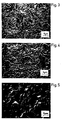
- the average grain size of both sintered bodies is below 10 ⁇ m.
- the transcrystalline fracture mode and the homogeneously dispersed carbon are clear (black phase) recognizable.
- Table 1 shows the limit values of the electrical resistances at room temperature together with the corresponding Al and. N contents of the sintered bodies produced by the process according to the invention are given.
- ⁇ -SiC sintered bodies obtained by the process according to the invention enable them to be used in high-temperature mechanical engineering (hot gas turbine), in the wear technology sector (drawing dies, cutting dies, slide bearings) and in electrical engineering (semiconductors, radiators).
- an ⁇ -SiC submicron powder with a specific surface area of 15.8 m 2 / g, corresponding to an average particle size of 0.12 pm was a commercially available powdered phenol formaldehyde resin of the novolak type, an aluminum nitride submicron powder having a specific surface of 11.0 m 2 / g, and acetone as a solvent for the novolac - used powder.
- the SiC powder showed an ⁇ -phase fraction of 100%.
- the green compacts were then sintered in a graphite crucible, which was inserted into the heating zone of a graphite tube furnace of the Tammann type, at 2,150 ° C. in a flowing argon protective gas atmosphere under a pressure of approximately 1.01 bar. Before heating up, the furnace chamber was flushed several times with cleaned argon gas.
- the sintering was carried out according to the following temperature scheme: After the holding time had ended, the furnace was switched off and the sintered bodies in the furnace were cooled to room temperature.
- the sintered bodies experienced a 16% linear shrinkage, based on the length of the unsintered green compacts, and showed an average density of 3.156 g / cm 3, corresponding to 98.3% of the theoretical density of silicon carbide (density of pure SiC: 3.21 g / cm 3 ).
- the analysis showed a total carbon content of 30.8%, an aluminum content of 1.19%, a nitrogen content of 2 500 ppm, and an oxygen content of 400 ppm.
- the micrograph shows an average SiC grain size of 5 ⁇ m and in very small quantities homogeneously distributed carbon with a particle size ⁇ 1 ⁇ m.
- Table 2 shows the flexural strengths of the test specimens ground to the final dimensions of 3 x 3 x 35 mm as a function of the test temperature. The flexural strength was measured using the three-point method with a contact width of 25 mm.
- the fracture surface of the test sticks showed a transcrystalline appearance throughout.
- a submicron powder with a phase composition of 97% by weight ⁇ -SiC and 3% by weight B-SiC with a specific surface area of 19.3 m 2 / g was obtained as SiC powder from the processing of the large-scale SiC fine-grain fractions
- Carbon-containing additive, a phenolic resin of resol level A in an amount corresponding to 2% by weight of C based on the SiC Nienge used, as an aluminum-containing additive, alternatively elemental aluminum, aluminum nitride, aluminum carbide and aluminum silicocarbide in a respective amount corresponding to 1% by weight Al based on the amount of SiC used and acetone used as solvent ( test series "A").
- test series "B” The same batches were produced in the test series "B", with the modification that carbon black with a specific surface area of 150 m 2 / g was used as the carbon-containing additive instead of the phenolic resin.
- test series "C” the same starting materials were used as in test series "A” with the exception of the additive containing carbon, that is to say that the test series "C” did not contain any carbon additive necessary according to the invention.
- Example 2 The homogenization of the powder mixtures of all test series and the green body production was carried out as described in Example 1.
- Example 1 was repeated, with the modifications that an ⁇ -SiC powder with a grain size finer than 3 ⁇ m and as an Al containing additive 1% by weight aluminum metal powder and as a carbon supplier novolak powder in an amount corresponding to 0.75% C, based on the SiC used Amount was used and the sintering temperature and sintering atmosphere were varied.
- Table 6 The results are summarized in Table 6.
Landscapes
- Engineering & Computer Science (AREA)
- Chemical & Material Sciences (AREA)
- Ceramic Engineering (AREA)
- Manufacturing & Machinery (AREA)
- Materials Engineering (AREA)
- Structural Engineering (AREA)
- Organic Chemistry (AREA)
- Ceramic Products (AREA)
- Silicon Compounds (AREA)
Applications Claiming Priority (2)
| Application Number | Priority Date | Filing Date | Title |
|---|---|---|---|
| DE19782809278 DE2809278A1 (de) | 1978-03-03 | 1978-03-03 | Dichte polykristalline formkoerper aus alpha-siliciumcarbid und verfahren zu ihrer herstellung durch drucklose sinterung |
| DE2809278 | 1978-03-03 |
Publications (2)
| Publication Number | Publication Date |
|---|---|
| EP0004031A1 true EP0004031A1 (fr) | 1979-09-19 |
| EP0004031B1 EP0004031B1 (fr) | 1981-04-01 |
Family
ID=6033515
Family Applications (1)
| Application Number | Title | Priority Date | Filing Date |
|---|---|---|---|
| EP79100600A Expired EP0004031B1 (fr) | 1978-03-03 | 1979-03-01 | Corps très denses en carbure de silicium polycristallin et procédé pour leur fabrication par frittage sans pression |
Country Status (9)
| Country | Link |
|---|---|
| US (1) | US4230497A (fr) |
| EP (1) | EP0004031B1 (fr) |
| JP (1) | JPS54118411A (fr) |
| AT (1) | AT366720B (fr) |
| AU (1) | AU525303B2 (fr) |
| CA (1) | CA1138901A (fr) |
| DE (2) | DE2809278A1 (fr) |
| ES (1) | ES478245A1 (fr) |
| NO (1) | NO148147C (fr) |
Cited By (10)
| Publication number | Priority date | Publication date | Assignee | Title |
|---|---|---|---|---|
| FR2432004A1 (fr) * | 1978-06-15 | 1980-02-22 | Carborundum Co | Produit ceramique fritte et son procede de fabrication |
| EP0021239A1 (fr) * | 1979-06-12 | 1981-01-07 | Elektroschmelzwerk Kempten GmbH | Procédé pour la fabrication de produits denses en carbure de silicium alpha polycristallin par frittage sous pression et produit dense obtenu par ce procédé |
| EP0022522A1 (fr) * | 1979-07-05 | 1981-01-21 | Elektroschmelzwerk Kempten GmbH | Corps moulés denses en carbure de silicium bêta polycristallin et procédé pour leur fabrication par frittage sous pression |
| FR2467831A1 (fr) * | 1979-10-19 | 1981-04-30 | Comp Generale Electricite | Procede d'elaboration d'une ceramique dense en carbure de silicium |
| EP0027972A1 (fr) * | 1979-10-19 | 1981-05-06 | COMPAGNIE GENERALE D'ELECTRICITE Société anonyme dite: | Procédé de fabrication d'une céramique dense en carbure de silicium |
| EP0058941A1 (fr) * | 1981-02-24 | 1982-09-01 | CERAVER Société anonyme dite: | Procédé de fabrication de pièces en carbure de silicium dense |
| EP0072430A3 (en) * | 1981-08-14 | 1984-11-28 | Mtu Muenchen Gmbh | Thermoelement for measuring temperature and process for its manufacture |
| FR2555351A1 (fr) * | 1983-11-23 | 1985-05-24 | Advanced Semiconductor Mat | Elements conducteurs stables concus pour une exposition directe a des environnements reactifs |
| GB2177421A (en) * | 1985-05-20 | 1987-01-21 | Toshiba Ceramics Co | Sintered body of silicon carbide |
| DE102011006847A1 (de) * | 2011-04-06 | 2012-10-11 | Schunk Kohlenstofftechnik Gmbh | Verfahren zur Herstellung eines Widerstandsheizelements sowie Widerstandsheizelement |
Families Citing this family (45)
| Publication number | Priority date | Publication date | Assignee | Title |
|---|---|---|---|---|
| GB2082165B (en) * | 1980-07-17 | 1984-03-28 | Asahi Glass Co Ltd | Silicon carbide ceramic |
| JPS553396A (en) * | 1978-06-15 | 1980-01-11 | Carborundum Co | Silicon carbideealuminum nitride sintered product and its manugacture |
| DE3129633A1 (de) * | 1981-07-28 | 1983-02-17 | Elektroschmelzwerk Kempten GmbH, 8000 München | "praktisch porenfreie formkoerper aus polykristallinem siliciumcarbid, die durch isostatisches heisspressen hergestellt worden sind" |
| DE3329225A1 (de) * | 1982-08-13 | 1984-02-23 | Ngk Spark Plug Co., Ltd., Nagoya, Aichi | Gleitmaterial auf siliciumcarbidbasis |
| JPS59102872A (ja) * | 1982-12-06 | 1984-06-14 | 日本特殊陶業株式会社 | 炭化珪素.黒鉛複合焼結体の製造方法 |
| JPS59107975A (ja) * | 1982-12-08 | 1984-06-22 | 旭硝子株式会社 | SiC質焼結体およびその製法 |
| US4578363A (en) * | 1984-01-23 | 1986-03-25 | Kennecott Corporation | Silicon carbide refractories having modified silicon nitride bond |
| JPS60221365A (ja) * | 1984-04-13 | 1985-11-06 | 住友化学工業株式会社 | 高強度炭化珪素焼結体の製造法 |
| US4692418A (en) * | 1984-08-29 | 1987-09-08 | Stemcor Corporation | Sintered silicon carbide/carbon composite ceramic body having fine microstructure |
| GB2170511B (en) * | 1984-12-17 | 1989-06-07 | Toshiba Ceramics Co | Sintered body of silicon carbide |
| US4701427A (en) * | 1985-10-17 | 1987-10-20 | Stemcor Corporation | Sintered silicon carbide ceramic body of high electrical resistivity |
| JPS62167253A (ja) * | 1986-01-17 | 1987-07-23 | 昭和電工株式会社 | 電気比抵抗の高いSiC焼結体 |
| US4693988A (en) * | 1986-07-01 | 1987-09-15 | Kennecott Corporation | Single phase silicon carbide refractory |
| US5002905A (en) * | 1986-08-22 | 1991-03-26 | Stemcor Corporation | Hexagonal silicon carbide platelets and preforms and methods for making and using same |
| US4981665A (en) * | 1986-08-22 | 1991-01-01 | Stemcor Corporation | Hexagonal silicon carbide platelets and preforms and methods for making and using same |
| DE3839920A1 (de) * | 1987-11-27 | 1989-06-08 | Kanai Juyo Kogyo Kk | Ring fuer spinnmaschinen |
| US5045269A (en) * | 1988-11-17 | 1991-09-03 | Union Carbide Coatings Service Technology Corporation | Method for sintered shapes with controlled grain size |
| DE3902528A1 (de) * | 1989-01-28 | 1990-10-31 | Sintec Keramik Gmbh | Herstellung von polykristallinen formkoerpern aus (alpha) - und/oder (beta)-siliciumcarbid durch drucklose sinterung |
| DE3915914A1 (de) * | 1989-05-16 | 1990-11-22 | Hoechst Ag | Verfahren zur herstellung von gruenkoerpern und gesinterten formkoerpern aus siliciumcarbid |
| US5298470A (en) * | 1989-09-22 | 1994-03-29 | The Carborundum Company | Silicon carbide bodies having high toughness and fracture resistance and method of making same |
| NZ235844A (en) * | 1989-10-26 | 1993-02-25 | Western Mining Corp | Liquid phase sintering of silicon carbide/alumina source mixtures in the presence of a magnesium source |
| DE4221318B4 (de) * | 1991-06-27 | 2005-12-08 | Kao Corp. | Kohlenstoffgefülltes, keramisches Verbundmaterial, Verfahren zu seiner Herstellung und seine Verwendung |
| JP3147977B2 (ja) * | 1991-12-19 | 2001-03-19 | 新日本製鐵株式会社 | 炭化珪素焼結体製反射ミラー用基板とその製造方法 |
| US5395807A (en) * | 1992-07-08 | 1995-03-07 | The Carborundum Company | Process for making silicon carbide with controlled porosity |
| CA2114571A1 (fr) * | 1993-02-04 | 1994-08-05 | Franciscus Van Dijen | Grain abrasif de carbure de silicium fritte et procede de production |
| US5322824A (en) * | 1993-05-27 | 1994-06-21 | Chia Kai Y | Electrically conductive high strength dense ceramic |
| US5459112A (en) * | 1994-09-14 | 1995-10-17 | The Carborundum Company | Reaction-bonded silicon carbide refractory product |
| US5656218A (en) * | 1995-05-19 | 1997-08-12 | Industrial Technology Research Institute | Method for making high performance self-reinforced silicon carbide using a pressureless sintering process |
| DE19537714A1 (de) * | 1995-10-10 | 1997-04-17 | Inst Neue Mat Gemein Gmbh | Verfahren zur Herstellung eines leitfähigen Sinterkörpers auf der Basis von Siliciumcarbid |
| DE19654174A1 (de) * | 1996-12-23 | 1998-06-25 | Kempten Elektroschmelz Gmbh | Gleitwerkstoff aus Siliciumcarbid |
| DE10004176A1 (de) * | 2000-02-01 | 2001-08-02 | Ego Elektro Geraetebau Gmbh | Elektrisches Heizelement |
| DE10044656B4 (de) | 2000-09-04 | 2005-12-29 | Fraunhofer-Gesellschaft zur Förderung der angewandten Forschung e.V. | Offenzellige Siliciumcarbid-Schaumkeramik und Verfahren zu ihrer Herstellung |
| US6887421B2 (en) * | 2002-01-14 | 2005-05-03 | Redunndant Materials, Inc. | Method for making a silicon carbide resistor with silicon/silicon carbide contacts by induction heating |
| JP2005206449A (ja) * | 2003-12-26 | 2005-08-04 | Bridgestone Corp | ヒータ用炭化ケイ素焼結体の製造方法 |
| JP4888756B2 (ja) * | 2005-08-16 | 2012-02-29 | 東海高熱工業株式会社 | トンネル炉の処理品搬送異常防止方法および装置 |
| JP4878873B2 (ja) * | 2006-03-09 | 2012-02-15 | 中部電力株式会社 | 炭化ケイ素焼結体の製造方法および炭化ケイ素焼結体 |
| US8003042B2 (en) * | 2006-03-29 | 2011-08-23 | Ceramatec, Inc. | Toughened silicon carbide and method for making the same |
| JP5603765B2 (ja) * | 2010-11-30 | 2014-10-08 | 東京窯業株式会社 | 炭化ケイ素発熱体の製造方法および炭化ケイ素発熱体ならびにハニカムの製造方法およびハニカム |
| JP5281666B2 (ja) * | 2011-02-28 | 2013-09-04 | 東京窯業株式会社 | 導電性セラミックス焼結体 |
| JP5350426B2 (ja) * | 2011-03-31 | 2013-11-27 | 東京窯業株式会社 | 導電性セラミックス焼結体の製造方法 |
| KR102017689B1 (ko) * | 2012-10-18 | 2019-10-21 | 엘지이노텍 주식회사 | 탄화규소 분말의 제조 방법 |
| WO2016032789A1 (fr) * | 2014-08-25 | 2016-03-03 | General Electric Company | Article à utiliser à haute température |
| FR3030297B1 (fr) * | 2014-12-18 | 2016-12-23 | Saint-Gobain Centre De Rech Et D'Etudes Europeen | Filtres comprenant des membranes en sic incorporant de l'azote |
| US20240327296A1 (en) * | 2021-07-16 | 2024-10-03 | John Crane Inc. | Rotating seal ring material |
| CA3232103A1 (fr) * | 2021-09-29 | 2023-04-06 | Schunk Ingenieurkeramik Gmbh | Composant produit a l'aide d'un procede d'infiltration, dispositif comprenant ledit composant et procede d'infiltration pour la production d'un composant |
Citations (6)
| Publication number | Priority date | Publication date | Assignee | Title |
|---|---|---|---|---|
| DE2314384B2 (de) * | 1972-03-23 | 1975-05-15 | Norton Co., Worcester, Mass. (V.St.A.) | Dichter Siliciumcarbidkörper und Verfahren zu dessen Herstellung |
| DE2549637A1 (de) * | 1974-11-11 | 1976-05-20 | Norton Co | Siliciumcarbidformkoerper hoher dichte und verfahren zu deren herstellung |
| US3966855A (en) * | 1974-02-22 | 1976-06-29 | The United States Of America As Represented By The Secretary Of The Air Force | Method of fabricating silicon carbide articles |
| GB1443158A (en) * | 1972-12-05 | 1976-07-21 | Std Services Ltd | Silon carbide for cold drawing tools |
| DE2624641A1 (de) * | 1975-06-05 | 1976-12-23 | Carborundum Co | Sinterkeramischer koerper und verfahren zu seiner herstellung |
| FR2355789A1 (fr) * | 1976-06-24 | 1978-01-20 | Comp Generale Electricite | Ceramique de carbure de silicium et procede de realisation de cette ceramique |
Family Cites Families (5)
| Publication number | Priority date | Publication date | Assignee | Title |
|---|---|---|---|---|
| JPS5165111A (fr) * | 1974-11-11 | 1976-06-05 | Norton Co | |
| US4031178A (en) * | 1976-04-09 | 1977-06-21 | General Electric Company | Strength improvement in machined SiC bodies |
| US4123286A (en) * | 1976-12-27 | 1978-10-31 | The Carborundum Company | Silicon carbide powder compositions |
| US4135937A (en) * | 1977-03-31 | 1979-01-23 | The Carborundum Company | High density hot pressed thermal shock resistant silicon carbide |
| US4141740A (en) * | 1978-02-23 | 1979-02-27 | University Of Utah | Solid solution and process for producing a solid solution |
-
1978
- 1978-03-03 DE DE19782809278 patent/DE2809278A1/de not_active Withdrawn
- 1978-12-27 JP JP16029178A patent/JPS54118411A/ja active Granted
-
1979
- 1979-02-26 US US06/015,154 patent/US4230497A/en not_active Expired - Lifetime
- 1979-02-28 CA CA000322450A patent/CA1138901A/fr not_active Expired
- 1979-03-01 DE DE7979100600T patent/DE2960224D1/de not_active Expired
- 1979-03-01 EP EP79100600A patent/EP0004031B1/fr not_active Expired
- 1979-03-01 AU AU44741/79A patent/AU525303B2/en not_active Expired
- 1979-03-02 NO NO790699A patent/NO148147C/no unknown
- 1979-03-02 ES ES478245A patent/ES478245A1/es not_active Expired
- 1979-03-02 AT AT0159879A patent/AT366720B/de not_active IP Right Cessation
Patent Citations (6)
| Publication number | Priority date | Publication date | Assignee | Title |
|---|---|---|---|---|
| DE2314384B2 (de) * | 1972-03-23 | 1975-05-15 | Norton Co., Worcester, Mass. (V.St.A.) | Dichter Siliciumcarbidkörper und Verfahren zu dessen Herstellung |
| GB1443158A (en) * | 1972-12-05 | 1976-07-21 | Std Services Ltd | Silon carbide for cold drawing tools |
| US3966855A (en) * | 1974-02-22 | 1976-06-29 | The United States Of America As Represented By The Secretary Of The Air Force | Method of fabricating silicon carbide articles |
| DE2549637A1 (de) * | 1974-11-11 | 1976-05-20 | Norton Co | Siliciumcarbidformkoerper hoher dichte und verfahren zu deren herstellung |
| DE2624641A1 (de) * | 1975-06-05 | 1976-12-23 | Carborundum Co | Sinterkeramischer koerper und verfahren zu seiner herstellung |
| FR2355789A1 (fr) * | 1976-06-24 | 1978-01-20 | Comp Generale Electricite | Ceramique de carbure de silicium et procede de realisation de cette ceramique |
Cited By (11)
| Publication number | Priority date | Publication date | Assignee | Title |
|---|---|---|---|---|
| FR2432004A1 (fr) * | 1978-06-15 | 1980-02-22 | Carborundum Co | Produit ceramique fritte et son procede de fabrication |
| EP0021239A1 (fr) * | 1979-06-12 | 1981-01-07 | Elektroschmelzwerk Kempten GmbH | Procédé pour la fabrication de produits denses en carbure de silicium alpha polycristallin par frittage sous pression et produit dense obtenu par ce procédé |
| EP0022522A1 (fr) * | 1979-07-05 | 1981-01-21 | Elektroschmelzwerk Kempten GmbH | Corps moulés denses en carbure de silicium bêta polycristallin et procédé pour leur fabrication par frittage sous pression |
| FR2467831A1 (fr) * | 1979-10-19 | 1981-04-30 | Comp Generale Electricite | Procede d'elaboration d'une ceramique dense en carbure de silicium |
| EP0027972A1 (fr) * | 1979-10-19 | 1981-05-06 | COMPAGNIE GENERALE D'ELECTRICITE Société anonyme dite: | Procédé de fabrication d'une céramique dense en carbure de silicium |
| EP0058941A1 (fr) * | 1981-02-24 | 1982-09-01 | CERAVER Société anonyme dite: | Procédé de fabrication de pièces en carbure de silicium dense |
| EP0072430A3 (en) * | 1981-08-14 | 1984-11-28 | Mtu Muenchen Gmbh | Thermoelement for measuring temperature and process for its manufacture |
| FR2555351A1 (fr) * | 1983-11-23 | 1985-05-24 | Advanced Semiconductor Mat | Elements conducteurs stables concus pour une exposition directe a des environnements reactifs |
| GB2177421A (en) * | 1985-05-20 | 1987-01-21 | Toshiba Ceramics Co | Sintered body of silicon carbide |
| GB2177421B (en) * | 1985-05-20 | 1989-07-19 | Toshiba Ceramics Co | Sintered body of silicon carbide and method for manufacturing the same |
| DE102011006847A1 (de) * | 2011-04-06 | 2012-10-11 | Schunk Kohlenstofftechnik Gmbh | Verfahren zur Herstellung eines Widerstandsheizelements sowie Widerstandsheizelement |
Also Published As
| Publication number | Publication date |
|---|---|
| NO790699L (no) | 1979-09-04 |
| DE2809278A1 (de) | 1979-09-06 |
| DE2960224D1 (en) | 1981-04-23 |
| NO148147B (no) | 1983-05-09 |
| EP0004031B1 (fr) | 1981-04-01 |
| AU4474179A (en) | 1979-09-06 |
| CA1138901A (fr) | 1983-01-04 |
| ATA159879A (de) | 1981-09-15 |
| JPS54118411A (en) | 1979-09-13 |
| AU525303B2 (en) | 1982-10-28 |
| AT366720B (de) | 1982-05-10 |
| NO148147C (no) | 1983-08-24 |
| JPS6228109B2 (fr) | 1987-06-18 |
| US4230497A (en) | 1980-10-28 |
| ES478245A1 (es) | 1979-05-16 |
Similar Documents
| Publication | Publication Date | Title |
|---|---|---|
| EP0004031B1 (fr) | Corps très denses en carbure de silicium polycristallin et procédé pour leur fabrication par frittage sans pression | |
| EP0002067B1 (fr) | Procédé pour la fabrication de corps denses polycristallins en carbure de bore par frittage sans compression à chaud | |
| EP0094591B1 (fr) | Corps frittés polycrystallins pratiquement sans pores d'alpha carbure de silicium, de carbure de bore, et de carbone, et procédé de fabrication | |
| DE2463206C2 (fr) | ||
| DE2734425C2 (de) | Polykristalliner Sinterkörper auf der Basis von Siliziumcarbid und Borcarbid und Verfahren zum Herstellen | |
| EP0628525B1 (fr) | Composites à base de carbure de bore, borure de titane et carbone élémentaire et procédé de leur fabrication | |
| EP0021239B1 (fr) | Procédé pour la fabrication de produits denses en carbure de silicium alpha polycristallin par frittage sous pression et produit dense obtenu par ce procédé | |
| DE2627856C2 (fr) | ||
| EP0629594B1 (fr) | Procédé de fabrication de corps moulés denses et polycristallins à base de carbure de bore par frittage sans pression | |
| DE3127649A1 (de) | Dichtgesinterter siliciumcarbid-keramikkoerper | |
| EP0071241B1 (fr) | Corps en carbure de silicium polycristalline, pratiquement sans pores, qui ont été fabriqués par frittage sous pression isostatique | |
| EP0022522B1 (fr) | Corps moulés denses en carbure de silicium bêta polycristallin et procédé pour leur fabrication par frittage sous pression | |
| EP0204962B1 (fr) | Corps polycristallin fritté à base d'hexaborure de lanthane et son procédé de fabrication | |
| DE2923729C2 (fr) | ||
| DE3630369C2 (fr) | ||
| EP0052851B1 (fr) | Corps en carbure de silicium polycristalline et procédé pour sa fabrication | |
| DE69010427T2 (de) | Sinterkörper aus Siliziumnitrid und Verfahren zu seiner Herstellung. | |
| DE69512349T2 (de) | Verfahren zur Herstellung von Kompositsinterkörpern aus Siliciumkarbid und Siliciumnitrid | |
| EP0064606B1 (fr) | Procédé de fabrication d'un corps homogène en carbure de silicium | |
| DE3853629T2 (de) | Hochfeste beta-typ-siliziumkarbidsinter und herstellung. | |
| DE2751851A1 (de) | Sinterfaehiges pulver aus siliciumcarbid-pulver, sinterkeramische produkte aus diesem pulver und verfahren zur herstellung der produkte | |
| DE3902528C2 (fr) | ||
| EP0327046B1 (fr) | Procédé pour la production d'articles de forme polycristallins en carbure de silicium ayant une résistance élevée, une densité élevée et une distribution de carbone homogène par diffusion contrôlée |
Legal Events
| Date | Code | Title | Description |
|---|---|---|---|
| PUAI | Public reference made under article 153(3) epc to a published international application that has entered the european phase |
Free format text: ORIGINAL CODE: 0009012 |
|
| AK | Designated contracting states |
Designated state(s): BE CH DE FR GB IT NL SE |
|
| 17P | Request for examination filed | ||
| ITF | It: translation for a ep patent filed | ||
| GRAA | (expected) grant |
Free format text: ORIGINAL CODE: 0009210 |
|
| AK | Designated contracting states |
Designated state(s): BE CH DE FR GB IT NL SE |
|
| REF | Corresponds to: |
Ref document number: 2960224 Country of ref document: DE Date of ref document: 19810423 |
|
| ITTA | It: last paid annual fee | ||
| EAL | Se: european patent in force in sweden |
Ref document number: 79100600.0 |
|
| PGFP | Annual fee paid to national office [announced via postgrant information from national office to epo] |
Ref country code: SE Payment date: 19970213 Year of fee payment: 19 Ref country code: FR Payment date: 19970213 Year of fee payment: 19 |
|
| PGFP | Annual fee paid to national office [announced via postgrant information from national office to epo] |
Ref country code: NL Payment date: 19970218 Year of fee payment: 19 Ref country code: CH Payment date: 19970218 Year of fee payment: 19 |
|
| PGFP | Annual fee paid to national office [announced via postgrant information from national office to epo] |
Ref country code: GB Payment date: 19970226 Year of fee payment: 19 |
|
| PGFP | Annual fee paid to national office [announced via postgrant information from national office to epo] |
Ref country code: BE Payment date: 19970317 Year of fee payment: 19 |
|
| PGFP | Annual fee paid to national office [announced via postgrant information from national office to epo] |
Ref country code: DE Payment date: 19970327 Year of fee payment: 19 |
|
| PG25 | Lapsed in a contracting state [announced via postgrant information from national office to epo] |
Ref country code: GB Free format text: LAPSE BECAUSE OF NON-PAYMENT OF DUE FEES Effective date: 19980301 |
|
| PG25 | Lapsed in a contracting state [announced via postgrant information from national office to epo] |
Ref country code: SE Free format text: LAPSE BECAUSE OF NON-PAYMENT OF DUE FEES Effective date: 19980302 |
|
| PG25 | Lapsed in a contracting state [announced via postgrant information from national office to epo] |
Ref country code: FR Free format text: THE PATENT HAS BEEN ANNULLED BY A DECISION OF A NATIONAL AUTHORITY Effective date: 19980331 Ref country code: CH Free format text: LAPSE BECAUSE OF NON-PAYMENT OF DUE FEES Effective date: 19980331 Ref country code: BE Free format text: LAPSE BECAUSE OF NON-PAYMENT OF DUE FEES Effective date: 19980331 |
|
| BERE | Be: lapsed |
Owner name: ELEKTROSCHMELZWERK KEMPTEN GMBH Effective date: 19980331 |
|
| PG25 | Lapsed in a contracting state [announced via postgrant information from national office to epo] |
Ref country code: NL Free format text: LAPSE BECAUSE OF NON-PAYMENT OF DUE FEES Effective date: 19981001 |
|
| GBPC | Gb: european patent ceased through non-payment of renewal fee |
Effective date: 19980301 |
|
| REG | Reference to a national code |
Ref country code: CH Ref legal event code: PL |
|
| NLV4 | Nl: lapsed or anulled due to non-payment of the annual fee |
Effective date: 19981001 |
|
| PG25 | Lapsed in a contracting state [announced via postgrant information from national office to epo] |
Ref country code: DE Free format text: LAPSE BECAUSE OF NON-PAYMENT OF DUE FEES Effective date: 19981201 |
|
| EUG | Se: european patent has lapsed |
Ref document number: 79100600.0 |
|
| REG | Reference to a national code |
Ref country code: FR Ref legal event code: ST |
|
| PLBE | No opposition filed within time limit |
Free format text: ORIGINAL CODE: 0009261 |
|
| STAA | Information on the status of an ep patent application or granted ep patent |
Free format text: STATUS: NO OPPOSITION FILED WITHIN TIME LIMIT |