EP0005064A1 - Méthode de préparation de la 2,3,5,6-tétrachloropyridine - Google Patents
Méthode de préparation de la 2,3,5,6-tétrachloropyridine Download PDFInfo
- Publication number
- EP0005064A1 EP0005064A1 EP79300660A EP79300660A EP0005064A1 EP 0005064 A1 EP0005064 A1 EP 0005064A1 EP 79300660 A EP79300660 A EP 79300660A EP 79300660 A EP79300660 A EP 79300660A EP 0005064 A1 EP0005064 A1 EP 0005064A1
- Authority
- EP
- European Patent Office
- Prior art keywords
- reaction
- catalyst
- pyridine
- reactor
- psig
- Prior art date
- Legal status (The legal status is an assumption and is not a legal conclusion. Google has not performed a legal analysis and makes no representation as to the accuracy of the status listed.)
- Granted
Links
- FATBKZJZAHWCSL-UHFFFAOYSA-N 2,3,5,6-tetrachloropyridine Chemical compound ClC1=CC(Cl)=C(Cl)N=C1Cl FATBKZJZAHWCSL-UHFFFAOYSA-N 0.000 title claims abstract description 7
- 238000004519 manufacturing process Methods 0.000 title claims description 12
- 239000003054 catalyst Substances 0.000 claims abstract description 74
- 239000000460 chlorine Substances 0.000 claims abstract description 23
- 229910052801 chlorine Inorganic materials 0.000 claims abstract description 23
- 239000007788 liquid Substances 0.000 claims abstract description 12
- -1 chlorosubstituted (trichloromethyl) pyridine Chemical class 0.000 claims abstract description 9
- DNDPLEAVNVOOQZ-UHFFFAOYSA-N 2,3,4,5,6-pentachloropyridine Chemical compound ClC1=NC(Cl)=C(Cl)C(Cl)=C1Cl DNDPLEAVNVOOQZ-UHFFFAOYSA-N 0.000 claims abstract description 5
- 239000002841 Lewis acid Substances 0.000 claims abstract description 5
- 150000007517 lewis acids Chemical class 0.000 claims abstract description 5
- ZAMOUSCENKQFHK-UHFFFAOYSA-N Chlorine atom Chemical compound [Cl] ZAMOUSCENKQFHK-UHFFFAOYSA-N 0.000 claims abstract 2
- 238000006243 chemical reaction Methods 0.000 claims description 94
- 238000000034 method Methods 0.000 claims description 36
- DCUJJWWUNKIJPH-UHFFFAOYSA-N nitrapyrin Chemical compound ClC1=CC=CC(C(Cl)(Cl)Cl)=N1 DCUJJWWUNKIJPH-UHFFFAOYSA-N 0.000 claims description 17
- JUJWROOIHBZHMG-UHFFFAOYSA-N Pyridine Chemical compound C1=CC=NC=C1 JUJWROOIHBZHMG-UHFFFAOYSA-N 0.000 claims description 10
- 239000000376 reactant Substances 0.000 claims description 10
- 229910021578 Iron(III) chloride Inorganic materials 0.000 claims description 5
- RBTARNINKXHZNM-UHFFFAOYSA-K iron trichloride Chemical group Cl[Fe](Cl)Cl RBTARNINKXHZNM-UHFFFAOYSA-K 0.000 claims description 5
- UMJSCPRVCHMLSP-UHFFFAOYSA-N pyridine Natural products COC1=CC=CN=C1 UMJSCPRVCHMLSP-UHFFFAOYSA-N 0.000 claims description 5
- VSCWAEJMTAWNJL-UHFFFAOYSA-K aluminium trichloride Chemical compound Cl[Al](Cl)Cl VSCWAEJMTAWNJL-UHFFFAOYSA-K 0.000 claims description 4
- 229910021586 Nickel(II) chloride Inorganic materials 0.000 claims description 2
- VMPVEPPRYRXYNP-UHFFFAOYSA-I antimony(5+);pentachloride Chemical compound Cl[Sb](Cl)(Cl)(Cl)Cl VMPVEPPRYRXYNP-UHFFFAOYSA-I 0.000 claims description 2
- 125000001309 chloro group Chemical group Cl* 0.000 claims description 2
- GICWIDZXWJGTCI-UHFFFAOYSA-I molybdenum pentachloride Chemical compound Cl[Mo](Cl)(Cl)(Cl)Cl GICWIDZXWJGTCI-UHFFFAOYSA-I 0.000 claims description 2
- QMMRZOWCJAIUJA-UHFFFAOYSA-L nickel dichloride Chemical compound Cl[Ni]Cl QMMRZOWCJAIUJA-UHFFFAOYSA-L 0.000 claims description 2
- XJDNKRIXUMDJCW-UHFFFAOYSA-J titanium tetrachloride Chemical compound Cl[Ti](Cl)(Cl)Cl XJDNKRIXUMDJCW-UHFFFAOYSA-J 0.000 claims description 2
- FEONEKOZSGPOFN-UHFFFAOYSA-K tribromoiron Chemical compound Br[Fe](Br)Br FEONEKOZSGPOFN-UHFFFAOYSA-K 0.000 claims description 2
- PQLAYKMGZDUDLQ-UHFFFAOYSA-K aluminium bromide Chemical compound Br[Al](Br)Br PQLAYKMGZDUDLQ-UHFFFAOYSA-K 0.000 claims 2
- XYMBKICJQUKEHG-UHFFFAOYSA-H B(F)(F)F.[W](F)(F)(F)(F)(F)F Chemical compound B(F)(F)F.[W](F)(F)(F)(F)(F)F XYMBKICJQUKEHG-UHFFFAOYSA-H 0.000 claims 1
- 238000002360 preparation method Methods 0.000 abstract description 10
- 239000000575 pesticide Substances 0.000 abstract description 3
- 239000004009 herbicide Substances 0.000 abstract description 2
- 239000000543 intermediate Substances 0.000 abstract description 2
- 239000000047 product Substances 0.000 description 68
- 239000007858 starting material Substances 0.000 description 34
- KZBUYRJDOAKODT-UHFFFAOYSA-N Chlorine Chemical compound ClCl KZBUYRJDOAKODT-UHFFFAOYSA-N 0.000 description 27
- 239000011269 tar Substances 0.000 description 17
- 150000001875 compounds Chemical class 0.000 description 12
- 230000000694 effects Effects 0.000 description 12
- 238000005660 chlorination reaction Methods 0.000 description 9
- XEEYBQQBJWHFJM-UHFFFAOYSA-N Iron Chemical compound [Fe] XEEYBQQBJWHFJM-UHFFFAOYSA-N 0.000 description 8
- 239000000463 material Substances 0.000 description 8
- 238000004821 distillation Methods 0.000 description 7
- 239000007789 gas Substances 0.000 description 7
- 239000011541 reaction mixture Substances 0.000 description 7
- 239000000203 mixture Substances 0.000 description 6
- 230000035484 reaction time Effects 0.000 description 6
- DLOOKZXVYJHDIY-UHFFFAOYSA-N 2,3,4,5-tetrachloropyridine Chemical compound ClC1=CN=C(Cl)C(Cl)=C1Cl DLOOKZXVYJHDIY-UHFFFAOYSA-N 0.000 description 5
- 239000006227 byproduct Substances 0.000 description 5
- 229910052799 carbon Inorganic materials 0.000 description 5
- PXHVJJICTQNCMI-UHFFFAOYSA-N Nickel Chemical compound [Ni] PXHVJJICTQNCMI-UHFFFAOYSA-N 0.000 description 4
- 229910052782 aluminium Inorganic materials 0.000 description 4
- 150000004820 halides Chemical class 0.000 description 4
- 239000007791 liquid phase Substances 0.000 description 4
- VEXZGXHMUGYJMC-UHFFFAOYSA-N Hydrochloric acid Chemical compound Cl VEXZGXHMUGYJMC-UHFFFAOYSA-N 0.000 description 3
- XAGFODPZIPBFFR-UHFFFAOYSA-N aluminium Chemical compound [Al] XAGFODPZIPBFFR-UHFFFAOYSA-N 0.000 description 3
- 230000001627 detrimental effect Effects 0.000 description 3
- 238000010438 heat treatment Methods 0.000 description 3
- 229910052742 iron Inorganic materials 0.000 description 3
- 229910052751 metal Inorganic materials 0.000 description 3
- 239000002184 metal Substances 0.000 description 3
- 150000003222 pyridines Chemical class 0.000 description 3
- GPAKJVMKNDXBHH-UHFFFAOYSA-N 2,3,6-trichloropyridine Chemical compound ClC1=CC=C(Cl)C(Cl)=N1 GPAKJVMKNDXBHH-UHFFFAOYSA-N 0.000 description 2
- FILKGCRCWDMBKA-UHFFFAOYSA-N 2,6-dichloropyridine Chemical compound ClC1=CC=CC(Cl)=N1 FILKGCRCWDMBKA-UHFFFAOYSA-N 0.000 description 2
- IJGRMHOSHXDMSA-UHFFFAOYSA-N Atomic nitrogen Chemical compound N#N IJGRMHOSHXDMSA-UHFFFAOYSA-N 0.000 description 2
- ZOKXTWBITQBERF-UHFFFAOYSA-N Molybdenum Chemical compound [Mo] ZOKXTWBITQBERF-UHFFFAOYSA-N 0.000 description 2
- HCHKCACWOHOZIP-UHFFFAOYSA-N Zinc Chemical compound [Zn] HCHKCACWOHOZIP-UHFFFAOYSA-N 0.000 description 2
- 238000004458 analytical method Methods 0.000 description 2
- 230000008901 benefit Effects 0.000 description 2
- WTEOIRVLGSZEPR-UHFFFAOYSA-N boron trifluoride Chemical compound FB(F)F WTEOIRVLGSZEPR-UHFFFAOYSA-N 0.000 description 2
- 239000007795 chemical reaction product Substances 0.000 description 2
- 150000001805 chlorine compounds Chemical class 0.000 description 2
- 230000003247 decreasing effect Effects 0.000 description 2
- 238000009826 distribution Methods 0.000 description 2
- 238000004508 fractional distillation Methods 0.000 description 2
- 239000011521 glass Substances 0.000 description 2
- IXCSERBJSXMMFS-UHFFFAOYSA-N hydrogen chloride Substances Cl.Cl IXCSERBJSXMMFS-UHFFFAOYSA-N 0.000 description 2
- 229910000041 hydrogen chloride Inorganic materials 0.000 description 2
- 239000012535 impurity Substances 0.000 description 2
- 150000002739 metals Chemical class 0.000 description 2
- 229910052750 molybdenum Inorganic materials 0.000 description 2
- 239000011733 molybdenum Substances 0.000 description 2
- 229910052759 nickel Inorganic materials 0.000 description 2
- 229910052758 niobium Inorganic materials 0.000 description 2
- 239000010955 niobium Substances 0.000 description 2
- GUCVJGMIXFAOAE-UHFFFAOYSA-N niobium atom Chemical compound [Nb] GUCVJGMIXFAOAE-UHFFFAOYSA-N 0.000 description 2
- 230000001105 regulatory effect Effects 0.000 description 2
- 229910052715 tantalum Inorganic materials 0.000 description 2
- GUVRBAGPIYLISA-UHFFFAOYSA-N tantalum atom Chemical compound [Ta] GUVRBAGPIYLISA-UHFFFAOYSA-N 0.000 description 2
- VZGDMQKNWNREIO-UHFFFAOYSA-N tetrachloromethane Chemical compound ClC(Cl)(Cl)Cl VZGDMQKNWNREIO-UHFFFAOYSA-N 0.000 description 2
- WFKWXMTUELFFGS-UHFFFAOYSA-N tungsten Chemical compound [W] WFKWXMTUELFFGS-UHFFFAOYSA-N 0.000 description 2
- 229910052721 tungsten Inorganic materials 0.000 description 2
- 239000010937 tungsten Substances 0.000 description 2
- 229910052725 zinc Inorganic materials 0.000 description 2
- 239000011701 zinc Substances 0.000 description 2
- QDOUCCJYFGZABY-UHFFFAOYSA-N 2,3,4-trichloro-6-(trichloromethyl)pyridine Chemical compound ClC1=CC(C(Cl)(Cl)Cl)=NC(Cl)=C1Cl QDOUCCJYFGZABY-UHFFFAOYSA-N 0.000 description 1
- MSRGJVQTGNSQOZ-UHFFFAOYSA-N 2,3,5-trichloro-6-(trichloromethyl)pyridine Chemical compound ClC1=CC(Cl)=C(C(Cl)(Cl)Cl)N=C1Cl MSRGJVQTGNSQOZ-UHFFFAOYSA-N 0.000 description 1
- BVZNPRRMFJCNKM-UHFFFAOYSA-N 2,4-dichloro-6-(trichloromethyl)pyridine Chemical compound ClC1=CC(Cl)=NC(C(Cl)(Cl)Cl)=C1 BVZNPRRMFJCNKM-UHFFFAOYSA-N 0.000 description 1
- MWFCRQNUHFSUNY-UHFFFAOYSA-N 3,6-dichloro-2-(trichloromethyl)pyridine Chemical compound ClC1=CC=C(Cl)C(C(Cl)(Cl)Cl)=N1 MWFCRQNUHFSUNY-UHFFFAOYSA-N 0.000 description 1
- QMDKBCLEIGIEBO-UHFFFAOYSA-N 3-(trichloromethyl)pyridine Chemical compound ClC(Cl)(Cl)C1=CC=CN=C1 QMDKBCLEIGIEBO-UHFFFAOYSA-N 0.000 description 1
- 229910015900 BF3 Inorganic materials 0.000 description 1
- OKTJSMMVPCPJKN-UHFFFAOYSA-N Carbon Chemical compound [C] OKTJSMMVPCPJKN-UHFFFAOYSA-N 0.000 description 1
- KJTLSVCANCCWHF-UHFFFAOYSA-N Ruthenium Chemical compound [Ru] KJTLSVCANCCWHF-UHFFFAOYSA-N 0.000 description 1
- 238000013019 agitation Methods 0.000 description 1
- 230000015572 biosynthetic process Effects 0.000 description 1
- 230000003197 catalytic effect Effects 0.000 description 1
- 239000003518 caustics Substances 0.000 description 1
- 150000005753 chloropyridines Chemical class 0.000 description 1
- 239000003426 co-catalyst Substances 0.000 description 1
- 230000002596 correlated effect Effects 0.000 description 1
- 238000005260 corrosion Methods 0.000 description 1
- 230000007797 corrosion Effects 0.000 description 1
- 238000005520 cutting process Methods 0.000 description 1
- 238000002474 experimental method Methods 0.000 description 1
- 238000010575 fractional recrystallization Methods 0.000 description 1
- 230000005484 gravity Effects 0.000 description 1
- 230000002363 herbicidal effect Effects 0.000 description 1
- 239000000155 melt Substances 0.000 description 1
- 238000012544 monitoring process Methods 0.000 description 1
- 229910052757 nitrogen Inorganic materials 0.000 description 1
- 230000000704 physical effect Effects 0.000 description 1
- 230000002035 prolonged effect Effects 0.000 description 1
- 229910052707 ruthenium Inorganic materials 0.000 description 1
- YBCAZPLXEGKKFM-UHFFFAOYSA-K ruthenium(iii) chloride Chemical compound [Cl-].[Cl-].[Cl-].[Ru+3] YBCAZPLXEGKKFM-UHFFFAOYSA-K 0.000 description 1
- 238000005070 sampling Methods 0.000 description 1
- 230000000087 stabilizing effect Effects 0.000 description 1
- 238000003756 stirring Methods 0.000 description 1
- 239000000126 substance Substances 0.000 description 1
- OEIMLTQPLAGXMX-UHFFFAOYSA-I tantalum(v) chloride Chemical compound Cl[Ta](Cl)(Cl)(Cl)Cl OEIMLTQPLAGXMX-UHFFFAOYSA-I 0.000 description 1
- PUGUQINMNYINPK-UHFFFAOYSA-N tert-butyl 4-(2-chloroacetyl)piperazine-1-carboxylate Chemical compound CC(C)(C)OC(=O)N1CCN(C(=O)CCl)CC1 PUGUQINMNYINPK-UHFFFAOYSA-N 0.000 description 1
- KPGXUAIFQMJJFB-UHFFFAOYSA-H tungsten hexachloride Chemical compound Cl[W](Cl)(Cl)(Cl)(Cl)Cl KPGXUAIFQMJJFB-UHFFFAOYSA-H 0.000 description 1
- 239000012808 vapor phase Substances 0.000 description 1
- 239000006200 vaporizer Substances 0.000 description 1
- XLYOFNOQVPJJNP-UHFFFAOYSA-N water Substances O XLYOFNOQVPJJNP-UHFFFAOYSA-N 0.000 description 1
Images


Classifications
-
- C—CHEMISTRY; METALLURGY
- C07—ORGANIC CHEMISTRY
- C07D—HETEROCYCLIC COMPOUNDS
- C07D213/00—Heterocyclic compounds containing six-membered rings, not condensed with other rings, with one nitrogen atom as the only ring hetero atom and three or more double bonds between ring members or between ring members and non-ring members
- C07D213/02—Heterocyclic compounds containing six-membered rings, not condensed with other rings, with one nitrogen atom as the only ring hetero atom and three or more double bonds between ring members or between ring members and non-ring members having three double bonds between ring members or between ring members and non-ring members
- C07D213/04—Heterocyclic compounds containing six-membered rings, not condensed with other rings, with one nitrogen atom as the only ring hetero atom and three or more double bonds between ring members or between ring members and non-ring members having three double bonds between ring members or between ring members and non-ring members having no bond between the ring nitrogen atom and a non-ring member or having only hydrogen or carbon atoms directly attached to the ring nitrogen atom
- C07D213/60—Heterocyclic compounds containing six-membered rings, not condensed with other rings, with one nitrogen atom as the only ring hetero atom and three or more double bonds between ring members or between ring members and non-ring members having three double bonds between ring members or between ring members and non-ring members having no bond between the ring nitrogen atom and a non-ring member or having only hydrogen or carbon atoms directly attached to the ring nitrogen atom with hetero atoms or with carbon atoms having three bonds to hetero atoms with at the most one bond to halogen, e.g. ester or nitrile radicals, directly attached to ring carbon atoms
- C07D213/61—Halogen atoms or nitro radicals
-
- Y—GENERAL TAGGING OF NEW TECHNOLOGICAL DEVELOPMENTS; GENERAL TAGGING OF CROSS-SECTIONAL TECHNOLOGIES SPANNING OVER SEVERAL SECTIONS OF THE IPC; TECHNICAL SUBJECTS COVERED BY FORMER USPC CROSS-REFERENCE ART COLLECTIONS [XRACs] AND DIGESTS
- Y02—TECHNOLOGIES OR APPLICATIONS FOR MITIGATION OR ADAPTATION AGAINST CLIMATE CHANGE
- Y02P—CLIMATE CHANGE MITIGATION TECHNOLOGIES IN THE PRODUCTION OR PROCESSING OF GOODS
- Y02P20/00—Technologies relating to chemical industry
- Y02P20/50—Improvements relating to the production of bulk chemicals
- Y02P20/582—Recycling of unreacted starting or intermediate materials
Definitions
- the present invention concerns a process for the preparation of 2,3,5,6-tetrachloropyridine and pentachloropyridine.
- the chlorinated pyridine derivatives of the present invention are known compounds having been previously prepared by a number of processes. These compounds have uses, such as pesticides, and are also employed as chemical intermediates in the preparation of other highly desired herbicide or pesticide products. Previous methods for preparing such compounds include those described in U.S. Patent Nos. 3,538,100 and 3,186,994 and the prior art noted therein. According to the '100 patent, pentachloropyridine and 2,3,5,6-tetrachloropyridine (hereinafter referred to for convenience as "Penta” and “Tetra” products, respectively,) have been prepared by chlorination of liquid 2,6-dichloropyridine at temperatures of at least about 180°C and in the presence of a metallic halide catalyst.
- Poly- chloropyridines including Penta and Tetra products, are also produced according to the '994 patent by chlorinating a polychloro-(trichloromethyl)pyridine reactant in the liquid state at a temperature of at least 160°C, preferably under irradiation with ultraviolet light.
- the present invention provides a process for preparing 2,3,5,6-tetrachloropyridine and pentachloropyridine which comprises reacting chlorine with a liquid chlorosubstituted (trichloromethyl)-pyridine reactant of the formula: wherein R 1 and R 3 are chloro or H.
- the starting material e.g., 2-chloro-, 2,3-dichloro-, 2,5-dichloro- or 2,3,5-trichloro-6-(trichloromethyl)pyridine, is contacted in the liquid state with chlorine at temperatures of at least about 160°C and at atmospheric or superatmospheric pressure in the presence of a Lewis acid type catalyst.
- the process of the present invention is preferably conducted under anhydrous conditions, and is preferably carried out in a continuous, cyclical operation to produce the preferred product of symmetrical tetrachloropyridine.
- gaseous chlorine is passed into a liquid chloro-substituted 6-(trichloromethyl)pyridine starting material at a temperature of at least about 160°C in the presence of a Lewis acid type catalyst.
- An equimolar amount of the chlorine gas reactant is employed with from about 0.3 to about 10 excess molar proportions of chlorine per mole of starting material desirably being employed.
- the continuous passage of excess chlorine gas through the reaction mixture serves not only to supply a large amount of reactant but to sweep out any carbon tetrachloride or hydrogen chloride by-products.
- the most suitable rate at which the chlorine gas is fed will vary with the reaction temperature, pressure, reaction mixture volume, etc.
- An excess amount of from about 0.3 to about 5.0 moles of chlorine per hour is usually employed per mole of chloro-substituted 6-(trichloromethyl)pyridine starting reactant.
- Representative catalysts include, for example, Lewis acid type catalysts such as metals or metallic halides capable of being converted to covalent metallic chlorides under the conditions of the chlorination reaction of the present invention.
- metals themselves such as iron, zinc, aluminum, and the like can be employed, preferably in the powdered form.
- Representative covalent metallic chlorides or halides which can be converted to the chloride form include those such as ferric chloride, ferric bromide, aluminum chloride, aluminum bromide, antimony pentachloride, molybdenum pentachloride, tungsten hexachloride, boron trifluoride, titanic chloride, or nickel chloride.
- Catalysts bonded to inert supports or the use of co-catalysts are also contemplated for use in the present invention.
- Catalysts preferred for use in the present invention include halides of ruthenium, tantalum, tungsten, molybdenum, niobium, aluminum, zinc, and iron.
- Highly preferred catalysts for use in the present invention include the ferric and aluminum halides, and iron and aluminum metals.
- a preferred catalyst is ferric chloride.
- the catalysts are usually employed in an amount ranging from about 1 to about 20 mole % by weight based on the amount of chloro-substituted 6-(trichloromethyl)-pyridine starting material.
- a catalyst concentration of from about 1.0 to about 10 mole % is employed.
- the desired products of the present invention can be obtained by the chlorination, at atmospheric pressure, of 2-chloro-6-(trichloromethyl)-pyridine and other similar reactants in the presence of an effective catalyst at temperatures of from about 160 to about 220°C, it has also been surprisingly found that such products can be obtained in a much more efficient and economical manner if the chlorination reaction is carried out at pressures substantially in excess of atmospheric. Moreover, in the preparation of the highly preferred tetrachloropyridine, it was surprisingly found that increases in the production of the same were directly correlated to increases in one or more of the pressure, temperature, or catalyst amount parameters.
- an increase of 10-15° in the temperature range has the effect of approximately doubling the reaction rate, while an approximately doubling in the pressure from 100 to 200 psig (from 7 to 14 kg/cm 2 gauge) elicits a similar response.
- an approximately doubling of the catalyst amount also has been found to approximately double the reaction rate.
- the starting material in molten form is usually added to a reactor previously heated to at least about 100°C and the reactor purged with nitrogen. Catalyst in an amount sufficient to catalyze the reaction is then added and chlorine flow commenced, usually at a sufficient rate to pressure the reactor to about 15 psig, (1 kg/cm 2 gauge) or more. The temperature of the reactor is then slowly increased to at least about 160°C and the reaction maintained until sufficient amounts of the desired pyridine compounds are obtained. Liquid samples from the reactor and vent gases are periodically taken and analyzed by known methods to monitor the course of the reaction.
- the reaction is terminated by stopping the heating of the reactor and the flow of chlorine thereto and allowing the reactor pressure to drop to atmospheric. Distillation of the reaction product obtained can then be carried out to obtain the desirable products therefrom and the still bottoms can be recovered and re-used in the process.
- compounds (IV), (V), (VI) and (VII) are produced in lesser amounts, with the concentrations of products (IV), (V) and (VII) increasing significantly following obtention of peak amounts of compounds (II) and (III).
- the production of compound (V) continues to increase significantly during the reaction while the concentration of compound (IV) peaks and then begins to diminish.
- the concentration of compound (VII) continues to increase, although at a lesser rate than compound (V), but will eventually equal and surpass the peak concentration of compound (V) if the reaction is continued for a sufficient period of time.
- materials (II) or (III) can be derived from sources other than (I) and that they can be used to prepare materials (IV) through (VII), and that material (IV) likewise may be obtainable from other methods known in the art and can be utilized as the starting material to prepare products (V) through (VII) according to the present invention.
- material (IV) likewise may be obtainable from other methods known in the art and can be utilized as the starting material to prepare products (V) through (VII) according to the present invention.
- the use of any one or more of mixtures of these as starting materials is to be understood as being embodiments within the scope of the present invention.
- 2,3- and 2,5-dichloro-6-(trichloromethyl)pyridine products [(II) and (III)] can be prepared by reacting chlorine and 2-chloro-6-(trichloromethyl)pyridine (I) at atmospheric pressure and at a temperature of at least about 160° C in the presence of a catalyst.
- the optimum amount of product (II) obtained is generally from about 2 to about 4 times the optimum amount of product (III). While products (II) and (III) can be obtained under the conditions noted, the reaction time necessary to obtain significant conversion of the starting material thereto is quite long, e.g., substantially in excess of about 100 hours.
- the reaction be carried out at reaction temperatures of at least about 160°C and under pressures substantially in excess of atmospheric, e.g., from about 15 to about 220 psig (1-15.4 kg/cm 2 gauge) and a catalyst amount of about 2 mole %.
- the reaction is carried out at temperatures of from about 160°C to about 220°C, pressures of about 100 psig to about 220 psig (7-15.4 kg/cm 2 gauge) and a catalyst amount of about 4 mole % or more, thereby generally obtaining optimum yields of products (II) and (III).
- reaction temperature of about 200°C
- reaction pressure of about 200 psig (14 kg/cm 2 gauge)
- catalyst amount of from about 1 to about 10 mole %
- optimum yields of products (II) and (III) can be obtained in a batch reaction in about 10-12 hours.
- ruthenium trichloride be employed as the catalyst.
- Product (IV) can be prepared from starting material (I) under the same general reaction temperature and pressure ranges as above, with preferred temperatures of from about 160 to about 220° C , pressures of from about 100 to about 220 psig (7-15.4 kg/cm 2 gauge) and catalyst amounts of from about 2 to about 10 mole % being employed. Most preferably, reaction temperatures of from about 180 to about 190° are employed at reaction pressures of from about 190 to about 210 psig (13.3-14.7 kg/cm 2 gauge).
- the process is employed to obtain optimum amounts of the tetrachloropyridine compound (V).
- the starting material (I) is reacted with chlorine under the same general conditions as set forth above.
- the reaction can be conducted at atmospheric pressure, but the reaction time necessary to obtain optimum amounts of the product is extremely long. Therefore, it is preferred that the process be carried out at reaction temperatures of from about 160 to about 220°C, preferably from about 180-210°C, at reaction pressures of from about 15 to about 220 psig (1--15.4 kgjcm 2 gauge), preferably from about 100 to about 220 psig (7-15 kg/cm 2 gauge) and at catalyst amounts of from about 1 to about 10 mole %.
- reaction rate was found to be about doubled when the catalyst amount was increased from 2 to 4 mole %.
- larger amounts of catalyst e.g., generally from about 5 to about 10 mole %, has been found to result in an undesirable build-up of tar by-products in the product still bottoms. This increase in tar build-up is particularly undesirable where the same is recycled with still bottoms to form part of the feed starting material.
- reaction temperatures of from about 180 to about 210° and reaction pressures of from about 190 to about 210 psig (13.3-14.7 kg/cm 2 gauge) are preferred; optimum amounts of the tetra pyridine product of up to about 40-50 weight percent of the reaction product can be obtained under such conditions in reaction periods of from about 40 to 70 hours when using about 2 mole % by weight of catalyst.
- the reaction temperature is about 200°C
- the reaction pressure is about 200 psig (14 kg/cm 2 gauge)
- the catalyst is employed in an amount of from about 1 to about 10 mole %.
- the 2-chloro-6-(trichloromethyl)pyridine starting material is known and can be prepared according to the methods taught in U.S. Patent 3,420,833. All of the products (II)-(VII), their physical properties, and methods of analysis therefor are known in the art.
- the interior surfaces of the reactors and inlets, outlets, conduits, etc.,. should be of materials which resist corrosion by chlorine and hydrogen chloride. Thus, for example, such surfaces may be lined with glass, carbon, nickel, etc.
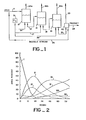
- a chlorination reactor comprising a 300 ml flask fitted with a sparge tube connected via a rotometer and needle valve to a chlorine source and a condensor connnected to a caustic scrubber was charged with a melt (200 grams) of a 2-chloro-6--(trichloromethyl)pyridine starting material. Catalyst was then charged to the reactor and the reaction mixture warmed to about 200 0 C at atmospheric pressure with stirring, and chlorine was sparged into the solution at the rate of about 0.1 mole/hr. Samples were removed via a sampling port at 6 hour intervals. The results of operations employing such procedure are set forth below in Table A and illustrated in Figure 2 hereof, the product distribution being in terms of weight percent.
- a two liter, Parr reactor with glass liner and equipped with an air driven stirrer is pre--heated to about 100-125°C and one kilogram of a 2-chloro-6-(trichloromethyl)pyridine starting material is melted and poured into the warm reactor and the desired amount of iron powder catalyst is calculated and added to the starting material melt.
- the reactor is then sealed, and chlorine, from a gas cylinder placed in a heated and stirred water bath, is delivered to the liquid phase in the heated reactor via a dip-leg.
- the pressure of the reaction is regulated by heating the chlorine supply cylinder and the Cl 2 flow is regulated at a desired level.
- the rate of vent gases (C1 2 and HC1) is controlled by a pressure regulator.
- Tables A-K indicate that varying amounts of desired products (II) through (VII) can be prepared in batch reactions at various pressures, temperatures and catalyst concentrations and indicate the effect of varying one or more of said parameters. It is apparent that the products (II)-(VII) can be obtained in good yields under the general reaction conditions of the present invention. While data on production of several products is noted in the Tables, it will be apparent to those skilled in the art that the batch reactions can be terminated whenever optimum amounts of a desired product have been obtained and such product thereafter recovered.
- Table C The effect of further increasing the pressure on the reaction time is shown in Table C, sample 2, about the same optimum amounts of (II) and (III) as obtained in Tables A and B being obtained in a reaction period of about 24-36 hours.
- Tables D and G indicate that longer reaction periods are also needed to obtain optimum amounts of (II) and (III) when reaction temperatures in the lower end of the operable temperature range are used, even where high pressures and increased catalyst amounts are employed.
- a comparison of data in Tables D and E indicates that the reaction rate is more than doubled as a result of increasing the temperature about 15°C and/or doubling the catalyst concentration.
- the foregoing examples illustrate the batchwise practice of the process.
- the process can, however, be conducted on a recycle basis.
- the following example illustrates the preparation of product, starting with substantially pure starting material (I), and illustrates that still bottoms containing original catalyst can be recovered from the distillation of the desired product and recycled, with little loss of catalyst activity, with make-up starting material (I).
- a pilot-plant chlorination system similar to that employed in Example 2 is utilized, the essential difference being the introduction of chlorine gas to the vapor phase above the liquid starting material (I).
- 261 pounds (118 kg) of a molten 2-chloro-6--(trichloromethyl)pyridine starting material was pumped into a warmed (100°C) glass-lined reactor having a stirrer and the system purged with N 2 .
- the temperature of the reactor was slowly raised to about 190°C over a period of about 18 hours, and the reactor then pressured to about 200 psig (14 kg/cm 2 gauge). The reaction temperature during the rest of the reaction period was maintained at about 200°C. Samples are periodically taken and analyzed to monitor the course of the reaction. The reaction is terminated by cutting the heat to the reactor and allowing the pressure to drop to atmospheric. The reactor and lines are then flushed with N 2 and the reactor contents removed and subjected to a vacuum for about 12 hours to remove residual C1 2 , HC1 and CC1 4 . The contents are then distilled at reduced pressure (about 20 mmHg) and the tetra (V) and penta (VII) products removed over a period of about 20 hours. The still bottoms are collected for recycle experiments. Results obtained as a result of following the above procedures are set forth in the following Table L and are illustrated in Figure 4 hereof:
- the process of the present invention can also be carried out on a continuous recycle basis to prepare the various products and is the preferred mode for preparing symmetrical tetrachloropyridine .( V ).
- Such process comprises the continuous chlorination of a catalyzed liquid phase reaction mass comprising 2--chloro-6-(trichloromethyl)pyridine reaction at temperatures of at least about 160°C and at pressures of from about atmospheric to about 220 psig (15.4 kg/cm 2 gauge).
- the reaction is carried out in a series of reactors for a period of time sufficient to obtain a desired amount of product (V).
- the reaction mass is removed from the last reactor and the desired product obtained by fractional distillation of the reaction mass, the still bottoms or a portion thereof being recycled to the first reactor to comprise part of the feed thereto.
- the overheads can be condensed and the by-products recovered.
- the reaction temperature is from about 100 to about 210°C
- the reaction pressures are from about 190 to about 220 psig (13.3-15.4 kg/cm 2 gauge) and the catalyst amount ranges from about 1.0 to about 10 mole %.
- a reaction temperature of from about 200°C., a reaction pressure of about 200 to about 220 psig (14-15.4 kg/cm 2 gauge), and a catalyst amount of about 1 to about 5 mole % are preferred; temperatures and catalyst amounts in excess of these preferred ranges, while operable, tend to cause an undesired increase in tar build-up, which has a detrimental effect on the production of the desired product.
- the molten 2-chloro-6-(trichloromethyl)pyridine feed containing the catalyst is introduced via line 11 and mixed with recycle still bottoms returning via line 25 and the mixture is pumped (not illustrated) to heated reactor 12 and reacted with vaporized chlorine (vaporizer not illustrated) fed through line 14 to the bottom of reactor 12 from chlorine source 13 to form a chlorinated reaction mixture.
- the chlorinated reaction mixture flows by gravity overflow from reactor 12 to reactor 16 via line 15 where it is further reacted with chlorine fed to the bottom of reactor 16 through line 17.
- the chlorinated reaction mixture from reactor 16 is likewise fed through line 18 to reactor 19 and further reacted with chlorine fed to reactor 19 through line 20.
- the chlorinated reaction mixture is then passed from reactor 19 to distillation unit 22 through line 21, wherein volatile overheads are removed via line 23 and desired product recovered through line 24.
- the still bottoms are removed from the bottom of unit 22 and transfered as a recycle stream via line 25 to feed line 11.
- Each of reactors 12, 16 and 19 are vented (26a, 26b and 26c, respectively) for release of excess C1 2 and other volatile by-products. Monitoring of the vent gases also serves as a means to follow the course of the reaction.
- Catalyst can be separately added to reactor 12 if so desired (not illustrated) and the amount of tar in the recycle stream can also be controlled by a bleed valve on line 25 (not illustrated).
- the number of reactors is not considered to be critical and fewer or greater numbers of reactors can be used, the conditions and average residence time for each reactor being accordingly adjusted for the product(s) desired and temperature/pressure conditions employed.
- the reaction can be commenced by feeding a composition comprising about 90 weight percent or more of the 2-chloro-6-(trichloromethyl)-pyridine starting material in the liquid state (at about 75°C) to reactor 12 along with about 2 mole % ferric chloride catalyst and an excess amount of chlorine to provide about 70% C1 2 in the vent gases.
- the reaction mass is initially heated at about 190°C at a pressure of about 200 psig (14 kgjcm 2 gauge) for a period of about 18 hours.
- reaction temperature is raised to about 200°C and the catalyzed liquid phase reaction mass passed from reactor 12 through each of succeeding reactors 16 and 19, each maintained at about 200°C and about 200 psig (14 kg/cm 2 gauge), with excess C1 2 fed to each.
- starting material (I) to products (II) and (III) is a slow process
- a seed starting material comprising the catalyst and about 30 weight % 2-chloro-6-(trichloromethyl)-pyridine (I), about 40 weight % product (II) and (III) and about 20 weight % (IV), 10% other chlorinated pyridine products
- the catalyzed liquid reaction mass subjected to chlorination at about 200°C and about 200 psig (14 kg/cm 2 gauge) as it passes successively through each of the 3 reactors.
- the reaction mass is preferably stirred or recirculated by pump means in each of the reactors.
- the average residence time in each reactor is from about 18 to about 20 hours.
- the reaction mass from reactor 19 is continuously removed to the distillation column 22 wherein the desired product (V) is recovered along with (VII). About 80-90% of the product stream recovered (about 40% by weight of the reaction mass) is desired product (V) while about 10-20% is mostly product (VII). About 60% of the reaction mass comprises by-products HC1 and C1 2 , which are also separated from the desired products, and the still bottoms and tars (tars being about 1-5 weight % tar based on starting material). The still bottoms and some tar are recycled to reactor 12 along with an appropriate amount of make-up feed and additional catalyst (if needed) to maintain the desired starting material composition.
- the products obtained from the distillation column may be further purified by fractional distillation or recrystallization procedures.
- a continuous, recycle process utilizing a reactor scheme substantially as set forth in Figure 1 was carried out over a prolonged period to study the effects of tar build-up upon the rate of production of symmetrical tetrachloropyridine (D).
- Three, one-gallon (3.78-1.) capacity nickel reactors were utilized with the feed starting material, comprising recycle still bottoms and make-up 2-chloro-6-(trichloromethyl)-pyridine (I) starting material (about 30 weight % total of (I) in the feed to the first reactor) and catalyst as needed, being fed at a rate of 3 ml/min.
- the catalyst amount was maintained at a level of about 1.6 mole %, while the temperature and pressure in each of the reactors was maintained at about 200°C and about 200 psig (14 kg/cm 2 gauge), respectively.
- the average residence time of the reaction mass being chlorinated in each reactor was about 20 hours, the total residence time in the three reactors being about 60 hours before the reaction mass was withdrawn and distilled.
- the continuous recycle process was continued for a period of 62 days and the weight % of tar versus desired product (V) monitored by analysis of the product material obtained from the last reactor. The results of such operations were plotted and are noted in the graph of Figure 6.
- the weight % of starting material (I) remaining after 20 hours, hours to achieve maximum concentration of products (II) and (IV), and weight % of (V) after 70 hours were determined with tungsten, molybdenum, tantalum and niobium catalysts and the results are as follows:
Landscapes
- Chemical & Material Sciences (AREA)
- Organic Chemistry (AREA)
- Pyridine Compounds (AREA)
- Organic Low-Molecular-Weight Compounds And Preparation Thereof (AREA)
Applications Claiming Priority (2)
| Application Number | Priority Date | Filing Date | Title |
|---|---|---|---|
| US89967578A | 1978-04-24 | 1978-04-24 | |
| US899675 | 1986-08-25 |
Publications (2)
| Publication Number | Publication Date |
|---|---|
| EP0005064A1 true EP0005064A1 (fr) | 1979-10-31 |
| EP0005064B1 EP0005064B1 (fr) | 1984-10-10 |
Family
ID=25411379
Family Applications (1)
| Application Number | Title | Priority Date | Filing Date |
|---|---|---|---|
| EP79300660A Expired EP0005064B1 (fr) | 1978-04-24 | 1979-04-20 | Méthode de préparation de la 2,3,5,6-tétrachloropyridine |
Country Status (10)
| Country | Link |
|---|---|
| EP (1) | EP0005064B1 (fr) |
| JP (1) | JPS54144378A (fr) |
| AR (1) | AR220383A1 (fr) |
| AU (1) | AU518910B2 (fr) |
| BR (1) | BR7902491A (fr) |
| CA (1) | CA1089468A (fr) |
| DE (1) | DE2967250D1 (fr) |
| IL (1) | IL56946A (fr) |
| NZ (1) | NZ189956A (fr) |
| ZA (1) | ZA791325B (fr) |
Cited By (7)
| Publication number | Priority date | Publication date | Assignee | Title |
|---|---|---|---|---|
| EP0060462A1 (fr) * | 1981-03-12 | 1982-09-22 | The Dow Chemical Company | Procédé de préparation de 2,3-dichloro-5-trichlorométhylpyridine |
| US4420618A (en) * | 1980-03-07 | 1983-12-13 | Ishihara Sangyo Kaisha Ltd. | Process for producing 5-chloro-β-trifluoromethylpyridines |
| EP0204848A1 (fr) * | 1985-05-31 | 1986-12-17 | The Dow Chemical Company | Préparation de tétrachloropyridine symétrique à partir de bêta-(trichlorométhyl)pyridines chlorées en utilisant un catalyseur |
| EP0254053A1 (fr) * | 1986-07-22 | 1988-01-27 | The Dow Chemical Company | Préparation de pyridines polychlorées à partir de lutidines-2,3 polychlorées |
| EP0402536A1 (fr) * | 1986-01-10 | 1990-12-19 | The Dow Chemical Company | Préparation de 2,3,4,6-tétrachloropyridine |
| EP0420356A3 (en) * | 1989-09-28 | 1991-10-09 | Dowelanco | Control of isomer distribution in a chlorination process |
| EP0544267A1 (fr) * | 1991-11-26 | 1993-06-02 | DowElanco | Chloration sélective en phase gazeuse de bêta-picolines polychlorées pour la préparation de la 2,3,5,6-tétrachlorpyridine et de ses précurseurs |
Families Citing this family (4)
| Publication number | Priority date | Publication date | Assignee | Title |
|---|---|---|---|---|
| JPS58206564A (ja) * | 1982-05-27 | 1983-12-01 | Ishihara Sangyo Kaisha Ltd | β−クロロピリジン系化合物の製造方法 |
| USD912761S1 (en) | 2019-06-07 | 2021-03-09 | S. C. Johnson & Son, Inc. | Toilet rim-block |
| USD914131S1 (en) | 2019-06-07 | 2021-03-23 | S. C. Johnson & Son, Inc. | Toilet rim-block holder |
| USD923139S1 (en) | 2019-06-07 | 2021-06-22 | S. C. Johnson & Son, Inc. | Set of toilet rim-blocks |
Citations (4)
| Publication number | Priority date | Publication date | Assignee | Title |
|---|---|---|---|---|
| FR1347180A (fr) * | 1961-11-15 | 1963-12-27 | Dow Chemical Co | Procédé de production de dérivés chlorés de l'alpha-picoline et de 2-(trichlorométhyl) pyridines nouvelles |
| US3186994A (en) * | 1962-10-18 | 1965-06-01 | Dow Chemical Co | Polychloropyridines |
| US3538100A (en) * | 1968-03-15 | 1970-11-03 | Olin Corp | Process for preparing highly chlorinated pyridines |
| US3732230A (en) * | 1970-12-07 | 1973-05-08 | Dow Chemical Co | Liquid phase polychlorination of pyridine hydrochlorides |
-
1979
- 1979-03-15 CA CA323,500A patent/CA1089468A/fr not_active Expired
- 1979-03-20 ZA ZA791325A patent/ZA791325B/xx unknown
- 1979-03-21 NZ NZ189956A patent/NZ189956A/xx unknown
- 1979-03-22 AU AU45417/79A patent/AU518910B2/en not_active Expired
- 1979-03-26 IL IL56946A patent/IL56946A/xx unknown
- 1979-04-20 AR AR276247A patent/AR220383A1/es active
- 1979-04-20 EP EP79300660A patent/EP0005064B1/fr not_active Expired
- 1979-04-20 DE DE7979300660T patent/DE2967250D1/de not_active Expired
- 1979-04-23 BR BR7902491A patent/BR7902491A/pt unknown
- 1979-04-24 JP JP5078679A patent/JPS54144378A/ja active Granted
Patent Citations (4)
| Publication number | Priority date | Publication date | Assignee | Title |
|---|---|---|---|---|
| FR1347180A (fr) * | 1961-11-15 | 1963-12-27 | Dow Chemical Co | Procédé de production de dérivés chlorés de l'alpha-picoline et de 2-(trichlorométhyl) pyridines nouvelles |
| US3186994A (en) * | 1962-10-18 | 1965-06-01 | Dow Chemical Co | Polychloropyridines |
| US3538100A (en) * | 1968-03-15 | 1970-11-03 | Olin Corp | Process for preparing highly chlorinated pyridines |
| US3732230A (en) * | 1970-12-07 | 1973-05-08 | Dow Chemical Co | Liquid phase polychlorination of pyridine hydrochlorides |
Cited By (7)
| Publication number | Priority date | Publication date | Assignee | Title |
|---|---|---|---|---|
| US4420618A (en) * | 1980-03-07 | 1983-12-13 | Ishihara Sangyo Kaisha Ltd. | Process for producing 5-chloro-β-trifluoromethylpyridines |
| EP0060462A1 (fr) * | 1981-03-12 | 1982-09-22 | The Dow Chemical Company | Procédé de préparation de 2,3-dichloro-5-trichlorométhylpyridine |
| EP0204848A1 (fr) * | 1985-05-31 | 1986-12-17 | The Dow Chemical Company | Préparation de tétrachloropyridine symétrique à partir de bêta-(trichlorométhyl)pyridines chlorées en utilisant un catalyseur |
| EP0402536A1 (fr) * | 1986-01-10 | 1990-12-19 | The Dow Chemical Company | Préparation de 2,3,4,6-tétrachloropyridine |
| EP0254053A1 (fr) * | 1986-07-22 | 1988-01-27 | The Dow Chemical Company | Préparation de pyridines polychlorées à partir de lutidines-2,3 polychlorées |
| EP0420356A3 (en) * | 1989-09-28 | 1991-10-09 | Dowelanco | Control of isomer distribution in a chlorination process |
| EP0544267A1 (fr) * | 1991-11-26 | 1993-06-02 | DowElanco | Chloration sélective en phase gazeuse de bêta-picolines polychlorées pour la préparation de la 2,3,5,6-tétrachlorpyridine et de ses précurseurs |
Also Published As
| Publication number | Publication date |
|---|---|
| NZ189956A (en) | 1981-03-16 |
| EP0005064B1 (fr) | 1984-10-10 |
| IL56946A0 (en) | 1979-05-31 |
| DE2967250D1 (en) | 1984-11-15 |
| JPS54144378A (en) | 1979-11-10 |
| ZA791325B (en) | 1980-03-26 |
| JPS6157827B2 (fr) | 1986-12-09 |
| AR220383A1 (es) | 1980-10-31 |
| BR7902491A (pt) | 1979-10-30 |
| CA1089468A (fr) | 1980-11-11 |
| IL56946A (en) | 1981-12-31 |
| AU4541779A (en) | 1979-11-01 |
| AU518910B2 (en) | 1981-10-29 |
Similar Documents
| Publication | Publication Date | Title |
|---|---|---|
| US4256894A (en) | Preparation of chlorinated pyridines | |
| US5969198A (en) | Process for the preparation of 1,1,1,3,3-pentafluoropropane | |
| EP0005064B1 (fr) | Méthode de préparation de la 2,3,5,6-tétrachloropyridine | |
| US4288599A (en) | Process for producing pyridine derivatives having a trifluoromethyl group at β-position thereof | |
| CA1125763A (fr) | PROCEDE DE FABRICATION DE CHLORO .beta.-TRIFLUORO- METHYLPYRIDINES | |
| US4227001A (en) | Preparation of polychlorinated pyridines from 2,4-dichloro-6-(trichloro methyl)pyridine | |
| EP0256146A1 (fr) | Recyclage du catalyseur dans une réaction d'échange d'halogène en phase liquide | |
| CS226444B2 (en) | Method of preparing 2,3-dichloro-5-trichloromethylpyridine | |
| US4483993A (en) | Production of polychlorinated pyridine mixtures by liquid phase chlorination of beta-picoline or beta-picoline hydrochloride | |
| EP0007160A1 (fr) | Préparation de pyridines polychlorées à partir de 2,4-dichloro-6-(trichlorométhyl)pyridine | |
| EP0074192B1 (fr) | Chloro-trifluorométhyl pyridines | |
| EP0246349B1 (fr) | Méthode de chloruration sélective de la 2-chloro-5-trichlorométhyl-pyridine en position 3 | |
| US4681945A (en) | Preparation of symmetrical tetrachloropyridine from chlorinated β-(trichloromethyl) pyridines employing a catalyst | |
| US4487935A (en) | Production of mixtures rich in 6-chloro-2-trichloromethyl pyridine | |
| HU213537B (en) | Processes for the preparation of 2,3,5,6-tetrachloro-pyridine | |
| US4564681A (en) | Production of mixtures rich in 3-chloro-2-trichloromethyl pyridine | |
| WO1984004093A1 (fr) | Production de melanges de pyridine polychlorures par chloruration en phase liquide de 3,5-lutidine ou d'hydrochlorure de 3,5-lutidine | |
| US4849523A (en) | Preparation of 2,3,4,6-tetrachloropyridine | |
| EP0164104B1 (fr) | Préparation de (trifluorméthyl)pyridines | |
| US4636565A (en) | Preparation of 2,3-dichloro-5-trichloromethylpyridine | |
| US4968807A (en) | Preparation of symmetrical tetrachloropyridine from chlorinated beta(trichloromethyl) pyridines employing a catalyst | |
| US6268540B1 (en) | Catalyst and process for the fluorination of hydrohalomethanes | |
| US4705859A (en) | Polychloropyridine production from polychloro-2,3-lutidines | |
| EP0204848B1 (fr) | Préparation de tétrachloropyridine symétrique à partir de bêta-(trichlorométhyl)pyridines chlorées en utilisant un catalyseur | |
| US4650875A (en) | Preparation of (trifluoromethyl)pyridines |
Legal Events
| Date | Code | Title | Description |
|---|---|---|---|
| PUAI | Public reference made under article 153(3) epc to a published international application that has entered the european phase |
Free format text: ORIGINAL CODE: 0009012 |
|
| AK | Designated contracting states |
Designated state(s): BE CH DE FR GB IT NL |
|
| 17P | Request for examination filed | ||
| ITF | It: translation for a ep patent filed | ||
| GRAA | (expected) grant |
Free format text: ORIGINAL CODE: 0009210 |
|
| AK | Designated contracting states |
Designated state(s): BE CH DE FR GB IT NL |
|
| REF | Corresponds to: |
Ref document number: 2967250 Country of ref document: DE Date of ref document: 19841115 |
|
| ET | Fr: translation filed | ||
| PLBE | No opposition filed within time limit |
Free format text: ORIGINAL CODE: 0009261 |
|
| STAA | Information on the status of an ep patent application or granted ep patent |
Free format text: STATUS: NO OPPOSITION FILED WITHIN TIME LIMIT |
|
| 26N | No opposition filed | ||
| ITTA | It: last paid annual fee | ||
| PGFP | Annual fee paid to national office [announced via postgrant information from national office to epo] |
Ref country code: BE Payment date: 19970307 Year of fee payment: 19 |
|
| PGFP | Annual fee paid to national office [announced via postgrant information from national office to epo] |
Ref country code: FR Payment date: 19970313 Year of fee payment: 19 |
|
| PGFP | Annual fee paid to national office [announced via postgrant information from national office to epo] |
Ref country code: GB Payment date: 19970403 Year of fee payment: 19 |
|
| PGFP | Annual fee paid to national office [announced via postgrant information from national office to epo] |
Ref country code: CH Payment date: 19970421 Year of fee payment: 19 |
|
| PGFP | Annual fee paid to national office [announced via postgrant information from national office to epo] |
Ref country code: NL Payment date: 19970430 Year of fee payment: 19 Ref country code: DE Payment date: 19970430 Year of fee payment: 19 |
|
| PG25 | Lapsed in a contracting state [announced via postgrant information from national office to epo] |
Ref country code: GB Free format text: LAPSE BECAUSE OF NON-PAYMENT OF DUE FEES Effective date: 19980420 |
|
| PG25 | Lapsed in a contracting state [announced via postgrant information from national office to epo] |
Ref country code: FR Free format text: THE PATENT HAS BEEN ANNULLED BY A DECISION OF A NATIONAL AUTHORITY Effective date: 19980430 Ref country code: CH Free format text: LAPSE BECAUSE OF NON-PAYMENT OF DUE FEES Effective date: 19980430 Ref country code: BE Free format text: LAPSE BECAUSE OF NON-PAYMENT OF DUE FEES Effective date: 19980430 |
|
| BERE | Be: lapsed |
Owner name: THE DOW CHEMICAL CY Effective date: 19980430 |
|
| PG25 | Lapsed in a contracting state [announced via postgrant information from national office to epo] |
Ref country code: NL Free format text: LAPSE BECAUSE OF NON-PAYMENT OF DUE FEES Effective date: 19981101 |
|
| GBPC | Gb: european patent ceased through non-payment of renewal fee |
Effective date: 19980420 |
|
| REG | Reference to a national code |
Ref country code: CH Ref legal event code: PL |
|
| NLV4 | Nl: lapsed or anulled due to non-payment of the annual fee |
Effective date: 19981101 |
|
| PG25 | Lapsed in a contracting state [announced via postgrant information from national office to epo] |
Ref country code: DE Free format text: LAPSE BECAUSE OF NON-PAYMENT OF DUE FEES Effective date: 19990202 |
|
| REG | Reference to a national code |
Ref country code: FR Ref legal event code: ST |