EP0007482A1 - 2-Chlor-6-nitroaniline, Verfahren zu ihrer Herstellung, ihre Verwendung, herbizide Mittel - Google Patents
2-Chlor-6-nitroaniline, Verfahren zu ihrer Herstellung, ihre Verwendung, herbizide Mittel Download PDFInfo
- Publication number
- EP0007482A1 EP0007482A1 EP79102264A EP79102264A EP0007482A1 EP 0007482 A1 EP0007482 A1 EP 0007482A1 EP 79102264 A EP79102264 A EP 79102264A EP 79102264 A EP79102264 A EP 79102264A EP 0007482 A1 EP0007482 A1 EP 0007482A1
- Authority
- EP
- European Patent Office
- Prior art keywords
- chlorine
- formula
- chloro
- hydrogen
- compounds
- Prior art date
- Legal status (The legal status is an assumption and is not a legal conclusion. Google has not performed a legal analysis and makes no representation as to the accuracy of the status listed.)
- Granted
Links
Classifications
-
- C—CHEMISTRY; METALLURGY
- C07—ORGANIC CHEMISTRY
- C07D—HETEROCYCLIC COMPOUNDS
- C07D295/00—Heterocyclic compounds containing polymethylene-imine rings with at least five ring members, 3-azabicyclo [3.2.2] nonane, piperazine, morpholine or thiomorpholine rings, having only hydrogen atoms directly attached to the ring carbon atoms
- C07D295/04—Heterocyclic compounds containing polymethylene-imine rings with at least five ring members, 3-azabicyclo [3.2.2] nonane, piperazine, morpholine or thiomorpholine rings, having only hydrogen atoms directly attached to the ring carbon atoms with substituted hydrocarbon radicals attached to ring nitrogen atoms
- C07D295/06—Heterocyclic compounds containing polymethylene-imine rings with at least five ring members, 3-azabicyclo [3.2.2] nonane, piperazine, morpholine or thiomorpholine rings, having only hydrogen atoms directly attached to the ring carbon atoms with substituted hydrocarbon radicals attached to ring nitrogen atoms substituted by halogen atoms or nitro radicals
- C07D295/073—Heterocyclic compounds containing polymethylene-imine rings with at least five ring members, 3-azabicyclo [3.2.2] nonane, piperazine, morpholine or thiomorpholine rings, having only hydrogen atoms directly attached to the ring carbon atoms with substituted hydrocarbon radicals attached to ring nitrogen atoms substituted by halogen atoms or nitro radicals with the ring nitrogen atoms and the substituents separated by carbocyclic rings or by carbon chains interrupted by carbocyclic rings
-
- A—HUMAN NECESSITIES
- A01—AGRICULTURE; FORESTRY; ANIMAL HUSBANDRY; HUNTING; TRAPPING; FISHING
- A01N—PRESERVATION OF BODIES OF HUMANS OR ANIMALS OR PLANTS OR PARTS THEREOF; BIOCIDES, e.g. AS DISINFECTANTS, AS PESTICIDES OR AS HERBICIDES; PEST REPELLANTS OR ATTRACTANTS; PLANT GROWTH REGULATORS
- A01N33/00—Biocides, pest repellants or attractants, or plant growth regulators containing organic nitrogen compounds
- A01N33/16—Biocides, pest repellants or attractants, or plant growth regulators containing organic nitrogen compounds containing nitrogen-to-oxygen bonds
- A01N33/18—Nitro compounds
- A01N33/20—Nitro compounds containing oxygen or sulfur attached to the carbon skeleton containing the nitro group
- A01N33/22—Nitro compounds containing oxygen or sulfur attached to the carbon skeleton containing the nitro group having at least one oxygen or sulfur atom and at least one nitro group directly attached to the same aromatic ring system
-
- A—HUMAN NECESSITIES
- A01—AGRICULTURE; FORESTRY; ANIMAL HUSBANDRY; HUNTING; TRAPPING; FISHING
- A01N—PRESERVATION OF BODIES OF HUMANS OR ANIMALS OR PLANTS OR PARTS THEREOF; BIOCIDES, e.g. AS DISINFECTANTS, AS PESTICIDES OR AS HERBICIDES; PEST REPELLANTS OR ATTRACTANTS; PLANT GROWTH REGULATORS
- A01N37/00—Biocides, pest repellants or attractants, or plant growth regulators containing organic compounds containing a carbon atom having three bonds to hetero atoms with at the most two bonds to halogen, e.g. carboxylic acids
- A01N37/52—Biocides, pest repellants or attractants, or plant growth regulators containing organic compounds containing a carbon atom having three bonds to hetero atoms with at the most two bonds to halogen, e.g. carboxylic acids containing groups, e.g. carboxylic acid amidines
-
- C—CHEMISTRY; METALLURGY
- C07—ORGANIC CHEMISTRY
- C07D—HETEROCYCLIC COMPOUNDS
- C07D295/00—Heterocyclic compounds containing polymethylene-imine rings with at least five ring members, 3-azabicyclo [3.2.2] nonane, piperazine, morpholine or thiomorpholine rings, having only hydrogen atoms directly attached to the ring carbon atoms
- C07D295/04—Heterocyclic compounds containing polymethylene-imine rings with at least five ring members, 3-azabicyclo [3.2.2] nonane, piperazine, morpholine or thiomorpholine rings, having only hydrogen atoms directly attached to the ring carbon atoms with substituted hydrocarbon radicals attached to ring nitrogen atoms
- C07D295/08—Heterocyclic compounds containing polymethylene-imine rings with at least five ring members, 3-azabicyclo [3.2.2] nonane, piperazine, morpholine or thiomorpholine rings, having only hydrogen atoms directly attached to the ring carbon atoms with substituted hydrocarbon radicals attached to ring nitrogen atoms substituted by singly bound oxygen or sulfur atoms
- C07D295/096—Heterocyclic compounds containing polymethylene-imine rings with at least five ring members, 3-azabicyclo [3.2.2] nonane, piperazine, morpholine or thiomorpholine rings, having only hydrogen atoms directly attached to the ring carbon atoms with substituted hydrocarbon radicals attached to ring nitrogen atoms substituted by singly bound oxygen or sulfur atoms with the ring nitrogen atoms and the oxygen or sulfur atoms separated by carbocyclic rings or by carbon chains interrupted by carbocyclic rings
Definitions
- the invention relates to new 2-chloro-6-nitroanilines, agents which contain these compounds as active ingredients, the production and use of the new 2-chloro-6-nitroanilines for influencing plant growth.
- the new compounds of the formula I also represent valuable intermediates for crop protection agents and medicinal substances because they can be modified in many ways due to the amino and nitro groups.
Landscapes
- Chemical & Material Sciences (AREA)
- Organic Chemistry (AREA)
- Life Sciences & Earth Sciences (AREA)
- Agronomy & Crop Science (AREA)
- Pest Control & Pesticides (AREA)
- Plant Pathology (AREA)
- Health & Medical Sciences (AREA)
- Engineering & Computer Science (AREA)
- Dentistry (AREA)
- General Health & Medical Sciences (AREA)
- Wood Science & Technology (AREA)
- Zoology (AREA)
- Environmental Sciences (AREA)
- Organic Low-Molecular-Weight Compounds And Preparation Thereof (AREA)
- Agricultural Chemicals And Associated Chemicals (AREA)
Abstract
Description
- Die Erfindung betrifft neue 2-Chlor-6-nitroaniline, Mittel die diese Verbindungen als Wirkstoffe enthalten, die Herstellung und die Verwendung der neuen 2-Chlor-6-nitro- aniline zur Beeinflussung des Pflanzenwachstums.
- Die Erfindungsgemäßen 2-Chlor-6-nitroaniline entsprechen der Formel A

- A für Wasserstoff, einen geradkettigen oder verzweigten Alkylrest mit 1.bis 6 C-Atomen, einen Cycloalkylrest mit 3 bis 6 C-Atomen, einen chlor- oder hydroxysubstituierten Alkylrest mit 2 bis 6 C-Atomen, Allyl oder Trifluoracetyl,
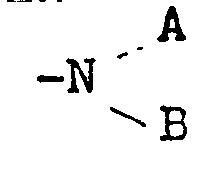
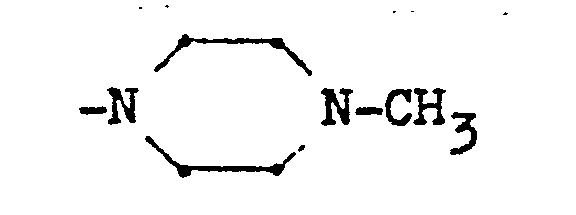
- B für Wasserstoff, Methyl, Äthyl, n-Propyl oder Isopropyl, A und B gemeinsam auch für einen, gegebenenfalls durch Sauerstoff, =NH oder =NCH3 unterbrochenen Alkylenrest mit bis zu 5 Gliedern oder die Gruppe =CH-N(CH3)2,
- R für Wasserstoff, Fluor, Chlor, Brom, Trifluormethyl, Methyl oder Methoxy und
- X für Sauerstoff oder Schwefel steht.
- Soweit A und B gemeinsam einen gegebenenfalls durch ein Heteroatom unterbrochenen Alkylrest darstellen, A bildet dieser mit dem N-Atom der Gruppe

- Hervorzuheben sind diejenigen Verbindungen der Formel I, bei denen
- A Wasserstoff, einen C1-C4-Alkylrest, einen hydroxysubstituierten C2-C4-Alkylrest oder COCF3,
- B Wasserstoff,

- R Wasserstoff, Fluor, Chlor, Methoxy, Trifluormethyl,
- X Sauerstoff darstellt.
- Bevorzugt sind diejenigen Verbindungen, in denen A Wasserstoff, Methyl, Äthyl, n-Propyl, Isopropyl, n-Butyl, sec.-Butyl, tert.-Butyl, Isobutyl, Trifluoracetyl, B Wasserstoff, R Wasserstoff, Fluor oder Chlor und X Sauerstoff bedeutet.
- Von den Verbindungen, in denen X Schwefel bedeutet, sind diejenigen hervorzuheben, in denen A Wasserstoff, Methyl, Äthyl oder Allyl, B Wasserstoff und R Wasserstoff oder Fluor bedeutet.
- Der Rest R kann sich in 2-, 3- oder 4-Stellung befinden.
- Es ist bekannt, daß einige nitrosubstituierte Diphenyl- äther herbizide Eigenschaften haben (vgl. K.H. Büchel, Pflanzenschutz und Schädlingsbekämpfung, Georg Thieme Verlag, Stuttgart 1977, S. 166).
- Wie nun gefunden wurde, zeichnen sich nun die aminosubstituierten Verbindungen der Formel I durch hervorrragende herbizide Wirkung gegen eine große Zahl von Unkräutern und Ungräsern aus. Zudem können die neuen Verbindungen auch selektiv in zahlreichen Nutzpflanzenkulturen angewendet werden.
- Die neuen Verbindungen werden in an sich bekannter Weise hergestellt.
- l.) Durch Umsetzung von Phenolen oder Thiophenolen der Formel


Als Reaktionsmedium dient ein unter den Reaktionsbedingungen inertes Lösungsmittel, insbesondere Acetonitril oder Dimethylformamid, ferner z.B. Methyläthylketon, Dimethylsulfoxid, N-Methylpyrrolidon.
Die Ausgangsstoffe der Formeln II und III werden nach üblichen Verfahren gewonnen. Für die Herstellung der Aniline III, die zum Teil neu sind, kann man 2,3,4-Trichlornitrobenzol mit 2 Mol des Amins HNAB in einem geeigneten Lösungsmittel umsetzen. Ein Mol des Amins HNAB kann vorteilhaft durch ein tertiäres Amin ersetzt werden. Im allgemeinen kann das Anilin III ohne Reinigung für die weitere Umsetzung verwendet werden. Mitunter ist es jedoch vorteilhaft, III durch Destillation, Umkristallisieren oder Säulenchromatographie zu reinigen. Die Verwendung eines gereinigten Anilins der Formel III führt im allgemeinen auch zu einer besseren Gesamtausbeute und liefert unmittelbar ein hinreichend reines Endprodukt. - 2.) Zur Herstellung solcher Verbindungen der Formel I, in denen A einen chlorsubstituierten Alkylrest bedeutet, ersetzt man mit den dazu üblichen Mitteln in den entsprechenden N-Hydroxyalkylverbindungen der Formel I die Hydroxygruppe durch Chlor.
Diese Umsetzung wird nach an sich bekannten Verfahren, gegebenenfalls in einem inerten Lösungsmittel, etwa Toluol, durchgeführt. Bei der Anwendung von Phosphorpentachlorid verläuft die Reaktion unter spontaner Erwärmung, bei der Anwendung von Thionylchlorid ist Erwärmen vorteilhaft.
Die Ausgangsstoffe können nach üblichen Verfahren erhalten werden, z.B. nach dem obigen Verfahren zur Herstellung von Verbindungen der Formel I. - 3.) Solche Verbindungen der Formel I, in denen A Trifluoracetyl bzw. A und B gemeinsam die Gruppe =CH-N(CH3)2 bedeuten, lassen sich aus entsprechenden Verbindungen, in denen A bzw. A und B für Wasserstoff stehen, durch Umsetzung mit Trifluoracetanhydrid bzw. mit Dimethylformamid/Phosphoroxychlorid oder einem Dimethylformamiddialkylacetal erhalten.
Für die Einführung der Trifluoracetylgruppe bringt man die Ausgangsvenbindung zweckmäßig in einem inerten Lösungsmittel, etwa Toluol, bei Raumtemperatur oder unter Erwärmen mit dem Trifluoracetanhydrid zur Reaktion.
Für die Herstellung des Amidins wird das Reaktionsgemisch stärker erwärmt.(auf etwa 80 - 150°C). Als Lösungsmittel kann Dimethylformamid, aber beispielsweise auch Dimethylsulfoxid dienen.
Die Ausgangsstoffe können nach Verfahren 1.) gewonnen werden. - Die neuen Verbindungen der Formel I stellen auch wertvolle Zwischenprodukte für Pflanzenschutzmittel und Arzneistoffe dar, weil sie aufgrund der Amino- und der Nitrogruppen vielfältig abgewandelt werden können.
- Für die Anwendung als Herbizide werden die Verbindungen der Formel I in an sich bekannter Weise mit Ublichen Hilfs- und/oder Trägerstoffen zu gebräuchlichen Formulierungen verarbeitet, z.B. zu Emulsionskonzentraten oder Suspensionspulvern, bei denen der Wirkstoffgehalt zwischen etwa 10 und 95 Gewichtsprozent liegt und die für die Ausbringung mit Wasser auf die gewünschte Wirkstoffkonzentration eingestellt werden. Jedoch können auch Präparate hergestellt werden, die unverdünnt angewendet werden, beispielsweise Stäube oder Granulate. Hier liegt der Wirkstoffgehalt zwischen 0,2 und 20 Gewichtsprozent, vorzugsweise zwischen 0,5 und 3 Gewichtsprozent. Formulierungsbeispiele:


- Aus den Konzentraten nach Beispiel 1 und 2 werden durch Vermischen mit Wasser Spritzbrühen hergestellt, die im allgemeinen etwa 0,05 bis 0,5 Gewichtsprozent Wirkstoff enthalten.
-

- Es ist auch möglich und in einigen Fällen vorteilhaft, die erfindungsgemäßen Wirkstoffe zusammen mit anderen Herbiziden einzusetzen, z.B. mit Triazin-Herbiziden wie Simazin oder Atrazin in Mais, mit Harnstoff-Herbiziden wie z.B. Linuron oder Monolinuron in Kartoffeln oder Getreide, mit Dinitroanilin-Herbiziden wie Dinitramin oder Trifluoralin in Getreide, mit Diphenyläthern, z.B. Nitrophen in Reis, mit Carbonsäureamiden wie Alachlor in Zwiebeln.
- Die erfindungsgemäßen Verbindungen können im Vorauflaufverfahren und im Nachauflaufverfahren angewendet werden. Beispielsweise können im Freiland mit einer Aufwandmenge von 1 kg/ha 2-Chlor-3-phenoxy-6-nitroanilin bei Vorauflaufanwendung Senf, Amaranth, Gänsefuß, Kamille, HUhnerhirse und auch Ackerfuchsschwanz bekämpft werden. Dabei beträgt die Verträglichkeit in Kartoffeln und Mais über 3 kg/ha, in Weizen und Erbsen über 2,5 kg/ha. Die Anwendung der genannten Verbindungen nach dem Auflaufen ermöglichst es, mit 1 kg/ha z.B. Labkraut, Gänsefuß, Ackerfuchsschwanz, mit geringfügig höherer Dosis auch Senf, Amaranth und Kamille zu bekämpfen. Außer in den genannten Kulturen können die erfindungsgemäßen Verbindungen z.B. in Gerste, Rüben und Reis eingesetzt werden.
- In der nachstehenden Tabelle sind Ergebnisse von Gewächshausversuchen für eine repräsentative Auswahl erfindungsgemäßer Verbindungen bei wichtigen Unkräutern und Ungräsern aufgeführt.
- Angegeben ist die Aufwandmenge in kg/ha.
- A: Sinapis alba (Weißer Senf, white mustard)
- B: Galium aparine (Klettenlabkraut , catchweed bedstraw)
- C: Alopecurus myosuroides (Ackerfuchsschwanz, blackgrass)
- D: Echinochloa crus-galli (Hühnerhirse, barnyardgrass)
- VA bedeutet Anwendung im Vorauflauf-, NA im Nachauflaufverfahren.

- 75,5 g 2,3,4-Trichlornitrobenzol und 48 g Isobutylamin werden in 200 ml Toluol gelöst und 3 Tage bei Raumtemperatur gehalten. Dann wird der Ansatz mit weiteren 5 g Isobutylamin versetzt und 4 Stunden auf 60°C erwärmt. Die Toluollösung wird mit Wasser ausgeschüttelt, getrocknet und eingeengt. Man erhält 86 g (98 % d.Th.) der Titelverbindung als bräunliches Öl.
-

- 453 g 2,3,4-Trichlornitrobenzol (2 Mol) werden in 2 Liter Dimethylsulfoxid gelöst und in einen 5 Ltr. fassenden Autoklav gefüllt. 200 ml flüssiges Ammoniak (8 Mol) werden zugegeben. Nach dem Verschließen des Autoklavs wird der Ansatz unter Rühren oder Schüttele auf 50°C geheizt und 24 Stunden bei dieser Temperatur gehalten.
- Nach Abkühlen und Belüften des Autoklavs wird die erhaltene Lösung mit ausgefallenem NH4Cl auf 8 Ltr. Wasser gegossen. Das ausgefallene Produkt wird abgesaugt, mit Wasser nachgewaschen und bei 50°C über Nacht getrocknet. Man erhält 400 g (96,5 % d.Th.) eines gelben, kristallinen Produkts, das bei 161 - 164°C schmilzt. Das Produkt ist für die weiteren Umsetzungen genügend rein. Es kann jedoch auch durch Umkristallisieren, z.B. aus Methylisobutylketon, gereinigt werden; Ausbeute dann 77 % d.Th., Fp. 166 - 167°C.
- Eine Lösung von 103,5 g 2,3-Dichlor-6-nitro- anilin (0,5 Mol) und 63,8 g Natriumphenolat (0,55 Mol) in 1000 ml Acetonitril wird 5 Stunden unter Rückfluß erhitzt und anschließend eingeengt. Der Rückstand wird in 750 ml Chloroform gelöst und die Lösung zweimal mit je 200 ml Wasser ausgeschüttelt. Nach dem Trocknen der Chloroformlösung wird diese eingeengt. Der Rückstand, 130 g eines braunen Öls, wird in ca. 700 ml Isopropanol heiß gelöst und die Lösung unter Rühren abgekühlt. Die Titelverbindung fällt aus und wird abgesaugt. Man erhält 98 g gelbe Kristalle (74 % d.Th.) mit dem Schmelzpunkt 83°C.
- Das NMR-Spektrum bestätigt die Struktur.
- 15,5 g gereinigtes 2,3-Dichlor-6-nitroanilin werden in 75 ml Dimethylsulfoxyd gelöst, mit 7,8 g Phenol und 11,5 g gemahlenem Kaliumcarbonat versetzt und 8 Stunden bei 50°C gerührt. Anschließend wird der Ansatz mit Eisessig angesäuert, das Produkt mit Eiswasser ausgefällt, abgesaugt und getrocknet. Man erhält 19,5 g Endprodukt (98 % Ausbeute bezogen auf eingesetztes 2,3-Dichlor-6-nitroanilin).
- Gelbe Kristalle, Fp. 80 - 82°C.
- Eine Lösung von 911 g (4 Mol) 2,3,4-Trichlornitrobenzol werden in 4 1 Dimethylsulfoxyd gelöst und in einem 10-1-Autoklav mit 400 m1 flüssigem Ammoniak versetzt. Der Autoklav wird verschlossen und 24 Stunden auf 50°C gehalten, wobei sich ein Druck von 5,3 bar einstellt. Nach Abkühlen des Ansatzes und Belüften des Druckgefäßes wird der Ansatz entnommen und in einem 15-1-Gefäß mit 400 g 40 %iger (Gewichtsprozent) Natronlauge verrührt. Hierbei entweicht Ammoniak, der abgezogen wird. Dann gibt man 416 g Phenol (4,4 Mol) zu der Lösung, erwärmt auf 50°C und tropft 440 g 40 %ige (Gewichtsprozent) Natronlauge zu und rührt den Ansatz 7 Stunden bei 50 - 60°C. Zur Vervollständigung der Reaktion werden nochmal 41 g Phenol und 44 g 40 %ige (Gewichtsprozent)Natronlauge zugesetzt und weitere 3 Stunden bei 60°C gehalten. Man läßt den Ansatz abkühlen, säuert ihn mit 100 ml Eisessig an, und fällt das Produkt mit Eiswasser unter Anreiben aus. Das gelbbraune, feste Rohprodukt wird abgesaugt, mit Wasser gewaschen und getrocknet. Das Rohprodukt (980 g, Fp. 70 - 78°C) wird aus 2,5 1 Isopropanol umkristallisiert. Ausbeute: 800 g (75,5 % d.Th.), gelbbrauner Feststoff. Fp. 81,5 - 83,5°C.
- Zu einer Lösung von 4,4 g (0,02 Mol) 2,3-Dichlor-6-nitro-N-methylanilin, gelöst in 50 ml Acetonitril, gibt man 2,9 g Natriumthiophenolat. Der Ansatz wird 1/2 Stunde unter Rückfluß erhitzt, anschließend eingeengt und der Rückstand mit Chloroform und Wasser aufgenommen. Die Chloroformschicht wird abgetrennt, getrocknet und eingeengt. Man erhält 6 g braunes Öl, welches mit Isopropanol kristallisiert.
- 4 g gelbe Kristalle, Fp. 79°C (67,5 % d.Th.)
-

- 90 g 2-Chlor-3-(3-chlorphenoxy)-6-nitroanilin werden in 500 ml Toluol teilweise gelöst. Unter Rühren werden 70 g Trifluoracetanhydrid während 15 Min. zugetropft. Der Ansatz wird über Nacht nachgerührt. Dann wird das Lösungsmittel abdestilliert, der Rückstand wird in 300 ml Äther gelöst und das Produkt durch Zusatz von Benzin unter Reiben ausgefällt, abgesaugt und getrocknet. Man erhält 101 g hellbeige gefärbten, kristallinen Feststoff, Fp. 99-101°C (85 % d.Th.).
- 7,9 g 2-Chlor-3-phenoxy-6-nitroanilin werden mit 10 ml Dimethylformamid und 10 ml Dimethylformamiddimethylacetal 8 Stunden auf 100 bis 110°C erhitzt. Anschließend wird der Ansatz im Vakuum bei 90°C eingeengt. Man erhält eine rotbraune, zähe Masse, die bei ca. 0°C erstarrt.
- Die Analyse bestätigt die angegebene Formel.

- 4,5 g 2-Chlor-3-(4-chlorphenoxy)-6-nitro-N- 2-hydroxy- äthylanilin werden in 40 ml Toluol gelöst und mit 2,9 g PC15 versetzt, wobei Selbsterwärmung und eine Gasentwicklung eintreten. Nach 30 Minuten wird der Ansatz mit Wasser und Na-Bicarbonatlösung susgeschüttelt und eingeengt. Man erhält 3,6 g gelbbraunes Öl (76 % d.Th.).
- 103,5 g 2,3-Dichlor-6-nitroanilin (0,5 Mol) und 72,5 g Natriumthiophenolat (0,55 Mol) werden in 800 ml Acetonitril gelöst und 5 Stunden unter Rückfluß gehalten. Der Ansatz wird entsprechend dem Beispiel 1 b1) aufgearbeitet. Man erhält 108 g ockerfarbenes kristallines Produkt (77 % d.Th.), Fp. 144-146°C.
- 103,5 g 2,3-Dichlor-6-nitroanilin (0,5 Mol) und 82,8 g Natrium-3-chlorphenolat werden in 500 ml Dimethylformamid eine Stunde auf 100°C erhitzt. Nach Einengen der Lösung wird der Rückstand in Chloroform aufgenommen, mit Wasser gewaschen und die getrocknete Chloroformlösung eingeengt.
- Der ölige Rückstand wird in ca. 700 ml Isopropanol warm gelöst. Beim Abkühlen kristallisiert die Titelverbindung. Man erhält 90 g eines ockerfarbenen kristallinen Stoffes mit dem Schmelzpunkt 101 - 102°C.
- 23,5 g (0,1 Mol) N-Äthyl-2,3-dichlor-6-nitroanilin werden in 150 ml Dimethylsulfoxid in einem 250 ml Dreihalskolben gelöst. Nach Zugabe von 12,3 g (0,11 Mol) 4-Fluorphenol und 15,2 g (0,11 Mol) Kaliumcarbonat wird der Ansatz 5 Stunden bei 80°C gerührt. Das Produkt wird durch langsames Zugeben von Eiswasser aus der abgekühlten Lösung ausgefällt und nach dem Absaugen aus Isopropanol umkristallisiert.
- Man erhält 17 g ockerfarbenes, kristallines Produkt, Fp. 69-70°C (54,7 % d.Th.).
-

- Entsprechend den vorstehenden beispielen werden auch die folgenden Verbindungen erhalten:
-


Claims (8)


Priority Applications (1)
| Application Number | Priority Date | Filing Date | Title |
|---|---|---|---|
| IE131879A IE48909B1 (en) | 1978-07-15 | 1979-08-08 | 2-chloro-6-nitroaniline derivatives |
Applications Claiming Priority (2)
| Application Number | Priority Date | Filing Date | Title |
|---|---|---|---|
| DE19782831262 DE2831262A1 (de) | 1978-07-15 | 1978-07-15 | 2-chlor-6-nitroaniline |
| DE2831262 | 1978-07-15 |
Publications (2)
| Publication Number | Publication Date |
|---|---|
| EP0007482A1 true EP0007482A1 (de) | 1980-02-06 |
| EP0007482B1 EP0007482B1 (de) | 1981-09-16 |
Family
ID=6044548
Family Applications (1)
| Application Number | Title | Priority Date | Filing Date |
|---|---|---|---|
| EP79102264A Expired EP0007482B1 (de) | 1978-07-15 | 1979-07-04 | 2-Chlor-6-nitroaniline, Verfahren zu ihrer Herstellung, ihre Verwendung, herbizide Mittel |
Country Status (28)
| Country | Link |
|---|---|
| US (2) | US4394159A (de) |
| EP (1) | EP0007482B1 (de) |
| JP (1) | JPS5519260A (de) |
| AR (1) | AR221244A1 (de) |
| AT (1) | AT366881B (de) |
| AU (1) | AU521242B2 (de) |
| BG (1) | BG41301A3 (de) |
| BR (1) | BR7904341A (de) |
| CA (1) | CA1108169A (de) |
| CS (1) | CS213387B2 (de) |
| DD (1) | DD146177A5 (de) |
| DE (2) | DE2831262A1 (de) |
| DK (1) | DK157750C (de) |
| EG (1) | EG14414A (de) |
| ES (3) | ES482497A1 (de) |
| GR (1) | GR75066B (de) |
| HU (1) | HU182935B (de) |
| IL (1) | IL57794A (de) |
| IN (1) | IN152539B (de) |
| MA (1) | MA18525A1 (de) |
| MX (1) | MX5578E (de) |
| NZ (1) | NZ191009A (de) |
| PL (1) | PL121517B1 (de) |
| RO (1) | RO78105A (de) |
| SU (1) | SU882402A3 (de) |
| TR (1) | TR20258A (de) |
| YU (1) | YU42191B (de) |
| ZA (1) | ZA793543B (de) |
Cited By (22)
| Publication number | Priority date | Publication date | Assignee | Title |
|---|---|---|---|---|
| EP0027555A1 (de) * | 1979-09-24 | 1981-04-29 | CELAMERCK GmbH & Co. KG | Verfahren zur Herstellung von Diphenyläthern |
| EP0046445A1 (de) * | 1980-08-15 | 1982-02-24 | Ciba-Geigy Ag | 3-Phenoxy-methylenaniline als Herbizide, ihre Herstellung und Verwendung |
| EP0061110A1 (de) * | 1981-03-20 | 1982-09-29 | CELAMERCK GmbH & Co. KG | Neue Nitroaniline |
| EP0185231A1 (de) * | 1984-12-04 | 1986-06-25 | Mitsubishi Kasei Corporation | Herbizide Zusammensetzung |
| FR2656769A1 (fr) * | 1990-01-11 | 1991-07-12 | Rhone Poulenc Agrochimie | Melanges herbicides a base d'aclonifen. |
| FR2656984A1 (fr) * | 1990-01-11 | 1991-07-19 | Rhone Poulenc Agrochimie | Melanges herbicides a base d'aclonifen. |
| FR2656983A1 (fr) * | 1990-01-11 | 1991-07-19 | Rhone Poulenc Agrochimie | Melanges herbicides a base d'aclonifen. |
| FR2656985A1 (fr) * | 1990-01-11 | 1991-07-19 | Rhone Poulenc Agrochimie | Melanges herbicides a base d'aclonifen. |
| FR2659833A1 (fr) * | 1990-03-20 | 1991-09-27 | Rhone Poulenc Agrochimie | Association herbicide comprenant l'aclonifen et au moins une uree substituee. |
| FR2661800A1 (fr) * | 1990-05-14 | 1991-11-15 | Rhone Poulenc Agrochimie | Association herbicide comprenant l'aclonifen et au moins un herbicide choisi parmi le bromoxynil ou l'ioxynil ou l'un de leurs derives. |
| FR2671457A1 (fr) * | 1991-01-10 | 1992-07-17 | Rhone Poulenc Agrochimie | Melanges herbicides a base d'aclonifen. |
| TR25473A (tr) * | 1991-01-24 | 1993-05-01 | Rhone Poulenc Agrochimie Kosan | FIBERGLASS-SEFFAF POLIESTER DÖKüM, ONDüLIN PLAKALIÖZELLIKLE GAZ SILINDIRLERI ICIN IKI-SAFHALI AZALTMAKLONIFEN VE N-KLOROASETAMID TIPINDE BIR BASKA HERBISIDIN BIR KARISIMI KULLANILARAK MISIR TARLALARINA VALFI GüNES SOFBENI VE DüZ TOPLAYICI. DA YABANI OTLARIN K ALINMASI ICIN USUL. |
| EP0548798A1 (de) * | 1991-12-18 | 1993-06-30 | Sanwa Kagaku Kenkyusho Co., Ltd. | Antivirale Agenten |
| FR2753603A1 (fr) * | 1996-09-25 | 1998-03-27 | Rhone Poulenc Agrochimie | Association herbicide a base de triazine et d'autres herbicides utilisable pour le desherbage du mais |
| WO2014095681A1 (de) | 2012-12-18 | 2014-06-26 | Bayer Cropscience Ag | Herbizide mittel enthaltend aclonifen |
| WO2014095704A1 (de) | 2012-12-18 | 2014-06-26 | Bayer Cropscience Ag | Herbizide mittel enthaltend aclonifen |
| WO2014095697A1 (de) | 2012-12-18 | 2014-06-26 | Bayer Cropscience Ag | Herbizide mittel enthaltend aclonifen |
| US9357773B2 (en) | 2012-12-18 | 2016-06-07 | Bayer Cropscience Ag | Herbicidal agents containing aclonifen |
| US9426990B2 (en) | 2012-12-18 | 2016-08-30 | Bayer Cropscience Ag | Herbicidal agents containing aclonifen |
| US9700046B2 (en) | 2012-12-18 | 2017-07-11 | Bayer Cropscience Ag | Herbicidal agents containing aclonifen |
| US9700045B2 (en) | 2012-12-18 | 2017-07-11 | Bayer Cropscience Ag | Herbicidal agents containing aclonifen |
| EP3747867A1 (de) * | 2019-06-04 | 2020-12-09 | Bayer AG | Substituierte pyridinyloxyaniline sowie deren salze und ihre verwendung als herbizide wirkstoffe |
Families Citing this family (13)
| Publication number | Priority date | Publication date | Assignee | Title |
|---|---|---|---|---|
| US4539039A (en) * | 1984-04-26 | 1985-09-03 | The Dow Chemical Company | Herbicidal (-3-fluoro-5-trifluoromethyl-pyridyl)oxy phenyloxime derivatives |
| FR2778820B1 (fr) * | 1998-05-20 | 2000-07-28 | Rhone Poulenc Agrochimie | Melanges herbicides a base d'aclonifen et de clomazone |
| EP2052607A1 (de) | 2007-10-24 | 2009-04-29 | Bayer CropScience AG | Herbizid-Kombination |
| DE102008037622A1 (de) * | 2008-08-14 | 2010-02-25 | Bayer Cropscience Ag | Herbizid-Kombination mit Dimethoxytriazinyl-substituierten Difluormethansulfonylaniliden |
| HUE062815T2 (hu) | 2014-04-02 | 2023-12-28 | Adama Agan Ltd | Karotinoid-bioszintézist gátló vegyület és ALS/AHAS mûködését gátló vegyület gyomirtó keveréke és alkalmazásai |
| CN106854162A (zh) * | 2016-12-13 | 2017-06-16 | 浙江海正化工股份有限公司 | 一种2,3‑二氯‑6‑硝基苯胺及其制备方法 |
| BR112021000056A2 (pt) | 2018-07-16 | 2021-04-06 | Bayer Aktiengesellschaft | Misturas herbicidas contendo aclonifeno e cinmetilina |
| WO2020245097A1 (de) | 2019-06-04 | 2020-12-10 | Bayer Aktiengesellschaft | Substituierte pyridinyloxypyridine sowie deren salze und ihre verwendung als herbizide wirkstoffe |
| EP3747868A1 (de) | 2019-06-04 | 2020-12-09 | Bayer AG | Substituierte phenoxypyridine sowie deren salze und ihre verwendung als herbizide wirkstoffe |
| CN115108922B (zh) * | 2022-07-28 | 2024-06-28 | 上海农帆生物科技有限公司 | 一种以2,3-二氯-6-硝基苯胺为原料一步合成苯草醚的方法 |
| WO2025045998A1 (en) | 2023-08-30 | 2025-03-06 | Bayer Aktiengesellschaft | Herbicide combinations |
| WO2025162909A1 (en) | 2024-02-02 | 2025-08-07 | Bayer Aktiengesellschaft | Herbicide combinations |
| CN118206459A (zh) * | 2024-04-01 | 2024-06-18 | 上海农帆生物科技有限公司 | 苯草醚的晶型、其制备方法及其用途 |
Citations (7)
| Publication number | Priority date | Publication date | Assignee | Title |
|---|---|---|---|---|
| FR1499717A (fr) * | 1965-11-11 | 1967-10-27 | Agripat Sa | Nitro-anilines halogénées et leur préparation |
| DE2041324A1 (de) * | 1970-08-20 | 1972-02-24 | Agfa Gevaert Ag | Neue Benzimidazolderivate,sowie ein Verfahren zu ihrer Herstellung |
| DD105204A1 (de) * | 1973-04-13 | 1974-04-12 | ||
| US4039588A (en) * | 1969-05-28 | 1977-08-02 | Rohm And Haas Company | Herbicidal 4-nitro-diphenyl ethers |
| US4046798A (en) * | 1973-02-12 | 1977-09-06 | Rohm And Haas Company | Herbicidal 4-trifluoromethyl-4'nitrodiphenyl ethers |
| DE2753235A1 (de) * | 1976-12-01 | 1978-06-08 | Ciba Geigy Ag | Azofarbstoffe, deren herstellung und verwendung |
| US4105797A (en) * | 1977-01-14 | 1978-08-08 | Gaf Corporation | Fungicidal 3-amino-6-trifluoromethyl-2,4-dinitrodiphenylethers |
Family Cites Families (4)
| Publication number | Priority date | Publication date | Assignee | Title |
|---|---|---|---|---|
| US3914310A (en) * | 1965-08-06 | 1975-10-21 | Ciba Geigy Corp | Phenoxy-substituted ortho-nitroanilines and ortho-phenylenediamines |
| US3928416A (en) * | 1972-03-14 | 1975-12-23 | Rohm & Haas | Herbicidal 4-trifluoromethyl-4{40 nitrodiphenyl ethers |
| JPS5513206A (en) * | 1978-07-05 | 1980-01-30 | Mitsui Toatsu Chem Inc | Production of novel diphenyl ethers |
| US4389236A (en) * | 1980-08-15 | 1983-06-21 | Ciba-Geigy Corporation | Herbicidal 3-phenoxymethylene-anilines |
-
1978
- 1978-07-15 TR TR20258A patent/TR20258A/xx unknown
- 1978-07-15 DE DE19782831262 patent/DE2831262A1/de not_active Withdrawn
-
1979
- 1979-07-03 SU SU792785403A patent/SU882402A3/ru active
- 1979-07-04 DE DE7979102264T patent/DE2960829D1/de not_active Expired
- 1979-07-04 EP EP79102264A patent/EP0007482B1/de not_active Expired
- 1979-07-06 IN IN486/DEL/79A patent/IN152539B/en unknown
- 1979-07-09 AT AT0475879A patent/AT366881B/de active
- 1979-07-09 BR BR7904341A patent/BR7904341A/pt not_active IP Right Cessation
- 1979-07-11 DD DD21426879A patent/DD146177A5/de unknown
- 1979-07-12 YU YU1704/79A patent/YU42191B/xx unknown
- 1979-07-12 GR GR59588A patent/GR75066B/el unknown
- 1979-07-12 PL PL1979217051A patent/PL121517B1/pl unknown
- 1979-07-13 DK DK297179A patent/DK157750C/da not_active IP Right Cessation
- 1979-07-13 MA MA18722A patent/MA18525A1/fr unknown
- 1979-07-13 MX MX798188U patent/MX5578E/es unknown
- 1979-07-13 AR AR277297A patent/AR221244A1/es active
- 1979-07-13 CS CS794929A patent/CS213387B2/cs unknown
- 1979-07-13 AU AU48910/79A patent/AU521242B2/en not_active Expired
- 1979-07-13 IL IL57794A patent/IL57794A/xx unknown
- 1979-07-13 JP JP8977279A patent/JPS5519260A/ja active Granted
- 1979-07-13 NZ NZ191009A patent/NZ191009A/xx unknown
- 1979-07-13 ZA ZA00793543A patent/ZA793543B/xx unknown
- 1979-07-13 CA CA331,762A patent/CA1108169A/en not_active Expired
- 1979-07-13 HU HU79CE1224A patent/HU182935B/hu unknown
- 1979-07-13 BG BG044328A patent/BG41301A3/xx unknown
- 1979-07-14 RO RO7998159A patent/RO78105A/ro unknown
- 1979-07-14 ES ES482497A patent/ES482497A1/es not_active Expired
- 1979-07-14 ES ES482498A patent/ES482498A0/es active Granted
- 1979-07-14 ES ES482499A patent/ES8107157A1/es not_active Expired
- 1979-07-14 EG EG426/79A patent/EG14414A/xx active
-
1981
- 1981-03-13 US US06/243,385 patent/US4394159A/en not_active Expired - Lifetime
-
1983
- 1983-09-09 US US06/530,633 patent/USRE31717E/en not_active Expired - Lifetime
Patent Citations (7)
| Publication number | Priority date | Publication date | Assignee | Title |
|---|---|---|---|---|
| FR1499717A (fr) * | 1965-11-11 | 1967-10-27 | Agripat Sa | Nitro-anilines halogénées et leur préparation |
| US4039588A (en) * | 1969-05-28 | 1977-08-02 | Rohm And Haas Company | Herbicidal 4-nitro-diphenyl ethers |
| DE2041324A1 (de) * | 1970-08-20 | 1972-02-24 | Agfa Gevaert Ag | Neue Benzimidazolderivate,sowie ein Verfahren zu ihrer Herstellung |
| US4046798A (en) * | 1973-02-12 | 1977-09-06 | Rohm And Haas Company | Herbicidal 4-trifluoromethyl-4'nitrodiphenyl ethers |
| DD105204A1 (de) * | 1973-04-13 | 1974-04-12 | ||
| DE2753235A1 (de) * | 1976-12-01 | 1978-06-08 | Ciba Geigy Ag | Azofarbstoffe, deren herstellung und verwendung |
| US4105797A (en) * | 1977-01-14 | 1978-08-08 | Gaf Corporation | Fungicidal 3-amino-6-trifluoromethyl-2,4-dinitrodiphenylethers |
Cited By (28)
| Publication number | Priority date | Publication date | Assignee | Title |
|---|---|---|---|---|
| EP0027555A1 (de) * | 1979-09-24 | 1981-04-29 | CELAMERCK GmbH & Co. KG | Verfahren zur Herstellung von Diphenyläthern |
| EP0046445A1 (de) * | 1980-08-15 | 1982-02-24 | Ciba-Geigy Ag | 3-Phenoxy-methylenaniline als Herbizide, ihre Herstellung und Verwendung |
| EP0061110A1 (de) * | 1981-03-20 | 1982-09-29 | CELAMERCK GmbH & Co. KG | Neue Nitroaniline |
| EP0185231A1 (de) * | 1984-12-04 | 1986-06-25 | Mitsubishi Kasei Corporation | Herbizide Zusammensetzung |
| FR2656983A1 (fr) * | 1990-01-11 | 1991-07-19 | Rhone Poulenc Agrochimie | Melanges herbicides a base d'aclonifen. |
| FR2656984A1 (fr) * | 1990-01-11 | 1991-07-19 | Rhone Poulenc Agrochimie | Melanges herbicides a base d'aclonifen. |
| FR2656769A1 (fr) * | 1990-01-11 | 1991-07-12 | Rhone Poulenc Agrochimie | Melanges herbicides a base d'aclonifen. |
| FR2656985A1 (fr) * | 1990-01-11 | 1991-07-19 | Rhone Poulenc Agrochimie | Melanges herbicides a base d'aclonifen. |
| DE4100702C2 (de) * | 1990-01-11 | 2000-01-13 | Rhone Poulenc Agrochimie | Verfahren zur Bekämpfung von Unkräutern in Maisfeldern mit Hilfe eines Gemisches von Aclonifen und einem zweiten Herbizid |
| BE1005340A0 (fr) * | 1990-01-11 | 1993-06-29 | Rhone Poulenc Agrochimie | Procede pour lutter contre les mauvaises herbes dans les champs de mais et compositions mises en oeuvre. |
| GR910100004A (en) * | 1990-01-11 | 1992-06-25 | Rhone Poulenc Agrochimie | Insecticide method for corn cultures by an aclonifen mixture |
| FR2659833A1 (fr) * | 1990-03-20 | 1991-09-27 | Rhone Poulenc Agrochimie | Association herbicide comprenant l'aclonifen et au moins une uree substituee. |
| EP0449751A1 (de) * | 1990-03-20 | 1991-10-02 | Rhone-Poulenc Agrochimie | Herbizide Zusammenschluss enthaltender Aclonifen und mindestens einen substituierten Harnstoff |
| TR25201A (tr) * | 1990-05-14 | 1993-01-01 | Rhone Poulenc Agrochimie | 2-KLORO-6-NITRO-3-FENOKSIANILIN VE BROMOKSINIL VEYA IOKSINIL VEYA BUNLARIN TüREVLERINDEN BIRI ARASINDAN SECILMIS EN AZINDAN BIR HERBISID,I IHTI- VA EDEN HERBISIDAL BIRLESIK. |
| EP0457695A1 (de) * | 1990-05-14 | 1991-11-21 | Rhone-Poulenc Agrochimie | Herbizide Zusammensetzung enthaltend 2-Chlor-3-phenoxy-6-nitroanilin und mindestens ein Herbizid ausgewählt aus Bromoxynil, Ioxynil und deren Derivaten |
| FR2661800A1 (fr) * | 1990-05-14 | 1991-11-15 | Rhone Poulenc Agrochimie | Association herbicide comprenant l'aclonifen et au moins un herbicide choisi parmi le bromoxynil ou l'ioxynil ou l'un de leurs derives. |
| FR2671457A1 (fr) * | 1991-01-10 | 1992-07-17 | Rhone Poulenc Agrochimie | Melanges herbicides a base d'aclonifen. |
| TR25473A (tr) * | 1991-01-24 | 1993-05-01 | Rhone Poulenc Agrochimie Kosan | FIBERGLASS-SEFFAF POLIESTER DÖKüM, ONDüLIN PLAKALIÖZELLIKLE GAZ SILINDIRLERI ICIN IKI-SAFHALI AZALTMAKLONIFEN VE N-KLOROASETAMID TIPINDE BIR BASKA HERBISIDIN BIR KARISIMI KULLANILARAK MISIR TARLALARINA VALFI GüNES SOFBENI VE DüZ TOPLAYICI. DA YABANI OTLARIN K ALINMASI ICIN USUL. |
| EP0548798A1 (de) * | 1991-12-18 | 1993-06-30 | Sanwa Kagaku Kenkyusho Co., Ltd. | Antivirale Agenten |
| FR2753603A1 (fr) * | 1996-09-25 | 1998-03-27 | Rhone Poulenc Agrochimie | Association herbicide a base de triazine et d'autres herbicides utilisable pour le desherbage du mais |
| WO2014095681A1 (de) | 2012-12-18 | 2014-06-26 | Bayer Cropscience Ag | Herbizide mittel enthaltend aclonifen |
| WO2014095704A1 (de) | 2012-12-18 | 2014-06-26 | Bayer Cropscience Ag | Herbizide mittel enthaltend aclonifen |
| WO2014095697A1 (de) | 2012-12-18 | 2014-06-26 | Bayer Cropscience Ag | Herbizide mittel enthaltend aclonifen |
| US9357773B2 (en) | 2012-12-18 | 2016-06-07 | Bayer Cropscience Ag | Herbicidal agents containing aclonifen |
| US9426990B2 (en) | 2012-12-18 | 2016-08-30 | Bayer Cropscience Ag | Herbicidal agents containing aclonifen |
| US9700046B2 (en) | 2012-12-18 | 2017-07-11 | Bayer Cropscience Ag | Herbicidal agents containing aclonifen |
| US9700045B2 (en) | 2012-12-18 | 2017-07-11 | Bayer Cropscience Ag | Herbicidal agents containing aclonifen |
| EP3747867A1 (de) * | 2019-06-04 | 2020-12-09 | Bayer AG | Substituierte pyridinyloxyaniline sowie deren salze und ihre verwendung als herbizide wirkstoffe |
Also Published As
Similar Documents
| Publication | Publication Date | Title |
|---|---|---|
| EP0007482B1 (de) | 2-Chlor-6-nitroaniline, Verfahren zu ihrer Herstellung, ihre Verwendung, herbizide Mittel | |
| DE3013162A1 (de) | N-substituierte tetrahydrophthalimide und herbizide mittel mit einem gehalt derselben | |
| CH633260A5 (de) | N'-(4-phenylaethyloxyphenyl)-n-methyl-n-methoxyharnstoffe, bei denen der phenylrest des phenylaethylrestes substituiert ist. | |
| DE2938595A1 (de) | Verfahren zur herstellung von diphenylaethern | |
| EP0061110B1 (de) | Neue Nitroaniline | |
| DD149993A5 (de) | Herbizide mittel | |
| CH644096A5 (de) | N-benzylhalogenacetamidderivate. | |
| DE2733115A1 (de) | Tetrahydroisophthalimid-verbindungen | |
| DE2637886A1 (de) | 3-pyridyl-oxy-alkancarbonsaeureamide | |
| CH631721A5 (de) | Pflanzenschutzmittel. | |
| DE2524578A1 (de) | Barbitursaeurederivate, verfahren zu ihrer herstellung und ihre verwendung als herbizide | |
| DD157292A5 (de) | Mittel zur behandlung von pilzinfektionen | |
| EP0084758B1 (de) | Als Schädlingsbekämpfungsmittel wirksame Pyrimidin Derivate | |
| DE2850902A1 (de) | Neue phenoxy-phenoxi-propionsaeureamide und ihre verwendung als herbizide | |
| DE2308943A1 (de) | Herbizide verbindungen | |
| DE2163381A1 (de) | Herbizide Komposition | |
| DE2230076A1 (de) | Verfahren zur Herstellung neuer heterocyclischer Stoffe | |
| DE2633159C2 (de) | Phosphorhaltige Verbindungen, Verfahren zu ihrer Herstellung, sowie diese Verbindungen enthaltende herbizide Mittel | |
| DE3246847C2 (de) | ||
| DE3877217T2 (de) | Herbizide organo-phosphor-verbindungen. | |
| DE2162046A1 (de) | Verfahren zur Herstellung neuer herbizider Wirkstoffe | |
| DE2160912C3 (de) | 3-Phenylhydantoine, Verfahren zu ihrer Herstellung und ihre Verwendung als Herbizide | |
| EP0032366A1 (de) | Verwendung von 4-Thioparabansäure-Derivaten als herbizide Wirkstoffe | |
| DE1809838C3 (de) | N-(3-Brom-4-chlorphenyl)-N'methoxy-N'-methylharnstoff und seine Verwendung als Herbizid | |
| DE3002906A1 (de) | N-alkylsufonyl- und n-alkoxycarbonyl- substituierte alkansulfonanilide |
Legal Events
| Date | Code | Title | Description |
|---|---|---|---|
| PUAI | Public reference made under article 153(3) epc to a published international application that has entered the european phase |
Free format text: ORIGINAL CODE: 0009012 |
|
| AK | Designated contracting states |
Designated state(s): BE CH DE FR GB IT LU NL SE |
|
| 17P | Request for examination filed | ||
| GRAA | (expected) grant |
Free format text: ORIGINAL CODE: 0009210 |
|
| AK | Designated contracting states |
Designated state(s): BE CH DE FR GB IT LU NL SE |
|
| ITF | It: translation for a ep patent filed | ||
| REF | Corresponds to: |
Ref document number: 2960829 Country of ref document: DE Date of ref document: 19811203 |
|
| REG | Reference to a national code |
Ref country code: CH Ref legal event code: PUE Owner name: SHELL INTERNATIONALE RESEARCH MAATSCHAPPIJ B.V. Ref country code: CH Ref legal event code: PFA Free format text: SHELL AGRAR GMBH & CO. KG |
|
| NLS | Nl: assignments of ep-patents |
Owner name: SHELL INTERNATIONALE RESEARCH MAATSCHAPPIJ B.V. TE |
|
| NLT1 | Nl: modifications of names registered in virtue of documents presented to the patent office pursuant to art. 16 a, paragraph 1 |
Owner name: SHELL AGRAR GMBH & CO. KG TE INGELHEIM A.D. RIJN, |
|
| REG | Reference to a national code |
Ref country code: FR Ref legal event code: TP Ref country code: FR Ref legal event code: CD |
|
| BECA | Be: change of holder's address |
Free format text: 890125 *SHELL INTERNATIONAL RESEARCH MAATSCHAPPIJ B.V.:CAREL VAN BYLANDTLAAN 30, NL-2596 HR DEN HAAG |
|
| BECH | Be: change of holder |
Free format text: 890125 *SHELL INTERNATIONAL RESEARCH MAATSCHAPPIJ B.V. |
|
| REG | Reference to a national code |
Ref country code: GB Ref legal event code: 732 |
|
| EPTA | Lu: last paid annual fee | ||
| EAL | Se: european patent in force in sweden |
Ref document number: 79102264.3 |
|
| PGFP | Annual fee paid to national office [announced via postgrant information from national office to epo] |
Ref country code: LU Payment date: 19980123 Year of fee payment: 20 |
|
| PGFP | Annual fee paid to national office [announced via postgrant information from national office to epo] |
Ref country code: NL Payment date: 19980623 Year of fee payment: 20 Ref country code: GB Payment date: 19980623 Year of fee payment: 20 |
|
| PGFP | Annual fee paid to national office [announced via postgrant information from national office to epo] |
Ref country code: SE Payment date: 19980707 Year of fee payment: 20 Ref country code: FR Payment date: 19980707 Year of fee payment: 20 |
|
| PGFP | Annual fee paid to national office [announced via postgrant information from national office to epo] |
Ref country code: DE Payment date: 19980728 Year of fee payment: 20 |
|
| PGFP | Annual fee paid to national office [announced via postgrant information from national office to epo] |
Ref country code: BE Payment date: 19980813 Year of fee payment: 20 |
|
| PGFP | Annual fee paid to national office [announced via postgrant information from national office to epo] |
Ref country code: CH Payment date: 19981012 Year of fee payment: 20 |
|
| BE20 | Be: patent expired |
Free format text: 19990704 *SHELL INTERNATIONAL RESEARCH MAATSCHAPPIJ B.V. |
|
| PG25 | Lapsed in a contracting state [announced via postgrant information from national office to epo] |
Ref country code: GB Free format text: LAPSE BECAUSE OF NON-PAYMENT OF DUE FEES Effective date: 19990703 Ref country code: CH Free format text: LAPSE BECAUSE OF EXPIRATION OF PROTECTION Effective date: 19990703 |
|
| PG25 | Lapsed in a contracting state [announced via postgrant information from national office to epo] |
Ref country code: NL Free format text: LAPSE BECAUSE OF EXPIRATION OF PROTECTION Effective date: 19990704 Ref country code: LU Free format text: LAPSE BECAUSE OF EXPIRATION OF PROTECTION Effective date: 19990704 |
|
| PG25 | Lapsed in a contracting state [announced via postgrant information from national office to epo] |
Ref country code: SE Free format text: LAPSE BECAUSE OF NON-PAYMENT OF DUE FEES Effective date: 19990705 |
|
| REG | Reference to a national code |
Ref country code: GB Ref legal event code: PE20 Effective date: 19990703 |
|
| REG | Reference to a national code |
Ref country code: CH Ref legal event code: PL |
|
| NLV7 | Nl: ceased due to reaching the maximum lifetime of a patent |
Effective date: 19990704 |
|
| PLBE | No opposition filed within time limit |
Free format text: ORIGINAL CODE: 0009261 |
|
| STAA | Information on the status of an ep patent application or granted ep patent |
Free format text: STATUS: NO OPPOSITION FILED WITHIN TIME LIMIT |