EP0017151A2 - Kalthärtende Materialien für Dentalzwecke mit polymerisationsaktiven Sulfonen - Google Patents
Kalthärtende Materialien für Dentalzwecke mit polymerisationsaktiven Sulfonen Download PDFInfo
- Publication number
- EP0017151A2 EP0017151A2 EP80101587A EP80101587A EP0017151A2 EP 0017151 A2 EP0017151 A2 EP 0017151A2 EP 80101587 A EP80101587 A EP 80101587A EP 80101587 A EP80101587 A EP 80101587A EP 0017151 A2 EP0017151 A2 EP 0017151A2
- Authority
- EP
- European Patent Office
- Prior art keywords
- polymerization catalyst
- cold
- catalyst system
- curing materials
- materials according
- Prior art date
- Legal status (The legal status is an assumption and is not a legal conclusion. Google has not performed a legal analysis and makes no representation as to the accuracy of the status listed.)
- Granted
Links
- 239000000463 material Substances 0.000 title claims abstract description 18
- 150000003457 sulfones Chemical class 0.000 title claims description 21
- 150000002978 peroxides Chemical class 0.000 claims abstract description 16
- -1 aromatic tertiary amine Chemical class 0.000 claims abstract description 14
- 239000000203 mixture Substances 0.000 claims abstract description 14
- 239000000178 monomer Substances 0.000 claims abstract description 13
- 239000002685 polymerization catalyst Substances 0.000 claims abstract description 13
- 229920000642 polymer Polymers 0.000 claims abstract description 8
- 125000004435 hydrogen atom Chemical group [H]* 0.000 claims abstract description 4
- 125000001174 sulfone group Chemical group 0.000 claims abstract 3
- 150000007514 bases Chemical class 0.000 claims description 10
- CVHZOJJKTDOEJC-UHFFFAOYSA-N saccharin Chemical class C1=CC=C2C(=O)NS(=O)(=O)C2=C1 CVHZOJJKTDOEJC-UHFFFAOYSA-N 0.000 claims description 10
- 238000004519 manufacturing process Methods 0.000 claims description 8
- 125000001453 quaternary ammonium group Chemical group 0.000 claims description 6
- 150000003839 salts Chemical class 0.000 claims description 6
- 150000003512 tertiary amines Chemical class 0.000 claims description 6
- FFHGJCBXRQUCED-UHFFFAOYSA-N 1-methyl-2-(2-methylphenyl)peroxybenzene Chemical compound CC1=CC=CC=C1OOC1=CC=CC=C1C FFHGJCBXRQUCED-UHFFFAOYSA-N 0.000 claims description 4
- 238000002360 preparation method Methods 0.000 claims description 4
- 125000001931 aliphatic group Chemical group 0.000 claims description 3
- 125000000217 alkyl group Chemical group 0.000 claims description 3
- 125000003118 aryl group Chemical group 0.000 claims description 3
- 125000001495 ethyl group Chemical group [H]C([H])([H])C([H])([H])* 0.000 claims description 3
- 125000002887 hydroxy group Chemical group [H]O* 0.000 claims description 3
- ZQUPQDCVMAQIKI-UHFFFAOYSA-N methyl 3-oxopent-4-enoate Chemical compound COC(=O)CC(=O)C=C ZQUPQDCVMAQIKI-UHFFFAOYSA-N 0.000 claims description 3
- 125000002496 methyl group Chemical group [H]C([H])([H])* 0.000 claims description 3
- 125000004432 carbon atom Chemical group C* 0.000 claims description 2
- 239000012933 diacyl peroxide Substances 0.000 claims description 2
- KSSFGJUSMXZBDD-UHFFFAOYSA-N 3-oxo-4-pentenoic acid Chemical compound OC(=O)CC(=O)C=C KSSFGJUSMXZBDD-UHFFFAOYSA-N 0.000 claims 1
- 150000001875 compounds Chemical class 0.000 abstract description 8
- 230000003213 activating effect Effects 0.000 abstract 1
- VVQNEPGJFQJSBK-UHFFFAOYSA-N Methyl methacrylate Chemical compound COC(=O)C(C)=C VVQNEPGJFQJSBK-UHFFFAOYSA-N 0.000 description 10
- XLYOFNOQVPJJNP-UHFFFAOYSA-N water Substances O XLYOFNOQVPJJNP-UHFFFAOYSA-N 0.000 description 10
- IJGRMHOSHXDMSA-UHFFFAOYSA-N Atomic nitrogen Chemical compound N#N IJGRMHOSHXDMSA-UHFFFAOYSA-N 0.000 description 8
- 229910052757 nitrogen Inorganic materials 0.000 description 8
- 239000000243 solution Substances 0.000 description 8
- 229910052717 sulfur Inorganic materials 0.000 description 7
- OKKJLVBELUTLKV-UHFFFAOYSA-N Methanol Chemical compound OC OKKJLVBELUTLKV-UHFFFAOYSA-N 0.000 description 6
- 229940081974 saccharin Drugs 0.000 description 6
- 235000019204 saccharin Nutrition 0.000 description 6
- 239000000901 saccharin and its Na,K and Ca salt Substances 0.000 description 6
- QTBSBXVTEAMEQO-UHFFFAOYSA-N Acetic acid Chemical compound CC(O)=O QTBSBXVTEAMEQO-UHFFFAOYSA-N 0.000 description 5
- CERQOIWHTDAKMF-UHFFFAOYSA-N Methacrylic acid Chemical compound CC(=C)C(O)=O CERQOIWHTDAKMF-UHFFFAOYSA-N 0.000 description 5
- NINIDFKCEFEMDL-UHFFFAOYSA-N Sulfur Chemical compound [S] NINIDFKCEFEMDL-UHFFFAOYSA-N 0.000 description 5
- 239000002585 base Substances 0.000 description 5
- 239000011324 bead Substances 0.000 description 5
- 238000002845 discoloration Methods 0.000 description 5
- 238000006116 polymerization reaction Methods 0.000 description 5
- 239000011593 sulfur Substances 0.000 description 5
- CVHZOJJKTDOEJC-UHFFFAOYSA-M 1,1-dioxo-1,2-benzothiazol-3-olate Chemical compound C1=CC=C2C([O-])=NS(=O)(=O)C2=C1 CVHZOJJKTDOEJC-UHFFFAOYSA-M 0.000 description 4
- RTZKZFJDLAIYFH-UHFFFAOYSA-N Diethyl ether Chemical compound CCOCC RTZKZFJDLAIYFH-UHFFFAOYSA-N 0.000 description 4
- JIGUQPWFLRLWPJ-UHFFFAOYSA-N Ethyl acrylate Chemical compound CCOC(=O)C=C JIGUQPWFLRLWPJ-UHFFFAOYSA-N 0.000 description 4
- QAOWNCQODCNURD-UHFFFAOYSA-N Sulfuric acid Chemical compound OS(O)(=O)=O QAOWNCQODCNURD-UHFFFAOYSA-N 0.000 description 4
- 239000002253 acid Substances 0.000 description 4
- 229920001577 copolymer Polymers 0.000 description 4
- 238000000034 method Methods 0.000 description 4
- BWHMMNNQKKPAPP-UHFFFAOYSA-L potassium carbonate Chemical compound [K+].[K+].[O-]C([O-])=O BWHMMNNQKKPAPP-UHFFFAOYSA-L 0.000 description 4
- JKNCOURZONDCGV-UHFFFAOYSA-N 2-(dimethylamino)ethyl 2-methylprop-2-enoate Chemical compound CN(C)CCOC(=O)C(C)=C JKNCOURZONDCGV-UHFFFAOYSA-N 0.000 description 3
- 239000004342 Benzoyl peroxide Substances 0.000 description 3
- OMPJBNCRMGITSC-UHFFFAOYSA-N Benzoylperoxide Chemical compound C=1C=CC=CC=1C(=O)OOC(=O)C1=CC=CC=C1 OMPJBNCRMGITSC-UHFFFAOYSA-N 0.000 description 3
- LFQSCWFLJHTTHZ-UHFFFAOYSA-N Ethanol Chemical compound CCO LFQSCWFLJHTTHZ-UHFFFAOYSA-N 0.000 description 3
- XEKOWRVHYACXOJ-UHFFFAOYSA-N Ethyl acetate Chemical compound CCOC(C)=O XEKOWRVHYACXOJ-UHFFFAOYSA-N 0.000 description 3
- WSFSSNUMVMOOMR-UHFFFAOYSA-N Formaldehyde Chemical compound O=C WSFSSNUMVMOOMR-UHFFFAOYSA-N 0.000 description 3
- JLTDJTHDQAWBAV-UHFFFAOYSA-N N,N-dimethylaniline Chemical class CN(C)C1=CC=CC=C1 JLTDJTHDQAWBAV-UHFFFAOYSA-N 0.000 description 3
- 230000032683 aging Effects 0.000 description 3
- 150000001412 amines Chemical class 0.000 description 3
- 235000019400 benzoyl peroxide Nutrition 0.000 description 3
- 239000013078 crystal Substances 0.000 description 3
- MTHSVFCYNBDYFN-UHFFFAOYSA-N diethylene glycol Chemical compound OCCOCCO MTHSVFCYNBDYFN-UHFFFAOYSA-N 0.000 description 3
- XYIBRDXRRQCHLP-UHFFFAOYSA-N ethyl acetoacetate Chemical compound CCOC(=O)CC(C)=O XYIBRDXRRQCHLP-UHFFFAOYSA-N 0.000 description 3
- PNJWIWWMYCMZRO-UHFFFAOYSA-N pent‐4‐en‐2‐one Natural products CC(=O)CC=C PNJWIWWMYCMZRO-UHFFFAOYSA-N 0.000 description 3
- 239000011505 plaster Substances 0.000 description 3
- 230000008569 process Effects 0.000 description 3
- 239000000047 product Substances 0.000 description 3
- 150000003242 quaternary ammonium salts Chemical class 0.000 description 3
- BEWCNXNIQCLWHP-UHFFFAOYSA-N 2-(tert-butylamino)ethyl 2-methylprop-2-enoate Chemical compound CC(=C)C(=O)OCCNC(C)(C)C BEWCNXNIQCLWHP-UHFFFAOYSA-N 0.000 description 2
- HWSSEYVMGDIFMH-UHFFFAOYSA-N 2-[2-[2-(2-methylprop-2-enoyloxy)ethoxy]ethoxy]ethyl 2-methylprop-2-enoate Chemical compound CC(=C)C(=O)OCCOCCOCCOC(=O)C(C)=C HWSSEYVMGDIFMH-UHFFFAOYSA-N 0.000 description 2
- JUVSRZCUMWZBFK-UHFFFAOYSA-N 2-[n-(2-hydroxyethyl)-4-methylanilino]ethanol Chemical compound CC1=CC=C(N(CCO)CCO)C=C1 JUVSRZCUMWZBFK-UHFFFAOYSA-N 0.000 description 2
- AOUSBQVEVZBMNI-UHFFFAOYSA-N 2-bromoethyl 2-methylprop-2-enoate Chemical compound CC(=C)C(=O)OCCBr AOUSBQVEVZBMNI-UHFFFAOYSA-N 0.000 description 2
- DJKKWVGWYCKUFC-UHFFFAOYSA-N 2-butoxyethyl 2-methylprop-2-enoate Chemical compound CCCCOCCOC(=O)C(C)=C DJKKWVGWYCKUFC-UHFFFAOYSA-N 0.000 description 2
- WDQMWEYDKDCEHT-UHFFFAOYSA-N 2-ethylhexyl 2-methylprop-2-enoate Chemical compound CCCCC(CC)COC(=O)C(C)=C WDQMWEYDKDCEHT-UHFFFAOYSA-N 0.000 description 2
- VHSHLMUCYSAUQU-UHFFFAOYSA-N 2-hydroxypropyl methacrylate Chemical compound CC(O)COC(=O)C(C)=C VHSHLMUCYSAUQU-UHFFFAOYSA-N 0.000 description 2
- RUMACXVDVNRZJZ-UHFFFAOYSA-N 2-methylpropyl 2-methylprop-2-enoate Chemical compound CC(C)COC(=O)C(C)=C RUMACXVDVNRZJZ-UHFFFAOYSA-N 0.000 description 2
- KUDUQBURMYMBIJ-UHFFFAOYSA-N 2-prop-2-enoyloxyethyl prop-2-enoate Chemical compound C=CC(=O)OCCOC(=O)C=C KUDUQBURMYMBIJ-UHFFFAOYSA-N 0.000 description 2
- DOLQYFPDPKPQSS-UHFFFAOYSA-N 3,4-dimethylaniline Chemical compound CC1=CC=C(N)C=C1C DOLQYFPDPKPQSS-UHFFFAOYSA-N 0.000 description 2
- FQMIAEWUVYWVNB-UHFFFAOYSA-N 3-prop-2-enoyloxybutyl prop-2-enoate Chemical compound C=CC(=O)OC(C)CCOC(=O)C=C FQMIAEWUVYWVNB-UHFFFAOYSA-N 0.000 description 2
- SAPGBCWOQLHKKZ-UHFFFAOYSA-N 6-(2-methylprop-2-enoyloxy)hexyl 2-methylprop-2-enoate Chemical compound CC(=C)C(=O)OCCCCCCOC(=O)C(C)=C SAPGBCWOQLHKKZ-UHFFFAOYSA-N 0.000 description 2
- HRPVXLWXLXDGHG-UHFFFAOYSA-N Acrylamide Chemical compound NC(=O)C=C HRPVXLWXLXDGHG-UHFFFAOYSA-N 0.000 description 2
- NIXOWILDQLNWCW-UHFFFAOYSA-M Acrylate Chemical compound [O-]C(=O)C=C NIXOWILDQLNWCW-UHFFFAOYSA-M 0.000 description 2
- NIXOWILDQLNWCW-UHFFFAOYSA-N Acrylic acid Chemical compound OC(=O)C=C NIXOWILDQLNWCW-UHFFFAOYSA-N 0.000 description 2
- CURLTUGMZLYLDI-UHFFFAOYSA-N Carbon dioxide Chemical compound O=C=O CURLTUGMZLYLDI-UHFFFAOYSA-N 0.000 description 2
- MHAJPDPJQMAIIY-UHFFFAOYSA-N Hydrogen peroxide Chemical compound OO MHAJPDPJQMAIIY-UHFFFAOYSA-N 0.000 description 2
- CDBYLPFSWZWCQE-UHFFFAOYSA-L Sodium Carbonate Chemical compound [Na+].[Na+].[O-]C([O-])=O CDBYLPFSWZWCQE-UHFFFAOYSA-L 0.000 description 2
- RAHZWNYVWXNFOC-UHFFFAOYSA-N Sulphur dioxide Chemical compound O=S=O RAHZWNYVWXNFOC-UHFFFAOYSA-N 0.000 description 2
- 229960000583 acetic acid Drugs 0.000 description 2
- 150000007513 acids Chemical class 0.000 description 2
- 239000003513 alkali Substances 0.000 description 2
- 229910052784 alkaline earth metal Inorganic materials 0.000 description 2
- 239000007864 aqueous solution Substances 0.000 description 2
- 150000004982 aromatic amines Chemical class 0.000 description 2
- 238000005452 bending Methods 0.000 description 2
- 230000008901 benefit Effects 0.000 description 2
- JEHKKBHWRAXMCH-UHFFFAOYSA-N benzenesulfinic acid Chemical compound O[S@@](=O)C1=CC=CC=C1 JEHKKBHWRAXMCH-UHFFFAOYSA-N 0.000 description 2
- WPYMKLBDIGXBTP-UHFFFAOYSA-N benzoic acid Chemical compound OC(=O)C1=CC=CC=C1 WPYMKLBDIGXBTP-UHFFFAOYSA-N 0.000 description 2
- AOJOEFVRHOZDFN-UHFFFAOYSA-N benzyl 2-methylprop-2-enoate Chemical compound CC(=C)C(=O)OCC1=CC=CC=C1 AOJOEFVRHOZDFN-UHFFFAOYSA-N 0.000 description 2
- CQEYYJKEWSMYFG-UHFFFAOYSA-N butyl acrylate Chemical compound CCCCOC(=O)C=C CQEYYJKEWSMYFG-UHFFFAOYSA-N 0.000 description 2
- 239000003638 chemical reducing agent Substances 0.000 description 2
- 239000011248 coating agent Substances 0.000 description 2
- 238000000576 coating method Methods 0.000 description 2
- 238000001816 cooling Methods 0.000 description 2
- OIWOHHBRDFKZNC-UHFFFAOYSA-N cyclohexyl 2-methylprop-2-enoate Chemical compound CC(=C)C(=O)OC1CCCCC1 OIWOHHBRDFKZNC-UHFFFAOYSA-N 0.000 description 2
- DOIRQSBPFJWKBE-UHFFFAOYSA-N dibutyl phthalate Chemical compound CCCCOC(=O)C1=CC=CC=C1C(=O)OCCCC DOIRQSBPFJWKBE-UHFFFAOYSA-N 0.000 description 2
- JQVDAXLFBXTEQA-UHFFFAOYSA-N dibutylamine Chemical compound CCCCNCCCC JQVDAXLFBXTEQA-UHFFFAOYSA-N 0.000 description 2
- GMSCBRSQMRDRCD-UHFFFAOYSA-N dodecyl 2-methylprop-2-enoate Chemical compound CCCCCCCCCCCCOC(=O)C(C)=C GMSCBRSQMRDRCD-UHFFFAOYSA-N 0.000 description 2
- 230000000694 effects Effects 0.000 description 2
- 238000005516 engineering process Methods 0.000 description 2
- 239000008098 formaldehyde solution Substances 0.000 description 2
- VOZRXNHHFUQHIL-UHFFFAOYSA-N glycidyl methacrylate Chemical compound CC(=C)C(=O)OCC1CO1 VOZRXNHHFUQHIL-UHFFFAOYSA-N 0.000 description 2
- SAJLIOLJORWJIO-UHFFFAOYSA-N hydroxymethanesulfinic acid;sodium Chemical compound [Na].OCS(O)=O SAJLIOLJORWJIO-UHFFFAOYSA-N 0.000 description 2
- 238000002844 melting Methods 0.000 description 2
- 230000008018 melting Effects 0.000 description 2
- FQPSGWSUVKBHSU-UHFFFAOYSA-N methacrylamide Chemical compound CC(=C)C(N)=O FQPSGWSUVKBHSU-UHFFFAOYSA-N 0.000 description 2
- NBFRQCOZERNGEX-UHFFFAOYSA-N n,n,3,5-tetramethylaniline Chemical compound CN(C)C1=CC(C)=CC(C)=C1 NBFRQCOZERNGEX-UHFFFAOYSA-N 0.000 description 2
- HMZGPNHSPWNGEP-UHFFFAOYSA-N octadecyl 2-methylprop-2-enoate Chemical compound CCCCCCCCCCCCCCCCCCOC(=O)C(C)=C HMZGPNHSPWNGEP-UHFFFAOYSA-N 0.000 description 2
- 239000007800 oxidant agent Substances 0.000 description 2
- 239000003208 petroleum Substances 0.000 description 2
- QIWKUEJZZCOPFV-UHFFFAOYSA-N phenyl 2-methylprop-2-enoate Chemical compound CC(=C)C(=O)OC1=CC=CC=C1 QIWKUEJZZCOPFV-UHFFFAOYSA-N 0.000 description 2
- 239000004033 plastic Substances 0.000 description 2
- 229920003023 plastic Polymers 0.000 description 2
- 229920005862 polyol Polymers 0.000 description 2
- 150000003077 polyols Chemical class 0.000 description 2
- 229910000027 potassium carbonate Inorganic materials 0.000 description 2
- 238000007717 redox polymerization reaction Methods 0.000 description 2
- 230000008439 repair process Effects 0.000 description 2
- JVBXVOWTABLYPX-UHFFFAOYSA-L sodium dithionite Chemical compound [Na+].[Na+].[O-]S(=O)S([O-])=O JVBXVOWTABLYPX-UHFFFAOYSA-L 0.000 description 2
- 238000003756 stirring Methods 0.000 description 2
- 125000004434 sulfur atom Chemical group 0.000 description 2
- AIEGYVFQWHGJPT-UHFFFAOYSA-N (1,1,3-tribromo-2,2-dimethylpropyl) 2-methylprop-2-enoate Chemical compound CC(=C)C(=O)OC(Br)(Br)C(C)(C)CBr AIEGYVFQWHGJPT-UHFFFAOYSA-N 0.000 description 1
- HAYWJKBZHDIUPU-UHFFFAOYSA-N (2,4,6-tribromophenyl) 2-methylprop-2-enoate Chemical compound CC(=C)C(=O)OC1=C(Br)C=C(Br)C=C1Br HAYWJKBZHDIUPU-UHFFFAOYSA-N 0.000 description 1
- YCKAZRMSPUEJSC-UHFFFAOYSA-N (2-ethoxy-2-methoxyethyl) 2-methylprop-2-enoate Chemical compound CCOC(OC)COC(=O)C(C)=C YCKAZRMSPUEJSC-UHFFFAOYSA-N 0.000 description 1
- OXYKVVLTXXXVRT-UHFFFAOYSA-N (4-chlorobenzoyl) 4-chlorobenzenecarboperoxoate Chemical compound C1=CC(Cl)=CC=C1C(=O)OOC(=O)C1=CC=C(Cl)C=C1 OXYKVVLTXXXVRT-UHFFFAOYSA-N 0.000 description 1
- FMQPBWHSNCRVQJ-UHFFFAOYSA-N 1,1,1,3,3,3-hexafluoropropan-2-yl 2-methylprop-2-enoate Chemical compound CC(=C)C(=O)OC(C(F)(F)F)C(F)(F)F FMQPBWHSNCRVQJ-UHFFFAOYSA-N 0.000 description 1
- RYHBNJHYFVUHQT-UHFFFAOYSA-N 1,4-Dioxane Chemical compound C1COCCO1 RYHBNJHYFVUHQT-UHFFFAOYSA-N 0.000 description 1
- IXPNQXFRVYWDDI-UHFFFAOYSA-N 1-methyl-2,4-dioxo-1,3-diazinane-5-carboximidamide Chemical compound CN1CC(C(N)=N)C(=O)NC1=O IXPNQXFRVYWDDI-UHFFFAOYSA-N 0.000 description 1
- SMZOUWXMTYCWNB-UHFFFAOYSA-N 2-(2-methoxy-5-methylphenyl)ethanamine Chemical compound COC1=CC=C(C)C=C1CCN SMZOUWXMTYCWNB-UHFFFAOYSA-N 0.000 description 1
- HLDMOJRATBJDBV-UHFFFAOYSA-N 2-[3,5-ditert-butyl-n-(2-hydroxyethyl)anilino]ethanol Chemical compound CC(C)(C)C1=CC(N(CCO)CCO)=CC(C(C)(C)C)=C1 HLDMOJRATBJDBV-UHFFFAOYSA-N 0.000 description 1
- IEXYKOLCMBHVMG-UHFFFAOYSA-N 2-[4-tert-butyl-n-(2-hydroxyethyl)anilino]ethanol Chemical compound CC(C)(C)C1=CC=C(N(CCO)CCO)C=C1 IEXYKOLCMBHVMG-UHFFFAOYSA-N 0.000 description 1
- DMTMWMUHQLDCKP-UHFFFAOYSA-N 2-[n-(2-hydroxyethyl)-3,4-dimethylanilino]ethanol Chemical compound CC1=CC=C(N(CCO)CCO)C=C1C DMTMWMUHQLDCKP-UHFFFAOYSA-N 0.000 description 1
- JWQRYFYKHVZIDQ-UHFFFAOYSA-N 2-[n-(2-hydroxyethyl)-3,5-dimethylanilino]ethanol Chemical compound CC1=CC(C)=CC(N(CCO)CCO)=C1 JWQRYFYKHVZIDQ-UHFFFAOYSA-N 0.000 description 1
- VMNDRLYLEVCGAG-UHFFFAOYSA-N 2-[n-(2-hydroxyethyl)-3-methylanilino]ethanol Chemical compound CC1=CC=CC(N(CCO)CCO)=C1 VMNDRLYLEVCGAG-UHFFFAOYSA-N 0.000 description 1
- OJPDDQSCZGTACX-UHFFFAOYSA-N 2-[n-(2-hydroxyethyl)anilino]ethanol Chemical compound OCCN(CCO)C1=CC=CC=C1 OJPDDQSCZGTACX-UHFFFAOYSA-N 0.000 description 1
- VKNASXZDGZNEDA-UHFFFAOYSA-N 2-cyanoethyl 2-methylprop-2-enoate Chemical compound CC(=C)C(=O)OCCC#N VKNASXZDGZNEDA-UHFFFAOYSA-N 0.000 description 1
- JMWGZSWSTCGVLX-UHFFFAOYSA-N 2-ethyl-2-(hydroxymethyl)propane-1,3-diol;2-methylprop-2-enoic acid Chemical compound CC(=C)C(O)=O.CC(=C)C(O)=O.CC(=C)C(O)=O.CCC(CO)(CO)CO JMWGZSWSTCGVLX-UHFFFAOYSA-N 0.000 description 1
- OMIGHNLMNHATMP-UHFFFAOYSA-N 2-hydroxyethyl prop-2-enoate Chemical compound OCCOC(=O)C=C OMIGHNLMNHATMP-UHFFFAOYSA-N 0.000 description 1
- QYZMRGHXRNOUHR-UHFFFAOYSA-N 2-methyl-3-(2,4,6-tribromophenyl)prop-2-enoic acid Chemical compound OC(=O)C(C)=CC1=C(Br)C=C(Br)C=C1Br QYZMRGHXRNOUHR-UHFFFAOYSA-N 0.000 description 1
- ZCYIYBNDJKVCBR-UHFFFAOYSA-N 2-prop-2-enoxyethyl 2-methylprop-2-enoate Chemical compound CC(=C)C(=O)OCCOCC=C ZCYIYBNDJKVCBR-UHFFFAOYSA-N 0.000 description 1
- 125000003903 2-propenyl group Chemical group [H]C([*])([H])C([H])=C([H])[H] 0.000 description 1
- MJKNHXCPGXUEDO-UHFFFAOYSA-N 3,5-ditert-butylaniline Chemical compound CC(C)(C)C1=CC(N)=CC(C(C)(C)C)=C1 MJKNHXCPGXUEDO-UHFFFAOYSA-N 0.000 description 1
- MOBHNVROURPIST-UHFFFAOYSA-N 3-(n,3,5-trimethylanilino)propan-1-ol Chemical compound OCCCN(C)C1=CC(C)=CC(C)=C1 MOBHNVROURPIST-UHFFFAOYSA-N 0.000 description 1
- SRAXZTWTNHOUNZ-UHFFFAOYSA-N 3-[n-(3-hydroxypropyl)-3,4-dimethylanilino]propan-1-ol Chemical compound CC1=CC=C(N(CCCO)CCCO)C=C1C SRAXZTWTNHOUNZ-UHFFFAOYSA-N 0.000 description 1
- RWHRLPHEUBLJAI-UHFFFAOYSA-N 3-[n-(3-hydroxypropyl)-3,5-dimethylanilino]propan-1-ol Chemical compound CC1=CC(C)=CC(N(CCCO)CCCO)=C1 RWHRLPHEUBLJAI-UHFFFAOYSA-N 0.000 description 1
- BXUFDSCAFKFQHK-UHFFFAOYSA-N 3-[n-(3-hydroxypropyl)-4-methylanilino]propan-1-ol Chemical compound CC1=CC=C(N(CCCO)CCCO)C=C1 BXUFDSCAFKFQHK-UHFFFAOYSA-N 0.000 description 1
- DBCAQXHNJOFNGC-UHFFFAOYSA-N 4-bromo-1,1,1-trifluorobutane Chemical compound FC(F)(F)CCCBr DBCAQXHNJOFNGC-UHFFFAOYSA-N 0.000 description 1
- NJMYQRVWBCSLEU-UHFFFAOYSA-N 4-hydroxy-2-methylidenebutanoic acid Chemical compound OCCC(=C)C(O)=O NJMYQRVWBCSLEU-UHFFFAOYSA-N 0.000 description 1
- HHPAOJUQDMPRFO-UHFFFAOYSA-N 5,5,5-trifluoro-2-methyl-4-(trifluoromethyl)pent-2-enoic acid Chemical compound OC(=O)C(C)=CC(C(F)(F)F)C(F)(F)F HHPAOJUQDMPRFO-UHFFFAOYSA-N 0.000 description 1
- ZOISCYIDINFOLV-UHFFFAOYSA-N 5,5-dimethyl-2-(tribromomethyl)hex-2-enoic acid Chemical compound CC(C)(C)CC=C(C(=O)O)C(Br)(Br)Br ZOISCYIDINFOLV-UHFFFAOYSA-N 0.000 description 1
- FEWFAHPEMMNKNP-UHFFFAOYSA-N 5-ethoxy-3-methoxy-2-methylpent-2-enoic acid Chemical compound COC(=C(C(=O)O)C)CCOCC FEWFAHPEMMNKNP-UHFFFAOYSA-N 0.000 description 1
- 239000005711 Benzoic acid Substances 0.000 description 1
- VEXZGXHMUGYJMC-UHFFFAOYSA-M Chloride anion Chemical compound [Cl-] VEXZGXHMUGYJMC-UHFFFAOYSA-M 0.000 description 1
- 239000004641 Diallyl-phthalate Substances 0.000 description 1
- RWSOTUBLDIXVET-UHFFFAOYSA-N Dihydrogen sulfide Chemical class S RWSOTUBLDIXVET-UHFFFAOYSA-N 0.000 description 1
- 239000004593 Epoxy Substances 0.000 description 1
- UFHFLCQGNIYNRP-UHFFFAOYSA-N Hydrogen Chemical compound [H][H] UFHFLCQGNIYNRP-UHFFFAOYSA-N 0.000 description 1
- OFOBLEOULBTSOW-UHFFFAOYSA-N Malonic acid Chemical compound OC(=O)CC(O)=O OFOBLEOULBTSOW-UHFFFAOYSA-N 0.000 description 1
- CERQOIWHTDAKMF-UHFFFAOYSA-M Methacrylate Chemical compound CC(=C)C([O-])=O CERQOIWHTDAKMF-UHFFFAOYSA-M 0.000 description 1
- WRQNANDWMGAFTP-UHFFFAOYSA-N Methylacetoacetic acid Chemical compound COC(=O)CC(C)=O WRQNANDWMGAFTP-UHFFFAOYSA-N 0.000 description 1
- OAICVXFJPJFONN-UHFFFAOYSA-N Phosphorus Chemical compound [P] OAICVXFJPJFONN-UHFFFAOYSA-N 0.000 description 1
- 239000002202 Polyethylene glycol Substances 0.000 description 1
- GSEJCLTVZPLZKY-UHFFFAOYSA-N Triethanolamine Chemical compound OCCN(CCO)CCO GSEJCLTVZPLZKY-UHFFFAOYSA-N 0.000 description 1
- OKKRPWIIYQTPQF-UHFFFAOYSA-N Trimethylolpropane trimethacrylate Chemical compound CC(=C)C(=O)OCC(CC)(COC(=O)C(C)=C)COC(=O)C(C)=C OKKRPWIIYQTPQF-UHFFFAOYSA-N 0.000 description 1
- 230000006750 UV protection Effects 0.000 description 1
- 239000012963 UV stabilizer Substances 0.000 description 1
- ULQMPOIOSDXIGC-UHFFFAOYSA-N [2,2-dimethyl-3-(2-methylprop-2-enoyloxy)propyl] 2-methylprop-2-enoate Chemical compound CC(=C)C(=O)OCC(C)(C)COC(=O)C(C)=C ULQMPOIOSDXIGC-UHFFFAOYSA-N 0.000 description 1
- 238000010521 absorption reaction Methods 0.000 description 1
- 230000004913 activation Effects 0.000 description 1
- 239000012190 activator Substances 0.000 description 1
- 125000002015 acyclic group Chemical group 0.000 description 1
- 150000001342 alkaline earth metals Chemical class 0.000 description 1
- 125000003545 alkoxy group Chemical group 0.000 description 1
- 125000005399 allylmethacrylate group Chemical group 0.000 description 1
- 229940051880 analgesics and antipyretics pyrazolones Drugs 0.000 description 1
- 238000004458 analytical method Methods 0.000 description 1
- 125000005362 aryl sulfone group Chemical group 0.000 description 1
- 235000010233 benzoic acid Nutrition 0.000 description 1
- OCBHHZMJRVXXQK-UHFFFAOYSA-M benzyl-dimethyl-tetradecylazanium;chloride Chemical compound [Cl-].CCCCCCCCCCCCCC[N+](C)(C)CC1=CC=CC=C1 OCBHHZMJRVXXQK-UHFFFAOYSA-M 0.000 description 1
- QUDWYFHPNIMBFC-UHFFFAOYSA-N bis(prop-2-enyl) benzene-1,2-dicarboxylate Chemical compound C=CCOC(=O)C1=CC=CC=C1C(=O)OCC=C QUDWYFHPNIMBFC-UHFFFAOYSA-N 0.000 description 1
- 229910052799 carbon Inorganic materials 0.000 description 1
- 239000001569 carbon dioxide Substances 0.000 description 1
- 229910002092 carbon dioxide Inorganic materials 0.000 description 1
- 238000005266 casting Methods 0.000 description 1
- 239000007795 chemical reaction product Substances 0.000 description 1
- 239000003795 chemical substances by application Substances 0.000 description 1
- 125000004122 cyclic group Chemical group 0.000 description 1
- 125000000113 cyclohexyl group Chemical group [H]C1([H])C([H])([H])C([H])([H])C([H])(*)C([H])([H])C1([H])[H] 0.000 description 1
- GTBGXKPAKVYEKJ-UHFFFAOYSA-N decyl 2-methylprop-2-enoate Chemical compound CCCCCCCCCCOC(=O)C(C)=C GTBGXKPAKVYEKJ-UHFFFAOYSA-N 0.000 description 1
- 230000007812 deficiency Effects 0.000 description 1
- 125000004386 diacrylate group Chemical group 0.000 description 1
- XXBDWLFCJWSEKW-UHFFFAOYSA-N dimethylbenzylamine Chemical compound CN(C)CC1=CC=CC=C1 XXBDWLFCJWSEKW-UHFFFAOYSA-N 0.000 description 1
- MCPKSFINULVDNX-UHFFFAOYSA-N drometrizole Chemical compound CC1=CC=C(O)C(N2N=C3C=CC=CC3=N2)=C1 MCPKSFINULVDNX-UHFFFAOYSA-N 0.000 description 1
- 238000001035 drying Methods 0.000 description 1
- 125000003700 epoxy group Chemical group 0.000 description 1
- 150000002148 esters Chemical class 0.000 description 1
- IEZWUJDDYLWKEP-UHFFFAOYSA-N ethyl 3-oxopent-4-enoate Chemical compound CCOC(=O)CC(=O)C=C IEZWUJDDYLWKEP-UHFFFAOYSA-N 0.000 description 1
- ROEBHPYGKGTXKM-UHFFFAOYSA-N ethyl n-isocyanatocarbamate Chemical compound CCOC(=O)NN=C=O ROEBHPYGKGTXKM-UHFFFAOYSA-N 0.000 description 1
- STVZJERGLQHEKB-UHFFFAOYSA-N ethylene glycol dimethacrylate Substances CC(=C)C(=O)OCCOC(=O)C(C)=C STVZJERGLQHEKB-UHFFFAOYSA-N 0.000 description 1
- 239000000945 filler Substances 0.000 description 1
- 125000000524 functional group Chemical group 0.000 description 1
- DWXAVNJYFLGAEF-UHFFFAOYSA-N furan-2-ylmethyl 2-methylprop-2-enoate Chemical compound CC(=C)C(=O)OCC1=CC=CO1 DWXAVNJYFLGAEF-UHFFFAOYSA-N 0.000 description 1
- 239000012362 glacial acetic acid Substances 0.000 description 1
- 229910052602 gypsum Inorganic materials 0.000 description 1
- 239000010440 gypsum Substances 0.000 description 1
- 230000002209 hydrophobic effect Effects 0.000 description 1
- 239000003701 inert diluent Substances 0.000 description 1
- 239000011256 inorganic filler Substances 0.000 description 1
- 229910003475 inorganic filler Inorganic materials 0.000 description 1
- 125000000400 lauroyl group Chemical group O=C([*])C([H])([H])C([H])([H])C([H])([H])C([H])([H])C([H])([H])C([H])([H])C([H])([H])C([H])([H])C([H])([H])C([H])([H])C([H])([H])[H] 0.000 description 1
- 239000007788 liquid Substances 0.000 description 1
- WSFSSNUMVMOOMR-NJFSPNSNSA-N methanone Chemical compound O=[14CH2] WSFSSNUMVMOOMR-NJFSPNSNSA-N 0.000 description 1
- 238000012986 modification Methods 0.000 description 1
- 230000004048 modification Effects 0.000 description 1
- 238000000465 moulding Methods 0.000 description 1
- QLRXZUGGMVJUJU-UHFFFAOYSA-N n,n,3,4,5-pentamethylaniline Chemical compound CN(C)C1=CC(C)=C(C)C(C)=C1 QLRXZUGGMVJUJU-UHFFFAOYSA-N 0.000 description 1
- GYVGXEWAOAAJEU-UHFFFAOYSA-N n,n,4-trimethylaniline Chemical compound CN(C)C1=CC=C(C)C=C1 GYVGXEWAOAAJEU-UHFFFAOYSA-N 0.000 description 1
- 150000004010 onium ions Chemical class 0.000 description 1
- 150000004995 p-toluidines Chemical class 0.000 description 1
- 229920002866 paraformaldehyde Polymers 0.000 description 1
- 229910052698 phosphorus Inorganic materials 0.000 description 1
- 239000011574 phosphorus Substances 0.000 description 1
- 239000000049 pigment Substances 0.000 description 1
- 239000004014 plasticizer Substances 0.000 description 1
- 229920001223 polyethylene glycol Polymers 0.000 description 1
- 229920002959 polymer blend Polymers 0.000 description 1
- 239000000843 powder Substances 0.000 description 1
- 125000002924 primary amino group Chemical group [H]N([H])* 0.000 description 1
- 230000037452 priming Effects 0.000 description 1
- FBCQUCJYYPMKRO-UHFFFAOYSA-N prop-2-enyl 2-methylprop-2-enoate Chemical compound CC(=C)C(=O)OCC=C FBCQUCJYYPMKRO-UHFFFAOYSA-N 0.000 description 1
- 239000011814 protection agent Substances 0.000 description 1
- JEXVQSWXXUJEMA-UHFFFAOYSA-N pyrazol-3-one Chemical class O=C1C=CN=N1 JEXVQSWXXUJEMA-UHFFFAOYSA-N 0.000 description 1
- 239000010453 quartz Substances 0.000 description 1
- 239000011541 reaction mixture Substances 0.000 description 1
- 230000009467 reduction Effects 0.000 description 1
- 229920006395 saturated elastomer Polymers 0.000 description 1
- 238000007789 sealing Methods 0.000 description 1
- 238000007873 sieving Methods 0.000 description 1
- VYPSYNLAJGMNEJ-UHFFFAOYSA-N silicon dioxide Inorganic materials O=[Si]=O VYPSYNLAJGMNEJ-UHFFFAOYSA-N 0.000 description 1
- 235000010413 sodium alginate Nutrition 0.000 description 1
- 239000000661 sodium alginate Substances 0.000 description 1
- 229940005550 sodium alginate Drugs 0.000 description 1
- 229910000029 sodium carbonate Inorganic materials 0.000 description 1
- XWGJFPHUCFXLBL-UHFFFAOYSA-N sodium;hydroxymethanesulfinic acid Chemical compound [Na+].OCS(O)=O XWGJFPHUCFXLBL-UHFFFAOYSA-N 0.000 description 1
- 238000003860 storage Methods 0.000 description 1
- 150000005846 sugar alcohols Polymers 0.000 description 1
- NVBFHJWHLNUMCV-UHFFFAOYSA-N sulfamide Chemical class NS(N)(=O)=O NVBFHJWHLNUMCV-UHFFFAOYSA-N 0.000 description 1
- 150000003455 sulfinic acids Chemical class 0.000 description 1
- RWSOTUBLDIXVET-UHFFFAOYSA-O sulfonium Chemical compound [SH3+] RWSOTUBLDIXVET-UHFFFAOYSA-O 0.000 description 1
- 125000004962 sulfoxyl group Chemical group 0.000 description 1
- 150000003464 sulfur compounds Chemical class 0.000 description 1
- 150000003510 tertiary aliphatic amines Chemical class 0.000 description 1
- 150000003513 tertiary aromatic amines Chemical class 0.000 description 1
- JRMUNVKIHCOMHV-UHFFFAOYSA-M tetrabutylammonium bromide Chemical compound [Br-].CCCC[N+](CCCC)(CCCC)CCCC JRMUNVKIHCOMHV-UHFFFAOYSA-M 0.000 description 1
- 150000003568 thioethers Chemical class 0.000 description 1
- 230000001960 triggered effect Effects 0.000 description 1
- XSQUKJJJFZCRTK-UHFFFAOYSA-N urea group Chemical group NC(=O)N XSQUKJJJFZCRTK-UHFFFAOYSA-N 0.000 description 1
- JOYRKODLDBILNP-UHFFFAOYSA-N urethane group Chemical group NC(=O)OCC JOYRKODLDBILNP-UHFFFAOYSA-N 0.000 description 1
- 238000010792 warming Methods 0.000 description 1
Classifications
-
- C—CHEMISTRY; METALLURGY
- C07—ORGANIC CHEMISTRY
- C07C—ACYCLIC OR CARBOCYCLIC COMPOUNDS
- C07C317/00—Sulfones; Sulfoxides
- C07C317/44—Sulfones; Sulfoxides having sulfone or sulfoxide groups and carboxyl groups bound to the same carbon skeleton
-
- A—HUMAN NECESSITIES
- A61—MEDICAL OR VETERINARY SCIENCE; HYGIENE
- A61K—PREPARATIONS FOR MEDICAL, DENTAL OR TOILETRY PURPOSES
- A61K6/00—Preparations for dentistry
- A61K6/80—Preparations for artificial teeth, for filling teeth or for capping teeth
- A61K6/884—Preparations for artificial teeth, for filling teeth or for capping teeth comprising natural or synthetic resins
- A61K6/887—Compounds obtained by reactions only involving carbon-to-carbon unsaturated bonds
-
- C—CHEMISTRY; METALLURGY
- C08—ORGANIC MACROMOLECULAR COMPOUNDS; THEIR PREPARATION OR CHEMICAL WORKING-UP; COMPOSITIONS BASED THEREON
- C08F—MACROMOLECULAR COMPOUNDS OBTAINED BY REACTIONS ONLY INVOLVING CARBON-TO-CARBON UNSATURATED BONDS
- C08F4/00—Polymerisation catalysts
- C08F4/40—Redox systems
Definitions
- the invention relates to a cold-curing material with good curing and implementation on plaster, which is to be used for dental purposes.
- a nstelle / or in combination with bead polymers can also ancrgan specific Standstaffe be employed, such teach the US-PSS 3,066,112 and 3,926,906.
- the 3,4-dialkylated N, N-dimethylanilines should cause less discoloration than the N, N-dimethyl-p-toluidine (DMT).
- DMT N-dimethyl-p-toluidine
- RLBowen and H.Argentar Journal of the American Dentist's Association 75 (1967), 918-923 found that the N, N-dimethyl-3,5-dimethylaniline discolored less than DMT.
- U.S. Patent 2,538,139 also mentions a number of other nitrogen and sulfur containing classes of compounds which are useful as cocatalysts, for example pyrazolones and sulfimides such as o-benzoic acid sulfimide (saccharin).
- the saccharin is also used in other publications as a cocatalyst in combination with tertiary amines.
- US Pat. No. 2,833,735 describes the use of the saccharin salts of tertiary aromatic amines
- US Pat. No. 3,046,262 describes the combination of saccharin with peroxides and tertiary aliphatic amines.
- Another group of polymerization catalysts containing sulfur and amine nitrogen are those in the DT-PS 913 4 77, DT-PS 9 55 633, US-PS 2,750,357, US-PS 2,779,751 and US-PS 2776 952 described tertiary amines which contain an alkyl or aryl sulfone group in the ⁇ -position to the nitrogen, however the storage life of the monomers in the presence of such aminosulfones is limited in time.
- DT-PS 1 026 526 and DT-PS 1 O3O 561 Another group of polymerization-active sulfur compounds has been described in DT-PS 1 026 526 and DT-PS 1 O3O 561. These are thioethers or sulfones, which have a hydrogen atom in the ⁇ -position to the sulfur atom, and their activity as polymerization catalysts is increased by adding basic compounds, such as amines, quaternary ammonium bases, sulfonium bases or salts of alkali or alkaline earth metals with weak acids can be.
- basic compounds such as amines, quaternary ammonium bases, sulfonium bases or salts of alkali or alkaline earth metals with weak acids can be.
- sulfones described in DT-PS 1 026 526 cannot be adequately stored either in the presence of peroxides or in the presence of basic compounds, which impairs their practical usability in two-component systems.
- Diacyl peroxides such as benzoyl peroxide, p-chlorobenzoyl peroxide or lauroyl are preferred as peroxides peroxide used.
- the o-toluyl peroxide is preferably used.
- Aromatic amines which can be used are: N, N-dimethyl-aniline, N, N-dimethyl-tolüidin, 'N, N-dimethyl-3,4-dimethylaniline, N, N-dimethyl-3,5-dimethylaniline, N , N-dimethyl-3,4,5-trimethylaniline; however, aromatic tertiary amines are preferably used which carry at least one hydroxyl group in the aliphatic side chain, such as N-methyl-N-hydroxylpropyl-3,5-dimethylaniline, N, N-bis (hydroxyethyl) -p-toluidine, N, N -Bis (hydroxypropyl) -p-toluidine, N, N-bis (hydroxyethyl) -3,4-dimethylaniline, N, N-bis (hydroxypropyl) -3,4-dimethylaniline, N, N-bis - (hydroxyethyl) -3,5-di
- Primary, secondary or tertiary aliphatic or araliphatic amines such as dibutylamine, Nt-butylaminoethyl methacrylate, N, N-dimethylbenzylamine, N, N-dimethylamino-ethyl methacrylate and the salts of onium compounds of nitrogen, sulfur can be used as basic compounds or phosphorus with weak acids such as methacrylic acid or acetic acid.
- Quaternary ammonium salts of sulfimides are preferably used as basic compounds, for example quaternary ammonium salts of o-benzoic acid sulfimide (saccharin), where the quaternary ammonium bases should contain at least one alkyl group with more than nine carbon atoms, such as, for example, N-N, N-dimethyl-n-decyl-benzylammonium-saccharinate. Mixtures of the salts of quaternary ammonium bases with saccharin can also be used.
- the easily accessible reaction product of one mole of alkali saccharinate and a mixture of approximately 70% n-dodecyl and approximately 30% tetradecyl-dimethyl-henzylammonium chloride is particularly suitable.
- the latter mixture is on the market under the trademark Zephirol from Bayer AG, Leverkuse.
- the saccharinate can easily be prepared by reacting the components in aqueous solution, since it is sparingly soluble in water.
- Such hydrophobic quaternary ammonium salts have the advantage that, when they are used, the white discoloration of the dental plastics, which easily occurs due to the absorption of water from the plaster molds used, is reduced.
- the new sulfones of the formula I are preferred where R can represent a methyl or ethyl group. They are characterized by a particularly good shelf life in the presence of peroxides and also a strong reduction effect in the presence of basic we outgoing connections.
- Compounds of the formula I can be prepared by a one- or two-stage process according to the formula scheme below from derivatives of sulfoxyl acid, such as sodium hydrosulfite or hydroxymethanesulfinic acid sodium:
- a preferred embodiment consists in that the peroxide a) and the sulfone d) are stored together, optionally in the presence of an inert diluent, such as bead polymers of methyl methacrylate, or inorganic fillers, such as silanized quartz, or else in a plasticizer, such as dibutyl phthalate or diallyl phthalate are stored while the aromatic tertiary amine b) and the basic compound c) are stored in the monomer to be polymerized.
- an inert diluent such as bead polymers of methyl methacrylate, or inorganic fillers, such as silanized quartz, or else in a plasticizer, such as dibutyl phthalate or diallyl phthalate are stored while the aromatic tertiary amine b) and the basic compound c) are stored in the monomer to be polymerized.
- the bond is mixed and stored separately with the monomers to be polymerized, and fillers, UV protection agents or pigments can be added to one or both mixtures.
- the polymerization occurs in a short time when the separately stored components are mixed at room temperature.
- the amounts of components a) to d) to be used are in% by weight (based on the monomer to be polymerized) 0.1 to 4% peroxide, 0.1 to 2 aromatic amine, 0.05 to 1.5% basic acting Compound and 0.1 to 2% sulfone.
- a preferred embodiment of the invention contains 25 to 50 mol% of aromatic tertiary amine, basic compound and sulfone, based on the peroxide used.
- prepolymers containing NCO and urethane groups are also suitable, reacted with hydroxyalkyl methacrylate according to DT-OS 2 419 887 or FR-PS 2 271 807.
- the materials according to the invention can be used as molding, casting and coating slips. They are used with advantage in the field of dental technology for the production of denture materials, tooth repair materials, bridge and crown materials and veneering materials, coating and sealing compounds, priming materials for cavities etc.
- a mixture of 800 g of methanol, 412 g of methyl acetoacetate and 380 g of a 30% strength aqueous formaldehyde solution is cooled to -30 ° C. and a solution of 2.8 g of potassium carbonate in 28 g of water is added dropwise over the course of 30 minutes, during which time sets a pH of 9.
- the mixture is stirred for a further 30 minutes at -10 ° C. and then 84 g of glacial acetic acid are added.
- This solution, cooled to -10 C, is then poured into a solution of 145 g of sodium dithionite, 300 g of water and 700 g of ice and stirred for one hour at -6 to -10 ° C.
- 100 ml of a 10 normal sulfuric acid are added dropwise within one hour and the mixture is stirred at 0 ° C. for 16 hours.
- the crystals formed are suction filtered and washed with water. They are then stirred with 600 ml of water and 12 ml of 35% hydrogen peroxide for three hours, suction filtered and thoroughly washed out with methanol.
- the molded body obtained has the following strength properties: impact strength 19.6 kp / cm 2 , bending strength 10 0 1 kp / cm 2 , bending angle 22.4 °; Brinell hardness 1137/1011 at 10 "/ 60". With heat aging in a drying cabinet at 60 ° C, no discoloration of the samples was found after 2 days.
- the sample changes color when it is heat aged at 60 ° C.
- hydroxymethanesulfinic acid sodium (Rongalit C®)
- 750 g of water and 65 g of ethyl acetoacetate are stirred for 18 hours while introducing carbon dioxide. Little warming occurs. Unreacted acetoacetic ester is then shaken out with petroleum ether.
Landscapes
- Chemical & Material Sciences (AREA)
- Health & Medical Sciences (AREA)
- Organic Chemistry (AREA)
- Oral & Maxillofacial Surgery (AREA)
- Veterinary Medicine (AREA)
- Engineering & Computer Science (AREA)
- General Health & Medical Sciences (AREA)
- Public Health (AREA)
- Life Sciences & Earth Sciences (AREA)
- Epidemiology (AREA)
- Plastic & Reconstructive Surgery (AREA)
- Animal Behavior & Ethology (AREA)
- Materials Engineering (AREA)
- Chemical Kinetics & Catalysis (AREA)
- Medicinal Chemistry (AREA)
- Polymers & Plastics (AREA)
- Dental Preparations (AREA)
- Polymerization Catalysts (AREA)
Abstract
Description
- Gegenstand der Erfindung ist ein kalthärtendes Material mit guter Aushärtung und Durchführung auf Gips, das für Dentalzwecke verwendet werden soll.
- Es ist bekannt, mit Hilfe der Redox-Polymerisation bei Raumtemperatur die verschiedensten polymerisierbaren ungesättigten Verbindungen (Monomeren) in den polymeren Zustand zu überführen. Solche Verfahren sind beispielsweise beschrieben in der DT-PS 919 668 und bei W.Kern, Makromolekulare Chemie 1 (1948), S. 209 ff. Hierbei werden vorzugsweise Kombinationen aus einem Oxydationsmittel und einem Reduktionsmittel eingesetzt, wie zum Beispiel Benzoylperoxid in Kombination mit Benzolsulfinsäure.
- Ferner ist bekannt, solche Redoxpolymerisationen von Monomeren in Gegenwart von Polymeren durchzuführen. In der Dentaltechnik werden beispielsweise gießfähige bis pastenförmige polymerisierbare Mischungen aus Methacrylsäuremethylester und Perlpolymerisaten, welche Methacrylsäuremethylester einpolymerisiert enthalten, zur Herstellung von Zahnprothesen, künstlichen Zähnen, Zahnfüllungen und Zahnreparaturmaterialien eingesetzt. Hierbei wird das Oxydationsmittel, zum Beispiel ein Peroxid, meist vor der Verwendung in Gegenwart des Perlpolymerisats gelagert, während das Reduktionsmittel im Monomeren gelöst wird. Beim Vermischen von Perlpolymerisat und Monomer werden die Redoxaktivatoren vereinigt und damit die Polymerisation ausgelöse. Solche Verfahren sind beispielsweise in der SZ-PS 233 040, FR-PS 876 279, FR-PS 890 289 und der DT-PS 973 590 beschrieben.
- Anstelle/beziehungsweise in Kombination mit Perlpolymerisaten können auch ancrgan sche Füllstaffe eingesetzt werden, wie die US-PSS 3 066 112 und 3 926 906 lehren.
- Häufig wird als Redox-Aktivierungssystem eine Kombination aus einem Peroxid und einem tertiären Amin verwendet, wie beispielsweise Benzoylperoxid und N,N-Dimethyl- beziehungsweise N,N-Bishydroxyethyl-p-toluidin, doch sind die dabei erhaltenen Polymerisationsprodukte wenig farbstabil; es gelingt auch bei Zusatz von UV-Stabilisatorennicht, die bei der Wärmealterung auftretenden Verfärbungen zu unterdrücken. Es sind zahlreiche Versuche bekannt geworden, diesen Mangel zu beseitigen. So sollen nach der Lehre der DDR-PS 21 986 die 3,4-dialkylierten N,N-Dimethylaniline weniger starke Verfärbungen bewirken als das N,N-Dimethyl-p-toluidin (DMT). R.L.Bowen und H.Argentar (Journal of the American Dentist's Association 75 (1967), 918 bis 923) fanden, daß das N,N-Dimethyl-3,5-dimethylanilin weniger stark verfärbt als DMT.
- Die US-PS 2 558 139 beschreibt weitere Redoxsysteme, die unter Verwendung von oxyalkylierten tertiären Aminen, wie Phenyl-diethanolamin, m-Tolyl-diethanolamin oder Triethanol amin als Cokatalysatoren aufgebaut sind. Das oxyethylierte p-Toluidin, die Oxyalkylierungsprodukte des 3,5- und 3,4-Dimethylanilins und des 3,5-Di-t-butylanilins sind in einer Reihe von Patentschriften als Cokatalysatoren für die Polymerisation spezieller Kompositionen für dentale Anwendungen beschrieben worden, so zum Beispiel in den DT-PS 1 020 183, US-PS 3 593 533, US-PS 3 541 068, US-PS 3 799 985, DT-PS 2 559 213 und DT-PS 2 658 538.
- In der vorerwähnten US-PS 2 538 139 werden auch eine Reihe anderer Stickstoff und Schwefel enthaltender Verbindungsklassen erwähnt, welche als Cokatalysatoren geeignet sind, zum Beispiel Pyrazolone und Sulfimide, wie o-Benzoesäuresulfimid (Saccharin). Das Saccharin wird auch in anderen Veröffentlichungen als Cokatalysator in Kombination mit tertiären Aminen verwendet. So beschreibt die US-PS 2 833 735 die Verwendung der Saccharinsalze von tertiären aromatischen Aminen, die US 3 046 262 die Kombination von Saccharin mit Peroxiden und tertiären aliphatischen Aminen.
- Weitere Modifikationen des Redox-Systems Peroxid-aromatisches Amin betreffen den Zusatz von Verbindungen des 2-oder 4-wertigen Schwefels, wie Mercaptane (US-PS 2 744 886), Schwefeldioxid (DT-PS 956 810), Sulfinsäuren beziehungsweise sulfinsauren Salzen (DT-PS 927 052, DT-PS 1 006 616, DT-PS 2 739 282).
- Eine weitere Gruppe von Schwefel und Aminstickstoff enthaltenden Polymerisationskatalysatoren sind die in den DT-PS 913 477, DT-PS 955 633, US-PS 2 750 357 , US-PS 2 779 751 und US-PS 2776 952 beschriebenen tertiären Amine, welche in α-Stellung zum Stickstoff eine Alkyl- oder Arylsulfongruppe enthalten, doch ist die Lagerfähigkeit der Monomeren in Gegenwart solcher Aminosulfone zeitlich begrenzt.
- Eine andere Gruppe polymerisationsaktiver Schwefelverbindungen ist in der DT-PS 1 026 526 und DT-PS 1 O3O 561 beschrieben worden. Es handelt sich hierbei um Thioether oder Sulfone, welche in ß-Stellung zum Schwefelatom ein Wasserstoffatom besitzen, und deren Aktiaität als Polymerisationskatalysatoren durch Zugabe von basisch wirkenden Verbindungen, wie Aminen, quartäre Ammoniumbasen, Sulfoniumbasen cder Salzen von Alkali- oder Erdalkalimetallen mit schwachen Säuren erhöht werden kann. Viele der in der DT-PS 1 026 526 beschriebenen Sulfone sind jedoch weder in Gegenwart von Peroxiden noch in Gegenwart von basisch wirkenden Verbindungen hinreichend lagerfähig, was ihre praktische Verwertbarkeit in Zweikomponentensystemen beeinträchtigt.
- Es wurde nun gefunden, daß kalthärtende Materialien für Dentalzwecke die erwähnte Verfärbung bei der Wärmealterung nicht zeigen und außerdem eine gute Aushärtung auf feuchtem Gips aufweisen, wenn bei ihrer Herstellung als Polymerisationskatalysatorsystem Kombinationen aus
- a) Peroxiden,
- b) aromatischen tertiären Aminen,
- c) basisch wirkenden Verbindungen und
- d) Sulfonen mit aktiviertem Wasserstoff in ß-Stellung zum Schwefelatom verwendet werden.
- Als Peroxide werden vorzugsweise Diacylperoxide, wie Benzoylperoxid, p-Chlorbenzoylperoxid oder Lauroylperoxid verwendet. Vorzugsweise wird das o-Toluylperoxid verwendet.
- Als aromatische Amine können.verwendet werden: N,N-Dimethyl-anilin, N,N-Dimethyl-tolüidin,'N,N-Dimethyl-3,4-dimethylanilin, N,N-Dimethyl-3,5-dimethylanilin, N,N-Dimethyl-3,4,5-trimethylanilin; vorzugsweise werden jedoch aromatische tertiäre Amine verwendet, welche in der aliphatischen Seitenkette mindestens eine Hydroxylgruppe tragen, wie N-Methyl-N-hydroxylpropyl-3,5-dimethylanilin, N,N-Bis-(hydroxyethyl)-p-toluidin, N,N-Bis-(hydroxypropyl)-p-toluidin, N,N-Bis-(hydroxy-ethyl)-3,4-dimethylanilin, N,N-Bis-(Hydroxypropyl)-3,4-dimethylanilin, N,N-Bis-(hydroxyethyl)-3,5-dimethylanilin, N,N-Bis-(hydroxypropyl)-3,5-dimethylanilin, N,N-Bis-(hydroxyethyl)-3,5-di-t-butylanilin, N,N-Bis-(hydroxyethyl)-4-t-butylanilin.
- Als basisch wirkende Verbindungen können verwendet werden primäre, sekundäre oder tertiäre aliphatische oder araliphatische Amine, wie Dibutylamin, N-t-Butylaminoethyl-methacrylat, N,N-Dimethylbenzylamin, N,N-Dimethylamino-ethyl-methacrylat sowie die Salze von Oniumverbindungen des Stickstoffs, Schwefels oder Phosphors mit schwachen Säuren, wie Methacrylsäure oder Essigsäure.
- Vorzugsweise werden als basisch wirkende Verbindungen quartäre Ammoniumsalze von Sulfimiden verwendet, z.B. quartären Ammoniumsalzen des o-Benzoesäuresulfimids (Saccharin), wobei die quartären Ammoniumbasen mindestens eine Alkylgruppe mit mehr als neun Kohlenstoffatomen enthalten sollen, wie z-.B.-N,N-Dimethyl-n-decyl-benzyl- ammonium-saccharinat. Es können auch Gemische der Salze von quartären Ammoniumbasen mit Saccharin verwendet werden. Besonders geeignet ist das leicht zugängliche Umsetzungsprodukt aus je einem Mol Alkalisaccharinat und einem Gemisch von ca. 70 % n-Dodecyl- und ca. 30 % Tetradecyl-di-methyl-henzylammoniumchlorid. Das letztere Gemisch befindet sich unter dem Warenzeichen Zephirol der Bayer AG, Leverkuse auf dem Markt. Das Saccharinat kann leicht durch Umsetzung der Komponenten in wäßriger Lösung dargestellt werden, da es in Wasser schwer löslich ist. Solche hydrophoben quartären Ammoniumsalze haben den Vorteil, daß bei ihrer Verwendung die durch Wasseraufnahme aus den verwendeten Gipsformen leicht eintretende Weißverfärbüng der Dentalkunststoffe vermindert wird.
- Geeignete Sulfone mit aktivierten ß-ständigen Wasserstoffatomen sind in der DT=PS 1 026 526 beschrieben. Bevorzugt sind die neuen Sulfone der Formel I


- Eine bevorzugte Ausführungsform besteht darin, daß das Peroxid a) und das Sulfon d) zusammen, gegebenenfalls in Gegenwart eines inerten Verdünnungsmittels, wie Perlpolymerisaten des Methacrylsäuremethylester, oder anorganischen Füllstoffen, wie silanisiertem Quarz, oder auch in einem Weichmacher, wie Phthalsäuredibutylester oder Phthalsäurediallylester, gelagert werden, während das aromatische tertiäre Amin b) und die basisch wirkende Verbindung c) in dem zu polymerisierenden Monomeren gelagert werden.
- Bei einer anderen Ausführungsform werden das Peroxid a) und das Sulfon d) einerseits sowie das aromatische tertiäre Amin b) zusammen mit der basisch wirkenden Verbindung andererseits mit den zu polymerisierenden Monomeren getrennt vermischt und gelagert, wobei Füllstoffe, UV-Schutzmittel oder Pigmente einer oder beiden Mischungen zugesetzt werden können. Die Polymerisation tritt beim Vermischen der getrennt gelagerten Komponenten bei Raumtemperatur in kurzer Zeit ein.
- Die einzusetzenden Mengen der Komponenten a) bis d) betragen in Gew.-% (bezogen auf das zu polymerisierende Monomere) 0,1 bis 4 % Peroxid, 0,1 bis 2 aromatisches Amin, 0,05 bis 1,5 % basisch wirkende Verbindung und 0,1 bis 2 % Sulfon. Eine-bevorzugte Ausführungsform der Erfindung enthält jeweils 25 bis 50 Mol-% aromatisches tertiäres Amin, basisch wirkender Verbindung und Sulfon, bezogen auf das eingesetzte Peroxid.
- Als polymerisierbare Monomere, welche mit dem erfindungsgemäßen Polymerisationsleatalysatorsystem zu Dental-Kunststoffen ausgehärtet werden können, werden vorzugsweise die Ester der Arylsäure oder Methacrylsäure mit ein- oder mehrwertigen Alkoholen, welche noch weitere funktionelle Gruppen, wie Hydroxyl-, Alkoxy-, Epoxy-, Amino-, Allyl-, Isocyanato- Urethan- oder Harnstoffgruppen enthalten können, verwendet. Sie können auch in Mischung miteinander eingesetzt werden. Beispielhaft seien als geeignete Monomere für das beanspruchte Verfahren genannt:
- Methacrylsäure, Acrylsäure, Acrylamid, Methacrylamid, Methylmethacrylat, Ethylacrylat, Butylacrylat, Isobutylmethacrylat, 2-Ethylhexylmethacrylat, Cyclohexylmethacrylat, Cyclohexyl-dimethacrylat Dodecylmethacrylat, Stearylmethacrylat, 2-Hydroxy-ethyl-acrylat, 2-Hydroxypropyl-methacrylat, 2-Butoxyethylmethacrylat, Methoxy-2-ethoxyethylmethacrylat, 2-Allyloxyethyl-methacrylat, Allylmethacrylat, Glycidylmethacrylat, Furfurylmethacrylat, 2-Dimethylaminoethyl-methacrylat, 2-t-Butylaminoethylmethacrylat, 2-Bromoethyl-methacrylat, 2-Cyanoethyl-methacrylat, 1,1-Dihydroperfluorobutyl-methacrylat, Hexafluoroisopropyl-methacrylat, Phenylmethacrylat, 2,4,6-Tribromophenyl-methacrylat, Benzyl-methacrylat, Tribromoneopentyl-methacrylat, Bicyclo-(2,2,1)-5-hepten-2-methylmethacrylat, Ethylenglycoldiacrylat, Diethylenglycol- und Triethylenglycol-dimethacrylat, Polyethylenglycoldiacrylat, 1,3-Butandiol-diacrylat, 1,6-Hexandiol-dimethacrylat, Neopentylglycol-dimethacrylat, Trimethylolpropan-trimethacrylat, Pentaerythrit-tetraacrylat, Triacroylformal, Di-(hydroxymethyl)-tricyclo[5.2.1.0.2.0]-decyl-methacrylat.
- Beispiele weiterer geeigneter Monomere sind in der nachstehenden Zusammenstellung formelmäßig aufgeführt. In diesen Formeln bedeuten


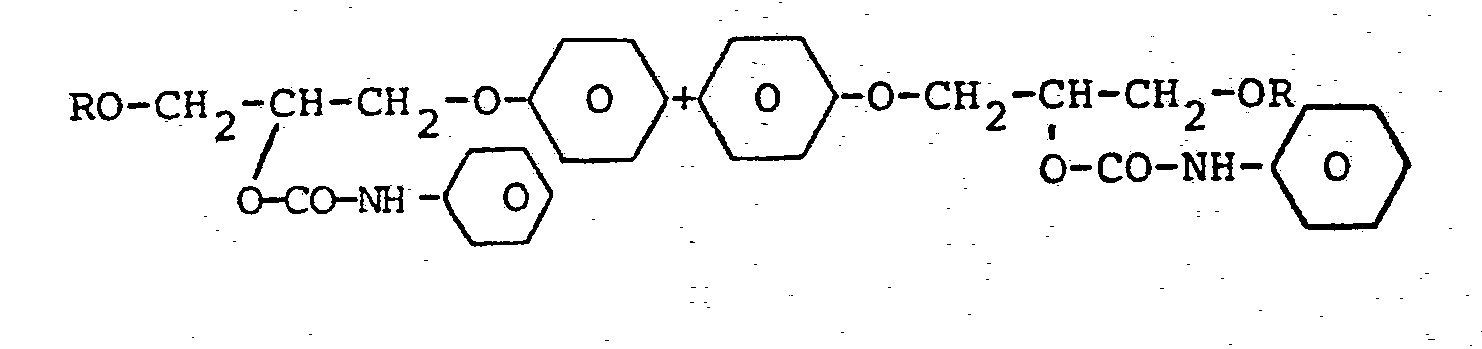





- Verbindung der allgemeinen Formel:
- R-(O-D-O-X)n-OD-OR, wobei HO-D-OH ein Polyol und HO-X-OH eine Dicarbonsäure ist, und zwar jeweils gesättigt oder ungesättigt, cyclisch oder acyclisch.


- (Durchschnitts-Molgewicht 2500)

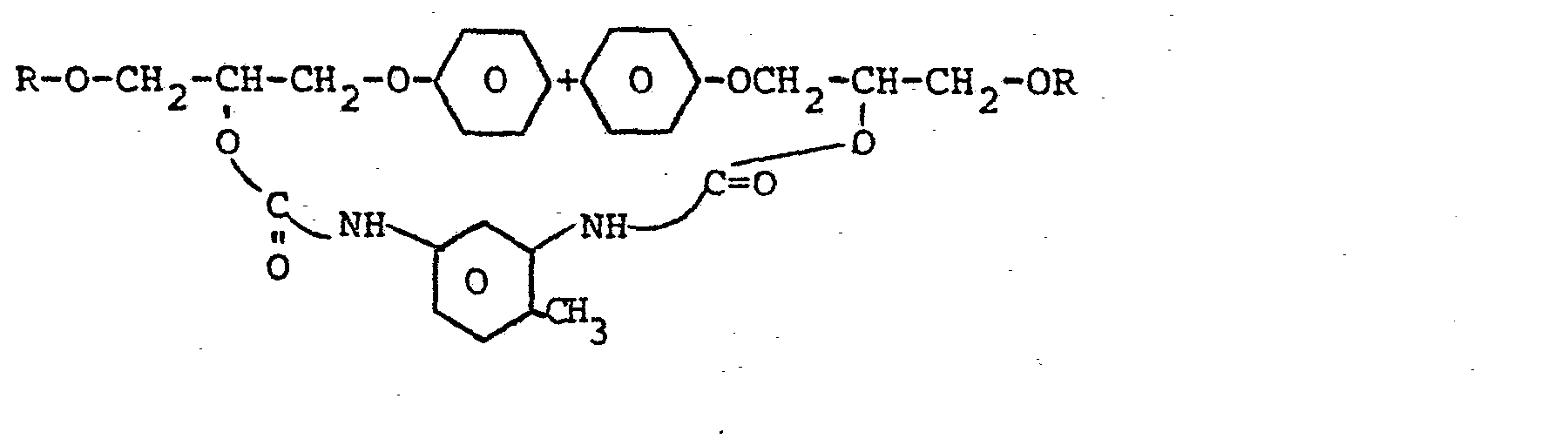
- Ferner eignen sich NCO- und Urethangruppen enthaltende Prepolymere, umgesetzt mit Hydroxyalkyl-methacrylat gemäß DT-OS 2 419 887 oder FR-PS 2 271 807.
- Die erfindungsgemäßen Materialien können verwendet werden als Preß-, Gieß- und Streichmassen. Sie werden mit Vorteil auf dem Gebiet der Dentaltechnik verwendet zur Herstellung von Prothesenmaterialien, Zahnreparaturmassen, Brücken- und Kronenmaterialien und Verblendmassen, Überzugs- und Versiegelungsmassen, Grundiermaterialien für Kavitäten etc.
- Herstellung von Bis-(methylen-acetessigsäure-methylester-)sulfon (Formel I, R=CH3).
- Man kühlt eine Mischung aus 800 g Methanol, 412 g Acetessigsäuremethylester und 380 g einer 30 %igen wäßrigen Formaldehydlösung auf -30°C und tropft unter Rühren innerhalb von 30 Minuten eine Lösung von 2,8 g Kaliumcarbonat in 28 g Wasser hinzu, wobei sich ein pH-Wert von 9 einstellt. Man rührt noch 30 Minuten bei -10°C nach und fügt dann 84 g Eisessig hinzu. Diese auf -10 C gekühlte Lösung wird dann zu einer Lösung aus 145 g Natriumdithionit, 300 g Wasser und 700 g Eis gegossen und eine Stunde bei -6 bis -10°C gerührt. Anschließend tropft man innerhalb einer Stunde 100 ml einer 10-normalen Schwefelsäure zu und rührt den Ansatz 16 Stunden bei O-5°C.
- Die gebildeten Kristalle werden abgesaugt und mit Wasser gewaschen. Anschließend werden sie mit 600 ml Wasser und 12 ml 35 %igem Wasserstoffperoxid drei Stunden verrührt, abgesaugt und mit Methanol gründlich ausgewaschen.
- Man erhält 150-230 g des Sulfons vom Schmelzpunkt 146-149°C, welches aus viel Dioxan umkristallisiert wird. Fp. 151°C.
- Herstellung eines Saccharinates von quartären Ammoniumbasen.
- 43 g Benzoesäure-2-sulfonimid (Saccharin) und 13 g Natriumcarbonat werden in 1000 ml Wasser gelöst, wobei ein pH-Wert von 7-8 eingestellt wird. Innerhalb von 2 Stunden werden 150 g einer 50 %igen wäßrigen Lösung von ca. 70 % n-Dodecyl- und ca. 30 % Tetradecyl-di-methyl-benzylammoniumchlorid unter Rühren zugetropft und 0,5 Stunden nachgerührt. Das Produkt wird abgesaugt, zweimal mit je 200 ml Wasser gründlich ausgewaschen und bei 40°C i.V. getrocknet. Ausbeute 105; Schmp. 90-92°C.
- 1. 940 g Methacrylsäuremethylester, 60 g entstabilisiertes Ethylenglycoldimethacrylat, 5 g 2-(2'-Hydroxy-5'-methylphenyl)-benzotriazol, 10 g Saccharinat nach Beispiel 2, 4 g N,N-Bis-2-hydroxypropyl-3,5-dimethylanilin (Stereoisomerengemisch), 2,15 g Methacrylsäure und 2,0 g Tetrabutylammoniumbromid werden homogen vermischt.
- 2. Ein Perlpolymeristat-Gemisch, bestehend aus
- a) 90 Gew.-% Copolymer aus 95 % Methylmethacrylat und 5 % Acrylsäureethylester, Lz = 55 µ, und
- b) 10 Gew.-% Copolymer aus 75 % Methylmethacrylat und 25 % Acrylsäureethylester, Lz = 110 µ,
- 5 Teile Pulver 1) und 3 Teile Flüssigkeit 2) werden 30 Sekunden lang' innig vermischt und in eine mit Natriumalginat isolierte Gipsform gegossen. Die verschlossene Form wird in einem Druckbehälter 1 Stunde unter einem Druck von 2 bar sich selbst überlassen. Beim Entformen wird ein farbloser Formkörper erhalten, der eine glatte Oberfläche aufweist.
- Der erhaltene Formkörper hat folgende Festigkeitseigenschaften: Schlagzähigkeit 19,6 kp/cm2, Biegefestigkeit 1001 kp/cm2, Biegewinkel 22,4°; Brinellhärte 1137/1011 bei 10"/60". Bei einer Wärmealterung im Trockenschrank bei 60°C wurde nach 2 Tagen keine Verfärbung der Proben festgestellt.
- Werden die Versuche ohne das Sulfon gemäß Beispiel 1 durchgeführt, so verfärbt sich die Probe bei der Wärmealterung bei 60°C.
- Herstellung von Bis-(methylenacetessigsäure-ethylester)-sulfon (Formel I, R = C2H5) .
- 80 g hydroxymethansulfinsaures Natrium (Rongalit C®), 750 g Wasser und 65 g Acetessigsäureethylester werden unter Einleiten von Kohlendioxid 18 Stunden gerührt. Dabei tritt eine geringe Erwärmung auf. Nicht umgesetzter Acetessigester wird dann mit Petrolether ausgeschüttelt.
- 65 g Acetessigsäureethylester und 55 g wäßrige 30 %ige Formaldehyd-Lösung werden auf -20°C gekühlt. Man tropft nun 5 g einer 10 %igen Lösung von Kaliumcarbonat in Wasser zu und hält das Reaktionsgemisch 0,5 bis 1 Stünde auf -15°C bis -20°C. Dann tropft man diese Lösung zur auf -10°C gekühlten und mit 100 g Eis versetzten Lösung I zu und versetzt das Gemisch sofort mit 50 ml einer 10-normalen Schwefelsäure und mit 100 ml Petrolether. Man rührt drei Tage unter Eis- Kühlung und saugt die gebildeten Kristalle ab. Diese werden in Essigsäureethylester gelöst, vom Ungelösten abfiltriert und im Vakuum bei 30°C eingeengt. Nach Zusatz von Ethancl und Impfkristallen unter Kühlung kristallisiert das Sulfon aus. Es wird mit eiskaltem Ethanol gewaschen und getrocknet.
- Schmelzpunkt: 88°C; Schwefelanalyse: 9,35 % (theor. 9,15
wird mit 1,1 % feinteiligem o-Toluylperoxid und 0,65 % Bis-(methylenacetessigsäuremethylester)-sulfon gemäß Beispiel 1 vermischt und durch Sieben homogenisiert.
Claims (10)
welche in ß-Stellung zur Sulfongruppe ein aktiviertes Wasserstoffatom besitzen, verwendet werden.


Applications Claiming Priority (2)
| Application Number | Priority Date | Filing Date | Title |
|---|---|---|---|
| DE2913220 | 1979-04-03 | ||
| DE19792913220 DE2913220A1 (de) | 1979-04-03 | 1979-04-03 | Kalthaertendes material |
Publications (3)
| Publication Number | Publication Date |
|---|---|
| EP0017151A2 true EP0017151A2 (de) | 1980-10-15 |
| EP0017151A3 EP0017151A3 (en) | 1981-10-21 |
| EP0017151B1 EP0017151B1 (de) | 1984-02-15 |
Family
ID=6067236
Family Applications (1)
| Application Number | Title | Priority Date | Filing Date |
|---|---|---|---|
| EP80101587A Expired EP0017151B1 (de) | 1979-04-03 | 1980-03-26 | Kalthärtende Materialien für Dentalzwecke mit polymerisationsaktiven Sulfonen |
Country Status (3)
| Country | Link |
|---|---|
| EP (1) | EP0017151B1 (de) |
| JP (1) | JPS55133406A (de) |
| DE (2) | DE2913220A1 (de) |
Cited By (5)
| Publication number | Priority date | Publication date | Assignee | Title |
|---|---|---|---|---|
| EP0289990A1 (de) * | 1987-05-06 | 1988-11-09 | Mitsubishi Rayon Co., Ltd. | Photopolymerisierbare Dentalzusammensetzung |
| US4983644A (en) * | 1988-06-21 | 1991-01-08 | Mitsubishi Rayon Company, Limited | Dental adhesive composition |
| EP0758268A4 (de) * | 1994-05-02 | 1999-04-28 | Univ California | Polymer-zementzusammensetzungen und initiatoren zum gebrauch in deren herstellung |
| WO2003086327A3 (fr) * | 2002-04-16 | 2004-04-08 | Polymerexpert Sa | Activateur de polymerisation radicalaire permettant l'obtention de ciments organiques colores et non toxiques |
| WO2017036897A1 (en) * | 2015-08-28 | 2017-03-09 | Akzo Nobel Chemicals International B.V. | Formulation for the treatment of acne |
Family Cites Families (6)
| Publication number | Priority date | Publication date | Assignee | Title |
|---|---|---|---|---|
| US2558139A (en) * | 1947-08-26 | 1951-06-26 | L D Caulk Company | Dental material and method |
| US2758106A (en) * | 1951-03-06 | 1956-08-07 | Heraeus Gmbh W C | Improvements in the production of polymerisation products using redox catalysts |
| NL90050C (de) * | 1954-05-28 | |||
| DE1030561B (de) * | 1954-12-21 | 1958-05-22 | Bayer Ag | Verfahren zur Herstellung von Polymerisaten |
| BE639407A (de) * | 1962-11-02 | |||
| IE37702B1 (en) * | 1972-11-16 | 1977-09-28 | Loctite Ltd | Dental filling composition and process for use thereof |
-
1979
- 1979-04-03 DE DE19792913220 patent/DE2913220A1/de not_active Withdrawn
-
1980
- 1980-03-26 DE DE8080101587T patent/DE3066543D1/de not_active Expired
- 1980-03-26 EP EP80101587A patent/EP0017151B1/de not_active Expired
- 1980-04-01 JP JP4127180A patent/JPS55133406A/ja active Pending
Cited By (9)
| Publication number | Priority date | Publication date | Assignee | Title |
|---|---|---|---|---|
| EP0289990A1 (de) * | 1987-05-06 | 1988-11-09 | Mitsubishi Rayon Co., Ltd. | Photopolymerisierbare Dentalzusammensetzung |
| US4933376A (en) * | 1987-05-06 | 1990-06-12 | Mitsubishi Rayon Company Limited | Photopolymerizable dental composition |
| US4983644A (en) * | 1988-06-21 | 1991-01-08 | Mitsubishi Rayon Company, Limited | Dental adhesive composition |
| EP0758268A4 (de) * | 1994-05-02 | 1999-04-28 | Univ California | Polymer-zementzusammensetzungen und initiatoren zum gebrauch in deren herstellung |
| WO2003086327A3 (fr) * | 2002-04-16 | 2004-04-08 | Polymerexpert Sa | Activateur de polymerisation radicalaire permettant l'obtention de ciments organiques colores et non toxiques |
| WO2017036897A1 (en) * | 2015-08-28 | 2017-03-09 | Akzo Nobel Chemicals International B.V. | Formulation for the treatment of acne |
| CN107847479A (zh) * | 2015-08-28 | 2018-03-27 | 阿克苏诺贝尔化学品国际有限公司 | 用于治疗痤疮的配制剂 |
| US10278945B2 (en) | 2015-08-28 | 2019-05-07 | Akzo Nobel Chemicals International B.V. | Formulation for the treatment of acne |
| CN107847479B (zh) * | 2015-08-28 | 2020-11-20 | 阿克苏诺贝尔化学品国际有限公司 | 用于治疗痤疮的配制剂 |
Also Published As
| Publication number | Publication date |
|---|---|
| DE3066543D1 (en) | 1984-03-22 |
| EP0017151B1 (de) | 1984-02-15 |
| DE2913220A1 (de) | 1980-10-23 |
| JPS55133406A (en) | 1980-10-17 |
| EP0017151A3 (en) | 1981-10-21 |
Similar Documents
| Publication | Publication Date | Title |
|---|---|---|
| DE3783437T2 (de) | Heilmittel. | |
| EP0073995B1 (de) | Photopolymerisierbare Massen, deren Verwendung für zahnärztliche Zwecke, sowie Verfahren zur Herstellung von Zahnersatzteilen, Zahnfüllungen und Überzügen | |
| EP0011734B1 (de) | Dentalwerkstoffe auf Basis von organischen Kunststoffen in pastöser Form | |
| EP0059451B1 (de) | 1,2,6-Thiadiazin-3,5-dion-1,1-dioxide und ihre Verwendung | |
| DE60029015T2 (de) | Dentalmaterialien mit verlängerter verarbeitungszeit, kits und verfahren | |
| DE19601924B4 (de) | Stabile organische Radikale enthaltendes, lichthärtendes Kompositmaterial und dessen Verwendung sowie die Verwendung eines stabilen organischen Radikals zur Herstellung eines Dentalmaterials | |
| DE69009322T2 (de) | Polymerisierbare Zusammensetzung. | |
| EP0442326B1 (de) | Füllstoffhaltige, quellbare Perlpolymerisate | |
| DE69518037T2 (de) | Klebstoffmischung für die Zahnbehandlung | |
| EP0023685A2 (de) | Dentalmassen | |
| DE19503551B4 (de) | (Meth)acrylsäureesterderivate | |
| DE3820498A1 (de) | Dentalwerkstoffe | |
| DE2357324A1 (de) | Dentalfuellmassen | |
| DE3801207A1 (de) | Zahnzementzusammensetzung, verfahren zu ihrer herstellung und ihre verwendung | |
| EP0664999A1 (de) | Verwendung einer thermisch härtbaren Zusammensetzung als Dentalmaterial | |
| EP1674067B1 (de) | Hydrolysestabiles selbstätzendes Einkomponentendentaladhäsiv | |
| CH471165A (de) | Verfahren zur Einleitung einer aeroben radikalischen Homo- oder Copolymerisation | |
| AU2025210826A1 (en) | Compositions and methods to antibacterial nanogel and hydrolytically stable antibacterial nanogel for dental compositions | |
| EP0017151B1 (de) | Kalthärtende Materialien für Dentalzwecke mit polymerisationsaktiven Sulfonen | |
| EP0051797A1 (de) | Verfahren zum Härten von Reaktionsklebstoffen | |
| US20200157313A1 (en) | Imidazolium/thiol polymerization initiation system | |
| EP0508095B1 (de) | Dentalwerkstoffe auf Basis von (Meth)-Acrylaten | |
| AT393355B (de) | Klebstoff | |
| CH674647A5 (de) | ||
| EP0148401A1 (de) | Neue Amine, Verfahren zu deren Herstellung sowie deren Verwendung in radikalisch polymerisierbaren Massen |
Legal Events
| Date | Code | Title | Description |
|---|---|---|---|
| PUAI | Public reference made under article 153(3) epc to a published international application that has entered the european phase |
Free format text: ORIGINAL CODE: 0009012 |
|
| 17P | Request for examination filed | ||
| AK | Designated contracting states |
Designated state(s): DE |
|
| PUAL | Search report despatched |
Free format text: ORIGINAL CODE: 0009013 |
|
| AK | Designated contracting states |
Designated state(s): DE |
|
| GRAA | (expected) grant |
Free format text: ORIGINAL CODE: 0009210 |
|
| RBV | Designated contracting states (corrected) |
Designated state(s): DE |
|
| AK | Designated contracting states |
Designated state(s): DE |
|
| REF | Corresponds to: |
Ref document number: 3066543 Country of ref document: DE Date of ref document: 19840322 |
|
| PLBE | No opposition filed within time limit |
Free format text: ORIGINAL CODE: 0009261 |
|
| STAA | Information on the status of an ep patent application or granted ep patent |
Free format text: STATUS: NO OPPOSITION FILED WITHIN TIME LIMIT |
|
| 26N | No opposition filed | ||
| PGFP | Annual fee paid to national office [announced via postgrant information from national office to epo] |
Ref country code: DE Payment date: 19890224 Year of fee payment: 10 |
|
| PG25 | Lapsed in a contracting state [announced via postgrant information from national office to epo] |
Ref country code: DE Effective date: 19901201 |