EP0033504A2 - Pentapeptide vom Encephalintyp, Verfahren zur Herstellung derselben und diese enthaltende Arzneimittel - Google Patents
Pentapeptide vom Encephalintyp, Verfahren zur Herstellung derselben und diese enthaltende Arzneimittel Download PDFInfo
- Publication number
- EP0033504A2 EP0033504A2 EP81100545A EP81100545A EP0033504A2 EP 0033504 A2 EP0033504 A2 EP 0033504A2 EP 81100545 A EP81100545 A EP 81100545A EP 81100545 A EP81100545 A EP 81100545A EP 0033504 A2 EP0033504 A2 EP 0033504A2
- Authority
- EP
- European Patent Office
- Prior art keywords
- acid
- tyrosyl
- glycyl
- phenylalanyl
- mmol
- Prior art date
- Legal status (The legal status is an assumption and is not a legal conclusion. Google has not performed a legal analysis and makes no representation as to the accuracy of the status listed.)
- Granted
Links
- 238000002360 preparation method Methods 0.000 title claims abstract description 32
- 238000000034 method Methods 0.000 title claims abstract description 12
- 230000008569 process Effects 0.000 title claims abstract description 9
- 239000003814 drug Substances 0.000 title claims description 5
- 150000001875 compounds Chemical class 0.000 claims abstract description 27
- 239000002253 acid Substances 0.000 claims description 47
- 229910052757 nitrogen Inorganic materials 0.000 claims description 32
- 125000004433 nitrogen atom Chemical group N* 0.000 claims description 32
- 150000002148 esters Chemical class 0.000 claims description 28
- DHMQDGOQFOQNFH-UHFFFAOYSA-N Glycine Chemical compound NCC(O)=O DHMQDGOQFOQNFH-UHFFFAOYSA-N 0.000 claims description 26
- 150000003839 salts Chemical class 0.000 claims description 23
- 125000006239 protecting group Chemical group 0.000 claims description 22
- COLNVLDHVKWLRT-QMMMGPOBSA-N L-phenylalanine Chemical compound OC(=O)[C@@H](N)CC1=CC=CC=C1 COLNVLDHVKWLRT-QMMMGPOBSA-N 0.000 claims description 16
- 125000003178 carboxy group Chemical group [H]OC(*)=O 0.000 claims description 15
- 125000004432 carbon atom Chemical group C* 0.000 claims description 14
- 125000000217 alkyl group Chemical group 0.000 claims description 13
- 108090000765 processed proteins & peptides Proteins 0.000 claims description 12
- 125000004435 hydrogen atom Chemical group [H]* 0.000 claims description 10
- 125000004430 oxygen atom Chemical group O* 0.000 claims description 10
- 125000002887 hydroxy group Chemical group [H]O* 0.000 claims description 9
- -1 L-Tyrosyl-D-norleucyl-glycyl-L-phenylalanyl-L-d - aminopentanesulfonic acid Chemical compound 0.000 claims description 8
- IJGRMHOSHXDMSA-UHFFFAOYSA-N Atomic nitrogen Chemical compound N#N IJGRMHOSHXDMSA-UHFFFAOYSA-N 0.000 claims description 6
- 229940024606 amino acid Drugs 0.000 claims description 6
- 238000009833 condensation Methods 0.000 claims description 6
- 230000005494 condensation Effects 0.000 claims description 6
- 150000001413 amino acids Chemical class 0.000 claims description 5
- 229960005190 phenylalanine Drugs 0.000 claims description 5
- 125000003798 L-tyrosyl group Chemical group [H]N([H])[C@]([H])(C(=O)[*])C([H])([H])C1=C([H])C([H])=C(O[H])C([H])=C1[H] 0.000 claims description 4
- 102000007079 Peptide Fragments Human genes 0.000 claims description 4
- 108010033276 Peptide Fragments Proteins 0.000 claims description 4
- 239000013543 active substance Substances 0.000 claims description 4
- 229910052799 carbon Inorganic materials 0.000 claims description 4
- 235000013905 glycine and its sodium salt Nutrition 0.000 claims description 4
- 125000003884 phenylalkyl group Chemical group 0.000 claims description 4
- 125000004001 thioalkyl group Chemical group 0.000 claims description 4
- 239000013067 intermediate product Substances 0.000 claims description 3
- QNAYBMKLOCPYGJ-UWTATZPHSA-N D-alanine Chemical compound C[C@@H](N)C(O)=O QNAYBMKLOCPYGJ-UWTATZPHSA-N 0.000 claims description 2
- QNAYBMKLOCPYGJ-UHFFFAOYSA-N D-alpha-Ala Natural products CC([NH3+])C([O-])=O QNAYBMKLOCPYGJ-UHFFFAOYSA-N 0.000 claims description 2
- FFEARJCKVFRZRR-SCSAIBSYSA-N D-methionine Chemical compound CSCC[C@@H](N)C(O)=O FFEARJCKVFRZRR-SCSAIBSYSA-N 0.000 claims description 2
- 229930182818 D-methionine Natural products 0.000 claims description 2
- LRQKBLKVPFOOQJ-RXMQYKEDSA-N D-norleucine Chemical compound CCCC[C@@H](N)C(O)=O LRQKBLKVPFOOQJ-RXMQYKEDSA-N 0.000 claims description 2
- COLNVLDHVKWLRT-MRVPVSSYSA-N D-phenylalanine Chemical compound OC(=O)[C@H](N)CC1=CC=CC=C1 COLNVLDHVKWLRT-MRVPVSSYSA-N 0.000 claims description 2
- 229930182832 D-phenylalanine Natural products 0.000 claims description 2
- 239000003795 chemical substances by application Substances 0.000 claims description 2
- 238000010348 incorporation Methods 0.000 claims 1
- 238000009512 pharmaceutical packaging Methods 0.000 claims 1
- 229940127240 opiate Drugs 0.000 abstract description 14
- 210000003169 central nervous system Anatomy 0.000 abstract description 4
- 229940126601 medicinal product Drugs 0.000 abstract 1
- 238000002560 therapeutic procedure Methods 0.000 abstract 1
- ZMXDDKWLCZADIW-UHFFFAOYSA-N N,N-Dimethylformamide Chemical compound CN(C)C=O ZMXDDKWLCZADIW-UHFFFAOYSA-N 0.000 description 108
- 239000000243 solution Substances 0.000 description 82
- XEKOWRVHYACXOJ-UHFFFAOYSA-N Ethyl acetate Chemical compound CCOC(C)=O XEKOWRVHYACXOJ-UHFFFAOYSA-N 0.000 description 81
- HEMHJVSKTPXQMS-UHFFFAOYSA-M Sodium hydroxide Chemical compound [OH-].[Na+] HEMHJVSKTPXQMS-UHFFFAOYSA-M 0.000 description 60
- RTZKZFJDLAIYFH-UHFFFAOYSA-N Diethyl ether Chemical compound CCOCC RTZKZFJDLAIYFH-UHFFFAOYSA-N 0.000 description 56
- XLYOFNOQVPJJNP-UHFFFAOYSA-N water Substances O XLYOFNOQVPJJNP-UHFFFAOYSA-N 0.000 description 56
- SJRJJKPEHAURKC-UHFFFAOYSA-N N-Methylmorpholine Chemical compound CN1CCOCC1 SJRJJKPEHAURKC-UHFFFAOYSA-N 0.000 description 55
- 239000000047 product Substances 0.000 description 46
- OKKJLVBELUTLKV-UHFFFAOYSA-N Methanol Chemical compound OC OKKJLVBELUTLKV-UHFFFAOYSA-N 0.000 description 44
- QTBSBXVTEAMEQO-UHFFFAOYSA-N Acetic acid Chemical compound CC(O)=O QTBSBXVTEAMEQO-UHFFFAOYSA-N 0.000 description 38
- OKTJSMMVPCPJKN-UHFFFAOYSA-N Carbon Chemical compound [C] OKTJSMMVPCPJKN-UHFFFAOYSA-N 0.000 description 29
- 229940093499 ethyl acetate Drugs 0.000 description 27
- 235000019439 ethyl acetate Nutrition 0.000 description 27
- 239000000203 mixture Substances 0.000 description 27
- 239000007858 starting material Substances 0.000 description 27
- LFQSCWFLJHTTHZ-UHFFFAOYSA-N Ethanol Chemical compound CCO LFQSCWFLJHTTHZ-UHFFFAOYSA-N 0.000 description 25
- 239000011541 reaction mixture Substances 0.000 description 25
- KWYUFKZDYYNOTN-UHFFFAOYSA-M Potassium hydroxide Chemical compound [OH-].[K+] KWYUFKZDYYNOTN-UHFFFAOYSA-M 0.000 description 24
- VEXZGXHMUGYJMC-UHFFFAOYSA-N Hydrochloric acid Chemical compound Cl VEXZGXHMUGYJMC-UHFFFAOYSA-N 0.000 description 23
- QAOWNCQODCNURD-UHFFFAOYSA-N Sulfuric acid Chemical compound OS(O)(=O)=O QAOWNCQODCNURD-UHFFFAOYSA-N 0.000 description 21
- 108010016626 Dipeptides Proteins 0.000 description 20
- ZMANZCXQSJIPKH-UHFFFAOYSA-N Triethylamine Chemical compound CCN(CC)CC ZMANZCXQSJIPKH-UHFFFAOYSA-N 0.000 description 18
- 230000000694 effects Effects 0.000 description 17
- DTQVDTLACAAQTR-UHFFFAOYSA-N Trifluoroacetic acid Chemical compound OC(=O)C(F)(F)F DTQVDTLACAAQTR-UHFFFAOYSA-N 0.000 description 16
- ZAFNJMIOTHYJRJ-UHFFFAOYSA-N Diisopropyl ether Chemical compound CC(C)OC(C)C ZAFNJMIOTHYJRJ-UHFFFAOYSA-N 0.000 description 13
- 229960000583 acetic acid Drugs 0.000 description 13
- 239000012074 organic phase Substances 0.000 description 13
- 239000012071 phase Substances 0.000 description 13
- LRHPLDYGYMQRHN-UHFFFAOYSA-N N-Butanol Chemical class CCCCO LRHPLDYGYMQRHN-UHFFFAOYSA-N 0.000 description 11
- 210000000936 intestine Anatomy 0.000 description 11
- KDLHZDBZIXYQEI-UHFFFAOYSA-N Palladium Chemical compound [Pd] KDLHZDBZIXYQEI-UHFFFAOYSA-N 0.000 description 10
- PMZURENOXWZQFD-UHFFFAOYSA-L Sodium Sulfate Chemical compound [Na+].[Na+].[O-]S([O-])(=O)=O PMZURENOXWZQFD-UHFFFAOYSA-L 0.000 description 10
- BQJCRHHNABKAKU-KBQPJGBKSA-N morphine Chemical compound O([C@H]1[C@H](C=C[C@H]23)O)C4=C5[C@@]12CCN(C)[C@@H]3CC5=CC=C4O BQJCRHHNABKAKU-KBQPJGBKSA-N 0.000 description 10
- 239000011701 zinc Substances 0.000 description 9
- 239000003054 catalyst Substances 0.000 description 8
- 238000001704 evaporation Methods 0.000 description 8
- 230000008020 evaporation Effects 0.000 description 8
- 239000000706 filtrate Substances 0.000 description 8
- 210000000582 semen Anatomy 0.000 description 8
- 238000005406 washing Methods 0.000 description 8
- 229910052725 zinc Inorganic materials 0.000 description 8
- 241000700198 Cavia Species 0.000 description 7
- 239000008346 aqueous phase Substances 0.000 description 7
- 239000002244 precipitate Substances 0.000 description 7
- 229910052938 sodium sulfate Inorganic materials 0.000 description 7
- 235000011152 sodium sulphate Nutrition 0.000 description 7
- 239000000126 substance Substances 0.000 description 7
- YOETUEMZNOLGDB-UHFFFAOYSA-N 2-methylpropyl carbonochloridate Chemical compound CC(C)COC(Cl)=O YOETUEMZNOLGDB-UHFFFAOYSA-N 0.000 description 6
- CSCPPACGZOOCGX-UHFFFAOYSA-N Acetone Chemical compound CC(C)=O CSCPPACGZOOCGX-UHFFFAOYSA-N 0.000 description 6
- 241000700199 Cavia porcellus Species 0.000 description 6
- 239000004471 Glycine Substances 0.000 description 6
- JUJWROOIHBZHMG-UHFFFAOYSA-N Pyridine Chemical compound C1=CC=NC=C1 JUJWROOIHBZHMG-UHFFFAOYSA-N 0.000 description 6
- UIIMBOGNXHQVGW-UHFFFAOYSA-M Sodium bicarbonate Chemical compound [Na+].OC([O-])=O UIIMBOGNXHQVGW-UHFFFAOYSA-M 0.000 description 6
- WYURNTSHIVDZCO-UHFFFAOYSA-N Tetrahydrofuran Chemical compound C1CCOC1 WYURNTSHIVDZCO-UHFFFAOYSA-N 0.000 description 6
- KRKNYBCHXYNGOX-UHFFFAOYSA-N citric acid Chemical compound OC(=O)CC(O)(C(O)=O)CC(O)=O KRKNYBCHXYNGOX-UHFFFAOYSA-N 0.000 description 6
- 239000004020 conductor Substances 0.000 description 6
- 238000001816 cooling Methods 0.000 description 6
- 239000013078 crystal Substances 0.000 description 6
- 239000007788 liquid Substances 0.000 description 6
- 239000000155 melt Substances 0.000 description 6
- 238000003756 stirring Methods 0.000 description 6
- 239000000725 suspension Substances 0.000 description 6
- 239000005457 ice water Substances 0.000 description 5
- 229960005181 morphine Drugs 0.000 description 5
- 229910052763 palladium Inorganic materials 0.000 description 5
- GKXMNJACEXVJKE-IGRVNUPPSA-N (2,3,4,5,6-pentachlorophenyl) 2-[[(2R)-3-[1-[(2S)-2-amino-3-(4-hydroxyphenyl)propanoyl]cyclohexa-2,4-dien-1-yl]-2-[(2-methylpropan-2-yl)oxycarbonylamino]propanoyl]amino]acetate Chemical compound ClC1=C(C(=C(C(=C1OC(CNC([C@H](NC(=O)OC(C)(C)C)CC1(CC=CC=C1)C([C@@H](N)CC1=CC=C(C=C1)O)=O)=O)=O)Cl)Cl)Cl)Cl GKXMNJACEXVJKE-IGRVNUPPSA-N 0.000 description 4
- RYHBNJHYFVUHQT-UHFFFAOYSA-N 1,4-Dioxane Chemical compound C1COCCO1 RYHBNJHYFVUHQT-UHFFFAOYSA-N 0.000 description 4
- 125000003275 alpha amino acid group Chemical group 0.000 description 4
- 230000036772 blood pressure Effects 0.000 description 4
- 230000008859 change Effects 0.000 description 4
- 238000006243 chemical reaction Methods 0.000 description 4
- 239000010949 copper Substances 0.000 description 4
- HGBOYTHUEUWSSQ-UHFFFAOYSA-N pentanal Chemical compound CCCCC=O HGBOYTHUEUWSSQ-UHFFFAOYSA-N 0.000 description 4
- 239000003208 petroleum Substances 0.000 description 4
- 229920006395 saturated elastomer Polymers 0.000 description 4
- UHOVQNZJYSORNB-UHFFFAOYSA-N Benzene Chemical compound C1=CC=CC=C1 UHOVQNZJYSORNB-UHFFFAOYSA-N 0.000 description 3
- OUYCCCASQSFEME-QMMMGPOBSA-N L-tyrosine Chemical compound OC(=O)[C@@H](N)CC1=CC=C(O)C=C1 OUYCCCASQSFEME-QMMMGPOBSA-N 0.000 description 3
- 125000000539 amino acid group Chemical group 0.000 description 3
- WJKJXKRHMUXQSL-UHFFFAOYSA-N benzyl glycinate 4-methylbenzenesulfonate salt Chemical compound CC1=CC=C(S(O)(=O)=O)C=C1.NCC(=O)OCC1=CC=CC=C1 WJKJXKRHMUXQSL-UHFFFAOYSA-N 0.000 description 3
- 238000009835 boiling Methods 0.000 description 3
- 238000000921 elemental analysis Methods 0.000 description 3
- IXCSERBJSXMMFS-UHFFFAOYSA-N hydrogen chloride Substances Cl.Cl IXCSERBJSXMMFS-UHFFFAOYSA-N 0.000 description 3
- 229910000041 hydrogen chloride Inorganic materials 0.000 description 3
- 230000001077 hypotensive effect Effects 0.000 description 3
- 210000003405 ileum Anatomy 0.000 description 3
- 239000012452 mother liquor Substances 0.000 description 3
- ABLZXFCXXLZCGV-UHFFFAOYSA-N phosphonic acid group Chemical group P(O)(O)=O ABLZXFCXXLZCGV-UHFFFAOYSA-N 0.000 description 3
- 102000004196 processed proteins & peptides Human genes 0.000 description 3
- UMJSCPRVCHMLSP-UHFFFAOYSA-N pyridine Natural products COC1=CC=CN=C1 UMJSCPRVCHMLSP-UHFFFAOYSA-N 0.000 description 3
- 229910000030 sodium bicarbonate Inorganic materials 0.000 description 3
- 235000017557 sodium bicarbonate Nutrition 0.000 description 3
- 239000007787 solid Substances 0.000 description 3
- 239000011877 solvent mixture Substances 0.000 description 3
- 125000000542 sulfonic acid group Chemical group 0.000 description 3
- YLQBMQCUIZJEEH-UHFFFAOYSA-N tetrahydrofuran Natural products C=1C=COC=1 YLQBMQCUIZJEEH-UHFFFAOYSA-N 0.000 description 3
- 229960004441 tyrosine Drugs 0.000 description 3
- ZHUJMSMQIPIPTF-IBURTVSXSA-N (2r)-2-[[(2s)-2-[[2-[[(2r)-2-[[(2s)-2-amino-3-(4-hydroxyphenyl)propanoyl]amino]propanoyl]amino]acetyl]amino]-3-phenylpropanoyl]amino]-4-methylpentanoic acid Chemical compound C([C@@H](C(=O)N[C@H](CC(C)C)C(O)=O)NC(=O)CNC(=O)[C@@H](C)NC(=O)[C@@H](N)CC=1C=CC(O)=CC=1)C1=CC=CC=C1 ZHUJMSMQIPIPTF-IBURTVSXSA-N 0.000 description 2
- ZYJPUMXJBDHSIF-NSHDSACASA-N (2s)-2-[(2-methylpropan-2-yl)oxycarbonylamino]-3-phenylpropanoic acid Chemical compound CC(C)(C)OC(=O)N[C@H](C(O)=O)CC1=CC=CC=C1 ZYJPUMXJBDHSIF-NSHDSACASA-N 0.000 description 2
- GDJHBCNLZUWQRF-UHFFFAOYSA-N 1-amino-3-methylbutane-1-sulfonic acid Chemical compound CC(C)CC(N)S(O)(=O)=O GDJHBCNLZUWQRF-UHFFFAOYSA-N 0.000 description 2
- AMCTZTOJWUIFDJ-HPLQXTBUSA-N 2-[[(2R)-3-[1-[(2S)-2-amino-3-(4-hydroxyphenyl)propanoyl]cyclohexa-2,4-dien-1-yl]-2-[(2-methylpropan-2-yl)oxycarbonylamino]propanoyl]amino]acetic acid Chemical compound C(C)(C)(C)OC(=O)N[C@H](CC1(CC=CC=C1)C([C@@H](N)CC1=CC=C(C=C1)O)=O)C(=O)NCC(=O)O AMCTZTOJWUIFDJ-HPLQXTBUSA-N 0.000 description 2
- YGHRJJRRZDOVPD-UHFFFAOYSA-N 3-methylbutanal Chemical compound CC(C)CC=O YGHRJJRRZDOVPD-UHFFFAOYSA-N 0.000 description 2
- 206010001497 Agitation Diseases 0.000 description 2
- VHUUQVKOLVNVRT-UHFFFAOYSA-N Ammonium hydroxide Chemical compound [NH4+].[OH-] VHUUQVKOLVNVRT-UHFFFAOYSA-N 0.000 description 2
- LSNNMFCWUKXFEE-UHFFFAOYSA-M Bisulfite Chemical compound OS([O-])=O LSNNMFCWUKXFEE-UHFFFAOYSA-M 0.000 description 2
- KXDHJXZQYSOELW-UHFFFAOYSA-N Carbamic acid Chemical group NC(O)=O KXDHJXZQYSOELW-UHFFFAOYSA-N 0.000 description 2
- 102000005367 Carboxypeptidases Human genes 0.000 description 2
- 108010006303 Carboxypeptidases Proteins 0.000 description 2
- 206010048964 Carotid artery occlusion Diseases 0.000 description 2
- JPVYNHNXODAKFH-UHFFFAOYSA-N Cu2+ Chemical class [Cu+2] JPVYNHNXODAKFH-UHFFFAOYSA-N 0.000 description 2
- ROHFNLRQFUQHCH-YFKPBYRVSA-N L-leucine Chemical compound CC(C)C[C@H](N)C(O)=O ROHFNLRQFUQHCH-YFKPBYRVSA-N 0.000 description 2
- FFEARJCKVFRZRR-BYPYZUCNSA-N L-methionine Chemical compound CSCC[C@H](N)C(O)=O FFEARJCKVFRZRR-BYPYZUCNSA-N 0.000 description 2
- ROHFNLRQFUQHCH-UHFFFAOYSA-N Leucine Natural products CC(C)CC(N)C(O)=O ROHFNLRQFUQHCH-UHFFFAOYSA-N 0.000 description 2
- 241000700159 Rattus Species 0.000 description 2
- VYPSYNLAJGMNEJ-UHFFFAOYSA-N Silicium dioxide Chemical compound O=[Si]=O VYPSYNLAJGMNEJ-UHFFFAOYSA-N 0.000 description 2
- QGZKDVFQNNGYKY-UHFFFAOYSA-N ammonia Natural products N QGZKDVFQNNGYKY-UHFFFAOYSA-N 0.000 description 2
- 239000007864 aqueous solution Substances 0.000 description 2
- ILRQHYNYAXFSRZ-YNYZQZDBSA-N benzyl 2-[[(2R)-3-[1-[(2S)-2-amino-3-(4-hydroxyphenyl)propanoyl]cyclohexa-2,4-dien-1-yl]-2-[(2-methylpropan-2-yl)oxycarbonylamino]propanoyl]amino]acetate Chemical compound C(C1=CC=CC=C1)OC(CNC([C@H](NC(=O)OC(C)(C)C)CC1(CC=CC=C1)C([C@@H](N)CC1=CC=C(C=C1)O)=O)=O)=O ILRQHYNYAXFSRZ-YNYZQZDBSA-N 0.000 description 2
- FKEAJLRIFQDSPY-UHFFFAOYSA-N benzyl 2-[[2-[(2-methylpropan-2-yl)oxycarbonylamino]acetyl]amino]acetate Chemical compound CC(C)(C)OC(=O)NCC(=O)NCC(=O)OCC1=CC=CC=C1 FKEAJLRIFQDSPY-UHFFFAOYSA-N 0.000 description 2
- OSGAYBCDTDRGGQ-UHFFFAOYSA-L calcium sulfate Chemical compound [Ca+2].[O-]S([O-])(=O)=O OSGAYBCDTDRGGQ-UHFFFAOYSA-L 0.000 description 2
- 150000001721 carbon Chemical group 0.000 description 2
- 229910052802 copper Inorganic materials 0.000 description 2
- 238000010494 dissociation reaction Methods 0.000 description 2
- 230000005593 dissociations Effects 0.000 description 2
- 230000002124 endocrine Effects 0.000 description 2
- 229960003136 leucine Drugs 0.000 description 2
- 229960004452 methionine Drugs 0.000 description 2
- 229930182817 methionine Natural products 0.000 description 2
- 230000004048 modification Effects 0.000 description 2
- 238000012986 modification Methods 0.000 description 2
- VLKZOEOYAKHREP-UHFFFAOYSA-N n-Hexane Chemical compound CCCCCC VLKZOEOYAKHREP-UHFFFAOYSA-N 0.000 description 2
- IZUPBVBPLAPZRR-UHFFFAOYSA-N pentachlorophenol Chemical compound OC1=C(Cl)C(Cl)=C(Cl)C(Cl)=C1Cl IZUPBVBPLAPZRR-UHFFFAOYSA-N 0.000 description 2
- WEXRUCMBJFQVBZ-UHFFFAOYSA-N pentobarbital Chemical compound CCCC(C)C1(CC)C(=O)NC(=O)NC1=O WEXRUCMBJFQVBZ-UHFFFAOYSA-N 0.000 description 2
- 230000000144 pharmacologic effect Effects 0.000 description 2
- 230000009467 reduction Effects 0.000 description 2
- 230000011514 reflex Effects 0.000 description 2
- 230000009153 reflex inhibition Effects 0.000 description 2
- 239000002904 solvent Substances 0.000 description 2
- 230000001960 triggered effect Effects 0.000 description 2
- 230000001457 vasomotor Effects 0.000 description 2
- YZYKBQUWMPUVEN-UHFFFAOYSA-N zafuleptine Chemical compound OC(=O)CCCCCC(C(C)C)NCC1=CC=C(F)C=C1 YZYKBQUWMPUVEN-UHFFFAOYSA-N 0.000 description 2
- ZIOCIQJXEKFHJO-MRVPVSSYSA-N (2r)-2-[(2-methylpropan-2-yl)oxycarbonylamino]hexanoic acid Chemical compound CCCC[C@H](C(O)=O)NC(=O)OC(C)(C)C ZIOCIQJXEKFHJO-MRVPVSSYSA-N 0.000 description 1
- UIRWGVLTPPSGEN-NDBXHCKUSA-N (2s)-1-[(2s)-2-[[2-[[(2r)-2-[[(2s)-2-amino-3-(4-hydroxyphenyl)propanoyl]amino]-4-methylsulfanylbutanoyl]amino]acetyl]amino]-3-phenylpropanoyl]pyrrolidine-2-carboxamide Chemical compound C([C@H](N)C(=O)N[C@H](CCSC)C(=O)NCC(=O)N[C@@H](CC=1C=CC=CC=1)C(=O)N1[C@@H](CCC1)C(N)=O)C1=CC=C(O)C=C1 UIRWGVLTPPSGEN-NDBXHCKUSA-N 0.000 description 1
- RRONHWAVOYADJL-HNNXBMFYSA-N (2s)-3-phenyl-2-(phenylmethoxycarbonylamino)propanoic acid Chemical compound C([C@@H](C(=O)O)NC(=O)OCC=1C=CC=CC=1)C1=CC=CC=C1 RRONHWAVOYADJL-HNNXBMFYSA-N 0.000 description 1
- WMFHUUKYIUOHRA-UHFFFAOYSA-N (3-phenoxyphenyl)methanamine;hydrochloride Chemical compound Cl.NCC1=CC=CC(OC=2C=CC=CC=2)=C1 WMFHUUKYIUOHRA-UHFFFAOYSA-N 0.000 description 1
- ADFXKUOMJKEIND-UHFFFAOYSA-N 1,3-dicyclohexylurea Chemical compound C1CCCCC1NC(=O)NC1CCCCC1 ADFXKUOMJKEIND-UHFFFAOYSA-N 0.000 description 1
- JVSFQJZRHXAUGT-UHFFFAOYSA-N 2,2-dimethylpropanoyl chloride Chemical compound CC(C)(C)C(Cl)=O JVSFQJZRHXAUGT-UHFFFAOYSA-N 0.000 description 1
- VRPJIFMKZZEXLR-UHFFFAOYSA-N 2-[(2-methylpropan-2-yl)oxycarbonylamino]acetic acid Chemical compound CC(C)(C)OC(=O)NCC(O)=O VRPJIFMKZZEXLR-UHFFFAOYSA-N 0.000 description 1
- XBPCUCUWBYBCDP-UHFFFAOYSA-N Dicyclohexylamine Chemical compound C1CCCCC1NC1CCCCC1 XBPCUCUWBYBCDP-UHFFFAOYSA-N 0.000 description 1
- QOSSAOTZNIDXMA-UHFFFAOYSA-N Dicylcohexylcarbodiimide Chemical compound C1CCCCC1N=C=NC1CCCCC1 QOSSAOTZNIDXMA-UHFFFAOYSA-N 0.000 description 1
- 102000004190 Enzymes Human genes 0.000 description 1
- 108090000790 Enzymes Proteins 0.000 description 1
- 241000282326 Felis catus Species 0.000 description 1
- DGAQECJNVWCQMB-PUAWFVPOSA-M Ilexoside XXIX Chemical compound C[C@@H]1CC[C@@]2(CC[C@@]3(C(=CC[C@H]4[C@]3(CC[C@@H]5[C@@]4(CC[C@@H](C5(C)C)OS(=O)(=O)[O-])C)C)[C@@H]2[C@]1(C)O)C)C(=O)O[C@H]6[C@@H]([C@H]([C@@H]([C@H](O6)CO)O)O)O.[Na+] DGAQECJNVWCQMB-PUAWFVPOSA-M 0.000 description 1
- LCPYQJIKPJDLLB-UWVGGRQHSA-N Leu-Leu Chemical compound CC(C)C[C@H](N)C(=O)N[C@H](C(O)=O)CC(C)C LCPYQJIKPJDLLB-UWVGGRQHSA-N 0.000 description 1
- FYYHWMGAXLPEAU-UHFFFAOYSA-N Magnesium Chemical compound [Mg] FYYHWMGAXLPEAU-UHFFFAOYSA-N 0.000 description 1
- 108700042186 Met(2)-ProNH2(5)- enkephalin Proteins 0.000 description 1
- 101100108551 Mus musculus Akr1b7 gene Proteins 0.000 description 1
- ONBWJWYUHXVEJS-ZTYRTETDSA-N Normorphine Chemical compound C([C@@H](NCC1)[C@@H]2C=C[C@@H]3O)C4=CC=C(O)C5=C4[C@@]21[C@H]3O5 ONBWJWYUHXVEJS-ZTYRTETDSA-N 0.000 description 1
- 108010093625 Opioid Peptides Proteins 0.000 description 1
- 102000001490 Opioid Peptides Human genes 0.000 description 1
- 102000003840 Opioid Receptors Human genes 0.000 description 1
- 108090000137 Opioid Receptors Proteins 0.000 description 1
- PYOHODCEOHCZBM-RYUDHWBXSA-N Phe-Met Chemical compound CSCC[C@@H](C(O)=O)NC(=O)[C@@H](N)CC1=CC=CC=C1 PYOHODCEOHCZBM-RYUDHWBXSA-N 0.000 description 1
- ZLMJMSJWJFRBEC-UHFFFAOYSA-N Potassium Chemical compound [K] ZLMJMSJWJFRBEC-UHFFFAOYSA-N 0.000 description 1
- 102000003946 Prolactin Human genes 0.000 description 1
- 108010057464 Prolactin Proteins 0.000 description 1
- UIIMBOGNXHQVGW-DEQYMQKBSA-M Sodium bicarbonate-14C Chemical compound [Na+].O[14C]([O-])=O UIIMBOGNXHQVGW-DEQYMQKBSA-M 0.000 description 1
- DWAQJAXMDSEUJJ-UHFFFAOYSA-M Sodium bisulfite Chemical compound [Na+].OS([O-])=O DWAQJAXMDSEUJJ-UHFFFAOYSA-M 0.000 description 1
- HCHKCACWOHOZIP-UHFFFAOYSA-N Zinc Chemical compound [Zn] HCHKCACWOHOZIP-UHFFFAOYSA-N 0.000 description 1
- PTFCDOFLOPIGGS-UHFFFAOYSA-N Zinc dication Chemical compound [Zn+2] PTFCDOFLOPIGGS-UHFFFAOYSA-N 0.000 description 1
- 241000981595 Zoysia japonica Species 0.000 description 1
- 230000002378 acidificating effect Effects 0.000 description 1
- 230000009471 action Effects 0.000 description 1
- 238000013019 agitation Methods 0.000 description 1
- 230000009435 amidation Effects 0.000 description 1
- 238000007112 amidation reaction Methods 0.000 description 1
- 125000003277 amino group Chemical group 0.000 description 1
- 210000004727 amygdala Anatomy 0.000 description 1
- 230000000202 analgesic effect Effects 0.000 description 1
- 150000008064 anhydrides Chemical class 0.000 description 1
- 125000004429 atom Chemical group 0.000 description 1
- LRVWQKPBZMUTLZ-LJQANCHMSA-N benzyl 2-[[(2r)-2-[(2-methylpropan-2-yl)oxycarbonylamino]-3-phenylpropanoyl]amino]acetate Chemical compound C([C@@H](NC(=O)OC(C)(C)C)C(=O)NCC(=O)OCC=1C=CC=CC=1)C1=CC=CC=C1 LRVWQKPBZMUTLZ-LJQANCHMSA-N 0.000 description 1
- RUNWRFARUOADQI-MRXNPFEDSA-N benzyl 2-[[(2r)-2-[(2-methylpropan-2-yl)oxycarbonylamino]hexanoyl]amino]acetate Chemical compound CC(C)(C)OC(=O)N[C@H](CCCC)C(=O)NCC(=O)OCC1=CC=CC=C1 RUNWRFARUOADQI-MRXNPFEDSA-N 0.000 description 1
- 230000033228 biological regulation Effects 0.000 description 1
- 208000006218 bradycardia Diseases 0.000 description 1
- 230000036471 bradycardia Effects 0.000 description 1
- 210000004556 brain Anatomy 0.000 description 1
- 239000007853 buffer solution Substances 0.000 description 1
- 244000309464 bull Species 0.000 description 1
- YLKUQAFDYMLBCK-UHFFFAOYSA-N butan-1-ol;ethyl acetate Chemical compound CCCCO.CCOC(C)=O YLKUQAFDYMLBCK-UHFFFAOYSA-N 0.000 description 1
- 159000000007 calcium salts Chemical class 0.000 description 1
- 239000007795 chemical reaction product Substances 0.000 description 1
- 238000004587 chromatography analysis Methods 0.000 description 1
- 230000000052 comparative effect Effects 0.000 description 1
- JZCCFEFSEZPSOG-UHFFFAOYSA-L copper(II) sulfate pentahydrate Chemical compound O.O.O.O.O.[Cu+2].[O-]S([O-])(=O)=O JZCCFEFSEZPSOG-UHFFFAOYSA-L 0.000 description 1
- 238000002425 crystallisation Methods 0.000 description 1
- 230000008025 crystallization Effects 0.000 description 1
- 238000011161 development Methods 0.000 description 1
- 229940042400 direct acting antivirals phosphonic acid derivative Drugs 0.000 description 1
- 229940079593 drug Drugs 0.000 description 1
- 238000001035 drying Methods 0.000 description 1
- 230000008451 emotion Effects 0.000 description 1
- 230000032050 esterification Effects 0.000 description 1
- 238000005886 esterification reaction Methods 0.000 description 1
- XSXLCQLOFRENHC-UHFFFAOYSA-N ethyl n-benzylcarbamate Chemical compound CCOC(=O)NCC1=CC=CC=C1 XSXLCQLOFRENHC-UHFFFAOYSA-N 0.000 description 1
- 238000002474 experimental method Methods 0.000 description 1
- 239000000284 extract Substances 0.000 description 1
- 239000012530 fluid Substances 0.000 description 1
- 230000037406 food intake Effects 0.000 description 1
- 235000012631 food intake Nutrition 0.000 description 1
- 239000012634 fragment Substances 0.000 description 1
- 230000006870 function Effects 0.000 description 1
- BTCSSZJGUNDROE-UHFFFAOYSA-N gamma-aminobutyric acid Chemical compound NCCCC(O)=O BTCSSZJGUNDROE-UHFFFAOYSA-N 0.000 description 1
- 239000012362 glacial acetic acid Substances 0.000 description 1
- 125000003630 glycyl group Chemical group [H]N([H])C([H])([H])C(*)=O 0.000 description 1
- 238000001990 intravenous administration Methods 0.000 description 1
- 238000011835 investigation Methods 0.000 description 1
- 150000002500 ions Chemical class 0.000 description 1
- DVCSNHXRZUVYAM-UHFFFAOYSA-N leucyl-aspartate Chemical compound CC(C)CC(N)C(=O)NC(C(O)=O)CC(O)=O DVCSNHXRZUVYAM-UHFFFAOYSA-N 0.000 description 1
- 239000011777 magnesium Substances 0.000 description 1
- 229910052749 magnesium Inorganic materials 0.000 description 1
- 238000004519 manufacturing process Methods 0.000 description 1
- 239000000463 material Substances 0.000 description 1
- 229910052751 metal Inorganic materials 0.000 description 1
- 239000002184 metal Substances 0.000 description 1
- 150000002739 metals Chemical class 0.000 description 1
- SKDIPRMGDVUUQO-HMZWWLAASA-N n-cyclohexylcyclohexanamine;(2r)-2-[(2-methylpropan-2-yl)oxycarbonylamino]-4-methylsulfanylbutanoic acid Chemical compound C1CCCCC1NC1CCCCC1.CSCC[C@H](C(O)=O)NC(=O)OC(C)(C)C SKDIPRMGDVUUQO-HMZWWLAASA-N 0.000 description 1
- QJGQUHMNIGDVPM-UHFFFAOYSA-N nitrogen group Chemical group [N] QJGQUHMNIGDVPM-UHFFFAOYSA-N 0.000 description 1
- 229950006134 normorphine Drugs 0.000 description 1
- 239000003399 opiate peptide Substances 0.000 description 1
- 229960001412 pentobarbital Drugs 0.000 description 1
- 150000003007 phosphonic acid derivatives Chemical class 0.000 description 1
- PTMHPRAIXMAOOB-UHFFFAOYSA-N phosphoramidic acid Chemical compound NP(O)(O)=O PTMHPRAIXMAOOB-UHFFFAOYSA-N 0.000 description 1
- FAIAAWCVCHQXDN-UHFFFAOYSA-N phosphorus trichloride Chemical compound ClP(Cl)Cl FAIAAWCVCHQXDN-UHFFFAOYSA-N 0.000 description 1
- 229920001184 polypeptide Polymers 0.000 description 1
- 239000011591 potassium Substances 0.000 description 1
- 229910052700 potassium Inorganic materials 0.000 description 1
- 229940097325 prolactin Drugs 0.000 description 1
- 230000001681 protective effect Effects 0.000 description 1
- 102000005962 receptors Human genes 0.000 description 1
- 108020003175 receptors Proteins 0.000 description 1
- 238000001953 recrystallisation Methods 0.000 description 1
- 238000006722 reduction reaction Methods 0.000 description 1
- 230000028327 secretion Effects 0.000 description 1
- 239000000741 silica gel Substances 0.000 description 1
- 229910002027 silica gel Inorganic materials 0.000 description 1
- 230000011273 social behavior Effects 0.000 description 1
- 230000009326 social learning Effects 0.000 description 1
- 230000004036 social memory Effects 0.000 description 1
- 239000011734 sodium Substances 0.000 description 1
- 229910052708 sodium Inorganic materials 0.000 description 1
- 235000010267 sodium hydrogen sulphite Nutrition 0.000 description 1
- 238000001228 spectrum Methods 0.000 description 1
- IIACRCGMVDHOTQ-UHFFFAOYSA-N sulfamic acid Chemical group NS(O)(=O)=O IIACRCGMVDHOTQ-UHFFFAOYSA-N 0.000 description 1
- 235000012976 tarts Nutrition 0.000 description 1
- 125000005931 tert-butyloxycarbonyl group Chemical group [H]C([H])([H])C(OC(*)=O)(C([H])([H])[H])C([H])([H])[H] 0.000 description 1
- OUYCCCASQSFEME-UHFFFAOYSA-N tyrosine Natural products OC(=O)C(N)CC1=CC=C(O)C=C1 OUYCCCASQSFEME-UHFFFAOYSA-N 0.000 description 1
- 150000003751 zinc Chemical class 0.000 description 1
Classifications
-
- C—CHEMISTRY; METALLURGY
- C07—ORGANIC CHEMISTRY
- C07K—PEPTIDES
- C07K14/00—Peptides having more than 20 amino acids; Gastrins; Somatostatins; Melanotropins; Derivatives thereof
- C07K14/435—Peptides having more than 20 amino acids; Gastrins; Somatostatins; Melanotropins; Derivatives thereof from animals; from humans
- C07K14/665—Peptides having more than 20 amino acids; Gastrins; Somatostatins; Melanotropins; Derivatives thereof from animals; from humans derived from pro-opiomelanocortin, pro-enkephalin or pro-dynorphin
- C07K14/70—Enkephalins
- C07K14/702—Enkephalins with at least 1 amino acid in D-form
-
- A—HUMAN NECESSITIES
- A61—MEDICAL OR VETERINARY SCIENCE; HYGIENE
- A61P—SPECIFIC THERAPEUTIC ACTIVITY OF CHEMICAL COMPOUNDS OR MEDICINAL PREPARATIONS
- A61P25/00—Drugs for disorders of the nervous system
- A61P25/04—Centrally acting analgesics, e.g. opioids
-
- A—HUMAN NECESSITIES
- A61—MEDICAL OR VETERINARY SCIENCE; HYGIENE
- A61P—SPECIFIC THERAPEUTIC ACTIVITY OF CHEMICAL COMPOUNDS OR MEDICINAL PREPARATIONS
- A61P25/00—Drugs for disorders of the nervous system
- A61P25/30—Drugs for disorders of the nervous system for treating abuse or dependence
-
- A—HUMAN NECESSITIES
- A61—MEDICAL OR VETERINARY SCIENCE; HYGIENE
- A61P—SPECIFIC THERAPEUTIC ACTIVITY OF CHEMICAL COMPOUNDS OR MEDICINAL PREPARATIONS
- A61P9/00—Drugs for disorders of the cardiovascular system
- A61P9/12—Antihypertensives
-
- C—CHEMISTRY; METALLURGY
- C07—ORGANIC CHEMISTRY
- C07F—ACYCLIC, CARBOCYCLIC OR HETEROCYCLIC COMPOUNDS CONTAINING ELEMENTS OTHER THAN CARBON, HYDROGEN, HALOGEN, OXYGEN, NITROGEN, SULFUR, SELENIUM OR TELLURIUM
- C07F9/00—Compounds containing elements of Groups 5 or 15 of the Periodic Table
- C07F9/02—Phosphorus compounds
- C07F9/28—Phosphorus compounds with one or more P—C bonds
- C07F9/38—Phosphonic acids [RP(=O)(OH)2]; Thiophosphonic acids ; [RP(=X1)(X2H)2(X1, X2 are each independently O, S or Se)]
- C07F9/3804—Phosphonic acids [RP(=O)(OH)2]; Thiophosphonic acids ; [RP(=X1)(X2H)2(X1, X2 are each independently O, S or Se)] not used, see subgroups
- C07F9/3808—Acyclic saturated acids which can have further substituents on alkyl
-
- C—CHEMISTRY; METALLURGY
- C07—ORGANIC CHEMISTRY
- C07K—PEPTIDES
- C07K5/00—Peptides containing up to four amino acids in a fully defined sequence; Derivatives thereof
- C07K5/04—Peptides containing up to four amino acids in a fully defined sequence; Derivatives thereof containing only normal peptide links
- C07K5/08—Tripeptides
- C07K5/0802—Tripeptides with the first amino acid being neutral
- C07K5/0812—Tripeptides with the first amino acid being neutral and aromatic or cycloaliphatic
-
- C—CHEMISTRY; METALLURGY
- C07—ORGANIC CHEMISTRY
- C07K—PEPTIDES
- C07K5/00—Peptides containing up to four amino acids in a fully defined sequence; Derivatives thereof
- C07K5/04—Peptides containing up to four amino acids in a fully defined sequence; Derivatives thereof containing only normal peptide links
- C07K5/10—Tetrapeptides
- C07K5/1002—Tetrapeptides with the first amino acid being neutral
- C07K5/1016—Tetrapeptides with the first amino acid being neutral and aromatic or cycloaliphatic
-
- C—CHEMISTRY; METALLURGY
- C07—ORGANIC CHEMISTRY
- C07K—PEPTIDES
- C07K5/00—Peptides containing up to four amino acids in a fully defined sequence; Derivatives thereof
- C07K5/04—Peptides containing up to four amino acids in a fully defined sequence; Derivatives thereof containing only normal peptide links
- C07K5/10—Tetrapeptides
- C07K5/1027—Tetrapeptides containing heteroatoms different from O, S, or N
-
- A—HUMAN NECESSITIES
- A61—MEDICAL OR VETERINARY SCIENCE; HYGIENE
- A61K—PREPARATIONS FOR MEDICAL, DENTAL OR TOILETRY PURPOSES
- A61K38/00—Medicinal preparations containing peptides
-
- Y—GENERAL TAGGING OF NEW TECHNOLOGICAL DEVELOPMENTS; GENERAL TAGGING OF CROSS-SECTIONAL TECHNOLOGIES SPANNING OVER SEVERAL SECTIONS OF THE IPC; TECHNICAL SUBJECTS COVERED BY FORMER USPC CROSS-REFERENCE ART COLLECTIONS [XRACs] AND DIGESTS
- Y02—TECHNOLOGIES OR APPLICATIONS FOR MITIGATION OR ADAPTATION AGAINST CLIMATE CHANGE
- Y02P—CLIMATE CHANGE MITIGATION TECHNOLOGIES IN THE PRODUCTION OR PROCESSING OF GOODS
- Y02P20/00—Technologies relating to chemical industry
- Y02P20/50—Improvements relating to the production of bulk chemicals
- Y02P20/55—Design of synthesis routes, e.g. reducing the use of auxiliary or protecting groups
Definitions
- the invention relates to new pentapeptides of the encephalin type, a process for their preparation and medicaments containing them, in particular those with effects on the central nervous system, especially opiate efficacy or morphine-like activity.
- Examples include the pentapeptides of the encephalin type of the following structures: L-tyrosyl-D-methionyl-glycyl-L-phenylalanyl-L-prolinamide (Belgian patent 858 453), L-tyrosyl-D-alanyl-glycyl- (N- methyl) - L-phenylalanyl-L-methionin-ol-S-sulfoxide (Roemer and co-workers: Nature 268 [1977], 547) and L-tyrosyl-D - alanyl-glycyl-L-phenylalanyl-D-leucine ( Baxter and co-workers: Br. J. Pharmacol. 59 [1977], 455).
- the naturally occurring B-endorphin (a 31-link polypeptide) has the same activity on guinea pig intestine and on mouse semen preparations, which suggests that it interacts with the receptors in the preparation in the same way.
- B-endorphin a 31-link polypeptide
- L-tyrosyl-D-alanyl-glycyl-L-phenylalanyl-D-leucine is more effective on mouse semen conductor preparations than on the guinea pig intestine, so the character of its opiate effect is similar to that of encephalins.
- the invention has for its object to provide new pentapeptides of the encephaline type which differ from the known ones, especially at the site of the terminal carbon atom, with superior pharmacological effects, in particular those on the central nervous system, in particular greater morphine-like activity or opiate activity, a process for producing the same and to create drugs containing these compounds.
- the alkyl side chain or thioalkyl side chain of the rest of the D- ⁇ -aminocarboxylic acid, for which X can stand, is preferably one with 1, 2 or 4 carbon atoms.
- the phenylalkyl side chain of the residue of the D- ⁇ -aminocarboxylic acid for which X can stand is one with 1 or 2, in particular 1, carbon atom (s) in the alkyl part.
- the residue of the D- ⁇ -aminocarboxylic acid for which X can stand is a residue of D-alanine, D-norleucine, D-methionine or D-phenylalanine.
- the rest, for which Y stands, can be straight-chain or branched.
- Particularly preferred compounds according to the invention are L-tyrosyl-glycyl-glycyl-L-phenylalanyl-L- ⁇ -aminopentanephosphonic acid, L-tyrosyl-D-alanyl-glycyl-L-phenylalanyl-L- ⁇ -aminopentanephosphonic acid, L-tyrosyl-D-- alanyl-glycyl-L-phenylalanyl-DL-o (-aminopentanesulfonic acid, L-tyrosyl-D-methionyl-glycyl-h-phenylalanyl-L- ⁇ aminopentanephosphonic acid, L-tyrosyl-D-norleucyl-glycyl-L-phenylalanyl-L- ⁇ -aminopentanephosphonic acid and L-tyrosyl - D-norleucyl-gly
- the zinc (II) and copper (II) salts are preferred.
- the invention also relates to a process for the preparation of the compounds according to the invention, which is characterized in that, in a manner known per se in peptide chemistry, an L-, D- or DL- ⁇ -aminophosphonic acid or L-, D- or DL- ⁇ - Aminosulfonic acid with the following to be installed on its terminal stick substance atom has a removable protective group and, if necessary, an amino acid which may have another removable nitrogen atom or oxygen atom and a further removable protective group and / or the subsequent nitrogen atom to be incorporated at its terminal nitrogen group and, if necessary, one or more other nitrogen atoms which may be present and / or oxygen atom (s) having one or more protective group (s) peptide fragment or an ester derivative thereof is condensed and, if appropriate, with the peptide intermediate product obtained protected at the terminal nitrogen atom and the further peptide intermediate product (s) protected by any further such condensations obtained at the terminal nitrogen atom ) after the protective group of the terminal nitrogen atom has been
- the pentapeptide of the general formula obtained is converted into an acid addition salt thereof, or the acid addition salt of the pentapeptide of the general formula is optionally converted into another acid addition salt or into the pentapeptide of the general formula.
- the procedure is such that a DL-o (-aminophosphonic acid or sulfonic acid with an alkyl side chain with 1 to 4 carbon atoms in the presence of an equivalent amount of base is mixed with a mixture obtained from L-phenylalanine protected on the amino group
- Anhydride is acylated, after removal of the protective group, the free dipeptide diastereomers obtained are separated into the LL and LD dipeptides and, using the mixed anhydride procedure or the active ester procedure, the LL or LD dipeptide with an amino group at the terminal one cleavable protective group, preferably tert-butyloxycarbonyl group, having tripeptide fragment is coupled and the protective group is cleaved from the protected pentapeptide obtained and the free pentapeptide or its salt is isolated.
- medicaments which contain 1 or more of the compounds according to the invention as active substance or active substances, expediently together with conventional pharmaceutical confectioning agents.
- the compounds according to the invention namely have valuable pharmacological effects, in particular those on the central nervous system, above all a superior opiate activity.
- the opiate activity (s) and / or the quotient of these two activities is or are measured on mouse semen conductor preparations and on the intestine of guinea pigs in the compounds according to the invention surprisingly higher than in the corresponding compounds which have the same amino acid sequence but have a carboxyl group at the end.
- the difference is particularly great when the rest, for which Y stands, is in the L or DL configuration.
- salts of the pentapeptides of the general formula I according to the invention with certain divalent metals for example the zinc ++ and Cu ++ salts of L-tyrosyl-D-norleucyl-glycyl-L-phenylalanyl-L - ⁇ -aminopentanephosphonic acid and L-tyrosyl-D - norleucyl-glycyl-L-phenylalanyl-L- ⁇ -aminopentanesulfonic acid, a particularly large quotient of
- the opiate efficacy of these salts on mouse semen preparations is 1 order of magnitude higher than that of the pentapeptides present in the form of zwitterions or their sodium, potassium, magnesium or calcium salts formed in buffer solutions, while the efficacy measurable on the intestine of guinea pigs by binding Cu + + - or Zn ++ ions is not affected.
- the compounds according to the invention selectively change the catechinamine content of the core of Amygdala centralis. Since this core group has a high encephalin content and a large opiate receptor density and is not part of the system which specifically affects the feeling of pain, the compounds according to the invention can specifically influence the following functions: food intake, emotionality or excitability of emotions, social behavior, learning and memory processes, and endocrine and vegetative processes Control systems.
- the vasomotor reflex triggered by carotid occlusion was also examined.
- the pentapeptides according to the invention brought about a reduction in blood pressure accompanied by slight bradycardia.
- the vasomotor reflex triggered by carotid occlusion was inhibited by both compounds.
- the maximum of the blood pressure and pulse change occurred 5 to 10 minutes after the administration, the reflex inhibition was maximal in the 20 th minute.
- the blood pressure and pulse change lasted 20 to 25 minutes, the reflex inhibition 40 to 60 minutes.
- the hypotensive effect can be regarded as selective.
- the morphine In order to trigger the hypotensive effect which can be achieved with 0.1 mg / kg of the compounds according to the invention with morphine, the morphine must be used in a dose of more than 1 mg / kg.
- Pentapeptides which are carboxypeptidase-resistant and nevertheless have a terminal acid group, are present.
- enzyme resistance could only be achieved by removing the acidic character of the terminal amino acid, for example by amidation, esterification or reduction to carbinol.
- Such modifications can, however, as the investigation of the pentapeptides of the encephalin type, significantly change the original spectrum of activity and the biological character of the pentapeptides.
- the aqueous phase is extracted with 2x100 ml of ethyl acetate, then the organic phases are combined and extracted five times with 100 ml of 20% aqueous pyridine. After washing with 0.5N sulfuric acid, drying over anhydrous sodium sulfate and evaporation, unreacted tert-butyloxycarbonyl-L-phenylalanine (16 g; 60 nmol) is recovered from the ethyl acetate solution. The aqueous pyridine extracts are combined and evaporated under reduced pressure. The residue is dissolved in 200 ml of ethyl acetate and so much 0.5N sulfuric acid that the pH of the aqueous phase is 2.
- the aqueous phase is shaken with 2x50 ml of ethyl acetate, the solutions are combined, washed with 50 ml of water, and evaporated under reduced pressure. From the residue, a mixture of 10 ml THANOL A and 40 ml of benzene is distilled off, the residue dissolved in 50 ml of trifluoroacetic acid is dissolved. The solution is left to stand for 30 minutes and then evaporated. The residue is triturated with ether, filtered off and dried over potassium hydroxide in a vacuum desiccator. The product is dissolved in 70 ml of acetic acid at 40-50 ° C, the solution diluted with 125 ml of 40-50 C warm water and left overnight at room temperature. The crystals which have separated out are filtered off and washed with 3 ⁇ 10 ml of 30% strength aqueous acetic acid. The acetic acid mother liquor and the washing liquid are saved (for example 1, step 2).
- Step 2 L-phenylalanyl-L- ⁇ -aminopentanephoaphonic acid
- the acetic acid mother liquor obtained in step 1 is combined with the acetic acid wedge fluid and evaporated under reduced pressure.
- 50 ml of dioxane are distilled off twice from the crystalline-oily residue.
- the residue is suspended in 50 ml of dioxane, filtered off, washed first with dioxane, then with ether and dried over potassium hydroxide in a vacuum desiccator.
- Step 3 L-tyrosyl-glycyl-glycyl-L-phenylalanyl-L- ⁇ -aminopentanephosphonic acid 0, 9 5 g (2.4 mmol) of the protected tripeptide t-butyloxycarbonyl-L-tyrosyl-glycyl-glycine and 0.27 mmol (2.4 mmol) of N-Methylnorpholin been in 5 ml of dimethylformamide golinger.
- the reaction mixture is stirred at temperatures between -5 and -10 ° C for 3-4 hours and then evaporated under reduced pressure.
- the residue is dissolved in 20 ml of 5% aqueous pyridine and 0.3 g (2.3 mmol) of calcium chloride hydrate in 5 ml of water are added to the solution.
- the resulting precipitate is filtered off with 5x5 ml Washed water and then mixed with 10 ml of sulfuric acid and 30 ml of ethyl acetate.
- the system is stirred vigorously, the calcium sulfate which has separated out is separated off and the phases are separated from one another.
- the aqueous phase is washed with 2x10 ml of ethyl acetate, the washing liquid is combined with the separated organic phase and evaporated under reduced pressure.
- the residue is dissolved in 10 ml of trifluoroacetic acid and the solution is left to stand for 30 minutes. Then the solution is evaporated under reduced pressure, and 2x10 ml of acetic acid are distilled off from the residue.
- the residue is then dried in a vacuum desiccator over potassium hydroxide.
- the product is then triturated with 5 ml of water, filtered off, washed with 3 ⁇ 3 ml of water and dried over potassium hydroxide in a vacuum desiccator. 0.85 g (72%) of product are obtained.
- the DL- ⁇ -aminopentanephosphonic acid used as the starting material was obtained as described below.
- the organic phases are combined, dried over anhydrous sodium sulfate and evaporated under reduced pressure.
- the residue is dissolved in 500 ml of diisopropyl ether and 60 ml of dicyclohexylamine are added to the solution.
- the crystals which have separated out are filtered off, washed with diisopropyl ether and air-dried.
- the product is dissolved in 150 ml of boiling ethanol, the solution is cooled to 40-50 ° C and mixed with 800 ml of diisopropyl ether.
- the crystals which have separated out are filtered off, washed with diisopropyl ether and air-dried.
- the obtained salt (97 g, S chmp .: 147-149 ° C) is dissolved in 50 ml of ethyl acetate and 300 ml of 5 N sulfuric acid, the organic phase is washed twice with 300 ml of 5N sulfuric acid, then dried over anhydrous sodium sulfate and concentrated under reduced Evaporated pressure. The residue is crystallized from petroleum ether. 54.3 g (60%) of benzyloxycarbonyl-DL- ⁇ -amino-pentanephosphonic acid are obtained, which melts at 98-100 ° C. 0.45-0.55.
- the protected tripeptide tert-butyloxycarbonyl-L-tyrosyl-glycyl-glycine used as the starting material was obtained as described below.
- the product obtained (7.8 g; 0.1-0.2) is dissolved in 35 ml of cimethylformamide, the solution is mixed with 3.4 ml (30.13 mmol) of N-methylmorpholine and 15.1 g (30 mmol) of tart.-butyloxycarbonyl-L-tyrosine pentachlorophenyl ester and left to stand for 16-20 hours. 3.3 ml (30 mmol) of N-methylmorpholine are added to the reaction mixture in five portions within the first five hours.
- the solution is evaporated under reduced pressure, the residue is dissolved in a two-phase system of 250 ml ethyl acetate and 50 ml water, the organic phase is first with 2x50 ml 5% sodium hydrogen carbonate solution, then with 2x50 ml water, with 2x50 ml ice-water-cooled hydrochloric acid and finally washed again with water, dried over sodium sulfate, clarified with activated carbon and finally evaporated under reduced pressure.
- the evaporation residue is triturated with diisopropyl ether, filtered off, washed with diisopropyl ether and dried in a vacuum desiccator.
- the protected tripeptide ester thus obtained ( 0.65-0.75) is dissolved in 150 ml of methanol and hydrogenated in the presence of palladium-activated carbon. After that, the catalyst is filtered removed, the methanolic solution evaporated under reduced pressure and the residue triturated with a 1: 1 by volume mixture of diisopropyl ether and diethyl ether, filtered off and dried in a vacuum desiccator. 8.35 g (70.3%) of tert-butyloxycarbonyl-L-tyrosyl-glycyl-glycine are obtained.
- Step 1 Benzyloxycarbonyl-L-phenylalanyl-DL- ⁇ - aminopentanesulfonic acid
- step 1 The entire amount of the protected dipeptide obtained in step 1 (82.6 g, 262.7 mmol) is dissolved in 3000 ml of methanol and hydrogenated in the presence of palladium-activated carbon.
- the catalyst and the precipitated solid substance are filtered off and washed with 4x300 ml of methanol.
- the methanolic solutions are combined and saved (for step 3).
- the filtered product, contaminated with catalyst, is suspended in 300 ml of 50% dimothylformamide, the suspension is heated to 70-80 ° C. and filtered warm.
- the filtered catalyst is washed with 2x50 ml warm 50% dimethylformamide.
- step 2 The methanolic solution obtained in step 2 is evaporated under reduced pressure.
- the crystalline residue is suspended in 100 ml of acetone, filtered off, washed with acetone and dried in a vacuum desiccator.
- the product obtained ( 34.6 g) is suspended in 700 ml of 80% aqueous ethanol, the suspension is boiled heated to the point, then filtered off the insoluble and the filtrate left in the refrigerator overnight.
- Step 4 tert-Butyloxycarbonyl-L-tyrosyl-glycyl-glycyl-L-phenylalanyl-L- ⁇ -aminopentanesulfonic acid-N-methylmorpholine salt
- 0.95 g (3 mmol) of the 3N dipeptide obtained according to step 3 are suspended in 10 ml of dimethylformamide.
- 0.35 ml (3 mmol) of N-methylmorpholine and 2.0 g (3.15 mmol) of tert-butyloxycarbonyl-L-tyrosyl-glycyl-glycine-pentachlorophenyl ester are added to the suspension.
- the reaction mixture is stirred for 16-20 hours, with 0.35 ml (3.15 mmol) of N-methylmorpholine being added in five portions within the first two hours.
- the reaction mixture is evaporated under reduced pressure and the residue is dissolved in a two-phase system from 20 ml of ethyl acetate and 60 ml of water.
- the aqueous phase is washed with 2x20 ml ethyl acetate, clarified with activated carbon and evaporated under reduced pressure.
- the evaporation residue is dissolved in 20 ml of ethanol and the solution is evaporated again.
- the residue is triturated with cooling with diethyl ether, filtered off, washed with diethyl ether and dried in a vacuum desiccator. 1.82 g (76.5%) of product are obtained, which melts at 130 ° C.
- Step 5 L-Tyrosyl-glycyl-glycyl-L-phenylalanyl - L- ⁇ -aminopentanesulfonic acid
- the DL- -aminopentanesulfonic acid used as the starting material was obtained as described below.
- the tert-butyloxycarbonyl-L-tyrosyl-glycyl-glycine-pentachlorophenyl ester used as the starting material was obtained as described below.
- Step 1 tert-butyloxycarbonyl-L-tyrosyl-D-alanyl-glycl-L-phenylalanyl-L- ⁇ -aminopentanesulfonic acid triethylamine salt
- Step 2 L-Tyrosyl-D-alanyl-glycyl-L-phenylalanyl - L- ⁇ -aminopentanesulfonic acid
- the tert-butyloxycarbonyl-L-tyrosyl-D-methionyl-glycine used as the starting material was obtained as described below.
- reaction mixture After 10 minutes, the reaction mixture is cooled to -20 ° C, and the on - toluenesulfonate Glycinbenzylesterp-cooled 20 ° C solution of 11.15 g (33 mmol) and 3.7 ml (33 mmol) of N-methylmorpholine in 50 ml dimethylformamide is added. The reaction mixture is stirred at -10 ° C for 10 minutes, at 0 ° C for one hour and overnight at room temperature.
- Step 1 tert-butyloxycarbonyl-L-tyrosyl-D-methionyl-glycyl-L-phenylalanyl-L- ⁇ -aminopentanesulfonic acid-N-methylmorpholine salt
- the tert-butyloxycarbonyl-L-tyrosyl-D-norleucyl-glycine used as the starting material was obtained as described below.
- reaction mixture After 10 minutes, the reaction mixture is cooled to -20 ° C and the to -20 ° C cooled solution of 18.6 g (55 mmol) of glycine benzyl ester - p-toluenesulfonate and 6.1 ml (55 mmol) of N-methylmorpholine in 80 ml of dimethylformamide was added.
- the reaction mixture is stirred at -10 ° C for 10 minutes, then at 0 ° C for one hour and finally overnight at room temperature.
- the reaction mixture is then filtered and the filtrate is evaporated under reduced pressure. The residue is dissolved in a two-phase system from 300 ml of ethyl acetate and 100 ml of water.
- Step 1 tert-butyloxycarbonyl-L-tyrosyl-D-norleucyl-glycyl-L-phenylalanyl-L- ⁇ -aminopentenesulfonic acid - N-methylmorpholine salt
- Step 2 L-Tyrosyl-D-norleucyl-glycyl-L-phonylalanyl-L- ⁇ -aminopentanesulfonic acid
- Step 1 Benzyloxycarbonyl-L-phenylalanyl-DL- ⁇ - amino- ⁇ -mpthylbutanesulfonic acid
- the reaction mixture is stirred at -10 ° C for one hour, then at 0 ° C for four hours and then evaporated under reduced pressure.
- the residue is dissolved in 500 ml of water and the solution is extracted with 3x100 ml of diethyl ether.
- the aqueous phase is acidified to pH 2 with concentrated hydrochloric acid and extracted with 3 ⁇ 100 ml of n-butanol, which is saturated with water.
- the n-butanol phases are combined and washed with 2x50 ml butanol-saturated water.
- the solution is evaporated under reduced pressure. 27 g ( 8 5%) product are obtained.
- Rf 0.20 to 0, 30th
- the protected dipeptide (27 g, 85.87 mmol) obtained in step 1 is dissolved in a mixture of 600 ml of methanol and 60 ml of 25% strength aqueous ammonia and hydrogenated in the presence of palladium-activated carbon. After the reaction, the catalyst is filtered off and washed with 50% aqueous methanol. The filtrate combined with the washing liquid is evaporated under reduced pressure. The residue is dried in a vacuum desiccator over concentrated sulfuric acid and then stirred with 50 ml of water at a temperature of 60-80 ° C. The crystal-containing suspension is left overnight at about 5 ° C. , then filtered and the product washed with 5 ml of cold water.
- Step 4 L-Tyrosyl-D-norleucyl-glycyl-L-phenylalanyl-L- ⁇ -amino- ⁇ -methylbutanesulfonic acid
- the DL- ⁇ -amino- ⁇ -methylbutanesulfonic acid used as the starting material was obtained as described below.
- Step 1 tert-Butyloxycarbonyl-L-tyrosyl-glycyl-glycyl-L-phonyl-alanyl-D- ⁇ -aminopentanesulfonic acid-N-methylmorpholine salt
- Step 2 L-Tyrosyl-glycyl-glycyl-L-phenylalanyl - D- ⁇ -aminopentanesulfonic acid
- Step 1 tert-Butyloxycarbonyl-L-tyrosyl-D - alanyl-glycyl-L-phenylalanyl-D- ⁇ -aminopentanesulfonic acid triethylamine salt
- Step 2 L-Tyrosyl-D-alanyl-glycyl-L-phenylalanyl - D- ⁇ -aminopentanesulfonic acid
- Step 1 tert-butyloxycarbonyl-L-tyrosyl-D - methionyl-glycyl-L-phenylalanyl-D- ⁇ -aminopentanesulfonic acid - N-methylmorpholine salt
- Step 2 L-Tyrosyl-D-methionyl-glycyl-L-phenylalanyl-D- ⁇ -aminopentanesulfonic acid
- Step 1 terte.-butyloxycarbonyl-L-tyrosyl-D - norleucyl-glycyl-L-phenylalanyl-D- ⁇ -aminopentanesulfonic acid-N-methylmorpholine salt
- Step 2 L-Tyrosyl-D-norleucyl-glycyl-L-phenylalanyl-D- ⁇ -sminopenten sulfonic acid
- Step 1 tert-Butyloxycarbonyl-L-tyrosyl-D - phenylalanyl-glycyl-L-phenylalanyl-L- ⁇ -aminopentanesulfonic acid-N-methylmorpholine salt
- Step 2 L-Tyrosyl-D-phenylalanyl-glycyl-L - phenylalanyl-L- ⁇ -aminopentanesulfonic acid
- reaction mixture After 10 minutes, the reaction mixture is cooled to -20 ° C and the cooled to -20 ° C solution of 18.6 g (55 mmol) of glycine-benzyl ester p-toluenesulfonate and 6.1 ml (55 mmol) of N-methylmorpholine in 80 ml of dimethylformamide added.
- the reaction mixture is stirred at -10 ° C for 10 minutes, at 0 ° C for one hour and at room temperature overnight.
- the mixture is then filtered and the filtrate is evaporated under reduced pressure.
- the residue is dissolved in a two-phase mixture of 300 ml of ethyl acetate and 100 ml of water.
- the organic phase is washed successively with 2x60 ml of 5% sodium hydrogen carbonate solution, 2x60 ml of water, 2x60 ml of ice-water-cooled hydrochloric acid and 2x60 ml of water, dried over sodium sulfate, clarified with activated carbon and finally evaporated under reduced pressure.
- the crystalline residue is suspended in a 1: 1 by volume mixture of ethyl ether and n-hexane, filtered off, washed with the same solvent mixture and dried in a vacuum desiccator.
- Step 1 tert-Butyloxycarbonyl-L-tyrosyl-D - phenylalanyl-glycyl-L-phenylalanyl-D- ⁇ -aminopentanesulfonic acid-N-methylmorpholine salt
- Step 2 L-Tyrosyl-D-phenylalanyl-glycyl-L-phenylalanyl-D- ⁇ -aminopentanesulfonic acid
Landscapes
- Chemical & Material Sciences (AREA)
- Health & Medical Sciences (AREA)
- Organic Chemistry (AREA)
- Life Sciences & Earth Sciences (AREA)
- General Health & Medical Sciences (AREA)
- Medicinal Chemistry (AREA)
- Molecular Biology (AREA)
- Biochemistry (AREA)
- Proteomics, Peptides & Aminoacids (AREA)
- Genetics & Genomics (AREA)
- Biophysics (AREA)
- Veterinary Medicine (AREA)
- Pharmacology & Pharmacy (AREA)
- Animal Behavior & Ethology (AREA)
- Nuclear Medicine, Radiotherapy & Molecular Imaging (AREA)
- Public Health (AREA)
- General Chemical & Material Sciences (AREA)
- Chemical Kinetics & Catalysis (AREA)
- Engineering & Computer Science (AREA)
- Bioinformatics & Cheminformatics (AREA)
- Neurology (AREA)
- Gastroenterology & Hepatology (AREA)
- Biomedical Technology (AREA)
- Neurosurgery (AREA)
- Toxicology (AREA)
- Zoology (AREA)
- Cardiology (AREA)
- Psychiatry (AREA)
- Addiction (AREA)
- Heart & Thoracic Surgery (AREA)
- Pain & Pain Management (AREA)
- Peptides Or Proteins (AREA)
- Medicines That Contain Protein Lipid Enzymes And Other Medicines (AREA)
- Organic Low-Molecular-Weight Compounds And Preparation Thereof (AREA)
Abstract

Description
- Die Erfindung betrifft neue Pentapeptide vom Encephalintyp, ein Verfahren zu ihrer Herstellung und diese enthaltende Arzneimittel, insbesondere solche mit Wirkungen auf das Zentralnervensystem, vor allem Opiatwirsamkeit beziehungsweise morphinartiger Wirkung.
- Es ist bekannt, daß die morphinartige Wirkung beziehungsweise Opiataktivität des aus dem Gehirn isolierten Methionin- beziehungsweise Leucinencephalines, das 1 2 3 heißt der beiden Pentapeptide L-Tyrosyl-glycyl-glycyl-4 5 1 L-phenylalanyl-L-methionin beziehungsweise L-Tyrosyl-2 3 4 5 -glycyl-glycyl-L-phenylalanyl-L-leucin (Hughes und Mitarbeiter: Nature 258 [1975], 577) durch Ersatz bestimmter Aminosäurereste derselben, in erster Linie der Ein-2 5 5 heiten Glycyl und Methionin beziehungsweise Leucin, durch andere Aminosäurereste gesteigert werden kann. Als Beispiele seien die Pentapeptide vom Encephalintyp der folgenden Strukturen erwähnt: L-Tyrosyl-D-methionyl--glycyl-L-phenylalanyl-L-prolinamid (belgische Patentschrift 858 453), L-Tyrosyl-D-alanyl-glycyl-(N-methyl)--L-phenylalanyl-L-methionin-ol-S-sulfoxyd (Roemer und Mitarbeiter: Nature 268 [1977], 547) und L-Tyrosyl-D--alanyl-glycyl-L-phenylalanyl-D-leucin (Baxter und Mitarbeiter: Br. J. Pharmacol. 59 [1977], 455).
- Beim Vergleich der am Krummdarm beziehungsweise Ileum von Meerschweinchen (GPI [guinea-pig ileum]) und an Maussamenleiterpräparaten (MVD [mouse vas deferens]) gemessenen Wirksamkeiten der opioiden Peptide natürlichen Ursprunges einerseits und des Morphines beziehungsweise Normorphines andererseits ist festzustellen, daß die Opiatwirkung dieser Verbindungen von verschiedenem Charakter ist. Für die Encephaline ist es kennzeichnend, daß sie an Maussamenleiterpräparaten wesentlich wirksamer sind als am Krummdarm von Meerschweinchen, während das Morphin am Krummdarm von Meerschweinchen die größere Wirksamkeit zeigt. Das natürlich vorkommende B-Endorphin (ein Polypeptid mit 31 Gliedern) hat am Krummdarm von Meerschweinchen und an Maussamenleiterpräparaten die gleiche Wirksamkeit, was darauf schließen läßt, daß es mit den in den Präparaten befindlichen Rezeptoren in der gleichen Weise in Wechselwirkung tritt. Von den erwähnten durch Abwandlung erhaltenen Pentapeptiden vom Encephalintyp ist das L-Tyrosyl-D-alanyl-glycyl-L-phenylalanyl-D-leucin an Maussamenleiterpräparaten wirksamer als am Krummdarm von Meerschweinchen, der Charakter seiner Opiatwirkung ist also dem der der Encephaline ähnlich. Die Wirksamkeit des L-Tyrosyl-D-methionyl-glycyl-L-phenylalanyl-L-prolinamides ist in beiden Versuchen die gleiche, während das L-Tyrosyl-D-alanyl-glycyl--(N-methyl)-L-phenylalanyl-L-methionin-ol-S-sulfoxyd am Krummdarm von Meerschweinchen doppelt so wirksam ist wie an Maussamenleiterpräparaten. Demnach ähnelt die Opiatwirkung der beiden letztgenannten Verbindungen eher der des B-Endorphines beziehungsweise Morphines als der der Encephaline. Ferner sind aus dem Schrifttum einige Dipeptide, welche an Stelle der endständigen Carboxy lgruppe eine Phosphonsäuregruppe (Gilemor und McBridge: J. Pharm. Sci. 63 [1974], 1 087)beziehungsweise Sulfonsäuregruppe (Shiba und Mitarbeiter: Bull. Chem. Soc. Japan 50 [1977], 254)aufweisen, bekannt. Für diese Peptidderivate ist es charakteristisch, daß die Dissoziationskonstante ihrer Säuregruppe größer ist als die der Carboxylgruppe der echten Peptide beziehungsweise daß die Phosphonsäurederivate noch eine zweite Hydroxygruppe, deren Dissoziationskonstante geringer als die der Carboxylgruppe ist, aufweisen.
- Der Erfindung liegt die Aufgabe zugrunde, neue Pentapeptide vom Encephalintyp die von den bekannten vor allem an der Stelle des endständigen Kohlenstoffatomes abweichen, mit überlegenen pharmakologischen Wirkungen, insbesondere solchen auf das Zentralnervensystem, vor allem größerer morphinartiger Wirkung beziehungsweise Opiatwirksamkeit, ein Verfahren zur Herstellung derselben und diese Verbindungen enthaltende Arzneimittel zu schaffen.
- Das Obige wurde überraschenderweise durch die Erfindung erreicht.
- Es wurde nämlich überraschenderweise festgestellt, daß insbesondere die Opiatwirksamkeit von Pentapeptiden vom Encephalintyp, bei welchen an Stelle der endständigen Carboxylgruppe eine endständige Phosphonsäuregruppe oder Sulfonsäuregruppe ist, erhöht ist.
- Gegenstand der Erfindung sind daher Pentapeptide vom Encephalintyp der allgemeinen Formel

- Tyr für einen L-Tyrosylrest steht,
- Gly einen Rest von Glykokoll (Glycin) mit 1 gegenüber dem Glykokoll fehlenden Wasserstoffatom am Stickstoffatom außer dem Fehlen der Hydroxygruppe der Carboxylgruppe bedeutet,
- Phe einen Rest von L-Phenylalanin mit 1 gegenüber dem L-Phenylalanin fehlenden Wasserstoffatom am Stickstoffatom außer dem Fehlen der Hydroxygruppe der Carboxylgruppe darstellt,
- X für einen Rest von Glykokoll (Glycin) mit 1 gegenüber dem Glykokoll fehlenden Wasserstoffatom am Stickstoffatom außer dem Fehlen der Hydroxygruppe der Carboxylgruppe oder einen Rest einer D-α-Aminocarbonsäure mit einem gegenüber dieser fehlenden Wasserstoffatom am Stickstoffatom außer dem Fehlen der Hydroxygruppe der Carboxylgruppe, welcher eine Alkylseitenkette mit 1 bis 4 Kohlenstoffatom(en), eine, gegebenenfalls S-methylsubstituierte, Thioalkylseitenkette mit 1 bis 4 Kohlenstoffatom(en) oder eine Phenylalkylseitenkette mit 1 bis 4 Kohlenstoffatom(en) im Alkylteil aufweist, darstellt und
- Y für einen Rest einer L-, D- oder DL-J-Aminophosphonsäure oder L-, D- oder DL-α-Aminosulfonsäure mit 1 gegenüber dieser fehlenden Wasserstoffatom am Stickstoffatom, welcher eine Alkylseitenkette mit 1 bis 4 Kohlenstoffatom(en) aufweist, steht,
- In diesem Text ist der Begriff "Pentapeptid" in seinem weitesten Sinne als "Peptid" mit 5 Aminosäureresteinheiten, von denen nicht alle Aminocarbonsäureresteinheiten zu sein brauchen, in der Peptidkette aufzufassen.
- Die Bezeichnungen Tyr, Gly und Phe sind im Fachschrifttum (zum Beispiel J. Biol. Chem. 247 [1972], 977) zur Kennzeichnung von Aminosäuren üblich.
- Vorzugsweise ist die Alkylseitenkette beziehungsweise Thioalkylseitenkette des Restes der D-α-Aminocarbonsäure, für den X stehen kann, eine solche mit 1, 2 oder 4 Kohlenstoffatom(en).
- Es ist auch bevorzugt, daß die Phenylalkylseitenkette des Restes der D-α-Aminocarbonsäure, für den X stehen kann, eine solche mit 1 oder 2, insbesondere 1, Kohlenstoffatom(en) im Alkylteil ist.
- Ferner ist es bevorzugt, daß der Rest der D-α-Aminocarbonsäure, für den X stehen kann, ein Rest von D-Alanin, D-Norleucin, D-Methionin oder D-Phenylalanin ist.
- Der Rest, für den Y steht, kann geradkettig oder verzweigt sein.
- Es ist auch bevorzugt, daß die Alkylseitenkette des Restes der L-, D- beziehungsweise DL-α-Aminophosphonsäure beziehungsweise L-, D- beziehungsweise DL-α-Aminosulfonsäure, für den Y steht, ein solcher mit 3 oder 4, insbesondere 4, Kohlenstoffatomen ist.
- Bevorzugt sind die Reste, für die Y steht, in der L- oder DL-Konfiguration.
- Besonders bevorzugte erfindungsgemäße Verbindungen sind L-Tyrosyl-glycyl-glycyl-L-phenylalanyl-L-α-aminopentanphosphonsäure, L-Tyrosyl-D-alanyl-glycyl-L-phenylalanyl-L-α-aminopentanphosphonsäure, L-Tyrosyl-D--alanyl-glycyl-L-phenylalanyl-DL-o(-aminopentansulfonsäure, L-Tyrosyl-D-methionyl-glycyl-h-phenylalanyl-L-αaminopentanphosphonsäure, L-Tyrosyl-D-norleucyl-glycyl-L-phenylalanyl-L-α-aminopentanphosphonsäure und L-Tyrosyl--D-norleucyl-glycyl-L-phenylalanyl-L-o(-aminopentansulfonsäure.
- Von den Salzen der erfindungsgemäBen Peptide sind die Zink(II)- und Kupfer(II)-salze bevorzugt.
- Gegenstand der Erfindung ist auch ein Verfahren zur Herstellung der erfindungsgemäßen Verbindungen, welches dadurch gekennzeichnet ist, daß in in der Peptidchemie an sich bekannter Weise eine L-, D- oder DL-α-Aminophosphonsäure oder L-, D- oder DL-α-Aminosulfonsäure mit der nachfolgend einzubauenden an ihrem endständigen Stickstoffatom eine abspaltbare Schutzgruppe und, soweit erforderlich, an einem gegebenenfalls vorliegenden anderen Stickstoffatom oder Sauerstoffatom eine weitere abspaltbare Schutzgruppe aufweisenden Aminosäure und/oder dem nachfolgend einzubauenden an seinem endständigen Stickstoffatom eine abspaltbare Schutzgruppe und, soweit erforderlich, an einem oder mehreren gegebenenfalls vorliegenden anderen Stickstoff- und/oder Sauerstoffatom(en) eine beziehungsweise mehrere Schutzgruppe(n) aufweisenden Peptidfragment beziehungsweise einem Esterderivat derselben kondensiert wird und gegebenenfalls mit dem erhaltenen am endständigen Stickstoffatom geschützten Peptidzwischenprodukt und dem beziehungsweise den durch etwaige weitere derartige Kondensationen erhaltenen am endständigen Stickstoffatom geschützten weiteren Peptidzwischenprodukt(en) nach in an sich bekannter Weise erfolgendem Entfernen der Schutzgruppe des endständigen Stickstoffatomes eine weitere beziehungsweise weitere Kondensation(en) mit beziehungsweise jeweils mit der nachfolgend einzubauenden an ihrem endständigen Stickstoffatom eine abspaltbare Schutzgruppe und, soweit erforderlich, an einem gegebenenfalls vorliegenden anderen Stickstoffatom oder Sauerstoffatom eine weitere abspaltbare Schutzgruppe aufweisenden Aminosäure und/oder dem nachfolgend einzubauenden an seinem endständigen Stickstoffatom eine abspaltbare Schutzgruppe und, soweit erforderlich, an einem oder mehreren gegebenenfalls vorliegenden anderen Stickstoff- und/oder Sauerstoffatom(en) eine beziehungsweise mehrere Schutzgruppe(n) aufweisenden Peptidfragment beziehungsweise einem Esterderivat derselben vorgenommen wird, wobei so viele Kondensationen durchgeführt werden, wie es zum Einbau aller gewünschten Aminosäureeinheiten erforderlich ist, sowie danach in an sich bekannter Weise vom erhaltenen geschützten Pentapeptidderivat die Schutzgruppe des endständigen Stickstoffatomes und die etwaige(n) Schutzgruppe(n) von anderen Stickstoffatomen beziehungsweise Sauerstoffatomen entfernt wird beziehungsweise werden, worauf gegebenenfalls in an sich bekannter Weise das er- .haltene Pentapeptid der allgemeinen Formel in ein Säureadditionssalz desselben überführt wird beziehungsweise gegebenenfalls das erhaltene Säureadditionssalz des Pentapeptides der allgemeinen Formel in ein anderes Säureadditionssalz oder in das Pentapeptid der allgemeinen Formel überführt wird.
- Gemäß einer bevorzugten Ausführungsform des erfindungsgemäßen Verfahrens wird in der Weise vorgegangen, daB eine DL-o(-Aminophosphonsäure oder -sulfonsäure mit einer Alkylseitenkette mit 1 bis 4 Kohlenstoffatomen in Gegenwart einer äquivalenten Menge Base mit einem aus an der Aminogruppe geschütztem L-Phenylalanin erhaltenen gemischten Anhydrid acyliert wird, nach dem Entfernen der Schutzgruppe die erhaltenen freien Dipeptid-Diastereomere in die L-L- und L-D-Dipeptide getrennt werden und unter Anwendung der Verfahrensweise der gemischten Anhydride oder der Aktivesterverfahrensweise das L-L-oder L-D-Dipeptid mit einem an der endständigen Aminogruppe eine abspaltbare Schutzgruppe, vorzugsweise tert.-Butyloxycarbonylgruppe, aufweisenden Tripeptidfragment gekoppelt wird sowie vom erhaltenen geschützten Pentapeptid die Schutzgruppe abgespalten und das freie Pentapeptid oder gegebenenfalls sein Salz isoliert wird.
- Ferner sind erfindungsgemäß Arzneimittel welche 1 oder mehr der erfindungsgemäßen Verbindungen als Wirkstoff beziehungsweise Wirkstoffe, zweckmäßigerweise zusammen mit üblichen pharmazeutischen Konfektionierungsmitteln, enthalten, vorgesehen.
- Die erfindungsgemäßen Verbindungen haben nämlich wie bereits erwähnt wertvolle pharmakologische Wirkungen, insbesondere solche auf das Zentralnervensystem, vor allem eine überlegene Opiatwirksamkeit.
- So ist beziehungsweise sind die an Maussamenleiterpräparaten und die am Krummdarm von Meerschweinchen gemessene(n) Opiatwirksamkeit(en) und/oder der Quotient dieser beiden Aktivitäten (der für die Encephaline charakteristische höhere Quotient

- Zur Veranschaulichung dieses Unterschiedes sind in der folgenden Tabelle I die an Maussamenleiterpräparaten (Hughes und Mitarbeiter: Br. J. Pharmacol. 53 [1975], 371) und am Krummdarm von Meerschweinchen (Kosterlitz und Mitarbeiter: Br. J. Pharmacol. 39 [1970], 398) gemessenen relativen Opiatwirksamkeiten {die am Maussamenleiterpräparat beziehungsweise am Krummdarm von Meerschweinchen erhaltenen Werte sind auf die am Krummdarm von Meerschweinchen gemessene Wirksamkeit des L-Tyrosyl-glycyl--glycyl-L-phenylalanyl-L-methionines [Met-Encephalines] (ID50-Wert = 183,5 nM) als Einheit bezogene von erfindungsgemäßen Verbindungen der allgemeinen Formel I und der ihnen entsprechenden bekannten Verbindungen, welche sich von den ersteren durch ihre endständige Carboxylgruppe oder anders ausgedrückt endständige Aminosäureeinheit unterscheiden, zusammengestellt.


- Ferner wurde festgestellt, daß die Salze der erfindungsgemäßen Pentapeptide der allgemeinen Formel I mit bestimmten 2-wertigen Metallen, zum Beispiel die Zink++-und Cu++-Salze von L-Tyrosyl-D-norleucyl-glycyl-L-phenylalanyl-L-α-aminopentanphosphonsäure und L-Tyrosyl-D--norleucyl-glycyl-L-phenylalanyl-L-α-aminopentansulfonsäure,einen besonders großen Quotienten von
- aufweisen. Die Opiatwirksamkeiten dieser Salze an Maussamenleiterpräparaten ist um 1 Größenordnung höher als die der in Form von Zwitterionen vorliegenden Pentapeptide oder ihrer in Pufferlösungen entstehenden Natrium-, Kalium-, Magnesium- oder Calciumsalze, während die am Krummdarm von Meerschweinchen meßbare Wirksamkeit durch die Bindung der Cu++- beziehungsweise Zn++-Ionen nicht beeinflußt wird.
- Die erfindungsgemäßen Verbindungen verändern den Brenzcatechinamingehalt des Kernes von Amygdala centralis in selektiver Weise. Da diese Kerngruppe einen hohen Encephalingehalt und eine große Opiatrezeptordichte hat und nicht Teil des das Schmerzgefühl spezifisch beeinflussenden Systemes ist, können die erfindungsgemäßen Verbindungen folgende Funktionen spezifisch beeinflussen: Nahrungsaufnahme, Emotionalität beziehungsweise Erregbarkeit der Gefühle, soziales Verhalten, Lern- und Gedächtnisprozesse sowie endokrine und vegetative Regelungssysteme.
- Ferner wurde für die erfindungsgemäßen Verbindungen L-Tyrosyl-D-alanyl-glycyl-L-phenylalanyl-L-ct-aminopentanphosphonsäure und L-Tyrosyl-D-norleucyl-glycyl-L-phenylalanyl-D-α-aminopentansulfonsäure an mit 5-Ithyl-5-(1'-methyl--n-butyl)-barbitursäure [Pentobarbital] (35 mg/kg intraperitoneal) narkotisierten Katzen (Gewicht: 3 bis 4 kg) überraschenderweise eine zentrale blutdurcksenkende Wirkung nachgewiesen. Außer den Blutdruck- und Pulsänderungen wurde auch der durch Okklusion der Carotis ausgelöste Vasomotor-Reflex untersucht. Die erfindungsgemäßen Pentapeptide führten in der angewandten Dosis eine von geringfügiger Bradykardie begleitete Senkung des Blutdruckes herbei. Der durch Carotisokklusion ausgelöste Vasomotor-Reflex wurde von beiden Verbindungen gehemmt. Das Maximum der Blutdruck- und Pulsänderung trat 5 bis 10 Minuten nach der Verabreichung ein, die Reflexhemmung war in der 20-sten Minute maximal. Die Blutdruck- und Pulsänderung dauerte 20 bis 25 Minuten, die Reflexhemmung 40 bis 60 Minuten. Da die genannten beiden erfindungsgemäßen Verbindungen an Ratten auch in höheren Dosen (3 bis 30 mg/kg intravenös) nicht schmerzlindernd beziehungsweise analgetisch wirken, ist die blutdrucksenkende Wirkung als selektiv anzusehen. Um die mit 0,1 mg/kg der genannten erfindungsgemäßen Verbindungen erreichbare blutdrucksenkende Wirkung mit Morphin auszulösen, muß das Morphin in einer Dosis von mehr als 1 mg/kg verwendet werden. Die Ergebnisse die auf den Kreislauf ausgeübten Wirkungen der genannten beiden erfindungsgemäßen Verbindungen und der Vergleichssubstanz Morphin betreffend sind in der folgenden Tabelle II zusammengestellt.

- Weiterhin wurde überraschenderweise festgestellt, daß zum Beispiel die erfindungsgemäße Verbindung L-Tyrosyl-D-alanyl-glycyl-L-phenylalanyl-L-o(-aminopentanphos- phonsäure in einer intravenösen Dosis von 0,2 bis 1,0 mg/kg bei Ratten die Prolactinsekretion auf das 2 bis 5-fache erhöht, was darauf hinweist, daB die erfindungsgemäßen Verbindungen die endokrine Regulierung zu beeinflussen vermögen.
- Schließlich wurde überraschenderweise festgestellt, daß die erfindungsgemäßen Verbindungen von Carboxypeptidasen nicht zersetzt (hyrolysiert) werden können. Dies bedeutet, daß durch den Austausch der Aminocarbonsäureeinheit gegen eine Aminophosphon- beziehungsweise Aminosulfonsäureeinheit oder anders ausgedrückt durch den Austausch der
endständigen Carboxylgruppe

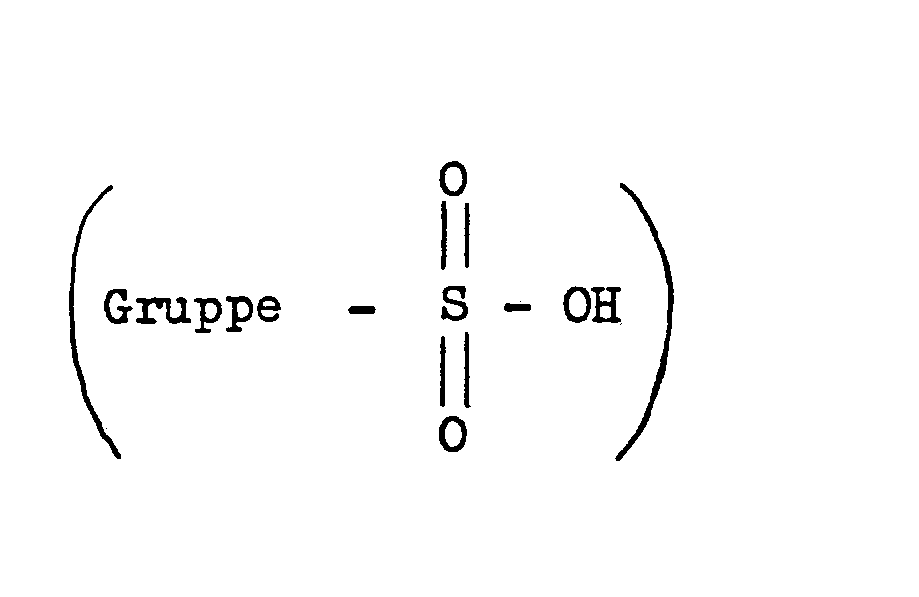
- Pentapeptide, welche carboxypeptidase-resistent sind und trotzdem eine endständige Säuregruppe aufweisen, vorliegen. Früher konnte die Enzymresistenz nur dadurch erreicht werden, daß der endständigen Aminosäure zum Beispiel durch Amidieren, Verestern oder Reduktion zum Carbinol ihr Säurecharakter entzogen wurde. Derartige Abwandlungen können aber wie es sich bei der Untersuchung der Pentapeptide vom Encephalintyp ergab, das ursprüngliche Wirkungsspektrum, den biologischen Charakter der Pentapeptide bedeutend verändern.
- Die Erfindung wird an Hand der folgenden Beispiele näher erläutert. Die in diesen angegebenen Rf-Werte wurden durch Schichtchromatographie an Silicagel (Kieselgel G Reanal, Budapest) mit den folgenden Lösungsmittelgemischen beziehungsweise dem folgenden Lösungsmittel bestimmt:


- Schritt 1: L-Phenylalanyl-D-α-aminepeutanphosphansäure 39,8 g (150 mMol) tert.-Butyloxycarbonyl-L-phenylalanin und 16,7 ml (150 mMol) N-Methylmorpholin werden in einem Gemisch aus 100 ml Dioxan und 100 ml Tetrahydrofuran gelöst. Die Lösung wird auf =10 °C gekühlt und unter Rühren mit 19,2 g (145 mMol) Chlorkohlensäure-isobutylester, 10 Minuten später mit der Lösung von 16,7 g (100 mMol) von DL-α-Amino-pentanphosphonsäure in 55 ml 4n Natronlauge versetzt. Das Reaktionsgemisch wird bei Temperaturen zwischen -5 und -10 °C 5 Stunden lang gerührt und dann unter vermindertem Druck auf etwa 70 ml eingeengt. Der Rückstand wird in einem Zweiphasensystem aus 500 ml 0,5n Schwefelsäure und 500 ml Athylacetat gelöst. Die wäßrige Phase wird mit 2x100 ml Athylacetat ausgeschüttelt, dann werden die organischen Phasen vereinigt und fünfmal mit je 100 ml 20 %igem wäßrigem Pyridin extrahiert. Aus der Athylacetatlösung wird nach Waschen mit 0,5n Schwefelsäure, Trocknen über wasserfreiem Natriumsulfat und Eindampfen nicht umgesetztes tert.-Butyloxycarbonyl--L-phenylalanin (16 g; 60 nMol) zurückgewonnen. Die wäßrigen Pyridinextrakte werden vereinigt und unter vermindertem Druck eingedampft. Der Rückstand wird in 200 ml Athylacetat und so viel 0,5 n Schwefelsäure gelöst, daß der pH-Wert der wäßrigen Phase 2 beträgt. Die wäßrige Phase wird mit 2x50 ml Athylacetat aufschüttelt, die Lösungen werden vereinigt, mit 50 ml Wasse, gewaschen und unter vermindertem Druck eingedampft. Von dem Rück- stand wird auch ein Gemisch von 10 ml Athanol und 40 ml Benzol abdestilliert, dann wird der Rückstand in 50 ml Trifluoressigsäure gelöst. Die Lösung wird 30 Minuten stehen gelassen und dann eingedampft. Der Rückstand wird mit Äther verrieben, abfiltriert und im Vakuumexsikkator über Kaliumhydroxyd getrocknet. Das Produkt wird bei 40-50 °C in 70 ml Essigsäure gelöst, die Lösung mit 125 ml 40-50 C warmem Wasser verdünnt und bei Raun- .temperatur über Nacht stehen gelassen. Die ausgeschiedenen Kristalle werden abfiltriert und mit 3x10 ml 30 %iger wäßriger Essigsäure gewoschen. Die essigsaure Mutterlauge und die Waschflüssigkeit werden aufbewahrt (für Beispiel 1, Schritt 2).
- Das kristalline Produkt wird im Vakuumexsikkator über Kaliumhydroxyd getrocknet. 11,0 g (35 n:Mol, 70 %) L-Phenylalanyl-D-α-aminopentanphosphonsäure werden erhalten, die bei 262 °C schmilzt. [α]


- Schritt 2: L-Phenylalanyl-L-α-aminopentanphoaphonsäure Die im Schritt 1 erhaltene essigsaure Mutterlauge wird mit der essigsauren Weischflüsigkeil vereinigt und unter vermindertem Druck eingedampft. Von dem kristallin--öligen Rückstand werden zweimal je 50 ml Dioxan abdestilliert. Der Rückstand wird in 50 ml Dioxan suspendiert, abfiltriert, zuerst mit Dioxan, dann mit Äther gewaschen und im Vakuumexsikkator über Kaliumhydroxyd getrocknet. 10,9 g (34,8 mMol, 69,6 %) Produkt werden erhalten, das bei 251-253 °C schmilzt.


- Schritt 3: L-Tyrosyl-glycyl-glycyl-L-phenylalanyl-L-α-aminopentanphosphonsäure
0,95 g (2,4 mMol) des geschützten Tripeptides tert.-Butyloxycarbonyl-L-tyrosyl-glycyl-glycin und 0,27 mMol (2,4 mMol) N-Methylnorpholin worden in 5 ml Dimethylformamid golöst. Zu dcr Lösung werden bei -10 °C unter Rühren zuerst 0,31 ml (2,4 mMol) Chlorkohlensäureisobutylester und nach 10 Mi-nuten die Lösung von 0,63 g (2 mMol) des freien Dipeptides (d.h. der gemäß Schritt 2 erhaltenen L-Phonylalanyl-L-α--aminopentanphosphonsäure) und 0,56 ml (4 mMol) Triäthylamin in einem Gemisch aus 4 ml Dimethylformamid und 0,5 ml Wasser zugegeben. - Das Reaktionsgemisch wird bei Temperaturen zwischen -5 und -10 °C 3-4 Stunden lang gerührt und dann unter vermindertem Druck eingedampft. Der Rückstand wird in 20 ml 5 %igem wäßrigen Pyridin gelöst und die Lösung mit 0,3 g (2,3 mMol) Calciumchlorid-hydrat in 5 ml Wasser versetzt. Der entstandene Niederschlag wird abfiltriert, mit 5x5 ml Wasser gewaschen und dann mit 10 ml n Schwefelsäure und 30 ml Athylacetat versetzt. Das System wird intensiv gerührt, das eusgeschiedene Calciumsulfat wird abgetrennt, und die Phasen werden voneinander getrannt. Die wäßrige Phase wird mit 2x10 ml Athylacetat gewaschen, die Waschflüssigkeit wird mit der abgetrennten organischen Phase vereinigt und unter vermindertem Druck eingedampft. Der Rückstand wird in 10 ml Trifluoressigsäure gelöst und die Lösung 30 Minuten lang stehengelassen. Dann wird die Lösung unter vermindertem Druck eingedampft, und von dem Rückstand werden 2x10 ml Essigsäure abdestilliert. Dann wird der Rückstand im Vakuumexsikkator über Kaliumhydroxyd getrocknet. Dann wird das Produkt mit 5 ml Wasser verrieben, abfiltriert, mit 3x3 ml Wasser gewaschen und im Vakuumexsikkator über Kaliumhydroxyd getrocknet. 0,85 g (72 %) Produkt werden erhalten. Schmp.: 203-205 °C;


- Die als Ausgangsstoff eingesetzte DL-α-Aminopentanphosphonsäure ist wie folgt beschrieben erhalten worden.
- 45 g (300 mMol) Benzylurethan werden unter Rühren in einem Gemisch aus 60 ml Eisessig und 26,4 ml (300 mMol) Phosphortrichlorid gelöst. Die Lösung wird mit Eiswasser gekühlt und bei einer Temperatur unter 10 °C mit 52 ml (450 mMol) n-Valeraldehyd versetzt. Das Reaktionsgemisch wird evakuiert (3-4x10⁴ Pa). Die Temperatur der gekühlten Lösung sinkt zuerst auf 2-3 °C ab und steigt dann unter Entwicklung von Salzsäure auf 30-40 °C an. Die Kühlung wird entfernt, und das Reaktionsgemisch wird zwei Stunden lang auf 65-75 °C gehalten. Dabei wird das Gemisch immer zäher und erstarrt schließlich. Nach 3-4 Stunden wird das Gemisch mit 18 ml Wasser versetzt und dann über Nacht bei Raumtemperatur und atmosphärischem Druck stehengelassen. Aus dem Zweiphasengemisch wird anschließend die Essigsäure unter vermindertem Druck abdestilliert. Der Rückstand wird in einem Gemisch aus 500 ml Athylacetat und 300 ml Wasser gelöst. Die organische Phase wird mit 2x100 ml Wasser, dann mit 2x100 ml n Salzsäure und schließlich mit 3x150 ml n Natronlauge ausgeschüttelt. Die Waschlaugen werden vereinigt, mit 50 ml Äthylacetat gewaschen, mit 5n Schwefelsäure auf pH 1 angesäuert und dann mit 3x200 ml Athylacetat ausgeschüttelt. Die organischen Phasen werden vereinigt, über wasserfreiem Natriumsulfat getrocknet und unter vermindertem Druck eingedampft. Der Rückstand wird in 500 ml Diisopropyläther gelöst und die Lösung mit 60 ml Dicyclohexylamin versetzt. Die ausgeschiedenen Kristalle werden.abfiltriert, mit Diisopropyläther gewaschen und an der Luft getrocknet. Dann wird das Produkt in 150 ml kochendem Äthanol gelöst, die Lösung wird auf 40-50 °C gekühlt und mit 800 ml Diisopropyläther versetzt. Die ausgeschiedenen Kristalle werden abfiltriert, mit Diisopropyläther gewaschen und an der Luft getrocknet. Das erhaltene Salz (97 g, Schmp.: 147-149 °C) wird in 50 ml Athylacetat und 300 ml 5n Schwefelsäure gelöst, die organische Phase wird zweimal mit 300 ml 5n Schwefelsäure gewaschen, dann über wasserfreiem Natriumsulfat getrocknet und unter vermindertem Druck eingedampft. Der Rückstand wird aus Petroläther kristallisiert. 54,3 g (60%) Benzyloxycarbonyl-DL-α-amino--pentanphosphonsäure werden erhalten, das bei 98-100 °C schmilzt.

- 45,3 g (150 mMol) der wie vorstehend beschrieben hengestellten Benzyloxycarbonyl-DL-α-aminopentanphosphonsäure werden in 500 ml Wasser suspendiert. Zu der Suspension werden 42 ml (300 mMol) Triäthylamin gegeben, und das Gemisch wird in Gegenwart von Palladiumaktivkohle als Katalysator hydriert. Nach Ablauf der Reaktion wird der Katalysator abfiltriert, mit Wasser gewaschen, das Waschwasser mit dem Filtrat vereinigt und dieses unter vermindertem Druck eingedampft. Der Rückstand wird in 150 ml siedender wäßriger n Essigsäure gelöst, mit Aktivkohle geklärt und nach Zusatz von 900 ml Athanol bei O °C stehengelassen. Die ausgeschiedenen Kristalle werden abfiltriert, mit Äthanol gewaschen und im Vakuumexsikkator getrocknet. 23,1 g (92 %) DL-α-Aminopentanphosphonsäure werden erhalten. Schmp.: 275-278°C;

- Das als Ausgangsstoff verwendete geschützte Tripeptid tert.-Butyloxycarbonyl-L-tyrosyl-glycyl-glycin ist wie folgt beschrieben erhalten worden.
- 14,2 g (42 mMol) Glycin-benzylester-p-toluolsulfonat werden in 100 ml Dimethylformamid gelöst, zu der Lösung werden 4,6 ml (42 mMol) N-Methylmorpholin und 14,2 g (40 mMol) tert.-Butyloxycarbonylglycin-2,4,5--trichlorphenylester gegeben, und das Reaktionsgemisch wird über Nacht bei Raumtemperatur gerührt. Dann wird das Gemisch eingedampft, der Rückstand wird in einem Zwei- phasengemisch aus 150 ml Athylacetat und 50 ml Wasser ; gelöst. Die organische Phase wird mit 2x30 ml eiswassergekühlter n Salzsäure, danach mit Wasser gewaschen, über.Natriumsulfat getrocknet und schließlich eingedampft. Der Rückstand wird mit einem im Volumverhaltnis 1 : 1 bereiteten Gemisch aus Diisopropyläther und Petroläther verrieben, abfiltriert, mit dem gleichen Lösungsmittelgemisch gewaschen und im Exsikkator getrocknet. 11,0 g (82,2 %) tert.-Butyloxycarbonyl-glycyl-glycin-benzylester werden erhalten. Schmp.: 83 C;

- 10,15g (31,5 mMol) des wie vorstehend beschrieben erhaltenen geschützten Dipeptidesters tert.-Butyloxycarbonyl-glycyl-glycin-benzylester werden in 100 ml 11-15 % Chlorwasserstoff enthaltendem Äthylacetat gelöst. Die Lösmg wird eine halbe Stunde stehengelassen und dann unter vermindertem Druck eingedampft. Der Rückstand wird im Vakuumexsikkator Ober Kaliumhydroxyd getrocknet. Das erhaltene Produkt (7,8 g;


- Schmp.: 92-94 °C; Rf: 0,2-0,3.
- 101,8 g (340 mMol) Benzyloxycarbonyl-L-phenylalanin werden in 950 ml Dimethylformamid gelöst. Die Lösung wird auf -10 °C gekühlt und bei dieser Temperatur unter Rühren mit 37,8 ml (340 mMol) N-Methylmorpholin und 41,5 ml (340 mMol) Pivaloylchlorid versetzt. Das Gemisch wird 10 Minuten lang gerührt und dann auf -30 °C gekühlt. Bei dieser Temperatur werden 51,7 g (309 mMol) DL-α-Aminopentansulfonsäure und 43,3 ml (309 mMol) Triäthylamin zugegeben. Das Gemisch wird bei -10 °C 10 Minuten lang, bei 0 °C eine Stunde und dann bei Raumtemperatur über Nacht weiter gerührt. Dann wird das Reaktionsgemisch unter vermindertem Druck eingedampft und der Rückstand in 1500 ml Wasser gelöst. Die Lösung wird mit 3x300 ml Diäthyläther gewaschen, unter Kühlung mit Eiswasser mit konzentrierter wäßriger Salzsäure auf pH 2 angesäuert und mit 3x300 ml wassergesättigtem n-Butanol ausgeschüttelt. Die vereinigten butanoliachen Lösungen werden mit 50 ml Wasser, das mit n-Butanol gesättigt ist, gewaschen, dann mit Aktivkohle geklärt und unter vermindertem Druck eingedampft. 82,6 g (85 %) Produkt werden erhalten.

- Die gesamte Menge des gemäß Schritt 1 erhaltenen geschützten Dipeptides (82,6 g, 262,7 mMol) wird in 3000 ml Methanol gelöst und in Gegenwart von Palladiumaktivkohle hydriert. Am Ende der Reaktion (die in der Lösung nachweisbare Substanz hat einen

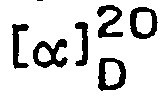
- Die im Schritt 2 erhaltene methanolische Lösung wird unter vermindertem Druck eingedampft. Der kristalline Rückstand wird in 100 ml Aceton suspendiert, abfiltriert mit Aceton gewaschen und im Vakuumexsikkator getrocknet. Das erhaltene Produkt (34,6 g) wird in 700 ml 80 %igem wäßrigem Äthanol suspendiert, die Suspension wird bis zum Siedepunkt erhitzt, dann vom Unlöslichen abfiltriert und das Filtrat über Nacht im Eisschrank stehengelassen.
- Die Kristalle werden abfiltriert, mit kaltem 80 %igem wäßrigem Äthanol gewaschen und im Vakuumexsikkator getrocknet. Das Umkristallisieren wird noch zweimal (mit 600 bzw. 500 ml des gleichen Lösungsmittels) wiederholt. 20,7 g (50 %) L-Phenylalanyl-L-α-aminopentansulfonsäure werden erhalten, die bei 220 °C schmilzt.


- 0,95 g (3 mMol) des gemäß Schritt 3 erhalten3n Dipeptides werden in 10 ml Dimethylformamid suspendiert. -Zu der Suspension werden 0,35 ml (3 mMol) N-Methylmorpholin und 2,0 g (3,15 mMol) tert.-Butyloxycarbonyl-L--tyrosyl-glycyl-glycin-pentachlorphenylester zugegeben. Das Reaktionsgemisch wird 16-20 Stunden lang gerührt, wobei innerhalb der ersten zwei Stunden in fünf Portionen 0,35 ml (3,15 mMol) N-Methylmorpholin zugesetzt werden. Das Reaktionsgemisch wird unter vermindertem Druck eingedampft und der Rückstand in einem Zweiphasensystem aus 20 ml Athylacetat und 60 ml Wasser gelöst. Die wäB- rige Phase wird mit 2x20 ml Athylacetat gewaschen,
mit Aktivkohle geklärt und unter vermindertem Druck eingedampft. Der Eindampfrückstand wird in 20 ml Athanol gelöst und die Lösung erneut eingedampft. Der Rückstand wird unter Kühlung mit Diäthyläther verrieben, abfiltriert, mit Diäthyläther gewaschen und im Vakuumexsikkator getrocknet. 1,82 g (76,5 %) Produkt werden erhalten, das bei 130 °C schmilzt. -


- Schritt 5: L-Tyrosyl-glycyl-glycyl-L-phenylalanyl--L-α-aminopentansulfonsäure
- 1,4 g (1,75 mMol) des gemäß Schritt 4 erhaltenen Salzes des geschützten Pentapeptides werden in 10 ml Tri- .fluoressigsäure gelöst, und die Lösung wird bei Raumtemperatur eine halbe Stunde lang stehengelassen. Dann wird die lösung unter vermindertem Druck eingedampft. Der Rückstand wird mit Diäthyläther verrieben, abfiltriert, mit Diäthyläther, dann mit Athylacetat, danach erneut mit Diäthyläther gewaschen und im Vakuumexsikkator getrocknet. 1,05 g (99 %) Produkt werden erhalten. Schmp.: 192-194 °C. Rf: 0,20-0,35;


- Die als Ausgangsstoff eingesetzte DL- -Aminopentansulfonsäure ist wie folgt beschrieben erhalten worden.
- 52 g (500 mMol) Natriumbisulfit werden in 250 ml warmem Wasser gelöst, die Lösung wird mit 53,6 ml (510 mMol) n-Valeraldehyd versetzt und das entstehende orangefarbene Reaktionsgemisch auf dem Dampfbad so lange gerührt, bis es sich entfärbt. Dann wird die Lösung auf Raumtemperatur abgekühlt, mit 400 ml konzentriertem wäßrigem Ammoniak versetzt und eine Stunde lang bei Raumtemperatur, danach über Nacht im Eisschrank stehen gelassen. Dann wird das Reaktionsgemisch mit 100 ml Diäthyläther ausgeschüttelt, mit Aktivkohle geklärt und unter Kühlen mit konzentrierter wäßriger Salzsäure auf pH 3 angesäuert. Die ausgeschiedene kristalline Substanz wird abfiltriert, zuerst mit Wasser, dann mit Diäthyläther gewaschen und im Vakuumexsikkator getrocknet. 47,6 g (56,8 %) DL-α-Aminopentansulfonsäure werden erhalten. Schmp.: 142 °C;

- Der als Ausgangsstoff eingesetzte tert.-Butyloxycarbonyl-L-tyrosyl-glycyl-glycin-pentachlorphenylester ist wie folgt beschrieben erhalten worden.
- 6,0g (15 mMol) des wie im Beispiel 1 bei der Herstellung von dessen entsprechendem Ausgangsstoff beschrieben hergestellten geschützten Tripeptides tert.-Butyloxycarbonyl-L-tyrosyl-glycyl-glycin und 4,3 g (16 mMol) Pentachlorphenol werden in 50 ml Dimethylformamid gelöst. Die Lösung wird mit Eiswasser auf etwa 5 °C gekühlt, mit 3,4 g (16,5 mMol) Dicyclohexylcarbodiimid versetzt und eine Stunde lang unter Kühlung, dann über Nacht bei Raumtemperatur gerübrt. Der ausgeschiedene Dicyclohexylharnstoff wird abfiltriert, mit Dimethylformamid gewäschen, die Waschflüssigkeit mit dem Filtrat vereinigt und dieses eingedampft. Der Eindampfrückstand wird in 100 ml Athanol suspendiert, die Suspension eine halbe Stunde lang auf dem Dampfbad erwärmt, nach Kühlen mit Eiswasser filtriert, das Produkt mit gekühltem Athanol gewaschen und im Vakuumexsikkator getrocknet. 6,7 g (69 %) Produkt werden erhalten. Schmp.: 186 °C;

- Ausgehend von 0,98 g (2,4 mMol) tert.-Butyloxycarbonyl-L-tyrosyl-D-alanyl-glycin (Pless u.a.: Helv. Chim. Acta 62, 398 /1979/) und 0,63 g (2 mMol) L-Phenylalanyl--L-α-acinopentanphosphonsäure (Beispiel 1, Schritt 2 wird auf die im Schritt 3 des Beispiels 1 beschriebene Weise das obige Produkt in 0,85 g (70 %) Ausbeute erhalten. Schpp.: 255-257 °C;


- 0,95 g (3 mMol) des gemäß Beispiel 2, Schritt 3, erhaltenen Dipeptides und 2,1 g (3,15 mMol) tert.-Butyloxycarbonyl-L-tyrosyl-D-alanyl-glycin-pentachlorphenylester werden auf die im Schritt 4 des Beispieles 2 beschriebene Weise kondensiert. Als tertiäre Base werden 0,4 beziehungsweise 0,45 ml Triäthylamin verwendet. 1,99 g (82,2 %) des genannten Produktes werden erhalten. Schmp.: 125 °C;


- 1,4 g (1,75 mMol) des gemäß Schritt 1 erhaltenen Salzes des geschützten Pentapeptides werden auf die im Schritt 5 des Beispiels 2 beschriebene Weise umgesetzt mit dem Unterschied, daß der Niederschlag auch mit 10 ml Wasser gewaschen wird. 0,75 g (70,4 %) Produkt werden erhalten. Schmp.: 235-240 °C; Rf: 0,35-0,45; Rf: 0,1-0,2;

- Derals Ausgangsstoff verwendete tert.-Butyloxycarbonyl-L-tyrosyl-D-alanyl-glycin-pentachlorphenylester ist wie folgt beschrieben erhalten worden.
- 6,15 g (15 mMol) tert.-Butyloycarbonyl-L-tyrosyl--D-alanyl-glycin (Pless u.a.: Helv. Chim. Acta 62, 398 /1979/) werden auf die bei der Beschreibung der Herstellung des entsprechenden Ausgangsstoffes des Beispiels 2 angegebene Weise zum aktiven Ester umgesetzt. 7,6 g (76,6 %) tert.-Butyloxycarbonyl-L-tyrosyl-D-alanyl-glycin-pentachlorphenylester werden erhalten. Schmp.: 222 °C;

- Ausgeheodvon 1,13 g (2,4 mMol) tort.-Butyloxycarbonyl-L-tyrosyl-D-methionyl-glycin und 0,63 g (2 mMol) L-Phenylalanyl-L-α-aminopentanphosphonsäure (Beispiel 1, Schritt 2) werden auf die im Schritt 3 des Beispiels 1 beschriebene Weise 0,9 g (70 %) Produkt erhalten. Schmp.: 193-195 °C;


- Das als Ausgangsstoff verwendete tert.-Butyloxycarbonyl-L-tyrosyl-D-methionyl-glycin ist wie folgt beschrieben erhalten worden.
- 12,9 g (30 mMol) tert.-Butyloxycarbonyl-D-methionin-dicyclohexylaminsalz und 0,35 ml (3 mMol) N-Methylmorpholin werden in 120 ml Dimethylformamid gelöst. Die Lösung wird auf -10 °C gekühlt und bei dieser Temperatur unter Rühren mit 3,95 ml (30 mMol) Chlorkohlensäureisobutylester versetzt. Nach 10 Minuten wird das Reaktionsgemisch auf -20 °C gekühlt, und die auf -20 °C gekühlte Lösung von 11,15 g (33 mMol) Glycinbenzylesterp-toluolsulfonat und 3,7 ml (33 mMol) N-Methylmorpholin in 50 ml Dimethylformamid wird zugegeben. Das Reaktionsgemisch wird bei -10 °C 10 Minuten, bei O °C eine Stunde lang und über Nacht bei Raumtemperatur gerührt. Dann wird das Gemisch unter vermindertem Druck eingeengt, in einem Zweiphasensystem aus 200 ml Athylacetat und 100 ml O,Oln Schwefelsäure gelöst und die organische Phase mit 2x30 ml O,Oln Schwefelsäure und mit 2x30 ml Wasser gewaschen. Die Lösung wird über Natriumsulfat getrocknet, mit Aktivkohle geklärt und unter vermindertem Druck eingedampft. Der Eindampfrückstand wird mit Petroläther verrieben, abfiltriert, mit Petroläther gewaschen und im Vakuumexsikkator getrocknet. 11,3 g (94,8 %) tert.-Butyloxycarbonyl-D-methionyl-glycyl-benzylester werden erhalten. Schmp.: 67-68 °C;


- 9,9 g (25 mMol) des wie vorstehend beschrie ben erhaltenen geschützten Dipeptidesters werden in 50 ml 11-15 % Chlorwasserstoff enthaltendem Athylacetat gelöst. Nach 30 Minuten wird die Lösung unter vermindertem Druck eingedampft. Der Rückstand wird im Vakuumexsikkator über Kaliumhydroxyd getrocknet. Das erhaltene Produkt (


- 2,26 g (3,15 mMol) tert.-Butyloxycarbonyl-L--tyrosyl-D-methionyl-glycin-pentachlorphenylester und 0,95 g (3 mMol) Dipeptid (Beispiel 2, Schritt 3) werden auf die im Schritt 4 des Beispiels 2 beschriebene Weise kondensiert. 1,73 g (66,5 %) Produkt werden erhalten. Schmp.: 124-127 °C;

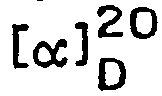
- Schritt 2 : L-Tyrosyl-D-methionyl-glycyl-L-phenylalanyl-L-α-aminopentansulfonsäure
- . 1,5 g (1,75 mMol).des gemäß Schritt 1 erhaltenen Salzes werden auf die im Schritt 5 des Beispiels 2 beschriebene Weise weiter umgesetzt mit dem Unterschied, daß das Produkt auch noch mit 2x10 ml kochendem Wasser gewaschen wird. 0,78 g (66 %) Produkt werden erhalten.
- Schmp.: 200-201 °C,


- Der als Ausgangsstoff verwendete tert.-Butyloxycarbonyl-L-tyrosyl-D-methionyl-glycin-pentachlorphenylester ist wie folgt beschrieben erhalten worden.
- Aus 7,05 g (15 mMo1) tert.-Butyloycarbonyl-L-tyrosyl-D-methionyl-glycin (Beispiel 5, Beschreibung der Herstellung des Ausgangsstoffes) wird auf die bei der Beschreibung der Herstellung des entsprechenden Ausgangsstoffes des Beispiels 2 angegebene Weise der aktive Ester hergestellt. Das Produkt wird durch Anreiben mit Diisopropyläther gereinigt. 8,66 g (80,4 %) tert.-Butyloxyoarbo- nyl-L-tyrosyl-D-methionyl-glycin-pentachlorphenylester werden erhalten. Schmp.: 175-176 °C;


- Aus 1,08 g (2,4 mMol) tert.-Butyloxycarbonyl-L--tyrosyl-D-norleucyl-glycin und 0,63 g (2 mMol) L-Phenylalanyl-L-α-aminopentanphosphonsäure (Beispiel 1, Schritt 2) wird auf die im Schritt 3 des Beispiels 1 beschriebene Weise das obige Produkt in einer Ausbeute von 0,85 g (65 %) erhalten. Schmp.: 196-198 °C;


- Das als Ausgangsstoff verwendete tert.-Butyloxycarbonyl-L-tyrosyl-D-norleucyl-glycin ist wie folgt beschrieben erhalten worden.
- 11,57 g (50 mMol) tert.-Butyloxycarbonyl-D-norleucin und 5,6 ml (50 mMol) N-Methylmorpholin werden in 50 ml Dimethylformamid gelöst. Die Lösung wird auf -10 °C gekühlt und unter Rühren mit 6,6 ml (50 mMol) Chlorkohlensäureisobutylester versetzt. Nach 10 Minuten wird das Reaktionsgemisch auf -20 °C gekühlt und die auf -20 °C gekühlte Lösung von 18,6 g (55 mMol) Glycinbenzylester--p-toluol-sulfonat und 6,1 ml (55 mMol) N-Methylmorpholin in 80 ml Dimethylformamid zugesetzt. Das Reaktionsgemisch wird bei -10 °C 10 Minuten lang, dann eine Stunde lang bei 0 °C und schließlich über Nacht bei Raumtemperatur gerührt. Dann wird das Reaktionsgemisch filtriert und das Filtrat unter vermindertem Druck eingedampft. Der Rückstand wird in einem Zweiphasensystem aus 300 ml Athylacetat und 100 ml Wasser gelöst. Die organische Phase wird nacheinander nit 2x60 ml 5 %iger Natriumhydrogencarbonatlösung, 2x60 ml Wasser, 2x60 ml eiswassergekühlter n Salzsüure und 2x60 ml Wasser gewaschen, über Natriumsulfat getrocknet, mit Aktivkohle geklärt und unter ver- mindertem Druck eingedampft. Der kristalline Rückstand wird mit Diisopropyläther verrieben, abfiltriert, mit Diisopropyläther gewaschen und dann getrocknet. 14,65 g (76,9%) tert.-Butyloxycarbonyl-D-norleucyl-glycin-benzylester werden erhalten. Schmp.: 85-86 °C;


- Aus 14,2 g (37,5 mMol) des wie vorstehend beschrieben erhaltenen geschützten Dipeptidesters und 21,85 g (41,25 mMol) tert.-Butyloxycarbonyl-L-tyrosin-pentachlor- phenylester wird unter Verwendung von 4,2 und 4,6 ml N-Methylmorpholin auf die bei der Beschreibung der Herstellung des Ausgangsstoffes des Beispiels 5 beschriebene Weise tert.-Butyloxycarbonyl-L-tyrosol-D-norleucyl-glycin-benzylester hergestellt. 15,44 g (76 %) Produkt werden erhalten. Schmp.: 122 °C;


- 14,9 g (27,5 mMol) de s wie vorstehend beschrieben erhaltenen Tripeptidesters werden in 300 ml Methanol gelöst, die Lösung wird mit 55 ml n Natronlauge versetzt und drei Stunden lang stehen gelassen. Dann wird aus der Lösung unter vermindertem Druck das Methanol abdestilliert, die wäßrige Lösung wird mit 3x15 ml Athylacetat ausgeschüttelt, ihr pH-Wert wird mit fester Citronensäure auf 3 eingestellt. Die ausgeschiedene Substanz wird abfiltriert, mit Wasser gewaschen und im Vakuumexsikkator getrocknet. 8,1 g (65 %) Produkt werden erhalten. Schmp.: 174-175 °C, Rf: 0,35-0,45;
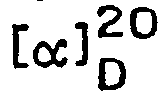
- Aus 2,2 g (3,15 mMol) des aktiven Esters tert.-Butyloxycarbonyl-L-tyrosyl-D-norleucyl-glycin-pentachlorphenylester und 0,95 g (3 mMol) des gemäß Schritt 3 des Beispiels 2 hergestellten Dipeptides werden auf die im Schritt 4 des Beispiels 2 beschriebene Weise 1,63 g (64 %) des obigen Produktes erhalten.
- Schmp.: 134-135 °C; Rf: 0,6-0,7;

- 1,5 g (1,75 mMol) des gemäß dem vorhergehenden Schritt hergestellten Pentapeptidsalzes werden auf die im Schritt 5 des Beispiels 2 beschriebene Weise umgesetzt mit dem Unterschied, daß der Niederschlag auch mit 10 ml Wasser gewaschen wird. 0,91 g (80 %) Produkt werden erhalten. Schmp.: 198-200 °C;
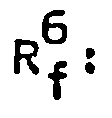

- Aus 6,8 g (15 mMol) tert.-Butyloxycarbonyl-L-tyrosyl--D-norleucyl-glycin (Beispiel 7, Beschreibung der Herstellung von dessen Ausgangsstoff) wird auf die bei der Beschreibung der Herstellung des entsprechenden Ausgangsstoffes des Beispiels 2 angegebene Weise der aktive Ester hergestellt. Das Endprodukt wird durch Anreiben mit Äther gereinigt. 10,3 g (98 %) Produkt werden erhalten.
- Schmp.: 175-177 °C,

- 33 g (110 mMol) Benzyloxycarbonyl-L-phenylslanin und 12,2 ml (110 mMol) N-Methylmorpholin werden in 200 ml Dimethylformamid gelöst. Die Lösung wird auf -10 °C gekühlt und bei dieser Temperatur zuerst mit 24,5 ml (110 mMol) Chlorkohlensäureisobutylester, 10 Minuten später mit der Lösung von 16,7 g (100 mMol) DL-α-Amino-γ-methylbutansulfonsäure und 14 ml (100 mMol) Triäthylamin in 200 ml Dimethylformamid versetzt. Das Reaktionsgemisch wird eine Stunde lang bei -10°C, danach vier Stunden lang bei 0 °C gerührt und dann unter vermindertem Druck eingedampft. Der Rückstand wird in 500 ml Wasser gelöst und die Lösung mit 3x100 ml Diäthyläther ausgeschüttelt. Die wäßrige Phase wird mit konzentrierter Salzsäure auf pH 2 angesäuert und mit 3×100 ml n-Butanol, das mit Wasser gesättigt ist, ausgeschüttelt. Die n-Butanolphasen werden vereinigt und mit 2x50 ml butanolgesättigtem Wasser gewaschen. Die Lösung wird unter vermindertem Druck eingedampft. 27 g (85 %) Produkt werden erhalten. Rf: 0,20-0,30.
- Das gemäß Schritt 1 erhaltene geschützte Dipeptid (27 g, 85,87 mMol) wird in einem Gemisch aus 600 ml Methanol und 60 ml 25 %igem wäßrigem Ammoniak gelöst und in Gegenwart von Palladiumaktivkohle hydriert. Nach Ablauf der Reaktion wird der Katalysator abfiltriert und mit 50 %igem wäßrigem Methanol gewaschen. Das mit der Waschflüssigkeit vereinigte Filtrat wird unter vermindertem Druck eingedampft. Der Rückstand wird im Vakuumexsikkator über konzentrierter Schwefelsäure getrocknet und dann mit 50 ml Wasser einer Temperatur von 60-80 °C verrührt. Die kristallhaltige Suspension wird über Nacht bei etwa 5 °C stehen gelassen, dann filtriert und das Produkt mit 5 ml.kaltem Wasser gewaschen. Filtrat und Waschflüssigkeit werden vereinigt und für den Schritt 3 bereitgestellt. Die kristalline Substanz wird im Vakuumexsikkator getrocknet. 10,8 g (34,35 mMol, 80 %) Produkt werden erhalten. Schmp.: 254-256 °C;

- Die im Schritt 2 bei der Kristallisation angefallene Mutterlauge wird unter vermindertem Druck zur Trockne eingedampft, der Rückstand wird mit Tetrahydrofuran verrührt, abfiltriert, mit Tetrahydrofuran gewaschen und dann getrocknet. 10,1 g (32,2 mMol) Produkt werden erhalten. Schmp.: 226-228 °C;

- 1,08 g (2,4 mMol) tert.-Butyloxycerbonyl-L-tyrosyl--D-norleucyl-glycin (Beispiel 7, Beschreibung der Herstellung von dessen Ausgangsstoff) und 0,64 g (2 mMol) L-Phenylalanyl-L-α-amino-γ-methylbutansulfonsäure (Beispiel 9, Schritt 3) werden auf die im Schritt 3 des Beispiels 1 beschriebene Weise kondensiert. Nach dem Eindampfen des Reaktionsgemisches wird der Rückstand in 30 ml Wasser gelöst und die Lösung.mit 3x10 ml Athylacetat ausgeschüttelt. Die vereinigten organischen Phasen werden mit 2x5 ml Wasser gewaschen. Die wäßrigen Phasen werden vereinigt, mit n Schwefelsäure auf pH 2 angesäuert und mit 3x10 ml eines im Volumverhältnis 2:1 bereiteten Ge- misches aus Athylacetat und n-Butanol ausgeschüttelt.
- Die Athylacetat-n-Butanol-Lösungen werden vereinigt, mit 2x5 ml Wasser, das mit Butanol gesättigt ist; gewaschen und dann unter vermindertem Druck eingedampft. Der Rückstand wird in 10 ml Trifluoressigsäure aufgelöst. Die Lösung läßt man 30 Minuten lang stehen und dampft sie dann unter vermindertem Druck ein. Der Rückstand wird mit Ather verrieben, filtriert, mit Ather gewaschen und dann getrocknet. 0,9 g (80 %) Produkt werdon erhalten, das bei 199-200 °C schmilzt.


- Die als Ausgangsstoff verwendete DL-α-Amino--γ-methylbutansulfonsäure ist wie folgt beschrieben erhalten worden.
- 63,5 ml (510 mMol) Isovaleraldehyd werden auf die bei der Beschreibung der Herstellung des entsprechenden Ausgangsstoffes des Beispiels 2 angegebene Weise zu 40 g (47,7%) DL-α-Amino-γ-methylbutansulfonsäure umgesetzt. Schmp.: 142-144 °C.
- Aus 0,95 g (3 mMol) Dipeptid (Beispiel 2, Schritt 2) und 2,0 g (3,15 mMol) wie bei der Beschreibung der Herstellung des entsprechenden Ausgangsstoffes des Beispieles 2 angegeben erhaltenem tert.-Butyloxycarbonyl--L-tyrosyl-glycyl-glycin-pentachlorphenylester werden auf die im Schritt 4des Beispiels 2 beschriebene Weise 2,2 g (92,5 %) der obigen Verbindung erhalten. Schmp.: 133 °C;


- 1,4 g. (1,75 mMol) des gemäß Schritt 1 erhaltenen Salzes des geschützten Pentapeptides werden auf die im Schritt 5 des Beispiels 2 beschriebene Weise zu 1,0 g (98 %) der obigen Verbindung umgesetzt. Schmp.: 192-194 °C; Rf: 0,20-0,35; Rf: 0,35-0,45;
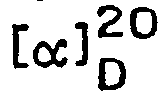
- Schritt 1: tert.-Butyloxycarbonyl-L-tyrosyl-D--alanyl-glycyl-L-phenylalanyl-D-α-aminopentansulfonsäuretriäthylaminsalz
- 0,95 g (3 mMol) Dipeptid (Beispiel 2, Schritt 2) und 2,1 g (3,15 mMol) tert.-Butyloxycarbonyl-L-tyrosyl-D-ala- nyl-glycin-pentachlorphenylester (Beispiel 4, Beschreibung der Herstellung von dessen Ausgangsstoff) werden auf die im Schritt 4 des Beispiels 2 beschriebene Weise kondensiert, wobei jedoch als tertiäre Base 0,4 und 0,45 ml Triäthylämin verwendet werden. 2,40 g (99 %) Produkt werden erhalten. Schmp.: 123-124 °C; Rf: 0,4-0,5; [α]20 D = -29,9° (c = 1, Dimethylformamid),
- 1,4 g (1,75 mMol) des gemäß Schritt 1 erhaltenen Pentapeptidsalzes werden auf die im Beispiel 2, Schritt 5, beschriebene Weise umgesetzt mit dem Unterschied, daß der Niederschlag auch noch mit 10 ml Wasser gewaschen wird. 0,78 g (73,3 %) Produkt werden erhalten. Schmp.: 262-264 °C;

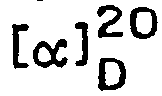
- 0,95 g (3 mMol) Dipeptid (Beispiel 2, Schritt 2) und 2,25 g (3,15 mMol) wie bei der Beschreibung der Herstellung des Ausgangsstoffes des Beispieles 6 angegeben erhaltenen tert.--Butyloxycarbonyl-L-tyrosyl-D-methionyl-glycin-pentachlorphenylester werden auf die im Schritt 1 des Beispiels 6 beschriebene Weise kondensiert. 1,96 g (74,6%) Produkt werden erhalten. Schmp.: 125-127 °C,


- 1,52 g (1,75 mMol) des gemäß Schritt 1 erhaltenen Salzes werden auf die im Schritt 2 des Beispiels 6 beschriebene Weise umgesetzt. 0,9 g (73,3 %) Produkt werden erhalten. Schmp.: 262-264 °C; Rf: 0,1-0,2; Rf: 0,35-0,45;

- 0,95 g (3 mMol) Dipeptid (Beispiel 2, Schritt 2) und 2,2 g (3,15 mMol) wie bei der Beschreibung der Herstellung des Ausgangsstoffes des Beispieles 8 angegeben erhaltener tert.-Butyloxycarbonyl-L-tyrosyl-D-norleu- cyl-glycin-pentachlorphenylester werden auf die im Schritt 4 des Beispiels 2 beschriebene Weise kondensiert. 1,9 g (75 %) Produkt werden erhalten. Schmp.: 132-133 °C; Rf: 0,7-0,8;

- 1,5 g (1,75 mMol) des gemäß Schritt 1 erhaltenen Salzes werden auf die im Schritt 2 des Beispiels 6 beschriebene Weise umgesetzt. 1,02 g (90 %) Produkt werden erhalten. Schmp.: 257 °C;


- 1,13 g (2,4 mMol) tert.-Butyloxycarbonyl-L-tyrosyl-D-methionyl-glycin (Beispiel 5, Beschreibung der Herstellung von dessen Ausgangsstoff) werden mit 0,63 g (2 mMol) L-Phenylalanyl-D-α-aminopentanphosphonsäure (Beispiel 1, Schritt 1 auf die im Schritt 3 des Beispiels 1 beschriebene Weise umgesetzt. 0,9 g (70 %) Produkt werden erhalten. Schmp.: 262-265 °C;


- 1,08 g (2,4 mMol) tert.-Butyloxycarbonyl-L-tyrosyl--D-norleucyl-glycin (Beispiel 7, Beschreibung der Herstellung von dessen Ausgangsstoff) und 0,64 g (2 mMol) L-Phenylalanyl-D-α-amino-γ-methylbutansulfonsäure (Beispiel 9, Schritt 2) werden auf die im Schritt 4 des Beispiels9 beschriebene Weise miteinander umgesetzt. 0,95 g (84 %) Produkt werden erhalten. Schmp.: 187-190 °C;

- 2,3 g (3,15 mMol) tert.-Butyloxycarbonyl-L-tyrosyl--D-phenylalanyl-glycin-pentachlorphenylester und 0,95 g (3 mMol) Dipeptid (Beispiel 2, Schritt 3) werden auf die im Schritt 4 des Beispiels 2 beschriebene Weise miteinander umgesetzt. 1,87 g (70,6 %) Produkt werden erhalten. Schmp.: 130-132 C;


- 1,55 g (1,75 mMol) des gemäß Schritt 1 erhaltenen geschützten Pentapeptides werden auf die im Schritt 5 des Beispiels 2 beschriebene Weise umgesetzt. 1,08 g (90,8 %) der obigen Verbindung werden erhalten. Schmp.: 198-204 °C; Rf: 0,6-0,7;


- Der als Ausgangsstoff eingesetzte tert.-Butyloxycarbonyl-L-tyrosyl-D-phenylalanyl-glycin-pentachlorphenylester ist wie folgt beschrieben erhalten worden.
- 13,3 g (50 mMol) tert.-Butyloxycarbanyl-D-phenylalanin und 5,6 ml (50 mMol) N-Methylmorpholin werden in 50 ml Dimethylformamid gelöst. Die Lösung wird auf -10 °C gekühlt und unter Rühren mit 6,6 ml (50 mMol) Chlorkohlensäureisobutylester versetzt. Nach 10 Minuten wird das Reaktionsgemisch auf -20 °C abgekühlt und die auf -20 °C gekühlte Lösung von 18,6 g (55 mMol) Glycin-benzylester-p-toluolsulfonat und 6,1 ml (55 mMol) N-Methylmorpholin in 80 ml Dimethylformamid zugegeben. Das Reaktionsgemisch wird bei -10 °C 10 Minuten lang, bei 0 °C eine Stunde lang und bei Raumtemperatur über Nacht gerührt.
- Dann wird das Gemisch filtriert und das Filtrat unter verpindertem Druck eingedampft. Der Rückstand wird in-einem Zweiphasengemisch aus 300 ml Athylacetat und 100 ml Wasser gelöst. Die organische Phase wird nacheinender mit 2x60 ml 5 %iger Natriumhydrogencarbonatlösung, 2x60 ml Wasser, 2x60 ml eiswassergekühlter n Salzsäure und 2x60 ml Wasser gewaschen, über Natriumsulfat getrocknet, mit Aktivkohle geklärt und schließlich unter vermindertem Druck eingedampft. Der kristalline Rückstand wird in einem im Volumverhaltnis 1:1 bereiteten Gemisch aus Ciäthyläther und n-Hexan suspendiert, abfiltriert, mit dem gleichen Lösungsmittelgemisch gewaschen und im Vakuumexsikkator getrocknet. 18,95 g (91,9 %) tert.-Butyloxycarbonyl-D-phenylalanyl--glycin-benzylester werden erhalten. Schmp.: 133-134 °C;


- 18,55 g (45 mMol) des wie vorstehend beschrieben erhaltenen Dipeptidesters werden in 60 ml 11-15 % Chlorwasserstoff enthaltendem Äthylacetat gelöst. Nach einer balben Stunde wird die Lösung eingedampft und der Rückstand im Vakuumexsikkator über Kaliumhydroxyd getrocknet. Das erhaltene Produkt (


- 23,0 g (40 mMol) des wie vorstehend beschrieben erhaltenen tert.-Butyloxycarbonyl-L-tyrosyl-D-phenylalanyl-glycin benzylesters werden in 400 ml Methanol gelöst und in Gegenwart von Palladiumaktivkohle hydriert. Nach Beendigung der Reaktion wird der Katalysator abfiltriert und mit Methanol gewaschen. Das mit der Waschflüssigkeit vereinigte Filtrat wird unter vermindertem Druck eingedampft. Der Rückstand wird mit Diäthyläther verrieben, abfiltriert, mit Diäthyläther gewaschen und im Vakuumexsikkator getrocknet. 17,45 g (89,8 %) tert.-Butyloxycarbonyl-L-tyrosyl-D-phenylalanyl--glycin werden erhalten. Schmp.: 105-110 °C,

- 7,3 g (15 mMol) des wie vorstehend beschrieben erhaltenen tert.-Butyloxycarbonyl-L-tyrosyl-D-phenylalanyl- glycines werden auf die im Beispiel 2 bei der Herstellung von dessen entsprechendem Ausgangsstoff angegebene Weise zum tert.-Butyloxycarbonyl-L-tyrosyl-D-phenylalanyl--glycin-pentachlorphenylester umgesetzt. 9,68 (87,9 %) tert.-Butyloxycarbonyl-L-tyrosyl-D-phenylalanyl-glycin-pentachlorphenylester werden erhalten. Schmp.: 209-210 °C;


- 0,95 g (3 mMol) Dipeptid (Beispiel 2, Schritt 2 und 2,3 g (3,15 mMol) tert.-Butyloxycarbonyl-L-tyrosyl--D-phenylalanyl-glycin-pentachlorphenylester (Beispiel 16, Beschreibung der Herstellung von dessen Ausgangsstoff) werden auf die im Schritt 4 des Beispiels 2 beschriebene Weise miteinander umgesetzt. 2,45 g (92,5 %) Produkt werden erhalten. Schmp.: 134-135 °C; Rf: 0,27-0,37

- 1,55 g (1,75 mMol) des gemäß Schritt 1 erhaltenen Pentapeptidsalzes werden auf die im Schritt 5 des Beispiels 2 beschriebene Weise umgesetzt. 1,09 g (91,2 %) Produkt werden erhalten. Schmp.: 250 °C; Rf: 0,7-0,8; Rf: 0,8-0,9;

- 130 mg (0,2 mMol) des gemäß Beispiel 7 erhaltenen Pentapeptidos werden in 4 ml O,ln Natronlauge gelöst. Zu der Lösung wird die Lösung von 60 mg (0,24 mMol) Kupfer(II)-sulfat-pentahydrat in 1 ml Wasser gegeben. Der ausgefallene Niederschlag wird abgetrennt, mit 3xl ml Wasser gewaschen und im Vakuumexsikkator getrocknet. 127 mg (90 %) Kupfersal= werden erhalten. Schmp.: >260 °C.
- Elementaranalyse für C31H44O8N5PCu (M = 709,2): berechnet = N = 9,87 % Cu = 8,96 % gefunden: N = 9,7 % Cu = 9,0 %
- 130 mg (0,2 mMol) des gemäß Beispiel 7 erhaltenen Pentapeptides werden in 4 ml O,ln Natronlauge gelöst. Zu der Lösung wird die Lösung von 53 mg (0,24 mMol) Zinkacetat-dihydrat in 1 ml Wasser gegeben. Der ausgefallene Niederschlag wird abfiltriert, mit 3xl ml Wasser gewaschen und im Vakuumexsikkator getrocknet. 128 mg (90 %) Zinksalz werden erhalten. Schmp.: >260 °C.
- Elementaranalyse für C31H44O8N5PZn (M = 711,1): berechnet: N = 9,85 % Zn = 9,19 % gefunden: N = 9;8 % Zn = 9,05 %.
- 130 mg (0,2 mMol) des gemäß Beispiel 8 erhaltenen Pentapeptides werden in 2 ml 0,1n Natronlauge gelöst. Zu der Lösung wird die Lösung von 44 mg (0,2 mMo1) Zinkacetat-dihydrat in 1 ml Wasser gegeben. Die Lösung wird auf 0°C gekühlt, der Niederschlag abfiltriert, mit 3x1 ml Eiswasser gewaschen und im Vakuumexsikkator getrocknet. Ausbeute: 116 mg (85 %): Schmp.: 215-219 °C;
- Elementaranalyse für C31H43O8N5Szn (N = 711,15):
- berechnet: N = 9,85 % Zn = 3,19 %
- gefunden: N = 10,0 % Zn = 9,1 %.
sowie ihre Salze.
Claims (13)

sowie ihre Salze.
Applications Claiming Priority (2)
| Application Number | Priority Date | Filing Date | Title |
|---|---|---|---|
| HURI000155 | 1980-01-25 | ||
| HU8080155A HU181013B (en) | 1980-01-25 | 1980-01-25 | Process for preparing new enkephalin analogues |
Publications (3)
| Publication Number | Publication Date |
|---|---|
| EP0033504A2 true EP0033504A2 (de) | 1981-08-12 |
| EP0033504A3 EP0033504A3 (en) | 1981-12-23 |
| EP0033504B1 EP0033504B1 (de) | 1984-10-24 |
Family
ID=10948217
Family Applications (1)
| Application Number | Title | Priority Date | Filing Date |
|---|---|---|---|
| EP81100545A Expired EP0033504B1 (de) | 1980-01-25 | 1981-01-26 | Pentapeptide vom Encephalintyp, Verfahren zur Herstellung derselben und diese enthaltende Arzneimittel |
Country Status (5)
| Country | Link |
|---|---|
| US (1) | US4339440A (de) |
| EP (1) | EP0033504B1 (de) |
| JP (1) | JPS56127340A (de) |
| DE (1) | DE3166751D1 (de) |
| HU (1) | HU181013B (de) |
Families Citing this family (4)
| Publication number | Priority date | Publication date | Assignee | Title |
|---|---|---|---|---|
| EP1399467A4 (de) * | 2001-05-09 | 2004-09-15 | Newbiotics Inc | Durch peptiddeformylase aktivierte prodrugs |
| AU2003225047A1 (en) * | 2002-04-18 | 2003-11-03 | Celmed Oncology (Usa), Inc. | Peptide deformylase activated prodrugs |
| AU2003290779A1 (en) | 2002-11-14 | 2004-06-03 | Celmed Oncology (Usa), Inc. | Peptide deformylase activated prodrugs |
| WO2006005140A2 (en) * | 2004-07-15 | 2006-01-19 | The University Of Queensland | Proteinaceous compounds and uses therefor |
Family Cites Families (2)
| Publication number | Priority date | Publication date | Assignee | Title |
|---|---|---|---|---|
| HU178001B (en) * | 1976-09-16 | 1982-02-28 | Gyogyszekutato Intezet | Process for preparing new pentapeptides with morphine-like activity and derivatives thereof |
| US4178371A (en) * | 1977-12-15 | 1979-12-11 | Reckitt & Colman Products Limited | Tetrapeptide derivatives |
-
1980
- 1980-01-25 HU HU8080155A patent/HU181013B/hu not_active IP Right Cessation
-
1981
- 1981-01-23 JP JP892381A patent/JPS56127340A/ja active Granted
- 1981-01-23 US US06/227,766 patent/US4339440A/en not_active Expired - Fee Related
- 1981-01-26 DE DE8181100545T patent/DE3166751D1/de not_active Expired
- 1981-01-26 EP EP81100545A patent/EP0033504B1/de not_active Expired
Also Published As
| Publication number | Publication date |
|---|---|
| HU181013B (en) | 1983-05-30 |
| JPH0156080B2 (de) | 1989-11-28 |
| DE3166751D1 (en) | 1984-11-29 |
| JPS56127340A (en) | 1981-10-06 |
| EP0033504B1 (de) | 1984-10-24 |
| EP0033504A3 (en) | 1981-12-23 |
| US4339440A (en) | 1982-07-13 |
Similar Documents
| Publication | Publication Date | Title |
|---|---|---|
| DE3000225C2 (de) | ||
| DE2741393C2 (de) | ||
| DE2321174A1 (de) | Nonapeptidamidderivate und verfahren zu ihrer herstellung | |
| DE3689508T2 (de) | Peptide. | |
| CH624965A5 (de) | ||
| DE3024256C2 (de) | ||
| DE2715803A1 (de) | Peptidderivate | |
| EP0179332B1 (de) | Neue ZNS-aktive Peptide mit Wirkung auf das cholinerge System | |
| EP0025218B1 (de) | Pharmakologisch aktive Peptide und diese enthaltende Arzneimittel | |
| DE2731308A1 (de) | Psychopharmakologisch wirksame peptide und peptidderivate und verfahren zu deren herstellung | |
| DE2730549A1 (de) | Peptidderivate und deren herstellung | |
| DE3024313C2 (de) | ||
| EP0033504B1 (de) | Pentapeptide vom Encephalintyp, Verfahren zur Herstellung derselben und diese enthaltende Arzneimittel | |
| EP0228625B1 (de) | Peptid-Derivate mit inhibitorischer Wirkung auf hydroxylierende Enzyme, Verfahren zu ihrer Herstellung, diese enthaltende Mittel und ihre Verwendung | |
| EP0137339B1 (de) | Pharmakologisch aktive Peptide | |
| DE2739440A1 (de) | Pentapeptide und sie enthaltende arzneimittel | |
| DE3340208A1 (de) | Neue biologisch aktive peptide, verfahren zu deren herstellung und veterinaerpraeparate, welche diese enthalten | |
| DE3229632C2 (de) | ||
| EP0267179A2 (de) | Neue Cystinverbindungen, ihre Herstellung und Verwendung | |
| CH618960A5 (de) | ||
| DE3236484A1 (de) | Tripeptide, verfahren zur herstellung derselben und diese enthaltende arzneimittel | |
| EP0069894B1 (de) | Optisch aktives Dipeptide, seine pharmazeutisch verträglichen Salze, Verfahren zur Herstellung und diese enthaltende pharmazeutische Präparate | |
| DE2721761A1 (de) | Peptidderivate und verfahren zu deren herstellung | |
| DE3022098A1 (de) | Encephalinderivate, verfahren zur herstellung derselben und diese enthaltende arzneimittel | |
| DE1121059B (de) | Verfahren zur Herstellung eines neuen hypertensinwirksamen Dekapeptids |
Legal Events
| Date | Code | Title | Description |
|---|---|---|---|
| PUAI | Public reference made under article 153(3) epc to a published international application that has entered the european phase |
Free format text: ORIGINAL CODE: 0009012 |
|
| AK | Designated contracting states |
Designated state(s): BE CH DE FR GB IT NL |
|
| PUAL | Search report despatched |
Free format text: ORIGINAL CODE: 0009013 |
|
| AK | Designated contracting states |
Designated state(s): BE CH DE FR GB IT NL |
|
| 17P | Request for examination filed |
Effective date: 19820104 |
|
| ITF | It: translation for a ep patent filed | ||
| GRAA | (expected) grant |
Free format text: ORIGINAL CODE: 0009210 |
|
| AK | Designated contracting states |
Designated state(s): BE CH DE FR GB IT LI NL |
|
| REF | Corresponds to: |
Ref document number: 3166751 Country of ref document: DE Date of ref document: 19841129 |
|
| ET | Fr: translation filed | ||
| PLBE | No opposition filed within time limit |
Free format text: ORIGINAL CODE: 0009261 |
|
| STAA | Information on the status of an ep patent application or granted ep patent |
Free format text: STATUS: NO OPPOSITION FILED WITHIN TIME LIMIT |
|
| 26N | No opposition filed | ||
| PGFP | Annual fee paid to national office [announced via postgrant information from national office to epo] |
Ref country code: CH Payment date: 19890126 Year of fee payment: 9 |
|
| PGFP | Annual fee paid to national office [announced via postgrant information from national office to epo] |
Ref country code: BE Payment date: 19890130 Year of fee payment: 9 |
|
| PGFP | Annual fee paid to national office [announced via postgrant information from national office to epo] |
Ref country code: GB Payment date: 19890131 Year of fee payment: 9 Ref country code: NL Payment date: 19890131 Year of fee payment: 11 |
|
| PGFP | Annual fee paid to national office [announced via postgrant information from national office to epo] |
Ref country code: DE Payment date: 19890328 Year of fee payment: 9 |
|
| PGFP | Annual fee paid to national office [announced via postgrant information from national office to epo] |
Ref country code: FR Payment date: 19900124 Year of fee payment: 10 |
|
| PG25 | Lapsed in a contracting state [announced via postgrant information from national office to epo] |
Ref country code: GB Effective date: 19900126 |
|
| ITTA | It: last paid annual fee | ||
| PG25 | Lapsed in a contracting state [announced via postgrant information from national office to epo] |
Ref country code: CH Effective date: 19900131 Ref country code: LI Effective date: 19900131 Ref country code: BE Effective date: 19900131 |
|
| BERE | Be: lapsed |
Owner name: RICHTER GEDEON VEGYESZETI GYAR R.T. Effective date: 19900131 |
|
| PG25 | Lapsed in a contracting state [announced via postgrant information from national office to epo] |
Ref country code: NL Effective date: 19900801 |
|
| NLV4 | Nl: lapsed or anulled due to non-payment of the annual fee | ||
| GBPC | Gb: european patent ceased through non-payment of renewal fee | ||
| REG | Reference to a national code |
Ref country code: CH Ref legal event code: PL |
|
| PG25 | Lapsed in a contracting state [announced via postgrant information from national office to epo] |
Ref country code: DE Effective date: 19901002 |
|
| PG25 | Lapsed in a contracting state [announced via postgrant information from national office to epo] |
Ref country code: FR Effective date: 19910930 |
|
| REG | Reference to a national code |
Ref country code: FR Ref legal event code: ST |