EP0035702A2 - Schaumdämpfungsmittel, ihre Herstellung und Verwendung in wässrigen Systemen - Google Patents
Schaumdämpfungsmittel, ihre Herstellung und Verwendung in wässrigen Systemen Download PDFInfo
- Publication number
- EP0035702A2 EP0035702A2 EP81101396A EP81101396A EP0035702A2 EP 0035702 A2 EP0035702 A2 EP 0035702A2 EP 81101396 A EP81101396 A EP 81101396A EP 81101396 A EP81101396 A EP 81101396A EP 0035702 A2 EP0035702 A2 EP 0035702A2
- Authority
- EP
- European Patent Office
- Prior art keywords
- alkyl
- foam
- bis
- methylene
- acid amide
- Prior art date
- Legal status (The legal status is an assumption and is not a legal conclusion. Google has not performed a legal analysis and makes no representation as to the accuracy of the status listed.)
- Granted
Links
- 239000002518 antifoaming agent Substances 0.000 title claims abstract 4
- 238000002360 preparation method Methods 0.000 title claims description 3
- 239000002480 mineral oil Substances 0.000 claims abstract description 20
- 235000010446 mineral oil Nutrition 0.000 claims abstract description 18
- 239000002736 nonionic surfactant Substances 0.000 claims abstract description 9
- 125000000217 alkyl group Chemical group 0.000 claims abstract description 8
- 150000001408 amides Chemical class 0.000 claims abstract description 8
- 239000003093 cationic surfactant Substances 0.000 claims abstract description 7
- 229910052739 hydrogen Inorganic materials 0.000 claims abstract description 7
- 239000003945 anionic surfactant Substances 0.000 claims abstract description 4
- 125000002091 cationic group Chemical group 0.000 claims abstract description 3
- 239000006260 foam Substances 0.000 claims description 27
- 235000014113 dietary fatty acids Nutrition 0.000 claims description 17
- 229930195729 fatty acid Natural products 0.000 claims description 17
- 239000000194 fatty acid Substances 0.000 claims description 17
- IAYPIBMASNFSPL-UHFFFAOYSA-N Ethylene oxide Chemical compound C1CO1 IAYPIBMASNFSPL-UHFFFAOYSA-N 0.000 claims description 15
- 150000004665 fatty acids Chemical class 0.000 claims description 15
- FEEPBTVZSYQUDP-UHFFFAOYSA-N heptatriacontanediamide Chemical compound NC(=O)CCCCCCCCCCCCCCCCCCCCCCCCCCCCCCCCCCCC(N)=O FEEPBTVZSYQUDP-UHFFFAOYSA-N 0.000 claims description 13
- 239000007795 chemical reaction product Substances 0.000 claims description 12
- -1 alkenyl radical Chemical class 0.000 claims description 11
- 239000003795 chemical substances by application Substances 0.000 claims description 11
- 238000013016 damping Methods 0.000 claims description 10
- 125000004432 carbon atom Chemical group C* 0.000 claims description 9
- 238000003756 stirring Methods 0.000 claims description 9
- 150000002191 fatty alcohols Chemical class 0.000 claims description 8
- 150000001875 compounds Chemical class 0.000 claims description 7
- 238000009835 boiling Methods 0.000 claims description 5
- 230000015572 biosynthetic process Effects 0.000 claims description 4
- 238000000034 method Methods 0.000 claims description 4
- 239000004753 textile Substances 0.000 claims description 4
- 150000001450 anions Chemical class 0.000 claims description 3
- JEIFTRNXOBSGDZ-UHFFFAOYSA-N hentetracontanediamide Chemical compound NC(=O)CCCCCCCCCCCCCCCCCCCCCCCCCCCCCCCCCCCCCCCC(N)=O JEIFTRNXOBSGDZ-UHFFFAOYSA-N 0.000 claims description 3
- 125000002496 methyl group Chemical group [H]C([H])([H])* 0.000 claims description 3
- IWBFUSSNDIHSRO-UHFFFAOYSA-N pentatetracontanediamide Chemical compound NC(=O)CCCCCCCCCCCCCCCCCCCCCCCCCCCCCCCCCCCCCCCCCCCC(N)=O IWBFUSSNDIHSRO-UHFFFAOYSA-N 0.000 claims description 3
- GAWIXWVDTYZWAW-UHFFFAOYSA-N C[CH]O Chemical group C[CH]O GAWIXWVDTYZWAW-UHFFFAOYSA-N 0.000 claims description 2
- 150000002148 esters Chemical class 0.000 claims description 2
- 150000003254 radicals Chemical class 0.000 claims description 2
- 239000001257 hydrogen Substances 0.000 claims 2
- 125000004435 hydrogen atom Chemical class [H]* 0.000 claims 2
- CIUQDSCDWFSTQR-UHFFFAOYSA-N [C]1=CC=CC=C1 Chemical compound [C]1=CC=CC=C1 CIUQDSCDWFSTQR-UHFFFAOYSA-N 0.000 claims 1
- 125000002887 hydroxy group Chemical group [H]O* 0.000 claims 1
- 229910052799 carbon Inorganic materials 0.000 abstract description 6
- 125000001997 phenyl group Chemical group [H]C1=C([H])C([H])=C(*)C([H])=C1[H] 0.000 abstract description 4
- 238000005187 foaming Methods 0.000 abstract description 3
- 125000004178 (C1-C4) alkyl group Chemical group 0.000 abstract description 2
- 125000003342 alkenyl group Chemical group 0.000 abstract description 2
- 235000021190 leftovers Nutrition 0.000 abstract 1
- 239000000203 mixture Substances 0.000 description 10
- XLYOFNOQVPJJNP-UHFFFAOYSA-N water Substances O XLYOFNOQVPJJNP-UHFFFAOYSA-N 0.000 description 8
- 239000000839 emulsion Substances 0.000 description 6
- 239000000047 product Substances 0.000 description 6
- LQZZUXJYWNFBMV-UHFFFAOYSA-N dodecan-1-ol Chemical compound CCCCCCCCCCCCO LQZZUXJYWNFBMV-UHFFFAOYSA-N 0.000 description 5
- 239000007788 liquid Substances 0.000 description 5
- YQCDGNHQWOWLFN-UHFFFAOYSA-N 19-phenylheptatriacontanediamide Chemical compound NC(=O)CCCCCCCCCCCCCCCCCC(CCCCCCCCCCCCCCCCCC(N)=O)C1=CC=CC=C1 YQCDGNHQWOWLFN-UHFFFAOYSA-N 0.000 description 4
- RTZKZFJDLAIYFH-UHFFFAOYSA-N Diethyl ether Chemical compound CCOCC RTZKZFJDLAIYFH-UHFFFAOYSA-N 0.000 description 4
- 239000003921 oil Substances 0.000 description 4
- 229920001296 polysiloxane Polymers 0.000 description 4
- 150000003839 salts Chemical class 0.000 description 4
- QOLLYDAQOZBRAL-UHFFFAOYSA-M 2-hydroxyethyl-dimethyl-octadecylazanium;chloride Chemical compound [Cl-].CCCCCCCCCCCCCCCCCC[N+](C)(C)CCO QOLLYDAQOZBRAL-UHFFFAOYSA-M 0.000 description 3
- QTBSBXVTEAMEQO-UHFFFAOYSA-N Acetic acid Chemical compound CC(O)=O QTBSBXVTEAMEQO-UHFFFAOYSA-N 0.000 description 3
- DNIAPMSPPWPWGF-UHFFFAOYSA-N Propylene glycol Chemical compound CC(O)CO DNIAPMSPPWPWGF-UHFFFAOYSA-N 0.000 description 3
- 150000001412 amines Chemical class 0.000 description 3
- 230000000694 effects Effects 0.000 description 3
- 229930195733 hydrocarbon Natural products 0.000 description 3
- 150000002430 hydrocarbons Chemical class 0.000 description 3
- NLXLAEXVIDQMFP-UHFFFAOYSA-N Ammonia chloride Chemical compound [NH4+].[Cl-] NLXLAEXVIDQMFP-UHFFFAOYSA-N 0.000 description 2
- 239000004215 Carbon black (E152) Substances 0.000 description 2
- LFQSCWFLJHTTHZ-UHFFFAOYSA-N Ethanol Chemical compound CCO LFQSCWFLJHTTHZ-UHFFFAOYSA-N 0.000 description 2
- QAOWNCQODCNURD-UHFFFAOYSA-N Sulfuric acid Chemical compound OS(O)(=O)=O QAOWNCQODCNURD-UHFFFAOYSA-N 0.000 description 2
- 239000000654 additive Substances 0.000 description 2
- 150000001338 aliphatic hydrocarbons Chemical class 0.000 description 2
- 150000004945 aromatic hydrocarbons Chemical class 0.000 description 2
- HUMNYLRZRPPJDN-UHFFFAOYSA-N benzaldehyde Chemical compound O=CC1=CC=CC=C1 HUMNYLRZRPPJDN-UHFFFAOYSA-N 0.000 description 2
- WPYMKLBDIGXBTP-UHFFFAOYSA-N benzoic acid Chemical compound OC(=O)C1=CC=CC=C1 WPYMKLBDIGXBTP-UHFFFAOYSA-N 0.000 description 2
- 238000006243 chemical reaction Methods 0.000 description 2
- SNRUBQQJIBEYMU-UHFFFAOYSA-N dodecane Chemical compound CCCCCCCCCCCC SNRUBQQJIBEYMU-UHFFFAOYSA-N 0.000 description 2
- POULHZVOKOAJMA-UHFFFAOYSA-N dodecanoic acid Chemical compound CCCCCCCCCCCC(O)=O POULHZVOKOAJMA-UHFFFAOYSA-N 0.000 description 2
- DCAYPVUWAIABOU-UHFFFAOYSA-N hexadecane Chemical compound CCCCCCCCCCCCCCCC DCAYPVUWAIABOU-UHFFFAOYSA-N 0.000 description 2
- ZSIAUFGUXNUGDI-UHFFFAOYSA-N hexan-1-ol Chemical compound CCCCCCO ZSIAUFGUXNUGDI-UHFFFAOYSA-N 0.000 description 2
- CBFCDTFDPHXCNY-UHFFFAOYSA-N icosane Chemical compound CCCCCCCCCCCCCCCCCCCC CBFCDTFDPHXCNY-UHFFFAOYSA-N 0.000 description 2
- 238000002156 mixing Methods 0.000 description 2
- GLDOVTGHNKAZLK-UHFFFAOYSA-N octadecan-1-ol Chemical compound CCCCCCCCCCCCCCCCCCO GLDOVTGHNKAZLK-UHFFFAOYSA-N 0.000 description 2
- LYRFLYHAGKPMFH-UHFFFAOYSA-N octadecanamide Chemical compound CCCCCCCCCCCCCCCCCC(N)=O LYRFLYHAGKPMFH-UHFFFAOYSA-N 0.000 description 2
- RZJRJXONCZWCBN-UHFFFAOYSA-N octadecane Chemical compound CCCCCCCCCCCCCCCCCC RZJRJXONCZWCBN-UHFFFAOYSA-N 0.000 description 2
- 239000012188 paraffin wax Substances 0.000 description 2
- BGHCVCJVXZWKCC-UHFFFAOYSA-N tetradecane Chemical compound CCCCCCCCCCCCCC BGHCVCJVXZWKCC-UHFFFAOYSA-N 0.000 description 2
- ALSTYHKOOCGGFT-KTKRTIGZSA-N (9Z)-octadecen-1-ol Chemical compound CCCCCCCC\C=C/CCCCCCCCO ALSTYHKOOCGGFT-KTKRTIGZSA-N 0.000 description 1
- ZVKUMHCVHAVPON-AUYXYSRISA-N (9z,28z)-heptatriaconta-9,28-dienediamide Chemical compound NC(=O)CCCCCCC\C=C/CCCCCCCCCCCCCCCCC\C=C/CCCCCCCC(N)=O ZVKUMHCVHAVPON-AUYXYSRISA-N 0.000 description 1
- 125000004169 (C1-C6) alkyl group Chemical group 0.000 description 1
- DNIAPMSPPWPWGF-GSVOUGTGSA-N (R)-(-)-Propylene glycol Chemical compound C[C@@H](O)CO DNIAPMSPPWPWGF-GSVOUGTGSA-N 0.000 description 1
- JVVIRAMBTPAONN-UHFFFAOYSA-N 1,3-dioctadecylimidazolidine Chemical compound CCCCCCCCCCCCCCCCCCN1CCN(CCCCCCCCCCCCCCCCCC)C1 JVVIRAMBTPAONN-UHFFFAOYSA-N 0.000 description 1
- YPMPSUBEHQVGIW-UHFFFAOYSA-N 1-(3-dodecanoylimidazolidin-1-yl)dodecan-1-one Chemical compound CCCCCCCCCCCC(=O)N1CCN(C(=O)CCCCCCCCCCC)C1 YPMPSUBEHQVGIW-UHFFFAOYSA-N 0.000 description 1
- QRLVCJQIFAIWSC-UHFFFAOYSA-N 2-methylprop-1-ene;octadecanamide Chemical compound CC(C)=C.CCCCCCCCCCCCCCCCCC(N)=O.CCCCCCCCCCCCCCCCCC(N)=O QRLVCJQIFAIWSC-UHFFFAOYSA-N 0.000 description 1
- 239000005711 Benzoic acid Substances 0.000 description 1
- HPHIGVVGYYBNPG-UHFFFAOYSA-N C(CCCCCC=C/CC=C/CCCCCCCC(=O)N)CCCCCC=C/CC=C/CCCCCCCC(=O)N Chemical compound C(CCCCCC=C/CC=C/CCCCCCCC(=O)N)CCCCCC=C/CC=C/CCCCCCCC(=O)N HPHIGVVGYYBNPG-UHFFFAOYSA-N 0.000 description 1
- OKTJSMMVPCPJKN-UHFFFAOYSA-N Carbon Chemical compound [C] OKTJSMMVPCPJKN-UHFFFAOYSA-N 0.000 description 1
- RWSOTUBLDIXVET-UHFFFAOYSA-N Dihydrogen sulfide Chemical class S RWSOTUBLDIXVET-UHFFFAOYSA-N 0.000 description 1
- 239000005977 Ethylene Substances 0.000 description 1
- AVXURJPOCDRRFD-UHFFFAOYSA-N Hydroxylamine Chemical compound ON AVXURJPOCDRRFD-UHFFFAOYSA-N 0.000 description 1
- DGAQECJNVWCQMB-PUAWFVPOSA-M Ilexoside XXIX Chemical compound C[C@@H]1CC[C@@]2(CC[C@@]3(C(=CC[C@H]4[C@]3(CC[C@@H]5[C@@]4(CC[C@@H](C5(C)C)OS(=O)(=O)[O-])C)C)[C@@H]2[C@]1(C)O)C)C(=O)O[C@H]6[C@@H]([C@H]([C@@H]([C@H](O6)CO)O)O)O.[Na+] DGAQECJNVWCQMB-PUAWFVPOSA-M 0.000 description 1
- VQTUBCCKSQIDNK-UHFFFAOYSA-N Isobutene Chemical group CC(C)=C VQTUBCCKSQIDNK-UHFFFAOYSA-N 0.000 description 1
- 239000005639 Lauric acid Substances 0.000 description 1
- 229930040373 Paraformaldehyde Natural products 0.000 description 1
- RVGRUAULSDPKGF-UHFFFAOYSA-N Poloxamer Chemical compound C1CO1.CC1CO1 RVGRUAULSDPKGF-UHFFFAOYSA-N 0.000 description 1
- 239000004721 Polyphenylene oxide Substances 0.000 description 1
- GOOHAUXETOMSMM-UHFFFAOYSA-N Propylene oxide Chemical compound CC1CO1 GOOHAUXETOMSMM-UHFFFAOYSA-N 0.000 description 1
- 239000002253 acid Substances 0.000 description 1
- 230000002378 acidificating effect Effects 0.000 description 1
- 150000007513 acids Chemical class 0.000 description 1
- 150000001298 alcohols Chemical class 0.000 description 1
- 125000002723 alicyclic group Chemical group 0.000 description 1
- 150000001335 aliphatic alkanes Chemical class 0.000 description 1
- 125000001931 aliphatic group Chemical group 0.000 description 1
- 150000001348 alkyl chlorides Chemical class 0.000 description 1
- 150000008051 alkyl sulfates Chemical class 0.000 description 1
- 235000019270 ammonium chloride Nutrition 0.000 description 1
- 235000010233 benzoic acid Nutrition 0.000 description 1
- 238000004061 bleaching Methods 0.000 description 1
- 150000001767 cationic compounds Chemical class 0.000 description 1
- 238000000576 coating method Methods 0.000 description 1
- 238000001816 cooling Methods 0.000 description 1
- 239000013530 defoamer Substances 0.000 description 1
- 238000009990 desizing Methods 0.000 description 1
- 238000004043 dyeing Methods 0.000 description 1
- 239000003995 emulsifying agent Substances 0.000 description 1
- 230000032050 esterification Effects 0.000 description 1
- 238000005886 esterification reaction Methods 0.000 description 1
- 238000006266 etherification reaction Methods 0.000 description 1
- 150000004676 glycans Chemical class 0.000 description 1
- 150000002334 glycols Chemical class 0.000 description 1
- 150000002391 heterocyclic compounds Chemical class 0.000 description 1
- 150000002402 hexoses Chemical class 0.000 description 1
- MTNDZQHUAFNZQY-UHFFFAOYSA-N imidazoline Chemical class C1CN=CN1 MTNDZQHUAFNZQY-UHFFFAOYSA-N 0.000 description 1
- 239000010985 leather Substances 0.000 description 1
- 239000000155 melt Substances 0.000 description 1
- 238000002844 melting Methods 0.000 description 1
- 230000008018 melting Effects 0.000 description 1
- JZMJDSHXVKJFKW-UHFFFAOYSA-M methyl sulfate(1-) Chemical compound COS([O-])(=O)=O JZMJDSHXVKJFKW-UHFFFAOYSA-M 0.000 description 1
- AIJMNGVRACCKDO-UHFFFAOYSA-N n-[bis(octadecanoylamino)methoxy-(octadecanoylamino)methyl]octadecanamide Chemical compound CCCCCCCCCCCCCCCCCC(=O)NC(NC(=O)CCCCCCCCCCCCCCCCC)OC(NC(=O)CCCCCCCCCCCCCCCCC)NC(=O)CCCCCCCCCCCCCCCCC AIJMNGVRACCKDO-UHFFFAOYSA-N 0.000 description 1
- GOQYKNQRPGWPLP-UHFFFAOYSA-N n-heptadecyl alcohol Natural products CCCCCCCCCCCCCCCCCO GOQYKNQRPGWPLP-UHFFFAOYSA-N 0.000 description 1
- 230000007935 neutral effect Effects 0.000 description 1
- 229910052757 nitrogen Inorganic materials 0.000 description 1
- 125000004433 nitrogen atom Chemical group N* 0.000 description 1
- URXKAZRPBLCQNK-UHFFFAOYSA-N nonacosanediamide Chemical compound NC(=O)CCCCCCCCCCCCCCCCCCCCCCCCCCCC(N)=O URXKAZRPBLCQNK-UHFFFAOYSA-N 0.000 description 1
- 239000012875 nonionic emulsifier Substances 0.000 description 1
- 229940038384 octadecane Drugs 0.000 description 1
- 229940055577 oleyl alcohol Drugs 0.000 description 1
- XMLQWXUVTXCDDL-UHFFFAOYSA-N oleyl alcohol Natural products CCCCCCC=CCCCCCCCCCCO XMLQWXUVTXCDDL-UHFFFAOYSA-N 0.000 description 1
- QNGNSVIICDLXHT-UHFFFAOYSA-N para-ethylbenzaldehyde Natural products CCC1=CC=C(C=O)C=C1 QNGNSVIICDLXHT-UHFFFAOYSA-N 0.000 description 1
- 235000019809 paraffin wax Nutrition 0.000 description 1
- 229920002866 paraformaldehyde Polymers 0.000 description 1
- MGDIOJPGJAGMGP-UHFFFAOYSA-N pentacosanediamide Chemical compound NC(=O)CCCCCCCCCCCCCCCCCCCCCCCC(N)=O MGDIOJPGJAGMGP-UHFFFAOYSA-N 0.000 description 1
- 150000002972 pentoses Chemical class 0.000 description 1
- 235000019271 petrolatum Nutrition 0.000 description 1
- 239000003208 petroleum Substances 0.000 description 1
- 229920000570 polyether Polymers 0.000 description 1
- 229920000642 polymer Polymers 0.000 description 1
- 229920001451 polypropylene glycol Polymers 0.000 description 1
- 229920001282 polysaccharide Polymers 0.000 description 1
- 239000005017 polysaccharide Substances 0.000 description 1
- 150000003856 quaternary ammonium compounds Chemical class 0.000 description 1
- 230000035484 reaction time Effects 0.000 description 1
- 239000011734 sodium Substances 0.000 description 1
- 229910052708 sodium Inorganic materials 0.000 description 1
- 239000002904 solvent Substances 0.000 description 1
- 150000005846 sugar alcohols Polymers 0.000 description 1
- BDHFUVZGWQCTTF-UHFFFAOYSA-M sulfonate Chemical compound [O-]S(=O)=O BDHFUVZGWQCTTF-UHFFFAOYSA-M 0.000 description 1
- 239000004094 surface-active agent Substances 0.000 description 1
- 238000003786 synthesis reaction Methods 0.000 description 1
- YLOVWOJCPZDTTF-UHFFFAOYSA-N tritriacontanediamide Chemical compound NC(=O)CCCCCCCCCCCCCCCCCCCCCCCCCCCCCCCC(N)=O YLOVWOJCPZDTTF-UHFFFAOYSA-N 0.000 description 1
- 150000004670 unsaturated fatty acids Chemical class 0.000 description 1
- 235000021122 unsaturated fatty acids Nutrition 0.000 description 1
- 238000005406 washing Methods 0.000 description 1
Classifications
-
- B—PERFORMING OPERATIONS; TRANSPORTING
- B01—PHYSICAL OR CHEMICAL PROCESSES OR APPARATUS IN GENERAL
- B01D—SEPARATION
- B01D19/00—Degasification of liquids
- B01D19/02—Foam dispersion or prevention
- B01D19/04—Foam dispersion or prevention by addition of chemical substances
- B01D19/0404—Foam dispersion or prevention by addition of chemical substances characterised by the nature of the chemical substance
Definitions
- Mineral oils in the foam damping agents according to the invention are aliphatic, alicyclic and / or aromatic hydrocarbons which are liquid at room temperature and whose boiling point is in particular above 150.degree.
- Aliphatic hydrocarbons which may contain different amounts of cycloaliphatic and / or aromatic hydrocarbons, are preferably used. Examples include the aliphatic hydrocarbons dodecane, tetradecane, hexadecane, octadecane, eicosane or mixtures thereof, synthetic hydrocarbons, such as those obtained in the Fischer-Tropsch synthesis, or technical mineral oils from differently refined petroleum, such as those used as paraffin oils, Spindle oils or white oils are commercially available.
- amides of the formula (I) are: methylene-bis-lauric acid amide, methylene-bis-myristic acid amide, methylene-bis-palmitic acid amide, methylene-bis-stearic acid amide, methylene-bis-eicosanoic acid amide, methylene-bis-behenic acid amide, methylene bis-oleic acid amide, isobutylene-bis-stearic acid amide, benzylidene-bis-stearic acid amide, methylene-bis-linoleic acid amide, bispalmitoylaminomethyl ether, bis-stearoylaminomethyl ether, 1,3-bis-lauroylimidazolidine or 1,3-bis-stearylimidazolidine.
- compositions contain methylene-bis-stearic acid amide, methylene-bis-eicosanoic acid amide or methylene-bis-behenic acid amide, but especially methylene-bis-stearic acid amide.
- the majority of the compounds are known and can be prepared by known processes, as described, for example, in DE-OS 2 202 831 or in US Pat. No. 2,554,846.
- Suitable nonionic surfactants are reaction products of 8 to 20 carbon atoms containing optionally unsaturated fatty acids, fatty acid amides, fatty alcohols or fatty amines or C 6 -C 12 alkylphenols with ethylene oxide and / or propylene oxide, as well as derivatives of such compounds, such as those obtained by esterification of the terminal hydroxyl group
- Carboxylic acids such as acetic acid, lauric acid or benzoic acid, or by etherification with, for example, isobutylene or alkyl chlorides can be obtained.
- nonionic surfactants are also surface-active derivatives of polyhydric alcohols, for example fatty acid esters of acids with 10-22 carbon atoms and pentites, hexites, pentoses, hexoses or polysaccharides, and their oxyethylation products.
- Preferred nonionic surfactants are reaction products of fatty acids or fatty acid amides containing 12-18 carbon atoms with 3-10 moles of ethylene oxide, fatty alcohols containing 8-18 carbon atoms or of C 6 -C 9 alkylpheno len with 3-10 mol ethylene oxide, or esters of such compounds with fatty acids containing 12-18 carbon atoms.
- Suitable anionic surfactants are, for example, alkanesulfonates containing 12-22 carbon atoms, alkylbenzenesulfonates, alkyl sulfates and salts of fatty acids. 1
- compositions optionally contain water, solvents such as lower alcohols, glycols and other defoaming compounds, for example fatty alcohols such as 2-ethylene hexanol, dodecyl alcohol or stearyl alcohol, polypropylene glycols, ethylene oxide-propylene oxide block polymers, fatty acids or their salts, fatty acid esters or paraffin waxes.
- solvents such as lower alcohols, glycols and other defoaming compounds
- fatty alcohols such as 2-ethylene hexanol, dodecyl alcohol or stearyl alcohol
- polypropylene glycols such as 2-ethylene hexanol, dodecyl alcohol or stearyl alcohol
- polypropylene glycols such as 2-ethylene hexanol, dodecyl alcohol or stearyl alcohol
- polypropylene glycols such as 2-ethylene hexanol, dodecyl alcohol or stearyl alcohol
- polypropylene glycols such as
- the individual components can be mixed with one another in any order.
- the mixture is heated above the melting point of the amide of the formula (I) and then cooled as quickly as possible to temperatures below 40 ° C. with good stirring.
- the amide of formula (I) is dissolved in part of the mineral oil used at 100-150 ° C. and the hot solution is then slowly added to a mixture of the mixture kept at 10-80 ° C., preferably 20-40 ° C. remaining mineral oil, the emulsifiers and any other additives.
- the nonionic emulsifier can also be added in whole or in part to the hot solution of the amide in the mineral oil.
- the foam damping agents according to the invention are outstandingly suitable for foam damping and for preventing foam formation in aqueous systems which tend to foam.
- they are suitable for use in all processing stages of the textile industry, such as desizing, bleaching, pretreatment, dyeing, printing, post-washing, finishing and finishing. Further use areas are, for example, the sugar, paper, leather and coatings industries.
- foam suppressants used are generally based on the content of foaming components in the aqueous systems and on the equipment. They can easily be determined by simple preliminary tests. For textile treatment baths, quantities of 0.5-3 g / 1 or 0.5-5 g / kg have generally been found to be sufficient for printing pastes.
- the foam damping agents according to the invention have the advantage that they do not lead to the badly removable, dreaded silicone stains on the treated textiles. This advantage is particularly effective when working in short fleet ratios e.g. 1: 5 to 1:15, since the emulsions of silicone-containing foam damping agents are broken up by the high mechanics that occur in the apparatus.
- Another advantage of the foam damping agents according to the invention is their greater stability against the effects of frost. Silicone-containing foam suppressant emulsions become unstable under these conditions.
- the foam suppressants according to the invention Compared to commercially available, silicone-free foam damping agents based on mineral oil or polyether NEN the foam suppressants according to the invention characterized in that they show a constant foam-suppressing effect in strongly acidic, in the neutral and in the alkaline range.
- test quantities of the defoamer are increased until the foam disintegrates within the specified period of 0 - 15 seconds.
- the benzylidene-bis-stearic acid amide used was prepared by concentrating 283 parts of stearic acid amide in the presence of 1.5 parts. Sulfuric acid at 140 ° C with 53 parts of benzaldehyde were added. After a reaction time of 3-4 hours, the water of reaction formed was distilled off in vacuo. On cooling, the melt solidifies to 315 parts of benzylidene-bis-stearic acid amide.
- Density 0.85; Throughput time in the Ford cup (4 mm nozzle): 22 seconds.
- the product can be diluted with water to form a stable emulsion.
- a product with similar properties is obtained when the methylene-bis-stearic acid amide is replaced by the same amount of bisstearoylaminomethyl ether. This is obtained if 283 parts of stearic acid amide and 30 parts of paraformaldehyde are allowed to react at 110-120 ° C. for 1 hour and then the water of reaction is distilled off in vacuo within 2 hours at the same temperature.
- Density 0.85; Throughput time in a Ford cup (4 mm nozzle): 18 seconds.
- the product can be diluted with water to form a stable emulsion.
Landscapes
- Chemical & Material Sciences (AREA)
- Health & Medical Sciences (AREA)
- Toxicology (AREA)
- Dispersion Chemistry (AREA)
- Chemical Kinetics & Catalysis (AREA)
- Degasification And Air Bubble Elimination (AREA)
- Organic Low-Molecular-Weight Compounds And Preparation Thereof (AREA)
- Treatments For Attaching Organic Compounds To Fibrous Goods (AREA)
- Lubricants (AREA)
Abstract
- a) 70-98 Gew.-% eines Mineralöls
- b) 0,5- 8 Gew.-% eines Amids der Formel

- R für C10-C22-Alkyloder-Alkenyl,
- R' für H, C1-C4-Alkyl oder beide R' zusammen für eine 1,2-Ethylenbrücke und
- R" für die Reste
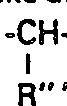
- R"' für H, C 1-C6-Alkyl oder Phenyl steht,
- c) 0,5-15 Gew.-% eines nichtionischen Tensidsund
- d) 0-8 Gew.-% eines kationischen oder anionischen Tensids enthalten,
Description
- Gegenstand der Erfindung sind Schaumdämpfungsmittel die
- a) 70 - 98 Gew.-% eines Mineralöls
- b) 0,5 - 8 Gew.-% eines Amids der Formel

- R für C10-C22-Alkyl oder -Alkenyl,
- R' für H, C1-C4-Alkyl oder beide R' zusammen für eine 1,2-Ethylenbrücke, und
- R" für die Reste -CH- oder -CH2-O-CH2- stehen, wobei R"' R" für H, C1-C6-Alkyl oder Phenyl steht,
- c) 0,5 - 15 Gew.-% eines nichtionischen Tensids und
- d) 0 - 8 Gew.-% eines kationischen oder anionischen Tensids enthalten,
- Als Mineralöle in den erfindungsgemäßen Schaumdämpfungsmitteln kommen bei Raumtemperatur flüssige aliphatische, alicyclische und/oder aromatische Kohlenwasserstoffe in Betracht, deren Siedepunkt insbesondere über 150°C liegt. Vorzugsweise kommen aliphatische Kohlenwasserstoffe, die gegebenenfalls unterschiedliche Mengen an cycloaliphatischen und/oder aromatischen Kohlenwasserstoffen enthalten können, zum Einsatz. Als Beispiele hierfür seien die aliphatischen Kohlenwasserstoffe Dodecan, Tetradecan, Hexadecan, Octadecan, Eicosan oder deren Mischungen, synthetische Kohlenwasserstoffe, wie sie beispielsweise bei der Fischer-Tropsch-Synthese erhalten werden, oder technische Mineralöle aus unterschiedlich raffinierten Erdölen, wie sie beispielsweise als Paraffinöle, Spindelöle oder Weißöle im Handel sind, genannt.
- Als Amide der Formel (I) seien beispielsweise genannt: Methylen-bis-laurinsäureamid, Methylen-bis-myristin- säureamid,Methylen-bis-palmitinsäureamid, Methylen-bis-stearinsäureamid, Methylen-bis-eikosansäureamid, Methylen-bis-behensäureamid, Methylen-bis-ölsäureamid, Isobutylen-bis-stearinsäureamid, Benzyliden-bis-stearinsäureamid, Methylen-bis-linolsäureamid, Bispalmitoylaminomethyl-ether, Bis-stearoylaminomethylether, 1,3-Bis-lauroylimidazolidin oder 1,3-Bis-stearylimidazolidin. Bevorzugte Zusammensetzungen enthalten Methylen-bis-stearinsäureamid, Methylen-bis-eikosansäureamid oder Methylen-bis-behensäureamid, insbesondere jedoch Methylen-bis-stearinsäureamid. Die Verbindungen sind größtenteils bekannt und lassen sich nach bekannten Verfahren, wie sie beispielsweise in der DE-OS 2 202 831 oder in der US-PS 2 554 846 beschrieben sind, herstellen.
- Geeignete nichtionische Tenside sind Umsetzungsprodukte von 8 bis 20 Kohlenstoffatome enthaltenden, gegebeneinfalls ungesättigten Fettsäuren, Fettsäureamiden, Fettalkoholen oder Fettaminen oder C6-C12-Alkylphenolen mit Ethylenoxid und/oder Propylenoxid, sowie Derivate solcher Verbindungen, wie sie beispielsweise durch Veresterung der endständigen Hydroxylgruppe mit Carbonsäuren, wie Essigsäure, Laurinsäure oder Benzoesäure, oder durch Veretherung mit z.B. Isobutylen oder Alkylchloriden erhalten werden. Weitere geeignete nichtionische Tenside sind auch oberflächenaktive Derivate von mehrwertigen Alkoholen, beispielsweise Fettsäureester von Säuren mit 10 - 22 Kohlenstoffatomen und Pentiten, Hexiten, Pentosen, Hexosen oder Polysacchariden, sowie deren Oxethylierungsprodukte. Bevorzugte nichtionische Tenside sind Umsetzungsprodukte von 12 - 18 Kohlenstoffatome enthaltenden Fettsäuren oder Fettsäureamiden mit 3 - 10 Mol Ethylenoxid, von 8 - 18 Kohlenstoffatome enthaltenden Fettalkoholen oder von C6-C9-Alkylphenolen mit 3 - 10 Mol Ethylenoxid, oder Ester solcher Verbindungen mit 12 - 18 Kohlenstoffatome enthaltenden Fettsäuren.
- Als weitere Tenside enthalten die Zusammensetzungen 0 - 8 %, vorzugsweise 0,5 - 3 % einer kationaktiven oder anionaktiven Verbindung. Als kationaktive Verbindungen seien beispielsweise genannt:
- Salze von Aminen, die neben mindestens einem basischen Stickstoffatom mindestens einen 10 - 20 Kohlenstoffatome enthaltenden Alkyl- oder Alkenylrest enthalten, hiervon abgeleitete quaternäre Ammoniumverbindungen, heterocyclische Verbindungen, wie Alkylpyridiniumsalze, Imidazoliniumverbindungen sowie Aminoxide oder Sulfoniumverbindungen. Vorzugsweise enthalten die Zusammensetzungen als kationische Tenside solche der Formel

- Geeignete anionische Tenside sind beispielsweise 12 - 22 Kohlenstoffatome enthaltende Alkansulfonate, Alkylbenzolsulfonate, Alkylsulfate, sowie Salze von Fettsäuren. 1
- Als weitere Zusätze enthalten die Zusammensetzungen gegebenenfalls Wasser, Lösungsmittel wie niedere Alkohole, Glykole, sowie andere entschäumende Verbindungen, beispielsweise Fettalkohole, wie 2-Ethylenhexanol, Dodecylalkohol oder Stearylalkohol, Polypropylenglykole, Ethylenoxid-Propylenoxid-Blockpolymerisate, Fettsäuren oder deren Salze, Fettsäureester oder Paraffinwachse.
- Bevorzugte Entschäumungsmittel enthalten
- a) 80 - 90 % eines Mineralöls mit einem Siedepunkt von mindestens 270°C,
- b) 2 - 6 % eines Amids der Formel (I), insbesondere Methylen-bis-stearinsäureamid,
- c) 4 - 10 % eines nichtionischen Tensids, insbesondere eines Umsetzungsproduktes von einem 8 - 18 Kohlenstoffatome enthaltenden aliphatischen Alkohol, Fettsäureamid oder einer Fettsäure mit 3- 10 Mol Ethylenoxid, und
- d) 0,5 - 3 % eines kationischen Tensids, insbesondere einer Verbindung der Formel

- Zur Herstellung der erfindungsgemäßen Zusammensetzungen können die einzelnen Komponenten in beliebiger Reihenfolge miteinander vermischt werden. Hierzu wird die Mischung über den Schmelzpunkt des Amids der Formel (I) erhitzt und anschließend unter gutem Rühren möglichst rasch auf Temperaturen unter 40°C abgekühlt.
- In einer bevorzugten Ausführungsform wird das Amid der Formel (I) in einem Teil des verwendeten Mineralöls bei 100 - 150°C gelöst und die heiße Lösung dann langsam in eine auf 10 - 80°C, vorzugsweise 20 - 40°C gehaltene Mischung aus dem restlichen Mineralöl, den Emulgatoren und gegebenenfalls weiteren Zusätzen eingetragen. Der nichtionische Emulgator kann auch ganz oder teilweise zur heißen Lösung des Amids im Mineralöl gegeben werden.
- Die erfindungsgemäßen Schaumdämpfungsmittel eignen sich hervorragend zur Schaumdämpfung und zur Verhinderung der Schaumbildung in wäßrigen, zum Schäumen neigenden Systemen. Insbesondere sind sie für den Einsatz in allen Verarbeitungsstufen der Textilindustrie, wie z.B. beim Entschlichten, Bleichen, bei der Vorbehandlung, beim Färben, Drucken, Nachwaschen, bei der Appretur und Hochveredelung, geeignet. Weitere Einsatzgebiete sind beispielsweise die Zucker-, Papier-, Leder- und Lackindustrie.
- Die jeweiligen Einsatzmengen der Schaumdämpfungsmittel richten sich im allgemeinen nach dem Gehalt der wäßrigen Systeme an schäumenden Komponenten und nach den apparativen Gegebenheiten. Sie können durch einfache Vorversuche leicht ermittelt werden. Für Textilbehandlungsbäder haben sich im allgemeinen Mengen von 0,5.- 3 g/1 bzw. 0,5 - 5 g/kg bei Druckpasten als ausreichend erwiesen.
- Gegenüber den bisher häufig verwendeten silikonhaltigen Schaumdämpfungsmitteln besitzen die erfindungsgemäßen Schaumdämpfungsmittel den Vorteil, daß sie nicht zu den schlecht entfernbaren, gefürchteten Silikonflecken auf den behandelten Textilien führen. Dieser Vorteil wirkt sich besonders beim Arbeiten in kurzen Flottenverhältnissen z.B. 1:5 bis 1:15 aus, da hierbei die Emulsionen von siliconhaltigen Schaumdämpfungsmittel durch die in den Apparaten auftretende hohe Mechanik zerschlagen werden. Ein weiterer Vorteil der erfindungsgemäßen Schaumdämpfungsmittel liegt in ihrer höheren Stabilität gegenüber Frosteinwirkung. Silikon- haltige'Schaumdämpfungsmittel-Emulsionen werden unter diesen Bedingungen instabil.
- Gegenüber handelsüblichen, siliconfreien Schaumdämpfungsmitteln auf Mineralöl- oder Polyetherbasis zeichnen sich die erfindungsgemäßen Schaumdämpfungsmittel dadurch aus, daß sie eine gleichbleibende schaumdämpfende Wirkung in stark saurem, im neutralen und im alkalischen Bereich zeigen.
- Die schaumdämpfende Wirkung der erfindungsgemäßen Produkte wurde nach der in "Bayer Farben Revue" Sonderheft 9, August 1967, S. 77 beschriebenen Methode geprüft.
- Bei Produktvergleichen werden bei Überschreitung der 15-Sekunden-Grenze die Prüfmengen des Entschäumers so lange erhöht, bis der Schaum innerhalb des genannten Zeitraumes von 0 - 15 Sekunden zerfällt.
- In 405 Teilen eines Mineralöls (Dichte bei 15°C: 0,900; Viskosität bei 20 °C: 13,2 c St, Siedeintervall 282-332 °C) werden bei 70-80 °C 11,2 Teile Stearyl-dimethyl-hydroxyethyl-ammoniumchlorid und 42 Teile eines Umsetzungsproduktes von einem C12-C14-Fettalkohol mit 3 Mol Ethylenoxid gelöst. Die erhaltene Lösung wird auf 20-30 °C abgekühlt und bei dieser Temperatur unter gutem Rühren langsam mit einer auf 120 °C erhitzten Lösung von 21 Teilen Methylen-bis-stearinsäureamid in 400 Teilen Mineralöl versetzt. Es werden ca. 890 Teile einer öligen Flüssigkeit erhalten, aus der sich durch einfaches Eingießen in Wasser und Umrühren eine stabile Emulsion herstellen läßt.
- Dichte 0,9; Durchlaufzeit im Fordbecher (4 mm-Düse): 18 Sek.
- 3,5 Teile des nachstehend beschriebenen Benzyliden-bisstearinsäureamids, 31,5 Teile Methylen-bis-stearinsäureamid, 1150 Teile des in Beispiel 1 verwendeten Mineralöls und 60 Teile eines Umsetzungsproduktes von 1 Mol eines technischen Laurylalkohols mit 3 Mol Ethylenoxid werden bei 140 °C bis zur Bildung einer klaren Lösung gerührt. Die-Lösung wird langsam auf 98 °C abgekühlt, bei dieser Temperatur mit 24 Teilen Stearyl-dimethyl-hydroxyethyl-ammoniumchlorid versetzt und anschließend unter gutem Rühren innerhalb von ca. 1 Stunde auf 30 °C abgekühlt. Es werden ca. 1260 Teile einer hellbraunen, viskosen Flüssigkeit erhalten, die durch einfaches Einrühren in Wasser eine stabile Emulsion bildet.
- Das eingesetzte Benzyliden-bis-stearinsäureamid wurde hergestellt, indem 283 Teile Stearinsäureamid in Gegenwart von 1,5 Teilen konz. Schwefelsäure bei 140 °C mit 53 Teilen Benzaldehyd versetzt wurden. Nach einer Reaktionszeit von 3-4 Stunden wurde das gebildete Reaktionswasser in Vakuum abdestilliert. Beim Erkalten erstarrt die Schmelze zu 315 Teilen Benzyliden-bis-stearinsäureamid.
- 5,25 Teile Methylen-bis-stearinsäureamid werden bei 120 °C in 100 Teilen eines Mineralöls (Dichte bei 15 °C: 0,853; Viskosität bei 20 °C: 36 c St; Siedeintervall 356-405 °C) gelöst. Diese Lösung läßt man langsam bei 20-30 °C zu einer Lösung zutropfen, die durch Vermischen von 101 Teilen des Mineralöls, 15,75 Teilen eines Umsetzungsproduktes von 1 Mol technischem Laurylalkohol mit 3 Mol Ethylenoxid, 2,8 Teilen Stearyl-dimethyl-hydroxyethyl-ammoniumchlorid und 0,7 Teilen Propylenglykol erhalten wurde. Es werden ca. 225 Teile einer öligen Flüssigkeit erhalten.
- Dichte: 0,85; Durchlaufzeit im Fordbecher (4 mm Düse): 22 Sek. Das Produkt läßt sich mit Wasser zu einer stabilen Emulsion verdünnen.
- Ein Produkt mit ähnlichen Eigenschaften wird erhalten, wenn das Methylen-bis-stearinsäureamid durch dieselbe Menge Bisstearoylaminomethyl-ether ersetzt wird. Dieser wird erhalten, wenn man 283 Teile Stearinsäureamid und 30 Teile Paraformaldehyd bei 110-120°C 1 Stunde reagieren läßt und dann innerhalb von 2 Stunden bei gleicher Temperatur das Reaktionswasser im Vakuum abdestilliert.
- 42 Teile Methylen-bis-stearinsäureamid werden bei 120 oe in 400 Teilen eines Fischer-Tropsch-Kohlenwasserstoffs mit einer mittleren Kohlenstoffzahl von 15 gelöst. Diese Lösung läßt man unter gutem Rühren langsam in eine auf 20-30 °C gekühlte Lösung einlaufen, die durch Vermischen von 42 Teilen eines Umsetzungsproduktes von techn. Laurylalkohol mit 3 Mol Ethylenoxid, von 11,2 Teilen Octadecyl-dimethyl-hydrcxyethyl-ammoniumchlorid und 400 Teilen desselben Kohlenwasserstoffs erhalten wurde. Es werden ca. 890 Teile eines weißen Öls erhalten.
- Dichte: 0,85; Durchlaufzeit im Fordbecher (4 mm Düse): 18 Sek. Das Produkt läßt sich mit Wasser zu einer stabilen Emulsion verdünnen.
- In 402 Teilen des in Beispiel 1 verwendeteten Mineralöls werden bei 70-80°C 16 Teile eines Natriumalkansulfonats (mittlere Kettenlänge: C21) und 63 Teile eines Umsetzungsproduktes von einem C12-C14-Fettalkohol mit 3 Mol Ethylenoxid gelöst. Die erhaltene Lösung wird auf 20-30°C abgekühlt und bei dieser Temperatur unter gutem Rühren langsam mit einer auf 120°C erhitzten Lösung von 20,5 Teilen Methylen-bis-stearinsäureamid in 402 Teilen Mineralöl versetzt. Es werden ca. 900 Teile einer öligen Flüssigkeit erhalten, die durch einfaches Eingießen in Wasser und Umrühren emulgiert werden kann.
- Dichte: 0,9; Durchlaufzeit im Fordbecher (4 mm Düse):47 Sek.
- lemäß der vorstehend genannten. Vorschrift wurden die Schaumlämpfungsmittel nebeneinander geprüft:
- linsatzmengen: 0,2 g/l Schaumdämpfungsmittel und 0,4 g/l eines Umsetzungsproduktes von 1 Mol Oleylalkohol mit 50 Mol Ethylenoxid.


Claims (10)


Applications Claiming Priority (2)
| Application Number | Priority Date | Filing Date | Title |
|---|---|---|---|
| DE19803008952 DE3008952A1 (de) | 1980-03-08 | 1980-03-08 | Schaumdaempfungsmittel, ihre herstellung und verwendung in waessrigen systemen |
| DE3008952 | 1980-03-08 |
Publications (3)
| Publication Number | Publication Date |
|---|---|
| EP0035702A2 true EP0035702A2 (de) | 1981-09-16 |
| EP0035702A3 EP0035702A3 (en) | 1981-12-30 |
| EP0035702B1 EP0035702B1 (de) | 1985-01-23 |
Family
ID=6096622
Family Applications (1)
| Application Number | Title | Priority Date | Filing Date |
|---|---|---|---|
| EP81101396A Expired EP0035702B1 (de) | 1980-03-08 | 1981-02-26 | Schaumdämpfungsmittel, ihre Herstellung und Verwendung in wässrigen Systemen |
Country Status (3)
| Country | Link |
|---|---|
| EP (1) | EP0035702B1 (de) |
| JP (1) | JPS56136610A (de) |
| DE (2) | DE3008952A1 (de) |
Cited By (10)
| Publication number | Priority date | Publication date | Assignee | Title |
|---|---|---|---|---|
| FR2516807A1 (fr) * | 1981-11-25 | 1983-05-27 | Sandoz Sa | Nouveaux agents anti-mousses exempts de silicone |
| DE3505742A1 (de) * | 1984-03-01 | 1985-09-12 | Sandoz-Patent-GmbH, 7850 Lörrach | Schaumhemmende mittel, deren herstellung und verwendung |
| EP0263069A3 (en) * | 1986-09-29 | 1989-03-08 | Ciba-Geigy Ag | Anti-foam agent for aqueous systems and its use |
| EP0335173A3 (de) * | 1988-03-26 | 1991-05-02 | Bayer Ag | Schaumdämpfungsmittel |
| WO1992011074A1 (de) * | 1990-12-21 | 1992-07-09 | Basf Aktiengesellschaft | Entschäumer auf basis von carbonsäurederivaten |
| US5223177A (en) * | 1989-01-09 | 1993-06-29 | Ciba-Geigy Corporation | Alkali-resistant foam suppressant which is free from silicone oil |
| WO1999037376A1 (de) * | 1998-01-26 | 1999-07-29 | Cognis Deutschland Gmbh | Antischaummittel |
| WO2009027456A2 (de) | 2007-08-29 | 2009-03-05 | Basf Se | Veresterte alkylalkoxylate als feste schaumarme netzer |
| US7595291B2 (en) | 2005-03-14 | 2009-09-29 | Basf Aktiengesellschaft | Esterified alkyl alkoxylates used as low-foam surfactants |
| CN104069653A (zh) * | 2013-03-29 | 2014-10-01 | 上海依科绿色工程有限公司 | 一种矿物油消泡剂及其制备方法 |
Families Citing this family (1)
| Publication number | Priority date | Publication date | Assignee | Title |
|---|---|---|---|---|
| JP5343184B2 (ja) * | 2010-07-31 | 2013-11-13 | サンノプコ株式会社 | 消泡剤の製造方法 |
Family Cites Families (8)
| Publication number | Priority date | Publication date | Assignee | Title |
|---|---|---|---|---|
| US2717881A (en) * | 1946-12-21 | 1955-09-13 | Nat Aluminate Corp | Inhibition of foaming in steam generators |
| US2588343A (en) * | 1946-12-21 | 1952-03-11 | Nat Aluminate Corp | Inhibiting foaming in steam generators |
| US2612478A (en) * | 1948-06-03 | 1952-09-30 | Dearborn Chemicals Co | Method and composition for inhibiting foam in aqueous systems |
| US3923683A (en) * | 1971-09-07 | 1975-12-02 | Nalco Chemical Co | Amides and hydrophobic silica as antifoams |
| CA922456A (en) * | 1971-12-31 | 1973-03-13 | Hart Chemical Limited | Method of treatment of pulp mill liquors |
| US3935121A (en) * | 1973-06-29 | 1976-01-27 | Betz Laboratories, Inc. | Foam control compositions for aqueous systems, its preparation, and process using same |
| DE2420955A1 (de) * | 1973-10-29 | 1975-05-07 | Buckman Labor Inc | Antischaum-zubereitung |
| US3990905A (en) * | 1976-02-09 | 1976-11-09 | Nalco Chemical Company | Food process antifoam |
-
1980
- 1980-03-08 DE DE19803008952 patent/DE3008952A1/de not_active Withdrawn
-
1981
- 1981-02-26 DE DE8181101396T patent/DE3168416D1/de not_active Expired
- 1981-02-26 EP EP81101396A patent/EP0035702B1/de not_active Expired
- 1981-03-05 JP JP3059281A patent/JPS56136610A/ja active Pending
Cited By (13)
| Publication number | Priority date | Publication date | Assignee | Title |
|---|---|---|---|---|
| CH665743GA3 (de) * | 1981-11-25 | 1988-06-15 | ||
| FR2516807A1 (fr) * | 1981-11-25 | 1983-05-27 | Sandoz Sa | Nouveaux agents anti-mousses exempts de silicone |
| DE3505742A1 (de) * | 1984-03-01 | 1985-09-12 | Sandoz-Patent-GmbH, 7850 Lörrach | Schaumhemmende mittel, deren herstellung und verwendung |
| EP0263069A3 (en) * | 1986-09-29 | 1989-03-08 | Ciba-Geigy Ag | Anti-foam agent for aqueous systems and its use |
| US4880564A (en) * | 1986-09-29 | 1989-11-14 | Ciba-Geigy Corporation | Antifoams for aqueous systems and their use |
| EP0335173A3 (de) * | 1988-03-26 | 1991-05-02 | Bayer Ag | Schaumdämpfungsmittel |
| US5223177A (en) * | 1989-01-09 | 1993-06-29 | Ciba-Geigy Corporation | Alkali-resistant foam suppressant which is free from silicone oil |
| WO1992011074A1 (de) * | 1990-12-21 | 1992-07-09 | Basf Aktiengesellschaft | Entschäumer auf basis von carbonsäurederivaten |
| WO1999037376A1 (de) * | 1998-01-26 | 1999-07-29 | Cognis Deutschland Gmbh | Antischaummittel |
| US7595291B2 (en) | 2005-03-14 | 2009-09-29 | Basf Aktiengesellschaft | Esterified alkyl alkoxylates used as low-foam surfactants |
| WO2009027456A2 (de) | 2007-08-29 | 2009-03-05 | Basf Se | Veresterte alkylalkoxylate als feste schaumarme netzer |
| CN104069653A (zh) * | 2013-03-29 | 2014-10-01 | 上海依科绿色工程有限公司 | 一种矿物油消泡剂及其制备方法 |
| CN104069653B (zh) * | 2013-03-29 | 2016-03-02 | 上海依科绿色工程有限公司 | 一种矿物油消泡剂及其制备方法 |
Also Published As
| Publication number | Publication date |
|---|---|
| JPS56136610A (en) | 1981-10-26 |
| EP0035702B1 (de) | 1985-01-23 |
| DE3008952A1 (de) | 1981-09-24 |
| EP0035702A3 (en) | 1981-12-30 |
| DE3168416D1 (en) | 1985-03-07 |
Similar Documents
| Publication | Publication Date | Title |
|---|---|---|
| DE3723323C2 (de) | Hydroxy-Mischether, Verfahren zu deren Herstellung sowie deren Verwendung | |
| DE60206703T2 (de) | Polyamine mit Alkylglycidyletherendgruppen als Schaumregulierungsmittel | |
| DE3876673T2 (de) | Alkoxylationsverfahren mit anwendung von katalysatoren auf calciumbasis. | |
| EP0263069B1 (de) | Entschäumungsmittel für wässerige Systeme und ihre Verwendung | |
| EP0036597B1 (de) | Schaumdämpfungsmittel und dessen Verwendung in Kunstharz-, Lack- und Farbdispersionen | |
| DE19917186C1 (de) | Mittel zur Entschäumung wäßriger Medien und dessen Verwendung | |
| EP0035702B1 (de) | Schaumdämpfungsmittel, ihre Herstellung und Verwendung in wässrigen Systemen | |
| EP0154177A2 (de) | Copolymere auf Basis von Maleinsäureanhydrid und alpha, beta-ungesättigten Verbindungen, ein Verfahren zu ihrer Herstellung und ihre Verwendung als Paraffininhibitoren | |
| DE3418523A1 (de) | Endgruppenverschlossene fettalkoholalkoxylate fuer industrielle reinigungsprozesse, insbesondere fuer die flaschenwaesche und fuer die metallreinigung | |
| DE1001794B (de) | Schmiermittelkonzentrat fuer die Metallbearbeitung | |
| EP0157323A2 (de) | Siliconharz-Emulsion | |
| DE10353603B4 (de) | Verwendung von Ethercarbonsäuren auf Basis alkoxylierter Mono-, Di- und/oder Tri(1-phenylethyl)phenole in Kühlschmiermitteln | |
| EP0069343A1 (de) | Quaternäre Ammoniumsalze und Verfahren zu ihrer Herstellung | |
| EP0056160B1 (de) | Staubarme Farbstoffpräparationen | |
| DE977492C (de) | OElfreie, waesserige Schmier-, Schneid- und Kuehlfluessigkeit fuer die spanabhebende Metallbearbeitung | |
| EP0001620B1 (de) | Quaternierte Amin-Amid Kondensationsprodukte und deren Verwendung in ölhaltigen Faserpräparationsmitteln | |
| EP0391392B1 (de) | Schwachschäumende und kältestabile flüssige Tensidzusammensetzungen aus Wasser und nichtionischen, anionischen und kationischen Tensiden und deren Verwendung | |
| EP0335173B2 (de) | Schaumdämpfungsmittel | |
| CH623747A5 (de) | ||
| DE102004042738A1 (de) | Schaum- und geruchsarme Textilhilfsmittel | |
| DE69218448T2 (de) | Verwendung eines triethanolaminproduktgemische | |
| EP0129158A2 (de) | Verfahren zur Herstellung von quartären Ammoniumverbindungen | |
| DE2225793C3 (de) | Verfahren zur kontinuierlichen Herstellung einer Mischung von primären und sekundären Phosphatestern von organischen Hydroxyverbindungen | |
| DE19802733B4 (de) | Antischaummittel | |
| EP0597320B1 (de) | Schutzkolloid enthaltende Entschäumeremulsion |
Legal Events
| Date | Code | Title | Description |
|---|---|---|---|
| PUAI | Public reference made under article 153(3) epc to a published international application that has entered the european phase |
Free format text: ORIGINAL CODE: 0009012 |
|
| 17P | Request for examination filed |
Effective date: 19810306 |
|
| AK | Designated contracting states |
Designated state(s): CH DE FR GB IT |
|
| PUAL | Search report despatched |
Free format text: ORIGINAL CODE: 0009013 |
|
| AK | Designated contracting states |
Designated state(s): CH DE FR GB IT |
|
| ITF | It: translation for a ep patent filed | ||
| GRAA | (expected) grant |
Free format text: ORIGINAL CODE: 0009210 |
|
| AK | Designated contracting states |
Designated state(s): CH DE FR GB IT LI |
|
| REF | Corresponds to: |
Ref document number: 3168416 Country of ref document: DE Date of ref document: 19850307 |
|
| ET | Fr: translation filed | ||
| PLBE | No opposition filed within time limit |
Free format text: ORIGINAL CODE: 0009261 |
|
| STAA | Information on the status of an ep patent application or granted ep patent |
Free format text: STATUS: NO OPPOSITION FILED WITHIN TIME LIMIT |
|
| 26N | No opposition filed | ||
| ITTA | It: last paid annual fee | ||
| PGFP | Annual fee paid to national office [announced via postgrant information from national office to epo] |
Ref country code: DE Payment date: 20000113 Year of fee payment: 20 |
|
| PGFP | Annual fee paid to national office [announced via postgrant information from national office to epo] |
Ref country code: CH Payment date: 20000126 Year of fee payment: 20 |
|
| PGFP | Annual fee paid to national office [announced via postgrant information from national office to epo] |
Ref country code: FR Payment date: 20000221 Year of fee payment: 20 |
|
| PGFP | Annual fee paid to national office [announced via postgrant information from national office to epo] |
Ref country code: GB Payment date: 20000223 Year of fee payment: 20 |
|
| PG25 | Lapsed in a contracting state [announced via postgrant information from national office to epo] |
Ref country code: LI Free format text: LAPSE BECAUSE OF EXPIRATION OF PROTECTION Effective date: 20010225 Ref country code: GB Free format text: LAPSE BECAUSE OF EXPIRATION OF PROTECTION Effective date: 20010225 Ref country code: CH Free format text: LAPSE BECAUSE OF EXPIRATION OF PROTECTION Effective date: 20010225 |
|
| REG | Reference to a national code |
Ref country code: GB Ref legal event code: PE20 Effective date: 20010225 |
|
| REG | Reference to a national code |
Ref country code: CH Ref legal event code: PL |