EP0037465A2 - Aminoazoverbindungen - Google Patents
Aminoazoverbindungen Download PDFInfo
- Publication number
- EP0037465A2 EP0037465A2 EP81101712A EP81101712A EP0037465A2 EP 0037465 A2 EP0037465 A2 EP 0037465A2 EP 81101712 A EP81101712 A EP 81101712A EP 81101712 A EP81101712 A EP 81101712A EP 0037465 A2 EP0037465 A2 EP 0037465A2
- Authority
- EP
- European Patent Office
- Prior art keywords
- parts
- amino
- formula
- methyl
- diazo
- Prior art date
- Legal status (The legal status is an assumption and is not a legal conclusion. Google has not performed a legal analysis and makes no representation as to the accuracy of the status listed.)
- Withdrawn
Links
- 0 *c1ccccc1 Chemical compound *c1ccccc1 0.000 description 6
- QFZFKXVGQIODJN-UHFFFAOYSA-N CC1C=CC(C)=CC1 Chemical compound CC1C=CC(C)=CC1 QFZFKXVGQIODJN-UHFFFAOYSA-N 0.000 description 1
- LJDKVWHGUXLHKB-UHFFFAOYSA-N CC1C=CC(CC[N+]([O-])=O)=CC1S(C)(=O)=O Chemical compound CC1C=CC(CC[N+]([O-])=O)=CC1S(C)(=O)=O LJDKVWHGUXLHKB-UHFFFAOYSA-N 0.000 description 1
- RXJNRUDLUSMLII-WUKNDPDISA-N COC(c1cc(/N=N/c(cc2)ccc2O)ccc1N)=O Chemical compound COC(c1cc(/N=N/c(cc2)ccc2O)ccc1N)=O RXJNRUDLUSMLII-WUKNDPDISA-N 0.000 description 1
- HFZKOYWDLDYELC-UHFFFAOYSA-N Cc(cc1)c(C)cc1[N+]([O-])=O Chemical compound Cc(cc1)c(C)cc1[N+]([O-])=O HFZKOYWDLDYELC-UHFFFAOYSA-N 0.000 description 1
- WVQGZNRUEVFXKR-UHFFFAOYSA-N Cc(ccc([N+]([O-])=O)c1)c1OC Chemical compound Cc(ccc([N+]([O-])=O)c1)c1OC WVQGZNRUEVFXKR-UHFFFAOYSA-N 0.000 description 1
- BSFHJMGROOFSRA-UHFFFAOYSA-N Cc1cc([N+]([O-])=O)c(C)cc1 Chemical compound Cc1cc([N+]([O-])=O)c(C)cc1 BSFHJMGROOFSRA-UHFFFAOYSA-N 0.000 description 1
- URLKBWYHVLBVBO-UHFFFAOYSA-N Cc1ccc(C)cc1 Chemical compound Cc1ccc(C)cc1 URLKBWYHVLBVBO-UHFFFAOYSA-N 0.000 description 1
Classifications
-
- C—CHEMISTRY; METALLURGY
- C07—ORGANIC CHEMISTRY
- C07D—HETEROCYCLIC COMPOUNDS
- C07D207/00—Heterocyclic compounds containing five-membered rings not condensed with other rings, with one nitrogen atom as the only ring hetero atom
- C07D207/02—Heterocyclic compounds containing five-membered rings not condensed with other rings, with one nitrogen atom as the only ring hetero atom with only hydrogen or carbon atoms directly attached to the ring nitrogen atom
- C07D207/18—Heterocyclic compounds containing five-membered rings not condensed with other rings, with one nitrogen atom as the only ring hetero atom with only hydrogen or carbon atoms directly attached to the ring nitrogen atom having one double bond between ring members or between a ring member and a non-ring member
- C07D207/22—Heterocyclic compounds containing five-membered rings not condensed with other rings, with one nitrogen atom as the only ring hetero atom with only hydrogen or carbon atoms directly attached to the ring nitrogen atom having one double bond between ring members or between a ring member and a non-ring member with hetero atoms or with carbon atoms having three bonds to hetero atoms with at the most one bond to halogen, e.g. ester or nitrile radicals, directly attached to ring carbon atoms
- C07D207/24—Oxygen or sulfur atoms
- C07D207/26—2-Pyrrolidones
- C07D207/263—2-Pyrrolidones with only hydrogen atoms or radicals containing only hydrogen and carbon atoms directly attached to other ring carbon atoms
- C07D207/27—2-Pyrrolidones with only hydrogen atoms or radicals containing only hydrogen and carbon atoms directly attached to other ring carbon atoms with substituted hydrocarbon radicals directly attached to the ring nitrogen atom
-
- C—CHEMISTRY; METALLURGY
- C07—ORGANIC CHEMISTRY
- C07C—ACYCLIC OR CARBOCYCLIC COMPOUNDS
- C07C245/00—Compounds containing chains of at least two nitrogen atoms with at least one nitrogen-to-nitrogen multiple bond
- C07C245/02—Azo compounds, i.e. compounds having the free valencies of —N=N— groups attached to different atoms, e.g. diazohydroxides
- C07C245/06—Azo compounds, i.e. compounds having the free valencies of —N=N— groups attached to different atoms, e.g. diazohydroxides with nitrogen atoms of azo groups bound to carbon atoms of six-membered aromatic rings
- C07C245/08—Azo compounds, i.e. compounds having the free valencies of —N=N— groups attached to different atoms, e.g. diazohydroxides with nitrogen atoms of azo groups bound to carbon atoms of six-membered aromatic rings with the two nitrogen atoms of azo groups bound to carbon atoms of six-membered aromatic rings, e.g. azobenzene
-
- C—CHEMISTRY; METALLURGY
- C07—ORGANIC CHEMISTRY
- C07D—HETEROCYCLIC COMPOUNDS
- C07D265/00—Heterocyclic compounds containing six-membered rings having one nitrogen atom and one oxygen atom as the only ring hetero atoms
- C07D265/04—1,3-Oxazines; Hydrogenated 1,3-oxazines
- C07D265/12—1,3-Oxazines; Hydrogenated 1,3-oxazines condensed with carbocyclic rings or ring systems
- C07D265/14—1,3-Oxazines; Hydrogenated 1,3-oxazines condensed with carbocyclic rings or ring systems condensed with one six-membered ring
- C07D265/24—1,3-Oxazines; Hydrogenated 1,3-oxazines condensed with carbocyclic rings or ring systems condensed with one six-membered ring with hetero atoms directly attached in positions 2 and 4
- C07D265/26—Two oxygen atoms, e.g. isatoic anhydride
-
- C—CHEMISTRY; METALLURGY
- C07—ORGANIC CHEMISTRY
- C07D—HETEROCYCLIC COMPOUNDS
- C07D271/00—Heterocyclic compounds containing five-membered rings having two nitrogen atoms and one oxygen atom as the only ring hetero atoms
- C07D271/02—Heterocyclic compounds containing five-membered rings having two nitrogen atoms and one oxygen atom as the only ring hetero atoms not condensed with other rings
- C07D271/06—1,2,4-Oxadiazoles; Hydrogenated 1,2,4-oxadiazoles
-
- C—CHEMISTRY; METALLURGY
- C07—ORGANIC CHEMISTRY
- C07D—HETEROCYCLIC COMPOUNDS
- C07D271/00—Heterocyclic compounds containing five-membered rings having two nitrogen atoms and one oxygen atom as the only ring hetero atoms
- C07D271/02—Heterocyclic compounds containing five-membered rings having two nitrogen atoms and one oxygen atom as the only ring hetero atoms not condensed with other rings
- C07D271/10—1,3,4-Oxadiazoles; Hydrogenated 1,3,4-oxadiazoles
-
- C—CHEMISTRY; METALLURGY
- C07—ORGANIC CHEMISTRY
- C07D—HETEROCYCLIC COMPOUNDS
- C07D277/00—Heterocyclic compounds containing 1,3-thiazole or hydrogenated 1,3-thiazole rings
- C07D277/02—Heterocyclic compounds containing 1,3-thiazole or hydrogenated 1,3-thiazole rings not condensed with other rings
- C07D277/20—Heterocyclic compounds containing 1,3-thiazole or hydrogenated 1,3-thiazole rings not condensed with other rings having two or three double bonds between ring members or between ring members and non-ring members
- C07D277/32—Heterocyclic compounds containing 1,3-thiazole or hydrogenated 1,3-thiazole rings not condensed with other rings having two or three double bonds between ring members or between ring members and non-ring members with hetero atoms or with carbon atoms having three bonds to hetero atoms with at the most one bond to halogen, e.g. ester or nitrile radicals, directly attached to ring carbon atoms
- C07D277/38—Nitrogen atoms
- C07D277/50—Nitrogen atoms bound to hetero atoms
-
- C—CHEMISTRY; METALLURGY
- C07—ORGANIC CHEMISTRY
- C07D—HETEROCYCLIC COMPOUNDS
- C07D295/00—Heterocyclic compounds containing polymethylene-imine rings with at least five ring members, 3-azabicyclo [3.2.2] nonane, piperazine, morpholine or thiomorpholine rings, having only hydrogen atoms directly attached to the ring carbon atoms
- C07D295/16—Heterocyclic compounds containing polymethylene-imine rings with at least five ring members, 3-azabicyclo [3.2.2] nonane, piperazine, morpholine or thiomorpholine rings, having only hydrogen atoms directly attached to the ring carbon atoms acylated on ring nitrogen atoms
- C07D295/18—Heterocyclic compounds containing polymethylene-imine rings with at least five ring members, 3-azabicyclo [3.2.2] nonane, piperazine, morpholine or thiomorpholine rings, having only hydrogen atoms directly attached to the ring carbon atoms acylated on ring nitrogen atoms by radicals derived from carboxylic acids, or sulfur or nitrogen analogues thereof
- C07D295/182—Radicals derived from carboxylic acids
- C07D295/192—Radicals derived from carboxylic acids from aromatic carboxylic acids
-
- C—CHEMISTRY; METALLURGY
- C09—DYES; PAINTS; POLISHES; NATURAL RESINS; ADHESIVES; COMPOSITIONS NOT OTHERWISE PROVIDED FOR; APPLICATIONS OF MATERIALS NOT OTHERWISE PROVIDED FOR
- C09B—ORGANIC DYES OR CLOSELY-RELATED COMPOUNDS FOR PRODUCING DYES, e.g. PIGMENTS; MORDANTS; LAKES
- C09B29/00—Monoazo dyes prepared by diazotising and coupling
- C09B29/06—Monoazo dyes prepared by diazotising and coupling from coupling components containing amino as the only directing group
- C09B29/08—Amino benzenes
-
- C—CHEMISTRY; METALLURGY
- C09—DYES; PAINTS; POLISHES; NATURAL RESINS; ADHESIVES; COMPOSITIONS NOT OTHERWISE PROVIDED FOR; APPLICATIONS OF MATERIALS NOT OTHERWISE PROVIDED FOR
- C09B—ORGANIC DYES OR CLOSELY-RELATED COMPOUNDS FOR PRODUCING DYES, e.g. PIGMENTS; MORDANTS; LAKES
- C09B31/00—Disazo and polyazo dyes of the type A->B->C, A->B->C->D, or the like, prepared by diazotising and coupling
-
- C—CHEMISTRY; METALLURGY
- C09—DYES; PAINTS; POLISHES; NATURAL RESINS; ADHESIVES; COMPOSITIONS NOT OTHERWISE PROVIDED FOR; APPLICATIONS OF MATERIALS NOT OTHERWISE PROVIDED FOR
- C09B—ORGANIC DYES OR CLOSELY-RELATED COMPOUNDS FOR PRODUCING DYES, e.g. PIGMENTS; MORDANTS; LAKES
- C09B43/00—Preparation of azo dyes from other azo compounds
- C09B43/40—Preparation of azo dyes from other azo compounds by substituting hetero atoms by radicals containing other hetero atoms
- C09B43/42—Preparation of azo dyes from other azo compounds by substituting hetero atoms by radicals containing other hetero atoms by substituting radicals containing hetero atoms for —CN radicals
-
- Y—GENERAL TAGGING OF NEW TECHNOLOGICAL DEVELOPMENTS; GENERAL TAGGING OF CROSS-SECTIONAL TECHNOLOGIES SPANNING OVER SEVERAL SECTIONS OF THE IPC; TECHNICAL SUBJECTS COVERED BY FORMER USPC CROSS-REFERENCE ART COLLECTIONS [XRACs] AND DIGESTS
- Y10—TECHNICAL SUBJECTS COVERED BY FORMER USPC
- Y10S—TECHNICAL SUBJECTS COVERED BY FORMER USPC CROSS-REFERENCE ART COLLECTIONS [XRACs] AND DIGESTS
- Y10S534/00—Organic compounds -- part of the class 532-570 series
- Y10S534/02—Azo compounds containing chains of eight or more carbon atoms not provided for elsewhere in this class
Definitions
- the residues A of the diazo components mainly come from the aniline, aminonaphthalene, aminoanthraquinone, thiazole, benzothiazole, benzisothiazole, thiadiazole, indazole, pyrazole or azobenzene series.
- N-substituents of the carbon or sulfonamides are z.
- the rest A derives in particular z. B. from the following amines: o-, m- or p-nitroaniline, o-, m- or p-cyananiline, 2,4-dicyananiline, o-, m- or p-bromoaniline, 2,4,6-tribromaniline , 2-chloro-4-nitroaniline, 2-bromo-4-nitroaniline, 2-cyano-4-nitroaniline, 2-methylsulfonyl-4-nitroaniline, 2-methyl-4-nitroaniline, 2-methoxy-4-nitroaniline , Aniline, 2-, 3- or 4-toluidine, 2-, 3- or 4- Chloraniline, 2,3-, 2,4-, 2,5-, 3,4- or 3,5-dichloroaniline, 2-methyl-4-chloroaniline, 2-methyl-5-chloroaniline ,.
- Suitable diazo components of the aminoazobenzene series A-NH 2 are, for example: 4-aminoazobenzene, 2 ', 3-dimethyl-4-aminoazobenzene, 3', 2-dimethyl-4-aminoazobenzene, 2,5-dimethyl-4-aminoazobenzene, 2-methyl -5-methoxy-4-amino-azobenzene, 2-methyl-4 ', 5-dimethoxy-4-aminoazobenzene, 4'-chloro-2 - methyl-5-methoxy-4-aminoazobenzene, 4'-nitro-2- methyl-5-methoxy-4-aminoazobenzene, 4'-chloro-2-methyl-4-aminoazobenzene, 2,5-dimethoxy-4-aminoazobenzene, 4 1- chloro-2,5-dimethoxy-4-aminoazobenzene, 4 ' -Nitro-2,5-di-methoxy-4-aminoazo
- the particularly valuable diazo components A-NH 2 may be mentioned individually: 4-nitro-aniline, 2-chloro-4-nitro-aniline, 2-bromo-4-nitroaniline, 2-cyano-4-nitro-aniline, 2- Methoxy-4-nitro-aniline, 2-amino-5-nitro-phenylsulfonic acid dimethylamide, 2-amino-5-nitro-phenylsulfonic acid butylamide, 2-amino-5-nitro-phenylsulfonic acid-ß-methoxyethylamide, 2-amino- benzonitrile, 2-chloro-4-amino-benzonitrile, 2-chloro-5-amino-benzonitrile, 2-amino-5-chloro-benzonitrile, 3,5-dichloro-2-amino-benzonitrile, 1-amino-2, 4-di-cyanobenzene, 1-amino-2,4-dicyan-6-chlorobenzene, 2-chloro-4-amino-5-nitro-
- heterocyclic diazo components A-NH 2 Of the particularly valuable heterocyclic diazo components A-NH 2 , mention should be made of: 2-amino-thiazole, 2-amino-5-nitro-thiazole, .2-amino-4-methyl-thiazole-5-carboxylic acid, ethyl ester, 2-amino- 5-phenyl-1,3,4-thiadiazole, 3-phenyl-5-amino-1,2,4-thiadiazole, 3-methyl-mercapto-5-amino-1,2,4-thiadiazole, 3-B- Carbomethoxy-ethylmercapto-5-amino-1,2,4-thiadiazole, 3-B-carboethoxy-ethylmercapto-5-amino-1,2,4-thiadiazole, 2-amino-6-cyano-benzothiazole, 2-amino- 6-carboxylic acid methyl ester-benzothiazole, 2-amino-6-nitro-benzothiazole
- Coupling component residues A come from, for. B. from the phenol, naphthalene, pyridone, pyrazolone, pyridine, pyrimidine, acetoacetanilide, indole, thiazole, homophthalimide or aniline series.
- R of the formula COOR 1 are, for example: COOCH 3 , COOC 2 H 5 , COOCH (CH 3 ) 2 , COOC 3 H 7 (n), COOC 4 H 9 (n), COOC 5 H 11 , COOC 6 H 13 (n), COOC 6 H 13 (i), COOC 9 H 19 (n), COOC 10 H 21 (n), COOC 10 H 21 (i), COOCH 2 CH 2 OCH 3 , COOCH 2 CH 2 OC 2 H 5 , COOCH 2 CH 2 OC 4 H 9 (n ), CO (OCH 2 CH 2 ) 2 OCH 3 , CO (OCH 2 CH 2 ) 2 OC 4 H 9 (n), CO (OCH 2 CH 2 ) 3 OCH 3 , CO (OCH 2 CH 2 ) 3 OC 4 H 9 (n), CO (OCH 2 CH 2 ) 4 OCH 3 , CO (OCH 2 CH 2 ) 3 OC 4 H 9 (n), CO (OCH 2 CH 2 ) 4 OCH 3 , CO (
- R 3 of the heterocyclic radicals are, for example: methyl, ethyl, propyl, butyl, pentyl, hexyl, heptyl, 1-ethylpentyl, methoxymethyl, methoxyethyl, (n) -propoxyethyl, (i) -propoxyethyl, (n) -butoxyethyl, (n) -hexoxyethyl, phenyl, phenylallyl or residues of the formulas
- a diazo compound of amines of the formula can be used to prepare the compounds of the formula I in which A is the residue of a diazo component with a compound of the formula couple, then split off the residue CH 2 SO 3 H again and convert the COOH group into a residue of the formula R.
- the compounds of the formula I are valuable diazo components for the preparation of azo dyes which are obtained therefrom by diazotization and coupling with coupling components.
- Preferred diazo components come from the aniline, phthalimidyl, quinazolonyl, pyrazole and thiazole series, with substituents for the diazo components in particular fluorine, chlorine, bromine, trifluoromethyl, methyl, Ethyl, methoxy, ethoxy, phenoxy, cyano, nitro, methylsulfonyl, ethylsulfonyl, allylsulfonyl, phenylsulfonyl, carboxyl, carboxylic acid esters, optionally substituted sulfamoyl or oxdiazolyl come into consideration.
- Preferred radicals R are Preferred residues R 1 are, for example: COOCH 3 , COOC 2 H 5 , COOC 3 H 7 (n), COOC 3 H 7 (i), COOC4H 9 (n), COOC 5 H 11 , COOC 6 H 13 (n), COOC 6 H 13 (i), COOC 8 H 17 (n), COOC 9 H 19 (n), COOC 10 H 21 (n), COOC 10 H 21 (i), COOCH 2 CH 2 OCH 3 , COOCH 2 CH 2 OC 4 H 9 , CO (OCH 2 CH 2 ) 2 OCH 3 , CO (OCH 2 CH 2 ) 2 OC 2 H 5 , CO (OCH 2 CH 2 ) 2 OC 4 H 9 (n), CO (OCH 2 CH 2 ) 3 OCH 3 , CO (OCH 2 CH 2 ) 3 OC 4 H 9 , CO (OCH 2 CH 2 ) 4 OCH 3 , CO (OCH 2 CH 2 ) 4 OCH 3 , CO (OCH 2 CH 2 )
- Preferred radicals R 3 in the 1,2,4-oxdiazolyl series are, for example: CH 3 , C 2 H 5 , CH 2 OCH 3 , CH 2 CH 2 OCH 3 , CH 2 CH 2 OC 2 H 5 , CH 2 CH 2 OC 3 H 7 (n), (CH 2 CH 2 0) 2 CH 3 , (CH 2 CH 2 0) 3 CH 3 , ( CH 2 CH 2 0 ) 2 C 3 H 7 ( n ), C 6 H 5 , C 6 H 4 CH 3 or C 6 H 4 Cl.
- Preferred radicals R 3 in the 1,3,4-oxdiazolyl series are, for example: CH 3 , C 2 H 5 , C 3 H 7 , C 5 H 11 (n), C 6 H 13 or C 6 H 5 .
- the cleavage of the methanesulfonic acid group is complete after about 3 hours.
- the precipitated product is filtered off.
- the filter material is again mixed with 1000 parts of water, acidified to pH 5.0 to 7.5 with hydrochloric acid and then suctioned off again. After washing with water and drying, 240 parts of a yellow-brown powder of the formula are obtained that dissolves without residue in acetone and melts at 230 - 235 ° C. 455 parts of 4-amino-3'-chloro-azobenzene-3-carboxylic acid are suspended in 2000 parts by volume of nitrobenzene. Phosgene is introduced at 90/95 ° C.
- the product has no sharp melting point and sinters between 160 to 250 ° C.
- 70 parts of this product are mixed with 400 parts by volume of methanol and 80 parts of concentrated sulfuric acid as well as with 50 parts of water. The mixture is stirred for 8 hours with evaporative cooling, then 3000 parts of water are added and the precipitation is truncated to pH 3.5-4.5 with sodium hydroxide solution. The precipitated product is filtered off hot and washed with water. 60 parts of 2 ', 5'-dichloro-3-cyan-4-aminoazobenzene with a melting point of 250 ° C. are obtained. The cyano group appears in the spectrophotometric IR image at 2195 cm -1 (medium).
- Dewatering e.g. analogous to the process described in Example 2 gives 66 parts of 3'-chloro-3-cyano-4-amino-azobenzene with a melting point of 255 ° C. (IR spectrum: -CN band at 2190 cm -1 (weak), further strong absorption bands at e.g. 1685 cm -1 , 1589 cm -1 (carrier: KBr)).
- the pH of the coupling component solution was previously buffered to 4.5 to 6.0. While the diazonium salt solution is being fed in, the coupling mixture is kept at pH 4.5 to 6.0 (for example by adding solid sodium bicarbonate, sodium carbonate or dilute sodium hydroxide solution). The coupling stirs for 10 hours and warms up to room temperature. The mixture is then heated to 70-90 ° C. and concentrated sodium hydroxide solution is added analogously to the procedure described in Example 1, so that the protective group is split off at a pH of 10 to approximately 13 within 3 to 4 hours. Then allowed to cool, acidified to pH 4 to 5 with hydrochloric acid, filtered off, washed and dried.
- the resulting product of the formula is isolated as usual and then cleaves off the acetyl compound by boiling the product obtained in 300 parts by volume of methanol and 10 parts by volume of concentrated hydrochloric acid for 4 hours.
- the aminoazo compound is isolated by cooling the reaction mixture in an ice bath and suctioning off the precipitated product. After washing and drying, 13 parts of the compound of the formula are obtained as a black powder that melts at 205 - 212 ° C.
- 59 parts of the compound of the formula and 16 parts of acetic acid hydrazide are heated in 100 parts of N-methylpyrrolidone at 70 ° C. for 3 hours. After cooling, it is diluted with 300 parts of water, filtered off with water. washed and dried. 64 parts of the compound of the formula are obtained 58 parts of this compound are introduced at 0 ° C in 210 ml of 23% oleum with the addition of 4 g of boric acid, stirred for 1 hour at 5-10 ° C and then for 10 hours at 24 ° C. The reaction solution is poured onto ice, suction filtered, washed with water and dried. 53 parts of the compound of the formula are obtained as a yellow crystalline powder with a melting point of 220-223 ° C.
Landscapes
- Chemical & Material Sciences (AREA)
- Organic Chemistry (AREA)
- Coloring (AREA)
- Pharmaceuticals Containing Other Organic And Inorganic Compounds (AREA)
- Lubricants (AREA)
- Agricultural Chemicals And Associated Chemicals (AREA)
- Plural Heterocyclic Compounds (AREA)
- Organic Low-Molecular-Weight Compounds And Preparation Thereof (AREA)
Abstract
Die Erfindung betrifft Aminoazoverbindungen der allgemeinen Formel

inder
- A der Rest einer Diazo- oder Kupplungskomponente und R ein Rest der Formel
- CN, COOR', COSR1, CONH2, CONHNH2, CONH-NH-CO R1,

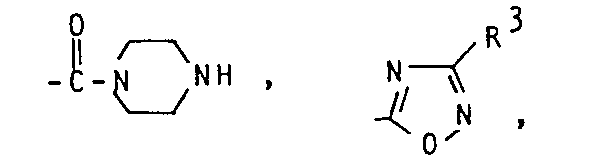

- Z Amino,
- R und Z zusammen ein Rest der Formel -NHCO-O-CO-,
- X Wasserstoff, Chlor, Brom, Methoxy, Äthoxy, Propoxy, SO3H, Butoxy, Phenoxy, Methyl, Äthyl, Propyl, Butyl, Acetylamino, Dimethylamino, Diäthylamino, Carboxyl oder -N02 sind, wobei
- R1 gegebenenfalls substituiertes Alkyl, Alkenyl, Cycloalkyl oderAryl,
- R2 Wasserstoff oder gegebenenfalls substituiertes Alkyl und
- R3 Wasserstoff oder einen Rest R' bedeuten und wobei Aminobenzoesäureamide, Mono- und Dichloraniline als Diazokomponenten A ausgeschlossen sind, wenn R1 Ci-bis C4-Alkyl, Methoxyäthyl oder Butoxyäthoxyäthyl ist.
Die erfindungsgemäßen Verbindungen eignen sich vorzüglich als Diazokomponenten und Zwischenprodukte zur Herstellung von Farbstoffen.
Description
- Die Erfindung betrifft Verbindungen der allgemeinen Formel I

- A der Rest einer Diazo- oder Kupplungskomponente und
- R ein Rest der Formel CN, COOR1, COSR1, CONH2, CONHNH2, CONH-NH-COR1,


- Z Amino,
- R und.Z zusammen ein Rest der Formel -NHCO-0-CO-,
- X Wasserstoff, Chlor, Brom, Methoxy, Äthoxy, Propoxy, SO3H, Butoxy, Phenoxy, Methyl, Äthyl, Propyl, Butyl, Acetylamino, Dimethylamino, Diäthylamino, Carboxyl oder -NO2 sind, wobei
- R1 gegebenenfalls substituiertes Alkyl, Alkenyl, Cycloalkyl oder Aryl,
- R2 Wasserstoff oder gegebenenfalls substituiertes Alkyl und
- R3 Wasserstoff oder einen Rest R 1 bedeuten und wobei Aminobenzoesäureamide, Mono- und Dichloraniline als Diazokomponenten A ausgeschlossen sind, wenn R C1- bis C4-Alkyl, Methoxyäthyl oder Butoxyäthoxaäthyl ist.
- Die Reste A der Diazokomponenten stammen vorwiegend aus der Anilin-, Aminonaphthalin-, Aminoanthrachinon-, Thiazol-, Benzthiazol-, Benzisothiazol-, Thiadiazol-, Indazol-, Pyrazol- oder Azobenzol-Reihe.
- Als Substituenten für die Reste A der Diazokomponente sind beispielsweise zu nennen:
- In der Benzolreihe: Chlor, Brom, Nitro, Cyan, Trifluormethyl, Methylsulfonyl, Äthylsulfonyl, Phenylsulfonyl, Carboxyl, Carbomethoxy, Carbobutoxy, Carbo-ß-methoxy-äthoxy, Carbo-B-hydroxy-äthoxy, gegebenenfalls N-mono- oder N-disubstituiertes Carbon- oder Sulfonamid, Methyl, Äthyl, Methoxy und Äthoxy.
- N-Substituenten der Carbon- oder Sulfonamide sind dabei z. B. Methyl, Äthyl, Propyl, Butyl, ß-Hydroxyäthyl, y-Hydroxy-propyl, B-Methoxy-äthyl, y-Methoxy-propyl oder y-Äthoxypropyl sowie das Pyrrolidid, Piperidid oder Morpholid.
- In der Azobenzolreihe: Chlor, Brom, Nitro, Cyan, Methyl, Hydroxy, Äthyl, Methoxy oder Äthoxy. In der heterocyclischen.Reihe: Chlor, Brom, Nitro, Cyan, Methyl, Äthyl, Phenyl, Methoxy, Äthoxy, Methylmercapto, B-Carbomethoxy- äthylmercapto, ß-Carboäthoxy-äthylmercapto, Carbomethoxy, Carboäthoxy, Acetyl, Methylsulfonyl oder Äthylsulfonyl.
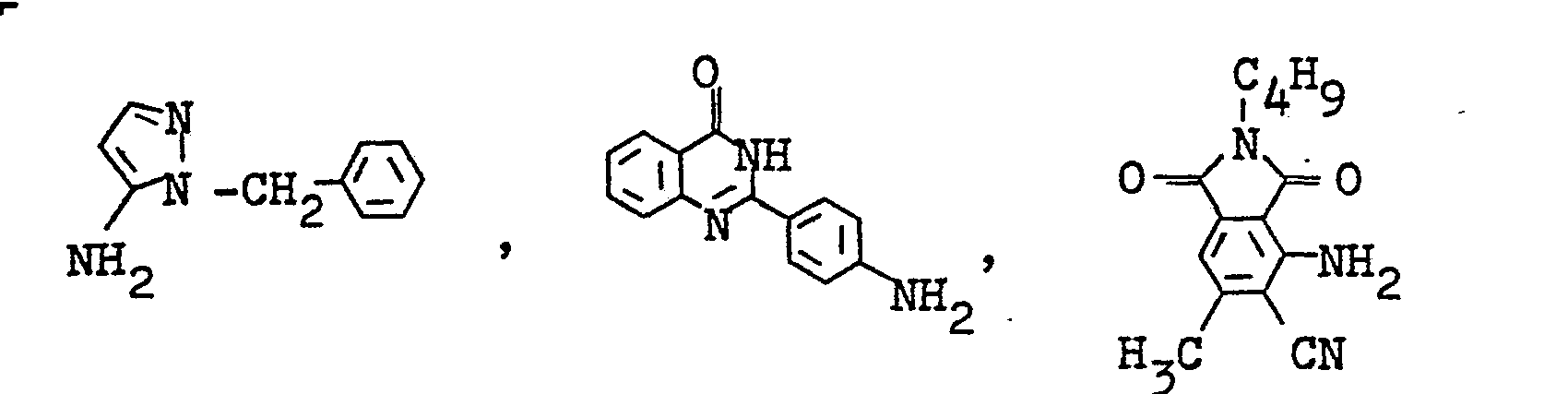
- Der Rest A leitet sich im einzelnen z. B. von folgenden Aminen ab: o-, m- oder p-Nitroanilin, o-, m- oder p-Cyananilin, 2,4-Dicyananilin, o-, m- oder p-Bromanilin, 2,4,6-Tribromanilin, 2-Chlor-4-nitroanilin, 2-Brom-4-nitroanilin, 2-Cyan-4-nitroanilin, 2-Methylsulfonyl-4-nitroanilin, 2-Methyl-4-nitroanilin, 2-Methoxy-4-nitro- anilin, Anilin, 2-, 3- oder 4-Toluidin, 2-, 3- oder 4- Chloranilin, 2,3-, 2,4-, 2,5-, 3,4- oder 3,5-Dichloranilin, 2-Methyl-4-chloranilin, 2-Methyl-5-chloranilin,. 2-Methyl-3-chloranilin, 2-, 3- oder 4-Trifluormethylanilin, 2-Trifluormethyl-4-chloranilin, 2-Methyl-4,5-dichloranilin, 3-Methyl-4-chloranilin, 3-Methyl-6-chlor- anilin, 3-Methyl-4,6-dichloranilin, 4-Methyl-3-chlor- anilin, 2-, 3- oder 4-Äthylanilin, 2,3-, 2,4-, 2,5-, 3,4- oder 3,5-Dimethylanilin, 3- oder 4-Acetylaminoanilin, 4-Benzoylaminoanilin, 2,5-Dichlor-4-acetamino- anilin, 3-Acetamino-4-methylanilin, 5-Acetamino-2-methylanilin, 4-Acetamino-2-methylanilin, 5-Chlor-4-acetylamino-2-methylanilin, 5-Chlor-2-methoxyanilin, 4,5-Dichlor-2-methoxyanilin, 3-Chlor-4-methoxyanilin, 1-Aminobenzol-4-methylsulfon, 4-Aminodiphenylsulfon, 1-Amino-2-chlor-4-methylsulfon, 1-Amino-2-chlor-6-brom-4-methylsulfon, 4-Amino-acetophenon, 3,4-Dicyananilin, 4-Aminodiphenyl- äther, 4-Chlor-2-nitroanilin, 4-Methyl-2-nitroanilin, 4-Methoxy-2-nitroanilin, 2-Chlor-5-aminobenzonitril, 2-Amino-5-chlorbenzonitril, 1-Amino-2-nitrobenzol-4-sulfonsäure-n-butylamid oder -ß-methoxyäthylamid, 2,4-Dinitro-anilin, 2,4-Dinitro-6-chloranilin, 2,4-Dinitro-6-bromanilin, 2,4-Dinitro-6-cyananilin, 1-Amino-2,4-dinitro- benzol-6-methylsulfon, 2,6-Dichlor-4-nitroanilin, 2,6-Dibrom-4-nitroanilin, 2-Chlor-6-brom-4-nitroanilin, 2,6-Dicyan-4-nitroanilin, 2-Cyan-4-nitro-6-chloranilin, 2-Cyan-4-nitro-6-bromanilin, 1-Amino-2,6-dibrom-benzol-4-methylsulfon, 1-Amino-2,6-dichlorbenzol-4-methylsulfon, 1-Amino-2,4-dinitrobenzol-6-carbonsäure-methylester oder -ß-methoxyäthylester, 3,5-Dichloranthranilsäurepropylester, 3,5-Dibrom-anthranilsäure-ß-methoxyäthylester, N-Acetyl-p-phenylendiamin, 2-, 3- oder 4-Aminobenzoesäure-methylester, -äthylester, -propylester, -butylester, -isobutylester, -ß-methoxyäthylester, -ß-äthoxy-äthylester, -methyl-diglykolester, -äthyldiglykolester, -methyl-triglykolester, -äthyltriglykol- ester, -ß-hydroxyäthylester, -ß-acetoxy-äthylester, -ß-(ß'-hydroxy-äthoxy)-äthylester, -ß-hydroxy-propylester, -γ-hydroxy-propylester, -ω-hydroxy-butylester, -ω-hydroxy-hexylester, 5-Nitro-anthranilsäuremethylester, isobutylester, -methyl-diglykolester, -ß-methoxyäthylester, -ß-butoxy-äthylester, -B-acetoxy-äthylester, 3-oder 4-Aminophthalsäure-, 5-Aminoisophthalsäure- oder Amino-terephthalsäure-dimethylester, -diäthylester, -dipropylester, -dibutylester, 3- oder 4-Aminobenzoesäureamid, -methylamid, -propylamid, -butylamid, -isobutylamid, -cyclohexylamid, -ß-äthyl-hexylamid, -y-methoxypropylamid, -y-äthoxy-propylamid, 2-, 3- oder 4-Aminobenzoesäure-dimethylamid, -diäthylamid, -pyrrolidid, -morpholid, N-methyl-N-ß-hydroxy-äthylamid, 5-Amino-isophthalsäurediamid, -bis-y-methoxy-propylamid, Aminoterephthalsäurebis-diäthylamid, 3- oder 4-Amino-phthalsäure-imid, -β-hydroxy-äthylamid-, y-hydroxy-propylamid, 3-Amino-6-nitro-phthalsäure-β-hydroxy-äthylamid, 2-, 3- oder 4-Aminobenzosulfonsäure-dimethylamid, -diäthylamid, -pyrrolidid, -morpholid, Methylsulfonsäure-2'-, -3'- oder 4'-amino-phenylester, Äthylsulfonsäure-2'-, -3'- oder -4'-amino-phenylester, Butylsulfonsäure-2'-, -3'- oder -4'-aminophenylester, Benzolsulfonsäure-2'-, -3'- oder 4'-aminophenylester, 1- und 2-Amino-anthrachinon, 1-Amino-4-chlor-anthrachinon, 3- oder 4-Aminodiphenylenoxid, 2-Amino-benzthiazol, 2-Amino-6-carbonsäure-methylester- benzthiazol, 2-Amino-6-methyl-sulfonyl-benzthiazol, 2-Amino-6-cyanbenzthiazol, 2-Amino-6-nitro-benzthiazol, 5,6- oder 6,7-Dichlor-2-amino-benzthiazol, 4-Amino-5-brom-7-nitro-1,2-benzisothiazol, 3-Amino-5-nitro-2,1-benzisothiazol, 3-Amino-5-nitro-7-brom-2,1-benzisothia-. zol, 2-Aminothiazol, 2-Amino-5-nitrothiazol, 2-Amino-4-methyl-thiazol-5-carbonsäure-äthylester, 2-Amino-4-methyl-5-acetyl-thiazol, 2-Amino-3-cyan-4-methyl-thiophen-5-carbonsäureester, 2-Phenyl-5-amino-1,3,4-thiadiazol, 3-Methylmercapto-5-amino-1,2,4-thiadiazol, 3-B-Carbomethoxy-äthylmercapto-5-amino-1,2,4-thiadiazol sowie von den Diazokomponenten der Formeln




- Geeignete Diazokomponenten der Aminoazobenzolreihe A-NH2 sind beispielsweise: 4-Aminoazobenzol, 2',3-Dimethyl-4-aminoazobenzol, 3',2-Dimethyl-4-aminoazobenzol, 2,5-Dimethyl-4-aminoazobenzol, 2-Methyl-5-methoxy-4-amino- azobenzol, 2-Methyl-4',5-dimethoxy-4-aminoazobenzol, 4'-Chlor-2-methyl-5-methoxy-4-aminoazobenzol, 4'-Nitro-2-methyl-5-methoxy-4-aminoazobenzol, 4'-Chlor-2-methyl-4-aminoazobenzol, 2,5-Dimethoxy-4-aminoazobenzol, 41- Chlor-2,5-dimethoxy-4-aminoazobenzol, 4'-Nitro-2,5-di- methoxy-4-aminoazobenzol, 4'-Chlor-2,5-dimethyl-4-amino- azobenzol, 4'-Methoxy-2,5-dimethyl-4-aminoazobenzol, 4'-Nitro-4-aminoazobenzol, 3,5-Dibrom-4-aminoazobenzol, 2,3'-Dichlor-4-aminoazobenzol, 3-Methoxy-4-aminoazobenzol, 4'-Hydroxy-2'-methyl-4-aminoazobenzol, 3-Chlor-4-aminoazobenzol.
- Von den besonders wertvollen Diazokomponenten A-NH2 seien im einzelnen genannt: 4-Nitro-anilin, 2-Chlor-4-nitro- anilin, 2-Brom-4-nitroanilin, 2-Cyan-4-nitro-anilin, 2-Methoxy-4-nitro-anilin, 2-Amino-5-nitro-phenylsulfon- säuredimethylamid, 2-Amino-5-nitro-phenylsulfonsäure- butylamid, 2-Amino-5-nitro-phenylsulfonsäure-ß-methoxyäthylamid, 2-Amino-benzonitril, 2-Chlor-4-amino-benzonitril, 2-Chlor-5-amino-benzonitril, 2-Amino-5-chlor-benzonitril, 3,5-Dichlor-2-amino-benzonitril, 1-Amino-2,4-di- cyanbenzol, 1-Amino-2,4-dicyan-6-chlor-benzol, 2-Chlor-4-amino-5-nitro-benzonitril, 2-Amino-3-chlor-5-nitro- benzonitril, 2-Amino-3-brom-5-nitro-benzonitril, 2,6-Dicyan-4-nitro-anilin, 2,5-Dichlor-4-nitroanilin, 2,6-Dichlor-4-nitro-anilin, 2,6-Dibrom-4-nitro-anilin, 2-Chlor-6-brom-4-nitro-anilin, 2,4-Dinitro-anilin, 2,4-Dinitro-6-chloranilin, 2,4-Dinitro-6-brom-anilin, 2-Amino-3,5-dinitro-benzonitril, 1-Amino-4-nitrobenzol-2-methylsulf.on, 1-Amino-4-nitrobenzol-2-äthylsulfon, 4-Methylsulfonyl-anilin, 1-Amino-2-chlorbenzol-4-methyl- sulfon, 1-Amino-2,6-dibrombenzol-4-methylsulfon, 1-Amino-2,6-dichlorbenzol-4-methylsulfon, 2-(3'-Phenyl-oxdiazolyl-1,2,4)-anilin, 2-(3'-Methoxymethyloxdiazolyl-1,2,4)-anilin, o-, m-, p-Chloranilin, o-, m-, p-Bromanilin, Anthranilsäure-methyl-, äthyl-, propyl-, methoxyäthylester, 2- und 4-Amir-o-benzoesäureester, 2-Amino-5-nitro- benzoesäureester, 2-Amino-3-chlor-5-nitro-benzoesäureester, 2-Amino-3,5-dichlor-benzoesäureester, 2-Amino-3,5-dibrom-benzoesäureester, 2-Amino-3,5-dinitro-benzoesäure-methylester oder -ß-methoxy-äthylester, 2-Amino- terephthalsäure-diäthylester, 4-Amino-azobenzol, 2,3'-Dimethyl-4-amino-azobenzol, 2',3-Dimethyl-4-amino-azobenzol, 2,5-Dimethyl-4-amino-azobenzol, 3,5-Dibrom-4-amino- azobenzol, 3-Chlor-4-aminoazobenzol, 3-Brom-4-aminoazobenzol, p-Cyananilin, 2,6-Dicyan-4-chlor- oder -4- methylanilin oder 2,6-Dichlor-4-cyananilin.
- Von den besonders wertvollen heterocyclischen Diazokomponenten A-NH2 seien erwähnt: 2-Amino-thiazol, 2-Amino-5-nitro-thiazol,.2-Amino-4-methyl-thiazol-5-carbonsäure- äthylester, 2-Amino-5-phenyl-1,3,4-thiadiazol, 3-Phenyl-5-amino-1,2,4-thiadiazol, 3-Methyl-mercapto-5-amino-1,2,4-thiadiazol, 3-B-Carbomethoxy-äthylmercapto-5-amino-1,2,4-thiadiazol, 3-B-Carboäthoxy-äthylmercapto-5-amino-1,2,4-thiadiazol, 2-Amino-6-cyan-benzthiazol, 2-Amino-6-carbonsäuremethylester-benzthiazol, 2-Amino-6-nitro-benzthiazol, 2-Amino-3-cyan-4-methyl-thiophen-5-carbonester, 1-Benzyl-5-aminopyrazol, 1-Cyclohexyl-5-aminopyrazol.
- Kupplungskomponentenreste A stammen z. B. aus der Phenol-, Naphthalin-, Pyridon-, Pyrazolon-, Pyridin-, Pyrimidin-, Acetoacetanilid-, Indol-, Thiazol-, Homophthalimid- oder Anilinreihe.
- Einzelne repräsentative Beispiele sind z. B.: Phenol, o-, m-, p-Kresol, 2,6-Dihydroxy-4-methylpyridin, 2,6-Dihydroxy-3-cyan-4-methyl-pyridin, 1,4-Dimethyl-2-hydroxy-3-cyan-pyridon-6, 1-Äthyl-2-hydroxy-3-cyan-4-methyl-pyridon-6, 2-Amino-naphthalin-l-sulfosäure, 1-Hydroxynaphthalin, 2-Hydroxynaphthalin, 2-Naphthol-3-carbonsäurephenylamid, 2-Naphthol-3-carbonsäure-anisi- did, 3-Phenyl-5-diäthylamino-thiazol, Acetessigsäuredianisidid, Phenylindol, Methylindol, 1-Phenyl-3-methylpyrazolon-5 oder 1-Phenyl-3-carbo-C1- bis C4-alkoxy- pyrazolon-5.
- Einzelne Reste R der Formel COOR1 sind z.B.: COOCH3, COOC2H5, COOCH(CH3)2, COOC3H7(n),


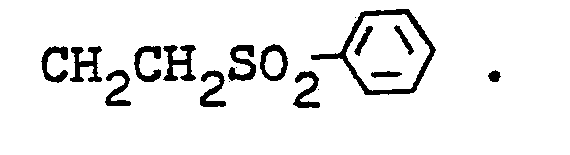
- Einzelne Reste R3 der heterocyclischen Reste sind beispielsweise: Methyl, Äthyl, Propyl, Butyl, Pentyl, Hexyl, Heptyl, 1-Äthylpentyl, Methoxymethyl, Methoxyäthyl, (n)-Propoxyäthyl, (i)-Propoxyäthyl, (n)-Butoxyäthyl, (n)-Hexoxyäthyl, Phenyl, Phenylallyl oder Reste der Formeln

- Zur Herstellung der Verbindungen der Formel I, in denen A der Rest einer Diazokomponente ist, kann man eine Diazoverbindung von Aminen der Formel


- Zur Herstellung der Verbindungen der Formel I, bei denen A der Rest einer Kupplungskomponente ist, kann man Verbindungen der Formel

- Die Verfahren sind im Prinzip bekannt. Einzelheiten der Herstellung können den Beispielen entnommen werden, in denen sich Angaben über Teile und Prozente, sofern nicht anders vermerkt, auf das Gewicht beziehen.
- Die Verbindungen der Formel I sind wertvolle Diazokomponenten zur Herstellung von Azofarbstoffen, die man daraus durch Diazotierung und Kupplung mit Kupplungskomponenten erhält.
- Von besonderer Bedeutung sind Verbindungen der Formel I a

- D der Rest einer Diazokomponente ist und Z und
- R die angegebene Bedeutung haben.
- Bevorzugte Diazokomponenten entstammen der Anilin-, Phthalimidyl-, Chinazolonyl-, Pyrazol- und Thiazol-Reihe, wobei als Substituenten für die Diazokomponenten insbesondere Fluor, Chlor, Brom, Trifluormethyl, Methyl, Äthyl, Methoxy, Äthoxy, Phenoxy, Cyan, Nitro, Methylsulfonyl, Äthylsulfonyl, Allylsulfonyl, Phenylsulfonyl, Carboxyl, Carbonsäureester, gegebenenfalls substituiertes Sulfamoyl oder Oxdiazolyl in Betracht kommen.
- Bevorzugte Reste R sind


- Bevorzugte Reste R3 in der 1,2,4-Oxdiazolyl-Reihe sind beispielsweise: CH3, C2H5, CH2OCH3, CH2CH2OCH3, CH2CH2OC2H5, CH2CH2OC3H7(n), (CH2CH20)2CH3, (CH2CH20)3CH3, (CH 2 CH 2 0)2 C 3 H 7(n), C6H5, C6H4CH3 oder C6H4Cl.
- Bevorzugte Reste R3 in der 1,3,4-Oxdiazolyl-Reihe sind beispielsweise: CH3, C2H5, C3H7, C5H11(n),

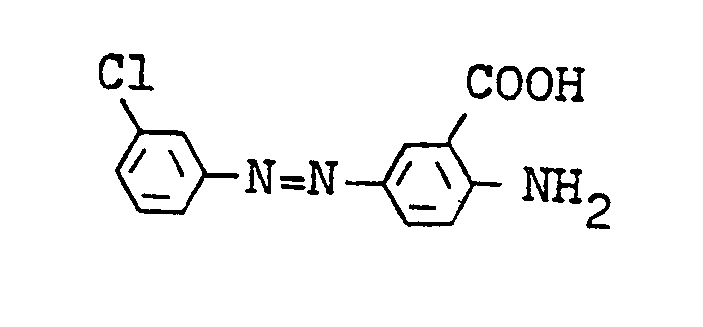
- 127,5 Teile 3-Chlor-anilin werden auf übliche Art und Weise wäßrig diazotiert. Nach Zerstören der überschüssigen salpetrigen Säure mit Amidosulfonsäure puffert man die Diazoniumsalzlösung z. B. mit Hilfe von Natriumhydrogencarbonat auf pH 5,0 bis 6,0 ab und setzt dann eine Lösung von 232 Teilen der Verbindung der Formel



- Cl-Bestimmung: gef. 12,5 %, Theorie 11,8 % 150 Teile der so erhaltenen Verbindung werden mit 350 Raumteilen N-Methyl-pyrrolidon und 72 Teilen 2-Äthylhexanol auf 80 °C erwärmt. Dann tropft man 15 Raumteile Triäthylamin zu und rührt das Gemisch 4 Stunden bei 110 °C. Nach dem Erkalten läßt man unter guter Rührung langsam 1000 Raumteile Wasser hinzulaufen und filtriert das ausgefallene Produkt der Formel



- 500 Teile der Verbindung der Formel


- 100 Teile dieses Produktes werden mit 200 Raumteilen Aceton versetzt und mit 1000 Teilen Ammoniakwasser (25 %ig) vereinigt. Man rührt das Gemisch 1 Stunde bei 50 °C, filtriert dann ab und wäscht mit Wasser. Nach dem Trocknen erhält man 78 Teile des Produktes der Formel

- IR-Spektrum: sehr starke Absorptionsbanden bei 1595 und 1623 cm-1.
- 72 Teile dieses Produktes werden in 240 Teilen Dimethylformamid gelöst und das Gemisch zu einer Lösung von 60 Teilen Phosgen in 160 Teilen Dimethylformamid gegeben. Man rührt das Gemisch bei 40 °C 1 Stunde nach und läßt es dann nach Erkalten auf 300 Teile Wasser ausrühren. Die erhaltene Suspension wird mit Natronlauge auf einen pH-Wert von 7 - 8 abgepuffert. Nach Absaugen und Waschen des ausgefallenen Produktes isoliert man 75 Teile eines gelben Pulvers der Formel

- Das Produkt hat keinen scharfen Schmelzpunkt und sintert zwischen 160 bis 250 °C. 70 Teile dieses Produktes werden mit 400 Raumteilen Methanol und 80 Teilen konzentrierter Schwefelsäure sowie mit 50 Teilen Wasser versetzt. Man rührt das Gemisch 8 Stunden unter Siedekühlung, anschließend werden 3000 Teile Wasser zugesetzt und die Fällung mit Natronlauge auf pH 3,5 - 4,5 abgestumpft. Das ausgefallene Produkt wird heiß abfiltriert und mit Wasser gewaschen. Man erhält 60 Teile 2',5'-Dichlor-3-cyan-4-aminoazobenzol mit einem Schmelzpunkt von 250 °C. Die Cyangruppe erscheint in der spektralphotometrischen IR-Aufnahme bei 2195 cm-1 (mittel ausgeprägt).
- Setzt man analog der in Beispiel 2 beschriebenen Arbeitsweise 100 Teile der Verbindung der Formel

- Durch Entwässerung (z. B. analog dem im Beispiel 2 beschriebenen Verfahren) erhält man daraus 66 Teile 3'-Chlor-3-cyan-4-amino-azobenzol mit einem Schmelzpunkt von 255 °C (IR-Spektrum: -CN-Bande bei 2190 cm-1 (schwach), weitere starke Absorptionsbanden bei z. B. 1685 cm-1, 1589 cm-1 (Träger: KBr)).
- 353 Teile 4-Aminobenzoesäure-äthylester werden wie üblich in ca. 2000 Raumteilen Wasser mit Salzsäure und Natriumnitrit unter Zusatz von Eis diazotiert. Dann läßt die Diazoniumsalzlösung nach Entfernen von überschüssiger salpetriger Säure zu einer Lösung von 445 Teilen der Verbindung der Formel
-

- Man erhält 495 Teile eines dunkelgelben Produktes der Formel ,
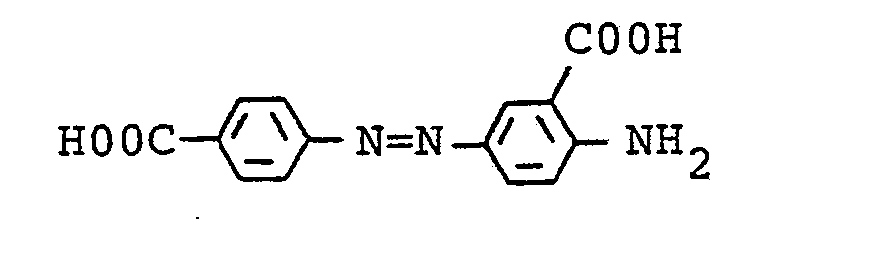

- 100 Teile dieser Verbindung werden analog der in Beispiel 1 beschriebenen Arbeitsweise mit 300 Teilen n-Propanol umgesetzt. Nach Isolieren und Trocknen wie üblich erhält man ein gelbes Pulver der Formel

- 121 Teile des Produktes der Formel

- Nach Absaugen, Waschen mit Wasser und Trocknen erhält man 148 Teile der.Diazokomponente der Formel

- 150 Teile der Verbindung der Formel


- 140 Teile der gleichen Verbindung erhält man, wenn anstatt Triäthylamin 27 Teile Natriummethylat in 80 Raumteilen Methanol zugesetzt werden und ansonsten analog verfahren wird.
- 353 Teile 4-Aminobenzoesäureäthylester werden analog zu der in Beispiel 5 beschriebenen Arbeitsweise zu 4'-Carb- oxyäthyl-3-carboxyl-azobenzol-4-amino-CJ-methansulfonsäure


- 158 Teile dieses Produktes werden in ein Gemisch aus 700 Teilen Äthylalkohol und 10 Teilen Triäthylamin gegeben. Man rührt 1 1/2 Stunden bei 50 bis 60 °C nach, destilliert überschüssigen Alkohol soweit wie möglich ab und isoliert das entstandene Produkt nach Zugabe von Wasser wie üblich. Nach dem Trocknen erhält man 150 Teile der Diazokomponente der Formel
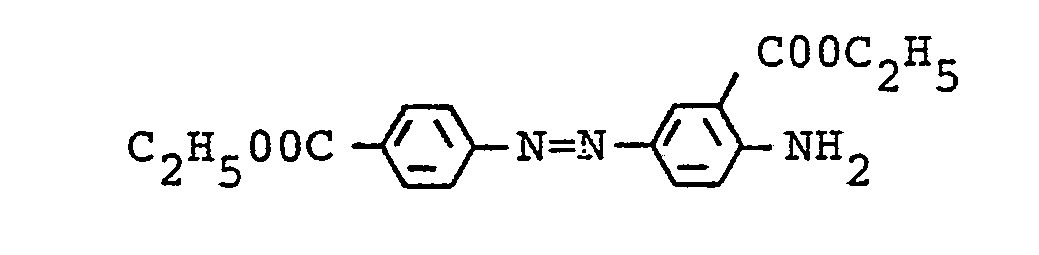
- 34,6 Teile der Verbindung der Formel


- 13,6 Teile der Verbindung der Formel



- 95 Teile der Verbindung der Formel


- 20,8 Teile der Verbindung der Formel


- 59 Teile der Verbindung der Formel

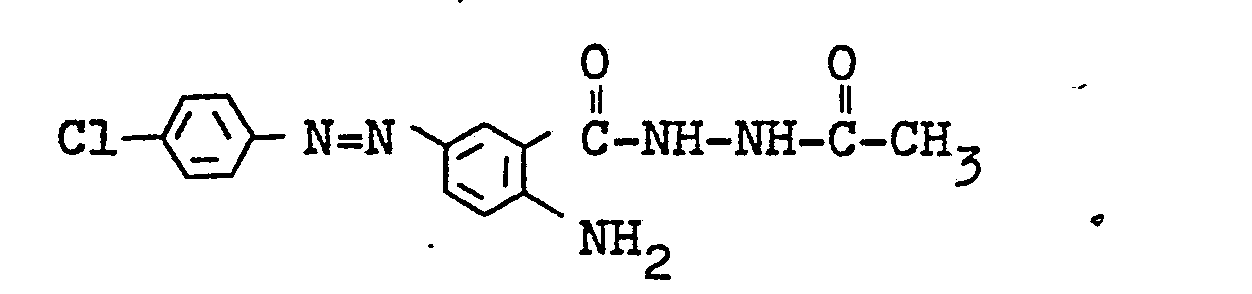

- 27 Teile der Verbindung der Formel


- Analog
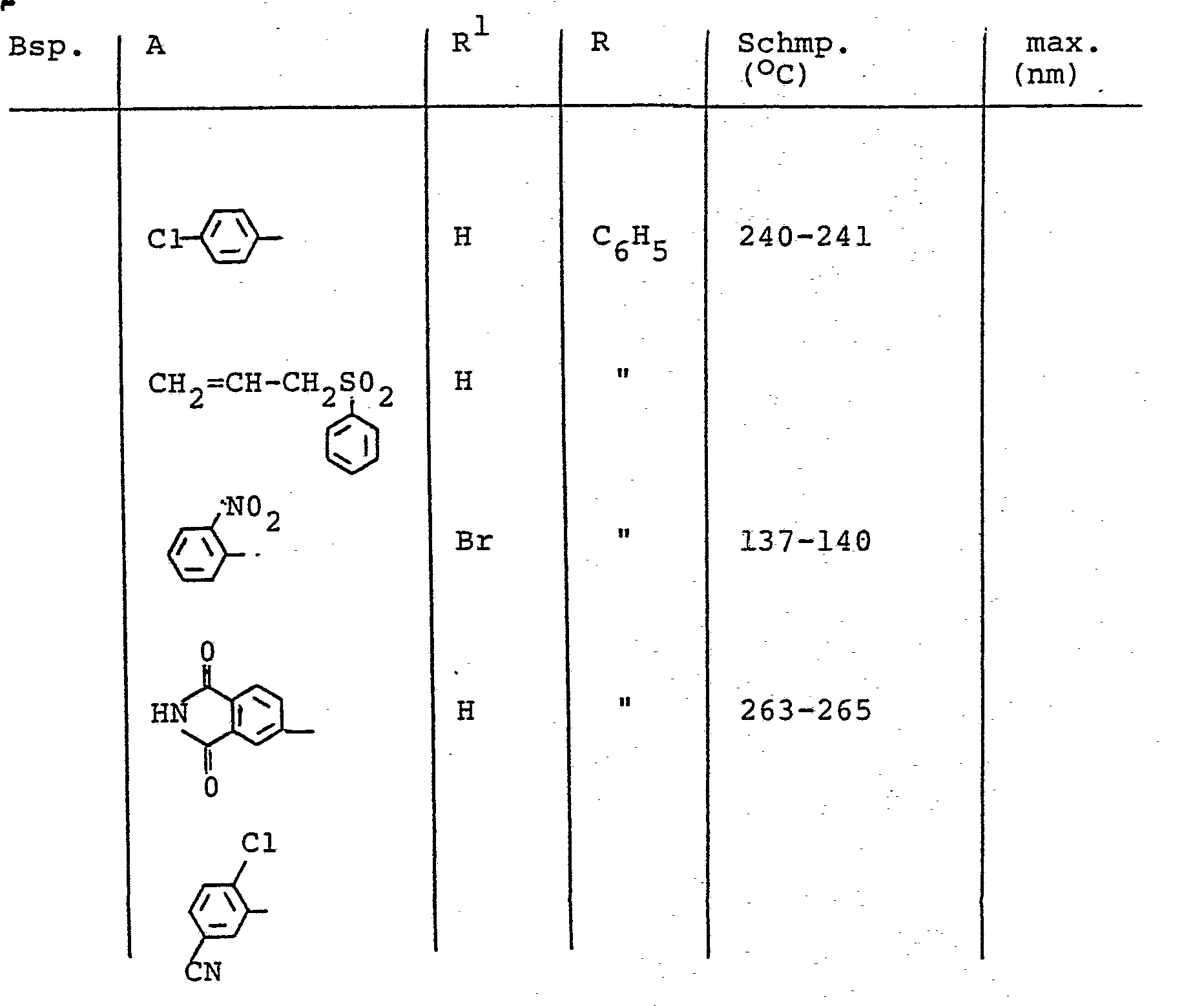
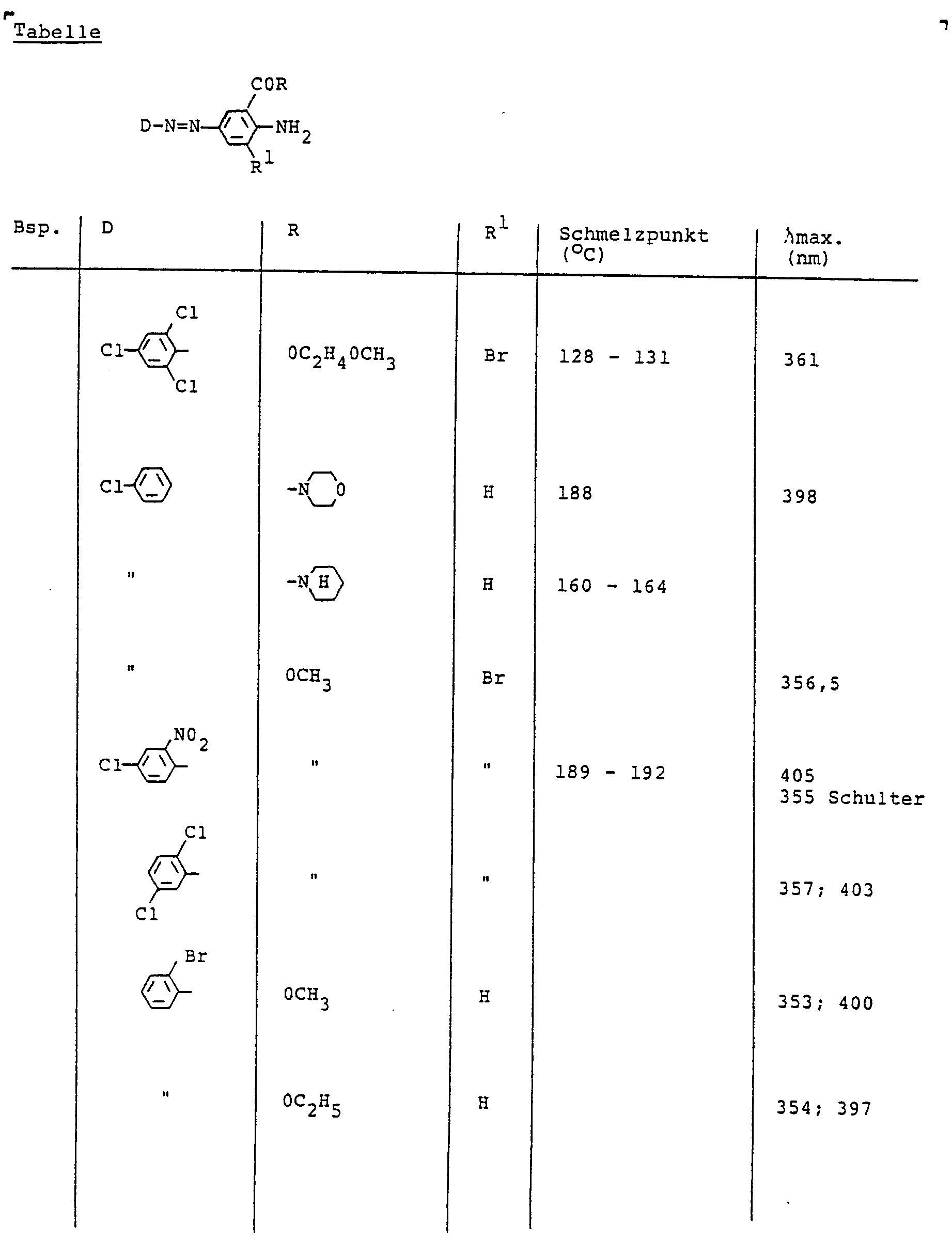
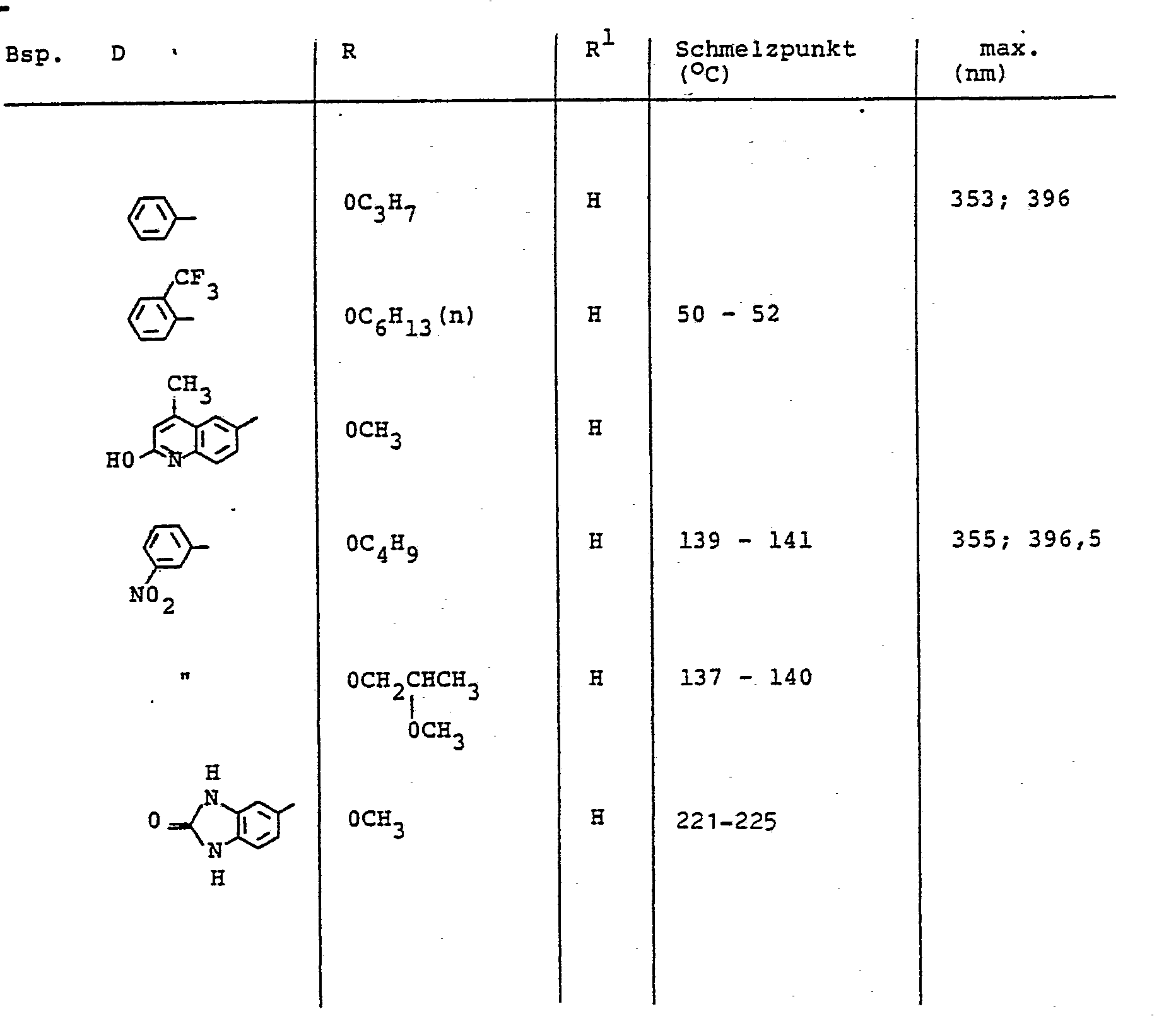
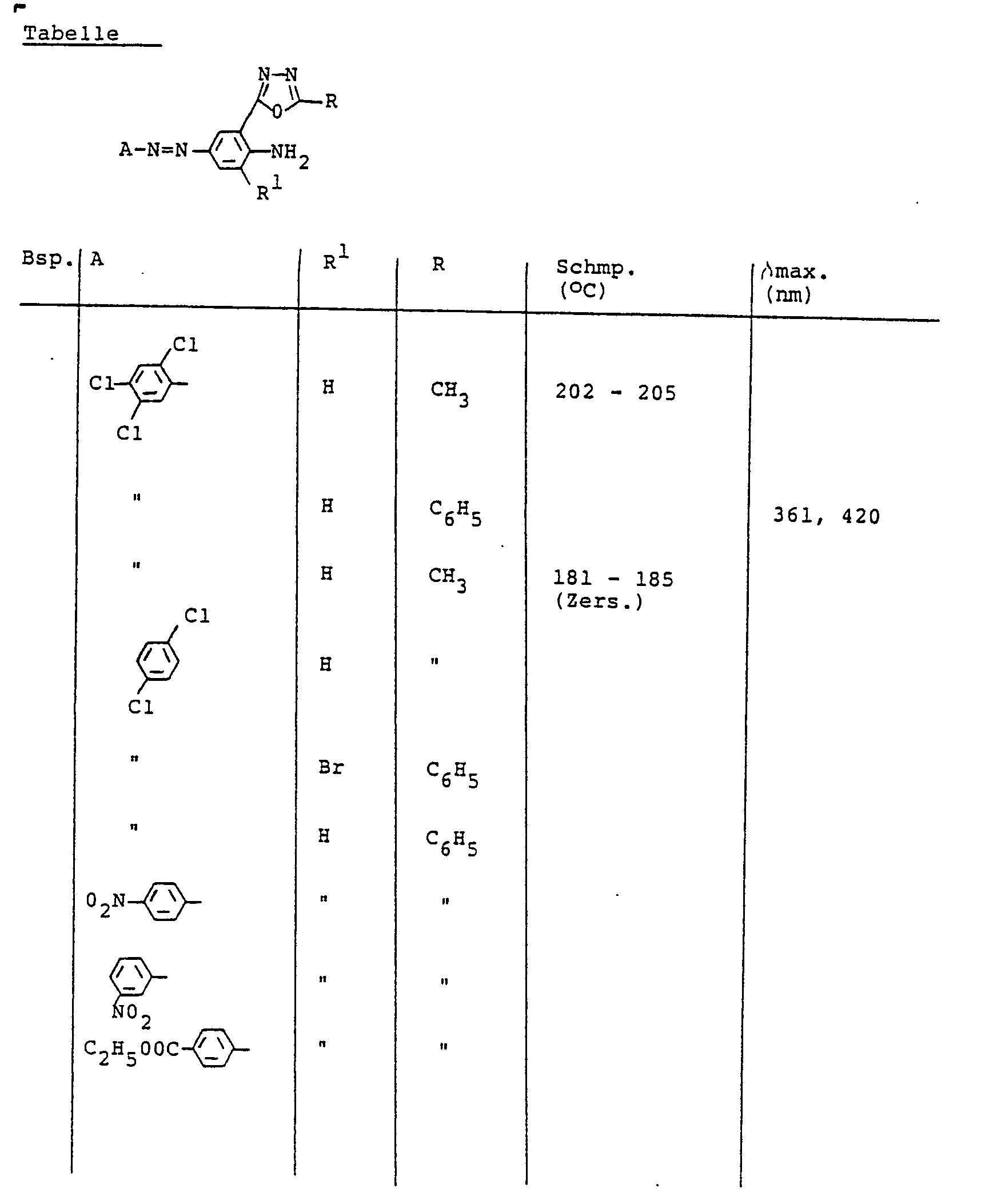
zu den beschriebenen Methoden können auch die in den folgenden Tabellen gekennzeichneten Verbindungen hergestellt werden.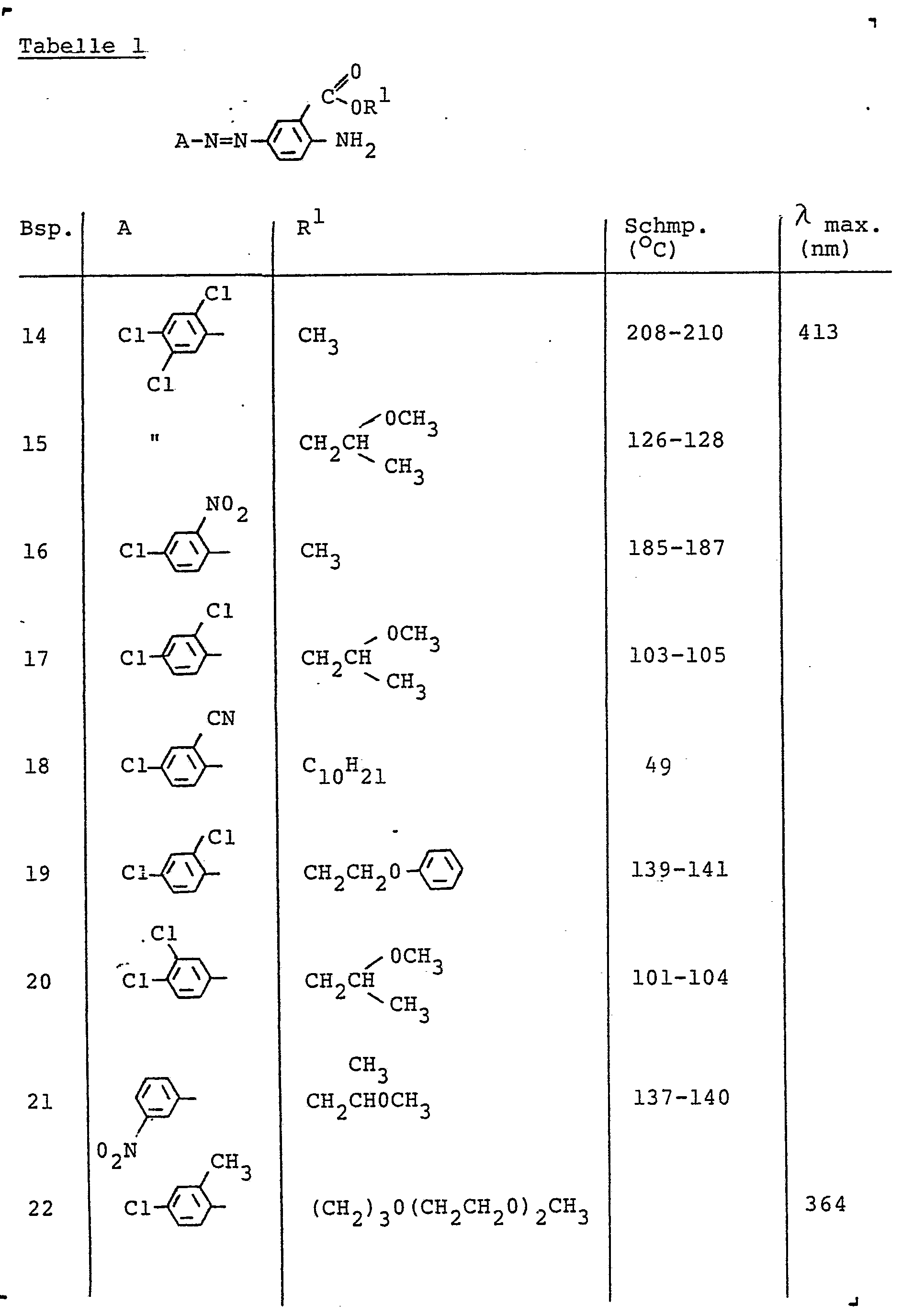

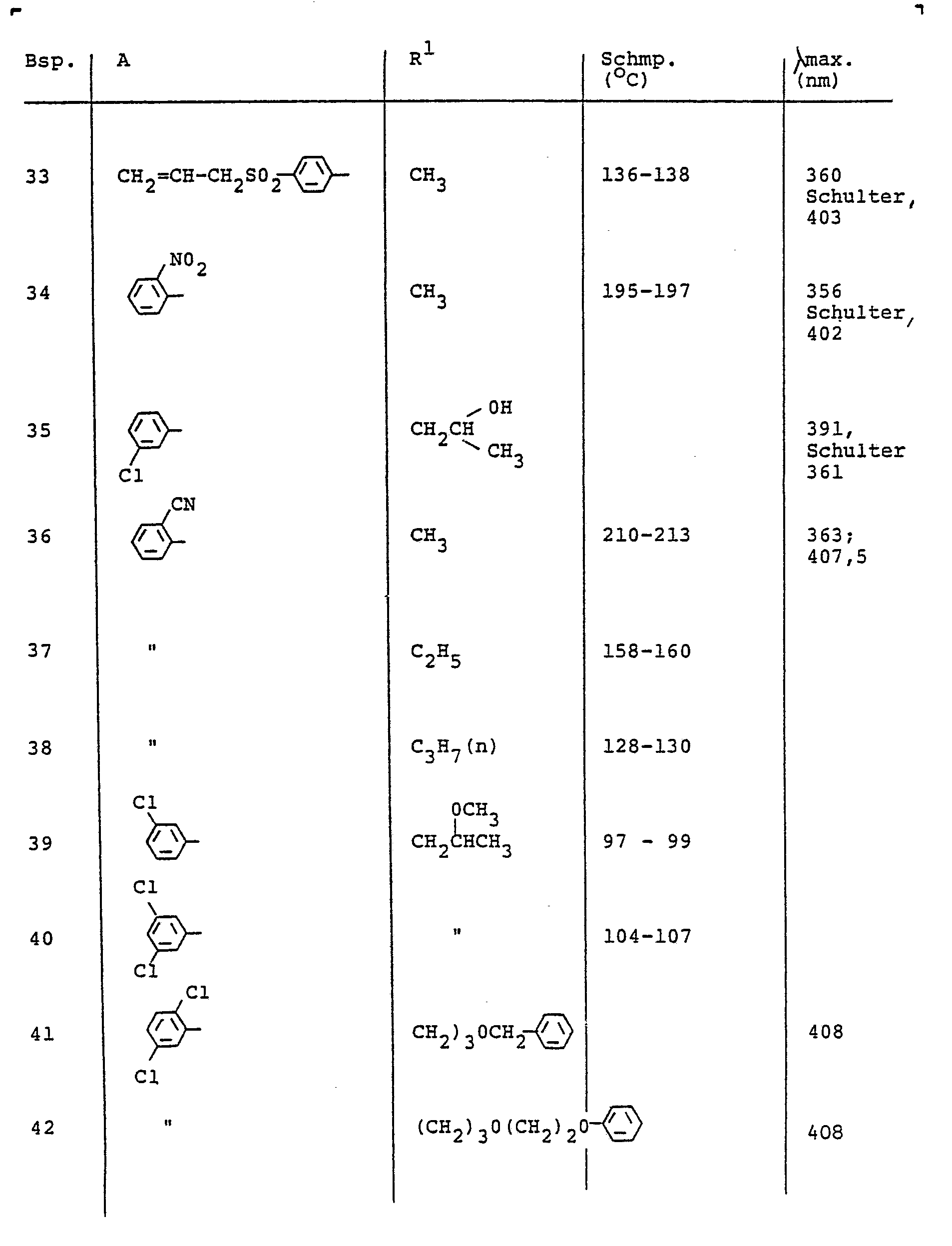

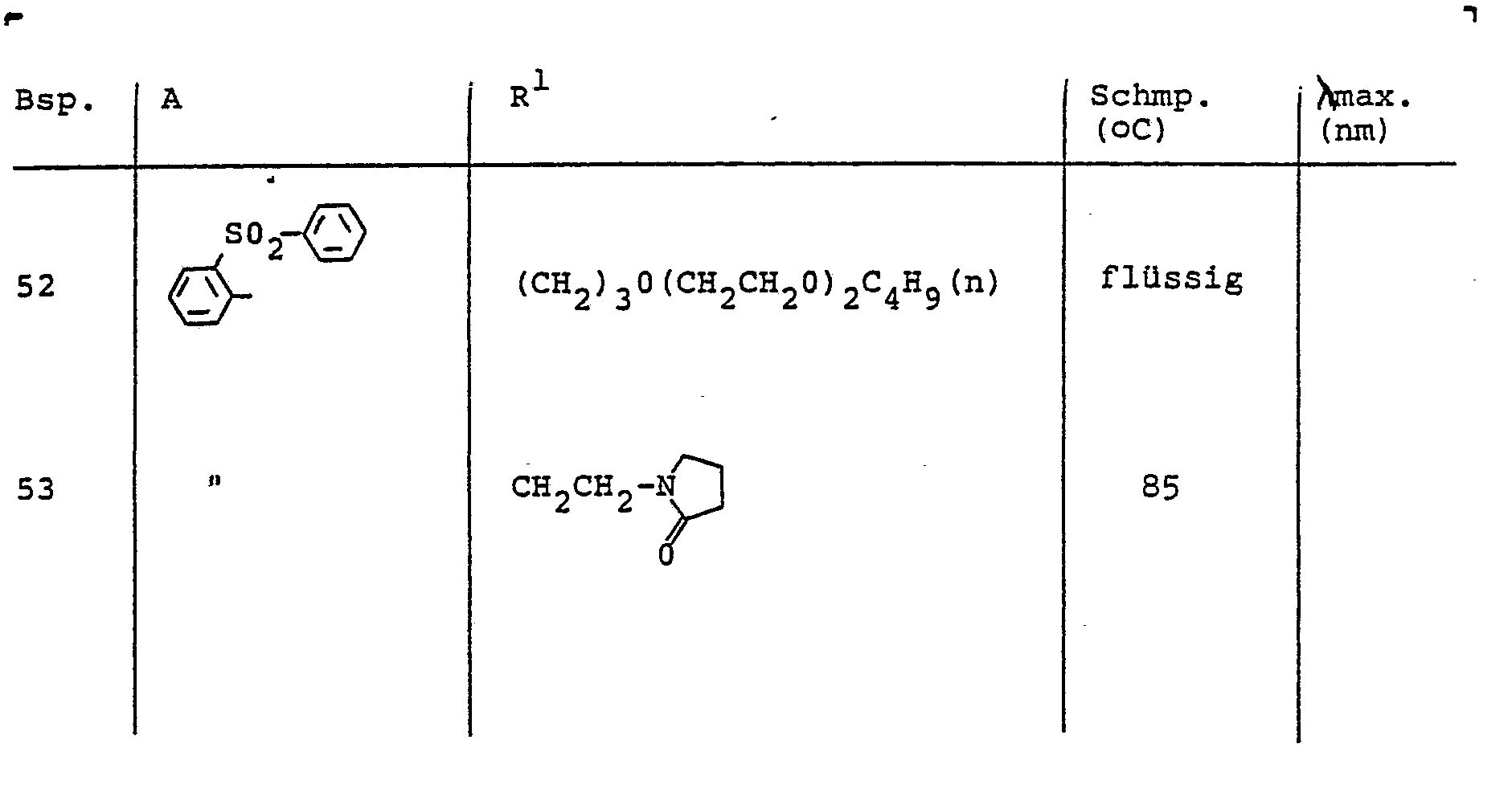
- Verwendet man bei der Herstellung der in Tabelle 1 be- schriebenen Verbindungen anstelle der dort eingesetzten Amine cyclische Amine, so erhält man die entsprechenden Amide wie zum Beispiel



- Analog zu den in den Beispielen 1, 2, 5 und 9 benannten Verfahren lassen sich z.B. folgende Azoanthranilsäurederivate herstellen:

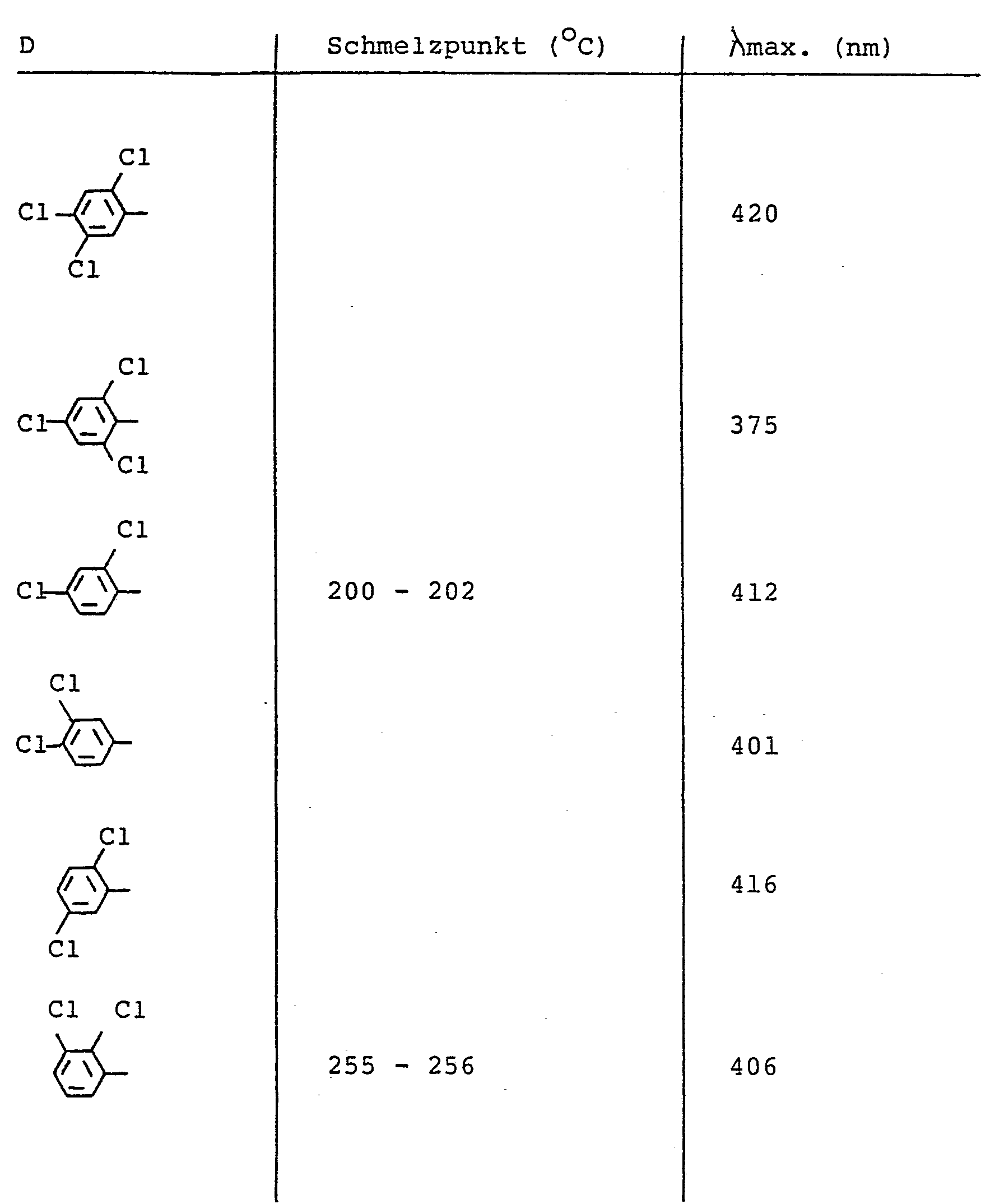


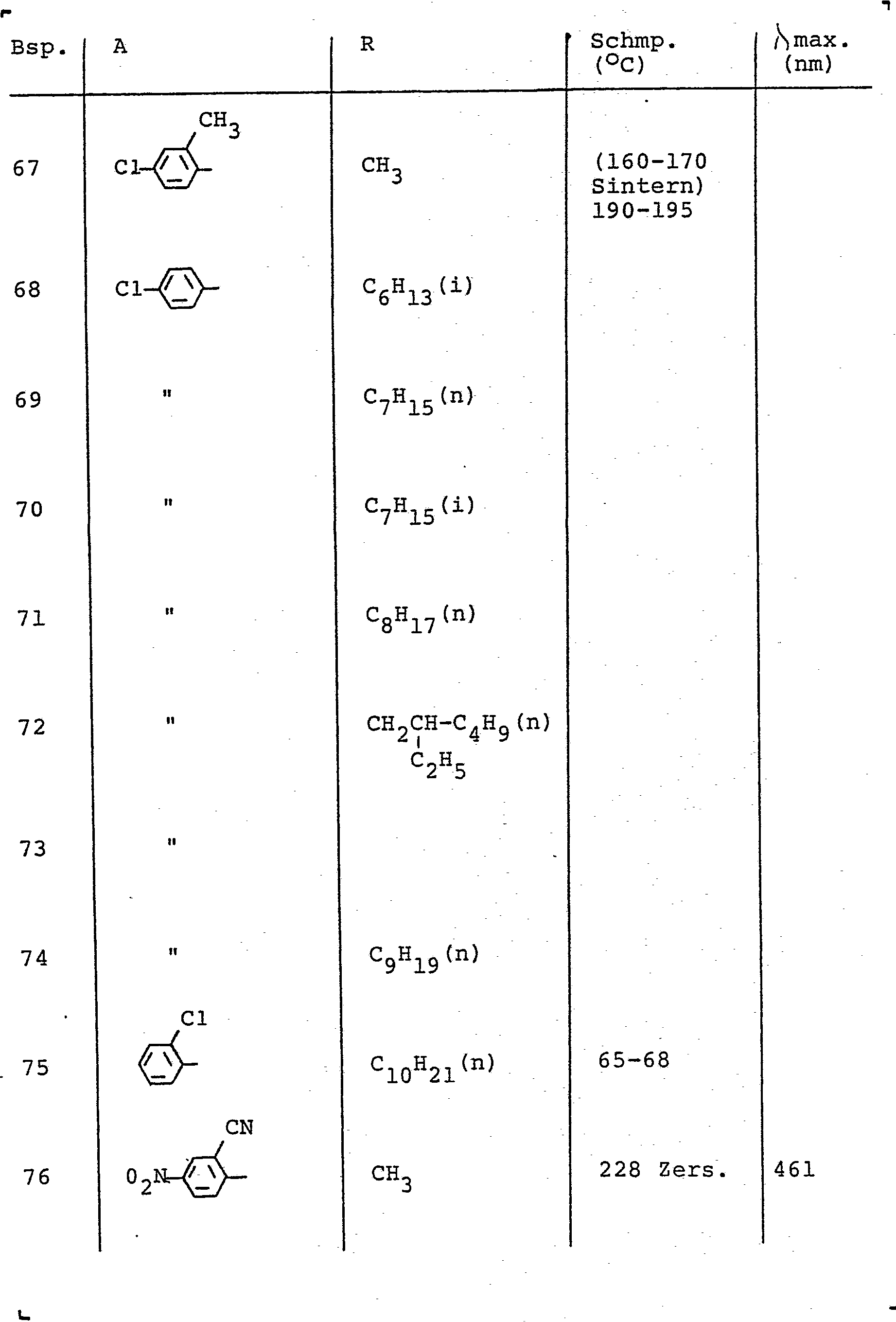


- Verwendet man anstelle der in Tabelle 2 angegebenen Reste A z. B. die folgenden Reste:








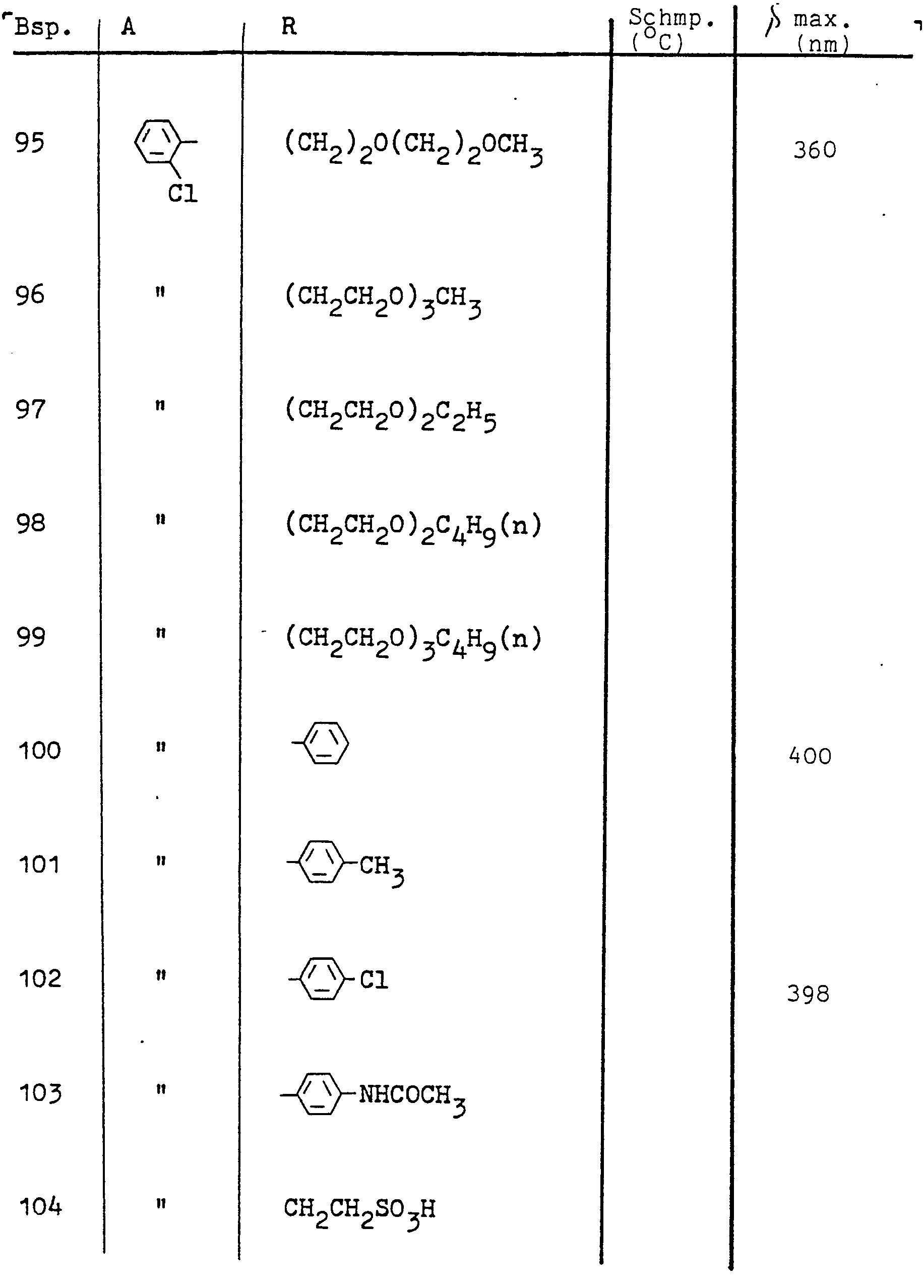

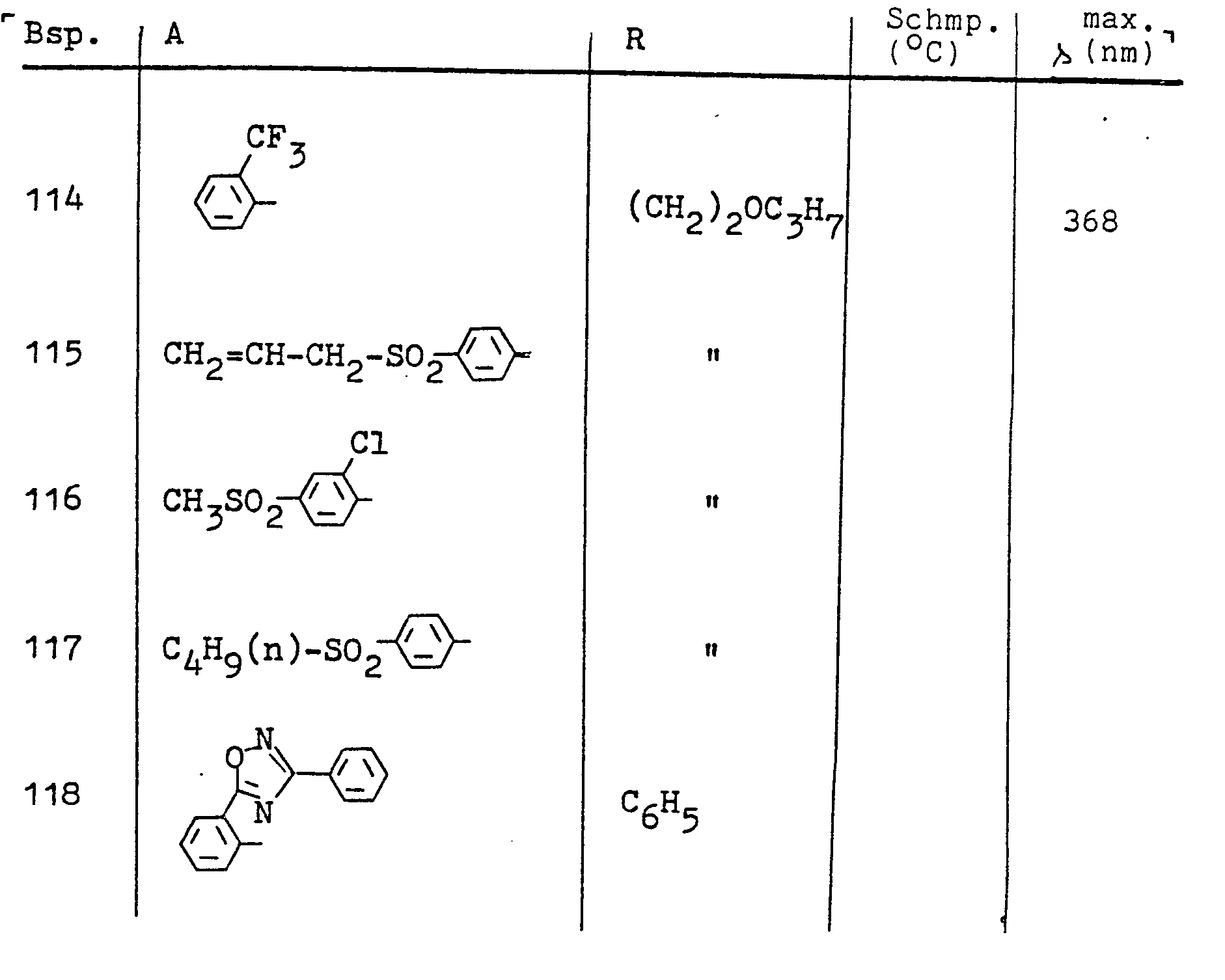


- 11,0 Teile der Verbindung der Formel
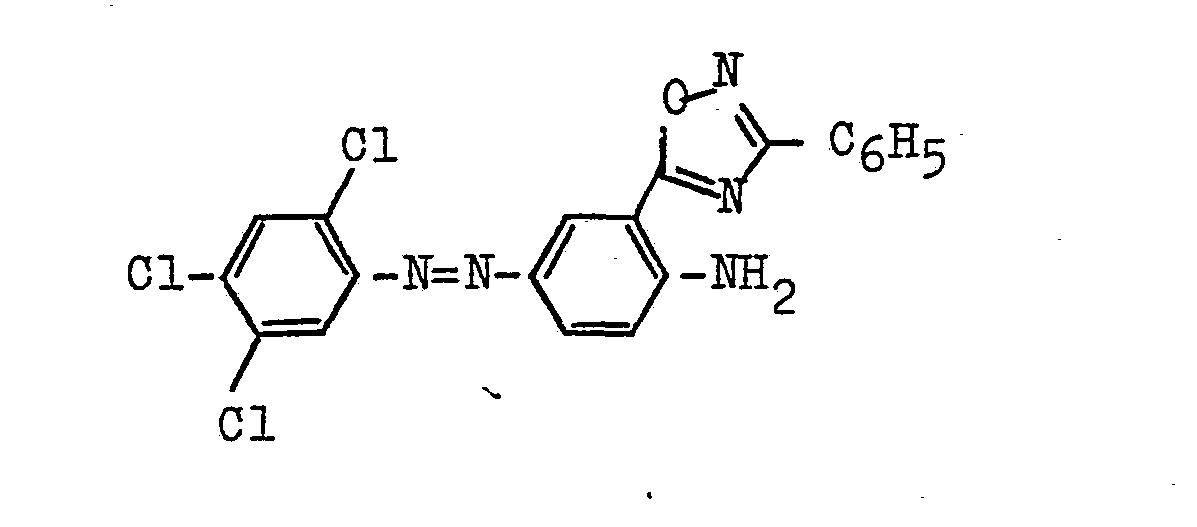

- Bromiert man analog zu der in Beispiel 137 beschriebenen Arbeitsweise 15,0 Teile der Aminoazoverbindung der Formel


- Durch Chlorieren erhält man analog Beispiel 137 die entsprechenden Chlorverbindungen.

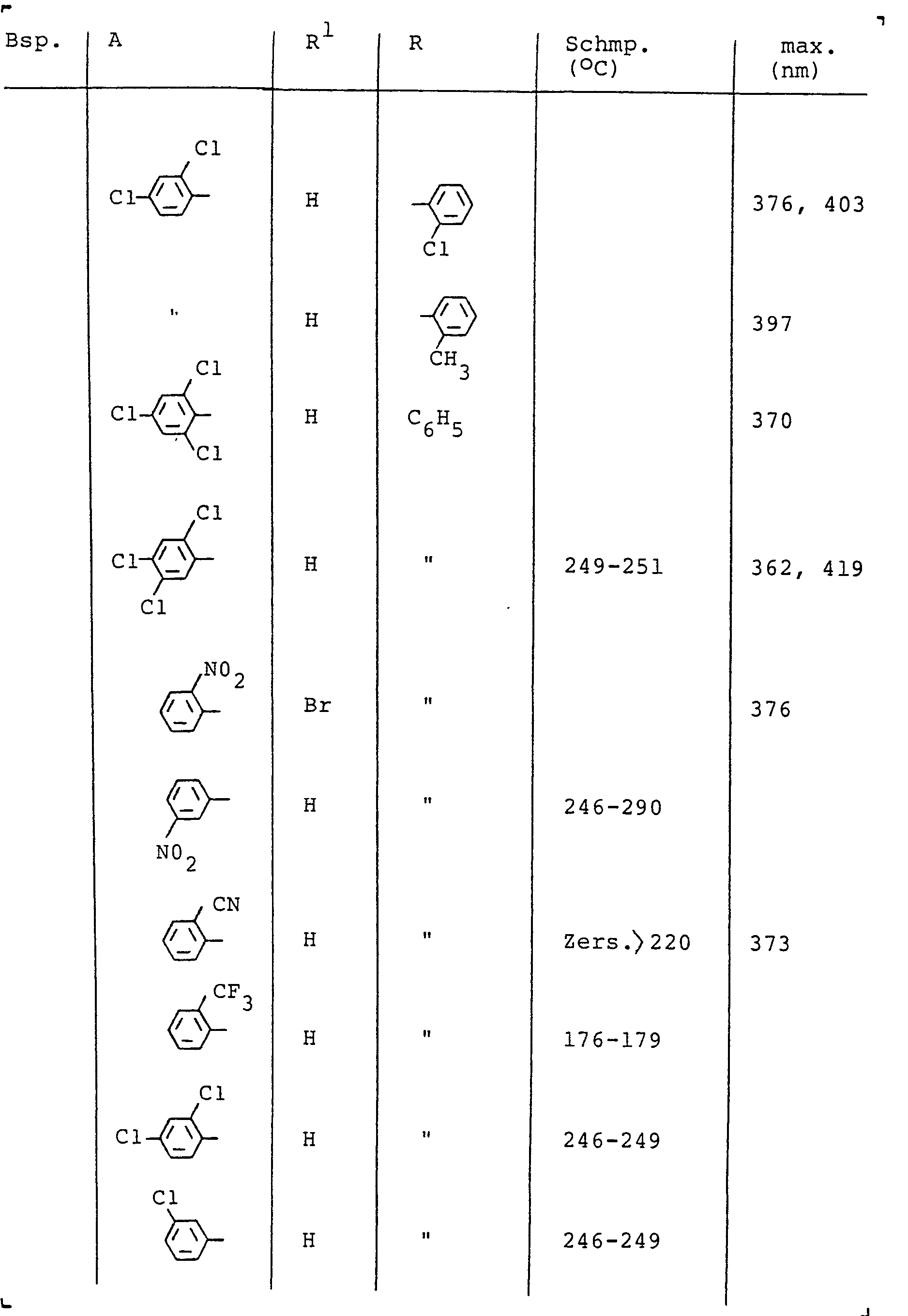
- 33 Teile der Diazokomponente der Formel
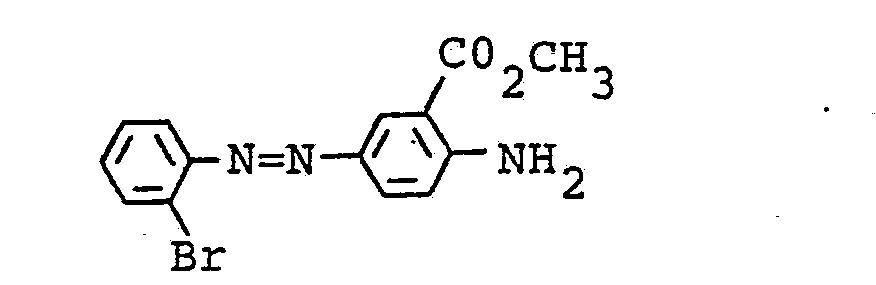

- 40 Teile der Verbindung der Formel


- Analog zu der in Beispiel 139 beschriebenen Verfahrensweise können die in der folgenden Tabelle genannten Verbindungen synthetisiert werden. Der Austausch von Brom gegen Cyan erfolgt dabei in der Regel sehr leicht. Beim Austausch von Chlor gegen Cyan, der in der Regel schwerer erfolgt, wählte man anstelle von Dimethylformamid N-Methyl- pyrrolidon und erhöhte die Reaktionstemperatur auf bis zu 170 - 180 °C.


Claims (3)
1. Aminoazoverbindungen der allgemeinen Formel
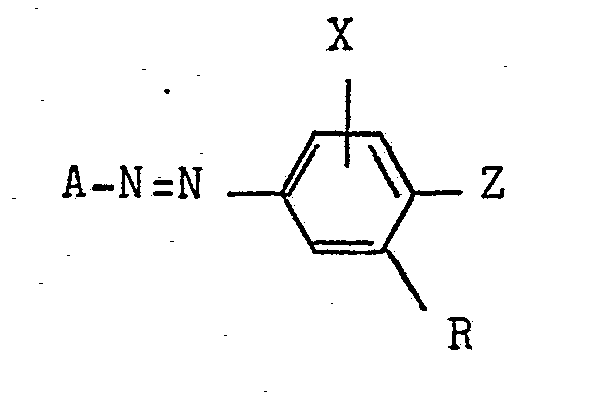
in der
A der Rest einer Diazo- oder Kupplungskomponente und
R ein Rest der Formel CN, COOR1, COSR1, CONH2, CONHNH2, CONH-NH-CO"1,


Z Amino,
R,und Z zusammen ein Rest der Formel -NHCO-O-CO-,
X Wasserstoff, Chlor, Brom, Methoxy, Äthoxy, Propoxy, SO3H, Butoxy, Phenoxy, Methyl, Äthyl, Propyl, Butyl, Acetylamino, Dimethylamino, Diäthylamino, Carboxyl oder -N02 sind, wobei
R1 gegebenenfalls substituiertes Alkyl, Alkenyl, Cycloalkyl oder Aryl,
R2 Wasserstoff oder gegebenenfalls substituiertes Alkyl und
R3 Wasserstoff oder einen Rest R1 bedeuten und wobei Aminobenzoesäureamide, Mono- und Dichloraniline als Diazokomponenten A ausgeschlossen sind, wenn R1 C1- bis C4-Alkyl, Methoxyäthyl oder Butoxyäthoxyäthyl ist.
2. Verbindungen gemäß Anspruch 1 der Formel

in der
D der Rest einer Diazokomponente ist und Z und
R die angegebene Bedeutung haben.
3. Verwendung der Verbindungen gemäß Anspruch 1 oder 2 als Diazokomponenten.
Applications Claiming Priority (2)
| Application Number | Priority Date | Filing Date | Title |
|---|---|---|---|
| DE3010104 | 1980-03-15 | ||
| DE19803010104 DE3010104A1 (de) | 1980-03-15 | 1980-03-15 | Aminoazoverbindungen |
Publications (2)
| Publication Number | Publication Date |
|---|---|
| EP0037465A2 true EP0037465A2 (de) | 1981-10-14 |
| EP0037465A3 EP0037465A3 (de) | 1982-08-25 |
Family
ID=6097385
Family Applications (1)
| Application Number | Title | Priority Date | Filing Date |
|---|---|---|---|
| EP81101712A Withdrawn EP0037465A3 (de) | 1980-03-15 | 1981-03-09 | Aminoazoverbindungen |
Country Status (4)
| Country | Link |
|---|---|
| US (1) | US4424155A (de) |
| EP (1) | EP0037465A3 (de) |
| JP (1) | JPS56154444A (de) |
| DE (1) | DE3010104A1 (de) |
Cited By (4)
| Publication number | Priority date | Publication date | Assignee | Title |
|---|---|---|---|---|
| WO1996003463A1 (de) * | 1994-07-21 | 1996-02-08 | Basf Aktiengesellschaft | Nitrofarbstoffe |
| WO1997005124A1 (de) * | 1995-08-01 | 1997-02-13 | Basf Aktiengesellschaft | Benzolderivate mit einem heterocyclischen rest |
| WO1998014522A1 (de) * | 1996-09-30 | 1998-04-09 | Basf Aktiengesellschaft | Reaktivfarbstoffe mit einem heterocyclischen anker |
| CN1059898C (zh) * | 1992-05-06 | 2000-12-27 | 史密丝克莱恩比彻姆有限公司 | 哌啶衍生物、其制备方法及其应用 |
Families Citing this family (2)
| Publication number | Priority date | Publication date | Assignee | Title |
|---|---|---|---|---|
| DE3940266A1 (de) * | 1989-12-06 | 1991-06-13 | Bayer Ag | Azofarbstoffe und deren verwendung |
| CN105001664B (zh) * | 2015-07-10 | 2017-05-24 | 岭南师范学院 | 一种D‑π‑A型氨基偶氮苯染料及其制备方法 |
Family Cites Families (9)
| Publication number | Priority date | Publication date | Assignee | Title |
|---|---|---|---|---|
| DE341266C (de) | 1917-10-11 | 1921-09-24 | Chemische Ind Ges | Verfahren zur Herstellung beizenziehender Disazofarbstoffe |
| CH503783A (de) | 1967-10-10 | 1971-02-28 | Bayer Ag | Verfahren zur Herstellung cyangruppenhaltiger Disazofarbstoffe |
| BE789138A (fr) | 1971-09-24 | 1973-03-22 | Bayer Ag | Nouveaux derives triazeniques, leur procede de preparation et medicament les contenant |
| US4206113A (en) | 1976-03-18 | 1980-06-03 | Basf Aktiengesellschaft | Azo dyes having an oxdiazolyl-1,2,4 group |
| DE2702371A1 (de) | 1977-01-21 | 1978-08-03 | Basf Ag | Farbstoffzubereitungen fuer cellulose und cellulosehaltiges textilmaterial und neue farbstoffe |
| US4153343A (en) | 1977-06-09 | 1979-05-08 | Rca Corporation | Liquid crystal dyestuffs and electro-optic devices incorporating same |
| DE2801951A1 (de) | 1978-01-18 | 1979-07-19 | Basf Ag | Azofarbstoffe |
| DE2903588A1 (de) | 1979-01-31 | 1980-08-14 | Basf Ag | Polyazofarbstoffe |
| DE2904752A1 (de) | 1979-02-08 | 1980-08-21 | Hoechst Ag | Verfahren zum faerben und bedrucken von hydrophoben, synthetischen, organischen fasermaterialien mit wasserunloeslichen azofarbstoffen |
-
1980
- 1980-03-15 DE DE19803010104 patent/DE3010104A1/de not_active Withdrawn
-
1981
- 1981-03-04 US US06/240,316 patent/US4424155A/en not_active Expired - Fee Related
- 1981-03-09 EP EP81101712A patent/EP0037465A3/de not_active Withdrawn
- 1981-03-16 JP JP3669981A patent/JPS56154444A/ja active Pending
Cited By (6)
| Publication number | Priority date | Publication date | Assignee | Title |
|---|---|---|---|---|
| CN1059898C (zh) * | 1992-05-06 | 2000-12-27 | 史密丝克莱恩比彻姆有限公司 | 哌啶衍生物、其制备方法及其应用 |
| WO1996003463A1 (de) * | 1994-07-21 | 1996-02-08 | Basf Aktiengesellschaft | Nitrofarbstoffe |
| US5739343A (en) * | 1994-07-21 | 1998-04-14 | Basf Aktiengesellschaft | Nitro dyes |
| WO1997005124A1 (de) * | 1995-08-01 | 1997-02-13 | Basf Aktiengesellschaft | Benzolderivate mit einem heterocyclischen rest |
| US5886187A (en) * | 1995-08-01 | 1999-03-23 | Basf Aktiengesellschaft | Benzene derivatives having a heterocyclic radical |
| WO1998014522A1 (de) * | 1996-09-30 | 1998-04-09 | Basf Aktiengesellschaft | Reaktivfarbstoffe mit einem heterocyclischen anker |
Also Published As
| Publication number | Publication date |
|---|---|
| JPS56154444A (en) | 1981-11-30 |
| EP0037465A3 (de) | 1982-08-25 |
| US4424155A (en) | 1984-01-03 |
| DE3010104A1 (de) | 1981-10-01 |
Similar Documents
| Publication | Publication Date | Title |
|---|---|---|
| JPS6139347B2 (de) | ||
| DE2139311A1 (de) | Verfahren zur Herstellung von Azofarbstoffen | |
| DE2251719A1 (de) | Dispersionsfarbstoffe der 2,6diaminopyridinreihe | |
| US4128545A (en) | Azo dyes with 2,6-diamino-pyridine coupling component | |
| CH616695A5 (en) | Process for the preparation of azo dyestuffs | |
| US4083844A (en) | Phenylazo orthocyano phenylazo or orthocyano phenylazo phenylazo containing dyestuffs | |
| DE2457687C3 (de) | Azofarbstoffe, deren Herstellung und Verwendung zum Färben von Lacken, Druckfarben oder Kunststoffen | |
| EP0193885A1 (de) | Thiophenderivate | |
| EP0062200B1 (de) | Neue Disazofarbstoffe | |
| DE2500024A1 (de) | Wasserloesliche azofarbstoffe | |
| DE2361551A1 (de) | Wasserloesliche azofarbstoffe | |
| EP0087616B1 (de) | Isothiazolazofarbstoffe | |
| DE3010104A1 (de) | Aminoazoverbindungen | |
| DE2446213A1 (de) | P-aminoazo-dispersionsfarbstoffe | |
| DE2202820A1 (de) | Pyrimidin-dispersionsfarbstoffe | |
| DE2307169A1 (de) | Azofarbstoffe | |
| DE1544563A1 (de) | Verfahren zur Herstellung cyangruppenhaltiger Azofarbstoffe | |
| DE2406333A1 (de) | Neue azo-zimtsaeurefarbstoffe | |
| DE1644371A1 (de) | Verfahren zur Herstellung in Wasser schwer loeslicher Farbstoffe | |
| CH618962A5 (de) | ||
| DE2509560A1 (de) | Verfahren zur herstellung von azoverbindungen | |
| DE2211663A1 (de) | Azofarbstoffe mit 2,6-diaminopyridinen als kupplungskomponenten | |
| DE2216570C3 (de) | Wasserlösliche Azofarbstoffe der 2.6-Diaminopyridin-Reihe, Verfahren zu deren Herstellung und Verwendung | |
| DE2603836B2 (de) | farbstoffen | |
| US4113720A (en) | Disperse azo dye with diaminopyrimidine coupling component |
Legal Events
| Date | Code | Title | Description |
|---|---|---|---|
| PUAI | Public reference made under article 153(3) epc to a published international application that has entered the european phase |
Free format text: ORIGINAL CODE: 0009012 |
|
| AK | Designated contracting states |
Designated state(s): BE CH DE FR GB IT NL |
|
| 17P | Request for examination filed |
Effective date: 19811021 |
|
| PUAL | Search report despatched |
Free format text: ORIGINAL CODE: 0009013 |
|
| AK | Designated contracting states |
Designated state(s): BE CH DE FR GB IT NL |
|
| STAA | Information on the status of an ep patent application or granted ep patent |
Free format text: STATUS: THE APPLICATION HAS BEEN WITHDRAWN |
|
| 18W | Application withdrawn |
Withdrawal date: 19840228 |
|
| RIN1 | Information on inventor provided before grant (corrected) |
Inventor name: KURTZ, WALTER, DR. Inventor name: LAMM, GUNTHER, DR. |