EP0040074A1 - Aporphines substituées sur l'atome d'azote, et leur utilisation dans une méthode d'induction de vomissements et de maîtrise d'états de psychoses - Google Patents
Aporphines substituées sur l'atome d'azote, et leur utilisation dans une méthode d'induction de vomissements et de maîtrise d'états de psychoses Download PDFInfo
- Publication number
- EP0040074A1 EP0040074A1 EP19810302069 EP81302069A EP0040074A1 EP 0040074 A1 EP0040074 A1 EP 0040074A1 EP 19810302069 EP19810302069 EP 19810302069 EP 81302069 A EP81302069 A EP 81302069A EP 0040074 A1 EP0040074 A1 EP 0040074A1
- Authority
- EP
- European Patent Office
- Prior art keywords
- acid
- substituted
- compound
- lower alkyl
- chloroethyl
- Prior art date
- Legal status (The legal status is an assumption and is not a legal conclusion. Google has not performed a legal analysis and makes no representation as to the accuracy of the status listed.)
- Granted
Links
Images



Classifications
-
- C—CHEMISTRY; METALLURGY
- C07—ORGANIC CHEMISTRY
- C07D—HETEROCYCLIC COMPOUNDS
- C07D221/00—Heterocyclic compounds containing six-membered rings having one nitrogen atom as the only ring hetero atom, not provided for by groups C07D211/00 - C07D219/00
- C07D221/02—Heterocyclic compounds containing six-membered rings having one nitrogen atom as the only ring hetero atom, not provided for by groups C07D211/00 - C07D219/00 condensed with carbocyclic rings or ring systems
- C07D221/04—Ortho- or peri-condensed ring systems
- C07D221/18—Ring systems of four or more rings
Definitions
- This invention relates to novel N-substituted trihydroxy- noraporphines and their esters, along with their acid addition salts, having the formula wherein R 1 is lower alkyl, substituted lower alkyl, cycloalkyl, substituted cycloalkyl, lower alkenyl, substituted lower alkenyl, lower alkynyl, substituted lower alkynyl, phenyl lower alkyl, phenyl lower alkenyl and phenyl lower alkynyl R 2 is hydrogen or -C-R 3 wherein R 3 is lower alkyl and R 4 is hydrogen or R 2 0 and the acid addition salts thereof, with the proviso that when R 4 is hydrogen R 1 is 2-chloroethyl.
- aporphines of this invention exhibit high emetic efficacy at minute dosage levels with no apparent evidence of cardiovascular, central nervous system or respiratory toxicity.
- emetic drugs that induce vomiting have been used for centuries in the management.of patients who have orally ingested poisons, they could have applications other than the removal of such poisons provided they possessed properties not now generally associated with the presently used emetics. For example, it may be necessary for a patient who must undergo emergency surgery to have his stomach emptied quickly and safely before receiving anesthesia. A nontoxic, rapid-acting emetic could be used for this purpose. Moreover, if an emetic can be administered through inhalation, it may be used in place of tear gas and the like to effect control over violent subjects. Such extensions of the use of emetics require that the drug being used is safe, effective at small dosage levels and capable of being administered by routes other than direct oral ingestion or intraveneous injections.
- the emetics being currently used are generally either ipecac given orally or apomorphine administered by intravenous injection.
- Ipecac is, on the average, effective in only about five out of six cases and achieves emesis only after about 15 minutes after taking it. This long reaction time may result in the patient's vomiting after reaching a comatose state.
- Apomorphine is unstable in solution so that no commercial solution is available.
- apomorphine may cause a depression in the patient's breathing which can be serious if the poison to be removed is a sedative drug.
- Neuroleptic drugs such as phenothiazines, thioxanthenes and butyrophenones, are used in the treatment of psychoses to counteract hallucinations and delusions, and to alleviate psychomotor excitement and assaultiveness. In this role, these drugs reduce dopaminergic activity to the central nervous system by blocking the dopamine receptors, thus preventing the activation of adenylate cyclase identified as the agent responsible for the conversion of adenosine triphosphate (ATP) to cyclic adenosine monophosphate (cyclic AMP), a nucleotide. The generation of cyclic AMP within a brain cell is believed to stimulate the cell.
- ATP adenosine triphosphate
- cyclic AMP cyclic adenosine monophosphate
- this drug is an effective neuroleptic, it must be given as often as three times daily at relatively large dose levels (200 to 800 mg/day); and it has such side effects as sedation, extrapyramidal activity, and the inducing of hypotension.
- Chlorprothixene having the formula is representative of the thioxanthenes. Like chlorpromazine, it must be given often at a dosage level of from 50 to 400 gms/ day and has essentially the same side effects.
- the butyrophenones represented by haloperidol having the formula, have high neuroleptic potency. Haloperidol produces a high incidence of extrapyramidal reactions; but it has less sedative effect, less prominent antonomic effects and less hypotensive effect than the phenothiazines. Dosage levels for the butyrophenones range from 2 to 6 mg/day .
- N-substituted haloalkyl norapomorphines of this invention are dopamine receptor antagonists.
- the ccmpounds of this invention are believed to provide dopaminergic activity through binding with the dopamine receptors, thus providing a mechanism different from that exhibited by the currently administered neuroleptic drugs which are blocking agents, and offering advantages over them.
- Another object of this invention is to provide a method for inducing emesis in those mammals capable of undergoing it.
- Another primary object of this invention is to provide a method for controlling psychoses.
- a further object is to provide a method of the character described which provides such control over a time period greater than now possible with the neuroleptic drugs presently in use.
- the invention accordingly comprises the several steps and the relation of one or more such steps with respect to each of the others and the compounds possessing the characteristics, properties and the relation of components which will be exemplified in the compounds hereinafter described, and the scope of the invention will be indicated in the claims.
- R 1 is lower alkyl, substituted lower alkyl cycloalkyl, substituted cycloalkyl, lower alkenyl, substituted lower alkenyl, lower alkynyl, substituted lower alkynyl, phenyl lower alkyl, phenyl lower alkenyl and phenyl lower alkynyl and R 2 is hydrogen or - ⁇ -R 3 where R 3 is lower alkyl and the acid addition salts thereof.
- a method of controlling psychoses by administering a therapeutically effective amount of (-)N-(2- chloroethyl)norapomorphine, or the HC1 addition salt thereof, to a patient in need of such treatment.
- a method of inducing emesis by administering a therapeutically effective amount of a compound of the formula wherein R 1 is lower alkyl, substituted lower alkyl, cycloalkyl, substituted cycloalkyl, lower alkenyl, substituted lower alkenyl, lower alkynyl, substituted lower alkynyl,phenyl lower alkyl, phenyl lower alkenyl and.phenyl lower alkynyl and R 2 is hydrogen or -C-R 3 wherein O R3 is lower alkyl, R 4 is hydrogen or R 2 0 and the acid addition salts thereof to a patient requiring such treatment, with the proviso that where R 4 is hydrogen, R 1 is not 2-chloroethyl.
- NCA N-de-methylation of codeine to norcodeine, such as by the methods described by M. M. Abdel-Monem and P. S. Portoghese (J. Med.. Chem: 15, 208 (1972)) or by K. Rice (J. Or g . Chem: 40, 1850 (1975)).
- N-alkylation of the norcodeine with bromoethanol is followed by the rearrangement of the resulting N-hydroxyethylnorcodeine with methanesulfonic acid to give the N-hydroxyethylnorapocodeine, using the procedure of F. E. Granchelli, C. N. Filer, A. H. Soloway and J. L. Neumeyer (J. Org. Chem: in press (1980)).
- N-hydroxyethylnorapocodeine Treatment of the N-hydroxyethylnorapocodeine with 48% hydrogen bromide at 120-135°C under nitrogen for at least 2 hours effects dealkylation to form N-hydroxyethylnorapomorphine hydrobromide which is then converted to the hydrogen chloride salt by neutralization of the reaction mixture with ammonium hydroxide, followed by extraction and then treatment of the resulting free base with ethereal HC1. Finally, treatment of this acid addition salt with thionyl chloride and acetonitrile at room temperature yields the desired (-)N-chloroethyl)-10,11-dihydroxynbraporphine after neutralization of.the evaporated reaction mixture with ammonium hydroxide.
- the hydrogen chloride salt is prepared from an ethereal HC1 extract, mp 173-178°C.
- NMR and UV spectra as well as elemental analysis are used to establish the structure of the compound.
- NMR of the free base (MeOH-d 4 ) ⁇ 2.33-4.40 (broad signals, 13, H at C-4, C-5, C-6a, C-7, NCH 2 CH 2 Cl and phenolic OH) 6.53-7.40 (m, 4, aromatic), 8.1-8.37 (dd, 1, aromatic H at C-l); MS, m/e 315 (M + ) , 266 (base); UV max (Et OH ) 275 nm , (log ⁇ , 4.169) ; [ ⁇ ] 28 546 Hg - 35° .
- the free base and acid addition salts may thus be converted from one form to the other and one acid addition salt may be converted to another by regenerating the free base form and acidifying it.
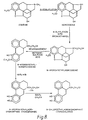
- N-substituted noraporphines of this invention may be prepared from the readily available opium alkaloid thebaine by the synthesis scheme illustrated in Figure 8.
- thebaine is N-demethylated to northebaine using diethylazodicarboxylate according to the method disclosed in British Patent 1,124,441 (August 21, 1968).
- the rearrangement of the northebaine to normorphothebaine is accomplished with concentrated HC1 in a sealed pressure bottle on a steam bath for 2.5 hours according to a published procedure (F. E. Granchelli, A. H. Soloway, J. L. Neumeyer and C. N. Filer, J. Or g .
- N-R 1 -normorphothebaine Formation of the N-R 1 -normorphothebaine.HCl is carried out in the presence of an acid acceptor (e.g., Na 2 CO 3 or NaHCO 3 ) using the appropriate R 1 iodide or R 1 bromide in a suitable solvent system at about 100°C under nitrogen for 16 to 24 hours: After isolation and purification of the product N-R 1 -normorphothebaine, it is heated with 48% HBr at 130-135°C under nitrogen for three to four hours to form the HBr acid addition salt of the desired N-R 1 -2,10,11-trihydroxynoraporphine. Neutralization of the acid addition salt with NH 4 0H forms the free base which then may, if required, be converted to the HC1 salt by treatment with ethereal HC1.
- an acid acceptor e.g., Na 2 CO 3 or NaHCO 3
- ester derivatives wherein R 2 is -C-R 3 and R 3 is lower - alkyl are conveniently prepared by reacting the appropriate N-R 1 -2,10,11-trihydroxynoraporphine.HBr or free base with an appropriate acyl halide to give the substituted triacyl noraporphine.
- Appropriate acid addition salts are those derived from such diverse acids as formic acid, acetic acid, isobutyric acid, alpha-mercaptopropionic acid, malic acid, fumaric acid, succinic acid, succinamic acid, tartaric acid, citric acid, lactic acid, benzoic acid, 4-methoxybenzoic acid, phthalic acid, anthranilic acid, 1-naphthalenecarboxylic acid, cinnamic acid, cyclohexanecarboxylic acid, mandelic acid, tropic acid, crotonic acid, acetylene dicarboxylic acid, sorbic acid, 2-furancarboxylic acid, cholic acid, pyrenecarboxylic acid, 2-pyridinecarboxylic acid, 3-indoleacetic acid, quinic acid, sulfamic acid, methanesulfonic acid, isethionic acid, benzenesulfonic acid, p-toluene
- lower-alkyl means saturated monovalent aliphatic radicals, including straight and branched-chain radicals, of from one to six carbon atoms, as illustrated by, but not limited to methyl,' ethyl, propyl, isopropyl, butyl, sec.-butyl, amyl, or hexyl.
- lower-alkenyl means monovalent, aliphatic radicals of from three to seven carbon atoms which contain at least one double bond, and are either straight or branched-chain, as illustrated by, but not limited to 1-(2-propenyl), 1-(3-methyl-2-propenyl), 1-(1,3-dimethyl-2-propenyl), or 1-(2-hexenyl).
- lower-alkynyl means monovalent, alphatic radicals of from three to seven carbon atoms which contain at least one triple bond, and are either straight or branched, as illustrated by, but not limited to l-(2-propynyl), 1-(1-methyl-2propynyl), or 1-(2-heptynl).
- substituted is intended to mean those lower alkyl, cycloalkyl, alkenyl and alkynyl groups bearing substituents such selected from the group lower alkyl, lower alkoxy, nitro, lower-alkylmercapto, methylenedioxy,:halo and trifluoromethyl with the proviso that in the case of halo substituted lower alkyl such is the .group 2-chloroethyl.
- cycloalkyl means cyclic, saturated aliphatic radicals of from three to eight ring carbon atoms, as illustrated by, but not limited to cyclopropyl, cyclobutyl, 2-methylcyclobutyl, cyclohexyl, 4-methylcyclohexyl, or cyclooctyl.
- phenyl-lower-alkyl As used herein, the terms “phenyl-lower-alkyl,” “phenyl-lower-alkenyl,” and “phenyl-lower-alkynyl” mean monovalent radicals consisting of a phenyl nucleus bonded to the rest of the molecule through, respectively, a divalent lower-alkylene radical of from one to four carbon atoms, as illustrated by, but not limited to methylene, l,l-ethylene, 1,2-ethylene, 1,3-propylene, 1,2-propylene, or 1,4-butylene; or through a divalent lower-alkynylene radical of from two to four carbon atoms, as illustrated by, but not limited to 1,2-ethynylene, 1,3-propynylene, 1,3-(butynylene), and the like.
- benzene ring of such phenyl-lower-alkyl, phenyl-lower-alkenyl, and phenyl-lower-alkynyl radicals can be substituted by one or more substituents selected from the group consisting of lower-alkyl, lower-alkoxy, halo(chloro, bromo, iodo, or fluoro), nitro, lower-alkylmercapto, methylenedioxy, and trifluoromethyl.
- Normorphothebaine hydrochloride was prepared from the- . baine using the synthesis scheme outlined above and according to the teaching of British Patent 1,124,441 and Granchelli et al. Four N-substituted normorphothebaines were then made using the halides and solvent systems detailed below in Table 1.
- reaction mixture was heated at 90°C under nitrogen for 2 hours and then evaporated to a residue.
- the residue was taken up with 50 milliliters of chloroform, washed with 30 milliliters of 3% NaHCO 3 , brine, dried, and concentrated to approximately a 2 milliliter solution.
- This solution was then chromatographed on silica gel packed and eluted with chloroform/ethyl ether to give a pure product which showed R f of 0.32 (in chloroform) on TLC.
- the triacetoxy derivative underwent alcoholysis after being treated with a mixture of 25 milliliters of absolute methanol and 12.5 milliliters of ethereal HCl for 16 hours.
- the N-R 1 -normorphothebaines wherein R 1 is phenyl lower alkyl, phenyl lower alkenyl or phenyl lower alkynyl are advantageously prepared by reaction, in the presence of an acid acceptor, of the normorphothebaine.HCl with an appropriate phenyl lower alkyl halide, phenyl lower alkenyl halide or phenyl lower alkynyl halide.
- the hydrochloride salt was prepared by dissolving the free base in 200 milliliters of anhydrous ether'and the solution was treated with an excess of ethereal HCl. Filtration of the mixture gave a white solid (1.09 grams, 80%) with m.p. 179-183°C, and a structure confirmed by NMR and infrared spectra.
- Emetic efficacy was measured in alert dogs with three particulate (15 ⁇ m spheres) and three soluble markers (phenol red theophylline and tobramycin) instilled 5, 25 and 55 minutes before rapid intraveneous injection of the emetic. Apomorphine was used as a control emetic. Measurements included time interval to first emesis and recovery in the vomitus of the particulate and soluble markers.
- the (-)N-n-propyl-2,10,11- triacetoxynoraporphine.HCl of Example 9 was determined by the above-described tests to be 43 times more potent as an emetic than apomorphine.
- the (-)N-(2-chloroethyl) no r a pomorphine.HCl of Example 2 may be converted to the ester form wherein R 2 is -C-R 3 by heating with the appropriate R 3 COCl.
- diacetyl (-)N-(2-chloroethyl)apomorphine may be formed by heating (-)N-(2-chloroethyl)norapomorphine.HCl with acetyl chloride.
- Apomorphine-induced behavioral characteristics in the rodent are considered to involve dopamine agonist action on striatal and mesolimbic dopamine receptors. Therefore, the ability of a drug to inhibit such apomorphine-induced behavior is considered a measure of the effectiveness of the drug to antagonize dopamine receptors and hence a measure of its dopaminergic activity. Among such induced behavioral characteristics are circling, climbing and stereotypy.
- n-substituted haloalkyl norapomorphines of this invention to inhibit striatal and possibly mesolimbic dcpamine function over a period of days in contrast to a few hours for the phenothiazines and butyrophenones suggests that they bind irreversibly to the receptor rather than provide a temporary blocking action.
- Biochemical-assays reported below, show that the compounds of this invention are able to inhibit 3 H-NPA ( 3 H-N-n-propylnorapomorphine) binding to rat striatal tissue. It is submitted that such inhibition is the result of the binding of the N-substituted haloalkyl norapomorphines to the dopamine receptor.
- mice Male albino mice in the weight range of 35-40 grams were used in the determination of circling behavior.
- the mice were prepared for circling experiments using standard stereotaxic techniques to place unilateral electrolesions in the right caudate- p utamen (1.0 mm anterior to bregma, 2.0 mm lateral and 3.5 mm below the skull surface, 1.5 mA/15 s).
- Fourteen days after the surgery the mice were challenged with 0.5 mg/kg apomorphine administered subcutaneously. Those mice circling less than-6 revolutions every 2 minutes were excluded from subsequent studies. Circling behavior was dose-dependent, 0.25-1 mg/kg apomorphine causing from 2-10 revolutions every 12 minutes.
- a doseage of 0.5 mg/kg apomorphine was selected for use in the drug interaction studies described. At this dosage level of subcutaneously administered apomorphine, the test animals circled from 6 to 8 revolutions/2 minutes.
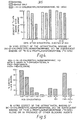
- mice antagonized by apomorphine were then given, by subcutaneous injection, doses of 1.0, 2.0 or 4.0 mg/kg of the (-)N-(2-chloroethyl)norapomorphine.HCl prepared in Example 2 and made up in a N,N-dimethylformamide/water solution. Circling in an open field was observed to determine the degree to which. the circling was inhibited 4 hours and 2, 5 and 7 days after administration. At the lowest dosage level of 1.0 mg/kg, essentially no inhibition was noted; but as shown in the plots of Fig. 1, at the higher dosage levels, the reduction in circling was still apparent after 2 days and at the highest dosage level it was as much as 39% after 5 days.
- a further behavioral model utilized rats (male, Sprague-Dawley, 300 + 25 g).
- the (-)N-(2-chloroethyl)norapomorphine.HCl was injected unilaterally into the striatum of the rat and then it was determined whether a "dopamine blockade" had been achieved by subsequently challenging with apomorphine and measuring any circling induced.
- Bilateral guide cannulae were chronically implanted in the rats, using standard stereotaxic techniques, to allow drug/vehicle injection at the center:of the caudate-putamen complex (Ant. 8.0, Lat. +3.0, Vert. +1.5, De Groot, 1959).
- apomorphine 0.5 mg/kg
- the subcutaneous administration of apomorphine enhanced the ipsilateral asymmetry and precipitated a clear circling behavior at the 40 pg dose of the drug four hours and two days, and to a lesser extent 5 days after its administration as shown in Fig. 2.
- Climbing behavior was measured by placing mice in individual cages (20 x 15 x 15 cm) lined with wire mesh.
- a "climbing index" i.e., the percentage of time spent climbing during the 30-minute period following the first climb, was determined. Previous experience had indicated that this climbing index is reduced by dopamine antagonists except where the interacting drug causes a nonspecific sedation or muscular hypotonia.
- Apomorphine administered subcutaneously at a dosage level of 1 mg/kg caused intense and consistent climbing and provided a basis for the assessment of the effects of potential antagonists. At this dosage the climbing index was approximately 60% which served as a basis for this assessment.
- mice were pretreated with the drug to be evaluated as a dopamine atagonist by giving them intraperitoneal injections of 1, 10 or 20 mg/kg doses of the drug and then subjecting them to a subcutaneous injection of 1.0 mg/kg dose of apomorphine one hour, two days, 5 days or 7 days after the injection of the drug.
- a climbing index of 60% for apomorphine it was found that (-)N(2-chloroethyl)norapomorphine.HCl (NCA) reduced this index when given in 10 mg/kg doses, and greatly reduced it when given in 20 mg/kg doses. This effect was noted up to between four and five days after administration of the NCA.
- Washed tissue including one specimen without NCA as a control, was then incubated with zero or 50 ⁇ M of dopamine in the presence of an excess of adenosine triphosphate for 2.5 minutes at 37° and the level of cyclic adenosine monophosphate in the incubation mixture with and without dopamine was assayed by a.protein binding method.
- the increase in cyclic adenosine monophosphate levels due to the dopamine was estimated for all conditions.
- the ability of the (-)N-(2-chloroethyl)norapomor- phine.HCl to inhibit the actuation of adenylate cyclase is shown in Table 1.
- striatal tissue In one set of experiments three types of striatal tissue were examined: (1) that taken from untreated rats as a control; (2) that taken from rats receiving 40 Pg of the NCA in 4 ⁇ liters of a solvent vehicle at a rate of 1 ⁇ liter/minute in the left hemisphere; and (3) that taken from the right hemisphere subjected to 4 ⁇ liters (1 ⁇ liter/minute) of-the solvent vehicle.
- Animals were sacrificed on days 2, 7 and 14-16 days after the intrastriatal injection; and the striata were dissected out over ice and homogenized (100 vols, w/v) in 50 mM ice cold trihydroxymethyl amine.HCl buffer (pH 7.4 at 25°C) with a Polytron homogenizer.
- the homogenate was centrifuged twice (for 10 minutes at 50,000 g) at 4°C with resuspension in fresh buffer. Final resuspension (100 vols w/v) was in trihydroxymethyl amine buffer (pH 7.4 at 37°C) containing 0.1% ascorbic acid, 12.5 pM nialamide and 5 mM sodium ethylenediaminetetraacetate. Each assay tube contained 5 mg wet weight striatal tissue (equivalent to approximately 275 pgram protein, in a total volume of 1.1 milliliter.
- NCA (-)N-(2-chloroethyl)norapomorphine.HCl
- Incubation tubes containing rat striatal homogenate were preincubated for 2.5 minutes at 37°C with NCA at five concentrations (3 x 10 -5 to 3 x 10 -7 M); with 2- amino-6,7dihydroxyte- tralin (ADTN) with ADTN and NCA (3 x 10 -5 M); with propranolol (1 x 10 -6 M) and NCA (3 x 10 -5 M) prior to the addition of 0.5 nM 3 H-NPA for incubation at 37°C for 15 minutes.
- Membranes were collected by filtration and measurements were made using the same technique described above. The data obtained in terms of percent of 3 H - N P A binding are plotted in Fig. 4.
- NCA at 1.8 x 10 -6 M caused a 50% inhibition of 3 H -NPA binding. Moreover, this inhibition was also apparent in the presence of high concentrations of phentol- amine (an a-blocking agent) and propranolol (a ⁇ -blocking agent which could be expected to hinder occupancy of other catecholamine receptors by either 3 H-NPA or NCA. Furthermore, the inhibition of "specific" 3 H - N PA binding by ADTN could not be further increased by NCA, indicating that the ability of the NCA to prevent 3 H-NPA binding does not occur at "nonspecific" sites. Finally, the prevention of 3 H-NPA binding by NCA (10- 5 M ) was not reversed by repeated washing.
- the in vivo data show that the (-)N-(2-chloroethvl)nor- apomorphine.HCl, when administered either peripherally or in- trastriatally, can effect behavioral changes indicative of changes at the receptor level associated with dopamine receptor blockade.
- the in vitro data further show that such inhibition is the result of binding to the receptor, a fact which may explain the prolonged action of the drug.
Landscapes
- Chemical & Material Sciences (AREA)
- Organic Chemistry (AREA)
- Pharmaceuticals Containing Other Organic And Inorganic Compounds (AREA)
Applications Claiming Priority (4)
| Application Number | Priority Date | Filing Date | Title |
|---|---|---|---|
| US14817980A | 1980-05-08 | 1980-05-08 | |
| US148179 | 1980-05-08 | ||
| US06/147,737 US4353912A (en) | 1980-05-08 | 1980-05-08 | N-Haloalkyl nor apomorphines and method of inactivating dopamine receptor sites and enhancing dopaminergic activity therewith |
| US147737 | 1993-11-04 |
Publications (2)
| Publication Number | Publication Date |
|---|---|
| EP0040074A1 true EP0040074A1 (fr) | 1981-11-18 |
| EP0040074B1 EP0040074B1 (fr) | 1985-07-31 |
Family
ID=26845190
Family Applications (1)
| Application Number | Title | Priority Date | Filing Date |
|---|---|---|---|
| EP19810302069 Expired EP0040074B1 (fr) | 1980-05-08 | 1981-05-08 | Aporphines substituées sur l'atome d'azote, et leur utilisation dans une méthode d'induction de vomissements et de maîtrise d'états de psychoses |
Country Status (2)
| Country | Link |
|---|---|
| EP (1) | EP0040074B1 (fr) |
| DE (1) | DE3171561D1 (fr) |
Cited By (7)
| Publication number | Priority date | Publication date | Assignee | Title |
|---|---|---|---|---|
| EP0064685A1 (fr) * | 1981-05-09 | 1982-11-17 | Gödecke Aktiengesellschaft | Dibenzo(de,g)quinolines, leurs procédés de préparation et les médicaments les contenant |
| WO1990012574A1 (fr) * | 1989-04-25 | 1990-11-01 | Northeastern University | Composes agonistes de la dopamine |
| WO2002014279A1 (fr) * | 2000-08-17 | 2002-02-21 | Axon Biochemicals B.V. | Nouveaux esters d'aporphine et leur utilisation en therapie |
| FR2843963A1 (fr) * | 2002-08-30 | 2004-03-05 | Sederma Sa | Nouvelles molecules derivees de la noraporphine |
| WO2009038958A1 (fr) * | 2007-09-18 | 2009-03-26 | Mallinckrodt Inc. | Procédé en récipient unique, facile, pour produire de l'apomorphine à partir de la codéine |
| EP2344509B1 (fr) | 2008-09-30 | 2015-11-11 | Mallinckrodt LLC | Procédés de production de buprénorphine avec formation réduite d'impuretés |
| EP2342207B1 (fr) | 2008-09-30 | 2015-11-11 | Mallinckrodt LLC | Procédés d'alkylation de norbuprénorphine avec formation réduite d'impuretés |
Citations (3)
| Publication number | Priority date | Publication date | Assignee | Title |
|---|---|---|---|---|
| US3717643A (en) * | 1967-05-04 | 1973-02-20 | Sterling Drug Inc | N-substituted-norapomorphines |
| DE2755511A1 (de) * | 1976-12-13 | 1978-06-15 | Sterling Drug Inc | N-propylnorapomorphin-diester |
| DE2758954A1 (de) * | 1977-01-10 | 1978-07-13 | Sterling Drug Inc | Verfahren zur morphin/apomorphin- umlagerung |
-
1981
- 1981-05-08 EP EP19810302069 patent/EP0040074B1/fr not_active Expired
- 1981-05-08 DE DE8181302069T patent/DE3171561D1/de not_active Expired
Patent Citations (3)
| Publication number | Priority date | Publication date | Assignee | Title |
|---|---|---|---|---|
| US3717643A (en) * | 1967-05-04 | 1973-02-20 | Sterling Drug Inc | N-substituted-norapomorphines |
| DE2755511A1 (de) * | 1976-12-13 | 1978-06-15 | Sterling Drug Inc | N-propylnorapomorphin-diester |
| DE2758954A1 (de) * | 1977-01-10 | 1978-07-13 | Sterling Drug Inc | Verfahren zur morphin/apomorphin- umlagerung |
Non-Patent Citations (4)
| Title |
|---|
| CHEMICAL ABSTRACTS, 9th Collective Subject Index, published in 1978, Columbus, Ohio, USA page 13726CS, left-hand column, at the bottom, Abstract 78 92509j & CHEMICAL ABSTRACTS, Vol. 78, 1973, Abstract 92509j S. LAL et al. "Effects of Aporphine and Emetine Alkaloids on Centre Dopaminergic Mechanism in Rats" & Eur. J. Pharmac. 1972, 20(1) 71-9. * whole Abstract * * |
| Journal of Medicinal Chemistry, Vol. 23, No. 6, June 1980, Columbus, Ohio, USA J.L. NEUMEYER et al. "Aporphines 30", pages 594-95 * complete articele * * |
| Journal of Medicinal Chemistry, Vol. 23, No. 9, September 1980, Columbus, Ohio, USA J.L. NEUMEYER et al. "Aporphines 31", pages 1008-1013. * complete document * * |
| Journal of Organic Chemistry, Vol. 42, No. 11, 1977 Columbus, Ohio, USA F.E. GRANCHELLI et al. "Aporphines 23. Normorphothebaine Derivatives: Synthesis of an Aporphine Nitrogen Mustard". pages 2014-17 * whole article * * |
Cited By (13)
| Publication number | Priority date | Publication date | Assignee | Title |
|---|---|---|---|---|
| EP0064685A1 (fr) * | 1981-05-09 | 1982-11-17 | Gödecke Aktiengesellschaft | Dibenzo(de,g)quinolines, leurs procédés de préparation et les médicaments les contenant |
| WO1990012574A1 (fr) * | 1989-04-25 | 1990-11-01 | Northeastern University | Composes agonistes de la dopamine |
| KR100865503B1 (ko) * | 2000-08-17 | 2008-10-28 | 액손 바이오케미칼스 비.브이. | 신규한 아포르핀 에스테르 및 치료 요법에서의 그 용도 |
| AU2001271228B2 (en) * | 2000-08-17 | 2006-02-02 | Axon Biochemicals B.V. | New aporphine esters and their use in therapy |
| US7238705B2 (en) | 2000-08-17 | 2007-07-03 | Axon Biochemicals B.V. | Aporphine esters and their use in therapy |
| US7332503B2 (en) | 2000-08-17 | 2008-02-19 | Axon Biochemicals B.V. | Aporphine esters and their use in therapy |
| WO2002014279A1 (fr) * | 2000-08-17 | 2002-02-21 | Axon Biochemicals B.V. | Nouveaux esters d'aporphine et leur utilisation en therapie |
| FR2843963A1 (fr) * | 2002-08-30 | 2004-03-05 | Sederma Sa | Nouvelles molecules derivees de la noraporphine |
| WO2004024695A1 (fr) * | 2002-08-30 | 2004-03-25 | Sederma S.A.S. | Nouvelles molecules derivees de la noraporphine |
| US7354926B2 (en) | 2002-08-30 | 2008-04-08 | Sederma Sas | Molecules derived from noraporphine |
| WO2009038958A1 (fr) * | 2007-09-18 | 2009-03-26 | Mallinckrodt Inc. | Procédé en récipient unique, facile, pour produire de l'apomorphine à partir de la codéine |
| EP2344509B1 (fr) | 2008-09-30 | 2015-11-11 | Mallinckrodt LLC | Procédés de production de buprénorphine avec formation réduite d'impuretés |
| EP2342207B1 (fr) | 2008-09-30 | 2015-11-11 | Mallinckrodt LLC | Procédés d'alkylation de norbuprénorphine avec formation réduite d'impuretés |
Also Published As
| Publication number | Publication date |
|---|---|
| DE3171561D1 (en) | 1985-09-05 |
| EP0040074B1 (fr) | 1985-07-31 |
Similar Documents
| Publication | Publication Date | Title |
|---|---|---|
| US4593034A (en) | 2-alkoxy-N-(1-azabicyclo[2.2.2]oct-3-yl)benzamides and thiobenzamides | |
| JPH03504012A (ja) | 新規なベンゾピリド‐ピペリジン、ピペリジリデンおよびピペラジン化合物、組成物、製造法および利用法 | |
| DE3827253A1 (de) | Ester und amide von cyclischen carbonsaeuren und cyclischen alkoholen und aminen sowie verfahren zu deren herstellung und sie enthaltende therapeutische zusammensetzungen | |
| US4012393A (en) | 2-[5-(CYCLIC AMINO) ETHYL-10,11-DIHYDRO-5H-dibenzo[a,d]-cyclohepten-5- yl]-5 | |
| US4374139A (en) | Levorotatory N-substituted acylmorphinans useful as analgesic agents | |
| DE3878235T2 (de) | Antischizophren-wirksame s-n-(1-azabicyclo (2.2.2.)oct-3-yl)benzamide und thiobenzamide. | |
| DE3779825T2 (de) | Derivate von benzhydryloxyaethylpiperazinen, verfahren zu ihrer herstellung und diese enthaltende pharmazeutische zusammensetzungen. | |
| IE46737B1 (en) | 2-(2,2-diarylalkyl)-1-azabicyclo (2.2.2)octane and related compounds | |
| US4353912A (en) | N-Haloalkyl nor apomorphines and method of inactivating dopamine receptor sites and enhancing dopaminergic activity therewith | |
| CA1284953C (fr) | Utilisation de 2-alcoxy-n-(1-azabicyclo[2.2.2]oct-3-yl) benzamides et-thiobenzamides contre les vomissements causes par les medicaments anticancer exempts de platine | |
| EP0040074B1 (fr) | Aporphines substituées sur l'atome d'azote, et leur utilisation dans une méthode d'induction de vomissements et de maîtrise d'états de psychoses | |
| WO1990012574A1 (fr) | Composes agonistes de la dopamine | |
| CH646696A5 (de) | Dibenzazepine, ihre herstellung und verwendung. | |
| US3733330A (en) | Benzomorphan derivatives | |
| EP0173933B1 (fr) | Dérivés de la 1,6-naphthyridine, procédé pour leur préparation et médicaments les contenant | |
| CH647515A5 (de) | Substituierte s-triazinone bzw. thione. | |
| DE2000775C3 (de) | Substituierte 1,23,4-Tetrahydrobenzothieno [2,3-c] pyridin-Verbindungen, Verfahren zu ihrer Herstellung und pharmazeutische Zubereitung, die diese Verbindungen enthält | |
| DE3780542T2 (de) | Substituierte hexahydroarylchinolizine. | |
| PL124031B1 (en) | Process for preparing 10,11-dihydro-5h-dibenzo/a,d/-cyclohepten-5,10-imines | |
| DE2816380A1 (de) | Spiro eckige klammer auf indolin- 3,4'-piperidine eckige klammer zu und verwandte verbindungen | |
| DE2117358B2 (de) | 4'-Aminomethyl-spiro eckige Klammer auf dibenzo eckige Klammer auf a,d eckige Klammer zu cycloheptadi-(oder tri-) en-5,2*-(r,3'-dioxolan) eckige Klammer zu -Derivate, Verfahren zu deren Herstellung und diese Verbindungen enthaltene Arzneimittel | |
| CH675723A5 (fr) | ||
| DE1941534B2 (de) | Hexahydroazepine und diese Verbindungen enthaltende Arzneimittel | |
| US3890327A (en) | Trans-1,2,3,4,4a,8,9,14a-octahydropyrido(r',3':2,3)indolo(1,7-ab)+8 1)benzazepine | |
| US3325500A (en) | Mono- and bis-[(1-piperidyl)-loweralkyl]amines |
Legal Events
| Date | Code | Title | Description |
|---|---|---|---|
| PUAI | Public reference made under article 153(3) epc to a published international application that has entered the european phase |
Free format text: ORIGINAL CODE: 0009012 |
|
| AK | Designated contracting states |
Designated state(s): CH DE FR GB IT |
|
| RAP1 | Party data changed (applicant data changed or rights of an application transferred) |
Owner name: NORTHEASTERN UNIVERSITY |
|
| 17P | Request for examination filed |
Effective date: 19820515 |
|
| ITF | It: translation for a ep patent filed | ||
| GRAA | (expected) grant |
Free format text: ORIGINAL CODE: 0009210 |
|
| AK | Designated contracting states |
Designated state(s): CH DE FR GB IT LI |
|
| REF | Corresponds to: |
Ref document number: 3171561 Country of ref document: DE Date of ref document: 19850905 |
|
| ET | Fr: translation filed | ||
| PLBE | No opposition filed within time limit |
Free format text: ORIGINAL CODE: 0009261 |
|
| STAA | Information on the status of an ep patent application or granted ep patent |
Free format text: STATUS: NO OPPOSITION FILED WITHIN TIME LIMIT |
|
| 26N | No opposition filed | ||
| PG25 | Lapsed in a contracting state [announced via postgrant information from national office to epo] |
Ref country code: GB Effective date: 19890508 |
|
| PG25 | Lapsed in a contracting state [announced via postgrant information from national office to epo] |
Ref country code: LI Effective date: 19890531 Ref country code: CH Effective date: 19890531 |
|
| GBPC | Gb: european patent ceased through non-payment of renewal fee | ||
| PG25 | Lapsed in a contracting state [announced via postgrant information from national office to epo] |
Ref country code: FR Free format text: LAPSE BECAUSE OF NON-PAYMENT OF DUE FEES Effective date: 19900131 |
|
| REG | Reference to a national code |
Ref country code: CH Ref legal event code: PL |
|
| PG25 | Lapsed in a contracting state [announced via postgrant information from national office to epo] |
Ref country code: DE Effective date: 19900201 |
|
| REG | Reference to a national code |
Ref country code: FR Ref legal event code: ST |