EP0040659A1 - Rückgewinnung von Schwermetallen bei Verfahren zur Herstellung von Eisenmetall - Google Patents
Rückgewinnung von Schwermetallen bei Verfahren zur Herstellung von Eisenmetall Download PDFInfo
- Publication number
- EP0040659A1 EP0040659A1 EP19800301767 EP80301767A EP0040659A1 EP 0040659 A1 EP0040659 A1 EP 0040659A1 EP 19800301767 EP19800301767 EP 19800301767 EP 80301767 A EP80301767 A EP 80301767A EP 0040659 A1 EP0040659 A1 EP 0040659A1
- Authority
- EP
- European Patent Office
- Prior art keywords
- process according
- residue
- alkali metal
- metal hydroxide
- hydroxide solution
- Prior art date
- Legal status (The legal status is an assumption and is not a legal conclusion. Google has not performed a legal analysis and makes no representation as to the accuracy of the status listed.)
- Granted
Links
Images


Classifications
-
- C—CHEMISTRY; METALLURGY
- C22—METALLURGY; FERROUS OR NON-FERROUS ALLOYS; TREATMENT OF ALLOYS OR NON-FERROUS METALS
- C22B—PRODUCTION AND REFINING OF METALS; PRETREATMENT OF RAW MATERIALS
- C22B7/00—Working up raw materials other than ores, e.g. scrap, to produce non-ferrous metals and compounds thereof; Methods of a general interest or applied to the winning of more than two metals
- C22B7/02—Working-up flue dust
-
- B—PERFORMING OPERATIONS; TRANSPORTING
- B03—SEPARATION OF SOLID MATERIALS USING LIQUIDS OR USING PNEUMATIC TABLES OR JIGS; MAGNETIC OR ELECTROSTATIC SEPARATION OF SOLID MATERIALS FROM SOLID MATERIALS OR FLUIDS; SEPARATION BY HIGH-VOLTAGE ELECTRIC FIELDS
- B03C—MAGNETIC OR ELECTROSTATIC SEPARATION OF SOLID MATERIALS FROM SOLID MATERIALS OR FLUIDS; SEPARATION BY HIGH-VOLTAGE ELECTRIC FIELDS
- B03C1/00—Magnetic separation
- B03C1/002—High gradient magnetic separation
-
- C—CHEMISTRY; METALLURGY
- C22—METALLURGY; FERROUS OR NON-FERROUS ALLOYS; TREATMENT OF ALLOYS OR NON-FERROUS METALS
- C22B—PRODUCTION AND REFINING OF METALS; PRETREATMENT OF RAW MATERIALS
- C22B3/00—Extraction of metal compounds from ores or concentrates by wet processes
- C22B3/04—Extraction of metal compounds from ores or concentrates by wet processes by leaching
- C22B3/12—Extraction of metal compounds from ores or concentrates by wet processes by leaching in inorganic alkaline solutions
-
- Y—GENERAL TAGGING OF NEW TECHNOLOGICAL DEVELOPMENTS; GENERAL TAGGING OF CROSS-SECTIONAL TECHNOLOGIES SPANNING OVER SEVERAL SECTIONS OF THE IPC; TECHNICAL SUBJECTS COVERED BY FORMER USPC CROSS-REFERENCE ART COLLECTIONS [XRACs] AND DIGESTS
- Y02—TECHNOLOGIES OR APPLICATIONS FOR MITIGATION OR ADAPTATION AGAINST CLIMATE CHANGE
- Y02P—CLIMATE CHANGE MITIGATION TECHNOLOGIES IN THE PRODUCTION OR PROCESSING OF GOODS
- Y02P10/00—Technologies related to metal processing
- Y02P10/20—Recycling
Definitions
- This invention relates to a process for the production of ferrous metals or alloys thereof, in which iron-(bearing flue dust, containing Zn and optionally other heavy metals, is generated in a furnace.
- Iron-containing dusts produced by blast furnaces, arc furnaces and steelmaking plant contain zinc and lead and vary in composition depending on the nature of the charge used and the proportion of scrap and upon the degree to which the zinc and lead levels have been allowed to build up in the furnace.
- Such dusts generally have a particle size of 95% - 5 microns, or finer.
- blast furnace dusts are in the first instance recycled through the blast furnace; zinc levels tend however to build up in the dust, and these high levels of zinc cause corrosion of the furnace linings. Therefore, after a certain period of operation those dusts which contain excessively high zinc levels cannot be recycled further without damage and they are disposed of by dumping, which causes environmental pollution.
- arc furnace flue dusts vary in composition depending on the furnace charge. Zinc levels in arc furnace flue dusts are in general higher than those of blast furnace dusts, and similar problems arise in dumping of dusts.
- the dust which has been dumped may be treated to recover the heavy metal values, either for commercial utilisation or to remove them as an environmental hazard.
- Known methods for extracting these heavy metals include pyrometallurgical techniques and acid extraction.
- the disadvantages of pyrometallurgical techniques are the high capital expenditure on plant, the high running costs due to energy consumption and the air pollution resulting from the process.
- Acid extraction techniques have the disadvantage that acids which cannot economically be regenerated are consumed, and that waste materials which involve disposal costs are produced.
- both pyrometallurgical processes and acid extractions have the disadvantage that only limited ranges of materials can.be mixed and processed at one time.
- An object of the present invention is therefore to provide a process for the extraction of Zn and optionally other heavy metals from materials containing them which provides sufficiently high extraction efficiency, involves realatively low capital and operating expenditure and permits a range of materials to be mixed and processed at one time. It is also an object of the invention to provide a cyclic process for the extraction of heavy /metals by alkaline extraction in which the components can be recovered and reused.
- alkali metal hydroxides in particular sodium hydroxide to dissolve heavy metals and their compounds, in particular where the metals are zinc and lead to form, for example, sodium zincate and sodium plumbate in solution, is utilised to give an extraction process of high efficiency and selectivity.
- a process for the production of ferrous metal or alloys thereof in which iron bearing flue dust containing zinc and optionally other heavy metals is generated in a furnace includes a process for the production of ferrous metals or alloys thereof in which iron-bearing flue dust containing Zn and optionally other heavy metals is generated in a furnace, and including an extraction stage which comprises the steps of: separating the iron-bearing dust from the furnace flue gases; leaching the dust in an alkali metal hydroxide solution having a concentration greater than 5M, and a pulp density of 1:5 to 1 ' 8 preferably 1:3 to 1:8, at a temperature in the range 80 0 C to the boiling point of the solution, to dissolve Zn and other heavy metals present; separating the pregnant alkali metal hydroxide solution from the residue; washing the residue to remove the alkali metal hydroxide and returning the iron dust residue to the furnace; purifying and clarifying the pregnant alkali metal hydroxide solution; recovering the Zn and other heavy metals present to
- the alkali metal hydroxide concentration is 8 to 16M and preferably 10 to 14M.
- the boiling point of the alkali metal hydroxide solution depends on the concentration, and with hydroxide concentrations at the higher end of the preferred range, the boiling point may be as high as 140°C.
- the operating temperature may be increased by working under pressure. Operating at high temperature is preferred, because the extraction tends to be more selective at higher temperatures, the rate of reaction is increased and the viscosity of hydroxide solution is reduced, making the materials easier to handle. Filtration of the pregnant alkali metal hydroxide solution is preferably effected at temperature in excess of 60°C.
- purification may be initiated before the non-ferrous metal is recovered.
- a preferred purification technique is by cementation with metallic zinc preferably in the form of dust.
- Suitable techniques for heavy metal recovery from the sodium hydroxide solution include electrowinning; precipitation in the form of the carbonate with carbon dioxcide or carbonic acid or precipitation in the form of the sulphide with hydrogen sulphide or sulphide ions.
- the flue dust is a basic oxygen steelmaking (BOS) dust, a blast furnace dust or an arc furnace dust.
- BOS basic oxygen steelmaking
- magnetic materials may be removed from the feedstock by magnetic separation, prior to leaching and preferably, in a magnetic field having an intensity of up to 12000 Gauss.
- the feedstock is generally in the form of slurries having solids contents typically in the range o.l to 25% by weight, Since the dewatering of these slurries is essential before processing, the incorporation of magnetic separation into the system offers several processing advantages.
- the arisings from an integrated steelworks can consit of dusts and slurries from blast furnaces, basic oxygen steelmaking, electric arc furnaces, cast house dusts, mill scale and other arisings.
- the total arisings can be over 100,000 tpa (tons/annum), of which the most highly contaminated proportion from the arc furnaces, is of the order of 10%.
- the zinc and lead level is typically 1 - 3%, the soluble proportion of which has to be removed to be suitable for ground disposal of recycling.
- the requirement for the recovery plant is to prevent the pollution that ground disposal of unprocessed material would create by recycling the best available iron oxide to the steel plant, and remove leachable non-ferrous materials to produce an environmentally acceptable inert waste for dumping of non-recycled material.
- iron oxides iron oxides
- ferritic materials iron containing silicaceous materials e.g. refractories.
- oxides of certain base metals such as zinc and lead, and steel alloying and impurity elements, manganese, vanadium phosphorus etc.
- Each of these materials has a different magnetic susceptibility as a physical property, and individual particles will have differing susceptibilities depending on any iron content that they may have. It is therefore possible that by the successive application of various levels of magnetic intensity, a segregation in magnetic terms, which in practice means iron content, can be effected. With a final high intensity stage all solid particles can be removed from the slurry. We therefore propose to separate the pregnant alkali metal hydroxide solution from the residue by at least one high intensity magnetic separation stage.
- a BOS dust of the following weight composition was obtained from British Steel Corporation:
- the material was x fine dark magnetic powder of specific gravity of 4.4, and was pyrophoric, confirming X-ray powder photographs indicating the iron to be present as FeO.
- the material was extremely fine, 73% being less than 45 micron.
- the percentages of zinc and iron were determined by analysis, using atomic absorption spectrophotometry.
- the dust was a fine, light brown material formed /under oxidising conditions indicating the presence of well oxidised products, such as Zn0 and Fe 2 0 3 .
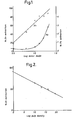
- Figure 4 shows the % zinc extraction versus % pulp density, at a temperature of 90°C and a sodium hydroxide solution concentration of 10M.
- Figure 5 shows the % zinc and % iron extraction versus log molar sodium hydroxide concentration at boiling temperature of the caustic soda solution and 20% pulp density.
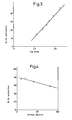
- the liquor was purified by concentration with zinc dust at a temperature of 49°C and the results of this are shown in Figure 6. Where 10 g Zn/litre of solution.is used, the solution contains 1% of the original lead concentration after 25 minutes cementation.
- the purified, zinc-rich solution is then extracted using an electrowinning process.
- the results of this electrowinning, using a magnesium cathode and a nickel or nickel plate anode at a spacing of 1.5 cms are as follows:
- the residual dust which was about half the weight of the original, had a zinc level of the order of 8 to 10% zinc, and an iron content of about 40%. About 80% of the original zinc was recovered.
- the residual dust could be further purified by roasting with sodium carbonate at a temperature of preferably above 700°C, more preferably above 760°C. At higher temperatures, roasting times are reduced but energy requirements are higher.
- the product obtained therefore had a negligible zinc level, of less than 1%.
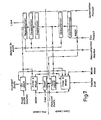
- the extraction stage illustrated in Figure 7 includes an additional pre-leach step which is recommended for the removal of lead from oxidised dusts sucb as produced by arc furnaces. Dividing the figure is a dot-dash line above which are those steps associated with the optional dilute pre-leach. Optimum lead removal is achieved at an alkali metal hydroxide, in this case NaOH, concentration of 1 to 2M the leach being effected at, say, 52°C for half an hour, depending upon the particle size of the dust.
- an alkali metal hydroxide in this case NaOH
- the residue is washed in water and roasted in a reducing atmosphere produced for example by roasting with coal or other carbonaceous material at from 800° to 1100°C, the reduced dust then being passed to the main, concentrated leach such as described in Examples 1 and 2, possibly after mixing with fresh blast furnace dust.
- a reducing atmosphere produced for example by roasting with coal or other carbonaceous material at from 800° to 1100°C, the reduced dust then being passed to the main, concentrated leach such as described in Examples 1 and 2, possibly after mixing with fresh blast furnace dust.
- Pregnant alkali metal hydroxide solution is passed from the pre-leach, for re-caustisation with lime and subsequently, the extraction of Pb with some Zn, by . cementation with metallic Zn. A cementation product of approximately 80% Pb, 20% Zn will be obtained.
- the purified alkali metal hydroxide solution is then concentrated by evaporation and combined with the pregnant solution from the concentrated leach for further cementation with mctallic zinc. After cementation, Zn is extracted by electrowinning and the purified concentrated alkali metal hydroxide solution recycled to the concentrated leach.
- the metallic zinc required for the cementation steps may be added in the form of any waste material containing metallic zinc, the process thereby affording the further facility of reclaiming Zn from waste material such as metal finishing waste.
- the process according to the present invention preferably is carried out on a single site, that is to say, the zinc recovery plant is linked with the ferrous metal production plant in which the flue dusts are generated.
- the zinc recovery plant is linked with the ferrous metal production plant in which the flue dusts are generated.
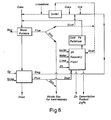
- FIG 8 is a flow diagram of a steel production process incorporating an extraction stage such as illustrated in Figure 7.
- Blast furnace and converter dusts are separated from the flue gases, from which useful heat can be recovered, and fed to the zinc recovery plant, possibly via the blast furnace charge sintering furnace.
- a pelletising machine is provided to form the treated iron dust into pellets which are then recycled to the blast furnace.
- the flow process shown in Figure 9 is most suited for dusts such as electric arc furnace dust having a low carbon content.
- dusts such as electric arc furnace dust having a low carbon content.
- the feedstock slurry is prefereably mixed with a frothing agent and subject to a preliminary floatation separation prior to magnetic separation, the separated carbon conveniently being dried and compacted into fuel brickettes.
- An important advantage of this technique is that it enables a significant reduction (by the order of 75%) in the size and capital cost of the process plant required for the dust recovery process, as compared with what otherwise would be necessary. Further the dewatering filtration stage is facilitated,,rates are improved, less equipment (i.e. small filtration area) is required than for the recovery of the same weight of solids from leach liquor. Also less expensive construction materials may be used since the operating conditions are less arduous.
- the bulk of the iron contained in the feedstock can be recycled in an upgraded form and this fraction contains the essentially unleachable non-ferrous material in the feed.
- the leachable non-ferrous materials, from BOS and electric are processing, is upgraded for recovery purposes.
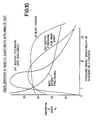
- the iron dust feedstocks contain a completed spectrum of magnetic susceptibilities with differing distributions. This is illustrated in Figure 10.
- a medium intensity (8 - 12000 gauss) separator is required to remove the more highly susceptible fractions, these including the magnetite (Fe 3 0 4 ) wustite (FeO) and ferritic materials (containing zinc lead and alkali metals).
- the medium intensity separator will remove 75 - 95% of the insoluble solids and the remaining insoluble low susceptibility material, 3 - 25% will be recovered by the high intensity unit.
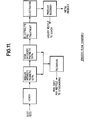
- the solids free solution can then be treated to recover the non-ferrous metals dissolved, by the process illustrated in Figure 11. All magnetic separation can be effected at ambient temperature.
- the level of intensity for the medium intensity separator depends on the specificity of feedstock to the plant and any requirement-for recycling the iron ore. For example, when processing the arisings from an arc furnace the feedstock of which is low quality scrap material e.g. No. 4 and No. 5 qualities, an 8 - 10000 gauss field will remove 30 - 60% of the high to medium.magnetic material, with the remaining low magnetic susceptibility material being removed in the highest intensity field at over 20000 gauss. Alternatively, a blast furnace arising may require a low intensity (2 - 4000 gauss) preliminary separation in addition to or in place of a medium intensity stage.
- the choice of equipment depends on the number of stages required.
- the first stage is a rotating drum concentrator using permanent magnets.
- a high intensity electromagnetic separator is used for the third and possible also for the second stage.
- the separator has different packing materials in the magnetic zone depending on the quantity and susceptibility of solids intended to pass through that stage.
- the packing in the final stage generally comprises a stainless steel wool.
- the recovery of pregnant liquor entrained in the solids is effected by washing with water. This is carried out by repulping the sludge product in the case of the drum concentrator, followed by filtration of the dilute lixiviant slurry, or by direct washing on the high intensity machines. In the latter case the solids are washed at the periphery of the magnetic field, removed by water jets outside the magnetic field and recovered from the aqueous slurry by filtration. Filtration occurs under these conditions at significantly improved rates as compared with those possible for removing the solids from the leach slurry. The overall washing efficiency depends on the choice of filtration equipment and this is determined by the intended use of the end product. Lixiviant recoveries of over 98% are possible.
- a liquor feed of 350 gpl NaOH containing 125 gpl iron oxides can produce solids with 30% by weight of water and less than 5% by weight of NaOH with a clear liquor overflow.
- high viscosity lixiviants e.g. caustic soda
- high temperatures are required to improve filtration and these lead to increased corrosive effects and a more mechanically severe environment for the separation medium. This calls for the use of expensive alloy materials.
- the high temperatures required for filtration.(of the order of 100°C) result in a short filter cloth life expectancy (4 - 8 weeks).
- the average particle sizes of steel plant dusts are typically less than 100 micron, with arc furnace dusts typically over 90% less than 10 microns.
- This factor in combination with a high viscosity liquor and the relatively small driving force obtainable with the low differential pressures, of the order of 10:1, in conventional equipment, gives very poor filtration rates. These being typically 20 - 25 kg/m 2 hr compared with 1500 - 2000 kg/m 2 hr for the removal of gypsum from process liquors.
- One advantage of the use of magnetic separators is that it enables a high rate of recovery of iron bearing materials from viscous process liquors-at ambient temperatures, the preferred application being steel plant wastes from alkaline leach systems e.g. caustic soda. Also the equipment has a lower capital cost than conventional filtration equipment one reason being that the reduced level of corrosive attack at ambient temperatures allows the use of less expensive materials, and is physically smaller, reducing the space required. Further by proper selection of magnetic intensity the major proportion of iron bearing material can be recycled to an iron making process. At present this material is ground dumped and is an environmental pollutant. Another advantage is that recycled material can be upgraded with respect to iron content, to a value equivalent to that of imported iron ores. Because no filter medium is required, maintenance . costs are significantly reduced and consumption is much reduced because-high-recoveries of lixiviant are possible.
Landscapes
- Chemical & Material Sciences (AREA)
- Engineering & Computer Science (AREA)
- Geology (AREA)
- Environmental & Geological Engineering (AREA)
- General Life Sciences & Earth Sciences (AREA)
- Life Sciences & Earth Sciences (AREA)
- Manufacturing & Machinery (AREA)
- Materials Engineering (AREA)
- Mechanical Engineering (AREA)
- Metallurgy (AREA)
- Organic Chemistry (AREA)
- Geochemistry & Mineralogy (AREA)
- Inorganic Chemistry (AREA)
- Manufacture And Refinement Of Metals (AREA)
Priority Applications (2)
| Application Number | Priority Date | Filing Date | Title |
|---|---|---|---|
| EP19800301767 EP0040659B1 (de) | 1980-05-28 | 1980-05-28 | Rückgewinnung von Schwermetallen bei Verfahren zur Herstellung von Eisenmetall |
| DE8080301767T DE3069140D1 (en) | 1980-05-28 | 1980-05-28 | Heavy metal recovery in ferrous metal production processes |
Applications Claiming Priority (1)
| Application Number | Priority Date | Filing Date | Title |
|---|---|---|---|
| EP19800301767 EP0040659B1 (de) | 1980-05-28 | 1980-05-28 | Rückgewinnung von Schwermetallen bei Verfahren zur Herstellung von Eisenmetall |
Publications (2)
| Publication Number | Publication Date |
|---|---|
| EP0040659A1 true EP0040659A1 (de) | 1981-12-02 |
| EP0040659B1 EP0040659B1 (de) | 1984-09-12 |
Family
ID=8187177
Family Applications (1)
| Application Number | Title | Priority Date | Filing Date |
|---|---|---|---|
| EP19800301767 Expired EP0040659B1 (de) | 1980-05-28 | 1980-05-28 | Rückgewinnung von Schwermetallen bei Verfahren zur Herstellung von Eisenmetall |
Country Status (2)
| Country | Link |
|---|---|
| EP (1) | EP0040659B1 (de) |
| DE (1) | DE3069140D1 (de) |
Cited By (5)
| Publication number | Priority date | Publication date | Assignee | Title |
|---|---|---|---|---|
| FR2535736A1 (fr) * | 1982-11-04 | 1984-05-11 | Ferlay Serge | Procede de traitement de poussieres contenant du zinc, issues de fours d'acieries electriques |
| GB2132995A (en) * | 1983-01-06 | 1984-07-18 | Nat Res Dev | Heavy metal separation from copper-bearing wastes |
| WO1994008058A1 (fr) * | 1992-10-05 | 1994-04-14 | N.V. Union Miniere S.A. | Procede de traitement hydrometallurgique de sous-produits zinciferes |
| FR2931842A1 (fr) * | 2008-05-30 | 2009-12-04 | Vb2M | Procede de traitement et de valorisation de coproduits siderurgiques riches en zinc. |
| US8524177B2 (en) | 2011-09-09 | 2013-09-03 | Canadus Chemical LLC | Process for purifying zinc oxide |
Citations (10)
| Publication number | Priority date | Publication date | Assignee | Title |
|---|---|---|---|---|
| DE128534C (de) * | 1900-01-01 | |||
| DE246865C (de) * | 1900-01-01 | |||
| US1609882A (en) * | 1922-05-06 | 1926-12-07 | Pomeroy John Nevin | Process of treating zinc waste |
| US1719056A (en) * | 1926-12-02 | 1929-07-02 | Vulcan Detinning Company | Recovery of zinc |
| US2351795A (en) * | 1943-02-13 | 1944-06-20 | Los Angeles Chemical Co | Method of treating complex leadzinc ores |
| DE1583774A1 (de) * | 1968-01-23 | 1970-05-21 | Metallgesellschaft Ag | Verfahren zur magnetischen Aufbereitung von im Drehrohrofen reduzierten oxydischen eisenhaltigen Materialien |
| DE2305645A1 (de) * | 1973-02-06 | 1974-08-08 | Purmetall Fa | Verfahren zum eliminieren von zink und zinkverbindungen |
| DE2454332B1 (de) * | 1974-11-15 | 1975-07-24 | Burrows Walter Herbert | Verfahren zur selektiven Rueckgewinnung verschiedener Komponenten aus dem die Oxide von Zink,Eisen,Blei und Kupfer enthaltenden Flugstaub elektrischer Schmelzoefen |
| FR2404468A2 (fr) * | 1977-09-30 | 1979-04-27 | Seprez | Perfectionnements apportes aux procedes de traitement des residus des bains de galvanisation pour la recuperation du zinc et produits ainsi obtenus |
| GB1568362A (en) * | 1976-10-05 | 1980-05-29 | Univ Cardiff | Heavy metal recovery in ferrous metal production processes |
-
1980
- 1980-05-28 EP EP19800301767 patent/EP0040659B1/de not_active Expired
- 1980-05-28 DE DE8080301767T patent/DE3069140D1/de not_active Expired
Patent Citations (10)
| Publication number | Priority date | Publication date | Assignee | Title |
|---|---|---|---|---|
| DE128534C (de) * | 1900-01-01 | |||
| DE246865C (de) * | 1900-01-01 | |||
| US1609882A (en) * | 1922-05-06 | 1926-12-07 | Pomeroy John Nevin | Process of treating zinc waste |
| US1719056A (en) * | 1926-12-02 | 1929-07-02 | Vulcan Detinning Company | Recovery of zinc |
| US2351795A (en) * | 1943-02-13 | 1944-06-20 | Los Angeles Chemical Co | Method of treating complex leadzinc ores |
| DE1583774A1 (de) * | 1968-01-23 | 1970-05-21 | Metallgesellschaft Ag | Verfahren zur magnetischen Aufbereitung von im Drehrohrofen reduzierten oxydischen eisenhaltigen Materialien |
| DE2305645A1 (de) * | 1973-02-06 | 1974-08-08 | Purmetall Fa | Verfahren zum eliminieren von zink und zinkverbindungen |
| DE2454332B1 (de) * | 1974-11-15 | 1975-07-24 | Burrows Walter Herbert | Verfahren zur selektiven Rueckgewinnung verschiedener Komponenten aus dem die Oxide von Zink,Eisen,Blei und Kupfer enthaltenden Flugstaub elektrischer Schmelzoefen |
| GB1568362A (en) * | 1976-10-05 | 1980-05-29 | Univ Cardiff | Heavy metal recovery in ferrous metal production processes |
| FR2404468A2 (fr) * | 1977-09-30 | 1979-04-27 | Seprez | Perfectionnements apportes aux procedes de traitement des residus des bains de galvanisation pour la recuperation du zinc et produits ainsi obtenus |
Cited By (10)
| Publication number | Priority date | Publication date | Assignee | Title |
|---|---|---|---|---|
| FR2535736A1 (fr) * | 1982-11-04 | 1984-05-11 | Ferlay Serge | Procede de traitement de poussieres contenant du zinc, issues de fours d'acieries electriques |
| US4606765A (en) * | 1982-11-04 | 1986-08-19 | Serge Ferlay | Process for treating zinc-laden dust issuing from electric steel plant furnaces |
| GB2132995A (en) * | 1983-01-06 | 1984-07-18 | Nat Res Dev | Heavy metal separation from copper-bearing wastes |
| EP0113580A3 (en) * | 1983-01-06 | 1985-08-07 | National Research Development Corporation | Heavy metal separation from copper-bearing wastes |
| WO1994008058A1 (fr) * | 1992-10-05 | 1994-04-14 | N.V. Union Miniere S.A. | Procede de traitement hydrometallurgique de sous-produits zinciferes |
| BE1006277A3 (nl) * | 1992-10-05 | 1994-07-12 | Union Miniere Sa | Werkwijze voor het hydrometallurgisch verwerken van een materiaal met oplosbare en onoplosbare bestanddelen zoals zinkhoudende vliegstof. |
| FR2931842A1 (fr) * | 2008-05-30 | 2009-12-04 | Vb2M | Procede de traitement et de valorisation de coproduits siderurgiques riches en zinc. |
| WO2009156662A3 (fr) * | 2008-05-30 | 2010-02-18 | Vb2M | Procede de traitement et de valorisation de coproduits siderurgiques riches en zinc |
| US8668761B2 (en) | 2008-05-30 | 2014-03-11 | Vb2M | Method for processing and recycling zinc-rich iron metallurgy side products |
| US8524177B2 (en) | 2011-09-09 | 2013-09-03 | Canadus Chemical LLC | Process for purifying zinc oxide |
Also Published As
| Publication number | Publication date |
|---|---|
| DE3069140D1 (en) | 1984-10-18 |
| EP0040659B1 (de) | 1984-09-12 |
Similar Documents
| Publication | Publication Date | Title |
|---|---|---|
| US4295881A (en) | Process for extraction of platinum group metals from chromite-bearing ore | |
| CN104911356B (zh) | 一种固废瓦斯灰、含锌铁钒渣综合回收工艺 | |
| CN101775619B (zh) | 一种铋或锑湿法清洁冶金方法 | |
| EP0173425A1 (de) | Verfahren zum Gewinnen von Metallen der Platingruppe | |
| KR101011382B1 (ko) | 산화 아연 및 아연 페라이트를 함유한 전기로 및 기타 가열로의 분진 및 잔류물 처리 과정 | |
| CN110564970A (zh) | 一种从高炉布袋灰中回收钾、钠、锌的工艺方法 | |
| CN113787085A (zh) | 一种提取电炉除尘灰中Fe、Zn、Pb并高值化利用的方法 | |
| US2655472A (en) | Process of extracting and recovering metals by leaching and electrolysis | |
| WO1998036102A1 (en) | Refining zinc sulphide ores | |
| CN111647754A (zh) | 一种钢铁厂含锌尘泥的综合利用方法 | |
| JP6219325B2 (ja) | 金属マンガンの製造方法 | |
| JP2002511527A (ja) | 湿式処理による製鋼所塵埃の処理方法 | |
| JP6493423B2 (ja) | 亜鉛の分離方法、亜鉛材料の製造方法および鉄材料の製造方法 | |
| GB1568362A (en) | Heavy metal recovery in ferrous metal production processes | |
| Zheng et al. | Solid waste remediation in the metallurgical industry: Application and environmental impact | |
| WO1981003500A1 (en) | Heavy metal recovery in ferrous metal production processes | |
| Mordogan et al. | Caustic soda leach of electric arc furnace dust | |
| EP0040659B1 (de) | Rückgewinnung von Schwermetallen bei Verfahren zur Herstellung von Eisenmetall | |
| CN109055739A (zh) | 碱浸电解法从低品位含锌矿中生产锌粉的方法 | |
| CN109136575B (zh) | 一种湿法处理多金属粉尘的工艺方法 | |
| CN120888768A (zh) | 一种赤铁矿型废渣的处理方法 | |
| Youcai et al. | Pollution control and resource reuse for alkaline hydrometallurgy of amphoteric metal hazardous wastes | |
| CN113151688A (zh) | 一种含金矿提金协同处理氰化尾渣的方法及系统 | |
| JPH0797638A (ja) | 製鉄所で発生するダスト類の処理方法 | |
| GB1600022A (en) | Recovery of heavy metals from flue dusts |
Legal Events
| Date | Code | Title | Description |
|---|---|---|---|
| PUAI | Public reference made under article 153(3) epc to a published international application that has entered the european phase |
Free format text: ORIGINAL CODE: 0009012 |
|
| AK | Designated contracting states |
Designated state(s): BE DE FR IT SE |
|
| RAP1 | Party data changed (applicant data changed or rights of an application transferred) |
Owner name: NATIONAL RESEARCH DEVELOPMENT CORPORATION |
|
| 17P | Request for examination filed |
Effective date: 19820525 |
|
| ITF | It: translation for a ep patent filed | ||
| GRAA | (expected) grant |
Free format text: ORIGINAL CODE: 0009210 |
|
| AK | Designated contracting states |
Designated state(s): BE DE FR IT SE |
|
| REF | Corresponds to: |
Ref document number: 3069140 Country of ref document: DE Date of ref document: 19841018 |
|
| ET | Fr: translation filed | ||
| PLBE | No opposition filed within time limit |
Free format text: ORIGINAL CODE: 0009261 |
|
| STAA | Information on the status of an ep patent application or granted ep patent |
Free format text: STATUS: NO OPPOSITION FILED WITHIN TIME LIMIT |
|
| 26N | No opposition filed | ||
| PG25 | Lapsed in a contracting state [announced via postgrant information from national office to epo] |
Ref country code: SE Effective date: 19870529 |
|
| BERE | Be: lapsed |
Owner name: NATIONAL RESEARCH DEVELOPMENT CORP. Effective date: 19870531 |
|
| PG25 | Lapsed in a contracting state [announced via postgrant information from national office to epo] |
Ref country code: FR Free format text: LAPSE BECAUSE OF NON-PAYMENT OF DUE FEES Effective date: 19880129 |
|
| PG25 | Lapsed in a contracting state [announced via postgrant information from national office to epo] |
Ref country code: DE Effective date: 19880202 |
|
| REG | Reference to a national code |
Ref country code: FR Ref legal event code: ST |
|
| PG25 | Lapsed in a contracting state [announced via postgrant information from national office to epo] |
Ref country code: BE Effective date: 19890531 |
|
| EUG | Se: european patent has lapsed |
Ref document number: 80301767.2 Effective date: 19880418 |