EP0042560B1 - Procédé pour préparer et pour obtenir des préparations de leucotaxine contenant de l'anaphylatoxine et de la cocytotaxine et les protéines anaphylatoxine et cocytotaxine sous une forme moléculaire homogène et biologiquement active - Google Patents
Procédé pour préparer et pour obtenir des préparations de leucotaxine contenant de l'anaphylatoxine et de la cocytotaxine et les protéines anaphylatoxine et cocytotaxine sous une forme moléculaire homogène et biologiquement active Download PDFInfo
- Publication number
- EP0042560B1 EP0042560B1 EP81104558A EP81104558A EP0042560B1 EP 0042560 B1 EP0042560 B1 EP 0042560B1 EP 81104558 A EP81104558 A EP 81104558A EP 81104558 A EP81104558 A EP 81104558A EP 0042560 B1 EP0042560 B1 EP 0042560B1
- Authority
- EP
- European Patent Office
- Prior art keywords
- proteins
- molecular sieve
- protein
- anaphylatoxin
- cocytotaxin
- Prior art date
- Legal status (The legal status is an assumption and is not a legal conclusion. Google has not performed a legal analysis and makes no representation as to the accuracy of the status listed.)
- Expired
Links
Images


Classifications
-
- A—HUMAN NECESSITIES
- A61—MEDICAL OR VETERINARY SCIENCE; HYGIENE
- A61K—PREPARATIONS FOR MEDICAL, DENTAL OR TOILETRY PURPOSES
- A61K35/00—Medicinal preparations containing materials or reaction products thereof with undetermined constitution
- A61K35/12—Materials from mammals; Compositions comprising non-specified tissues or cells; Compositions comprising non-embryonic stem cells; Genetically modified cells
- A61K35/14—Blood; Artificial blood
- A61K35/16—Blood plasma; Blood serum
-
- Y—GENERAL TAGGING OF NEW TECHNOLOGICAL DEVELOPMENTS; GENERAL TAGGING OF CROSS-SECTIONAL TECHNOLOGIES SPANNING OVER SEVERAL SECTIONS OF THE IPC; TECHNICAL SUBJECTS COVERED BY FORMER USPC CROSS-REFERENCE ART COLLECTIONS [XRACs] AND DIGESTS
- Y10—TECHNICAL SUBJECTS COVERED BY FORMER USPC
- Y10S—TECHNICAL SUBJECTS COVERED BY FORMER USPC CROSS-REFERENCE ART COLLECTIONS [XRACs] AND DIGESTS
- Y10S530/00—Chemistry: natural resins or derivatives; peptides or proteins; lignins or reaction products thereof
- Y10S530/827—Proteins from mammals or birds
- Y10S530/829—Blood
- Y10S530/83—Plasma; serum
Definitions
- the present invention relates to a method of separating blood components. More specifically it relates to a method producing anaphylatoxin- and cocytotaxin-containing leucotaxine preparations and of anaphylatoxin and cocytotaxin proteins in 'molecularly homogeneous, biologically active form.
- mediators are produced either as humoral mediators by limited and regulated proteolysis of plasma or serum proteins, or they are released as cellular mediators by active secretion and/or cell lysis from cells and tissues. They form part of the body's defensive system, in which systemic and local activation they play a part.
- inflammatory mediators are trace substances, that are present in situ in only minute concentrations in tissue or blood.
- a variety of mediators may be produced concurrently or sequentially which are responsible for the apparent biological activities of activated serum.
- mediators include chemical attraction of leucocytes (leucotaxis), immuno- adherence and the smooth muscle concentration.
- Anaphylatoxin and cocytotaxin are among the blood protein mediators formed by limited, regulated proteolysis of plasma and serum factors in concurrence with complement system activation. They play a major role in the chemical attraction of leucocytes.
- anaphylatoxin also possesses pharmacological properties and cardiovascular effects on account of its spasmogenic effects on muscle cells.
- Anaphylatoxin was discovered after treating mammalian sera with antigen-antibody complexes; cf. E. Friedberger, Z. Immunticiansforsch. 4 (1919), p. 636-689. It is considered as one of the fragments (C5a) of the fifth complement component, with which it has many biological activities in common; cf. J. Jensen, Science 155 (1967), p. 1122-1123. There is still no proof of their chemical identity. Formation of anaphylatoxin and other mediators can be induced by contact reactions of mammalian blood, plasma, or serum with various hydrophilic, insoluble high-molecular substances, such as dextran, yeast, and also with bacterial endotoxins (lipopolysaccharides).
- the anaphylatoxin-containing protein eluate obtained by the cation exchange reaction is concentrated by salting-out precipitation of proteins with ammonium sulfate (serum protein concentrate fraction).
- ammonium sulfate serum protein concentrate fraction
- Following chromatography on hydroxyapatite further purification of anaphylatoxin is carried out in this known process by molecular sieve chromatography, ion-exchange chromatography on hydroxyapatite, and gel-permeation chromatography.
- Anaphylatoxin is finally obtained in crystalline form in a molecularly homogenous, biologically active state.
- the anaphylatoxin-containing protein preparation obtained by chromatography on hydroxyapatite, which is chemotactically active for neutrophil leucocytes is separated into two main protein components.
- the one protein thus obtained has the classical properties of anaphylatoxin. For example, in vivo it causes release of histamine and it induces the typical lethal anaphylatoxin shock by contraction of the smooth muscles.
- This substance (classical anaphylatoxin) which is obtained in crystalline form by the known process however has no appreciable chemotactic activity on neutrophilic leucocytes. This activity is formed by the activation process in crude serum in concurrence with anaphylatoxin activity, as are other activities.
- cocytotaxin The second protein, termed cocytotaxin, is likewise obtained by the known process in a crystalline state; cf. J. H. Wissler, Eur. J. Immunol. 2 (1972), pp. 84-89.
- the physicochemical properties of cocytotaxin are similar to anaphylatoxin. But biologically, it is different.
- Cocytotaxin has no spasmogenic activity of anaphylatoxin. However, as anaphylatoxin . cocytotaxin has no appreciable chemotactic activity of neutrophilic leucocytes.
- anaphylatoxin and cocytotaxin together constitute leucotaxine preparation as a binary protein system which is biologically active in vitro and in vivo.
- anaphylatoxin is the activity principle and cocytotaxin constitutes the activity- inducing cofactor (cochemotaxin).
- Both separated proteins, anaphylatoxin and cocytotaxin, and the leucotaxine preparation containing the two substances as a biologically active binary protein system are valuable substances with a wide array of application possibilities in pathology and immunology.
- they may be used to induce desired focal inflammation processes, e.g. in tumours ("biochemical surgery").
- Accumulating leucocytes can be regulated to be composited of selected cell patterns.
- by accumulating selective patterns of leucocyte types they can serve for formation, in statu nascendi, of substances with celt-specific action promoting and inhibiting cell division produced by leucocytes at the reaction site of inflammation.
- they can be used to increse, in statu nascendi, the immune status at a reaction site in tissue, or tumour sites by immunopotentiators secreted by attracted and accumulating leucocyte populations.
- purification processes for proteins and other natural substances consist of a sequence of combined separation techniques. Subtle differences in molecular size, charge, form, structure, stability, and nature of the molecule surface between the desired natural substance and the accompanying foreign substances are used in such steps for separation. Accordingly, a large number of combinations of various separation techniques can be worked out for purification of a protein.
- the nature and the conditions of separation steps used, but also their sequential combination, are of paramount significance for operational properties, technical practicability, optional auto- matisation possibility and economics of a purification process and for yield and molecular quality of the natural product investigated.
- mediators as anaphylatoxin and cocytotaxin are trace substances occurring only in very small quantities in the prepared serum.
- 100 litres of contact-activated serum (corresponding to 250-300 litres of blood) contain about 7 to 8 kg of protein in addition to other substances.
- Only about 0,3 to 1,5 g of this protein mass (depending the species and on the nature of the contact reaction) represent anaphylatoxin, cocytotaxin being present in about twice to three times this quantity.
- a maximum of 10 to 20% of each protein can be isolated, since any purification is a complex process having only restricted yields. Therefore, a prerequisite for the practical use of these proteins is their isolation in appreciable quantities. Hence, very large volumes of blood have to be processed.
- the residual volume of protein solution to be applied on the hydroxyapatite column is still too large for economical processing of larger quantities of blood.
- a volume reduction of 100 ml serum to a minimum of some 25 ml of protein solution can be achieved prior to its application onto the hydroxyapatite column.
- the invention is based on a process for producing anaphylatoxin- and cocytotaxin-containing leucotaxine preparations and anaphylatoxin and cocytotaxin proteins in molecularly homogeneous, biologically active form from contact-activated mammalian serum by:
- the invention is characterized in that, prior to chromatography on hydroxyapatite, in the above-mentioned process, a major fraction of accompanying foreign blood constituents is separated from the said serum protein concentrate fraction by fractional elution and/or precipitation with a water-soluble alcohol and/or at least one molecular sieve filtration.
- the process in accordance with the invention allows processing of large amounts of serum and thus the fast and economical isolation of appreciable quantities of anaphylatoxin and cocytotaxin.
- the major part of the accompanying foreign proteins is removed prior to chromatography on hydroxyapatite, which is a critical step for anaphytatoxin and cocytotaxin qualities.
- a small fraction in the preferred embodiments less than about 0.09%
- a batch can be started for example at least with 100 to 200 litres of contact-activated serum (about 300 to 600 litres of blood).
- the protein solution volume still containing all the anaphylatoxin and cocytotaxin can be reduced to less than about 100 to 200 ml, which represents a volume reduction factor of about 500-1000, prior to use of hydroxyapatite.
- the process allows to obtain the investigated mediators in their native, biologically active conformation.
- anaphylatoxin and cocytotaxin in serum for example by contact activation, the separation of the serum protein concentrate fraction from other serum constituents by aid of a cation-exchanger, elution of the absorbed protein fraction from the ion-exchanger, and concentration of proteins in the eluate obtained by salting out precipitation with ammonium sulfate is essentially carried out in the known manner; cf. J. H. Wissler, Eur. J. Immunol. 2 (1972), pp. 73-83.
- the serum is obtained in the normal way by coagulation of blood and separation of the blood clot, for example by filtration and/or centrifugation, and is incubated for the formation of AT and CT, for example with dextran, yeast, or with the immune complex in conventional manner. After a sufficient period of incubation, for example in case of dextran about 1 h at 37°C, the incubated, contact-activated serum is cooled to a temperature of about 0 to 8°C. Then, the insoluble contact substance added for incubation is separated from the contact-activated, AT and CT-containing serum.
- the incubated, contact-activated serum containing AT and CT is now treated with a cation-exchanger to separate the majority of proteins from other serum constituents.
- a cation-exchanger suitable for this purpose are dextrans cross-linked with epichlorohydrin (Sephadex@). It is preferable to use a weakly acidic cation-exchanger such as CM Sephadex C-50 and to perform the treatment at a pH of 4 to 6.
- the contact-activated serum can be diluted with a protein-compatible salt solution before treatment with the cation-exchanger. This salt solution can be used at the same time to adjust the pH.
- a special example of a salt solution for this purpose is a 0.001 mol/I potassium phosphate-acetate buffer containing 0.2 mol/I NaCl and having a pH of 4.5.
- the cation-exchanger is added to the serum in sufficient quantity to absorb the main protein fraction of serum. As a rule about 1 volume of swollen ion-exchanger per volume of the serum is sufficient for this purpose.
- the supernatent is then separated from the cation-exchanger charged with the proteins, for example by decantation or centrifugation.
- the charged cation-exchanger is freed from the adhering, negatively absorbed serum components by washing with water or a salt solution.
- a pH of about 4 to 5 and a maximum temperature of about 15°C is used.
- a special example of a salt solution suitable for the washout process is the mentioned potassium phosphate-acetate buffer having a pH of 4.5.
- the protein-charged cation-exchanger is now eluted with a protein-compatible aqueous salt solution.
- a salt solution of high ionic strength with a pH of about 4 to 10 is prefera- ably used for this purpose.
- Special examples for salt solutions of this kind are aqueous 0.5 mol/I solution of potassium phosphate of pH 6.5 to 7.5 or a 2 to 5 mol/I solution of sodium chloride of the same pH.
- the eluate obtained containing the bulk of serum proteins and AT and CT is now concentrated prior to subsequent separation of proteins.
- This concentration process which separates the bulk of aqueous salt solution from the proteins, can be done in various ways.
- all the proteins can be precipitated by adjusting the eluate to an ammonium sulfate concentration of about 3.7 mol/I (salting-out precipitation).
- ammonium sulfate is added in a quantity of approximately 630 g/I eluate (saturation about 90%).
- the pH is preferably kept at about 4 to 9.
- the precipitated proteins are then separated from the almost protein-free supernatent, for example by decantation or centrifugation.
- the eluate of the cation-exchange process can also be concentrated by using other methods, for example ultra-filtration or lyophilization. But these processes are time- consuming and relatively expensive. In this case for further performance in accordance with the process of the invention, however, the protein concentrate obtained must likewise be adjusted to an ammonium sulfate concentration of 3.7 mol/I.
- the AT- and CT-containing protein precipitate formed (serum protein concentrate fraction) is obtained in form of a protein mud.
- this mud is used as such in the manner described below.
- an outstanding characteristic of the process of the invention is, therefore, the first possibility to separate the major bulk (in the preferred embodiments more than 99.91 %) of the accompanying foreign proteins from AT and CT prior to their chromatography on hydroxyapatite, which is critical for product quality, handling of the purification, process and economics. In this way, a large reduction of the quantity of protein to be processed can be achieved prior to this step of the process.
- the separation of the foreign proteins from the serum protein concentrate fraction is achieved by fractional elution and/or precipitation with a water-soluble alcohol and/or at least one molecular sieve filtration.
- the serum protein concentrate fraction is, for example, first fractionally eluted and then subjected to a molecular sieve filtration.
- the foreign proteins are first precipitated with a water-soluble alcohol, and, then, a molecular sieve filtration is carried out.
- combinations of fractional elution and/or precipitation with a water-soluble alcohol with at least one preparative and one analytical molecular sieve filtration is preferred. All these combinations of the mentioned separation steps constitute objects of the invention.
- Fractional elution of the serum protein concentrate fraction separates proteins largely independent of their molecular weight.
- the part of the foreign proteins that is soluble at higher ammonium sulfate concentrations than AT and CT, is separated from the concentrate.
- This separation method therefore, is performed in form of a batch process in concurrence with the preparation of the serum protein concentrate fraction which has the advantage of being rapid and unstricted in capacity. If several separation steps are used in sequence, the fractional elution is, therefore, preferably carried out first.
- the protein mixture to be treated Before the fractional elution, the protein mixture to be treated must be adjusted to an ammonium sulfate concentration sufficient for the precipitation of all the proteins.
- Such a suspension has an ammonium sulfate content of about 3.7 mol/I (at 0 to 8°C) i.e. it is saturated to the extent of 90%. Adjustment to this ammonium sulfate content is done, for example, at the end of the separation of the entire AT- and CT-containing serum protein eluate from the cation-exchanger.
- Concentration of proteins in the cation-exchanger eluate is carried out either directly by precipitation of proteins with ammonium sulfate. Or, if the eluate had been concentrated by a different process, such as ultrafiltration or lyophilization, ammonium sulfate is added to the concentrate to the given saturation.
- ammonium sulfate concentration of the serum protein concentrate fraction is adjusted to about 2.6 mol/I by addition of a protein-compatible liquid.
- Water or, preferably, a buffered salt solution can be used as such a liquid.
- a pH between 4 to 8.5 and a temperature of approximately 0 to 8°C is maintained.
- a special example of a suitable salt solution is a 0.001 mol/I sodium-potassium phosphate buffer containing 0.1 mol/I NaCl and having a pH of 6.3.
- an (ammonium sulfate-free) salt solution or water is used, about 0.4 volume parts per volume part of the serum protein concentrate fraction (as protein mud) is necessary to achieve the desired reduction in the ammonium sulfate concentration.
- the ammonium sulfate concentration of the obtained protein suspension shall not be much lower than about 2.6 mol/I. Otherwise the AT and CT are dissolved as well. On the other hand, adjustment to an ammonium sulfate concentration much higher than about 2.6 mol/I is not advantageous because then less foreign proteins are dissolved and thus, efficiency of the fractional elution decreases.
- the protein suspension is maintained at the given temperature and pH conditions for some time, preferably about 10 to 24 h with stirring. The remaining protein precipitate is then separated from the supernatant, for example by decantation or centrifugation.
- Fractional elution in principle is the reverse process of fractional precipitation. For this reason this purification step, in principle, may be carried out as fractional precipitation.
- the eluate of cation-exchange process is adjusted to an ammonium sulfate concentration of only about 2.6 mol/I instead of about 3.7 mol/I.
- the precipitating AT- and CT-containing protein fraction is separated from the soluble supernatant.
- fractional elution has selective advantage over fractional precipitation as separation process. It may give higher yields than fractional precipitation. This also applies to this AT and CT fractionation process.
- Separation of a part of accompanying foreign proteins from AT and CT by protein precipitation with a water-soluble alcohol makes use of the fact that under certain conditions a fraction of foreign proteins, but not AT and CT, is precipitated upon addition of a water-soluble alcohol to the protein solution. As for a fractional elution, this protein precipitation with alcohol is largely independent of the molecular weight of proteins. A large part of the accompanying proteins is separated from AT and CT. This separation step is preferably performed after the fractional elution process or instead of the latter purification step. In this way, for the following molecular sieve filtration the charge of the column used is considerably reduced.
- Treatment with alcohol is carried out at a pH of about 3.5 to 5.5 and preferably at about 4.0, and at a maximum temperature of 8°C and preferably about 5°C. Maintenance of given pH range is crucial. At lower pH, isolated proteins may be damaged. Higher pH may lower efficiency of the precipitation step. However, adjusting the pH only to the given range does not bring about precipitation of the foreign proteins.
- the water-soluble alcohol is added in amounts of about 180 to 250, and preferably about 200 volume parts per 1000 parts of the protein solution. Smaller quantities of alcohol do not achieve complete precipitation. Higher alcohol concentrations not induce better precipitating effects. They may, however, increase the risk for damage of mediators investigated by altering their confirmation. Special examples of suitable water-soluble alcohols are methanol, ethanol, propanol, and ethylene glycol. Ethanol is preferred as the water-soluble alcohol.
- Protein precipitation with alcohol is performed with the (ammonium-sulfate-containing) muddy serum protein concentrate fraction obtained from the eluate of cation-exchange process or with the muddy protein residue obtained by the fractional elution step after their solution in a minimum volume of a protein-compatible liquid.
- a special example of a suitable solution is 0.01 mol/I ammonium acetate solution containing 0.2 mol/I NaCl and having a pH of 5.0.
- the pH of the solution is then adjusted to the given range for example with glacial acetic acid after which the alcohol is added.
- the solution is then maintained under the given conditions for some time, preferably with stirring.
- the precipitated foreign proteins are then separated from the supernatant which contain AT and CT dissolved, for example by decantation or centrifugation.
- the alcohol can then be removed, for example by dialysis, ultra- filtration, or lyophilization, from the supernatant protein solution. If a molecular sieve filtration step follows for further purification of AT and CT, the alcohol (46 daltons for C 2 H,OH) may be directly separated from the AT and CT (ca. 10,000 daltons) without the above-mentioned auxiliary methods.
- Molecular sieve filtration achieves separation of proteins according to their molecular weight. Since the bulk of the foreign proteins have molecular weights greater than AT and CT, they can be separated off in this manner.
- a hydri- philic water-swelling molecular sieve is used for separation of the proteins by molecular weight.
- suitable molecular sieves are dextrans cross-linked with epichlorohydrin (Sephadex@), agaroses cross-linked with acrylamide (Ultrogels@), and three- dimensionally cross-linked acrylamides (Biogels@), whose exclusion limits are higher than the separation limits used.
- the molecular sieve filtration is preferably carried out after a fractional elution and/or protein precipitation with a water-soluble alcohol. In this way a major fraction of foreign proteins from all molecular weight ranges is already removed by the preceding separation steps. The proteins mass to be removed by the molecular sieve step is thus already considerably smaller.
- molecular sieve filtration is termed "preparative" or "analytical".
- a molecular sieve filtration is preparative when the chromatography is performed on columns with a length-to-diameter ratio of up to 10:1 and a charge of column of up to 1/3 of its capacity or use of total separation volume of the matrix.
- An analytical molecular sieve filtration means a length-to-diameter ratio greater than 10:1, and preferably about 50:1, and a maximum charge of column of up to 3% of its capacity.
- gel matrices with the largest possible particle size are used for maximum flow- through rates of mostly viscous protein solutions at reasonably low pressures.
- particle size ranges of the gel matrix selected are as small as possible, to obtain a maximum number of theoretical plates, a flow rate of the mobile phase equal to 2-4 cm/h combined with a pressure which is limited to technical and safety aspects.
- a separation limit of 20,000 daltons can be used in a first filtration step and of 13,000 daltons in a second. This can be followed by an analytical molecular sieve filtration with upper and lower separation limits of 11,000 and 6000 daltons.
- the exclusion limit of the gel used in all cases must be higher than about 10,000 daltons to allow a volume distribution of AT (molecular weight about 9500) and CT (molecular weight about 8500) between the stationary gel matrix phase and the mobile aqueous buffer phase.
- AT molecular weight about 9500
- CT molecular weight about 8500
- the proteins are applied to the molecular sieve after solution in a protein-compatible liquid.
- a special example of a suitable solvent is 0.01 mol/I sodium-potassium phosphate solution containing 0.3 mol/I NaCI and having a pH of 6.5.
- the dissolved proteins of the fractions are preferably concentrated by addition of ammonium sulfate to a concentration of 3.7 mol/I (90% saturation).
- protein solutions can be separated from salts by dialysis or ultra- filtration, e.g. against sodium-potassium phosphate buffer.
- a modified molecular sieve filtration can also be used for this purpose.
- ammonium sulfate is preferably added to the protein solution.
- ammonium sulfate exerts strong salting-in effect on proteins.
- proteins are better kept in solution during the molecular sieve filtration.
- ammonium sulfate prevents growth of microorganisms and inhibits certain enzymes.
- the temperature and pH conditions during molecular sieve filtration are not particularly critical. If the native conformation of the proteins shall be preserved, a temperature range of about 0 to 8°C and preferably about 0 to 4°C is optional. The preferred pH range is between 6 and 9.
- the quantity of protein to be chromatographed on hydroxyapatite is relatively small and already enriched in AT and CT. Hydroxyapatite columns with total absorption capacity for the intermediate product thus obtained "crude leucotaxine preparation") from up to 200 litres of contact-activated crude serum can still be processed within the laboratory.
- the resulting protein solution in which AT and CT are already enriched, is chromatographed on hydroxyapatite. This separates other foreign proteins and leads to an AT- and CT-containing highly purified leucotaxine preparation.
- the process is preferably carried out in the manner described by J. H. Wissler in Eur. J. Immunol. 2 (1972) p. 76, right-hand column.
- Ammonium sulfate and other salts, especially phosphate in the concentrated solution from the last preceding separation step (crude leukotaxine preparation) must be removed, preferably by dialysis, prior to application of protein solution to the hydroxyapatite. Apart from viscosity increase, however, only the phosphate concentration of the protein solution is critical for the chromatography on hydroxyapatite.
- the AT and CT are eluted by a sodium-potassium phosphate concentration gradient, which preferably is linear.
- the AT- and CT-containing fractions are collected and then concentrated, e.g. by addition of ammonium sulfate to a concentration of 3.7 mol/I and separation of the precipitated proteins by usual methods.
- the leukotaxine preparation obtained by chromatography on hydroxyapatite consists of about 600 mg protein from 100 litres of serum. In general it contains about 60 to 70% of AT and CT. Thus, AT and CT constitute already a major portion in this purified product. However, if necessary, it may be further purified from residual contaminations by application of additional purification steps. Suitable further separation steps are rechromatography on hydroxyapatite, zone-precipitation chromatography, analytical molecular sieve filtration, or combinations of these steps.
- the rechromatography on hydroxyapatite can be performed in the manner described by J. H. Wissler in Eur. J. Immunol. 1 (1972), p. 77, (right panel). Any foreign salts and ammonium sulphate possibly present are removed first from the leukotaxine preparation, preferably by dialysis. The resulting solution of the leukotaxine. preparation then is applied to the hydroxyapatite column and eluted by a sodium potassium phosphate concentration gradient. The fractions containing the leukotaxine preparation are collected and concentrated in the usual manner.
- zone-precipitation chromatography In the zone-precipitation chromatography (cf. J. Porath Nature, 196 (1962), p. 47-48), residual protein contaminations in the leukotaxine preparation are separated off by salting-out fractionation of the proteins with a salt concentration gradient. Temperature and pH, column dimensions, type of the salt, shape of the gradient, and column charge can be varied within relatively wide limits.
- the temperature for zone-precipitation chromatography can be between 0 and 40°C.
- a temperature range from about 0 to 10°C is used, especially from about 4 to 6°C.
- the pH can be between 4 and 10; preferably, a pH range of 6 to 8 is used, especially a pH of about 7.
- the length-to-diameter ratio of the column used should be greater than about 10:1.
- a ratio of 30 to 100:1 and especially of about 50:1 is preferred.
- All salts having salting-out properties for proteins and being protein-compatible are suitable. Examples of such salts are sodium potassium phosphate, ammonium sulfate, and sodium sulfate. Ammonium sulfate is preferred.
- the salt concentration gradient can have any desired shape within as long as the salting-out criteria of proteins provide protein separation. Linear concentration gradients are preferred, especially in ascending linear concentration gradient from 25 to 80% ammonium sulfate saturation.
- the maximum column charge is about 5% and preferably about 1% of total column volume.
- Analytical molecular sieve filtration for further purification of the leukotaxine preparation can be performed in the same manner as described for separation of foreign proteins prior to chromatography on hydroxyapatite.
- the same molecular sieves, columns and performance conditions can be used.
- a considerable separation of contaminating foreign proteins still present in the leukotaxine preparation can already be achieved by one of the above-mentioned, additional purification steps.
- additional purification steps For example, by rechromatography on hydroxyapatite, a leukotaxine preparation is obtained in which AT and CT make up to about 91 % of total protein present.
- Zone-precipitation chromatography increases the AT and CT fraction of the leucotaxine preparation to about 94%, and a single analytical molecular sieve filtration increases it to about 95%. If only one additional purification step is performed, zone-precipitation chromatography is preferred.
- zone-precipitation chromatography The basic principle of separation of proteins by zone-precipitation chromatography are different, structure-related reversible solubility characteristics of proteins. They belong to the most sensitive molecular separation criteria and are often used for demonstration of molecular homogeneity of a protein. This explains preference of zone-precipitation chromatography over the various types of rechromatography methods, in which purification effects are based on optimum approximation to ideal equilibria in non-ideal polyelectrolyte systems.
- the leukotaxine preparation is preferably almost completely freed from contaminating foreign proteins by combination of at least two of the mentioned purification steps.
- a sequence of steps is preferred, in which the leukotaxine preparation obtained by chromatography on hydroxyapatite is first rechromatographed on hydroxyapatite, then subjected to a zone-precipitation chromatography, and finally to an analytical molecular sieve filtration.
- rechromatography on hydroxyapatite can also be performed after the zone-precipitation chromatography.
- a leukotaxine preparation is obtained in which total protein content consists of up to more than 99% of AT and CT.
- AT and CT-containing leukotaxine preparation obtained by chromatography on hydroxyapatite can be separated by chromatographic methods into the individual components investigated, AT and CT, either directly after the first chromatography on hydroxyapatite, or after one of the above-mentioned additional purification steps. If necessary, AT and CT can then be purified individually from small amounts of accompanying foreign proteins. This is achieved with the purification techniques above-mentioned for purification of the leukotaxine preparation. Thus, AT and CT can be obtained in crystalline form.
- the resolution of the leukotaxine preparation into AT and CT is preferably carried out by modification of the process described by J. H. Wissler in Eur. J. lmmunol. 2 (1972), p. 78, using cascade and recycling molecular sieve filtration. Separation into the two proteins occurs in the first of the two separation steps. The second step serves for removal of small amounts of the respective other protein from the AT and CT respectively.
- the cascade and recycling molecular sieve filtration can be performed under the conditions described above for the analytical molecular sieve filtration.
- the same molecular sieves and the same chromatography conditions can be used.
- Sephadex G50 is preferred, with a column of a minimum length-to-diameter ratio of about 50:1 and a maximum charge up to about 3% of the column capacity.
- the solvents necessary for elution preferably are the same as used for analytical molecular sieve filtration.
- the eluate is applied to a column cascade composed, for example, of two columns of the same specifications.
- the leukotaxine preparation is separated into two main fractions of a molecular weight of 9500 daltons (AT) and 8500 daltons (CT).
- both fractions are individually concentrated e.g. by salting-out precipitation with ammonium sulfate.
- AT and CT can be subjected separately to a further cascade or recycling molecular sieve filtration.
- the latter differs from the former in that the eluate is not passed, at the given separation limit, through a cascade of further columns but is reapplied to the same column. The column length for the proteins is thus increased.
- the small amounts of each of the protein isolated from the bulk of the other protein then can be added to the main fraction obtained in the first cascade molecular sieve filtration.
- the separation of the leukotaxine preparation into its protein components can be carried out directly after having been yielded in the first chromatography on hydroxyapatite or following one of the described additional purification steps. If separation into AT and CT is intended, it is preferably performed following the first chromatography on hydroxyapatite. Effective purification of the AT and CT proteins obtained is achieved by individual sequences consisting of rechromatography on hydroxyapatite, zone-precipitation chromatography, and/or analytical molecular sieve filtration.
- temperature and pH conditions are not particularly critical in most of the steps of the process in accordance with the invention.
- the separation and purification steps are carried out under almost physiological pH and salt conditions, and preferably at low temperatures with a maximum of about 10°C and preferably 6°C.
- An essential advantage of the process in accordance with the inventions is that these conditions can be easily verified.
- the resulting leukotaxine protein preparation or the separated AT and CT proteins can be stored in a physiological, buffered salt solution, e.g. in 0.0015 mol/I sodium-potassium phosphate solution containing 0.15 mol/I (0.9 w/v%) NaCI, 0.001 mol/I cysteine and having a pH of 7.4.
- a physiological, buffered salt solution e.g. in 0.0015 mol/I sodium-potassium phosphate solution containing 0.15 mol/I (0.9 w/v%) NaCI, 0.001 mol/I cysteine and having a pH of 7.4.
- the protein preparation After usual sterilizaton by filtration (pore size 0.2 pm), the protein preparation remains native and biologically active at room temperature (for at least 200 h) or frozen at -25°C (for at least 6 years). This stability of the protein preparations can be considered as one of the criteria of molecular homogeneity.
- a safe storage form at temperatures between -20 and +50°C is the crystalline state of the proteins in the form of a crystal suspension, prepared according to the method described by J. H. Wissler, op. cit. In this form it is also protected against infection and degradation by microorganisms.
- the resulting mixture is stirred for about 24 h.
- the ion-exchange gel is then settled and separated from the supernatant by filtration on a BOchner funnel.
- the charged ion-exchange gel is suspended three times in the same volume part of 0.5 mol/I potassium phosphate buffer at pH 6.5.
- the ion-exchange gel is separated from the solution each time by centrifugation or filtration.
- the protein solutions obtained are combined (360 litres).
- the combined eluates of the cation-exchange gel are adjusted to a concentration of ammonium sulfate of 90% saturation by addition of 630 g of ammonium sulfate per litre eluate protein solution.
- the pH of the protein solution is checked continuously and maintained between 6.5 and 7.0 by addition of 2 mol/I ammonia.
- the protein precipitate is separated from the almost protein-free supernatant salt solution by centrifugation for 1 h at 10,000xg. 49 litres of ammonium sulfate-containing protein mud are obtained, containing about 3.5 kg of protein (serum protein concentrate fraction).
- this protein mud containing AT and CT and representing a crude leukotaxine preparation is dialysed at a membrane with an exclusion limit of 1000 daltons against 0.001 mol/I sodium-potassium phosphate solution containing 0.1 mol/I NaCI, 0.001 mol/I cysteine and having a pH of 7.4. 40 liters of ammonium sulfate-free protein solution are obtained and applied to a hydroxyapatite column according to Example C.
- the ethanol is separated off by lyophilization, molecular sieve filtration, or dialysis (exclusion limit 1000 daltons) against the ammonium acetate buffer. If dialysis or molecular sieve filtration have been used, the proteins are precipitated in the alcohol-free solution obtained by the addition of ammonium sulfate (90% saturation) and separated from the almost protein-free supernatant salt solution by centrifugation at 10,000xg.
- the protein residue obtained by lyophilization or precipitation (1.05 kg protein) which contains AT and CT and represents a crude leukotaxine preparation, is freed from the ammonium sulfate and other salts by dialysis as given in Example B1.
- the protein solution obtained can be applied onto the hydroxyapatite column as an ammonium sulfate-free solution (volume 16 liter) as described in Example C2.
- the column is applied to a column packed with a molecular sieve matrix of dextran cross-linked with epichlorohydrin (Sephadex 13-50; particle size 50 to 150 pm).
- the column has a 10-fold volume of the protein solution volume and a length-to-diameter ratio of 10:1.
- the column is eluted with ascending flow (rate 3 cm/h) with 0.03 mol/I sodium-potassium phosphate buffer containing 0.3 mol/I NaCI, 0.001 mol/I cysteine, 0.4 mol/I ammonium sulfate and having a pH of 6.7.
- the amount of buffer used for elution corresponds to the total column volume.
- the eluate is divided into two fractions with a separation limit of 20,000.
- the fraction with molecular weight larger than 20,000 daltons contains 85% of the initial foreign protein mass.
- the AT- and CT-containing fraction (0.5 kg of protein) with molecular weights smaller than 20,000 daltons is connected and constitutes the crude leukotaxine preparation.
- the proteins of this fraction are concentrated as given in Example B2 by precipitation with ammonium sulfate and, then, separation of ammonium sulfate by dialysis.
- the resulting solution which still contains 15% of the original protein mass (7.5 litres) has a volume of 22.5 litres and can be applied to the hydroxyapatite column as will be described in Example C.
- Example B1 49 Litres of the serum protein concentrate fraction obtained as mud as described above in Example A, are fractionally eluted as given in Example B1.
- the resulting 14 litres of protein mud containing AT and CT, are dissolved in sodium-potassium phosphate buffer as described in Example B3.
- the resulting solution is processed for chromatography on Sephadex G-50 as described in Example B3.
- the fraction with molecular weights smaller than 20,000 daltons is collected, concentrated with ammonium sulfate, and finally dialysed.
- 6.0 litres of ammonium-sulfate-free protein solution is obtained, with a protein content of 0.4 kg, containing AT and CT and constituting a crude leukotaxine preparation.
- This solution can be further processed as given in Example C.
- Example B2 49 Litres of the serum protein concentrate fraction obtained as mud as given in Example A are treated with ethanol for fractional precipitation of foreign proteins as given in Example B2.
- 2.3 Litres of ammonium-sulfate-free protein solution are obtained, with a protein content of 160 g, containing AT and CT and representing a crude leukotaxine preparation.
- Example 40 Litres of the serum protein concentrate fraction obtained as mud as described above in Example A are fractionally eluted and then subjected to a preparative molecular sieve filtration as described in Example B4.
- the obtained AT- and CT-containing protein precipitate is dissolved in 0.03 mol/I sodium-potassium phosphate buffer containing 0.3 mol/I NaCI, 0.001 mol/I cysteine and having a pH of 6.7. 1.5 volume parts of buffer per volume part of protein precipitate mud is used. A small amount of residual insoluble material is centrifuged off.
- the solution is applied to a column packed with a molecular-sieve matrix of dextran cross-linked with epichlorohydrin (Sephadex@ G50; particle szie 50 to 150 ; am).
- the column has a 10 fold volume of the protein solution and a length-to-diameter ratio of 10:1.
- the column is eluted in ascending mode at 3 cm/h with 0.03 mol/I sodium-potassium phosphate buffer containing 0.3 mol/I NaCI, 0.001 mol/I cysteine, 0,4 mol/I ammonium sulfate and having a pH of 6.7.
- the resulting eluate is divided into three fractions with separation limits larger than 20,000, smaller than 13,000 daltons and an intermediate fraction.
- the AT-and CT-containing protein fraction with a molecular weight range smaller than 13,000 daltons contains 130 g of protein and represents a crude leukotaxine preparation. It is adjusted to an ammonium sulfate concentration of 3.7 mol/I for salting-out precipitation of proteins.
- the protein-precipitate is separated from the supernatant by centrifugation.
- the AT- and CT-containing protein precipitate obtained is dissolved in 1,5 volume parts of the buffer solution as described above in the preceding molecular sieve filtration with ammonium sulfate omitted.
- the solution is centrifuged for 1 h at 10,000xg to remove a small quantity of insoluble residue.
- the obtained clear solution is applied to a column packed with a molecular-sieve matrix of dextran cross-linked with epichlorohydrin (Sephadex@ G-50) with a particle size of 20 to 80 gm.
- the column used has a 50-fold volume of the protein solution and a length-to-diameter ratio of 50:1.
- a 0.03 mol/I sodium-potassium phosphate buffer containing 0.3 mol/I NaCI, 0.001 mol/I cysteine, and 0.4 mol/I of ammonium sulfate with a pH of 6.7 is used.
- the resulting eluate is divided into several fractions, which chemotactic properties for neutrophil leukocytes and anaphylatoxin activity are tested.
- An intermediate fraction with a molecular weight range of 11,000 to 6000 daltons, containing essentially all AT and CT and representing a crude leukotaxine preparation is separated off. This fraction is adjusted to an ammonium sulfate concentration of 3.7 mol/I for salting-out precipitation of proteins.
- the precipitated proteins are removed from the supernatant by centrifugation. They can be dissolved as usually described in the preceding steps or, preferentially, as given in Example C1, and a small amount of insoluble material is removed by centrifugation. Yield: 200 ml of clear concentrated protein solution with a protein content of 0.9 g.
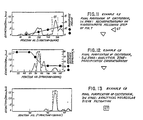
- Figs. 1 to 3 show the course of the separation of the crude AT- and CT-containing leukotaxine preparation from the accompanying contaminating foreign proteins by a sequence of two preparative and one analytical molecular sieve filtration in form of chromatograms.
- Example B1 49 Litres of the serum protein concentrate fraction obtained as a mud as described in Example A, are treated sequentially for fractional elution (Example B1; result: 14 liter of protein mud) and for fractional precipitation of foreign proteins (Example B2).
- the protein residue obtained (1.05 kg of protein) after removal of ethanol and concentration of soluble proteins of the supernatant solution is subjected to the second preparative molecular sieve filtration and, then, sequentially to an analytical molecular sieve filtration, both described in Example B6.
- the same result for the crude, AT-and CT-containing leukotaxine preparation as in Example B6 is obtained.
- Example B5 49 Litres of the serum protein concentrate fraction obtained as a mud as described in Example A, the first treated sequentially with ethanol for fractional precipitation of foregin proteins and subjected to a preparative molecular sieve filtration as described in Example B5.
- the protein residue obtained after concentration (160 g of protein) is dissolved, as described and then subjected as given in Example B6 to a sequence of the second preparative and to the analytical molecular sieve filtration.
- the same result for the crude, AT- and CT-containing leukotaxine preparation as in Example B6 is obtained.
- the AT- and CT-containing crude leukotaxine protein precipitate obtained in Example B6 is dissolved in a minimum volume of 0.0015 mol/I sodium-potassium phosphate buffer containing 0.15 mol/I NaCI and 0.001 mol/I cysteine. A small amount of residual insoluble material is discarded after separation by centrifugation (10,000xg, 1 h, 4°C).
- the clear solution is dialysed against 0.001 mol/I sodium-potassium phosphate buffer containing 0.1 mol/I NaCI, 0.001 mol/I cysteine and having a pH of 7.4, ultrafiltered, or desalted by molecular sieve filtration (exclusion limit: 1000 daltons) until no sulfate is any more detectable in the solution. A small fraction of insoluble proteins is then removed by centrifugation for 1 h at 10,000 g and 4°C.
- the clear AT- and CT-containing leukotaxine protein solution obtained (200 ml; protein content: 9.0 g) is applied to a column packed with hydroxyapatite.
- the column has a length-to-diameter ratio of 10:1 and 3-fold volume of the protein solution volume to be applied (45 mg protein/ml).
- the column Prior to the application of the leukotaxine preparation, the column is first equilibrated with a 5-fold volume of 0.001 mol/I sodium-potassium phosphate buffer containing 0.1 mol/I NaCI, 0.001 mol/I cysteine and having a pH of 7.4 (flow rate 3 cm/h).
- the negatively absorbing proteins are washed out by elution with the buffer solution used to equilibrate the column. Then, elution of the AT- and CT-containing leukotaxine fraction is performed within 4 days with a linear phosphate concentration gradient of 0.001 mol/I to 0.5 mol/I of sodium-potassium phosphate buffer of pH 7.4, having the given constant NaCI and cysteine concentrations. The elution gradient is measured by conductivity. A usual step (salting-out precipitation or ultrafiltration) for concentration of active fractions is applied.
- a suitable buffer for dissolving the protein concentrate is 0.001 mol/I sodium-potassium phosphate buffer containing 0.001 mol/I cysteine and having a pH of 7.2.
- any other salt concentration by addition of a small volume of a concentrated salt solution.
- a concentrated salt solution for example, if required, addition of 0.05 volume parts of a 2 mol/I NaCl solution of pH 7.2 results a phosphate buffered protein solution with 0.1 mol/I NaCI.
- a protein solution volume of 14 ml is obtained, containing 650 mg of the product, which represents a leukotaxine preparation with an AT and CT content of about 70% of total protein.
- Example C1 is repeated with the AT- and CT-containing crude leukotaxine protein precipitate obtained as described in Example B2.
- 16 litres of clear leukotaxine protein solution are obtained and applied to a column packed with hydroxyapatite with characteristics as given in Example C1 (volume 3x 16 litres, length-to-diameter ratio 10:1); i.e. with a diameter of 18 cm and a length of 180 cm.
- a column packed with hydroxyapatite with characteristics as given in Example C1 (volume 3x 16 litres, length-to-diameter ratio 10:1); i.e. with a diameter of 18 cm and a length of 180 cm.
- about 700 mg of the purified leukotaxine-containing product is obtained, which has an AT and CT portion of about 65% of total protein content.
- the AT- and CT-containing leukotaxine preparation obtained as given in Example C1 is dissolved in 0.1 mol/I sodium-potassium phosphate solution containing 0.1 mol/I NaCI, 0.001 mol/I cysteine, 1 mol/I of ammonium sulfate and having a pH of 7.4 to result a protein concentration of about 45 mg/ml.
- the solution obtained (14 ml) is applied to a column packed with a molecular-sieve matrix of dextran cross-linked with epichlorohydrin (Sephadex G-50).
- the matrix is equilibrated with an ascending linear ammonium sulfate concentration gradient of 1.0 to 3.2 mol/I (25 to 80% saturation) of ammonium sulfate.
- the gradient corresponds to a 2% increase in the ammonium sulfate concentration per cm of column length.
- the gradient ranges over half of the column length.
- the other half of column length is equilibrated with the buffer containing a constant concentration of 3.2 mol/I ammonium sulfate.
- the length-to-diameter ratio of the column is 50:1, and the column volume has 100 fold volume of the solution applied.
- the flow rate is 2 cm/h.
- Protein elution from the column is done with the above-described sodium-potassium phosphate buffer containing 1 mol/I of ammonium sulfate.
- the active fractions are collected and the proteins are concentrated in the usual manner (salting-out precipitation or ultra- filtration).
- a buffer as given in Example C1 is preferably used (0.001 mol/I sodium-potassium phosphate buffer containing 0.001 mol/I cysteine and having a pH of 7.2).
- 460 mg (10 ml) of purified AT- and CT-containing leukotaxine preparation is obtained, consisting of about 94% of AT and CT of total protein content.
- the AT- and CT-containing, purified leukotaxine preparation obtained as given in Example C1 (650 mg; about 14 ml with 45 mg protein/ml) is dialysed against 0.001 mol/I sodium-potassium phosphate buffer containing 0.001 mol/I cysteine and having a pH of 7.2, ultrafiltrated, or desalted by molecular sieve filtration (exclusion limit 1000 daltons). Then, a small fraction of insoluble proteins is removed by centrifugation for 30 min at 32,000xg and 4°C. The clear solution obtained is rechromatographed in the above buffer system on a column packed with hydroxyapatite which is equilibrated with the given buffer system.
- the column has a length-to-diameter ratio of 20:1 and at least a 5-fold volume of protein solution applied.
- the elution is carried out with a phosphate concentration gradient as given in Example C1. After concentration of active fractions pooled, 410 mg of highly purified leukotaxine preparation are obtained. About 91% of total protein content are consisting of AT and CT.
- This highly purified leukotaxine preparation obtained above is now subjected to a zone-precipitation chromatography as described in Example C3. After concentration of active fractions, 395 mg (10 ml) of further highly purified AT- and CT-containing leukotaxine preparation are obtained. It now consists of about 96% of AT and CT.
- this highly purified, AT- and CT-containing leukotaxine preparation obtained as given by a sequence of chromatography and rechromatography on hydroxyapatite and zone-precipitation chromatography is subjected to an analytical molecular sieve filtration.
- the leukotaxine protein concentrate is dissolved in 0.003 mol/I sodium-potassium phosphate buffer containing 0.3 mol/I NaCI, 0.001 mol/I cysteine and having a pH of 7.4, to result an total maximum volume of 10 ml with a protein concentration of about 35 to 40 mg/ml.
- the clear solution obtained is applied to a column, packed with Sephadex G-50 having a particle size of 20 to 80 ⁇ m.
- the column used has at least a 50-fold volume of the protein solution and a length-to-diameter ratio of at least 50:1.
- a 0.03 mol/I sodium-potassium phosphate buffer containing 0.3 mol/I NaCI, 0.001 mol/I cysteine, 0.4 mol/I ammonium sulfate and having a pH of 7.4 is used (flow rate: 3 cm/h).
- 370 mg (10 ml) of a highly purified leukotaxine preparation are obtained. It consists of more than 99% of AT and CT (total yield: about 12%).
- the highly purified AT- and CT-containing ieukotaxine preparation can be used for biological, physiological, pharmacological, and biochemical purposes.
- Example C1 The purified, AT- and CT-containing leukotaxine preparation obtained as described in Example C1 (650 mg; about 14 ml with 45 mg protein/ml) is transferred to a 0.003 mol/I sodium-potassium phosphate buffer containing 0.3 mol/I NaCI, 0.001 mol/I cysteine and having a pH of 7.4, as given in Example C1 (Final volume: 16 ml). After centrifugation at 10,000xg, 4°C, for 30 min, a small quantity of insoluble materials is removed. The clear solution obtained is applied to a column packed with Sephadex G-50 with a particle size of 20 to 80 ⁇ rn at a temperature of 4°C.
- the column has a 50-fold volume of the protein solution and a length-to-diameter ratio of 50:1. Elution is performed with a 0.03 mol/I sodium-potassium phosphate buffer containing 0.3 mol/I NaCI, 0.001 mol/I cysteine, 0.4 mol/I ammonium sulfate and having a pH of 7.4.
- the eluate is introduced onto a threefold analytical molecular-sieve filtration cascade composed of two columns of the same specifications. Two main fractions with average molecular weights of 9500 daltons (130 mg AT) and 8500 daltons (325 mg CT) are obtained.
- the two separated, individual protein fractions (AT and CT) obtained are concentrated as usual by the addition of ammonium sulfate.
- the precipitated proteins are then dissolved separately in the above-described buffer.
- the obtained clear solutions are individually subjected to analytical molecular sieve recycling chromatography under the conditions given above for cascade chromatography.
- the eluates are recycled three times at a separation limit of 10,000 daltons (for AT) and 9000 daltons (for CT) as specified for cascade chromatography.
- AT-recycling chromatography yields 113 mg of product with a molecular weight of 9500 daltons (AT) and 10 mg with a molecular weight of 8500 daltons (CT).
- CT recycling chromatography delivers 312 mg of product with a molecular weight of 8500 daltons (CT) and 15 mg with a molecular weight of 9500 daltons (AT).
- CT molecular weight of 8500 daltons
- AT molecular weight of 9500 daltons
- Each of the small residual amount of the proteins is combined with its main quantity.
- the two proteins are then as usually individually concentrated (by ultrafiltration or salting-out precipitation with ammonium sulfate) and the protein precipitates dissolved as described in Example C1.
- the two protein fractions (AT and CT) are subjected separately to a final purification consisting of three steps as described in Example C4.
- the same conditions are used as for the joint purification of AT and CT within the leukotaxine preparation.
- the sequence of the three steps consists of one rechromatography on hydroxyapatite, one zone-precipitation chromatography, and one analytical molecular sieve chromatography for each of the two proteins (AT and CT).
- AT-protein For anaphylatoxin, 100 mg of the AT-protein are obtained (about 10% total yield).
- the preparation consists of more than 99% of AT. Protein contaminations cannot be detected on the basis of electrophoretic, chromatographic, immunoanalytical and solubility criteria.
- the AT preparation can thus be considered as molecularly homogeneous.
- CT-protein For cocytotaxine, 250 mg of the CT-protein are obtained (about 11% total yield).
- the preparation consists of more than 99% of cocytotaxine. Protein contaminations cannot be detected on the basis of electrophoretic, chromatographic immunoanalytical and solubility criteria.
- the CT preparation can as well be considered as molecularly homogeneous.
- the absolute properties and quantities yielded and the ratio of the proteins AT and CT obtained in the process may vary somewhat with the origin and contact-activation method of blood and the animal species used.
- anaphylatoxin derived from normal human serum has only a very low spasmogenic activity on smooth muscles when compared to classical AT derived from normal porcine, rat or guinea pig serum.
- the combination of AT and CT has a high chemotactic activity for neutrophil leucocytes which is comparable to the protein combination derived from normal porcine, rat and guinea pig blood.
- the processes for obtaining AT and CT are not restricted for use with normal, contact-activated mammalian serum.
- protease inhibitors like 6-amino caproic acid, diisopropyl-fluoro-phosphate, etc.
- process Examples B2, B3, B5, B8 are especially suitable for an initial, crude removal of contaminating foreign proteins, followed by a suitable selection of process Examples C for obtaining highly purified proteins. Due to the known action of some of such protease inhibitors on serum encyme systems, and depending on conditions of contact-activation of the sera, modified, natural protein analogues of AT and CT formed as intermediate in sequences of steps of the AT- and CT-formation process can as well be isolated as fractions in the process of the invention.
- the two individual proteins After transfer of the two individual proteins AT and CT into a physiological buffered saline solution and after their sterilization as described in Example C4, the two individual proteins can be used for appropriate biochemical, physiological, pharmacological, or biological purposes. Or, each can be crystallized according to known methods (J. H. Wissler, op. cit.).
Landscapes
- Health & Medical Sciences (AREA)
- Life Sciences & Earth Sciences (AREA)
- Cell Biology (AREA)
- Hematology (AREA)
- Medicinal Chemistry (AREA)
- Animal Behavior & Ethology (AREA)
- Biotechnology (AREA)
- Developmental Biology & Embryology (AREA)
- Immunology (AREA)
- Virology (AREA)
- Zoology (AREA)
- Chemical & Material Sciences (AREA)
- Engineering & Computer Science (AREA)
- Pharmacology & Pharmacy (AREA)
- Epidemiology (AREA)
- Biomedical Technology (AREA)
- General Health & Medical Sciences (AREA)
- Public Health (AREA)
- Veterinary Medicine (AREA)
- Peptides Or Proteins (AREA)
- Medicines That Contain Protein Lipid Enzymes And Other Medicines (AREA)
- Medicines Containing Material From Animals Or Micro-Organisms (AREA)
- Medicines Containing Plant Substances (AREA)
- Investigating Or Analysing Biological Materials (AREA)
- Medicines Containing Antibodies Or Antigens For Use As Internal Diagnostic Agents (AREA)
Claims (20)
caractérisé en ce que, préalablement à la chromatographie sur hydroxypaptite, une fraction majeure de constituants sanguins étrangers également présents est séparée de ladite fraction concentrée en protéines sériques par élution fractionnée et/ou précipitation avec un alcool soluble dans l'eau et/ou au moins une filtration sur tamis moléculaire.
Priority Applications (1)
| Application Number | Priority Date | Filing Date | Title |
|---|---|---|---|
| AT81104558T ATE9906T1 (de) | 1980-06-19 | 1981-06-12 | Verfahren zum herstellen und erhalten von anaphylatoxin und cocytotaxin enthaltenden leukotaxin-praeparaten und von anaphylatoxinund cocytotaxin-proteinen in einer molekular homogenen und biologisch aktiven form. |
Applications Claiming Priority (2)
| Application Number | Priority Date | Filing Date | Title |
|---|---|---|---|
| DE19803022914 DE3022914A1 (de) | 1980-06-19 | 1980-06-19 | Verfahren zurgewinnung eines anaphylatoxin und cocytotaxin enthaltenden leukotaxinpraeparates sowie von anaphylatoxin und cocytotaxin in molekular einheitlicher form |
| DE3022914 | 1980-06-19 |
Publications (3)
| Publication Number | Publication Date |
|---|---|
| EP0042560A2 EP0042560A2 (fr) | 1981-12-30 |
| EP0042560A3 EP0042560A3 (en) | 1982-06-09 |
| EP0042560B1 true EP0042560B1 (fr) | 1984-10-17 |
Family
ID=6104950
Family Applications (1)
| Application Number | Title | Priority Date | Filing Date |
|---|---|---|---|
| EP81104558A Expired EP0042560B1 (fr) | 1980-06-19 | 1981-06-12 | Procédé pour préparer et pour obtenir des préparations de leucotaxine contenant de l'anaphylatoxine et de la cocytotaxine et les protéines anaphylatoxine et cocytotaxine sous une forme moléculaire homogène et biologiquement active |
Country Status (5)
| Country | Link |
|---|---|
| US (2) | US4495096A (fr) |
| EP (1) | EP0042560B1 (fr) |
| JP (1) | JPS5731621A (fr) |
| AT (1) | ATE9906T1 (fr) |
| DE (2) | DE3022914A1 (fr) |
Families Citing this family (4)
| Publication number | Priority date | Publication date | Assignee | Title |
|---|---|---|---|---|
| IE940698L (en) * | 1984-04-05 | 1985-10-05 | Univ Missouri | Vaccine and serum for endotoxin associated disease and method of preparing same as well as to methods of immunization and treatment of such disease and to a detoxified endotoxin and bacterial mutant |
| JPS61235752A (ja) * | 1985-04-11 | 1986-10-21 | Asahi Optical Co Ltd | 細胞分離材、分離器および分離方法 |
| US4865733A (en) * | 1986-03-22 | 1989-09-12 | Toa Nenryo Kogyo K.K. | Cell separator device |
| US5006259A (en) * | 1988-03-21 | 1991-04-09 | E. I. Du Pont De Nemours And Company | Process and means for use of anaphylatoxin adsorbents |
Family Cites Families (1)
| Publication number | Priority date | Publication date | Assignee | Title |
|---|---|---|---|---|
| US2710293A (en) * | 1953-10-30 | 1955-06-07 | Olin Mathieson | Blood fractionation |
-
1980
- 1980-06-19 DE DE19803022914 patent/DE3022914A1/de not_active Withdrawn
-
1981
- 1981-06-12 EP EP81104558A patent/EP0042560B1/fr not_active Expired
- 1981-06-12 DE DE8181104558T patent/DE3166700D1/de not_active Expired
- 1981-06-12 AT AT81104558T patent/ATE9906T1/de not_active IP Right Cessation
- 1981-06-18 US US06/275,014 patent/US4495096A/en not_active Expired - Fee Related
- 1981-06-19 JP JP9516581A patent/JPS5731621A/ja active Pending
-
1984
- 1984-04-06 US US06/597,810 patent/US4610815A/en not_active Expired - Fee Related
Also Published As
| Publication number | Publication date |
|---|---|
| US4495096A (en) | 1985-01-22 |
| DE3022914A1 (de) | 1981-12-24 |
| US4610815A (en) | 1986-09-09 |
| JPS5731621A (en) | 1982-02-20 |
| DE3166700D1 (en) | 1984-11-22 |
| EP0042560A2 (fr) | 1981-12-30 |
| EP0042560A3 (en) | 1982-06-09 |
| ATE9906T1 (de) | 1984-11-15 |
Similar Documents
| Publication | Publication Date | Title |
|---|---|---|
| US4086222A (en) | Method of isolating albumin from blood products | |
| Saklatvala et al. | Purification to homogeneity of pig leucocyte catabolin, a protein that causes cartilage resorption in vitro | |
| SU1431691A3 (ru) | Способ получени гликопротеина | |
| EP0061138B1 (fr) | Angiotropines de leucocytes et de tissu enflammé: une nouvelle classe de protéines naturelles mitogènes et chimiotropiques pour l'induction spécifique de la croissance dirigée des vaisseaux sanguins, la néovascularisation de tissus et pour la morphogénèse de la texture des vaisseaux sanguins; procédé pour leur préparation biotechnique et compositions pharmaceutiques | |
| DK170713B1 (da) | Fremgangsmåde til fremstilling af humant lymphotoxin | |
| EP0061141B1 (fr) | Chimiokinésines et chimiotaxines de leucocytes et de tissus enflammés: protéines naturelles de médiation pour la promotion réversible de mouvements non ordonnés et dirigés (chimiokinèse et chimiotaxie) et pour l'accumulation de types spécifiques de leucocytes; procédé pour leur préparation biotechnique et compositions pharmaceutiques | |
| DE68915226T2 (de) | Thrombin bindende Substanz und Verfahren zu ihrer Herstellung. | |
| US4243582A (en) | Novel glycoproteins from bovine cartilage | |
| US4610815A (en) | Process for producing and obtaining anaphylatoxin- and cocytotaxin-containing leucotaxine preparations and of anaphylatoxin and cocytotaxin proteins in molecularly homogeneous, biologically active form | |
| EP0301374B1 (fr) | Procédé pour la purification de la protéine PP4 du tissu placentaire | |
| EP0061139B1 (fr) | Mitogènes de leucocytes et de tissus enflammés: protéines naturelles leucopoiétiques pour l'induction spécifique de la prolifération et la différenciation des leucocytes; procédé pour leur préparation biotechnique et compositions pharmaceutiques | |
| JPH0479359B2 (fr) | ||
| EP0358463A1 (fr) | Purification d'érythropoietine | |
| US4770877A (en) | Isolation of a high molecular weight aortic endothelial cell growth inhibitor | |
| US4189535A (en) | Serum cell growth promoting materials | |
| EP0061140B1 (fr) | Chimiorecruitines de leucocytes et de tissus enflammés: une nouvelle classe de leucopoiétines naturelles protéiniques pour le recrutement chimique de types spécifiques de leucocytes de la moelle osseuse dans la circulation du sang (leucocytose et réactions de déplacement vers la gauche); procédé pour leur préparation biotechnique et compositions pharmaceutiques | |
| US4452735A (en) | Leukorecruitin | |
| JPH02502640A (ja) | Gm‐csfの精製 | |
| JP3251545B2 (ja) | 精子運動能促進性高分子タンパク質 | |
| CA1076026A (fr) | Methode pour separer l'albumine dans les derives du sang | |
| JPH0361440B2 (fr) | ||
| CA1188245A (fr) | Chimiokinesines et chimiotactines des leucocytes et des tissus enflammes et methode de preparation | |
| Neumann et al. | Purification and physicochemical characterization of a human cytotoxic factor produced by a human haemic cell line | |
| JPS60226816A (ja) | 抗腫瘍活性をもつヒト由来蛋白質 | |
| EP0430121A1 (fr) | Procédé pour la purification de lipocortines |
Legal Events
| Date | Code | Title | Description |
|---|---|---|---|
| PUAI | Public reference made under article 153(3) epc to a published international application that has entered the european phase |
Free format text: ORIGINAL CODE: 0009012 |
|
| AK | Designated contracting states |
Designated state(s): AT BE CH DE FR GB IT NL SE |
|
| PUAL | Search report despatched |
Free format text: ORIGINAL CODE: 0009013 |
|
| AK | Designated contracting states |
Designated state(s): AT BE CH DE FR GB IT NL SE |
|
| 17P | Request for examination filed |
Effective date: 19820825 |
|
| ITF | It: translation for a ep patent filed | ||
| GRAA | (expected) grant |
Free format text: ORIGINAL CODE: 0009210 |
|
| AK | Designated contracting states |
Designated state(s): AT BE CH DE FR GB IT LI NL SE |
|
| REF | Corresponds to: |
Ref document number: 9906 Country of ref document: AT Date of ref document: 19841115 Kind code of ref document: T |
|
| REF | Corresponds to: |
Ref document number: 3166700 Country of ref document: DE Date of ref document: 19841122 |
|
| ET | Fr: translation filed | ||
| PLBE | No opposition filed within time limit |
Free format text: ORIGINAL CODE: 0009261 |
|
| STAA | Information on the status of an ep patent application or granted ep patent |
Free format text: STATUS: NO OPPOSITION FILED WITHIN TIME LIMIT |
|
| 26N | No opposition filed | ||
| PGFP | Annual fee paid to national office [announced via postgrant information from national office to epo] |
Ref country code: AT Payment date: 19860611 Year of fee payment: 6 |
|
| PGFP | Annual fee paid to national office [announced via postgrant information from national office to epo] |
Ref country code: NL Payment date: 19870630 Year of fee payment: 7 |
|
| PG25 | Lapsed in a contracting state [announced via postgrant information from national office to epo] |
Ref country code: GB Effective date: 19880612 Ref country code: AT Effective date: 19880612 |
|
| PG25 | Lapsed in a contracting state [announced via postgrant information from national office to epo] |
Ref country code: SE Effective date: 19880613 |
|
| PG25 | Lapsed in a contracting state [announced via postgrant information from national office to epo] |
Ref country code: LI Effective date: 19880630 Ref country code: CH Effective date: 19880630 |
|
| BERE | Be: lapsed |
Owner name: MAX-PLANCK-G. ZUR FORDERUNG DER WISSENSCHAFTEN E. Effective date: 19880630 |
|
| PG25 | Lapsed in a contracting state [announced via postgrant information from national office to epo] |
Ref country code: NL Effective date: 19890101 |
|
| NLV4 | Nl: lapsed or anulled due to non-payment of the annual fee | ||
| GBPC | Gb: european patent ceased through non-payment of renewal fee | ||
| PG25 | Lapsed in a contracting state [announced via postgrant information from national office to epo] |
Ref country code: FR Free format text: LAPSE BECAUSE OF NON-PAYMENT OF DUE FEES Effective date: 19890228 |
|
| REG | Reference to a national code |
Ref country code: CH Ref legal event code: PL |
|
| PG25 | Lapsed in a contracting state [announced via postgrant information from national office to epo] |
Ref country code: DE Effective date: 19890301 |
|
| REG | Reference to a national code |
Ref country code: FR Ref legal event code: ST |
|
| PG25 | Lapsed in a contracting state [announced via postgrant information from national office to epo] |
Ref country code: BE Effective date: 19890630 |
|
| EUG | Se: european patent has lapsed |
Ref document number: 81104558.2 Effective date: 19890220 |