EP0043103B1 - Hard facing of metal substrates using vc-cr3c2 - Google Patents
Hard facing of metal substrates using vc-cr3c2 Download PDFInfo
- Publication number
- EP0043103B1 EP0043103B1 EP81104904A EP81104904A EP0043103B1 EP 0043103 B1 EP0043103 B1 EP 0043103B1 EP 81104904 A EP81104904 A EP 81104904A EP 81104904 A EP81104904 A EP 81104904A EP 0043103 B1 EP0043103 B1 EP 0043103B1
- Authority
- EP
- European Patent Office
- Prior art keywords
- hard facing
- carbide
- hard
- chromium
- vanadium
- Prior art date
- Legal status (The legal status is an assumption and is not a legal conclusion. Google has not performed a legal analysis and makes no representation as to the accuracy of the status listed.)
- Expired
Links
Images



Classifications
-
- B—PERFORMING OPERATIONS; TRANSPORTING
- B23—MACHINE TOOLS; METAL-WORKING NOT OTHERWISE PROVIDED FOR
- B23K—SOLDERING OR UNSOLDERING; WELDING; CLADDING OR PLATING BY SOLDERING OR WELDING; CUTTING BY APPLYING HEAT LOCALLY, e.g. FLAME CUTTING; WORKING BY LASER BEAM
- B23K35/00—Rods, electrodes, materials, or media, for use in soldering, welding, or cutting
- B23K35/22—Rods, electrodes, materials, or media, for use in soldering, welding, or cutting characterised by the composition or nature of the material
- B23K35/24—Selection of soldering or welding materials proper
- B23K35/32—Selection of soldering or welding materials proper with the principal constituent melting at more than 1550°C
- B23K35/327—Selection of soldering or welding materials proper with the principal constituent melting at more than 1550°C comprising refractory compounds, e.g. carbides
-
- B—PERFORMING OPERATIONS; TRANSPORTING
- B23—MACHINE TOOLS; METAL-WORKING NOT OTHERWISE PROVIDED FOR
- B23K—SOLDERING OR UNSOLDERING; WELDING; CLADDING OR PLATING BY SOLDERING OR WELDING; CUTTING BY APPLYING HEAT LOCALLY, e.g. FLAME CUTTING; WORKING BY LASER BEAM
- B23K9/00—Arc welding or cutting
- B23K9/04—Welding for other purposes than joining, e.g. built-up welding
Definitions
- the present invention relates to a method for hard facing a surface of an iron base alloy substrate and a hard facing rod.
- Hard facing is a well known procedure which consists essentially of applying to a base metal substrate, e.g. an iron base alloy substrate, a deposit of a metal which is substantially harder than the base metal.
- This procedure has been employed in many applications to improve the hardness and wear or abrasion resistance of the base metal.
- a hard facing layer may be applied by this procedure to the surface of various machine wear parts such as cutting tools, hammers and the like and to the teeth of earth moving and digging equipment.
- the hard facing materials used in this procedure have been chosen mostly from a group of metal carbides and mixtures of metal carbides, for example, carbides of tungsten, titanium, tantalum, chromium, vanadium and zirconium to mention a few. These hard facing materials have proven satisfactory in most applications for imparting improved wear and impact resistance to the metal substrates.
- tungsten carbide has been the most commonly used hard facing material because of its excellent hardness and wear characteristics.
- tungsten carbide is an expensive hard facing material and does possess certain limitations. For instance, due to the high density of tungsten carbide, a relatively large weight of the material is required in order to achieve adequate hard facing of the metal substrate.
- US-A-4 055 742 discloses an improved method for hard facing a metal substrate wherein a finely-divided particulate composition of chemically combined vanadium and carbon having tungsten in solid solution is deposited onto the surface of the substrate.
- a particular advantage of this improved method is that the VC-WC solid solution material does not tend to migrate in the molten metal matrix but rather is substantially uniformly distributed therein with the result that the solidified deposit exhibits excellent hardness and wear resistant properties.
- the hard facing material contains up to 90% by weight chromium carbides.
- US ⁇ A ⁇ 4162392 discloses another improved method for hard facing a metal substrate using a finely-divided particulate composition of chemically combined vanadium, tungsten and carbon in weight proportions of 0.75VC-0.25WC, together with from about 5 to about 40% by weight of chromium carbide.
- the chromium carbide may be present in the composition as a free carbide or may be partially or totally combined chemically with the VC-WC solid solution.
- This hard facing material is also able to produce a deposit having excellent wear resistant properties at least comparable to those provided by the use of tungsten carbide alone but at a substantially reduced cost owing to the relatively large amounts of the less expensive chromium carbides that are employed.
- a more specific object of the present invention is to provide an improved hard facing method using a material containing vanadium and chromium carbide in solid solution to produce a hard faced surface by conventional gas or electric welding techniques having excellent hardness and wear resistant properties even in those instances where the hard facing material contains predominantly chromium carbide.
- a novel and improved method of hard facing a metal substrate e.g: an iron base low alloy substrate, which comprises depositing onto the surface of the metal substrate using conventional gas or electric welding techniques, a solid hard facing material consisting of chemically combined vanadium, chromium and carbon in weight proportions of between about 80 to 20% VC and 20 to 80% Cr 3 C 2 alone or together with up to about 15% by weight in the aggregate of at least one member of the group of cobalt, iron, nickel and molybdenum.
- a hard facing surface is applied to a metal substrate, e.g. an iron base low alloy substrate, using conventional electric welding techniques and a hard facing material containing both vanadium and chromium carbide in solid solution wherein the amount of chromium carbide is in excess of about 50% by weight of the total hard facing material.
- the vanadium carbide that is present in the hard facing composition mentioned above is shown as VC whereas actually, the carbon is maintained at a level such that the resulting carbide is VC .89 or slightly higher to allow for some decarburization.
- the hard facing material used in the practice of the present invention can be prepared by various techniques well known in the art.
- the hard facing material can be made by blending together finely-divided particles of the raw materials, e.g. vanadium, chromium, carbon, nickel and molybdenum, in the appropriate stoichiometric quantities, cold pressing the blended particulate mixture into the form of small pellets and then crushing the pellets into granules. The granules are then sintered in a vacuum or inert atmosphere at high temperatures, e.g. about 1400°C, for a time sufficient to sinter or fuse the granules together.
- the hard facing material may be prepared by melting the blended particulate mixture in a high temperature electric arc furnace and then crushing the solidified product to form a finely-divided granular hard facing material.
- a particular embodiment of the present invention comprises a hard facing rod in conventional form for use in hard facing iron and iron base low alloy metal substrates.
- a hard facing rod comprises a metallic sheath or tube formed of the usual metals for such purposes such as iron or steel containing therein a hard facing composition as previously described.
- the hard facing method in accordance with the present invention can be used with known gas and electric welding techniques, e.g. gas welding, arc welding and other practices described in the "Master Chart of Welding Processes"-American Welding Society (1969), using suitable fluxes such as silica manganese or borax, for example.
- the hard facing method of the present invention can also be used with known plasma flame spray or coating techniques.
- a particular advantageous embodiment of the present invention are those hard facing practices which involve the forming of a puddle of molten iron base alloy, e.g. steel on a substrate, and the dropping of the particles, e.g. granules of hard facing material into the puddle, e.g. sized about 0.18 to 1.68 mm (12 to 80 mesh) to provide, upon solidification of the puddle, a hard facing deposit comprising a steel matrix with particles of the hard facing material of the present invention uniformly distributed and bonded therein.
- Examples of such practices are "bulk" TIG (tungsten inert gas) and MIG (metal inert gas) techniques wherein the hard facing material is dropped into a smaller metal puddle.
- the metal substrate and the applied hard facing material become metallurgically bonded.
- the resulting hard facing deposit is a matrix of iron or iron base low alloy metal in which particles of the hard facing material of the present invention are embedded by metallurgical bonding.
- the hard facing material of the present invention When deposited onto a high alloy substrate such as Hadfield steel, the hard facing material of the present invention provides a surface deposit which is less wear resistant than in the case of low alloy steels. However, it has been found that the wear resistance can be improved by work hardening the surface.
- the powders were placed in a 1.9 I ball mill with 4550 grams of 12.7 mm diameter balls and turned at 110 RPM for 88 hours. After 88 hours of milling, the material was pressed into pellets in a 50.8 mm diameter die at a 45 t load. The pellets were crushed into granules. The granules were placed in graphite boats and inserted in a vacuum at 1400°C for two hours. The granules were lightly bonded together but were easily separated in a jaw crusher. Aside from the contained Ni the material was formed of chemically combined vanadium, chromium, molybdenum and carbon. The material had the following analysis by weight:
- the cold pressed and sintered material prepared as described above was employed as a hard facing material. Additional grain was also prepared by varying the amounts of Cr 3 C 2 and processed in the following manner.
- 0.59x1.68 mm (12x30 mesh) granules were packed into 305 mm long 6.35 mm OD, 4.83 mm ID mild steel tubing. The granules comprise about 45% by weight of the rod. The rod was fluxed for electric deposition and deposited on an iron substrate at 180 amp D.C.R.P.
- 0.18xO.59 mm (30x80 mesh) granules were similarly packed into mild steel tubing and fluxed for oxyacetylene welding and deposited by oxyacetylene techniques with a minimum of penetration on a mild steel substrate with a carburizing flame.
- the resulting hard faced surfaces were tested for abrasion resistance using a rubber wheel-sand wear and abrasion test.
- the wear and abrasion test was as follows:
- the hard facing material of the present invention provides a hard faced surface having excellent hardness and wear resistant properties. Moreover, it can be seen that the hardness and wear resistance of the resulting deposits are substantially the same over the entire range of chromium carbide additions, i.e. 20-80% Cr 3 C 2 , using both gas and electric welding techniques. In the particular case of Weld Sample D, for example, prepared using a hard facing composition containing predominantly chromium carbide (no tungsten) the wear resistance of the deposit is as good as that made with the same material using gas welding techniques. The hardness values of all the weld deposits tested
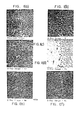
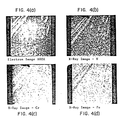
- Electron microprobe analysis of the hard facing deposits prepared in the above example were also obtained. These analyses consist basicly of two types of images, i.e. electron and X-ray.
- the electron image maps the electron emissive property of the specimen under beam excitation, the video signals generated being used to produce micrographs which are geometrically similar to optical micrographs.
- an advantage of the present analysis is that the contrasted areas on the micrographs are related to compositional changes in the sample.
- the X-ray image scan is the distribution of a single element displayed on a micrograph.
- the image is composed of a large number of spots, the mapping of these spots indicates the concentration of a specific element in the scanned area.
- a melted hard facing composition containing by weight 75VC. 9 25 Cr 3 C 2 was prepared from the following materials:
- the powders were blended together by tumbling and then pressed into a 19 mm diameter pellet.
- the pellet was placed in a nonconsumable arc melting furnace on a water cooled copper hearth.
- the chamber was evacuated and the pellet was arc melted using a tungsten electrode at a current of 175 amps.
- the pellet was then crushed and sized to both 0.59x1.68 mm (12x30 mesh) and 0.18xO.59 mm (30x80 mesh).
- the melted hard facing granular composition prepared in this example also provides a hard faced surface having excellent hardness and wear properties.
- the hardness and wear resistance of the deposits are substantially the same over the entire range of chromium carbide additions, i.e. 20 to 80% Cr 3 C 2 , using both gas and electric welding techniques.
- the wear resistance of the deposits seems to improve slightly with the higher weight proportions of chromium carbide although the hardness remains substantially the same.
- the hardness values also increase when FeV is used as the vanadium source.
- FIG. 3(a) shows the electron image at 800x magnification for the deposit prepared by electric welding using a 75VC. 9 25 Cr 3 C 2 hard facing composition. This deposit is Weld Sample F in Table II.
- Figures 3(b)-(d) show the corresponding X-ray image micrographs for V, Cr and Fe, respectively. It will be readily seen from this analysis that the chromium tends to disperse substantially uniformly throughout the deposit and combines with iron from the base metal to form relatively soft iron carbides in the weld matrix. The vanadium shows little preference to combine with the iron and is present almost exclusively in the form of vanadium carbide.
- Figure 4(a) shows the electron image at 800x magnification of a weld deposit prepared by electric welding using a hard facing material containing a higher weight proportion of chromium carbide i.e., 25VC. 9 75 Cr 3 C 2 .
- This deposit is Weld Sample L in Table II.
- Figures 4(b)-(d) show the corresponding X-ray image micrographs for V, Cr and Fe, respectively. From this analysis, it can be seen that with a hard facing composition containing predominantly chromium carbide, the vanadium tends to again combine with chromium to form a hard vanadium-chrome carbide in the weld deposit. Both iron and chromium are substantially uniformly dispersed throughout the weld sample as a mixed carbide.
- FIG 5(a) there is shown an electron image taken at 800x magnification of another weld deposit prepared by electric welding using a hard facing material containing equal amounts of both vanadium carbide and chromium carbide (50VC. 9 50 Cr 3 C 2 ).
- This deposit is Weld Sample J in Table II.
- Figures 5(b)-(d) show the corresponding X-ray image micrographs for V, Cr and Fe, respectively. It is of interest to note from this analysis that at approximately equal proportions of vanadium carbide and chromium carbide in the hard facing composition, a transition occurs or begins to occur in the microstructure of the weld deposit.
- chromium begins to combine with the vanadium to form a mixed vanadium-chromium carbide as can be readily seen by comparison of the micrographs in Figures 5(b) and 5(c). Again, the iron from the base metal is substantially uniformly dispersed throughout the weld and combines with the chromium to form the mixed carbide.
Landscapes
- Engineering & Computer Science (AREA)
- Mechanical Engineering (AREA)
- Physics & Mathematics (AREA)
- Plasma & Fusion (AREA)
- Powder Metallurgy (AREA)
- Other Surface Treatments For Metallic Materials (AREA)
- Glass Compositions (AREA)
Applications Claiming Priority (2)
| Application Number | Priority Date | Filing Date | Title |
|---|---|---|---|
| US16314280A | 1980-06-26 | 1980-06-26 | |
| US163142 | 2002-06-05 |
Publications (2)
| Publication Number | Publication Date |
|---|---|
| EP0043103A1 EP0043103A1 (en) | 1982-01-06 |
| EP0043103B1 true EP0043103B1 (en) | 1985-09-18 |
Family
ID=22588666
Family Applications (1)
| Application Number | Title | Priority Date | Filing Date |
|---|---|---|---|
| EP81104904A Expired EP0043103B1 (en) | 1980-06-26 | 1981-06-25 | Hard facing of metal substrates using vc-cr3c2 |
Country Status (13)
| Country | Link |
|---|---|
| EP (1) | EP0043103B1 (cs) |
| JP (1) | JPS5744494A (cs) |
| AU (1) | AU545796B2 (cs) |
| CA (1) | CA1161703A (cs) |
| CS (1) | CS233720B2 (cs) |
| DD (1) | DD160344A5 (cs) |
| DE (1) | DE3172330D1 (cs) |
| IL (1) | IL63128A (cs) |
| NO (1) | NO812059L (cs) |
| PL (1) | PL231849A1 (cs) |
| YU (1) | YU158581A (cs) |
| ZA (1) | ZA814026B (cs) |
| ZW (1) | ZW13581A1 (cs) |
Cited By (1)
| Publication number | Priority date | Publication date | Assignee | Title |
|---|---|---|---|---|
| US20120282480A1 (en) * | 2009-12-16 | 2012-11-08 | Sumitomo Metal Industries, Ltd. | High-temperature material transferring member |
Families Citing this family (5)
| Publication number | Priority date | Publication date | Assignee | Title |
|---|---|---|---|---|
| BR8503727A (pt) * | 1985-08-07 | 1987-03-17 | Cbmm Sa | Processo de adicao de ferro-ligas carburizadas e de ligas-maes carburizadas em metalurgia |
| DK94794A (da) * | 1994-08-16 | 1996-02-17 | Man B & W Diesel Gmbh | Fremgangsmåde til belægning af et emne med et påsvejst lag, elektrode og svejseanlæg hertil samt et motor- eller maskinelement forsynet med et sådant lag |
| US5667903A (en) * | 1995-05-10 | 1997-09-16 | Dresser Industries, Inc. | Method of hard facing a substrate, and weld rod used in hard facing a substrate |
| US6124564A (en) * | 1998-01-23 | 2000-09-26 | Smith International, Inc. | Hardfacing compositions and hardfacing coatings formed by pulsed plasma-transferred arc |
| CN104028917B (zh) * | 2014-06-04 | 2016-06-29 | 西安理工大学 | 用于熔焊对接钛-钢复合板的药芯焊丝及其制备方法 |
Family Cites Families (4)
| Publication number | Priority date | Publication date | Assignee | Title |
|---|---|---|---|---|
| SE332328B (cs) * | 1969-02-21 | 1971-02-01 | Sandvikens Jernverks Ab | |
| DD99118A1 (cs) * | 1972-06-13 | 1973-07-20 | ||
| US4099993A (en) * | 1973-01-26 | 1978-07-11 | Hermann Muller | Process for producing an extremely hard mixed carbide layer on ferrous materials to increase their resistance to wear |
| AR207464A1 (es) * | 1974-05-21 | 1976-10-08 | Union Carbide Corp | Una composicion para efectuar un revestimiento duro en una superficie solida y una supercficie revestida con dicha composicion |
-
1981
- 1981-06-11 ZW ZW135/81A patent/ZW13581A1/xx unknown
- 1981-06-12 CA CA000379603A patent/CA1161703A/en not_active Expired
- 1981-06-15 ZA ZA814026A patent/ZA814026B/xx unknown
- 1981-06-17 NO NO812059A patent/NO812059L/no unknown
- 1981-06-19 IL IL63128A patent/IL63128A/xx unknown
- 1981-06-24 PL PL23184981A patent/PL231849A1/xx unknown
- 1981-06-25 AU AU72186/81A patent/AU545796B2/en not_active Ceased
- 1981-06-25 EP EP81104904A patent/EP0043103B1/en not_active Expired
- 1981-06-25 JP JP56099020A patent/JPS5744494A/ja active Pending
- 1981-06-25 CS CS814844A patent/CS233720B2/cs unknown
- 1981-06-25 DE DE8181104904T patent/DE3172330D1/de not_active Expired
- 1981-06-25 YU YU01585/81A patent/YU158581A/xx unknown
- 1981-06-26 DD DD81231207A patent/DD160344A5/de unknown
Cited By (1)
| Publication number | Priority date | Publication date | Assignee | Title |
|---|---|---|---|---|
| US20120282480A1 (en) * | 2009-12-16 | 2012-11-08 | Sumitomo Metal Industries, Ltd. | High-temperature material transferring member |
Also Published As
| Publication number | Publication date |
|---|---|
| AU7218681A (en) | 1982-01-07 |
| ZW13581A1 (en) | 1981-10-07 |
| IL63128A (en) | 1984-07-31 |
| CA1161703A (en) | 1984-02-07 |
| EP0043103A1 (en) | 1982-01-06 |
| IL63128A0 (en) | 1981-09-13 |
| JPS5744494A (en) | 1982-03-12 |
| CS233720B2 (en) | 1985-03-14 |
| AU545796B2 (en) | 1985-08-01 |
| NO812059L (no) | 1981-01-28 |
| PL231849A1 (cs) | 1982-03-01 |
| DD160344A5 (de) | 1983-06-01 |
| ZA814026B (en) | 1982-06-30 |
| DE3172330D1 (en) | 1985-10-24 |
| YU158581A (en) | 1983-10-31 |
Similar Documents
| Publication | Publication Date | Title |
|---|---|---|
| US4162392A (en) | Hard facing of metal substrates | |
| US8704134B2 (en) | High hardness/high wear resistant iron based weld overlay materials | |
| US3970445A (en) | Wear-resistant alloy, and method of making same | |
| US5004886A (en) | Method of applying wear-resistant layer and consumable electrode for carrying out the method | |
| AU598164B2 (en) | Consumable welding electrode and method of using same | |
| EP0320195B1 (en) | Wear resisting copper base alloys | |
| US4430122A (en) | Flux-cored arc welding tubular electrode | |
| US4177324A (en) | Hard facing of metal substrates using material containing V, W, Mo, C | |
| US4224382A (en) | Hard facing of metal substrates | |
| US2507195A (en) | Composite surfacing weld rod | |
| US4451508A (en) | Hard facing of metal substrates using material containing VC and improved flux compositions therefor | |
| EP0043103B1 (en) | Hard facing of metal substrates using vc-cr3c2 | |
| US4055742A (en) | Hard facing rod | |
| US4650722A (en) | Hard faced article | |
| US4155759A (en) | Hard facing of metal substrates | |
| JPH08174272A (ja) | 硬化肉盛用銅基合金粉末 | |
| US4446196A (en) | Hard facing composition for iron base alloy substrate using VC, W, Mo, Mn, Ni and Cu and product | |
| US3875363A (en) | Composite electrode wire for electro-slag welding | |
| US4443255A (en) | Hard facing of metal substrates | |
| US4717537A (en) | Process for making metallic alloys using precarburized ferroalloys | |
| US4066422A (en) | Wear-resistant composite material and method of making an article thereof | |
| RU2839406C1 (ru) | Порошковая проволока для наплавки | |
| IL47327A (en) | Method for hard facing a solid substrate rods therefor and product obtained | |
| US3976481A (en) | Wear-resistant composite material | |
| US2831790A (en) | Welding flux |
Legal Events
| Date | Code | Title | Description |
|---|---|---|---|
| PUAI | Public reference made under article 153(3) epc to a published international application that has entered the european phase |
Free format text: ORIGINAL CODE: 0009012 |
|
| AK | Designated contracting states |
Designated state(s): DE GB IT SE |
|
| RAP1 | Party data changed (applicant data changed or rights of an application transferred) |
Owner name: UNION CARBIDE CORPORATION |
|
| 17P | Request for examination filed |
Effective date: 19820705 |
|
| ITF | It: translation for a ep patent filed | ||
| GRAA | (expected) grant |
Free format text: ORIGINAL CODE: 0009210 |
|
| AK | Designated contracting states |
Designated state(s): DE GB IT SE |
|
| REF | Corresponds to: |
Ref document number: 3172330 Country of ref document: DE Date of ref document: 19851024 |
|
| PG25 | Lapsed in a contracting state [announced via postgrant information from national office to epo] |
Ref country code: SE Effective date: 19860626 |
|
| PLBE | No opposition filed within time limit |
Free format text: ORIGINAL CODE: 0009261 |
|
| STAA | Information on the status of an ep patent application or granted ep patent |
Free format text: STATUS: NO OPPOSITION FILED WITHIN TIME LIMIT |
|
| 26N | No opposition filed | ||
| PG25 | Lapsed in a contracting state [announced via postgrant information from national office to epo] |
Ref country code: DE Effective date: 19870303 |
|
| GBPC | Gb: european patent ceased through non-payment of renewal fee | ||
| PG25 | Lapsed in a contracting state [announced via postgrant information from national office to epo] |
Ref country code: GB Effective date: 19881118 |
|
| EUG | Se: european patent has lapsed |
Ref document number: 81104904.8 Effective date: 19870504 |