EP0043285B1 - Verfahren und Reagensmittel zum Bestimmen von Valproinsäure - Google Patents
Verfahren und Reagensmittel zum Bestimmen von Valproinsäure Download PDFInfo
- Publication number
- EP0043285B1 EP0043285B1 EP81302975A EP81302975A EP0043285B1 EP 0043285 B1 EP0043285 B1 EP 0043285B1 EP 81302975 A EP81302975 A EP 81302975A EP 81302975 A EP81302975 A EP 81302975A EP 0043285 B1 EP0043285 B1 EP 0043285B1
- Authority
- EP
- European Patent Office
- Prior art keywords
- acid
- antibody
- alkylene
- compound
- direct bond
- Prior art date
- Legal status (The legal status is an assumption and is not a legal conclusion. Google has not performed a legal analysis and makes no representation as to the accuracy of the status listed.)
- Expired
Links
Images


Classifications
-
- C—CHEMISTRY; METALLURGY
- C07—ORGANIC CHEMISTRY
- C07D—HETEROCYCLIC COMPOUNDS
- C07D209/00—Heterocyclic compounds containing five-membered rings, condensed with other rings, with one nitrogen atom as the only ring hetero atom
- C07D209/02—Heterocyclic compounds containing five-membered rings, condensed with other rings, with one nitrogen atom as the only ring hetero atom condensed with one carbocyclic ring
- C07D209/44—Iso-indoles; Hydrogenated iso-indoles
- C07D209/48—Iso-indoles; Hydrogenated iso-indoles with oxygen atoms in positions 1 and 3, e.g. phthalimide
-
- C—CHEMISTRY; METALLURGY
- C07—ORGANIC CHEMISTRY
- C07C—ACYCLIC OR CARBOCYCLIC COMPOUNDS
- C07C323/00—Thiols, sulfides, hydropolysulfides or polysulfides substituted by halogen, oxygen or nitrogen atoms, or by sulfur atoms not being part of thio groups
-
- C—CHEMISTRY; METALLURGY
- C07—ORGANIC CHEMISTRY
- C07C—ACYCLIC OR CARBOCYCLIC COMPOUNDS
- C07C327/00—Thiocarboxylic acids
-
- C—CHEMISTRY; METALLURGY
- C07—ORGANIC CHEMISTRY
- C07C—ACYCLIC OR CARBOCYCLIC COMPOUNDS
- C07C69/00—Esters of carboxylic acids; Esters of carbonic or haloformic acids
- C07C69/52—Esters of acyclic unsaturated carboxylic acids having the esterified carboxyl group bound to an acyclic carbon atom
- C07C69/533—Monocarboxylic acid esters having only one carbon-to-carbon double bond
-
- G—PHYSICS
- G01—MEASURING; TESTING
- G01N—INVESTIGATING OR ANALYSING MATERIALS BY DETERMINING THEIR CHEMICAL OR PHYSICAL PROPERTIES
- G01N33/00—Investigating or analysing materials by specific methods not covered by groups G01N1/00 - G01N31/00
- G01N33/48—Biological material, e.g. blood, urine; Haemocytometers
- G01N33/50—Chemical analysis of biological material, e.g. blood, urine; Testing involving biospecific ligand binding methods; Immunological testing
- G01N33/94—Chemical analysis of biological material, e.g. blood, urine; Testing involving biospecific ligand binding methods; Immunological testing involving narcotics or drugs or pharmaceuticals, neurotransmitters or associated receptors
- G01N33/9473—Anticonvulsants, e.g. phenobarbitol, phenytoin
-
- Y—GENERAL TAGGING OF NEW TECHNOLOGICAL DEVELOPMENTS; GENERAL TAGGING OF CROSS-SECTIONAL TECHNOLOGIES SPANNING OVER SEVERAL SECTIONS OF THE IPC; TECHNICAL SUBJECTS COVERED BY FORMER USPC CROSS-REFERENCE ART COLLECTIONS [XRACs] AND DIGESTS
- Y10—TECHNICAL SUBJECTS COVERED BY FORMER USPC
- Y10S—TECHNICAL SUBJECTS COVERED BY FORMER USPC CROSS-REFERENCE ART COLLECTIONS [XRACs] AND DIGESTS
- Y10S435/00—Chemistry: molecular biology and microbiology
- Y10S435/961—Chemistry: molecular biology and microbiology including a step of forming, releasing, or exposing the antigen or forming the hapten-immunogenic carrier complex or the antigen per se
-
- Y—GENERAL TAGGING OF NEW TECHNOLOGICAL DEVELOPMENTS; GENERAL TAGGING OF CROSS-SECTIONAL TECHNOLOGIES SPANNING OVER SEVERAL SECTIONS OF THE IPC; TECHNICAL SUBJECTS COVERED BY FORMER USPC CROSS-REFERENCE ART COLLECTIONS [XRACs] AND DIGESTS
- Y10—TECHNICAL SUBJECTS COVERED BY FORMER USPC
- Y10S—TECHNICAL SUBJECTS COVERED BY FORMER USPC CROSS-REFERENCE ART COLLECTIONS [XRACs] AND DIGESTS
- Y10S435/00—Chemistry: molecular biology and microbiology
- Y10S435/975—Kit
-
- Y—GENERAL TAGGING OF NEW TECHNOLOGICAL DEVELOPMENTS; GENERAL TAGGING OF CROSS-SECTIONAL TECHNOLOGIES SPANNING OVER SEVERAL SECTIONS OF THE IPC; TECHNICAL SUBJECTS COVERED BY FORMER USPC CROSS-REFERENCE ART COLLECTIONS [XRACs] AND DIGESTS
- Y10—TECHNICAL SUBJECTS COVERED BY FORMER USPC
- Y10S—TECHNICAL SUBJECTS COVERED BY FORMER USPC CROSS-REFERENCE ART COLLECTIONS [XRACs] AND DIGESTS
- Y10S530/00—Chemistry: natural resins or derivatives; peptides or proteins; lignins or reaction products thereof
- Y10S530/806—Antigenic peptides or proteins
Definitions
- the present invention relates to the immunochemical determination of valproic acid.
- Valproic acid is a lower fatty acid which was first synthesized by Burton in 1881 and has the following chemical formula:
- sodium valproate is widely used for the treatment of various types of epilepsy (minor seizure, focal seizure, psycomotor seizure and mixed seizure) or emotional behaviour disturbance (ill temper, rage) accompanied by epilepsy.
- sodium valproate has side effects such as drowsiness, dizziness, headache, nausea and emesis, anorexia, gastrointestinal disorder, constipation, general malaise, eruption, hepatic dysfunction etc., and the side effects tend to be manifested as the blood level of sodium valproate increases.
- the blood level necessary for therapeutic effect is in the range of 50 ⁇ 100 ⁇ g/ml.
- EP-A-0028795 discloses reagents for use in the quantitative determination of valproic acid by substrate immunoassay.
- the assay procedure involves preparing a test sample containing an enzyme and an antibody for valproic acid and adding a A-galactosyl-umbelliferone-valproic acid conjugate thereto.
- the enzyme reacts with free conjugate to generate fluorescence, the intensity of fluorescence being greater the higher the valproic acid concentration.
- Clinical Chemistry, 25(6), 1093 Abstract 155, (1979) discloses a valproic acid assay employing an enzyme the activity of which decreases when bonded to an antibody.
- Chemical Abstracts, 92, 69168C compares the results obtainable with enzyme immunoassay, gas-liquid chromatography and high pressure liquid chromatography in the determination of antiepileptic drugs and concludes that gas-liquid chromatography is preferred for valproic acid. Chemical Abstracts, 92, 87769d describes interlaboratory variability in the determination by various methods, including enzyme immunoassay, of antiepileptic drug concentration.
- valproic acid might be determined by various immunochemical techniques (enzymoimmunoassay, radioimmunoassay, fluoroimmunoassay, spin immunoassay) which require only small samples and no pretreatment of the samples.
- the present invention provides compounds of the formula wherein
- W' is hydrogen and V' is a direct bond.
- Z preferably is albumin, globulin or an enzyme.
- the present invention also provides a conjugate of a compound of the formula: wherein
- the invention also provides antibodies which are obtained by immunizing an animal with a compound of formula (I) or a salt thereof.
- the invention further provides a kit suitable for immunoassay of valproic acid comprising separately stored component A and component B wherein
- Component A is an antibody obtained by immunizing an animal with a compound of formula I or salt thereof and
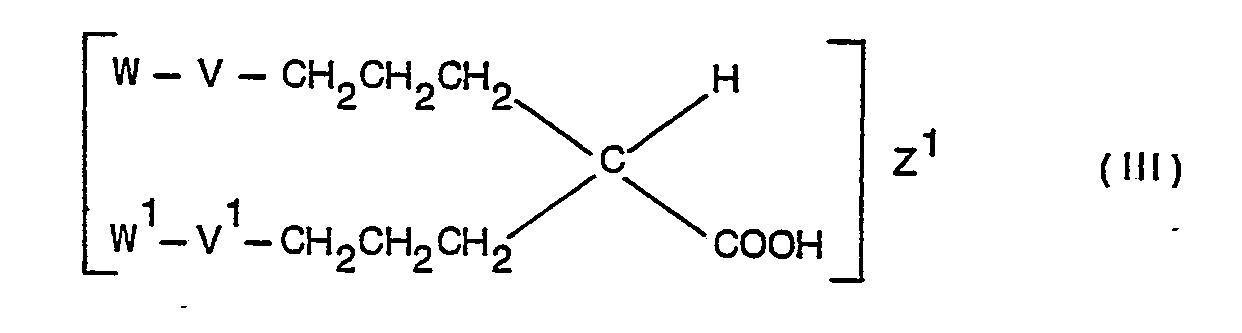
- Component B is a compound of the formula: wherein V, V', W and W 1 are as defined in respect of formula (I) and Z 1 is an organic group having an enzymatic, fluorescent, radio or paramagnetic activity, or hydrogen, or salt thereof, provided that when Z 1 is hydrogen, V and V 1 are direct bonds, W is a bond to Z', W 1 is hydrogen and any atom of the formula except carboxylic hydrogen is radio active.
- Z 1 preferably is an enzyme, especially ⁇ -galactosidase, bonded at other than its reactive site.
- the invention still further provides a method for determination of valproic acid which comprises (a) mixing a test sample containing valproic acid with an antibody obtained by immunizing an animal with a compound of formula (I) or salt thereof and an excess of, as antigen, a compound of formula (III) or salt thereof, (b) allowing the antibody to bind with valproic acid and the antigen competitively, and (c) measuring the activity of bound or free antigen.
- Suitable C 1 ⁇ C 5 alkylene groups are methylene, ethylene, propylene, trimethylene, tetramethylene and pentamethylene.
- linking groups represented by W and W 1 and reagents used for obtaining such linking groups are shown in Table 2.
- Suitable protein may include a albumin, globulin, thyroglobulin, shellfish hemocyanin, edestin and enzymes.
- the protein may be fixed on water-insoluble substance.
- Suitable salts may include conventional salts such as alkali metal salts, alkaline earth metal salts, ammonium salts and salts with organic amines, organic acids, or inorganic acids.
- the conjugate according to the invention can be prepared by reacting a compound (II) with functional groups such as -NH 2 . -SH, -COOH etc. of proteins or modified proteins, which are obtained by introducing functional groups into the proteins, directly or with a help of binding reagents, according to any means known to those skilled in the art.
- a compound (II) with functional groups such as -NH 2 . -SH, -COOH etc. of proteins or modified proteins, which are obtained by introducing functional groups into the proteins, directly or with a help of binding reagents, according to any means known to those skilled in the art.
- Said means include glutaraldehyde method, periodate method, dimaleimide method, MBS method, mixed anhydride method, carbodiimide method, toluene diisocyanate method and diazo- method which were reported in Clin. Chem. Acta, 81, 1 (1977) and Pharmacol. Reviews, 29, 103 (1978).
- the method of introducing mercapto group into protein was reported in Arch. Biochem. Biophys., 96, 605 (1962) and that of introducing halogenoacetyl group was reported in Jour. Biol. Chem., 246, 2594 (1971).
- Suitable molar ratio of the compound (II): a protein may be 1-30:1 and the ratio can be controlled by changing the number of moles of the compound (II) used for reaction.
- the antibodies for the immunochemical assay according to the invention can be prepared by injecting subcutaneously the conjugate with suitable adjuvant into an animal such as rabbit, guniea-pig, goat, sheep etc., bleeding and treating the obtained blood in the conventional manner.
- Said antibodies may be insolubilized by binding with insoluble substances such as bacterial cell walls, natural insoluble polysaccharides such as cellulose, chemically treated dextran gels, agar gels, plastic beads, acrylamide gels, glass beads, metal oxide powders such as Fe 3 0 4 etc., which facilitate the B/F separation process described after.
- the plastic beads include polypropylene beads, polyethylene beads, polycarbonate beads and polystyrene beads.
- the acrylamide gels include polymer gels prepared from acrylamide, N,N'-methylenebisacrylamide, N,N,N',N'-tetramethyl ethylenediamine and catalyst such as ammonium persulfate or riboflavin and light.
- the insoluble substances can be bound to the antibodies by the conventional manner.
- the plastic beads can be bound to the antibodies by dipping the plastic beads in a bicarbonate buffer (pH9.6) solution containing an antibody.
- the bacterial cell walls can be bound chemically by using glutaraldehyde.
- the acrylamide gels can be bound chemically by diazo-coupling after reacting the acrylamide gels with ethylene diamine followed by p-nitrobenzoyl azide and sodium hydrosulfite.
- the glass beads can be bound chemically by using glutaraldehyde after silylating with 3-aminopropyl triethoxysilane.
- the cellulose can be bound chemically by activating with cyanogen bromide or converting into its azidocarbonylmethyl derivative.
- the agar gels and dextran gels can be bound by activating with cyanogen bromide.
- the Fe 3 0 4 powders can be bound by granulating together with cellulose and activating with cyanogen bromide [Biotech. Bioeng., 15, 603 (1973)] or by granulating together with polyacrylamide agarose gel and using glutaraldehyde [Immunochemistry, 14, 443 (1977)].
- the antibodies insolubilized by the last process are convenient because they can be separated with magnet.
- suitable organic group having enzymatic activity may include a group derived from (3-galactosidase, peroxidase, lipase, alkaliphosphatase, glucose-6-phosphate dehydrogenase or glucose oxidase. These enzymes can be linked by the same technique as that described for a protein.
- the suitable organic group having fluorescent activity may include a group derived from fluorescein, which can be introduced by using fluorescein isothiocyanate, for example, in the following manner.
- the suitable organic group having radio activity may include a group carrying 14 C, 3 H or 125l, such as 3-iodo[125l]-4-hydroxyphenyl, which can be introduced by using N-[3-(3-iodo[125l]-4-hydroxyphenyl)propyonyloxy]succinimide, for example, in the following manner.
- the suitable organic group having paramagnetic activity may include a group carrying unpaired electron, such as piperidinooxyl, which can be introduced by using 4-maleimido-2,2,6,6-tetramethyl- piperidinooxyl in the following manner.
- the component B of the kit according to the invention may also include valproic acid derivatives in which any atom of valproic acid except carboxylic hydrogen is substituted with a radioactive isotope.
- W, W', V and V' in the components A and B are identical.
- a combination of a component A wherein W-V- is -NH- and W 1 ⁇ V 1 is H ⁇ with a component B wherein W ⁇ V is ⁇ S ⁇ (CH 2 ) 2 ⁇ and W 1 ⁇ V 1 is H ⁇ can be used for the immunoassay according to the invention.
- the kit may contain standard solutions of valproic acid for preparing the standard curve, reagents for measuring activity of the labelled antigen (for example, substrate, solvent for substrate and enzyme reaction stopping agent), the second antibody or buffering agent, in addition to the components A and B.
- the bound and free antigens are separated before measuring the activity (B/F separation), when the antibody is insoluble.
- the B/F separation can be made, for example, by (1) fixing the antibody (component A) on insoluble substance such as bacterial cell walls before the reaction of antigen (component B), or (2) binding the antibody (component A) to second antibody against y-globulin (IgG) before, after or during the reaction with antigen (component B).
- the second antibody is used as a solution in general, but can be fixed previously on insoluble substance.
- the insolubilization of second antibody has such advantages as to require smaller amount of the second antibody and shorter immuno-reaction time.
- the activity of the labelled antigen can be measured by conventional method depending on the kind of labelling means.
- lithium diisopropyl amide which was prepared from diisopropylamine (6.6 g) in dry tetrahydrofuran (50 ml) and 15% butyl lithium in hexane solution (38 ml) at -65 to -60°C in a nitrogen atmosphere, were added dropwise a solution of methyl pentanoate (7 g) in dry tetrahydrofuran (65 ml) followed by a solution of 5-bromo-1-pentene (9 g) in dry tetrahydrofuran (30 ml) at the same temperature. The mixture was stirred for 4 hours at -65 to 0°C. All the operations described above were carried out in a nitrogen atmosphere.
- Example 2 (i) The procedure described in Example 2 (i) was repeated to yield methyl 2-propyl-6-heptenoate.
- Ozone stream was bubbled into a solution of methyl 2-propyl-6-heptenoate (2 g) in glacial acetic acid (80 ml) for 55 minutes at room temperature.
- Ether 100 ml was added to the resulting mixture, followed by the portionwise addition of zinc powder (10 g) and water (1.1 ml) under cooling.
- the mixture was heated under reflux until KI-starch test became negative.
- ether 100 ml was added to the mixture, which was then filtered.
- the organic layer was separated, washed with water, dried and concentrated. The resulting residue was purified by silica gel column chromatography to give methyl 5-formyl-2-propylpentanoate as an oil (1.1 g).
- BSA Bovine Serum Albumin fraction V, Armour Pharm. Co., 600 mg
- 0.2 M phosphate buffer pH 7.0, 30 ml
- aqueous solution adjusted to pH 7.0 with NaHC0 3 , 30 ml
- 7-amino-2-propylheptanoic acid hydrochloride prepared in Example 1, 180 mg
- 0.02 M aqueous glutaraldehyde solution 30 ml
- m-MBS N-(m-maleimidobenzoyloxy)succinimide
- the dialyzed solution was adjusted to pH 8.5 with 1 N sodium hydroxide solution and concentrated to about 10 ml by ultrafiltration using PM 30 membrane (Amicon Corp.). The concentrate was adjusted to pH 4.5 with diluted hydrochloric acid and left in a cold place for 20 hours. The resulting precipitates were collected by centrifuge (10000 r.p.m., 15 minutes), suspended in a small amount of water, dissolved by adjusting to pH 8.5 with diluted alkali solution and dialyzed for 48 hours against 0.9% sodium chloride solution (2 litres), while the outer solution was renewed four times. The dialyzed solution was lyophilized to give the conjugate (330 mg).
- ⁇ -galactosidase Boeringer Mannheim G.m.b.H., 5 mg/ml suspension in ammonium sulfate solution, 100, ⁇ l
- 0.1 M phosphate buffer pH 7.0, 2 ml
- reaction mixture was applied on a BioGel P-4 (BioRad Corp.) type I column (2.5 x 25 cm) equilibrated with 0.9% sodium chloride-0.02 M phosphate buffer, and eluted with same buffer to obtain 5 ml fractions.
- the A-galactosidase activity of each fractions were measured. Fractions (Nos. 6-8) with high enzyme activity were combined and stored in a 0.1% sodium azide (preservative) and 0.1% BSA (stabilizer) solution.
- a solution of A-galactosidase from Escherichia coli (Boeringer Mannheim G.m.b.H., 5 mg) in 0.02 M phosphate buffer saline (pH 7.0, 3 ml) was dialyzed for 24 hours against the same buffer (1 litre) at 4°C, while the outer solution was once renewed.
- the dialyzed ⁇ -galactosidase solution was brought up to 5 ml with the addition of the same buffer.
- the solution (0.2 ml) was added to 0.2 M phosphate buffer (pH 7.0, 2 ml).
- a solution (500 ⁇ l) of ⁇ -galactosidase (500 ⁇ g) from Escherichia coli dialyzed against 0.02 M phosphate buffer saline was added to 0.2 M phosphate buffer (4 ml).
- a solution (0.2 ml) of 5-formyl-2-propylpentanoic acid (2 mg) in methanol was stirred for an hour at ambient temperature.
- sodium cyanoborohydride (2 mg) was added to the mixture and the mixture was further stirred for an hour.
- the reaction mixture was dialyzed for 24 hours against 0.02 M phosphate buffer saline (pH 7.0,2 litres).
- the conjugate of valproic acid derivative with BSA or BSG prepared in Examples 4, 5 or 6 was dissolved in 0.9% aqueous sodium chloride solution to make a 1% solution.
- An equal volume of complete Freund's adjuvant was added to the solution and mixed to form a w/o type emulsion.
- the emulsion (1.0 ml) was injected into the pads (0.1 ml x 2 places) and the dorsal skin (0.1 ml x 8 places) of rabbits. After two weeks, the emulsion (0.5 ml) was injected again into the dorsal skin (0.1 ml x 5 places) of the same rabbits. The injection was repeated six times at two week intervals. Ten days after the final injections the rabbits were bled in order to prepare anti-valproic acid antiserum.
- Example 10 To the antiserum (5 ml) prepared in Example 10 was added 0.1 M phosphate buffer (pH 7.0, 5 ml) and saturated ammonium sulfate solution (10 ml) under ice-cooling. The mixture was stirred for 20 minutes and centrifuged at 12000 x g for 10 minutes to collect precipitates. The precipitates were dissolved in 0.1 M phosphate buffer (pH 7.0, 5 ml), reprecipitated with addition of equal amount of saturated ammonium sulfate solution and centrifuged at 12000 x g for 10 minutes. The process was repeated twice and the obtained precipitates were dissolved in 0.1 M phosphate buffer (pH 7.0, 5 ml). The solution was dialyzed for 24 hours against 0.9% sodium chloride-0.02M phosphate buffer (pH 7.0, 2 I) at 4°C to obtain IgG-fraction (7 ml) of anti-valproic acid antiserum.
- 0.1 M phosphate buffer pH 7.0
- Sodium valproate (2.0 mg) was dissolved in water (100 ml). The solution (10 ml) was placed in a 100 ml volumetric flask, mixed with normal human serum (10 ml) and sodium azide (100 mg), and diluted to make a final volume of 100 ml.
- the standard solution "200” was diluted twofold with 0.1% sodium azide-10% normal human serum to prepare the standard solution "100".
- the standard solution "100” was diluted twofold with 0.1% sodium azide-10% normal human serum as described in (2) to prepare the standard solution "50".
- the standard solution "50” was diluted twofold with 0.1% sodium azide-10% normal human serum as described in (2) and (3) to prepare the standard solution "25".
- the standard solution "100” was diluted tenfold with 0.1% sodium azide-10% normal human serum to prepare the standard solution "10".
- Example 7 The solution of conjugate of 7-amino-2-propylheptanoic acid with ⁇ -galactosidase (110 ⁇ l) prepared in Example 7 was diluted with 0.1% BSA-0.1% sodium azide-0.9% sodium chloride-0.04 M phosphate buffer (27.39 ml), and placed in a 30 ml brown colored bottle.
- Example 11 The suspension of insoluble antibody (1250 ⁇ l) prepared in Example 11 was mixed with 0.25% cell wall-0.1% BSA-0.1 % sodium azide-0.04 M phosphate buffer (10.75 ml), and placed in a 20 ml brown colored bottle.
- Powdery 2-nitrophenyl- ⁇ -galactopyranoside (44 mg) was placed in a 10 ml brown colored bottle.
- Dipotassium phosphate-sodium hydroxide buffer pH 11, 20 ml was placed in a 20 ml plastic bottle.
- Valproic acid in human blood was determined with the kit described in Example 12 according to the following procedure.
- test tubes The diluted test sample (100 ⁇ l) and the standard solutions (each 100 ⁇ l) were pipetted into each test tubes.
- the test tubes were stirred and incubated for 60 minutes at 37°C. (During the incubation, the test tubes were stoppered with rubber caps.) After incubation, the test tubes were stirred again and the mixtures therein were centrifuged (1000 x g, 10 minutes) placing the test tubes upside down in order to stick the antibody to the inside wall of the caps. After centrifugation, the test tubes were placed in a normal position in order to return supernatants to the bottom of the test tubes, and the rubber caps with the antibody were removed.
- test tubes were placed in an incubator at 37°C.
- the substrate solution (each 100 liters) were added to each of the supernatants and the mixtures were incubated for 30 minutes.
- the diluted reaction stopping reagent (each 2.5 ml) was added to each of the mixtures to stop the enzyme reaction. Absorbance of the mixtures at 410 nm was measured against purified water and the concentrations of valproic acid in the samples were read from the standard calibration curve (Fig. 1).
- Blood levels of valproic acid in patient were measured according to the method described in Example 13 using the kit described in Example 12, and the measured values (Y) were compared with values (X) obtained by gas-liquid chromatography method (GLC method).
Landscapes
- Chemical & Material Sciences (AREA)
- Organic Chemistry (AREA)
- Health & Medical Sciences (AREA)
- Engineering & Computer Science (AREA)
- Life Sciences & Earth Sciences (AREA)
- Molecular Biology (AREA)
- Urology & Nephrology (AREA)
- Immunology (AREA)
- Biomedical Technology (AREA)
- Hematology (AREA)
- Medicinal Chemistry (AREA)
- Analytical Chemistry (AREA)
- Cell Biology (AREA)
- Pharmacology & Pharmacy (AREA)
- Food Science & Technology (AREA)
- Biotechnology (AREA)
- Physics & Mathematics (AREA)
- Microbiology (AREA)
- Biochemistry (AREA)
- General Health & Medical Sciences (AREA)
- General Physics & Mathematics (AREA)
- Pathology (AREA)
- Bioinformatics & Cheminformatics (AREA)
- Peptides Or Proteins (AREA)
Claims (15)

worin U für eine der nachfolgenden Gruppen steht:
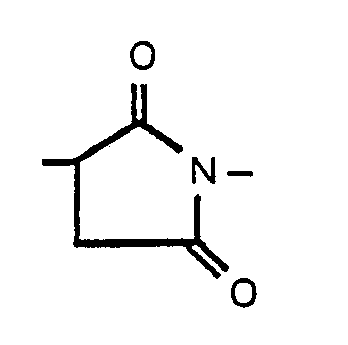
worin U für eine der nachfolgenden Gruppen steht:

oder Salze hiervon.

oder Salze hiervon mit einem Enzym.

Applications Claiming Priority (2)
| Application Number | Priority Date | Filing Date | Title |
|---|---|---|---|
| JP90403/80 | 1980-07-01 | ||
| JP9040380A JPS5714748A (en) | 1980-07-01 | 1980-07-01 | Kit for quantitative determination of valproic acid and its method for quantitative determination |
Publications (3)
| Publication Number | Publication Date |
|---|---|
| EP0043285A1 EP0043285A1 (de) | 1982-01-06 |
| EP0043285B1 true EP0043285B1 (de) | 1984-01-04 |
| EP0043285B2 EP0043285B2 (de) | 1988-06-22 |
Family
ID=13997611
Family Applications (1)
| Application Number | Title | Priority Date | Filing Date |
|---|---|---|---|
| EP81302975A Expired EP0043285B2 (de) | 1980-07-01 | 1981-06-30 | Verfahren und Reagensmittel zum Bestimmen von Valproinsäure |
Country Status (4)
| Country | Link |
|---|---|
| US (1) | US4443365A (de) |
| EP (1) | EP0043285B2 (de) |
| JP (1) | JPS5714748A (de) |
| DE (1) | DE3161834D1 (de) |
Families Citing this family (10)
| Publication number | Priority date | Publication date | Assignee | Title |
|---|---|---|---|---|
| US5089388A (en) * | 1983-04-19 | 1992-02-18 | Syntex (U.S.A.) Inc. | Antibodies for salicylate and their preparation |
| US5185159A (en) * | 1983-07-20 | 1993-02-09 | Sanofi | Pharmaceutical composition based on valproic acid and a process for preparing it |
| JPH0768634B2 (ja) * | 1985-07-03 | 1995-07-26 | 新日本製鐵株式会社 | 耐食性,塗装性能及び加工性に優れた亜鉛系メツキ鋼板 |
| JPS62243739A (ja) * | 1986-04-17 | 1987-10-24 | Nippon Steel Corp | 耐食性鋼材 |
| JPH0711058B2 (ja) * | 1986-04-17 | 1995-02-08 | 新日本製鐵株式会社 | 高耐食性鋼材 |
| US5639624A (en) * | 1989-03-14 | 1997-06-17 | Board Of Regents Of The University Of Nebraska | Monoclonal antibodies specific for metallic cations and method therefor |
| EP0463110B1 (de) * | 1989-03-14 | 1998-01-07 | Board Of Regents Of The University Of Nebraska | Monoklonale antikörper für metall kationen |
| DE69331597T2 (de) * | 1992-11-25 | 2002-09-12 | Chisso Corp., Osaka | Methoden und Verwendung von poly-L-lysine als Enzymschutzmittel |
| GB0425661D0 (en) * | 2004-11-23 | 2004-12-22 | Givaudan Sa | Organic compounds |
| JP2023550279A (ja) * | 2020-11-05 | 2023-12-01 | エフ. ホフマン-ラ ロシュ アーゲー | 患者試料における質量分析測定のための少なくとも1つの目的の分析物の誘導体化 |
Family Cites Families (10)
| Publication number | Priority date | Publication date | Assignee | Title |
|---|---|---|---|---|
| US3654090A (en) * | 1968-09-24 | 1972-04-04 | Organon | Method for the determination of antigens and antibodies |
| NL154598B (nl) * | 1970-11-10 | 1977-09-15 | Organon Nv | Werkwijze voor het aantonen en bepalen van laagmoleculire verbindingen en van eiwitten die deze verbindingen specifiek kunnen binden, alsmede testverpakking. |
| NL154599B (nl) * | 1970-12-28 | 1977-09-15 | Organon Nv | Werkwijze voor het aantonen en bepalen van specifiek bindende eiwitten en hun corresponderende bindbare stoffen, alsmede testverpakking. |
| US3817837A (en) * | 1971-05-14 | 1974-06-18 | Syva Corp | Enzyme amplification assay |
| NL171930C (nl) * | 1972-05-11 | 1983-06-01 | Akzo Nv | Werkwijze voor het aantonen en bepalen van haptenen, alsmede testverpakkingen. |
| JPS5272284A (en) * | 1975-12-12 | 1977-06-16 | Dainippon Pharmaceutical Co | Enzymeeimmunoassay reagent |
| US4218539A (en) * | 1978-03-24 | 1980-08-19 | Weltman Joel K | Enzyme conjugates and method of preparation and use |
| US4329281A (en) * | 1978-06-05 | 1982-05-11 | Hoffmann-La Roche Inc. | Hapten compositions |
| US4238389A (en) * | 1979-02-12 | 1980-12-09 | Syva Company | Valproate conjugation using dicarbonyls |
| US4261974A (en) * | 1979-11-13 | 1981-04-14 | Miles Laboratories, Inc. | Valproic acid immunogen conjugates and antibodies thereto |
-
1980
- 1980-07-01 JP JP9040380A patent/JPS5714748A/ja active Granted
-
1981
- 1981-06-24 US US06/276,794 patent/US4443365A/en not_active Expired - Fee Related
- 1981-06-30 EP EP81302975A patent/EP0043285B2/de not_active Expired
- 1981-06-30 DE DE8181302975T patent/DE3161834D1/de not_active Expired
Also Published As
| Publication number | Publication date |
|---|---|
| JPH0115826B2 (de) | 1989-03-20 |
| EP0043285B2 (de) | 1988-06-22 |
| DE3161834D1 (en) | 1984-02-09 |
| JPS5714748A (en) | 1982-01-26 |
| US4443365A (en) | 1984-04-17 |
| EP0043285A1 (de) | 1982-01-06 |
Similar Documents
| Publication | Publication Date | Title |
|---|---|---|
| EP0276732A2 (de) | Cannabinol-Derivate und Immuntest | |
| EP2316854B1 (de) | Prozess zur Produktion einer Hybridomzelle und eines daraus gewonnenen Antikörpers, der mehr als einen Vitamin D Metaboliten erkennt. | |
| US4465776A (en) | Monoclonal antibodies to vitamin B6 and immunoassay method | |
| EP0043285B1 (de) | Verfahren und Reagensmittel zum Bestimmen von Valproinsäure | |
| US4171244A (en) | Enzyme-bound-polyidothyronine | |
| US4478934A (en) | Determination of adenosine by immunoassay involving acylation of the adenosine | |
| EP0363041A1 (de) | Monoklonaler Antikörper gegen Morphin, Bereitung von monoklonalen Antikörpern, Testsatz und Verfahren zur Bestimmung von Morphin | |
| JPS58111754A (ja) | クレアチニンの免疫学的測定法及びそのための試薬 | |
| EP0311383A2 (de) | Monoklonaler Antikörper gegen Methamphetamin, seine Herstellung, Testverfahren und Testsatz für Methamphetamin | |
| FI78787C (fi) | Immunometrisk metod foer bestaemning av en hapten. | |
| US6201109B1 (en) | Assay for bone alkaline phosphatase | |
| US10351830B2 (en) | Conjugates for assays for oxycodone and oxymorphone | |
| JPS6210070A (ja) | ヒスタミン誘導体、免疫原接合体およびそれに対してレイズされた抗体 | |
| EP0095639A2 (de) | Propranololimmunogene, deren Antikörper, Prüfungssatz und Verbindungen für Propranololimmunoassay | |
| EP0311456A2 (de) | Monoklonaler Antikörper gegen Okadainsäure, Verfahren zur Herstellung des monoklonalen Antikörpers, Testreagenz zum Testen von Okadainsäure mittels des monoklonalen Antikörpers und Testmethode | |
| US4596771A (en) | Monoclonal antibodies to vitamin B-6 and immunossay method | |
| EP0132292A2 (de) | Verfahren zur Messung von biologischen Liganden | |
| CN109628409B (zh) | 一种分泌抗莱克多巴胺单克隆抗体的杂交瘤细胞株及其应用 | |
| US4900661A (en) | Method for immunological determination of amines, monoclonal antibodies and kit of reagents for carrying out the method | |
| US5202266A (en) | 25-hydroxy vitamin D3 derivatives, process for their production, and assay method using the same | |
| JP3419084B2 (ja) | 活性型mapキナーゼを認識する抗体 | |
| US5239086A (en) | Haptens and tracers for immunoassays for propoxyphene | |
| JPH0672892B2 (ja) | ヒト血中のヒトプロリルヒドロキシラーゼの酵素免疫定量法 | |
| US6291198B1 (en) | Antibody that recognizes pyrazine derivative and method for measuring 1,2-dicarbonyl derivative using said antibody | |
| HU206772B (en) | Method and reagent set for immunological detecting atrazine and atrazine-derivatives and method for obtaining monoclonic antibiotics suitable to said detection |
Legal Events
| Date | Code | Title | Description |
|---|---|---|---|
| PUAI | Public reference made under article 153(3) epc to a published international application that has entered the european phase |
Free format text: ORIGINAL CODE: 0009012 |
|
| AK | Designated contracting states |
Designated state(s): BE DE FR GB IT NL |
|
| 17P | Request for examination filed |
Effective date: 19820420 |
|
| ITF | It: translation for a ep patent filed | ||
| GRAA | (expected) grant |
Free format text: ORIGINAL CODE: 0009210 |
|
| AK | Designated contracting states |
Designated state(s): BE DE FR GB IT NL |
|
| REF | Corresponds to: |
Ref document number: 3161834 Country of ref document: DE Date of ref document: 19840209 |
|
| ET | Fr: translation filed | ||
| PLBI | Opposition filed |
Free format text: ORIGINAL CODE: 0009260 |
|
| 26 | Opposition filed |
Opponent name: BOEHRINGER MANNHEIM GMBH Effective date: 19841004 |
|
| PUAH | Patent maintained in amended form |
Free format text: ORIGINAL CODE: 0009272 |
|
| STAA | Information on the status of an ep patent application or granted ep patent |
Free format text: STATUS: PATENT MAINTAINED AS AMENDED |
|
| 27A | Patent maintained in amended form |
Effective date: 19880622 |
|
| AK | Designated contracting states |
Kind code of ref document: B2 Designated state(s): BE DE FR GB IT NL |
|
| ITF | It: translation for a ep patent filed | ||
| NLR2 | Nl: decision of opposition | ||
| ET3 | Fr: translation filed ** decision concerning opposition | ||
| NLR3 | Nl: receipt of modified translations in the netherlands language after an opposition procedure | ||
| PGFP | Annual fee paid to national office [announced via postgrant information from national office to epo] |
Ref country code: FR Payment date: 19890613 Year of fee payment: 9 |
|
| ITTA | It: last paid annual fee | ||
| PGFP | Annual fee paid to national office [announced via postgrant information from national office to epo] |
Ref country code: NL Payment date: 19890630 Year of fee payment: 9 Ref country code: GB Payment date: 19890630 Year of fee payment: 9 |
|
| PGFP | Annual fee paid to national office [announced via postgrant information from national office to epo] |
Ref country code: BE Payment date: 19890725 Year of fee payment: 9 |
|
| PGFP | Annual fee paid to national office [announced via postgrant information from national office to epo] |
Ref country code: DE Payment date: 19890831 Year of fee payment: 9 |
|
| PG25 | Lapsed in a contracting state [announced via postgrant information from national office to epo] |
Ref country code: GB Effective date: 19900630 Ref country code: BE Effective date: 19900630 |
|
| BERE | Be: lapsed |
Owner name: DAINIPPON PHARMACEUTICAL CO. LTD Effective date: 19900630 |
|
| PG25 | Lapsed in a contracting state [announced via postgrant information from national office to epo] |
Ref country code: NL Effective date: 19910101 |
|
| NLV4 | Nl: lapsed or anulled due to non-payment of the annual fee | ||
| GBPC | Gb: european patent ceased through non-payment of renewal fee | ||
| PG25 | Lapsed in a contracting state [announced via postgrant information from national office to epo] |
Ref country code: FR Effective date: 19910228 |
|
| PG25 | Lapsed in a contracting state [announced via postgrant information from national office to epo] |
Ref country code: DE Effective date: 19910301 |
|
| REG | Reference to a national code |
Ref country code: FR Ref legal event code: ST |