EP0048792A1 - Gussasphaltmischung - Google Patents
Gussasphaltmischung Download PDFInfo
- Publication number
- EP0048792A1 EP0048792A1 EP81104036A EP81104036A EP0048792A1 EP 0048792 A1 EP0048792 A1 EP 0048792A1 EP 81104036 A EP81104036 A EP 81104036A EP 81104036 A EP81104036 A EP 81104036A EP 0048792 A1 EP0048792 A1 EP 0048792A1
- Authority
- EP
- European Patent Office
- Prior art keywords
- zeolite
- mastic asphalt
- mixture
- silica
- precipitated silica
- Prior art date
- Legal status (The legal status is an assumption and is not a legal conclusion. Google has not performed a legal analysis and makes no representation as to the accuracy of the status listed.)
- Granted
Links
- 239000010426 asphalt Substances 0.000 title claims abstract description 54
- 239000000203 mixture Substances 0.000 title claims abstract description 50
- VYPSYNLAJGMNEJ-UHFFFAOYSA-N Silicium dioxide Chemical compound O=[Si]=O VYPSYNLAJGMNEJ-UHFFFAOYSA-N 0.000 claims abstract description 57
- 239000010457 zeolite Substances 0.000 claims abstract description 48
- HNPSIPDUKPIQMN-UHFFFAOYSA-N dioxosilane;oxo(oxoalumanyloxy)alumane Chemical compound O=[Si]=O.O=[Al]O[Al]=O HNPSIPDUKPIQMN-UHFFFAOYSA-N 0.000 claims abstract description 39
- 239000013521 mastic Substances 0.000 claims abstract description 38
- 229910021536 Zeolite Inorganic materials 0.000 claims abstract description 37
- 239000000377 silicon dioxide Substances 0.000 claims abstract description 28
- 230000035515 penetration Effects 0.000 description 12
- 239000000126 substance Substances 0.000 description 9
- 238000000034 method Methods 0.000 description 8
- 239000011230 binding agent Substances 0.000 description 7
- 230000008569 process Effects 0.000 description 7
- 239000000654 additive Substances 0.000 description 5
- 238000010276 construction Methods 0.000 description 5
- 229910052500 inorganic mineral Inorganic materials 0.000 description 5
- 239000011707 mineral Substances 0.000 description 5
- 230000009467 reduction Effects 0.000 description 5
- BFRXZIMAUMUZJH-UHFFFAOYSA-M [OH-].[Na+].[Na+].[Na+].[Na+].[Al+3].[Al+3].[Al+3].[O-][Si]([O-])([O-])[O-].[O-][Si]([O-])([O-])[O-].[O-][Si]([O-])([O-])[O-] Chemical compound [OH-].[Na+].[Na+].[Na+].[Na+].[Al+3].[Al+3].[Al+3].[O-][Si]([O-])([O-])[O-].[O-][Si]([O-])([O-])[O-].[O-][Si]([O-])([O-])[O-] BFRXZIMAUMUZJH-UHFFFAOYSA-M 0.000 description 4
- 230000008901 benefit Effects 0.000 description 4
- 239000000463 material Substances 0.000 description 4
- XLYOFNOQVPJJNP-UHFFFAOYSA-N water Chemical compound O XLYOFNOQVPJJNP-UHFFFAOYSA-N 0.000 description 4
- DGAQECJNVWCQMB-PUAWFVPOSA-M Ilexoside XXIX Chemical compound C[C@@H]1CC[C@@]2(CC[C@@]3(C(=CC[C@H]4[C@]3(CC[C@@H]5[C@@]4(CC[C@@H](C5(C)C)OS(=O)(=O)[O-])C)C)[C@@H]2[C@]1(C)O)C)C(=O)O[C@H]6[C@@H]([C@H]([C@@H]([C@H](O6)CO)O)O)O.[Na+] DGAQECJNVWCQMB-PUAWFVPOSA-M 0.000 description 3
- NPYPAHLBTDXSSS-UHFFFAOYSA-N Potassium ion Chemical compound [K+] NPYPAHLBTDXSSS-UHFFFAOYSA-N 0.000 description 3
- HEMHJVSKTPXQMS-UHFFFAOYSA-M Sodium hydroxide Chemical compound [OH-].[Na+] HEMHJVSKTPXQMS-UHFFFAOYSA-M 0.000 description 3
- 150000001768 cations Chemical class 0.000 description 3
- 230000006872 improvement Effects 0.000 description 3
- 229910052751 metal Inorganic materials 0.000 description 3
- 239000002184 metal Substances 0.000 description 3
- 229910052708 sodium Inorganic materials 0.000 description 3
- 239000011734 sodium Substances 0.000 description 3
- 239000011248 coating agent Substances 0.000 description 2
- 238000000576 coating method Methods 0.000 description 2
- JYIMWRSJCRRYNK-UHFFFAOYSA-N dialuminum;disodium;oxygen(2-);silicon(4+);hydrate Chemical compound O.[O-2].[O-2].[O-2].[O-2].[O-2].[O-2].[Na+].[Na+].[Al+3].[Al+3].[Si+4] JYIMWRSJCRRYNK-UHFFFAOYSA-N 0.000 description 2
- 239000000945 filler Substances 0.000 description 2
- 238000009499 grossing Methods 0.000 description 2
- 238000007373 indentation Methods 0.000 description 2
- 239000002808 molecular sieve Substances 0.000 description 2
- 238000001556 precipitation Methods 0.000 description 2
- URGAHOPLAPQHLN-UHFFFAOYSA-N sodium aluminosilicate Chemical compound [Na+].[Al+3].[O-][Si]([O-])=O.[O-][Si]([O-])=O URGAHOPLAPQHLN-UHFFFAOYSA-N 0.000 description 2
- 235000019738 Limestone Nutrition 0.000 description 1
- 230000000996 additive effect Effects 0.000 description 1
- JEWHCPOELGJVCB-UHFFFAOYSA-N aluminum;calcium;oxido-[oxido(oxo)silyl]oxy-oxosilane;potassium;sodium;tridecahydrate Chemical compound O.O.O.O.O.O.O.O.O.O.O.O.O.[Na].[Al].[K].[Ca].[O-][Si](=O)O[Si]([O-])=O JEWHCPOELGJVCB-UHFFFAOYSA-N 0.000 description 1
- 230000009286 beneficial effect Effects 0.000 description 1
- 230000015572 biosynthetic process Effects 0.000 description 1
- 238000009835 boiling Methods 0.000 description 1
- 230000008859 change Effects 0.000 description 1
- 239000003795 chemical substances by application Substances 0.000 description 1
- 230000000052 comparative effect Effects 0.000 description 1
- 230000006835 compression Effects 0.000 description 1
- 238000007906 compression Methods 0.000 description 1
- 238000002425 crystallisation Methods 0.000 description 1
- 230000008025 crystallization Effects 0.000 description 1
- 230000001419 dependent effect Effects 0.000 description 1
- 230000006866 deterioration Effects 0.000 description 1
- 150000004683 dihydrates Chemical class 0.000 description 1
- 230000002349 favourable effect Effects 0.000 description 1
- 235000013312 flour Nutrition 0.000 description 1
- 230000005283 ground state Effects 0.000 description 1
- 239000010440 gypsum Substances 0.000 description 1
- 229910052602 gypsum Inorganic materials 0.000 description 1
- 238000009434 installation Methods 0.000 description 1
- 239000006028 limestone Substances 0.000 description 1
- 238000002156 mixing Methods 0.000 description 1
- 239000002245 particle Substances 0.000 description 1
- 229910001743 phillipsite Inorganic materials 0.000 description 1
- 239000000843 powder Substances 0.000 description 1
- 238000009490 roller compaction Methods 0.000 description 1
- 238000007788 roughening Methods 0.000 description 1
- 239000004576 sand Substances 0.000 description 1
- 239000011163 secondary particle Substances 0.000 description 1
- RMAQACBXLXPBSY-UHFFFAOYSA-N silicic acid Chemical compound O[Si](O)(O)O RMAQACBXLXPBSY-UHFFFAOYSA-N 0.000 description 1
- 235000012239 silicon dioxide Nutrition 0.000 description 1
- 238000001228 spectrum Methods 0.000 description 1
- 230000007480 spreading Effects 0.000 description 1
- 238000003786 synthesis reaction Methods 0.000 description 1
Images
Classifications
-
- C—CHEMISTRY; METALLURGY
- C08—ORGANIC MACROMOLECULAR COMPOUNDS; THEIR PREPARATION OR CHEMICAL WORKING-UP; COMPOSITIONS BASED THEREON
- C08K—Use of inorganic or non-macromolecular organic substances as compounding ingredients
- C08K7/00—Use of ingredients characterised by shape
- C08K7/22—Expanded, porous or hollow particles
- C08K7/24—Expanded, porous or hollow particles inorganic
- C08K7/26—Silicon- containing compounds
-
- C—CHEMISTRY; METALLURGY
- C08—ORGANIC MACROMOLECULAR COMPOUNDS; THEIR PREPARATION OR CHEMICAL WORKING-UP; COMPOSITIONS BASED THEREON
- C08L—COMPOSITIONS OF MACROMOLECULAR COMPOUNDS
- C08L95/00—Compositions of bituminous materials, e.g. asphalt, tar, pitch
Definitions
- Mastic asphalt is described in DIN 4109, sheet 4, page 3, section 5.3.5 (mastic asphalt coating), in DIN 18 354 and in The Federal Gazette for Transport, Technical Regulations and Guidelines for the Construction of Bituminous Pavement Ceilings Part 6, page 7, 1975 edition.
- mastic asphalt is a dense bituminous mass of grit, sand, filler and road bitumen or road bitumen and natural asphalt, the mineral mixture of which is composed of low voids.
- the binder content is matched to the hollow spaces of the mineral mass in such a way that they are fully filled in when installed and a small excess of binder is present. This mixture is pourable and spreadable when hot and does not require compression when installed. The surface is treated after roughening or dulling the mastic asphalt immediately.
- Mastic asphalt for road and screed construction requires a high level of stability (resistance to deformation) and, if possible, good workability at the same time. Since such void-free asphalt does not undergo vibratory or roller compaction, a reasonable pouring smoothness.
- road construction a large part of the surfaces to be laid with mastic asphalt is installed with pavers, so that a stiffer material can also be processed. The situation is different in places where only manual installation can take place, such as at indentations, on bridges, on ramps, in channels etc. Here, only smooth asphalt can be processed cleanly.
- the covering thicknesses range between 20 - 40 mm, taking into account unevenness in the surface. Correct spreading of the hot asphalt mass and crack-free, low-resistance smoothing is required. The goal is always a large laying performance of the columns, since the final price of the construction work is very dependent on wages. With improved industrial floors in terms of laying performance, a higher material cost is accepted if a price advantage arises in the final calculation.
- Mastic asphalt mixes can be set stiff to the minimum limit by targeted mineral composition (e.g. "strong” filler) or bitumen reduction.
- targeted mineral composition e.g. "strong” filler
- bitumen reduction e.g. bitumen reduction
- the resulting increased stability is at the expense of the laying performance. It would make more sense to strive for a higher deformation resistance or a lower penetration depth and at the same time a good suppleness of the asphalt masses through effective additives.
- the invention relates to a mastic asphalt mixture which contains 0.2 to 5% by weight of a crystalline powdery synthetic zeolite or zeolite mixture, based on the mixture as a whole.
- the mastic asphalt mixture can additionally contain 0.1 to 2% by weight of precipitated silica, based on the mixture as a whole.
- a precipitated silica or a precipitated and spray-dried silica can be used as synthetic silica.
- the mastic asphalt mixture can contain 0.1 to 1.2% by weight of synthetic silica.
- the synthetic silica used can have a BET surface area of 150 to 250 m 2 / g.
- a precipitated silica can be a silica which has the same physico-chemical characteristics and only differs from the above in terms of the tamped density.
- the tamped density can be, for example, 70 g / l.
- a silica with the following physico-chemical characteristics:
- the same precipitated and spray-dried silica can also be used in the ground state with an average secondary particle size of, for example, 5 micrometers.
- zeolite corresponds to the description according to D.W. Breck, "Zeoliteolekulare sieves", Wiley Interscience 1974, pages 133 to 180.
- the zeolites used can have a water content of up to 27%.
- the poured asphalt mixture according to the invention can contain a type A zeolite as powdery crystalline synthetic zeolites.
- Zeolite A has the general formula where M is a metal cation, such as sodium or potassium cation, n is valency and y is a value up to 5.
- the mastic asphalt mixture may contain a type A zeolite:. which according to methods according to DE-AS 23 33 068, DE-AS 24 47 021, DE-AS 25 17 218, DE-OS 26 51 485, DE-OS 26 51 446, DE-OS 26 51 436, DE-OS 26 51 419, DE-OS 26 51 420 and / or DE-OS 26 51 437 is produced.
- the zeolite A used can also be produced by other known processes, e.g. according to DE-PS 10 38 017 or DE-AS 16 67 620.
- the zeolite A used can preferably have the following physico-chemical data:
- the mastic asphalt mixture according to the invention can, as powdered zeolites, be a type Y zeolite with the general formula contain, where M is a metal cation, such as sodium or potassium cation, n is its valency, x is a value greater than 3 and y is a value up to 9.
- the zeolite Y used can have the following physico-chemical characteristics:
- This zeolitic molecular sieve powder can be produced, for example, according to DE-AS 10 98 929, DE-AS 12 03 239 or DE-AS 12 63 056.
- the mastic asphalt mixture according to the invention can, as powdered zeolites, be a type X zeolite with the general formula contain, where M is a metal cation, for example sodium or potassium cation, n is its valency and y is a value up to 8.
- This powdery zeolite can be produced according to DE-PS 10 38 016, DE-PS 11 38 383 or DE-OS 20 28 163.
- the zeolite A used can have the following physico-chemical data: Furthermore, the mastic asphalt mixture according to the invention can contain a type P zeolite as powdered zeolites.
- the term zeolite P is synonymous with the names of synthetic phillipsite and zeolite B.
- the zeolite P can be produced by the process according to FR-PS 1 213 628 (Bayer AG).
- the zeolite P used can have the following physico-chemical characteristics:
- the mastic asphalt mixture according to the invention can also be used as powdered zeolite hydroxysodalite with the general formula contain.
- Hydroxysodalite can be produced, for example, from zeolite A by boiling in aqueous sodium hydroxide solution (cf. DW Breck "Zeolite molecular sieves", page 275 (1974) Wiley Interscience Publication).
- the mastic asphalt mixture according to the invention can contain a mixture of the specified zeolites. This mixture can do so probably be produced by mixing the pure zeolites as well as by direct synthesis using the precipitation process. Mixtures which can be prepared directly can be mixtures of the zeolites A and P, the zeolites A and X, the zeolites A and hydroxysodalite, the zeolites P and X or the zeolites P and Y.
- the mastic asphalt mixture can contain a mixture of zeolite X and zeolite P in a ratio of 80 to 5 to 20 to 95.
- Such a mixture can be produced, for example, according to DE-OS 20 28 163, page 15, table 3, example 3 by means of a precipitation process.
- Factory and warehouse halls are to house shelves, pallets, machines, etc.
- the large loads are often only transferred to the floor via small pressure support surfaces (shelf stands).
- shelf stands small pressure support surfaces
- the result is undesirable impressions.
- the vehicle is driven on with forklifts and other vehicles that put heavy loads on the ground and thus leave traces.
- bitumen grade a mastic asphalt mixture with the following composition was used: A mixture of 65% by weight bitumen B 45 and 35% by weight high vacuum bitumen HVB with a ring + ball softening point of 69.0 ° C. was chosen as the binder.
- the mastic asphalt mixture was set relatively soft.
- the binder content and the bitumen grade were matched to this.
- the powdery additives were added in% by weight to the total mass of the mastic asphalt, the limestone flour portion being reduced by the respective amount.
- the addition of the additives changes the processability of the material.
- the processability can also be controlled via the mix composition, the type of binder and the processing temperature.
- the processing temperature was varied with an otherwise constant mix composition.
- a measure of the processability is the processing temperature required to achieve a certain consistency of the mix.
- the consistency was defined as an expiry time of 35 seconds over an inclined plane with constant inclination and constant dimensions. This means that the temperature was determined in each case, which is required to drain the mixed material over the inclined plane in 35 seconds.
Landscapes
- Chemical & Material Sciences (AREA)
- Organic Chemistry (AREA)
- Health & Medical Sciences (AREA)
- Chemical Kinetics & Catalysis (AREA)
- Medicinal Chemistry (AREA)
- Polymers & Plastics (AREA)
- Civil Engineering (AREA)
- Materials Engineering (AREA)
- Structural Engineering (AREA)
- Engineering & Computer Science (AREA)
- Compositions Of Macromolecular Compounds (AREA)
- Road Paving Structures (AREA)
- Silicates, Zeolites, And Molecular Sieves (AREA)
- Steroid Compounds (AREA)
- Working-Up Tar And Pitch (AREA)
- Acyclic And Carbocyclic Compounds In Medicinal Compositions (AREA)
- Ropes Or Cables (AREA)
- Insulated Conductors (AREA)
- Harvester Elements (AREA)
- Pharmaceuticals Containing Other Organic And Inorganic Compounds (AREA)
- Curing Cements, Concrete, And Artificial Stone (AREA)
Abstract
Description
- Gußasphalt wird beschrieben in DIN 4109, Blatt 4, Seite 3, Abschnitt 5.3.5 (Gußasphaltstrich), in DIN 18 354 und in Der Bundesanzeiger für Verkehr, Technische Vorschriften und Richtlinien für den Bau bituminöser Fahrbahndecken Teil 6, Seite 7, Ausgabe 1975.
- Dementsprechend ist Gußasphalt eine dichte bituminöse Masse aus Splitt, Sand, Füller und Straßenbaubitumen oder Straßenbaubitumen und Naturasphalt, deren Mineralstoffgemisch hohlraumarm zusammengesetzt ist. Der Bindemittelgehalt ist auf die Holhräume der Minerlmasse so abgestimmt, daß diese im Einbauzustand voll ausgefüllt sind und ein geringer Überschuß an Bindemittel vorhanden ist. Dieses Gemisch ist in heißem Zustand gieß- und streichbar und bedarf beim Einbau keiner Verdichtung. Die Oberfläche wird unmittelbar nach dem Einbau des Gußasphaltes durch Aufrauhen oder Abstumpfen nachbehandelt.
- Von Gußasphalt für Straßen- und Estrichbau wird eine hohe Standfestigkeit (Verformungswiderstand) und möglichst gleichzeitig eine gute Verarbeitungsfähigkeit verlangt. Da ein derartiger hohlraumfreier Asphalt keine Rüttel-oder Walzenverdichtung erfährt, muß eine vernünftige Gieß- bzw. Glättfähigkeit vorhanden sein. Im Straßenbau wird ein Großteil der mit Gußasphalt zu verlegenden Flächen mit Fertigern eingebaut, so daß auch ein steifer eingestelltes Material noch verarbeitet werden kann. Anders verhält es sich an Stellen, wo nur Handeinbau erfolgen kann, wie z.B. an Einbuchtungen, auf Brücken, auf Rampen, bei Rinnen etc. Hier kann nur ein geschmeidiger Asphalt sauber verarbeitet werden.
- Spezielle Probleme gibt es beim Verlegen von Gußasphalt-Industriefußböden. Die Belagstärken bewegen sich zwischen 20 - 40 mm, wobei Unebenheiten des Untergrundes berücksichtigt werden müssen. Eine einwandfreie Ausbringung der heißen Asphaltmasse sowie rißfreie, widerstandsarme Glättung ist erforderlich. Ziel ist immer eine große Verlegeleistung der Kolonnen, da der Endpreis der Bauleistung sehr lohnabhängig ist. Bei in der Verlegeleistung verbesserten Industriefußböden akezptiert man einen höheren Materialeinstand, wenn in der Endrechnung ein Preisvorteil entsteht.
- Gußasphaltaufmischungen kann man durch gezielte Mineralzusammensetzung (z.B. "starke" Füller) oder Bitumenreduzierung bis auf die Minimalgrenze steif einstellen. Die dadurch erhöhte Standfestigkeit geht auf jeden Fall zu Lasten der Verlegeleistung. Sinnvoller dürfte es sein, durch wirkungsvolle Additive einen höheren Verformungswiderstand oder eine geringere Eindringtiefe und gleichzeitig eine gute Geschmeidigkeit der Asphaltmassen anzustreben.
- Zumischungen von Fällungskieselsäuren gemäß DE-OS 28 48 583 in Gußasphalt ergaben Verbesserungen der Verformungsstabilität und der Verringerung der Schwankungen durch Bindemittelstreuungen, jedoch gleichzeitig eine Verschlechterung der Verarbeitungswilligkeit. Ein bautechnischer Vorteil wurde somit durch einen Nachteil fast egalisiert.
- Bekannt sind aus der EP-PS 0 004 583 die günstigen Auswirkungen von feindispersen Wasserdampfbläschen in Asphaltmassen. Als Wasserspender sind in diesem Fall kristallwasserhaltige natürliche Mineralien, z.B. Gips-Dihydrat (CaSO4. 2 H20) aufgeführt.
- Gegenstand der Erfindung ist eine Gußasphaltmischung, die 0,2 bis 5 Gew.-% eines kristallinen pulverförmigen synthetischen Zeolithen oder Zeolithgemisches, bezogen auf die gesamte Mischung, enthält.
- In einer besonderen Ausführungsform der Erfindung kann die Gußasphaltmischung zusätzlich 0,1 bis 2 Gew.-% gefällte Kieselsäure, bezogen auf die gesamte Mischung, enthalten.
- Als synthetische Kieselsäure kann man eine gefällte Kieselsäure oder eine gefällte und sprühgetrocknete Kieselsäure verwenden.
- In einer vorzugsweisen Ausführungsform kann die Gußasphaltmischung 0,1 bis 1,2 Gew.-% an synthetischer Kieselsäure enthalten.
- Die eingesetzte synthetische Kieselsäure kann eine BET-Oberfläche von 150 bis 250 m2/g aufweisen.
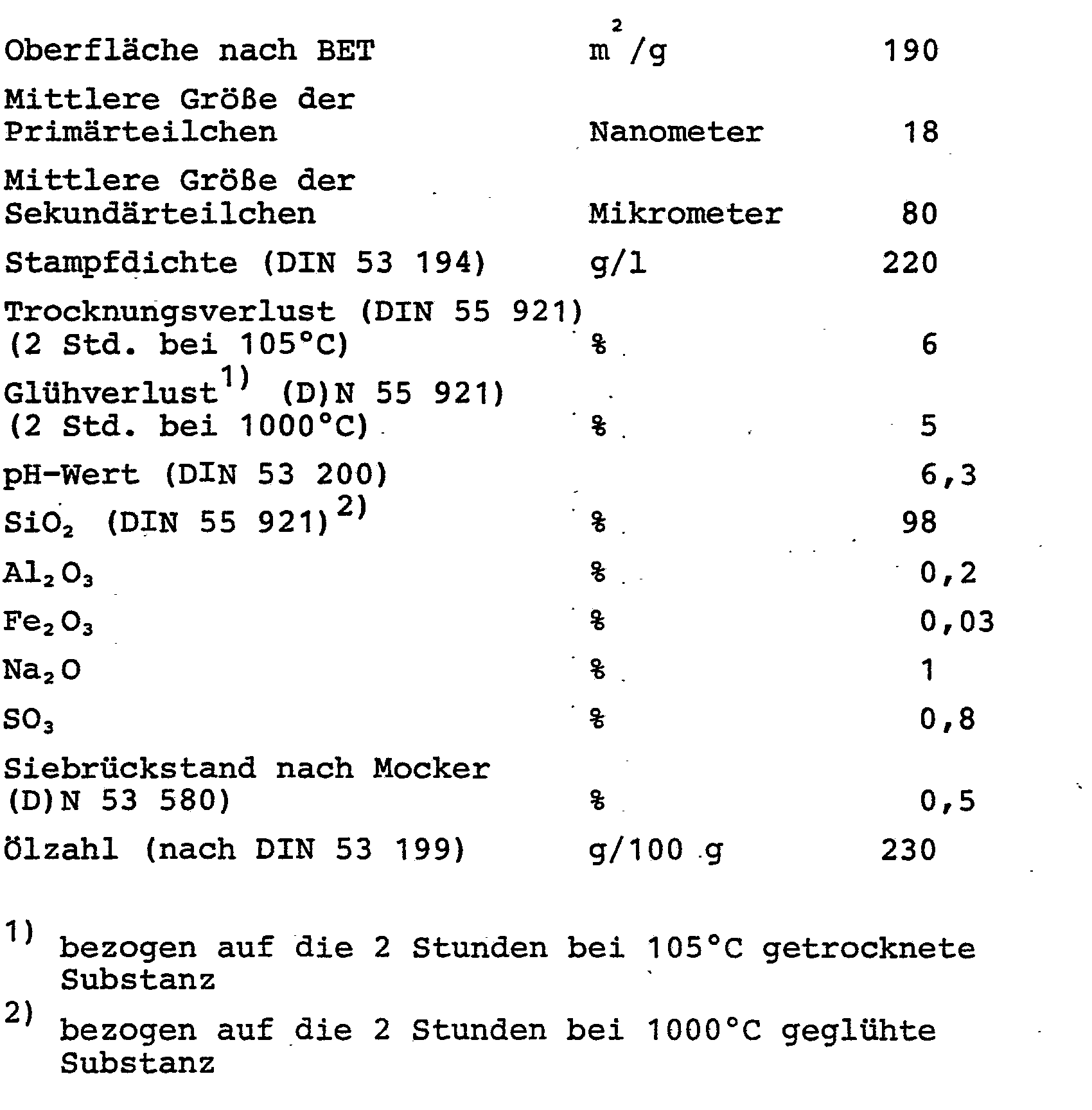
- Als eine gefällte Kieselsäure kann man eine Kieselsäure mit den folgenden physikalisch-chemischen Kenndaten einsetzen:

- Als eine gefällte und sprühgetrocknete Kieselsäure kann man eine Kieselsäure mit den folgenden physikalisch-chemischen Kenndaten verwenden:
- Der Begriff Zeolith entspricht der Beschreibung nach D.W. Breck, "Zeolite moleculare sieves", Wiley Interscience 1974, Seiten 133 bis 180. Die eingesetzten Zeolithe können einen Wassergehalt von bis zu 27 % aufweisen.
- Als pulverförmigen kristallinen synthetischen Zeolithen kann die erfindungsgemäße Gußasphaltmischung einen Zeolithen des Typs A enthalten. Der Zeolith A weist die allgemeine Formel

- Vorzugsweise kann die Gußasphaltmischung einen Zeolithen des Typs A enthalten:,. welcher nach Verfahren gemäß DE-AS 23 33 068, DE-AS 24 47 021, DE-AS 25 17 218, DE-OS 26 51 485, DE-OS 26 51 446, DE-OS 26 51 436, DE-OS 26 51 419, DE-OS 26 51 420 und/oder DE-OS 26 51 437 hergestellt wird. Der eingesetzte Zeolith A kann auch nach anderen bekannten Verfahren hergestellt werden, z.B. gemäß DE-PS 10 38 017 oder DE-AS 16 67 620.
- Vorzugsweise kann der eingesetzte Zeolith A die folgenden physikalisch-chemischen Daten aufweisen:


- Der eingesetzte Zeolith Y kann die folgenden physikalisch-chemischen Kenndaten aufweisen:

- Weiterhin kann die erfindungsgemäße Gußasphaltmischung als pulverförmigen Zeolithen einen Zeolithen des Typs X mit der allgemeinen Formel

- Dieser pulverförmige Zeolith kann nach DE-PS 10 38 016, DE-PS 11 38 383 oder DE-OS 20 28 163 hergestellt werden.
- Der eingesetzte Zeolith A kann die folgenden physikalisch-chemischen Daten aufweisen:

- Der eingesetzte Zeolith P kann die folgenden physikalisch-chemischen Kenndaten aufweisen:


- Der eingesetzte Hydroxysodalith kann die folgenden physikalisch-chemischen Kenndaten aufweisen:

- Ein derartiges Gemisch kann beispielsweise gemäß DE-OS 20 28 163, Seite 15, Tabelle 3, Beispiel 3 mittels eines Fällverfahrens.hergestellt werden.
- Die Zugabe von gefällter Kieselsäure allein auf die Gußasphaltmasse führt zu einer Reduzierung der Eindringtiefe, d.h., zu einer Erhöhung der Verfqrmungsstabilität. Gleichzeitig muß die Verarbeitungstemperatur um 20°C erhöht werdenn, was eine Verringerung der Verarbeitungswilligkeit des Gußasphaltes anzeigt.
- Wird kristalliner synthetischer Zeolith der Asphaltmischung zugegeben, so reduziert sich die Eindringtiefe und die Verarbeitungstemperatur.
- Gibt man der Gußasphaltmasse gefällte Kieselsäure und kristallinen, synthetischen Zeolithen zu, so wird die Eindringtiefe deutlich erniedrigt, die Verarbeitungstemperatur jedoch nur unwesentlich erhöht. Mit einer Veränderung des Verhältnisses von gefällter Kieselsäure und kristallinem synthetischen Zeolithen lassen sich Korrekturen des Temperaturverhaltens erreichen. Dies bedeutet, daß Zeolith in erhöhter Zugabe zu geschmeidigeren Gußasphaltmassen führt, eigenständig eine Erhöhung der Verformungsstabilität erreicht, die Kombination von gefällter Kieselsäure aber den deutlichsten bautechnischen Vorteil innerhalb der Versuchsreihe erbringt.
- Die für die Verarbeitungswilligkeit (Gieß- Ausbreit- und Glättfähigkeit) durch die Zugabe von gefällter Kieselsäure erfolgte unangenehme Stabilitätsversteifung wird durch den wasserabspaltenden Zeolith in eine streichfähige Masse über eine gewisse Zeitspanne versetzt. Der erkaltete Belag nach Abschluß aller Verarbeitungsvorgänge zeigt dann jedoch eine geringere Eindringtiefe bzw. einen erhöhten Verformungswiderstand, wozu der Zeolith selbst noch zur Verbesserung beiträgt. Die kombinierte Anwendung von gefällter Kieselsäure und kristallinem, asynthetischem Zeolithen führt zu einem in der Stabilität und damit zu einem in der Belastbarkeit verbesserten Gußasphalt. Dieser höhere Verformungswiderstand wird im Straßenbau bei Sonderanwendungen gewünscht. Sonderbeläge finden Verwendung auf Brücken, stark frequentierten Ampelkreuzungen, Rampen etc.. Industriefußböden wird eine hohe Belastbarkeit abgefordert. Werks- und Lagerhallen sollen Regale, Paletten, Maschinen usw. aufnehmen. Die großen Lasten werden oft nur über kleine Druckauflageflächen (Regalständer) auf den Fußboden übertragen. Unerwünschte Eindrücke sind die Folge. Die Befahrung geschieht mit Gabelstaplern und anderen Fahrzeugen, die starke Belastungen auf den Boden abgeben und damit Spuren hinterlassen.
- Besonders vorteilhaft ist, daß die Verbesserung der Stabilität des Gußasphaltes bei Verwendung des Kombinationsadditives Kieselsäure/Zeolith nicht zu Lasten der Verarbeitungsfähigkeit geht. Reduzierte m2-Leistungen der Verlegekolonnen sind nicht gewünscht, da sie bei dem hohen Anteil an Lohnkosten am Endpreis des verlegten Fußbodens sich negativ auswirken.
- Zur Überprüfung der Eigenschaften der erfindungsgemäßen Gußasphaltmischung wurden vergleichende Untersuchungen mit einer bekannten Gußasphaltmischung durchgeführt.
- Bezüglich Mineralstoffzusammensetzung und Bitumensorte wurde eine Gußasphaltmischung mit der folgenden Zusammensetzung verwendet:

- Zur Erzielung einer deutlicheren Spreizung der Ergebnisse wurde die Gußasphaltmischung relativ weich eingestellt. Der Bindemittelgehalt und die Bitumensorte wurden darauf abgestimmt.
- Bei konstantem Bindemittelgehalt von 9,5 Gew.-% erfolgte die Zugabe der pulverförmigen Additive in Gew.-%, bezogen auf die Gesamtmasse des Gußasphaltes, wobei der Kalksteinmehlanteil um den jeweiligen Betrag verringert wurde.
- Im einzelnen wurden die Gußasphaltmischungen gemäß Tabelle 1 untersucht:


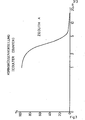
- Als Zeolith wird ein Zeolith des Typs A verwendet, welcher gemäß der DE-OS 26 51 436 hergestellt wurde und das Teilchenspektrum gemäß Figur 3 aufweist.
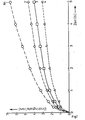
- Figur 1 zeigt die Eindringtiefe in Abhängigkeit von der 2 Prüfdauer bei 22°C und 1 m Stempelfläche.
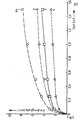
- Figur 2 zeigt die Eindringtiefe in Abhängigkeit von der 2 Prüfdauer bei 40°C und 5 cm Stempelfläche.
- Die Zugabe der Additive verändert die Verarbeitbarkeit des Materials. Darüberhinaus kann die Verarbeitbarkeit aber auch über die Mischgutzusammensetzung sowie die Bindemittelsorte und die Verarbeitungstemperatur gesteuert werden. Um den Einfluß der Additive auf die Verarbeitbarkeit zu erfassen, wurde bei sonst konstanter Mischgutzusammensetzung die Verarbeitungstemperatur variiert. Ein Maß für die Verarbeitbarkeit ist dabei die erforderliche Verarbeitungstemperatur zur Erzielung einer bestimmten Konsistenz des Mischgutes.
- Die Konsistenz wurde als Ablaufzeit von 35 Sekunden über eine schiefe Ebene mit konstanter Neigung und konstanten Abmessungen definiert. Das heißt, es wurde jeweils die Temperatur bestimmt, die zum Ablaufen des Mischgutes über die schiefe Ebene in 35 Sekunden erforderlich ist.
- Die ermittelten Ergebnisse sind in der Tabelle 2 zusammengestellt.

- Zur Bestimmung der Standfestigkeit der einzelnen Mischungen wurde der Eindruckversuch mit dem ebenen Stempel nach DIN 1996, Teil 13 durchgeführt.
- Dabei wurde neben der bei Estrichen üblichen Prüfung bei 2 22°C und dem 1 cm -Stempel auch die Prüfung bei 40°C und 2 dem 5 cm -Stempel vorgenommen.
- Die ermittelten Werte sind in der Tabelle 3 aufgeführt.

- Der Verlauf der Eindringtiefe in Abhängigkeit von der Prüfdauer ist in den Figuren 1 und 2 grafisch dargestellt.
- Figur 1 zeigt die Eindringtiefe in Abhängigkeit von der 2 Prüfdauer bei 22°C und 1:cm Stempelfläche.
- Figur 2 zeigt die Eindringtiefe in Abhängigkeit von der 2 Prüfdauer bei 40°C und 5 cm Stempelfläche..
- Sowohl die Zugabe von gefällter Kieselsäure als auch die von kristallinem, synthetischen pulverförmigen Zeolithen reduziert gegenüber der bekannten Gußasphaltmischung die Eindringtiefe, wobei sich bei gefällter Kieselsäure deutlich günstigere Werte ergeben. Während jedoch bei der Zugabe von gefällter Kieselsäure die Verarbeitungstemperatur um 20°C auf 240°C erhöht werden muß, wird durch Zugabe von kristallinem, synthetischem pulverförmigen Zeolithen die Verarbeitbarkeit verbessert.
- Die kombinierte Anwendung von 0,5 Gew.-% gefällter Kieselsäure und 1,0 Gew.-% kristallinem, synthetischem, pulverförmigen Zeolithen bringt bei einer nur unwesentlichen Anhebung der Verarbeitungstemperatur von 10°C eine erhebliche Reduzierung der Eindringtiefe.
- In dieser kombinierten Anwendung, bei der die Standfestigkeit der Masse wesentlich verbessert, die Verarbeitbarkeit aber nur unerheblich zum Nachteil verändert wird, sind eindeutige Vorteile der erfindungsgemäßen Gußasphaltmischung zu sehen.
Claims (2)
Priority Applications (1)
| Application Number | Priority Date | Filing Date | Title |
|---|---|---|---|
| AT81104036T ATE7149T1 (de) | 1980-09-27 | 1981-05-26 | Gussasphaltmischung. |
Applications Claiming Priority (2)
| Application Number | Priority Date | Filing Date | Title |
|---|---|---|---|
| DE3036537 | 1980-09-27 | ||
| DE3036537A DE3036537C2 (de) | 1980-09-27 | 1980-09-27 | Gußasphaltmischung |
Publications (2)
| Publication Number | Publication Date |
|---|---|
| EP0048792A1 true EP0048792A1 (de) | 1982-04-07 |
| EP0048792B1 EP0048792B1 (de) | 1984-04-18 |
Family
ID=6113027
Family Applications (1)
| Application Number | Title | Priority Date | Filing Date |
|---|---|---|---|
| EP81104036A Expired EP0048792B1 (de) | 1980-09-27 | 1981-05-26 | Gussasphaltmischung |
Country Status (9)
| Country | Link |
|---|---|
| US (1) | US4371400A (de) |
| EP (1) | EP0048792B1 (de) |
| JP (1) | JPS5790047A (de) |
| AT (1) | ATE7149T1 (de) |
| CA (1) | CA1165060A (de) |
| DE (2) | DE3036537C2 (de) |
| DK (1) | DK425081A (de) |
| FI (1) | FI71757C (de) |
| NO (1) | NO154754C (de) |
Cited By (2)
| Publication number | Priority date | Publication date | Assignee | Title |
|---|---|---|---|---|
| EP0191157A3 (en) * | 1985-02-14 | 1987-08-19 | Degussa Aktiengesellschaft | Powdery bitumen concentrate and its use |
| FR2847584A1 (fr) * | 2002-11-22 | 2004-05-28 | Rhodia Cons Spec Ltd | Procede pour ameliorer les proprietes physico-chimiques de compositions de bitume ainsi que de nouvelles compositions de bitume aux proprietes ameliorees et leurs utilisations |
Families Citing this family (12)
| Publication number | Priority date | Publication date | Assignee | Title |
|---|---|---|---|---|
| US4443570A (en) * | 1982-07-16 | 1984-04-17 | Phillips Petroleum Company | Asphalt compositions |
| DE3516660A1 (de) * | 1985-05-09 | 1986-11-13 | Degussa Ag, 6000 Frankfurt | Pulverfoermiges bindemittelkonzentrat |
| DE4323256A1 (de) * | 1993-02-17 | 1994-08-18 | Degussa | Verfahren zum Absenken der Mischtemperatur und der Viskosität von Bitumen und/oder bitumengebundenen Baustoffmischungen |
| US20040033308A1 (en) * | 2002-08-13 | 2004-02-19 | Mitteldeutsche Harstein-Industrie Ag | Method and device for producing a bitumen-bonded construction material mixture |
| DE102004020967A1 (de) * | 2004-04-07 | 2005-12-08 | Eurovia S.A. | Verfahren zur Herstellung von Gußasphalt |
| FR2883882B1 (fr) * | 2005-04-05 | 2007-05-25 | Ceca S A Sa | Additifs pour produits bitumineux, produits bitumineux les contenant et leurs utilisations |
| FR2901801B1 (fr) * | 2006-06-06 | 2009-06-12 | Ceca Sa Sa | Produits bitumineux et emulsions aqueuses a base de produits bitumineux et leurs utilisations |
| FR2915485B1 (fr) | 2007-04-26 | 2009-06-12 | Ceca Sa Sa | Procede de preparation d'enrobes a base de produits bitumineux et leurs utilisations |
| EP2166039A1 (de) | 2008-09-19 | 2010-03-24 | Ceca S.A. | Verfahren zur Herstellung von Asphaltmischungen |
| DE102009007301B4 (de) * | 2009-02-03 | 2013-08-22 | Landesbetrieb Straßenbau NRW | Gußasphaltmischgut für Fahrbahndeckschichten |
| CA2801438C (en) | 2010-05-19 | 2018-12-04 | Pq Corporation | Mixtures of zeolite and rap/ras |
| CN105647206B (zh) * | 2016-01-29 | 2017-02-15 | 深圳市圣金科技有限公司 | 改性沥青及其制备方法、及纳米反应粘防水卷材 |
Citations (2)
| Publication number | Priority date | Publication date | Assignee | Title |
|---|---|---|---|---|
| DE2423644A1 (de) * | 1973-05-17 | 1974-12-05 | Shell Int Research | Leichtzementmasse |
| DE2848583A1 (de) * | 1978-11-09 | 1980-05-22 | Degussa | Gussasphaltmischung |
Family Cites Families (1)
| Publication number | Priority date | Publication date | Assignee | Title |
|---|---|---|---|---|
| JPS49103920A (de) * | 1973-02-01 | 1974-10-02 |
-
1980
- 1980-09-27 DE DE3036537A patent/DE3036537C2/de not_active Expired
-
1981
- 1981-05-26 EP EP81104036A patent/EP0048792B1/de not_active Expired
- 1981-05-26 DE DE8181104036T patent/DE3163178D1/de not_active Expired
- 1981-05-26 AT AT81104036T patent/ATE7149T1/de not_active IP Right Cessation
- 1981-06-30 NO NO812238A patent/NO154754C/no unknown
- 1981-07-31 FI FI812400A patent/FI71757C/fi not_active IP Right Cessation
- 1981-08-20 US US06/294,657 patent/US4371400A/en not_active Expired - Fee Related
- 1981-09-24 CA CA000386608A patent/CA1165060A/en not_active Expired
- 1981-09-25 JP JP56150826A patent/JPS5790047A/ja active Pending
- 1981-09-25 DK DK425081A patent/DK425081A/da not_active Application Discontinuation
Patent Citations (3)
| Publication number | Priority date | Publication date | Assignee | Title |
|---|---|---|---|---|
| DE2423644A1 (de) * | 1973-05-17 | 1974-12-05 | Shell Int Research | Leichtzementmasse |
| DE2848583A1 (de) * | 1978-11-09 | 1980-05-22 | Degussa | Gussasphaltmischung |
| FR2440968A1 (fr) * | 1978-11-09 | 1980-06-06 | Degussa | Melange d'asphalte coule |
Cited By (4)
| Publication number | Priority date | Publication date | Assignee | Title |
|---|---|---|---|---|
| EP0191157A3 (en) * | 1985-02-14 | 1987-08-19 | Degussa Aktiengesellschaft | Powdery bitumen concentrate and its use |
| FR2847584A1 (fr) * | 2002-11-22 | 2004-05-28 | Rhodia Cons Spec Ltd | Procede pour ameliorer les proprietes physico-chimiques de compositions de bitume ainsi que de nouvelles compositions de bitume aux proprietes ameliorees et leurs utilisations |
| WO2004048456A3 (fr) * | 2002-11-22 | 2004-10-21 | Rhodia Cons Spec Ltd | Procede pour ameliorer les proprietes physico-chimiques de compositions de bitume ainsi que de nouvelles compositions de bitume aux proprietes ameliorees et leurs utilisations |
| US7335251B2 (en) | 2002-11-22 | 2008-02-26 | Innophos, Inc. | Method for enhancing the physico-chemical properties of bitumen compositions and novel bitumen compositions with enhanced properties and their uses |
Also Published As
| Publication number | Publication date |
|---|---|
| FI71757B (fi) | 1986-10-31 |
| FI71757C (fi) | 1987-02-09 |
| NO154754C (no) | 1986-12-17 |
| EP0048792B1 (de) | 1984-04-18 |
| US4371400A (en) | 1983-02-01 |
| JPS5790047A (en) | 1982-06-04 |
| FI812400L (fi) | 1982-03-28 |
| ATE7149T1 (de) | 1984-05-15 |
| NO812238L (no) | 1982-03-29 |
| CA1165060A (en) | 1984-04-10 |
| DK425081A (da) | 1982-03-28 |
| DE3163178D1 (en) | 1984-05-24 |
| NO154754B (no) | 1986-09-08 |
| DE3036537A1 (de) | 1982-04-22 |
| DE3036537C2 (de) | 1983-07-21 |
Similar Documents
| Publication | Publication Date | Title |
|---|---|---|
| EP0048792B1 (de) | Gussasphaltmischung | |
| DE3132928C1 (de) | Verfahren zur Erstarrungsbeschleunigung von hydraulischen Zementmischungen | |
| EP0049485B1 (de) | Belag, Verfahren zu seiner Herstellung und seine Verwendung | |
| EP1008568B1 (de) | Fliessestrich -Trockenmischung mit wenigstens zwei pulverförmigen Mehlkornanteilen | |
| DE4331141A1 (de) | Fugenfüller | |
| EP0191157A2 (de) | Pulverförmiges Bitumenkonzentrat und seine Verwendung | |
| DE2540230C3 (de) | Verfahren zur Herstellung eines bituminösen Bindemittels für Baustoffe | |
| DE3127436C2 (de) | ||
| DE2820389C3 (de) | Verfahren zur Herstellung von wäßrigen Polyvinylalkohol-Dispersionen und deren Verwendung als Zementzusätze | |
| DE2734360A1 (de) | Bindemittel bzw. beton und verfahren zu seiner herstellung | |
| DE2610987A1 (de) | Fueller fuer bitumen- und/oder teerenthaltende massen | |
| EP0319702B1 (de) | Belag für Tragschichten und Verfahren zur Herstellung desselben | |
| EP4089063A1 (de) | Verfahren zum bereitstellen einer vorgefertigten trockenmischung zum herstellen von holzbeton | |
| DE3236381C2 (de) | Verfahren zur Herstellung von Organosilan-haltigen Asphaltmassen | |
| DE1936922B2 (de) | Lagerfaehiges biuminoeses mischgut fuer strassendecken | |
| DE19951281A1 (de) | Bauplatten auf der Grundlage von zementgebundenen Holzspanplatten sowie Verfahren zu deren Herstellung und ihre Verwendung | |
| DE4323256A1 (de) | Verfahren zum Absenken der Mischtemperatur und der Viskosität von Bitumen und/oder bitumengebundenen Baustoffmischungen | |
| EP0004583B1 (de) | Heiss zu verarbeitendes bituminöses Mischgut und Füller hierfür, insbesondere für den Strassenbau | |
| DE1771695A1 (de) | Zusatzstoff fuer Moertel | |
| AT251477B (de) | Bituminöse, die Konsistenz einer Schlämme aufweisende Masse für Straßenbauzwecke und Verfahren zu ihrer Herstellung | |
| DE3006012C2 (de) | ||
| DD151567A3 (de) | Verfahren zum herstellen fliessfaehiger baustoff-mischungen | |
| DE20008006U1 (de) | Putzmörtel auf Lehmbasis | |
| DE1471303C3 (de) | Verfahren zur Herstellung von Leichtbeton | |
| DE2039140A1 (de) | Zementmischung zur Bildung von Bauteilen u.dgl. |
Legal Events
| Date | Code | Title | Description |
|---|---|---|---|
| PUAI | Public reference made under article 153(3) epc to a published international application that has entered the european phase |
Free format text: ORIGINAL CODE: 0009012 |
|
| 17P | Request for examination filed |
Effective date: 19810526 |
|
| AK | Designated contracting states |
Designated state(s): AT BE CH DE FR GB NL SE |
|
| GRAA | (expected) grant |
Free format text: ORIGINAL CODE: 0009210 |
|
| AK | Designated contracting states |
Designated state(s): AT BE CH DE FR GB LI NL SE |
|
| REF | Corresponds to: |
Ref document number: 7149 Country of ref document: AT Date of ref document: 19840515 Kind code of ref document: T |
|
| REF | Corresponds to: |
Ref document number: 3163178 Country of ref document: DE Date of ref document: 19840524 |
|
| ET | Fr: translation filed | ||
| PLBE | No opposition filed within time limit |
Free format text: ORIGINAL CODE: 0009261 |
|
| STAA | Information on the status of an ep patent application or granted ep patent |
Free format text: STATUS: NO OPPOSITION FILED WITHIN TIME LIMIT |
|
| 26N | No opposition filed | ||
| PGFP | Annual fee paid to national office [announced via postgrant information from national office to epo] |
Ref country code: SE Payment date: 19920413 Year of fee payment: 12 |
|
| PGFP | Annual fee paid to national office [announced via postgrant information from national office to epo] |
Ref country code: NL Payment date: 19920531 Year of fee payment: 12 |
|
| PGFP | Annual fee paid to national office [announced via postgrant information from national office to epo] |
Ref country code: GB Payment date: 19921023 Year of fee payment: 12 |
|
| PGFP | Annual fee paid to national office [announced via postgrant information from national office to epo] |
Ref country code: FR Payment date: 19921027 Year of fee payment: 12 |
|
| PGFP | Annual fee paid to national office [announced via postgrant information from national office to epo] |
Ref country code: CH Payment date: 19921029 Year of fee payment: 12 |
|
| PGFP | Annual fee paid to national office [announced via postgrant information from national office to epo] |
Ref country code: AT Payment date: 19921113 Year of fee payment: 12 |
|
| PGFP | Annual fee paid to national office [announced via postgrant information from national office to epo] |
Ref country code: BE Payment date: 19921201 Year of fee payment: 12 |
|
| PGFP | Annual fee paid to national office [announced via postgrant information from national office to epo] |
Ref country code: DE Payment date: 19921217 Year of fee payment: 12 |
|
| REG | Reference to a national code |
Ref country code: CH Ref legal event code: PUE Owner name: AKTIEBOLAGET NYNAES PETROLEUM |
|
| REG | Reference to a national code |
Ref country code: GB Ref legal event code: 732E |
|
| PG25 | Lapsed in a contracting state [announced via postgrant information from national office to epo] |
Ref country code: GB Effective date: 19930526 Ref country code: AT Effective date: 19930526 |
|
| PG25 | Lapsed in a contracting state [announced via postgrant information from national office to epo] |
Ref country code: SE Effective date: 19930527 |
|
| PG25 | Lapsed in a contracting state [announced via postgrant information from national office to epo] |
Ref country code: LI Effective date: 19930531 Ref country code: CH Effective date: 19930531 Ref country code: BE Effective date: 19930531 |
|
| NLS | Nl: assignments of ep-patents |
Owner name: AB NYNAES PETROLEUM TE JOHANNESHOV, ZWEDEN. |
|
| BERE | Be: lapsed |
Owner name: DEGUSSA A.G. Effective date: 19930531 |
|
| PG25 | Lapsed in a contracting state [announced via postgrant information from national office to epo] |
Ref country code: NL Effective date: 19931201 |
|
| NLV4 | Nl: lapsed or anulled due to non-payment of the annual fee | ||
| GBPC | Gb: european patent ceased through non-payment of renewal fee |
Effective date: 19930526 |
|
| PG25 | Lapsed in a contracting state [announced via postgrant information from national office to epo] |
Ref country code: FR Effective date: 19940131 |
|
| REG | Reference to a national code |
Ref country code: CH Ref legal event code: PL |
|
| PG25 | Lapsed in a contracting state [announced via postgrant information from national office to epo] |
Ref country code: DE Effective date: 19940201 |
|
| REG | Reference to a national code |
Ref country code: FR Ref legal event code: ST |
|
| EUG | Se: european patent has lapsed |
Ref document number: 81104036.9 Effective date: 19931210 |