EP0048954B1 - Dérivés de bêta-lactame, procédé pour leur préparation et intermédiaires pour leur préparation - Google Patents
Dérivés de bêta-lactame, procédé pour leur préparation et intermédiaires pour leur préparation Download PDFInfo
- Publication number
- EP0048954B1 EP0048954B1 EP81107575A EP81107575A EP0048954B1 EP 0048954 B1 EP0048954 B1 EP 0048954B1 EP 81107575 A EP81107575 A EP 81107575A EP 81107575 A EP81107575 A EP 81107575A EP 0048954 B1 EP0048954 B1 EP 0048954B1
- Authority
- EP
- European Patent Office
- Prior art keywords
- acetamido
- carboxylic acid
- cephem
- dichloromethylene
- radical
- Prior art date
- Legal status (The legal status is an assumption and is not a legal conclusion. Google has not performed a legal analysis and makes no representation as to the accuracy of the status listed.)
- Expired
Links
- 0 C(CC1CC1)CC1*CCC1 Chemical compound C(CC1CC1)CC1*CCC1 0.000 description 3
- VWNUDIMBKMESAE-UHFFFAOYSA-N CN[NH+](CSNC)[N-](C)O Chemical compound CN[NH+](CSNC)[N-](C)O VWNUDIMBKMESAE-UHFFFAOYSA-N 0.000 description 1
Classifications
-
- C—CHEMISTRY; METALLURGY
- C07—ORGANIC CHEMISTRY
- C07D—HETEROCYCLIC COMPOUNDS
- C07D277/00—Heterocyclic compounds containing 1,3-thiazole or hydrogenated 1,3-thiazole rings
- C07D277/02—Heterocyclic compounds containing 1,3-thiazole or hydrogenated 1,3-thiazole rings not condensed with other rings
- C07D277/20—Heterocyclic compounds containing 1,3-thiazole or hydrogenated 1,3-thiazole rings not condensed with other rings having two or three double bonds between ring members or between ring members and non-ring members
-
- C—CHEMISTRY; METALLURGY
- C07—ORGANIC CHEMISTRY
- C07C—ACYCLIC OR CARBOCYCLIC COMPOUNDS
- C07C57/00—Unsaturated compounds having carboxyl groups bound to acyclic carbon atoms
- C07C57/52—Unsaturated compounds having carboxyl groups bound to acyclic carbon atoms containing halogen
- C07C57/58—Unsaturated compounds having carboxyl groups bound to acyclic carbon atoms containing halogen containing six-membered aromatic rings
- C07C57/60—Unsaturated compounds having carboxyl groups bound to acyclic carbon atoms containing halogen containing six-membered aromatic rings having unsaturation outside the rings
-
- C—CHEMISTRY; METALLURGY
- C07—ORGANIC CHEMISTRY
- C07C—ACYCLIC OR CARBOCYCLIC COMPOUNDS
- C07C59/00—Compounds having carboxyl groups bound to acyclic carbon atoms and containing any of the groups OH, O—metal, —CHO, keto, ether, groups, groups, or groups
- C07C59/40—Unsaturated compounds
- C07C59/42—Unsaturated compounds containing hydroxy or O-metal groups
- C07C59/56—Unsaturated compounds containing hydroxy or O-metal groups containing halogen
-
- C—CHEMISTRY; METALLURGY
- C07—ORGANIC CHEMISTRY
- C07C—ACYCLIC OR CARBOCYCLIC COMPOUNDS
- C07C59/00—Compounds having carboxyl groups bound to acyclic carbon atoms and containing any of the groups OH, O—metal, —CHO, keto, ether, groups, groups, or groups
- C07C59/40—Unsaturated compounds
- C07C59/58—Unsaturated compounds containing ether groups, groups, groups, or groups
- C07C59/64—Unsaturated compounds containing ether groups, groups, groups, or groups containing six-membered aromatic rings
-
- C—CHEMISTRY; METALLURGY
- C07—ORGANIC CHEMISTRY
- C07D—HETEROCYCLIC COMPOUNDS
- C07D307/00—Heterocyclic compounds containing five-membered rings having one oxygen atom as the only ring hetero atom
- C07D307/02—Heterocyclic compounds containing five-membered rings having one oxygen atom as the only ring hetero atom not condensed with other rings
- C07D307/34—Heterocyclic compounds containing five-membered rings having one oxygen atom as the only ring hetero atom not condensed with other rings having two or three double bonds between ring members or between ring members and non-ring members
- C07D307/38—Heterocyclic compounds containing five-membered rings having one oxygen atom as the only ring hetero atom not condensed with other rings having two or three double bonds between ring members or between ring members and non-ring members with substituted hydrocarbon radicals attached to ring carbon atoms
- C07D307/54—Radicals substituted by carbon atoms having three bonds to hetero atoms with at the most one bond to halogen, e.g. ester or nitrile radicals
-
- C—CHEMISTRY; METALLURGY
- C07—ORGANIC CHEMISTRY
- C07D—HETEROCYCLIC COMPOUNDS
- C07D333/00—Heterocyclic compounds containing five-membered rings having one sulfur atom as the only ring hetero atom
- C07D333/02—Heterocyclic compounds containing five-membered rings having one sulfur atom as the only ring hetero atom not condensed with other rings
- C07D333/04—Heterocyclic compounds containing five-membered rings having one sulfur atom as the only ring hetero atom not condensed with other rings not substituted on the ring sulphur atom
- C07D333/06—Heterocyclic compounds containing five-membered rings having one sulfur atom as the only ring hetero atom not condensed with other rings not substituted on the ring sulphur atom with only hydrogen atoms, hydrocarbon or substituted hydrocarbon radicals, directly attached to the ring carbon atoms
- C07D333/24—Radicals substituted by carbon atoms having three bonds to hetero atoms with at the most one bond to halogen, e.g. ester or nitrile radicals
-
- C—CHEMISTRY; METALLURGY
- C07—ORGANIC CHEMISTRY
- C07D—HETEROCYCLIC COMPOUNDS
- C07D333/00—Heterocyclic compounds containing five-membered rings having one sulfur atom as the only ring hetero atom
- C07D333/02—Heterocyclic compounds containing five-membered rings having one sulfur atom as the only ring hetero atom not condensed with other rings
- C07D333/04—Heterocyclic compounds containing five-membered rings having one sulfur atom as the only ring hetero atom not condensed with other rings not substituted on the ring sulphur atom
- C07D333/26—Heterocyclic compounds containing five-membered rings having one sulfur atom as the only ring hetero atom not condensed with other rings not substituted on the ring sulphur atom with hetero atoms or with carbon atoms having three bonds to hetero atoms with at the most one bond to halogen, e.g. ester or nitrile radicals, directly attached to ring carbon atoms
- C07D333/28—Halogen atoms
-
- C—CHEMISTRY; METALLURGY
- C07—ORGANIC CHEMISTRY
- C07D—HETEROCYCLIC COMPOUNDS
- C07D499/00—Heterocyclic compounds containing 4-thia-1-azabicyclo [3.2.0] heptane ring systems, i.e. compounds containing a ring system of the formula:, e.g. penicillins, penems; Such ring systems being further condensed, e.g. 2,3-condensed with an oxygen-, nitrogen- or sulfur-containing hetero ring
-
- Y—GENERAL TAGGING OF NEW TECHNOLOGICAL DEVELOPMENTS; GENERAL TAGGING OF CROSS-SECTIONAL TECHNOLOGIES SPANNING OVER SEVERAL SECTIONS OF THE IPC; TECHNICAL SUBJECTS COVERED BY FORMER USPC CROSS-REFERENCE ART COLLECTIONS [XRACs] AND DIGESTS
- Y02—TECHNOLOGIES OR APPLICATIONS FOR MITIGATION OR ADAPTATION AGAINST CLIMATE CHANGE
- Y02P—CLIMATE CHANGE MITIGATION TECHNOLOGIES IN THE PRODUCTION OR PROCESSING OF GOODS
- Y02P20/00—Technologies relating to chemical industry
- Y02P20/50—Improvements relating to the production of bulk chemicals
- Y02P20/55—Design of synthesis routes, e.g. reducing the use of auxiliary or protecting groups
Definitions
- the present invention relates to novel ⁇ -lactam compounds, a process for the preparation of these compounds, and intermediate products useful for synthesizing these compounds.
- Penicillin and cephalosporin compounds show broad antibacterial activities against gram-positive and gram-negative bacteria.
- penicillin and cephalosporin compounds show broad antibacterial activities against gram-positive and gram-negative bacteria.
- several types of semi-synthetic penicillin and cephalosporin compounds are sold commercially and used as medicines for various infectious diseases in clinical applications.
- some of the above-mentioned commercially available agents are relatively unstable against (3-lactamase generated by resistant strains of bacteria. These agents are also inadvantageous in that they show only a low antibacterial activity against agent-resistant bacteria, arousing problems in clinical applications (W. E.
- An object of the present invention is to provide a-lactam compounds useful as antibacterial agents.
- Another object of the present invention is to provide a novel process for preparing such useful ⁇ -lactam compounds.
- a further object of the present invention is to provide intermediate products which are useful for the synthesis of the aforesaid a-lactam compounds or other useful compounds.
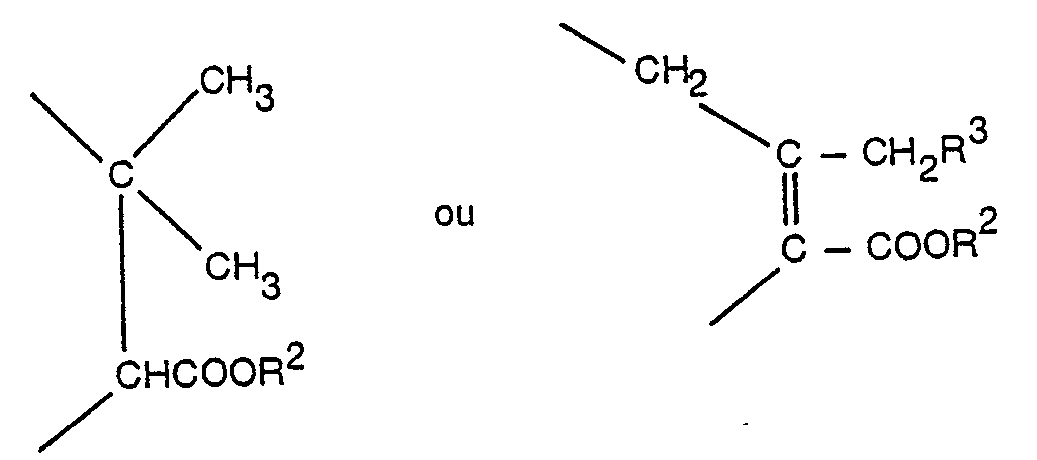
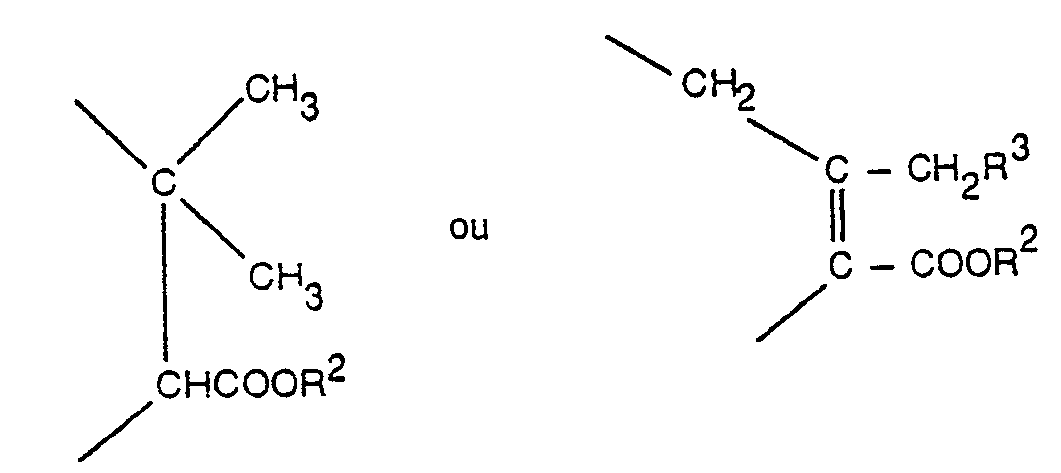
- novel ⁇ -lactam compounds provided according to the present invention are defined by the following general formula I: in which R 1 denotes an aromatic group selected from the group consisting of a phenyl radical, a thiazolyl radical, a thienyl radical, a furyl radical and a pyrrolyl radical, which may be substituted by a halogen atom, a nitro radical, an amino radical, a cyano radical, a hydroxy radical, a lower alkyl radical having 1 to 4 carbon atoms, a lower alkoxy radical having 1 to 4 carbon atoms, a lower alkylthio radical having 1 to 4 carbon atoms;
- Z represents a group (wherein R denotes hydrogen, a salt forming cation or a protective group for carboxylic acid, and R 3 denotes hydrogen or a residue selected from the group consisting of a hydroxyl radical, a mercapto radical, a lower aliphatic carboxylic acid acyloxy radical having 2
- the inventors have succeeded in synthesizing the ⁇ -lactam compounds defined by general formula I, and found out, as shown in The Test Example mentioned below, that these compounds have a broad antibacterial spectrum and show strong antibacterial activities against not only the gram-positive bacteria but also the gram-negative bacteria, particularly the above-mentioned Pseudomonas aeruginosa, Proteus vulgaris and Escherichia coli, which arouse problems in clinical applications. It has also been found outthat these ⁇ -lactam compounds according to the present invention show extremely powerful antibacterial activities against the resistive gram-negative bacteria.
- X 1 and X 2 stand for hydrogen or a halogen atom with the proviso that X 1 and X 2 cannot represent hydrogen at the same time.
- both X 1 and X 2 may denote the same halogen atom.
- one of X 1 and X 2 may represent hydrogen, and the other a halogen atom.
- X 1 and X 2 may represent different halogen atoms.
- R 2 represents a hydrogen atom, a salt-forming cation or a protective radical for a carboxylic acid.
- examples of the cations which R 2 represents include those forming alkaline metal salts, alkaline earth metal salts, ammonium salts, etc.
- the protective radical which R represents may be any radical that is normally used for this purpose in the conventional penicillin and caphalosporin compounds, such as alkyl, lower alkoxymethyl, lower alkylthiomethyl, lower alkanoyloxymethyl, aralkyl, aryl and silyl radicals, etc.
- the meaning of R 3 is described above.
- the quaternary ammonium radical represented by R 3 may be, for example, pyridinium, methyl-pyridinium, 3-chloropyridinium, 3-bromo- pyridinium, 3-iodo-pyridinium, 4-carbamoylpyridinium, 4-(N-hydroxymethylcarbamyl)pyridinium, 4-(N-carbomethoxycarbamoyl)pyridinium, 4-(N-cyanocarbamoyl)pyridinium, 4-(carboxymethyi)pyridinium, 4-(hydroxymethyl)pyridinium, 4-(trifluoromethyl)pyridinium, quinolinium, purinium, lutidium, etc.
- the compoounds of the present invention can be prepared by reacting a compound having the general formula II: (in which Z has the same meaning as described above), a reactive derivative of the compound with respect to the amino radical or a salt thereof, with an acid having the general formula III: (in which R 1 , X 1 and X 2 have the same meanings as defined above), a reactive derivative of the acid with respect to the carboxyl radical or a salt thereof.
- the compounds represented by general formula III which are used as raw materials for the preparation of the compounds of the present invention, can be prepared, for example, by reacting a glyoxylic acid derivative substituted by an aromatic group, with a Wittig reagent or by reacting a 2-formyl acetic acid derivative substituted by an aromatic group, with a halogenating agent, as described below.
- reactive derivatives of the compounds represented by general formula III those reactive derivatives which are usually used in the synthesis of acid amides can be used.
- reactive derivatives include acid halides, acid anhydrides, mixed acid anhydrides formed between organic or inorganic acids, active acid amides, acid cyanides, active esters, acid azides, etc. of the compounds represented by general formula III.
- Acid chlorides, mixed acid anhydrides and active amides are particularly preferred.
- Examples of the mixed acid anhydrides include those of aliphatic carboxylic acids, aromatic carboxylic acids, alkylcarbonic acids, aralkylcarbonic acids, dialkylphosphoric acids, diphenylphosphoric acids, methanesulfonic acid, p-toluenesulfonic acid and the like.
- the active esters may be, for example, cyanomethyl esters, substituted phenyl esters, substituted benzyl esters, substituted thienyl esters, etc.
- the active acid amides may be, for example, imidazole, 4-substituted imidazole, dimethylpyrazole, triazole, tetrazole, saccharin and the like.
- the compounds represented by general formula II are subjected to the reaction in the form of free form or in the form of salts or esters thereof.
- the salts of the compounds represented by general formula II may be, for example, salts with organic acids such as acetates, benzenesulfonates, tartartes, trifluoroacetates, and formates; salts with inorganic acids such as hydrochlorides, hydrobromides, sulfates, and phosphates; alkaline metal salts such as sodium salts and potassium salts; and salts with organic bases such as trimethylamine salts, triethylamine salts and dibutylamine salts.
- Examples of the esters of the compounds represented by general formula II include benzhydryl esters, trichloroethyl esters, p-nitrobenzyl esters, alkylsilyl esters, etc.
- the above-described reaction for preparing the compounds according to the present invention is carried out in the presence of a solvent.
- the solvents may be any general organic solvents that do not participate in the reaction, such as dimethyl sulfoxide, methyl alcohol, ethyl alcohol, methoxyethanol, diethyl ether, isopropyl ether, benzene, toluene, methylene chloride, chloroform, ethyl acetate, methyl isobutyl ketone, etc. These solvents may be used in admixture with water.
- the reaction may be carried out in the presence of a base.
- bases examples include inorganic bases such as caustic alkalis, alkali carbonates, alkali bicarbonates, and alkali acetates; tertiary amines such as trimethylamine, triethylamine, tributylamine, pyridine, N-methylpiperidine, N-methylmorpholine, lutidine and uridine; secondary amines such as diethylamine, and dicyclohexylamine, etc.
- inorganic bases such as caustic alkalis, alkali carbonates, alkali bicarbonates, and alkali acetates
- tertiary amines such as trimethylamine, triethylamine, tributylamine, pyridine, N-methylpiperidine, N-methylmorpholine, lutidine and uridine
- secondary amines such as diethylamine, and dicyclohexylamine, etc.
- the reaction may be carried out at any temperature. Normally, however, it is conducted with cooling or at room temperature.
- the ⁇ -lactam compounds of the present invention prepared in the manner described above may then be purified by a method known to the art, for example, by column chromatography, extraction, precipitation, recrystallization, etc. When necessary, the obtained ⁇ -lactam compounds may be converted into a desired salt or an ester by a procedure known to the art.
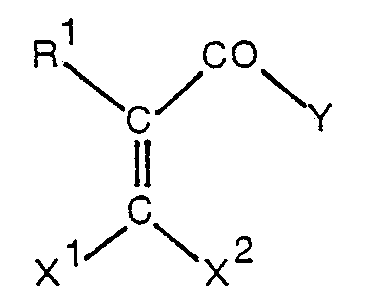
- the present invention further provides novel intermediate products (2-halomethylene aromatic acetic acid derivatives) having the following general formula IV: in which R 1 , X 1 and X 2 have the same meanings defined above provided R 1 is not phenyl or substituted phenyl, and Y denotes a hydroxyl group, a halogen atom or a radical ⁇ OR wherein R stands for a protective radical for the carboxylic acid.
- General formula IV embraces the compounds represented by the aforedescribed general formula III.
- R of the radical -OR represented by Y in general formula IV may be any of the protective radicals that are usually used for carboxylic acids, such as alkyl, aryl, aralkyl, trialkylsilyl, alkoxycarbonyl, aryloxycarbonyl, aralkyloxycarbonyl, etc.
- at least one of X 1 and X 2 is a halogen atom.
- this means that both X 1 and X 2 may denote the same halogen atom.
- one of X 1 and X 2 may represent hydrogen, and the other a halogen atom.
- X 1 and X 2 may represent different halogen atoms.
- the intermediate compounds having general formula IV in which Y denotes radical -OR wherein R stands for a protective radical for carboxylic acid can be prepared, for example, by (A) reacting a glyoxylic acid derivative substituted by an aromatic group, with a Wittig reagent, or (B) reacting a 2-formylacetic acid derivative substituted by an aromatic group, with a halogenating agent.
- the 2-halomethylene aromatic acetic acids having general formula IV in which Y denotes a hydroxyl group can be obtained easily by subjecting the compounds prepared by the method (A) or (B) described above to usual hydrolytic conditions.
- the 2-halomethylene aromatic acetic acid halides having general formula IV in which Y denotes a halogen atom can be prepared by reacting the aforesaid 2-halomethylene aromatic acetic acids or salts thereof with a halogenating agent, for example, phosphorus pentachloride, thionyl chloride or oxalyl chloride.
- a halogenating agent for example, phosphorus pentachloride, thionyl chloride or oxalyl chloride.
- R 1 , Y, X 1 and X 2 have the same meanings as defined above;
- R', R" and R"' may be the same or different and each represent an aryl radical or an alkyl radical, preferably a phenyl radical, most preferably R', R" and R"' being a phenyl radical at the same time.
- R 1 and Y have the same meanings as defined above.
- the reaction scheme (A) shows the reaction between a glyoxylic acid derivative substituted by an aromatic group and a Wittig reagent (for example, A. J. Speziale, Org. Syn. Coll. Vol. V, 361).
- the glyoxylic acid derivatives substituted by an aromatic group used as raw materials can easily be obtained, for example, by the oxidation of acetic acid derivatives substituted by an aromatic group.
- the Wittig reagent used can also be easily prepared from dihalomethanes or trihalomethanes and triphenylphosphine.
- a solvent such as hydrocarbons, e.g.
- reaction may be conducted at a temperature ranging from -78°C to the reflux temperature of the solvent used. To obtain the desired compound at a high yield, it is preferred to use a temperature ranging from 0°C to room temperature.
- the above reaction scheme (B) represents the reaction between a 2-formylacetic acid derivative substituted by an aromatic group and a halogenating agent [for example, W. Wislicenus, et al., Ber., 51, 1366 (1918)].
- the 2-formylacetic acid derivatives substituted by an aromatic group used as raw materials can easily be prepared by the condensation reaction of the acetic acid derivatives substituted by an aromatic group with formic acid esters in the presence of a base [W. Wislicenus, Ann., 413, 205 (1917)].
- 2-formylacetic acid derivatives substituted by an aromatic group such as 2-formyl-substituted- phenylacetic acids, 2-formyl-(substituted or unsubstituted)-thienylacetic acids, 2-formyl-(substituted or unsubstituted)-furylacetic acids, 2-formyl-(substituted or unsubstituted-thiazolacetic acids, etc.
- the halogenating agent used may be, for example, phosphorus pentachloride, phosphorus oxychloride, thionyl chloride, phosphorus trichloride, phosgene, and the Vilsmeier reagent prepared from these halogenating agents and dimethylformamide.
- a solvent may be, for example, halogen-containing solvents such as chloroform and methylene chloride, in addition to the solvents described above with reference to reaction scheme (A).
- the reaction may be conducted at a temperature ranging from -78°C to the reflux temperature of the solvent used. To obtain the desired compound at a high yield, it is preferable to carry out the reaction at a temperature ranging from room temperature to about 100°C.
- the above-described method (A) can give the intermediate compounds having general formula IV in which both X 1 and X 2 denote halogen atom(s) or one of X 1 and X 2 denotes a halogen atom.
- the method (B) can yield the intermediate compounds having general formula IV in which one of X 1 and X 2 dentoes a halogen atom.
- the intermediate compounds having general formula IV in which X 1 and X 2 denote different atoms involve structural isomers. These structural isomers can be separated by a procedure normally used to separate structural isomers, such as distillation, chromatography, fractional recrystallization, etc.
- the pH-value of this mixture was adjusted to 7.5 to 8.0 by the addition of aqueous sodium hydrogencarbonate, and the ethyl acetate phase was separated.
- the aqueous phase was adjusted to pH 2 with a 10% hydrochloric acid and extracted thrice with ethyl acetate (30 ml).
- the combined ethyl acetate phase and extracts were washed with aqueous sodium chloride and dried over anhydrous sodium sulfate.
- Phosphorus oxychloride (0.97 g, 6.32 mmol) was added to ice-cooled anhydrous dimethylformamide (0.46 g, 6.32 mmol), and the mixture was stirred for 30 minutes, followed by stirring at room temperature for further 1 hour.
- anhydrous ethyl acetate (3 ml), and the mixture was cooled to 0° to 5°C.
- a solution of 2-dichloromethylene-2-(4-hydroxyphenyl)acetic acid (1.34 g, 5.75 mmol) in anhydrous ethyl acetate (12 ml) was added dropwise to the above reaction mixture, and the resulting mixture was stirred at that temperature for 1 hour.
- the obtained fine precipitate was collected by filtration, washed with a solution of ether and n-hexane (1:1), and dried over phosphor pentoxide under reduced pressure to yield 7 - [2 - dichloromethylene - 2 - (4 - aminophenyl)-acetamido] - 3 - acetoxymethyl - 3 - cephem - 4 - carboxylic acid (0.11 g, 52%).
- the filtrate was adjusted to pH 2 with a 10% hydrochloric acid and extracted with ethyl acetate (30 ml x 3).
- the combined extracts were washed with aqueous sodium chloride and dried over anhydrous sodium sulfate.
- the ethyl acetate phase was treated with activated carbon, and concentrated under reduced pressure to give an amorphous solid. This solid was dissolved in a small portion of ethyl acetate, and the obtained solution was poured into a mixture of ether and n-hexane (1:1).
- the resulting reaction mixture was stirred for 2 hours under ice-cooling, and ice-water (20 ml) was added thereto.
- the pH-value of the reaction mixture was adjusted to 7.5 by the addition of aqueous sodium hydrogencarbonate, followed by extraction with ethyl acetate (30 ml x 2).
- the aqueous phase was separated, followed by filtration through Celite.
- the filtrate was cooled with ice, the pH-value was adjusted to 2.0 by the addition of a 10% hydrochloric acid, and the precipitated crystals were collected by filtration.
- reaction mixture thus obtained was concentrated under reduced pressure, water (20 ml) was added to the residue, and the pH-value was adjusted to 7.5 by the addition of aqueous sodium hydrogencarbonate.
- This solution was extracted with ether (30 ml) and, then, with a mixed solvent containing ethyl acetate and ether (40 ml, 1:1).
- the aqueous phase was separated, cooled with ice, and adjusted to pH 2.0 by the addition of a 10% hydrochloric acid.
- the precipitated crystals were collected by filtration, washed with water, and dried over phosphorus pentoxide under reduced pressure to yield 7 - [2 - dichloromethylene - 2 - (2 - aminothiazol - 4 - yl)-acetamido] - 3 - (1 - methyl - 1 H - tetrazol - 5 - yl)thiomethyl - 3 - cephem - 4 - carboxylic acid (0.263 g).
- the aqueous phase freed from the above crystals was extracted with ethyl acetate (40 ml x 2). The extract was washed with aqueous sodium chloride, and dried over anhydrous sodium sulfate.
- the pH-value of the reaction mixture was adjusted to 2.0 by the addition of aqueous sodium hydrogencarbonate, and extracted with methylene chloride (20 ml. x 3). The extracts were washed with aqueous sodium chloride, and dried over anhydrous sodium sulfate. Then, the solvent was removed by distillation to yield 7-[2-dichloromethylene-2-(2-tert-butoxycarbonylaminothiazol-4-yl)acetamido]desacetoxycephalosporanic acid (0.92 g, 86%).
- reaction mixture was extracted with ethyl acetate, and the extract was washed with aqueous sodium chloride and dried over anhydrous sodium sulfate.
- the solvent was distilled off under reduced pressure to give an oily residue. This residue was purified by column chromatography to yield 2-chloromethylene-2-(2-tert-butoxycarbonylaminothiazol-4-yl)acetic acid ethyl ester (2.61 g, 55%).
- Example 6-(2) By following the procedure of Example 6-(2) but using 7 - [2 - chloromethylene - 2 - (2 - tert - butoxycarbonylaminothiazol - 4 - yl)acetamido] - 3 - acetoxymethyl - 3 - cephem - 4 - carboxylic acid as a raw material, 7 - [2 - chloromethylene - 2 - (2 - aminothiazol - 4 - yl)acetamido] - 3 - acetoxymethyl - 3 - cephem - 4 - carboxylic-acid was prepared.
- Example 6-(2) By following the procedure of Example 6-(2) but using 7 - [2 - chloromethylene - 2 - (2 - tert - butoxycarbonylaminothiazol - 4 - yl)acetamido]desacetoxycephalosporanic acid as a raw material, 7 - [2 - chloromethylene - 2 - (2 - aminothiazol - 4 - yl)acetamido]desacetoxycephalosporanic acid was prepared.
- Example 8-(3) By following the procedure of Example 8-(3) but using 7 - [2 - chloromethylene - 2 - (2 - aminothiazol - 4 - yl)acetamido] - 3 - acetoxymethyl - 3 - cephem - 4 - carboxylic acid as a raw material, 7 - [2 - chloromethylene - 2 - (2 - aminothiazol - 4 - yl) - acetamido] - 3 - acetoxymethyl - 3 - cephem - 4 - carboxylic acid sodium salt was prepared.
- Example 8-(3) By following the procedure of Example 8-(3) but using 7 - [2 - chloromethylene - 2 - (2 - aminothiazol - 4 - yl)acetamido]desacetoxycephalosporanic acid (syn-isomer) as a raw material, 7 - [2 - chloromethylene - 2 - (2 - aminothiazol - 4 - yl)acetamido]desacetoxycephalosporanic acid sodium salt was prepared.
- the reaction mixture thus obtained was concentrated under reduced pressure with an aspirator to give a system of crystal and water.
- the liquid was separated using ethyl acetate (100 ml.).
- the organic phase was washed with water and, then, with aqueous sodium hydrogencarbonate, and again with water.
- the organic phase was then dried over anhydrous magnesium sulfate, and concentrated under reduced pressure to yield 2-chloromethylene-2-(2-formylaminothiazol-4-yl)acetic acid ethyl ester (3.7 g, 100%) as crystals.
- the aqueous phase was slightly acidified by the addition of 2N hydrochloric acid while cooling with ice-water and stirring.
- the formed crystals were filtered off to yield 2-chloromethylene-2-(2-formylaminothiazol-4-yl)acetic acid (4.84 g, 70%) in a form of crystals.
- the pH-value was adjusted to 3.0 by the addition of a 10% hydrochloric acid with stirring.
- the crystals formed were collected by filtration, washed with water, and dried over phosphorus pentoxide under reduced pressure to yield 7 - [2 - chloromethylene - 2 - (2 - aminothiazol - 4 - yl)acetamido] - 3 - (1 - methyl - 1 H - tetrazol - 5 - yl)thiomethyl - 3 - cephem - 4 - carboxylic acid (23.97 g, 74%).
- reaction mixture was poured onto ice-water (60 ml.), and the pH-value was adjusted to 8 by the addition of sodium hydrogencarbonate, followed by extraction with ethyl acetate.
- the aqueous phase was separated, adjusted to pH 2 by the addition of a 10% hydrochloric acid, and extracted thrice with ethyl acetate (30 ml. each).
- the pH-value of this mixture was adjusted to 7.5 to 8.0 by the addition of aqueous sodium hydrogencarbonate, and the ethyl acetate phase was separated.
- the aqueous phase was adjusted to pH 2 with a 10% hydrochloric acid and extracted thrice with ethyl acetate (30 ml.).
- the combined ethyl acetate phase and extracts were washed with aqueous sodium chloride and dried over anhydrous sodium sulfate.
- 6-Aminopenicillanic acid (0.48 g, 2.24 mmol) was suspended in methylene chloride (10 ml.), triethylamine (0.45 g, 4.48 mmol) was added thereto, and the resulting mixture was stirred at room temperature for 30 minutes. Afterthe reaction mixture was ice-cooled, a solution of 2-dichloromethylene-2-(2-thienyl)acetic acid chloride (0.54 g, 2.24 mmol) in methylene chloride (8 ml.) was added thereto. The obtained reaction mixture was stirred for 2 hours under ice-cooling and, then, stirred at room temperature for 30 minutes. The reaction mixture was concentrated under reduced pressure.
- Phenylglyoxylic acid methyl ester (3.00 g, 18 mmol) and triphenylphosphine (4.79 g, 18 mmol) were dissolved in carbon tetrachloride (15 ml.), and the resulting solution was heated under reflux for 7 hours. n-Hexane was added to this reaction mixture, and then filtered. The filtrate was concentrated and distillated under reduced pressure to yield a fraction (1.15 g) having a boiling point of 95 ⁇ 105°C./1 mmHg.
- the reaction product thus obtained was dissolved in acetic acid (11 ml.), 6N hydrochloric acid (7 ml.) was added thereto, and the resulting mixture was heated under reflux for 24 hours.
- the resulting reaction mixture was poured onto ice-water (60 ml.), and the pH-value was adjusted to 8 by the addition of sodium hydrogencarbonate, followed by extraction with ethyl acetate.
- the aqueous phase was separated, adjusted to pH 2 by the addition of a 10% hydrochloric acid, and extracted thrice with ethyl acetate (30 ml. each). The extracts were washed with aqueous sodium chloride, and dried over anhydrous sodium sulfate.
- the pH-value of this mixture was adjusted to 7.5 to 8.0 by the addition of aqueous sodium hydrogencarbonate, and the ethyl acetate phase was separated.
- the aqueous phase was adjusted to pH 2 with a 10% hydrochloric acid and extracted thrice with ethyl acetate (30 ml. each).
- the combined ethyl acetate phase and extracts were washed with aqueous sodium chloride and dried over anhydrous sodium sulfate.
Landscapes
- Chemical & Material Sciences (AREA)
- Organic Chemistry (AREA)
- Cephalosporin Compounds (AREA)
Claims (22)




un de ses dérivés réactifs en ce qui concerne le radical carboxyle ou un de ses sels.


et X1 et X2 représentent chacun l'hydrogène ou un atome d'halogène, sous réserve que X1 et X2 ne peuvent pas représenter simultanément l'hydrogène,
qui comprend le premier stade consistant à faire réagir un composé de formule:

avec un réactif de Wittig de formule:

pour former un composé de formule:
et le second stade consistant à faire réagir le composé ainsi formé, un de ses dérivés réactifs ou un de des sels, avec un composé de formule:


qui comprend le premier stade consistant à faire réagir un composé de formule:

avec un agent halogénant pour former un composé de formule:

et le second stade consistant à faire réagir le composé ainsi formé, un de ses dérivés réactifs ou un de des sels avec un composé répondant à la formule;


Applications Claiming Priority (4)
| Application Number | Priority Date | Filing Date | Title |
|---|---|---|---|
| JP132994/80 | 1980-09-26 | ||
| JP55132994A JPS5767581A (en) | 1980-09-26 | 1980-09-26 | Beta-lactam derivative |
| JP45510/81 | 1981-03-30 | ||
| JP4551081A JPS57159738A (en) | 1981-03-30 | 1981-03-30 | 2-halomethylene-arylacetice acid derivative |
Publications (3)
| Publication Number | Publication Date |
|---|---|
| EP0048954A2 EP0048954A2 (fr) | 1982-04-07 |
| EP0048954A3 EP0048954A3 (en) | 1983-06-15 |
| EP0048954B1 true EP0048954B1 (fr) | 1986-12-30 |
Family
ID=26385516
Family Applications (1)
| Application Number | Title | Priority Date | Filing Date |
|---|---|---|---|
| EP81107575A Expired EP0048954B1 (fr) | 1980-09-26 | 1981-09-23 | Dérivés de bêta-lactame, procédé pour leur préparation et intermédiaires pour leur préparation |
Country Status (5)
| Country | Link |
|---|---|
| EP (1) | EP0048954B1 (fr) |
| CA (1) | CA1178947A (fr) |
| DE (1) | DE3175755D1 (fr) |
| ES (1) | ES506440A0 (fr) |
| PT (1) | PT73735B (fr) |
Families Citing this family (6)
| Publication number | Priority date | Publication date | Assignee | Title |
|---|---|---|---|---|
| DE3037997A1 (de) * | 1980-10-08 | 1982-05-13 | Bayer Ag | (beta) -lactamantibiotika, verfahren zu deren herstellung sowie sie enthaltende mittel |
| CA1201431A (fr) * | 1981-12-17 | 1986-03-04 | Daiei Tunemoto | COMPOSES DE .beta.-LACTAM, PROCEDE DE PREPARATION ET PRODUITS NTERMEDIAIRES POUR LEUR PREPARATION |
| DE3300593A1 (de) * | 1983-01-11 | 1984-07-12 | Bayer Ag, 5090 Leverkusen | Neue cephalosporine und verfahren zu ihrer herstellung |
| DE3419012A1 (de) * | 1984-05-22 | 1985-11-28 | Bayer Ag, 5090 Leverkusen | Ss-lactamantibiotika, verfahren zu deren herstellung sowie ihre verwendung als arzneimittel oder wachstumsfoerderer in der tieraufzucht oder als antioxidantien |
| US5079242A (en) * | 1987-03-11 | 1992-01-07 | Pfizer Inc. | Substituted 3-cephem compounds as antibacterial agents |
| US20110118462A1 (en) * | 2009-11-18 | 2011-05-19 | Guangzhou Baiyunshan Pharmaceutical Co., Ltd. Guangzhou Baiyunshan Pharmaceutical Factory | N-heterocyclic substituent-containing antibiotic, preparation and use thereof |
Family Cites Families (2)
| Publication number | Priority date | Publication date | Assignee | Title |
|---|---|---|---|---|
| ZA701191B (en) * | 1969-03-24 | 1971-09-29 | Syntex Corp | 2-(6-substituted-2'-naphthyl)acetic acid esters and process for producing same |
| GB1497039A (en) * | 1973-12-05 | 1978-01-05 | Glaxo Lab Ltd | Penicillins and cephalosporins |
-
1981
- 1981-09-22 CA CA000386380A patent/CA1178947A/fr not_active Expired
- 1981-09-23 EP EP81107575A patent/EP0048954B1/fr not_active Expired
- 1981-09-23 ES ES506440A patent/ES506440A0/es active Granted
- 1981-09-23 DE DE8181107575T patent/DE3175755D1/de not_active Expired
- 1981-09-25 PT PT73735A patent/PT73735B/pt unknown
Non-Patent Citations (1)
| Title |
|---|
| BULLETIN DE LA SOCIETE CHIMIQUE DE FRANCE, mars-avril 1974 C. RAULET: "Synthèse de composés conjugués renfermant un groupement CCL2-C(C6H5): vinylogue et éthynylogue de l'alpha-phényl Beta, Beta-dichloroacroléine et alpha-phényl Beta, Beta-dichlorovinylcétones; préparation de dichlorométhylène-4 4 H-naphtalénones-1.", pages 531-537 * |
Also Published As
| Publication number | Publication date |
|---|---|
| EP0048954A3 (en) | 1983-06-15 |
| DE3175755D1 (en) | 1987-02-05 |
| PT73735B (en) | 1983-10-19 |
| PT73735A (en) | 1981-10-01 |
| ES8304544A1 (es) | 1983-03-01 |
| EP0048954A2 (fr) | 1982-04-07 |
| CA1178947A (fr) | 1984-12-04 |
| ES506440A0 (es) | 1983-03-01 |
Similar Documents
| Publication | Publication Date | Title |
|---|---|---|
| US4486586A (en) | Cephalosporin derivatives | |
| JPH0333154B2 (fr) | ||
| US4065620A (en) | 3-(Substituted) vinyl cephalosporins | |
| EP0324418A2 (fr) | Méthode pour la production de t-butyl-3-oxobutyrates et leur application | |
| US4482710A (en) | Process for preparing 3-alkoxymethylcephalosporin derivatives | |
| EP0043546B1 (fr) | 7-Oxo-céphalosporines et 6-oxo-pénicillines, leurs homologues et procédé pour leur préparation | |
| EP0082498B1 (fr) | Dérivés bêta-lactame et procédé pour leur préparation | |
| DK157138B (da) | Fremgangsmaade til fremstilling af 7beta-acylamino-7alfa-alkoxycephalosporiner eller 6beta-acylamino-6alfa-alkoxypenicilliner | |
| JPS6124396B2 (fr) | ||
| CA1176628A (fr) | 2-methylcephalosporines et methodes de production | |
| US5064649A (en) | Cephalosporin derivatives | |
| US4699979A (en) | 7-amino-3-propenylcephalosporanic acid and esters thereof | |
| US4708955A (en) | 3-(substituted)propenyl-7-aminothiazol-ylcephalosporanic acids and esters thereof | |
| CA1178947A (fr) | COMPOSES DE .beta.-LACTAM ET PROCEDE DE PREPARATION | |
| US4017488A (en) | Process for preparing 7β-acylamino-7α-alkoxycephalosporins | |
| US4145540A (en) | 7β-Phosphoramido-7α-methoxycephalosporanic acid derivatives | |
| US4094978A (en) | 3-propenyl derivatives of cephalosporin, compositions and their use | |
| US4139618A (en) | Cephalosporin type antibacterials | |
| US4661590A (en) | Substituted vinyl cephalosporins | |
| US3989687A (en) | 4-Oxo-1-pyridinyl penicillin derivatives | |
| CA1077925A (fr) | Procede de production de nouvelles penicillines et cephalosporines | |
| US4119775A (en) | 4-Oxo-1-pyridinyl cephalosporin derivatives | |
| JPS5818387A (ja) | β−ラクタム誘導体 | |
| US4064344A (en) | 7-Methoxy-3-phosphoranylidenemethyl-cephalosporins | |
| EP0096496B1 (fr) | Procédé de préparation de composés de la pénicilline et de la céphalosporine et produits intermédiaires pour ce procédé |
Legal Events
| Date | Code | Title | Description |
|---|---|---|---|
| PUAI | Public reference made under article 153(3) epc to a published international application that has entered the european phase |
Free format text: ORIGINAL CODE: 0009012 |
|
| 17P | Request for examination filed |
Effective date: 19811028 |
|
| AK | Designated contracting states |
Designated state(s): CH DE FR GB LU NL SE |
|
| PUAL | Search report despatched |
Free format text: ORIGINAL CODE: 0009013 |
|
| AK | Designated contracting states |
Designated state(s): CH DE FR GB LI LU NL SE |
|
| GRAA | (expected) grant |
Free format text: ORIGINAL CODE: 0009210 |
|
| AK | Designated contracting states |
Kind code of ref document: B1 Designated state(s): CH DE FR GB LI LU NL SE |
|
| PG25 | Lapsed in a contracting state [announced via postgrant information from national office to epo] |
Ref country code: SE Effective date: 19861231 |
|
| REF | Corresponds to: |
Ref document number: 3175755 Country of ref document: DE Date of ref document: 19870205 |
|
| ET | Fr: translation filed | ||
| PG25 | Lapsed in a contracting state [announced via postgrant information from national office to epo] |
Ref country code: LU Free format text: LAPSE BECAUSE OF NON-PAYMENT OF DUE FEES Effective date: 19870930 |
|
| PLBE | No opposition filed within time limit |
Free format text: ORIGINAL CODE: 0009261 |
|
| STAA | Information on the status of an ep patent application or granted ep patent |
Free format text: STATUS: NO OPPOSITION FILED WITHIN TIME LIMIT |
|
| 26N | No opposition filed | ||
| PGFP | Annual fee paid to national office [announced via postgrant information from national office to epo] |
Ref country code: FR Payment date: 19890926 Year of fee payment: 9 |
|
| PGFP | Annual fee paid to national office [announced via postgrant information from national office to epo] |
Ref country code: NL Payment date: 19890930 Year of fee payment: 9 Ref country code: GB Payment date: 19890930 Year of fee payment: 9 |
|
| PGFP | Annual fee paid to national office [announced via postgrant information from national office to epo] |
Ref country code: DE Payment date: 19891006 Year of fee payment: 9 |
|
| PGFP | Annual fee paid to national office [announced via postgrant information from national office to epo] |
Ref country code: CH Payment date: 19891108 Year of fee payment: 9 |
|
| PG25 | Lapsed in a contracting state [announced via postgrant information from national office to epo] |
Ref country code: GB Effective date: 19900923 |
|
| PG25 | Lapsed in a contracting state [announced via postgrant information from national office to epo] |
Ref country code: LI Effective date: 19900930 Ref country code: CH Effective date: 19900930 |
|
| PG25 | Lapsed in a contracting state [announced via postgrant information from national office to epo] |
Ref country code: NL Effective date: 19910401 |
|
| NLV4 | Nl: lapsed or anulled due to non-payment of the annual fee | ||
| GBPC | Gb: european patent ceased through non-payment of renewal fee | ||
| PG25 | Lapsed in a contracting state [announced via postgrant information from national office to epo] |
Ref country code: FR Effective date: 19910530 |
|
| REG | Reference to a national code |
Ref country code: CH Ref legal event code: PL |
|
| PG25 | Lapsed in a contracting state [announced via postgrant information from national office to epo] |
Ref country code: DE Effective date: 19910601 |
|
| REG | Reference to a national code |
Ref country code: FR Ref legal event code: ST |