EP0050196B1 - Verfahren zur Herstellung von Peptiden - Google Patents
Verfahren zur Herstellung von Peptiden Download PDFInfo
- Publication number
- EP0050196B1 EP0050196B1 EP81106217A EP81106217A EP0050196B1 EP 0050196 B1 EP0050196 B1 EP 0050196B1 EP 81106217 A EP81106217 A EP 81106217A EP 81106217 A EP81106217 A EP 81106217A EP 0050196 B1 EP0050196 B1 EP 0050196B1
- Authority
- EP
- European Patent Office
- Prior art keywords
- radical
- bis
- glycyl
- dehydropeptides
- acetyl
- Prior art date
- Legal status (The legal status is an assumption and is not a legal conclusion. Google has not performed a legal analysis and makes no representation as to the accuracy of the status listed.)
- Expired
Links
- 238000000034 method Methods 0.000 title claims description 8
- 102000004196 processed proteins & peptides Human genes 0.000 title claims description 6
- 108090000765 processed proteins & peptides Proteins 0.000 title claims description 6
- 229910052739 hydrogen Inorganic materials 0.000 claims description 16
- 239000001257 hydrogen Substances 0.000 claims description 16
- 125000004432 carbon atom Chemical group C* 0.000 claims description 11
- 238000009876 asymmetric hydrogenation reaction Methods 0.000 claims description 9
- 238000005984 hydrogenation reaction Methods 0.000 claims description 7
- CIUQDSCDWFSTQR-UHFFFAOYSA-N [C]1=CC=CC=C1 Chemical group [C]1=CC=CC=C1 CIUQDSCDWFSTQR-UHFFFAOYSA-N 0.000 claims description 4
- 229910052783 alkali metal Inorganic materials 0.000 claims description 4
- 150000003283 rhodium Chemical class 0.000 claims description 4
- ZAMOUSCENKQFHK-UHFFFAOYSA-N Chlorine atom Chemical compound [Cl] ZAMOUSCENKQFHK-UHFFFAOYSA-N 0.000 claims description 3
- 239000000460 chlorine Substances 0.000 claims description 3
- 229910052801 chlorine Inorganic materials 0.000 claims description 3
- 125000002496 methyl group Chemical group [H]C([H])([H])* 0.000 claims description 3
- MSUAFFBEKJQZIC-UHFFFAOYSA-N 2-chloroethanone Chemical compound ClC[C]=O MSUAFFBEKJQZIC-UHFFFAOYSA-N 0.000 claims description 2
- PXGOKWXKJXAPGV-UHFFFAOYSA-N Fluorine Chemical compound FF PXGOKWXKJXAPGV-UHFFFAOYSA-N 0.000 claims description 2
- TUCNEACPLKLKNU-UHFFFAOYSA-N acetyl Chemical compound C[C]=O TUCNEACPLKLKNU-UHFFFAOYSA-N 0.000 claims description 2
- 125000004423 acyloxy group Chemical group 0.000 claims description 2
- 150000001340 alkali metals Chemical class 0.000 claims description 2
- 125000003545 alkoxy group Chemical group 0.000 claims description 2
- 229910052731 fluorine Inorganic materials 0.000 claims description 2
- 239000011737 fluorine Substances 0.000 claims description 2
- 125000002887 hydroxy group Chemical group [H]O* 0.000 claims description 2
- 125000004435 hydrogen atom Chemical class [H]* 0.000 claims 4
- -1 alkali metal salt Chemical class 0.000 description 13
- XYFCBTPGUUZFHI-UHFFFAOYSA-N phosphine group Chemical group P XYFCBTPGUUZFHI-UHFFFAOYSA-N 0.000 description 12
- 238000006243 chemical reaction Methods 0.000 description 10
- UFHFLCQGNIYNRP-UHFFFAOYSA-N Hydrogen Chemical compound [H][H] UFHFLCQGNIYNRP-UHFFFAOYSA-N 0.000 description 9
- 239000002253 acid Substances 0.000 description 9
- LFQSCWFLJHTTHZ-UHFFFAOYSA-N Ethanol Chemical compound CCO LFQSCWFLJHTTHZ-UHFFFAOYSA-N 0.000 description 8
- WFDIJRYMOXRFFG-UHFFFAOYSA-N Acetic anhydride Chemical compound CC(=O)OC(C)=O WFDIJRYMOXRFFG-UHFFFAOYSA-N 0.000 description 6
- 229910000073 phosphorus hydride Inorganic materials 0.000 description 6
- 239000002904 solvent Substances 0.000 description 5
- QGZKDVFQNNGYKY-UHFFFAOYSA-N Ammonia Chemical compound N QGZKDVFQNNGYKY-UHFFFAOYSA-N 0.000 description 4
- 125000003178 carboxy group Chemical group [H]OC(*)=O 0.000 description 4
- 239000003054 catalyst Substances 0.000 description 4
- 239000013078 crystal Substances 0.000 description 4
- 229910052757 nitrogen Inorganic materials 0.000 description 4
- 230000003287 optical effect Effects 0.000 description 4
- QXMNNNAFUOZTQZ-QMMMGPOBSA-N (2s)-2-[(2-acetamidoacetyl)amino]-4-methylpentanoic acid Chemical compound CC(C)C[C@@H](C(O)=O)NC(=O)CNC(C)=O QXMNNNAFUOZTQZ-QMMMGPOBSA-N 0.000 description 3
- VGCXGMAHQTYDJK-UHFFFAOYSA-N Chloroacetyl chloride Chemical compound ClCC(Cl)=O VGCXGMAHQTYDJK-UHFFFAOYSA-N 0.000 description 3
- 229940024606 amino acid Drugs 0.000 description 3
- 150000001413 amino acids Chemical class 0.000 description 3
- 150000002431 hydrogen Chemical class 0.000 description 3
- 239000000203 mixture Substances 0.000 description 3
- 239000010948 rhodium Substances 0.000 description 3
- 229910052717 sulfur Inorganic materials 0.000 description 3
- SIKNGIMRNNJLHR-UHFFFAOYSA-N 2-[(2-acetamidoacetyl)amino]-3-phenylprop-2-enoic acid Chemical compound CC(=O)NCC(=O)NC(C(O)=O)=CC1=CC=CC=C1 SIKNGIMRNNJLHR-UHFFFAOYSA-N 0.000 description 2
- HBAQYPYDRFILMT-UHFFFAOYSA-N 8-[3-(1-cyclopropylpyrazol-4-yl)-1H-pyrazolo[4,3-d]pyrimidin-5-yl]-3-methyl-3,8-diazabicyclo[3.2.1]octan-2-one Chemical class C1(CC1)N1N=CC(=C1)C1=NNC2=C1N=C(N=C2)N1C2C(N(CC1CC2)C)=O HBAQYPYDRFILMT-UHFFFAOYSA-N 0.000 description 2
- 239000004215 Carbon black (E152) Substances 0.000 description 2
- VEXZGXHMUGYJMC-UHFFFAOYSA-M Chloride anion Chemical compound [Cl-] VEXZGXHMUGYJMC-UHFFFAOYSA-M 0.000 description 2
- XDTMQSROBMDMFD-UHFFFAOYSA-N Cyclohexane Chemical compound C1CCCCC1 XDTMQSROBMDMFD-UHFFFAOYSA-N 0.000 description 2
- OTMSDBZUPAUEDD-UHFFFAOYSA-N Ethane Chemical compound CC OTMSDBZUPAUEDD-UHFFFAOYSA-N 0.000 description 2
- KMTTUERWIBEAEN-PMCHYTPCSA-N [(1r)-2-(diphenylphosphanylmethyl)cyclobutyl]methyl-diphenylphosphane Chemical compound C([C@@H]1CCC1CP(C=1C=CC=CC=1)C=1C=CC=CC=1)P(C=1C=CC=CC=1)C1=CC=CC=C1 KMTTUERWIBEAEN-PMCHYTPCSA-N 0.000 description 2
- WGOBPPNNYVSJTE-HSZRJFAPSA-N [(2r)-1-diphenylphosphanylpropan-2-yl]-diphenylphosphane Chemical compound C([C@@H](C)P(C=1C=CC=CC=1)C=1C=CC=CC=1)P(C=1C=CC=CC=1)C1=CC=CC=C1 WGOBPPNNYVSJTE-HSZRJFAPSA-N 0.000 description 2
- 150000001298 alcohols Chemical class 0.000 description 2
- 150000001408 amides Chemical group 0.000 description 2
- 125000003277 amino group Chemical group 0.000 description 2
- 229910021529 ammonia Inorganic materials 0.000 description 2
- FWXAUDSWDBGCMN-ZEQRLZLVSA-N chiraphos Chemical compound C=1C=CC=CC=1P([C@@H](C)[C@H](C)P(C=1C=CC=CC=1)C=1C=CC=CC=1)C1=CC=CC=C1 FWXAUDSWDBGCMN-ZEQRLZLVSA-N 0.000 description 2
- FBCCMZVIWNDFMO-UHFFFAOYSA-N dichloroacetyl chloride Chemical compound ClC(Cl)C(Cl)=O FBCCMZVIWNDFMO-UHFFFAOYSA-N 0.000 description 2
- 229930195733 hydrocarbon Natural products 0.000 description 2
- 239000000758 substrate Substances 0.000 description 2
- XLYOFNOQVPJJNP-UHFFFAOYSA-N water Substances O XLYOFNOQVPJJNP-UHFFFAOYSA-N 0.000 description 2
- RRKODOZNUZCUBN-CCAGOZQPSA-N (1z,3z)-cycloocta-1,3-diene Chemical compound C1CC\C=C/C=C\C1 RRKODOZNUZCUBN-CCAGOZQPSA-N 0.000 description 1
- FBAYGSYHUAWICL-NSHDSACASA-N (2s)-2-[(2-acetamidoacetyl)amino]-3-phenylpropanoic acid Chemical compound CC(=O)NCC(=O)N[C@H](C(O)=O)CC1=CC=CC=C1 FBAYGSYHUAWICL-NSHDSACASA-N 0.000 description 1
- VHENMLVQIJFVIM-UHFFFAOYSA-N 2-[(2-acetamidoacetyl)amino]prop-2-enoic acid Chemical compound CC(=O)NCC(=O)NC(=C)C(O)=O VHENMLVQIJFVIM-UHFFFAOYSA-N 0.000 description 1
- OYLONRYGURJLSE-UHFFFAOYSA-N 2-[[2-[(2-chloroacetyl)amino]acetyl]amino]prop-2-enoic acid Chemical compound OC(=O)C(=C)NC(=O)CNC(=O)CCl OYLONRYGURJLSE-UHFFFAOYSA-N 0.000 description 1
- WKBOTKDWSSQWDR-UHFFFAOYSA-N Bromine atom Chemical compound [Br] WKBOTKDWSSQWDR-UHFFFAOYSA-N 0.000 description 1
- FVJBLPKSWBSLSJ-UHFFFAOYSA-N ClCC(=O)NCC(=O)NC(C(=O)O)=CC1=CC=CC=C1 Chemical compound ClCC(=O)NCC(=O)NC(C(=O)O)=CC1=CC=CC=C1 FVJBLPKSWBSLSJ-UHFFFAOYSA-N 0.000 description 1
- JJJCPLVECNLEDT-JGCGQSQUSA-N [(1s)-2-diphenylphosphanyl-1-phenylethyl]-diphenylphosphane Chemical compound C=1C=CC=CC=1P([C@H](CP(C=1C=CC=CC=1)C=1C=CC=CC=1)C=1C=CC=CC=1)C1=CC=CC=C1 JJJCPLVECNLEDT-JGCGQSQUSA-N 0.000 description 1
- VCHDBLPQYJAQSQ-LOYHVIPDSA-N [(4s,5s)-5-(diphenylphosphanylmethyl)-2,2-dimethyl-1,3-dioxolan-4-yl]methyl-diphenylphosphane Chemical compound C([C@H]1OC(O[C@@H]1CP(C=1C=CC=CC=1)C=1C=CC=CC=1)(C)C)P(C=1C=CC=CC=1)C1=CC=CC=C1 VCHDBLPQYJAQSQ-LOYHVIPDSA-N 0.000 description 1
- LTWLTNOOYMXAAT-UHFFFAOYSA-N [2-(diphenylphosphanylmethyl)-1,3-dioxolan-2-yl]methyl-diphenylphosphane Chemical compound O1CCOC1(CP(C=1C=CC=CC=1)C=1C=CC=CC=1)CP(C=1C=CC=CC=1)C1=CC=CC=C1 LTWLTNOOYMXAAT-UHFFFAOYSA-N 0.000 description 1
- WETWJCDKMRHUPV-UHFFFAOYSA-N acetyl chloride Chemical compound CC(Cl)=O WETWJCDKMRHUPV-UHFFFAOYSA-N 0.000 description 1
- 239000012346 acetyl chloride Substances 0.000 description 1
- 125000002777 acetyl group Chemical group [H]C([H])([H])C(*)=O 0.000 description 1
- 150000007513 acids Chemical class 0.000 description 1
- 239000008186 active pharmaceutical agent Substances 0.000 description 1
- 150000001338 aliphatic hydrocarbons Chemical class 0.000 description 1
- 125000000217 alkyl group Chemical group 0.000 description 1
- 150000004945 aromatic hydrocarbons Chemical class 0.000 description 1
- 230000015572 biosynthetic process Effects 0.000 description 1
- GDTBXPJZTBHREO-UHFFFAOYSA-N bromine Substances BrBr GDTBXPJZTBHREO-UHFFFAOYSA-N 0.000 description 1
- 229910052794 bromium Inorganic materials 0.000 description 1
- 150000001244 carboxylic acid anhydrides Chemical class 0.000 description 1
- 125000002091 cationic group Chemical group 0.000 description 1
- 238000010276 construction Methods 0.000 description 1
- 150000001993 dienes Chemical class 0.000 description 1
- 125000004185 ester group Chemical group 0.000 description 1
- 150000002148 esters Chemical class 0.000 description 1
- 150000002170 ethers Chemical class 0.000 description 1
- 125000003630 glycyl group Chemical group [H]N([H])C([H])([H])C(*)=O 0.000 description 1
- PRVHUDHZTISSOD-UHFFFAOYSA-N glycyldehydrophenylalanine zwitterion Chemical compound NCC(=O)NC(C(O)=O)=CC1=CC=CC=C1 PRVHUDHZTISSOD-UHFFFAOYSA-N 0.000 description 1
- 238000011065 in-situ storage Methods 0.000 description 1
- 239000000543 intermediate Substances 0.000 description 1
- PNDPGZBMCMUPRI-UHFFFAOYSA-N iodine Chemical compound II PNDPGZBMCMUPRI-UHFFFAOYSA-N 0.000 description 1
- 150000005673 monoalkenes Chemical class 0.000 description 1
- DAZXVJBJRMWXJP-UHFFFAOYSA-N n,n-dimethylethylamine Chemical compound CCN(C)C DAZXVJBJRMWXJP-UHFFFAOYSA-N 0.000 description 1
- VLTRZXGMWDSKGL-UHFFFAOYSA-M perchlorate Inorganic materials [O-]Cl(=O)(=O)=O VLTRZXGMWDSKGL-UHFFFAOYSA-M 0.000 description 1
- 150000003003 phosphines Chemical group 0.000 description 1
- 125000004437 phosphorous atom Chemical group 0.000 description 1
- 229910052698 phosphorus Inorganic materials 0.000 description 1
- 230000035484 reaction time Effects 0.000 description 1
- 239000002002 slurry Substances 0.000 description 1
Classifications
-
- C—CHEMISTRY; METALLURGY
- C07—ORGANIC CHEMISTRY
- C07K—PEPTIDES
- C07K1/00—General methods for the preparation of peptides, i.e. processes for the organic chemical preparation of peptides or proteins of any length
- C07K1/02—General methods for the preparation of peptides, i.e. processes for the organic chemical preparation of peptides or proteins of any length in solution
- C07K1/023—General methods for the preparation of peptides, i.e. processes for the organic chemical preparation of peptides or proteins of any length in solution using racemisation inhibiting agents
Definitions
- the invention relates to a process for the preparation of peptides by asymmetric hydrogenation of dehydropeptides in the presence of chiral rhodium complexes.
- n is an integer from 1 to 4
- R 1 and R 2 are identical or different and are hydrogen, a straight-chain or branched alkyl radical having 1 to 10 carbon atoms, an unsubstituted or in 3, 4 or 3 - and 4-position substituted by a hydroxyl, alkoxy or acyloxy group or an unsubstituted or substituted in the 6-position by fluorine, chlorine or a methyl group
- R 3 hydrogen, an alkali metal or a lower alkyl radical having 1 to 4 carbon atoms
- R 4 is hydrogen, an acetyl radical or a chloroacetyl radical
- dehydropeptides to be used in the hydrogenation process according to the invention can already contain one or more asymmetric carbon atoms and in this case can be used both in the form of the racemate and in the form of the optically active enantiomers.
- asymmetric hydrogenation induces a new asymmetry center, always in the part of the molecule terminated with a carboxyl group.
- dehydropeptides are used for the hydrogenation with a free carboxyl group, as an alkali metal salt or as an ester with an acanol having 1 to 4, preferably 1 to 2, carbon atoms.
- Those dehydropeptides for which n has the meaning 1 or 2 in the general formula (I) above can be hydrogenated with particularly good success in the process according to the invention.
- R 4 acetyl or chloroacetyl radicals are preferred.
- dehydropeptides which can be hydrogenated by the process according to the invention are glycyl-dehydroleucine, N-acetyl-glycyl-dehydroleucine, N-chloroacetyl-glycyl-dehydroleucine, glycyl-dehydrophenylalanine, N-acetyl-glycyl-dehydrophenylalanine, N-chloroacylylinine, N-chloroacylylinine, N-chloroacylylinine, N-chloroacylylanine, N-chloroacylylanine -glycyl-dehydroalanine, N-acetyl-glycyl-dehydroalanine, N-chloroacetyl-glycyl-dehydroalanine, N-acetyl-glycyl-glycyl-dehydroleucine, N-acet
- a carboxylic acid anhydride preferably acetic anhydride
- the respective terminal amino group of the dehydropeptide can then finally be acylated with acetic anhydride, acetyl chloride or chloroacetyl chloride and / or the free carboxyl group can be converted into an alkali metal salt or into an ester group.
- asymmetric hydrogenation of the dehydropeptides takes place in the presence of soluble coordination complexes consisting of a rhodium (I) compound and a chiral tertiary phosphine.
- complexes can be prepared in situ by the reaction of a chiral tertiary phosphine with a complex of the general formula in which (s) 2 represent two molecules of a monoolefin or one molecule of a diolefin and X are chlorine, bromine or iodine, or with a complex of the general formula in which (s) 2 has the meaning already given and Y is an acetonylacetonate or a carboxylate radical.
- cationic complexes of the general formula are also catalysts for the asymmetric hydrogenation can be used, in which (s) 2 again has the meaning already given, A is a chiral, tertiary phosphine and Z is a tetrafluoroborate, tetraphenylborate, hexafluorophosphate or perchlorate anion.
- the asymmetric hydrogenation is carried out in the solvents commonly used in hydrogenations, such as alcohols and ethers, or their mixtures with aliphatic or aromatic hydrocarbons, or in water. Mixtures of alcohols and water can also be used,
- the concentration of the dehydropeptide to be hydrogenated can range from a 0.001 molar solution to a solution which is supersaturated with the dehydropeptide in question.
- the hydrogen pressure can be between normal pressure and about 100 bar, preferably between normal pressure and 25 bar, the reaction temperature between -20 ° and + 50 ° C.
- the hydrogenation is preferably carried out at room temperature.
- the chiral rhodium complexes are expediently used in such an amount that the molar ratio of dehydropeptide to catalyst is in the range between 1: 1 and 50,000: 1, preferably between 100: 1 and 5000: 1.
- the peptides produced by the process according to the invention serve as active pharmaceutical ingredients or as intermediates in the construction of higher peptides.
Landscapes
- Chemical & Material Sciences (AREA)
- Organic Chemistry (AREA)
- General Health & Medical Sciences (AREA)
- Life Sciences & Earth Sciences (AREA)
- Biochemistry (AREA)
- Biophysics (AREA)
- Health & Medical Sciences (AREA)
- Genetics & Genomics (AREA)
- Medicinal Chemistry (AREA)
- Molecular Biology (AREA)
- Proteomics, Peptides & Aminoacids (AREA)
- Analytical Chemistry (AREA)
- Organic Low-Molecular-Weight Compounds And Preparation Thereof (AREA)
- Peptides Or Proteins (AREA)
Description
- Gegenstand der Erfindung ist ein Verfahren zur Herstellung von Peptiden durch asymmetrische Hydrierung von Dehydropeptiden in Gegenwart von chiralen Rhodium-Komplexen.
- Es ist bereits bekannt, Peptide durch asymmetrische Hydrierung von Dehydropeptiden der allgemeinen Formel

- Das erfindungsgemässe Verfahren ist nun dadurch gekennzeichnet, dass man zur Hydrierung Dehydropeptide der allgemeinen Formel

- Die beim erfindungsgemässen Verfahren zur Hydrierung einzusetzenden Dehydropeptide können bereits ein oder mehrere asymmetrische Kohlenstoffatome enthalten und in diesem Fall sowohl in Form des Racemats als auch in Form der optisch aktiven Enantiomeren angewandt werden. In jedem Fall wird bei der asymmetrischen Hydrierung ein neues Asymmetriezentrum induziert, und zwar immer in dem mit einer Carboxylgruppe terminierten Molekülteil.
- Aus J.A.C.S. 100, 5491 bis 5494, ist zwar auch bereits die asymmetrische Hydrierung verschiedener 2-Acylamino-acrylsäuren bekannt. Dabei wird ebenfalls ein neues Asymmetriezentrum induziert, das in einem mit einer Carboxylgruppe terminierten Molekülteil liegt. Die Dehydropeptide der allgemeinen Formel (I) unterscheiden sich von diesen 2-Acylamino-acrylsäuren wesentlich dadurch, dass sie nicht nur eine, sondern mindestens zwei Amid-Funktionen enthalten, die zudem im Gegensatz zu den Dehydropeptiden der allgemeinen Formel (11) nicht im wesentlichen symmetrisch zu der prochiralen C=C-Doppelbindung angeordnet sind, sondern in zunehmendem Abstand von dieser stehen. Da bekannt ist, dass Amid-Funktionen im Substrat bei der asymmetrischen Hydrierung von prochiralen C=C-Doppelbindungen eine entscheidende Bedeutung zukommt, war es auch im Hinblick auf den insgesamt bekannten Stand der Technik nicht vorhersehbar, dass sich die Dehydropeptide der allgemeinen Formel (I) trotz ihres im Vergleich mit den bekannten Substraten völlig anderen Aufbaus komplikationslos in Gegenwart eines chiralen Katalysators asymmetrisch unter bevorzugter Bildung eines der beiden möglichen Enantiomeren hydrieren lassen.
- Die Dehydropeptide werden mit einer freien Carboxylgruppe, als Alkalimetallsalz oder als Ester mit einem Akanol mit 1 bis 4, vorzugsweise 1 bis 2, Kohlenstoffatomen zur Hydrierung eingesetzt. Mit besonders gutem Erfolg lassen sich beim erfindungsgemässen Verfahren solche Dehydropeptide hydrieren, für die in der obigen allgemeinen Formel (I) n die Bedeutung 1 oder 2 hat. Als R4 werden Acetyl- oder Chloracetylreste bevorzugt.
- Beispiele für nach dem erfindungsgemässen Verfahren hydrierbare Dehydropeptide sind Glycyl-dehydroleucin, N-Acetyl-glycyl-dehydroleucin, N-Chloracetyl-glycyl-dehydroleucin, Glycyl-dehydrophenylalanin, N-Acetyl-glycyl-dehydrophenylalanin, N-Chloracetyl-glycyl-dehydrophenylalanin, Glycyl-glycyl-dehydroalanin, N-Acetyl-glycyl-dehydroalanin, N-Chloracetyl-glycyl-dehydroalanin, N-Acetyl-glycyl-glycyl-dehydroleucin, N-Acetyl-glycyl-glycyl-dehydrophenylalanin, N-Chlor-acetyl-alanyl-dehydroalanin, N-Chlor- acetyl-glycyl-dehydrotryptophan, N-Acetyl-glycyl-dehydrotryptophan, N-Acetyl-glycyl-dehydroisoleucin, N-Acetyl-glycyl-dehydrotyrosin, N-Acetyl-glycyl-dehydroglutaminsäure, N-Chlor- acetyl-glycyl-dehydrotyrosin, Glycyl-dehydrotryptophan, Glycyl-dehydroglutaminsäure oder Glycyldehydrotyrosin.
- Die einzusetzenden Dehydropeptide können beispielsweise so hergestellt werden, dass man im einfachsten Falle der Glycyl-dehydroaminosäure, für die in Formel (I) n = 1 und R5 = H ist, eine Aminosäure mit Dichloracetylchlorid acyliert, die gebildete N-Dichloracetyl-aminosäure mittels eines Carbonsäureanhydrids, vorzugsweise Essigsäureanhydrid, in das entsprechende 4-Alkyliden- bzw. 4-Arylalkyliden-2-chlormethyl- oxazolon umwandelt, dieses zu der entsprechenden N-Chloracetyl-dehydroaminosäure hydrolysiert und diese letztere mit Ammoniak zu der entsprechenden Glycyl-dehydroaminosäure umsetzt. Diese letztere kann dann wieder im einfachsten Falle mit Chloracetyl-chlorid zu der entsprechenden N-Chloracetyl-glycyl-dehydroaminosäure umgesetzt und diese mit Ammoniak in die entsprechende Glycyl-glycyl-dehydroaminosäure umgewandelt werden, für die in Formel (I) n = 2 und R5 = H ist. Die ein- oder zweimalige Wiederholung der beiden letztgenannten Reaktionsschritte führt dann schliesslich zu Dehydropeptiden, für die in Formel (I) n = 3 oder 4 und R5 = H ist. Geht man anstatt von einer Aminosäure und Dichloracetylchlorid von einer Aminosäure und einem a,a-Dichloracylchlorid mit 3 bis 6 Kohlenstoffatomen aus und/oder verwendet man anstelle von Chloracetylchlorid ein höheres a-Chloracylchlorid mit 3 bis 6 Kohlenstoffatomen, so lassen sich auf die gleiche Weise entsprechende Dehydropeptide herstellen, für die in Formel (I) R5 einen Alkylrest mit 1 bis 4 Kohlenstoffatomen bedeutet. Die jeweils endständige Aminogruppe des Dehydropeptids kann dann schliesslich mit Essigsäureanhydrid, Acetylchlorid oder Chloracetylchlorid acyliert und/oder die freie Carboxylgruppe in ein Alkalimetallsalz oder in eine Estergruppe umgewandelt werden.
- Die asymmetrische Hydrierung der Dehydropeptide erfolgt in Gegenwart von löslichen Koordinationskomplexen aus einer Rhodium-(I)-Verbindung und einem chiralen tertiären Phosphin. Derartige Komplexe können in situ hergestellt werden durch die Umsetzung eines chiralen tertiären Phosphins mit einem Komplex der allgemeinen Formel


- Als Katalysatoren für die asymmetrische Hydrierung sind schliesslich auch kationische Komplexe der allgemeinen Formel

- Der Begriff «chirales tertiäres Phosphin» bezeichnet entweder ein Phosphin, dessen Phosphoratom drei verschiedene, gegebenenfalls substituierte, Kohlenwasserstoffreste trägt, oder ein Phosphin, welches drei, gegebenenfalls substituierte, Kohlenwasserstoffreste trägt, von denen mindestens einer chiral ist. Beispiele für solche chiralen tertiären Phosphine sind
- (+)-2,3-O-Isopropyliden-2,3-dihydroxy-1,4-bis-(diphenylphosphino)-butan,
- (-)-1,2-Bis-(0-anisylphenylphosphino)-äthan, (-)-(2R,3R)-Bis-(diphenylphosphino)-bicyclo-
- [2.2.1 ]-hept-5-en, (S)-(α)-[(R)-1',2'-Bis-(diphenylphosphino)-ferro-
- cenyl]-äthyldimethylamin, (S,S)-N,N'-Bis-(S)-a-methylbenzyl-N,N'-bis-(di-
- phenyl-phosphino)äthan, (2S,4S)-N-Butoxycarbonyl-4-diphenylphosphi-
- no-2-diphenylphosphino-methylpyrrolidin, (R)-1,2-Bis-(diphenylphosphinomethyl)-cyclobutan,
- (R)-(+)-Methylpropyl-o-dimethylaminophenyl- phosphin,
- (+)- und (-)-Neomenthyl-diphenylphosphin,
- (S)-(+)- und (S)-(-)-1,2-Bis-(diphenylphosphi- no)-1-phenyläthan,
- (2R,4R)-Bis-(diphenylphosphinomethyl)-dioxolan,
- (1 R,2R)-Bis-(N-diphenylphosphinomethylami- no)-cyclohexan,
- (1 R,2R)-Bis-(N-diphenylphosphino-amino)-cyclohexan,
- (S)-(-)-2,2'-Bis-(diphenylphosphinomethyl)-1,1'-binaphthyl,
- (S,S)-2,3-Bis-(diphenylphosphino)-butan,
- (R)-1,2-Bis-(diphenylphosphino)-propan,
- 6-(S)-Cyano-5-(R)-diphenylphosphino-3R,4S-0-iso-propyliden-2-oxabicyclo-(3.2.0]-heptan.
- Die asymmetrische Hydrierung wird in den bei Hydrierungen gebräuchlichen Lösungsmitteln, wie Alkoholen und Äthern, oder deren Gemischen mit aliphatischen oder aromatischen Kohlenwasserstoffen, oder in Wasser, durchgeführt. Auch Gemische aus Alkoholen und Wasser können verwendet werden,
- Die Konzentration an dem zu hydrierenden Dehydropeptid kann von einer 0,001 molaren bis zu einer an dem betreffenden Dehydropeptid übersättigten Lösung reichen. Der Wasserstoffdruck kann zwischen Normaldruck und etwa 100 bar, vorzugsweise zwischen Normaldruck und 25 bar, liegen, die Reaktionstemperatur zwischen -20° und +50°C. Vorzugsweise wird die Hydrierung bei Raumtemperatur vorgenommen.
- Die chiralen Rhodium-Komplexe werden zweckmässig in solcher Menge eingesetzt, dass das Molverhältnis von Dehydropeptid zu Katalysator im Bereich zwischen 1:1 und 50000:1, vorzugsweise zwischen 100:1 und 5000:1, liegt.
- Die nach dem erfindungsgemässen Verfahren hergestellten Peptide dienen als pharmazeutische Wirkstoffe oder als Zwischenprodukte beim Aufbau höherer Peptide.
- Das erfindungsgemässe Verfahren wird durch die nachfolgenden Beispiele näher erläutert, ohne dass dadurch der Umfang der Erfindung beschränkt werden soll. Die in den Beispielen angegebene optische Ausbeute ist wie folgt definiert:

- 3,7 g N-Acetyl-glycyl-dehydroleucin wurden in 50 ml luftfreiem Äthanol aufgeschlämmt. Dieser Aufschlämmung wurden 50 ml einer äthanolischen Lösung zugesetzt, die pro ml 5,6 mg [Rh(COD)-(+)-DIOP] BF4 enthielt [(+)-DIOP steht für (+)-2,3-0-Isopropyliden-2,3-dihydroxy-1,4- bis-(diphenylphosphino)-butan und (COD) für Cyclooctadien].
- Das Gemisch wurde bei 25°C 8 Stunden lang unter Wasserstoff geschüttelt, wobei der Wasserstoffdruck von anfänglich 10 bar auf 6,9 bar sank. Anschliessend wurde das Reaktionsgefäss belüftet und das Lösungsmittel unter vermindertem Druck entfernt. Als Rückstand verblieb in Form weisser Kristalle in nahezu quantitativer Ausbeute rohes N-Acetyl-glycyl-leucin mit einer spezifischen Drehung


- 2,35 g N-Acetyl-glycyl-dehydroleucin wurden in 50 ml luftfreiem Äthanol gelöst und mit 5,0 ml einer äthanolischen Lösung versetzt, die pro ml 4mg [Rh(COD)-(-)-BPPM]BF4 enthielt [(-)-BPPM steht für (2S,4S)-N-Butoxycarbonyl-4-di- phenylphosphino-2-diphenylphosphino-methylpyrrolidin].
- Die Lösung wurde bei 25°C 8 Stunden lang unter Wasserstoff geschüttelt, wobei der Wasserstoffdruck von anfänglich 12,5 bar auf 8,7 bar sank. Anschliessend wurde das Reaktionsgefäss belüftet und das Lösungsmittel unter vermindertem Druck entfernt. Als Rückstand verblieb in Form einer weissen Kristallmasse in nahezu
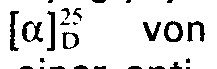
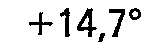
- 2,8g N-Acetyl-glycyl-dehydroleucin wurden in 50 ml luftfreiem Äthanol gelöst und mit 5,0 ml einer äthanolischen Lösung versetzt, die pro ml 3,5mg [Rh(COD)-(R,R-2)]BF4 enthielt [(R,R-2) steht für (1 R,2R)-Bis-(diphenylphosphinoamino)-cyclohexan].
- Die Lösung wurde bei 25°C 8 Stunden lang unter Wasserstoff geschüttelt, wobei der Wasserstoffdruck von anfänglich 11 bar auf 7,3 bar sank. Anschliessend wurde das Reaktionsgefäss belüftet und das Lösungsmittel unter vermindertem Druck entfernt. Als Rückstand verblieb in Form einerweissen Kristallmasse in praktisch quantitativer Ausbeute rohes N-Acetyl-glycyl-leucin mit einer spezifischen Drehung

- Analog wie in den Beispielen 1 bis 3 wurden jeweils 1,4g N-Chloracetyl-glycyl-dehydroleucin hydriert. Die Reaktionsbedingungen und Ergebnisse sind in Tabelle I zusammengefasst.

- Jeweils 4,0 g entgastes N-Acetyl-glycyl-dehydrophenyl-alanin wurden in 75 ml Äthanol aufgeschlämmt und mit 5,0 ml einer äthanolischen Lösung versetzt, die pro ml 4 mg Katalysator enthielt. Die Hydrierungen wurden bei 25°C vorgenommen. Nach dem Ende der Reaktionszeit wurde jeweils das Reaktionsgefäss belüftet und das Lösungsmittel unter vermindertem Druck entfernt. In allen Fällen hinterblieb in Form einer weissen Kristallmasse in praktisch quantitativer Ausbeute rohes N-Acetyl-glycyl-phenyl-alanin. Die Reaktionsbedingungen und Ergebnisse sind in Tabelle 11 zusammengefasst.

- Analog wie in den Beispielen 7 bis 9 wurden jeweils 4,3 g N-Chloracetyl-glycyl-dehydrophenylalanin hydriert. Die Reaktionsbedingungen und Ergebnisse sind in der nachstehenden Tabelle III zusammengefasst.

Claims (1)
- Verfahren zur Herstellung von Peptiden durch asymmetrische Hydrierung von Dehydropeptiden in Gegenwart von chiralen Rhodium-Komplexen, dadurch gekennzeichnet, dass man zur Hydrierung Dehydropeptide der allgemeinen Formel

Applications Claiming Priority (2)
| Application Number | Priority Date | Filing Date | Title |
|---|---|---|---|
| DE3039053A DE3039053C2 (de) | 1980-10-16 | 1980-10-16 | Verfahren zur Herstellung von Dipeptiden |
| DE3039053 | 1980-10-16 |
Publications (2)
| Publication Number | Publication Date |
|---|---|
| EP0050196A1 EP0050196A1 (de) | 1982-04-28 |
| EP0050196B1 true EP0050196B1 (de) | 1983-11-23 |
Family
ID=6114492
Family Applications (1)
| Application Number | Title | Priority Date | Filing Date |
|---|---|---|---|
| EP81106217A Expired EP0050196B1 (de) | 1980-10-16 | 1981-08-08 | Verfahren zur Herstellung von Peptiden |
Country Status (4)
| Country | Link |
|---|---|
| US (1) | US4374062A (de) |
| EP (1) | EP0050196B1 (de) |
| JP (1) | JPS5795951A (de) |
| DE (2) | DE3039053C2 (de) |
Families Citing this family (2)
| Publication number | Priority date | Publication date | Assignee | Title |
|---|---|---|---|---|
| DE4022267C2 (de) * | 1990-07-12 | 1994-09-15 | Degussa | N-Acyldipeptide und deren Verwendung |
| DE59106648D1 (de) * | 1990-07-12 | 1995-11-16 | Degussa | Neue N-Acyldipeptide und deren Verwendung. |
Family Cites Families (1)
| Publication number | Priority date | Publication date | Assignee | Title |
|---|---|---|---|---|
| US4008281A (en) * | 1973-12-03 | 1977-02-15 | Monsanto Company | Asymmetric catalysis |
-
1980
- 1980-10-16 DE DE3039053A patent/DE3039053C2/de not_active Expired
-
1981
- 1981-08-08 EP EP81106217A patent/EP0050196B1/de not_active Expired
- 1981-08-08 DE DE8181106217T patent/DE3161505D1/de not_active Expired
- 1981-10-14 US US06/311,454 patent/US4374062A/en not_active Expired - Fee Related
- 1981-10-15 JP JP56163560A patent/JPS5795951A/ja active Granted
Non-Patent Citations (3)
| Title |
|---|
| Chem. Eng. News, 01.09.1980, Seiten 26, 27 * |
| Chemistry Letters 1980, 481-482 * |
| Tetrahedron 36, 1980, 815-825 * |
Also Published As
| Publication number | Publication date |
|---|---|
| EP0050196A1 (de) | 1982-04-28 |
| US4374062A (en) | 1983-02-15 |
| DE3039053A1 (de) | 1982-05-06 |
| DE3039053C2 (de) | 1984-05-24 |
| DE3161505D1 (en) | 1983-12-29 |
| JPS5795951A (en) | 1982-06-15 |
| JPS6111960B2 (de) | 1986-04-05 |
Similar Documents
| Publication | Publication Date | Title |
|---|---|---|
| DE2161200C3 (de) | Optisch aktive, zweibindige Liganden, katalytische Komposition, die diese Liganden enthält, sowie Verfahren zur asymetrischen Hydrierung von Kohlenstoff-Kohlenstoff-Doppelbindungen unter Anwendung dieser katalytischen Komposition | |
| DE965036C (de) | Verfahren zur Herstellung von p-(Bis-2-chloraethyl-amino)-ª-phenyl-alanin | |
| EP0151282B1 (de) | Optisch aktive 3,4-Bis(diphenylphosphino)-pyrrolidine, diese als chirale Liganden enthaltende Rhodiumkomplexe und deren Verwendung | |
| DE3780704T2 (de) | Verfahren zur herstellung von n-acyltetrahydroisochinoline. | |
| DE69307706T2 (de) | Verfahren zur enantioselektiven hydrierung der carbonylgruppe unter verwendung von ruthenium komplexen mit biphosphineliganden | |
| EP0218970B1 (de) | Chirale Rhodium-diphosphinkomplexe für asymmetrische Hydrierungen | |
| EP0140210B1 (de) | Verfahren zur katalytischen Dimerisation von Acrylsäurederivaten und Verwendung der erhaltenen Dimeren | |
| DE3879050T2 (de) | Ruthenium-phosphin-komplexe, verwendbar als katalysatoren. | |
| EP0050196B1 (de) | Verfahren zur Herstellung von Peptiden | |
| EP0889048B1 (de) | Herstellung optisch aktiver Phospholane, deren Metallkomplexe und Anwendung in der asymmetrischen Synthese | |
| DE3000445C2 (de) | Rhodiumkomplexe und deren Verwendung | |
| EP0785198A1 (de) | Verfahren zur Herstellung von optisch aktivem 3-Chinuclidinol | |
| DE69905746T2 (de) | Chirale ligande für asymmetrische katalysis | |
| DE69004575T2 (de) | Verbesserung bei der herstellung von chiralen katalysatoren auf basis von ruthenium- und phosphorkomplexen. | |
| EP0643052B1 (de) | Verfahren zur enantioselektiven Hydrierung von 2H-Pyran-2-on-Derivaten | |
| EP0437690B1 (de) | Verfahren zur asymmetrischen Hydrierung von alpha-Ketocarbonyl-verbindungen zu optisch aktiven alpha-Hydroxycarbonylverbindungen | |
| EP0729971B1 (de) | Verfahren zur Herstellung von Ivermectin | |
| DE3523181A1 (de) | Verfahren zur herstellung von 2-methyl-2-alkenalen | |
| EP0015514A2 (de) | Optisch aktive tertiäre Phosphine, ihre Herstellung und ihre Verwendung für asymmetrische Synthesen | |
| DE69113365T2 (de) | Optisch aktives Morpholinooxobutansäure-Hydroxybinaphthalinderivat und seine Herstellung. | |
| DE2605650A1 (de) | Verfahren zur herstellung von para-isobutyl-phenylessigsaeurederivaten | |
| DE3035549C2 (de) | ||
| DE4133145A1 (de) | Verfahren zur herstellung angereicherter diastereomeren von propranololanaloga mit zwei chiralen zentren | |
| DD240372A1 (de) | Verfahren zur herstellung von aminosaeurederivaten hoher enantiomerenreinheit | |
| DD253996A1 (de) | Verfahren zur herstellung von (l)-dopa und dessen derivaten |
Legal Events
| Date | Code | Title | Description |
|---|---|---|---|
| PUAI | Public reference made under article 153(3) epc to a published international application that has entered the european phase |
Free format text: ORIGINAL CODE: 0009012 |
|
| 17P | Request for examination filed |
Effective date: 19810808 |
|
| AK | Designated contracting states |
Designated state(s): BE CH DE FR GB NL |
|
| GRAA | (expected) grant |
Free format text: ORIGINAL CODE: 0009210 |
|
| AK | Designated contracting states |
Designated state(s): BE CH DE FR GB LI NL |
|
| REF | Corresponds to: |
Ref document number: 3161505 Country of ref document: DE Date of ref document: 19831229 |
|
| ET | Fr: translation filed | ||
| PGFP | Annual fee paid to national office [announced via postgrant information from national office to epo] |
Ref country code: CH Payment date: 19840720 Year of fee payment: 4 |
|
| PGFP | Annual fee paid to national office [announced via postgrant information from national office to epo] |
Ref country code: FR Payment date: 19840830 Year of fee payment: 4 |
|
| PLBE | No opposition filed within time limit |
Free format text: ORIGINAL CODE: 0009261 |
|
| STAA | Information on the status of an ep patent application or granted ep patent |
Free format text: STATUS: NO OPPOSITION FILED WITHIN TIME LIMIT |
|
| PGFP | Annual fee paid to national office [announced via postgrant information from national office to epo] |
Ref country code: BE Payment date: 19840930 Year of fee payment: 4 |
|
| 26N | No opposition filed | ||
| PGFP | Annual fee paid to national office [announced via postgrant information from national office to epo] |
Ref country code: NL Payment date: 19870831 Year of fee payment: 7 |
|
| PGFP | Annual fee paid to national office [announced via postgrant information from national office to epo] |
Ref country code: DE Payment date: 19890712 Year of fee payment: 9 |
|
| PG25 | Lapsed in a contracting state [announced via postgrant information from national office to epo] |
Ref country code: GB Effective date: 19890808 |
|
| PG25 | Lapsed in a contracting state [announced via postgrant information from national office to epo] |
Ref country code: LI Effective date: 19890831 Ref country code: CH Effective date: 19890831 Ref country code: BE Effective date: 19890831 |
|
| BERE | Be: lapsed |
Owner name: DEGUSSA A.G. Effective date: 19890831 |
|
| PG25 | Lapsed in a contracting state [announced via postgrant information from national office to epo] |
Ref country code: NL Effective date: 19900301 |
|
| GBPC | Gb: european patent ceased through non-payment of renewal fee | ||
| NLV4 | Nl: lapsed or anulled due to non-payment of the annual fee | ||
| PG25 | Lapsed in a contracting state [announced via postgrant information from national office to epo] |
Ref country code: FR Effective date: 19900427 |
|
| REG | Reference to a national code |
Ref country code: CH Ref legal event code: PL |
|
| REG | Reference to a national code |
Ref country code: FR Ref legal event code: ST |
|
| PG25 | Lapsed in a contracting state [announced via postgrant information from national office to epo] |
Ref country code: DE Effective date: 19910501 |