EP0054632B1 - Adhésif durcissable - Google Patents
Adhésif durcissable Download PDFInfo
- Publication number
- EP0054632B1 EP0054632B1 EP81107890A EP81107890A EP0054632B1 EP 0054632 B1 EP0054632 B1 EP 0054632B1 EP 81107890 A EP81107890 A EP 81107890A EP 81107890 A EP81107890 A EP 81107890A EP 0054632 B1 EP0054632 B1 EP 0054632B1
- Authority
- EP
- European Patent Office
- Prior art keywords
- weight
- adhesive
- copolymer
- adhesive according
- acrylic
- Prior art date
- Legal status (The legal status is an assumption and is not a legal conclusion. Google has not performed a legal analysis and makes no representation as to the accuracy of the status listed.)
- Expired
Links
Images
Classifications
-
- C—CHEMISTRY; METALLURGY
- C09—DYES; PAINTS; POLISHES; NATURAL RESINS; ADHESIVES; COMPOSITIONS NOT OTHERWISE PROVIDED FOR; APPLICATIONS OF MATERIALS NOT OTHERWISE PROVIDED FOR
- C09J—ADHESIVES; NON-MECHANICAL ASPECTS OF ADHESIVE PROCESSES IN GENERAL; ADHESIVE PROCESSES NOT PROVIDED FOR ELSEWHERE; USE OF MATERIALS AS ADHESIVES
- C09J175/00—Adhesives based on polyureas or polyurethanes; Adhesives based on derivatives of such polymers
- C09J175/04—Polyurethanes
-
- C—CHEMISTRY; METALLURGY
- C08—ORGANIC MACROMOLECULAR COMPOUNDS; THEIR PREPARATION OR CHEMICAL WORKING-UP; COMPOSITIONS BASED THEREON
- C08G—MACROMOLECULAR COMPOUNDS OBTAINED OTHERWISE THAN BY REACTIONS ONLY INVOLVING UNSATURATED CARBON-TO-CARBON BONDS
- C08G18/00—Polymeric products of isocyanates or isothiocyanates
- C08G18/06—Polymeric products of isocyanates or isothiocyanates with compounds having active hydrogen
- C08G18/28—Polymeric products of isocyanates or isothiocyanates with compounds having active hydrogen characterised by the compounds used containing active hydrogen
- C08G18/40—High-molecular-weight compounds
- C08G18/62—Polymers of compounds having carbon-to-carbon double bonds
- C08G18/6216—Polymers of alpha-beta ethylenically unsaturated carboxylic acids or of derivatives thereof
- C08G18/622—Polymers of esters of alpha-beta ethylenically unsaturated carboxylic acids
- C08G18/6237—Polymers of esters containing glycidyl groups of alpha-beta ethylenically unsaturated carboxylic acids; reaction products thereof
-
- C—CHEMISTRY; METALLURGY
- C08—ORGANIC MACROMOLECULAR COMPOUNDS; THEIR PREPARATION OR CHEMICAL WORKING-UP; COMPOSITIONS BASED THEREON
- C08G—MACROMOLECULAR COMPOUNDS OBTAINED OTHERWISE THAN BY REACTIONS ONLY INVOLVING UNSATURATED CARBON-TO-CARBON BONDS
- C08G18/00—Polymeric products of isocyanates or isothiocyanates
- C08G18/06—Polymeric products of isocyanates or isothiocyanates with compounds having active hydrogen
- C08G18/28—Polymeric products of isocyanates or isothiocyanates with compounds having active hydrogen characterised by the compounds used containing active hydrogen
- C08G18/40—High-molecular-weight compounds
- C08G18/62—Polymers of compounds having carbon-to-carbon double bonds
- C08G18/6216—Polymers of alpha-beta ethylenically unsaturated carboxylic acids or of derivatives thereof
- C08G18/6262—Polymers of nitriles derived from alpha-beta ethylenically unsaturated carboxylic acids
-
- C—CHEMISTRY; METALLURGY
- C09—DYES; PAINTS; POLISHES; NATURAL RESINS; ADHESIVES; COMPOSITIONS NOT OTHERWISE PROVIDED FOR; APPLICATIONS OF MATERIALS NOT OTHERWISE PROVIDED FOR
- C09J—ADHESIVES; NON-MECHANICAL ASPECTS OF ADHESIVE PROCESSES IN GENERAL; ADHESIVE PROCESSES NOT PROVIDED FOR ELSEWHERE; USE OF MATERIALS AS ADHESIVES
- C09J133/00—Adhesives based on homopolymers or copolymers of compounds having one or more unsaturated aliphatic radicals, each having only one carbon-to-carbon double bond, and at least one being terminated by only one carboxyl radical, or of salts, anhydrides, esters, amides, imides, or nitriles thereof; Adhesives based on derivatives of such polymers
- C09J133/04—Homopolymers or copolymers of esters
- C09J133/06—Homopolymers or copolymers of esters of esters containing only carbon, hydrogen and oxygen, the oxygen atom being present only as part of the carboxyl radical
- C09J133/062—Copolymers with monomers not covered by C09J133/06
- C09J133/068—Copolymers with monomers not covered by C09J133/06 containing glycidyl groups
-
- C—CHEMISTRY; METALLURGY
- C09—DYES; PAINTS; POLISHES; NATURAL RESINS; ADHESIVES; COMPOSITIONS NOT OTHERWISE PROVIDED FOR; APPLICATIONS OF MATERIALS NOT OTHERWISE PROVIDED FOR
- C09J—ADHESIVES; NON-MECHANICAL ASPECTS OF ADHESIVE PROCESSES IN GENERAL; ADHESIVE PROCESSES NOT PROVIDED FOR ELSEWHERE; USE OF MATERIALS AS ADHESIVES
- C09J133/00—Adhesives based on homopolymers or copolymers of compounds having one or more unsaturated aliphatic radicals, each having only one carbon-to-carbon double bond, and at least one being terminated by only one carboxyl radical, or of salts, anhydrides, esters, amides, imides, or nitriles thereof; Adhesives based on derivatives of such polymers
- C09J133/04—Homopolymers or copolymers of esters
- C09J133/14—Homopolymers or copolymers of esters of esters containing halogen, nitrogen, sulfur or oxygen atoms in addition to the carboxy oxygen
-
- C—CHEMISTRY; METALLURGY
- C09—DYES; PAINTS; POLISHES; NATURAL RESINS; ADHESIVES; COMPOSITIONS NOT OTHERWISE PROVIDED FOR; APPLICATIONS OF MATERIALS NOT OTHERWISE PROVIDED FOR
- C09J—ADHESIVES; NON-MECHANICAL ASPECTS OF ADHESIVE PROCESSES IN GENERAL; ADHESIVE PROCESSES NOT PROVIDED FOR ELSEWHERE; USE OF MATERIALS AS ADHESIVES
- C09J133/00—Adhesives based on homopolymers or copolymers of compounds having one or more unsaturated aliphatic radicals, each having only one carbon-to-carbon double bond, and at least one being terminated by only one carboxyl radical, or of salts, anhydrides, esters, amides, imides, or nitriles thereof; Adhesives based on derivatives of such polymers
- C09J133/18—Homopolymers or copolymers of nitriles
- C09J133/20—Homopolymers or copolymers of acrylonitrile
-
- C—CHEMISTRY; METALLURGY
- C08—ORGANIC MACROMOLECULAR COMPOUNDS; THEIR PREPARATION OR CHEMICAL WORKING-UP; COMPOSITIONS BASED THEREON
- C08L—COMPOSITIONS OF MACROMOLECULAR COMPOUNDS
- C08L2666/00—Composition of polymers characterized by a further compound in the blend, being organic macromolecular compounds, natural resins, waxes or and bituminous materials, non-macromolecular organic substances, inorganic substances or characterized by their function in the composition
- C08L2666/02—Organic macromolecular compounds, natural resins, waxes or and bituminous materials
- C08L2666/14—Macromolecular compounds according to C08L59/00 - C08L87/00; Derivatives thereof
-
- C—CHEMISTRY; METALLURGY
- C08—ORGANIC MACROMOLECULAR COMPOUNDS; THEIR PREPARATION OR CHEMICAL WORKING-UP; COMPOSITIONS BASED THEREON
- C08L—COMPOSITIONS OF MACROMOLECULAR COMPOUNDS
- C08L75/00—Compositions of polyureas or polyurethanes; Compositions of derivatives of such polymers
- C08L75/04—Polyurethanes
-
- Y—GENERAL TAGGING OF NEW TECHNOLOGICAL DEVELOPMENTS; GENERAL TAGGING OF CROSS-SECTIONAL TECHNOLOGIES SPANNING OVER SEVERAL SECTIONS OF THE IPC; TECHNICAL SUBJECTS COVERED BY FORMER USPC CROSS-REFERENCE ART COLLECTIONS [XRACs] AND DIGESTS
- Y10—TECHNICAL SUBJECTS COVERED BY FORMER USPC
- Y10S—TECHNICAL SUBJECTS COVERED BY FORMER USPC CROSS-REFERENCE ART COLLECTIONS [XRACs] AND DIGESTS
- Y10S528/00—Synthetic resins or natural rubbers -- part of the class 520 series
- Y10S528/905—Polymer prepared from isocyanate reactant has adhesive property
Definitions
- the invention relates to a curable adhesive based on a reactive acrylate and / or methacrylate copolymer.
- the reaction principle on which the adhesive is cured is the reaction of the hydroxyl groups of the acrylic and / or methacrylic acid ro-hydroxyalkyl esters (component a3)) with the isocyanate groups of the polyisocyanates or their partial reaction products with polyols (component b)).
- the adhesives according to the invention have all other application properties, such as e.g. Adhesion to plastic or metal surfaces even when exposed to water or steam, only low levels of organic solvents or are solvent-free.
- the copolymer a) has a relatively low average molecular weight from 800 to 2500, preferably from 1200 to 2000.
- the molecular weight is measured in a manner known per se on the vapor pressure osmometer.
- This low molecular weight is achieved in that the polymerization of the monomers a 1 ) to a 5 ) is carried out in the presence of regulators containing mercapto groups which additionally carry at least one hydroxyl group on the molecule.
- regulators containing mercapto groups which additionally carry at least one hydroxyl group on the molecule.
- 2-mercaptoethanoi and 1-thioglycerol have proven useful as mercapto-containing regulators.
- the copolymer a) is polymerized in a manner known to those skilled in the art.
- the polymerization can be carried out as an emulsion or solution polymerization. Polymerization in small amounts of a solvent is preferred, since in the case of an emulsion polymerization, careful drying of the products is necessary with regard to the reaction with isocyanates.
- Suitable monomers a 1 are ethyl acrylate, butyl acrylate, butyl methacrylate, methyl acrylate, methyl methacrylate, 2-ethylhexyl acrylate or 2-ethylhexyl methacrylate.
- Component a 2 is formed from acrylonitrile, methacrylonitrile or vinyl acetate or mixtures thereof.
- the monomers containing nitrile groups ensure that the adhesives according to the invention adhere well to the various plastic and metal surfaces.
- a similar effect can be attributed to the vinyl acetate built into the polymeric molecule.
- Copolymers containing vinyl acetate have the additional advantage of lower viscosity, so that the use of optionally reactive solvents is unnecessary or heating of the adhesive to reduce the viscosity is unnecessary.
- Suitable monomers a 3 are 2-hydroxyethyl acrylate or methacrylate, 3-hydroxypropyl acrylate or methacrylate, 2-hydroxypropyl acrylate or methacrylate, butanediol-1,4-monoacrylate or monomethacrylate.
- acrylic and / or vinyl monomers can be present in the monomer mixture.
- examples of such monomers are: vinyl propionate, styrene, acrylic or methacrylamide.
- copolymer a) in an at least dihydric alcohol, but not more than 30% by weight, based on component a), should be used.
- solvents are the particularly preferred polyalkylene glycols, e.g. Polyethylene glycols with a molecular weight of 200 to 400.
- a polyisocyanate of the general formula is preferably used as the polyisocyanate where n is 5 3, or where R is the rest means used. These isocyanates are commercially available true. However, other polyisocyanates such as 1,6-hexamethylene diisocyanate; 2,4,4-trimethyl-1,6-hexamethylene diisocyanate; 3-isocyanatomethyl-3,5,5-trimethylcyclohexyl isocyanate; 1,4-tetramethylene diisocyanate; 2,4- and 2,6-hexahydrotoluenediisocyanate; Hexahydro-1,3- or -1,4-phenylene diisocyanate; 1,3- and 1,4-phenylene diisocyanate; 2,4- and 2,6-tolylene diisocyanate; 4,4'-diisocyanatodiphenyimethane;Naphthyte-1,5-diisocyanate; m-xylylene diiso
- component b) is a partial reaction product of one or more polyisocyanates with polyether or polyester polyols having a molecular weight ⁇ 2000, the polyether or polyester polyols having at least 2 hydroxyl groups in the average molecule, and the polyisocya groups. nat were reacted with the polyols in such a ratio that a hydroxyl group corresponded to 1.5 to 3 isocyanate groups.
- polyetherols examples include linear or branched polyetherols based on ethylene oxide, propylene oxide and butylene oxide, polythioethers and adducts of ethylene oxides with polyamines and alkoxylated phosphoric acids.
- polyester oils are linear or branched polyesterols, such as those obtained from polybasic, preferably dibasic, carboxylic acids, such as adipic acid, sebacic acid, phthalic acid, halogenated phthalic acids, maleic acid, benzene-1,2,4-tricarboxylic acid, monomeric, dimeric or trimeric fatty acids and polyhydric alcohols, such as Obtain ethylene glycol, polyethylene glycol, propylene glycol, polypropylene glycols, 1,3-butanediol and -1,4, 2,2-dimethylpropanediol-1,3, 1,6-hexanediol, 1,1,1-trimethylolpropane, hexanetriols or glycerol in the usual way will.
- polyhydric alcohols such as Obtain ethylene glycol, polyethylene glycol, propylene glycol, polypropylene glycols, 1,3-butanediol and -1,4, 2,2-dimethyl
- reaction of the polyisocyanates with the polyether or polyester polyols is thus carried out in such a ratio that the reaction product contains on average at least 2 isocyanate groups per molecule.
- the adhesive according to the invention contains at least difunctional alcohols as solvents for the copolymer a), these react with the isocyanates of component b) and are thereby incorporated into the adhesive framework.
- the curing time or curing temperature of the adhesive can be shortened or reduced significantly in a manner known per se by adding an accelerator.
- An adhesive which contains up to 2% by weight, based on the sum of components a) and b), of a tertiary amine and / or an organotin compound as an accelerator is therefore particularly preferred.
- tertiary amines are dimethylbenzylamine, dicyclohexylmethylamine, dimethylpiperazine, dimethylaminethanol, 1,2-dimethylimidazole, N-methyl- or N-ethylmorpholine, dimethylcyclohexylamine, 1-aza-bicyclo- (3,3,0) -octane or 1 , 4-Diazabicyclo- (2,2,2) octane suitable.
- useful organic tin compounds are dibutyltin dilaurate or tin (II) octate
- the adhesive according to the invention can also contain further auxiliaries.
- auxiliaries are adhesive aids, e.g. Polychloroprene, acrylonitrile-butadiene copolymers, polyamides or polyurethanes. These adhesive aids are preferably added in amounts of up to 15% by weight, based on 100% by weight of constituents a) to b).
- Pigments and / or fillers can also be added to the adhesive as auxiliary substances.
- Both inorganic and organic products e.g. Titanium dioxide, iron oxide, chromium oxide, barium sulfate, quartz powder, talc, bentonite, suitable.
- the small amounts of unreacted residual monomers are stripped off together with the toluene in vacuo and, before cooling, either organic solvents which do not react with isocyanate groups, such as acetone, methyl ethyl ketone, ethyl acetate, isopropyl acetate or toluene, are added to the acrylic polymer , or at least dihydric alcohols, such as polyethylene or polypropylene glycols. It is also possible to work completely without solvents or alcohols. In such a case, it may be appropriate to heat the acrylic polymer to 30 to 60 ° C. before use if the viscosity at room temperature is too high.
- Table 1 shows the chemical composition of the individual acrylic polymers, the type and amount of the regulator containing mercapto groups and the average molecular weight, measured in a vapor pressure osmometer. Table 1 also contains the added amounts of alcohols or organic solvents.
- polyisocyanates Four commercially available products are used as polyisocyanates: a polyphenyl-polymethylene-polyisocyanate (raw MDI) of the general formula under the name b 1 and under the designation b 2 a triisocyanate of the formula Both polyisocyanates are used in a solvent-free form. Under the name b 3 is a polyisocyanate of the formula where R is the rest means used, which is present as a 75 wt .-% solution in ethyl acetate.
- the polyisocyanates are used to produce the adhesive solutions according to the invention.
- the acrylic polymers mixed intensively. If necessary, to set the desired viscosity of the adhesive, anhydrous solvents, as described under 1.1. are added. Further additives, such as accelerators, adhesive aids, pigments and fillers, can be dissolved or dispersed, these additives being expediently added to the acrylic polymer before it is mixed with the polyisocyanate.
- Comparative adhesive No. 13 contains a difunctional polyetherol based on propylene and ethylene oxide with a hydroxyl number of 90 mg KOH / g instead of the acrylic copolymer.
- Comparative adhesive no. 14 contains a polyesterol with a functionality of approx. 2.5 and a hydroxyl number of 109 mg KOH / g instead of the acrylic copolymer.
- the polyester was obtained by condensing adipic acid with diethylene glycol, ethylene glycol and trimethylolpropane.
- the aluminum sheets are made of Al Cu Mg 2pl and are degreased before bonding and subjected to a chromate-sulfuric acid pickling process (pickling pickling).
- the polyethylene is roughened and pretreated, and the epoxy-glass fiber laminate (GRP) is sanded.
- the adhesives are applied in an amount of 60 g / m 2 solid to the adherent ends and the solvents, if present, are evaporated off at room temperature or at an elevated temperature, for example 70.degree.
- the adhesives are cured at 90 ° C. for 20 minutes under a pressure of 0.5 N / mm 2 . After cooling, peel at 20 ° C.
- the angular peel strength is determined on test specimens made of roughened, pretreated polyethylene with a thickness of 1.0 mm.
- the adhesive application, the evaporation of the solvents and the curing are carried out as described above.
- the angle peel test is carried out at 20 ° C.
- hot water is stored at 95 ° C for 3 days using other test specimens.
- the test specimens are cooled in water at 20 ° C. and peeled while still moist.
- This hot water storage is very suitable as a short-term test to check the resistance of the adhesive to water and moisture.
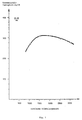
- the acrylic copolymer with different average molecular weights is used. 1 shows the dependence of the drum peel strength of the aluminum / polyethylene composite on the average molecular weight of the acrylic copolymer a). It can be seen that particularly high strengths above a molecular weight of 1200 are obtained. The strengths gradually decrease at molecular weights -> 2000. At the same time, the viscosity of the acrylic copolymer a) and therefore also the need for solvents increases considerably.
Landscapes
- Chemical & Material Sciences (AREA)
- Organic Chemistry (AREA)
- Health & Medical Sciences (AREA)
- Chemical Kinetics & Catalysis (AREA)
- Medicinal Chemistry (AREA)
- Polymers & Plastics (AREA)
- Adhesives Or Adhesive Processes (AREA)
- Polyurethanes Or Polyureas (AREA)
Claims (8)
les constituants a) et b) étant présents en un rapport tel qu'à un groupe hydroxyle du constituant
ainsi qu'éventuellement des additifs usuels tels que des accélérateurs, adjuvants d'adhérence, pigments et charges.


Priority Applications (1)
| Application Number | Priority Date | Filing Date | Title |
|---|---|---|---|
| AT81107890T ATE3723T1 (de) | 1980-12-19 | 1981-10-03 | Haertbares klebmittel. |
Applications Claiming Priority (2)
| Application Number | Priority Date | Filing Date | Title |
|---|---|---|---|
| DE3047926 | 1980-12-19 | ||
| DE3047926A DE3047926C2 (de) | 1980-12-19 | 1980-12-19 | Härtbares Klebmittel |
Publications (2)
| Publication Number | Publication Date |
|---|---|
| EP0054632A1 EP0054632A1 (fr) | 1982-06-30 |
| EP0054632B1 true EP0054632B1 (fr) | 1983-06-08 |
Family
ID=6119618
Family Applications (1)
| Application Number | Title | Priority Date | Filing Date |
|---|---|---|---|
| EP81107890A Expired EP0054632B1 (fr) | 1980-12-19 | 1981-10-03 | Adhésif durcissable |
Country Status (4)
| Country | Link |
|---|---|
| US (1) | US4404324A (fr) |
| EP (1) | EP0054632B1 (fr) |
| AT (1) | ATE3723T1 (fr) |
| DE (1) | DE3047926C2 (fr) |
Families Citing this family (22)
| Publication number | Priority date | Publication date | Assignee | Title |
|---|---|---|---|---|
| US4542165A (en) * | 1983-09-08 | 1985-09-17 | Sanyo Chemical Industries, Ltd. | Polyurethane based on epoxy-containing polymer polyol and process for making the same |
| US4665128A (en) * | 1984-09-17 | 1987-05-12 | E. I. Du Pont De Nemours And Company | Flexible coating compositions |
| US4731416A (en) * | 1984-10-01 | 1988-03-15 | The Dow Chemical Company | Polyurethane-type adhesives containing nonaqueous solutions of acrylate polymers |
| JPH064692B2 (ja) * | 1984-11-02 | 1994-01-19 | 武田薬品工業株式会社 | ウレタン樹脂組成物 |
| JPS61225249A (ja) * | 1985-03-29 | 1986-10-07 | Toyoda Gosei Co Ltd | 水膨潤性組成物 |
| US4975484A (en) * | 1985-05-10 | 1990-12-04 | E. I. Du Pont De Nemours And Company | Acrylic copolymer composition and adhesive coatings therefrom |
| US4980410A (en) * | 1985-05-10 | 1990-12-25 | E. I. Du Pont De Nemours And Company | Acrylic copolymer composition and adhesive coatings therefrom |
| US4713265A (en) * | 1985-12-03 | 1987-12-15 | E. I. Du Pont De Nemours And Company | Process for curing a coating composition of an acrylic polymer and a polyisocyanate with an amine vapor catalyst |
| US4788083A (en) * | 1986-03-27 | 1988-11-29 | Ashland Oil, Inc. | Tin or bismuth complex catalysts and trigger cure of coatings therewith |
| US4862948A (en) * | 1988-02-24 | 1989-09-05 | Borden, Inc. | Phenolic resin adhesive pastes, assemblies prepared therefrom, and processes for preparing cast metal articles using these pastes |
| DE4038939A1 (de) * | 1990-12-06 | 1992-06-11 | Basf Ag | Mit luftfeuchtigkeit selbsthaertbare copolymerisate und mischungen |
| WO1993005099A1 (fr) * | 1991-09-04 | 1993-03-18 | Dap, Inc. | Adhesifs acryliques cent pour cent solides |
| DE19634076A1 (de) * | 1996-08-23 | 1998-02-26 | Bayer Ag | Bindemittelgemisch, Verfahren zu seiner Herstellung und seine Verwendung |
| CA2514260C (fr) | 2003-11-24 | 2009-09-15 | Central Products Company | Procede de preparation d'adhesif a l'aide d'une extrudeuse planetaire |
| JP5889611B2 (ja) * | 2011-11-25 | 2016-03-22 | ヘンケルジャパン株式会社 | 太陽電池バックシート用接着剤 |
| JP5841893B2 (ja) | 2012-04-23 | 2016-01-13 | ヘンケルジャパン株式会社 | 積層シート用接着剤 |
| JP6001331B2 (ja) * | 2012-05-28 | 2016-10-05 | ヘンケルジャパン株式会社 | 積層シート用接着剤 |
| JP6001332B2 (ja) * | 2012-05-30 | 2016-10-05 | ヘンケルジャパン株式会社 | 積層シート用接着剤 |
| JP6016528B2 (ja) * | 2012-08-24 | 2016-10-26 | 東洋アルミニウム株式会社 | 太陽電池裏面保護シート |
| JP6194190B2 (ja) * | 2013-05-16 | 2017-09-06 | ヘンケルジャパン株式会社 | 太陽電池保護シート用接着剤 |
| KR20170089665A (ko) * | 2016-01-27 | 2017-08-04 | 쓰리엠 이노베이티브 프로퍼티즈 컴파니 | 감압 점착제 조성물 |
| WO2024123540A1 (fr) * | 2022-12-06 | 2024-06-13 | Henkel Ag & Co. Kgaa | Application avec mélange sur place pour adhésifs en émulsion pour produits dérivés du bois |
Family Cites Families (3)
| Publication number | Priority date | Publication date | Assignee | Title |
|---|---|---|---|---|
| DE2340040C2 (de) * | 1973-08-08 | 1983-09-15 | Basf Ag, 6700 Ludwigshafen | Haftkleber |
| DE2618809C2 (de) * | 1976-04-29 | 1983-06-30 | Hoechst Ag, 6230 Frankfurt | Verfahren zur Herstellung von in organischen Lösungsmitteln löslichen Copolymerisaten und Verwendung derselben in Reaktionslacken |
| DE2900592A1 (de) * | 1979-01-09 | 1980-07-17 | Bayer Ag | Hydroxyl- und tertiaere aminogruppen enthaltende niedermolekulare acrylatharze |
-
1980
- 1980-12-19 DE DE3047926A patent/DE3047926C2/de not_active Expired
-
1981
- 1981-10-03 AT AT81107890T patent/ATE3723T1/de not_active IP Right Cessation
- 1981-10-03 EP EP81107890A patent/EP0054632B1/fr not_active Expired
- 1981-12-10 US US06/329,413 patent/US4404324A/en not_active Expired - Fee Related
Also Published As
| Publication number | Publication date |
|---|---|
| EP0054632A1 (fr) | 1982-06-30 |
| DE3047926A1 (de) | 1982-07-08 |
| DE3047926C2 (de) | 1985-05-15 |
| ATE3723T1 (de) | 1983-06-15 |
| US4404324A (en) | 1983-09-13 |
Similar Documents
| Publication | Publication Date | Title |
|---|---|---|
| EP0054632A1 (fr) | Adhésif durcissable | |
| EP0043050B1 (fr) | Adhésif durcissable | |
| EP0206059B1 (fr) | Composition de polyisocyanate dispersible dans l'eau et son utilisation comme agent additif pour adhésifs aqueux | |
| EP0777695B2 (fr) | Compositions de polyurethanne a faible teneur en diisocyanates monomeres | |
| DE2152606C3 (de) | Härtbare Kunststoffmischungen | |
| DE69227245T2 (de) | Einkomponentige, thermoplastische polyurethanplastisolzusammensetzung | |
| DE2641380A1 (de) | Verfahren zur herstellung von polyisocyanaten mit isocyanuratstruktur sowie ihre verwendung | |
| DE69212469T2 (de) | In feuchter umgebung härtende klebstoffe auf der basis von acrylat/epoxydharzen | |
| EP1666513B1 (fr) | Procedure de manufacture d'un liant à base de polyuréthane avec un contenu réduit de monomères | |
| DE2131299C3 (de) | Durch Hitzeeinwirkung härtbare Gemische und Verfahren zur Herstellung von Formkörpern aus diesen Gemischen | |
| DE3644382A1 (de) | Verfahren zur zweistufigen herstellung von formkoerpern | |
| EP0584734B1 (fr) | Dispersions aqueuses de liants durcissables par irradiation | |
| DE3701888A1 (de) | Klebemittel und seiner verwendung zur herstellung von verklebungen | |
| DE69127673T2 (de) | Vernetzbare in der Wärme schmelzende Zusammensetzung | |
| EP0542072A1 (fr) | Dispersion aqueuse de polyuréthane | |
| EP0617103B1 (fr) | Dispersion aqueuse d'un polyuréthane et d'une résine de condensation | |
| EP0746577B1 (fr) | Adhesifs a base de polyurethane a un composant | |
| DE3050560C2 (de) | Verwendung eines Gemisches aus (Meth) Acrylatcopolymeren und Polyisocyanaten als Klebmittel | |
| EP0061683B1 (fr) | Colle durcissable | |
| EP3611202A1 (fr) | Compositions de résine époxy thermodurcissables à un constituant | |
| DE2415467A1 (de) | Fluessiger klebstoff | |
| DE19931997A1 (de) | Monomerarmes Polyurethanbindemittel mit verbesserter Gleitmittelhaftung | |
| DE2540921B1 (de) | Waermehaertbares, pulverfoermiges ueberzugsmittel aus einer mischung aus glycidylgruppenhaltigen copolymerisaten und haertungsmitteln | |
| DE2500309A1 (de) | Haertbare ueberzugsmassen mit hohem feststoffgehalt | |
| EP0435060A2 (fr) | Procédé pour la préparation de pièces moulées plastiques |
Legal Events
| Date | Code | Title | Description |
|---|---|---|---|
| PUAI | Public reference made under article 153(3) epc to a published international application that has entered the european phase |
Free format text: ORIGINAL CODE: 0009012 |
|
| 17P | Request for examination filed |
Effective date: 19811014 |
|
| AK | Designated contracting states |
Designated state(s): AT BE CH FR GB IT LU NL SE |
|
| ITF | It: translation for a ep patent filed | ||
| GRAA | (expected) grant |
Free format text: ORIGINAL CODE: 0009210 |
|
| AK | Designated contracting states |
Designated state(s): AT BE CH FR GB IT LI LU NL SE |
|
| REF | Corresponds to: |
Ref document number: 3723 Country of ref document: AT Date of ref document: 19830615 Kind code of ref document: T |
|
| ET | Fr: translation filed | ||
| PG25 | Lapsed in a contracting state [announced via postgrant information from national office to epo] |
Ref country code: LU Free format text: LAPSE BECAUSE OF NON-PAYMENT OF DUE FEES Effective date: 19831031 |
|
| PLBE | No opposition filed within time limit |
Free format text: ORIGINAL CODE: 0009261 |
|
| STAA | Information on the status of an ep patent application or granted ep patent |
Free format text: STATUS: NO OPPOSITION FILED WITHIN TIME LIMIT |
|
| 26N | No opposition filed | ||
| PGFP | Annual fee paid to national office [announced via postgrant information from national office to epo] |
Ref country code: GB Payment date: 19890930 Year of fee payment: 9 |
|
| PGFP | Annual fee paid to national office [announced via postgrant information from national office to epo] |
Ref country code: SE Payment date: 19891010 Year of fee payment: 9 Ref country code: FR Payment date: 19891010 Year of fee payment: 9 |
|
| PGFP | Annual fee paid to national office [announced via postgrant information from national office to epo] |
Ref country code: AT Payment date: 19891012 Year of fee payment: 9 |
|
| PGFP | Annual fee paid to national office [announced via postgrant information from national office to epo] |
Ref country code: BE Payment date: 19891020 Year of fee payment: 9 |
|
| PGFP | Annual fee paid to national office [announced via postgrant information from national office to epo] |
Ref country code: CH Payment date: 19891024 Year of fee payment: 9 |
|
| PGFP | Annual fee paid to national office [announced via postgrant information from national office to epo] |
Ref country code: LU Payment date: 19891027 Year of fee payment: 9 |
|
| ITTA | It: last paid annual fee | ||
| PGFP | Annual fee paid to national office [announced via postgrant information from national office to epo] |
Ref country code: NL Payment date: 19891031 Year of fee payment: 9 |
|
| PG25 | Lapsed in a contracting state [announced via postgrant information from national office to epo] |
Ref country code: GB Effective date: 19901003 Ref country code: AT Effective date: 19901003 |
|
| PG25 | Lapsed in a contracting state [announced via postgrant information from national office to epo] |
Ref country code: SE Effective date: 19901004 |
|
| PG25 | Lapsed in a contracting state [announced via postgrant information from national office to epo] |
Ref country code: LI Effective date: 19901031 Ref country code: CH Effective date: 19901031 Ref country code: BE Effective date: 19901031 |
|
| BERE | Be: lapsed |
Owner name: TH. GOLDSCHMIDT A.G. Effective date: 19901031 |
|
| PG25 | Lapsed in a contracting state [announced via postgrant information from national office to epo] |
Ref country code: NL Effective date: 19910501 |
|
| GBPC | Gb: european patent ceased through non-payment of renewal fee | ||
| NLV4 | Nl: lapsed or anulled due to non-payment of the annual fee | ||
| PG25 | Lapsed in a contracting state [announced via postgrant information from national office to epo] |
Ref country code: FR Effective date: 19910628 |
|
| REG | Reference to a national code |
Ref country code: CH Ref legal event code: PL |
|
| REG | Reference to a national code |
Ref country code: FR Ref legal event code: ST |
|
| EUG | Se: european patent has lapsed |
Ref document number: 81107890.6 Effective date: 19910603 |