EP0056095A1 - Mittel zum Erhöhen der Gleitfähigkeit von organischen Fasern - Google Patents
Mittel zum Erhöhen der Gleitfähigkeit von organischen Fasern Download PDFInfo
- Publication number
- EP0056095A1 EP0056095A1 EP81109064A EP81109064A EP0056095A1 EP 0056095 A1 EP0056095 A1 EP 0056095A1 EP 81109064 A EP81109064 A EP 81109064A EP 81109064 A EP81109064 A EP 81109064A EP 0056095 A1 EP0056095 A1 EP 0056095A1
- Authority
- EP
- European Patent Office
- Prior art keywords
- compound
- hydrogen
- formula
- proviso
- carbon atoms
- Prior art date
- Legal status (The legal status is an assumption and is not a legal conclusion. Google has not performed a legal analysis and makes no representation as to the accuracy of the status listed.)
- Granted
Links
- 150000003961 organosilicon compounds Chemical class 0.000 claims abstract description 23
- 239000000835 fiber Substances 0.000 claims abstract description 20
- 239000000203 mixture Substances 0.000 claims abstract description 17
- 239000001257 hydrogen Substances 0.000 claims abstract description 16
- 229910052739 hydrogen Inorganic materials 0.000 claims abstract description 16
- 239000004215 Carbon black (E152) Substances 0.000 claims abstract description 12
- 150000001875 compounds Chemical class 0.000 claims abstract description 12
- 229930195733 hydrocarbon Natural products 0.000 claims abstract description 12
- UFHFLCQGNIYNRP-UHFFFAOYSA-N Hydrogen Chemical compound [H][H] UFHFLCQGNIYNRP-UHFFFAOYSA-N 0.000 claims abstract description 11
- 125000004432 carbon atom Chemical group C* 0.000 claims abstract description 9
- 125000002496 methyl group Chemical group [H]C([H])([H])* 0.000 claims abstract description 5
- 150000003018 phosphorus compounds Chemical class 0.000 claims abstract description 5
- 150000007522 mineralic acids Chemical class 0.000 claims abstract description 4
- 150000007524 organic acids Chemical class 0.000 claims abstract description 4
- 150000002431 hydrogen Chemical group 0.000 claims abstract description 3
- -1 phosphorus compound Chemical class 0.000 claims description 50
- 239000003795 chemical substances by application Substances 0.000 claims description 16
- 239000012188 paraffin wax Substances 0.000 claims description 8
- 229910052698 phosphorus Inorganic materials 0.000 claims description 7
- 239000011574 phosphorus Substances 0.000 claims description 7
- 239000000126 substance Substances 0.000 claims description 4
- 150000001450 anions Chemical class 0.000 claims description 3
- 229910017464 nitrogen compound Inorganic materials 0.000 claims description 2
- 150000002830 nitrogen compounds Chemical class 0.000 claims description 2
- 150000001412 amines Chemical class 0.000 abstract 1
- 150000002430 hydrocarbons Chemical class 0.000 abstract 1
- 125000004435 hydrogen atom Chemical group [H]* 0.000 abstract 1
- 229920000435 poly(dimethylsiloxane) Polymers 0.000 description 14
- 239000004205 dimethyl polysiloxane Substances 0.000 description 8
- 235000013870 dimethyl polysiloxane Nutrition 0.000 description 8
- 235000019809 paraffin wax Nutrition 0.000 description 7
- 235000019271 petrolatum Nutrition 0.000 description 7
- 239000000314 lubricant Substances 0.000 description 6
- YMWUJEATGCHHMB-UHFFFAOYSA-N Dichloromethane Chemical compound ClCCl YMWUJEATGCHHMB-UHFFFAOYSA-N 0.000 description 5
- 150000003254 radicals Chemical class 0.000 description 5
- 150000003868 ammonium compounds Chemical class 0.000 description 4
- 230000008018 melting Effects 0.000 description 4
- 238000002844 melting Methods 0.000 description 4
- 239000000243 solution Substances 0.000 description 4
- QTBSBXVTEAMEQO-UHFFFAOYSA-N Acetic acid Chemical compound CC(O)=O QTBSBXVTEAMEQO-UHFFFAOYSA-N 0.000 description 3
- 239000002216 antistatic agent Substances 0.000 description 3
- REZZEXDLIUJMMS-UHFFFAOYSA-M dimethyldioctadecylammonium chloride Chemical compound [Cl-].CCCCCCCCCCCCCCCCCC[N+](C)(C)CCCCCCCCCCCCCCCCCC REZZEXDLIUJMMS-UHFFFAOYSA-M 0.000 description 3
- 125000003438 dodecyl group Chemical group [H]C([H])([H])C([H])([H])C([H])([H])C([H])([H])C([H])([H])C([H])([H])C([H])([H])C([H])([H])C([H])([H])C([H])([H])C([H])([H])C([H])([H])* 0.000 description 3
- 125000002887 hydroxy group Chemical group [H]O* 0.000 description 3
- 229920000742 Cotton Polymers 0.000 description 2
- VEXZGXHMUGYJMC-UHFFFAOYSA-N Hydrochloric acid Chemical compound Cl VEXZGXHMUGYJMC-UHFFFAOYSA-N 0.000 description 2
- 239000002202 Polyethylene glycol Substances 0.000 description 2
- CIUQDSCDWFSTQR-UHFFFAOYSA-N [C]1=CC=CC=C1 Chemical compound [C]1=CC=CC=C1 CIUQDSCDWFSTQR-UHFFFAOYSA-N 0.000 description 2
- 125000002877 alkyl aryl group Chemical group 0.000 description 2
- 125000003277 amino group Chemical group 0.000 description 2
- 150000005840 aryl radicals Chemical class 0.000 description 2
- IISBACLAFKSPIT-UHFFFAOYSA-N bisphenol A Chemical compound C=1C=C(O)C=CC=1C(C)(C)C1=CC=C(O)C=C1 IISBACLAFKSPIT-UHFFFAOYSA-N 0.000 description 2
- 239000000460 chlorine Substances 0.000 description 2
- 230000000052 comparative effect Effects 0.000 description 2
- 239000000839 emulsion Substances 0.000 description 2
- 150000002148 esters Chemical class 0.000 description 2
- 125000001495 ethyl group Chemical group [H]C([H])([H])C([H])([H])* 0.000 description 2
- LYCAIKOWRPUZTN-UHFFFAOYSA-N ethylene glycol Natural products OCCO LYCAIKOWRPUZTN-UHFFFAOYSA-N 0.000 description 2
- 239000004744 fabric Substances 0.000 description 2
- WGCNASOHLSPBMP-UHFFFAOYSA-N hydroxyacetaldehyde Natural products OCC=O WGCNASOHLSPBMP-UHFFFAOYSA-N 0.000 description 2
- 238000005470 impregnation Methods 0.000 description 2
- 238000004898 kneading Methods 0.000 description 2
- 125000004108 n-butyl group Chemical group [H]C([H])([H])C([H])([H])C([H])([H])C([H])([H])* 0.000 description 2
- 125000000740 n-pentyl group Chemical group [H]C([H])([H])C([H])([H])C([H])([H])C([H])([H])C([H])([H])* 0.000 description 2
- 125000001117 oleyl group Chemical group [H]C([*])([H])C([H])([H])C([H])([H])C([H])([H])C([H])([H])C([H])([H])C([H])([H])C([H])([H])/C([H])=C([H])\C([H])([H])C([H])([H])C([H])([H])C([H])([H])C([H])([H])C([H])([H])C([H])([H])C([H])([H])[H] 0.000 description 2
- 150000003014 phosphoric acid esters Chemical class 0.000 description 2
- 229920000728 polyester Polymers 0.000 description 2
- 229920001223 polyethylene glycol Polymers 0.000 description 2
- 239000002904 solvent Substances 0.000 description 2
- 125000003944 tolyl group Chemical group 0.000 description 2
- DQWPFSLDHJDLRL-UHFFFAOYSA-N triethyl phosphate Chemical compound CCOP(=O)(OCC)OCC DQWPFSLDHJDLRL-UHFFFAOYSA-N 0.000 description 2
- 238000005303 weighing Methods 0.000 description 2
- DURPTKYDGMDSBL-UHFFFAOYSA-N 1-butoxybutane Chemical compound CCCCOCCCC DURPTKYDGMDSBL-UHFFFAOYSA-N 0.000 description 1
- QIJIUJYANDSEKG-UHFFFAOYSA-N 2,4,4-trimethylpentan-2-amine Chemical compound CC(C)(C)CC(C)(C)N QIJIUJYANDSEKG-UHFFFAOYSA-N 0.000 description 1
- XSXWOBXNYNULJG-UHFFFAOYSA-N 2-(2,4,4-trimethylpentan-2-yl)phenol Chemical compound CC(C)(C)CC(C)(C)C1=CC=CC=C1O XSXWOBXNYNULJG-UHFFFAOYSA-N 0.000 description 1
- 125000004182 2-chlorophenyl group Chemical group [H]C1=C([H])C(Cl)=C(*)C([H])=C1[H] 0.000 description 1
- SLRMQYXOBQWXCR-UHFFFAOYSA-N 2154-56-5 Chemical compound [CH2]C1=CC=CC=C1 SLRMQYXOBQWXCR-UHFFFAOYSA-N 0.000 description 1
- VPWNQTHUCYMVMZ-UHFFFAOYSA-N 4,4'-sulfonyldiphenol Chemical class C1=CC(O)=CC=C1S(=O)(=O)C1=CC=C(O)C=C1 VPWNQTHUCYMVMZ-UHFFFAOYSA-N 0.000 description 1
- 229930185605 Bisphenol Natural products 0.000 description 1
- IIVCYFSRDZBYCV-UHFFFAOYSA-N C(CCCCCCCCCCC)[P] Chemical compound C(CCCCCCCCCCC)[P] IIVCYFSRDZBYCV-UHFFFAOYSA-N 0.000 description 1
- 244000025254 Cannabis sativa Species 0.000 description 1
- 235000012766 Cannabis sativa ssp. sativa var. sativa Nutrition 0.000 description 1
- 235000012765 Cannabis sativa ssp. sativa var. spontanea Nutrition 0.000 description 1
- 229940126062 Compound A Drugs 0.000 description 1
- SNRUBQQJIBEYMU-UHFFFAOYSA-N Dodecane Natural products CCCCCCCCCCCC SNRUBQQJIBEYMU-UHFFFAOYSA-N 0.000 description 1
- NLDMNSXOCDLTTB-UHFFFAOYSA-N Heterophylliin A Natural products O1C2COC(=O)C3=CC(O)=C(O)C(O)=C3C3=C(O)C(O)=C(O)C=C3C(=O)OC2C(OC(=O)C=2C=C(O)C(O)=C(O)C=2)C(O)C1OC(=O)C1=CC(O)=C(O)C(O)=C1 NLDMNSXOCDLTTB-UHFFFAOYSA-N 0.000 description 1
- FDTZNKNDXMRDQS-UHFFFAOYSA-N PNPCl Chemical compound PNPCl FDTZNKNDXMRDQS-UHFFFAOYSA-N 0.000 description 1
- OAICVXFJPJFONN-UHFFFAOYSA-N Phosphorus Chemical compound [P] OAICVXFJPJFONN-UHFFFAOYSA-N 0.000 description 1
- 239000004952 Polyamide Substances 0.000 description 1
- 239000004698 Polyethylene Substances 0.000 description 1
- 239000004743 Polypropylene Substances 0.000 description 1
- 229920000297 Rayon Polymers 0.000 description 1
- 239000002250 absorbent Substances 0.000 description 1
- 230000002745 absorbent Effects 0.000 description 1
- 239000000654 additive Substances 0.000 description 1
- 125000003342 alkenyl group Chemical group 0.000 description 1
- 150000004945 aromatic hydrocarbons Chemical class 0.000 description 1
- 125000003118 aryl group Chemical group 0.000 description 1
- UXJHQBVRZUANLK-UHFFFAOYSA-N azanylidyne(dichloro)-$l^{5}-phosphane Chemical compound ClP(Cl)#N UXJHQBVRZUANLK-UHFFFAOYSA-N 0.000 description 1
- 230000001680 brushing effect Effects 0.000 description 1
- 235000009120 camo Nutrition 0.000 description 1
- 229920002301 cellulose acetate Polymers 0.000 description 1
- 235000005607 chanvre indien Nutrition 0.000 description 1
- 150000008280 chlorinated hydrocarbons Chemical class 0.000 description 1
- 125000001309 chloro group Chemical group Cl* 0.000 description 1
- 230000007797 corrosion Effects 0.000 description 1
- 238000005260 corrosion Methods 0.000 description 1
- 125000000853 cresyl group Chemical group C1(=CC=C(C=C1)C)* 0.000 description 1
- 125000004122 cyclic group Chemical group 0.000 description 1
- 238000007598 dipping method Methods 0.000 description 1
- TVACALAUIQMRDF-UHFFFAOYSA-N dodecyl dihydrogen phosphate Chemical compound CCCCCCCCCCCCOP(O)(O)=O TVACALAUIQMRDF-UHFFFAOYSA-N 0.000 description 1
- 239000007789 gas Substances 0.000 description 1
- 125000005843 halogen group Chemical group 0.000 description 1
- 239000011487 hemp Substances 0.000 description 1
- 125000001449 isopropyl group Chemical group [H]C([H])([H])C([H])(*)C([H])([H])[H] 0.000 description 1
- 229910052751 metal Inorganic materials 0.000 description 1
- 239000002184 metal Substances 0.000 description 1
- 150000002739 metals Chemical class 0.000 description 1
- WCYWZMWISLQXQU-UHFFFAOYSA-N methyl Chemical compound [CH3] WCYWZMWISLQXQU-UHFFFAOYSA-N 0.000 description 1
- 125000001570 methylene group Chemical group [H]C([H])([*:1])[*:2] 0.000 description 1
- 125000001421 myristyl group Chemical group [H]C([*])([H])C([H])([H])C([H])([H])C([H])([H])C([H])([H])C([H])([H])C([H])([H])C([H])([H])C([H])([H])C([H])([H])C([H])([H])C([H])([H])C([H])([H])C([H])([H])[H] 0.000 description 1
- 125000004123 n-propyl group Chemical group [H]C([H])([H])C([H])([H])C([H])([H])* 0.000 description 1
- 239000004745 nonwoven fabric Substances 0.000 description 1
- 235000005985 organic acids Nutrition 0.000 description 1
- 239000003960 organic solvent Substances 0.000 description 1
- 125000003854 p-chlorophenyl group Chemical group [H]C1=C([H])C(*)=C([H])C([H])=C1Cl 0.000 description 1
- NVTPMUHPCAUGCB-UHFFFAOYSA-N pentyl dihydrogen phosphate Chemical compound CCCCCOP(O)(O)=O NVTPMUHPCAUGCB-UHFFFAOYSA-N 0.000 description 1
- 150000002989 phenols Chemical class 0.000 description 1
- 125000000843 phenylene group Chemical group C1(=C(C=CC=C1)*)* 0.000 description 1
- 229920002239 polyacrylonitrile Polymers 0.000 description 1
- 229920002647 polyamide Polymers 0.000 description 1
- 229920000573 polyethylene Polymers 0.000 description 1
- 229920001155 polypropylene Polymers 0.000 description 1
- 229920002635 polyurethane Polymers 0.000 description 1
- 239000004814 polyurethane Substances 0.000 description 1
- 239000002964 rayon Substances 0.000 description 1
- 238000011084 recovery Methods 0.000 description 1
- 238000005096 rolling process Methods 0.000 description 1
- 125000002914 sec-butyl group Chemical group [H]C([H])([H])C([H])([H])C([H])(*)C([H])([H])[H] 0.000 description 1
- 238000009958 sewing Methods 0.000 description 1
- 238000005507 spraying Methods 0.000 description 1
- 125000004079 stearyl group Chemical group [H]C([*])([H])C([H])([H])C([H])([H])C([H])([H])C([H])([H])C([H])([H])C([H])([H])C([H])([H])C([H])([H])C([H])([H])C([H])([H])C([H])([H])C([H])([H])C([H])([H])C([H])([H])C([H])([H])C([H])([H])C([H])([H])[H] 0.000 description 1
- 125000001424 substituent group Chemical group 0.000 description 1
- 125000004213 tert-butoxy group Chemical group [H]C([H])([H])C(O*)(C([H])([H])[H])C([H])([H])[H] 0.000 description 1
- 125000000999 tert-butyl group Chemical group [H]C([H])([H])C(*)(C([H])([H])[H])C([H])([H])[H] 0.000 description 1
- 239000004753 textile Substances 0.000 description 1
- 239000010409 thin film Substances 0.000 description 1
- 125000000391 vinyl group Chemical group [H]C([*])=C([H])[H] 0.000 description 1
- 210000002268 wool Anatomy 0.000 description 1
Classifications
-
- D—TEXTILES; PAPER
- D06—TREATMENT OF TEXTILES OR THE LIKE; LAUNDERING; FLEXIBLE MATERIALS NOT OTHERWISE PROVIDED FOR
- D06M—TREATMENT, NOT PROVIDED FOR ELSEWHERE IN CLASS D06, OF FIBRES, THREADS, YARNS, FABRICS, FEATHERS OR FIBROUS GOODS MADE FROM SUCH MATERIALS
- D06M13/00—Treating fibres, threads, yarns, fabrics or fibrous goods made from such materials, with non-macromolecular organic compounds; Such treatment combined with mechanical treatment
- D06M13/322—Treating fibres, threads, yarns, fabrics or fibrous goods made from such materials, with non-macromolecular organic compounds; Such treatment combined with mechanical treatment with compounds containing nitrogen
- D06M13/46—Compounds containing quaternary nitrogen atoms
-
- D—TEXTILES; PAPER
- D06—TREATMENT OF TEXTILES OR THE LIKE; LAUNDERING; FLEXIBLE MATERIALS NOT OTHERWISE PROVIDED FOR
- D06M—TREATMENT, NOT PROVIDED FOR ELSEWHERE IN CLASS D06, OF FIBRES, THREADS, YARNS, FABRICS, FEATHERS OR FIBROUS GOODS MADE FROM SUCH MATERIALS
- D06M13/00—Treating fibres, threads, yarns, fabrics or fibrous goods made from such materials, with non-macromolecular organic compounds; Such treatment combined with mechanical treatment
- D06M13/244—Treating fibres, threads, yarns, fabrics or fibrous goods made from such materials, with non-macromolecular organic compounds; Such treatment combined with mechanical treatment with compounds containing sulfur or phosphorus
- D06M13/282—Treating fibres, threads, yarns, fabrics or fibrous goods made from such materials, with non-macromolecular organic compounds; Such treatment combined with mechanical treatment with compounds containing sulfur or phosphorus with compounds containing phosphorus
- D06M13/292—Mono-, di- or triesters of phosphoric or phosphorous acids; Salts thereof
- D06M13/295—Mono-, di- or triesters of phosphoric or phosphorous acids; Salts thereof containing polyglycol moieties; containing neopentyl moieties
-
- D—TEXTILES; PAPER
- D06—TREATMENT OF TEXTILES OR THE LIKE; LAUNDERING; FLEXIBLE MATERIALS NOT OTHERWISE PROVIDED FOR
- D06M—TREATMENT, NOT PROVIDED FOR ELSEWHERE IN CLASS D06, OF FIBRES, THREADS, YARNS, FABRICS, FEATHERS OR FIBROUS GOODS MADE FROM SUCH MATERIALS
- D06M15/00—Treating fibres, threads, yarns, fabrics, or fibrous goods made from such materials, with macromolecular compounds; Such treatment combined with mechanical treatment
- D06M15/19—Treating fibres, threads, yarns, fabrics, or fibrous goods made from such materials, with macromolecular compounds; Such treatment combined with mechanical treatment with synthetic macromolecular compounds
- D06M15/37—Macromolecular compounds obtained otherwise than by reactions only involving carbon-to-carbon unsaturated bonds
- D06M15/643—Macromolecular compounds obtained otherwise than by reactions only involving carbon-to-carbon unsaturated bonds containing silicon in the main chain
-
- Y—GENERAL TAGGING OF NEW TECHNOLOGICAL DEVELOPMENTS; GENERAL TAGGING OF CROSS-SECTIONAL TECHNOLOGIES SPANNING OVER SEVERAL SECTIONS OF THE IPC; TECHNICAL SUBJECTS COVERED BY FORMER USPC CROSS-REFERENCE ART COLLECTIONS [XRACs] AND DIGESTS
- Y10—TECHNICAL SUBJECTS COVERED BY FORMER USPC
- Y10S—TECHNICAL SUBJECTS COVERED BY FORMER USPC CROSS-REFERENCE ART COLLECTIONS [XRACs] AND DIGESTS
- Y10S524/00—Synthetic resins or natural rubbers -- part of the class 520 series
- Y10S524/91—Antistatic compositions
- Y10S524/912—Contains metal, boron, phosphorus, or silicon
Definitions
- organosilicon compounds which have at least one OSiR 2nd Unit, where R is the same or different, optionally substituted hydrocarbon radicals having 1 to 10 carbon atoms, and at least one grouping per molecule, where X is the same or different members of the group where R 'is hydrogen or has the same meaning as R and R "is a divalent aliphatic hydrocarbon radical having 1 to 8 carbon atoms, Ar is the same or different divalent, optionally substituted aromatic hydrocarbon radicals and a is 0 or 1, as an agent for Increase the lubricity of organic Fibers to use. From the above publications it is also known to add antistatic agents such as lauryl phosphoric acid partial esters to such agents, so that the organic fibers treated with such agents are not only made more lubricious, but also made anti-electrostatic.
- antistatic agents such as lauryl phosphoric acid partial esters
- the antistatic agents used according to the invention have the particular advantages that they do not cause any corrosion on metals and / or are easier and more readily miscible with the organosilicon compounds used in the invention and / or the organic fibers treated therewith have a greater degree of repellency Give electrostatic charge.
- the invention relates to agents for increasing the lubricity of organic fibers, these agents consisting of at least one organosilicon compound which has at least one OSiR 2 unit, where R denotes identical or different, optionally substituted hydrocarbon radicals having 1 to 10 carbon atoms, and at least one grouping per molecule, where X contains identical or different members of the group represents, where R 'is hydrogen or the same meaning like R and R "is a divalent aliphatic hydrocarbon radical having 1 to 8 carbon atoms, Ar is the same or different divalent, optionally substituted aromatic hydrocarbon radicals and a is each 0 or 1, at least one anti-electrostatic compound, which may be a phosphorus compound , and optionally other substances, including paraffin wax, characterized in that they contain at least one compound of the formula or or a mixture of at least one such phosphorus compound and at least one such nitrogen compound, where R 1 is each hydrogen or the methyl group, with the proviso that in each -OCRR 1 CHR 1 unit at least
- Preferred organosilicon compounds in the context of the invention are those of the general formula used.
- R and a each have the meaning given above.
- D means identical or different radicals of the formula where X, Ar and a each have the meaning given above and c is 0 or an integer from 1 to 5.
- M means identical or different radicals of the formula where X, Ar, a and c each have the meaning given above, b is 0, 1, 2 or 3, m is 0 or an integer from 1 to 20 and X is 0 or an integer of 1 to 1,000, of course with the proviso that at least one OSiR 2 unit and at least one grouping is present per molecule.
- the above-mentioned formula of organosilicon compounds includes in particular organosilicon compounds of the formulas
- the amount of M a R b Si units in which the sum of a + b is 0 or 1 is preferably at most 20 mol percent, in particular at most 10 mol percent, of the siloxane units in the organosilicon compounds of the formulas given above.
- R radicals are preferably methyl radicals.
- hydrocarbon radicals R are alkyl radicals other than the methyl radical, such as the ethyl, n-propyl, isopropyl, n-butyl, sec.-butyl, n-pentyl and sec.-pentyl radical, and aryl radicals, such as the phenyl radical.
- substituted carbons hydrogen radicals R are in particular halogenated hydrocarbon radicals, such as the 3,3,3-trifluoropropyl radical and o-, p- and m-chlorophenyl radicals, and also hydrocarbon radicals substituted by at least one amino group, such as the N-beta-aminoetylgamma-aminopropyl radical.
- Ar residues are phenylene residues.
- the radicals Ar are divalent substituted aromatic hydrocarbon radicals, the substituents can, for. B. halogen atoms such as chlorine atoms; Alkyl radicals, such as the tert-octyl radical; Alkaryl groups such as tolyl groups; Alkenyl residues, such as the vinyl residue; Hydroxyl groups, hydrocarbonoxy groups and / or amino groups.
- alkyl radicals R " which can be straight-chain, branched or cyclic, are the methylene and the isopropylene radical.
- D groupings are those of the formulas and
- R "' represents the methyl, methoxy, tert-butyl, tert-butoxy or tert-octyl radical and p is 1, 2, 3 or 4.
- M groupings are those of the formulas where R "'and p each have the meaning given above and p' is 1, 2, 3, 4 or 5.
- organosilicon compounds used in the context of the invention are those in which the groups M and D are derived from mono- and / or polyhydric phenols or from bisphenols.
- the organosilicon compounds used in the context of the invention preferably have a viscosity of 50 to 1,000 mPa.s at 25 ° C. in order to achieve the most uniform and relatively small application possible on the organic fiber.
- hydrocarbon radicals R in the compounds of the formula used according to the invention or are alkyl radicals, such as the methyl, ethyl, n-butyl, sec-butyl, tert-butyl and 2-ethylhexyl radical, as well as amyl, dodecyl, lauryl, tetradecyl, stearyl and octadecyl radicals; the oleyl radical; Aryl radicals, such as the phenyl radical; Alkaryl groups such as tolyl and cresyl groups; and aralkyl radicals, such as the benzyl radical.
- alkyl radicals such as the methyl, ethyl, n-butyl, sec-butyl, tert-butyl and 2-ethylhexyl radical, as well as amyl, dodecyl, lauryl, tetradecyl, stearyl and octadecy
- the miscibility of the phosphorus compounds used according to the invention with the organosilicon compounds used in the context of the invention is surprising because trisalkylphosphine oxides and trialkylphosphates are immiscible with these organosilicon compounds under comparable conditions, although miscibility could be expected here.
- organic acids or inorganic acids from which the anions X - can be derived are acetic acid or hydrochloric acid.
- phosphorus compounds used according to the invention are olcylpolyethylene glycol phosphoric acid ester (tertiary) and laurylpolyethylene glycol phosphoric acid ester (tertiary).
- a single example of an ammonium compound used in the invention is dimethyldistearylammonium chloride.
- Phosphorus compound used according to the invention or ammonium compound used according to the invention or a mixture of phosphorus compound used according to the invention and ammonium compound used according to the invention in amounts of in total 0.1 to 30 parts by weight per 50 to 100 parts by weight of organosilicon compound with -X a ArX a Ar group (s) are used.
- the agents according to the invention can contain further substances.
- further substances are paraffin waxes in particular. If paraffin waxes are also used, they are preferably used in amounts of up to 50 parts by weight, in particular in amounts of 0.5 to 20 parts by weight, each 50 to 100 parts by weight.
- These paraffin waxes can be natural or synthetic paraffin waxes. Fully refined paraffins or semi-refined paraffins or mixtures of such paraffins with different degrees of refinement are preferred.
- the melting range of paraffin wax in the agent according to the invention preferably begins at 30 ° C. as the lowest temperature and this melting range preferably ends at a maximum of 80 ° C. Melting ranges within 40 to 60 ° C. are preferred.
- the agents according to the invention are preferably used in undiluted form in order to avoid or to avoid the effort for the recovery of solvents. avoid that aqueous emulsions separate or give an uneven impregnation of the fiber. If desired, however, these agents can also be used in the form of aqueous emulsions or in the form of solutions in organic solvents, such as di-n-butyl ether, aromatic hydrocarbon or chlorinated hydrocarbons, or mixtures of such solvents.
- the agents according to the invention can be applied to all organic fibers to which lubricants based on organosilicon compounds have been able to be applied.
- examples of such fibers are those made of wool, cotton, rayon, hemp, natural silk, polypropylene, polyethylene, polyester, polyurethanes, polyamides, cellulose acetate and polyacrylonitrile and mixtures of such fibers.
- the agents according to the invention are preferably applied to yarns. If desired, however, the organic fibers can also be in the form of nonwovens, mats or woven, knitted or knitted textiles, including items of clothing or parts of items of clothing.
- the agents according to the invention can be applied to the fibers in any known manner, e.g. B. by spraying, dipping, brushing, rolling or guiding the fibers over an absorbent pad impregnated with agents according to the invention.
- compositions of the invention at temperatures of 15 0 to be applied to the organic fibers to 100 ° C.
- the lubricants specified in the following table are applied to blue yarn made from triple-twisted polyester staple fiber, 100 m of untwisted gas weighing 1 g, in that the yarn is passed over a roller that rotates in a tub filled with the respective lubricant.
- the yarn is then wound up using a cross winder (type "Prämat-Junior K", company Sahm, Eschwege, Germany).
- the amount of lubricant absorbed is determined by weighing.
- the mixture was then heated to 120 ° C. and 20 g of a mixture of 8 parts by weight of tert-octylphenol, 2 parts of 2,2-bis (4-hydroxyphenyl) propane and 0.1 ml of the solution of a phosphonitrile chloride described above were added. Then kneaded for 30 minutes at 120 ° C and about 1 bar (abs.). The mixture was then kneaded at 120 ° C. and about 0.001 bar (abs.) For 30 minutes. Then 0.3 ml of tert-octylamine was kneaded in and the mixture was heated for 1 hour with kneading to 120 ° C. at 0.001 bar (abs.).
- Example 3 the mixture specified there under 1) is first applied to the yarn and then the organosilicon compound specified there under 2) is applied to the yarn pretreated in this way.
- the paraffin wax has a melting range of 52 to 54 ° C.
Landscapes
- Engineering & Computer Science (AREA)
- Textile Engineering (AREA)
- Chemical & Material Sciences (AREA)
- Chemical Kinetics & Catalysis (AREA)
- Treatments For Attaching Organic Compounds To Fibrous Goods (AREA)
Abstract
Description
- Aus DE-OS 27 08 650 (offengelegt 31. August 1978, Wacker-Chemie GmbH), wobei dieser Druckschrift GB-PS 15 69 243 (ausgegeben 11. Juni 1980) entspricht, ist es bereits bekannt, Organosiliciumverbindungen, welche mindestens eine OSiR2-Einheit, wobei R gleiche oder verschiedene, gegebenenfalls substituierte Kohlenwasserstoffreste mit 1 bis 10 Kohlenstoffatomen bedeutet, und mindestens eine Gruppierung


- Gegenüber Laurylphosphorteilestern und anderen als Antistatika wirkenden Mitteln, die aus US 3 983 272 (Peter Huber und Mitarbeiter, Wacker-Chemie GmbH, ausgegeben 28. September 1976) als Zusätze in Mitteln auf Grundlage von Organosiliciumverbindungen bekannt sind, welche zum Erhöhen der Gleitfähigkeit von organischen Fasern verwendet werden, haben die erfindungsgemäß verwendeten Antistatika insbesondere die Vorteile, daß sie keine Korrosionserscheinungen auf Metallen hervorrufen und/oder leichter und besser mit den im Rahmen der Erfindung verwendeten Organosiliciumverbindungen mischbar sind und/oder den damit behandelten organischen Fasern ein stärkeres Ausmaß der Abweisung von elektrostatischer Aufladung verleihen.
- Gegenstand der Erfindung sind Mittel zum Erhöhen der Gleitfähigkeit von organischen Fasern, wobei diese Mittel aus mindestens einer Organosiliciumverbindung, welche mindestens eine OSiR2-Einheit, wobei R gleiche oder verschiedene, gegebenenfalls substituierte Kohlenwasserstoffreste mit 1 bis 10 Kohlenstoffatomen bedeutet, und mindestens eine Gruppierung


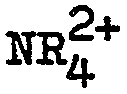
- Bevorzugt werden im Rahmen der Erfindung als Organosiliciumverbindungen solche der allgemeinen Formel


- Die oben angegebene Fomel von Organosiliciumverbindungen umfaßt insbesondere Organosiliciumverbindungen der Formeln


- Insbesondere wegen der leichteren Zugänglichkeit sind vorzugsweise mindestens 50 % der Anzahl der Reste R Methylreste. Weitere Beispiele für Kohlenwasserstoffreste R sind andere Alkylreste als der Methylrest, wie der Ethyl-, n-Propyl-, Isopropyl-, n-Butyl-, sec.-Butyl-, n-Pentyl- und sec.-Pentylrest, und Arylreste, wie der Phenylrest. Beispiele für substituierte Kohlenwasserstoffreste R sind insbesondere halogenierte Kohlenwasserstoffreste, wie der 3,3,3-Trifluorpropylrest und o-, p- und m-Chlorphenylreste, sowie durch mindestens eine Aminogruppe substituierte Kohlenwasserstoffreste, wie der N-beta-Aminoetylgamma-aminopropylrest.
- Die wichtigsten Beispiele für Reste Ar sind Phenylenreste. Wenn die Reste Ar zweiwertige substituierte aromatische Kohlenwasserstoffreste sind, so können die Substituenten z. B. Halogenatome, wie Chloratome; Alkylreste, wie der tert.-Oktylrest; Alkarylreste, wie Tolylreste; Alkenylreste, wie der Vinylrest; Hydroxylgruppen, Kohlenwasserstoffoxygruppen und/oder Aminogruppen sein.
- Die wichtigsten Beispiele für Alkylreste R", die geradkettig, verzweigt oder cyclisch sein können, sind der Methylen- und der Isopropylenrest.
- Beispiele für D-Gruppierungen sind solche der Formeln


- In allen vorstehend genannten Formeln bedeutet R"' den Methyl-, Methoxy-, tert.-Butyl-, tert.-Butoxy- oder tert.-Oktylrest und p ist 1, 2, 3 oder 4.
- Beispiele für M-Gruppierungen sind solche der Formeln


- Besonders bevorzugt als im Rahmen der Erfindung verwendete Organosiliciumverbindungen sind solche, worin sich die Gruppierungen M und D von ein- und/oder mehrwertigen Phenolen bzw. von Bisphenolen ableiten.
- Vorzugsweise besitzen die im Rahmen der Erfindung verwendeten Organosiliciumverbindungen eine Viskosität von 50 bis 1.000 mPa.s bei 25 °C, um einen möglichst gleichmäßigen und verhältnismäßig geringen Auftrag auf der organischen Faser zu erzielen.
- Beispiele für Kohlenwasserstoffreste R in den erfindungsgemäß verwendeten Verbindungen der Formel


- Die Mischbarkeit der erfindungsgemäß verwendeten Phosphorverbindungen mit den im Rahmen der Erfindung verwendeten Organosiliciumverbindungen ist überraschend, weil Trisalkylphosphinoxyde und Trialkylphosphate mit diesen Organosiliciumverbindungen unter vergleichbaren Bedingungen nicht mischbar sind, obwohl hier eine Mischbarkeit eher erwartet werden konnte.
- Beispiele für organische Säuren oder anorganische Säuren, von denen sich die Anionen X- ableiten können, sind Essigsäure bzw. Salzsäure.
- Einzelne Beispiele für erfindungsgemäß verwendete Phosphorverbindungen sind Olcylpolyethylenglykolphosphorsäureester (tertiär) und Laurylpolyethylenglykolphosphorsäureester (tertiär).
- Ein einzelnes Beispiel für eine erfindungsgemäß verwendete Ammoniumverbindung ist Dimethyldistearylammoniumchlorid.
- Vorzugsweise werden erfindungsgemäß verwendete Phosphorverbindung oder erfindungsgemäß verwendete Ammoniumverbindung oder ein Gemisch aus erfindungsgemäß verwendeter Phosphorverbindung und erfindungsgemäß verwendeter Ammoniumverbindung in Mengen von insgesamt 0,1 bis 30 Gewichtsteilen je 50 bis 100 Gewichtsteilen Organosiliciumverbindung mit -XaArXaAr-Gruppe(n) eingesetzt.
- Zusätzlich zu Organosiliciumverbindung mit -XaArXaAr-Gruppe und Phosphor- und/oder Ammoniumverbindung können die erfindungsgemäßen Mittel weitere Stoffe enthalten. Beispiele für solche weiteren Stoffe sind insbesondere Paraffinwachse. Werden Paraffinwachse mitverwendet, so werden sie vorzugsweise in Mengen von bis zu 50 Gewichtsteilen, insbesondere in Mengen von 0,5 bis 20 Gewichtsteilen, je 50 bis 100 Gewichtsteile. Organosiliciumverbindung mit -XaArXaAr-Gruppe(n) eingesetzt. Bei diesen Paraffinwachsen kann es sich um natürliche oder synthetische Paraffinwachse handeln. Bevorzugt sind vollraffinierte Paraffine oder halbraffinierte Paraffine oder Gemische aus solchen Paraffinen mit verschiedenem Raffinierungsgrad.
- Um eine möglichst gleichmäßige Imprägnierung der Fasern bei den am häufigsten beim Auftragen von Gleitmitteln auf organische Fasern angswendeten Temperaturen zu erzielen, beginnt der Schmelzbereich vom Paraffinwachs im erfindungsgemäßen Mittel vorzugsweise bei 30 °C als niedrigster Temperatur und endet dieser Schmelzbereich vorzugsweise bei höchstens 80 °C. Bevorzugt sind Schmelzbereiche innerhalb 40 bis 60 °C.
- Vorzugsweise werden die erfindungsgemäßen Mittel in unverdünnter Form eingesetzt, um den Aufwand für die Rückgewinnung von Lösungsmitteln zu vermeiden bzw. zu. vermeiden, daß wäßrige Emulsionen sich entmischen oder eine ungleichmäßige Imprägnierung der Faser ergeben. Falls erwünscht, können diese Mittel jedoch auch in Form wäßriger Emulsionen oder in Form von Lösungen in organischem Lösungsmittel, wie Di-n-butylether, aromatischen Kohlenwasserstoff oder Chlorkohlenwasserstoffen oder Gemischen aus derartigen Lösungsmitteln eingesetzt werden.
- Die erfindungsgemäßen Mittel können auf alle organischen Fasern aufgetragen werden, auf die auch bisher Gleitmittel auf Grundlage von Organosiliciumverbindungen aufgetragen werden konnten. Beispiele für derartige Fasern sind solche aus Wolle, Baumwolle, Reyon, Hanf, natürlicher Seide, Polypropylen, Polyethylen, Polyester, Polyurethanen, Polyamiden, Celluloseacetat und Polyacrylnitril und Gemische aus solchen Fasern. Vorzugsweise werden die erfindungsgemäßen Mittel auf Garne angewandt. Falls erwünscht, können die organischen Fasern aber auch bereits in Form von Vliesen, Matten oder gewebten, gestrickten oder gewirkten Textilien, einschließlich Kleidungsstücken bzw. Teilen von Kleidungsstücken, vorliegen.
- Die erfindungsgemäßen Mittel können auf die Fasern in beliebiger bekannter Weise, z. B. durch Sprühen, Tauchen, Streichen, Walzen oder Führen der Fasern über eine mit erfindungsgemäßem Mittel getränkte saugfähige Unterlage, aufgebracht werden.
- Vorzugsweise werden die erfindungsgemäßen Mittel bei Temperaturen von 15 0 bis 100 °C auf die organischen Fasern aufgebracht.
- Auf blaues Garn aus dreifach gezwirnter Polyesterstapelfaser, wobei 100 m ungezwirntes Gas 1 g wiegen, werden die in der folgenden Tabelle angegebenen Gleitmittel dadurch aufgetragen, daß das Garn über eine Walze geführt wird, die sich in einer mit dem jeweiligen Gleitmittel gefüllten Wanne dreht. Danach wird das Garn mittels einer Kreuzspulmaschine (Type "Prämat-Junior K", Firma Sahm, Eschwege, BRD) aufgespult. Die Aufnahme-Menge der Gleitmittel wird durch Wiegen bestimmt.
- Mit den so behandelten Garnen werden jeweils 4 Lagen eines blauen Baumwollköpers ("Jeans"- oder Arbeitsanzugsstoff) auf einer Industrie-Nähmaschine (Type "438", Firma Pfaff) mit 7.000 Stichen je Minute unter gleichzeitiger Mitverwendung eines Fadenspannungsmeßgerätes (Firma Schmidt, Waldkraiburg, BRD) vernäht. Als Maß für die Erhöhung der Gleitfähigkeit, die durch die geprüften Gleitmittel bewirkt wird, ist in der folgenden Tabelle der Streubereich der Fadenspannung angegeben.
- Weiterhin ist in der folgenden Tabelle die elektrostatische Aufladung der ausgerüsteten Garne angegeben, die beim mehrmaligen Durchziehen der ausgerüsteten Garne durch einen Leinen- , lappen entsteht. Dabei bedeuten
- keine elektrostatische Aufladung
- - : geringe elektrostatische Aufladung
- + : mäßige elektrostatische Aufladung
- ++: starke elektrostatische Aufladung.
- Weitere Erläuterungen zur folgenden Tabelle:
- Organosiliciumverbindung A wurde hergestellt wie folgt:
- 400 g eines in den endständigen Einheiten je eine Si-gebundene Hydroxylgruppe aufweisenden Dimethylpolysiloxans mit einer Viskosität von 140 mPa.s bei 25 °C, 7 g eines durch Trimethylsiloxygruppen endblockierten Dimethylpolysiloxans mit einer Viskosität von 100 mPa.s bei 25 °C und 0,05 ml einer 25gewichtsprozentigen Lösung von Cl3PNPCl2NPCl3·PCl6 in Methylenchlorid wurden in einem Laborkneter 30 Minuten unter Kneten erwärmt.
- Dann wurde auf 120 °C erwärmt und es wurden 20 g eines Gemisches aus 8 Gewichtsteilen tert.-Oktylphenol, 2 Teilen 2,2-Bis-(4-hydroxyphenyl)-propan und 0,1 ml der vorstehend beschriebenen Lösung eines Phosphornitridchlorids zugegeben. Dann wurde 30 Minuten bei 120 °C und etwa 1 bar (abs.) geknetet. Anschließend wurde 30 Minuten bei 120 °C und etwa 0,001 bar (abs.) geknetet. Dann wurden 0,3 ml tert.-Oktylamin eingeknetet und es wurde 1 Stunde unter Kneten auf 120 °C bei 0,001 bar (abs.) erwärmt. Schließlich wurden mit einem Dünnschichtverdampfer Reste von nicht-umgesetzten Verbindungen mit OH-Gruppen, die an Arylresten gebunden sind, entfernt. Das so erhaltene Produkt ist farblos, schwach trüb und hat eine Viskosität von 350 mPa·s.
- Organosiliciumverbindung B ist ein Gemisch gemäß DE-OS 21 16 813 (offengelegt 20. Juni 1973, Wacker-Chemie GmbH), Beispiel 4. Es besteht aus
- 66,66 Gewichtsteilen durch Trimethylsiloxygruppen endblockiertem Dimethylpolysiloxan mit einer Viskosität von 100 mm2.s-1 bei 25 °C
- 6,66 Gewichtsteilen durch Trimethylsiloxygruppen endblockiertem Dimethylpolysiloxan mit einer Viskosität von 250 mm2.s-1 bei 25 °C
- 6,66 Gewichtsteilen durch Trimethylsiloxygruppen endblockiertem Dimethylpolysiloxan mit einer Viskosität von 500 mm2.s-1 bei 25 °C
- 6,66 Gewichtsteilen durch Trimethylsiloxygruppen endblockiertem Dimethylpolysiloxan mit einer Viskosität von 1.000 mm2.s-1 bei 25 °C
- 6,66 Gewichtsteilen durch Trimethylsiloxygruppen endblockiertem Dimethylpolysiloxan mit einer Viskosität von 2.000 mm2.s-1 bei 25 °C und
- 6,66 Gewichtsteilen durch Trimethylsiloxygruppen endblockiertem Dimethylpolysiloxan mit einer Viskosität von 5.000 mm2 s-1 bei 25 °C.
- OPP = ein Oleylpolyethylenglykolphosphorsäureester (tertiär) mit durchschnittlich 8 -CH2CH2O-Einheiten je Oleylpolyoxyethylengruppe
- LPP = ein Laurylpolyethylenglykolphosphorsäureester (tertiär) der Formel

- DMSAC = Dimethyldistearylammoniumchlorid
- TOPO = Trisoktylphosphinoxyd
- TEP = Triethylphosphat
- APP = Amylphosphorsäureteilester
- Bei Beispiel 3 wird auf das Garn zunächst das dort unter 1) angegebene Gemisch und danach auf das so vorbehandelte Garn die dort unter 2) angegebene Organosiliciumverbindung aufgeträgen.
- Bei Vergleichsversuch V4 wird auf das Garn zunächst das dort unter 1) angegebene Gemisch und danach auf das so vorbehandelte Garn die dort unter 2) angegebene Organosiliciumverbindung aufgetragen.
- Das Paraffinwachs hat einen Schmelzbereich von 52 bis 54 °C.

Claims (2)


Applications Claiming Priority (2)
| Application Number | Priority Date | Filing Date | Title |
|---|---|---|---|
| DE19813100803 DE3100803A1 (de) | 1981-01-13 | 1981-01-13 | Mittel zum erhoehen der gleitfaehigkeit von organischen fasern |
| DE3100803 | 1981-01-13 |
Publications (2)
| Publication Number | Publication Date |
|---|---|
| EP0056095A1 true EP0056095A1 (de) | 1982-07-21 |
| EP0056095B1 EP0056095B1 (de) | 1986-01-29 |
Family
ID=6122523
Family Applications (1)
| Application Number | Title | Priority Date | Filing Date |
|---|---|---|---|
| EP81109064A Expired EP0056095B1 (de) | 1981-01-13 | 1981-10-28 | Mittel zum Erhöhen der Gleitfähigkeit von organischen Fasern |
Country Status (5)
| Country | Link |
|---|---|
| US (1) | US4423092A (de) |
| EP (1) | EP0056095B1 (de) |
| JP (1) | JPS57139571A (de) |
| AU (1) | AU547563B2 (de) |
| DE (2) | DE3100803A1 (de) |
Cited By (5)
| Publication number | Priority date | Publication date | Assignee | Title |
|---|---|---|---|---|
| GB2145748A (en) * | 1983-09-01 | 1985-04-03 | Sandoz Ltd | Improvements in or relating to organic compounds |
| DE3815231C1 (de) * | 1988-05-05 | 1989-06-22 | Hansa Textilchemie Gmbh, 2806 Oyten, De | |
| WO1996033303A1 (en) * | 1995-04-21 | 1996-10-24 | Danaklon A/S | Rewettable polyolefin fibres |
| WO1997008377A1 (en) * | 1995-08-31 | 1997-03-06 | Chisso Corporation | Highly smooth fiber, fabric and formed article |
| WO2004063456A1 (de) | 2003-01-14 | 2004-07-29 | Cht R. Beitlich Gmbh | Ph-wert unabhängiges avivieren von nähgarnen im ausziehverfahren |
Families Citing this family (4)
| Publication number | Priority date | Publication date | Assignee | Title |
|---|---|---|---|---|
| JP2649061B2 (ja) * | 1988-05-26 | 1997-09-03 | 東レ・ダウコーニング・シリコーン株式会社 | 繊維用処理剤 |
| USRE35621E (en) * | 1989-05-30 | 1997-10-07 | Hercules Incorporated | Cardable hydrophobic polypropylene fiber, material and method for preparation thereof |
| DE69120209T2 (de) * | 1990-11-15 | 1996-10-24 | Hercules Inc | Kardierbare hydrophobe Polyolefinfaser, Material und Verfahren zu ihrer Herstellung |
| US5545481A (en) * | 1992-02-14 | 1996-08-13 | Hercules Incorporated | Polyolefin fiber |
Citations (7)
| Publication number | Priority date | Publication date | Assignee | Title |
|---|---|---|---|---|
| DE1444081A1 (de) * | 1962-09-21 | 1969-03-20 | Ici Ltd | Verfahren zur Verringerung der elektrostatischen Aufladung von Textilien |
| DE2412175A1 (de) * | 1974-03-14 | 1975-09-25 | Kreussler Chem Fab | Verfahren zum appretieren von textilien, insbesondere waehrend der chemischreinigung |
| US3983272A (en) * | 1974-02-06 | 1976-09-28 | Wacker-Chemie Gmbh | Method for improving the lubricating properties and imparting antistatic properties to organic fibers |
| DE2631419A1 (de) * | 1975-07-16 | 1977-02-03 | Procter & Gamble Europ | Zusammensetzungen fuer die textilbehandlung |
| DE2645459A1 (de) * | 1975-12-10 | 1977-06-16 | Goldschmidt Ag Th | Textilfaserpraeparationen |
| DE2653499A1 (de) * | 1976-11-25 | 1978-06-01 | Wacker Chemie Gmbh | Zu elastomeren vernetzende massen |
| DE2708650A1 (de) * | 1977-02-28 | 1978-08-31 | Wacker Chemie Gmbh | Verfahren zum erhoehen der gleitfaehigkeit von organischen fasern |
Family Cites Families (2)
| Publication number | Priority date | Publication date | Assignee | Title |
|---|---|---|---|---|
| JPS5426926B2 (de) * | 1972-06-03 | 1979-09-06 | ||
| DE2844952C2 (de) * | 1977-12-22 | 1983-12-22 | Th. Goldschmidt Ag, 4300 Essen | Zubereitung zum Schrumpffestmachen von Wolle und Verfahren zur Herstellung der Zubereitung |
-
1981
- 1981-01-13 DE DE19813100803 patent/DE3100803A1/de not_active Withdrawn
- 1981-10-28 EP EP81109064A patent/EP0056095B1/de not_active Expired
- 1981-10-28 DE DE8181109064T patent/DE3173662D1/de not_active Expired
- 1981-12-03 AU AU78208/81A patent/AU547563B2/en not_active Ceased
- 1981-12-09 US US06/328,976 patent/US4423092A/en not_active Expired - Fee Related
-
1982
- 1982-01-13 JP JP57003984A patent/JPS57139571A/ja active Pending
Patent Citations (8)
| Publication number | Priority date | Publication date | Assignee | Title |
|---|---|---|---|---|
| DE1444081A1 (de) * | 1962-09-21 | 1969-03-20 | Ici Ltd | Verfahren zur Verringerung der elektrostatischen Aufladung von Textilien |
| US3983272A (en) * | 1974-02-06 | 1976-09-28 | Wacker-Chemie Gmbh | Method for improving the lubricating properties and imparting antistatic properties to organic fibers |
| DE2412175A1 (de) * | 1974-03-14 | 1975-09-25 | Kreussler Chem Fab | Verfahren zum appretieren von textilien, insbesondere waehrend der chemischreinigung |
| DE2631419A1 (de) * | 1975-07-16 | 1977-02-03 | Procter & Gamble Europ | Zusammensetzungen fuer die textilbehandlung |
| FR2318268A1 (fr) * | 1975-07-16 | 1977-02-11 | Procter & Gamble Europ | Compositions de traitement des textiles |
| DE2645459A1 (de) * | 1975-12-10 | 1977-06-16 | Goldschmidt Ag Th | Textilfaserpraeparationen |
| DE2653499A1 (de) * | 1976-11-25 | 1978-06-01 | Wacker Chemie Gmbh | Zu elastomeren vernetzende massen |
| DE2708650A1 (de) * | 1977-02-28 | 1978-08-31 | Wacker Chemie Gmbh | Verfahren zum erhoehen der gleitfaehigkeit von organischen fasern |
Cited By (6)
| Publication number | Priority date | Publication date | Assignee | Title |
|---|---|---|---|---|
| GB2145748A (en) * | 1983-09-01 | 1985-04-03 | Sandoz Ltd | Improvements in or relating to organic compounds |
| DE3815231C1 (de) * | 1988-05-05 | 1989-06-22 | Hansa Textilchemie Gmbh, 2806 Oyten, De | |
| WO1996033303A1 (en) * | 1995-04-21 | 1996-10-24 | Danaklon A/S | Rewettable polyolefin fibres |
| WO1997008377A1 (en) * | 1995-08-31 | 1997-03-06 | Chisso Corporation | Highly smooth fiber, fabric and formed article |
| US5902754A (en) * | 1995-08-31 | 1999-05-11 | Chisso Corporation | Highly smooth fiber, fabric, and formed article |
| WO2004063456A1 (de) | 2003-01-14 | 2004-07-29 | Cht R. Beitlich Gmbh | Ph-wert unabhängiges avivieren von nähgarnen im ausziehverfahren |
Also Published As
| Publication number | Publication date |
|---|---|
| EP0056095B1 (de) | 1986-01-29 |
| AU547563B2 (en) | 1985-10-24 |
| DE3173662D1 (en) | 1986-03-13 |
| AU7820881A (en) | 1982-07-22 |
| US4423092A (en) | 1983-12-27 |
| DE3100803A1 (de) | 1982-08-05 |
| JPS57139571A (en) | 1982-08-28 |
Similar Documents
| Publication | Publication Date | Title |
|---|---|---|
| EP0057937B2 (de) | Verfahren zur Imprägnierung von organischen Fasern | |
| EP0339179B1 (de) | Zubereitung zum Ausrüsten von Textilfasern oder aus Textilfasern bestehenden Produkten | |
| DE2405717B2 (de) | Verfahren zur Erhöhung der Gleitfähigkeit und zum Antielektrostatischmachen von organischen Fasern | |
| DE3737753A1 (de) | Waessriges ausruestungsmittel und verfahren zur weichen hydrophob/oleophob-behandlung von fasermaterialien | |
| EP0056095B1 (de) | Mittel zum Erhöhen der Gleitfähigkeit von organischen Fasern | |
| DE2726108A1 (de) | Verfahren zur herstellung einer waessrigen zubereitung zum schrumpffestmachen von wolle | |
| DE2654794A1 (de) | Thermostabile quaternaere ammoniumverbindungen fuer die faserpraeparation | |
| DE2161813C3 (de) | Gleitmittel auf Grundlage von Diorganopolysiloxanen für organische Fasern | |
| EP0156970A2 (de) | Verfahren zur Herstellung von wässrigen Emulsionen | |
| EP0173231A2 (de) | Organopolysiloxane mit Si-gebundenem Wasserstoff und SiC-gebundenen Epoxygruppen, Verfahren zu ihrer Herstellung und eine Verwendung dieser Organopolysiloxane | |
| DE2627458C3 (de) | Fadenausrüstungsdispersion auf PolysUoxanbasis | |
| EP0135187A2 (de) | Verfahren zur Imprägnierung von Textilien aus organischen Fasern | |
| DE2900396C2 (de) | Textilfaserpräparation | |
| EP0016907B1 (de) | Zubereitung zum Schrumpffestmachen von Wolle | |
| EP1914261A1 (de) | Neue phosphatierte Organosiloxanylderivate und deren Verwendung zur Behandlung von Leder | |
| DE2708650C2 (de) | Verfahren zum Erhöhen der Gleitfähigkeit von organischen Fasern | |
| DE2844952C2 (de) | Zubereitung zum Schrumpffestmachen von Wolle und Verfahren zur Herstellung der Zubereitung | |
| DE1469503A1 (de) | Verfahren zur Veredlung von natuerlichen und synthetischen Textilien | |
| CH444809A (de) | Verwendung von Salzen als antielektrostatische Mittel | |
| DE2226107A1 (de) | Verfahren zum Flammfestmachen faserartiger Materialien | |
| DE2945945A1 (de) | Alkanphosphonsaeurehalbestersalze, ihre herstellung und ihre anwendung als praeparationsmittel fuer textile fasern | |
| WO2001023394A1 (de) | Amidogruppen aufweisende organosiliciumverbindungen | |
| US3240622A (en) | Lubricating elastomers with silicate esters | |
| EP0554863B1 (de) | Verfahren zum Imprägnieren von organischen Fasern | |
| US3775446A (en) | Acyl-amino-propyl-dialkylammonium dialkyl phosphates |
Legal Events
| Date | Code | Title | Description |
|---|---|---|---|
| PUAI | Public reference made under article 153(3) epc to a published international application that has entered the european phase |
Free format text: ORIGINAL CODE: 0009012 |
|
| 17P | Request for examination filed |
Effective date: 19811028 |
|
| AK | Designated contracting states |
Designated state(s): BE DE FR GB IT NL |
|
| ITF | It: translation for a ep patent filed | ||
| GRAA | (expected) grant |
Free format text: ORIGINAL CODE: 0009210 |
|
| AK | Designated contracting states |
Designated state(s): BE DE FR GB IT NL |
|
| REF | Corresponds to: |
Ref document number: 3173662 Country of ref document: DE Date of ref document: 19860313 |
|
| ET | Fr: translation filed | ||
| PGFP | Annual fee paid to national office [announced via postgrant information from national office to epo] |
Ref country code: NL Payment date: 19861031 Year of fee payment: 6 |
|
| PLBE | No opposition filed within time limit |
Free format text: ORIGINAL CODE: 0009261 |
|
| STAA | Information on the status of an ep patent application or granted ep patent |
Free format text: STATUS: NO OPPOSITION FILED WITHIN TIME LIMIT |
|
| 26N | No opposition filed | ||
| PG25 | Lapsed in a contracting state [announced via postgrant information from national office to epo] |
Ref country code: BE Effective date: 19871031 |
|
| BERE | Be: lapsed |
Owner name: WACKER-CHEMIE G.M.B.H. Effective date: 19871031 |
|
| PG25 | Lapsed in a contracting state [announced via postgrant information from national office to epo] |
Ref country code: NL Effective date: 19880501 |
|
| NLV4 | Nl: lapsed or anulled due to non-payment of the annual fee | ||
| GBPC | Gb: european patent ceased through non-payment of renewal fee | ||
| PG25 | Lapsed in a contracting state [announced via postgrant information from national office to epo] |
Ref country code: FR Free format text: LAPSE BECAUSE OF NON-PAYMENT OF DUE FEES Effective date: 19880630 |
|
| PG25 | Lapsed in a contracting state [announced via postgrant information from national office to epo] |
Ref country code: DE Effective date: 19880701 |
|
| REG | Reference to a national code |
Ref country code: FR Ref legal event code: ST |
|
| PG25 | Lapsed in a contracting state [announced via postgrant information from national office to epo] |
Ref country code: GB Effective date: 19881121 |