EP0056578A2 - Process for the manufacture of cationic azodye solutions - Google Patents
Process for the manufacture of cationic azodye solutions Download PDFInfo
- Publication number
- EP0056578A2 EP0056578A2 EP82100042A EP82100042A EP0056578A2 EP 0056578 A2 EP0056578 A2 EP 0056578A2 EP 82100042 A EP82100042 A EP 82100042A EP 82100042 A EP82100042 A EP 82100042A EP 0056578 A2 EP0056578 A2 EP 0056578A2
- Authority
- EP
- European Patent Office
- Prior art keywords
- alkyl
- oder
- formula
- water
- und
- Prior art date
- Legal status (The legal status is an assumption and is not a legal conclusion. Google has not performed a legal analysis and makes no representation as to the accuracy of the status listed.)
- Granted
Links
- 125000002091 cationic group Chemical group 0.000 title claims abstract description 8
- 239000000987 azo dye Substances 0.000 title claims abstract description 7
- 238000000034 method Methods 0.000 title claims description 24
- 238000004519 manufacturing process Methods 0.000 title description 5
- 238000010168 coupling process Methods 0.000 claims abstract description 26
- 230000008878 coupling Effects 0.000 claims abstract description 25
- 238000005859 coupling reaction Methods 0.000 claims abstract description 25
- 125000000217 alkyl group Chemical group 0.000 claims abstract description 21
- 229910052736 halogen Inorganic materials 0.000 claims abstract description 14
- 150000002367 halogens Chemical class 0.000 claims abstract description 14
- UFHFLCQGNIYNRP-UHFFFAOYSA-N Hydrogen Chemical compound [H][H] UFHFLCQGNIYNRP-UHFFFAOYSA-N 0.000 claims abstract description 10
- 150000001412 amines Chemical class 0.000 claims abstract description 8
- 229910052739 hydrogen Inorganic materials 0.000 claims abstract description 8
- 239000001257 hydrogen Substances 0.000 claims abstract description 8
- 125000003545 alkoxy group Chemical group 0.000 claims abstract description 6
- 125000004432 carbon atom Chemical group C* 0.000 claims abstract description 6
- 150000001735 carboxylic acids Chemical class 0.000 claims abstract description 6
- 125000002252 acyl group Chemical group 0.000 claims abstract description 5
- 125000004442 acylamino group Chemical group 0.000 claims abstract description 5
- 125000003342 alkenyl group Chemical group 0.000 claims abstract description 5
- 125000003710 aryl alkyl group Chemical group 0.000 claims abstract description 5
- 125000004104 aryloxy group Chemical group 0.000 claims abstract description 5
- 125000002768 hydroxyalkyl group Chemical group 0.000 claims abstract description 5
- 125000001424 substituent group Chemical group 0.000 claims abstract description 5
- 239000003021 water soluble solvent Substances 0.000 claims abstract description 4
- 125000002947 alkylene group Chemical group 0.000 claims abstract description 3
- 125000004122 cyclic group Chemical group 0.000 claims abstract description 3
- -1 alkaline earth metal nitrites Chemical class 0.000 claims description 57
- QTBSBXVTEAMEQO-UHFFFAOYSA-N Acetic acid Chemical compound CC(O)=O QTBSBXVTEAMEQO-UHFFFAOYSA-N 0.000 claims description 33
- 239000000975 dye Substances 0.000 claims description 20
- LYCAIKOWRPUZTN-UHFFFAOYSA-N Ethylene glycol Chemical compound OCCO LYCAIKOWRPUZTN-UHFFFAOYSA-N 0.000 claims description 13
- JBKVHLHDHHXQEQ-UHFFFAOYSA-N epsilon-caprolactam Chemical compound O=C1CCCCCN1 JBKVHLHDHHXQEQ-UHFFFAOYSA-N 0.000 claims description 10
- 150000003839 salts Chemical group 0.000 claims description 8
- XLYOFNOQVPJJNP-UHFFFAOYSA-N water Substances O XLYOFNOQVPJJNP-UHFFFAOYSA-N 0.000 claims description 6
- 238000002360 preparation method Methods 0.000 claims description 5
- 239000003960 organic solvent Substances 0.000 claims description 4
- 239000002253 acid Substances 0.000 claims description 2
- 150000007513 acids Chemical class 0.000 claims 1
- 229910052783 alkali metal Inorganic materials 0.000 claims 1
- 150000001340 alkali metals Chemical class 0.000 claims 1
- 229910052784 alkaline earth metal Inorganic materials 0.000 claims 1
- 150000007524 organic acids Chemical class 0.000 claims 1
- 239000000376 reactant Substances 0.000 claims 1
- 238000009938 salting Methods 0.000 claims 1
- 239000000243 solution Substances 0.000 description 35
- 229960000583 acetic acid Drugs 0.000 description 13
- 125000002496 methyl group Chemical group [H]C([H])([H])* 0.000 description 13
- 125000001495 ethyl group Chemical group [H]C([H])([H])C([H])([H])* 0.000 description 12
- 238000006193 diazotization reaction Methods 0.000 description 9
- 239000012362 glacial acetic acid Substances 0.000 description 9
- 125000001997 phenyl group Chemical group [H]C1=C([H])C([H])=C(*)C([H])=C1[H] 0.000 description 9
- 125000000484 butyl group Chemical group [H]C([*])([H])C([H])([H])C([H])([H])C([H])([H])[H] 0.000 description 8
- 238000005352 clarification Methods 0.000 description 8
- 125000001436 propyl group Chemical group [H]C([*])([H])C([H])([H])C([H])([H])[H] 0.000 description 8
- 238000006243 chemical reaction Methods 0.000 description 6
- LPXPTNMVRIOKMN-UHFFFAOYSA-M sodium nitrite Chemical compound [Na+].[O-]N=O LPXPTNMVRIOKMN-UHFFFAOYSA-M 0.000 description 6
- 239000001044 red dye Substances 0.000 description 5
- IOVCWXUNBOPUCH-UHFFFAOYSA-M Nitrite anion Chemical compound [O-]N=O IOVCWXUNBOPUCH-UHFFFAOYSA-M 0.000 description 4
- 239000000203 mixture Substances 0.000 description 4
- 125000000449 nitro group Chemical group [O-][N+](*)=O 0.000 description 4
- 125000006527 (C1-C5) alkyl group Chemical group 0.000 description 3
- UHOVQNZJYSORNB-UHFFFAOYSA-N Benzene Chemical compound C1=CC=CC=C1 UHOVQNZJYSORNB-UHFFFAOYSA-N 0.000 description 3
- ZMXDDKWLCZADIW-UHFFFAOYSA-N N,N-Dimethylformamide Chemical compound CN(C)C=O ZMXDDKWLCZADIW-UHFFFAOYSA-N 0.000 description 3
- IOVCWXUNBOPUCH-UHFFFAOYSA-N Nitrous acid Chemical class ON=O IOVCWXUNBOPUCH-UHFFFAOYSA-N 0.000 description 3
- DNIAPMSPPWPWGF-UHFFFAOYSA-N Propylene glycol Chemical compound CC(O)CO DNIAPMSPPWPWGF-UHFFFAOYSA-N 0.000 description 3
- GSEJCLTVZPLZKY-UHFFFAOYSA-N Triethanolamine Chemical compound OCCN(CCO)CCO GSEJCLTVZPLZKY-UHFFFAOYSA-N 0.000 description 3
- 238000000354 decomposition reaction Methods 0.000 description 3
- 150000002431 hydrogen Chemical class 0.000 description 3
- 125000000951 phenoxy group Chemical group [H]C1=C([H])C([H])=C(O*)C([H])=C1[H] 0.000 description 3
- 125000003170 phenylsulfonyl group Chemical group C1(=CC=CC=C1)S(=O)(=O)* 0.000 description 3
- 150000003254 radicals Chemical class 0.000 description 3
- 239000011541 reaction mixture Substances 0.000 description 3
- 235000010288 sodium nitrite Nutrition 0.000 description 3
- 238000003756 stirring Methods 0.000 description 3
- 125000000229 (C1-C4)alkoxy group Chemical group 0.000 description 2
- 125000000954 2-hydroxyethyl group Chemical group [H]C([*])([H])C([H])([H])O[H] 0.000 description 2
- WKBOTKDWSSQWDR-UHFFFAOYSA-N Bromine atom Chemical compound [Br] WKBOTKDWSSQWDR-UHFFFAOYSA-N 0.000 description 2
- ZAMOUSCENKQFHK-UHFFFAOYSA-N Chlorine atom Chemical compound [Cl] ZAMOUSCENKQFHK-UHFFFAOYSA-N 0.000 description 2
- LFQSCWFLJHTTHZ-UHFFFAOYSA-N Ethanol Chemical compound CCO LFQSCWFLJHTTHZ-UHFFFAOYSA-N 0.000 description 2
- KFZMGEQAYNKOFK-UHFFFAOYSA-N Isopropanol Chemical compound CC(C)O KFZMGEQAYNKOFK-UHFFFAOYSA-N 0.000 description 2
- LRHPLDYGYMQRHN-UHFFFAOYSA-N N-Butanol Chemical compound CCCCO LRHPLDYGYMQRHN-UHFFFAOYSA-N 0.000 description 2
- 125000000738 acetamido group Chemical group [H]C([H])([H])C(=O)N([H])[*] 0.000 description 2
- IOJUPLGTWVMSFF-UHFFFAOYSA-N benzothiazole Chemical compound C1=CC=C2SC=NC2=C1 IOJUPLGTWVMSFF-UHFFFAOYSA-N 0.000 description 2
- 125000001797 benzyl group Chemical group [H]C1=C([H])C([H])=C(C([H])=C1[H])C([H])([H])* 0.000 description 2
- GDTBXPJZTBHREO-UHFFFAOYSA-N bromine Substances BrBr GDTBXPJZTBHREO-UHFFFAOYSA-N 0.000 description 2
- 229910052794 bromium Inorganic materials 0.000 description 2
- 150000001732 carboxylic acid derivatives Chemical class 0.000 description 2
- 239000003795 chemical substances by application Substances 0.000 description 2
- 229910052801 chlorine Inorganic materials 0.000 description 2
- 239000000460 chlorine Substances 0.000 description 2
- 238000001816 cooling Methods 0.000 description 2
- 125000000113 cyclohexyl group Chemical group [H]C1([H])C([H])([H])C([H])([H])C([H])(*)C([H])([H])C1([H])[H] 0.000 description 2
- 125000000664 diazo group Chemical group [N-]=[N+]=[*] 0.000 description 2
- PXBRQCKWGAHEHS-UHFFFAOYSA-N dichlorodifluoromethane Chemical compound FC(F)(Cl)Cl PXBRQCKWGAHEHS-UHFFFAOYSA-N 0.000 description 2
- 125000001664 diethylamino group Chemical group [H]C([H])([H])C([H])([H])N(*)C([H])([H])C([H])([H])[H] 0.000 description 2
- XBDQKXXYIPTUBI-UHFFFAOYSA-N dimethylselenoniopropionate Natural products CCC(O)=O XBDQKXXYIPTUBI-UHFFFAOYSA-N 0.000 description 2
- KKQMEQZNUNEBKP-UHFFFAOYSA-N ethoxy-methoxy-nitro-lambda3-chlorane Chemical compound COCl([N+](=O)[O-])OCC KKQMEQZNUNEBKP-UHFFFAOYSA-N 0.000 description 2
- 125000003754 ethoxycarbonyl group Chemical group C(=O)(OCC)* 0.000 description 2
- 239000004744 fabric Substances 0.000 description 2
- 239000000835 fiber Substances 0.000 description 2
- 239000000543 intermediate Substances 0.000 description 2
- ZXEKIIBDNHEJCQ-UHFFFAOYSA-N isobutanol Chemical compound CC(C)CO ZXEKIIBDNHEJCQ-UHFFFAOYSA-N 0.000 description 2
- JVTAAEKCZFNVCJ-UHFFFAOYSA-N lactic acid Chemical compound CC(O)C(O)=O JVTAAEKCZFNVCJ-UHFFFAOYSA-N 0.000 description 2
- AJDUTMFFZHIJEM-UHFFFAOYSA-N n-(9,10-dioxoanthracen-1-yl)-4-[4-[[4-[4-[(9,10-dioxoanthracen-1-yl)carbamoyl]phenyl]phenyl]diazenyl]phenyl]benzamide Chemical compound O=C1C2=CC=CC=C2C(=O)C2=C1C=CC=C2NC(=O)C(C=C1)=CC=C1C(C=C1)=CC=C1N=NC(C=C1)=CC=C1C(C=C1)=CC=C1C(=O)NC1=CC=CC2=C1C(=O)C1=CC=CC=C1C2=O AJDUTMFFZHIJEM-UHFFFAOYSA-N 0.000 description 2
- 239000004745 nonwoven fabric Substances 0.000 description 2
- 239000000049 pigment Substances 0.000 description 2
- 125000002572 propoxy group Chemical group [*]OC([H])([H])C(C([H])([H])[H])([H])[H] 0.000 description 2
- 238000007086 side reaction Methods 0.000 description 2
- 125000005420 sulfonamido group Chemical group S(=O)(=O)(N*)* 0.000 description 2
- 239000001043 yellow dye Substances 0.000 description 2
- CSNIZNHTOVFARY-UHFFFAOYSA-N 1,2-benzothiazole Chemical compound C1=CC=C2C=NSC2=C1 CSNIZNHTOVFARY-UHFFFAOYSA-N 0.000 description 1
- OSSNTDFYBPYIEC-UHFFFAOYSA-N 1-ethenylimidazole Chemical compound C=CN1C=CN=C1 OSSNTDFYBPYIEC-UHFFFAOYSA-N 0.000 description 1
- GUMCAKKKNKYFEB-UHFFFAOYSA-N 2,4,5-trichloroaniline Chemical compound NC1=CC(Cl)=C(Cl)C=C1Cl GUMCAKKKNKYFEB-UHFFFAOYSA-N 0.000 description 1
- SMZOUWXMTYCWNB-UHFFFAOYSA-N 2-(2-methoxy-5-methylphenyl)ethanamine Chemical compound COC1=CC=C(C)C=C1CCN SMZOUWXMTYCWNB-UHFFFAOYSA-N 0.000 description 1
- OEPOKWHJYJXUGD-UHFFFAOYSA-N 2-(3-phenylmethoxyphenyl)-1,3-thiazole-4-carbaldehyde Chemical compound O=CC1=CSC(C=2C=C(OCC=3C=CC=CC=3)C=CC=2)=N1 OEPOKWHJYJXUGD-UHFFFAOYSA-N 0.000 description 1
- NIXOWILDQLNWCW-UHFFFAOYSA-N 2-Propenoic acid Natural products OC(=O)C=C NIXOWILDQLNWCW-UHFFFAOYSA-N 0.000 description 1
- MGCGMYPNXAFGFA-UHFFFAOYSA-N 2-amino-5-nitrobenzonitrile Chemical compound NC1=CC=C([N+]([O-])=O)C=C1C#N MGCGMYPNXAFGFA-UHFFFAOYSA-N 0.000 description 1
- FCYVWWWTHPPJII-UHFFFAOYSA-N 2-methylidenepropanedinitrile Chemical group N#CC(=C)C#N FCYVWWWTHPPJII-UHFFFAOYSA-N 0.000 description 1
- KGIGUEBEKRSTEW-UHFFFAOYSA-N 2-vinylpyridine Chemical compound C=CC1=CC=CC=N1 KGIGUEBEKRSTEW-UHFFFAOYSA-N 0.000 description 1
- OYAHSBDYBOBAAQ-UHFFFAOYSA-N 3-phenyl-1,2,4-thiadiazol-5-amine Chemical compound S1C(N)=NC(C=2C=CC=CC=2)=N1 OYAHSBDYBOBAAQ-UHFFFAOYSA-N 0.000 description 1
- TYMLOMAKGOJONV-UHFFFAOYSA-N 4-nitroaniline Chemical compound NC1=CC=C([N+]([O-])=O)C=C1 TYMLOMAKGOJONV-UHFFFAOYSA-N 0.000 description 1
- KZHGPDSVHSDCMX-UHFFFAOYSA-N 6-methoxy-1,3-benzothiazol-2-amine Chemical compound COC1=CC=C2N=C(N)SC2=C1 KZHGPDSVHSDCMX-UHFFFAOYSA-N 0.000 description 1
- QTBSBXVTEAMEQO-UHFFFAOYSA-M Acetate Chemical compound CC([O-])=O QTBSBXVTEAMEQO-UHFFFAOYSA-M 0.000 description 1
- NLHHRLWOUZZQLW-UHFFFAOYSA-N Acrylonitrile Chemical compound C=CC#N NLHHRLWOUZZQLW-UHFFFAOYSA-N 0.000 description 1
- KLSJWNVTNUYHDU-UHFFFAOYSA-N Amitrole Chemical compound NC1=NC=NN1 KLSJWNVTNUYHDU-UHFFFAOYSA-N 0.000 description 1
- QGZKDVFQNNGYKY-UHFFFAOYSA-O Ammonium Chemical compound [NH4+] QGZKDVFQNNGYKY-UHFFFAOYSA-O 0.000 description 1
- 229920003043 Cellulose fiber Polymers 0.000 description 1
- VEXZGXHMUGYJMC-UHFFFAOYSA-M Chloride anion Chemical compound [Cl-] VEXZGXHMUGYJMC-UHFFFAOYSA-M 0.000 description 1
- XTHFKEDIFFGKHM-UHFFFAOYSA-N Dimethoxyethane Chemical compound COCCOC XTHFKEDIFFGKHM-UHFFFAOYSA-N 0.000 description 1
- VGGSQFUCUMXWEO-UHFFFAOYSA-N Ethene Chemical compound C=C VGGSQFUCUMXWEO-UHFFFAOYSA-N 0.000 description 1
- 239000005977 Ethylene Substances 0.000 description 1
- IAYPIBMASNFSPL-UHFFFAOYSA-N Ethylene oxide Chemical compound C1CO1 IAYPIBMASNFSPL-UHFFFAOYSA-N 0.000 description 1
- PXGOKWXKJXAPGV-UHFFFAOYSA-N Fluorine Chemical compound FF PXGOKWXKJXAPGV-UHFFFAOYSA-N 0.000 description 1
- SECXISVLQFMRJM-UHFFFAOYSA-N N-Methylpyrrolidone Chemical compound CN1CCCC1=O SECXISVLQFMRJM-UHFFFAOYSA-N 0.000 description 1
- GRYLNZFGIOXLOG-UHFFFAOYSA-N Nitric acid Chemical class O[N+]([O-])=O GRYLNZFGIOXLOG-UHFFFAOYSA-N 0.000 description 1
- JCXJVPUVTGWSNB-UHFFFAOYSA-N Nitrogen dioxide Chemical class O=[N]=O JCXJVPUVTGWSNB-UHFFFAOYSA-N 0.000 description 1
- IGFHQQFPSIBGKE-UHFFFAOYSA-N Nonylphenol Natural products CCCCCCCCCC1=CC=C(O)C=C1 IGFHQQFPSIBGKE-UHFFFAOYSA-N 0.000 description 1
- 239000004952 Polyamide Substances 0.000 description 1
- PMZURENOXWZQFD-UHFFFAOYSA-L Sodium Sulfate Chemical compound [Na+].[Na+].[O-]S([O-])(=O)=O PMZURENOXWZQFD-UHFFFAOYSA-L 0.000 description 1
- FZWLAAWBMGSTSO-UHFFFAOYSA-N Thiazole Chemical compound C1=CSC=N1 FZWLAAWBMGSTSO-UHFFFAOYSA-N 0.000 description 1
- XTXRWKRVRITETP-UHFFFAOYSA-N Vinyl acetate Chemical compound CC(=O)OC=C XTXRWKRVRITETP-UHFFFAOYSA-N 0.000 description 1
- BZHJMEDXRYGGRV-UHFFFAOYSA-N Vinyl chloride Chemical compound ClC=C BZHJMEDXRYGGRV-UHFFFAOYSA-N 0.000 description 1
- 239000002250 absorbent Substances 0.000 description 1
- 230000002745 absorbent Effects 0.000 description 1
- 238000010521 absorption reaction Methods 0.000 description 1
- 239000003929 acidic solution Substances 0.000 description 1
- 125000004423 acyloxy group Chemical group 0.000 description 1
- 150000001298 alcohols Chemical class 0.000 description 1
- 125000004453 alkoxycarbonyl group Chemical group 0.000 description 1
- 125000005194 alkoxycarbonyloxy group Chemical group 0.000 description 1
- 125000004448 alkyl carbonyl group Chemical group 0.000 description 1
- 125000004390 alkyl sulfonyl group Chemical group 0.000 description 1
- 125000004414 alkyl thio group Chemical group 0.000 description 1
- 150000001450 anions Chemical class 0.000 description 1
- 150000005840 aryl radicals Chemical class 0.000 description 1
- 125000003236 benzoyl group Chemical group [H]C1=C([H])C([H])=C(C([H])=C1[H])C(*)=O 0.000 description 1
- KCXMKQUNVWSEMD-UHFFFAOYSA-N benzyl chloride Chemical compound ClCC1=CC=CC=C1 KCXMKQUNVWSEMD-UHFFFAOYSA-N 0.000 description 1
- 229940073608 benzyl chloride Drugs 0.000 description 1
- 230000015572 biosynthetic process Effects 0.000 description 1
- 239000001045 blue dye Substances 0.000 description 1
- 229910052799 carbon Inorganic materials 0.000 description 1
- 125000002915 carbonyl group Chemical group [*:2]C([*:1])=O 0.000 description 1
- 230000021523 carboxylation Effects 0.000 description 1
- 238000006473 carboxylation reaction Methods 0.000 description 1
- 150000001768 cations Chemical class 0.000 description 1
- 229920001577 copolymer Polymers 0.000 description 1
- 125000004093 cyano group Chemical group *C#N 0.000 description 1
- 125000004663 dialkyl amino group Chemical group 0.000 description 1
- 150000008049 diazo compounds Chemical class 0.000 description 1
- VAYGXNSJCAHWJZ-UHFFFAOYSA-N dimethyl sulfate Chemical compound COS(=O)(=O)OC VAYGXNSJCAHWJZ-UHFFFAOYSA-N 0.000 description 1
- 125000002147 dimethylamino group Chemical group [H]C([H])([H])N(*)C([H])([H])[H] 0.000 description 1
- 238000004043 dyeing Methods 0.000 description 1
- 125000006125 ethylsulfonyl group Chemical group 0.000 description 1
- 238000001914 filtration Methods 0.000 description 1
- 229910052731 fluorine Inorganic materials 0.000 description 1
- 239000011737 fluorine Substances 0.000 description 1
- 150000002334 glycols Chemical class 0.000 description 1
- 125000002887 hydroxy group Chemical group [H]O* 0.000 description 1
- WGCNASOHLSPBMP-UHFFFAOYSA-N hydroxyacetaldehyde Natural products OCC=O WGCNASOHLSPBMP-UHFFFAOYSA-N 0.000 description 1
- 238000009413 insulation Methods 0.000 description 1
- 238000005342 ion exchange Methods 0.000 description 1
- 239000004310 lactic acid Substances 0.000 description 1
- 235000014655 lactic acid Nutrition 0.000 description 1
- 229920005610 lignin Polymers 0.000 description 1
- 239000007788 liquid Substances 0.000 description 1
- 125000005397 methacrylic acid ester group Chemical group 0.000 description 1
- 125000001160 methoxycarbonyl group Chemical group [H]C([H])([H])OC(*)=O 0.000 description 1
- 125000001570 methylene group Chemical group [H]C([H])([*:1])[*:2] 0.000 description 1
- 125000004170 methylsulfonyl group Chemical group [H]C([H])([H])S(*)(=O)=O 0.000 description 1
- 238000002156 mixing Methods 0.000 description 1
- 229940005654 nitrite ion Drugs 0.000 description 1
- 150000002826 nitrites Chemical class 0.000 description 1
- 238000007034 nitrosation reaction Methods 0.000 description 1
- GQPLMRYTRLFLPF-UHFFFAOYSA-N nitrous oxide Inorganic materials [O-][N+]#N GQPLMRYTRLFLPF-UHFFFAOYSA-N 0.000 description 1
- SNQQPOLDUKLAAF-UHFFFAOYSA-N nonylphenol Chemical compound CCCCCCCCCC1=CC=CC=C1O SNQQPOLDUKLAAF-UHFFFAOYSA-N 0.000 description 1
- 150000007530 organic bases Chemical class 0.000 description 1
- 238000012856 packing Methods 0.000 description 1
- 238000005191 phase separation Methods 0.000 description 1
- 229920002647 polyamide Polymers 0.000 description 1
- 229920000728 polyester Polymers 0.000 description 1
- 229920000642 polymer Polymers 0.000 description 1
- 238000001556 precipitation Methods 0.000 description 1
- 235000019260 propionic acid Nutrition 0.000 description 1
- 125000001501 propionyl group Chemical group O=C([*])C([H])([H])C([H])([H])[H] 0.000 description 1
- 238000000746 purification Methods 0.000 description 1
- IUVKMZGDUIUOCP-BTNSXGMBSA-N quinbolone Chemical compound O([C@H]1CC[C@H]2[C@H]3[C@@H]([C@]4(C=CC(=O)C=C4CC3)C)CC[C@@]21C)C1=CCCC1 IUVKMZGDUIUOCP-BTNSXGMBSA-N 0.000 description 1
- 229910052938 sodium sulfate Inorganic materials 0.000 description 1
- 235000011152 sodium sulphate Nutrition 0.000 description 1
- 239000002904 solvent Substances 0.000 description 1
- 238000010186 staining Methods 0.000 description 1
- 239000000126 substance Substances 0.000 description 1
- VLLMWSRANPNYQX-UHFFFAOYSA-N thiadiazole Chemical compound C1=CSN=N1.C1=CSN=N1 VLLMWSRANPNYQX-UHFFFAOYSA-N 0.000 description 1
- 150000003852 triazoles Chemical class 0.000 description 1
- YNJBWRMUSHSURL-UHFFFAOYSA-N trichloroacetic acid Chemical compound OC(=O)C(Cl)(Cl)Cl YNJBWRMUSHSURL-UHFFFAOYSA-N 0.000 description 1
- ZIBGPFATKBEMQZ-UHFFFAOYSA-N triethylene glycol Chemical compound OCCOCCOCCO ZIBGPFATKBEMQZ-UHFFFAOYSA-N 0.000 description 1
- 125000000391 vinyl group Chemical group [H]C([*])=C([H])[H] 0.000 description 1
- 239000002351 wastewater Substances 0.000 description 1
Classifications
-
- C—CHEMISTRY; METALLURGY
- C09—DYES; PAINTS; POLISHES; NATURAL RESINS; ADHESIVES; COMPOSITIONS NOT OTHERWISE PROVIDED FOR; APPLICATIONS OF MATERIALS NOT OTHERWISE PROVIDED FOR
- C09B—ORGANIC DYES OR CLOSELY-RELATED COMPOUNDS FOR PRODUCING DYES, e.g. PIGMENTS; MORDANTS; LAKES
- C09B41/00—Special methods of performing the coupling reaction
- C09B41/006—Special methods of performing the coupling reaction characterised by process features
- C09B41/009—Diazotising and coupling in one step
-
- C—CHEMISTRY; METALLURGY
- C09—DYES; PAINTS; POLISHES; NATURAL RESINS; ADHESIVES; COMPOSITIONS NOT OTHERWISE PROVIDED FOR; APPLICATIONS OF MATERIALS NOT OTHERWISE PROVIDED FOR
- C09B—ORGANIC DYES OR CLOSELY-RELATED COMPOUNDS FOR PRODUCING DYES, e.g. PIGMENTS; MORDANTS; LAKES
- C09B67/00—Influencing the physical, e.g. the dyeing or printing properties of dyestuffs without chemical reactions, e.g. by treating with solvents grinding or grinding assistants, coating of pigments or dyes; Process features in the making of dyestuff preparations; Dyestuff preparations of a special physical nature, e.g. tablets, films
- C09B67/0071—Process features in the making of dyestuff preparations; Dehydrating agents; Dispersing agents; Dustfree compositions
- C09B67/0075—Preparations with cationic dyes
- C09B67/0076—Preparations of cationic or basic dyes in liquid form
-
- C—CHEMISTRY; METALLURGY
- C09—DYES; PAINTS; POLISHES; NATURAL RESINS; ADHESIVES; COMPOSITIONS NOT OTHERWISE PROVIDED FOR; APPLICATIONS OF MATERIALS NOT OTHERWISE PROVIDED FOR
- C09B—ORGANIC DYES OR CLOSELY-RELATED COMPOUNDS FOR PRODUCING DYES, e.g. PIGMENTS; MORDANTS; LAKES
- C09B41/00—Special methods of performing the coupling reaction
-
- C—CHEMISTRY; METALLURGY
- C09—DYES; PAINTS; POLISHES; NATURAL RESINS; ADHESIVES; COMPOSITIONS NOT OTHERWISE PROVIDED FOR; APPLICATIONS OF MATERIALS NOT OTHERWISE PROVIDED FOR
- C09B—ORGANIC DYES OR CLOSELY-RELATED COMPOUNDS FOR PRODUCING DYES, e.g. PIGMENTS; MORDANTS; LAKES
- C09B44/00—Azo dyes containing onium groups
- C09B44/02—Azo dyes containing onium groups containing ammonium groups not directly attached to an azo group
-
- C—CHEMISTRY; METALLURGY
- C09—DYES; PAINTS; POLISHES; NATURAL RESINS; ADHESIVES; COMPOSITIONS NOT OTHERWISE PROVIDED FOR; APPLICATIONS OF MATERIALS NOT OTHERWISE PROVIDED FOR
- C09B—ORGANIC DYES OR CLOSELY-RELATED COMPOUNDS FOR PRODUCING DYES, e.g. PIGMENTS; MORDANTS; LAKES
- C09B44/00—Azo dyes containing onium groups
- C09B44/02—Azo dyes containing onium groups containing ammonium groups not directly attached to an azo group
- C09B44/04—Azo dyes containing onium groups containing ammonium groups not directly attached to an azo group from coupling components containing amino as the only directing group
Definitions
- the solutions prepared in this way preferably contain
- dyes of the formula (I) are to be emphasized those whose diazo component A represents a radical from the benzene, thiazole, benzothiazole, benzisothiazole, thiadiazole or triazole series.
- Nonionic substituents of the dyes I are the common substituents in dye chemistry, such as cyan, hydroxy, halogen, such as fluorine, chlorine or bromine, nitro, alkyl, mono- and dialkylamino, phenyl, alkoxy, acyloxy, which do not dissociate under the production and application conditions.
- alkyl radicals are those with 1-4 C atoms:
- radicals R 4 are unsubstituted and substituted by C 1 -C 4 alkoxy, C 2 -C 4 alkenyloxy, phenoxy or benzyloxy 2-hydroxyethyl propyl and butyl radicals.
- Suitable radicals R are e.g. straight-chain and branched alkylene radicals with 2-5 C atoms, which can be substituted; e.g. a methylene group can be replaced by a carbonyl group.
- Suitable aryl radicals are in particular optionally substituted phenyl and naphthyl radicals.
- Suitable acyl radicals are, in particular, alkylcarbonyl and alkylsulfonyl radicals having 1-4 carbon atoms in the alkyl radical or benzoyl.
- n 1-3, q 0 or 1 preferred are those in which n 1-3, q 0 or 1, R 6 , R 7 and R 8 are methyl or ethyl, R 9 2-hydroxypropyl, R 10 and R 11 are hydrogen or methyl, R 12 is chlorine, Bromine, cyan or nitro, R 13 , R 14 and R 15 are hydrogen, phenyl or nitro and an acetate.
- Particularly suitable water-soluble carboxylic acids are C 1 -C 3 -carboxylic acids such as formic, acetic, propionic and mono-, di- and trichloroacetic acid and lactic acid, preferably acetic acid and propionic acid.
- organic water-soluble solvents examples include alcohols such as ethanol, isopropanol, iso- and n-butanol, glycols such as ethylene glycol, propylene glycol, ethylene di- and triglycol, mono- and dialkyl glycol ethers such as methyl and dimethyl glycol, dimethylformamide, caprolactam and methylpyrrolidone.
- alcohols such as ethanol, isopropanol, iso- and n-butanol
- glycols such as ethylene glycol, propylene glycol, ethylene di- and triglycol
- mono- and dialkyl glycol ethers such as methyl and dimethyl glycol, dimethylformamide, caprolactam and methylpyrrolidone.
- the process is preferably carried out in such a way that the amine II is suspended or dissolved in the aqueous carboxylic acid, optionally with the addition of the organic solvent, and is cooled to, for example, 0-50.degree. With the addition of the coupling component III is then the simultaneous diazotisation and coupling at 0-50 o C, in particular at room temperature. When the reaction is complete, stirring is continued at temperatures below 50 ° C.
- Another variant of the process consists in the possibility of mixing different diazo components II and a coupling component III, which are diazotized and coupled together in order to obtain a finished dye solution with the desired color.
- the process according to the invention offers the surprising possibility of producing highly concentrated, stable solutions of cationic dyes, the physical stability of which is ensured by the absence of inorganic salts.
- the solutions which are produced in a very simple manner, can be put on the market without further purification.
- the nitrite ion and the anion of the cationic coupling component are introduced into the reaction solution. According to the prior art, it was unpredictable that the nitrite could be isolated from the coupling component without side reactions (e.g. p-nitrosation) and led to the desired reaction.
- the salts of the coupling component are easily accessible by ion exchange reactions. In addition, their handling is not associated with the risk of nitric acid esters, but rather comparable to that of the sodium nitrite solution.
- the nitrite solutions according to the invention are particularly stable if they are neutralized with suitable bases, e.g. with NaCH, KOH or preferably organic bases such as triethanolamine.
- the coupling component as the nitrous acid-providing substance and the solvent, conditions are found which at the same time result in a quantitative conversion to the dye and dye solution almost free of inorganic salts. If only one of the parameters mentioned is varied, these advantages cannot be achieved.
- the dyes of the solutions which can be prepared according to the invention are e.g. Known from US Pat. No. 4,036,826 and DE-OS 1 644 323: They are known to be suitable for dyeing and printing fibers, fabrics and nonwovens made from polymers of acrylonitrile or 1,1-dicyanethylene or copolymers of these components with other vinyl compounds, such as vinyl chloride , Vinylidene chloride, vinyl acetate, vinyl pyridine, vinyl imidazole, acrylic acid and methacrylic acid esters; from acid-modified polyesters, such as are described, for example, in US Pat. Nos. 2,893,816, 3,018,272 and 3,166,531, and from acid-modified polyamides, as described, for example, in US Pat. Nos. 3,039,009 and 3,454,351 .
- these dyes can also be used to make cellulose fibers and lignin-containing fibers, such as those used for the production of nonwovens, absorbent papers, sized writing and packing papers are used, excellent lightfast staining. Particularly surprising is the good absorption behavior of the dyes, which absorb completely even in the liquor ratios of 1: 100-1000 that are customary in paper production and give an almost colorless waste water.
- US Pat. No. 2,478,768 describes a one-stage process for the preparation of water-insoluble pigments in which diazotization and coupling are carried out at a pH ⁇ 6. In this process, water-insoluble Ba salts of the azo dyes are removed from further side reactions by constant precipitation. A similar process is described in U.S. Patent No. 2,478,767, in which diazotization and coupling are maintained in the pH range between pH 6.0-7.2.
- DE-OS 1 927 453 describes a process for the preparation of metal-free azo pigments by diazotization and coupling in organic solvents which contain at most 10% water.
- This process takes place in a heterogeneous phase.
- DE-AS 2 139 311 describes a process for the single-stage preparation of azo dyes, the pH value for diazotization and coupling being 4 or lower if the reaction mixture is diluted with 25X its volume of water.
- the examples work with amounts of 17-127 moles of acetic acid to 1 mole of amine, which makes these processes useless for the production of concentrated liquid brands.
- GB-PS 2 099 208 A describes the simultaneous diazotization and coupling of coupling components substituted by pyridiaium chloride in acetic acid and ethylene glycol at pH 2.8 when the reaction mixture is diluted with 25% water.
- the inorganic salts cannot be separated off by filtration.
- the percentages of the settings of the examples are aqueous settings.
Landscapes
- Chemical & Material Sciences (AREA)
- Organic Chemistry (AREA)
- Chemical Kinetics & Catalysis (AREA)
- Coloring (AREA)
- Organic Low-Molecular-Weight Compounds And Preparation Thereof (AREA)
Abstract
Konzentrierte, salzarme, stabile Lösungen kationischer Azofarbstoffe der Formel
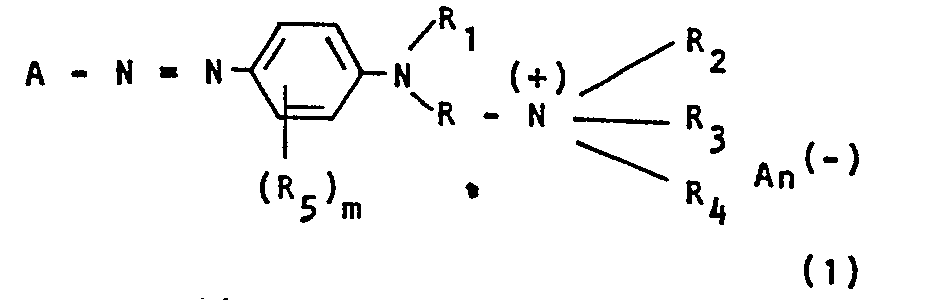
- A den Rest einer aromatisch-carbocyclischen oder aromatischheterocyclischen Diazokomponente,
- R Alkylen,
- R1 Wasserstoff oder Alkyl,
- R2 Alkyl, Alkenyl oder Aralkyl,
- R3 Alkyl,
- R4 Hydroxyalkyl mit 2 oder mehr C-Atomen,
- R5 Halogen, Alkyl, Alkoxy, Aryloxy, Acyl oder Acylamino,
- m 0, 1, 2, 3 oder 4 und
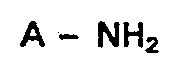
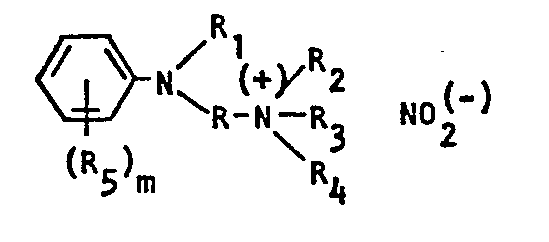
- An- ein Carboxylat-lon bedeuten, und worin die cyciischen und acyclischen Substituenten weitere nichtionische Substituenten tragen können, werden durch Umsetzung von Aminen der Formel
- A the residue of an aromatic-carbocyclic or aromatic-heterocyclic diazo component,
- R alkylene,
- R 1 is hydrogen or alkyl,
- R 2 is alkyl, alkenyl or aralkyl,
- R 3 alkyl,
- R 4 hydroxyalkyl with 2 or more carbon atoms,
- R 5 halogen, alkyl, alkoxy, aryloxy, acyl or acylamino,
- m 0, 1, 2, 3 or 4 and
- An - is a carboxylate ion, and in which the cyclic and acyclic substituents can carry further nonionic substituents are obtained by reacting amines of the formula
Description
Die vorliegende Erfindung betrifft ein Verfahren zur Herstellung konzentrierter, salzarmer, stabiler Lösungen kationischer Azofarbstoffe der Formel

- A den Rest einer aromatisch-carbocyclischen oder aromatischheterocyclischen Diazokomponente,
- R Alkylen,
- R1 Wasserstoff oder Alkyl,
- R2 Alkyl, Alkenyl oder Aralkyl,
- R 3 Alkyl,
- R4 Hydroxyalkyl mit 2 oder mehr C-Atomen,
- R5 Halogen, Alkyl, Alkoxy, Aryloxy, Acyl oder Acylamino,
- m 0, 1, 2, 3 oder 4 und
- An ein Carboxylat-Ion bedeuten, und worin die cyclischen und acyclischen Substituenten weitere nichtionische Substituenten tragen können, durch Umsetzung von
- Aminen der Formel

- mit Kupplungskomponenten der Formel

- A the residue of an aromatic-carbocyclic or aromatic-heterocyclic diazo component,
- R alkylene,
- R 1 is hydrogen or alkyl,
- R 2 is alkyl, alkenyl or aralkyl,
- R 3 alkyl,
- R 4 hydroxyalkyl with 2 or more carbon atoms,
- R 5 halogen, alkyl, alkoxy, aryloxy, acyl or acylamino,
- m 0, 1, 2, 3 or 4 and
- An mean a carboxylate ion, and in which the cyclic and acyclic substituents can carry further nonionic substituents, by reacting
- Amines of the formula
- with coupling components of the formula
Die auf diese Weise hergestellten Lösungen enthalten vorzugsweiseThe solutions prepared in this way preferably contain
10-60 Gew.-X des kationischen Farbstoffes, 10-80 Gew.-X einer wasserlöslichen Carbonsäure, 0-20 Gew.-% eines wasserlöslichen organischen Lösungsmittels und 3-30 Gew.-X Wasser.10-60% by weight of the cationic dye, 10-80% by weight of a water-soluble carboxylic acid, 0-20% by weight of a water-soluble organic solvent and 3-30% by weight of water.
Von den Farbstoffen der Formel (I) sind solche hervorzuheben, deren Diazokomponente A einen Rest der Benzol-, Thiazol-, Benzthiazol-, Benzisothiazol-, Thiadiazol- oder Triazol-Reihe darstellt.Of the dyes of the formula (I) are to be emphasized those whose diazo component A represents a radical from the benzene, thiazole, benzothiazole, benzisothiazole, thiadiazole or triazole series.
Nichtionische Substituenten der Farbstoffe I sind die in der Farbstoffchemie üblichen, unter den Herstellungs- und Anwendungsbedingungen nicht dissoziierenden Substituenten wie Cyan, Hydroxy, Halogen, wie Fluor, Chlor oder Brom, Nitro, Alkyl, Mono- und Dialkylamino, Phenyl, Alkoxy, Acyloxy, Alkoxycarbonyl, Alkoxycarbonyloxy, Phenoxy, Benzyloxy, Sulfonamido, Carbonamido, Alkylsulfonyl, Phenylsulfonyl, Alkylmercapto oder Phenylmercapto.Nonionic substituents of the dyes I are the common substituents in dye chemistry, such as cyan, hydroxy, halogen, such as fluorine, chlorine or bromine, nitro, alkyl, mono- and dialkylamino, phenyl, alkoxy, acyloxy, which do not dissociate under the production and application conditions. Alkoxycarbonyl, alkoxycarbonyloxy, phenoxy, benzyloxy, sulfonamido, carbonamido, alkylsulfonyl, phenylsulfonyl, alkylmercapto or phenylmercapto.
Besonders geeignete Alkylreste sind solche mit 1-4 C-Atomen:Particularly suitable alkyl radicals are those with 1-4 C atoms:
Besonders geeignete Reste R4 sind unsubstituierte und durch C1-C4-Alkoxy, C2-C4-Alkenyloxy, Phenoxy oder Benzyloxy substituierte 2-Hydroxy-ethyl-propyl- und -butylreste.Particularly suitable radicals R 4 are unsubstituted and substituted by C 1 -C 4 alkoxy, C 2 -C 4 alkenyloxy, phenoxy or benzyloxy 2-hydroxyethyl propyl and butyl radicals.
Geeignete Reste R sind z.B. geradkettige und verzweigte Alkylenreste mit 2-5 C-Atomen, die substituiert sein können; z.B. kann eine Methylengruppe durch eine Carbonylgruppe ersetzt sein.Suitable radicals R are e.g. straight-chain and branched alkylene radicals with 2-5 C atoms, which can be substituted; e.g. a methylene group can be replaced by a carbonyl group.
Geeignete Arylreste sind insbesondere gegebenenfalls substituierte Phenyl- und Naphthylreste.Suitable aryl radicals are in particular optionally substituted phenyl and naphthyl radicals.
Geeignete Acylreste sind insbesondere Alkylcarbonyl- und Alkylsulfonylreste mit 1-4 C-Atomen im Alkylrest oder Benzoyl.Suitable acyl radicals are, in particular, alkylcarbonyl and alkylsulfonyl radicals having 1-4 carbon atoms in the alkyl radical or benzoyl.
Auf diese Weise bevorzugt herstellbare Farbstoffe besitzen die Formeln

- R6,R7,R8 u. R9 Methyl, Ethyl, Propyl oder Butyl, 2-Hydroxyethyl, 2-Hydroxypropyl, 2-Hydroxybutyl, 2-Hydroxyethylphenyl, 2-Hydroxy-3-methoxy-propyl, 2-Hydroxy-3-chlor-propyl, 2-Hydroxy-3-ethoxy-propyl, 2-Hydroxy-3-propoxy-propyl, 2-Hydroxy-3-allyloxy-propyl, 2-Hydroxy-3-butoxy-propyl, 2-Hydroxy-3-phenoxy- propyl, 2-Hydroxy-3-benzoxy-propyl,
- R10 Wasserstoff, Methyl, Ethyl, Propyl, Butyl, Halogen, Methoxy, Ethoxy, Propoxy, Acetyl-, Propionyl-oder Methylsulfonylamino,
- R11 Wasserstoff, Methyl, Ethyl, Propyl, Butyl, Halogen, Methoxy, Ethoxy oder Propoxy,
- R12 Methyl, Ethyl, Propyl, Butyl, Halogen, Cyan, Nitro, Methoxy, Ethoxy, Propoxy, Methoxy- oder Ethoxycarbonyl, Acetyloxy, Acetyl, Sulfonamido oder Carbonamido,
- n 1 bis 5,
- p 2 oder 3 und
- R 6 , R 7 , R 8 u. R 9 is methyl, ethyl, propyl or butyl, 2-hydroxyethyl, 2-hydroxypropyl, 2-hydroxybutyl, 2-hydroxyethylphenyl, 2-hydroxy-3-methoxy-propyl, 2-hydroxy-3-chloropropyl, 2-hydroxy- 3-ethoxypropyl, 2-hydroxy-3-propoxypropyl, 2-hydroxy-3-allyloxypropyl, 2-hydroxy-3-butoxypropyl, 2-hydroxy-3-phenoxypropyl, 2-hydroxy 3-benzoxypropyl,
- R 10 is hydrogen, methyl, ethyl, propyl, butyl, halogen, methoxy, ethoxy, propoxy, acetyl, propionyl or methylsulfonylamino,
- R 11 is hydrogen, methyl, ethyl, propyl, butyl, halogen, methoxy, ethoxy or propoxy,
- R 12 is methyl, ethyl, propyl, butyl, halogen, cyano, nitro, methoxy, ethoxy, propoxy, methoxy- or ethoxycarbonyl, acetyloxy, acetyl, sulfonamido or carbonamido,
- n 1 to 5,
- p 2 or 3 and
An7 ein Carboxylat-Ion bedeuten, und


- R13 C1-C5-Alkyl, Phenyl, Cyan, Nitro oder Carbomethoxy,
- R 14 C1-C5-Alkyl, C1-C4-Alkoxy, Phenoxy, Nitro, Carbomethoxy oder Halogen,
- R15 Wasserstoff; C1-C5-Alkyl; C1-C4-Alkoxy; Phenoxy; Cyclohexyl; Phenyl; durch Methyl, Ethyl, Methoxy, Ethoxy, Nitro, Chlor oder Acetylamino substituiertes Phenyl; Benzyl; Methyl-, Ethyl- oder Phenyl-mercapto, Benzylmercapto; Dimethyl- oder Diethylamino oder Methyl-, Ethyl-oder Phenylsulfonyl,
- q 0, 1 oder 2 bedeuten, und worin R6- R11, p und An die in Formel IV angegebene Bedeutung haben.
- R 13 is C 1 -C 5 alkyl, phenyl, cyano, nitro or carbomethoxy,
- R 14 C 1 -C 5 alkyl, C 1 -C 4 alkoxy, phenoxy, nitro, carbomethoxy or halogen,
- R 15 is hydrogen; C 1 -C 5 alkyl; C 1 -C 4 alkoxy; Phenoxy; Cyclohexyl; Phenyl; phenyl substituted by methyl, ethyl, methoxy, ethoxy, nitro, chlorine or acetylamino; Benzyl; Methyl, ethyl or phenyl mercapto, benzyl mercapto; Dimethyl- or diethylamino or methyl-, ethyl- or phenylsulfonyl,
- q represents 0, 1 or 2, and in which R 6 -R 11 , p and An have the meaning given in formula IV.
Von diesen Farbstoffen sind solche bevorzugt, in denen n 1-3, q 0 oder 1, R6, R7 und R8 Methyl oder Ethyl, R9 2-Hydroxypropyl, R10 und R11 Wasserstoff oder Methyl, R12 Chlor, Brom, Cyan oder Nitro, R13, R14 und R15 Wasserstoff, Phenyl oder Nitro und An Acetat bedeuten.Of these dyes, preferred are those in which n 1-3, q 0 or 1, R 6 , R 7 and R 8 are methyl or ethyl, R 9 2-hydroxypropyl, R 10 and R 11 are hydrogen or methyl, R 12 is chlorine, Bromine, cyan or nitro, R 13 , R 14 and R 15 are hydrogen, phenyl or nitro and an acetate.
Geeignete Amine II, geeignete Kupplungskomponenten III und geeignete Amine der FormelSuitable amines II, suitable coupling components III and suitable amines of the formula

Als wasserlösliche Carbonsäuren kommen insbesondere CI-C3-Carbonsäuren wie Ameisen-, Essig-, Propion- und Mono-, Di- und Trichloressigsäure und Milchsäure, bevorzugt Essigsäure und Propionsäure in Betracht.Particularly suitable water-soluble carboxylic acids are C 1 -C 3 -carboxylic acids such as formic, acetic, propionic and mono-, di- and trichloroacetic acid and lactic acid, preferably acetic acid and propionic acid.
Beispiele für organische wasserlösliche Lösungsmittel sind Alkohole wie Ethanol, iso-Propanol, iso- und n-Butanol, Glykole wie Ethylenglykol, Propylenglykol, Ethylendi- und triglykol, Mono-und Dialkyl-glykolether wie Methyl- und Dimethylglykol, Dimethylformamid, Caprolactam und Methylpyrrolidon.Examples of organic water-soluble solvents are alcohols such as ethanol, isopropanol, iso- and n-butanol, glycols such as ethylene glycol, propylene glycol, ethylene di- and triglycol, mono- and dialkyl glycol ethers such as methyl and dimethyl glycol, dimethylformamide, caprolactam and methylpyrrolidone.
Das Verfahren wird bevorzugt in der Weise durchgeführt, daß das Amin II in der wäßrigen Carbonsäure, gegebenenfalls unter Zusatz des organischen Lösungsmittels suspendiert bzw. gelöst wird und auf beispielsweise 0-50 C gekühlt wird. Unter Zugabe der Kupplungskomponente III wird dann die gleichzeitige Diazotierung und Kupplung bei 0-50oC, insbesondere bei Raumtemperatur durchgeführt. Nach beendeter Reaktion wird bei Temperaturen unter 50°C nachgerührt.The process is preferably carried out in such a way that the amine II is suspended or dissolved in the aqueous carboxylic acid, optionally with the addition of the organic solvent, and is cooled to, for example, 0-50.degree. With the addition of the coupling component III is then the simultaneous diazotisation and coupling at 0-50 o C, in particular at room temperature. When the reaction is complete, stirring is continued at temperatures below 50 ° C.
Eine weitere Variante des Verfahrens besteht in der Möglichkeit der Mischung verschiedener Diazokomponenten II und einer Kupplungskomponente III, die zusammen diazotiert und gekuppelt werden, um eine fertige Farbstofflösung mit dem gewünschten Farbton zu erhalten.Another variant of the process consists in the possibility of mixing different diazo components II and a coupling component III, which are diazotized and coupled together in order to obtain a finished dye solution with the desired color.
Das erfindungsgemäße Verfahren bietet die überraschende Möglichkeit der Herstellung hochkonzentrierter, stabiler Lösungen kationischer Farbstoffe, deren physikalische Stabilität durch die Abwesenheit von anorganischen Salzen gewährleistet ist. Die auf sehr einfache Weise hergestellten Lösungen können ohne weitere Reinigung in den Handel gebracht werden.The process according to the invention offers the surprising possibility of producing highly concentrated, stable solutions of cationic dyes, the physical stability of which is ensured by the absence of inorganic salts. The solutions, which are produced in a very simple manner, can be put on the market without further purification.
Trotz der fehlenden Zwischenisolierung der Farbstoffe, die im allgemeinen zur Entfernung von nichtgekuppelten Zwischenprodukten oder Zersetzungsprodukten dient, werden einwandfreie Färberesultate erzielt, die in Ton und Echtheiten dem Standard nicht nachstehen, der mit den nach bisherigen Verfahren gereinigten Farbstoffen erzielt wird.Despite the lack of intermediate insulation of the dyes, which is generally used to remove non-coupled intermediates or decomposition products, flawless dye results are achieved which, in terms of tone and fastness, are not inferior to the standard achieved with the dyes cleaned by previous processes.
Dem Stand der Technik war nicht zu entnehmen, daB die simultane Diazotierung und Kupplung in hoher Konzentration ohne die Bildung von Zersetzungsprodukten in Carbonsäuren möglich ist. Außerdem liegt bisher keine brauchbare Lösung für die Entfernung des durch das Nitrit eingeschleppte Kations des Nitrosierungsmittels vor. Die bekannte Verwendung von Salpetrigsäureestern stellen nur mit großem technischem Aufwand zu lösende Verfahren dar.It was not apparent from the prior art that simultaneous diazotization and coupling in high concentrations is possible without the formation of decomposition products in carboxylic acids. In addition, there is currently no useful solution for removing the cation of the nitrosating agent introduced by the nitrite. The known use of nitrous acid esters are processes which can only be solved with great technical effort.
Nach dem erfindungsgemäßen Verfahren wird das Nitrit-Ion das Anion der kationischen Kupplungskomponente in die Reaktionslösung eingebracht. Es war nach dem Stand der Technik nicht vorherschaubar, daß das Nitrit der Kupplungskomponente ohne Nebenreaktionen zu geben (z.B. p-Nitrosierung) isoliert und zur gewünschten Reaktion geführt werden konnte.In the process according to the invention, the nitrite ion and the anion of the cationic coupling component are introduced into the reaction solution. According to the prior art, it was unpredictable that the nitrite could be isolated from the coupling component without side reactions (e.g. p-nitrosation) and led to the desired reaction.
Im Gegensatz zu den bekannten Salpetrigsäureestern sind die Salze der Kupplungskomponente leicht durch Ionenaustauschreaktionen zugänglich. Zusätzlich ist ihre Handhabung nicht mit dem Risiko der Salpetrigsäureester behaftet, sondern dem der Natriumnitrit-Lösung vergleichbar. Besonders stabil sind die erfindungsgemäßen Nitrit-Lösungen, wenn sie mit geeigneten Basen neutral gestellt werden, z.B. mit NaCH, KOH oder bevorzugt organischen Basen wie Triethanolamin.In contrast to the known nitrous acid esters, the salts of the coupling component are easily accessible by ion exchange reactions. In addition, their handling is not associated with the risk of nitric acid esters, but rather comparable to that of the sodium nitrite solution. The nitrite solutions according to the invention are particularly stable if they are neutralized with suitable bases, e.g. with NaCH, KOH or preferably organic bases such as triethanolamine.
Durch die Auswahl der Kupplungskomponente als salpetrige Säure liefernde Substanz und des Lösungsmittels werden Bedingungen gefunden, die gleichzeitig eine quantitative Umsetzung zum Farbstoff und nahezu von anorganischen Salzen freie Farbstofflösung ergeben. Bei Variation nur eines der genannten Parameter können diese Vorteile nicht erzielt werden.By selecting the coupling component as the nitrous acid-providing substance and the solvent, conditions are found which at the same time result in a quantitative conversion to the dye and dye solution almost free of inorganic salts. If only one of the parameters mentioned is varied, these advantages cannot be achieved.
Die Farbstoffe der erfindungsgemäß herstellbaren Lösungen sind z.B. aus US-PS 4 036 826 und DE-OS 1 644 323 bekannt: Sie eignen sich bekanntermaßen zum Färben und Bedrucken von Fasern, Geweben und Vliesen aus Polymerisaten aus Acrylnitril oder 1,1-Dicyanethylen oder Mischpolymerisaten dieser Komponenten mit anderen Vinylverbindungen, wie Vinylchlorid, Vinylidenchlorid, Vinylacetat, Vinylpyridin, Vinylimidazol, Acrylsäure- und Methacrylsäureestern; aus sauer modifizierten Polyestern, wie sie beispielsweise in den US-PS 2 893 816, 3 018 272 und 3 166 531 beschrieben sind, und aus sauer modifizierten Polyamiden, wie sie beispielsweise in den US-PS 3 039 009 und 3 454 351 beschrieben sind.The dyes of the solutions which can be prepared according to the invention are e.g. Known from US Pat. No. 4,036,826 and DE-OS 1 644 323: They are known to be suitable for dyeing and printing fibers, fabrics and nonwovens made from polymers of acrylonitrile or 1,1-dicyanethylene or copolymers of these components with other vinyl compounds, such as vinyl chloride , Vinylidene chloride, vinyl acetate, vinyl pyridine, vinyl imidazole, acrylic acid and methacrylic acid esters; from acid-modified polyesters, such as are described, for example, in US Pat. Nos. 2,893,816, 3,018,272 and 3,166,531, and from acid-modified polyamides, as described, for example, in US Pat. Nos. 3,039,009 and 3,454,351 .
Außerdem lassen sich mit diesen Farbstoffen auch Cellulosefasern und ligninhaltige Faserstoffe, wie sie zur Herstellung von Vliesen, saugfähigen Papieren, geleimten Schreib- und Packpapieren verwendet werden, hervorragend lichtecht anfärben. Besonders überraschend ist das gute Aufziehverhalten der Farbstoffe, die auch bei den in der Papierherstellung üblichen Flottenverhältnissen von 1:100 - 1000 vollständig aufziehen und ein nahezu farbloses Abwasser ergeben.In addition, these dyes can also be used to make cellulose fibers and lignin-containing fibers, such as those used for the production of nonwovens, absorbent papers, sized writing and packing papers are used, excellent lightfast staining. Particularly surprising is the good absorption behavior of the dyes, which absorb completely even in the liquor ratios of 1: 100-1000 that are customary in paper production and give an almost colorless waste water.
Es ist bekannt, daß bestimmte Azofarbstoffe nach einstufigen Diazotierungs-Kupplungsverfahren hergestellt werden können.It is known that certain azo dyes can be prepared by one-step diazotization coupling processes.
In der US-PS 2 478 768 wird ein einstufiges Verfahren zur Herstellung von wasserunlöslichen Pigmenten beschrieben, in dem Diazotierung und Kupplung bei einem pH-Wert < 6 durchgeführt werden. Dabei werden wasserunlösliche Ba-Salze der Azofarbstoffe durch ständige Ausfällung weiteren Nebenreaktionen entzogen. Ein ähnliches Verfahren wird in US-PS 2 478 767 beschrieben, bei dem Diazotierung und Kupplung im pH-Bereich zwischen pH 6,0-7,2 gehalten wird.US Pat. No. 2,478,768 describes a one-stage process for the preparation of water-insoluble pigments in which diazotization and coupling are carried out at a pH <6. In this process, water-insoluble Ba salts of the azo dyes are removed from further side reactions by constant precipitation. A similar process is described in U.S. Patent No. 2,478,767, in which diazotization and coupling are maintained in the pH range between pH 6.0-7.2.
US-PS 2 418 416 beschreibt ein Verfahren, bei dem die Diazotietung bei pH <4 und die Kupplung bei pH >4 erfolgt. Ein solches Verfahren kann zur Zersetzung eines Teils der Diazoverbindung vor der Kupplung führen.US Pat. No. 2,418,416 describes a process in which the diazotization takes place at pH <4 and the coupling takes place at pH> 4. Such a process can lead to the decomposition of part of the diazo compound before coupling.
DE-OS 1 927 453 beschreibt ein Verfahren zur Herstellung von metallfreien Azopigmenten durch Diazotierung und Kupplung in organischen Lösungsmitteln, die höchstens 10% Wasser enthalten.DE-OS 1 927 453 describes a process for the preparation of metal-free azo pigments by diazotization and coupling in organic solvents which contain at most 10% water.
Dieses Verfahren verläuft in heterogener Phase.This process takes place in a heterogeneous phase.
DE-OS 2 058 299 beschreibt ein ähnliches Verfahren mit dem Unterschied, daß das Reaktionsgemisch wasserfrei ist und eine organische Säure mit einem pH-Wert <3 in einer Menge <1 Mol bezogen auf I Mol Amin zugesetzt wird. Durch die Reaktionsführung in wasserfreiem Medium ist es notwendig, die Ester der salpetrigen Säure einzusetzen. Diese müssen gesondert hergestellt werden und unter größten Vorsichtsmaßnahmen gehandhabt werden, während die Lösungen der Nitrite der Kupplungskomponenten,ähnlich wie Natriumnitrit-Lösüngen, gefahrlos sind.DE-OS 2 058 299 describes a similar process with the difference that the reaction mixture is anhydrous and an organic one Acid with a pH <3 in an amount <1 mol based on 1 mol of amine is added. By carrying out the reaction in an anhydrous medium, it is necessary to use the nitrous acid esters. These must be manufactured separately and handled with the greatest of precautionary measures, while the solutions of the nitrites in the coupling components, like sodium nitrite solutions, are safe.
DE-AS 2 139 311 beschreibt ein Verfahren zur einstufigen Herstellung von Azofarbstoffen, wobei der pH-Wert für Diazotierung und Kupplung bei 4 oder niedriger liegt., wenn das Reaktionsgemisch mit 25X seines Volumens an Wasser verdünnt wird. Die Beispiele arbeiten mit Mengen von 17-127 Mol Essigsäure auf 1 Mol Amin, wodurch diese Verfahren zur Herstellung von konzentrierten Flüssigmarken nicht brauchbar sind.DE-AS 2 139 311 describes a process for the single-stage preparation of azo dyes, the pH value for diazotization and coupling being 4 or lower if the reaction mixture is diluted with 25X its volume of water. The examples work with amounts of 17-127 moles of acetic acid to 1 mole of amine, which makes these processes useless for the production of concentrated liquid brands.
GB-PS 2 099 208 A beschreibt die gleichzeitige Diazotierung und Kupplung von durch Pyridiaium-chlorid substituierten Kupplungskomponenten in Essigsäure und Ethylenglykol bei pH-Wert von 2,8, wenn das Reaktionsgemisch mit 25% Wasser verdünnt wird. Eine Abtrennung der anorganischen Salze durch Filtration ist nicht möglich.GB-PS 2 099 208 A describes the simultaneous diazotization and coupling of coupling components substituted by pyridiaium chloride in acetic acid and ethylene glycol at pH 2.8 when the reaction mixture is diluted with 25% water. The inorganic salts cannot be separated off by filtration.
In der GB-PS 1 162 665 werden Diazotierung und Kupplung in saurer Lösung durchgeführt und die Farbstoffe ausgesalzen oder als ZaCl2-Doppelsalz isoliert.In GB-PS 1 162 665 diazotization and coupling are carried out in acidic solution and the dyes are salted out or isolated as a ZaCl 2 double salt.
Bei den Prozentangaben der Einstellungen der Beispiele handelt es sich um wäßrige Einstellungen.The percentages of the settings of the examples are aqueous settings.
479 g N-Ethyl-N-(dimethyl-hydroxy-propyl-ammonium)-ethyl-anilinsulfat (62,4 %ig) (= 1 Mol) werden vorgelegt und mit479 g of N-ethyl-N- (dimethyl-hydroxy-propyl-ammonium) -ethyl-aniline sulfate (62.4%) (= 1 mol) are introduced and with
5,5-6 g Triethanolamin auf pH 6,9-7 eingestellt. Man gibt5.5-6 g of triethanolamine adjusted to pH 6.9-7. You give
230 ml Natriumnitrit-Lösung (30 %ig) (= 1 Mol) hinzu und rührt kurz auf. Ohne Rühren wartet man ca. 5 Minuten auf Phasentrennung. Die untere Phase ist farblos und klar und enthält praktisch nur Natriumsulfat. Sie wird abgelassen.Add 230 ml sodium nitrite solution (30%) (= 1 mol) and stir briefly. Without stirring, wait about 5 minutes for phase separation. The lower phase is colorless and clear and contains practically only sodium sulfate. It is drained.
221,7 g 2-Chlor-4-nitranilin (76,25 %ig) (= 0,98 Mol), 200 g Eisessig und221.7 g of 2-chloro-4-nitraniline (76.25%) (= 0.98 mol), 200 g of glacial acetic acid and
97,5 g 6-Caprolactam werden in einem anderen Kolben vorgelegt und auf 8°C abgekühlt. Innerhalb von 4 Stunden läßt man die nach den oben beschriebenen Verfahren erhaltene N-Ethyl-N-(dimethyl-hydroxypropylammonium)-ethyl-anilin-nitrit-Lösung zulaufen. Die Temperatur wird dabei auf 8°-2°C gehalten. Es wird über Nacht ohne Kühlung nachgerührt und am nächsten Morgen nach Abkühlung auf 2°C geklärt (Klärpresse mit Tuch-Papier-Tuch), wobei kein nennenswerter Rückstand auftritt. Man erhält nach der Klärung eine stabile Lösung eines roten Farbstoffes der Formel97.5 g of 6-caprolactam are placed in another flask and cooled to 8 ° C. The N-ethyl-N- (dimethyl-hydroxypropylammonium) ethyl-aniline-nitrite solution obtained by the processes described above is run in within 4 hours. The temperature is kept at 8 ° -2 ° C. The mixture is stirred overnight without cooling and clarified the next morning after cooling to 2 ° C. (clarifying press with cloth-paper-cloth), with no significant residue occurring. After clarification, a stable solution of a red dye of the formula is obtained

305,3 g p-Chlor-o-nitranilin (56 %ig) (= 1 Mol), 200 ml Eisessig und305.3 g of p-chloro-o-nitraniline (56%) (= 1 mol), 200 ml of glacial acetic acid and
97,5 g 6-Caprolactam werden in einem Kolben vorgelegt und auf 10°C abgekühlt. Innerhalb von 4 Stunden läßt man die nach Beispiel 1 erhaltene N-Ethyl-N-(dimethyl-hydroxy-propyl-ammonium)-ethylanilin-nitrit-Lösung zulaufen. Die Temperatur darf dabei nicht über 10°C steigen. Es wird über Nacht nachgerührt und am nächsten Morgen geklärt. Dabei entsteht kein nennenswerter Rückstand. Nach der Klärung erhält man eine gelbe Farbstofflösung.97.5 g of 6-caprolactam are placed in a flask and cooled to 10 ° C. The N-ethyl-N- (dimethyl-hydroxypropylammonium) ethylaniline nitrite solution obtained according to Example 1 is run in within 4 hours. The temperature must not rise above 10 ° C. It is stirred overnight and clarified the next morning. There is no significant backlog. After clarification, a yellow dye solution is obtained.
113,1 g o-Chlor-p-nitranilin (75 %ig) (= 0,5 Mol), 152,65 g p-Chlor-o-nitranilin (56,5 %ig) (= 0,5 Mol), 200 ml Eisessig und113.1 g o-chloro-p-nitraniline (75%) (= 0.5 mol), 152.65 g p-chloro-o-nitraniline (56.5%) (= 0.5 mol), 200 ml glacial acetic acid and
97,5 g 6-Caprolactam werden in einem Kolben vorgelegt und auf 10°C abgekühlt. Innerhalb von 4 Stunden läßt man die nach Beispiel 1 erhaltene N-Ethyl-N-(dimethyl-hydroxy-propyl-ammonium)-ethylanilin-nitrit-Lösung zulaufen. Die Temperatur darf dabei nicht über 10°C steigen. Es wird über Nacht nachgerührt und am nächsten Morgen geklärt. Dabei entsteht kein nennenswerter Rückstand. Nach der Klärung erhält man eine orange-farbene Farbstofflösung.97.5 g of 6-caprolactam are placed in a flask and cooled to 10 ° C. The N-ethyl-N- (dimethyl-hydroxypropylammonium) ethylaniline nitrite solution obtained according to Example 1 is run in within 4 hours. The tempe temperature must not rise above 10 ° C. It is stirred overnight and clarified the next morning. There is no significant backlog. After clarification, an orange-colored dye solution is obtained.
260 g 2,4,5-Trichloranilin (75,5 %ig) (= 1 Mol), 200 ml Eisessig und260 g of 2,4,5-trichloroaniline (75.5%) (= 1 mol), 200 ml of glacial acetic acid and
97,5 g 6-Caprolactam werden in einem Kolben vorgelegt und auf 10°C abgekühlt. Innerhalb von 4 Stunden läßt man die nach Beispiel 1 erhaltene N-Ethyl-N-(dimethyl-hydroxypropyl-ammonium)-ethyl-anilin-nitrit-Lösung zulaufen. Die Temperatur darf dabei nicht über 10°C ansteigen. Es wird über Nacht nachgerührt und am nächsten Morgen geklärt. Dabei entsteht kein nennenswerter Rückstand. Nach der Klärung erhält man eine gelbe Farbstofflösung.97.5 g of 6-caprolactam are placed in a flask and cooled to 10 ° C. The N-ethyl-N- (dimethyl-hydroxypropyl-ammonium) -ethyl-aniline-nitrite solution obtained according to Example 1 is run in within 4 hours. The temperature must not rise above 10 ° C. It is stirred overnight and clarified the next morning. There is no significant backlog. After clarification, a yellow dye solution is obtained.
84 g 3-Amino-1,2,4-triazol (= 1 Mol),84 g of 3-amino-1,2,4-triazole (= 1 mol),
200 ml Eisessig und200 ml glacial acetic acid and
97,5 g 6-Caprolactam werden in einem Kolben bei 60°C gelöst und auf 10°C abgekühlt. Innerhalb von 4 Stunden läßt man die nach Beispiel 1 erhaltene N-Ethyl-N-(dimethyl-hydroxy-propylammonium)-ethyl-anilin-nitrit-Lösung zulaufen. Die Temperatur darf dabei nicht über 10°C ansteigen. Es wird über Nacht nachgerührt und am nächsten Morgen geklärt. Dabei entsteht kein nennenswerter Rückstand. Es ist möglich, diese Lösung direkt weiter zu quaternieren, was zu einer deutlichen Verbesserung der Farbstärke führt. Nach der Klärung erhält man eine orange-farbene Farbstofflösung.97.5 g of 6-caprolactam are dissolved in a flask at 60 ° C. and cooled to 10 ° C. The N-ethyl-N- (dimethyl-hydroxypropyl) obtained according to Example 1 is left within 4 hours ammonium) ethyl aniline nitrite solution. The temperature must not rise above 10 ° C. It is stirred overnight and clarified the next morning. There is no significant backlog. It is possible to quaternize this solution directly, which leads to a significant improvement in the color strength. After clarification, an orange-colored dye solution is obtained.
176 g p-Nitranilin (78,3 %ig) (= 1 Mol),176 g of p-nitraniline (78.3%) (= 1 mol),
200 ml Eisessig und200 ml glacial acetic acid and
100 g 6-Caprolactam werden in einem Kolben vorgelegt und auf 10°C abgekühlt. Innerhalb von 4 Stunden läßt man die nach Beispiel 1 erhaltene N-Ethyl-N-(dimethyl-hydroxypropyl- ammonium)-ethyl-anilin-nitrit-Lösung zulaufen. Die Temperatur darf 10°C nicht übersteigen. Es wird über Nacht nachgerührt und am nächsten Morgen geklärt. Dabei entsteht kein nennenswerter Rückstand. Nach der Klärung erhält man eine rote Farbstofflösung.100 g of 6-caprolactam are placed in a flask and cooled to 10 ° C. The N-ethyl-N- (dimethyl-hydroxypropyl-ammonium) -ethyl-aniline-nitrite solution obtained according to Example 1 is run in within 4 hours. The temperature must not exceed 10 ° C. It is stirred overnight and clarified the next morning. There is no significant backlog. After clarification, a red dye solution is obtained.
171,5 g 3-Phenyl-5-amino-1,2,4-thiadiazol (98,5 %ig) (= 1 Mol),171.5 g of 3-phenyl-5-amino-1,2,4-thiadiazole (98.5%) (= 1 mol),
200 ml Eisessig und200 ml glacial acetic acid and
300 g Ethylenglykol werden verrührt und auf 5°C abgekühlt. Innerhalb von 4 Stunden läßt man die nach Beispiel 1 erhaltene N-Ethyl-N-(dimethyl- hydroxypropyl-ammonium)-ethyl-anilin-nitrit-Lösung zulaufen. Die Temperatur sollte dabei zwischen 5 und 10°C liegen. Über Nacht wird bei Raumtemperatur nachgerührt und am nächsten Morgen geklärt. Dabei entsteht kein nennenswerter Rückstand. Nach der Klärung erhält man eine rote Farbstofflösung.300 g of ethylene glycol are stirred and cooled to 5 ° C. The N-ethyl-N- (dimethyl-hydroxypropyl-ammonium) -ethyl-aniline-nitrite solution obtained according to Example 1 is run in within 4 hours. The temperature should be between 5 and 10 ° C. The mixture is stirred overnight at room temperature and clarified the next morning. There is no significant backlog. After clarification, a red dye solution is obtained.
186,7 g 6-Methoxy-2-aminobenzthiazol (96,4 %ig) (= 1 Mol) und186.7 g of 6-methoxy-2-aminobenzothiazole (96.4%) (= 1 mol) and
400 ml Eisessig werden in einem Kolben vorgelegt und auf 50°C erwärmt. Es entsteht eine klare Lösung. Anschließend kühlt man auf 15°C ab und läßt innerhalb von 4 Stunden die nach Beispiel 1 erhaltene N-Ethyl-N-(dimethyl-hydroxypropyl- ammonium)-ethyl-anilin-nitrit-Lösung zulaufen. Es wird 60 Minuten nachgerührt und geklärt. Dabei entsteht kein nennenswerter Rückstand. Man erhält eine stabile, rote Farbstofflösung. Es ist möglich, diese Lösung weiter zu quaternieren; man erhält dann einen blauen Farbstoff von hoher Farbstärke. Als Quaternierungsmittel werden z.B. Dimethylsulfat oder Benzylchlorid eingesetzt.400 ml of glacial acetic acid are placed in a flask and heated to 50 ° C. A clear solution is created. The mixture is then cooled to 15 ° C. and the N-ethyl-N- (dimethyl-hydroxypropyl-ammonium) -ethyl-aniline-nitrite solution obtained according to Example 1 is run in within 4 hours. The mixture is stirred and clarified for 60 minutes. There is no significant backlog. A stable, red dye solution is obtained. It is possible to quaternize this solution further; a blue dye of high color strength is then obtained. As quaternizing agents e.g. Dimethyl sulfate or benzyl chloride used.
168 g 5-Nitro-2-amino-benzonitril (97 %ig) (= 1 Mol), 800 ml Eisessig und168 g of 5-nitro-2-amino-benzonitrile (97%) (= 1 mol), 800 ml of glacial acetic acid and
5 g Nonylphenol und 10 Mol Ethylenoxid werden in einem Kolben vorgelegt und bei 60°C verrührt. Innerhalb von 2 Stunden läßt man bei 25°C die nach Beispiel 1 erhaltene N-Ethyl-N-(dimethyl- hydroxypropyl-ammonium)-ethyl-anilin-nitrit-Lösung zulaufen. Anschließend destilliert man im Vakuum (ca. 15 mm HG-Säule) bei 22-30°C 500 ml Essigsäure/Wasser ab und stellt danach mit5 g of nonylphenol and 10 moles of ethylene oxide are placed in a flask and stirred at 60 ° C. The N-ethyl-N- (dimethyl-hydroxypropyl-ammonium) -ethyl-aniline nitrite solution obtained according to Example 1 is run in at 25 ° C. within 2 hours. Then distilled in vacuo (approx. 15 mm HG column) at 22-30 ° C from 500 ml of acetic acid / water and then made with
ca. 100 ml Triethanolamin den pH-Wert von 4,5 auf 6 ein. Man erhält nach Klärung eine stabile Lösung eines roten Farbstoffes.Approx. 100 ml triethanolamine adjust the pH from 4.5 to 6. After clarification, a stable solution of a red dye is obtained.
Claims (5)

durch Kupplung, dadurch gekennzeichnet, daß man Amine der Formel


by coupling, characterized in that amines of the formula
Applications Claiming Priority (2)
| Application Number | Priority Date | Filing Date | Title |
|---|---|---|---|
| DE3101140 | 1981-01-16 | ||
| DE19813101140 DE3101140A1 (en) | 1981-01-16 | 1981-01-16 | METHOD FOR PRODUCING SOLUTIONS OF CATIONIC AZO DYES |
Publications (3)
| Publication Number | Publication Date |
|---|---|
| EP0056578A2 true EP0056578A2 (en) | 1982-07-28 |
| EP0056578A3 EP0056578A3 (en) | 1982-08-25 |
| EP0056578B1 EP0056578B1 (en) | 1984-03-21 |
Family
ID=6122692
Family Applications (1)
| Application Number | Title | Priority Date | Filing Date |
|---|---|---|---|
| EP82100042A Expired EP0056578B1 (en) | 1981-01-16 | 1982-01-07 | Process for the manufacture of cationic azodye solutions |
Country Status (8)
| Country | Link |
|---|---|
| US (1) | US4432899A (en) |
| EP (1) | EP0056578B1 (en) |
| JP (1) | JPS57139145A (en) |
| KR (1) | KR880001520B1 (en) |
| BR (1) | BR8200226A (en) |
| DE (2) | DE3101140A1 (en) |
| ES (1) | ES508800A0 (en) |
| IN (1) | IN157727B (en) |
Cited By (5)
| Publication number | Priority date | Publication date | Assignee | Title |
|---|---|---|---|---|
| EP0514336A1 (en) * | 1991-05-17 | 1992-11-19 | Ciba-Geigy Ag | Process for the manufacture of high-concentrated aqueous solutions of cationic azodyes |
| EP1352928A1 (en) * | 2002-04-11 | 2003-10-15 | Basf Aktiengesellschaft | Process for the manufacture of liquid preparations of basic azo dyes |
| EP1352929A1 (en) * | 2002-04-11 | 2003-10-15 | Basf Aktiengesellschaft | Process for the manufacture of liquid preparations of basic azo dyes |
| EP1820536A1 (en) | 2006-02-18 | 2007-08-22 | Wella Aktiengesellschaft | Coloring agents for keratin fibers |
| EP1820537A1 (en) * | 2006-02-18 | 2007-08-22 | Wella Aktiengesellschaft | Agents for coloring keratin fibers |
Families Citing this family (1)
| Publication number | Priority date | Publication date | Assignee | Title |
|---|---|---|---|---|
| US4670041A (en) * | 1981-12-16 | 1987-06-02 | E. I. Du Pont De Nemours And Company | Oxabicycloalkane herbicides |
Family Cites Families (18)
| Publication number | Priority date | Publication date | Assignee | Title |
|---|---|---|---|---|
| US2972508A (en) * | 1955-12-29 | 1961-02-21 | Bayer Ag | Dyeing of polymers of acrylonitrile |
| US2945849A (en) * | 1957-03-04 | 1960-07-19 | Bayer Ag | Disazo compounds containing a quaternary ammonium group |
| US3102879A (en) * | 1958-09-30 | 1963-09-03 | Basf Ag | Production of cationic dyestuffs |
| US3033847A (en) * | 1959-11-30 | 1962-05-08 | Du Pont | Cationic monoazo dyes for acrylic and polyester fibers |
| US3988311A (en) * | 1966-05-23 | 1976-10-26 | Ciba-Geigy Ag | Basic azo dyestuffs containing a heterocyclic diazo component and a para-N-tertiary or quaternary heterocyclic amine alkylene amino benzene coupling component |
| US3532683A (en) * | 1966-06-27 | 1970-10-06 | Du Pont | Cationic mono azo dyes for anionic fibers |
| GB1162665A (en) * | 1966-09-27 | 1969-08-27 | Du Pont | Cationic and Basic Benzothiazolylazo Dyes, their preparation and use |
| CH73569A4 (en) * | 1969-01-20 | 1972-08-31 | ||
| US3956271A (en) * | 1969-01-20 | 1976-05-11 | Sandoz Ltd. | Process for the production of concentrated solutions of cationic azo dyes |
| US3912708A (en) * | 1970-07-27 | 1975-10-14 | Du Pont | Biscationic pyridinium monoazo dyes useful for dyeing acid-modified nylons |
| US3793305A (en) * | 1970-09-14 | 1974-02-19 | Du Pont | One-step process of preparing azo dyes by simultaneous diazotization |
| CH579121A5 (en) * | 1971-06-17 | 1976-08-31 | Sandoz Ag | |
| US3812093A (en) * | 1972-08-29 | 1974-05-21 | Eastman Kodak Co | Cationic thiadiazolyl monoazo dyes |
| NL7213944A (en) * | 1972-10-14 | 1974-04-16 | ||
| DD113239A5 (en) * | 1973-02-26 | 1975-05-20 | ||
| DE2451257C3 (en) * | 1974-10-29 | 1979-05-10 | Bayer Ag, 5090 Leverkusen | Process for the preparation of concentrated dye solutions and processes for dyeing |
| DE2503714C3 (en) * | 1975-01-30 | 1978-05-03 | Hoechst Ag, 6000 Frankfurt | Process for the preparation of water-soluble azo dyes |
| GB2009208A (en) * | 1977-11-28 | 1979-06-13 | Ici Ltd | Azo Compounds |
-
1981
- 1981-01-16 DE DE19813101140 patent/DE3101140A1/en not_active Withdrawn
- 1981-12-14 IN IN781/DEL/81A patent/IN157727B/en unknown
- 1981-12-30 US US06/335,940 patent/US4432899A/en not_active Expired - Fee Related
-
1982
- 1982-01-07 EP EP82100042A patent/EP0056578B1/en not_active Expired
- 1982-01-07 DE DE8282100042T patent/DE3260068D1/en not_active Expired
- 1982-01-12 JP JP57002362A patent/JPS57139145A/en active Pending
- 1982-01-15 ES ES508800A patent/ES508800A0/en active Granted
- 1982-01-15 BR BR8200226A patent/BR8200226A/en unknown
- 1982-01-16 KR KR8200173A patent/KR880001520B1/en not_active Expired
Cited By (10)
| Publication number | Priority date | Publication date | Assignee | Title |
|---|---|---|---|---|
| EP0514336A1 (en) * | 1991-05-17 | 1992-11-19 | Ciba-Geigy Ag | Process for the manufacture of high-concentrated aqueous solutions of cationic azodyes |
| US5284939A (en) * | 1991-05-17 | 1994-02-08 | Ciba-Geigy Corporation | Process for the preparation of highly concentrated solutions of cationic azo dyes |
| EP1352928A1 (en) * | 2002-04-11 | 2003-10-15 | Basf Aktiengesellschaft | Process for the manufacture of liquid preparations of basic azo dyes |
| EP1352929A1 (en) * | 2002-04-11 | 2003-10-15 | Basf Aktiengesellschaft | Process for the manufacture of liquid preparations of basic azo dyes |
| US6743901B1 (en) | 2002-04-11 | 2004-06-01 | Basf Aktiengesellschaft | Preparation of liquid formulations of basic azo dyes |
| EP1820536A1 (en) | 2006-02-18 | 2007-08-22 | Wella Aktiengesellschaft | Coloring agents for keratin fibers |
| EP1820537A1 (en) * | 2006-02-18 | 2007-08-22 | Wella Aktiengesellschaft | Agents for coloring keratin fibers |
| WO2007093943A1 (en) * | 2006-02-18 | 2007-08-23 | The Procter & Gamble Company | Coloring agents for keratin fibers |
| WO2007097930A1 (en) * | 2006-02-18 | 2007-08-30 | The Procter & Gamble Company | Agents for coloring keratin fibers |
| CN101384303B (en) * | 2006-02-18 | 2012-07-04 | 宝洁公司 | Coloring agent for coloring keratin fibers |
Also Published As
| Publication number | Publication date |
|---|---|
| JPS57139145A (en) | 1982-08-27 |
| ES8305809A1 (en) | 1983-04-16 |
| US4432899A (en) | 1984-02-21 |
| ES508800A0 (en) | 1983-04-16 |
| KR830009169A (en) | 1983-12-17 |
| EP0056578B1 (en) | 1984-03-21 |
| DE3101140A1 (en) | 1982-09-02 |
| DE3260068D1 (en) | 1984-04-26 |
| EP0056578A3 (en) | 1982-08-25 |
| IN157727B (en) | 1986-05-24 |
| KR880001520B1 (en) | 1988-08-19 |
| BR8200226A (en) | 1982-11-09 |
Similar Documents
| Publication | Publication Date | Title |
|---|---|---|
| EP0115818B1 (en) | Cationic polyazo-dyestuffs, their stabilized solutions, their preparation and use | |
| EP0056578B1 (en) | Process for the manufacture of cationic azodye solutions | |
| EP0036553B2 (en) | Method of preparing liquid compositions of basic azo dyestuffs | |
| EP0046237B1 (en) | Process for the manufacture of solutions of cationic azo dyestuffs | |
| DE2152523B2 (en) | Stable concentrated solutions of water-soluble tertiary ammonium salts of direct dyes, processes for their preparation and their use for dyeing cellulosic material, especially paper | |
| DE2840121C2 (en) | Process for the preparation of chlorzinc salts of thiazolium azo dyes | |
| EP0229980B1 (en) | Process for the manufacture of cationic hydrazone dyes | |
| EP0087616A1 (en) | Isothiazolazo dyestuffs | |
| DE3602587C2 (en) | ||
| EP0045840A1 (en) | Method to prepare solutions of cationic polyazo dyestuffs | |
| EP0062824B1 (en) | Cationic azo dyestuffs containing sulfonic-acid groups, their preparation and their use | |
| EP0111236B1 (en) | Pyridone dyestuffs | |
| EP0036116B1 (en) | Method of preparing azo dyestuffs | |
| DE2531445B2 (en) | SULFOGROUP-FREE WATER-SOLUBLE AZO DYES AND THEIR USE FOR COLORING AND / OR PRINTING SYNTHETIC TEXTILE FIBERS | |
| EP0005172B1 (en) | Coumarin derivatives and their use as brightening agents for high molecular organic substances | |
| EP0647254B1 (en) | Dye mixtures containing pyridonazo dyes | |
| EP0042556B1 (en) | Process for the manufacture of alkylhydrazone cationic dyes and their dyestuff bases | |
| EP0553672B1 (en) | Dyestuff mixtures containing two different mono-azo dyes | |
| EP0036505B1 (en) | Process for the preparation of cationic dyestuffs and their use in dyeing acid-modified synthetic fibres | |
| DE1519468A1 (en) | 3-pyrazolyl-7-aryltriazolyl-coumarin compounds | |
| DE4315383A1 (en) | Cationic diazacyanine dyes | |
| DE3029746A1 (en) | ORGANIC COMPOUNDS, THEIR PRODUCTION AND USE | |
| EP0095638A1 (en) | 2,6-Dicyanoanilines | |
| DE2521655C2 (en) | Azo compounds, process for their preparation and their use | |
| DE2434110C3 (en) | Monoazo dyes, process for their preparation and their use for coloring mineral oil products |
Legal Events
| Date | Code | Title | Description |
|---|---|---|---|
| PUAI | Public reference made under article 153(3) epc to a published international application that has entered the european phase |
Free format text: ORIGINAL CODE: 0009012 |
|
| PUAL | Search report despatched |
Free format text: ORIGINAL CODE: 0009013 |
|
| 17P | Request for examination filed |
Effective date: 19820107 |
|
| AK | Designated contracting states |
Designated state(s): BE CH DE FR GB IT |
|
| AK | Designated contracting states |
Designated state(s): BE CH DE FR GB IT |
|
| ITF | It: translation for a ep patent filed | ||
| GRAA | (expected) grant |
Free format text: ORIGINAL CODE: 0009210 |
|
| AK | Designated contracting states |
Designated state(s): BE CH DE FR GB IT LI |
|
| REF | Corresponds to: |
Ref document number: 3260068 Country of ref document: DE Date of ref document: 19840426 |
|
| ET | Fr: translation filed | ||
| PGFP | Annual fee paid to national office [announced via postgrant information from national office to epo] |
Ref country code: BE Payment date: 19841231 Year of fee payment: 4 |
|
| PLBE | No opposition filed within time limit |
Free format text: ORIGINAL CODE: 0009261 |
|
| STAA | Information on the status of an ep patent application or granted ep patent |
Free format text: STATUS: NO OPPOSITION FILED WITHIN TIME LIMIT |
|
| 26N | No opposition filed | ||
| BERE | Be: lapsed |
Owner name: BAYER A.G. Effective date: 19870131 |
|
| PG25 | Lapsed in a contracting state [announced via postgrant information from national office to epo] |
Ref country code: BE Effective date: 19890131 |
|
| PGFP | Annual fee paid to national office [announced via postgrant information from national office to epo] |
Ref country code: DE Payment date: 19891222 Year of fee payment: 9 |
|
| PGFP | Annual fee paid to national office [announced via postgrant information from national office to epo] |
Ref country code: FR Payment date: 19891227 Year of fee payment: 9 |
|
| PGFP | Annual fee paid to national office [announced via postgrant information from national office to epo] |
Ref country code: CH Payment date: 19900103 Year of fee payment: 9 |
|
| PGFP | Annual fee paid to national office [announced via postgrant information from national office to epo] |
Ref country code: GB Payment date: 19900131 Year of fee payment: 9 |
|
| PG25 | Lapsed in a contracting state [announced via postgrant information from national office to epo] |
Ref country code: GB Effective date: 19910107 |
|
| PG25 | Lapsed in a contracting state [announced via postgrant information from national office to epo] |
Ref country code: LI Effective date: 19910131 Ref country code: CH Effective date: 19910131 |
|
| GBPC | Gb: european patent ceased through non-payment of renewal fee | ||
| PG25 | Lapsed in a contracting state [announced via postgrant information from national office to epo] |
Ref country code: FR Effective date: 19910930 |
|
| REG | Reference to a national code |
Ref country code: CH Ref legal event code: PL |
|
| PG25 | Lapsed in a contracting state [announced via postgrant information from national office to epo] |
Ref country code: DE Effective date: 19911001 |
|
| REG | Reference to a national code |
Ref country code: FR Ref legal event code: ST |