EP0068271B1 - Behälter für medizinische Zwecke - Google Patents
Behälter für medizinische Zwecke Download PDFInfo
- Publication number
- EP0068271B1 EP0068271B1 EP19820105200 EP82105200A EP0068271B1 EP 0068271 B1 EP0068271 B1 EP 0068271B1 EP 19820105200 EP19820105200 EP 19820105200 EP 82105200 A EP82105200 A EP 82105200A EP 0068271 B1 EP0068271 B1 EP 0068271B1
- Authority
- EP
- European Patent Office
- Prior art keywords
- vinyl acetate
- ethylene
- container
- copolymer
- container according
- Prior art date
- Legal status (The legal status is an assumption and is not a legal conclusion. Google has not performed a legal analysis and makes no representation as to the accuracy of the status listed.)
- Expired
Links
- 229920001200 poly(ethylene-vinyl acetate) Polymers 0.000 claims description 72
- 239000005038 ethylene vinyl acetate Substances 0.000 claims description 66
- 239000000463 material Substances 0.000 claims description 23
- XTXRWKRVRITETP-UHFFFAOYSA-N Vinyl acetate Chemical compound CC(=O)OC=C XTXRWKRVRITETP-UHFFFAOYSA-N 0.000 claims description 20
- 238000010894 electron beam technology Methods 0.000 claims description 19
- 230000001954 sterilising effect Effects 0.000 claims description 19
- 238000004659 sterilization and disinfection Methods 0.000 claims description 19
- 239000000203 mixture Substances 0.000 claims description 12
- 229920001577 copolymer Polymers 0.000 claims description 10
- 239000011229 interlayer Substances 0.000 claims description 9
- 229920001903 high density polyethylene Polymers 0.000 claims description 6
- 239000004700 high-density polyethylene Substances 0.000 claims description 6
- 238000000071 blow moulding Methods 0.000 claims description 5
- -1 polypropylene Polymers 0.000 claims description 5
- 238000007789 sealing Methods 0.000 claims description 5
- 239000004743 Polypropylene Substances 0.000 claims description 4
- 229920001155 polypropylene Polymers 0.000 claims description 4
- 230000000903 blocking effect Effects 0.000 claims description 3
- 230000001678 irradiating effect Effects 0.000 claims description 3
- 239000007788 liquid Substances 0.000 description 12
- XLYOFNOQVPJJNP-UHFFFAOYSA-N water Chemical compound O XLYOFNOQVPJJNP-UHFFFAOYSA-N 0.000 description 10
- 239000008280 blood Substances 0.000 description 8
- 210000004369 blood Anatomy 0.000 description 8
- 230000005855 radiation Effects 0.000 description 8
- 238000000465 moulding Methods 0.000 description 6
- 238000004132 cross linking Methods 0.000 description 5
- 239000012530 fluid Substances 0.000 description 5
- 238000010438 heat treatment Methods 0.000 description 5
- 230000006698 induction Effects 0.000 description 5
- 238000000034 method Methods 0.000 description 5
- 239000002504 physiological saline solution Substances 0.000 description 5
- 238000002560 therapeutic procedure Methods 0.000 description 5
- 230000035699 permeability Effects 0.000 description 4
- 229920003023 plastic Polymers 0.000 description 4
- 239000004033 plastic Substances 0.000 description 4
- 229920000915 polyvinyl chloride Polymers 0.000 description 4
- 239000004800 polyvinyl chloride Substances 0.000 description 4
- 239000000654 additive Substances 0.000 description 3
- 230000004888 barrier function Effects 0.000 description 3
- 239000012503 blood component Substances 0.000 description 3
- 239000003814 drug Substances 0.000 description 3
- 238000010828 elution Methods 0.000 description 3
- 238000004519 manufacturing process Methods 0.000 description 3
- 239000004014 plasticizer Substances 0.000 description 3
- 238000003860 storage Methods 0.000 description 3
- 229920001971 elastomer Polymers 0.000 description 2
- 230000005484 gravity Effects 0.000 description 2
- 230000005865 ionizing radiation Effects 0.000 description 2
- 238000002156 mixing Methods 0.000 description 2
- 238000000926 separation method Methods 0.000 description 2
- 238000011282 treatment Methods 0.000 description 2
- CURLTUGMZLYLDI-UHFFFAOYSA-N Carbon dioxide Chemical compound O=C=O CURLTUGMZLYLDI-UHFFFAOYSA-N 0.000 description 1
- LFQSCWFLJHTTHZ-UHFFFAOYSA-N Ethanol Chemical compound CCO LFQSCWFLJHTTHZ-UHFFFAOYSA-N 0.000 description 1
- CTQNGGLPUBDAKN-UHFFFAOYSA-N O-Xylene Chemical compound CC1=CC=CC=C1C CTQNGGLPUBDAKN-UHFFFAOYSA-N 0.000 description 1
- 239000004698 Polyethylene Substances 0.000 description 1
- 239000012790 adhesive layer Substances 0.000 description 1
- 235000011089 carbon dioxide Nutrition 0.000 description 1
- OSQPUMRCKZAIOZ-UHFFFAOYSA-N carbon dioxide;ethanol Chemical compound CCO.O=C=O OSQPUMRCKZAIOZ-UHFFFAOYSA-N 0.000 description 1
- 238000005119 centrifugation Methods 0.000 description 1
- 230000000052 comparative effect Effects 0.000 description 1
- 239000012611 container material Substances 0.000 description 1
- 238000001514 detection method Methods 0.000 description 1
- 238000001704 evaporation Methods 0.000 description 1
- 230000008020 evaporation Effects 0.000 description 1
- 238000001125 extrusion Methods 0.000 description 1
- 230000008014 freezing Effects 0.000 description 1
- 238000007710 freezing Methods 0.000 description 1
- 230000001771 impaired effect Effects 0.000 description 1
- 238000003780 insertion Methods 0.000 description 1
- 230000037431 insertion Effects 0.000 description 1
- 239000010410 layer Substances 0.000 description 1
- 230000008018 melting Effects 0.000 description 1
- 238000002844 melting Methods 0.000 description 1
- 239000003960 organic solvent Substances 0.000 description 1
- 229920000573 polyethylene Polymers 0.000 description 1
- 239000002244 precipitate Substances 0.000 description 1
- 229920006395 saturated elastomer Polymers 0.000 description 1
- 239000000243 solution Substances 0.000 description 1
- 239000002904 solvent Substances 0.000 description 1
- 239000003381 stabilizer Substances 0.000 description 1
- 239000006228 supernatant Substances 0.000 description 1
- 239000008096 xylene Substances 0.000 description 1
Images

Classifications
-
- A—HUMAN NECESSITIES
- A61—MEDICAL OR VETERINARY SCIENCE; HYGIENE
- A61J—CONTAINERS SPECIALLY ADAPTED FOR MEDICAL OR PHARMACEUTICAL PURPOSES; DEVICES OR METHODS SPECIALLY ADAPTED FOR BRINGING PHARMACEUTICAL PRODUCTS INTO PARTICULAR PHYSICAL OR ADMINISTERING FORMS; DEVICES FOR ADMINISTERING FOOD OR MEDICINES ORALLY; BABY COMFORTERS; DEVICES FOR RECEIVING SPITTLE
- A61J1/00—Containers specially adapted for medical or pharmaceutical purposes
- A61J1/05—Containers specially adapted for medical or pharmaceutical purposes for collecting, storing or administering blood, plasma or medical fluids ; Infusion or perfusion containers
- A61J1/10—Bag-type containers
-
- B—PERFORMING OPERATIONS; TRANSPORTING
- B29—WORKING OF PLASTICS; WORKING OF SUBSTANCES IN A PLASTIC STATE IN GENERAL
- B29C—SHAPING OR JOINING OF PLASTICS; SHAPING OF MATERIAL IN A PLASTIC STATE, NOT OTHERWISE PROVIDED FOR; AFTER-TREATMENT OF THE SHAPED PRODUCTS, e.g. REPAIRING
- B29C65/00—Joining or sealing of preformed parts, e.g. welding of plastics materials; Apparatus therefor
- B29C65/02—Joining or sealing of preformed parts, e.g. welding of plastics materials; Apparatus therefor by heating, with or without pressure
- B29C65/04—Dielectric heating, e.g. high-frequency welding, i.e. radio frequency welding of plastic materials having dielectric properties, e.g. PVC
-
- B—PERFORMING OPERATIONS; TRANSPORTING
- B29—WORKING OF PLASTICS; WORKING OF SUBSTANCES IN A PLASTIC STATE IN GENERAL
- B29C—SHAPING OR JOINING OF PLASTICS; SHAPING OF MATERIAL IN A PLASTIC STATE, NOT OTHERWISE PROVIDED FOR; AFTER-TREATMENT OF THE SHAPED PRODUCTS, e.g. REPAIRING
- B29C65/00—Joining or sealing of preformed parts, e.g. welding of plastics materials; Apparatus therefor
- B29C65/48—Joining or sealing of preformed parts, e.g. welding of plastics materials; Apparatus therefor using adhesives, i.e. using supplementary joining material; solvent bonding
- B29C65/4805—Joining or sealing of preformed parts, e.g. welding of plastics materials; Apparatus therefor using adhesives, i.e. using supplementary joining material; solvent bonding characterised by the type of adhesives
- B29C65/483—Reactive adhesives, e.g. chemically curing adhesives
- B29C65/4845—Radiation curing adhesives, e.g. UV light curing adhesives
-
- B—PERFORMING OPERATIONS; TRANSPORTING
- B29—WORKING OF PLASTICS; WORKING OF SUBSTANCES IN A PLASTIC STATE IN GENERAL
- B29C—SHAPING OR JOINING OF PLASTICS; SHAPING OF MATERIAL IN A PLASTIC STATE, NOT OTHERWISE PROVIDED FOR; AFTER-TREATMENT OF THE SHAPED PRODUCTS, e.g. REPAIRING
- B29C66/00—General aspects of processes or apparatus for joining preformed parts
- B29C66/01—General aspects dealing with the joint area or with the area to be joined
- B29C66/05—Particular design of joint configurations
- B29C66/10—Particular design of joint configurations particular design of the joint cross-sections
- B29C66/11—Joint cross-sections comprising a single joint-segment, i.e. one of the parts to be joined comprising a single joint-segment in the joint cross-section
- B29C66/112—Single lapped joints
- B29C66/1122—Single lap to lap joints, i.e. overlap joints
-
- B—PERFORMING OPERATIONS; TRANSPORTING
- B29—WORKING OF PLASTICS; WORKING OF SUBSTANCES IN A PLASTIC STATE IN GENERAL
- B29C—SHAPING OR JOINING OF PLASTICS; SHAPING OF MATERIAL IN A PLASTIC STATE, NOT OTHERWISE PROVIDED FOR; AFTER-TREATMENT OF THE SHAPED PRODUCTS, e.g. REPAIRING
- B29C66/00—General aspects of processes or apparatus for joining preformed parts
- B29C66/01—General aspects dealing with the joint area or with the area to be joined
- B29C66/05—Particular design of joint configurations
- B29C66/20—Particular design of joint configurations particular design of the joint lines, e.g. of the weld lines
- B29C66/24—Particular design of joint configurations particular design of the joint lines, e.g. of the weld lines said joint lines being closed or non-straight
- B29C66/242—Particular design of joint configurations particular design of the joint lines, e.g. of the weld lines said joint lines being closed or non-straight said joint lines being closed, i.e. forming closed contours
- B29C66/2422—Particular design of joint configurations particular design of the joint lines, e.g. of the weld lines said joint lines being closed or non-straight said joint lines being closed, i.e. forming closed contours being circular, oval or elliptical
- B29C66/24221—Particular design of joint configurations particular design of the joint lines, e.g. of the weld lines said joint lines being closed or non-straight said joint lines being closed, i.e. forming closed contours being circular, oval or elliptical being circular
-
- B—PERFORMING OPERATIONS; TRANSPORTING
- B29—WORKING OF PLASTICS; WORKING OF SUBSTANCES IN A PLASTIC STATE IN GENERAL
- B29C—SHAPING OR JOINING OF PLASTICS; SHAPING OF MATERIAL IN A PLASTIC STATE, NOT OTHERWISE PROVIDED FOR; AFTER-TREATMENT OF THE SHAPED PRODUCTS, e.g. REPAIRING
- B29C66/00—General aspects of processes or apparatus for joining preformed parts
- B29C66/50—General aspects of joining tubular articles; General aspects of joining long products, i.e. bars or profiled elements; General aspects of joining single elements to tubular articles, hollow articles or bars; General aspects of joining several hollow-preforms to form hollow or tubular articles
- B29C66/51—Joining tubular articles, profiled elements or bars; Joining single elements to tubular articles, hollow articles or bars; Joining several hollow-preforms to form hollow or tubular articles
- B29C66/53—Joining single elements to tubular articles, hollow articles or bars
- B29C66/532—Joining single elements to the wall of tubular articles, hollow articles or bars
- B29C66/5326—Joining single elements to the wall of tubular articles, hollow articles or bars said single elements being substantially flat
- B29C66/53261—Enclosing tubular articles between substantially flat elements
- B29C66/53262—Enclosing spouts between the walls of bags, e.g. of medical bags
-
- B—PERFORMING OPERATIONS; TRANSPORTING
- B29—WORKING OF PLASTICS; WORKING OF SUBSTANCES IN A PLASTIC STATE IN GENERAL
- B29C—SHAPING OR JOINING OF PLASTICS; SHAPING OF MATERIAL IN A PLASTIC STATE, NOT OTHERWISE PROVIDED FOR; AFTER-TREATMENT OF THE SHAPED PRODUCTS, e.g. REPAIRING
- B29C66/00—General aspects of processes or apparatus for joining preformed parts
- B29C66/70—General aspects of processes or apparatus for joining preformed parts characterised by the composition, physical properties or the structure of the material of the parts to be joined; Joining with non-plastics material
- B29C66/71—General aspects of processes or apparatus for joining preformed parts characterised by the composition, physical properties or the structure of the material of the parts to be joined; Joining with non-plastics material characterised by the composition of the plastics material of the parts to be joined
-
- B—PERFORMING OPERATIONS; TRANSPORTING
- B29—WORKING OF PLASTICS; WORKING OF SUBSTANCES IN A PLASTIC STATE IN GENERAL
- B29C—SHAPING OR JOINING OF PLASTICS; SHAPING OF MATERIAL IN A PLASTIC STATE, NOT OTHERWISE PROVIDED FOR; AFTER-TREATMENT OF THE SHAPED PRODUCTS, e.g. REPAIRING
- B29C66/00—General aspects of processes or apparatus for joining preformed parts
- B29C66/70—General aspects of processes or apparatus for joining preformed parts characterised by the composition, physical properties or the structure of the material of the parts to be joined; Joining with non-plastics material
- B29C66/73—General aspects of processes or apparatus for joining preformed parts characterised by the composition, physical properties or the structure of the material of the parts to be joined; Joining with non-plastics material characterised by the intensive physical properties of the material of the parts to be joined, by the optical properties of the material of the parts to be joined, by the extensive physical properties of the parts to be joined, by the state of the material of the parts to be joined or by the material of the parts to be joined being a thermoplastic or a thermoset
-
- B—PERFORMING OPERATIONS; TRANSPORTING
- B29—WORKING OF PLASTICS; WORKING OF SUBSTANCES IN A PLASTIC STATE IN GENERAL
- B29C—SHAPING OR JOINING OF PLASTICS; SHAPING OF MATERIAL IN A PLASTIC STATE, NOT OTHERWISE PROVIDED FOR; AFTER-TREATMENT OF THE SHAPED PRODUCTS, e.g. REPAIRING
- B29C66/00—General aspects of processes or apparatus for joining preformed parts
- B29C66/70—General aspects of processes or apparatus for joining preformed parts characterised by the composition, physical properties or the structure of the material of the parts to be joined; Joining with non-plastics material
- B29C66/73—General aspects of processes or apparatus for joining preformed parts characterised by the composition, physical properties or the structure of the material of the parts to be joined; Joining with non-plastics material characterised by the intensive physical properties of the material of the parts to be joined, by the optical properties of the material of the parts to be joined, by the extensive physical properties of the parts to be joined, by the state of the material of the parts to be joined or by the material of the parts to be joined being a thermoplastic or a thermoset
- B29C66/731—General aspects of processes or apparatus for joining preformed parts characterised by the composition, physical properties or the structure of the material of the parts to be joined; Joining with non-plastics material characterised by the intensive physical properties of the material of the parts to be joined, by the optical properties of the material of the parts to be joined, by the extensive physical properties of the parts to be joined, by the state of the material of the parts to be joined or by the material of the parts to be joined being a thermoplastic or a thermoset characterised by the intensive physical properties of the material of the parts to be joined
- B29C66/7318—Permeability to gases or liquids
- B29C66/73181—Permeability to gases or liquids permeable
- B29C66/73182—Permeability to gases or liquids permeable to gases
-
- B—PERFORMING OPERATIONS; TRANSPORTING
- B29—WORKING OF PLASTICS; WORKING OF SUBSTANCES IN A PLASTIC STATE IN GENERAL
- B29C—SHAPING OR JOINING OF PLASTICS; SHAPING OF MATERIAL IN A PLASTIC STATE, NOT OTHERWISE PROVIDED FOR; AFTER-TREATMENT OF THE SHAPED PRODUCTS, e.g. REPAIRING
- B29C66/00—General aspects of processes or apparatus for joining preformed parts
- B29C66/70—General aspects of processes or apparatus for joining preformed parts characterised by the composition, physical properties or the structure of the material of the parts to be joined; Joining with non-plastics material
- B29C66/73—General aspects of processes or apparatus for joining preformed parts characterised by the composition, physical properties or the structure of the material of the parts to be joined; Joining with non-plastics material characterised by the intensive physical properties of the material of the parts to be joined, by the optical properties of the material of the parts to be joined, by the extensive physical properties of the parts to be joined, by the state of the material of the parts to be joined or by the material of the parts to be joined being a thermoplastic or a thermoset
- B29C66/737—General aspects of processes or apparatus for joining preformed parts characterised by the composition, physical properties or the structure of the material of the parts to be joined; Joining with non-plastics material characterised by the intensive physical properties of the material of the parts to be joined, by the optical properties of the material of the parts to be joined, by the extensive physical properties of the parts to be joined, by the state of the material of the parts to be joined or by the material of the parts to be joined being a thermoplastic or a thermoset characterised by the state of the material of the parts to be joined
- B29C66/7375—General aspects of processes or apparatus for joining preformed parts characterised by the composition, physical properties or the structure of the material of the parts to be joined; Joining with non-plastics material characterised by the intensive physical properties of the material of the parts to be joined, by the optical properties of the material of the parts to be joined, by the extensive physical properties of the parts to be joined, by the state of the material of the parts to be joined or by the material of the parts to be joined being a thermoplastic or a thermoset characterised by the state of the material of the parts to be joined uncured, partially cured or fully cured
- B29C66/73753—General aspects of processes or apparatus for joining preformed parts characterised by the composition, physical properties or the structure of the material of the parts to be joined; Joining with non-plastics material characterised by the intensive physical properties of the material of the parts to be joined, by the optical properties of the material of the parts to be joined, by the extensive physical properties of the parts to be joined, by the state of the material of the parts to be joined or by the material of the parts to be joined being a thermoplastic or a thermoset characterised by the state of the material of the parts to be joined uncured, partially cured or fully cured the to-be-joined area of at least one of the parts to be joined being partially cured, i.e. partially cross-linked, partially vulcanized
- B29C66/73754—General aspects of processes or apparatus for joining preformed parts characterised by the composition, physical properties or the structure of the material of the parts to be joined; Joining with non-plastics material characterised by the intensive physical properties of the material of the parts to be joined, by the optical properties of the material of the parts to be joined, by the extensive physical properties of the parts to be joined, by the state of the material of the parts to be joined or by the material of the parts to be joined being a thermoplastic or a thermoset characterised by the state of the material of the parts to be joined uncured, partially cured or fully cured the to-be-joined area of at least one of the parts to be joined being partially cured, i.e. partially cross-linked, partially vulcanized the to-be-joined areas of both parts to be joined being partially cured
-
- B—PERFORMING OPERATIONS; TRANSPORTING
- B29—WORKING OF PLASTICS; WORKING OF SUBSTANCES IN A PLASTIC STATE IN GENERAL
- B29C—SHAPING OR JOINING OF PLASTICS; SHAPING OF MATERIAL IN A PLASTIC STATE, NOT OTHERWISE PROVIDED FOR; AFTER-TREATMENT OF THE SHAPED PRODUCTS, e.g. REPAIRING
- B29C66/00—General aspects of processes or apparatus for joining preformed parts
- B29C66/70—General aspects of processes or apparatus for joining preformed parts characterised by the composition, physical properties or the structure of the material of the parts to be joined; Joining with non-plastics material
- B29C66/73—General aspects of processes or apparatus for joining preformed parts characterised by the composition, physical properties or the structure of the material of the parts to be joined; Joining with non-plastics material characterised by the intensive physical properties of the material of the parts to be joined, by the optical properties of the material of the parts to be joined, by the extensive physical properties of the parts to be joined, by the state of the material of the parts to be joined or by the material of the parts to be joined being a thermoplastic or a thermoset
- B29C66/739—General aspects of processes or apparatus for joining preformed parts characterised by the composition, physical properties or the structure of the material of the parts to be joined; Joining with non-plastics material characterised by the intensive physical properties of the material of the parts to be joined, by the optical properties of the material of the parts to be joined, by the extensive physical properties of the parts to be joined, by the state of the material of the parts to be joined or by the material of the parts to be joined being a thermoplastic or a thermoset characterised by the material of the parts to be joined being a thermoplastic or a thermoset
- B29C66/7392—General aspects of processes or apparatus for joining preformed parts characterised by the composition, physical properties or the structure of the material of the parts to be joined; Joining with non-plastics material characterised by the intensive physical properties of the material of the parts to be joined, by the optical properties of the material of the parts to be joined, by the extensive physical properties of the parts to be joined, by the state of the material of the parts to be joined or by the material of the parts to be joined being a thermoplastic or a thermoset characterised by the material of the parts to be joined being a thermoplastic or a thermoset characterised by the material of at least one of the parts being a thermoplastic
- B29C66/73921—General aspects of processes or apparatus for joining preformed parts characterised by the composition, physical properties or the structure of the material of the parts to be joined; Joining with non-plastics material characterised by the intensive physical properties of the material of the parts to be joined, by the optical properties of the material of the parts to be joined, by the extensive physical properties of the parts to be joined, by the state of the material of the parts to be joined or by the material of the parts to be joined being a thermoplastic or a thermoset characterised by the material of the parts to be joined being a thermoplastic or a thermoset characterised by the material of at least one of the parts being a thermoplastic characterised by the materials of both parts being thermoplastics
-
- B—PERFORMING OPERATIONS; TRANSPORTING
- B29—WORKING OF PLASTICS; WORKING OF SUBSTANCES IN A PLASTIC STATE IN GENERAL
- B29C—SHAPING OR JOINING OF PLASTICS; SHAPING OF MATERIAL IN A PLASTIC STATE, NOT OTHERWISE PROVIDED FOR; AFTER-TREATMENT OF THE SHAPED PRODUCTS, e.g. REPAIRING
- B29C35/00—Heating, cooling or curing, e.g. crosslinking or vulcanising; Apparatus therefor
- B29C35/02—Heating or curing, e.g. crosslinking or vulcanizing during moulding, e.g. in a mould
- B29C35/08—Heating or curing, e.g. crosslinking or vulcanizing during moulding, e.g. in a mould by wave energy or particle radiation
- B29C35/0866—Heating or curing, e.g. crosslinking or vulcanizing during moulding, e.g. in a mould by wave energy or particle radiation using particle radiation
- B29C2035/0877—Heating or curing, e.g. crosslinking or vulcanizing during moulding, e.g. in a mould by wave energy or particle radiation using particle radiation using electron radiation, e.g. beta-rays
-
- B—PERFORMING OPERATIONS; TRANSPORTING
- B29—WORKING OF PLASTICS; WORKING OF SUBSTANCES IN A PLASTIC STATE IN GENERAL
- B29C—SHAPING OR JOINING OF PLASTICS; SHAPING OF MATERIAL IN A PLASTIC STATE, NOT OTHERWISE PROVIDED FOR; AFTER-TREATMENT OF THE SHAPED PRODUCTS, e.g. REPAIRING
- B29C65/00—Joining or sealing of preformed parts, e.g. welding of plastics materials; Apparatus therefor
- B29C65/48—Joining or sealing of preformed parts, e.g. welding of plastics materials; Apparatus therefor using adhesives, i.e. using supplementary joining material; solvent bonding
- B29C65/50—Joining or sealing of preformed parts, e.g. welding of plastics materials; Apparatus therefor using adhesives, i.e. using supplementary joining material; solvent bonding using adhesive tape, e.g. thermoplastic tape; using threads or the like
- B29C65/5057—Joining or sealing of preformed parts, e.g. welding of plastics materials; Apparatus therefor using adhesives, i.e. using supplementary joining material; solvent bonding using adhesive tape, e.g. thermoplastic tape; using threads or the like positioned between the surfaces to be joined
-
- B—PERFORMING OPERATIONS; TRANSPORTING
- B29—WORKING OF PLASTICS; WORKING OF SUBSTANCES IN A PLASTIC STATE IN GENERAL
- B29C—SHAPING OR JOINING OF PLASTICS; SHAPING OF MATERIAL IN A PLASTIC STATE, NOT OTHERWISE PROVIDED FOR; AFTER-TREATMENT OF THE SHAPED PRODUCTS, e.g. REPAIRING
- B29C66/00—General aspects of processes or apparatus for joining preformed parts
- B29C66/70—General aspects of processes or apparatus for joining preformed parts characterised by the composition, physical properties or the structure of the material of the parts to be joined; Joining with non-plastics material
- B29C66/73—General aspects of processes or apparatus for joining preformed parts characterised by the composition, physical properties or the structure of the material of the parts to be joined; Joining with non-plastics material characterised by the intensive physical properties of the material of the parts to be joined, by the optical properties of the material of the parts to be joined, by the extensive physical properties of the parts to be joined, by the state of the material of the parts to be joined or by the material of the parts to be joined being a thermoplastic or a thermoset
- B29C66/739—General aspects of processes or apparatus for joining preformed parts characterised by the composition, physical properties or the structure of the material of the parts to be joined; Joining with non-plastics material characterised by the intensive physical properties of the material of the parts to be joined, by the optical properties of the material of the parts to be joined, by the extensive physical properties of the parts to be joined, by the state of the material of the parts to be joined or by the material of the parts to be joined being a thermoplastic or a thermoset characterised by the material of the parts to be joined being a thermoplastic or a thermoset
- B29C66/7394—General aspects of processes or apparatus for joining preformed parts characterised by the composition, physical properties or the structure of the material of the parts to be joined; Joining with non-plastics material characterised by the intensive physical properties of the material of the parts to be joined, by the optical properties of the material of the parts to be joined, by the extensive physical properties of the parts to be joined, by the state of the material of the parts to be joined or by the material of the parts to be joined being a thermoplastic or a thermoset characterised by the material of the parts to be joined being a thermoplastic or a thermoset characterised by the material of at least one of the parts being a thermoset
- B29C66/73941—General aspects of processes or apparatus for joining preformed parts characterised by the composition, physical properties or the structure of the material of the parts to be joined; Joining with non-plastics material characterised by the intensive physical properties of the material of the parts to be joined, by the optical properties of the material of the parts to be joined, by the extensive physical properties of the parts to be joined, by the state of the material of the parts to be joined or by the material of the parts to be joined being a thermoplastic or a thermoset characterised by the material of the parts to be joined being a thermoplastic or a thermoset characterised by the material of at least one of the parts being a thermoset characterised by the materials of both parts being thermosets
-
- B—PERFORMING OPERATIONS; TRANSPORTING
- B29—WORKING OF PLASTICS; WORKING OF SUBSTANCES IN A PLASTIC STATE IN GENERAL
- B29C—SHAPING OR JOINING OF PLASTICS; SHAPING OF MATERIAL IN A PLASTIC STATE, NOT OTHERWISE PROVIDED FOR; AFTER-TREATMENT OF THE SHAPED PRODUCTS, e.g. REPAIRING
- B29C71/00—After-treatment of articles without altering their shape; Apparatus therefor
- B29C71/04—After-treatment of articles without altering their shape; Apparatus therefor by wave energy or particle radiation, e.g. for curing or vulcanising preformed articles
-
- B—PERFORMING OPERATIONS; TRANSPORTING
- B29—WORKING OF PLASTICS; WORKING OF SUBSTANCES IN A PLASTIC STATE IN GENERAL
- B29K—INDEXING SCHEME ASSOCIATED WITH SUBCLASSES B29B, B29C OR B29D, RELATING TO MOULDING MATERIALS OR TO MATERIALS FOR MOULDS, REINFORCEMENTS, FILLERS OR PREFORMED PARTS, e.g. INSERTS
- B29K2031/00—Use of polyvinylesters or derivatives thereof as moulding material
- B29K2031/04—Polymers of vinyl acetate, e.g. PVAc, i.e. polyvinyl acetate
-
- B—PERFORMING OPERATIONS; TRANSPORTING
- B29—WORKING OF PLASTICS; WORKING OF SUBSTANCES IN A PLASTIC STATE IN GENERAL
- B29K—INDEXING SCHEME ASSOCIATED WITH SUBCLASSES B29B, B29C OR B29D, RELATING TO MOULDING MATERIALS OR TO MATERIALS FOR MOULDS, REINFORCEMENTS, FILLERS OR PREFORMED PARTS, e.g. INSERTS
- B29K2033/00—Use of polymers of unsaturated acids or derivatives thereof as moulding material
- B29K2033/04—Polymers of esters
-
- B—PERFORMING OPERATIONS; TRANSPORTING
- B29—WORKING OF PLASTICS; WORKING OF SUBSTANCES IN A PLASTIC STATE IN GENERAL
- B29K—INDEXING SCHEME ASSOCIATED WITH SUBCLASSES B29B, B29C OR B29D, RELATING TO MOULDING MATERIALS OR TO MATERIALS FOR MOULDS, REINFORCEMENTS, FILLERS OR PREFORMED PARTS, e.g. INSERTS
- B29K2105/00—Condition, form or state of moulded material or of the material to be shaped
- B29K2105/0085—Copolymers
-
- B—PERFORMING OPERATIONS; TRANSPORTING
- B29—WORKING OF PLASTICS; WORKING OF SUBSTANCES IN A PLASTIC STATE IN GENERAL
- B29K—INDEXING SCHEME ASSOCIATED WITH SUBCLASSES B29B, B29C OR B29D, RELATING TO MOULDING MATERIALS OR TO MATERIALS FOR MOULDS, REINFORCEMENTS, FILLERS OR PREFORMED PARTS, e.g. INSERTS
- B29K2105/00—Condition, form or state of moulded material or of the material to be shaped
- B29K2105/24—Condition, form or state of moulded material or of the material to be shaped crosslinked or vulcanised
-
- B—PERFORMING OPERATIONS; TRANSPORTING
- B29—WORKING OF PLASTICS; WORKING OF SUBSTANCES IN A PLASTIC STATE IN GENERAL
- B29K—INDEXING SCHEME ASSOCIATED WITH SUBCLASSES B29B, B29C OR B29D, RELATING TO MOULDING MATERIALS OR TO MATERIALS FOR MOULDS, REINFORCEMENTS, FILLERS OR PREFORMED PARTS, e.g. INSERTS
- B29K2105/00—Condition, form or state of moulded material or of the material to be shaped
- B29K2105/24—Condition, form or state of moulded material or of the material to be shaped crosslinked or vulcanised
- B29K2105/246—Uncured, e.g. green
-
- B—PERFORMING OPERATIONS; TRANSPORTING
- B29—WORKING OF PLASTICS; WORKING OF SUBSTANCES IN A PLASTIC STATE IN GENERAL
- B29L—INDEXING SCHEME ASSOCIATED WITH SUBCLASS B29C, RELATING TO PARTICULAR ARTICLES
- B29L2031/00—Other particular articles
- B29L2031/712—Containers; Packaging elements or accessories, Packages
- B29L2031/7148—Blood bags, medical bags
-
- Y—GENERAL TAGGING OF NEW TECHNOLOGICAL DEVELOPMENTS; GENERAL TAGGING OF CROSS-SECTIONAL TECHNOLOGIES SPANNING OVER SEVERAL SECTIONS OF THE IPC; TECHNICAL SUBJECTS COVERED BY FORMER USPC CROSS-REFERENCE ART COLLECTIONS [XRACs] AND DIGESTS
- Y10—TECHNICAL SUBJECTS COVERED BY FORMER USPC
- Y10T—TECHNICAL SUBJECTS COVERED BY FORMER US CLASSIFICATION
- Y10T428/00—Stock material or miscellaneous articles
- Y10T428/13—Hollow or container type article [e.g., tube, vase, etc.]
- Y10T428/1334—Nonself-supporting tubular film or bag [e.g., pouch, envelope, packet, etc.]
-
- Y—GENERAL TAGGING OF NEW TECHNOLOGICAL DEVELOPMENTS; GENERAL TAGGING OF CROSS-SECTIONAL TECHNOLOGIES SPANNING OVER SEVERAL SECTIONS OF THE IPC; TECHNICAL SUBJECTS COVERED BY FORMER USPC CROSS-REFERENCE ART COLLECTIONS [XRACs] AND DIGESTS
- Y10—TECHNICAL SUBJECTS COVERED BY FORMER USPC
- Y10T—TECHNICAL SUBJECTS COVERED BY FORMER US CLASSIFICATION
- Y10T428/00—Stock material or miscellaneous articles
- Y10T428/13—Hollow or container type article [e.g., tube, vase, etc.]
- Y10T428/1352—Polymer or resin containing [i.e., natural or synthetic]
Definitions
- the present invention relates to a flexible and collapsible container for medical use which has good low temperature characteristics and can withstand high temperatures of high-pressure steam sterilization, comprising: a container main body made by irradiating a container means having a desired container shape formed of an ethylene-vinyl acetate copolymer with an electron beam to cross-link the copolymer, said main body being completely sealed at its periphery except for a predetermined portion providing a non-sealed portion; and an access member having its one end inserted in the non-sealed portion of the main body.
- a closed medical system is recently used in medical treatments such as blood donation, blood transfusion, or fluid therapy so as to prevent contact of a liquid handled (e.g., blood or a liquid medicine) with the outer environment.
- a container for medical use to be used in such a system must be able to transfer the liquid by means of gravity and the flexibility of the container material.
- the container is therefore generally made of a soft plastic.
- the container for medical use of this type In order to keep the liquid sterile, the container for medical use of this type must be subjected to high-pressure steam sterilization and must therefore have heat resistance to withstand the high temperature of the steam.
- a container for medical use is frequently used to hold blood in a frozen state (at -80°C) for storage. Therefore, the container must also be resistant to low temperatures below frozen-in temperature.
- Plastics with good flexibility include soft polyvinyl chloride, ethylene-vinyl acetate copolymers, or the like.
- soft polyvinyl chloride is superior to the ethylene-vinyl acetate copolymers which are unable to withstand the high temperature of the steam.
- soft polyvinyl chloride is inferior in resistance to low temperatures to ethylene-vinyl acetate copolymers and also contains a large amount of a plasticizer.
- Document FR-A-2 376 666 discloses a flexible and collapsible container for medical use which comprises a container main body made by irradiating a molding element having a desired container shape formed of an ethylene-vinyl acetate copolymer with a gamma- or electron beam. This main body is completely sealed at its periphery except for predetermined portions in which inlets and outlets are provided so that a flexible pipe, for example, may be connected to the container.
- cross-linked ethylene-vinyl acetate copolymers does not adhere firmly to the material of flexible pipes especially in a high temperature environment in all medical applications.
- a flexible and collapsible container as defined above and which is characterized in that the access member is sealed to the main body at the inserted end through an interlayer of a non-cross-linked ethylene-vinyl acetate copolymer, and consists of a material which shows adhesivity characteristics to the non-cross-linked ethylene-vinyl acetate copolymer of the interlayer at high temperatures.
- the flexible and collapsible container according to the present invention is safe to use in medical applications, excellent in barrier characteristics against water vapor, excellent in transparency and does not present the problem of elution of additives therein.
- the molding means can be formed by sealing a pair of sheets formed of the copolymer or a flat tube formed of the copolymer. Alternatively, the molding means can be made by blow-molding the copolymer.
- the ethylene-vinyl acetate copolymer of the main body contains 10 to 35% by weight of vinyl acetate and is crosslinked to have a gel content of 50 to 85% by weight.
- This main body preferably has a wall thickness of 0.1 to 0.6 mm.
- the ethylene-vinyl acetate copolymer of the interlayer preferably contains 15 to 40% by weight of vinyl acetate.
- the access member preferably consists of a polymeric material which has heat resistance to withstand high-pressure steam sterilization and which shows a blocking or adhesivity characteristics to the ethylene-vinyl acetate copolymer at high temperatures.
- a polymeric material is usually selected from the group consisting of a high-density polyethylene and a mixture thereof with an ethylene-vinyl acetate copolymer, and a polypropylene and a mixture thereof with an ethylene-vinyl acetate copolymer.
- the ethylene-vinyl acetate copolymer in the mixtures generally has a vinyl acetate content of 15 to 40% by weight.
- the former mixture contains the ethylene-vinyl acetate copolymer up to 80% by weight, while the latter mixture contains the same up to 85% by weight.
- the access member to be mounted to the main body includes an outlet port or the like.
- an ethylene-vinyl acetate copolymer is selected as the material for the container main body.
- the ethylene-vinyl acetate copolymer (to be referred to as an EVA copolymer hereinafter) preferably has a vinyl acetate content of 10 to 35% by weight. When this content is below 10% by weight, the EVA copolymer is lowered in transparency which is one of the important factors for a container for medical use. When transparency is high, the liquid content of the container can be easily observed and foreign materials in the liquid content can be detected.
- the thickness of the container main body of the EVA copolymer also has significant influences on the transparency, flexibility, and water vapor permeability.
- the container main body of the container for medical use of the present invention desirably has a , thickness of 0.1 to 0.6 mm, preferably, 0.3 to 0.5 mm.
- an EVA copolymer has excellent resistance to low temperatures, it may not have satisfactory heat resistance to withstand high- presure steam sterilization or steam autoclaving (in general, the sterilization is conducted in saturated steam at 115 to 121°C for 15 to 45 minutes) even if it has the above-noted properties. In other words, it may be subject to peeling off, deformation, melting during the sterilization.
- the EVA copolymer is subjected to a certain ionizing radiation to cross-link the EVA copolymer, providing it with the desired heat resistance. It has also been found that optimal heat resistance may be obtained by performing cross-linking to such an extent that the cross- linked EVA copolymer has the gel content of about 50% or more.
- the gel content used herein indicates the percentage of the weight of the cross-linked EVA copolymer to the weight of insolubles with hot xylene.
- Ionizing radiation may be obtained by gamma rays, a high-energy electron beam, or the like.
- the gamma rays generally have a low exposure dose rate and are unable to provide a high gel content in the case of radiation in air.
- the high-energy electron beam is selected in the present invention.
- a high-energy electron beam may be obtained by a Van de Graaff-type accelerator or linear accelerator which provides a high exposure dose rate (generally several Mrad/sec), which is variable, and can provide the desired gel content by radiation in air for several seconds. Therefore, this high-energy electron beam allows continuous radiation of sheet-like materials and is suitable for mass-production.
- the high-energy electron beam is limited in its transmissivity and is not suitable for radiation of a material with great thickness or of complex shape. For this reason, it is preferable to radiate a flat and relatively thin sheet with such a high-energy electron beam as in the case of the present invention.
- the flat shape of the empty container is also preferable from the viewpoint of collapsibility as described above.
- the EVA copolymer is cross-linked so that the gel content may be about 50% or higher, according to the present invention.
- EVA copolymers having a cross-linking degree of 50% or higher are superposed on each other and are subjected to high-frequency adhesion, they appear to be adhered securely at first sight.
- they are reheated in warm water or the like they easily peel off from each other since they tend to return to the original shapes prior to radiation with an electron beam.
- a pair of sheets or a flat tube of an EVA copolymer are sealed first and then are radiated with an electron beam to provide the container main body.
- the main body may be made by the irradiation with the electron beam of a blow molding.
- the main body of the container for medical use of the present invention is thus provided.
- this alone may not function as a container for medical use.
- plastic accessories such as an outlet port and other tubes must be attached.
- the plastic material of these accessories must have some flexibility and must be able to withstand high-pressure steam sterilization.
- the present inventors have made various studies for securely mounting the accessories to the container main body of the cross-linked EVA.
- a tube or blow molding of the EVA copolymer is sealed into a shape of a container main body, a non-sealed portion is formed through which the end of the accessory may be inserted.
- Cross-linking is terminated at some point such that the gel content is up to 85% (not less than 50%).
- the accessory is sealed by high-frequency adhesion or the like through an interlayer of non-cross-linked EVA copolymer.
- the accessory may be securely attached, providing at the same time heat resistance to withstand high-pressure steam sterilization.
- the gel content of the cross-linked EVA copolymer to form the container main body be 85% or less (50% or more) and that the following conditions be satisfied:
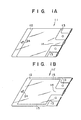
- an EVA copolymer tube 11 prepared by inflation molding is sealed by high-frequency induction heating or the like to provide a container main body. Sealing is performed only at a bottom side end 12 and an upper side end 13, providing a non-sealed portion 14 for insertion of an accessory to be described later.
- a similar molding may be obtained by blow molding.
- a pair of EVA copolymer sheets 11' formed by extrusion are superposed on each other.
- the bottom side end 12, the upper side end 13 and a side end 15 are sealed by high-frequency induction heating, leaving the non-sealed portion 14 as shown in Fig. 1B.
- the EVA copolymer molding of desired shape is then radiated with an electron beam at a dose of 5 to 20 Mrad to cross-link the EVA copolymer so that the desired gel content may be obtained.
- a short tube 22 as an interlayer of a non-cross-linked EVA copolymer is placed over one end portion of an outlet port 21 as an accessory to be mounted on a container main body 20.
- the outlet port 21 with the short tube 22 attached thereto is inserted into the container main body so that it may be brought into contact with the non-sealed portion of the container main body.
- the accessory is adhered by high-frequency induction heating to provide a container for medical use as shown in Fig. 3.
- a cap 23 may be placed on the outlet port 21.
- a through hole 24 for suspending the container is conveniently formed in the bottom side sealed portion of the container.
- An EVA copolymer with a content of vinyl acetate being 15% by weight was inflation molded into a flat tube having a lay-flat width of 130 mm and a thickness of 0.4 mm.
- the EVA copolymer tube was sealed into a desired container shape, leaving a non-sealed portion (lay-flat width of 130 mm and length of 10 mm) as shown in Fig. 1A. Thereafter, the EVA copolymer tube was radiated with an electron beam (dose of 15 Mrad) for cross-linking the copolymer so as to achieve a gel content of 80%, thus obtaining a container main body having a capacity of 500 ml.
- a short tube (15 mm outer diameter, 13 mm inner diameter, and 10 mm length) of a non-cross- linked EVA copolymer having a vinyl acetate content of 25% by weight was placed over one end of an outlet port (13 mm outer diameter, 10 mm inner diameter, and 25 mm length) of a polymeric material as shown in Table 1 below.
- the outlet port with the short tube was inserted into the non-sealed portion of the container main body, and then was adhered by high-frequency induction heating to provide a container for medical use.
- Physiological saline solution was poured in the container in an amount of 500 ml.
- a film of a high-density polyethylene of 0.1 mm thickness was adhered to the outer end of the outlet port to seal the container, and a rubber stopper was placed thereover.
- the container holding the solution thus obtained was subjected to high-pressure steam sterilization at 121°C for 30 minutes, and the state of the outlet port was observed.
- container main bodies of 500 ml capacity were obtained which consisted of a cross-linked EVA copolymer having a gel content of 80%.
- An outlet port was adhered to the non-sealed portion (17 mm lay-flat width, and 10 mm length) in the same manner as in Example 1.
- the materials of the outlet port used were Nos. 3 and 4 of Example 1.
- the short tubes used were made of an EVA copolymer containing 15% by weight of vinyl acetate.
- Example 1 After pouring 500 ml of physiological saline solution as in Example 1, the container was sealed and subjected to high-pressure steam sterilization as in Example 1.
- container main bodies of 500 ml capacity were manufactured which consisted of a cross-linked EVA copolymer having a 80% gel content.
- Outlet ports (25 mm length) of materials of Nos. 3 and 4 in Table 1 were inserted into the non-sealed portions (17 mm lay-flat width, and 10 mm length). They were adhered by high-frequency induction heating. After pouring 500 ml of physiological saline solution as in Example 1, the containers were sealed and were covered with rubber stoppers.
- Containers of the present invention were manufactured using an EVA copolymer which contained 20% by weight of vinyl acetate. Similar containers were also manufactured from a non-cross-linked EVA copolymer of the same kind and from polyvinyl chloride. Water was poured in each of these containers in the amount of 600 ml each and the containers were sealed. The containers were immersed in dry ice-ethanol (-72°C), in polyethylene bags or directly. They were left to stand in this condition for one hour to freeze the water. These containers were then dropped from various heights, shown in Table 2 below, on a floor with linoleum tiles. The states of the respective containers were observed to test resistance to low temperatures. The obtained results are shown in Table 2.
- the containers for medical use according to the present invention have improved resistance to low temperatures.
- the containers for medical use according to the present invention have heat resistance to withstand high-pressure steam sterilization and improved resistance to low temperatures.
- the containers have excellent flexibility and collapsibility which is preferable for use in closed medical systems, and are suitable for medical treatments in closed medical systems such as blood collection, separation of blood components, fluid therapy or the like.
- the containers for medical use according to the present invention also have excellent transparency which allows easy detection of foreign materials in the contents or separation of blood components. Since the containers for medical use of the present invention do not contain additives such as a plasticizer or a stabilizer, they may not elute into the contents.
- the containers for medical use of the present invention have high water vapor barrier characteristic, a change in the concentration of the content (liquid medicine, blood) is small, and the contents may be stored for a long period of time in a stable manner. Since all sealing operations can be performed by high-frequency means and do not involve any solvent, the containers are safe for medical use.
Landscapes
- Engineering & Computer Science (AREA)
- Mechanical Engineering (AREA)
- Health & Medical Sciences (AREA)
- Hematology (AREA)
- General Chemical & Material Sciences (AREA)
- Chemical Kinetics & Catalysis (AREA)
- Chemical & Material Sciences (AREA)
- Pharmacology & Pharmacy (AREA)
- Life Sciences & Earth Sciences (AREA)
- Animal Behavior & Ethology (AREA)
- General Health & Medical Sciences (AREA)
- Public Health (AREA)
- Veterinary Medicine (AREA)
- Medical Preparation Storing Or Oral Administration Devices (AREA)
Claims (13)
Applications Claiming Priority (2)
| Application Number | Priority Date | Filing Date | Title |
|---|---|---|---|
| JP92534/81 | 1981-06-16 | ||
| JP9253481 | 1981-06-16 |
Publications (3)
| Publication Number | Publication Date |
|---|---|
| EP0068271A2 EP0068271A2 (de) | 1983-01-05 |
| EP0068271A3 EP0068271A3 (en) | 1983-04-27 |
| EP0068271B1 true EP0068271B1 (de) | 1985-11-13 |
Family
ID=14057022
Family Applications (1)
| Application Number | Title | Priority Date | Filing Date |
|---|---|---|---|
| EP19820105200 Expired EP0068271B1 (de) | 1981-06-16 | 1982-06-14 | Behälter für medizinische Zwecke |
Country Status (5)
| Country | Link |
|---|---|
| US (1) | US4465487A (de) |
| EP (1) | EP0068271B1 (de) |
| AU (1) | AU554446B2 (de) |
| BE (1) | BE893528A (de) |
| DE (2) | DE3267393D1 (de) |
Cited By (1)
| Publication number | Priority date | Publication date | Assignee | Title |
|---|---|---|---|---|
| DE3305365A1 (de) * | 1983-02-17 | 1984-09-06 | Fresenius AG, 6380 Bad Homburg | Aufbewahrungsbeutel |
Families Citing this family (43)
| Publication number | Priority date | Publication date | Assignee | Title |
|---|---|---|---|---|
| US4707389A (en) * | 1983-09-30 | 1987-11-17 | Baxter Travenol Laboratories, Inc. | Multilayer tube, assembly and method |
| GB2149345B (en) * | 1983-11-09 | 1987-03-11 | Grace W R & Co | Heat sterilizable laminate films |
| US4650452A (en) * | 1985-04-29 | 1987-03-17 | Squibb Corporation | Method for joining a tube to a collection pouch |
| US4639251A (en) * | 1985-06-28 | 1987-01-27 | Kabivitrum, Inc. | Flexible collapsible container with liquid level indicating device |
| US4630448A (en) * | 1985-10-25 | 1986-12-23 | Baxter Travenol Laboratories, Inc. | Container for storing solid living tissue portions |
| CA1333165C (en) * | 1986-02-07 | 1994-11-22 | Baxter Travenol Laboratories, Inc. | Sterilizable multi-layer plastic materials for medical containers and the like |
| US4892604A (en) * | 1986-02-07 | 1990-01-09 | Baxter International Inc. | Method of making a sterilizable multi-layer container |
| US4726949A (en) * | 1986-08-26 | 1988-02-23 | Baxter Travenol Laboratories, Inc. | Irradiation of blood products |
| US4876788A (en) * | 1986-11-28 | 1989-10-31 | E. R. Squibb And Sons, Inc. | Method of making a leakproof connection about the outlet tube of a liquid containment bag |
| DE3726064A1 (de) * | 1987-08-06 | 1989-02-16 | Fresenius Ag | Verpackungseinheit fuer medizinische zwecke |
| US4910147A (en) * | 1988-09-21 | 1990-03-20 | Baxter International Inc. | Cell culture media flexible container |
| IT1230087B (it) * | 1989-05-26 | 1991-10-05 | Enichem Anic Spa | Contenitori per uso medicale, costituiti da copolimeri etilene vinilacetato, resistenti ad elevate temperature. |
| BE1004000A4 (fr) * | 1990-03-30 | 1992-09-08 | Solvay | Pellicule en resine a base de copolymere d'ethylene et d'acetate de vinyle dont au moins une des faces presente un aspect rugueux et procede pour sa realisation. |
| US5601778A (en) * | 1990-03-30 | 1997-02-11 | Solvay & Cie | Process for producing a resin film based on a copolymer of ethylene and vinyl acetate |
| US5460625A (en) * | 1990-07-31 | 1995-10-24 | Baxter International Inc. | Cryogenic resistant coextruded tubing |
| US5391163A (en) * | 1992-01-31 | 1995-02-21 | Inpaco Corporation | Pouch for administering medical fluids |
| DE69311497T2 (de) * | 1992-10-26 | 1997-11-06 | Mitsui Petrochemical Ind | Zusammendrückbarer rohrförmiger Behälter und Verfahren zu seiner Herstellung |
| US5483999A (en) * | 1993-03-15 | 1996-01-16 | Merit Medical Systems, Inc. | Waste collection system for containment and disposal of contaminated fluids |
| CA2130893A1 (en) * | 1993-09-17 | 1995-03-18 | Bayer Corporation | Method and system for collecting, processing and storing blood components |
| US6964798B2 (en) | 1993-11-16 | 2005-11-15 | Baxter International Inc. | Multi-layered polymer based thin film structure for medical grade products |
| US6391404B1 (en) | 1995-06-07 | 2002-05-21 | Baxter International Inc. | Coextruded multilayer film materials and containers made therefrom |
| US6696251B1 (en) | 1996-05-31 | 2004-02-24 | Board Of Trustees Of The University Of Illinois | Yeast cell surface display of proteins and uses thereof |
| FR2750399B1 (fr) * | 1996-06-28 | 1998-08-14 | Instr Medecine Veterinaire | Sachet de conditionnement de substances liquides a ouverture pelable pour introduction de canules, tubes et sondes |
| AU730240B2 (en) * | 1996-07-03 | 2001-03-01 | Baxter International Inc. | Method of sealing a port tube in a container |
| US6083587A (en) | 1997-09-22 | 2000-07-04 | Baxter International Inc. | Multilayered polymer structure for medical products |
| US20040122414A9 (en) * | 1997-09-22 | 2004-06-24 | Hurst William S. | Contoured tubing closure |
| KR19990030814A (ko) * | 1997-10-01 | 1999-05-06 | 김윤 | 내열성이 우수한 폴리에틸렌 테레프탈레이트 내열바틀 제조방법 |
| US6024252A (en) * | 1997-11-14 | 2000-02-15 | Nestec S. A. | Dispenser system |
| SE514623C2 (sv) * | 1998-09-24 | 2001-03-26 | Broden Bengt Inge | Anordning för uppsamling av urin eller andra kroppsvätskor |
| US7267885B1 (en) | 2000-03-16 | 2007-09-11 | Baxter International Inc. | Containers and peelable seal containers of new non-PVC material |
| AU2001258785A1 (en) * | 2000-05-25 | 2001-12-03 | Sumitomo Pharmaceuticals Company, Limited | Sterilization of silicone preparations |
| US6726061B2 (en) | 2001-03-01 | 2004-04-27 | Afp Advanced Food Products Llc | System for dispensing a viscous comestible product |
| US6719017B1 (en) | 2002-01-10 | 2004-04-13 | Merit Medical Systems, Inc. | Waste collection system for containment and disposal of contaminated fluids |
| USD502993S1 (en) | 2002-01-10 | 2005-03-15 | Merit Medical Systems, Inc. | Waste collection container |
| EP1607434A4 (de) * | 2003-03-27 | 2007-08-15 | Jsr Corp | Harzformkörper und bearbeiteter gegenstand daraus |
| KR20070015178A (ko) | 2004-04-27 | 2007-02-01 | 백스터 인터내셔널 인코포레이티드 | 교반-탱크 반응기 시스템 |
| US7964829B2 (en) * | 2006-12-20 | 2011-06-21 | Tyco Healthcare Group Lp | Apparatus and method for making bag assembly |
| EP2151319A1 (de) * | 2008-08-08 | 2010-02-10 | PolyCine GmbH | Stopfen zum Verschliessen eines medizinischen Systems |
| US8502121B2 (en) * | 2009-06-17 | 2013-08-06 | Covidien Lp | Radiofrequency welding apparatus |
| US8151851B2 (en) * | 2009-06-17 | 2012-04-10 | Tyco Healthcare Group Lp | Apparatus for making bag assembly and method thereof |
| FR2952041B1 (fr) * | 2009-10-29 | 2012-02-03 | Sartorius Stedim Biotech Sa | Film multicouche de paroi de poche a soudures destinee a un produit biopharmaceutique. |
| US8398572B2 (en) | 2010-09-21 | 2013-03-19 | Covidien Lp | Bladder tube connection |
| WO2016165731A1 (de) * | 2015-04-13 | 2016-10-20 | N.V. Nutricia | Schlauch für einen medizinischen behälter |
Family Cites Families (11)
| Publication number | Priority date | Publication date | Assignee | Title |
|---|---|---|---|---|
| GB574656A (en) * | 1943-12-23 | 1946-01-15 | Georg Haim | Improvements in or relating to the flanging of pipes, conduits and the like of plastic materials |
| US3576650A (en) * | 1968-01-18 | 1971-04-27 | Union Carbide Corp | Cryogenic plastic film package |
| US3519158A (en) * | 1968-09-27 | 1970-07-07 | Dave Chapman Goldsmith & Yamas | Aseptic connector and closure |
| GB1479663A (en) * | 1974-06-07 | 1977-07-13 | Automaticon As | Bag especially urine bag and the method for the production thereof |
| US4112989A (en) * | 1975-11-06 | 1978-09-12 | Baxter Travenol Laboratories, Inc. | Flexible collapsible blood freezing containers |
| DE7621615U1 (de) * | 1976-07-08 | 1977-02-03 | Biotest-Serum-Institut Gmbh, 6000 Frankfurt | Beutel zur aufnahme von blut und blutbestandteilen |
| JPS5841862B2 (ja) * | 1977-01-08 | 1983-09-14 | テルモ株式会社 | 医療用器具 |
| GB1576701A (en) * | 1978-05-30 | 1980-10-15 | Baxter Travenol Lab | Collapsible containers |
| GB2035093B (en) * | 1978-10-26 | 1983-01-12 | Baxter Travenol Lab | Medical articles made of blood compatible polymers |
| US4253458A (en) * | 1979-03-08 | 1981-03-03 | Baxter Travenol Laboratories, Inc. | Method and apparatus for collecting blood plasma |
| US4327726A (en) * | 1979-08-15 | 1982-05-04 | Baxter Travenol Laboratories, Inc. | Connector member for dissimilar materials |
-
1982
- 1982-06-03 US US06/384,189 patent/US4465487A/en not_active Expired - Fee Related
- 1982-06-04 AU AU84479/82A patent/AU554446B2/en not_active Ceased
- 1982-06-14 EP EP19820105200 patent/EP0068271B1/de not_active Expired
- 1982-06-14 DE DE8282105200T patent/DE3267393D1/de not_active Expired
- 1982-06-15 BE BE0/208360A patent/BE893528A/fr not_active IP Right Cessation
- 1982-06-15 DE DE8217144U patent/DE8217144U1/de not_active Expired
Cited By (1)
| Publication number | Priority date | Publication date | Assignee | Title |
|---|---|---|---|---|
| DE3305365A1 (de) * | 1983-02-17 | 1984-09-06 | Fresenius AG, 6380 Bad Homburg | Aufbewahrungsbeutel |
Also Published As
| Publication number | Publication date |
|---|---|
| BE893528A (fr) | 1982-10-01 |
| EP0068271A2 (de) | 1983-01-05 |
| US4465487A (en) | 1984-08-14 |
| EP0068271A3 (en) | 1983-04-27 |
| DE8217144U1 (de) | 1982-12-02 |
| AU8447982A (en) | 1982-12-23 |
| DE3267393D1 (en) | 1985-12-19 |
| AU554446B2 (en) | 1986-08-21 |
Similar Documents
| Publication | Publication Date | Title |
|---|---|---|
| US4465487A (en) | Container for medical use | |
| US4600613A (en) | Medical bag | |
| US4929479A (en) | Medical bag | |
| US5573527A (en) | Dockable bag system and method | |
| EP0109983B1 (de) | Verfahren zum Herstellen eines Plastikbehälters der eine Infusionslösung enthält, die während einer langen Zeit keine Vernichtung der Infusionslösung gestattet | |
| FI82597B (fi) | Uppbevaringspaose. | |
| EP0098312B1 (de) | Gegen extreme Tieftemperaturen beständiger Behälter | |
| US4410026A (en) | Port block assembly for interconnecting a fluid container with a fluid conduit | |
| CA1189027A (en) | Bag for the storage of liquids | |
| EP0093797B1 (de) | Verpackung für medizinische Behälter | |
| EP0106290B1 (de) | Luftleere Blutentnahmevorrichtung | |
| US4508236A (en) | Container and associated cap assembly for plasma collection and the like | |
| EP1407750B1 (de) | Verschlussvorrichtung für flexible Beutel | |
| JPH11290424A (ja) | 低温保存袋 | |
| DE3782745D1 (de) | Sterilisierbare, mehrschichtige kunststoffmaterialien fuer medizinische gefaesse. | |
| US4490420A (en) | Medical bag and method for manufacturing the same | |
| JPS6138705B2 (de) | ||
| US9896654B2 (en) | Single—use biopharmaceutical device for producing, storing, and transporting a biopharmaceutical material, and corresponding multilayer tube | |
| US2959280A (en) | Sterile packages | |
| JPH08500752A (ja) | 冷凍袋 | |
| US12318569B2 (en) | Sterile connector | |
| JPH02205563A (ja) | 低温冷凍保存用容器 | |
| JPH0118740B2 (de) | ||
| GB2146614A (en) | Medical bag | |
| EP0727200B1 (de) | Verbindungssystem und Verfahren für Beutel |
Legal Events
| Date | Code | Title | Description |
|---|---|---|---|
| PUAI | Public reference made under article 153(3) epc to a published international application that has entered the european phase |
Free format text: ORIGINAL CODE: 0009012 |
|
| AK | Designated contracting states |
Designated state(s): DE FR SE |
|
| PUAL | Search report despatched |
Free format text: ORIGINAL CODE: 0009013 |
|
| AK | Designated contracting states |
Designated state(s): DE FR SE |
|
| 17P | Request for examination filed |
Effective date: 19830629 |
|
| GRAA | (expected) grant |
Free format text: ORIGINAL CODE: 0009210 |
|
| AK | Designated contracting states |
Designated state(s): DE FR SE |
|
| REF | Corresponds to: |
Ref document number: 3267393 Country of ref document: DE Date of ref document: 19851219 |
|
| ET | Fr: translation filed | ||
| PLBE | No opposition filed within time limit |
Free format text: ORIGINAL CODE: 0009261 |
|
| STAA | Information on the status of an ep patent application or granted ep patent |
Free format text: STATUS: NO OPPOSITION FILED WITHIN TIME LIMIT |
|
| 26N | No opposition filed | ||
| EAL | Se: european patent in force in sweden |
Ref document number: 82105200.8 |
|
| PGFP | Annual fee paid to national office [announced via postgrant information from national office to epo] |
Ref country code: DE Payment date: 19950607 Year of fee payment: 14 |
|
| PGFP | Annual fee paid to national office [announced via postgrant information from national office to epo] |
Ref country code: FR Payment date: 19950609 Year of fee payment: 14 |
|
| PGFP | Annual fee paid to national office [announced via postgrant information from national office to epo] |
Ref country code: SE Payment date: 19950615 Year of fee payment: 14 |
|
| PG25 | Lapsed in a contracting state [announced via postgrant information from national office to epo] |
Ref country code: SE Effective date: 19960615 |
|
| PG25 | Lapsed in a contracting state [announced via postgrant information from national office to epo] |
Ref country code: FR Effective date: 19970228 |
|
| PG25 | Lapsed in a contracting state [announced via postgrant information from national office to epo] |
Ref country code: DE Effective date: 19970301 |
|
| EUG | Se: european patent has lapsed |
Ref document number: 82105200.8 |
|
| REG | Reference to a national code |
Ref country code: FR Ref legal event code: ST |