EP0068998A1 - Aryl-1 aminométhyl-2 cyclopropanes carboxylates (Z), leur préparation et leur application en tant que médicaments utiles dans le traitement d'algies diverses - Google Patents
Aryl-1 aminométhyl-2 cyclopropanes carboxylates (Z), leur préparation et leur application en tant que médicaments utiles dans le traitement d'algies diverses Download PDFInfo
- Publication number
- EP0068998A1 EP0068998A1 EP82401128A EP82401128A EP0068998A1 EP 0068998 A1 EP0068998 A1 EP 0068998A1 EP 82401128 A EP82401128 A EP 82401128A EP 82401128 A EP82401128 A EP 82401128A EP 0068998 A1 EP0068998 A1 EP 0068998A1
- Authority
- EP
- European Patent Office
- Prior art keywords
- cyclopropane
- methyl
- hydrochloride
- phenyl
- carbonyl
- Prior art date
- Legal status (The legal status is an assumption and is not a legal conclusion. Google has not performed a legal analysis and makes no representation as to the accuracy of the status listed.)
- Granted
Links
- 0 *OC(C1(C(CN(CC2)CC*2Nc2ccccc2)C1)c1ccccc1)=O Chemical compound *OC(C1(C(CN(CC2)CC*2Nc2ccccc2)C1)c1ccccc1)=O 0.000 description 7
- UZPWKTCMUADILM-UHFFFAOYSA-N CC1C=CCCC1 Chemical compound CC1C=CCCC1 UZPWKTCMUADILM-UHFFFAOYSA-N 0.000 description 1
Classifications
-
- C—CHEMISTRY; METALLURGY
- C07—ORGANIC CHEMISTRY
- C07D—HETEROCYCLIC COMPOUNDS
- C07D295/00—Heterocyclic compounds containing polymethylene-imine rings with at least five ring members, 3-azabicyclo [3.2.2] nonane, piperazine, morpholine or thiomorpholine rings, having only hydrogen atoms directly attached to the ring carbon atoms
- C07D295/04—Heterocyclic compounds containing polymethylene-imine rings with at least five ring members, 3-azabicyclo [3.2.2] nonane, piperazine, morpholine or thiomorpholine rings, having only hydrogen atoms directly attached to the ring carbon atoms with substituted hydrocarbon radicals attached to ring nitrogen atoms
- C07D295/14—Heterocyclic compounds containing polymethylene-imine rings with at least five ring members, 3-azabicyclo [3.2.2] nonane, piperazine, morpholine or thiomorpholine rings, having only hydrogen atoms directly attached to the ring carbon atoms with substituted hydrocarbon radicals attached to ring nitrogen atoms substituted by carbon atoms having three bonds to hetero atoms with at the most one bond to halogen, e.g. ester or nitrile radicals
- C07D295/155—Heterocyclic compounds containing polymethylene-imine rings with at least five ring members, 3-azabicyclo [3.2.2] nonane, piperazine, morpholine or thiomorpholine rings, having only hydrogen atoms directly attached to the ring carbon atoms with substituted hydrocarbon radicals attached to ring nitrogen atoms substituted by carbon atoms having three bonds to hetero atoms with at the most one bond to halogen, e.g. ester or nitrile radicals with the ring nitrogen atoms and the carbon atoms with three bonds to hetero atoms separated by carbocyclic rings or by carbon chains interrupted by carbocyclic rings
-
- A—HUMAN NECESSITIES
- A61—MEDICAL OR VETERINARY SCIENCE; HYGIENE
- A61P—SPECIFIC THERAPEUTIC ACTIVITY OF CHEMICAL COMPOUNDS OR MEDICINAL PREPARATIONS
- A61P25/00—Drugs for disorders of the nervous system
- A61P25/04—Centrally acting analgesics, e.g. opioids
-
- C—CHEMISTRY; METALLURGY
- C07—ORGANIC CHEMISTRY
- C07D—HETEROCYCLIC COMPOUNDS
- C07D211/00—Heterocyclic compounds containing hydrogenated pyridine rings, not condensed with other rings
- C07D211/04—Heterocyclic compounds containing hydrogenated pyridine rings, not condensed with other rings with only hydrogen or carbon atoms directly attached to the ring nitrogen atom
- C07D211/06—Heterocyclic compounds containing hydrogenated pyridine rings, not condensed with other rings with only hydrogen or carbon atoms directly attached to the ring nitrogen atom having no double bonds between ring members or between ring members and non-ring members
- C07D211/08—Heterocyclic compounds containing hydrogenated pyridine rings, not condensed with other rings with only hydrogen or carbon atoms directly attached to the ring nitrogen atom having no double bonds between ring members or between ring members and non-ring members with hydrocarbon or substituted hydrocarbon radicals directly attached to ring carbon atoms
- C07D211/10—Heterocyclic compounds containing hydrogenated pyridine rings, not condensed with other rings with only hydrogen or carbon atoms directly attached to the ring nitrogen atom having no double bonds between ring members or between ring members and non-ring members with hydrocarbon or substituted hydrocarbon radicals directly attached to ring carbon atoms with radicals containing only carbon and hydrogen atoms attached to ring carbon atoms
- C07D211/14—Heterocyclic compounds containing hydrogenated pyridine rings, not condensed with other rings with only hydrogen or carbon atoms directly attached to the ring nitrogen atom having no double bonds between ring members or between ring members and non-ring members with hydrocarbon or substituted hydrocarbon radicals directly attached to ring carbon atoms with radicals containing only carbon and hydrogen atoms attached to ring carbon atoms with hydrocarbon or substituted hydrocarbon radicals attached to the ring nitrogen atom
-
- C—CHEMISTRY; METALLURGY
- C07—ORGANIC CHEMISTRY
- C07D—HETEROCYCLIC COMPOUNDS
- C07D307/00—Heterocyclic compounds containing five-membered rings having one oxygen atom as the only ring hetero atom
- C07D307/02—Heterocyclic compounds containing five-membered rings having one oxygen atom as the only ring hetero atom not condensed with other rings
- C07D307/04—Heterocyclic compounds containing five-membered rings having one oxygen atom as the only ring hetero atom not condensed with other rings having no double bonds between ring members or between ring members and non-ring members
- C07D307/10—Heterocyclic compounds containing five-membered rings having one oxygen atom as the only ring hetero atom not condensed with other rings having no double bonds between ring members or between ring members and non-ring members with substituted hydrocarbon radicals attached to ring carbon atoms
- C07D307/14—Radicals substituted by nitrogen atoms not forming part of a nitro radical
Definitions
- the present invention carried out at the Pierre FABRE Research Center, relates to new derivatives of 1-aryl-2-aminomethyl-cyclopropanescarboxylic esters (Z), their preparation process and their use in therapeutics and in particular in the treatment of various types of pain.
- the present invention relates to new compounds, which differ from those of the prior art. aforementioned; these are cyclopropanic amino ester derivatives, corresponding to the formula:
- these are cyclopropanic amino ester derivatives, corresponding to the formula:
- the modulations carried out at the level of the functional groups carried by the cyclopropanic group confer on these new cyclopropanic amino esters very interesting pharmacological properties, and more particularly an analgesic action which makes it possible to use these compounds in the treatment of 'various pain.
- the heterocycle formed by the radicals R 2 and R 3 with the neighboring nitrogen atom more particularly designates a heterocycle of non-aroznatic character with 5 or 6 members which may optionally contain one or more other heteroatoms mainly chosen from nitrogen and l oxygen and which can also be substituted, for example in the para position of said neighboring nitrogen atom or on the second heteroatom by an aryl radical, in particular a phenyl radical itself optionally substituted by one or more other halogen atoms, such as chlorine.
- the present invention also relates to the salts of the compounds of general formula I with therapeutically acceptable mineral or organic acids.
- these salts mention will be made of halohydrates, such as the hydrochloride, fumarate, maleate, oxalate, citrate and glutamate.
- the reaction solvent is evaporated and rectified under reduced pressure.
- the reaction solution is kept at reflux for 5 hours.
- the solvent is evaporated to dryness.
- the residual mass is treated with a bicarbonate solution, extracted with ethyl ether, then washed with water and dried over sodium sulfate.
- Solubility water soluble at 50%.
- Solubility water soluble at 50%.
- Phenyl-1 ethoxy carbonyl-1 (N-methyl N-tetrahydro-furfuryl-2 'amino methyl cyclopropane (Z)
- Phenyl-1 fumarate (methyl-3 'buten-2 yloxy carbonyl) -1 dimethylamino methyl-2 cyclopropane (Z)
- the lethal doses 50 were sought by oral and intraperitoneal route and calculated according to the method de MILLER and TAINTER (Proc. Soc. Exper. Biol. Chem. 1944, 57, 261).
- mice subcutaneously 50 mg / kg
- mice subcutaneously 50 mg / kg
- the results are expressed in Table I.
- these compounds can be used therapeutically in the treatment of various types of pain and more particularly the compounds of Examples 36,41,44,46 and 47.
- preparations can be in solid form, for example tablets, dargées, capsules, etc. or in liquid form, for example solutions, suspensions or emulsions.
- compositions in a form suitable for injection are subjected to conventional pharmaceutical operations such as sterilization and / or may contain adjuvants, for example preservatives, stabilizers, wetting or emulsification, buffer compounds, etc. .
- the dosages to which the active compounds and their addition salts with therapeutically compatible acids can be administered can vary in large proportions depending on the condition of the patient.
- a daily dosage of about 0.1 mg to 1 mg / kg of body weight is however preferred.
- compositions according to the invention can be used in human or veterinary medicine, for example in the treatment of painful phenomena in particular in oncology, traumatology, rheumatology, neurology and surgery.
Landscapes
- Chemical & Material Sciences (AREA)
- Organic Chemistry (AREA)
- Health & Medical Sciences (AREA)
- Medicinal Chemistry (AREA)
- Pain & Pain Management (AREA)
- Neurology (AREA)
- Neurosurgery (AREA)
- Bioinformatics & Cheminformatics (AREA)
- Chemical Kinetics & Catalysis (AREA)
- General Chemical & Material Sciences (AREA)
- Engineering & Computer Science (AREA)
- Nuclear Medicine, Radiotherapy & Molecular Imaging (AREA)
- Biomedical Technology (AREA)
- Pharmacology & Pharmacy (AREA)
- Life Sciences & Earth Sciences (AREA)
- Animal Behavior & Ethology (AREA)
- General Health & Medical Sciences (AREA)
- Public Health (AREA)
- Veterinary Medicine (AREA)
- Organic Low-Molecular-Weight Compounds And Preparation Thereof (AREA)
- Acyclic And Carbocyclic Compounds In Medicinal Compositions (AREA)
- Pharmaceuticals Containing Other Organic And Inorganic Compounds (AREA)
- Hydrogenated Pyridines (AREA)
Abstract
Description
- La présente invention, réalisée au Centre de Recherches Pierre FABRE, concerne de nouveaux dérivés d'esters aryl-1 aminométhyl-2 cyclopropanescarboxyliques (Z), leur procédé de préparation et leur utilisation en thérapeutique et en particulier dans le traitement des algies diverses.
- La technique antérieure la plus proche connue peut par exemple être illustrée par le brevet français n° 75 07120 concernant un procédé de préparation d'acides aryl-1 hydroxyméthyl-2 cyclopropanes carboxyliques.
- Ces dérivés acide-alcools ont par ailleurs fait l'objet d'une publication de G.MOUZIN, H.COUSSE et B.BONNAUD dans Synthesis 1978, 304, reprise dans Synthetic methods of organic chemistry (Ed.W.THEILHEIMER) 34, 1980, 317. L'étude pharmacologique, des dérivés de l'acide phényl-1 hydroxyméthyl-2 cyclopropane carboxylique décrits par S.CASADIO, B.BONNAUD,G.MOUZIN et H.COUSSE dans Boll. Chim. Farm. 117, 1978, 331, a montré la faible activité pharmacologique de ces dérivés.
- La présente invention se rapporte à de nouveaux composés, se distinguant de ceux de la technique antérieure précitée ; il s'agit de dérivés esters aminés cyclopropaniques, répondant à la formule :

- La présente invention concerne de nouveaux dérivés d'aryl-1 aminométhyl-2 cyclopropanes carboxylates(Z) de formule générale I :
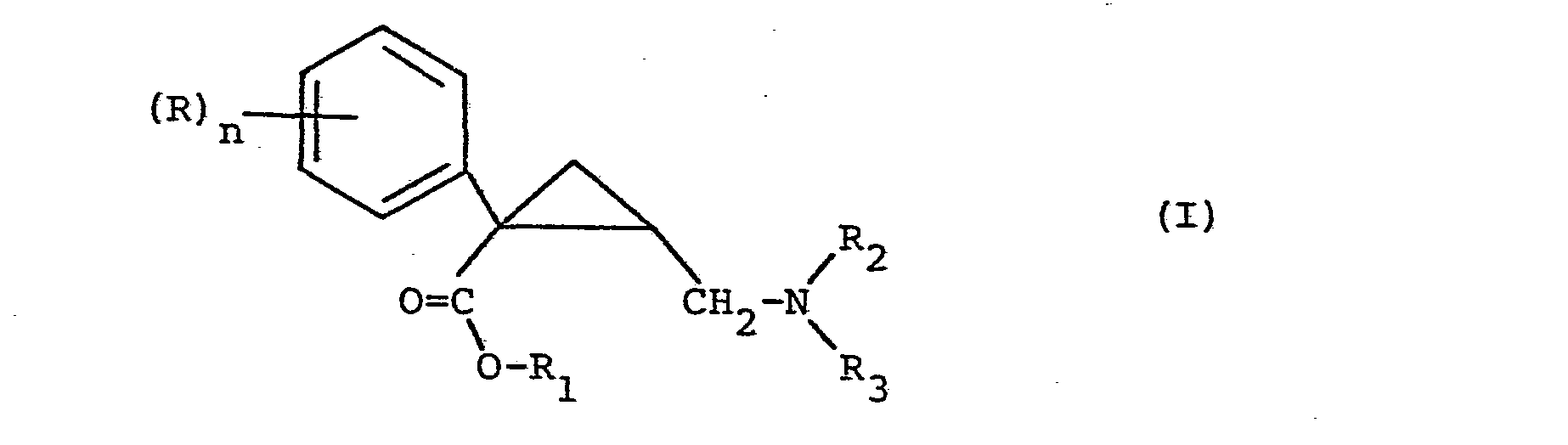
- R représente un atome d'hydrogène ou d'halogène, un groupe alcoyle inférieur en C1 à C 4, alcoxy inférieur en C1 à C4, hydroxy, nitro, amino, ou sulfamoyle,
- n représente les valeurs 1, 2 ou 3, (R)n peut également former avec le cycle benzénique le noyau naphtyle ;
- R1 représente un groupe alcoyle ou alcényle linéaires ou ramifiés en C1 à C5, aryle ou benzyle ;
- R2 et R3 représentent un atome d'hydrogène, un groupe alcoyle, alcényle, alcynyle, hydroxyalcoyle, carboxyalcoyle, alcoxyalcoyle, ou dialcoylaminoalcoyle linéaires ou ramifiés en C1 à C5, aryle, arylalcoyle ou cycloalcoyle ;
- R2 et R3 pouvant également former avec l'atome d'azote voisin un hétérocycle à 5 ou 6 chaînons, à la condition toutefois que lorsque R1 représente le radical éthyle et R représente un atome d'hydrogène, R2 et R3 ne peuvent pas simultanément représenter un radical méthyle.
- L'hétérocycle formé par les radicaux R2 et R3 avec l'atome d'azote voisin désigne plus particulièrement un hétérocvcle de caractère non aroznatique à 5 ou 6 chaînons pouvant éventuellement contenir un ou plusieurs autres hétéroatomes principalement choisis parmi l'azote et l'oxygène et pouvant en outre être substitué, par exemple en position para dudit atome d'azote voisin ou sur le second hétéroatome par un radical aryle, en particulier un radical phényle lui-même éventuellement substitué par un ou plusieurs autres atomes d'halogène, tel que le chlore.
- La présente invention concerne également les sels des composés de formule générale I avec des acides minéraux ou organiques thérapeutiquement acceptables. A titre d'exemples non limitatifs de ces sels on mentionnera les halogénohydrates, tels que le chlorhydrate, le fumarate, le maléate, l'oxalate, le citrate et le glutamate.
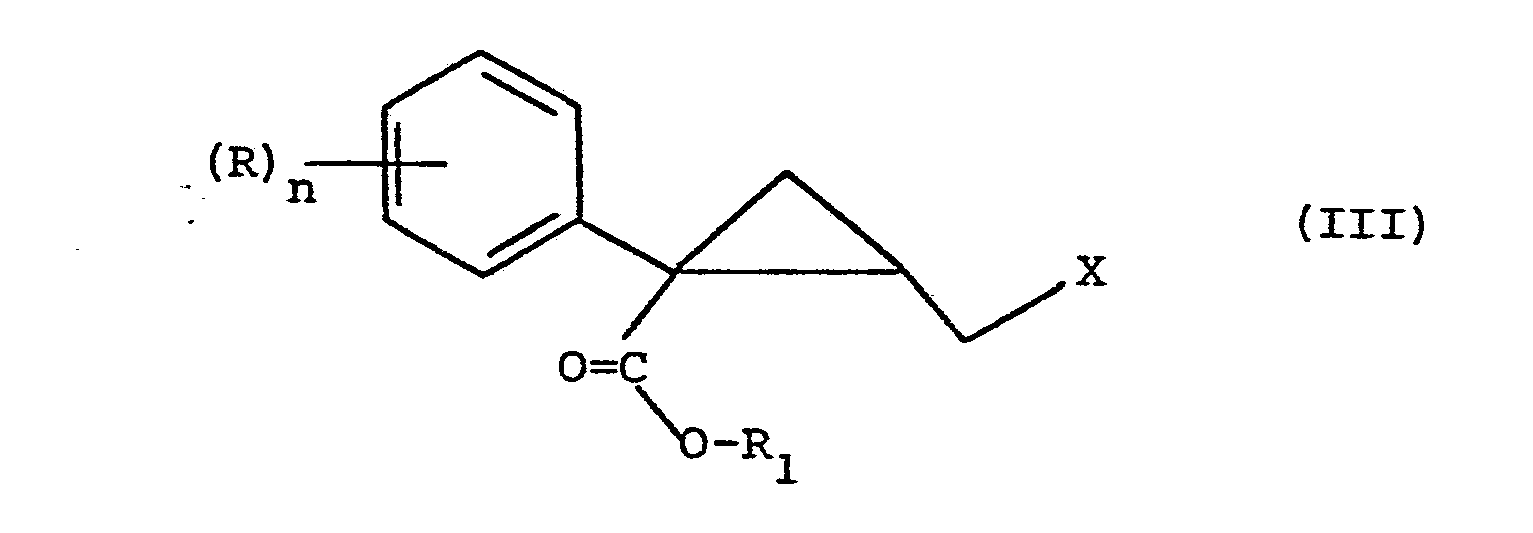
- La présente invention concerne également un procédé de préparation des composés de formule générale (I) consistant à traiter la lactone de formule générale (II) par un alcool ou un phénol en présence d'un halogénure de thionyle. La lactone de formule générale (II) peut par exemple être obtenue par le procédé de préparation décrit dans le brevet français n° 75 07120 appartenant à la demanderesse. L'intermédiaire halogéné de formule générale (III) est ensuite condensé sur une amine. Le procédé de préparation est illustré par le schéma réactionnel suivant.

- X représente un halogène
- R, R1, R2, R3 et n ont la signification donnée
- précédemment à propos de la formule générale (I).
- Les exemples suivants illustrent l'invention sans, bien entendu, en limiter la portée. Dans les formules des composés des exemples suivants, le symbole Et désigne le radical éthyle.
- Préparation du chlorhydrate du phênyl-1 éthoxy carbonyl-1 pyrrolidino méthyl-2 cyclopropane (Z)
- Dans 500 cm3 d'éthanol à -10°C, on introduit sous agitation 126 cm3 (1,8 mole) de chlorure de thionyle en 2 h 30, puis on additionne 100 g (0,57 mole) de phényl-1 oxo-2 oxa-3 bicyclo(3.1.0)hexane. On laisse revenir à température ambiante en maintenant l'agitation pendant 12 heures.
- On évapore le solvant réactionnel et on rectifie sous pression réduite.
- On récupère avec un rendement de 95 % le produit de formule :

- A une solution de (0,03 mole) de phényl-1 éthoxy carbonyl-1 chlorométhyl-2 cyclopropane (Z) dans 60 cm3 de toluène, on ajoute 6,4 g (0,09 mole) de pyrrolidine.
- La solution réactionnelle est maintenue au reflux pendant 5 heures. Le solvant est évaporé jusqu'à siccité.
- La masse résiduelle est traitée par une solution bicarbonatée, on extrait à l'éther éthylique, puis on lave à l'eau et on sèche sur sulfate de sodium.
- La base libre est traitée par une solution éthanolique saturée d'acide chlorhydrique, par addition d'éther le sel précipite et l'on récupère avec un rendement de 85 % le produit de formule :

- - support : gel de silice 60 F 254 Merck
- - solvant : butanol-acide acétique-eau 6/2/2
- - révélation : UV et iode
- - Rf : 0,49
- Solubilité : soluble dans l'eau à 50 %.
- Chlorhydrate du phényl-1 éthoxy carbonyl-1 (phényl-2 éthyl) amino-méthyl-2 cyclopropane (Z)
- D'une façon similaire à celle décrite dans l'exemple 1b, mais en utilisant la phényl-2 éthylamine, on obtient le produit de formule :

- Formule brute : C21H26Cl N0 2 Masse moléculaire : 359,9 Cristaux : blancs Point de fusion : 156°C Chromatographie sur plaque :
- - support : gel de silice 60 F 254 Merck
- - solvant : chloroforme-méthanol
- - révélation : UV et iode
- - Rf : 0,62 Solubilité : soluble dans l'eau à 50 %.
- D'une façon similaire à celle décrite dans l'exemple 1b, mais en utilisant la méthylamine, on obtient le produit de formule :

- - support : gel de silice 60 F 254 Merck
- - solvant: butanol-acide acétique-eau 6/2/2
- - révélation : UV et iode
- - Rf : 0,54 Solubilité : soluble dans l'eau à 50 %.
- Chlorhydrate du phényl-1 éthoxy carbonyl-1 diéthyl amino méthyl-2 cyclopropane (Z)
- D'une façon similaire à celle décrite dans l'exemple 1b, mais en utilisant la diéthylamine, on obtient le produit de formule :

- - support : gel de silice 60 F 254 Merck
- - solvant : butanol-acide acétique-eau 6/2/2
- - révélation : UV et iode
- - Rf : 0,44
- D'une façon similaire à celle décrite dans l'exemple lb, mais en utilisant la N-méthyl benzylamine, on obtient le produit de formule :

- - support : gel de silice 60 F 254 Merck
- - solvant : butanol-acide acétique-eau 6/2/2
- - révélation : UV et iode
- - Rf : 0,6 Solubilité : soluble dans l'eau à 10 %.
- D'une façon similaire à celle décrite dans l'exemple 1b, mais en utilisant la terbutylamine, on obtient le produit de formule :

- - support : gel de silice 60 F 254 Merck
- - solvant : butanol-acide acétique-eau 6/2/2
- - révélation : UV et iode
- - Rf : 0,59 Solubilité : soluble dans l'eau à 17 %.
- D'une façon similaire à celle décrite dans l'exemple 1b, mais en utilisant la diéthanolamine et l'acide maléique comme agent salifiant, on obtient le produit de formule :


- - support : gel de silice 60 F 254 Merck
- - solvant : butanol-acide acétique-eau 6/2/2
- - révélation : UV et iode
- - Rf : 0,47 Solubilité : soluble dans l'eau à 50 %.
- D'une façon similaire à celle décrite dans l'exemple 1b, mais en utilisant la N-phényl pipérazine, on obtient le produit de formule :

- - support : gel de silice 60 F 254 Merck
- - solvant : butanol-acide acétique-eau 6/2/2
- - révélation : UV et iode
- - Rf : 0,72 Solubilité : soluble dans l'eau à 0,5 %.
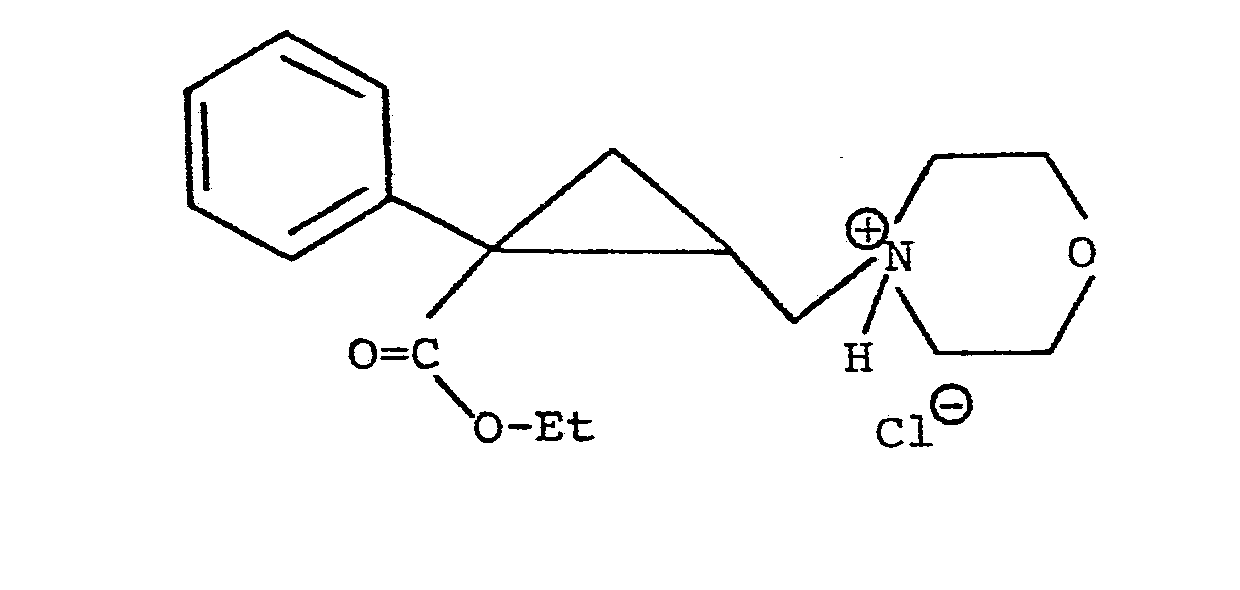
- D'une façon similaire à celle décrite dans l'exemple 1b, mais en utilisant la morpholine, on obtient le produit de formule :
- - support : gel de silice 60 F 254 Merck
- - solvant : butanol-acide acétique-eau 6/2/2
- - révélation : UV et iode
- - Rf : 0,52 Solubilité : soluble dans l'eau à 50 %.
- D'une façon similaire à celle décrite dans l'exemple 1b, mais en utilisant la N-méthyl éthanolamine et l'acide fumarique comme agent salifiant, on obtient le produit de formule :

- Formule brute : C20H27NO7 Masse moléculaire : 393,42 Cristaux : blancs Point de fusion : 139°C Chromatographie sur plaque :
- - support : gel de silice 60 F 254 Merck
- - solvant : butanol-acide acétique-eau 6/2/2
- - révélation : UV et iode
- - Rf : 0,4 Solubilité : soluble dans l'eau à 8 %.
- D'une façon similaire à celle décrite dans l'exemple lb, mais en utilisant la dibenzylamine, on obtient le produit de formule :

- - support : gel de silice 60 F 254 Merck
- - solvant : butanol-acide acétique-eau 6/2/2
- - révélation : UV et iode
- - Rf : 0,77 Solubilité : insoluble dans l'eau, soluble à 2 % dans le DMA.
- D'une façon similaire à celle décrite dans l'exemple 1b, mais en utilisant l'amino-2 méthyl-2 butyne-3, on obtient le produit de formule :

- - support : gel de silice 60 F 254 Merck
- - solvant : butanol-acide acétique-eau 6/2/2
- - révélation : UV et iode
- - Rf : 0,65 Solubilité : soluble dans l'eau à 3 %.
- D'une façon similaire à celle décrite dans l'exemple 1b, mais en utilisant l'éthoxy-2 éthylamine, on obtient le produit de formule :

- - support : gel de silice 60 F 254 Merck
- - solvant : butanol-acide acétique-eau 6/2/2
- - révélation : UV et iode
- - Rf : 0,59 Solubilité : soluble dans l'eau à 50 %.
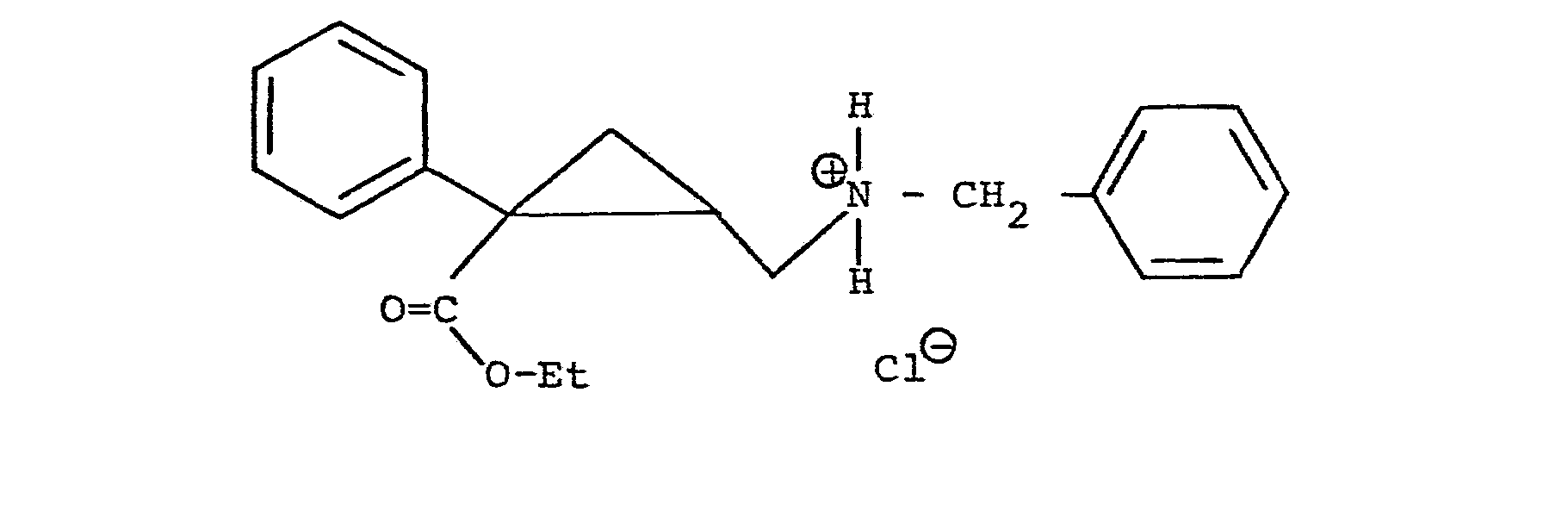
- D'une façon similaire à celle décrite dans l'exemple Ib, mais en utilisant la benzylamine, on obtient le produit de formule :
- - support : gel de silice 60 F 254 Merck
- - solvant : butanol-acide acétique-eau 6/2/2
- - révélation : UV et iode
- - Rf : 0,65 Solubilité : soluble dans l'eau à 1 %.
- D'une façon similaire à celle décrite dans l'exemple 1b, mais en utilisant l'isopropylamine, on obtient le produit de formule :

- - support : gel de silice 60 F 254 Merck
- - solvant : butanol-acide acétique-eau 6/2/2
- - révélation : UV et iode
- - Rf : 0,52 Solubilité : soluble dans l'eau à 50 %.
- D'une façon similaire à celle décrite dans l'exemple 1b, mais en utilisant la di-isopropylamine et comme agent salifiant l'acide maléique, on obtient le produit de formule :

- - support : gel de silice 60 F 254 Merck
- - solvant : butanol-acide acétique-eau 6/2/2
- - révélation : UV et iode
- - Rf : 0,5 Solubilité : soluble dans l'eau à 10 %.
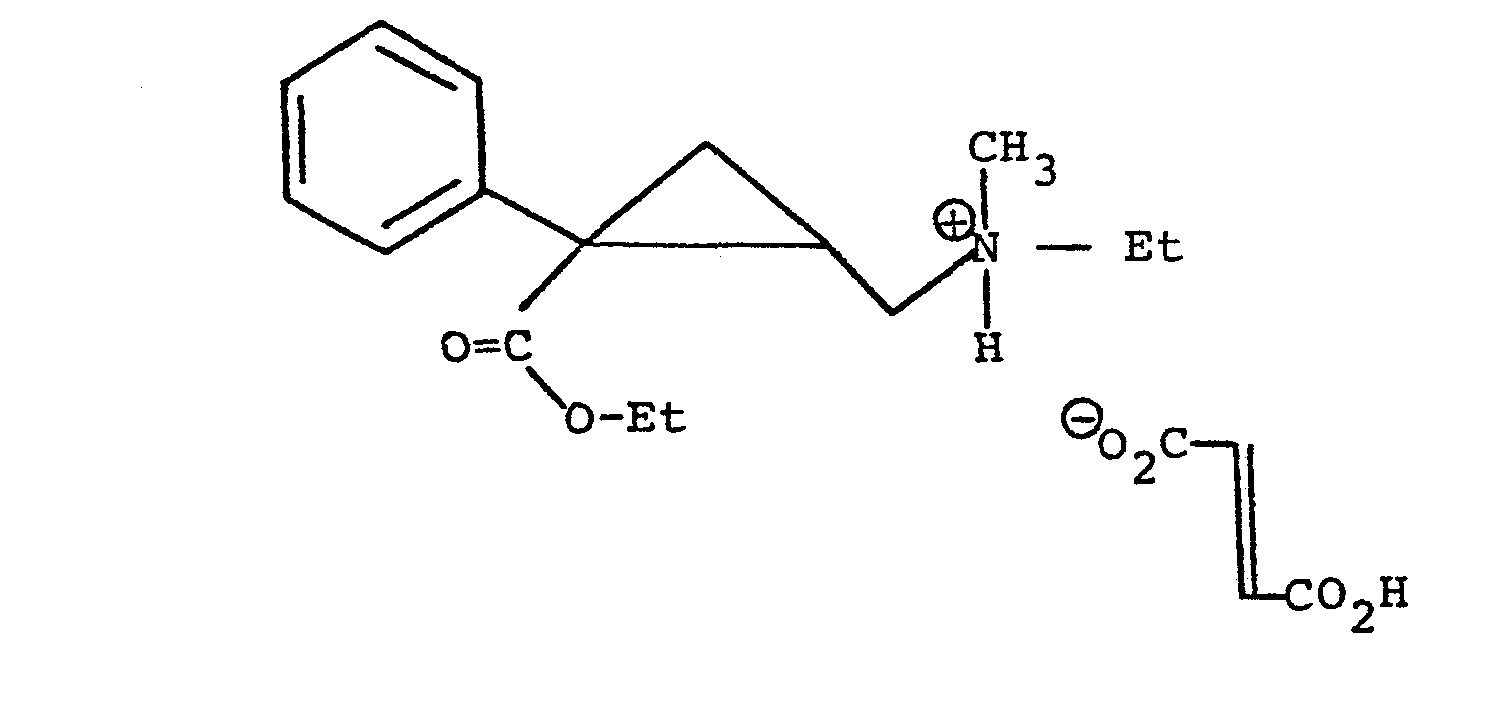
- D'une façon similaire à celle décrite dans l'exemple 1b, mais en utilisant la N-méthyl N-éthylamine, et comme agent salifiant l'acide fumarique, on obtient le produit de formule :
- - support : gel de silice 60 F 254 Merck
- - solvant : butanol-acide acétique-eau 6/2/2
- - révélation : UV et iode
- - Rf : 0,45 Solubilité : soluble dans l'eau à 50 %.
- D'une façon similaire à celle décrite dans l'exemple 1b, mais en utilisant la N-méthyl pentylamine et l'acide fumarique comme agent salifiant, on obtient le produit de formule :

- - support : gel de silice 60 F 254 Merck
- - solvant : butanol-acide acétique-eau 6/2/2
- - révélation : UV et iode
- - Rf : 0,61 Solubilité : soluble dans l'eau à 3 %.
- D'une façon similaire à celle décrite dans l'exemple 1b, mais en utilisant la N-méthyl cyclohexylamine et l'acide fumarique comme agent salifiant, on obtient le produit de formule :

- - support : gel de silice 60 F 254 Merck
- - solvant : butanol-acide acétique-eau 6/2/2
- -révélation : UV et iode
- - Rf : 0,56 Solubilité : insoluble dans l'eau, soluble à 5 % dans le DMA.
- D'une façon similaire à celle décrite dans l'exemple 1b, mais en utilisant la phényl-4 pipéridine, on obtient le produit de formule :

- - support gel de silice 60 F 254 Merck
- - solvant : butanol-acide acétique-eau 6/2/2
- - révélation : UV et iode
- - Rf : 0,71 Solubilité : insoluble dans l'eau, soluble à 50 % dans le DMA.
- D'une façon similaire à celle décrite dans l'exemple 1b, mais en utilisant la N-N-N' triméthyl éthylène diamine, on obtient le produit de formule :
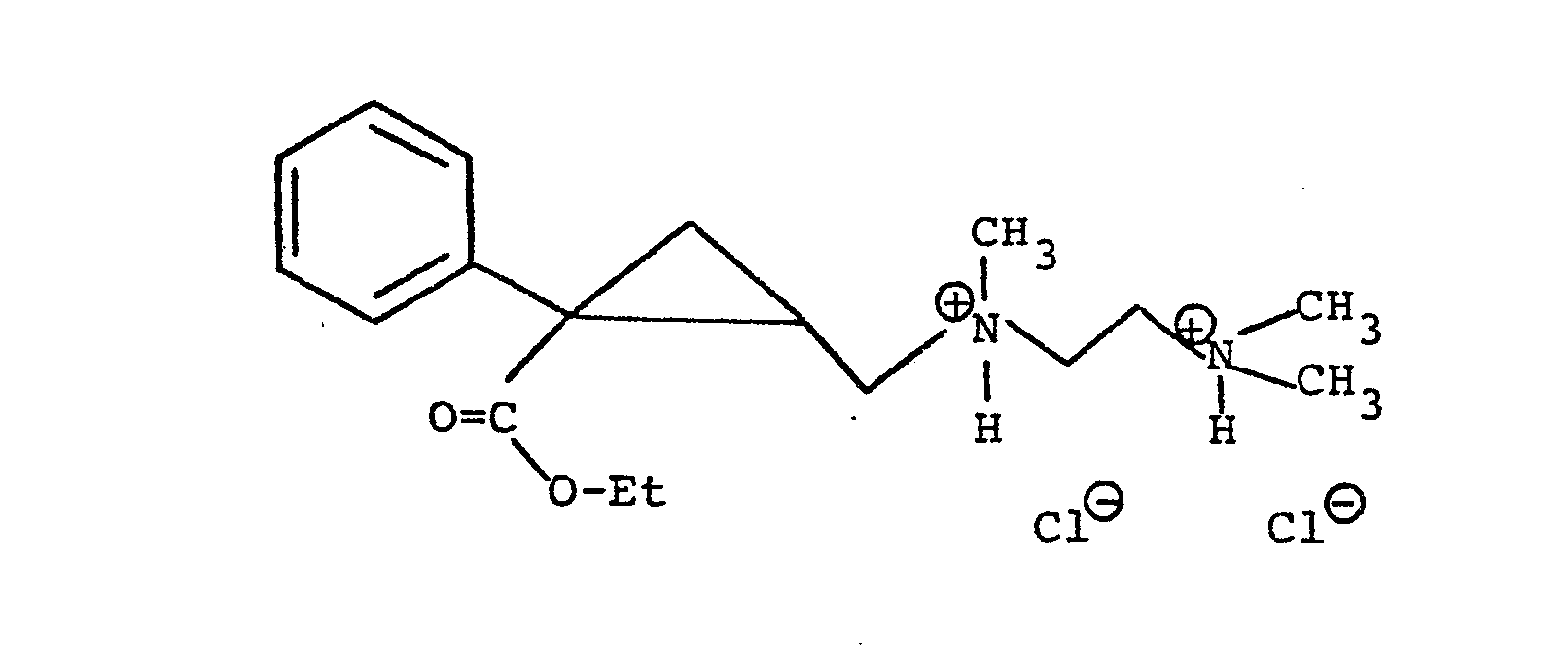
- - support : gel de silice 60 F 254 Merck
- - solvant : chloroforme-méthanol-ammoniaque 80/18/2
- - révélation : UV et iode
- - Rf : 0,55 Solubilité : soluble dans l'eau à 50 %.
- D'une façon similaire à celle décrite dans l'exemple lb, mais en utilisant la cyclohexylamine, on obtient le produit de formule :

- - support : gel de silice 60 F 254 Merck
- - solvant : chloroforme-méthanol 85/15
- - révélation : UV et iode
- - Rf : 0,45.
- D'une façon similaire à celle décrite dans l'exemple 1b, mais en utilisant la pipéridine, on obtient le produit de formule :

- - support : gel de silice 60 F 254 Merck
- - solvant : chloroforme-méthanol 85/15
- - révélation : UV et iode
- - Rf : 0,59.
- D'une façon similaire à celle décrite dans l'exemple 1b, mais en utilisant la N-méthyl aniline, on obtient le produit de formule :

- - support : gel de silice 60 F 254 Merck
- - solvant : éther de pétrole-acétate d'éthyle 90/10
- - révélation : UV et iode
- - Rf : 0,3.
- D'une façon similaire à celle décrite dans l'exemple 1b, mais en utilisant la métachlorophényl-4 pipérazine, on obtient le produit de formule :

- - support : gel de silice 60 F 254 Merck
- - solvant : butanol-acide acétique-eau 6/2/2
- - révélation : UV et iode
- - Rf : 0,71.
- D'une façon similaire à celle décrite dans l'exemple lb, mais en utilisant la N-méthyl allylamine et l'acide oxalique comme agent salifiant, on obtient le produit de formule :

- - support : gel de silice 60 F 254 Merck
- - solvant : butanol-acide acétique-eau 6/2/2
- - révélation : UV et iode
- - Rf : 0,5.
- D'une façon similaire à celle décrite dans l'exemple 1b, mais en utilisant la N-éthyl éthoxy-2 éthylamine, on obtient le produit de formule :

- - support : gel de silice 60 F 254 Merck
- - solvant : acétate d'éthyle-éther de pétrole 50/50
- - révélation : UV et iode
- - Rf : 0,3.
- D'une façon similaire à celle décrite dans l'exemple 1b, mais en utilisant la N-méthyl tyramine, on obtient le produit de formule :

- - support : gel de silice 60 F 254 Merck
- - solvant : chloroforme-méthanol-ammoniaque
- - révélation : UV et iode
- - Rf : 0,57.
- D'une façon similaire à celle décrite dans l'exemple 1b, mais en utilisant le sarcosinate de méthyle on obtient le produit de formule :

- - support : gel de silice 60 F 254 Merck
- - solvant : acétate d'éthyle-éther de pétrole
- - révélation : UV et iode
- - Rf : 0,49.
- D'une façon similaire à celle décrite dans l'exemple 1b, mais en utilisant la N-méthyl phényl éthylamine, on obtient le produit de formule :

- - support : gel de silice 60 F 254 Merck
- - solvant : butanol-acide acétique-eau 6/2/2
- - révélation : UV et iode
- - Rf : 0,66.
- D'une façon similaire à celle décrite dans l'exemple 1b, mais en utilisant le DL amphétamine, on obtient le produit de formule :

- - support : gel de silice 60 F 254 Merck
- - solvant : chloroforme-méthanol 5/95
- - révélation : UV et iode
- - Rf : 0,33.
- D'une façon similaire à celle décrite dans l'exemple 1b, mais en utilisant la N-méthyl butylamine, on obtient le produit de formule :
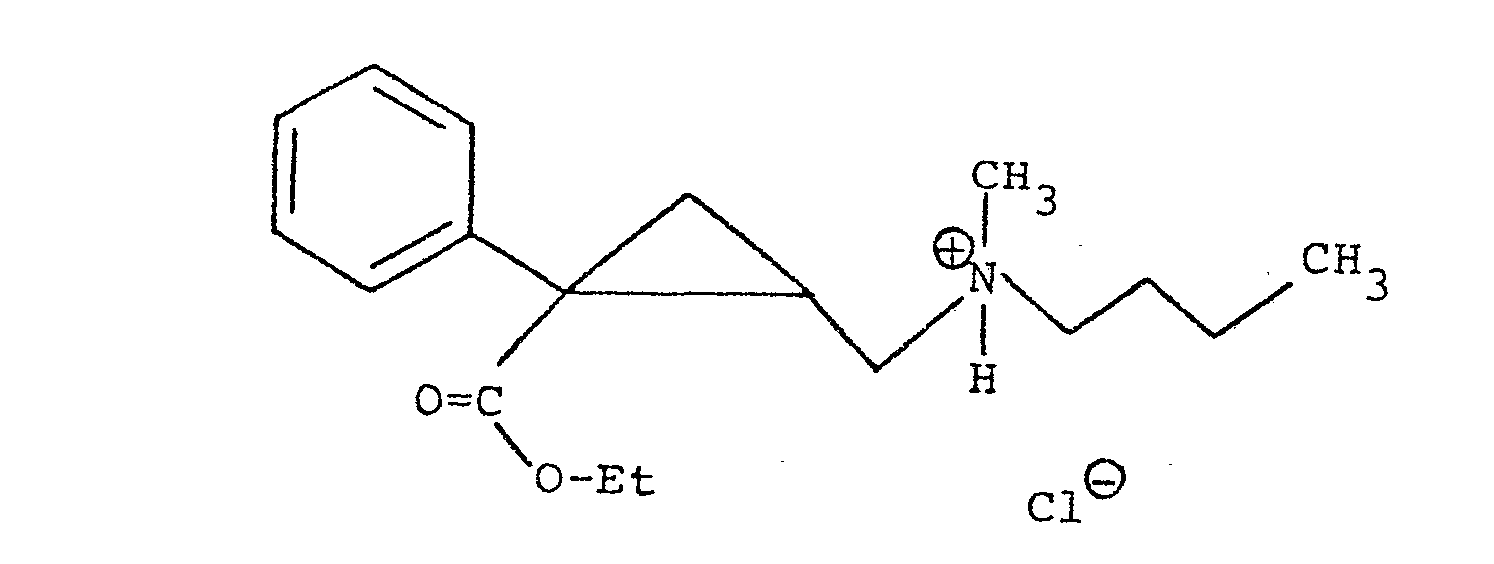
- - support : gel de silice 60 F 254 Merck
- - solvant : butanol-acide acétique-eau 6/2/2
- - révélation : UV et iode
- - Rf : 0,59.
- D'une façon similaire à celle décrite dans l'exemple 1b, mais en utilisant la N-méthyl tétrahydrofurfurylamine, on obtient le produit de formule :

- - support : gel de silice 60 F 254 Merck
- - solvant : butanol-acide acétique-eau 6/2/2
- - révélation : UV et iode
- - Rf : 0,41.
- D'une façon similaire à celle décrite dans l'exemple la, mais en utilisant l'alcool méthylique, et en lb en utilisant la diméthylamine, on obtient le produit de formule :

- - support : gel de silice 60 F 254 Merck
- - solvant : butanol-acide acétique-eau 6/2/2
- - révélation : UV et iode
- - Rf : 0,37 Solubilité : soluble dans l'eau à 50 %.
- D'une façon similaire à celle décrite dans l'exemple la, mais en utilisant l'alcool propylique, et en 1b en utilisant la diméthylamine et l'acide fumarigue comme agent salifiant, on obtient le produit de formule :

- - support : gel de silice 60 F 254 Merck
- - solvant : chloroforme-méthanol-ammoniaque 80/18/2
- - révélation : UV et iode
- - Rf : 0,76 Solubilité : soluble dans l'eau à 15 %.
- D'une façon similaire à celle décrite dans l'exemple la, mais en utilisant l'alccol isopropylique, et en lb mais en utilisant la diméthylamine, on obtient le produit de formule :

- - support : gel de silice 60 F 254 Merck
- - solvant : butanol-acide acétique-eau 6/2/2
- - révélation : UV et iode
- - Rf : 0,41.
- D'une façon similaire à celle décrite dans l'exemple la, mais en utilisant l'alcool benzylique, et en 1b mais en utilisant la diméthylamine, on obtient le produit de formule :

- - support : gel de silice 60 F 254 Merck
- - solvant : butanol-acide acétique-eau 6/2/2
- - révélation : UV et iode
- - Rf : 0,52.
- D'une façon similaire à celle décrite dans l'exemple la, mais en utilisant le phénol, et en 1b, mais en utilisant la diméthylamine, on obtient le produit de formule :

- - support : gel de silice 60 F 254 Merck
- - solvant : butanol-acide acétique-eau 6/2/2
- - révélation : UV et iode
- - Rf : 0,42.
- D'une façon similaire à celle décrite dans l'exemple la et 1b, mais en utilisant l'alcool allylique et la diméthylamine on obtient le produit de formule :

- - support : gel de silice 60 F 254 Merck
- - solvant : butanol-acide acétique-eau 6/2/2
- - révélation : UV et iode
- - Rf : 0,4.
- D'une façon similaire à celle décrite dans l'exemple la et 1b, mais en utilisant le méthyl-3 butene-2 ol-1 et la diméthylamine, on obtient le produit de formule :

- - support : gel de silice 60 F 254 Merck
- - solvant : butanol-acide acétique-eau 6/2/2
- - révélation : UV et iode
- - Rf : 0,36.
- D'une façon similaire à celle décrite dans l'exemple la, 1b, mais en utilisant la lactone de l'acide p(chlorophényl)-1 hydroxy méthyl-2 cyclopropane carboxylique (Z) et la diméthylamine, on obtient le produit de formule :

- - support : gel de silice 60 F 254 Merck
- - solvant :chloroforme-méthanol-ammoniaque 84/14/2
- - révélation : UV et iode
- - Rf : 0,7.
- D'une façon similaire à celle décrite dans l'exemple la, 1b, mais en utilisant la lactone de l'acide a naphtyl hydroxyméthyl-2 cyclopropane carboxylique (Z) et la diméthylamine, on obtient le produit de formule :

- - support : gel de silice 60 F 254 Merck
- - solvant : butanol-acide acétique-eau 6/2/2
- - révélation : UV et iode
- - Rf : 0,34.
- D'une façon similaire à celle décrite dans l'exemple 1, mais en utilisant le (sulfamoyl-4' phényl)-1 oxo-2 oxa-3 bicyclo(3:1:0) hexane, l'alcool méthylique et la diméthylamine, on obtient le produit de formule :

- - support : gel de silice 60 F 254 Merck
- - solvant : chloroforme-méthanol-eau 65/25/4
- - révélation : UV et iode
- - Rf : 0,25.
- D'une façon similaire à celle décrite dans l'exemple 1, mais en utilisant la lactone de l'acide m(chlorophényl) -1 hydroxy méthyl-2 cyclopropane carboxylique (Z) et la diméthylamine, on obtient le produit de formule :

- - support : gel de silice 60 F 254 Merck
- - solvant: butanol-acide acétique-eau 6/2/2
- - révélation : UV et iode
- - Rf : 0,42.
- D'une façon similaire à celle décrite dans l'exemple 1, mais en utilisant le (dichloro-3'-4' phényl)-1 oxo-2 oxa-3 bicyclo(3:1:0) hexane et la diméthylamine on obtient le produit de formule :

- - support : gel de silice 60 F 254 Merck
- - solvant : butanol-acide acétique-eau 6/2/2
- - révélation : UV et iode
- - Rf : 0,37.
- D'une façon similaire à celle décrite dans l'exemple 1, mais en utilisant le (p-aminophényl)-1 oxo-2 oxa-3 bicyclo(3:1:0) hexane, le méthanol et la diméthylamine on obtient le produit de formule :

- - support : gel de silice 60 F 254 Merck
- - solvant : chloroforme-méthanol-ammoniaque 80/18/2
- - révélation : UV et iode
- - Rf : 0,66.
- D'une façon similaire à celle décrite dans l'exemple 1, mais en utilisant le (nitro-4' phényl)-1 oxo-2 oxa-3 bicyclo(3:1:0) hexane, le méthanol et la diméthylamine, on obtient le produit de formule :

- - support : gel de silice 60 F 254 Merck
- - solvant : chloroforme-méthanol-eau 80/18/2
- - révélation : UV et iode
- - Rf : 0,64.
- D'une façon similaire à celle décrite dans l'exemple 1, mais en utilisant le (p-méthoxy phényl)-1 oxo-2 oxa-3 bicyclo(3:1:0) hexane et la diméthylamine, on obtient le produit de formule :

- - support : gel de silice 60 F 254 Merck
- - solvant : butanol-acide acétique-eau 6/2/2
- - révélation : UV et iode
- - Rf : 0,49.
- D'une façon similaire à celle décrite dans l'exemple 1, mais en utilisant le p-toluyl-1 oxo-2 oxa-3 bicyclo (3:1:0) hexane, l'alcool allylique et la diméthylamine, on obtient le produit de formule :
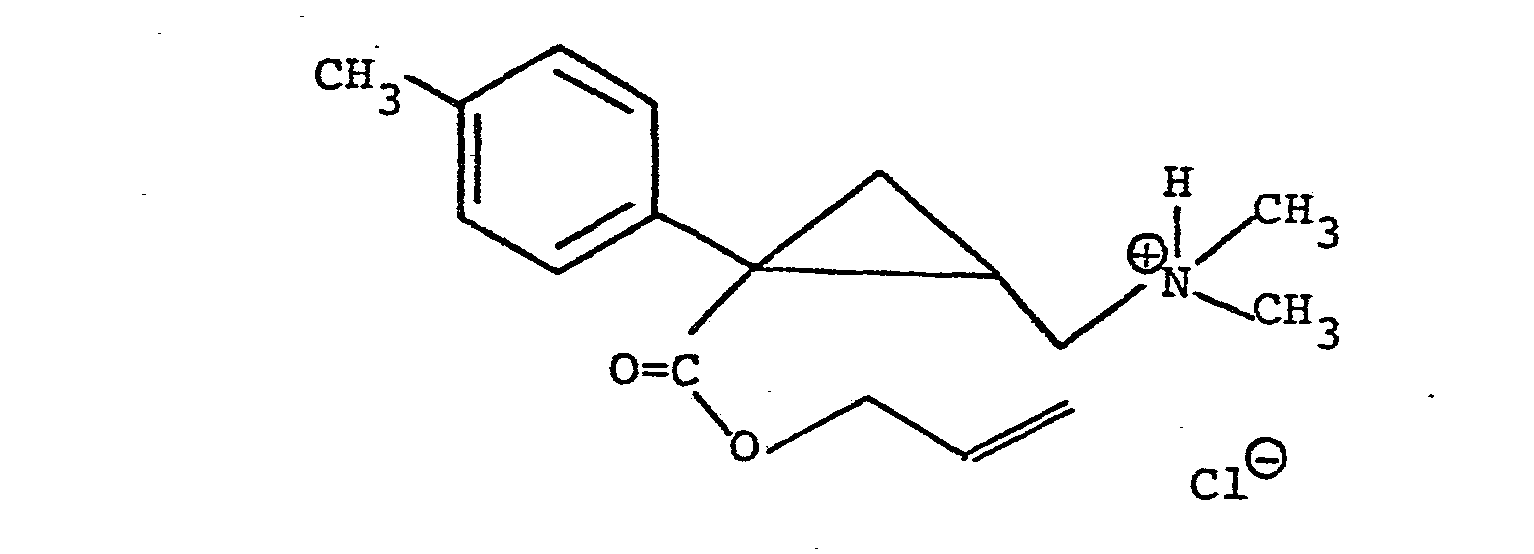
- - support : gel de silice 60 F 254 Merck
- - solvant : chloroforme-méthanol 85/15
- - révélation : UV et iode
- - Rf : 0,41.
- D'une façon similaire à celle décrite dans l'exemple 1, mais en utilisant le (dichloro-3'-4' phényl)-1 oxo-2 oxa-3 bicyclo (3:1:0) hexane, l'alcool allylique et la diméthylamine, on obtient le produit de formule :

- - support : gel de silice 60 F 254 Merck
- - solvant :chloroforme-méthanol 15/85
- - révélation : UV et iode
- - Rf : 0,45.
- D'une façon similaire à celle décrite dans l'exemple 1, mais en utilisant le p-fluorophényl-1 oxo-2 oxa-3 bicyclo(3:1:0) hexane et la diméthylamine, on obtient le produit de formule :

- - support gel de silice 60 F 254 Merck
- - solvant : butanol-acide acétique-eau
- - révélation : UV et iode
- - Rf : 0,36.
- D'une façon similaire à celle décrite dans l'exemple 1, mais en utilisant le p-chlorophényl-1 oxo-2 oxa-3 bicyclo(3:1:0) hexane, et l'ammoniaque, on obtient le produit de formule :

- D'une façon similaire à celle décrite dans l'exemple 1, mais en utilisant le p-hydroxyphényl-1 oxo-2 oxa-3 bicyclo(3:1:0) hexane, et la diméthylamine, on obtient le produit de formule :
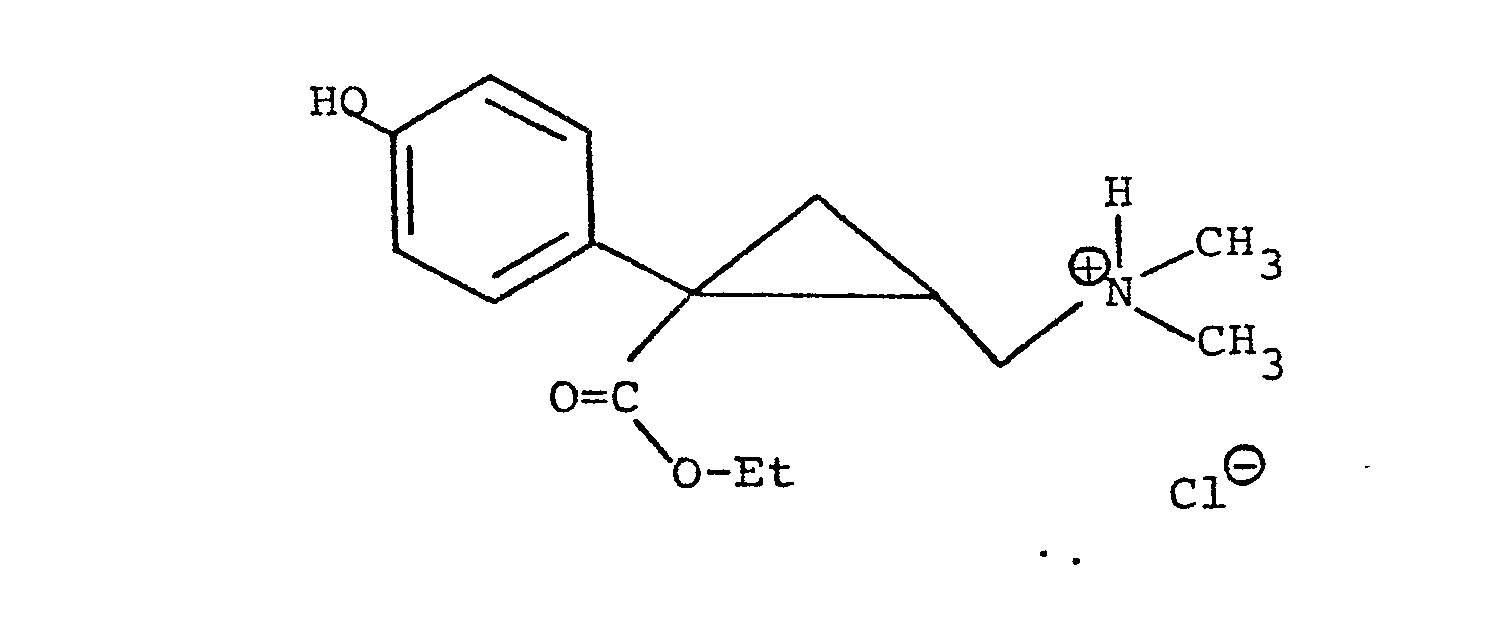
- D'une façon similaire à celle décrite dans l'exemple 1, mais en utilisant le (triméthoxy-3'-4'-5' phényl)-1 oxo-2 oxa-3 bicyclo(3:1:0) hexane et la diméthylamine, on obtient le produit de formule :

- D'une façon similaire à celle décrite dans l'exemple 1, mais en utilisant l'ortho bromophényl-1 oxo-2 oxa-3 bicyclo(3:1:0) hexane et la diméthylamine, on obtient le produit de formule :

- Les composés les plus intéressants de la présente invention ont été soumis à des contrôles de toxicité.
- Les doses létales 50 ont été recherchées par voie orale et intrapéritonéale et calculées selon la méthode de MILLER et TAINTER (Proc. Soc. Exper. Biol. Chem. 1944, 57, 261).
- Les résultats sont rapportés dans le tableau I ci-après.
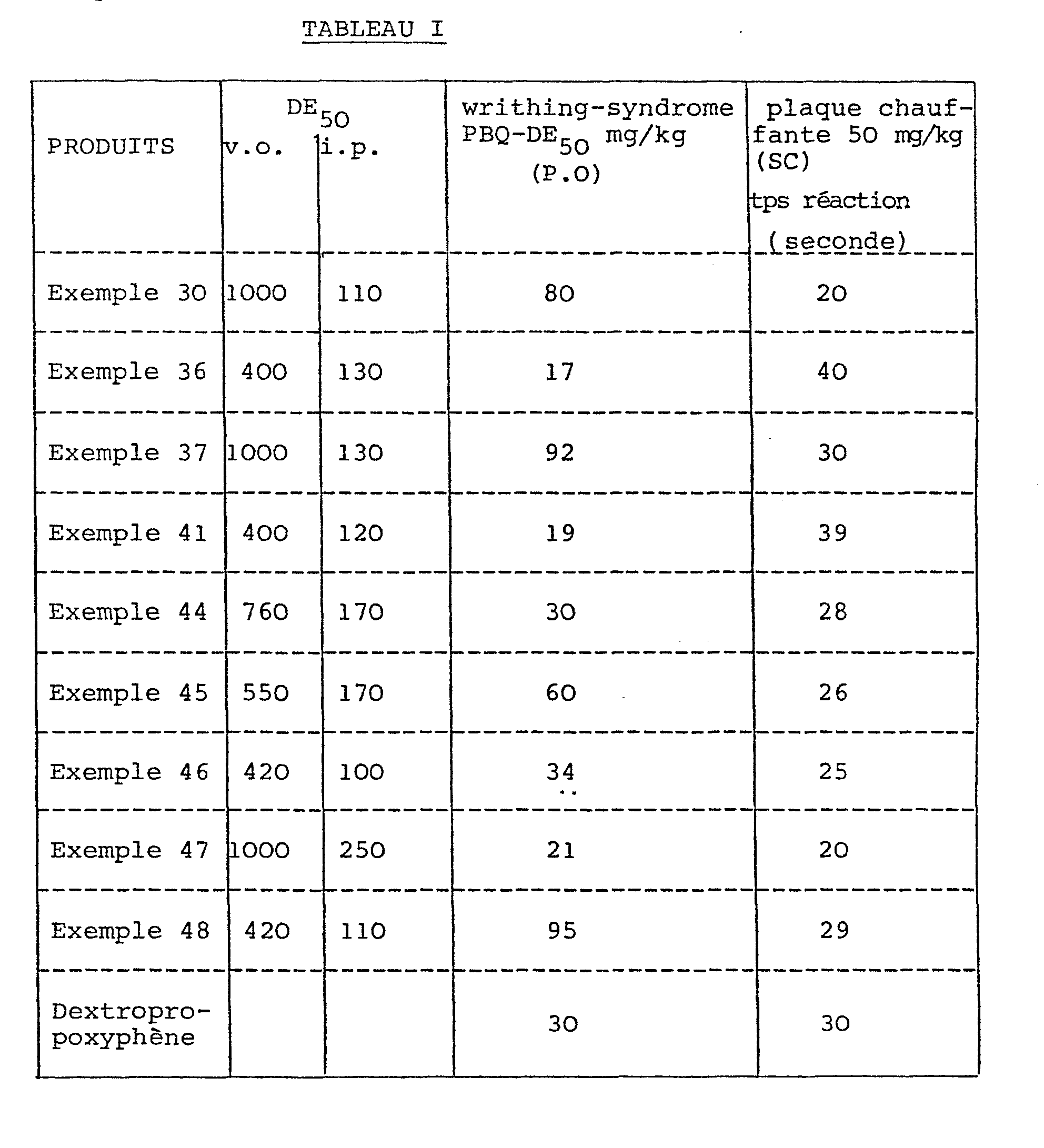
- Après administration I.P. chez la souris de p-benzoquinone les produits sont testés selon la méthode de R.OKUN, S.C.LIDDON et L.LASAGNA, J.Pharmacol. Exptl. Therap., 1963, 139,107. Les résultats sont exprimés en DE50 dans le tableau I.
- Les produits sont testés chez la souris par voie sous-cutanée (50 mg/kg) selon la méthode de N.B. EDDY et D.LEIMBACH, J.Pharm. Exptl. Therap., 1953,107,385. Les résultats sont exprimés dans le tableau I.
- Compte tenu de leurs propriétés pharmacologiques et de leur faible toxicité, ces composés peuvent être utilisés en thérapeutique dans le traitement d'algies diverses et plus particulièrement les composés des exemples 36,41,44,46 et 47.
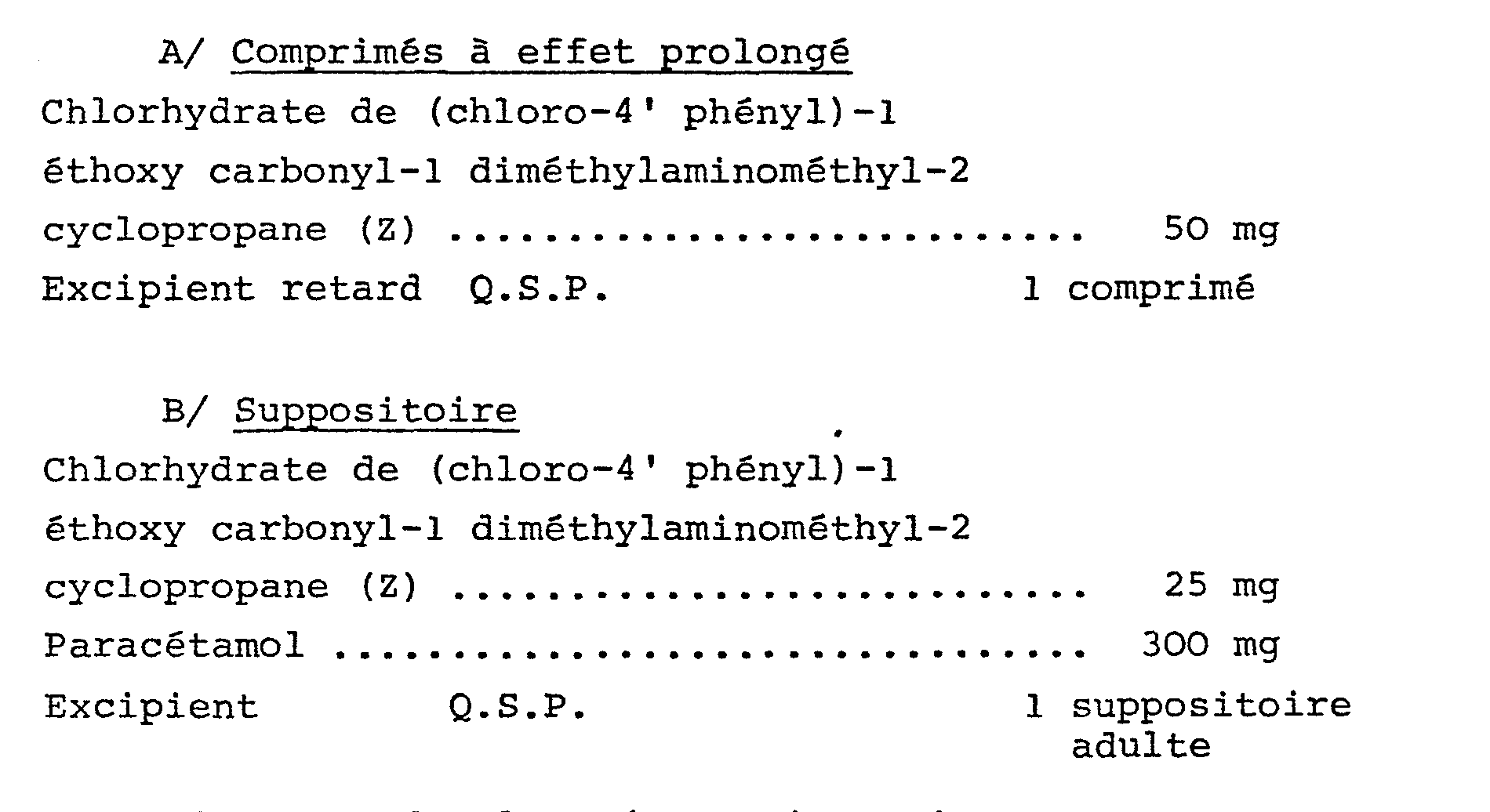
- Ces composés et leurs sels d'addition avec des acides thérapeutiquement compatibles peuvent être utilisés comme médicaments par exemple sous forme de préparations pharmaceutiques adaptées facilitant la biodisponibilité.
- Ces préparations peuvent se présenter sous forme solide par exemple de comprimés, dargées, capsules, etc. ou sous forme liquide, par exemple de solutions, suspensions ou émulsions.
- Les préparations pharmaceutiques sous une forme appropriée à l'injection sont soumises à des opérations pharmaceutiques classiques telles que stérilisation et/ou peuvent contenir des adjuvants par exemple des agents conservateurs, stabilisants, de mouillage ou d'émulsifi- cation, des composés tampons, etc.
- Les dosages auxquels les composés actifs et leurs sels d'addition avec des acides thérapeutiquement compatibles peuvent être administrés, peuvent varier dans des proportions importantes selon l'état du patient. Un dosage quotidien d'environ O,1 mg à 1 mg/kg de poids corporel est toutefois préféré.
- Les compositions pharmaceutiques selon l'invention peuvent être utilisées en médecine humaine ou vétérinaire, par exemple dans le traitement des phénomènes douloureux notamment en cancérologie, traumatologie, rhumatologie, neurologie et chirurgie.
- D'autres principes actifs peuvent être associés aux composés de formule générale I selon l'invention pour compléter ou renforcer leurs actions thérapeutiques au sein d'une même composition pharmaceutique.
-
- Bien entendu, la présente invention ne se trouve pas limitée aux exemples particuliers mentionnés à simple titre illustratif, mais il est parfaitement possible sans pour autant sortir du cadre de l'invention d'en imaginer un certain nombre de variantes et de modifications.
Claims (7)



Priority Applications (1)
| Application Number | Priority Date | Filing Date | Title |
|---|---|---|---|
| AT82401128T ATE15181T1 (de) | 1981-06-23 | 1982-06-21 | (z)-1-aryl-2-aminomethyl-cyclopropan-carboxylat , ihre herstellung und ihre verwendung als arzneimittel fuer die behandlung von verschiedenen schmerzen. |
Applications Claiming Priority (2)
| Application Number | Priority Date | Filing Date | Title |
|---|---|---|---|
| FR8112311A FR2508033A1 (fr) | 1981-06-23 | 1981-06-23 | Aryl-1 aminomethyl-2 cyclopropanes carboxylates (z), leur preparation et leur application en tant que medicaments utiles dans le traitement d'algies diverses |
| FR8112311 | 1981-06-23 |
Publications (2)
| Publication Number | Publication Date |
|---|---|
| EP0068998A1 true EP0068998A1 (fr) | 1983-01-05 |
| EP0068998B1 EP0068998B1 (fr) | 1985-08-28 |
Family
ID=9259784
Family Applications (1)
| Application Number | Title | Priority Date | Filing Date |
|---|---|---|---|
| EP82401128A Expired EP0068998B1 (fr) | 1981-06-23 | 1982-06-21 | Aryl-1 aminométhyl-2 cyclopropanes carboxylates (Z), leur préparation et leur application en tant que médicaments utiles dans le traitement d'algies diverses |
Country Status (10)
| Country | Link |
|---|---|
| US (2) | US4507318A (fr) |
| EP (1) | EP0068998B1 (fr) |
| JP (1) | JPS58945A (fr) |
| AT (1) | ATE15181T1 (fr) |
| AU (1) | AU553924B2 (fr) |
| CA (1) | CA1199929A (fr) |
| DE (1) | DE3265838D1 (fr) |
| ES (1) | ES8302626A1 (fr) |
| FR (1) | FR2508033A1 (fr) |
| ZA (1) | ZA824403B (fr) |
Cited By (4)
| Publication number | Priority date | Publication date | Assignee | Title |
|---|---|---|---|---|
| US5034541A (en) * | 1988-12-28 | 1991-07-23 | Pierre Fabre Medicament | Method of preparing 1-phenyl-1-diethylaminocarbonyl-2-phthalimidomethyl-cyclopropane-z |
| US5214191A (en) * | 1990-05-22 | 1993-05-25 | Cortech, Inc. | Oxidant sensitive and insensitive aromatic esters as inhibitors of human neutrophil elastase |
| US6521619B2 (en) | 2000-06-29 | 2003-02-18 | Icos Corporation | Aryl phenylcyclopropyl sulfide derivatives and their use as cell adhesion inhibiting anti-inflammatory and immune suppressive agents |
| US9840481B2 (en) | 2016-03-22 | 2017-12-12 | Merck Sharp & Dohme Corp. | Allosteric modulators of nicotinic acetylcholine receptors |
Families Citing this family (9)
| Publication number | Priority date | Publication date | Assignee | Title |
|---|---|---|---|---|
| FR2508033A1 (fr) * | 1981-06-23 | 1982-12-24 | Fabre Sa Pierre | Aryl-1 aminomethyl-2 cyclopropanes carboxylates (z), leur preparation et leur application en tant que medicaments utiles dans le traitement d'algies diverses |
| US6017957A (en) * | 1989-08-08 | 2000-01-25 | The United States Of America As Represented By The Department Of Health And Human Services | Partial agonists of the strychnine insensitive glycine modulatory site of the N-methyl-D-aspartate receptor complex as neuropsychopharmacological agents |
| US5663416A (en) * | 1990-05-22 | 1997-09-02 | Cortech Inc. | Oxidant sensitive and insensitive aromatic esters as inhibitors of human neutrophil elastase |
| US9108948B2 (en) * | 2006-06-23 | 2015-08-18 | Abbvie Inc. | Cyclopropyl amine derivatives |
| CA2655604C (fr) | 2006-06-23 | 2016-08-09 | Abbott Laboratories | Derives de cyclopropylamine |
| US9186353B2 (en) | 2009-04-27 | 2015-11-17 | Abbvie Inc. | Treatment of osteoarthritis pain |
| WO2012037258A1 (fr) | 2010-09-16 | 2012-03-22 | Abbott Laboratories | Procédés de préparation de dérivés cyclopropyliques substitués en 1,2 |
| WO2012145234A2 (fr) | 2011-04-21 | 2012-10-26 | Emory University | Dérivés cyclopropylés et leurs procédés d'utilisation |
| CN103613513B (zh) * | 2013-12-09 | 2016-01-20 | 上海现代制药股份有限公司 | 盐酸米那普仑中间体及其制备方法和应用 |
Family Cites Families (2)
| Publication number | Priority date | Publication date | Assignee | Title |
|---|---|---|---|---|
| FR2302994A1 (fr) * | 1975-03-06 | 1976-10-01 | Fabre Sa Pierre | Procede de preparation d'acides aryl-1, hydroxy methyl-2 cyclopropanes carboxyliques et de leurs lactones utiles comme intermediaires de synthese dans l'industrie pharmaceutique |
| FR2508033A1 (fr) * | 1981-06-23 | 1982-12-24 | Fabre Sa Pierre | Aryl-1 aminomethyl-2 cyclopropanes carboxylates (z), leur preparation et leur application en tant que medicaments utiles dans le traitement d'algies diverses |
-
1981
- 1981-06-23 FR FR8112311A patent/FR2508033A1/fr active Granted
-
1982
- 1982-05-27 ES ES512574A patent/ES8302626A1/es not_active Expired
- 1982-06-21 EP EP82401128A patent/EP0068998B1/fr not_active Expired
- 1982-06-21 DE DE8282401128T patent/DE3265838D1/de not_active Expired
- 1982-06-21 AT AT82401128T patent/ATE15181T1/de active
- 1982-06-21 CA CA000405587A patent/CA1199929A/fr not_active Expired
- 1982-06-22 JP JP57107520A patent/JPS58945A/ja active Pending
- 1982-06-22 AU AU85087/82A patent/AU553924B2/en not_active Ceased
- 1982-06-22 US US06/390,811 patent/US4507318A/en not_active Expired - Lifetime
- 1982-06-22 ZA ZA824403A patent/ZA824403B/xx unknown
-
1984
- 1984-10-01 US US06/656,443 patent/US4567288A/en not_active Expired - Lifetime
Non-Patent Citations (1)
| Title |
|---|
| CHEMICAL ABSTRACTS, vol.90, no.11, 12 mars 1979, page 561, résumé no.86788f, Columbus, Ohio (US) S. CASADIO et al.: "1-Phenyl-2-(hydroxymethyl)cyclopropanecarboxylic acid and derivatives" & Boll. Chim. Farm. 1978, 117(6), 331-42 * résumé * * |
Cited By (6)
| Publication number | Priority date | Publication date | Assignee | Title |
|---|---|---|---|---|
| US5034541A (en) * | 1988-12-28 | 1991-07-23 | Pierre Fabre Medicament | Method of preparing 1-phenyl-1-diethylaminocarbonyl-2-phthalimidomethyl-cyclopropane-z |
| US5214191A (en) * | 1990-05-22 | 1993-05-25 | Cortech, Inc. | Oxidant sensitive and insensitive aromatic esters as inhibitors of human neutrophil elastase |
| AU640777B2 (en) * | 1990-05-22 | 1993-09-02 | Cortech, Inc. | Oxidant sensitive and insensitive aromatic esters as inhibitors of human neutrophil elastase |
| US6521619B2 (en) | 2000-06-29 | 2003-02-18 | Icos Corporation | Aryl phenylcyclopropyl sulfide derivatives and their use as cell adhesion inhibiting anti-inflammatory and immune suppressive agents |
| US9840481B2 (en) | 2016-03-22 | 2017-12-12 | Merck Sharp & Dohme Corp. | Allosteric modulators of nicotinic acetylcholine receptors |
| US9926285B2 (en) | 2016-03-22 | 2018-03-27 | Merck Sharp & Dohme Corp. | Allosteric modulators of nicotinic acetylcholine receptors |
Also Published As
| Publication number | Publication date |
|---|---|
| JPS58945A (ja) | 1983-01-06 |
| FR2508033B1 (fr) | 1984-06-29 |
| CA1199929A (fr) | 1986-01-28 |
| ES512574A0 (es) | 1983-02-16 |
| AU8508782A (en) | 1983-01-06 |
| ZA824403B (en) | 1983-04-27 |
| DE3265838D1 (en) | 1985-10-03 |
| ATE15181T1 (de) | 1985-09-15 |
| US4567288A (en) | 1986-01-28 |
| US4507318A (en) | 1985-03-26 |
| AU553924B2 (en) | 1986-07-31 |
| ES8302626A1 (es) | 1983-02-16 |
| FR2508033A1 (fr) | 1982-12-24 |
| EP0068998B1 (fr) | 1985-08-28 |
Similar Documents
| Publication | Publication Date | Title |
|---|---|---|
| EP0068999B1 (fr) | Dérivés d'aryl-1 aminométhyl-2 cyclopropanes carboxamides (Z), leur préparation et leur application en tant que médicaments utiles dans le traitement des troubles du système nerveux central | |
| EP0068998B1 (fr) | Aryl-1 aminométhyl-2 cyclopropanes carboxylates (Z), leur préparation et leur application en tant que médicaments utiles dans le traitement d'algies diverses | |
| EP0046707A1 (fr) | Dérivés de l'acide amino-4 butyrique et les médicaments, actifs notamment sur le système nerveux central, en contenant | |
| EP0000299B1 (fr) | Nouveaux dérivés de benzoyl-2-chloro-4-glycinanilides substitués, leur procédé de préparation et leur application en tant que médicaments. | |
| FR2479825A1 (fr) | Benzodioxanne 1,4 methoxy-2 propanolamines, leur preparation et leur application en tant que medicaments | |
| FR2481271A1 (fr) | Derives de la nonaprenylamine, leurs sels acides d'addition et leur utilisation dans des compositions pharmaceutiques | |
| EP0077720B1 (fr) | Dérivés de biphényl alcoyl carboxylates, leur procédé de préparation et leur utilisation comme médicaments | |
| EP0022017B1 (fr) | Nouveaux dérivés de benzoyl-2 nitro-4 anilides, leur préparation et leur application en tant que médicaments | |
| EP0015214A1 (fr) | Nouveaux dérivés de benzoyl-2 glycylanilides substitués, leur préparation et leur application en tant que médicaments anxiolytiques | |
| EP0087337B1 (fr) | Nouveaux dérivés de la pipérazinyl-2 phényl-4 quinazoline possédant des propriétés antidépressives, méthode de préparation desdits composés et médicaments en contenant | |
| CA1091233A (fr) | Procede de preparation de nouveaux indoles substitues | |
| EP0037780B1 (fr) | Alcoxy propanolamines utiles comme médicaments et procédé pour leur préparation | |
| EP0010030B1 (fr) | Nouveaux dérivés d'ortho chloro benzoyl-2 chloro-4 glycylanilide, leur préparation et leur application en tant que médicaments | |
| FR2559771A1 (fr) | Derives de la 3-pyrrolidinopropiophenone et procede pour leur preparation | |
| FR2470110A1 (fr) | Derives de la decrapenylamine, leurs sels acides d'addition et composition pharmaceutique renfermant ces produits | |
| EP0347305B1 (fr) | [(Aryl-4-pipérazinyl-1)-2 éthoxy]-3 p-cymène, les dérivés ortho, méta, para monosubstitués ou disubstitués sur le noyau phényle dudit produit, le procédé de préparation desdits dérivés, et les médicaments contenant lesdits composés comme principe actif | |
| EP0187096A1 (fr) | Arylalcoyloxymethyl-2 morpholines, leur préparation et leur application en tant que médicaments utiles dans le traitement des troubles du système nerveux central | |
| CH643548A5 (fr) | Derives de 1,3-benzoxazine-2,4-dione, leur preparation et medicaments les contenant. | |
| EP0263020B1 (fr) | Dérivés de 4-phénylthiazole | |
| FR2648814A1 (fr) | L'alpha (tert-butyl-aminomethyl-3,4-dichlorobenzyl)thioacetamide, son procede de preparation et son application en therapeutique | |
| EP0346419A1 (fr) | Derives d'amino-4 trifluoromethyl-1 tetralines, leur preparation et leur application en therapeutique. | |
| EP0174887B1 (fr) | Dérivés de 1-[N-(alpha-amino-alpha-méthylacétyl)-aminophényl]-2-amino-propanone, procédé de préparation et utilisation en thérapeutique | |
| EP0037777A1 (fr) | Procédé de préparation de cycloalcoyl propanol amines utiles comme médicaments | |
| EP0226475A1 (fr) | Nouveaux dérivés de la diphénoxyethylamine, leur procédé d'obtention et les compositions pharmaceutiques en renfermant | |
| FR2525214A1 (fr) | Nouveaux derives d'halogeno benzoyl-2 nitro-4 glycylanilides, leur procede de preparation et leur application en therapeutique |
Legal Events
| Date | Code | Title | Description |
|---|---|---|---|
| PUAI | Public reference made under article 153(3) epc to a published international application that has entered the european phase |
Free format text: ORIGINAL CODE: 0009012 |
|
| AK | Designated contracting states |
Designated state(s): AT BE CH DE GB IT LI LU NL SE |
|
| 17P | Request for examination filed |
Effective date: 19821127 |
|
| ITF | It: translation for a ep patent filed | ||
| GRAA | (expected) grant |
Free format text: ORIGINAL CODE: 0009210 |
|
| AK | Designated contracting states |
Designated state(s): AT BE CH DE GB IT LI LU NL SE |
|
| REF | Corresponds to: |
Ref document number: 15181 Country of ref document: AT Date of ref document: 19850915 Kind code of ref document: T |
|
| REF | Corresponds to: |
Ref document number: 3265838 Country of ref document: DE Date of ref document: 19851003 |
|
| PLBE | No opposition filed within time limit |
Free format text: ORIGINAL CODE: 0009261 |
|
| STAA | Information on the status of an ep patent application or granted ep patent |
Free format text: STATUS: NO OPPOSITION FILED WITHIN TIME LIMIT |
|
| 26N | No opposition filed | ||
| ITTA | It: last paid annual fee | ||
| EPTA | Lu: last paid annual fee | ||
| EAL | Se: european patent in force in sweden |
Ref document number: 82401128.2 |
|
| BECN | Be: change of holder's name |
Effective date: 19951220 |
|
| REG | Reference to a national code |
Ref country code: CH Ref legal event code: PFA Free format text: PIERRE FABRE S.A.,125, RUE DE LA FAISANDERIE,PARIS 16E (FR) TRANSFER- PIERRE FABRE S.A.,45, PLACE ABEL GANCE,BOULOGNE (FR) |
|
| NLS | Nl: assignments of ep-patents |
Owner name: PIERRE FABRE PARTICIPATIONS S.A. |
|
| NLT1 | Nl: modifications of names registered in virtue of documents presented to the patent office pursuant to art. 16 a, paragraph 1 |
Owner name: PIERRE FABRE S.A. |
|
| REG | Reference to a national code |
Ref country code: GB Ref legal event code: 732E |
|
| PGFP | Annual fee paid to national office [announced via postgrant information from national office to epo] |
Ref country code: NL Payment date: 19970523 Year of fee payment: 16 |
|
| PGFP | Annual fee paid to national office [announced via postgrant information from national office to epo] |
Ref country code: AT Payment date: 19970527 Year of fee payment: 16 |
|
| PGFP | Annual fee paid to national office [announced via postgrant information from national office to epo] |
Ref country code: GB Payment date: 19970613 Year of fee payment: 16 |
|
| PGFP | Annual fee paid to national office [announced via postgrant information from national office to epo] |
Ref country code: LU Payment date: 19970616 Year of fee payment: 16 |
|
| PGFP | Annual fee paid to national office [announced via postgrant information from national office to epo] |
Ref country code: SE Payment date: 19970619 Year of fee payment: 16 |
|
| PGFP | Annual fee paid to national office [announced via postgrant information from national office to epo] |
Ref country code: DE Payment date: 19970623 Year of fee payment: 16 |
|
| PGFP | Annual fee paid to national office [announced via postgrant information from national office to epo] |
Ref country code: CH Payment date: 19970624 Year of fee payment: 16 |
|
| PGFP | Annual fee paid to national office [announced via postgrant information from national office to epo] |
Ref country code: BE Payment date: 19970711 Year of fee payment: 16 |
|
| PG25 | Lapsed in a contracting state [announced via postgrant information from national office to epo] |
Ref country code: LU Free format text: LAPSE BECAUSE OF NON-PAYMENT OF DUE FEES Effective date: 19980621 Ref country code: GB Free format text: LAPSE BECAUSE OF NON-PAYMENT OF DUE FEES Effective date: 19980621 Ref country code: AT Free format text: LAPSE BECAUSE OF NON-PAYMENT OF DUE FEES Effective date: 19980621 |
|
| PG25 | Lapsed in a contracting state [announced via postgrant information from national office to epo] |
Ref country code: SE Free format text: LAPSE BECAUSE OF NON-PAYMENT OF DUE FEES Effective date: 19980622 |
|
| PG25 | Lapsed in a contracting state [announced via postgrant information from national office to epo] |
Ref country code: LI Free format text: LAPSE BECAUSE OF NON-PAYMENT OF DUE FEES Effective date: 19980630 Ref country code: CH Free format text: LAPSE BECAUSE OF NON-PAYMENT OF DUE FEES Effective date: 19980630 Ref country code: BE Free format text: LAPSE BECAUSE OF NON-PAYMENT OF DUE FEES Effective date: 19980630 |
|
| BERE | Be: lapsed |
Owner name: S.A. PIERRE FABRE Effective date: 19980630 |
|
| PG25 | Lapsed in a contracting state [announced via postgrant information from national office to epo] |
Ref country code: NL Free format text: LAPSE BECAUSE OF NON-PAYMENT OF DUE FEES Effective date: 19990101 |
|
| GBPC | Gb: european patent ceased through non-payment of renewal fee |
Effective date: 19980621 |
|
| REG | Reference to a national code |
Ref country code: CH Ref legal event code: PL |
|
| EUG | Se: european patent has lapsed |
Ref document number: 82401128.2 |
|
| NLV4 | Nl: lapsed or anulled due to non-payment of the annual fee |
Effective date: 19990101 |
|
| PG25 | Lapsed in a contracting state [announced via postgrant information from national office to epo] |
Ref country code: DE Free format text: LAPSE BECAUSE OF NON-PAYMENT OF DUE FEES Effective date: 19990401 |