EP0071134A1 - Zündverbesserer für Verbrennungskraftmaschinen - Google Patents
Zündverbesserer für Verbrennungskraftmaschinen Download PDFInfo
- Publication number
- EP0071134A1 EP0071134A1 EP82106470A EP82106470A EP0071134A1 EP 0071134 A1 EP0071134 A1 EP 0071134A1 EP 82106470 A EP82106470 A EP 82106470A EP 82106470 A EP82106470 A EP 82106470A EP 0071134 A1 EP0071134 A1 EP 0071134A1
- Authority
- EP
- European Patent Office
- Prior art keywords
- ignition
- curve
- nitric acid
- polysaccharides
- fuel
- Prior art date
- Legal status (The legal status is an assumption and is not a legal conclusion. Google has not performed a legal analysis and makes no representation as to the accuracy of the status listed.)
- Granted
Links
Images


Classifications
-
- C—CHEMISTRY; METALLURGY
- C10—PETROLEUM, GAS OR COKE INDUSTRIES; TECHNICAL GASES CONTAINING CARBON MONOXIDE; FUELS; LUBRICANTS; PEAT
- C10L—FUELS NOT OTHERWISE PROVIDED FOR; NATURAL GAS; SYNTHETIC NATURAL GAS OBTAINED BY PROCESSES NOT COVERED BY SUBCLASSES C10G OR C10K; LIQUIFIED PETROLEUM GAS; USE OF ADDITIVES TO FUELS OR FIRES; FIRE-LIGHTERS
- C10L1/00—Liquid carbonaceous fuels
- C10L1/10—Liquid carbonaceous fuels containing additives
- C10L1/14—Organic compounds
- C10L1/22—Organic compounds containing nitrogen
- C10L1/23—Organic compounds containing nitrogen containing at least one nitrogen-to-oxygen bond, e.g. nitro-compounds, nitrates, nitrites
-
- C—CHEMISTRY; METALLURGY
- C10—PETROLEUM, GAS OR COKE INDUSTRIES; TECHNICAL GASES CONTAINING CARBON MONOXIDE; FUELS; LUBRICANTS; PEAT
- C10L—FUELS NOT OTHERWISE PROVIDED FOR; NATURAL GAS; SYNTHETIC NATURAL GAS OBTAINED BY PROCESSES NOT COVERED BY SUBCLASSES C10G OR C10K; LIQUIFIED PETROLEUM GAS; USE OF ADDITIVES TO FUELS OR FIRES; FIRE-LIGHTERS
- C10L1/00—Liquid carbonaceous fuels
- C10L1/02—Liquid carbonaceous fuels essentially based on components consisting of carbon, hydrogen, and oxygen only
-
- C—CHEMISTRY; METALLURGY
- C10—PETROLEUM, GAS OR COKE INDUSTRIES; TECHNICAL GASES CONTAINING CARBON MONOXIDE; FUELS; LUBRICANTS; PEAT
- C10L—FUELS NOT OTHERWISE PROVIDED FOR; NATURAL GAS; SYNTHETIC NATURAL GAS OBTAINED BY PROCESSES NOT COVERED BY SUBCLASSES C10G OR C10K; LIQUIFIED PETROLEUM GAS; USE OF ADDITIVES TO FUELS OR FIRES; FIRE-LIGHTERS
- C10L1/00—Liquid carbonaceous fuels
- C10L1/02—Liquid carbonaceous fuels essentially based on components consisting of carbon, hydrogen, and oxygen only
- C10L1/026—Liquid carbonaceous fuels essentially based on components consisting of carbon, hydrogen, and oxygen only for compression ignition
-
- F—MECHANICAL ENGINEERING; LIGHTING; HEATING; WEAPONS; BLASTING
- F02—COMBUSTION ENGINES; HOT-GAS OR COMBUSTION-PRODUCT ENGINE PLANTS
- F02B—INTERNAL-COMBUSTION PISTON ENGINES; COMBUSTION ENGINES IN GENERAL
- F02B1/00—Engines characterised by fuel-air mixture compression
- F02B1/02—Engines characterised by fuel-air mixture compression with positive ignition
- F02B1/04—Engines characterised by fuel-air mixture compression with positive ignition with fuel-air mixture admission into cylinder
-
- F—MECHANICAL ENGINEERING; LIGHTING; HEATING; WEAPONS; BLASTING
- F02—COMBUSTION ENGINES; HOT-GAS OR COMBUSTION-PRODUCT ENGINE PLANTS
- F02B—INTERNAL-COMBUSTION PISTON ENGINES; COMBUSTION ENGINES IN GENERAL
- F02B75/00—Other engines
- F02B75/12—Other methods of operation
- F02B2075/125—Direct injection in the combustion chamber for spark ignition engines, i.e. not in pre-combustion chamber
-
- F—MECHANICAL ENGINEERING; LIGHTING; HEATING; WEAPONS; BLASTING
- F02—COMBUSTION ENGINES; HOT-GAS OR COMBUSTION-PRODUCT ENGINE PLANTS
- F02B—INTERNAL-COMBUSTION PISTON ENGINES; COMBUSTION ENGINES IN GENERAL
- F02B3/00—Engines characterised by air compression and subsequent fuel addition
- F02B3/06—Engines characterised by air compression and subsequent fuel addition with compression ignition
Definitions
- the invention relates to ignition improvers in alcoholic fuels for engines which function on the principle of self-igniting internal combustion engines.
- Methanol and ethanol can be used as fuels for petrol engines instead of the usual petroleum products.
- this is not possible with conventional diesel engines, since the cetane number of ethanol with about 8 and methanol with about 3 is too low.
- diesel engines require a fuel with a cetane number of at least 45 (DIN 51 601; Winnacker-Küchler, Chemische Technologie, Vol. 3 / I, 326 (1971)).
- Ignition improvers are required to increase the cetane number.
- Alkyl and cycloalkyl nitrates are known as ignition improvers for fuels made from methanol or ethanol (DE-OS 2 701 588, DE-OS 2 039 609, Mineralöltechnik 80, 25 (4), 1 to 12), but these are complex to produce and hydrolyze in the presence of water. This creates nitric acid, which destroys the motors through corrosion.
- Nitric acid salts of primary, secondary and tertiary amines such as mono-, di- and triethylammonium nitrate are also known as ignition improvers for methanol and ethanol (DE-OS 2 909 565); they also have corrosive properties.
- New ignition improvers for alcoholic fuels for internal combustion engines have been found which contain nitric acid esters of mono- and / or polysaccharides.
- the ignition improvers according to the invention are outstandingly suitable as additives for alcoholic fuels.
- the fuels produced in this way are equivalent or superior to commercially available petroleum-based fuels.
- the alcohol-based fuels are particularly suitable in combination with the ignition improvers according to the invention for the operation of diesel engines. This is possible because with the aid of the ignition improvers according to the invention, the ignitability of alcoholic fuels can be raised to the level of commercially available diesel fuels (cetane number at least 45).
- Nitric acid esters of mono- and / or polysaccharides are known per se (K. Fabel, nitrocellulose production and properties, Enke-Verlag, Stuttgart (1950) Alcoholic solutions of the nitric acid esters of polysaccharides are known from US 1 995 911, US 2 001 070 and US 2 046 101.
- Preferred monosaccharides as starting products for the nitric acid esters according to the invention are pentoses and hexoses. Examples include the following monosaccharides: ribose, glucose, mannose and galactose.
- Polysaccharides for the nitric acid esters according to the invention are all linear, branched or cyclic polymers from monosaccharide basic building blocks. Polysaccharides for the nitric acid esters according to the invention are also di- or oligosaccharides which give at least two monosaccharide building blocks in the hydrolysis. Examples include the following polysaccharides: sucrose, lactose, maltose, raffinose, cellulose, hemicellulose, and starches such as amylose, amylopectin and dextrin.
- degradation products of polysaccharides obtained hydrolytically or oxidatively for the nitric acid esters according to the invention are known per se (Houben-Weyl, Volume XIV / 2, pages 866 to 868 (1963)).
- Preferred saccharides for the nitric acid esters according to the invention are degradation products of the polysaccharides.
- Such degradation reactions can also be in itself on the finished nitric acid esters of the polysaccharides known manner, for example by pressure cooking (Winnacker-Küchler, Chemische Technologie, Vol. 4 / II, 737 to 738 (1960)).
- nitric acid esters of the mono- and polysaccharides can be prepared by known processes (Houben-Weyl, Volume VI / 2, 356 (1963) and Volume XIV / 2, 868-871 and 603 (1969)).
- the preparation can take place, for example, in a homogeneous and / or heterogeneous phase with nitric acid or its anhydride in the presence of dehydrating agents such as sulfuric acid, phosphoric acid, phosphorus pentoxide or acetic anhydride.
- dehydrating agents such as sulfuric acid, phosphoric acid, phosphorus pentoxide or acetic anhydride.
- the N i-trienoic degree thereof can be arbitrarily controlled by the amount and concentration of the nitric acid or the desiccating additives.
- the degree of nitration influences both the alcohol solubility and the effectiveness of the claimed ignition improvers.
- the nitric acid esters of the mono- and polysaccharides according to the invention preferably have a degree of nitration of at least one nitro group per monosaccharide unit.
- the complete esterification of all hydroxyl groups of the corresponding carbohydrates is to be regarded as the upper limit of the degree of nitration; in these cases, however, the solubility of the nitric acid esters in the alcohol is reduced.
- substituents can also be bound to the saccharides to improve alcohol solubility, e.g. Methoxyl, ethoxyl, carboxymethyl, hydroxyethyl, longer fatty acid residues, nitrite groups or sulfuric acid ester groups.
- Alcoholic fuels to which the ignition improvers according to the invention are added are generally alcohols having 1 to 4 carbon atoms. Examples include methanol, ethanol, propanol, butanol and their isomers. Mixtures of these alcohols can of course also be used. Higher alcohols can also be contained in the alcoholic fuels.
- the alcoholic fuels generally contain 0.1 to 15% by weight, preferably 2 to 10% by weight, of the ignition improvers according to the invention.
- solubilizers e.g. low molecular weight ketones and esters such as acetone, methyl ethyl ketone, diethyl ketone, methyl, ethyl and butyl acetate, ethers such as diethyl, diisopropyl and dibutyl ether, tetrahydrofuran, furfural and dioxane, ethylene glycol mono- and diethyl ether, triethylene glycol mono- and diethyl ether.
- ketones and esters such as acetone, methyl ethyl ketone, diethyl ketone, methyl, ethyl and butyl acetate
- ethers such as diethyl, diisopropyl and dibutyl ether, tetrahydrofuran, furfural and dioxane, ethylene glycol mono- and diethyl ether, triethylene glycol mono- and diethyl ether.
- the claimed fuel mixtures can also contain small amounts of water, generally up to 20%.
- a water content in the fuel mixtures according to the invention of 0.5 to 6% is particularly preferred.
- the Treibstoffgemische.schi invention proven particularly for the operation of conventional diesel engines and are characterized by high loading - operational safety, no misfires and excellent running properties, particularly in continuous operation.
- pressure cooking Houben-Weyl, Volume XIV / 2, page 870 (1963)
- 2,404,887 nitrocellulose is stabilized by stirring with dilute, aqueous ammonia solution.
- stabilizers such as ethyl acetate, amylacetate, acetone, aniline, diphenylamine or diethyldiphenylurea are described by H. Brunswig in "The Explosives VIII", “The Smokeless Powder” on pages 368 to 378 (1926).
- Nitric acid esters of mono- and / or disaccharides can be stabilized like those of the polysaccharides if their stability is not ensured by adequate purification such as recrystallization.
- the hybrid mixtures according to the invention also have the advantage that they do not destroy the engine through corrosion. They are technically easy to manufacture and can be used without further precautionary measures.
- the effect of the ignition enhancers and the motor properties of the alcoholic fuel mixtures according to the invention were determined on a test engine.
- ⁇ degree crank angle (hereinafter also called ° KW for short).
- a crank angle of 180 ° corresponds to the top dead center of the reciprocating piston.
- the start of injection is about 164 ° crank angle
- the injection duration E is about 22 ° crank angle.
- the basis of comparison for assessing the ignitability of the fuel mixtures according to the invention was the cylinder pressure curve, the ignition delay and the combustion curve when using a commercially available diesel fuel DK according to DIN 51 601 and when using a mixture of 20% cetane (hexadecane) and 80% ⁇ -methylnaphthalene, hereinafter referred to as GK base fuel.
- the single-cylinder diesel engine used under full load operation and correspondingly good ignition conditions still shows sufficient ignition reliability, the start of combustion, characterized by the first significant increase in dx / d ⁇ , for example at the top dead center of the work cycle the difference between the start of combustion and the start of injection, specified in degrees crank angle.
- the following% figures are to be understood as% by weight.
- test engine described is operated with the fuel solutions according to the invention described in b).
- test runs are carried out with base fuel GK (cetane number 20) and diesel fuel DK (cetane number 55).
- Figures 1 and 2 show the motor properties of DK (curve 1), GK (curve 4), the ethanolic solution with 4% (curve 3) and the ethanolic solution with 8% cellulose nitrate according to Example 1a (curve 2).
- the ignition delay of the 8% ethanolic cellulose nitrate solution is almost the same as for diesel fuel.
- the 5% cellulose nitrate solution has a considerably lower ignition delay than the base fuel, although pure ethanol only has a cetane number of 8.
- a cellulose nitrate is produced as in Example 1a).
- the test engine is operated with the methanolic solutions of cellulose nitrate as in Example 1) and the characteristic quantities are compared with diesel fuel DK and base fuel GK.
- FIG. 3 describes the pressure curve and FIG. 4 the fuel conversion when using DK (curve 1), GK (curve 4), 4% (curve 3) and 8% (curve 2) methanolic cellulose nitrate solution.
- Figure 6 shows the fuel conversion of DK (curve 1) and the test solution (curve 2).
- the ignition delay of the test solution is somewhat larger than that of DK, but the pressure curve is very similar.
- Arabinosetetranitrate is prepared by adding 10 g arabinose in 100 cm 'nitric acid (98%) at 0 ° C. 300 cm 3 of sulfuric acid (98% strength) are added dropwise to this solution with cooling, so that the temperature does not exceed 2 ° C.
- reaction mixture is then poured onto 2000 g of ice, a powdery solid substance separating out. This is filtered off, washed with water and dissolved in 50 ml of absolute ethanol at 50 ° C. When this solution is cooled to -10 ° C., colorless crystals separate out, which is filtered off and dried at 20 ° C. in vacuo.
- the arabinosetetranitrate is dissolved in 4% by weight or 8% by weight in azeotropic ethanol-water (96: 4) with gentle heating.
- the test engine is operated for comparison with DK, GK and the two test solutions.
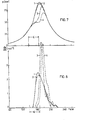
- Figure 7 describes the cylinder pressure curve when using DK (curve 1), GK (curve 4), the 4% ethanolic solution of arabinosetetranitrate (curve 3) and the 8% ethanolic solution of arabinosetetranitrate (curve 2).
- FIG. 8 shows the fuel turnover, which increases with the 8% alcoholic solution (curve 2) as steeply as with DK (curve 1). With 4% arabinosetetranitrate in ethanol (curve 3) you get faster fuel conversion than with GK (curve 4).
Landscapes
- Chemical & Material Sciences (AREA)
- Oil, Petroleum & Natural Gas (AREA)
- Engineering & Computer Science (AREA)
- Chemical Kinetics & Catalysis (AREA)
- General Chemical & Material Sciences (AREA)
- Organic Chemistry (AREA)
- Liquid Carbonaceous Fuels (AREA)
- Organic Low-Molecular-Weight Compounds And Preparation Thereof (AREA)
- Saccharide Compounds (AREA)
- Lubricants (AREA)
- Solid Fuels And Fuel-Associated Substances (AREA)
Abstract
Description
- Die Erfindung betrifft Zündverbesserer in alkoholischen rreibstoffen für Motoren, die nach dem Prinzip von selbstzündenden Verbrennungskraftmaschinen funktionieren.
- Methanol und Ethanol können anstelle der üblichen Erd- ölprodukte als Treibstoffe für Ottomotoren verwendet werden. Dies ist jedoch bei Dieselmotoren üblicher Bauart nicht möglich, da die Cetanzahl von Ethanol mit etwa 8 und von Methanol mit etwa 3 zu niedrig ist. Dieselmotoren benötigen für den störungsfreien Betrieb einen Treibstoff mit einer Cetanzahl von mindestens 45 (DIN 51 601; Winnacker-Küchler, Chemische Technologie, Bd. 3/I, 326 (1971)).
- Zur Anhebung der Cetanzahl sind Zündverbesserer erforderlich. Als Zündverbesserer für Treibstoffe aus Methanol oder Ethanol sind Alkyl- und Cycloalkylnitrate bekannt (DE-OS 2 701 588, DE-OS 2 039 609, Mineralöl Technik 80, 25 (4), 1 bis 12), die jedoch in der Herstellung aufwendig sind und in Anwesenheit von Wasser hydrolisieren. Hierbei entsteht Salpetersäure, die die Motoren durch Korrosion zerstört.
- Auch salpetersaure Salze von primären, sekundären und tertiären Aminen wie Mono-, Di- und Triethylammoniumnitrat sind als Zündverbesserer für Methanol und Ethanol bekannt (DE-OS 2 909 565); sie haben ebenfalls korrosive Eigenschaften.
- Es wurden neue Zündverbesserer für alkoholische Treibstoffe für Verbrennungskraftmaschinen gefunden, die Salpetersäureester von Mono- und/oder Polysacchariden enthalten.
- Die erfindungsgemäßen Zündverbesserer eignen sich hervorragend als Additive für alkoholische Treibstoffe. Die so hergestellten Treibstoffe sind den handelsüblichen Treibstoffen auf Mineralölbasis gleichwertig oder überlegen.
- Im besonderen eignen sich die Treibstoffe auf alkoholischer Basis in Kombination mit den erfindungsgemäßen Zündverbesserern für den Betrieb von Dieselmotoren. Dies ist möglich, da mit Hilfe der erfindungsgemäßen Zündverbesserer die Zündwilligkeit von alkoholischen Kraftstoffen auf das Niveau von handelsüblichen Dieselkraftstoffen (Cetanzahl mindestens 45) angehoben werden kann.
- Salpetersäureester von Mono- und/oder Polysacchariden sind an sich bekannt (K. Fabel, Nitrocellulose-Herstellung und Eigenschaften, Enke-Verlag, Stuttgart (1950) Alkoholische Lösungen der Salpetersäureester von Polysacchariden sind aus der US 1 995 911, US 2 001 070 und US 2 046 101 bekannt.
- Bevorzugte Monosaccharide als Ausgangsprodukte für die erfindungsgemäßen Salpetersäureester sind Pentosen und Hexosen. Beispielsweise seien die folgenden Monosaccharide genannt: Ribose, Glucose, Mannose und Galactose.
- Polysaccharide für die erfindungsgemäßen Salpetersäureester sind alle linearen, verzweigten oder cyclischen Polymere aus Monosaccharid-Grundbausteinen. Polysaccharide für die erfindungsgemäßen Salpetersäureester sind auch Di- bzw. Oligosaccharide, die bei der Hydrolyse mindestens zwei Monosaccharid-Bausteine ergeben. Beispielsweise seien die folgenden Polysaccharide genannt: Saccharose, Lactose, Maltose, Raffinose, Cellulose, Hemicellulose, und Stärken wie Amylose, Amylopectin und Dextrin.
- Selbstverständlich ist es auch möglich, für die erfindungsgemäßen Salpetersäureester hydrolytisch oder oxidativ gewonnene Abbauprodukte von Polysacchariden zu verwenden. Solche Abbauprodukte sind an sich bekannt (Houben-Weyl, Band XIV/2, Seiten 866 bis 868 (1963)). Bevorzugte Saccharide für die erfindungsgemäßen Salpetersäureester sind Abbauprodukte der Polysaccharide. Solche Abbaureaktionen können auch an den fertigen Salpetersäureestern der Polysaccharide in an sich bekannter Weise, z.B. durch Druckkochen (Winnacker-Küchler, Chemische Technologie, Bd. 4/II, 737 bis 738 (1960)) durchgeführt werden.
- Die Salpetersäureester der Mono- und Polysaccharide können nach bekannten Verfahren hergestellt werden (Houben-Weyl, Band VI/2, 356 (1963) und Band XIV/2, 868-871 und 603 (1969)).
- Die Herstellung kann beispielsweise in homogener und/ oder heterogener Phase mit Salpetersäure oder dessen Anhydrid in Anwesenheit von wasserentziehenden Mitteln wie Schwefelsäure, Phosphorsäure, Phosphorpentoxid oder Essigsäureanhydrid erfolgen. Der Ni-trierungsgrad kann durch die Menge und Konzentration der Salpetersäure bzw. der wasserentziehenden Zusätze beliebig gesteuert werden.
- Der Nitrierungsgrad-beeinflußt sowohl die Alkohollöslichkeit als auch die Wirksamkeit der beanspruchten Zündverbesserer. Bevorzugt haben die erfindungsgemäßen Salpetersäureester der Mono- und Polysaccaride ein Nitrierungsgrad von mindestens einer Nitrogruppe pro Monosaccharide Einheit. Als obere Grenze des Nitrierungsgrades ist die vollkommene Veresterung aller Hydroxygruppen der entsprechenden Kohlehydrate anzusehen; in diesen Fällen ist allerdings die Löslichkeit der Salpeter--säureester in dem Alkohol herabgesetzt.
- Vorteilhafterweise verwendet man Salpetersäureester von Mono- und/oder Polysacchariden mit einem Nitrierungsgrad von 1 bis 3, bevorzugt von 1,5 bis 2,7, insbesondere bevorzugt von 2 bis 2,5 als Zündverbesserer.
- Zur Verbesserung der Alkohollöslichkeit können neben der Nitrogruppe auch andere Substituenten an die Saccharide gebunden sein, wie z.B. Methoxyl, Ethoxyl, Carboxymethyl, Hydroxyethyl, längere Fettsäurereste, Nitritgruppen oder Schwefelsäureestergruppen.
- Alkoholische Treibstoffe, denen die erfindungsgemäßen Zündverbesserer zugesetzt werden, sind im allgemeinen Alkohole mit 1 bis 4 Kohlenstoffatomen. Beispielsweise seien Methanol, Ethanol, Propanol, Butanol und deren Isomere genannt. Selbstverständlich können auch Gemische dieser Alkohole verwendet werden. Es können auch höhere Alkohole in den alkoholischen Treibstoffen enthalten sein.
- Die alkoholischen Treibstoffe enthalten im allgemeinen 0,1 bis 15 Gew.-%, bevorzugt 2 bis 10 Gew.-%, der erfindungsgemäßen Zündverbesserer.
- Um die Löslichkeit der erfindungsgemäßen Zündverbesserer in den alkoholischen Treibstoffen zu erhöhen, ist es möglich Lösungsvermittler zuzusetzen. Als solche seien z.B. niedermolekulare Ketone und Ester wie Aceton, Methylethylketon, Diethylketon, Methyl-, Ethyl- und Butylacetat, Ether wie Diethyl-, Diisopropyl- und Dibutylether, Tetrahydrofuran, Furfurol und Dioxan, Ethylenglykolmono- und -diethylether, Triethylenglykolmono- und -diethylether genannt.
- Die beanspruchten Treibstoffgemische können auch geringe Mengen Wasser, im allgemeinen bis zu 20 %, enthalten. Besonders bevorzugt ist ein Wassergehalt in den erfindungsgemäßen Treibstoffgemischen von 0,5 bis 6 %.
- Die erfindungsgemäßen Treibstoffgemische.haben sich besonders für den Betrieb von konventionellen Dieselmotoren bewährt und zeichnen sich aus durch hohe Be-- triebssicherheit, keine Zündaussetzer und hervorragende Laufeigenschaften insbesondere im Dauerbetrieb. Von den erfindungsgemäßen Zündverbesserern werden-jene Salpetersäureester von Mono- und/oder Polysacchariden bevorzugt verwendet, welche bei Raumtemperatur ausreichende Stabilität aufweisen. Dies ist vor allem bei Salpetersäureestern von Polysacchariden der Fall, die z.B. durch Druckkochen (Houben-Weyl, Band XIV/2, Seite 870 (1963)) oder durch Zusatz von geeigneten Stabilisatoren stabilisiert wurden. Derartige Stabilisatoren sind bekannt. So wird in US-PS 2 404 887 Nitrocellulose durch Verrühren mit verdünnter, wäßriger Ammoniak-Lösung stabilisiert. Eine Reihe anderer Stabilisatoren wie Ethylacetat, Amylacetat, Aceton, Anilin, Diphenylamin oder Diethyldiphenylharnstoff sind von H. Brunswig in "Die Explosivstoffe VIII", "Das rauchlose Pulver" auf den Seiten 368 bis 378 (1926) beschrieben.
- Salpetersäureester von Mono- und/oder Disacchariden können wie jene der Polysaccharide stabilisiert werden, wenn nicht ihre Stabilität durch ausreichende Reinigung wie Umkristallisieren gewährleistet ist.
- Die erfindungsgemäßen Treifstoffgemische haben weiterhin den Vorteil, daß sie den Motor nicht durch Korrosion zerstören. Sie lassen sich technisch leicht herstellen und können ohne weitere Vorsichtsmaßnahmen eingesetzt werden.
- Die Wirkung der Zündwilligkeitverbesserer und die motorischen Eigenschaften der erfindungsgemäßen alkoholischen Treibstoffgemische wurden an einem Testmotor ermittelt. Verwendet wurde ein luftgekühlter 1-Zylinder 4-Takt-Dieselmotor mit einem Hubraum von Vh = 1,6 dm3 und einem Verdichtungsverhältnis von ε = 18,2 bei einem Betriebsdruck von 7 bar effektivem Mitteldruck und einer mittleren Motordrehzahl von n = 1600 min-1.
- Bei diesem Betriebsdruck und einer dem Serienbetrieb entsprechenden Motoreinstellung sowie entsprechenden Bauteil- und öltemperaturen liegen Selbstzündungsbedingungen vor, wie sie bei serienmäßigen Direkteinspritzmotoren im Vollastbetrieb üblich und damit repräsentativ sind. Figur 1, 3, 5 und 7 zeigen beispielhaft den Zylinderdruck p [bar] in Abhängigkeit von der jeweiligen Stellung des Hubkolbens, angegeben in α= Grad Kurbelwinkel (im folgenden auch kurz °KW genannt). Ein Kurbelwinkel von 180° entspricht dem oberen Totpunkt des Hubkolbens.
- Figur 2, 4, 6 und 8 zeigen beispielhaft den normierten Brennstoffumsatz

- Der Einspritzbeginn liegt bei ca. 164° Kurbelwinkel, die Einspritzdauer E beträgt ca. 22° Kurbelwinkel.
- Als Vergleichsbasis zur Beurteilung der Zündwilligkeit der erfindungsgemäßen Treibstoffgemische diente der Zylinderdruckverlauf, der Zündverzug und der Brennverlauf bei Verwendung eines handelsüblichen.Dieselkraft- stoffes DK nach DIN 51 601 und bei Verwendung eines Gemisches aus 20 % Cetan (Hexadecan) und 80 % α-Methylnaphthalin, im folgenden als Grundkraftstoff GK bezeichnet.
- Bei Verwendung von GK mit einer Cetanzahl von 20 zeigt der verwendete Einzylinder-Dieselmotor bei Vollastbetrieb und entsprechend guten Zündbedingungen eine noch ausreichende Zündsicherheit, der Brennbeginn, gekennzeichnet durch den ersten deutlichen Anstieg von dx/dα, etwa bei dem oberen Totpunkt des Arbeitstaktes Als Zündverzug wird die Differenz von Brennbeginn und Einspritzbeginn bezeichnet, angegeben in Grad Kurbelwinkel. Die folgenden %-Angaben sind als Gew.-% zu verstehen.
- Gebleichte Baumwollinters werden in an sich bekannter Weise bei 20°C unter Rühren mit. der 50-fachen Menge einer Nitriersäure, bestehend aus
- 79,6 % Schwefelsäure
- 11,4 % Salpetersäure
- 9,0 % Wasser
- Die Elementaranalyse dieses Cellulosenitrats ergibt
- 24,7 % Kohlenstoff
- 3,0 % Wasserstoff
- 11,2 % Stickstoff
- Das in a) beschriebene Cellulosenitrat wird zu 4 % bzw. 8 % in einem azeotropen Gemisch von 96 % Ethanol und 4 %-Wasser gelöst. Um Schwebestoffe zu entfernen werden die beiden Lösungen mit einer Druckfilternutsche filtriert.
- Mit dem in b) beschriebenen erfindungsgemäßen Treibstofflösungen wird der beschriebene Testmotor betrieben. Zum Vergleich werden Testläufe mit Grundkraftstoff GK (Cetanzahl 20) und Dieseltreibstoff DK (Cetanzahl 55) durchgeführt.
- Figuren 1 und 2 zeigen die motorischen Eigenschaften von DK (Kurve 1), GK (Kurve 4), der ethanolischen Lösung mit 4 % (Kurve 3) und der ethanolischen Lösung mit 8 % Cellulosenitrat nach Beispiel 1a (Kurve 2).
- Bei Verwendung von DK steigt der Druck nach dem Einspritzbeginn steil an und beginnt bei etwa 190° KW wieder abzufallen. Nahezu identisch ist der Druckverlauf bei Betrieb des Motors mit Ethanol und 8 % des Cellulosenitrat. Bei Betrieb mit Grundkraftstoff findet der Druckanstieg erst wesentlich später statt, während 4 % des Cellulosenitrats nach 1a in Ethanol bereits eine wesentliche Verbesserung bringen.
- Der Zündverzug der 8 %igen ethanolischen Cellulosenitratlösung ist nahezu gleich gering wie bei Dieseltreibstoff. Die 5 %ige Cellulosenitratlösung weist einen erheblich geringeren Zündverzug als der Grundkraftstoff auf, obwohl reines Ethanol nur eine Cetanzahl von 8 besitzt.
- Der Brennverlauf von Ethanol ist durch einen 8 %igen Zusatz von Cellulosenitrat mit dem von DK nahezu identisch und ein 4 %iger Zusatz von Cellulosenitrat ergibt bereits eine erhebliche Verbesserung gegenüber dem Grundkraftstoff.
- Es wird ein Cellulosenitrat wie in Beispiel 1a) hergestellt.
- Mit dem in a) beschriebenen Cellulosenitrat wird eine 4 Gew. %ige und eine 8 Gew. %ige Lösung in technischem Methanol hergestellt und die Lösung mit einer Druckfilternutsche filtriert.
- Mit den methanolischen Lösungen des Cellulosenitrats wird wie bei Beispiel 1) der Testmotor betrieben und die charakteristischen Größen mit Dieselkraftstoff DK und Grundkraftstoff GK verglichen. Figur 3 beschreibt den Druckverlauf und Figur 4 den Kraftstoffumsatz bei Verwendung von DK (Kurve 1), GK (Kurve 4), 4 %ige (Kurve 3) und 8 %ige (Kurve 2) methanolische Cellulosenitratlösung.
- Obwohl die Zündwilligkeit von Methanol (Cetanzahl = 3) noch schlechter ist als die von Ethanol (Cetanzahl = 8) erreicht man mit der 8 %igen Lösung den gleichen Zündverzug wie mit Dieselkraftstoff. 4 Gew. % Cellulosenitrat in Methanol ergeben bereits eine beachtliche Verbesserung der Zündwilligkeit, wie man aus dem geringen Zündverzug von nur 11° KW ersieht.
- 200 g einer handelsüblichen Nitrocellulose mit einem K-Wert nach Fikent'scher (Cellulosechemie 13. Z79327 58) von K = 730 und einem Stickstoffgehalt von 11,2 % werden in
- 2 1 Wasser verteilt und nach Zugabe von 5 ml Pyridin unter Rühren auf 90°C erwärmt. Nach 15 Stunden bei 90°C saugt man die nun gelbliche Collodiumwolle ab und kocht 1 Stunde in
- 2 1 2 %iger wässriger Formaldehydlösung.
Es wird danach wieder abgesaugt, mit Wasser neutralgewaschen und das feine, faserige Produkt bei Raumtemperatur auf 10 % Restfeuchte getrocknet. - 4,4 Teile der feuchten Nitrocellulose werden in 92,2 Teilen Ethanol und 3,4 Teilen Wasser gelöst. Man erhält eine 4 %ige Lösung des Zündverbesserers im Ethanol-Wasser-Azeotrop.
- Mit der ethanolischen Lösung dieses Zündverbesserers wird der Testmotor betrieben und das Brennverhalten im Vergleich zu DK ermittelt. Figur 5 zeigt den Druckverlauf von DK (Kurve 1) und der Testlösung (Kurve 2).
- Figur 6 gibt den Brennstoffumsatz von DK (Kurve 1) und der Testlösung (Kurve 2) an. Der Zündverzug der Testlösung ist zwar etwa größer als bei DK, der Druckverlauf ist jedoch sehr ähnlich.
- Arabinosetetranitrat wird hergestellt, indem 10 g Arabinose in 100 cm' Salpetersäure (98 %ig) bei 0°C eingetragen wird. In diese Lösung tropft man 300 cm3 Schwefelsäure (98 %ig) unter Kühlung ein, so daß die Temperatur 2°C nicht überschreitet.
- Das Reaktionsgemisch wird nun auf 2000 g Eis gegossen, wobei sich eine pulvrige Festsubstanz abscheidet. Diese wird abfiltriert, mit Wasser gewaschen und in 50 ml absolutem Ethanol bei 50°C gelöst. Beim Abkühlen dieser Lösung auf -10°C scheiden sich farblose Kristalle ab, die man absaugt und bei 20°C im Vakuum trocknet.
- Das Arabinosetetranitrat wird zu 4 Gew.% bzw. 8 Gew.% im Azeotrop Ethanol-Wasser (96:4) unter leichtem Erwärmen gelöst.
- Der Testmotor wird zum Vergleich mit DK, GK und den beiden Testlösungen betrieben.
- Figur 7 beschreibt den Zylinderdruckverlauf bei Verwendung von DK (Kurve 1), GK (Kurve 4), der 4 %igen ethanolischen Lösung von Arabinosetetranitrat (Kurve 3) und der 8 %igen ethanolischen Lösung von Arabinosetetranitrat (Kurve 2). Bei 4 % Zusatz von Arabinosetetranitrat zum Ethanol erhält man bereits ein zündfähiges Treibstoffgemisch, während die 8 %ige Lösung fast den gleichen Druckverlauf wie Dieselkraftstoff ergibt.
- Figur 8 zeigt den Kraftstoffumsatz, der bei der 8 %igen alkoholischen Lösung (Kurve 2) ähnlich steil ansteigt wie bei DK (Kurve 1). Bei 4 % Arabinosetetranitrat in Ethanol (Kurve 3) erhält man bereits rascheren Brennstoffumsatz als bei GK (Kurve 4).
- Der Zündverzug ist bei (Kurve 3) fast genauso gering als bei DK (Kurve 1).
behandelt. Nach 2 Stunden Nitrierzeit trennt man das entstandene Cellulosenitrat von der Säure ab, wäscht mit destilliertem Wasser neutral und kocht das Produkt 3 Stunden in der 20-fachen Menge 3 %iger wässriger NaHCO3-Lösung zur Stabilisierung. Das Cellulosenitrat trennt man wieder von der Flüssigkeit ab, wäscht mit Wasser neutral, und trocknet das faserige Produkt bei 30°C im Vakuum.
Claims (7)
Priority Applications (1)
| Application Number | Priority Date | Filing Date | Title |
|---|---|---|---|
| AT82106470T ATE15687T1 (de) | 1981-07-24 | 1982-07-19 | Zuendverbesserer fuer verbrennungskraftmaschinen. |
Applications Claiming Priority (2)
| Application Number | Priority Date | Filing Date | Title |
|---|---|---|---|
| DE19813129271 DE3129271A1 (de) | 1981-07-24 | 1981-07-24 | Zuendverbesserer fuer verbrennungskraftmaschinen |
| DE3129271 | 1981-07-24 |
Publications (2)
| Publication Number | Publication Date |
|---|---|
| EP0071134A1 true EP0071134A1 (de) | 1983-02-09 |
| EP0071134B1 EP0071134B1 (de) | 1985-09-18 |
Family
ID=6137670
Family Applications (1)
| Application Number | Title | Priority Date | Filing Date |
|---|---|---|---|
| EP82106470A Expired EP0071134B1 (de) | 1981-07-24 | 1982-07-19 | Zündverbesserer für Verbrennungskraftmaschinen |
Country Status (9)
| Country | Link |
|---|---|
| US (1) | US4465028A (de) |
| EP (1) | EP0071134B1 (de) |
| JP (1) | JPS5825387A (de) |
| AT (1) | ATE15687T1 (de) |
| AU (1) | AU545273B2 (de) |
| BR (1) | BR8204325A (de) |
| CA (1) | CA1194306A (de) |
| DE (2) | DE3129271A1 (de) |
| ZA (1) | ZA825283B (de) |
Cited By (1)
| Publication number | Priority date | Publication date | Assignee | Title |
|---|---|---|---|---|
| EP0157268A3 (en) * | 1984-03-31 | 1986-04-09 | Bayer Ag | Injection improver for a fuel mixture |
Families Citing this family (5)
| Publication number | Priority date | Publication date | Assignee | Title |
|---|---|---|---|---|
| JPH0253872A (ja) * | 1988-08-18 | 1990-02-22 | Sumitomo Bakelite Co Ltd | エポキシ樹脂粉体塗料組成物 |
| US6280487B1 (en) * | 1991-12-24 | 2001-08-28 | Jgs Research Company, Inc. | Process for preparing ignition promoter, and fuel containing an ignition promoter |
| JPH07303428A (ja) * | 1994-05-12 | 1995-11-21 | Shinei Kinzoku Seisakusho:Kk | 漁業用支柱打ち込み工法 |
| CA2377464A1 (en) * | 2001-05-03 | 2002-11-03 | Michio Ikura | Low temperature stable diesel oil/alcohol mixtures |
| BRPI0803522A2 (pt) * | 2008-09-17 | 2010-06-15 | Petroleo Brasileiro S.A - Petrobras | composições de combustìvel do ciclo diesel contendo dianidrohexitóis e derivados |
Citations (2)
| Publication number | Priority date | Publication date | Assignee | Title |
|---|---|---|---|---|
| DE164635C (de) * | 1903-10-07 | 1905-10-31 | ||
| FR719709A (fr) * | 1931-07-07 | 1932-02-09 | Emsa Werke Aktien Ges | Brosse en caoutchouc |
Family Cites Families (5)
| Publication number | Priority date | Publication date | Assignee | Title |
|---|---|---|---|---|
| FR719708A (fr) * | 1930-07-08 | 1932-02-09 | Expl Des Brevets D Inv S Soc P | Procédé pour rendre les alcools, et en particulier les alcools méthylique et éthylique, utilisables comme carburant, et produit obtenu par ce procédé |
| US2046101A (en) * | 1932-03-18 | 1936-06-30 | Sternau & Co Inc S | Solidified composition |
| US2001070A (en) * | 1932-04-29 | 1935-05-14 | Hercules Powder Co Ltd | Nitrocellulose gel and method of producing |
| US1995911A (en) * | 1933-02-07 | 1935-03-26 | Us Ind Alcohol Co | Method of making artificial fuel |
| FR2343893A1 (fr) * | 1976-03-08 | 1977-10-07 | Oswald Roger | Moteur a carburant autre qu'un produit petrolier |
-
1981
- 1981-07-24 DE DE19813129271 patent/DE3129271A1/de not_active Withdrawn
-
1982
- 1982-07-08 US US06/396,516 patent/US4465028A/en not_active Expired - Fee Related
- 1982-07-13 AU AU85949/82A patent/AU545273B2/en not_active Ceased
- 1982-07-19 AT AT82106470T patent/ATE15687T1/de not_active IP Right Cessation
- 1982-07-19 DE DE8282106470T patent/DE3266389D1/de not_active Expired
- 1982-07-19 EP EP82106470A patent/EP0071134B1/de not_active Expired
- 1982-07-20 JP JP57125246A patent/JPS5825387A/ja active Pending
- 1982-07-22 CA CA000407849A patent/CA1194306A/en not_active Expired
- 1982-07-23 ZA ZA825283A patent/ZA825283B/xx unknown
- 1982-07-23 BR BR8204325A patent/BR8204325A/pt unknown
Patent Citations (2)
| Publication number | Priority date | Publication date | Assignee | Title |
|---|---|---|---|---|
| DE164635C (de) * | 1903-10-07 | 1905-10-31 | ||
| FR719709A (fr) * | 1931-07-07 | 1932-02-09 | Emsa Werke Aktien Ges | Brosse en caoutchouc |
Cited By (2)
| Publication number | Priority date | Publication date | Assignee | Title |
|---|---|---|---|---|
| EP0157268A3 (en) * | 1984-03-31 | 1986-04-09 | Bayer Ag | Injection improver for a fuel mixture |
| US4659335A (en) * | 1984-03-31 | 1987-04-21 | Bayer Aktiengesellschaft | Ignition improvers for fuel mixtures |
Also Published As
| Publication number | Publication date |
|---|---|
| ATE15687T1 (de) | 1985-10-15 |
| JPS5825387A (ja) | 1983-02-15 |
| DE3129271A1 (de) | 1983-02-10 |
| CA1194306A (en) | 1985-10-01 |
| ZA825283B (en) | 1983-06-29 |
| US4465028A (en) | 1984-08-14 |
| BR8204325A (pt) | 1983-07-19 |
| AU8594982A (en) | 1983-01-27 |
| DE3266389D1 (en) | 1985-10-24 |
| AU545273B2 (en) | 1985-07-04 |
| EP0071134B1 (de) | 1985-09-18 |
Similar Documents
| Publication | Publication Date | Title |
|---|---|---|
| DE3149170C2 (de) | ||
| DE69805561T2 (de) | Brennölzusammensetzung für Dieselmotoren | |
| DE3150988C2 (de) | ||
| DE3205732A1 (de) | Verfahren zur verbesserung der verbrennung von kraftstoffen fuer dieselmotoren | |
| EP0071134B1 (de) | Zündverbesserer für Verbrennungskraftmaschinen | |
| DE3727981C2 (de) | ||
| EP0012230B1 (de) | Verfahren zur Herstellung von 1H-Tetrazol-1-Essigsäure und deren Estern | |
| EP0140102B1 (de) | Wasserlösliche Titanacetylacetonate | |
| EP0157268B1 (de) | Zündverbesserer für Kraftstoffgemische | |
| EP0162895B1 (de) | Cetanverbesserer für diesel-brennstoff | |
| DE1022842B (de) | Fluessiger Kraftstoff fuer Verbrennungsmotoren | |
| DE1695711A1 (de) | Verfahren zur Herstellung von N-Benzoyl-3-indolylfettsaeuren | |
| WO1994021753A1 (de) | Flüssige kraftstoffe | |
| EP0501097B1 (de) | Treibstoff für Verbrennungsmotoren und Verwendung von Methylformiat | |
| EP0543225B1 (de) | Carbamidsäureester, Verfahren zu ihrer Herstellung sowie Kraft- und Schmierstoffe, enthaltend die Carbamidsäureester | |
| DE2419439C2 (de) | Bleiarmer umweltfreundlicher Vergaserkraftstoff hoher Klopffestigkeit | |
| DE1964785B2 (de) | Benzinzubereitung für Ottomotoren | |
| DE929156C (de) | Treibstoff fuer Verbrennungsmotore | |
| EP0716139A1 (de) | Kraftstoff für hochverdichtende selbstzündende Motoren | |
| DE2331214A1 (de) | Alkalimetallsalze von alkyl- und dialkylaminoalkylphenolen und deren verwendung | |
| DE886973C (de) | Verfahren zur Erhoehung der Klopffestigkeit von Motortreibstoffen | |
| DE1115520B (de) | Motorenbenzin und Zusatzgemisch fuer Motorenbenzin | |
| DE1259635B (de) | Zuendwilligkeitsverbesserer fuer Dieselkraftstoffe | |
| AT212476B (de) | Kraftstoff für Brennkraftmaschinen, insbesondere für Vergasermaschinen | |
| DE2365183A1 (de) | Treibstoff fuer brennkraftmaschinen mit funkenzuendung |
Legal Events
| Date | Code | Title | Description |
|---|---|---|---|
| PUAI | Public reference made under article 153(3) epc to a published international application that has entered the european phase |
Free format text: ORIGINAL CODE: 0009012 |
|
| 17P | Request for examination filed |
Effective date: 19820719 |
|
| AK | Designated contracting states |
Designated state(s): AT BE CH DE FR GB IT LI NL SE |
|
| ITF | It: translation for a ep patent filed | ||
| GRAA | (expected) grant |
Free format text: ORIGINAL CODE: 0009210 |
|
| AK | Designated contracting states |
Designated state(s): AT BE CH DE FR GB IT LI NL SE |
|
| REF | Corresponds to: |
Ref document number: 15687 Country of ref document: AT Date of ref document: 19851015 Kind code of ref document: T |
|
| REF | Corresponds to: |
Ref document number: 3266389 Country of ref document: DE Date of ref document: 19851024 |
|
| ET | Fr: translation filed | ||
| BERE | Be: lapsed |
Owner name: BAYER A.G. Effective date: 19850731 |
|
| PGFP | Annual fee paid to national office [announced via postgrant information from national office to epo] |
Ref country code: AT Payment date: 19860711 Year of fee payment: 5 |
|
| PLBE | No opposition filed within time limit |
Free format text: ORIGINAL CODE: 0009261 |
|
| STAA | Information on the status of an ep patent application or granted ep patent |
Free format text: STATUS: NO OPPOSITION FILED WITHIN TIME LIMIT |
|
| PG25 | Lapsed in a contracting state [announced via postgrant information from national office to epo] |
Ref country code: BE Effective date: 19860731 |
|
| 26N | No opposition filed | ||
| PGFP | Annual fee paid to national office [announced via postgrant information from national office to epo] |
Ref country code: NL Payment date: 19870731 Year of fee payment: 6 |
|
| PG25 | Lapsed in a contracting state [announced via postgrant information from national office to epo] |
Ref country code: GB Effective date: 19880719 Ref country code: AT Effective date: 19880719 |
|
| PG25 | Lapsed in a contracting state [announced via postgrant information from national office to epo] |
Ref country code: SE Effective date: 19880720 |
|
| PG25 | Lapsed in a contracting state [announced via postgrant information from national office to epo] |
Ref country code: LI Effective date: 19880731 Ref country code: CH Effective date: 19880731 |
|
| PG25 | Lapsed in a contracting state [announced via postgrant information from national office to epo] |
Ref country code: NL Effective date: 19890201 |
|
| NLV4 | Nl: lapsed or anulled due to non-payment of the annual fee | ||
| GBPC | Gb: european patent ceased through non-payment of renewal fee | ||
| PG25 | Lapsed in a contracting state [announced via postgrant information from national office to epo] |
Ref country code: FR Free format text: LAPSE BECAUSE OF NON-PAYMENT OF DUE FEES Effective date: 19890331 |
|
| REG | Reference to a national code |
Ref country code: CH Ref legal event code: PL |
|
| PG25 | Lapsed in a contracting state [announced via postgrant information from national office to epo] |
Ref country code: DE Effective date: 19890401 |
|
| REG | Reference to a national code |
Ref country code: FR Ref legal event code: ST |
|
| EUG | Se: european patent has lapsed |
Ref document number: 82106470.6 Effective date: 19890510 |