EP0075165A1 - 9,10-Substituierte 2-Mesitylimino-3-alkyl-3,4,6,7-tetrahydro-2H-pyrimido(6,1-a)isochinolin-4-one, Verfahren zu ihrer Herstellung und ihre Verwendung als Arzneimittel - Google Patents
9,10-Substituierte 2-Mesitylimino-3-alkyl-3,4,6,7-tetrahydro-2H-pyrimido(6,1-a)isochinolin-4-one, Verfahren zu ihrer Herstellung und ihre Verwendung als Arzneimittel Download PDFInfo
- Publication number
- EP0075165A1 EP0075165A1 EP82108170A EP82108170A EP0075165A1 EP 0075165 A1 EP0075165 A1 EP 0075165A1 EP 82108170 A EP82108170 A EP 82108170A EP 82108170 A EP82108170 A EP 82108170A EP 0075165 A1 EP0075165 A1 EP 0075165A1
- Authority
- EP
- European Patent Office
- Prior art keywords
- alkyl
- formula
- substituted
- tetrahydro
- mesitylimino
- Prior art date
- Legal status (The legal status is an assumption and is not a legal conclusion. Google has not performed a legal analysis and makes no representation as to the accuracy of the status listed.)
- Granted
Links
Classifications
-
- C—CHEMISTRY; METALLURGY
- C07—ORGANIC CHEMISTRY
- C07D—HETEROCYCLIC COMPOUNDS
- C07D471/00—Heterocyclic compounds containing nitrogen atoms as the only ring hetero atoms in the condensed system, at least one ring being a six-membered ring with one nitrogen atom, not provided for by groups C07D451/00 - C07D463/00
- C07D471/02—Heterocyclic compounds containing nitrogen atoms as the only ring hetero atoms in the condensed system, at least one ring being a six-membered ring with one nitrogen atom, not provided for by groups C07D451/00 - C07D463/00 in which the condensed system contains two hetero rings
- C07D471/04—Ortho-condensed systems
-
- A—HUMAN NECESSITIES
- A61—MEDICAL OR VETERINARY SCIENCE; HYGIENE
- A61P—SPECIFIC THERAPEUTIC ACTIVITY OF CHEMICAL COMPOUNDS OR MEDICINAL PREPARATIONS
- A61P9/00—Drugs for disorders of the cardiovascular system
- A61P9/12—Antihypertensives
Definitions
- the invention relates to 9,10-substituted 2-mesitylimino-3-alkyl-3,4,6,7-tetrahydro-2H-pyrimido (6,1-a) isoquinolin-4-ones and their pharmaceutically acceptable salts, their preparation and their use as medicaments, in particular as antihypertensive agents, and pharmaceutical preparations containing these compounds.
- the compounds according to the invention are substituted 9- / 10-alkoxy / (3'-substituted amino-2'-OR-propoxy) -2-mesitylimino-3-alkyl-3,4,6,7-tetrahydro-2H-pyrimido (6 , 1-a) -isoquinolin-4-one of formula I.
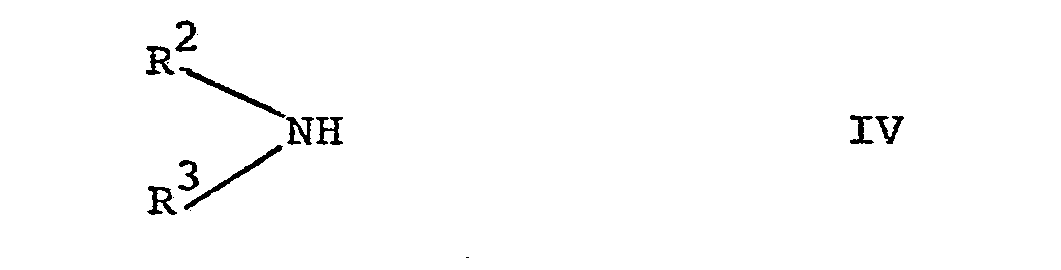
- R is straight-chain or branched C 1 -C 4 alkyl and one of the radicals X and Y is straight-chain or branched C 1 -C 4 alkyl, the other is -CH 2 CH (OR 1 ) CH 2 NR 2 R 3 , where R1, R 2 and R 3 are the same or different and are hydrogen or straight-chain or branched C 1 -C 4 -alkyl or R 2 and R3 together with the nitrogen atom to which they are bonded contain one which may contain another nitrogen or oxygen atom , optionally substituted, heterocyclic ring, and their pharmaceutically acceptable salts.
- Suitable C 1 -C 4 alkyl groups for X, Y, R , R 1 , R 2 , R 3 are methyl, ethyl, n-propyl, isopropyl, isobutyl or tert-butyl.
- Suitable nitrogen-containing heterocyclic groups - NR 2 R 3 are, for example, P iperidino, piperazino and morpholino, optionally mono- or polysubstituted by C 1 -C 4 alkyl, C 2 -C 5 carbalkoxy such as carbethoxy, C 7 -C 9- aralkyl such as benzyl, aryl such as phenyl optionally substituted one or more times with halogen such as fluorine or chlorine, or with C 1 -C 4 alkoxy such as methoxy, or with trihalo-C 1 -C 4 alkyl such as eg trifluoromethyl, or with hydroxy or C 1 -C 4 alkyl such as methyl or ethyl, or with a nitro group, or naphthyl or a heterocyclic radical such as pyridyl.
- Suitable salts of the 9- / 10-alkoxy / (3'-substituted amino-2'-OR-propoxy) -2-mesitylimino-3-alkyl-3,4,6,7-tetrahydro-2H-pyrimido ( 6,1-a) isoquinolin-4-ones are, for example, salts with inorganic or organic acids, such as Hydrochlorides, hydrobromides, hydroiodides, sulfates, phosphates, acetates, propionates, oxalates, tartrates, citrates, maleates, fumarates, isethionates, succinates, pamoates, pivalates etc.
- Preferred substituents are: methyl or ethyl for R, straight-chain or branched C 1 -C 4 alkyl for one of the two radicals X and Y, and -CH 2 CH (OH) CH 2 R 2 R 3 for the other of the radicals X and Y, wherein R g geradketti- 2 is hydrogen and R 3 is or branched C 1 -C 4 alkyl or R 2 and R 3 together with the nitrogen atom to which they are attached, an optionally another nitrogen atom or oxygen atom-containing, optionally substituted, heterocyclic radical mean, in particular a piperidino, piperazino or morpholino radical which is substituted as indicated above.
- the present invention further relates to a process for the preparation of 9- / 10-alkoxy / (3'-subst.-amino-2'-OR 1 -prop-oxy) -2-mesitylimino-3-alkyl-3,4,6 , 7-tetrahydro-2H-pyrimido (6,1-a) isoquinolin-4-one of formula I and its pharmaceutically acceptable salts, characterized in that a compound of formula II wherein one of the radicals X 'and Y is hydrogen and the other straight-chain or branched C 1 -C 4 alkyl, with an epihalohydrin of the formula III wherein Z represents a halogen atom, such as bromine, in the presence of a base, such as potassium carbonate, sodium hydride, and a solvent such as acetone, dimethylformamide, dimethyl sulfoxide, halogenated hydrocarbons, for example chloroform, can react, the reaction using heat, for example at boiling point of the solvent, is accelerated
- the compounds of the formula II are advantageously obtained from the corresponding 9,10-dimethoxy derivatives (see German Offenlegungsschrift No. 27 20 085) by customary demethylation processes, e.g. Treat with iodic or hydrobromic acid, pyridine hydrochloride or sodium ethyl mercaptide / dimethylformamide.
- the compounds according to the present invention also include the pharmaceutically acceptable salts of the compounds of formula I. These salts are prepared by treating the compounds of formula I with an appropriate amount of a suitable acid, usually in a solvent. Examples of such usable inorganic and organic acids have already been listed above.
- the compounds of the invention have valuable pharmacological properties, e.g. hypotensive effect, as animal experiments have shown. It is believed that this hypotensive effect is the result of peripheral vasodilation, at least in part.
- hypotensive effect is determined by administering a compound according to the invention to rats with spontaneous hypertension (SH rats) and measuring the effect on blood pressure.
- the ability of the compounds of the invention to lower blood pressure in SH rats shows that these compounds and their salts are suitable for the treatment of high blood pressure in human and veterinary medicine.
- the compounds according to the invention can also be used in combination with other pharmacologically active agents, for example diuretics, cardiovascular agents and lipid-lowering agents.
- the active compounds according to the invention can be administered orally, parenterally (intramuscularly, intravenously, subcutaneously), rectally or locally externally, optionally in the form of sprays.
- the following dosages for lowering blood pressure are used in mammals: daily dose from 0.1 to 200 mg, dose unit 0.1 to 25 mg.
- the new compounds can be used either alone or in a mixture with pharmacologically acceptable carrier materials. lien be applied.
- the active ingredients are mixed with conventional substances and put into a common administration form, e.g. Tablets, capsules, aqueous / alcoholic or oily suspensions or solutions.
- Suitable inert carrier materials are e.g. Magnesium carbonate, milk sugar or corn starch, which can be mixed with other substances such as magnesium stearate.
- the preparations can be made in the form of dry or moist granules. Vegetable or animal oils such as sunflower oil or cod liver oil can be used as the oily carrier or solvent.
- the active ingredients can be injected intravenously.
- the active ingredients or their physiologically tolerable salts if they are sufficiently soluble, are dissolved in customary auxiliaries, which can also serve as solubilizers or buffers.
- Physiologically acceptable salts are formed, for example, with the following acids: hydrochloric acid, hydrobromic and hydroiodic acid, phosphoric acid, sulfuric acid, methylsulfuric acid, amidosulfonic acid, nitric acid, tartaric acid, lactic acid, malonic acid, fumaric acid, oxalic acid, citric acid, malic acid, mucic acid, benzoic acid, salicylic acid, acetic acid Embonic acid, naphthalene-1,5-disulfonic acid, ascorbic acid, phenylacetic acid, p-aminosalicylic acid, hydroxyethylsulfonic acid, benzenesulfonic acid or synthetic resins which contain acidic groups, for example those with ion exchange activity.
- Suitable solvents for intravenous administration are e.g. Water, physiological saline or dilute alcohols such as ethanol, propanediol or glycerin, as well as sugar solutions such as glucose or mannitol solutions, but a mixture of the solvents mentioned can also be used.
- step a) A mixture of the product obtained in step a) (3.22 g) in chloroform (125 ml) was treated with N-phenylpiperazine (7.2 g) and refluxed for 30 hours. Excess chloroform was distilled off in vacuo. The residue was chromatographed on a silica gel column using benzene / chloroform (1: 1) as the eluent.
- Step a) of Example 1 was repeated.
- Step a) of Example 1 was repeated.
Landscapes
- Chemical & Material Sciences (AREA)
- Organic Chemistry (AREA)
- Health & Medical Sciences (AREA)
- Engineering & Computer Science (AREA)
- Bioinformatics & Cheminformatics (AREA)
- Cardiology (AREA)
- Heart & Thoracic Surgery (AREA)
- Chemical Kinetics & Catalysis (AREA)
- General Chemical & Material Sciences (AREA)
- Medicinal Chemistry (AREA)
- Nuclear Medicine, Radiotherapy & Molecular Imaging (AREA)
- Pharmacology & Pharmacy (AREA)
- Life Sciences & Earth Sciences (AREA)
- Animal Behavior & Ethology (AREA)
- General Health & Medical Sciences (AREA)
- Public Health (AREA)
- Veterinary Medicine (AREA)
- Pharmaceuticals Containing Other Organic And Inorganic Compounds (AREA)
- Nitrogen Condensed Heterocyclic Rings (AREA)
Abstract
Description
- Die Erfindung betrifft 9,10-substituierte 2-Mesitylimino-3-alkyl-3,4,6,7-tetrahydro-2H-pyrimido(6,1-a)isochinolin-4-one und ihre pharmazeutisch verträglichen Salze, ihre Herstellung und ihre Verwendung als Arzneimittel, insbesondere als blutdrucksenkende Mittel, sowie diese Verbindungen enthaltende pharmazeutische Zubereitungen.
- Die erfindungsgemäßen Verbindungen sind substituierte 9-/10-Alkoxy/(3'-substituierte Amino-2'-OR -propoxy)-2- mesitylimino-3-alkyl-3,4,6,7-tetrahydro-2H-pyrimido(6,1-a)-isochinolin-4-one der Formel I

- Geeignete C1-C4-Alkylgruppen für X, Y, R, R 1, R 2, R 3 sind Methyl, Äthyl, n-Propyl, Isopropyl, Isobutyl oder tert.-Butyl. Geeignete Stickstoff enthaltende heterocyclische Reste -NR 2 R 3 sind zum Beispiel Piperidino, Piperazino und Morpholino, gegebenenfalls ein- oder mehrfach substituiert mit C1-C4-Alkyl, C2-C5-Carbalkoxy wie z.B. Carbäthoxy, C7-C9-Aralkyl wie z.B. Benzyl, Aryl wie z.B. Phenyl ggf. ein- oder mehrfach substituiert mit Halogen wie Fluor oder Chlor, oder mit C1-C4-Alkoxy wie z.B. Methoxy, oder mit Trihalogen-C1-C4-alkyl wie z.B. Trifluormethyl, oder mit Hydroxy oder C1-C4-Alkyl wie Methyl oder Äthyl, oder mit einer Nitrogruppe, oder Naphthyl oder einem heterocyclischen Rest wie z.B. Pyridyl.
- Als geeignete Salze der erfindungsgemäßen 9-/10-Alkoxy/(3'- subst. Amino-2'-OR -propoxy)-2-mesitylimino-3-alkyl-3,4,6,7-tetrahydro-2H-pyrimido(6,1-a)isochinolin-4-one seien beispielsweise genannt Salze mit anorganischen oder organischen Säuren, wie z.B. Hydrochloride, Hydrobromide, Hydrojodide, Sulfate, Phosphate, Acetate, Propionate, Oxalate, Tartrate, Zitrate, Maleate, Fumarate, Isethionate, Succinate, Pamoate, Pivalate usw.
- Bevorzugte Substituenten sind: Methyl oder Äthyl für R, geradkettiges oder verzweigtes C1-C4-Alkyl für einen der beiden Reste X und Y, und -CH2CH(OH)CH2R2R3 für den anderen der Reste X und Y, worin R2 Wasserstoff und R3 geradketti- ges oder verzweigtes C1-C4-Alkyl bedeutet oder R2 und R3 zusammen mit dem Stickstoffatom, an das sie gebunden sind, einen gegebenenfalls ein weiteres Stickstoffatom oder Sauerstoffatom enthaltenden, gegebenenfalls substituierten, heterocyclischen Rest.bedeuten, insbesondere einen Piperidino, Piperazino oder Morpholinorest, der wie oben angegeben substituiert ist, bedeuten.
- Besonders bevorzugte Verbindungen gemäß der Erfindung sind:
- 9-Methoxy-10-[3'-(4-phenylpiperazino)-2'-hydroxypropoxy]-2-mesitylimino-3-methyl-3,4,6,7-tetrahydro-2H-pyrimido-(6,1-a)isochinolin-4-on-dihydrochlorid-dihydrat.
- 9-Methoxy-10-[3'-(4-(2-pyridyl)piperazino)-2-hydroxyprop- oxy]-2-mesitylimino-3-methyl-3,4,6,7-tetrahydro-2H-pyri- mido-(6,1-a)isochinolin-4-on-trihydrochlorid-dihydrat.
- 9-Methoxy-10-[3'-(4-phenylpiperidino)-2'-hydroxypropoxy]-2-mesitylimino-3-methyl-3,4,6,7-tetrahydro-2H-pyrimido-(6,1-a)isochinolin-4-on.
- 10-Methoxy-9-[3'-(4-phenylpiperidino)-2'-hydroxypropoxy]-2-mesitylimino-3-methyl-3,4,6,7-tetrahydro-2H-pyrimido-(6,1-a)isochinolin-4-on-dihydrochlorid-sesquihydrat.
- In der folgenden Tabelle sind einige der neuen substituierten 9-/10-Alkoxy/(3'-subst. amino-2'-OR1-propoxy)-2-mesityl- imino-3-alkyl-3,4,6,7-tetrahydro-2H-pyrmido 6,1-a) isochinolin-4-one aufgeführt.


- Die Verbindungen der Formel II werden zweckmäßigerweise aus den entsprechenden 9,10-Dimethoxyderivaten (s. Deutsche Offenlegungsschrift Nr..27 20 085) durch übliche Demethylierungsverfahren, z.B. Behandeln mit Jod- oder Bromwasserstoffsäure, Pyridinhydrochlorid oder Natrium- äthylmercaptid/Dimethylformamid hergestellt.
- Die Verbindungen gemäß der vorliegenden Erfindung umfassen auch die pharmazeutisch verträglichen Salze der Verbindungen der Formel I. Diese Salze werden durch Behandlung der Verbindungen der Formel I mit einer entsprechenden Menge einer geeigneten Säure, normalerweise in einem Lösungsmittel, hergestellt. Beispiele solcher brauchbaren anorganischen und organischen Säuren sind oben bereits aufgeführt.
- Die erfindungsgemäßen Verbindungen besitzen wertvolle pharmakologische Eigenschaften, z.B. blutdrucksenkende Wirkung, wie Tierversuche gezeigt haben. Es wird angenommen, daß diese blutdrucksenkende Wirkung das Ergebnis peripherer Gefäßerweiterung ist, jedenfalls zum Teil.
- Die blutdrucksenkende Wirkung wird durch Verabreichung einer Verbindung gemäß der Erfindung an Ratten mit spontanem Bluthochdruck (SH-Ratten) und Messung der Wirkung auf den Blutdruck bestimmt.
- Die Fähigkeit der erfindungsgemäßen Verbindungen, den Blutdruck in SH-Ratten zu senken, zeigt, daß diese Verbindungen und ihre Salze für die Behandlung von Bluthochdruck in der Human- und Veterinärmedizin geeignet sind. Die erfindungsgemäßen Verbindungen können auch in Kombination mit anderen pharmakologisch wirksamen Mitteln, z.B. Diuretika, herzgefäßerweiternde Mittel und Lipidsenker, angewandt werden.
- Die erfindungsgemäßen Wirkstoffe können peroral, parenteral (intramuskulär, intravenös, subkutan), rektal oder lokal äußerlich, ggf. in Form von Sprays, verabreicht werden.
- Folgende Dosierungen zur Senkung des Blutdrucks werden bei Säugetieren angewandt: Tagesdosis von 0.1 bis 200 mg, Dosiseinheit 0.1 bis 25 mg.
- Die neuen Verbindungen können entweder allein oder in Mischung mit pharmakologisch verträglichen Trägermateria- . lien angewandt werden. Für eine orale Verabreichung werden die Wirkstoffe mit üblichen Substanzen vermischt und in eine gebräuchliche Verabreichungsform, z.B. Tabletten, Steckkapseln, wäßrig/alkoholische oder ölige Suspensionen oder Lösungen, gebracht. Geeignete inerte Trägermaterialien sind z.B. Magnesiumcarbonat, Milchzucker oder Maisstärke, die mit anderen Substanzen wie Magnesiumstearat versetzt sein können. Die Zubereitungen können in Form von trockenem oder feuchtem Granulat hergestellt werden. Als ölige Träger oder Lösungsmittel können pflanzliche oder tierische öle, wie Sonnenblumenöl oder Lebertran, eingesetzt werden.
- In Notfällen können die Wirkstoffe intravenös injiziert werden. Zu diesem Zweck werden die Wirkstoffe oder ihre physiologisch verträglichen Salze, sofern sie ausreichend löslich sind, in üblichen Hilfsstoffen, die auch als Lösungsvermittler oder Puffer dienen können, gelöst.
- Physiologisch verträgliche Salze werden z.B. mit folgenden Säuren gebildet: Salzsäure, Brom- und Jodwasserstoffsäure, Phosphorsäure, Schwefelsäure, Methylschwefelsäure, Amidosulfonsäure, Salpetersäure, Weinsäure, Milchsäure, Malonsäure, Fumarsäure, Oxalsäure, Zitronensäure Äpfelsäure, Schleimsäure, Benzoesäure, Salicylsäure, Acetursäure, Embonsäure, Naphthalin-1,5-disulfonsäure, Ascorbinsäure, Phenylessigsäure, p-Aminosalicylsäure, Hydroxyäthylsulfon- säure,Benzolsulfonsäure oder Kunstharze, die saure Gruppen enthalten, z.B. die mit Ionenaustauscherwirkung.
- Geeignete Lösungsmittel für die intravenöse Verabreichung sind z.B. Wasser, physiologische Kochsalzlösung oder verdünnte Alkohole wie Äthanol, Propandiol oder Glyzerin, ferner Zuckerlösungen wie Glucose- oder Mannitlösungen, es kommt aber auch eine Mischung der genannten Lösungsmittel infrage.
- Die folgenden Beispiele sollen die Erfindung näher erläutern:
- Zu einer Suspension von wasserfreiem Kaliumcarbonat (18.0 g) in trockenem Aceton (400 ml) wurde 9-Methoxy-10-hydroxy-2- mesitylimino-3-methyl-3,4,6,7-tetrahydro-2H-pyrimido(6,1-a)-isochinolin-4-on- (5.67 g) und Epibromhydrin (3.03 g) gegeben, und die Mischung wurde 22 Stunden am Rückfluß gekocht. Die Reaktionsmischung wurde dann gefiltert. Die Verdampfung des Filtrats im Vakuum ergab einen Feststoff, der aus Methanol kristallisiert wurde. Ausbeute 4,71 g, Fp. 171 - 172°C.
- Eine Mischung des in Stufe a) erhaltenen Produkts (3.22 g) in Chloroform (125 ml) wurde mit N-Phenylpiperazin (7.2 g) behandelt und 30 Stunden am Rückfluß gekocht. Überschüssiges Chloroform wurde im Vakuum abdestilliert. Der Rückstand wurde an einer Kieselgel-Kolonne unter Benutzung von Benzol/Chloroform (1:1) als Laufmittel chromatographiert.
- Die Verdampfung der Fraktionen die das gewünschte Produkt enthalten ergab einen Feststoff, der durch Behandlung mit ätherischer Salzsäure in Äthanol in sein Hydrochlorid übergeführt wurde. Das Dihydrochlorid-Dihydrat wurde aus Äthanol/Äther kristallisiert. Ausbeute 2.9 g, Fp. 208-210°C.
- Stufe a) von Beispiel 1 wurde wiederholt.
- Das Verfahren aus Stufe b) von Beispiel 1 wurde wiederholt mit N-(2-Pyridyl)-piperazin anstelle von N-Phenylpiperazin, wobei das Trihydrochlorid erhalten wurde. Ausbeute 74 %, Fp. 195 - 197°C.
- 9-Methoxy-10-[3'-(4-phenylpiperidino)-2'-hydroxypropoxy]-2-mesitylimino-3-methyl-3,4,6,7-tetrahydro-2H-pyrimido-(6,1-a)isochinolin-4-on-dihydrochlorid-monohydrat
- Stufe a) von Beispiel 1 wurde wiederholt.
- Das Verfahren aus Stufe b) von Beispiel 1 wurde wiederholt mit 4-Phenylpiperidin anstelle von N-Phenylpiperazin, wobei das Dihydrochlorid-Monohydrat erhalten wurde. Ausbeute: 57 %, Fp. 225 - 229°C.
- 10-Methoxy-9-[3'-(4-phenylpiperidino)-2'-hydroxy-propoxy]-2-mesitylimino-3-methyl-3,4,6,7-tetrahydro-2H-pyrimido-(6,1-a)isochinolin-4-on-dihydrochlorid-sesquihydrat
- Das Verfahren aus Stufen a) und b) von Beispiel 1 wurde wiederholt, wobei 9-Hydroxy-10-methoxy-2-mesitylimino-3-methyl-3,4,6,7-tetrahydro-2H-pyrimido(6,1-a)isochinolin-4-on anstelle von 9-Methoxy-10-hydroxy-2-mesitylimino-3-methyl-3,4,6,7-tetrahydro-2H-pyrimido(6,1-a)isochinolin-4-on in Stufe a) und 4-Phenylpiperidin anstelle von N-Phenylpiperazin in Stufe b) eingesetzt wurden. Es wurde das Dihydrochlorid-Sesquihydrat erhalten. Ausbeute: 60 %, Fp. 171-173°C.
Claims (6)


Applications Claiming Priority (2)
| Application Number | Priority Date | Filing Date | Title |
|---|---|---|---|
| DE3135831 | 1981-09-10 | ||
| DE19813135831 DE3135831A1 (de) | 1981-09-10 | 1981-09-10 | 9,10-substituierte 2-mesitylimino-3-alkyl-3,4,6,7-tetrahydro-2h-pyrimido(6,1-a)isochinolin-4-one, verfahren zu ihrer herstellung und ihre verwendung als arzneimittel |
Publications (2)
| Publication Number | Publication Date |
|---|---|
| EP0075165A1 true EP0075165A1 (de) | 1983-03-30 |
| EP0075165B1 EP0075165B1 (de) | 1986-10-29 |
Family
ID=6141286
Family Applications (1)
| Application Number | Title | Priority Date | Filing Date |
|---|---|---|---|
| EP82108170A Expired EP0075165B1 (de) | 1981-09-10 | 1982-09-04 | 9,10-Substituierte 2-Mesitylimino-3-alkyl-3,4,6,7-tetrahydro-2H-pyrimido(6,1-a)isochinolin-4-one, Verfahren zu ihrer Herstellung und ihre Verwendung als Arzneimittel |
Country Status (13)
| Country | Link |
|---|---|
| US (1) | US4590197A (de) |
| EP (1) | EP0075165B1 (de) |
| JP (1) | JPS5857380A (de) |
| KR (1) | KR880001281B1 (de) |
| AT (1) | ATE23159T1 (de) |
| AU (1) | AU8815182A (de) |
| CA (1) | CA1216584A (de) |
| DE (2) | DE3135831A1 (de) |
| DK (1) | DK403782A (de) |
| ES (1) | ES8400747A1 (de) |
| FI (1) | FI823107L (de) |
| IL (1) | IL66753A0 (de) |
| ZA (1) | ZA826620B (de) |
Cited By (3)
| Publication number | Priority date | Publication date | Assignee | Title |
|---|---|---|---|---|
| US4581172A (en) * | 1983-05-05 | 1986-04-08 | Hoffmann-La Roche Inc. | Substituted pyrimido[6,1-a]isoquinolin-4-ones,pyrimido[6,1-a]benzozepin-4-ones and pyrimido[6,1-a]benzodiazepin-4-ones useful for prevention of thromboses and treating hypertension |
| US4590197A (en) * | 1981-09-10 | 1986-05-20 | Hoechst Aktiengesellschaft | 9,10-substituted 2-mesitylimino-3-alkyl-3,4,6,7-tetra-hydro-2H-pyrimido(6,1-a)isoquinolin-4-ones, and their use as medicaments |
| US10710998B2 (en) | 2016-07-28 | 2020-07-14 | Verona Pharma Plc | Compound and process |
Families Citing this family (2)
| Publication number | Priority date | Publication date | Assignee | Title |
|---|---|---|---|---|
| JPS5855362A (ja) * | 1981-09-30 | 1983-04-01 | 凸版印刷株式会社 | 転写装飾板の製造方法 |
| JPS58140356A (ja) * | 1982-02-09 | 1983-08-20 | 電気化学工業株式会社 | ライニング材 |
Citations (3)
| Publication number | Priority date | Publication date | Assignee | Title |
|---|---|---|---|---|
| US4013663A (en) * | 1974-11-15 | 1977-03-22 | Knoll A.G. Chemische Fabriken | Isoquinoline compounds |
| EP0010759A2 (de) * | 1978-11-03 | 1980-05-14 | Hoechst Aktiengesellschaft | Pyrimido-(6,1-a)-isochinolin-4-one, neue bei ihrer Herstellung verwendete Zwischenprodukte, Verfahren zu ihrer Herstellung und ihre Verwendung als Arzneimittel |
| GB1597717A (en) * | 1976-12-10 | 1981-09-09 | Hoechst Ag | Pyrimido (6,1-a) isoquinolin-4-one derivatives |
Family Cites Families (8)
| Publication number | Priority date | Publication date | Assignee | Title |
|---|---|---|---|---|
| US4011321A (en) * | 1973-12-19 | 1977-03-08 | Smith Kline & French Laboratories Limited | Pharmaceutical compositions and methods of inhibiting β-adrenergic receptors |
| US4210753A (en) * | 1976-03-17 | 1980-07-01 | Otsuka Pharmaceutical Co., Ltd. | Carbostyril compounds |
| DE2719562C2 (de) * | 1976-05-08 | 1986-05-07 | Otsuka Pharmaceutical Co. Ltd., Tokio/Tokyo | 3, 4-Dihydrocarbostyrilderivate, Verfahren zu deren Herstellung und Arzneimittel, welche diese enthalten |
| IN147624B (de) * | 1976-12-10 | 1980-05-03 | Hoechst Pharma | |
| FI64370C (fi) * | 1977-05-05 | 1983-11-10 | Hoechst Ag | Foerfarande foer framstaellning av terapeutiskt anvaendbara pyimido-(6,1-a)isokinolin-2-imino-4-onderivat |
| IN149457B (de) * | 1978-03-10 | 1981-12-12 | Hoechst Pharma | |
| FR2470130A2 (fr) * | 1979-11-21 | 1981-05-29 | Hoechst Ag | Derives de pyrimido (6,1-a) isoquinoleine-4-one, leur procede de preparation et leur application en therapeutique |
| DE3135831A1 (de) * | 1981-09-10 | 1983-04-28 | Hoechst Ag, 6230 Frankfurt | 9,10-substituierte 2-mesitylimino-3-alkyl-3,4,6,7-tetrahydro-2h-pyrimido(6,1-a)isochinolin-4-one, verfahren zu ihrer herstellung und ihre verwendung als arzneimittel |
-
1981
- 1981-09-10 DE DE19813135831 patent/DE3135831A1/de not_active Withdrawn
-
1982
- 1982-09-04 DE DE8282108170T patent/DE3273979D1/de not_active Expired
- 1982-09-04 EP EP82108170A patent/EP0075165B1/de not_active Expired
- 1982-09-04 AT AT82108170T patent/ATE23159T1/de not_active IP Right Cessation
- 1982-09-08 KR KR8204064A patent/KR880001281B1/ko not_active Expired
- 1982-09-08 FI FI823107A patent/FI823107L/fi not_active Application Discontinuation
- 1982-09-09 IL IL66753A patent/IL66753A0/xx unknown
- 1982-09-09 JP JP57156014A patent/JPS5857380A/ja active Pending
- 1982-09-09 ZA ZA826620A patent/ZA826620B/xx unknown
- 1982-09-09 ES ES515587A patent/ES8400747A1/es not_active Expired
- 1982-09-09 CA CA000411099A patent/CA1216584A/en not_active Expired
- 1982-09-09 DK DK403782A patent/DK403782A/da not_active Application Discontinuation
- 1982-09-09 AU AU88151/82A patent/AU8815182A/en not_active Abandoned
-
1984
- 1984-05-07 US US06/607,718 patent/US4590197A/en not_active Expired - Fee Related
Patent Citations (3)
| Publication number | Priority date | Publication date | Assignee | Title |
|---|---|---|---|---|
| US4013663A (en) * | 1974-11-15 | 1977-03-22 | Knoll A.G. Chemische Fabriken | Isoquinoline compounds |
| GB1597717A (en) * | 1976-12-10 | 1981-09-09 | Hoechst Ag | Pyrimido (6,1-a) isoquinolin-4-one derivatives |
| EP0010759A2 (de) * | 1978-11-03 | 1980-05-14 | Hoechst Aktiengesellschaft | Pyrimido-(6,1-a)-isochinolin-4-one, neue bei ihrer Herstellung verwendete Zwischenprodukte, Verfahren zu ihrer Herstellung und ihre Verwendung als Arzneimittel |
Non-Patent Citations (1)
| Title |
|---|
| Chemical Abstracts, Band 95, Nr. 9, 31 August 1981, Columbus, Ohio, USA. B. LAL et al.: "Cardiovascular and antihypertensive activity of the new vasodilator 9,10-dimethoxy-2-mesity-limino-3-methyl-3,4,6,7-tetrahydro-2H-pyrimido(6,1-a)isoquinolin-4-one hydrochloride (HL 725) Seite 73, Abstract Nr. 73469f; & IRCS Med. Sci.: Libr. Compend., Band 9, Nr. 4, 1981, Seiten 325, 326 * |
Cited By (4)
| Publication number | Priority date | Publication date | Assignee | Title |
|---|---|---|---|---|
| US4590197A (en) * | 1981-09-10 | 1986-05-20 | Hoechst Aktiengesellschaft | 9,10-substituted 2-mesitylimino-3-alkyl-3,4,6,7-tetra-hydro-2H-pyrimido(6,1-a)isoquinolin-4-ones, and their use as medicaments |
| US4581172A (en) * | 1983-05-05 | 1986-04-08 | Hoffmann-La Roche Inc. | Substituted pyrimido[6,1-a]isoquinolin-4-ones,pyrimido[6,1-a]benzozepin-4-ones and pyrimido[6,1-a]benzodiazepin-4-ones useful for prevention of thromboses and treating hypertension |
| EP0124893A3 (de) * | 1983-05-05 | 1987-11-11 | F. HOFFMANN-LA ROCHE & CO. Aktiengesellschaft | Neue Pyrimidonderivate |
| US10710998B2 (en) | 2016-07-28 | 2020-07-14 | Verona Pharma Plc | Compound and process |
Also Published As
| Publication number | Publication date |
|---|---|
| EP0075165B1 (de) | 1986-10-29 |
| AU8815182A (en) | 1983-03-17 |
| ES515587A0 (es) | 1983-11-01 |
| JPS5857380A (ja) | 1983-04-05 |
| FI823107A7 (fi) | 1983-03-11 |
| FI823107L (fi) | 1983-03-11 |
| ZA826620B (en) | 1983-07-27 |
| DK403782A (da) | 1983-03-11 |
| US4590197A (en) | 1986-05-20 |
| ATE23159T1 (de) | 1986-11-15 |
| KR840001578A (ko) | 1984-05-07 |
| DE3273979D1 (en) | 1986-12-04 |
| FI823107A0 (fi) | 1982-09-08 |
| IL66753A0 (en) | 1982-12-31 |
| ES8400747A1 (es) | 1983-11-01 |
| CA1216584A (en) | 1987-01-13 |
| DE3135831A1 (de) | 1983-04-28 |
| KR880001281B1 (ko) | 1988-07-18 |
Similar Documents
| Publication | Publication Date | Title |
|---|---|---|
| DE2904552C2 (de) | 2,6-Dimethyl-4-(3'-nitrophenyl)-1,4-dihydropyridin-3,5-dicarbonsäure-3-(1-benzylpyrrolidin-3-yl)ester-5-niedrigalkylester | |
| EP0047923B1 (de) | Isochinolinderivate, Verfahren zu ihrer Herstellung und sie enthaltende pharmazeutische Zubereitungen | |
| EP0101574B1 (de) | 2-Substituierte 1-Aminoalkyl-1,2,3,4-tetrahydro-beta-carboline, ihre Herstellung und Verwendung als Arzneimittel | |
| DD201305A5 (de) | Verfahren zur herstellung von in 7-stellung substituierten benzopyranen | |
| DE3125471A1 (de) | "piperazinderivate, verfahren zu ihrer herstellung und arzneimittel, die diese verbindungen enthalten" | |
| EP0303951B1 (de) | 2-Pyrimidinyl-1-piperazin-Derivate zur Behandlung von Alkoholismus | |
| CH643549A5 (de) | N-(trimethoxybenzyl)-n'-phenylpiperazine. | |
| EP0105210B1 (de) | Isochinolinderivate, Verfahren zu ihrer Herstellung, pharmazeutische Präparate auf Basis dieser Verbindungen und ihre Verwendung | |
| DD145104B3 (de) | Verfahren zur herstellung von polyalkoxyphenylpyrrolidone | |
| EP0180115A2 (de) | 1,2,4-Triazolo-carbamate und ihre Säureadditionssalze, Verfahren zu ihrer Herstellung und Arzneimittel | |
| EP0132811A1 (de) | In 1-Stellung substituierte 4-Hydroxymethyl-pyrrolidinone, Verfahren zu ihrer Herstellung, pharmazeutische Zusammensetzungen und Zwischenprodukte | |
| DE2523103A1 (de) | Neue propargyl-2-phenylamino-imidazoline-(2), deren saeureadditionssalze, diese enthaltende arzneimittel und verfahren zur herstellung derselben | |
| EP0075165B1 (de) | 9,10-Substituierte 2-Mesitylimino-3-alkyl-3,4,6,7-tetrahydro-2H-pyrimido(6,1-a)isochinolin-4-one, Verfahren zu ihrer Herstellung und ihre Verwendung als Arzneimittel | |
| WO1996002539A1 (de) | Substituierte triazolylmethylphenylnaphthyridone | |
| EP0435902B1 (de) | 2-hydroxy-3-phenoxy-propyl-substituierte piperazine, ihre herstellung und verwendung | |
| DE3503074A1 (de) | Hydantoinderivate, verfahren zu deren herstellung und arzneimittel, welche diese enthalten | |
| DE69617001T2 (de) | (2-morpholinylmethyl)benzamid-derivate | |
| DE2322313A1 (de) | Pyrazolderivate und verfahren zu ihrer herstellung | |
| EP0225543B1 (de) | Basisch substituierte Phenylacetaldehyde, ihre Herstellung und diese enthaltende Arzneimittel | |
| EP0068259A1 (de) | Substituierte 2-Amino-pyridinderivate, Verfahren zu ihrer Herstellung, ihre Verwendung in Arzneimitteln, sowie deren Herstellung | |
| EP0030343A1 (de) | Substituierte 2-Amino-3,4-dihydropyridinderivate, Verfahren zu ihrer Herstellung und ihre Verwendung als Arzneimittel | |
| DE3650311T2 (de) | Verwendung von Quinazolinen zur Herstellung eines Arzneimittels zur Behandlung und Vorbeugung von Arrhythmie. | |
| EP0152556A1 (de) | Aminopropanolderivate von substituierten 2-Hydroxy-propiophenonen, Verfahren zu ihrer Herstellung und diese enthaltende therapeutische Mittel | |
| EP0069953A1 (de) | Triazino-(2,1-a)isochinolinderivate, Verfahren zu ihrer Herstellung und ihre Verwendung als Arzneimittel | |
| EP0269985A2 (de) | Neue 1-Aryloxy-3-amino-2-propanole, ihre Herstellung und Verwendung |
Legal Events
| Date | Code | Title | Description |
|---|---|---|---|
| PUAI | Public reference made under article 153(3) epc to a published international application that has entered the european phase |
Free format text: ORIGINAL CODE: 0009012 |
|
| AK | Designated contracting states |
Designated state(s): AT BE CH DE FR GB IT LI NL SE |
|
| 17P | Request for examination filed |
Effective date: 19830606 |
|
| GRAA | (expected) grant |
Free format text: ORIGINAL CODE: 0009210 |
|
| AK | Designated contracting states |
Kind code of ref document: B1 Designated state(s): AT BE CH DE FR GB IT LI NL SE |
|
| REF | Corresponds to: |
Ref document number: 23159 Country of ref document: AT Date of ref document: 19861115 Kind code of ref document: T |
|
| ITF | It: translation for a ep patent filed | ||
| REF | Corresponds to: |
Ref document number: 3273979 Country of ref document: DE Date of ref document: 19861204 |
|
| ET | Fr: translation filed | ||
| PLBE | No opposition filed within time limit |
Free format text: ORIGINAL CODE: 0009261 |
|
| STAA | Information on the status of an ep patent application or granted ep patent |
Free format text: STATUS: NO OPPOSITION FILED WITHIN TIME LIMIT |
|
| 26N | No opposition filed | ||
| PGFP | Annual fee paid to national office [announced via postgrant information from national office to epo] |
Ref country code: FR Payment date: 19890818 Year of fee payment: 8 |
|
| PGFP | Annual fee paid to national office [announced via postgrant information from national office to epo] |
Ref country code: SE Payment date: 19890825 Year of fee payment: 8 |
|
| PGFP | Annual fee paid to national office [announced via postgrant information from national office to epo] |
Ref country code: AT Payment date: 19890830 Year of fee payment: 8 |
|
| PGFP | Annual fee paid to national office [announced via postgrant information from national office to epo] |
Ref country code: GB Payment date: 19890831 Year of fee payment: 8 |
|
| PGFP | Annual fee paid to national office [announced via postgrant information from national office to epo] |
Ref country code: BE Payment date: 19890914 Year of fee payment: 8 |
|
| ITTA | It: last paid annual fee | ||
| PGFP | Annual fee paid to national office [announced via postgrant information from national office to epo] |
Ref country code: NL Payment date: 19890930 Year of fee payment: 8 |
|
| PGFP | Annual fee paid to national office [announced via postgrant information from national office to epo] |
Ref country code: DE Payment date: 19891116 Year of fee payment: 8 |
|
| PGFP | Annual fee paid to national office [announced via postgrant information from national office to epo] |
Ref country code: CH Payment date: 19891120 Year of fee payment: 8 |
|
| PG25 | Lapsed in a contracting state [announced via postgrant information from national office to epo] |
Ref country code: GB Effective date: 19900904 Ref country code: AT Effective date: 19900904 |
|
| PG25 | Lapsed in a contracting state [announced via postgrant information from national office to epo] |
Ref country code: SE Effective date: 19900905 |
|
| PG25 | Lapsed in a contracting state [announced via postgrant information from national office to epo] |
Ref country code: LI Effective date: 19900930 Ref country code: CH Effective date: 19900930 Ref country code: BE Effective date: 19900930 |
|
| BERE | Be: lapsed |
Owner name: HOECHST A.G. Effective date: 19900930 |
|
| PG25 | Lapsed in a contracting state [announced via postgrant information from national office to epo] |
Ref country code: NL Effective date: 19910401 |
|
| GBPC | Gb: european patent ceased through non-payment of renewal fee | ||
| NLV4 | Nl: lapsed or anulled due to non-payment of the annual fee | ||
| PG25 | Lapsed in a contracting state [announced via postgrant information from national office to epo] |
Ref country code: FR Effective date: 19910530 |
|
| REG | Reference to a national code |
Ref country code: CH Ref legal event code: PL |
|
| PG25 | Lapsed in a contracting state [announced via postgrant information from national office to epo] |
Ref country code: DE Effective date: 19910601 |
|
| REG | Reference to a national code |
Ref country code: FR Ref legal event code: ST |
|
| EUG | Se: european patent has lapsed |
Ref document number: 82108170.0 Effective date: 19910527 |