EP0075444A2 - Verfahren und Produkte zur leichten mikrobiologischen Expression von DNS-Sequenzen - Google Patents
Verfahren und Produkte zur leichten mikrobiologischen Expression von DNS-Sequenzen Download PDFInfo
- Publication number
- EP0075444A2 EP0075444A2 EP82304880A EP82304880A EP0075444A2 EP 0075444 A2 EP0075444 A2 EP 0075444A2 EP 82304880 A EP82304880 A EP 82304880A EP 82304880 A EP82304880 A EP 82304880A EP 0075444 A2 EP0075444 A2 EP 0075444A2
- Authority
- EP
- European Patent Office
- Prior art keywords
- fragment
- gene
- bgh
- dna
- polypeptide
- Prior art date
- Legal status (The legal status is an assumption and is not a legal conclusion. Google has not performed a legal analysis and makes no representation as to the accuracy of the status listed.)
- Granted
Links
Images



Classifications
-
- C—CHEMISTRY; METALLURGY
- C12—BIOCHEMISTRY; BEER; SPIRITS; WINE; VINEGAR; MICROBIOLOGY; ENZYMOLOGY; MUTATION OR GENETIC ENGINEERING
- C12N—MICROORGANISMS OR ENZYMES; COMPOSITIONS THEREOF; PROPAGATING, PRESERVING, OR MAINTAINING MICROORGANISMS; MUTATION OR GENETIC ENGINEERING; CULTURE MEDIA
- C12N15/00—Mutation or genetic engineering; DNA or RNA concerning genetic engineering, vectors, e.g. plasmids, or their isolation, preparation or purification; Use of hosts therefor
- C12N15/09—Recombinant DNA-technology
- C12N15/10—Processes for the isolation, preparation or purification of DNA or RNA
-
- C—CHEMISTRY; METALLURGY
- C07—ORGANIC CHEMISTRY
- C07K—PEPTIDES
- C07K14/00—Peptides having more than 20 amino acids; Gastrins; Somatostatins; Melanotropins; Derivatives thereof
- C07K14/435—Peptides having more than 20 amino acids; Gastrins; Somatostatins; Melanotropins; Derivatives thereof from animals; from humans
- C07K14/575—Hormones
- C07K14/61—Growth hormone [GH], i.e. somatotropin
Definitions
- the present invention provides methods and means for preparing DNA sequences that provide messenger RNA having improved translation characteristics.
- the resulting messenger RNA may be highly efficient in translation to give substantial amounts of polypeptide product that is normally heterologous to the host microorganism.
- the DNA sequences which are ultimately expressed, that is, transcribed into messenger RNA (mRNA) which is in turn translated into polypeptide product are, in essential part, synthetically prepared, in accordance with this invention, utilizing means.that favor the substantial reduction or elimination of secondary and/or tertiary structure in the corresponding transcribed mRNA.
- An absence or substantial reduction in such secondary/tertiary structure involving the 5' end of mRNA permits effective recognition and binding of ribosomes(s) to the mRNA for subsequent translation.
- plasmid an extrachromosomal loop of double-stranded DNA found in bacteria oftentimes in multiple copies per cell. Included in the information encoded in the plasmid DNA is that required to reproduce the plasmid in daughter cells (i.e., a "replicon") and ordinarily, one or more selection characteristics, such as resistance to antibiotics, which permit clones of the host cell containing the plasmid of interest to be recognized and preferentially grown in selective media.
- replicon one or more selection characteristics, such as resistance to antibiotics, which permit clones of the host cell containing the plasmid of interest to be recognized and preferentially grown in selective media.
- bacterial plasmids can be specifically cleaved by one or another restriction endonuclease or "restriction enzyme", each of which recognizes a different site on the plasmidic DNA.
- restriction endonuclease or "restriction enzyme”
- Heterologous genes or gene fragments may be inserted into the plasmid by endwise joining at the cleavage site or at reconstructed ends adjacent to the cleavage site.
- heterologous refers to a gene not ordinarily found in, or a polypeptide sequence ordinarily not produced by, a given microorganism
- homologous refers to a gene or polypeptide which is found in, or produced by the corresponding wild-type microorganism.
- DNA recombination is performed outside the microorganism, and the resulting "recombinant" plasmid can be introduced into microorganisms by a process known as transformation and large quantities of the heterologous gene-containing recombinant plasmid are obtained by growing the transformant.
- the resulting plasmid can be used to actually produce the polypeptide sequence for which the inserted gene codes, a process referred to as expression. Plasmids which express a (heterologous) gene are referred to as replicable expression vehicles.
- promotor regions are overlapped by "operator” regions to form a combined promotor-operator.
- Operators are DNA sequences which are recognized by so-called repressor proteins which serve to regulate the frequency of transcription initiation from a particular promoter.
- RNA polymerase recognizes certain sequences in and binds to the promoter DNA. The binding interaction causes an unwinding of the DNA in this region, exposing the DNA as a template for synthesis of messenger RNA.
- the messenger RNA serves as a template for ribosomes which bind to the messenger RNA and translate the mRt4A into a polypeptide chain having the amino acid sequence for which the RNA/DNA codes.
- Each amino acid is encoded by a nucleotide triplet or "codon" which collectively make up the "structural gene", i.e., that part of the DNA sequence which encodes the amino acid sequence of the expressed polypeptide product.
- Ribosomes bind to the binding site provided on the messenger RNA, in bacteria ordinarily as the mRNA is being formed, and direct subsequently the production of the encoded polypeptide, beginning at the translation start signal and ending at the previously mentioned stop signal(s).
- the resulting product may be obtained by lysing the host cell and recovering the product by appropriate purification from other bacterial proteins.
- Polypeptides expressed through the use of recombinant DNA technology may be entirely heterologous, functional proteins, as in the case of the direct expression of human growth hormone, or alternatively may comprise a bioactive heterologous polypeptide portion and, fused thereto, a portion of the amino acid sequence of a homologous polypeptide, as in the case of the production of intermediates for somatostatin and the components of human insulin.
- the fused homologous polypeptide comprised a portion of the amino acid sequence for beta galactosidase.
- the intended bioactive product is rendered bioinactive within the fused, homologous/ heterologous polypeptide until it is cleaved in an extracellular environment.
- Fusion proteins like those just mentioned can be designed so as to permit highly specific cleavage of the precusor protein from the intended product, as by the action of cyanogen bromide on methionine, or alternatively by enzymatic cleavage. See, eg., G.B. Patent Publication No. 2 007 676 A.
- beta lactamase and lactose promoter systems have.been advantageously used to initiate and sustain microbial production of heterologous polypeptides. Details relating to the make-up and construction of these promoter systems have been published by Chang at al., Nature 275, 617 (1978) and Itakura et al., Science 198, 1056 (1977), which are hereby incorporated by reference. More recently, a system based upon tryptophan, the so-called trp promoter system, has been developed. Details relating to the make-up and construction of this system have been published by Goeddel et al., Nucleic Acids Research 8, 4057 (1980) and Kleid et al., U.S.S.N.
- the genes were ligated to DNA sequences coding for a precursor polypeptide.. Extracellular cleavage yielded the intended protein product, as discussed above.
- hybrid DNA (encoding heterologous polypeptide) is provided in substantial portion, preferably a majority, via reverse transcription of mRNA,while the remainder is provided via chemical synthesis.
- synthetic DNA encoding the first 24 amino acids of human growth hormone (HGH) was constructed according to a plan which incorporated an endonuclease restriction site in the DNA corresponding to HGH amino acids 23 and 24. This was done to facilitate a connection with downstream HGH cDNA sequences.
- HGH human growth hormone
- initiation of mRNA translation may be a multicomponent process is illustrated by work reported by Iserentant and Fiers, Gene 9, 1 (1980). They postulate that secondary structure of mRNA is one of the components influencing translation efficiency and imply that the initiation codon and ribosome interaction site of secondary structured, folded mRNA must be "accessible.” However, what those workers apparently mean by "accessible” is that the codon and site referred to be located on the loop, rather than the stem, of the secondary structure models they have hypothesized.
- the present invention is based upon the discovery that the presence of secondary/tertiary conformational structure in the mRNA interferes with the initiation and maintenance of ribosomal binding during the translation phase of heterologous gene expression.
- the present invention relating to these findings, uniquely provides methods and means for providing efficient expression of heterologous gene inserts by the requisite microbial host.
- the present invention is further directed to a method of microbially producing heterologous polypeptides, utilizing specifically tailored heterologous gene inserts in microbial expression vehicles, as well as associated means. It is particularly directed to the use of synthetically derived gene insert portions that are prepared so as to both encode the desired polypeptide product and provide mRNA that has minimal secondary/ tertiary structure and hence is accessible for efficient ribosomal translation.
- synthetic DNA is provided for a substantial portion of the initial coding sequence of a heterologous gene insert, and optionally, upstream therefrom through the ATG translational start codon and ribosome binding site.
- the critical portion of DNA is chemically synthesized, keeping in mind two factors: 1) the creation of a sequence that codes for the initial (N-terminal) amino acid sequence of a polypeptide comprising a functional protein or bioactive portion thereof and 2) the assurance that said sequence provides, on transcription, messenger RNA that has a secondary/tertiary conformational structure which is insufficient to interfere with its accessibility for efficient ribosomal translation, as herein defined.
- Such chemical synthesis may use standard organic synthesis using modified mononucleotides as building blocks such as according to the method of Crea et al., Nucleic Acids Research 8, 2331 (1980) and/or the use of site directed mutagenesis of DNA fragments such as according to the method of Razin et al., Proc. Nail. Acad Sei (USA) 75, 4268 (1978) and/or synthetic primers on certain appropriately sequenced DNA fragments followed by specific cleavage of the desired region.
- the present invention is directed to a process of preparing DNA sequences comprising nucleotides arranged sequentially so as to encode the proper amino acid sequence of a given polypeptide.
- This method may involve obtaining a substantial portion of the DNA coding sequence of a given polypeptide via means other than chemical synthesis, most often by reverse transcription from requisite tissue and/or culture cell messenger RNA.
- This fragment encodes the C-terminal portion of the polypeptide and is ligated, in accordance herewith, to a remainder of the coding sequence, e .g. obtained by chemical synthesis, optionally including properly positioned translational start and stop signals and upstream DNA through the ribosome binding site and the first nucleotide (+1) of the resultant messenger RNA.
- the synthetic fragment is designed by nucleotide choice dependent on conformation of the corresponding messenger RNA according to the criteria as herein discussed.
- the thus prepared DNA sequences are suited for insertion and use in replicable expression vehicles designed to direct the production of the heterologous polypeptide in a transformant microorganism.
- the DNA sequence is operably linked to promotor systems which control its expression.
- the invention is further directed to the replicable expression vehicles and the transformant microorganisms so produced as well as to cultures of these microorganisms in fermentation media.
- This invention is further directed to associated methods and means and to specific embodiments for the directed production of messenger RNA transcripts that are accessible for efficient ribosomal translation.
- hybrid DNA encoding human growth hormone as disclosed by Goeddel et al., Nature 281, 544 (1979). While this particular hybrid DNA was successfully expressed to produce the intended product, the concept of the present invention was not appreciated by these workers (and hence not taught by them) and consequently was not practised in the fortuitous preparation of their expressible hybrid DNA for HGH.
- This hybrid DNA has the following sequence (Table 1):
- the chemically synthetic DNA sequences hereof extend preferably from the ATG translation initiation site, and optionally upstream therefrom a given distance, to or beyond the transcription initiation sice (labelled +1 by convention), and to sequences downstream encoding a substantial part of the desired polypeptide.
- the synthetic DNA comprises upwards of approximately 75 or more nucleotide pairs of the structural gene representing about the proximal (N-terminal) 25 amino acids of the intended polypeptide.
- the synthetic DNA sequence extends from about the translation initiation site (ATG) to about nucleotide 75 of the heterologous gene.
- the synthetic DNA sequence comprises nucleotide pairs from +1 (transcription initiation) to about nucleotide 100 of the transcript.
- the present invention provides methods and means for selecting certain of these DNA sequences, those which will efficiently prepare functional product.
- the present invention provides means to select, from among the large number possible, those DNA sequences that provide transcripts, the conformational strueture of which admits of accessiblity for operable and efficient ribosomal translation.
- Conformational structure of mRNA transcripts is a consequence of hydrogen bonding between complementary nucleotide sequences that may be separated one from another by a sequence of noncomplementary nucleotides. Such bonding is commonly referred to as secondary structure. So-called tertiary structures may add to the conformation of the overall molecule. These structures are believed to be a result of spatial interactions within one or more portions of the molecule -- so-called stacking interactions. In any event, the confornational structure of a given mRNA molecule can be determined and measured. Furthermore, we have now discovered that certain levels of conformational structure of mRNA transcripts interfere with efficient protein synthesis, thus effectively blocking the initiation and/or continuation of translation (elongation) into polypeptide product. Accordingly, levels at which such conformational structure does not occur, or at least is minimal, can be predicted. Nucleotide choice can be prescribed on the basis of the predictable, permissible levels of conformational structure, and preferred gene sequences determined accordingly.
- the measurement of mRNA conformational structure is determined, in accordance herewith, by measuring the energy levels associated with the conformational structure of the mRNA molecule.
- thermodynamic disassociation energy connected with one or a series of homologous base pairings is calculated, for example according to the rules of Tinoco et al., Nature New Biol 246, 40(1973).
- AT base pairing is assigned an associated energy level of about -1.2 Kcal/mole while a CG base pairing is assigned an associated energy level, of about -2 Kcal/mole.
- Adjacent homologous pairings are more than additive, doubtless due to stacking interactions and other associative factors.
- a given DNA sequence is screened as follows: A first series of base pairs, e.g., approximately the first six base pairs, are compared for homology with the corresponding reverse last base pairs of the gene. If such homology is found, the associate energy levels are calculated according to the above considerations. The first series of base pairs is next compared with the corresponding last base pairs up to the penultimate base pair of the gene and the associative energy levels of any homology calculated. In succession the first series of base pairs is next compared with the corresponding number of base pairs up to the antepenultimate base pair, and so on until the entire gene sequence is compared, back to front. Next, the series of base pairs beginning one downstream from the first series, e.g.
- base pairs 2 to 7 of the prior example is compared with the corresponding number from the end and progressively toward the front of the gene, as described above. This procedure is repeated until each base pair is compared for homology with all other regions of the gene and associated energy levels are determined.
- BGH bovine growth hormone
- synthetic BGH synthetic BGH
- the first is not significant for present purpose, despite the energy level (-15.40 kcal/mola), prusumably bucause the region of homology lies downstream a sufficient distance so as not to be influential on translation efficiency.
- the second region is significant as evidenced by the poor yields of product as described herein cf. infra.
- the synthetic BGH gene where such region of homology was eliminated provided good yields of intended protein.
- nucleotide sequences of natural BGH and synthetic HGH were compared. Nucleotide selections were made based upon the synthetic HGH gene for construction of the synthetic BGH gene taking into account also the latitude permitted by the degeneracy of the genetic code, using a minimum of nucleotide changes from the synthetic HGH sequence.
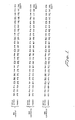
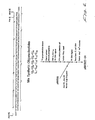
- Figure 2 depicts the nucleotide sequences of the sense strands of both natural and synthetic BGH genes along with the transcribed portions of the respective preceding trp-promotor sequences.
- the first nucleotide of each transcript is indicated as “+1” and the following nucleotides are numbered sequentially.
- the sequences are lined up to match the translated coding regions of both genes, beginning at the start codon "ATG" of each (overlined).
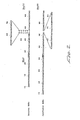
- the transcript of the natural BGH gene shows an area of "secondary structure" due to interactions of nucleotides 46 to 51 with nucleotides 73 to 73, respectively (see Figure 3), thus creating the stem-loop structure depicted. This area is not present in the synthetic BGH gene, removed by virtue of nucleotide changes (see Figure 1), which nevertheless retains the correct amino acid sequence.
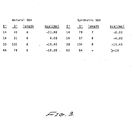
- Figure 3 shows the locations and stabilities of secondary structures in the transcripts of natural and synthetic BGH. (See Figure 2) These locations and stabilities were determined using a nucleotide by nucleotide analysis, as described herein. Each area of significant secondary structure of each proximal portion of gene is listed in the respective table.
- the energy levels of "secondary structure" at corresponding portions of the translatable transcripts are markedly different (-15.2 kcal/mole versus greater than -10 kcal/mole), accounting for the observed success of expression of the synthetic BGH gene versus the natural BGH gene, cf. infra.
- the energy levels indicate the significance of the relative amounts of tolerable "secondary structure", i.e., values arithmetically greater than about -12kcal/mole based upon thermodynamic energy considerations.
- the significance of location of "secondary structure” can be appreciated by the fact that energy levels calculated for positions 33 to 101 versus 38 to 104 of natural versus synthetic BGH, respectively, did not significantly influence expression levels.
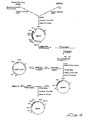
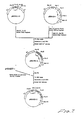
- Figure 4 depicts the construction of pSGH 33 used as shown in Figure 5.
- Figure 5 depicts the construction of plasmids harboring DNA sequences for hybrid polypeptides: pBHGH 33-1 used as shown in Figure 7, pBHGH being a hybrid of bovine and human growtn hormone sequences, and pHSGH a hybrid of human and bovine sequences.
- Figure 6 depicts the technique used to assemble the synthetic proximal portion of the BGH gene, pBR 322-01, used in the construction shown in Figure 7.
- Figure 7 depicts the construction of the plasmid (pBGH 33-3) harboring the gene for BGH comprising the synthetic proximal portion as shown in Figure 6.
- Figure 8 depicts the construction of expression plasmid pBGH 33-4 harboring the hybrid BGH gene.
- Figure 9 is the result of a polyacrylamide gel segregation of cell protein.
- Part A shows no BGH production at any cell density using the culture containing natural BGH gene.
- Part B shows the expression of synthetic BGH gene (lanes BGH #1 and #2) in the same medium as used for Part A.
- the levels of expression indicated in Part B, as opposed to Part A, reflect the production of BGH in amounts exceeding about 100 thousand copies per cell.
- the invention is illustrated by the microbial production of bovine growth hormone (BGH).
- BGH bovine growth hormone
- BGH is endogenous in bovine, e.g., cattle and is responsible for proper physical maturation of the animal. It is also useful for increasing weight gain, feed conversion efficiency, lean to fat ratio, and milk production. Its sequence of 190 amino acids is known. See Dayhoff, Atlas of Protein Scauence and Structure 1972, National Biomedical Research Foundation, Washington, D.C.
- the present invention makes possible the preparation of commercial quantities of the compound, enabling now its application on a large scale in the animal husbandry industry.
- An initial approach toward preparing BGH microbially took advantage of a source of bovine pituitary glands.
- Ligations at the Pvu II terminus of the synthetic piece to the cDNA downstream therefrom produced the desired hybrid gene.
- Construction of a replicable expression vector containing said heterologous gene as an operable insert successfully resulted in efficient expression of BGH in transformed E. coli host.
- the complete nucleotide (and deduced amino acid) sequence of the thus constructed hybrid BGH gene is as follows:
- the 14 fragments were synthesized according to the method of Crea et al., Nucleic Acids Research, 8, 2331 (1980). The syntheses of the fragments were accomplished from the appropriate solid support (cellulose) by sequential addition of the appropriate fully protected dimer - or trimer- blocks. The cycles were carried out under the same conditions as described in the synthesis of oligothymidilic acid (see Crea et al., Supra.) The final polymer was treated with base (aq. conc NH 3 ) and acid (80% aq. HOAC), the polymer pelleted off and the supernatant evaporated to dryness. The residue, as dissolved in 4% aq.
- the pBR 322 plasmids containing cDNA were transformed into E. coli K-12 strain 294 (ATCC No. 31446). Colonies containing recombinant plasmids were selected by their resistance to tetracycline and sensitivity to ampicillin. Approximately 2000 of these clones were screened for BGH by colony hybridization.
- the cDNA clones of HGH contain an internal 550 bp HaeIII fragment.
- the amino acid sequence of this region is very similar to the BGH amino acid sequence.
- This HGH HaeIII fragment was radioactively labeled and used as a probe to find the corresponding BGH sequence amongst the 2000 clones.
- a synthetic "expression primer” was made having the sequence 5'-ATGTTCCCAGCCATG-3'.
- the nucleotides in the fourth through fifteenth position are identical to the codons of the first 4 amino acids of the mature BGH protein, as determined by sequence data of pBGH 112 . Only the 5' ATG (methionine) is alien to this region of the protein. This was necessary in order to eliminate the presequence region of our BGH clone and to provide the proper initiation codon for protein synthesis. By a series of enzymatic reactions this synthetic primer was elongated on the BGH 112 cDNA insert.
- the primed product was cleaved with Pst I to give a DNA fragment of 270 bp containing coding information up to amino acid 90.
- Figure 4 This "expression" BGH cDNA fragment was ligated into a pBR 322 vector which contained the trp promotor. This vector was derived from pLeIF A trp25 (Goeddel et al., Nature 287, 411 (1980)). The interferon cDNA was removed and the trp25-322 vector purified by gel electrophoresis. The recombinant plasmid (pBGH710) now contained the coding information for amino acids 1-90 of the mature BGH protein, linked directly to the trp promotor.
- Plasmid pGM1 carries the E. coli tryptophan operon containing the deletion LE1413 (G.F. Miozzari, et al., (1978) J. Bacteriology 1457-1466)) and hence expresses a fusion protein comprising the first 6 amino acids of the trp leader and approximately the last third of the trp E polypeptide (hereinafter referred to in conjunction as LE'), as well as the trp D polypeptide in its entirety, all under the control of the trp promoter-operator system.
- the gene fragments were next combined with EcoRI linkers (consisting of a self complementary oligonucleotide of the sequence: pCATGAATTCATG) providing an EcoRI cleavage site for a later cloning into a plasmid containing an EcoRI site.
- EcoRI linkers consisting of a self complementary oligonucleotide of the sequence: pCATGAATTCATG
- the 20 ⁇ g of DNA fragments obtained from pGM1 were treated with 10 units T 4 DNA ligase in the presence of 200 pico moles of the 5'-phosphorylated synthetic oligonucleotide pCATGAATTCATG and in 20pl T 4 DNA ligase buffer (20mM tris, pH 7.6, 0.5 mM ATP, 10 mM MgCl 2 , 5 mM dithiothreitol) at 4°C overnight.
- PAGE polyacrylamide gel electrophoresis
- Each gel fragment with 300 microliters 0.1xTBE, was placed in a dialysis bag and subjected to electrophoresis at 100 V for one hour in 0.1xTBE buffer (TBE buffer contains: 10.8 gm tris base, 5.5 gm boric acid, 0.09 gm Na 2 EDTA in 1 liter H20).
- TBE buffer contains: 10.8 gm tris base, 5.5 gm boric acid, 0.09 gm Na 2 EDTA in 1 liter H20).
- the aqueous solution was collected from the dialysis bag, phenol extracted, chloroform extracted and made 0.2 M sodium chloride, and the DNA recovered in water after ethanol precipitation.
- Plasmid pBRHl (R.I. Rodriguez, et al., Nucleic Acids Research 6, 3267-3287 [1979]) expresses ampicillin resistance and contains the gene for tetracycline resistance but, there being no associated promoter, does not express that resistance.
- the plasmid is accordingly tetracycline sensitive. By introducing a promoter-operator system in the EcoRI site, the plasmid can be made tetracycline resistant.
- pBRH1 was digested with EcoRI and the enzyme removed by. phenol/CHCl 3 extraction followed hy chloroform extraction and recovered in water after ethanol precipitation.
- the resulting DNA molecule was, in separate reaction mixtures, combined with each of the three DNA fragments obtained as decribed above and ligated with T 4 DNA ligase as previously described.
- the DNA present in the reaction mixture was used to transform competent E. coli K-12 strain 294 (K. Backman et al., Proc Nat'1 Acad Sci USA 73, 4174-4198 (1976) (ATCC no. 31446) by standard techniques (V.
- the resulting plasmid expresses ⁇ -lactamase, imparting ampicillin resistance, and it contains a DNA fragment including the trp promoter-operator and encoding a first protein comprising a fusion of the first six amino acids of the trp Leader and approximately the -last third of the trp E polypeptide (this polypeptide is designated LE'), and a second protein corresponding to approximately the first half of the trp D polypeptide (this polypeptide is designated D'), and a third protein coded for by the tetracycline resistance gene.
- pBRH trp was digested with EcoRI restriction enzyme and the resulting fragment 1 isolated by PAGE and electroelution.
- EcoRI-digested plasmid pSom 11 K. Itakura et al, Science 198, 1056 (1977); G.B. patent publication no. 2 007 676 A) was combined with this fragment 1.
- the mixture was ligated with T 4 DNA ligase as previously deseribed and the rescalting DHA transformed into E. coli K-12 strain 294 as previously described. Transformant bacteria were selected on ampicillin-containing plates. Resulting ampicillin-resistant colonies were screened by colony hybridization (M.
- the cells were grown to optical density 1 (at 550 nM), collected by centrifugation and resuspended in M9 media in tenfold dilution. Cells were grown for 2-3 hours, again to optical density 1, then lysed and total cellular protein analyzed by SDS (sodium dodcyl. sulfate) area (15 percent) polyacrylamide gel electrophoresis (J.V. Maizel Jr. et al., Meth Viral 5, 180-246 (1971)).
- SDS sodium dodcyl. sulfate
- the plasmid pSom7 ⁇ 2, 10 ⁇ g was cleaved with EcoRI and the DNA fragment 1 containing the tryptophan genetic elements was isolated by PAGE and electroelution.
- This fragment, 2pg was digested with the restriction endonuclease Taq I, 2. units, 10 minutes at 37°C such that, on the average, only one of the approximately five Taq I sites in each molecule is cleaved.
- This partially digested mixture of fragments was separated by PAGE and an approximately 300 base pair fragment 2 that contained one EcoRI end and one Taq I end was isolated by electroelution.
- the corresponding Taq I site is located between the transcription start and translation start sites and is 5 nucleotides upstream from the ATG codon of the trp leader peptide.
- the DNA sequence about this site is shown in Figure 4.
- the Taq I residue at the 3' end of the resulting fragment adjacent the translation start signal for the trp leader sequence was next converted into an XbaI site.
- a plasmid containing a unique (i.e., only one) EcoRI site and a unique XbaI site For this purpose, one may employ essentially any plasmid containing, in order, a replicon, a selectable marker such as antibiotic resistance, and EcoRI, XbaI and BamHI sites.
- an XbaI site can be introduced between the EcoRI and BamHI sites of pBR322 (F.
- an EcoRI and BamHI digestion product of the viral genome of hepatitis B was obtained by conventional means and cloned into the EcoRI and BamHI sites of plasmid pGH6 (D.V. Goeddel et al., Nature 281, 544 [1979])) to form the plasmid pHS32.
- Plasmid pHS32 was cleaved with XbaI, phenol extracted, chloroform extracted and ethanol precipitated. It was then treated with 1 ⁇ l E.
- pTrp 14 was used for expression of heterologous polypeptides, as next discussed.
- the plasmid pHGH 107 contains a gene for human growth hormone made up of 23 amino acid codons produced from synthetic DNA fragments and 163 amino acid codons obtained from complementary DNA produced via reverse transcription of human growth hormone messenger RNA. This gene, 3, though it lacks the codons of the "pre" sequence of human growth hormone, does contain an ATG translation initiation codon.
- the gene was isolated from 10 ⁇ g pHGH 107 after treatment with EcoRI followed by E. coli polymerse I Klenow fragment and dTTP and dATP as described above. Following phenol and chloroform extraction and ethanol precipitation the plasmid was treated with BamHI.
- the human growth hormone (“HGH”) gene-containing fragment 3 was isolated by PAGE followed by electroelution.
- the resulting DNA fragment also contains the first_350 nucleotides of the tetracycline resistance structural gene, but lacks the tetracyline promoter-operator system so that, when subsequently cloned into an expression plasmid, plasmids containing the insert can be located by the restoration of tetracycline resistance. Because the EcoRI end of the fragment 3 has been filled in by the Klenow polymerase I procedure, the fragment has one blunt and one sticky end, ensuring proper orientation when later inserted into an expression plasmid.
- the expression plasmid pTrpl4 was next prepared to receive the HGH gene-containing fragment prepared above.
- pTrpl4 was XbaI digested and the resulting sticky ends filled in with the Klenow polymerase I procedure employing dATP, dTTP, dGTP and dCTP. After phenol and chloroform extraction and ethanol. precipitation the resulting DNA was treated with BamHI and the resulting large plasmid fragment isolated by PAGE and electroelution.
- the pTrpl4-derived fragment had one blunt and one sticky end, permitting recombination in proper orientation with the HGH gene containing fragment 3 previously described.
- the HGH gene fragment 3 and the pTrp14 Xba-BamHI fragment were combined and ligated together under conditions similar to those described above.
- the filled in Xbal and EcoRI ends ligated together by blunt end ligation to recreate both the XbaI and the EcoRI site:
- This construction also recreates the tetracycline resistance gene. Since the plasmid pHGH 107 expresses tetracycline resistance from a promoter lying upstream from the HGH gene (the lac promoter), this construction, designated pHGH 207, permits expression of the gene for tetracycline resistance under the control of the tryptophan promoter-operator. Thus the ligation mixture was transformed into E. coli 294 and colonies selected on LB plates containing 5 ⁇ g/ml tetracycline.
- pHGH207-1 which has the entire human growth hormone gene sequence is shown.
- the front part of this gene is synthetic as is described by Goeddel et al., Nature 281, 544 (1979).
- a plasmid was constructed containing the BGH gene in the same orientation and in the same position with respect to the trp-promotor as is the HGH gene in pHGH 207-1.
- Twenty ⁇ l (i.e. 10 ⁇ g) of the plasmid DNA was digested wth Bam HI and PvuIl as follows: To the twenty pl of DNA we added 5 ⁇ l 10X restriction enzyme buffer (500mM NaCl, 100 m:4 Tris HCl pH 7.4, 100 mM MgS0 4 and 10 mM OTT), 20 ⁇ l H 2 O and 10 units BamH1 restriction enzyme and 2 ⁇ l PvuII restriction enzyme. Subsequently, this reaction mixture was incubated at 37°C for 90 minutes. The mixture was loaded on a 6 percent acrylamide gel and electrophoresis was carried out for 2 hours at 50 mA.
- 10X restriction enzyme buffer 500mM NaCl, 100 m:4 Tris HCl pH 7.4, 100 mM MgS0 4 and 10 mM OTT
- the DNA in the gel was stained with Ethidium bromide and visualized with UV-light.
- the band corresponding to the 365 bp (with reference to a HaeIII digest of pBR322) fragment was excised and inserted in a dialysis bag and the DNA was electroeluted using a current of 100 mA.
- the liquid was removed from the bag and its salt concentration adjusted to 0.3M NaCl.
- Two volumes of ethanol were added and the DNA precipitated at -70°C.
- the DNA was spun down in an Eppendorf centrifuge, washed with 70 percent ethanol and dried and resuspended in 10 ⁇ l TAE (10 mM Tris HCl pH7.4, 0.1 mM EDTA).
- 10 ⁇ l TAE 10 mM Tris HCl pH7.4, 0.1 mM EDTA
- the two PvuII sites in the HGH and BGH genes are at identical positions. Exchange of PvuII fragments is possible without changing the reading frame of the messenger RNA of these genes. The large difference in expression of both genes is due to differences in initiation of protein synthesis at the beginning of the messages. Therefore, the front part of both genes were exchanged thus constructing hybrid genes that upon transcription would give hybrid messenger RNAs.
- the two plasmids, pBHGH and pHBGH, were constructed as follows:
- the DNA sequence up to the PvuII site of the BGH and HGH genes codes for 22 amino acids. Since the front part of the HGH gene had excellent protein synthesis initiation properties, the sequence of the front part of BGH was designed such that the number of nuclcotide changes in the BGH gene would be minimal with respect to the HGH gene. Only 14 base pair changes from the natural BGH sequence were made in order to code for the proper BGH amino acid sequence and reduce conformational structure in the prospective mRNA.
- the DNA sequence is shown in Figure 6. The sequence ends with EcoRI and HindIII sticky ends to make cloning in a vector easy. Close to the HindIII site is a PvuII site for the proper junction with the remaining part of the BGH gene.
- the fragments U1 to U6 and L1 to L6 were synthesized chemically according to the procedures described above. All the fragments except Ul and L6 were mixed and kinased. After addition of Ul and L6 the mixed fragments were ligated, purified on a 6 percent polyacrylamide gel and the 75 bp band extracted and isolated according to standard procedures. This fragment was inserted into pBR322 that had been cut with EcoRI and HindIII. Thus plasmid pBR322-01 was obtained.
- the sequences beyond the second PvuII site of the BGH gene are derived from the HGH gene.
- One of the amino acids at the end is different from that in the natural BGH gene.
- This 3'-end was repaired as follows.
- a synthetic DNA fragment as shown was synthesized. It is flanked by an EcoRI and a HindIII end to facilitate cloning and contains a PvuII site and 3 amino acid codons and a stop codon in the reading frame of the BGH gene itself. This fragment was inserted into EcoRI-HindIII opened pBR322. Thus pBR322-02 was obtained. Subsequently this plasmid was cut with PvuII and BamHI and the 360 bp fragment was isolated.
- pBGH33-3 which has the entire BGH gene with the synthetic front part, the large BamHI and XbaI fragment and the 570 bp XbaI (partial) PvuII fragment was isolated. These three fragments were ligated and used to transform cells. Thus, pBGH33-4 was obtained. In this plasmid a unique HindIII site is present between the stop codon of the BGH gene and the start codon of the tet-mRNA. Both genes are transcribed under direction of the trp promotor.
- a typical growth medium used to derepress and produce high levels of BGH per liter contains: 5.0 g (NH 4 ) 2 SO 4 , 6.0 g K 2 HPO 4 , 3.0 g NaH 2 PO 4 .2H 2 O, 1.0 g sodium citrate, 2.5 g glucose, 5 mg tetracycline, 70 mg thiamine HCl, and GO g MgS 4 .7H 2 O.
- E. coli transformants While the present invention has been described, in its preferred embodiments, with reference to the use of E. coli transformants, it will be appreciated that other microorganisms can be employed mutatis mutandis. Examples of such are other E. coli organisms, e.g. E. coli B., E. coli W3110 ATCC No. 31622 (F - , ⁇ -, gal - , prototroph), E. coli x 1776, ATCC No. 31537, E. coli D1210, E. coli RV308, ATCC No. 31608, etc., Bacillus subtilis strains, Pseudomonas strains, etc.
- E. coli B. E. coli W3110 ATCC No. 31622 (F - , ⁇ -, gal - , prototroph)
- E. coli x 1776 ATCC No. 31537
- E. coli D1210 E. coli RV308, ATCC No. 31608,
- yeasts e.g., Sacnharomyces cerevisiae many of which are deposited and (potentially) available from recognized depository institutions e.g., ATCC.
- extraction and purification techniques may be those customarily employed in this art, known per sa.
Landscapes
- Health & Medical Sciences (AREA)
- Chemical & Material Sciences (AREA)
- Life Sciences & Earth Sciences (AREA)
- Genetics & Genomics (AREA)
- Organic Chemistry (AREA)
- Zoology (AREA)
- Engineering & Computer Science (AREA)
- Biotechnology (AREA)
- Biochemistry (AREA)
- General Engineering & Computer Science (AREA)
- Biophysics (AREA)
- Molecular Biology (AREA)
- General Health & Medical Sciences (AREA)
- Bioinformatics & Cheminformatics (AREA)
- Biomedical Technology (AREA)
- Wood Science & Technology (AREA)
- Endocrinology (AREA)
- Microbiology (AREA)
- Proteomics, Peptides & Aminoacids (AREA)
- Physics & Mathematics (AREA)
- Crystallography & Structural Chemistry (AREA)
- Toxicology (AREA)
- Gastroenterology & Hepatology (AREA)
- Medicinal Chemistry (AREA)
- Plant Pathology (AREA)
- Micro-Organisms Or Cultivation Processes Thereof (AREA)
- Preparation Of Compounds By Using Micro-Organisms (AREA)
- Saccharide Compounds (AREA)
- Peptides Or Proteins (AREA)
- Medicines That Contain Protein Lipid Enzymes And Other Medicines (AREA)
- Fodder In General (AREA)
Priority Applications (2)
| Application Number | Priority Date | Filing Date | Title |
|---|---|---|---|
| AT82304880T ATE83799T1 (de) | 1981-09-18 | 1982-09-16 | Verfahren und produkte zur leichten mikrobiologischen expression von dns-sequenzen. |
| EP87202220A EP0278121B1 (de) | 1981-09-18 | 1982-09-16 | Mikrobisch-produziertes Rinderwachstumshormon und dessen Verwendung |
Applications Claiming Priority (2)
| Application Number | Priority Date | Filing Date | Title |
|---|---|---|---|
| US30368781A | 1981-09-18 | 1981-09-18 | |
| US303687 | 1981-09-18 |
Related Child Applications (1)
| Application Number | Title | Priority Date | Filing Date |
|---|---|---|---|
| EP87202220.7 Division-Into | 1987-11-13 |
Publications (3)
| Publication Number | Publication Date |
|---|---|
| EP0075444A2 true EP0075444A2 (de) | 1983-03-30 |
| EP0075444A3 EP0075444A3 (en) | 1984-12-27 |
| EP0075444B1 EP0075444B1 (de) | 1992-12-23 |
Family
ID=23173239
Family Applications (1)
| Application Number | Title | Priority Date | Filing Date |
|---|---|---|---|
| EP82304880A Expired - Lifetime EP0075444B1 (de) | 1981-09-18 | 1982-09-16 | Verfahren und Produkte zur leichten mikrobiologischen Expression von DNS-Sequenzen |
Country Status (13)
| Country | Link |
|---|---|
| EP (1) | EP0075444B1 (de) |
| JP (2) | JP2539775B2 (de) |
| AT (1) | ATE127518T1 (de) |
| AU (2) | AU563347B2 (de) |
| BR (1) | BR8205453A (de) |
| CA (1) | CA1340371C (de) |
| DE (2) | DE3280471T2 (de) |
| DK (1) | DK172897B1 (de) |
| ES (1) | ES8407329A1 (de) |
| GB (2) | GB2106119B (de) |
| IE (1) | IE53897B1 (de) |
| NZ (1) | NZ201918A (de) |
| ZA (1) | ZA826802B (de) |
Cited By (143)
| Publication number | Priority date | Publication date | Assignee | Title |
|---|---|---|---|---|
| EP0159123A2 (de) | 1984-03-06 | 1985-10-23 | Eli Lilly And Company | Expressionsvektoren für Rinderwachstumshormonderivate |
| EP0241446A2 (de) | 1986-03-27 | 1987-10-14 | Monsanto Company | Erhöhte Produktion von Proteinen in Bakterien durch Verwendung einer neuen Ribosombindungsstelle |
| EP0509553A1 (de) | 1984-05-31 | 1992-10-21 | Genentech, Inc. | Anti-Lymphotoxin-Antikörper, Herstellung und Verwendung |
| WO1996010083A1 (en) | 1994-09-28 | 1996-04-04 | Novartis Ag | Novel pesticidal proteins and strains |
| EP0787802A2 (de) | 1987-02-12 | 1997-08-06 | Genentech, Inc. | Verfahren und Desoxyribonukleinsäure zur Herstellung von Gewebefaktor-Protein |
| US6599727B1 (en) | 1999-06-16 | 2003-07-29 | Icos Corporation | Human poly (ADP-ribose) polymerase 2 materials and methods |
| US6787336B1 (en) | 1989-10-12 | 2004-09-07 | Ohio University/Edison Biotechnology Institute | DNA encoding growth hormone antagonists |
| WO2004096159A2 (en) | 2003-04-28 | 2004-11-11 | Children's Hospital Medical Center | Saposin c-dops: a novel anti-tumor agent |
| WO2005001057A2 (en) | 2003-06-23 | 2005-01-06 | North Carolina State University | Lactobacillus acidophilus nucleic acids encoding fructo-oligosaccharide utilization compounds and uses thereof |
| US7005505B1 (en) | 1995-08-25 | 2006-02-28 | Genentech, Inc. | Variants of vascular endothelial cell growth factor |
| WO2006036788A2 (en) | 2004-09-22 | 2006-04-06 | Tripath Imaging, Inc. | Methods and compositions for evaluating breast cancer prognosis |
| EP1666499A2 (de) | 1996-05-07 | 2006-06-07 | Genentech, Inc. | Neuartige Inhibitoren der Aktivität des Wachstumsfaktors für Gefäss-Endothelzellen (VEGF), ihre Verwendungen und Verfahren zu ihrer Herstellung |
| US7078382B1 (en) | 1999-11-02 | 2006-07-18 | Genentech, Inc. | Modulation of eNOS activity and therapeutic uses thereof |
| USRE39355E1 (en) * | 1983-06-06 | 2006-10-17 | Genetech, Inc. | Preparation of human IGF via recombinant DNA technology |
| EP1717251A2 (de) | 2000-10-02 | 2006-11-02 | Chiron Corporation | Humane Antikörper gegen CD40 zur Therapie von B-Zell Tumoren |
| WO2007054555A2 (en) | 2005-11-09 | 2007-05-18 | Basf Agrochemical Products B.V. | Herbicide-resistant sunflower plants with a novel mutation in the gene encoding the large subunit of acetohydroxyacid synthase, isolated polynucleotides, and methods of use |
| WO2007059077A2 (en) | 2005-11-14 | 2007-05-24 | E.I.Du Pont De Nemours And Company | Compositions and methods for altering alpha- and beta-tocotrienol content |
| WO2007103738A2 (en) | 2006-03-01 | 2007-09-13 | Pioneer Hi-Bred International, Inc. | Compositions related to the quantitative trait locus 6 (qtl6) in maize and methods of use |
| EP1844815A1 (de) | 2003-11-04 | 2007-10-17 | Novartis Vaccines and Diagnostics, Inc. | Kombinationstherapie von anti-CD20 und anti-CD40 Antikörpern zur Behandlung von B-Zell-bedingtem Krebs |
| WO2007124299A2 (en) | 2006-04-21 | 2007-11-01 | Novartis Ag | Antagonist anti-cd40 antibody pharmaceutical compositions |
| EP1935901A1 (de) | 1996-12-13 | 2008-06-25 | Novartis Vaccines and Diagnostics, Inc. | Analyse und Trennung von PDGF-Proteinen |
| EP1935431A2 (de) | 2000-05-15 | 2008-06-25 | Health Research, Inc. | Krebsbehandlungen unter Verwendung einer Kombination aus einem HER2-Antikörper und Interleukin-2 |
| US7427596B2 (en) | 1995-08-25 | 2008-09-23 | Genentech, Inc. | Variants of vascular endothelial cell growth factor, their uses, and processes for their production |
| EP1985703A2 (de) | 1994-11-02 | 2008-10-29 | Allelix Neuroscience, Inc. | Spezifische Peripherie-Nervensystem-Natriumkanäle, DNS-Kodierung dafür, Kristallisierung, Röntgenstrahldiffraktion, Computermolekülformung, rationales Drogendesign, Drogenscreening und Verfahren zur Herstellung und Verwendung davon |
| WO2008145629A2 (en) | 2007-05-25 | 2008-12-04 | Cropdesign N.V. | Yield enhancement in plants by modulation of maize alfins |
| EP2003205A2 (de) | 2004-12-28 | 2008-12-17 | Pioneer Hi-Bred International, Inc. | Verbesserte Kornqualität durch Expressionsveränderung der Saatproteine |
| EP2039769A2 (de) | 2000-09-13 | 2009-03-25 | Pioneer Hi-Bred International, Inc. | Antimikrobielle Peptide und Verwendungsverfahren |
| EP2112223A2 (de) | 2005-11-10 | 2009-10-28 | Pioneer Hi-Bred International Inc. | DOF (DNA-Bindung mit einem Finger)-Sequenzen und Verwendungsverfahren dafür |
| EP2113512A2 (de) | 2004-07-02 | 2009-11-04 | Pioneer Hi-Bred International Inc. | Antimykotische Polypeptide |
| EP2149585A1 (de) | 2003-11-04 | 2010-02-03 | Novartis Vaccines and Diagnostics, Inc. | Antagonisten-anti-CD40-monoklonale Antikörper und Verwendungsverfahren dafür |
| WO2010102177A1 (en) | 2009-03-06 | 2010-09-10 | Becton, Dickinson And Company | Glycodelin monoclonal antibodies and methods for their use in the detection of ovarian cancer |
| WO2010101870A1 (en) | 2009-03-03 | 2010-09-10 | St. Jude Children's Research Hospital | Compositions and methods for generating interleukin-35-induced regulatory t cells |
| WO2010102167A1 (en) | 2009-03-05 | 2010-09-10 | Becton, Dickinson And Company | Matrix metalloproteinase-7 (mmp-7) monoclonal antibodies and methods for their use in the detection of ovarian cancer |
| EP2228379A1 (de) | 2003-04-25 | 2010-09-15 | North Carolina State University | Für Zelloberflächenproteinhomologe codierende Nukleinsäuresequenzen aus Lactobacillus acidophilus |
| EP2243491A1 (de) | 2003-11-04 | 2010-10-27 | Novartis Vaccines and Diagnostics, Inc. | Verwendung von antagonistischen anti-CD40-Antikörpern zur Behandlung von chronischer lymphatischer Leukämie |
| EP2243492A1 (de) | 2003-11-04 | 2010-10-27 | Novartis Vaccines and Diagnostics, Inc. | Verwendung von antagonistischen-anti-CD40-monoklonalen Antikörpern zur Behandlung von multiplem Myelom |
| EP2251349A1 (de) | 2006-04-19 | 2010-11-17 | Pioneer Hi-Bred International, Inc. | Isolierte Polynukleotidmoleküle, welche Mutanten- und Wildtypallelen des D9-Gens aus Mais entsprechen, und Verwendungsmethoden |
| EP2270188A2 (de) | 2001-06-22 | 2011-01-05 | Pioneer Hi-Bred International, Inc. | Defensinpolynucleotide und Verfahren zu ihrer Verwendung |
| WO2011014750A1 (en) | 2009-07-31 | 2011-02-03 | Genentech, Inc. | Inhibition of tumor metastasis using bv8- or g-csf-antagonists |
| WO2011029166A1 (en) | 2009-09-09 | 2011-03-17 | Braskem S.A. | Microorganisms and process for producing n-propanol |
| EP2298915A1 (de) | 2004-06-30 | 2011-03-23 | Pioneer Hi-Bred International, Inc. | Verfahren zum Schutz von Pflanzen vor pathogenen Pilzen |
| WO2011033006A1 (en) | 2009-09-17 | 2011-03-24 | F. Hoffmann-La Roche Ag | Methods and compositions for diagnostics use in cancer patients |
| EP2302032A1 (de) | 2005-04-15 | 2011-03-30 | North Carolina State University | Verfahren und Zusammensetzungen zur Modulierung von Haftung und Stresstoleranz in Bakterien |
| EP2301575A1 (de) | 2003-11-04 | 2011-03-30 | Novartis Vaccines and Diagnostics, Inc. | Verfahren zur Therapie von soliden Tumoren mit CD40-Zelloberflächenantigenexpression |
| US7923221B1 (en) | 1983-04-08 | 2011-04-12 | Genentech, Inc | Methods of making antibody heavy and light chains having specificity for a desired antigen |
| EP2308986A1 (de) | 2006-05-17 | 2011-04-13 | Pioneer Hi-Bred International Inc. | Künstliche Pflanzenminichromosome |
| EP2312315A1 (de) | 2005-05-18 | 2011-04-20 | Novartis AG | Verfahren zur Diagnose und Behandlung von Krankheiten mit einer autoimmunen und/oder entzündlichen Komponente |
| WO2011062748A1 (en) | 2009-11-23 | 2011-05-26 | E.I. Du Pont De Nemours And Company | Sucrose transporter genes for increasing plant seed lipids |
| WO2011063198A2 (en) | 2009-11-20 | 2011-05-26 | St. Jude Children's Research Hospital | Methods and compositions for modulating the activity of the interleukin-35 receptor complex |
| EP2333088A1 (de) | 2006-05-16 | 2011-06-15 | Pioneer Hi-Bred International, Inc. | Antimykotische Polypeptide |
| EP2332988A2 (de) | 2005-04-27 | 2011-06-15 | Tripath Imaging, Inc. | Monoklonale Antikörper und Verfahren zu ihrer Verwendung zum Nachweis von zervikalen Erkrankungen |
| EP2348041A1 (de) | 2004-03-08 | 2011-07-27 | North Carolina State University | Für kohlenhydratnutzende Verbindungen kodierende Nukleinsäurensequenzen aus Lactobacillus Acidophilus, verwandte Proteine und Verwendungen davon |
| EP2361931A1 (de) | 2004-07-20 | 2011-08-31 | Genentech, Inc. | Angiopoietin-like 4 Protein Hemmer Kombinationen und deren Verwendung |
| EP2363711A1 (de) | 2006-01-27 | 2011-09-07 | Tripath Imaging, Inc. | Verfahren zur Identifizierung von Patienten mit erhöhter Wahrscheinlichkeit des Auftretens eines Ovarialkarzinoms und Zusammensetzungen dafür |
| WO2011130340A1 (en) | 2010-04-15 | 2011-10-20 | St. Jude Children's Research Hospital | Methods and compositions for the diagnosis and treatment of cancer resistant to anaplastic lymphoma kinase (alk) kinase inhibitors |
| WO2011139431A1 (en) | 2010-05-06 | 2011-11-10 | Pioneer Hi-Bred International, Inc. | Maize acc synthase 3 gene and protein and uses thereof |
| EP2392661A1 (de) | 2007-04-04 | 2011-12-07 | Basf Se | Herbizidresistente Rapspflanzen und Verwendungsmethoden |
| WO2011160082A2 (en) | 2010-06-17 | 2011-12-22 | New York University | Therapeutic and cosmetic uses and applications of calreticulin |
| EP2400022A1 (de) | 2005-07-01 | 2011-12-28 | Basf Se | Herbizidresistente Sonnenblumenpflanzen, für große herbizidresistente Acetohydroxysäuresynthase-Untereinheitenproteine codierende Polynucleotide und Verwendungsverfahren |
| WO2011163590A1 (en) | 2010-06-25 | 2011-12-29 | E. I. Du Pont De Nemours And Company | Compositions and methods for enhancing resistance to northern leaf blight in maize |
| WO2012021797A1 (en) | 2010-08-13 | 2012-02-16 | Pioneer Hi-Bred International, Inc. | Methods and compositions for targeting sequences of interest to the chloroplast |
| WO2012027209A2 (en) | 2010-08-23 | 2012-03-01 | Pioneer Hi-Bred International, Inc. | Novel defensin variants and methods of use |
| US8129341B2 (en) | 2008-08-25 | 2012-03-06 | New York University | Methods for treating diabetic wounds |
| EP2430923A1 (de) | 2002-06-05 | 2012-03-21 | Genentech, Inc. | Zusammensetzungen und Verfahren zum Leberwachstum und Leberschutz |
| EP2455395A1 (de) | 2005-12-19 | 2012-05-23 | Tripath Imaging, Inc. | Monoklonale MCM6-Antikörper und Verfahren zu ihrer Verwendung zum Nachweis von zervikalen Erkrankungen |
| WO2012075111A1 (en) | 2010-11-30 | 2012-06-07 | Novartis Ag | Uses of anti-cd40 antibodies in combination therapy for b cell-related cancers |
| WO2012092106A1 (en) | 2010-12-28 | 2012-07-05 | Pioneer Hi-Bred International, Inc. | Novel bacillus thuringiensis gene with lepidopteran activity |
| WO2012097128A1 (en) | 2011-01-14 | 2012-07-19 | Two Blades Foundation | Citrus trees with resistance to citrus canker |
| WO2012109515A1 (en) | 2011-02-11 | 2012-08-16 | Pioneer Hi-Bred International, Inc. | Synthetic insecticidal proteins active against corn rootworm |
| WO2012122369A1 (en) | 2011-03-10 | 2012-09-13 | Pioneer Hi-Bred International, Inc. | Novel bacillus thuringiensis gene with lepidopteran activity |
| WO2012131495A2 (en) | 2011-03-30 | 2012-10-04 | Universidad Nacional Autónoma de México | Mutant bacillus thuringiensis cry genes and methods of use |
| WO2012142311A1 (en) | 2011-04-15 | 2012-10-18 | Pioneer Hi-Bred International, Inc. | Self-reproducing hybrid plants |
| WO2012142233A1 (en) | 2011-04-14 | 2012-10-18 | St. Jude Children's Research Hospital | Methods and compositions for detecting and modulating a novel mtor complex |
| WO2012161982A1 (en) | 2011-05-23 | 2012-11-29 | E. I. Dupont De Nemours & Company | Chloroplast transit peptides and methods of their use |
| WO2012174139A2 (en) | 2011-06-14 | 2012-12-20 | Synthon Biopharmaceuticals B.V. | Compositions and methods for making and b ioc ont aining auxotrophic transgenic plants |
| WO2013009935A2 (en) | 2011-07-12 | 2013-01-17 | Two Blades Foundation | Late blight resistance genes |
| WO2013019411A1 (en) | 2011-08-03 | 2013-02-07 | E. I. Du Pont De Nemours And Company | Methods and compositions for targeted integration in a plant |
| WO2013033074A2 (en) | 2011-08-31 | 2013-03-07 | St. Jude Children's Research Hospital | Methods and compositions to detect the level of lysosomal exocytosis activity and methods of use |
| WO2013052643A1 (en) | 2011-10-05 | 2013-04-11 | The Rockefeller University | Dimeric bacteriophage lysins |
| WO2013055922A1 (en) | 2011-10-11 | 2013-04-18 | Vaccinex, Inc. | Use of semaphorin-4d binding molecules for modulation of blood brain barrier permeability |
| WO2013066423A2 (en) | 2011-06-21 | 2013-05-10 | Pioneer Hi-Bred International, Inc. | Methods and compositions for producing male sterile plants |
| WO2013103366A1 (en) | 2012-01-06 | 2013-07-11 | Pioneer Hi-Bred International, Inc. | A method to screen plants for genetic elements inducing parthenogenesis in plants |
| WO2013111018A1 (en) | 2012-01-26 | 2013-08-01 | Norfolk Plant Sciences, Ltd. | Methods for increasing the anthocyanin content of citrus fruit |
| EP2666781A1 (de) | 2009-05-04 | 2013-11-27 | Pioneer Hi-Bred International, Inc. | Ertragserhöhung in Pflanzen durch Modulierung des AP2-Transkriptionsfaktors |
| WO2013188501A1 (en) | 2012-06-15 | 2013-12-19 | Pioneer Hi-Bred International, Inc. | Genetic loci associated with resistance of soybean to cyst nematode and methods of use |
| WO2013188291A2 (en) | 2012-06-15 | 2013-12-19 | E. I. Du Pont De Nemours And Company | Methods and compositions involving als variants with native substrate preference |
| WO2014100525A2 (en) | 2012-12-21 | 2014-06-26 | Pioneer Hi-Bred International, Inc. | Compositions and methods for auxin-analog conjugation |
| WO2014153234A1 (en) | 2013-03-14 | 2014-09-25 | Pioneer Hi-Bred International, Inc. | Compositions having dicamba decarboxylase activity and methods of use |
| WO2014153242A1 (en) | 2013-03-14 | 2014-09-25 | Pioneer Hi-Bred International, Inc. | Compositions having dicamba decarboxylase activity and methods of use |
| WO2014164828A2 (en) | 2013-03-11 | 2014-10-09 | Pioneer Hi-Bred International, Inc. | Methods and compositions employing a sulfonylurea-dependent stabilization domain |
| WO2014164775A1 (en) | 2013-03-11 | 2014-10-09 | Pioneer Hi-Bred International, Inc. | Methods and compositions to improve the spread of chemical signals in plants |
| WO2014164961A2 (en) | 2013-03-12 | 2014-10-09 | Pioneer Hi-Bred International, Inc. | Manipulation of dominant male sterility |
| WO2015006105A1 (en) | 2013-07-09 | 2015-01-15 | Board Of Trustees Of Michigan State University | Transgenic plants produced with a k-domain, and methods and expression cassettes related thereto |
| WO2015021139A2 (en) | 2013-08-08 | 2015-02-12 | Pioneer Hi-Bred International, Inc. | Insecticidal polypeptides having broad spectrum activity and uses thereof |
| WO2015061330A1 (en) | 2013-10-21 | 2015-04-30 | Vaccinex, Inc. | Use of semaphorin-4d binding molecules for treating neurodegenerative disorders |
| WO2015066011A2 (en) | 2013-10-29 | 2015-05-07 | Pioneer Hi-Bred International, Inc. | Self-reproducing hybrid plants |
| WO2015116680A1 (en) | 2014-01-30 | 2015-08-06 | Two Blades Foundation | Plants with enhanced resistance to phytophthora |
| WO2015171603A1 (en) | 2014-05-06 | 2015-11-12 | Two Blades Foundation | Methods for producing plants with enhanced resistance to oomycete pathogens |
| WO2016040030A1 (en) | 2014-09-12 | 2016-03-17 | E. I. Du Pont De Nemours And Company | Generation of site-specific-integration sites for complex trait loci in corn and soybean, and methods of use |
| EP3002298A1 (de) | 2007-11-21 | 2016-04-06 | Oregon Health & Science University | Anti-faktor xi monoklonale antikörper und verfahren zur verwendung davon |
| WO2016060949A1 (en) | 2014-10-16 | 2016-04-21 | Pioneer Hi-Bred International, Inc. | Insecticidal polypeptides having broad spectrum activity and uses thereof |
| WO2016061197A1 (en) | 2014-10-16 | 2016-04-21 | Pioneer Hi-Bred International, Inc. | Insecticidal polypeptides having improved activity spectrum and uses thereof |
| WO2016100309A1 (en) | 2014-12-16 | 2016-06-23 | Pioneer Hi-Bred International, Inc. | Restoration of male fertility in wheat |
| WO2016100804A1 (en) | 2014-12-19 | 2016-06-23 | AgBiome, Inc. | Methods and compositions for providing resistance to glufosinate |
| WO2016126417A1 (en) | 2015-02-04 | 2016-08-11 | Pioneer Hi Bred International Inc | NOVEL Bt TOXIN RECEPTORS AND METHODS OF USE |
| WO2016149352A1 (en) | 2015-03-19 | 2016-09-22 | Pioneer Hi-Bred International Inc | Methods and compositions for accelerated trait introgression |
| WO2016164732A2 (en) | 2015-04-10 | 2016-10-13 | Syngenta Participations Ag | Animal feed compositions and methods of use |
| WO2016179522A1 (en) | 2015-05-06 | 2016-11-10 | Pioneer Hi-Bred International, Inc. | Methods and compositions for the production of unreduced, non-recombined gametes and clonal offspring |
| WO2016182881A1 (en) | 2015-05-09 | 2016-11-17 | Two Blades Foundation | Late blight resistance gene from solanum americanum and methods of use |
| WO2017062790A1 (en) | 2015-10-09 | 2017-04-13 | Two Blades Foundation | Cold shock protein receptors and methods of use |
| WO2017079286A1 (en) | 2015-11-03 | 2017-05-11 | Two Blades Foundation | Wheat stripe rust resistance genes and methods of use |
| WO2017079026A1 (en) | 2015-11-06 | 2017-05-11 | E. I. Du Pont De Nemours And Company | Generation of complex trait loci in soybean and methods of use |
| US9701940B2 (en) | 2005-09-19 | 2017-07-11 | Histogenics Corporation | Cell-support matrix having narrowly defined uniformly vertically and non-randomly organized porosity and pore density and a method for preparation thereof |
| WO2017180715A2 (en) | 2016-04-14 | 2017-10-19 | Pioneer Hi-Bred International, Inc. | Insecticidal polypeptides having improved activity spectrum and uses thereof |
| WO2017184673A1 (en) | 2016-04-19 | 2017-10-26 | Pioneer Hi-Bred International, Inc. | Insecticidal combinations of polypeptides having improved activity spectrum and uses thereof |
| EP3252155A1 (de) | 2011-04-21 | 2017-12-06 | The Rockefeller University | Streptococcus-bakteriophagen-lysine zur erkennung und behandlung gram-positiver bakterien |
| EP3320920A1 (de) | 2009-05-08 | 2018-05-16 | Vaccinex, Inc. | Anti-cd100-antikörper und verfahren zur verwendung davon |
| WO2018112356A1 (en) | 2016-12-16 | 2018-06-21 | Two Blades Foundation | Late blight resistance genes and methods of use |
| US10077420B2 (en) | 2014-12-02 | 2018-09-18 | Histogenics Corporation | Cell and tissue culture container |
| WO2018175179A1 (en) | 2017-03-20 | 2018-09-27 | Vaccinex, Inc. | Treatment of cancer with a semaphorin-4d antibody in combination with an epigenetic modulating agent |
| WO2018204245A1 (en) | 2017-05-01 | 2018-11-08 | Syngenta Participations Ag | Animal feed compositions and methods of use |
| WO2018204895A1 (en) | 2017-05-05 | 2018-11-08 | Vaccinex, Inc. | Human anti-semaphorin 4d antibody |
| WO2018217333A1 (en) | 2017-05-26 | 2018-11-29 | Pioneer Hi-Bred International, Inc. | Insecticidal polypeptides having improved activity spectrum and uses thereof |
| WO2019023587A1 (en) | 2017-07-28 | 2019-01-31 | Two Blades Foundation | POTYVIRUS RESISTANCE GENES AND METHODS OF USE |
| EP3441470A1 (de) | 2008-09-26 | 2019-02-13 | BASF Agrochemical Products, B.V. | Herbizidresistente ahas-mutanten und verfahren zur verwendung |
| WO2019049111A1 (en) | 2017-09-11 | 2019-03-14 | R. J. Reynolds Tobacco Company | METHODS AND COMPOSITIONS FOR INCREASING THE EXPRESSION OF GENES OF INTEREST IN A PLANT BY CO-EXPRESSION WITH P21 |
| WO2019140351A1 (en) | 2018-01-12 | 2019-07-18 | Two Blades Foundation | Stem rust resistance genes and methods of use |
| EP3581024A1 (de) | 2005-03-02 | 2019-12-18 | Instituto Nacional de Tecnologia Agropecuaria | Herbizidresistente reispflanzen, polynukleotide zur codierung von grossen herbizidresistenten acetohydroxy-säuresynthase-untereinheitenproteine und verfahren zur verwendung |
| EP3656392A1 (de) | 2013-06-25 | 2020-05-27 | Vaccinex, Inc. | Verwendung von semaphorin-4d-hemmermolekülen in kombination mit einer immunmodulierenden therapie zur hemmung des tumorwachstums und von metastasen |
| US10787494B2 (en) | 2018-03-28 | 2020-09-29 | Bristol-Myers Squibb Company | Interleukin-2/interleukin-2 receptor alpha fusion proteins and methods of use |
| WO2021262564A1 (en) | 2020-06-25 | 2021-12-30 | Vaccinex, Inc. | Use of semaphorin-4d binding molecules for the treatment of rett syndrome |
| WO2022035653A2 (en) | 2020-08-10 | 2022-02-17 | E. I. Du Pont De Nemours And Company | Compositions and methods for enhancing resistance to northern leaf blight in maize |
| US11459579B2 (en) | 2013-07-09 | 2022-10-04 | Board Of Trustees Of Michigan State University | Transgenic plants produced with a K-domain, and methods and expression cassettes related thereto |
| EP4122947A1 (de) | 2017-12-19 | 2023-01-25 | Pioneer Hi-Bred International, Inc. | Insektizidpolypeptide und verwendungen dafür |
| WO2023056269A1 (en) | 2021-09-30 | 2023-04-06 | Two Blades Foundation | Plant disease resistance genes against stem rust and methods of use |
| US11912754B2 (en) | 2017-10-12 | 2024-02-27 | Immunowake Inc. | VEGFR-antibody light chain fusion protein |
| US11981730B2 (en) | 2010-09-02 | 2024-05-14 | Vaccinex, Inc. | Anti-CXCL13 antibodies and methods of using the same |
| WO2024168358A1 (en) | 2023-02-10 | 2024-08-15 | Expression Therapeutics, Llc | Lentiviral system |
| US12084483B2 (en) | 2014-08-06 | 2024-09-10 | University Of Miami | Interleukin-2/interleukin-2 receptor alpha fusion proteins and methods of use |
| WO2025019221A1 (en) | 2023-07-15 | 2025-01-23 | Two Blades Foundation | Broad-spectrum polerovirus resistance gene |
| WO2026030311A1 (en) | 2024-07-29 | 2026-02-05 | Vaccinex, Inc. | Use of semaphorin-4d inhibitory molecules to treat cognitive impairment |
| EP4696781A2 (de) | 2014-09-26 | 2026-02-18 | Pioneer Hi-Bred International, Inc. | Weizen-ms1-polynukleotide, polypeptide und verfahren zur verwendung |
| WO2026080818A1 (en) | 2024-10-10 | 2026-04-16 | Vaccinex, Inc. | Use of anti-semaphorin-4d inhibitory molecules in combination with flt3 ligand to inhibit tumor growth and metastasis |
Families Citing this family (33)
| Publication number | Priority date | Publication date | Assignee | Title |
|---|---|---|---|---|
| GB2121054B (en) * | 1982-05-25 | 1986-02-26 | Lilly Co Eli | Cloning vectors for expression of exogenous protein |
| EP0103395A3 (de) * | 1982-08-17 | 1985-05-22 | Biogen N.V. | DNS-Sequenzen, rekombinante DNS-Moleküle und Verfahren zur Herstellung von rinderwachstumshormonähnlichen Polypeptiden, mit grosser Ausbeute |
| EP0111814A3 (de) * | 1982-12-16 | 1985-08-14 | Mgi Pharma, Inc. | Klonierung und Expression von nucleotiden Sequenzen die für Rinderwachstumshormon kodieren |
| US4599197A (en) * | 1982-12-22 | 1986-07-08 | Genentech, Inc. | Purification and activity assurance of precipitated heterologous proteins |
| US4620948A (en) * | 1982-12-22 | 1986-11-04 | Genentech, Inc. | Purification and activity assurance of precipitated heterologous proteins |
| US4518526A (en) * | 1982-12-22 | 1985-05-21 | Genentech, Inc. | Purification and activity assurance of precipitated heterologous proteins |
| US4511502A (en) * | 1982-12-22 | 1985-04-16 | Genentech, Inc. | Purification and activity assurance of precipitated heterologous proteins |
| US4512922A (en) * | 1982-12-22 | 1985-04-23 | Genentech, Inc. | Purification and activity assurance of precipitated heterologous proteins |
| US4511503A (en) * | 1982-12-22 | 1985-04-16 | Genentech, Inc. | Purification and activity assurance of precipitated heterologous proteins |
| GB8308235D0 (en) * | 1983-03-25 | 1983-05-05 | Celltech Ltd | Polypeptides |
| SE8303626D0 (sv) * | 1983-06-23 | 1983-06-23 | Kabigen Ab | A recombinant plasmid a transformant microorganism, a polydoxyrebonucleotide segment, a process for producing a biologically active protein, and the protein thus produced |
| BG49718A3 (bg) * | 1983-07-15 | 1992-01-15 | Bio- Technology General Corp | Метод за получаване на полипептид със супероксиддисмутазна активност |
| ATE66251T1 (de) * | 1983-12-23 | 1991-08-15 | Pfizer | Expressionsplasmide fuer die herstellung eines heterologen proteins in bakterien. |
| US4935370A (en) * | 1983-12-23 | 1990-06-19 | Pfizer Inc. | Expression plasmids for improved production of heterologous protein in bacteria |
| CA1263619A (en) * | 1984-10-09 | 1989-12-05 | Ryuji Marumoto | Dna, production and use thereof |
| US4861868A (en) * | 1985-02-22 | 1989-08-29 | Monsanto Company | Production of proteins in procaryotes |
| US4652630A (en) * | 1985-02-22 | 1987-03-24 | Monsanto Company | Method of somatotropin naturation |
| JPS61206908A (ja) * | 1985-03-08 | 1986-09-13 | Sony Corp | 磁気デイスク装置 |
| EP0204401A1 (de) * | 1985-04-09 | 1986-12-10 | Biogen, Inc. | Verfahren zur Verbesserung der Ausbeute von in einer Wirtzelle hergestellten Polypeptiden durch mRNA-Stabilisierung |
| US5631227A (en) * | 1985-09-18 | 1997-05-20 | The Upjohn Company | Somatotropin analogs |
| US5240837A (en) * | 1987-02-19 | 1993-08-31 | The Upjohn Company | CDNAS encoding somatotropin, expression vectors and hosts |
| WO1988006186A2 (en) * | 1987-02-19 | 1988-08-25 | The Upjohn Company | cDNAs ENCODING SOMATOTROPIN, EXPRESSION VECTORS AND HOSTS |
| CA1307482C (en) * | 1987-11-09 | 1992-09-15 | Ronald G. Schoner | Vectors and expression sequences for production of polypeptides |
| WO1990008164A1 (en) * | 1989-01-19 | 1990-07-26 | The Upjohn Company | Somatotropin analogs |
| US5958879A (en) * | 1989-10-12 | 1999-09-28 | Ohio University/Edison Biotechnology Institute | Growth hormone receptor antagonists and methods of reducing growth hormone activity in a mammal |
| US6583115B1 (en) | 1989-10-12 | 2003-06-24 | Ohio University/Edison Biotechnology Institute | Methods for treating acromegaly and giantism with growth hormone antagonists |
| US5350836A (en) * | 1989-10-12 | 1994-09-27 | Ohio University | Growth hormone antagonists |
| JPH04246795A (ja) * | 1991-01-31 | 1992-09-02 | Nitto Seiko Co Ltd | 部品の良否判定装置及び部品の良否判定装置付き計数機 |
| DK42092D0 (de) * | 1992-03-27 | 1992-03-27 | Novo Nordisk As | |
| US5821226A (en) * | 1994-12-01 | 1998-10-13 | Oklahoma Medical Research Foundation | BAL C-tail drug delivery molecules |
| US6696063B1 (en) | 1998-12-30 | 2004-02-24 | Applied Research Systems Ars Holding N.V. | Treatment of HIV-associated dysmorphia/dysmetabolic syndrome (HADDS) with or without lipodystrophy |
| CN104520323B (zh) | 2012-03-02 | 2018-05-04 | 瓦西尼斯公司 | 用于治疗b细胞介导的炎性疾病的方法 |
| CA2902442A1 (en) | 2013-03-08 | 2014-09-12 | Vaccinex, Inc. | Anti-cxcl13 antibodies and associated epitope sequences |
Family Cites Families (7)
| Publication number | Priority date | Publication date | Assignee | Title |
|---|---|---|---|---|
| GR71687B (de) * | 1977-11-08 | 1983-06-21 | Genentech Inc | |
| US4342832A (en) * | 1979-07-05 | 1982-08-03 | Genentech, Inc. | Method of constructing a replicable cloning vehicle having quasi-synthetic genes |
| IL59690A (en) * | 1980-03-24 | 1983-11-30 | Yeda Res & Dev | Production of bovine growth hormone by microorganisms and modified microorganisms adapted to produce it |
| IE52755B1 (en) * | 1980-08-26 | 1988-02-17 | Univ California | Bovine pre-growth and growth hormone |
| JPS58996A (ja) * | 1981-06-01 | 1983-01-06 | ザ・ボ−ド・オブ・トラステイ−ズ・ミシガンステ−トユニバ−シテイ− | 細菌中での牛成長ホルモン遺伝子のクロ−ン化 |
| GB2121054B (en) * | 1982-05-25 | 1986-02-26 | Lilly Co Eli | Cloning vectors for expression of exogenous protein |
| EP0103395A3 (de) * | 1982-08-17 | 1985-05-22 | Biogen N.V. | DNS-Sequenzen, rekombinante DNS-Moleküle und Verfahren zur Herstellung von rinderwachstumshormonähnlichen Polypeptiden, mit grosser Ausbeute |
-
1982
- 1982-09-15 NZ NZ201918A patent/NZ201918A/en unknown
- 1982-09-16 GB GB08226403A patent/GB2106119B/en not_active Expired
- 1982-09-16 AU AU88464/82A patent/AU563347B2/en not_active Withdrawn - After Issue
- 1982-09-16 JP JP57161536A patent/JP2539775B2/ja not_active Expired - Lifetime
- 1982-09-16 DE DE3280471T patent/DE3280471T2/de not_active Expired - Lifetime
- 1982-09-16 DK DK198204139A patent/DK172897B1/da not_active IP Right Cessation
- 1982-09-16 ZA ZA826802A patent/ZA826802B/xx unknown
- 1982-09-16 EP EP82304880A patent/EP0075444B1/de not_active Expired - Lifetime
- 1982-09-16 DE DE8282304880T patent/DE3280422T2/de not_active Expired - Lifetime
- 1982-09-16 BR BR8205453A patent/BR8205453A/pt not_active IP Right Cessation
- 1982-09-16 AT AT87202220T patent/ATE127518T1/de not_active IP Right Cessation
- 1982-09-17 CA CA000411650A patent/CA1340371C/en not_active Expired - Lifetime
- 1982-09-17 IE IE2281/82A patent/IE53897B1/en not_active IP Right Cessation
- 1982-09-17 ES ES515800A patent/ES8407329A1/es not_active Expired
-
1984
- 1984-06-27 GB GB08416356A patent/GB2147902B/en not_active Expired
-
1989
- 1989-04-13 AU AU32790/89A patent/AU632282B2/en not_active Expired
-
1994
- 1994-08-04 JP JP6183278A patent/JP2766781B2/ja not_active Expired - Lifetime
Cited By (191)
| Publication number | Priority date | Publication date | Assignee | Title |
|---|---|---|---|---|
| US7923221B1 (en) | 1983-04-08 | 2011-04-12 | Genentech, Inc | Methods of making antibody heavy and light chains having specificity for a desired antigen |
| USRE39355E1 (en) * | 1983-06-06 | 2006-10-17 | Genetech, Inc. | Preparation of human IGF via recombinant DNA technology |
| EP0159123A2 (de) | 1984-03-06 | 1985-10-23 | Eli Lilly And Company | Expressionsvektoren für Rinderwachstumshormonderivate |
| EP0509553A1 (de) | 1984-05-31 | 1992-10-21 | Genentech, Inc. | Anti-Lymphotoxin-Antikörper, Herstellung und Verwendung |
| EP0241446A2 (de) | 1986-03-27 | 1987-10-14 | Monsanto Company | Erhöhte Produktion von Proteinen in Bakterien durch Verwendung einer neuen Ribosombindungsstelle |
| EP0787802A2 (de) | 1987-02-12 | 1997-08-06 | Genentech, Inc. | Verfahren und Desoxyribonukleinsäure zur Herstellung von Gewebefaktor-Protein |
| US6787336B1 (en) | 1989-10-12 | 2004-09-07 | Ohio University/Edison Biotechnology Institute | DNA encoding growth hormone antagonists |
| WO1996010083A1 (en) | 1994-09-28 | 1996-04-04 | Novartis Ag | Novel pesticidal proteins and strains |
| EP1985703A2 (de) | 1994-11-02 | 2008-10-29 | Allelix Neuroscience, Inc. | Spezifische Peripherie-Nervensystem-Natriumkanäle, DNS-Kodierung dafür, Kristallisierung, Röntgenstrahldiffraktion, Computermolekülformung, rationales Drogendesign, Drogenscreening und Verfahren zur Herstellung und Verwendung davon |
| US7427596B2 (en) | 1995-08-25 | 2008-09-23 | Genentech, Inc. | Variants of vascular endothelial cell growth factor, their uses, and processes for their production |
| US7005505B1 (en) | 1995-08-25 | 2006-02-28 | Genentech, Inc. | Variants of vascular endothelial cell growth factor |
| EP1666499A2 (de) | 1996-05-07 | 2006-06-07 | Genentech, Inc. | Neuartige Inhibitoren der Aktivität des Wachstumsfaktors für Gefäss-Endothelzellen (VEGF), ihre Verwendungen und Verfahren zu ihrer Herstellung |
| EP2336322A1 (de) | 1996-05-07 | 2011-06-22 | Genentech, Inc. | Hemmer der Aktivität des vaskulären Endothelial-Wachstumsfaktors VEGF, ihreVerwendung und Verfahren zu ihrer Herstellung |
| EP1935901A1 (de) | 1996-12-13 | 2008-06-25 | Novartis Vaccines and Diagnostics, Inc. | Analyse und Trennung von PDGF-Proteinen |
| US6989260B2 (en) | 1999-06-16 | 2006-01-24 | Icos Corporation | Human poly(ADP-ribose) polymerase 2 materials and methods |
| US6599727B1 (en) | 1999-06-16 | 2003-07-29 | Icos Corporation | Human poly (ADP-ribose) polymerase 2 materials and methods |
| US7078382B1 (en) | 1999-11-02 | 2006-07-18 | Genentech, Inc. | Modulation of eNOS activity and therapeutic uses thereof |
| EP1935431A2 (de) | 2000-05-15 | 2008-06-25 | Health Research, Inc. | Krebsbehandlungen unter Verwendung einer Kombination aus einem HER2-Antikörper und Interleukin-2 |
| EP2039769A2 (de) | 2000-09-13 | 2009-03-25 | Pioneer Hi-Bred International, Inc. | Antimikrobielle Peptide und Verwendungsverfahren |
| EP1717251A2 (de) | 2000-10-02 | 2006-11-02 | Chiron Corporation | Humane Antikörper gegen CD40 zur Therapie von B-Zell Tumoren |
| EP2270188A2 (de) | 2001-06-22 | 2011-01-05 | Pioneer Hi-Bred International, Inc. | Defensinpolynucleotide und Verfahren zu ihrer Verwendung |
| EP2270185A2 (de) | 2001-06-22 | 2011-01-05 | Pioneer Hi-Bred International, Inc. | Defensinpolynucleotide und Verfahren zu ihrer Verwendung |
| EP2270165A2 (de) | 2001-06-22 | 2011-01-05 | Pioneer Hi-Bred International, Inc. | Defensinpolynucleotide und Verfahren zu ihrer Verwendung |
| EP2270187A2 (de) | 2001-06-22 | 2011-01-05 | Pioneer Hi-Bred International, Inc. | Defensinpolynucleotide und Verfahren zu ihrer Verwendung |
| EP2270184A2 (de) | 2001-06-22 | 2011-01-05 | Pioneer Hi-Bred International, Inc. | Defensinpolynucleotide und Verfahren zu ihrer Verwendung |
| EP2333070A2 (de) | 2001-06-22 | 2011-06-15 | Pioneer Hi-Bred International, Inc. | Defensinpolynucleotide und Verfahren zu ihrer Verwendung |
| EP2270186A2 (de) | 2001-06-22 | 2011-01-05 | Pioneer Hi-Bred International, Inc. | Defensinpolynucleotide und Verfahren zu ihrer Verwendung |
| EP2430923A1 (de) | 2002-06-05 | 2012-03-21 | Genentech, Inc. | Zusammensetzungen und Verfahren zum Leberwachstum und Leberschutz |
| EP2392581A2 (de) | 2003-04-25 | 2011-12-07 | North Carolina State University | Nukleinsäurensequenzen, die für Proteine an der Zelloberfläche von Lactobacillus acidophilus kodieren und deren Verwendung |
| EP2392582A2 (de) | 2003-04-25 | 2011-12-07 | North Carolina State University | Für kohlenhydratnutzende Verbindungen kodierende Nukleinsäurensequenzen aus Lactobacillus acidophilus, verwandte Proteine und Verwendungen davon |
| EP2228379A1 (de) | 2003-04-25 | 2010-09-15 | North Carolina State University | Für Zelloberflächenproteinhomologe codierende Nukleinsäuresequenzen aus Lactobacillus acidophilus |
| WO2004096159A2 (en) | 2003-04-28 | 2004-11-11 | Children's Hospital Medical Center | Saposin c-dops: a novel anti-tumor agent |
| WO2005001057A2 (en) | 2003-06-23 | 2005-01-06 | North Carolina State University | Lactobacillus acidophilus nucleic acids encoding fructo-oligosaccharide utilization compounds and uses thereof |
| EP2319863A1 (de) | 2003-06-23 | 2011-05-11 | North Carolina State University | Fructo-Oligosaccharidverbrauchsverbindungen codierende Lactobacillus-acidophilus-Nukleinsäuren und Verwendungen dafür |
| EP2322540A1 (de) | 2003-06-23 | 2011-05-18 | North Carolina State University | Fructo-Oligosaccharidverbrauchsverbindungen codierende Lactobacillus-acidophilus-Nukleinsäuren und Verwendungen dafür |
| EP2149585A1 (de) | 2003-11-04 | 2010-02-03 | Novartis Vaccines and Diagnostics, Inc. | Antagonisten-anti-CD40-monoklonale Antikörper und Verwendungsverfahren dafür |
| EP2236172A1 (de) | 2003-11-04 | 2010-10-06 | Novartis Vaccines and Diagnostics, Inc. | Kombinationstherapie mit anti-CD20 und anti-CD40 Antikörper zur Behandlung von B-Zell Krebsarten |
| EP2243491A1 (de) | 2003-11-04 | 2010-10-27 | Novartis Vaccines and Diagnostics, Inc. | Verwendung von antagonistischen anti-CD40-Antikörpern zur Behandlung von chronischer lymphatischer Leukämie |
| EP2243492A1 (de) | 2003-11-04 | 2010-10-27 | Novartis Vaccines and Diagnostics, Inc. | Verwendung von antagonistischen-anti-CD40-monoklonalen Antikörpern zur Behandlung von multiplem Myelom |
| EP2248830A1 (de) | 2003-11-04 | 2010-11-10 | Novartis Vaccines and Diagnostics, Inc. | Verwendung von antagonistischen-anti-CD40-Antikörpern zur Behandlung von Autoimmunkrankheiten und entzündlichen Erkrankungen und von Organtransplantat-Abstossung |
| EP2255828A1 (de) | 2003-11-04 | 2010-12-01 | Novartis Vaccines and Diagnostics, Inc. | Verfahren zur Behandlung von Krebs mit Expression des CD40-Antigens |
| EP2301575A1 (de) | 2003-11-04 | 2011-03-30 | Novartis Vaccines and Diagnostics, Inc. | Verfahren zur Therapie von soliden Tumoren mit CD40-Zelloberflächenantigenexpression |
| EP1844815A1 (de) | 2003-11-04 | 2007-10-17 | Novartis Vaccines and Diagnostics, Inc. | Kombinationstherapie von anti-CD20 und anti-CD40 Antikörpern zur Behandlung von B-Zell-bedingtem Krebs |
| EP2348041A1 (de) | 2004-03-08 | 2011-07-27 | North Carolina State University | Für kohlenhydratnutzende Verbindungen kodierende Nukleinsäurensequenzen aus Lactobacillus Acidophilus, verwandte Proteine und Verwendungen davon |
| EP2407482A1 (de) | 2004-03-08 | 2012-01-18 | North Carolina State University | Für kohlenhydratnutzende Verbindungen kodierende Nukleinsäuresequenzen aus Lactobacillus Acidophilus, verwandte Proteine und Verwendungen davon |
| EP2407481A1 (de) | 2004-03-08 | 2012-01-18 | North Carolina State University | Für kohlenhydratnutzende Verbindungen kodierende Nukleinsäuresequenzen aus Lactobacillus Acidophilus, verwandte Proteine und Verwendungen davon |
| EP2298914A1 (de) | 2004-06-30 | 2011-03-23 | Pioneer Hi-Bred International, Inc. | Verfahren zum Schutz von Pflanzen vor pathogenen Pilzen |
| EP2298915A1 (de) | 2004-06-30 | 2011-03-23 | Pioneer Hi-Bred International, Inc. | Verfahren zum Schutz von Pflanzen vor pathogenen Pilzen |
| EP2113512A2 (de) | 2004-07-02 | 2009-11-04 | Pioneer Hi-Bred International Inc. | Antimykotische Polypeptide |
| EP2264053A2 (de) | 2004-07-02 | 2010-12-22 | Pioneer-Hi-Bred International, Inc. | antimykotische Polypeptide |
| EP2230247A2 (de) | 2004-07-02 | 2010-09-22 | Pioneer-Hi-Bred International, Inc. | Antimykotische Polypeptide |
| EP2361931A1 (de) | 2004-07-20 | 2011-08-31 | Genentech, Inc. | Angiopoietin-like 4 Protein Hemmer Kombinationen und deren Verwendung |
| WO2006036788A2 (en) | 2004-09-22 | 2006-04-06 | Tripath Imaging, Inc. | Methods and compositions for evaluating breast cancer prognosis |
| EP2003205A2 (de) | 2004-12-28 | 2008-12-17 | Pioneer Hi-Bred International, Inc. | Verbesserte Kornqualität durch Expressionsveränderung der Saatproteine |
| EP3581024A1 (de) | 2005-03-02 | 2019-12-18 | Instituto Nacional de Tecnologia Agropecuaria | Herbizidresistente reispflanzen, polynukleotide zur codierung von grossen herbizidresistenten acetohydroxy-säuresynthase-untereinheitenproteine und verfahren zur verwendung |
| EP2302032A1 (de) | 2005-04-15 | 2011-03-30 | North Carolina State University | Verfahren und Zusammensetzungen zur Modulierung von Haftung und Stresstoleranz in Bakterien |
| EP2305791A1 (de) | 2005-04-15 | 2011-04-06 | North Carolina State University | Verfahren und Zusammensetzungen zur Modulierung von Haftung und Stresstoleranz in Bakterien |
| EP2332988A2 (de) | 2005-04-27 | 2011-06-15 | Tripath Imaging, Inc. | Monoklonale Antikörper und Verfahren zu ihrer Verwendung zum Nachweis von zervikalen Erkrankungen |
| EP2312315A1 (de) | 2005-05-18 | 2011-04-20 | Novartis AG | Verfahren zur Diagnose und Behandlung von Krankheiten mit einer autoimmunen und/oder entzündlichen Komponente |
| EP2400022A1 (de) | 2005-07-01 | 2011-12-28 | Basf Se | Herbizidresistente Sonnenblumenpflanzen, für große herbizidresistente Acetohydroxysäuresynthase-Untereinheitenproteine codierende Polynucleotide und Verwendungsverfahren |
| US9701940B2 (en) | 2005-09-19 | 2017-07-11 | Histogenics Corporation | Cell-support matrix having narrowly defined uniformly vertically and non-randomly organized porosity and pore density and a method for preparation thereof |
| WO2007054555A2 (en) | 2005-11-09 | 2007-05-18 | Basf Agrochemical Products B.V. | Herbicide-resistant sunflower plants with a novel mutation in the gene encoding the large subunit of acetohydroxyacid synthase, isolated polynucleotides, and methods of use |
| EP2112223A2 (de) | 2005-11-10 | 2009-10-28 | Pioneer Hi-Bred International Inc. | DOF (DNA-Bindung mit einem Finger)-Sequenzen und Verwendungsverfahren dafür |
| WO2007059077A2 (en) | 2005-11-14 | 2007-05-24 | E.I.Du Pont De Nemours And Company | Compositions and methods for altering alpha- and beta-tocotrienol content |
| EP2455395A1 (de) | 2005-12-19 | 2012-05-23 | Tripath Imaging, Inc. | Monoklonale MCM6-Antikörper und Verfahren zu ihrer Verwendung zum Nachweis von zervikalen Erkrankungen |
| EP2363711A1 (de) | 2006-01-27 | 2011-09-07 | Tripath Imaging, Inc. | Verfahren zur Identifizierung von Patienten mit erhöhter Wahrscheinlichkeit des Auftretens eines Ovarialkarzinoms und Zusammensetzungen dafür |
| WO2007103738A2 (en) | 2006-03-01 | 2007-09-13 | Pioneer Hi-Bred International, Inc. | Compositions related to the quantitative trait locus 6 (qtl6) in maize and methods of use |
| EP2251349A1 (de) | 2006-04-19 | 2010-11-17 | Pioneer Hi-Bred International, Inc. | Isolierte Polynukleotidmoleküle, welche Mutanten- und Wildtypallelen des D9-Gens aus Mais entsprechen, und Verwendungsmethoden |
| WO2007124299A2 (en) | 2006-04-21 | 2007-11-01 | Novartis Ag | Antagonist anti-cd40 antibody pharmaceutical compositions |
| EP2333088A1 (de) | 2006-05-16 | 2011-06-15 | Pioneer Hi-Bred International, Inc. | Antimykotische Polypeptide |
| EP2308986A1 (de) | 2006-05-17 | 2011-04-13 | Pioneer Hi-Bred International Inc. | Künstliche Pflanzenminichromosome |
| EP2543731A1 (de) | 2007-04-04 | 2013-01-09 | Basf Se | Herbizidresistente Brassicapflanzen und Verfahren zu deren Verwendung |
| EP3243905A1 (de) | 2007-04-04 | 2017-11-15 | Basf Se | Herbizidresistente brassica-pflanzen und verfahren zu deren verwendung |
| EP2392661A1 (de) | 2007-04-04 | 2011-12-07 | Basf Se | Herbizidresistente Rapspflanzen und Verwendungsmethoden |
| EP2395090A1 (de) | 2007-04-04 | 2011-12-14 | Basf Se | Herbizidresistente Brassica-Pflanzen und Verfahren zu deren Verwendung |
| WO2008145629A2 (en) | 2007-05-25 | 2008-12-04 | Cropdesign N.V. | Yield enhancement in plants by modulation of maize alfins |
| EP3002298A1 (de) | 2007-11-21 | 2016-04-06 | Oregon Health & Science University | Anti-faktor xi monoklonale antikörper und verfahren zur verwendung davon |
| US9095550B2 (en) | 2008-08-25 | 2015-08-04 | New York University | Methods for treating diabetic wounds |
| US8129341B2 (en) | 2008-08-25 | 2012-03-06 | New York University | Methods for treating diabetic wounds |
| EP3441470A1 (de) | 2008-09-26 | 2019-02-13 | BASF Agrochemical Products, B.V. | Herbizidresistente ahas-mutanten und verfahren zur verwendung |
| WO2010101870A1 (en) | 2009-03-03 | 2010-09-10 | St. Jude Children's Research Hospital | Compositions and methods for generating interleukin-35-induced regulatory t cells |
| WO2010102167A1 (en) | 2009-03-05 | 2010-09-10 | Becton, Dickinson And Company | Matrix metalloproteinase-7 (mmp-7) monoclonal antibodies and methods for their use in the detection of ovarian cancer |
| WO2010102177A1 (en) | 2009-03-06 | 2010-09-10 | Becton, Dickinson And Company | Glycodelin monoclonal antibodies and methods for their use in the detection of ovarian cancer |
| EP2666781A1 (de) | 2009-05-04 | 2013-11-27 | Pioneer Hi-Bred International, Inc. | Ertragserhöhung in Pflanzen durch Modulierung des AP2-Transkriptionsfaktors |
| EP3320920A1 (de) | 2009-05-08 | 2018-05-16 | Vaccinex, Inc. | Anti-cd100-antikörper und verfahren zur verwendung davon |
| WO2011014750A1 (en) | 2009-07-31 | 2011-02-03 | Genentech, Inc. | Inhibition of tumor metastasis using bv8- or g-csf-antagonists |
| WO2011029166A1 (en) | 2009-09-09 | 2011-03-17 | Braskem S.A. | Microorganisms and process for producing n-propanol |
| WO2011033006A1 (en) | 2009-09-17 | 2011-03-24 | F. Hoffmann-La Roche Ag | Methods and compositions for diagnostics use in cancer patients |
| WO2011063198A2 (en) | 2009-11-20 | 2011-05-26 | St. Jude Children's Research Hospital | Methods and compositions for modulating the activity of the interleukin-35 receptor complex |
| WO2011062748A1 (en) | 2009-11-23 | 2011-05-26 | E.I. Du Pont De Nemours And Company | Sucrose transporter genes for increasing plant seed lipids |
| WO2011130340A1 (en) | 2010-04-15 | 2011-10-20 | St. Jude Children's Research Hospital | Methods and compositions for the diagnosis and treatment of cancer resistant to anaplastic lymphoma kinase (alk) kinase inhibitors |
| WO2011139431A1 (en) | 2010-05-06 | 2011-11-10 | Pioneer Hi-Bred International, Inc. | Maize acc synthase 3 gene and protein and uses thereof |
| US11045521B2 (en) | 2010-06-17 | 2021-06-29 | New York University | Therapeutic and cosmetic uses and applications of calreticulin |
| US9254310B2 (en) | 2010-06-17 | 2016-02-09 | New York University | Therapeutic and cosmetic uses and applications of calreticulin |
| WO2011160082A2 (en) | 2010-06-17 | 2011-12-22 | New York University | Therapeutic and cosmetic uses and applications of calreticulin |
| EP3272352A1 (de) | 2010-06-17 | 2018-01-24 | New York University | Kosmetische verwendungen und anwendungen von calreticulin |
| US10314888B2 (en) | 2010-06-17 | 2019-06-11 | New York University | Therapeutic and cosmetic uses and applications of calreticulin |
| US11723954B2 (en) | 2010-06-17 | 2023-08-15 | New York University | Therapeutic and cosmetic uses and applications of calreticulin |
| EP4056193A1 (de) | 2010-06-17 | 2022-09-14 | New York University | Therapeutische und kosmetische verwendungen und anwendungen von calreticulin |
| EP4449858A2 (de) | 2010-06-25 | 2024-10-23 | Corteva Agriscience LLC | Zusammensetzungen und verfahren zur erhöhung der resistenz gegen das nördliche blattbrand bei mais |
| EP3366117A1 (de) | 2010-06-25 | 2018-08-29 | E. I. du Pont de Nemours and Company | Zusammensetzungen und verfahren zur erhöhung der resistenz gegenüber turcicum-blattdürre bei mais |
| WO2011163590A1 (en) | 2010-06-25 | 2011-12-29 | E. I. Du Pont De Nemours And Company | Compositions and methods for enhancing resistance to northern leaf blight in maize |
| WO2012021794A1 (en) | 2010-08-13 | 2012-02-16 | Pioneer Hi-Bred International, Inc. | Chimeric promoters and methods of use |
| WO2012021785A1 (en) | 2010-08-13 | 2012-02-16 | Pioneer Hi-Bred International, Inc. | Compositions and methods comprising sequences having hydroxyphenylpyruvate dioxygenase (hppd) activity |
| WO2012021797A1 (en) | 2010-08-13 | 2012-02-16 | Pioneer Hi-Bred International, Inc. | Methods and compositions for targeting sequences of interest to the chloroplast |
| WO2012027209A2 (en) | 2010-08-23 | 2012-03-01 | Pioneer Hi-Bred International, Inc. | Novel defensin variants and methods of use |
| US11981730B2 (en) | 2010-09-02 | 2024-05-14 | Vaccinex, Inc. | Anti-CXCL13 antibodies and methods of using the same |
| WO2012075111A1 (en) | 2010-11-30 | 2012-06-07 | Novartis Ag | Uses of anti-cd40 antibodies in combination therapy for b cell-related cancers |
| WO2012092106A1 (en) | 2010-12-28 | 2012-07-05 | Pioneer Hi-Bred International, Inc. | Novel bacillus thuringiensis gene with lepidopteran activity |
| WO2012097128A1 (en) | 2011-01-14 | 2012-07-19 | Two Blades Foundation | Citrus trees with resistance to citrus canker |
| WO2012109515A1 (en) | 2011-02-11 | 2012-08-16 | Pioneer Hi-Bred International, Inc. | Synthetic insecticidal proteins active against corn rootworm |
| WO2012122369A1 (en) | 2011-03-10 | 2012-09-13 | Pioneer Hi-Bred International, Inc. | Novel bacillus thuringiensis gene with lepidopteran activity |
| WO2012131495A2 (en) | 2011-03-30 | 2012-10-04 | Universidad Nacional Autónoma de México | Mutant bacillus thuringiensis cry genes and methods of use |
| WO2012142233A1 (en) | 2011-04-14 | 2012-10-18 | St. Jude Children's Research Hospital | Methods and compositions for detecting and modulating a novel mtor complex |
| WO2012142311A1 (en) | 2011-04-15 | 2012-10-18 | Pioneer Hi-Bred International, Inc. | Self-reproducing hybrid plants |
| EP3252155A1 (de) | 2011-04-21 | 2017-12-06 | The Rockefeller University | Streptococcus-bakteriophagen-lysine zur erkennung und behandlung gram-positiver bakterien |
| WO2012161982A1 (en) | 2011-05-23 | 2012-11-29 | E. I. Dupont De Nemours & Company | Chloroplast transit peptides and methods of their use |
| WO2012174139A2 (en) | 2011-06-14 | 2012-12-20 | Synthon Biopharmaceuticals B.V. | Compositions and methods for making and b ioc ont aining auxotrophic transgenic plants |
| WO2013066423A2 (en) | 2011-06-21 | 2013-05-10 | Pioneer Hi-Bred International, Inc. | Methods and compositions for producing male sterile plants |
| WO2013009935A2 (en) | 2011-07-12 | 2013-01-17 | Two Blades Foundation | Late blight resistance genes |
| WO2013019411A1 (en) | 2011-08-03 | 2013-02-07 | E. I. Du Pont De Nemours And Company | Methods and compositions for targeted integration in a plant |
| WO2013033074A2 (en) | 2011-08-31 | 2013-03-07 | St. Jude Children's Research Hospital | Methods and compositions to detect the level of lysosomal exocytosis activity and methods of use |
| EP3369742A1 (de) | 2011-10-05 | 2018-09-05 | The Rockefeller University | Dimere bacteriophagen-lysine |
| WO2013052643A1 (en) | 2011-10-05 | 2013-04-11 | The Rockefeller University | Dimeric bacteriophage lysins |
| WO2013055922A1 (en) | 2011-10-11 | 2013-04-18 | Vaccinex, Inc. | Use of semaphorin-4d binding molecules for modulation of blood brain barrier permeability |
| WO2013103366A1 (en) | 2012-01-06 | 2013-07-11 | Pioneer Hi-Bred International, Inc. | A method to screen plants for genetic elements inducing parthenogenesis in plants |
| WO2013111018A1 (en) | 2012-01-26 | 2013-08-01 | Norfolk Plant Sciences, Ltd. | Methods for increasing the anthocyanin content of citrus fruit |
| WO2013188291A2 (en) | 2012-06-15 | 2013-12-19 | E. I. Du Pont De Nemours And Company | Methods and compositions involving als variants with native substrate preference |
| WO2013188501A1 (en) | 2012-06-15 | 2013-12-19 | Pioneer Hi-Bred International, Inc. | Genetic loci associated with resistance of soybean to cyst nematode and methods of use |
| WO2014100525A2 (en) | 2012-12-21 | 2014-06-26 | Pioneer Hi-Bred International, Inc. | Compositions and methods for auxin-analog conjugation |
| WO2014164828A2 (en) | 2013-03-11 | 2014-10-09 | Pioneer Hi-Bred International, Inc. | Methods and compositions employing a sulfonylurea-dependent stabilization domain |
| WO2014164775A1 (en) | 2013-03-11 | 2014-10-09 | Pioneer Hi-Bred International, Inc. | Methods and compositions to improve the spread of chemical signals in plants |
| WO2014164961A2 (en) | 2013-03-12 | 2014-10-09 | Pioneer Hi-Bred International, Inc. | Manipulation of dominant male sterility |
| WO2014153242A1 (en) | 2013-03-14 | 2014-09-25 | Pioneer Hi-Bred International, Inc. | Compositions having dicamba decarboxylase activity and methods of use |
| WO2014153234A1 (en) | 2013-03-14 | 2014-09-25 | Pioneer Hi-Bred International, Inc. | Compositions having dicamba decarboxylase activity and methods of use |
| EP3656392A1 (de) | 2013-06-25 | 2020-05-27 | Vaccinex, Inc. | Verwendung von semaphorin-4d-hemmermolekülen in kombination mit einer immunmodulierenden therapie zur hemmung des tumorwachstums und von metastasen |
| WO2015006105A1 (en) | 2013-07-09 | 2015-01-15 | Board Of Trustees Of Michigan State University | Transgenic plants produced with a k-domain, and methods and expression cassettes related thereto |
| US11459579B2 (en) | 2013-07-09 | 2022-10-04 | Board Of Trustees Of Michigan State University | Transgenic plants produced with a K-domain, and methods and expression cassettes related thereto |
| WO2015021139A2 (en) | 2013-08-08 | 2015-02-12 | Pioneer Hi-Bred International, Inc. | Insecticidal polypeptides having broad spectrum activity and uses thereof |
| EP3639853A1 (de) | 2013-10-21 | 2020-04-22 | Vaccinex, Inc. | Verwendung von semaphorin-4d-bindenden molekülen zur behandlung neurodegenerativer erkrankungen |
| WO2015061330A1 (en) | 2013-10-21 | 2015-04-30 | Vaccinex, Inc. | Use of semaphorin-4d binding molecules for treating neurodegenerative disorders |
| EP4717270A2 (de) | 2013-10-21 | 2026-04-01 | Vaccinex, Inc. | Verwendung von semaphorin-4d-bindenden molekülen zur behandlung neurodegenerativer erkrankungen |
| WO2015066011A2 (en) | 2013-10-29 | 2015-05-07 | Pioneer Hi-Bred International, Inc. | Self-reproducing hybrid plants |
| WO2015116680A1 (en) | 2014-01-30 | 2015-08-06 | Two Blades Foundation | Plants with enhanced resistance to phytophthora |
| WO2015171603A1 (en) | 2014-05-06 | 2015-11-12 | Two Blades Foundation | Methods for producing plants with enhanced resistance to oomycete pathogens |
| US12084483B2 (en) | 2014-08-06 | 2024-09-10 | University Of Miami | Interleukin-2/interleukin-2 receptor alpha fusion proteins and methods of use |
| EP4438621A2 (de) | 2014-08-06 | 2024-10-02 | The University of Miami | Interleukin-2/interleukin-2-rezeptor-alpha-fusionsproteine und verfahren zur verwendung |
| WO2016040030A1 (en) | 2014-09-12 | 2016-03-17 | E. I. Du Pont De Nemours And Company | Generation of site-specific-integration sites for complex trait loci in corn and soybean, and methods of use |
| EP3628739A1 (de) | 2014-09-12 | 2020-04-01 | E. I. du Pont de Nemours and Company | Erzeugung von stellen zur stellenspezifischen integration für komplexe trait-loci in mais und sojabohnen und verfahren zur verwendung |
| EP4696781A2 (de) | 2014-09-26 | 2026-02-18 | Pioneer Hi-Bred International, Inc. | Weizen-ms1-polynukleotide, polypeptide und verfahren zur verwendung |
| WO2016060949A1 (en) | 2014-10-16 | 2016-04-21 | Pioneer Hi-Bred International, Inc. | Insecticidal polypeptides having broad spectrum activity and uses thereof |
| WO2016061197A1 (en) | 2014-10-16 | 2016-04-21 | Pioneer Hi-Bred International, Inc. | Insecticidal polypeptides having improved activity spectrum and uses thereof |
| US11555172B2 (en) | 2014-12-02 | 2023-01-17 | Ocugen, Inc. | Cell and tissue culture container |
| US10077420B2 (en) | 2014-12-02 | 2018-09-18 | Histogenics Corporation | Cell and tissue culture container |
| WO2016100309A1 (en) | 2014-12-16 | 2016-06-23 | Pioneer Hi-Bred International, Inc. | Restoration of male fertility in wheat |
| WO2016100804A1 (en) | 2014-12-19 | 2016-06-23 | AgBiome, Inc. | Methods and compositions for providing resistance to glufosinate |
| WO2016126417A1 (en) | 2015-02-04 | 2016-08-11 | Pioneer Hi Bred International Inc | NOVEL Bt TOXIN RECEPTORS AND METHODS OF USE |
| WO2016149352A1 (en) | 2015-03-19 | 2016-09-22 | Pioneer Hi-Bred International Inc | Methods and compositions for accelerated trait introgression |
| EP4118955A1 (de) | 2015-03-19 | 2023-01-18 | Pioneer Hi-Bred International, Inc. | Zusammensetzungen zur beschleunigten merkmalsintrogression |
| WO2016164732A2 (en) | 2015-04-10 | 2016-10-13 | Syngenta Participations Ag | Animal feed compositions and methods of use |
| WO2016179522A1 (en) | 2015-05-06 | 2016-11-10 | Pioneer Hi-Bred International, Inc. | Methods and compositions for the production of unreduced, non-recombined gametes and clonal offspring |
| WO2016182881A1 (en) | 2015-05-09 | 2016-11-17 | Two Blades Foundation | Late blight resistance gene from solanum americanum and methods of use |
| WO2017062790A1 (en) | 2015-10-09 | 2017-04-13 | Two Blades Foundation | Cold shock protein receptors and methods of use |
| WO2017079286A1 (en) | 2015-11-03 | 2017-05-11 | Two Blades Foundation | Wheat stripe rust resistance genes and methods of use |
| WO2017079026A1 (en) | 2015-11-06 | 2017-05-11 | E. I. Du Pont De Nemours And Company | Generation of complex trait loci in soybean and methods of use |
| WO2017180715A2 (en) | 2016-04-14 | 2017-10-19 | Pioneer Hi-Bred International, Inc. | Insecticidal polypeptides having improved activity spectrum and uses thereof |
| WO2017184673A1 (en) | 2016-04-19 | 2017-10-26 | Pioneer Hi-Bred International, Inc. | Insecticidal combinations of polypeptides having improved activity spectrum and uses thereof |
| WO2018112356A1 (en) | 2016-12-16 | 2018-06-21 | Two Blades Foundation | Late blight resistance genes and methods of use |
| US11572408B2 (en) | 2017-03-20 | 2023-02-07 | Vaccinex, Inc. | Treatment of cancer with a semaphorin-4D antibody in combination with an epigenetic modulating agent |
| WO2018175179A1 (en) | 2017-03-20 | 2018-09-27 | Vaccinex, Inc. | Treatment of cancer with a semaphorin-4d antibody in combination with an epigenetic modulating agent |
| WO2018204245A1 (en) | 2017-05-01 | 2018-11-08 | Syngenta Participations Ag | Animal feed compositions and methods of use |
| US11427634B2 (en) | 2017-05-05 | 2022-08-30 | Vaccinex, Inc. | Human anti-semaphorin 4D antibody |
| WO2018204895A1 (en) | 2017-05-05 | 2018-11-08 | Vaccinex, Inc. | Human anti-semaphorin 4d antibody |
| US12006365B2 (en) | 2017-05-05 | 2024-06-11 | Vaccinex, Inc. | Human anti-semaphorin 4D antibody |
| WO2018217333A1 (en) | 2017-05-26 | 2018-11-29 | Pioneer Hi-Bred International, Inc. | Insecticidal polypeptides having improved activity spectrum and uses thereof |
| WO2019023587A1 (en) | 2017-07-28 | 2019-01-31 | Two Blades Foundation | POTYVIRUS RESISTANCE GENES AND METHODS OF USE |
| WO2019049111A1 (en) | 2017-09-11 | 2019-03-14 | R. J. Reynolds Tobacco Company | METHODS AND COMPOSITIONS FOR INCREASING THE EXPRESSION OF GENES OF INTEREST IN A PLANT BY CO-EXPRESSION WITH P21 |
| US11912754B2 (en) | 2017-10-12 | 2024-02-27 | Immunowake Inc. | VEGFR-antibody light chain fusion protein |
| EP4122947A1 (de) | 2017-12-19 | 2023-01-25 | Pioneer Hi-Bred International, Inc. | Insektizidpolypeptide und verwendungen dafür |
| WO2019140351A1 (en) | 2018-01-12 | 2019-07-18 | Two Blades Foundation | Stem rust resistance genes and methods of use |
| US12202872B2 (en) | 2018-03-28 | 2025-01-21 | Bristol-Myers Squibb Company | Interleukin-2/interleukin-2 receptor alpha fusion proteins and methods of use |
| US10787494B2 (en) | 2018-03-28 | 2020-09-29 | Bristol-Myers Squibb Company | Interleukin-2/interleukin-2 receptor alpha fusion proteins and methods of use |
| US11359000B2 (en) | 2018-03-28 | 2022-06-14 | Bristol-Myers Squibb Company | Interleukin-2/Interleukin-2 receptor alpha fusion proteins and methods of use |
| WO2021262564A1 (en) | 2020-06-25 | 2021-12-30 | Vaccinex, Inc. | Use of semaphorin-4d binding molecules for the treatment of rett syndrome |
| US11597765B2 (en) | 2020-06-25 | 2023-03-07 | Vaccinex, Inc. | Use of semaphorin-4D binding molecules for the treatment of Rett syndrome |
| WO2022035653A2 (en) | 2020-08-10 | 2022-02-17 | E. I. Du Pont De Nemours And Company | Compositions and methods for enhancing resistance to northern leaf blight in maize |
| WO2023056269A1 (en) | 2021-09-30 | 2023-04-06 | Two Blades Foundation | Plant disease resistance genes against stem rust and methods of use |
| WO2024168358A1 (en) | 2023-02-10 | 2024-08-15 | Expression Therapeutics, Llc | Lentiviral system |
| WO2025019221A1 (en) | 2023-07-15 | 2025-01-23 | Two Blades Foundation | Broad-spectrum polerovirus resistance gene |
| WO2026030311A1 (en) | 2024-07-29 | 2026-02-05 | Vaccinex, Inc. | Use of semaphorin-4d inhibitory molecules to treat cognitive impairment |
| WO2026080818A1 (en) | 2024-10-10 | 2026-04-16 | Vaccinex, Inc. | Use of anti-semaphorin-4d inhibitory molecules in combination with flt3 ligand to inhibit tumor growth and metastasis |
Also Published As
| Publication number | Publication date |
|---|---|
| JP2539775B2 (ja) | 1996-10-02 |
| JP2766781B2 (ja) | 1998-06-18 |
| CA1340371C (en) | 1999-02-02 |
| BR8205453A (pt) | 1983-08-23 |
| IE53897B1 (en) | 1989-04-12 |
| IE822281L (en) | 1983-03-18 |
| AU563347B2 (en) | 1987-07-09 |
| DE3280471D1 (de) | 1995-10-12 |
| ATE127518T1 (de) | 1995-09-15 |
| GB2106119B (en) | 1986-05-21 |
| ES515800A0 (es) | 1984-10-01 |
| NZ201918A (en) | 1987-04-30 |
| DK413982A (da) | 1983-04-25 |
| JPH0776599A (ja) | 1995-03-20 |
| GB2147902B (en) | 1986-05-14 |
| DK172897B1 (da) | 1999-09-20 |
| GB8416356D0 (en) | 1984-08-01 |
| GB2106119A (en) | 1983-04-07 |
| AU3279089A (en) | 1989-09-14 |
| DE3280422D1 (de) | 1993-02-04 |
| JPS5863390A (ja) | 1983-04-15 |
| EP0075444B1 (de) | 1992-12-23 |
| AU8846482A (en) | 1983-03-24 |
| AU632282B2 (en) | 1992-12-24 |
| DE3280471T2 (de) | 1996-04-04 |
| DE3280422T2 (de) | 1993-05-27 |
| GB2147902A (en) | 1985-05-22 |
| ZA826802B (en) | 1983-07-27 |
| ES8407329A1 (es) | 1984-10-01 |
| EP0075444A3 (en) | 1984-12-27 |
Similar Documents
| Publication | Publication Date | Title |
|---|---|---|
| EP0075444B1 (de) | Verfahren und Produkte zur leichten mikrobiologischen Expression von DNS-Sequenzen | |
| US4551433A (en) | Microbial hybrid promoters | |
| EP0154133B1 (de) | Plasmidische Expressionsvektoren und Verfahren zur Herstellung eines Polypeptids mittels derselben | |
| CA1210347A (en) | Microbial hybrid promotors | |
| US4757013A (en) | Cloning vehicles for polypeptide expression in microbial hosts | |
| EP0104920B1 (de) | DNA-Sequenzen, rekombinante DNA-Moleküle und Verfahren zur Herstellung von schweinewachstumshormonähnlichen Polypeptiden | |
| JPH0248235B2 (de) | ||
| EP0095361A1 (de) | Klonbildungsvektoren für die Expression von exogenem Protein | |
| EP0055942A2 (de) | Plasmide Klonierungsvektoren | |
| US4663283A (en) | Method of altering double-stranded DNA | |
| US5260201A (en) | Methods and products for facile microbial expression of DNA sequences | |
| EP0026598A1 (de) | DNS-Transfer-Vektoren für menschliches Proinsulin und menschliches Pre-Proinsulin, damit transformierte Mikroorganismen und Verfahren, die solche Substanzen verwenden | |
| US4880910A (en) | Terminal methionyl bovine growth hormone and its use | |
| EP0094797A2 (de) | Klonierungsvektoren für die Polypeptideexpression in mikrobiellen Wirten | |
| EP0159123B1 (de) | Expressionsvektoren für Rinderwachstumshormonderivate | |
| US4666836A (en) | Novel cloning vehicles for polypeptide expression in microbial hosts | |
| US5489529A (en) | DNA for expression of bovine growth hormone | |
| CA1283374C (en) | Recombinant dna expression vectors and method for gene expression | |
| EP0278121B1 (de) | Mikrobisch-produziertes Rinderwachstumshormon und dessen Verwendung | |
| EP0295285B1 (de) | Verfahren zur herstellung eines rinderwachstumshormons mittels eines kunstgens | |
| DK173822B1 (da) | Fremgangsmåde til fremstilling af bovint væksthormon | |
| IE53898B1 (en) | Microbially produced bovine growth hormone (bgh) and its use | |
| JPH01160488A (ja) | ポリペプチド類を生産するための新規ベクターおよび発現配列 |
Legal Events
| Date | Code | Title | Description |
|---|---|---|---|
| PUAI | Public reference made under article 153(3) epc to a published international application that has entered the european phase |
Free format text: ORIGINAL CODE: 0009012 |
|
| AK | Designated contracting states |
Designated state(s): AT BE CH DE FR GB IT LI LU NL SE |
|
| PUAL | Search report despatched |
Free format text: ORIGINAL CODE: 0009013 |
|
| AK | Designated contracting states |
Designated state(s): AT BE CH DE FR GB IT LI LU NL SE |
|
| 17P | Request for examination filed |
Effective date: 19850205 |
|
| 17Q | First examination report despatched |
Effective date: 19870312 |
|
| EL | Fr: translation of claims filed | ||
| EL1 | Fr: translation or corrected translation of claims filed | ||
| GRAA | (expected) grant |
Free format text: ORIGINAL CODE: 0009210 |
|
| AK | Designated contracting states |
Kind code of ref document: B1 Designated state(s): AT BE CH DE FR GB IT LI LU NL SE |
|
| REF | Corresponds to: |
Ref document number: 83799 Country of ref document: AT Date of ref document: 19930115 Kind code of ref document: T |
|
| REF | Corresponds to: |
Ref document number: 3280422 Country of ref document: DE Date of ref document: 19930204 |
|
| ET | Fr: translation filed | ||
| ITF | It: translation for a ep patent filed | ||
| PLBE | No opposition filed within time limit |
Free format text: ORIGINAL CODE: 0009261 |
|
| STAA | Information on the status of an ep patent application or granted ep patent |
Free format text: STATUS: NO OPPOSITION FILED WITHIN TIME LIMIT |
|
| EPTA | Lu: last paid annual fee | ||
| 26N | No opposition filed | ||
| EAL | Se: european patent in force in sweden |
Ref document number: 82304880.6 |
|
| PGFP | Annual fee paid to national office [announced via postgrant information from national office to epo] |
Ref country code: SE Payment date: 20010906 Year of fee payment: 20 |
|
| PGFP | Annual fee paid to national office [announced via postgrant information from national office to epo] |
Ref country code: LU Payment date: 20010911 Year of fee payment: 20 Ref country code: FR Payment date: 20010911 Year of fee payment: 20 |
|
| PGFP | Annual fee paid to national office [announced via postgrant information from national office to epo] |
Ref country code: AT Payment date: 20010912 Year of fee payment: 20 |
|
| PGFP | Annual fee paid to national office [announced via postgrant information from national office to epo] |
Ref country code: CH Payment date: 20010914 Year of fee payment: 20 |
|
| PGFP | Annual fee paid to national office [announced via postgrant information from national office to epo] |
Ref country code: GB Payment date: 20010919 Year of fee payment: 20 |
|
| PGFP | Annual fee paid to national office [announced via postgrant information from national office to epo] |
Ref country code: NL Payment date: 20010927 Year of fee payment: 20 |
|
| PGFP | Annual fee paid to national office [announced via postgrant information from national office to epo] |
Ref country code: DE Payment date: 20011001 Year of fee payment: 20 |
|
| PGFP | Annual fee paid to national office [announced via postgrant information from national office to epo] |
Ref country code: BE Payment date: 20011112 Year of fee payment: 20 |
|
| REG | Reference to a national code |
Ref country code: GB Ref legal event code: IF02 |
|
| PG25 | Lapsed in a contracting state [announced via postgrant information from national office to epo] |
Ref country code: LI Free format text: LAPSE BECAUSE OF EXPIRATION OF PROTECTION Effective date: 20020915 Ref country code: GB Free format text: LAPSE BECAUSE OF EXPIRATION OF PROTECTION Effective date: 20020915 Ref country code: CH Free format text: LAPSE BECAUSE OF EXPIRATION OF PROTECTION Effective date: 20020915 |
|
| PG25 | Lapsed in a contracting state [announced via postgrant information from national office to epo] |
Ref country code: NL Free format text: LAPSE BECAUSE OF EXPIRATION OF PROTECTION Effective date: 20020916 Ref country code: LU Free format text: LAPSE BECAUSE OF EXPIRATION OF PROTECTION Effective date: 20020916 Ref country code: AT Free format text: LAPSE BECAUSE OF EXPIRATION OF PROTECTION Effective date: 20020916 |
|
| BE20 | Be: patent expired |
Owner name: *GENENTECH INC. Effective date: 20020916 |
|
| REG | Reference to a national code |
Ref country code: GB Ref legal event code: PE20 Effective date: 20020915 |
|
| REG | Reference to a national code |
Ref country code: CH Ref legal event code: PL |
|
| EUG | Se: european patent has lapsed |
Ref document number: 82304880.6 |
|
| NLV7 | Nl: ceased due to reaching the maximum lifetime of a patent |
Effective date: 20020916 |