EP0078683A2 - Systèmes de mémoire de données - Google Patents
Systèmes de mémoire de données Download PDFInfo
- Publication number
- EP0078683A2 EP0078683A2 EP82305774A EP82305774A EP0078683A2 EP 0078683 A2 EP0078683 A2 EP 0078683A2 EP 82305774 A EP82305774 A EP 82305774A EP 82305774 A EP82305774 A EP 82305774A EP 0078683 A2 EP0078683 A2 EP 0078683A2
- Authority
- EP
- European Patent Office
- Prior art keywords
- disk
- units
- logic volume
- stand
- logic
- Prior art date
- Legal status (The legal status is an assumption and is not a legal conclusion. Google has not performed a legal analysis and makes no representation as to the accuracy of the status listed.)
- Granted
Links
Images
Classifications
-
- G—PHYSICS
- G06—COMPUTING OR CALCULATING; COUNTING
- G06F—ELECTRIC DIGITAL DATA PROCESSING
- G06F3/00—Input arrangements for transferring data to be processed into a form capable of being handled by the computer; Output arrangements for transferring data from processing unit to output unit, e.g. interface arrangements
- G06F3/06—Digital input from, or digital output to, record carriers, e.g. RAID, emulated record carriers or networked record carriers
- G06F3/0601—Interfaces specially adapted for storage systems
-
- G—PHYSICS
- G06—COMPUTING OR CALCULATING; COUNTING
- G06F—ELECTRIC DIGITAL DATA PROCESSING
- G06F11/00—Error detection; Error correction; Monitoring
- G06F11/07—Responding to the occurrence of a fault, e.g. fault tolerance
- G06F11/16—Error detection or correction of the data by redundancy in hardware
- G06F11/20—Error detection or correction of the data by redundancy in hardware using active fault-masking, e.g. by switching out faulty elements or by switching in spare elements
- G06F11/2053—Error detection or correction of the data by redundancy in hardware using active fault-masking, e.g. by switching out faulty elements or by switching in spare elements where persistent mass storage functionality or persistent mass storage control functionality is redundant
- G06F11/2089—Redundant storage control functionality
-
- G—PHYSICS
- G06—COMPUTING OR CALCULATING; COUNTING
- G06F—ELECTRIC DIGITAL DATA PROCESSING
- G06F11/00—Error detection; Error correction; Monitoring
- G06F11/07—Responding to the occurrence of a fault, e.g. fault tolerance
- G06F11/16—Error detection or correction of the data by redundancy in hardware
- G06F11/20—Error detection or correction of the data by redundancy in hardware using active fault-masking, e.g. by switching out faulty elements or by switching in spare elements
- G06F11/2053—Error detection or correction of the data by redundancy in hardware using active fault-masking, e.g. by switching out faulty elements or by switching in spare elements where persistent mass storage functionality or persistent mass storage control functionality is redundant
- G06F11/2094—Redundant storage or storage space
-
- G—PHYSICS
- G06—COMPUTING OR CALCULATING; COUNTING
- G06F—ELECTRIC DIGITAL DATA PROCESSING
- G06F3/00—Input arrangements for transferring data to be processed into a form capable of being handled by the computer; Output arrangements for transferring data from processing unit to output unit, e.g. interface arrangements
- G06F3/06—Digital input from, or digital output to, record carriers, e.g. RAID, emulated record carriers or networked record carriers
- G06F3/0601—Interfaces specially adapted for storage systems
- G06F3/0668—Interfaces specially adapted for storage systems adopting a particular infrastructure
- G06F3/0671—In-line storage system
- G06F3/0673—Single storage device
Definitions
- the present invention relates to data memory systems.
- a data memory system comprising a file subsystem can be made up of a plurality of disk units or disk pack units controlled by a plurality of disk controllers.
- a plurality of disk units are connected in series. Each of the disk units is divided into a primary logic volume and a secondary logic volume to which individual machine numbers are assigned. In addition, a double access path is provided in the series of disk units. Such disk units are controlled by a plurality of disk controllers.
- string switching mechanisms and disk control adapters are provided as an interface between the disk units and the disk controllers.
- Two disk control adapters are usually provided. These are connected to the double access path for the series of disk units.
- the first disk controller when a first disk controller performs a seek-control operation or other scanning-control operation upon a logic volume of one disk unit, the first disk controller sets an assign bit to occupy the logic volume. That is, the first disk controller causes the logic volume to adopt a stand-alone condition Accordingly, the first disk controller is free from the disk unit. In this state, when a second disk controller seeks to access another logic volume of the disk unit, a "busy" signal is returned from the disk unit to the second disk controller, since such two logic volumes form one physical volume.
- the disk unit After the disk unit completes the scanning-control operation, the disk unit issues an interruption signal to the first disk controller which, in turn, performs the next operation.
- any malfunction in the logic volume during a stand-alone operation blocks all other control operations for.the disk unit including this logic volume by the other disk controllers.
- the second disk controller judges that a malfunction has occurred in the logic volume, and as a result, resets the assign bit by issuing an unconditional reserve command for the logic volume, thus also releasing the other logic volume under a stand-alone operation.
- the second disk controller issues an unconditional reserve command to reset the assign bit every time it seeks to access one logic volume for a predetermined period but receives only "busy" signals. In some cases, however, there is no actual malfunction. In such cases, as a result of the above operation, the first disk controller will still be in a standby state awaiting an interruption signal from the other logic volume which will never be issued, thus creating a "device-end-pending" state. If this logic volume is a system volume which stores programs for an operating system, the result will be a system down.
- the first disk controller after a first disk controller sets an assign bit to cause one logic volume of a disk unit to perform a stand-alone operation, the first disk controller will be notified any time a second disk controller issues an unconditional reserve command for another logic volume of the disk unit to reset the above-mentioned assign bit. This notification prevents the first disk controller from entering the "device-end-pending" state.
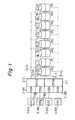
- reference numerals 1-0 through 1-7 indicate disk units (or disk pack units) which are connected in series and which correspond to physical volumes.
- Each of the disk units 1-0 through 1-7 is divided into two logic volumes, that is, a primary logic volume such as 101, 111, ..., 171 and a secondary logic volume such as 102, 112, ..., 172, to which individual machine numbers are assigned.
- Reference numerals 2-0 and 2-1 indicate disk control adapters; 3-AA, 3-AB, 3-BA, and 3-BB string switching mechanisms, provided for disk controllers 4-AA, 4-AB, 4-BA, and 4-BB, respectively; 5-00 a bus for accessing the primary logic volumes 101 through 171 by the adapter 2-0; 5-01 a bus for accessing the secondary logic volumes 102 through 172 by the adapter 2-0; 5-11 a bus for accessing the primary logic volumes 101 through 171 by the adapter 2-1; and 5-10 a bus for accessing the secondary logic volumes 102 through 172 by the adapter 2-1.
- Fig. 1 two of the disk units 1-0 through 1-7 are accessed simultaneously by the adapters 2-0 and 2-1 to enhance the throughput of the system.
- the disk control adapters 2-0 and 2-1 comprise parallel-serial converters for converting parallel data from the disk controllers 4-AA through 4-BB into serial data, serial--parallel converters for converting serial data from the disk units 1-0 through 1-7 into parallel data, error check code (ECC) circuits, and so on.
- ECC error check code
- Each of the string switching mechanisms 3-AA through 3-BB comprises registers for status information, such as 16. assign bit registers and 16 device end bit registers, for 16 logic volumes.
- the string switching mechanism 3-AA is connected by a device cross-call interface circuit (not shown) to the string switching mechanism 3-AB, so that the status information of one of the mechanisms 3-AA and 3-AB can be read out to the other.
- the string switching mechanism 3-BA is connected by a device cross--call interface circuit (not shown) to the string switching mechanism 3-BB, so that the status information of one of the mechanisms 3-BA and 3-BB can be read out to the other.
- a device cross-call interface circuit (not shown) is provided between the disk control adapters 2-0 and 2-1, so that the status information can be read from the string switching mechanisms 3-AA and 3-AB to the string switching mechanisms 3-BA and 3-BB, or vice versa.
- the disk controller 4-AA when the disk controller 4-AA performs a seek-control operation or other scanning control operation upon the logic volume 101, the disk controller 4-AA sets an assign bit in the corresponding assign bit register of the string switching mechanism 3-AA to occupy the logic volume 101. As a result, the logic volume 101 performs a stand-alone operation. In this state, when another disk controller such as 4-AB seeks to access the logic volume 102, the disk unit 1-0 returns a "busy" signal to the disk controller 4-AB. Of course, when the logic volume 101 enters into a predetermined state, that is, when the logic volume 101 completes the seek-control operation by the stand-alone operation, the logic volume 101 issues an interruption signal to the disk controller 4-AA which, in turn, performs the next operation.
- any malfunction occurs-in the logic volume 101 during a stand-alone operation it blocks. all other control operations for the disk unit 1-0 by the other disk controllers.
- another disk controller such as 4-AB seeks to access the logic volume 102 and receives "busy" signals from the disk unit 1-0
- the disk controller 4-AB judges that a malfunction has occurred in the logic volume 102 and issues an unconditional reserve command for the logic volume 102, and as a result the assign bit for occupying the logic volume 101 set by the disk controller 4-AA is reset, thereby releasing the logic volume 101.
- the disk controller 4-AB judges that a malfunction has occurred in the logic volume 102 every time it seeks to access the logic volume 102 for a predetermined period but receives "busy" signals from the disk unit 1-0.
- the disk controller 4-AB thus issues an unconditional reserve command for the logic volume 102, and as a result the assign bit for occupying the logic volume 101 set by the disk controller 4-AA is reset even when no malfunction has actually occurred.
- the disk controller 4-AA would then end up in a standby state to await an interruption signal, showing the completion of the stand-alone-control through the string switching mechanism 3-AA from the logic volume 101, which would never be issued. As a result, the disk controller 4-AA would enter a "device--end-pending" state. If the logic volume 101 were a system volume which stores, programs for an operating system, the result would be a system down.
- the disk controller such as 4-AA which causes a logic volume to perform a stand-alone operation is notified of the issuance of an unconditional reserve command by another disk controller such as 4-AB.
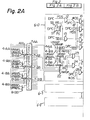
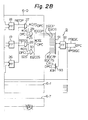
- the disk controller 4-AA can be prevented from entering a "device-end-pending" state. This is accomplished by the circuit illustrated in Fig. 2.
- blocks 6-0 through 6-7 correspond to the disk units 1-0 through 1-7, respectively, decoders 7-AA through 7-BB associated with NOR circuits 8-AA through 8-BB correspond to the disk controllers 4-AA through 4-BB, respectively.
- a circuit 9 comprised of a NOR circuit 91, a flip-flop 92, and a NOR circuit 92 is connected to all the blocks 6-0 through 6-7.
- reference numeral 11 indicates an OR circuit; 12 and 13 AND circuits; 14 through 17 NAND circuits; 18 and 19 flip-flops; 20, 21, and 22 OR circuits; 23 and 24 AND circuits; 25 a NAND circuit; 26 a flip-flop; 27 and 28 AND circuits; 29 and 30 AND circuits; and 31 a NAND circuit.
- the flip-flop 18 serves as a means for storing whether or not the primary logic volume 101 is performing a stand-alone operation
- the flip-flop 19 serves as a means for storing whether or not the secondary logic volume 102 is performing a stand-alone operation.
- the AND circuits 27 and 28 serve as interruption signal generating means which are enabled by the flip-flop 26.
- the elements 20 through 26 also serve as decoder means as well as the decoders 7-AA through 7-BB.
- the circuit 9 serves as a means for notifying the disk controller, such as 4-AA of issuance of an unconditional reserve command.
- the disk controller 4-AA when the disk controller 4-AA performs a scanning control operation such as a seek control, a rezero control, a set target control, or a pad control upon the primary logic volume 101, the disk controller 4-AA issues to the circuits 14 through 17, a #0 selection signal #OS for selecting the disk unit 1-0 and, in addition, issues to the circuits 12 and 15 a primary drive signal PDS for selecting the primary volume 101 of the disk unit 1-0. Further, the disk controller 4-AA generates a seek start signal SS, a rezero start signal RS, a set target start signal ST, or a pad start signal PS to the OR circuit 11.
- a scanning control operation such as a seek control, a rezero control, a set target control, or a pad control upon the primary logic volume 101
- the disk controller 4-AA issues to the circuits 14 through 17, a #0 selection signal #OS for selecting the disk unit 1-0 and, in addition, issues to the circuits 12 and 15 a primary drive signal PDS for selecting the primary volume
- the flip-flop 18 is set by the circuits 11, 12, and 14, and, accordingly, stores the fact that the logic volume 101 is performing a stand-alone operation for the disk controller 4-AA.
- the logic volume 101 issues an interruption signal (not shown) to the disk controller 4-AA which, in turn, generates an attention reset signal AT to the circuit 15.
- the flip-flop 18 is reset..
- the other disk controller 4-AB may issue the above-mentioned unconditional reserve command.
- the unconditional reserve command indicated by URABS is issued for the secondary logic volume 102.
- the decoder 7-AB issues an output signal to the OR circuit 22 of the block 6-0.
- the output signal PATOP of the flip-flop 18 is logic "1”
- the output signal of the AND circuit 24 is also logic "1”.
- the flip-flop 26 is set by the NOR circuit 25, so that the AND circuit 27 is turned on to issue an interruption request signal #0PI to the disk controller (in this case, 4-AA) which causes the logic volume 101 to perform a stand-alone operation.
- the disk controller 4-AA when the disk controller 4-AA receives the interruption request signal #OPI, the disk controller 4-AA selects the disk unit 1-0 (which corresponds to the logic "1" of the #0 selection signal #OS), and selects the primary logic volume 101 (which corresponds to the logic "1" of the primary drive selection signal PDS). Accordingly, the disk controller 4-AA senses the state of the logic volume 101. As a result, the AND circuit 29 is turned on so as to generate an output signal EQCOP. Therefore, the flip-flop 92 is set by the NOR circuit 91, so as to issue an equipment check signal PSEQC to the disk controller 4-AA. In this case, the equipment check signal PSEQC is ORbd by a conventional write data check signal and is transmitted to the disk controller 4-AA.
- the disk controller 4-AA determines that the above-mentioned unconditional reserve command is being issued. After that, the disk controller 4-AA issues an attention reset signal AT to reset the flip-flop 18 and, in addition, issues a control reset signal CR to reset the flip-flop 26 and 92.
- a first disk controller which causes one logic volume of a disk unit to perform a stand-alone operation is notified when a second disk controller issues an unconditional reserve command for another logic volume of the disk unit, thereby preventing the first disk controller from entering a "device-end--pending" state.
Landscapes
- Engineering & Computer Science (AREA)
- Theoretical Computer Science (AREA)
- Human Computer Interaction (AREA)
- Physics & Mathematics (AREA)
- General Engineering & Computer Science (AREA)
- General Physics & Mathematics (AREA)
- Signal Processing For Digital Recording And Reproducing (AREA)
Applications Claiming Priority (2)
| Application Number | Priority Date | Filing Date | Title |
|---|---|---|---|
| JP173989/81 | 1981-10-30 | ||
| JP56173989A JPS5876959A (ja) | 1981-10-30 | 1981-10-30 | デイスク制御方式 |
Publications (3)
| Publication Number | Publication Date |
|---|---|
| EP0078683A2 true EP0078683A2 (fr) | 1983-05-11 |
| EP0078683A3 EP0078683A3 (en) | 1984-05-09 |
| EP0078683B1 EP0078683B1 (fr) | 1987-01-14 |
Family
ID=15970707
Family Applications (1)
| Application Number | Title | Priority Date | Filing Date |
|---|---|---|---|
| EP82305774A Expired EP0078683B1 (fr) | 1981-10-30 | 1982-10-29 | Systèmes de mémoire de données |
Country Status (4)
| Country | Link |
|---|---|
| US (1) | US4494215A (fr) |
| EP (1) | EP0078683B1 (fr) |
| JP (1) | JPS5876959A (fr) |
| DE (1) | DE3275138D1 (fr) |
Cited By (5)
| Publication number | Priority date | Publication date | Assignee | Title |
|---|---|---|---|---|
| GB2120819A (en) * | 1982-05-21 | 1983-12-07 | Pitney Bowes Inc | Disk drive size selector circuit |
| EP0125921A3 (fr) * | 1983-05-16 | 1986-12-30 | Data General Corporation | Dispositif de commande de mémoire à disque |
| FR2590700A1 (fr) * | 1985-11-28 | 1987-05-29 | Copernique | Dispositif d'adaptation d'une unite de memoire auxiliaire a au moins un controleur de cette unite et ensemble informatique comportant un tel dispositif |
| EP0267586A3 (fr) * | 1986-11-10 | 1991-02-06 | Nec Corporation | Appareil pour commander des équipements périphériques |
| GB2297636A (en) * | 1995-02-02 | 1996-08-07 | Spring Consultants Limited | Storing data on emulated, logical, removable, disc drives |
Families Citing this family (11)
| Publication number | Priority date | Publication date | Assignee | Title |
|---|---|---|---|---|
| JPS60179861A (ja) * | 1984-02-27 | 1985-09-13 | Fujitsu Ltd | 入出力システムのメモリ診断方式 |
| US4803653A (en) * | 1986-08-06 | 1989-02-07 | Hitachi, Ltd. | Memory control system |
| USRE34282E (en) * | 1985-08-15 | 1993-06-15 | Hitachi, Ltd. | Memory control system |
| JPS6278623A (ja) * | 1985-10-02 | 1987-04-10 | Toshiba Corp | 磁気デイスク装置 |
| JP2550311B2 (ja) * | 1985-11-20 | 1996-11-06 | 株式会社日立製作所 | 磁気デイスクの多重制御方式 |
| US5051887A (en) * | 1987-08-25 | 1991-09-24 | International Business Machines Corporation | Maintaining duplex-paired storage devices during gap processing using of a dual copy function |
| US5737632A (en) * | 1989-12-19 | 1998-04-07 | Hitachi, Ltd. | Magnetic disc control apparatus with parallel data transfer between disc control unit and encoder/decoder circuit |
| JP2752247B2 (ja) * | 1990-11-29 | 1998-05-18 | 富士通株式会社 | 情報記憶装置 |
| US6295587B1 (en) * | 1999-09-03 | 2001-09-25 | Emc Corporation | Method and apparatus for multiple disk drive access in a multi-processor/multi-disk drive system |
| JP3747407B2 (ja) * | 2001-11-13 | 2006-02-22 | インターナショナル・ビジネス・マシーンズ・コーポレーション | ディスクエンクロージャおよびディスクストレージ |
| JP4715286B2 (ja) * | 2004-05-11 | 2011-07-06 | 株式会社日立製作所 | 計算機システムおよび計算機システムの制御方法 |
Family Cites Families (3)
| Publication number | Priority date | Publication date | Assignee | Title |
|---|---|---|---|---|
| US3623022A (en) * | 1969-12-29 | 1971-11-23 | Ibm | Multiplexing system for interleaving operations of a processing unit |
| JPS52153714A (en) * | 1976-06-16 | 1977-12-21 | Matsushita Electric Ind Co Ltd | Filing device |
| US4207609A (en) * | 1978-05-08 | 1980-06-10 | International Business Machines Corporation | Method and means for path independent device reservation and reconnection in a multi-CPU and shared device access system |
-
1981
- 1981-10-30 JP JP56173989A patent/JPS5876959A/ja active Granted
-
1982
- 1982-10-27 US US06/437,159 patent/US4494215A/en not_active Expired - Fee Related
- 1982-10-29 DE DE8282305774T patent/DE3275138D1/de not_active Expired
- 1982-10-29 EP EP82305774A patent/EP0078683B1/fr not_active Expired
Cited By (6)
| Publication number | Priority date | Publication date | Assignee | Title |
|---|---|---|---|---|
| GB2120819A (en) * | 1982-05-21 | 1983-12-07 | Pitney Bowes Inc | Disk drive size selector circuit |
| EP0125921A3 (fr) * | 1983-05-16 | 1986-12-30 | Data General Corporation | Dispositif de commande de mémoire à disque |
| FR2590700A1 (fr) * | 1985-11-28 | 1987-05-29 | Copernique | Dispositif d'adaptation d'une unite de memoire auxiliaire a au moins un controleur de cette unite et ensemble informatique comportant un tel dispositif |
| EP0267586A3 (fr) * | 1986-11-10 | 1991-02-06 | Nec Corporation | Appareil pour commander des équipements périphériques |
| GB2297636A (en) * | 1995-02-02 | 1996-08-07 | Spring Consultants Limited | Storing data on emulated, logical, removable, disc drives |
| GB2297636B (en) * | 1995-02-02 | 1999-12-01 | Spring Consultants Limited | Storing data |
Also Published As
| Publication number | Publication date |
|---|---|
| DE3275138D1 (en) | 1987-02-19 |
| US4494215A (en) | 1985-01-15 |
| JPS6360412B2 (fr) | 1988-11-24 |
| EP0078683A3 (en) | 1984-05-09 |
| EP0078683B1 (fr) | 1987-01-14 |
| JPS5876959A (ja) | 1983-05-10 |
Similar Documents
| Publication | Publication Date | Title |
|---|---|---|
| EP0078683A2 (fr) | Systèmes de mémoire de données | |
| JP3181398B2 (ja) | アレイ型記録装置 | |
| US4507730A (en) | Memory system with automatic memory configuration | |
| EP0165822B1 (fr) | Système de commande d'accès en mémoire | |
| US3668644A (en) | Failsafe memory system | |
| EP0099620B1 (fr) | Unité de commande de mémoire à dispositif de rotation de données | |
| US5142540A (en) | Multipart memory apparatus with error detection | |
| US4939644A (en) | Input/output controller for controlling the sequencing of the execution of input/output commands in a data processing system | |
| EP0397476B1 (fr) | Système d'enregistrement de données d'erreur | |
| EP0508602A2 (fr) | Système de commande de mémoire pour un réseau de disques | |
| JPH07134635A (ja) | ディスクアレイ装置 | |
| GB2024470A (en) | Arrangement for detecting faulty sectors and for allocating replacement sectors in a disc memory | |
| GB1588396A (en) | Data processing apparatus | |
| JPS60100253A (ja) | メモリ−システム | |
| WO1995006284A1 (fr) | Architecture d'interface ata utilisant des automates finis | |
| JPS6286743A (ja) | 大規模集積回路で使用するのに適したアレイ再形成装置および方法 | |
| JPS6230665B2 (fr) | ||
| US6185697B1 (en) | Disk-array controller | |
| US4819205A (en) | Memory system having memory elements independently defined as being on-line or off-line | |
| CN119248182A (zh) | 存储级内存、数据处理方法和处理器系统 | |
| EP0057275B1 (fr) | Système de mémoire de données digitales | |
| JPS6221143B2 (fr) | ||
| KR100331042B1 (ko) | 통신시스템에서의 이중화 저장장치 | |
| RU2769562C1 (ru) | Декодер контроллера твердотельного накопителя информации | |
| JPH07152503A (ja) | 半導体ディスク装置 |
Legal Events
| Date | Code | Title | Description |
|---|---|---|---|
| PUAI | Public reference made under article 153(3) epc to a published international application that has entered the european phase |
Free format text: ORIGINAL CODE: 0009012 |
|
| AK | Designated contracting states |
Designated state(s): DE FR GB |
|
| PUAL | Search report despatched |
Free format text: ORIGINAL CODE: 0009013 |
|
| AK | Designated contracting states |
Designated state(s): DE FR GB |
|
| 17P | Request for examination filed |
Effective date: 19840731 |
|
| GRAA | (expected) grant |
Free format text: ORIGINAL CODE: 0009210 |
|
| AK | Designated contracting states |
Kind code of ref document: B1 Designated state(s): DE FR GB |
|
| REF | Corresponds to: |
Ref document number: 3275138 Country of ref document: DE Date of ref document: 19870219 |
|
| ET | Fr: translation filed | ||
| PLBE | No opposition filed within time limit |
Free format text: ORIGINAL CODE: 0009261 |
|
| STAA | Information on the status of an ep patent application or granted ep patent |
Free format text: STATUS: NO OPPOSITION FILED WITHIN TIME LIMIT |
|
| 26N | No opposition filed | ||
| PGFP | Annual fee paid to national office [announced via postgrant information from national office to epo] |
Ref country code: GB Payment date: 19920804 Year of fee payment: 11 |
|
| PGFP | Annual fee paid to national office [announced via postgrant information from national office to epo] |
Ref country code: FR Payment date: 19921028 Year of fee payment: 11 |
|
| PGFP | Annual fee paid to national office [announced via postgrant information from national office to epo] |
Ref country code: DE Payment date: 19921226 Year of fee payment: 11 |
|
| PG25 | Lapsed in a contracting state [announced via postgrant information from national office to epo] |
Ref country code: GB Effective date: 19931029 |
|
| GBPC | Gb: european patent ceased through non-payment of renewal fee |
Effective date: 19931029 |
|
| PG25 | Lapsed in a contracting state [announced via postgrant information from national office to epo] |
Ref country code: FR Effective date: 19940630 |
|
| PG25 | Lapsed in a contracting state [announced via postgrant information from national office to epo] |
Ref country code: DE Effective date: 19940701 |
|
| REG | Reference to a national code |
Ref country code: FR Ref legal event code: ST |