EP0079071A1 - Wasserlösliches Copolymerisat, seine Herstellung und Verwendung - Google Patents
Wasserlösliches Copolymerisat, seine Herstellung und Verwendung Download PDFInfo
- Publication number
- EP0079071A1 EP0079071A1 EP82110264A EP82110264A EP0079071A1 EP 0079071 A1 EP0079071 A1 EP 0079071A1 EP 82110264 A EP82110264 A EP 82110264A EP 82110264 A EP82110264 A EP 82110264A EP 0079071 A1 EP0079071 A1 EP 0079071A1
- Authority
- EP
- European Patent Office
- Prior art keywords
- weight
- formula
- water
- residues
- parts
- Prior art date
- Legal status (The legal status is an assumption and is not a legal conclusion. Google has not performed a legal analysis and makes no representation as to the accuracy of the status listed.)
- Withdrawn
Links
- 229920001577 copolymer Polymers 0.000 title claims abstract description 60
- 238000002360 preparation method Methods 0.000 title claims description 6
- 238000005553 drilling Methods 0.000 claims abstract description 15
- 239000001257 hydrogen Substances 0.000 claims abstract description 14
- 229910052739 hydrogen Inorganic materials 0.000 claims abstract description 14
- 125000002496 methyl group Chemical group [H]C([H])([H])* 0.000 claims abstract description 12
- 150000001768 cations Chemical class 0.000 claims abstract description 10
- 230000036961 partial effect Effects 0.000 claims abstract description 9
- 150000002431 hydrogen Chemical class 0.000 claims abstract description 8
- 230000007062 hydrolysis Effects 0.000 claims abstract description 7
- 238000006460 hydrolysis reaction Methods 0.000 claims abstract description 7
- 125000000391 vinyl group Chemical group [H]C([*])=C([H])[H] 0.000 claims abstract description 7
- 229920002554 vinyl polymer Polymers 0.000 claims abstract description 7
- UFHFLCQGNIYNRP-UHFFFAOYSA-N Hydrogen Chemical compound [H][H] UFHFLCQGNIYNRP-UHFFFAOYSA-N 0.000 claims abstract description 6
- 238000009826 distribution Methods 0.000 claims abstract description 5
- 239000004568 cement Substances 0.000 claims abstract description 4
- 125000000217 alkyl group Chemical group 0.000 claims abstract description 3
- XLYOFNOQVPJJNP-UHFFFAOYSA-N water Substances O XLYOFNOQVPJJNP-UHFFFAOYSA-N 0.000 claims description 28
- 238000006116 polymerization reaction Methods 0.000 claims description 26
- AGBXYHCHUYARJY-UHFFFAOYSA-N 2-phenylethenesulfonic acid Chemical compound OS(=O)(=O)C=CC1=CC=CC=C1 AGBXYHCHUYARJY-UHFFFAOYSA-N 0.000 claims description 14
- 239000000203 mixture Substances 0.000 claims description 14
- HRPVXLWXLXDGHG-UHFFFAOYSA-N Acrylamide Chemical compound NC(=O)C=C HRPVXLWXLXDGHG-UHFFFAOYSA-N 0.000 claims description 13
- 238000000034 method Methods 0.000 claims description 13
- RGSFGYAAUTVSQA-UHFFFAOYSA-N pentamethylene Natural products C1CCCC1 RGSFGYAAUTVSQA-UHFFFAOYSA-N 0.000 claims description 12
- 125000004817 pentamethylene group Chemical group [H]C([H])([*:2])C([H])([H])C([H])([H])C([H])([H])C([H])([H])[*:1] 0.000 claims description 12
- 125000003258 trimethylene group Chemical group [H]C([H])([*:2])C([H])([H])C([H])([H])[*:1] 0.000 claims description 11
- 239000012530 fluid Substances 0.000 claims description 8
- 238000004519 manufacturing process Methods 0.000 claims description 8
- FQPSGWSUVKBHSU-UHFFFAOYSA-N methacrylamide Chemical compound CC(=C)C(N)=O FQPSGWSUVKBHSU-UHFFFAOYSA-N 0.000 claims description 8
- 150000003254 radicals Chemical class 0.000 claims description 8
- 125000001495 ethyl group Chemical group [H]C([H])([H])C([H])([H])* 0.000 claims description 7
- 239000003960 organic solvent Substances 0.000 claims description 7
- DGAQECJNVWCQMB-PUAWFVPOSA-M Ilexoside XXIX Chemical compound C[C@@H]1CC[C@@]2(CC[C@@]3(C(=CC[C@H]4[C@]3(CC[C@@H]5[C@@]4(CC[C@@H](C5(C)C)OS(=O)(=O)[O-])C)C)[C@@H]2[C@]1(C)O)C)C(=O)O[C@H]6[C@@H]([C@H]([C@@H]([C@H](O6)CO)O)O)O.[Na+] DGAQECJNVWCQMB-PUAWFVPOSA-M 0.000 claims description 5
- 238000007334 copolymerization reaction Methods 0.000 claims description 5
- 239000011734 sodium Substances 0.000 claims description 5
- 229910052708 sodium Inorganic materials 0.000 claims description 5
- 125000004432 carbon atom Chemical group C* 0.000 claims description 4
- 239000002002 slurry Substances 0.000 claims description 3
- LSNNMFCWUKXFEE-UHFFFAOYSA-M Bisulfite Chemical compound OS([O-])=O LSNNMFCWUKXFEE-UHFFFAOYSA-M 0.000 claims description 2
- GAWIXWVDTYZWAW-UHFFFAOYSA-N C[CH]O Chemical group C[CH]O GAWIXWVDTYZWAW-UHFFFAOYSA-N 0.000 claims description 2
- NPYPAHLBTDXSSS-UHFFFAOYSA-N Potassium ion Chemical compound [K+] NPYPAHLBTDXSSS-UHFFFAOYSA-N 0.000 claims description 2
- 230000003472 neutralizing effect Effects 0.000 claims description 2
- LVZWSLJZHVFIQJ-UHFFFAOYSA-N Cyclopropane Chemical compound C1CC1 LVZWSLJZHVFIQJ-UHFFFAOYSA-N 0.000 claims 2
- 125000004435 hydrogen atom Chemical group [H]* 0.000 claims 1
- -1 polymethylene Polymers 0.000 abstract description 11
- 239000000178 monomer Substances 0.000 abstract description 9
- 239000000654 additive Substances 0.000 abstract description 6
- 239000000243 solution Substances 0.000 description 23
- 229920000642 polymer Polymers 0.000 description 18
- LRHPLDYGYMQRHN-UHFFFAOYSA-N N-Butanol Chemical compound CCCCO LRHPLDYGYMQRHN-UHFFFAOYSA-N 0.000 description 10
- CSCPPACGZOOCGX-UHFFFAOYSA-N Acetone Chemical compound CC(C)=O CSCPPACGZOOCGX-UHFFFAOYSA-N 0.000 description 8
- IJGRMHOSHXDMSA-UHFFFAOYSA-N Atomic nitrogen Chemical compound N#N IJGRMHOSHXDMSA-UHFFFAOYSA-N 0.000 description 8
- 239000002904 solvent Substances 0.000 description 8
- 239000000839 emulsion Substances 0.000 description 7
- 239000007789 gas Substances 0.000 description 7
- OKKJLVBELUTLKV-UHFFFAOYSA-N Methanol Chemical compound OC OKKJLVBELUTLKV-UHFFFAOYSA-N 0.000 description 6
- HEMHJVSKTPXQMS-UHFFFAOYSA-M Sodium hydroxide Chemical compound [OH-].[Na+] HEMHJVSKTPXQMS-UHFFFAOYSA-M 0.000 description 6
- YXFVVABEGXRONW-UHFFFAOYSA-N Toluene Chemical compound CC1=CC=CC=C1 YXFVVABEGXRONW-UHFFFAOYSA-N 0.000 description 6
- 239000002585 base Substances 0.000 description 6
- 238000006243 chemical reaction Methods 0.000 description 6
- 239000000499 gel Substances 0.000 description 6
- 239000000047 product Substances 0.000 description 6
- LFQSCWFLJHTTHZ-UHFFFAOYSA-N Ethanol Chemical compound CCO LFQSCWFLJHTTHZ-UHFFFAOYSA-N 0.000 description 4
- NBIIXXVUZAFLBC-UHFFFAOYSA-N Phosphoric acid Chemical compound OP(O)(O)=O NBIIXXVUZAFLBC-UHFFFAOYSA-N 0.000 description 4
- 239000002253 acid Substances 0.000 description 4
- 150000007513 acids Chemical class 0.000 description 4
- 239000007864 aqueous solution Substances 0.000 description 4
- 239000003795 chemical substances by application Substances 0.000 description 4
- 239000003792 electrolyte Substances 0.000 description 4
- PNLUGRYDUHRLOF-UHFFFAOYSA-N n-ethenyl-n-methylacetamide Chemical compound C=CN(C)C(C)=O PNLUGRYDUHRLOF-UHFFFAOYSA-N 0.000 description 4
- 229910052757 nitrogen Inorganic materials 0.000 description 4
- 238000007127 saponification reaction Methods 0.000 description 4
- MAGFQRLKWCCTQJ-UHFFFAOYSA-N 4-ethenylbenzenesulfonic acid Chemical compound OS(=O)(=O)C1=CC=C(C=C)C=C1 MAGFQRLKWCCTQJ-UHFFFAOYSA-N 0.000 description 3
- ZMXDDKWLCZADIW-UHFFFAOYSA-N N,N-Dimethylformamide Chemical compound CN(C)C=O ZMXDDKWLCZADIW-UHFFFAOYSA-N 0.000 description 3
- WHNWPMSKXPGLAX-UHFFFAOYSA-N N-Vinyl-2-pyrrolidone Chemical compound C=CN1CCCC1=O WHNWPMSKXPGLAX-UHFFFAOYSA-N 0.000 description 3
- 230000000996 additive effect Effects 0.000 description 3
- 230000015572 biosynthetic process Effects 0.000 description 3
- KGBXLFKZBHKPEV-UHFFFAOYSA-N boric acid Chemical class OB(O)O KGBXLFKZBHKPEV-UHFFFAOYSA-N 0.000 description 3
- 239000004327 boric acid Chemical class 0.000 description 3
- 239000003054 catalyst Substances 0.000 description 3
- 239000008367 deionised water Substances 0.000 description 3
- 229910021641 deionized water Inorganic materials 0.000 description 3
- 238000001035 drying Methods 0.000 description 3
- 230000000694 effects Effects 0.000 description 3
- 230000006698 induction Effects 0.000 description 3
- UQSXHKLRYXJYBZ-UHFFFAOYSA-N iron oxide Inorganic materials [Fe]=O UQSXHKLRYXJYBZ-UHFFFAOYSA-N 0.000 description 3
- 238000002156 mixing Methods 0.000 description 3
- 239000000843 powder Substances 0.000 description 3
- 238000001556 precipitation Methods 0.000 description 3
- NLHHRLWOUZZQLW-UHFFFAOYSA-N Acrylonitrile Chemical compound C=CC#N NLHHRLWOUZZQLW-UHFFFAOYSA-N 0.000 description 2
- XDTMQSROBMDMFD-UHFFFAOYSA-N Cyclohexane Chemical compound C1CCCCC1 XDTMQSROBMDMFD-UHFFFAOYSA-N 0.000 description 2
- IAYPIBMASNFSPL-UHFFFAOYSA-N Ethylene oxide Chemical compound C1CO1 IAYPIBMASNFSPL-UHFFFAOYSA-N 0.000 description 2
- KFZMGEQAYNKOFK-UHFFFAOYSA-N Isopropanol Chemical compound CC(C)O KFZMGEQAYNKOFK-UHFFFAOYSA-N 0.000 description 2
- IMNFDUFMRHMDMM-UHFFFAOYSA-N N-Heptane Chemical compound CCCCCCC IMNFDUFMRHMDMM-UHFFFAOYSA-N 0.000 description 2
- PPBRXRYQALVLMV-UHFFFAOYSA-N Styrene Chemical compound C=CC1=CC=CC=C1 PPBRXRYQALVLMV-UHFFFAOYSA-N 0.000 description 2
- 239000003929 acidic solution Substances 0.000 description 2
- 230000002378 acidificating effect Effects 0.000 description 2
- 239000003513 alkali Substances 0.000 description 2
- 229910000147 aluminium phosphate Inorganic materials 0.000 description 2
- 150000001412 amines Chemical class 0.000 description 2
- ROOXNKNUYICQNP-UHFFFAOYSA-N ammonium persulfate Chemical compound [NH4+].[NH4+].[O-]S(=O)(=O)OOS([O-])(=O)=O ROOXNKNUYICQNP-UHFFFAOYSA-N 0.000 description 2
- 235000012216 bentonite Nutrition 0.000 description 2
- JEHKKBHWRAXMCH-UHFFFAOYSA-N benzenesulfinic acid Chemical compound O[S@@](=O)C1=CC=CC=C1 JEHKKBHWRAXMCH-UHFFFAOYSA-N 0.000 description 2
- 238000009835 boiling Methods 0.000 description 2
- BTANRVKWQNVYAZ-UHFFFAOYSA-N butan-2-ol Chemical compound CCC(C)O BTANRVKWQNVYAZ-UHFFFAOYSA-N 0.000 description 2
- BVKZGUZCCUSVTD-UHFFFAOYSA-N carbonic acid Chemical compound OC(O)=O BVKZGUZCCUSVTD-UHFFFAOYSA-N 0.000 description 2
- 150000001875 compounds Chemical class 0.000 description 2
- RWGFKTVRMDUZSP-UHFFFAOYSA-N cumene Chemical compound CC(C)C1=CC=CC=C1 RWGFKTVRMDUZSP-UHFFFAOYSA-N 0.000 description 2
- UYMKPFRHYYNDTL-UHFFFAOYSA-N ethenamine Chemical class NC=C UYMKPFRHYYNDTL-UHFFFAOYSA-N 0.000 description 2
- 238000005755 formation reaction Methods 0.000 description 2
- 238000010528 free radical solution polymerization reaction Methods 0.000 description 2
- 239000003999 initiator Substances 0.000 description 2
- 235000013980 iron oxide Nutrition 0.000 description 2
- ZXEKIIBDNHEJCQ-UHFFFAOYSA-N isobutanol Chemical compound CC(C)CO ZXEKIIBDNHEJCQ-UHFFFAOYSA-N 0.000 description 2
- 239000003505 polymerization initiator Substances 0.000 description 2
- 239000002244 precipitate Substances 0.000 description 2
- 238000012673 precipitation polymerization Methods 0.000 description 2
- 230000001681 protective effect Effects 0.000 description 2
- 239000011541 reaction mixture Substances 0.000 description 2
- 238000010992 reflux Methods 0.000 description 2
- 239000012266 salt solution Substances 0.000 description 2
- 150000003839 salts Chemical class 0.000 description 2
- 239000007787 solid Substances 0.000 description 2
- 238000003756 stirring Methods 0.000 description 2
- 239000000126 substance Substances 0.000 description 2
- BUUPQKDIAURBJP-UHFFFAOYSA-N sulfinic acid Chemical compound OS=O BUUPQKDIAURBJP-UHFFFAOYSA-N 0.000 description 2
- 125000000542 sulfonic acid group Chemical group 0.000 description 2
- NLVXSWCKKBEXTG-UHFFFAOYSA-N vinylsulfonic acid Chemical compound OS(=O)(=O)C=C NLVXSWCKKBEXTG-UHFFFAOYSA-N 0.000 description 2
- JWYVGKFDLWWQJX-UHFFFAOYSA-N 1-ethenylazepan-2-one Chemical compound C=CN1CCCCCC1=O JWYVGKFDLWWQJX-UHFFFAOYSA-N 0.000 description 1
- AKUNSTOMHUXJOZ-UHFFFAOYSA-N 1-hydroperoxybutane Chemical compound CCCCOO AKUNSTOMHUXJOZ-UHFFFAOYSA-N 0.000 description 1
- OZAIFHULBGXAKX-UHFFFAOYSA-N 2-(2-cyanopropan-2-yldiazenyl)-2-methylpropanenitrile Chemical compound N#CC(C)(C)N=NC(C)(C)C#N OZAIFHULBGXAKX-UHFFFAOYSA-N 0.000 description 1
- SMZOUWXMTYCWNB-UHFFFAOYSA-N 2-(2-methoxy-5-methylphenyl)ethanamine Chemical compound COC1=CC=C(C)C=C1CCN SMZOUWXMTYCWNB-UHFFFAOYSA-N 0.000 description 1
- NIXOWILDQLNWCW-UHFFFAOYSA-N 2-Propenoic acid Natural products OC(=O)C=C NIXOWILDQLNWCW-UHFFFAOYSA-N 0.000 description 1
- WFUGQJXVXHBTEM-UHFFFAOYSA-N 2-hydroperoxy-2-(2-hydroperoxybutan-2-ylperoxy)butane Chemical compound CCC(C)(OO)OOC(C)(CC)OO WFUGQJXVXHBTEM-UHFFFAOYSA-N 0.000 description 1
- VLUWLNIMIAFOSY-UHFFFAOYSA-N 2-methylbenzenesulfinic acid Chemical compound CC1=CC=CC=C1S(O)=O VLUWLNIMIAFOSY-UHFFFAOYSA-N 0.000 description 1
- DYBIGIADVHIODH-UHFFFAOYSA-N 2-nonylphenol;oxirane Chemical compound C1CO1.CCCCCCCCCC1=CC=CC=C1O DYBIGIADVHIODH-UHFFFAOYSA-N 0.000 description 1
- IOAMRSPZNVBRHT-UHFFFAOYSA-N 3-[(1-amino-1-imino-2-methylpropan-2-yl)diazenyl]-2-methylpropanimidamide;dihydrochloride Chemical compound Cl.Cl.NC(=N)C(C)CN=NC(C)(C)C(N)=N IOAMRSPZNVBRHT-UHFFFAOYSA-N 0.000 description 1
- 239000004342 Benzoyl peroxide Substances 0.000 description 1
- OMPJBNCRMGITSC-UHFFFAOYSA-N Benzoylperoxide Chemical compound C=1C=CC=CC=1C(=O)OOC(=O)C1=CC=CC=C1 OMPJBNCRMGITSC-UHFFFAOYSA-N 0.000 description 1
- BDAGIHXWWSANSR-UHFFFAOYSA-N Formic acid Chemical compound OC=O BDAGIHXWWSANSR-UHFFFAOYSA-N 0.000 description 1
- GYCMBHHDWRMZGG-UHFFFAOYSA-N Methylacrylonitrile Chemical compound CC(=C)C#N GYCMBHHDWRMZGG-UHFFFAOYSA-N 0.000 description 1
- CTQNGGLPUBDAKN-UHFFFAOYSA-N O-Xylene Chemical compound CC1=CC=CC=C1C CTQNGGLPUBDAKN-UHFFFAOYSA-N 0.000 description 1
- ZLMJMSJWJFRBEC-UHFFFAOYSA-N Potassium Chemical compound [K] ZLMJMSJWJFRBEC-UHFFFAOYSA-N 0.000 description 1
- BQCADISMDOOEFD-UHFFFAOYSA-N Silver Chemical compound [Ag] BQCADISMDOOEFD-UHFFFAOYSA-N 0.000 description 1
- DWAQJAXMDSEUJJ-UHFFFAOYSA-M Sodium bisulfite Chemical compound [Na+].OS([O-])=O DWAQJAXMDSEUJJ-UHFFFAOYSA-M 0.000 description 1
- PRXRUNOAOLTIEF-ADSICKODSA-N Sorbitan trioleate Chemical compound CCCCCCCC\C=C/CCCCCCCC(=O)OC[C@@H](OC(=O)CCCCCCC\C=C/CCCCCCCC)[C@H]1OC[C@H](O)[C@H]1OC(=O)CCCCCCC\C=C/CCCCCCCC PRXRUNOAOLTIEF-ADSICKODSA-N 0.000 description 1
- 239000004147 Sorbitan trioleate Substances 0.000 description 1
- 229920002472 Starch Polymers 0.000 description 1
- 230000032683 aging Effects 0.000 description 1
- 150000001299 aldehydes Chemical class 0.000 description 1
- 125000001931 aliphatic group Chemical group 0.000 description 1
- 229940045714 alkyl sulfonate alkylating agent Drugs 0.000 description 1
- 150000008052 alkyl sulfonates Chemical class 0.000 description 1
- 229910001870 ammonium persulfate Inorganic materials 0.000 description 1
- 150000003863 ammonium salts Chemical class 0.000 description 1
- 125000003118 aryl group Chemical group 0.000 description 1
- 239000000440 bentonite Substances 0.000 description 1
- 229910000278 bentonite Inorganic materials 0.000 description 1
- SVPXDRXYRYOSEX-UHFFFAOYSA-N bentoquatam Chemical compound O.O=[Si]=O.O=[Al]O[Al]=O SVPXDRXYRYOSEX-UHFFFAOYSA-N 0.000 description 1
- 235000019400 benzoyl peroxide Nutrition 0.000 description 1
- 239000007844 bleaching agent Substances 0.000 description 1
- 229910052799 carbon Inorganic materials 0.000 description 1
- 239000003638 chemical reducing agent Substances 0.000 description 1
- 239000000084 colloidal system Substances 0.000 description 1
- 230000000052 comparative effect Effects 0.000 description 1
- 239000007859 condensation product Substances 0.000 description 1
- 238000001816 cooling Methods 0.000 description 1
- GPLRAVKSCUXZTP-UHFFFAOYSA-N diglycerol Chemical compound OCC(O)COCC(O)CO GPLRAVKSCUXZTP-UHFFFAOYSA-N 0.000 description 1
- 238000010790 dilution Methods 0.000 description 1
- 239000012895 dilution Substances 0.000 description 1
- 239000006185 dispersion Substances 0.000 description 1
- 230000005670 electromagnetic radiation Effects 0.000 description 1
- 239000003995 emulsifying agent Substances 0.000 description 1
- 238000007720 emulsion polymerization reaction Methods 0.000 description 1
- 230000002349 favourable effect Effects 0.000 description 1
- 238000001914 filtration Methods 0.000 description 1
- 239000008394 flocculating agent Substances 0.000 description 1
- 239000008398 formation water Substances 0.000 description 1
- 235000019253 formic acid Nutrition 0.000 description 1
- 238000009472 formulation Methods 0.000 description 1
- 125000000524 functional group Chemical group 0.000 description 1
- 239000011521 glass Substances 0.000 description 1
- 238000010438 heat treatment Methods 0.000 description 1
- 150000004679 hydroxides Chemical class 0.000 description 1
- QWPPOHNGKGFGJK-UHFFFAOYSA-N hypochlorous acid Chemical compound ClO QWPPOHNGKGFGJK-UHFFFAOYSA-N 0.000 description 1
- 229910052500 inorganic mineral Inorganic materials 0.000 description 1
- 230000003993 interaction Effects 0.000 description 1
- BAUYGSIQEAFULO-UHFFFAOYSA-L iron(2+) sulfate (anhydrous) Chemical compound [Fe+2].[O-]S([O-])(=O)=O BAUYGSIQEAFULO-UHFFFAOYSA-L 0.000 description 1
- VBMVTYDPPZVILR-UHFFFAOYSA-N iron(2+);oxygen(2-) Chemical class [O-2].[Fe+2] VBMVTYDPPZVILR-UHFFFAOYSA-N 0.000 description 1
- 229910000359 iron(II) sulfate Inorganic materials 0.000 description 1
- 235000015110 jellies Nutrition 0.000 description 1
- 230000000670 limiting effect Effects 0.000 description 1
- 229920002521 macromolecule Polymers 0.000 description 1
- 239000003094 microcapsule Substances 0.000 description 1
- 239000011707 mineral Substances 0.000 description 1
- 125000000896 monocarboxylic acid group Chemical group 0.000 description 1
- SYSQUGFVNFXIIT-UHFFFAOYSA-N n-[4-(1,3-benzoxazol-2-yl)phenyl]-4-nitrobenzenesulfonamide Chemical class C1=CC([N+](=O)[O-])=CC=C1S(=O)(=O)NC1=CC=C(C=2OC3=CC=CC=C3N=2)C=C1 SYSQUGFVNFXIIT-UHFFFAOYSA-N 0.000 description 1
- 230000007935 neutral effect Effects 0.000 description 1
- 238000006386 neutralization reaction Methods 0.000 description 1
- 150000007524 organic acids Chemical class 0.000 description 1
- 235000005985 organic acids Nutrition 0.000 description 1
- 150000001451 organic peroxides Chemical class 0.000 description 1
- 125000000864 peroxy group Chemical group O(O*)* 0.000 description 1
- 125000001997 phenyl group Chemical group [H]C1=C([H])C([H])=C(*)C([H])=C1[H] 0.000 description 1
- 239000002685 polymerization catalyst Substances 0.000 description 1
- 235000021395 porridge Nutrition 0.000 description 1
- 239000011591 potassium Substances 0.000 description 1
- 229910052700 potassium Inorganic materials 0.000 description 1
- 159000000001 potassium salts Chemical class 0.000 description 1
- 125000002924 primary amino group Chemical group [H]N([H])* 0.000 description 1
- BDERNNFJNOPAEC-UHFFFAOYSA-N propan-1-ol Chemical compound CCCO BDERNNFJNOPAEC-UHFFFAOYSA-N 0.000 description 1
- 239000012429 reaction media Substances 0.000 description 1
- 230000002829 reductive effect Effects 0.000 description 1
- 230000002441 reversible effect Effects 0.000 description 1
- 238000007086 side reaction Methods 0.000 description 1
- 229910052709 silver Inorganic materials 0.000 description 1
- 239000004332 silver Substances 0.000 description 1
- 229940079827 sodium hydrogen sulfite Drugs 0.000 description 1
- 235000010267 sodium hydrogen sulphite Nutrition 0.000 description 1
- MNCGMVDMOKPCSQ-UHFFFAOYSA-M sodium;2-phenylethenesulfonate Chemical compound [Na+].[O-]S(=O)(=O)C=CC1=CC=CC=C1 MNCGMVDMOKPCSQ-UHFFFAOYSA-M 0.000 description 1
- XFTALRAZSCGSKN-UHFFFAOYSA-M sodium;4-ethenylbenzenesulfonate Chemical compound [Na+].[O-]S(=O)(=O)C1=CC=C(C=C)C=C1 XFTALRAZSCGSKN-UHFFFAOYSA-M 0.000 description 1
- 239000002689 soil Substances 0.000 description 1
- 229960000391 sorbitan trioleate Drugs 0.000 description 1
- 235000019337 sorbitan trioleate Nutrition 0.000 description 1
- 235000019698 starch Nutrition 0.000 description 1
- 239000008107 starch Substances 0.000 description 1
- 125000000020 sulfo group Chemical group O=S(=O)([*])O[H] 0.000 description 1
- 238000003786 synthesis reaction Methods 0.000 description 1
- 239000002562 thickening agent Substances 0.000 description 1
- 238000001291 vacuum drying Methods 0.000 description 1
- 238000005406 washing Methods 0.000 description 1
- 239000004552 water soluble powder Substances 0.000 description 1
- 229920003169 water-soluble polymer Polymers 0.000 description 1
- 239000008096 xylene Substances 0.000 description 1
Classifications
-
- C—CHEMISTRY; METALLURGY
- C08—ORGANIC MACROMOLECULAR COMPOUNDS; THEIR PREPARATION OR CHEMICAL WORKING-UP; COMPOSITIONS BASED THEREON
- C08F—MACROMOLECULAR COMPOUNDS OBTAINED BY REACTIONS ONLY INVOLVING CARBON-TO-CARBON UNSATURATED BONDS
- C08F226/00—Copolymers of compounds having one or more unsaturated aliphatic radicals, each having only one carbon-to-carbon double bond, and at least one being terminated by a single or double bond to nitrogen or by a heterocyclic ring containing nitrogen
- C08F226/02—Copolymers of compounds having one or more unsaturated aliphatic radicals, each having only one carbon-to-carbon double bond, and at least one being terminated by a single or double bond to nitrogen or by a heterocyclic ring containing nitrogen by a single or double bond to nitrogen
-
- C—CHEMISTRY; METALLURGY
- C08—ORGANIC MACROMOLECULAR COMPOUNDS; THEIR PREPARATION OR CHEMICAL WORKING-UP; COMPOSITIONS BASED THEREON
- C08F—MACROMOLECULAR COMPOUNDS OBTAINED BY REACTIONS ONLY INVOLVING CARBON-TO-CARBON UNSATURATED BONDS
- C08F212/00—Copolymers of compounds having one or more unsaturated aliphatic radicals, each having only one carbon-to-carbon double bond, and at least one being terminated by an aromatic carbocyclic ring
- C08F212/02—Monomers containing only one unsaturated aliphatic radical
- C08F212/04—Monomers containing only one unsaturated aliphatic radical containing one ring
- C08F212/14—Monomers containing only one unsaturated aliphatic radical containing one ring substituted by heteroatoms or groups containing heteroatoms
- C08F212/30—Sulfur
-
- C—CHEMISTRY; METALLURGY
- C08—ORGANIC MACROMOLECULAR COMPOUNDS; THEIR PREPARATION OR CHEMICAL WORKING-UP; COMPOSITIONS BASED THEREON
- C08F—MACROMOLECULAR COMPOUNDS OBTAINED BY REACTIONS ONLY INVOLVING CARBON-TO-CARBON UNSATURATED BONDS
- C08F220/00—Copolymers of compounds having one or more unsaturated aliphatic radicals, each having only one carbon-to-carbon double bond, and only one being terminated by only one carboxyl radical or a salt, anhydride ester, amide, imide or nitrile thereof
- C08F220/02—Monocarboxylic acids having less than ten carbon atoms; Derivatives thereof
- C08F220/52—Amides or imides
- C08F220/54—Amides, e.g. N,N-dimethylacrylamide or N-isopropylacrylamide
- C08F220/56—Acrylamide; Methacrylamide
-
- C—CHEMISTRY; METALLURGY
- C09—DYES; PAINTS; POLISHES; NATURAL RESINS; ADHESIVES; COMPOSITIONS NOT OTHERWISE PROVIDED FOR; APPLICATIONS OF MATERIALS NOT OTHERWISE PROVIDED FOR
- C09K—MATERIALS FOR MISCELLANEOUS APPLICATIONS, NOT PROVIDED FOR ELSEWHERE
- C09K8/00—Compositions for drilling of boreholes or wells; Compositions for treating boreholes or wells, e.g. for completion or for remedial operations
- C09K8/02—Well-drilling compositions
- C09K8/04—Aqueous well-drilling compositions
- C09K8/14—Clay-containing compositions
- C09K8/18—Clay-containing compositions characterised by the organic compounds
- C09K8/22—Synthetic organic compounds
- C09K8/24—Polymers
Definitions
- the copolymer according to the invention is outstandingly suitable as a drilling fluid additive and as an additive for deep drilling cement slurries.
- Preferred copolymers according to the invention consist in statistical distribution of 40-80% by weight of residues of the formula I, 10-30% by weight of residues of the formula II and 0-60% by weight of residues of the formula III.
- the cation X ⁇ can in principle be derived from any water-soluble known base whose strength is sufficient, the sulfo to neutralize groups of the copolymers according to the invention and which do not impair the water solubility of the copolymers. The selection can thus be made in a simple, known manner.
- X ⁇ expediently means an alkali application, in particular a sodium or potassium cation or a cation of the formula , wherein the three radicals R 4 are the same or different and represent hydrogen, alkyl having 1 to 4 carbon atoms or hydroxyethyl.
- a proportion of up to 60%, preferably 10-30%, of the originally present radicals of the formula III is caused by radicals of the formula V. replaced, where X ⁇ has the meanings given above.
- the sulfonic acid group in the radicals of the formula I can be in the 2-, 3- and in particular in the 4-position of the phenyl nucleus.
- the copolymers according to the invention can also be statistical distributed in addition to the 4-sulfophenyl residues containing the other isomeric residues; this is particularly preferred if the isomers are present in such a distribution as is present in the technical crude styrene sulfonic acid.
- copolymers according to the invention can of course also contain several different individuals in the molecule from each of the structural groups defined by the general formulas II and III, which differ in the meanings of the symbols R 1 , R 2 or R.
- the copolymers according to the invention from the group of the general formula II contain no more than 3, preferably not more than 2, different building blocks.
- DBP 1 101 760 describes a process for the preparation of water-soluble copolymers from vinylsulfonic acid and acrylonitrile or methacrylonitrile, optionally in a mixture with other ethylenically unsaturated compounds.
- Copolymers of vinyl or alkyl sulfonates with acrylamide and vinyl amides are e.g. in DAS 2 444 108.
- Water-soluble copolymers which contain styrene sulfonic acid as a comonomer are already known from numerous publications. For example, copolymers of styrene sulfonic acid and acrylic acid according to US Pat. No. 3,340,238 as flocculants, according to US Pat. No. 3,620,826 as soil release agents and according to to use DE-OS 2 103 197 as an antistatic for photoemulsions. Copolymers of styrene sulfonic acid and acrylamide can be used according to DE-OS 2 210 367 for the production of microcapsules.
- copolymers according to the invention insofar as they contain copolymerized comonomers of the formula II in which R 1 and R 2 together mean trimethylene or pentamethylene, can be prepared in the manner known from the prior art, for example according to the information in US Pat. No. 3,929,741 Reaction of the monomers at temperatures of about 10 to 120 ° C, preferably at 40 to 80 ° C, in the presence of suitable polymerization catalysts.
- the copolymerization of styrene sulfonic acid with non-ring-closed N-vinylamides ie those of the general formula in which R 1 and R 2 are the same or different and are hydrogen, methyl or ethyl, but side reactions occur and the polymerization to water-soluble products is hindered.
- the copolymers according to the invention contain radicals of the formula II in which R 1 and R 2 do not jointly mean trimethylene or pentamethylene, it is necessary to convert the styrene sulfonic acid into the salt with the cation X ⁇ prior to the polymerization by adding bases.
- bases are the hydroxides or salts of the cations X ⁇ with weak acids, such as carbonic acid or phosphoric acid, or in the case of amine bases NH 3 or the free amines.
- miscible organic solvents dissolved in the event that R 2 do not jointly mean trimethylene or pentamethylene, obligatory, in the event that R 2 together represent trimethylene or pentamethylene, optionally neutralizing the sulfonic acid by adding a base, then 5 to 95 parts by weight a vinyl acylamide of the formula IIa wherein R 1 and R 2 are the same or different and are hydrogen, methyl or ethyl or together trimethylene and optionally 0 to 80 parts by weight of acrylamide and / or methacrylamide are added and the copolymerization is initiated in a manner known per se and carried out at 10 to 120 ° C.
- styrene-4-sulfonic acid is preferred.
- the isomers can also be used in a mixture, in particular it is advantageous to use industrial styrene sulfonic acid, i.e. to use the mixture of isomers obtained in the production.
- Preferred copolymers according to the invention are obtained if 40-80 parts by weight of styrene sulfonic acid of the formula Ia, 10-30 parts by weight of the vinyl acylamide of the formula IIa, 0-60 parts by weight of acrylamide and / or methacrylamide are used to prepare 100 parts by weight of the copolymer.
- the polymerization may be solution polymerization than J, as precipitation polymerization or in inverse emulsion, are carried out according to the instructions of German Patent 1,089,173 for example.
- the polymerization proceeds under the conditions of Solution polymerization, and a viscous aqueous or aqueous / alkanol solution of the copolymer according to the invention is obtained, from which the product can be isolated by distilling off the solvent or precipitation by mixing the solution with a water-miscible organic solvent such as methanol, ethanol, acetone or the like.
- a water-miscible organic solvent such as methanol, ethanol, acetone or the like.
- the aqueous or aqueous / alkanolic solution obtained is preferably fed to the intended use directly, possibly after setting a desired concentration.
- the aqueous monomer solution is known in a water-immiscible organic solvent such as cyclohexane, toluene, xylene, heptane or high-boiling gasoline fractions with the addition of 0.5-8%, preferably 1-4%, known emulsifiers of the W / O type, emulsified and polymerized with conventional free-radical initiators.
- a water-immiscible organic solvent such as cyclohexane, toluene, xylene, heptane or high-boiling gasoline fractions with the addition of 0.5-8%, preferably 1-4%, known emulsifiers of the W / O type, emulsified and polymerized with conventional free-radical initiators.
- the initiator can be both water-soluble in nature and is then dissolved in the monomer solution, but it can also be oil-soluble and in this case becomes the finished W / O emuls sion or the oil phase.
- a more detailed description of the method can be found, for example, in German Patent 1,089,173.
- the copolymerization is carried out in a water-miscible organic solvent, one works under the conditions of the precipitation polymerization.
- the polymer is obtained directly in solid form and can be isolated by distilling off the solvent or by suction and drying.
- the water-miscible organic solvents which are suitable for carrying out the production process according to the invention are, in particular, water-soluble alkanols, namely those having 1 to 4 carbon atoms, such as methanol, ethanol, propanol, isopropanol, n-, sec- and iso-butanol, but preferably tert. Butanol into consideration.
- the water content of the lower alkanols used here as solvents should not exceed 6 percent by weight, since otherwise a lump formation can occur during the polymerization.
- the water content is preferably from 0 to 3%.
- the amount of solvent to be used depends to a certain extent on the type of comonomers used.
- reaction it is preferred to carry out the reaction in a medium with a high water content, i.e. under the conditions of solution or gel polymerization or emulsion polymerization.
- the copolymers according to the invention are optionally still partially saponified.
- any water-soluble base whose starch is sufficient for a reaction with the hydrolyzable groups can be used as the saponification agent.
- the saponification agent is either already added to the monomer solution or mixed with the polymer. Depending on the procedure, the saponification is therefore carried out already during the normally exothermic polymerization or by further supply of heat following the polymerization. A combination of both procedures is also possible.
- the products which contain borate anions and which are advantageous in many cases can be obtained in a simple manner by using sodium or potassium salts of boric acid (ortho-, meta- or polyborates or boric acid together with NaOH or KOII) as saponification agents.
- Copolymers according to the invention and to be used according to the invention with a particularly high degree of polymerization are obtained if the polymerization is carried out in aqueous solution by the so-called gel polymerization method. 15-50% aqueous solutions of the comonomers are used with known suitable catalyst systems and, if appropriate, with one of the saponifiers mentioned without mechanical mixing using the Trommsdorff-Norrish effect (Bios Final Rep. 363.22; Makromol. Chem. 1, 169 (1947)) polymerized.
- the high viscosities of aqueous, in particular electrolyte-containing, aqueous solutions of the water-soluble copolymers according to the invention and to be used according to the invention prepared in this way can be used on the basis of the usual model ideas regarding the relationship between viscosity and average molecular weight of polymeric substances, and also taking into account comparative values of similarly constructed polymers for the polymers according to the invention Products average molecular weights of 2. 10 6 to 20. Estimate 10 6 .
- the polymerization reaction can be carried out either under normal pressure or under elevated pressure. As usual, the polymerization can also be carried out in a protective gas atmosphere, preferably under nitrogen.
- high-energy electromagnetic radiation or the usual chemical polymerization initiators can be used, for example organic peroxides, such as benzoyl peroxide, tert. Butyl hydroperoxide, methyl ethyl ketone peroxide, cumene hydroproxide, azo compounds such as azo-di-iso-butyro-nitrile or 2,3'-azo-bis (2-amidinopropane) dihydrochloride as well as inorganic peroxy compounds such as (NH 4 ) 2 S 2 O 8 or K 2 S 2 O 8 or H 2 O 2, optionally in combination with reducing agents such as sodium hydrogen sulfite and iron (II) sulfate or redox systems which have an aliphatic or aromatic sulfinic acid as reducing component , such as benzenesulfinic acid and toluenesulfinic acid or derivatives of these acids, such as, for example, Mannich adducts of sulfinic
- the quality properties of the polymers can be improved further by heating the polymer gels obtained by the gel polymerization process in the temperature range from 50 to 130 ° C., preferably 70 to 100 ° C. for several hours.
- copolymers according to the invention prepared in this way and in the form of aqueous jellies can, after mechanical comminution, be dissolved directly in water using suitable apparatus and used. However, they can also be obtained in solid form by known drying processes after removal of the water and can only be dissolved in water again when they are used.
- copolymers according to the invention are outstandingly suitable as auxiliaries in drilling fluids. They show a very good protective colloid effect both at high temperatures and at high electrolyte concentrations and are particularly important with regard to electrolyte stability and aging Resistance to stability is considerably superior to the closest comparable drilling fluid additives known from US Pat. No. 2,775,557 and DT Pat. No. 1,300,481 and 24 44 108.
- the products according to the invention have a further improved combination of valuable application properties, which are particularly advantageous when used for particularly critical drilling tasks under difficult conditions at great depths and in the presence of formation water with a very high electrolyte content.
- the polymers according to the invention are also characterized in particular by stability to 10-40% mineral acids such as HC1, HNO 3 , H 2 SO 4 , HClO 4, etc., and also to organic acids such as HCOOH and CH 3 COOH. No precipitation occurs even when the acidic solutions are stored for several hours.
- the copolymers according to the invention are therefore also outstandingly suitable as thickeners for acids.
- the copolymers according to the invention are used in concentrations of 0.5 to 40 kg / m 3 , preferably 3 to 30 kg / m 3 .
- the aqueous drilling fluids mainly contain bentonites to increase the viscosity and seal through pierced formations. Heavy spar, chalk and iron oxides are added to increase the density of the drilling mud.
- Bentonite, heavy spar, chalk and iron oxide can be added to the drilling fluids alone or in a wide variety of mixing ratios.
- the upward limiting factor is the rheological properties of the drilling mud.
- copolymers according to the invention are added to customary deep drilling cement slurries, products with improved flow and setting properties are obtained.
- reaction mixture becomes viscous. It is reheated at 80 ° C for 2 hours. A clear, yellow-brown, highly viscous solution with a K value of 190 according to Fikentscher is obtained, which can be used directly as a drilling fluid additive.
- copolymers listed in the following table in which water is used as the reaction medium, can also be synthesized in an analogous manner.
- Solution II is now emulsified in solution I at room temperature, then the emulsion is flushed with nitrogen for 30 minutes with thorough stirring and finally heated to 65.degree. As soon as this temperature has been reached, a solution of 25 mg of dicyclohexyl peroxidicarbonate in 0.5 ml of toluene is added to the tip. After an induction period of 20 to 30 minutes, the polymerization begins, which can be seen from the rise in the internal temperature, and at the same time the emulsion increases transparonter. The maximum reaction temperature should not exceed 90 ° C wasentlich, if necessary, must be cooled e g. After the main reaction has subsided, the mixture is heated for a further 30 minutes at 70 ° C. and then allowed to cool to room temperature.
- a storage-stable, low-viscosity W / O emulsion with a polymer content of 30% is obtained.
- the copolymer can easily be obtained in bulk by pouring the present emulsion into an excess of acetone.
- the copolymer precipitates and can e.g. by filtering, suctioning or centrifuging and optionally washing with acetone.
- the polymers can be isolated by precipitation with a water-miscible solvent which dissolves the oil phase, preferably with acetone.
- the polymer can be isolated by suction and drying under vacuum at 60 ° C. However, the solvent can also be distilled off directly from the reaction mixture under reduced pressure. The polymer is obtained in the form of a slightly yellowish, light powder which dissolves well in water. K value according to Fikentscher 164.6.
- Example 14 In the same apparatus as in Example 14, 600 ml of tert. Submitted butanol and 70 g of p-styrene sulfonic acid, 10 g of methacrylamide and 20 g of N-vinylcaprolactam dissolved in it. This acidic solution is then polymerized under the same conditions and procedure as in Example 14 with the addition of 1 g of azoisobutyronitrile. The precipitated polymer is then isolated, and a white powder with a Fikentscher K value of 205.7 is obtained. The aqueous solution of the polymer is cloudy.
Landscapes
- Chemical & Material Sciences (AREA)
- Organic Chemistry (AREA)
- Health & Medical Sciences (AREA)
- Chemical Kinetics & Catalysis (AREA)
- Medicinal Chemistry (AREA)
- Polymers & Plastics (AREA)
- Dispersion Chemistry (AREA)
- Life Sciences & Earth Sciences (AREA)
- General Life Sciences & Earth Sciences (AREA)
- Engineering & Computer Science (AREA)
- Materials Engineering (AREA)
- Addition Polymer Or Copolymer, Post-Treatments, Or Chemical Modifications (AREA)
Abstract
Description
- Die vorliegende Erfindung betrifft ein neues wasserlösliches Copolymerisat, das in statistischer Verteilung zu 5 bis 95 Gew.% aus Resten der Formel I
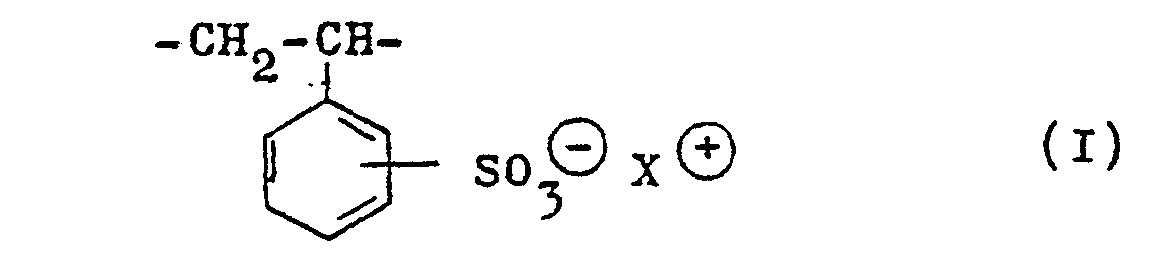
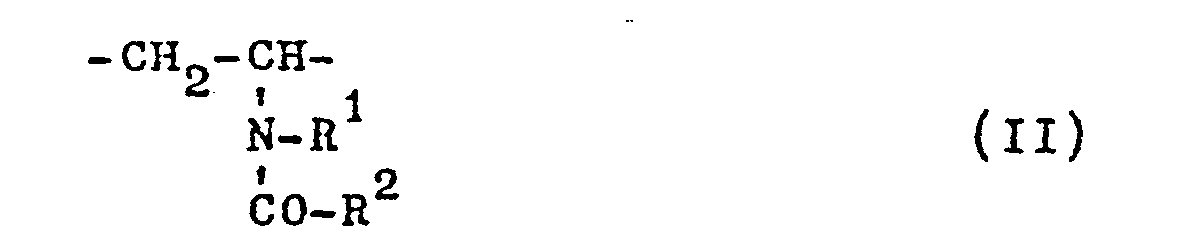

- R1 und R2 gleich oder verschieden sind und Wasserstoff,Methyl oder Ethyl, oder gemeinsam Trimethylen oder Pentamethylen
- R3 Wasserstoff oder Methyl und X⊕ ein Kation bedeutet, seine Herstellung und Verwendung.
- Das erfindungsgemäße Copolymerisat ist hervorragend geeignet als Bohrspülzusatz und als Zusatz für Tiefbohrzementschlämme.
- Bevorzugte erfindungsgemäße Copolymerisate bestehen in statistischer Verteilung zu 40 - 80 Gew.% aus Resten der Formel I, 10 - 30 Gew. % aus Resten der Formel II und zu 0 - 60 Gew. % aus Resten der Formel III.
- Das Kation X⊕ kann sich prinzipiell von jeder wasserlöslichen bekannten Base ableiten, deren Stärke ausreicht, die Sulfogruppen der erfindungsgemäßen Copolymcrc zu neutralisieren und die die Wasserlöslichkeit der Copolymeren nicht beeinträchtigt. Die Auswahl kann somit in einfacher bekannter Weise erfolgen.
- Zweckmäßigerweise bedeutet jedoch X⊕ ein Alkalikation,insbesondere ein Natrium- oder Kaliumkation oder ein Kation der Formel

- in den durch Partialhydrolyse der erfindungsgemäßen Copolymerisate erhältlichen Derivaten ist ein Anteil von bis zu 60 %, vorzugsweise 10-30 %, der ursprünglich vorhandenen Reste der Formel III durch Reste der Formel V

- Die sehr gute dispersionsstabilisierende und viskositätserhöhende Wirkung der erfindungsgemäßen Copolymerisate und ihrer Partialhydrolysate in konzentrierten Salzlösungen und ihre Temperaturstabilität wird in vielen Fällen durch Anwesenheit von Borat-Anionen noch weiter erhöht. Diese vorteilhaften, Borat-Anionen enthaltenden erfindungsgemäßen Copolymerisate und deren Partialhydrolysate enthalten, berechnet als H3BO3, 2,5 bis 35 Gew. %, vorzugsweise 5 bis 25 Gew. %, Borat-Anionen, bezogen auf das Gewicht des unverseiften Polymeren.
- Außer auf den günstigen Eigenschaften der im Copolymer enthaltenen funktionellen Gruppen beruhen die gegenüber den bisher bekannten Copolymeren höheren Viskositäten in konz. Salzlösungen sowie die Temperaturstabilität vermutlich auf einer zusätzlichen Interaktion der Borat-Anionen mit den Ketten der Copolymeren.
- Die Sulfonsäuregruppe kann in den Resten der Formel I in 2-,3-und insbesondere in 4-Stellung des Phenylkerns stehen. Die erfindungsgemäßen Copolymerisate können jedoch auch statistisch verteilt neben den 4-Sulfophenyl-Resten die anderen isomeren Reste enthalten; dies ist dann besonders bevorzugt, wenn die Isomeren in einer solchen Verteilung vorliegen, wie sie in der technischen rohen Styrolsulfonsäure vorhanden ist.
- Die erfindungsgemäßen Copolymerisate können im Molekül aus jeder der durch die allgemeinen Formeln II und III definierten Baugruppen selbstverständlich auch mehrere verschiedene Individuen, die sich in den Bedeutungen der Symbole R l, R 2 oder R unterscheiden, enthalten.
- So können sie z.B. im gleichen Polymermolekül sowohl ringoffene neben ringgeschlossenen Vinylamid-Bausteinen der Formel II oder auch Acrylamid- neben Methacrylamid-Resten enthalten.
- In der Regel enthalten die erfindungsgemäßen Copolymerisate aus der Gruppe der allgemeinen Formel II. nicht mehr als 3, vorzugsweise nicht mehr als je 2, verschiedene Bausteine.
- Die Herstellung wasserlöslicher Polymerisate, welche Sulfonsäuregruppen im Makromolekül eingebaut enthalten, ist bereits in zahlreichen Patenten sowie in der Fachliteratur ausführlich beschrieben worden. So ist z.B. die Synthese von Copolymeren der Vinylsulfonsäure mit Acrylamid und Vinylpyrrolidon im J. Polymer Sci., 38 147 (1959) veröffentlicht worden.
- Im DBP 1 101 760 ist ein Verfahren zur Herstellung wasserlöslicher Copolymerisate aus Vinylsulfonsäure und Acrylnitril bzw. Methacrylnitril gegebenenfalls im Gemisch mit weiteren ethylenisch ungesättigten Verbindungen beschrieben worden. Copolymerisate aus Vinyl bzw. Alkylsulfonaten mit Acrylamid und Vinylamiden sind z.B. in der DAS 2 444 108 beschrieben worden.
- Wasserlösliche Copolymerisate, die Styrolsulfonsäure als Comonomeres enthalten,sind bereits aus zahlreichen Druckschriften bekannt. So sind beispielsweise Copolymerisate aus Styrolsulfonsäure und Acrylsäure gemäß US-PS 3 340 238 als Flockungsmittel, gemäß US-PS 3 620 826 als soilrelease-Mittel und gemäß der DE-OS 2 103 197 als Antistaticum für Photoemulsionen einzusetzen. Copolymere aus Styrolsulfonsäure und Acrylamid können gemäß der DE-OS 2 210 367 zur Herstellung von Mikrokapseln eingesetzt werden. Aus der GB-PS 1 184 445 ist es bekannt, Copolymerisate von Vinylpyrrolidon u.a, mit Styrolsulfonsäure als Hilfsmittel bei der Durchführung eines pho- tographischen Silber-Farbbleich-Verfahrens einzusetzen. Auch die Herstellung von faserbildenden, sauer mbdifizierten Polymeren, die als Hauptmonomeres Acrylnitril aufweisen, ist z.B. aus der japanischen Patentschrift 7 028 011 (CA 74 P i27 379 q) und der japanischen Kokai 74 - 111 326 bekannt.
- Wasserlösliche Copolymere der erfindungsgemäßen Monomerenkombination sind jedoch bisher nicht bekannt geworden.
- Die erfindungsgemäßen Copolymerisate, soweit sie Comonomere der Formel II einpolymerisiert enthalten, bei denen R1 und R2 gemeinsam Trimethylen oder Pentamethylen bedeuten, lassen sich in der aus dem Stand der Technik bekannten Weise, z.B. gemäß den Angaben der US-PS 3 929 741 durch Umsetzung der Monomeren bei Temperaturen von etwa 10 bis 120°C, vorzugsweise bei 40 bis 80°C, in Gegenwart von geeigneten Polymerisationskatalysatoren herstellen.
- Wenn man unter analogen Bedingungen die Copolymerisation von Styrolsulfonsäure mit nicht ringgeschlossenen N-Vinylamiden, d.h. solchen der allgemeinen Formel

- Die Neutralisation der sauren Komponenten vor der Polymerisation ist aber auch bei der Copolymerisation von ringgeschlossenen Verbindungen möglich und in der Regel sogar vorteihaft.
- Zweckmäßigerweise werden somit zur Herstellung von je 100 Gewichtsteilen des Copolymerisats 5 bis 95 Gewichtsteile Styrolsulfonsäure der Formel In


- Bevorzugt ist der Einsatz der Styrol-4-sulfonsäure. Die Isomeren können jedoch auch in Mischung eingesetzt werden, insbesondere ist es vorteilhaft, technische Styrolsulfonsäure, d.h. das bei der Herstellung anfallende Isomerengemisch einzusetzen.
- Bevorzugte erfindungsgemäße Copolymerisate werden erhalten, wenn zur Herstellung von je 100 Gewichtsteilen des Copolymerisats 40 - 80 Gewichtsteile Styrolsulfonsäure der Formel Ia, 10 - 30 Gewichtsteile des Vinylacylamids der Formel IIa, 0 - 60 Gewichtsteile Acrylamid und/oder Methacrylamid eingesetzt werden.
- Die Polymerisation kann alsJLösungspolymerisation, als Fällungspolymerisation oder in umgekehrter Emulsion, z.B. gemäß den Angaben der deutschen Patentschrift 1 089 173, ausgeführt werden.
- Bei der Verwendung von Wasser oder einer Wasser/Alkanol-Mischung als Lösungsmittel, wobei ein mit Wasser mischbarer Alkanol mit 1 bis 4 C-Atomen eingesetzt wirdund das fertige Copolymerisat in der Wasser/Alkanol-Mischung löslich ist, verläuft die Polymerisation unter den Bedingungen der Lösungspolymerisation, und es wird eine viskose wäßrige bzw. wäßrig/ alkanolische Lösung des erfindungsgemäßen Copolymerisats erhalten, aus der das Produkt durch Abdestillieren des Lösungsmittelsoder Ausfällung durch Mischen der Lösung mit einem wassermischbaren organischen Lösungsmittel, wie Methanol, Ethanol, Aceton oder dergleichen isoliert werden kann.
- Vorzugsweise wird jedoch die erhaltene wäßrige bzw. wäßrig/ alkanolische Lösungs direkt, evtl. nach Einstellen einer gewünschten Konzentration, der bestimmungsgemäßen Verwendung zugeführt.
- Bei der Durchführung der Polymerisation in umgekehrter Emulsion wird die wäßrige Monomerenlösung in bekannter Weise in einem mit Wasser nicht mischbaren organischen Lösungsmittel wie Cyclohexan, Toluol, Xylol, Heptan oder hochsiedenden Benzinfraktionen unter Zusatz von 0,5 - 8%, vorzugsweise 1 - 4 % , bekannter Emulgatoren vom W/O-Typ, emulgiert und mit üblichen radikal bildenden Initiatoren polymerisiert.
- Der Initiator kann sowohl wasserlöslicher Natur sein und wird dann in der Monomerenlösung gelöst, er kann aber auch öllöslich sein und wird in diesem Fall der fertigen W/O-Emulsion oder der Ölphase zusetzt. Eine detailliertere Beschreibung des Verfahrens findet sich beispielsweise in der deutschen Patentschrift 1 089 173.
- Bei der Durchführung der Copolymerisation in einem mit Wasser mischbaren organischen Lösungsmittel arbeitet man unter den Bedingungen der Fällungspolymerisation. Hierbei fällt das Polymerisat direkt in fester Form an und kann durch Abdestillieren des Lösungsmittels oder Absaugen und Trocknen isoliert werden.
- Als wassermischbare organische Lösungsmittel, die zur Durchführung des erfindungsgemäßen Herstellungsverfahrens geeignet sind, kommen insbesondere wasserlösliche Alkanole, nämlich solche mit 1 bis 4 C-Atomen, wie Methanol, Ethanol, Propanol, Isopropanol, n-, sec- und iso-Butanol, vorzugsweise aber tert. Butanol in Betracht.
- Der Wassergehalt der hierbei als Lösungsmittel eingesetzten niederen Alkanole sollte 6 Gewichtsprozent nicht überschreiten, da sonst eine Klumpenbildung bei der Polymerisation auftreten kann. Vorzugsweise wird bei einem Wassergehalt von 0 - 3 % gearbeitet.
- Die Menge des einzusetzenden Lösungsmittels richtet sich bis zu einem gewissen Grad nach der Art der eingesetzten Comonomeren.
- In der Regel werden pro 100 g Gesamtmonomere 200 bis 1000 g des Lösungsmittels eingesetzt.
- Bevorzugt ist die Durchführung der Reaktion in einem Milieu mit hohem Wasseranteil, d.h. unter den Bedingungen der Lösungs- bzw. der Gelpolymerisation oder der Emulsionspolymerisation.
- Die erfindungsgemäßen Copolymerisate sind ggf. noch partiell verseift. Als Verseifungsmittel kann prinzipiell jede wasserlösliche Base eingesetzt werden, deren Stärke für eine Reaktion mit den hydrolysierbaren Gruppen ausreicht. Bevorzugt werden jedoch NaOH, KOH, NH3 oder neutrale oder saure Alkali-(insbesondere Natrium- und Kalium-) und Ammoniumsalze der Kohlensäure, Borsäure und Phosphorsäure. Das Verseifungsmittel wird entweder schon der Monomerenlösung zugesetzt oder mit dem Polymerisat vermischt. Die Verseifung erfolgt daher - je nach Verfahrensweise - bereits während der normalerweise exotherm verlaufenden Polymerisation oder durch weitere Wärmezufuhr im Anschluß an die Polymerisntion. Auch eine Kombination beider Verfahrensweisen ist möglich.
- Die in vielen Fällen vorteilhaften, Borat-Anionen enthaltenden Produkte können auf einfache Weise erhalten werden, indem Natrium- oder Kaliumsalze der Borsäure (Ortho-, Meta- oder Polyborate bzw. Borsäure zusammen mit NaOH oder KOII) als Verseifungsmittel eingesetzt werden.
- Erfindungsgemäße und erfindungsgemäß einzusetzende Copolymerisate mit besonders hohem Polymerisationsgrad werden erhalten, wenn man die Polymerisation in wäßriger Lösung nach dem Verfahren der sogenannten Gelpolymerisation durchführt. Dabei werden 15 - 50%ige wäßrige Lösungen der Comonomercn mit bekannten geeigneten Katalysatorsystemen und ggf. mit einem der genannten Verseifungsmittel ohne mechanische Durchmischung unter Ausnutzung des Trommsdorff-Norrish-Effektes (Bios Final Rep. 363,22; Makromol. Chem. 1, 169 (1947))polymerisiert. Aus den hohen Viskositäten wäßriger, insbesondere elektrolythaltiger wäßriger Lösungen der in dieser Weise hergestellten erfindungsgemäßen und erfindungsgemäß einzusetzenden wasserlöslichen Copolymerisate lassen sich unter Zugrundelegung der üblichen Modellvorstellungen über den Zusammenhang von Viskosität und mittlerem Molekulargewicht polymerer Substanzen, sowie unter Berücksichtigung von Vergleichswerten ähnlich gebauter Polymerer für die erfindungsgemäßen Produkte mittlere Molekulargewichte von 2 . 106 bis 20 . 106 abschätzen. Die Polymerisationsreaktion kann sowohl bei Normaldruck als auch unter erhöhtem Druck durchgeführt werden. Wie üblich kann die Polymerisation auch in einer Schutzgasatmosphäre, vorzugsweise unter Stickstoff, ausgeführt werden.
- Zur Auslösung der Polymerisation können energiereiche elektromagnetische Strahlen oder die üblichen chemischen Polymerisationsinitiatoren herangezogen werden, z.B. organische Peroxide, wie Benzoylperoxid, tert. Butyl-hydroperoxid, Methyl ethyl-keton-peroxid, Cumol-hydropcroxid, Azoverbindungen wie Azo-di-iso-butyro-nitril oder 2,3'-Azo-bis-(2-amidinopropan)-dihydrochlorid

- Durch mehrstündiges Nachheizen der nach dem Verfahren der Gelpolymerisation erhaltenen Polymerisatgele im Temperaturbereich von 50 - 130°C, vorzugsweise 70 - 100°C, können die Qualitätseigenschaften der Polymerisate noch verbessert werden.
- Die auf diesem Wege hergestellten, in Form wäßriger Gallerten vorliegenden erfindungsgemäßen Copolymerisate können nach mechanischer Zerkleinerung mit geeigneten Apparaten direkt in Wasser gelöst werden und zum Einsatz gelangen. Sie können aber auch nach Entfernung des Wassers durch bekannte Trocknungsprozesse in fester Form erhalten und erst bei ihrer Verwendung wieder in Wasser aufgelöst werden.
- Die erfindungsgemäßen Copolymerisate sind hervorragend geeignet als Hilfsmittel bei Bohrspülungen. Sie zeigen dabei eine sehr gute Schutzkolloidwirkung sowohl bei hohen Temperaturen als auch bei hohen Elektrolytkonzentrationen und sind insbesondere im Hinblick auf Elektrolytstabilität und Alterungsbeständigkeit den nächstvergleichbaren aus der US-PS 2 775 557 und den DT-PS 1 300 481 und 24 44 108 bekannten Bohrspülzusätzen erheblich überlegen.
- Gegenüber den Copolymerisaten der DE-OS 29 31 897.6 weisen die erfindungsgemäßen Produkte eine weiter verbesserte Kombination wertvoller anwendungstechnischer Eigenschaften auf, die sich insbesondere beim Einsatz für besonders kritische Bohraufgaben unter schwierigen Bedingungen in großen Tiefen und in Gegenwart von Formationswassern mit sehr hohem Elektrolytgehalt vorteilhaft auswirken.
- Die erfindungsgemäßen Polymerisate zeichnen sich außerdem insbesondere durch Stabilität gegenüber 10 - 40%igen Mineralsäuren wie HC1, HNO3, H2SO4, HClO4 u.s.w. aus, ebenso gegenüber organischen Säuren wie HCOOH und CH3COOH. Selbst bei mehrstündiger Lagerung der sauren Lösungen treten keine Ausfällungen auf. Die erfindungsgemäßen Copolymerisate sind daher auch als Verdicker für Säuren in hervorragender Weise geeignet.
- Zur Formulierung von wäßrigen Bohrspülungen werden die erfindungsgemäßen Mischpolymerisate in Konzentrationen von 0, 5 bis 40 kg/m3, vorzugsweise 3 - 30 kg/m3, eingesetzt. Die wäßrigen Bohrspülungen enthalten zur Viskositätserhöhung und Abdichtung durchbohrter Formationen vorwiegend Bentonite. Zur Dichteerhöhung der Bohrschlämme werden Schwerspat, Kreide und Eisenoxide zugesetzt.
- Bentonit, Schwerspat, Kreide und Eisenoxid können allein oder in den verschiedensten Mischungsverhältnissen den Bohrspülungen zugegeben werden. Der begrenzende Faktor nach oben sind die rheologischen Eigenschaften der Bohrschlämme.
- Werden erfindungsgemäße Copolymerisate zu üblichen Tiefbohr-zementschlämmen zugesetzt, so erhält man Produkte mit verbesserten Fließ- und Abbinde-Eigenschaften.
- In den folgenden Ausführungsbeispielen, die die Herstellung der erfindungsgemäß einzusetzenden wasserlöslichen Copolymeren veranschaulichen und in der anschließende Tabelle sind die folgenden Abkürzungen verwendet worden:

- In der Spalte "Katalysatoren" bedeuten

- In einem Polymerisationskolben von 1 1 Inhalt, ausgestattet mit Rührer, Gaseinleitungsrohr und Thermometer werden 400 g Wasser vorgelegt und 90 g Natrium-p-styrolsulfonat sowie 10 g N-Vinyl-N-methylacetamid darin gelöst. Die Lösung, die einem pH-Wert von 13 aufweist, wird unter Rühren und Einleiten eines schwachen Stickstoffstroms auf 60°C angeheizt. Bei dieser Temperatur wird die Polymerisation durch Zugabe einer Lösung von 0,5 g Azoisobutyronitril in 2,5 g Dimethylformamid initiiert. Nach einer Induktionsperiode von ca. 60 Min. setzt die Polymerisation ein, die Temperatur steigt im Verlaufe von ca. 45 Min. bis auf 67°C an und das Reaktionsgemisch wird viskos. Es wird noch 2 Stunden bei 80°C nachgeheizt. Man erhält eine klare, gelb-braune, hochviskose Lösung mit einem K-Wert von 190 nach Fikentscher, die direkt der Verwendung als Bohrspülzusatz zugeführt werden kann.
- In analoger Weise können auch die in der folgenden Tabelle zusammengestellten Copolymerisate synthetisiert werden, bei denen als Reaktionsmedium Wasser dient.

- In einem Polymerisationskolben von 1 1 Inhalt, ausgerüstet mit Rührer, Gaseinleitungsrohr und Thermometer werden 410 g Wasser vorgelegt und 130 g Na-Styrosulfonat, 50 g Acrylamid sowie 20 g N-Vinyl-N-methylacetamid darin gelöst. Die Lösung wird auf eine Temperatur von 21°C eingestellt und 10 g einer . 1 %igen wäßrigen Ammoniunpersulfatlösung als Katalysator zu- gegeben. Die Reaktionaklösung hat einen pH-Wert von > 12. Der Rührer wird entfernt und man leitet einen schwachen N2-Strom in die Lösung ein. Nach einer Induktionsperiode von ca. 2 Stunden setzt die Polymerisation ein und die Temperatur steigt im Verlaufe von 1 1/2 Stunden bis auf 75°C an. Es wird 2 Stunden bei 80°C nachgeheizt. Man erhält ein schwach trübes, leicht gelbliches, nach Erkalten schneidbares Gel mit einem K-Wert von 223 nach Fikentscher. Das Gel wird anschließend mechanisch zerkleinert, bei 80°C im Vakuumtrockenschrank getrocknet und in einer Schwingmühle zu einem feinen, gut wasserlöslichen Pulver vermahlen.
- In einem 1 1 Glaskolben, ausgestattet mit Rührer, Rückflußkühler und Gaseinleitungsrohr bereitet man eine Lösung aus 70,2 g eines techn. Isoparaffingemisches mit einem Siedebereich von 200-240°C (ISOPAR M), 3,1g eines Kondensationsprodukts von Sorbitan-trioleat mit 20 Mol Ethylenoxid und 6,2 g Diglycerin-sesquioleat (Lösung I).
- In einem zweiten Gefäß werden nacheinander 7,8 g Natriumstyrolsulfonat, 54,6 g Acrylamid, 11,7 g H-Vinylformamid und 3,9 g N-Vinyl-N-methyl-acetamid in 102,5 g entionisiertem Wasser gelöst. Der pH-Wert der Lösung wird mit wenigen Tropfen 1-N-HCl auf 7,5 gestellt (Lösung II).
- Lösung II wird nun bei Raumtemperatur in Lösung I emulgiert, dann spült man die Emulsion unter gutem Rühren 30 Min. mit Stickstoff und heizt schließlich auf 65°C. Sobald diese Temperatur erreicht ist, wird eine Lösung von 25 mg Dicyclohexyl-peroxidicarbonat in 0,5 ml Toluol zugespitzt. Nach einer Induktionsperiode von 20 - 30 Min. setzt die Polymerisation ein, was am Ansteigen der Innentemperatur erkennbar ist, gleichzeitig wird die Emulsion zunehmend transparonter. Die maximale Reaktionstemperatur sollte 90°C nicht wasentlich überschreiten, erforderlichenfalls muß ge- kühlt werden. Nach dem Abklingen der Hauptreaktion heizt man noch 30 Min. bei 70°C nach und läßt dann auf Raumtem- peratur abkühlen.
- Man erhalt eine lagerstabile niedrigviskose W/O-Emulsion mit einem polymergehalt von 30 %. Die Gewinnung des Copolymerisat in Substanz kann leicht dadurch erfolgen, daß man die vorliegende Emulsion in einen Überschuß von Aceton eingießt. Das Copolymerisat fällt dabei aus und kann z.B. durch Abfiltrieren, Absaugen oder Zentrifugieren und gegebenenfalls Nachwaschen mit Aceton isoliert werden.
- Man verfährt wie in Beispiel 12, die Wasserphase (Lösung II) hat jedoch die inder folgenden Tabelle II angegebene Zusam- mensetzung:

- Die Isolierung der Polymerisate kann, wie oben beschrieben durch Fällung mit einem wassermischbaren und die Ölphase lösenden Lösungsmittel, vorzugsweise mit Aceton, erfolgen.
- Zur Invertierung der W/O-Emulsion gibt man 1,67 g davon in 100 ml entionisiertes Wasser, in dem zuvor 0,25 g eines Nonyl-phenol-Ethylenoxidaddukts mit 10 Mol Ethylenoxid gelöst wurden. Man rührt 10 Min. und verdünnt schließlich mit entionisierten Wasser auf 1000 g. Die K-Werte der so erhaltenen 0,05 %-Lösungen können der Tabelle III entnommen werden.

- In einem Polymerisationskolben von 1 1 Inhalt, ausgestattet mit Rührer, Rückflußkühler, Gaseinleitungsrohr und elektrisch beheiztem Wasserbad werden 600 ml tert. Butanol vorgelegt und darin 70 g p-Styrolsulfonsäure gelöst. Dann werden 8,5 1 NH3-Gas eingeleitet, wodurch das Styrolsulfonsäure-NH4 in feiner Form ausfällt und eine dünnbreiige Dispersion entsteht, deren pH in wäßriger Verdünnung 7 ist. Es werden anschließend 10 g Methacrylamid und 20 g Vinylpyrrolidon zugegeben und unter Einleiten von Stickstoff mit dem elektrischen Wasserbad auf 60°C angeheizt. Nach Zugabe von 1 g Azoisobutyronitril wird 11/2 Stunden bei 60°C und 1 Stunde bei 70°C gerührt. Während dieser Zeit entsteht ohne deutlich erkennbaren reaktionsbedingten Temperaturanstieg ein dicker, aber rührbarer Brei, der dann noch weitere 2 Stunden bei 80°C nachgerührt wird.
- Das Polymere kann durch Absaugen und Trocknen unter Vakuum bei 60°C isoliert werden. Es kann jedoch auch das Lösungsmittel direkt unter vermindertem Druck aus dem Reaktionsgemisch abdestilliert werden. Man erhält das Polymere in Form eines schwach gelblichen, leichten Pulvers, das sich in Wasser gut löst. K-Wert nach Fikentscher 164,6.
- In gleicher Apparatur wie im Beispiel 14 werden 600 ml tert. Butanol vorgelegt und 70 g p-Styrolsulfonsäure, 10 g Methacrylamid und 20 g N-Vinylcaprolactam darin gelöst. Diese saure Lösung wird dann unter gleichen Bedingungen und gleicher Verfahrensweise wie im Beispiel 14 unter Zusatz von 1 g Azoisobutyronitril polymerisiert. Das ausgefallene Polymere wird anschließend isoliert,und man erhält ein weißes Pulver mit einem K-Wert nach Fikentscher von 205,7. Die wäßrige Lösung des Polymeren ist trüb.
- Bei gleicher Verfahrensweise in gleicher Apparatur wie im Beispiel 14 unter Einsatz von 600 ml tert. Butanol, 40 g Styrolsulfonsäure, 4,9 1 NH3-Gas, 30 g Acrylamid, 30 g N-Vinyl-N-methylacetamid und 1 g Azoisobutyronitril erhält man ein Polymerenpulver, das sich gut in Wasser löst, mit einem K-Wert nach Fikentscher von 124,7.
Claims (10)




Applications Claiming Priority (2)
| Application Number | Priority Date | Filing Date | Title |
|---|---|---|---|
| DE3144770 | 1981-11-11 | ||
| DE19813144770 DE3144770A1 (de) | 1981-11-11 | 1981-11-11 | Wasserloesliches copolymerisat, seine herstellung und verwendung |
Publications (1)
| Publication Number | Publication Date |
|---|---|
| EP0079071A1 true EP0079071A1 (de) | 1983-05-18 |
Family
ID=6146118
Family Applications (1)
| Application Number | Title | Priority Date | Filing Date |
|---|---|---|---|
| EP82110264A Withdrawn EP0079071A1 (de) | 1981-11-11 | 1982-11-06 | Wasserlösliches Copolymerisat, seine Herstellung und Verwendung |
Country Status (3)
| Country | Link |
|---|---|
| EP (1) | EP0079071A1 (de) |
| DE (1) | DE3144770A1 (de) |
| NO (1) | NO823494L (de) |
Cited By (5)
| Publication number | Priority date | Publication date | Assignee | Title |
|---|---|---|---|---|
| EP0107316A1 (de) * | 1982-09-13 | 1984-05-02 | Exxon Research And Engineering Company | Natrium-Styrolsulfonat-co-natrium-N-(4-sulfonophenyl)-maleimid; eine Viskositätskontrolzusatzzusammensetzung |
| EP0122073A1 (de) * | 1983-03-25 | 1984-10-17 | Exxon Research And Engineering Company | Intramolekulare Komplexpolymerisate, Verdickungsmittel für Bohrflüssigkeiten mit hoher ionischer Stärke |
| US4963632A (en) * | 1988-12-29 | 1990-10-16 | Exxon Research And Engineering Company | Mixed micellar process for preparing hydrophobically associating polymers |
| FR2764900A1 (fr) * | 1997-06-24 | 1998-12-24 | Inst Francais Du Petrole | Additif reducteur de filtrat et fluide de puits |
| WO2001085808A1 (de) * | 2000-05-09 | 2001-11-15 | Bayer Aktiengesellschaft | Stabilisierung von polystyrolsulfonsäuren mit übergangsmetallionen |
Families Citing this family (6)
| Publication number | Priority date | Publication date | Assignee | Title |
|---|---|---|---|---|
| DE3631764A1 (de) * | 1986-09-18 | 1988-03-24 | Henkel Kgaa | Verwendung von quellfaehigen, synthetischen schichtsilikaten in waessrigen bohrspuel- und bohrlochbehandlungsmitteln |
| US4921621A (en) * | 1986-10-01 | 1990-05-01 | Air Products And Chemicals, Inc. | Hydrolyzed co-polymers of N-vinylamide and acrylamide for use as waterloss control additives in drilling mud |
| DE4224537A1 (de) * | 1992-07-27 | 1994-02-03 | Henkel Kgaa | Mineralische Additive zur Einstellung und/oder Regelung der Rheologie und Gelstruktur wässriger Flüssigphasen und ihre Verwendung |
| DE19909231C2 (de) | 1999-03-03 | 2001-04-19 | Clariant Gmbh | Wasserlösliche Copolymere auf AMPS-Basis und ihre Verwendung als Bohrhilfsmittel |
| DE102007059844A1 (de) | 2007-12-12 | 2009-06-25 | Basf Construction Polymers Gmbh | Copolymer auf Basis einer Sulfonsäure-haltigen Verbindung |
| US20220412008A1 (en) * | 2021-06-29 | 2022-12-29 | Solenis Technologies, L.P. | N-vinyllactam-containing polymers for papermaking |
Citations (1)
| Publication number | Priority date | Publication date | Assignee | Title |
|---|---|---|---|---|
| EP0023712A1 (de) * | 1979-08-06 | 1981-02-11 | CASSELLA Aktiengesellschaft | Wasserlösliches Copolymerisat, Verfahren zu seiner Herstellung und seine Verwendung |
-
1981
- 1981-11-11 DE DE19813144770 patent/DE3144770A1/de not_active Withdrawn
-
1982
- 1982-10-20 NO NO823494A patent/NO823494L/no unknown
- 1982-11-06 EP EP82110264A patent/EP0079071A1/de not_active Withdrawn
Patent Citations (1)
| Publication number | Priority date | Publication date | Assignee | Title |
|---|---|---|---|---|
| EP0023712A1 (de) * | 1979-08-06 | 1981-02-11 | CASSELLA Aktiengesellschaft | Wasserlösliches Copolymerisat, Verfahren zu seiner Herstellung und seine Verwendung |
Cited By (6)
| Publication number | Priority date | Publication date | Assignee | Title |
|---|---|---|---|---|
| EP0107316A1 (de) * | 1982-09-13 | 1984-05-02 | Exxon Research And Engineering Company | Natrium-Styrolsulfonat-co-natrium-N-(4-sulfonophenyl)-maleimid; eine Viskositätskontrolzusatzzusammensetzung |
| EP0122073A1 (de) * | 1983-03-25 | 1984-10-17 | Exxon Research And Engineering Company | Intramolekulare Komplexpolymerisate, Verdickungsmittel für Bohrflüssigkeiten mit hoher ionischer Stärke |
| US4963632A (en) * | 1988-12-29 | 1990-10-16 | Exxon Research And Engineering Company | Mixed micellar process for preparing hydrophobically associating polymers |
| FR2764900A1 (fr) * | 1997-06-24 | 1998-12-24 | Inst Francais Du Petrole | Additif reducteur de filtrat et fluide de puits |
| WO1998059014A1 (fr) * | 1997-06-24 | 1998-12-30 | Institut Francais Du Petrole | Additif reducteur de filtrat et fluide de puits |
| WO2001085808A1 (de) * | 2000-05-09 | 2001-11-15 | Bayer Aktiengesellschaft | Stabilisierung von polystyrolsulfonsäuren mit übergangsmetallionen |
Also Published As
| Publication number | Publication date |
|---|---|
| DE3144770A1 (de) | 1983-05-19 |
| NO823494L (no) | 1983-05-13 |
Similar Documents
| Publication | Publication Date | Title |
|---|---|---|
| WO1983002449A1 (fr) | Copolymeres aqua-solubles, leur preparation et leur utilisation | |
| EP0023712B1 (de) | Wasserlösliches Copolymerisat, Verfahren zu seiner Herstellung und seine Verwendung | |
| EP0173033B1 (de) | Verfahren zur Herstellung von Copolymeren | |
| DE19909231C2 (de) | Wasserlösliche Copolymere auf AMPS-Basis und ihre Verwendung als Bohrhilfsmittel | |
| EP0112520B1 (de) | Metallchelate wasserlöslicher Copolymerisate, wasserlösliche Copolymerisate, ihre Herstellung und ihre Verwendung | |
| DE3027422A1 (de) | Hochmolekulare wasserloesliche copolymerisate, ihre herstellung und verwendung | |
| EP0113438B1 (de) | Wasserlösliche Copolymerisate, ihre Herstellung und ihre Verwendung | |
| DE1221018B (de) | Verfahren zur Herstellung von Mischpolymerisaten mit selbstvernetzbaren Eigenschaften in Dispersion | |
| EP0123297B1 (de) | Vernetzte hydrophile Copolymerisate, ihre Herstellung und Verwendung | |
| DE3144770A1 (de) | Wasserloesliches copolymerisat, seine herstellung und verwendung | |
| DE1595761A1 (de) | Verfahren zur Herstellung von Copolymeren | |
| EP0025979A1 (de) | Wässrige Lösung oder Dispersion eines Styrol/Maleinsäureanhydrid-Copolymers, Verfahren zu ihrer Herstellung und ihre Verwendung | |
| EP0065136B1 (de) | Oberflächenaktive Azoverbindungen und ihre Verwendung | |
| DE68920131T2 (de) | Hydrophob assoziierende Polymere. | |
| DE3245541A1 (de) | Wasserloesliche copolymerisate, ihre herstellung und ihre verwendung | |
| EP0132630A2 (de) | Phosphonsäuregruppen enthaltende Polymerisate, ihre Herstellung und ihre Verwendung | |
| DE2243155C3 (de) | Verfahren zur Herstellung von Acrylamid-Polymerisaten und deren Verwendung als Ausflockmittel | |
| EP0603677B1 (de) | Verfahren zur Herstellung niedermolekularer Acrylnitrilpolymerisate sowie deren Verwendung | |
| DE3307998C2 (de) | ||
| EP0002285A1 (de) | Verfahren zur Herstellung von vernetzten Copolymerisaten sowie Verwendung der so erhaltenen Produkte im Textildruck | |
| DE1182826B (de) | Verfahren zur Herstellung von kationischen Polymerisaten | |
| DE2344018A1 (de) | Emulsionspolymerisation kationischer monomerer | |
| DE2554082A1 (de) | Herstellung von stabilen wasser-in- oel-dispersionen von acrylamidpolymerisaten | |
| DE2535660A1 (de) | Verfahren zur herstellung vernetzbarer polymerisate und copolymerisate | |
| DE1137217B (de) | Verfahren zur Herstellung kationaktiver Latices |
Legal Events
| Date | Code | Title | Description |
|---|---|---|---|
| PUAI | Public reference made under article 153(3) epc to a published international application that has entered the european phase |
Free format text: ORIGINAL CODE: 0009012 |
|
| AK | Designated contracting states |
Designated state(s): AT DE FR GB NL |
|
| 17P | Request for examination filed |
Effective date: 19831006 |
|
| STAA | Information on the status of an ep patent application or granted ep patent |
Free format text: STATUS: THE APPLICATION IS DEEMED TO BE WITHDRAWN |
|
| 18D | Application deemed to be withdrawn |
Effective date: 19850404 |
|
| RIN1 | Information on inventor provided before grant (corrected) |
Inventor name: RIEGEL, ULRICH Inventor name: KUEHLEIN, KLAUS, DR. Inventor name: ENGELHARDT, FRIEDRICH, DR. Inventor name: HILLE, MARTIN, DR. Inventor name: GREINER, ULRICH, DR. Inventor name: WITTKUS, HEINZ |