EP0080206B1 - Membrane poreuse de cellulose régénérée et procédé de sa fabrication - Google Patents
Membrane poreuse de cellulose régénérée et procédé de sa fabrication Download PDFInfo
- Publication number
- EP0080206B1 EP0080206B1 EP82110793A EP82110793A EP0080206B1 EP 0080206 B1 EP0080206 B1 EP 0080206B1 EP 82110793 A EP82110793 A EP 82110793A EP 82110793 A EP82110793 A EP 82110793A EP 0080206 B1 EP0080206 B1 EP 0080206B1
- Authority
- EP
- European Patent Office
- Prior art keywords
- membrane
- cellulose
- weight
- water
- organic solvent
- Prior art date
- Legal status (The legal status is an assumption and is not a legal conclusion. Google has not performed a legal analysis and makes no representation as to the accuracy of the status listed.)
- Expired
Links
- 239000012528 membrane Substances 0.000 title claims description 312
- 238000000034 method Methods 0.000 title claims description 44
- 239000004627 regenerated cellulose Substances 0.000 title claims description 35
- 238000002360 preparation method Methods 0.000 title description 6
- CSCPPACGZOOCGX-UHFFFAOYSA-N Acetone Chemical compound CC(C)=O CSCPPACGZOOCGX-UHFFFAOYSA-N 0.000 claims description 147
- XLYOFNOQVPJJNP-UHFFFAOYSA-N water Substances O XLYOFNOQVPJJNP-UHFFFAOYSA-N 0.000 claims description 122
- 229920002678 cellulose Polymers 0.000 claims description 97
- 239000001913 cellulose Substances 0.000 claims description 97
- 239000000243 solution Substances 0.000 claims description 96
- 239000011148 porous material Substances 0.000 claims description 86
- QGZKDVFQNNGYKY-UHFFFAOYSA-N ammonia Natural products N QGZKDVFQNNGYKY-UHFFFAOYSA-N 0.000 claims description 70
- 239000003960 organic solvent Substances 0.000 claims description 64
- ZWEHNKRNPOVVGH-UHFFFAOYSA-N 2-Butanone Chemical compound CCC(C)=O ZWEHNKRNPOVVGH-UHFFFAOYSA-N 0.000 claims description 36
- 238000005191 phase separation Methods 0.000 claims description 36
- 239000011259 mixed solution Substances 0.000 claims description 35
- 229910021529 ammonia Inorganic materials 0.000 claims description 32
- 239000013078 crystal Substances 0.000 claims description 31
- 238000005406 washing Methods 0.000 claims description 22
- 238000009835 boiling Methods 0.000 claims description 20
- GETQZCLCWQTVFV-UHFFFAOYSA-N trimethylamine Chemical compound CN(C)C GETQZCLCWQTVFV-UHFFFAOYSA-N 0.000 claims description 18
- KDSNLYIMUZNERS-UHFFFAOYSA-N 2-methylpropanamine Chemical compound CC(C)CN KDSNLYIMUZNERS-UHFFFAOYSA-N 0.000 claims description 16
- 125000002887 hydroxy group Chemical group [H]O* 0.000 claims description 16
- 229920000642 polymer Polymers 0.000 claims description 15
- WGYKZJWCGVVSQN-UHFFFAOYSA-N propylamine Chemical compound CCCN WGYKZJWCGVVSQN-UHFFFAOYSA-N 0.000 claims description 14
- 229920006395 saturated elastomer Polymers 0.000 claims description 13
- VVJKKWFAADXIJK-UHFFFAOYSA-N Allylamine Chemical compound NCC=C VVJKKWFAADXIJK-UHFFFAOYSA-N 0.000 claims description 12
- BMFVGAAISNGQNM-UHFFFAOYSA-N isopentylamine Chemical compound CC(C)CCN BMFVGAAISNGQNM-UHFFFAOYSA-N 0.000 claims description 12
- 238000005266 casting Methods 0.000 claims description 10
- 239000002245 particle Substances 0.000 claims description 10
- 230000008961 swelling Effects 0.000 claims description 9
- 238000004519 manufacturing process Methods 0.000 claims description 8
- QUSNBJAOOMFDIB-UHFFFAOYSA-N Ethylamine Chemical compound CCN QUSNBJAOOMFDIB-UHFFFAOYSA-N 0.000 claims description 6
- JJWLVOIRVHMVIS-UHFFFAOYSA-N isopropylamine Chemical compound CC(C)N JJWLVOIRVHMVIS-UHFFFAOYSA-N 0.000 claims description 6
- 230000001172 regenerating effect Effects 0.000 claims description 6
- NLXLAEXVIDQMFP-UHFFFAOYSA-N Ammonium chloride Substances [NH4+].[Cl-] NLXLAEXVIDQMFP-UHFFFAOYSA-N 0.000 claims description 5
- VHUUQVKOLVNVRT-UHFFFAOYSA-N Ammonium hydroxide Chemical compound [NH4+].[OH-] VHUUQVKOLVNVRT-UHFFFAOYSA-N 0.000 claims description 5
- 239000002253 acid Substances 0.000 claims description 5
- 235000011114 ammonium hydroxide Nutrition 0.000 claims description 5
- 239000000203 mixture Substances 0.000 claims description 5
- 239000002904 solvent Substances 0.000 claims description 5
- IKHGUXGNUITLKF-XPULMUKRSA-N acetaldehyde Chemical compound [14CH]([14CH3])=O IKHGUXGNUITLKF-XPULMUKRSA-N 0.000 claims description 3
- 239000011521 glass Substances 0.000 description 51
- QAOWNCQODCNURD-UHFFFAOYSA-N Sulfuric acid Chemical compound OS(O)(=O)=O QAOWNCQODCNURD-UHFFFAOYSA-N 0.000 description 36
- OKKJLVBELUTLKV-UHFFFAOYSA-N Methanol Chemical compound OC OKKJLVBELUTLKV-UHFFFAOYSA-N 0.000 description 18
- 238000001914 filtration Methods 0.000 description 15
- 238000002156 mixing Methods 0.000 description 9
- 239000007788 liquid Substances 0.000 description 8
- 238000000926 separation method Methods 0.000 description 8
- 239000000126 substance Substances 0.000 description 8
- 230000007423 decrease Effects 0.000 description 6
- 238000003756 stirring Methods 0.000 description 6
- 238000007796 conventional method Methods 0.000 description 5
- RYGMFSIKBFXOCR-UHFFFAOYSA-N Copper Chemical compound [Cu] RYGMFSIKBFXOCR-UHFFFAOYSA-N 0.000 description 4
- PEDCQBHIVMGVHV-UHFFFAOYSA-N Glycerine Chemical compound OCC(O)CO PEDCQBHIVMGVHV-UHFFFAOYSA-N 0.000 description 4
- 150000001412 amines Chemical class 0.000 description 4
- 239000008280 blood Substances 0.000 description 4
- 210000004369 blood Anatomy 0.000 description 4
- 229920002301 cellulose acetate Polymers 0.000 description 4
- 230000000052 comparative effect Effects 0.000 description 4
- 229910052802 copper Inorganic materials 0.000 description 4
- 239000010949 copper Substances 0.000 description 4
- 238000005315 distribution function Methods 0.000 description 4
- 150000002576 ketones Chemical class 0.000 description 4
- 230000008929 regeneration Effects 0.000 description 4
- 238000011069 regeneration method Methods 0.000 description 4
- HEMHJVSKTPXQMS-UHFFFAOYSA-M Sodium hydroxide Chemical compound [OH-].[Na+] HEMHJVSKTPXQMS-UHFFFAOYSA-M 0.000 description 3
- ZMANZCXQSJIPKH-UHFFFAOYSA-N Triethylamine Chemical compound CCN(CC)CC ZMANZCXQSJIPKH-UHFFFAOYSA-N 0.000 description 3
- 238000005345 coagulation Methods 0.000 description 3
- 230000015271 coagulation Effects 0.000 description 3
- 238000001035 drying Methods 0.000 description 3
- 235000013305 food Nutrition 0.000 description 3
- 210000003734 kidney Anatomy 0.000 description 3
- 238000000108 ultra-filtration Methods 0.000 description 3
- IKHGUXGNUITLKF-UHFFFAOYSA-N Acetaldehyde Chemical compound CC=O IKHGUXGNUITLKF-UHFFFAOYSA-N 0.000 description 2
- VEXZGXHMUGYJMC-UHFFFAOYSA-N Hydrochloric acid Chemical compound Cl VEXZGXHMUGYJMC-UHFFFAOYSA-N 0.000 description 2
- PXHVJJICTQNCMI-UHFFFAOYSA-N Nickel Chemical compound [Ni] PXHVJJICTQNCMI-UHFFFAOYSA-N 0.000 description 2
- NBIIXXVUZAFLBC-UHFFFAOYSA-N Phosphoric acid Chemical compound OP(O)(O)=O NBIIXXVUZAFLBC-UHFFFAOYSA-N 0.000 description 2
- 238000002441 X-ray diffraction Methods 0.000 description 2
- 239000012670 alkaline solution Substances 0.000 description 2
- 230000015572 biosynthetic process Effects 0.000 description 2
- 239000003795 chemical substances by application Substances 0.000 description 2
- 230000001112 coagulating effect Effects 0.000 description 2
- 238000004821 distillation Methods 0.000 description 2
- 239000000839 emulsion Substances 0.000 description 2
- 239000008246 gaseous mixture Substances 0.000 description 2
- 235000011187 glycerol Nutrition 0.000 description 2
- 239000001257 hydrogen Substances 0.000 description 2
- 229910052739 hydrogen Inorganic materials 0.000 description 2
- 238000005259 measurement Methods 0.000 description 2
- FDPIMTJIUBPUKL-UHFFFAOYSA-N pentan-3-one Chemical compound CCC(=O)CC FDPIMTJIUBPUKL-UHFFFAOYSA-N 0.000 description 2
- 238000012545 processing Methods 0.000 description 2
- 238000004904 shortening Methods 0.000 description 2
- UXVMQQNJUSDDNG-UHFFFAOYSA-L Calcium chloride Chemical compound [Cl-].[Cl-].[Ca+2] UXVMQQNJUSDDNG-UHFFFAOYSA-L 0.000 description 1
- 229910002483 Cu Ka Inorganic materials 0.000 description 1
- 239000000020 Nitrocellulose Substances 0.000 description 1
- 229910000831 Steel Inorganic materials 0.000 description 1
- LEHOTFFKMJEONL-UHFFFAOYSA-N Uric Acid Chemical compound N1C(=O)NC(=O)C2=C1NC(=O)N2 LEHOTFFKMJEONL-UHFFFAOYSA-N 0.000 description 1
- TVWHNULVHGKJHS-UHFFFAOYSA-N Uric acid Natural products N1C(=O)NC(=O)C2NC(=O)NC21 TVWHNULVHGKJHS-UHFFFAOYSA-N 0.000 description 1
- FJWGYAHXMCUOOM-QHOUIDNNSA-N [(2s,3r,4s,5r,6r)-2-[(2r,3r,4s,5r,6s)-4,5-dinitrooxy-2-(nitrooxymethyl)-6-[(2r,3r,4s,5r,6s)-4,5,6-trinitrooxy-2-(nitrooxymethyl)oxan-3-yl]oxyoxan-3-yl]oxy-3,5-dinitrooxy-6-(nitrooxymethyl)oxan-4-yl] nitrate Chemical compound O([C@@H]1O[C@@H]([C@H]([C@H](O[N+]([O-])=O)[C@H]1O[N+]([O-])=O)O[C@H]1[C@@H]([C@@H](O[N+]([O-])=O)[C@H](O[N+]([O-])=O)[C@@H](CO[N+]([O-])=O)O1)O[N+]([O-])=O)CO[N+](=O)[O-])[C@@H]1[C@@H](CO[N+]([O-])=O)O[C@@H](O[N+]([O-])=O)[C@H](O[N+]([O-])=O)[C@H]1O[N+]([O-])=O FJWGYAHXMCUOOM-QHOUIDNNSA-N 0.000 description 1
- PNNCWTXUWKENPE-UHFFFAOYSA-N [N].NC(N)=O Chemical compound [N].NC(N)=O PNNCWTXUWKENPE-UHFFFAOYSA-N 0.000 description 1
- 125000000218 acetic acid group Chemical group C(C)(=O)* 0.000 description 1
- -1 acetone Chemical class 0.000 description 1
- 229910000147 aluminium phosphate Inorganic materials 0.000 description 1
- 230000005540 biological transmission Effects 0.000 description 1
- 230000036772 blood pressure Effects 0.000 description 1
- 239000001110 calcium chloride Substances 0.000 description 1
- 229910001628 calcium chloride Inorganic materials 0.000 description 1
- 150000001768 cations Chemical class 0.000 description 1
- 239000000919 ceramic Substances 0.000 description 1
- 239000003153 chemical reaction reagent Substances 0.000 description 1
- 150000001875 compounds Chemical class 0.000 description 1
- 238000009833 condensation Methods 0.000 description 1
- 230000005494 condensation Effects 0.000 description 1
- 230000008094 contradictory effect Effects 0.000 description 1
- HPXRVTGHNJAIIH-UHFFFAOYSA-N cyclohexanol Chemical compound OC1CCCCC1 HPXRVTGHNJAIIH-UHFFFAOYSA-N 0.000 description 1
- 238000003977 dairy farming Methods 0.000 description 1
- 238000009826 distribution Methods 0.000 description 1
- 238000004043 dyeing Methods 0.000 description 1
- BXKDSDJJOVIHMX-UHFFFAOYSA-N edrophonium chloride Chemical compound [Cl-].CC[N+](C)(C)C1=CC=CC(O)=C1 BXKDSDJJOVIHMX-UHFFFAOYSA-N 0.000 description 1
- 230000008030 elimination Effects 0.000 description 1
- 238000003379 elimination reaction Methods 0.000 description 1
- 238000000855 fermentation Methods 0.000 description 1
- 230000004151 fermentation Effects 0.000 description 1
- 239000000835 fiber Substances 0.000 description 1
- 239000010408 film Substances 0.000 description 1
- 239000000706 filtrate Substances 0.000 description 1
- 229910001385 heavy metal Inorganic materials 0.000 description 1
- 238000005534 hematocrit Methods 0.000 description 1
- 229920001477 hydrophilic polymer Polymers 0.000 description 1
- 238000007654 immersion Methods 0.000 description 1
- 239000003350 kerosene Substances 0.000 description 1
- 210000004185 liver Anatomy 0.000 description 1
- 244000144972 livestock Species 0.000 description 1
- 210000004379 membrane Anatomy 0.000 description 1
- 238000001471 micro-filtration Methods 0.000 description 1
- 229910052759 nickel Inorganic materials 0.000 description 1
- 229920001220 nitrocellulos Polymers 0.000 description 1
- 210000000496 pancreas Anatomy 0.000 description 1
- 230000035699 permeability Effects 0.000 description 1
- 102000004169 proteins and genes Human genes 0.000 description 1
- 108090000623 proteins and genes Proteins 0.000 description 1
- 238000000746 purification Methods 0.000 description 1
- 238000011084 recovery Methods 0.000 description 1
- 239000007858 starting material Substances 0.000 description 1
- 239000010959 steel Substances 0.000 description 1
- 238000006467 substitution reaction Methods 0.000 description 1
- 238000004381 surface treatment Methods 0.000 description 1
- 238000009864 tensile test Methods 0.000 description 1
- 238000012360 testing method Methods 0.000 description 1
- 230000001225 therapeutic effect Effects 0.000 description 1
- 239000010409 thin film Substances 0.000 description 1
- 229940116269 uric acid Drugs 0.000 description 1
Images
Classifications
-
- B—PERFORMING OPERATIONS; TRANSPORTING
- B01—PHYSICAL OR CHEMICAL PROCESSES OR APPARATUS IN GENERAL
- B01D—SEPARATION
- B01D71/00—Semi-permeable membranes for separation processes or apparatus characterised by the material; Manufacturing processes specially adapted therefor
- B01D71/06—Organic material
- B01D71/08—Polysaccharides
- B01D71/10—Cellulose; Modified cellulose
-
- C—CHEMISTRY; METALLURGY
- C08—ORGANIC MACROMOLECULAR COMPOUNDS; THEIR PREPARATION OR CHEMICAL WORKING-UP; COMPOSITIONS BASED THEREON
- C08L—COMPOSITIONS OF MACROMOLECULAR COMPOUNDS
- C08L1/00—Compositions of cellulose, modified cellulose or cellulose derivatives
- C08L1/02—Cellulose; Modified cellulose
- C08L1/06—Cellulose hydrate
Definitions
- This invention relates to a porous regenerated cellulose membrane and a process for its preparation.
- Possible fields where the membrane separation system may become a main technique in the near future are considered to include (a) a field where condensation, purification and recovery are required to be carried out at low temperatures, e.g., food and biochemical industries, (b) a field where an aseptic and dust-free condition is necessary, e.g., pharmaceutical industry and therapeutical institution and electronic industry, (c) a field where a small amount of expensive substances is condensed and recovered, e.g., atomic energy industry and heavy metal industry, (d) a field where a very small amount of specified substances is separated, e.g., pharmaceutical industry and (e) a field where a large amount of energy is consumed, e.g., substitution for distillation.
- Membranes which can be used in these fields must be hydrophilic membranes having a large pore size and ease of handling.
- porous membrane made from a hydrophilic polymer i.e., cellulose
- a porous regenerated cellulose membrane can be produced by saponifying a cellulose derivative membrane such as a cellulose acetate membrane and a cellulose nitrate membrane with an aqueous alkaline solution.
- the porous membrane thus obtained has a mean pore size of 0.01 to 2 pm and an average molecular weight after the regeneration of at most 3.5x 10 4 since a cellulose derivative is employed as the starting material for preparing the porous membranes.
- the average molecular weight of the cellulose molecule which constitutes the conventional porous regenerated cellulose membranes having pores whose mean pore size is in such a range is at most 4.Ox10 4 .
- the mechanical properties, especially mechanical strength of the porous membrane in a dry state is remarkably low and brittle.
- the porosity of a porous membrane is designated Prp (%)
- its modulus becomes about 10 (100-Prp)3Pa
- the tensile strength at break is nearly proportional to the modulus and is about one-tenth of the modulus.
- the mechanical strength of the porous membrane in a swollen state becomes lower than that in a dry state and as a result, the conventional porous regenerated cellulose membrane obtained from cellulose derivatives sometimes breaks in handling.
- the above described method of producing a porous regenerated cellulose membrane by regenerating a cellulose derivative is also disadvantageously long in the production process and high in cost.
- a method of producing a porous membrane by mixing an emulsion of kerosene with a cellulose cuprammonium solution.
- the mean pore size of the porous membrane obtained by this method is at least 1 pm but the pore shape is non-circular and the pore portion forms a layer structure and accordingly, the porous membrane is very brittle and the percentage of straight-through pores per total pores is small.
- the solution obtained is unstable and it is very difficult to industrially form porous membranes with good reproducibility.
- the pore size of a porous membrane which is obtained by mixing a cellulose cuprammonium solution with a non-coagulating liquid and immersing the solution obtained in a coagulating liquid for coagulation is at most 0.01 pm and the permeability is poor.
- An object of the present invention is to provide a porous regenerated cellulose membrane having a larger pore size and at the same time excellent mechanical properties and ease of handling.
- Another object of the present invention is to' provide a process for preparing such a porous regenerated cellulose membrane.
- the porous regenerated cellulose membrane of this invention consists essentially of cellulose molecules having an average molecular weight of at least about 5x10 4 , the crystalline region of the cellulose molecules being substantially cellulose II crystal, cellulose 111-2 crystal or the mixture thereof and having a degree of crystal orientation at a crystal face of (101) in the crystalline region in the direction of the surface of the membrane of at most about 40%, the membrane having a dynamic modulus at 30°C measured with a frequency of 110 Hz of at least about 1.5x 10 7 (100-Prp) Pa wherein Prp is the percentage porosity, a means pore size represented by D(pm) of about 0.01 pm to about 20 pm and at the same time the surface porosity of at least one surface of at least about 30% or a number of pores in a plane per 1 cm 2 of about 6x10 5 /D to about 3x10'/D.
- the process of the present invention for preparing such a porous regenerated cellulose membrane comprises: casting a cuprammonium solution of cellulose having an average molecular weight of at least about 5x 10 4 in an atmosphere of at least one organic solvent having a boiling point of at most 100°C and a solubility in water of at least about 10% by weight and having no hydroxyl group to cause micro-phase separation and regenerating the membrane formed with an acid and washing the membrane with water.
- a first characteristic feature of this invention resides in that the porous regenerated cellulose membrane of this invention consists of cellulose molecules having an average molecular weight of at least about 5x10". Since the conventional porous regenerated cellulose membrane is brittle in its dry state, the porous membrane is usually immersed in a swelling agent such as glycerine to prevent the porous membrane from becoming dry. With increased molecular weights the strength of the porous membrane increases and the brittleness can be improved. As a result it becomes easy to handle the porous membrane. When the porous membranes are compared with each other at the same porosity, breakage of the porous membranes decreases with increased viscosity average molecular weights of the cellulose.
- the average molecular weight tends to become constant as the average molecular weight increases.
- the porous membrane can be easily handled for practical purposes. Accordingly, the porous regenerated cellulose membrane has sufficient mechanical properties even in its dry state even if the porous membrane does not contain a swelling agent such as glycerine. From the viewpoint of the ease of preparing the porous membrane it is preferred that the average molecular weight is from about 5.5x10° to about 3x10 5 .
- a second characteristic feature of this invention resides in that the crystalline region of the cellulose constituting the porous regenerated cellulose consists essentially of cellulose II crystal, cellulose III-2 crystal or a mixture thereof.
- the internal part of the crystalline region consists essentially of cellulose molecules, unlike cellulose derivatives in which the hdyroxyl groups of cellulose molecules are substituted with other groups.
- the cellulose II crystal or the cellulose 111-2 crystal is chemically and thermally stable.
- the porous regenerated cellulose membrane consisting essentially of cellulose 111-2 crystal can be prepared by immersing a porous regenerated cellulose membrane in liquid ammonia for 10 seconds and then removing the ammonia from the membrane at 20°C. The thermal stability of the membrane thus obtained remarkably increases.
- a third and most characteristic feature of this invention resides in that the degree of crystal orientation at a crystal face of (101) in the crystalline region in the direction of the surface of the porous membrane is from about 5% to about 40%, and preferably from about 10% to about 30%. Since the (101) face is a plane vertical to hydrogen bonds, it can be considered that with a degree of crystal orientation of at most about 40% at the (101) face in the crystalline region in the direction of the surface of the porous membrane, the hydrogen bonds are configurated at random to form a strong porous membrane.
- the strength of the porous membrane having a degree of crystal orientation of from about 5% to about 40% at the (101) face in the crystalline region becomes at least about 1.5x 10 6 (100-Prp) Pa and the dynamic modulus at 30°C measured with a frequency of 110 Hz ofmost of the porous membrane which satisfies this degree of crystal orientation becomes in the range of from about 1.5x10 (100-Prp) Pa to about 2x10 8 (100-Prp) Pa.
- the feature of this crystal orientation appears in the swelling deformation when the porous membrane is immersed in water or an organic solvent. More specifically, with increased degrees of crystal orientation at the (101) face, the swelling in the direction of thickness of the membrane which is made swollen with water becomes greater compared with that in the two other directions.
- porous membrane according to this invention swells almost in like degree in all directions.
- a preferred dynamic modulus at 30°C measured with a frequency of 110 Hz of the porous membrane employed in this invention is in the range of from about 4.5x10 7 (100-Prp) Pa to about 2x10 8 (100-Prp) Pa.
- a fourth characteristic feature resides in that the porous regenerated cellulose membrane has a mean pore size D(um) of about 0.01 um to about 20 um and at the same time the surface porosity of at least one surface of at least about 30% or a number of pores in a plane per 1 cm 2 (i.e., a pore density) of about 6x 10 5 /D to about 3x 1 0 7 /D.
- D(um) mean pore size
- the surface porosity of at least one surface of at least about 30% or a number of pores in a plane per 1 cm 2 (i.e., a pore density) of about 6x 10 5 /D to about 3x 1 0 7 /D.
- the rate of filtration is proportional to the porosity calculated in terms of volume fraction of pore (herein referred to "porosity") and the capacity of filtration is almost proportional to the porosity.
- porosity calculated in terms of volume fraction of pore
- the capacity of filtration is almost proportional to the porosity.
- the surface porosity is at least about 30%. A higher porosity, however, is preferred. It is preferred that the surface porosity is about 55% to about 90%. From the view point of ease of handling of the porous membrane and its mechanical properties the surface porosity is not higher than 90%.
- the liquid to be filtered is filtered from the frontal surface of a porous membrane through to the back surface of the porous membrane.
- the porosity of two porous membranes is the same, the rate of filtration and the capacity of filtration with a porous membrane whose frontal and back surfaces have the same mean pore size are greater than with a porous membrane whose back surface has a greater mean pore size than the frontal surface.
- the mean pore size in this invention is defined as 2f 3 .
- the rate of ultrafiltration per one pore is almost proportional to the fourth power [i.e.(r 3 ) 4 ] and proportional to porosity. Accordingly, in order to increase only the rate of filtration, a greater r 3 is preferred. However, a maximum pore size is determined depending upon the particle size to be separated. Thus the range of mean pore size (2 r 3) which fully exhibits the features of a hydrophilic screen-type filter is about 0.01 pm to 20 utm. When the mean pore size is less than about 0.01 um, the number of particles to be separated by the porous membrane whose shape is not spherical is increased and as a result, the characteristic features of the porous membrane of this invention cannot be efficiently used.
- the substance which can be separated or condensed using the porous membrane of this invention is a selected component contained in a liquid or a gaseous mixture and the filtration is conducted at a high velocity. With smaller mean pore sizes the rate of filtration remarkably decreases. Also it is preferred that the thickness of the porous membrane is thinner. However, from the viewpoint of ease of handling the porous membrane and avoidance of pinholes existing in the porous membrane, the thickness is typically at least about 5 pm, and preferably in the range of about 30 pm to about 300 um.
- the mean pore size is less than about 0.01 um, the probability of existence of non-open pores (non-straight-through pores) increases and the efficiency of a so-called filtration membrane becomes lower than that predicted from a porous membrane having open pores (straight-through pores).
- the mean pore size is at least about 0.01 pm.
- the existence of pinholes which increases with increased mean pore sizes can be prevented by increasing the thickness of the porous membrane but the rate of filtration is inversely proportional to the thickness of a porous membrane.
- the thickness of a porous membrane is preferably thinner. Due to the both contradictory trends, a most appropriate range of the thickness of the porous membrane closely relates to a process for its preparation.
- a peak temperature [T max (°C)I at a dynamic mechanical loss tangent (tan 5) measured with a frequency of 110 Hz ⁇ temperature (T) curve is at least about 250°C and typically not higher than about 320°C, preferably from about 270°C to about 300°C the thermal stability of the porous membrane increases and the thermal resistance in an organic solvent increases.
- a peak value of the dynamic mechanical loss tangent [(tan 5) max] is at least about 0.15 and typically less than about 0.30, preferably from about 0.2 to about 0.28, the thermal resistance of the porous membrane slightly reduces but the adsorbability of the porous membrane is improved.
- the porous membrane has polymer particles as the unit element produced by micro-phase separation in at least one plane of the porous membrane and at least about 50% by volume fraction of the polymer particles, preferably about 60 to 100% by volume fraction of the polymer particles have a size of about 0.01 um to about 1 um, the adsorbability of the porous membrane further increases advantageously. It may be considered that these fine polymer particles apparently increases the surface area of the porous membrane and the openings among the fine polymer particles form fine pores which improve the adsorbability of the porous membrane.
- a first characteristic feature of the process for preparing the porous regenerated cellulose membrane according to this invention resides in that a porous membrane is prepared in the atmosphere of an organic solvent having a boiling point of at most about 100°C and a solubility in water of at least about 10% by weight and having no hydroxyl group.
- the mean pore size of the porous membrane prepared from a cellulose cuprammonium solution by the conventional method is less than about 0.01 um, while that of the porous membrane prepared by the method of this invention ranges from about 0.01 um to about 20 um, and in addition, the pore density increases and the number of straight-through pores increases compared with the conventional porous membrane.
- the casting or extruding of porous membrane in the atmosphere of an organic solvent having a boiling point of at most about 100°C and a solubility in water of at least about 10% by weight and having no hydroxyl group indicates that the solution is casted in an air, and then directly prepared in said atmosphere.
- a second characteristic feature of the porous for preparing the porous regenerated cellulose membrane according to this invention resides in that micro-phase separation occurs in the atmosphere of the organic. solvent.
- micro-phase separation means a state where a cellulose polymer rich phase or a 'cellulose polymer lean phase is dispersed as particles having a diameter of about 0.01 um to about 5 urn in the cellulose cuprammonium solution and stabilized.
- the porous membrane starts losing transparency. More specifically, according to the process of this invention the cellulose cuprammonium solution undergoes micro-phase separation at the formation of a porous membrane and then undergoes coagulation and regeneration.
- the organic solvent capable of causing micro-phase separation is required to have no hydroxyl group and a solubility in water of at least about 10% by weight.
- the atmosphere of the organic solvent which can be employed may be either vaporous or liquid.
- the boiling point of the organic solvent is important.
- the micro-phase separation of the cellulose cuprammonium solution does not occur in the vapor atmosphere of an organic solvent having a boiling point of higher than about 100°C and the porous membrane formed becomes transparent or a skin layer is formed on the surface of the porous membrane and as a result, the pore size in the surfaces of the porous membrane becomes sess than 0.01 pm.
- the boiling point of the organic solvent is typically at least (FC from the viewpoint of controlling the conditions of the process.
- the atmosphere of the organic solvent is liquid, the boiling point of the organic solvent is not particularly important.
- Exemplary organic solvents having a boiling point of at most about 100°C and a solubility in water of at least about 10% by weight and having an hydroxyl group which can be employed in this invention include acetone, methyl ethyl ketone, acetaldehyde, trimethylamine, allylamine, isoamylamine, isobutylamine, isopropylamine, ethylamine and propylamine.
- a cellulose cuprammonium solution is cast in the vapor atmosphere containing at least one organic solvent having a boiling point of at most about 100°C, preferably at most about 70°C and a solubility in water of at least about 10% by weight and having no hydroxyl group to form a porous membrane
- the pore size, the pore density and the porosity increase compared with those of a porous membrane prepared by the conventional process.
- the concentration of the vapor atmosphere of the organic solvent is less than about 50% of the saturated vapor pressure, the pore size becomes smaller, and the pore density is reduced and the percentage of straight-through pores present is also reduced.
- the cellulose cuprammonium solution is formed into a porous membrane in the vapor atmosphere of the organic solvent, a skin layer which would form on the solvent-vaporizing surface of the porous membrane disappears and pores having a mean pore size of at least about 0.01 um are formed on the solvent-vaporizing surface.
- concentration of the vapor atmosphere of the organic solvent is at least about 50% of the saturated vapor pressure.
- organic solvents added to the cellulose cuprammonium solution which can be employed in this invention include ketones such as acetone, methy ethyl ketone and acetaldehyde and amines such as trimethylamine, allylamine, isoamylamine, isobutylamine, ethylamine and propylamine. It is preferred that the organic solvents have a low molecular weight from the viewpoint of shortening the period of time causing micro-phase separation and work efficiency in the subsequent treatment procedures such as coagulation, regeneration, washing and drying.
- ketones such as acetone, methy ethyl ketone and acetaldehyde
- amines such as trimethylamine, allylamine, isoamylamine, isobutylamine, ethylamine and propylamine. It is preferred that the organic solvents have a low molecular weight from the viewpoint of shortening the period of time causing micro-phase separation and work efficiency in the subsequent treatment procedures
- the cuprammonium solution which can be employed in this invention means a solution of copper and ammonia as the main components which is a dark blue solvent medium called as Schweitzer's reagent and which can substantially dissolve cellulose.
- This solution may contain a cation other than copper or a solvent other than ammonia in a small amount.
- a third characteristic feature of the process of this invention resides in use of a cuprammonium solution of cellulose having an average molecular weight of at least about 5x10'. The advantages of using such an average molecular weight have already been described afore.
- the concentration of cellulose in a cellulose cuprammonium solution for casting which can be employed in this invention in obtaining a porous membrane which fully satisfies the properties for practical purposes is typically about 5% by weight to about 10% by weight based on the total weight of the cellulose cuprammonium solution.
- concentration of cellulose is less than about 5% by weight, it is difficult to control the thickness of the porous membrane and accordingly to produce the porous membrane with good reproducibility.
- the concentration of cellulose is more than about 10% by weight, the porous membrane becomes hard, the porosity decreases and the pore density also decreases.
- the membrane formed is regenerated by an acid which dissolves the copper remaining in the membrane and does not decompose cellulose, such as an about 0.5 to 5% by weight aqueous sulfuric acid solution, an about 1 to 8% by weight aqueous hydrochloric acid and an about 0.2 to 10% by weight aqueous phosphoric acid solution at a temperature of about 0°C to about 40°C for about 1 minute to about 60 minutes, then washed with water and dried at its constant length at a temperature of at least about 5°C in the air or freeze-dried to give a porous regenerated cellulose.
- an acid which dissolves the copper remaining in the membrane and does not decompose cellulose such as an about 0.5 to 5% by weight aqueous sulfuric acid solution, an about 1 to 8% by weight aqueous hydrochloric acid and an about 0.2 to 10% by weight aqueous phosphoric acid solution at a temperature of about 0°C to about 40°C for about 1 minute to about 60 minutes, then was
- the water in the membrane after washing the porous regenerated cellulose with water is exchanged with an organic solvent having a boiling point of at most about 70°C by immersing the membrane in the organic solvent having a boiling point of at most about 70°C at a temperature of about 0°C to about 30°C for about 1 to 60 minutes, and subsequently dried by inserting the membrane between porous flat substances such as filter paper and ceramic at a temperature of about 10°C to about 40°C for at least about 10 hours.
- organic solvents having a boiling point of at most about 70°C which can be employed in this invention include ketones such as acetone and amines such as triethylamine, isobutylamine, isopropylamine and propylamine. Of these organic solvents acetone is preferred.
- the membrane is immersed in a mixed solution containing at least one organic solvent having no hydroxyl group and a solubility at 20°C to a 28% by weight aqueous ammonia solution of at least about 10% by weight (i.e. the amount by weight soluble in 100 ml of a 28% by weight aqueous ammonia solution at 20°C) and not swelling the cellulose.
- the above described mixed solution serves to accelerate micro-phase separation.
- the mixed solution which can be employed in this invention is a mixed solution of the organic solvent, ammonia and water.
- concentration of the ammonia is typically about 0.2% by weight to about 5% by weight, preferably about 2% by weight to about 3% by weight based on the weight of the water and at the same time the concentration of the organic solvent is typically about 10% by weight to about 70% by weight, preferably about 25% by weight to about 60% by weight based on the weight of the water.
- the concentration of the organic solvent in the mixed solution is less than about 10% by weight based on the weight of the water or when the organic solvent has a hydroxyl group, the micro-phase separation does not occur or a skin layer is formed on the surface of the porous membrane formed and the mean pore size of the porous membrane becomes less than about 0.01 pm. Accordingly, it is preferred that the organic solvent has a higher solubility in water, especially in an aqueous alkaline solution and at the same time the organic solvent is required not to swell the cellulose.
- Occurrence of micro-phase separation can be judged by opacification during the formation of the membrane directly with naked eyes or confirmed by the presence of particles having a diameter of at least 1 Il m in the membrane formed by an electron microscope.
- the organic solvent in a mixed solution has no hydroxyl group.
- a mixed solution containing an organic solvent having a hydroxyl group micro-phase separation does not occur and the membrane formed becomes a transparent film or a skin layer is formed on the surface of the membrane or the skin layer formed is solidified in the form of gel.
- the pore size at the surfaces of the membrane becomes less than about 0.01 pm.
- the organic solvent not swelling the cellulose means that a piece of the porous regenerated cellulose membrane having a size of 1.00 cm (length)x1.00 cm (width) if immersed in the organic solvent at 20°C for 10 minutes, becomes a size of 1.05-0.97 cm (length)x1.05-0.97 cm (width).
- the cellulose cuprammonium solution in the atmosphere of acetone to form a membrane, to immerse the membrane formed in a mixed solution of acetone, ammonia and water after the occurrence of micro-phase separation of the cellulose cuprammonium solution, to regenerate the membrane with an acid, e.g., a 2% by weight aqueous sulfuric solution, to exchange the water in the membrane with an organic solvent having a boiling point of at most 70°C and to dry the resulting membrane.
- an acid e.g., a 2% by weight aqueous sulfuric solution
- the concentration of the ammonia is more preferably about 0.2% by weight to about 3% by weight based on the weight of water and at the same time the concentration of the acetone is more preferably about 15% by weight to about 65% by weight based on the weight of the water.
- acetone is employed as the organic solvent having a boiling point of at most about 70°C, the production period of time can be shortened and the pore density and the porosity of the porous membrane can also be increased, resulting in good filtration performances.
- the polymer chains effectively form pores and the number of the free ends of the polymer chains is small.
- the obtained porous membrane has a much higher mechanical strength than the conventional porous membrane.
- a mixed solution containing at least one organic solvent having no hydroxyl group and a solubility at 20°C to a 28% by weight aqueous ammonia solution of at least 10% by weight and not swelling cellulose whose concentration is in such a range that causes the micro-phase separation of a cellulose cuprammonium solution is prepared.
- the cellulose cuprammonium solution can be either cast and then immersed in the above described mixed solution or directly cast into the mixed solution to form a porous membrane.
- the pore size, the pore density and the porosity of the porous membrane thus obtained increase compared with those of the porous membrane obtained by the conventional method.
- the mixed solution which can be employed in this invention is a mixed solution of the organic solvent, ammonia and water.
- concentration of the organic solvent is about 10% by weight to about 70% by weight based on the weight of the water and at the same time the concentration of the ammonia is at most about 5% by weight based on the weight of the water, the pore size becomes larger and the number of pores increases and the percentage of straight-through pores present also increases. It is preferred that the concentration of the organic solvent is about 25% by weight to about 60% by weight and at the same time that of the ammonia is at most about 3% by weight based on the weight of the water.
- a skin layer which would usually be formed at the interface of a porous membrane disappears and as a result, pores having a mean pore size of at least 0.01 um are formed.
- the cellulose cuprammonium solution is cast and then immersed in the mixed solution or directly cast into the mixed solution, the cast starts losing transparency. This means that the cast is undergoing micro-phase separation also in this method.
- concentration of the cellulose in the cellulose cuprammonium solution is less than about 5% by weight, it is difficult to control the thickness of the porous membrane and accordingly to produce porous membranes with good producibility.
- the porous membrane obtained becomes tarnsparent, the porosity decreases and also the pore density decreases.
- concentration of the cellulose is about 5% by weight to 10% by weight, the porous membranes obtained fully satisfies the properties of porous membranes for practical purposes.
- organic solvents include ketones such as acetone, methyl ethyl ketone and amines such as trimethylamine, allylamine, isoamylamine, isobutylamine and propylamine.
- a porous membrane which comprises casting the cellulose cuprammonium solution to form a membrane, immersing the membrane formed into a mixed solution of acetone, ammonia and water, regenerating the membrane with an acid, e.g., a 2% by weight of aqueous sulfuric acid solution, washing the membrane obtained with water, exchanging the water in the membrane with acetone and drying the resulting membrane, the production period of time of the porous membrane can be shortened and the pore density and the porosity also increase. As a result, the filtration performances become good.
- the production of a porous membrane can be advantageously carried out continuously and the form of the porous membrane such as flat type, tubular type and spiral type can also be varied.
- porous regenerated cellulose membranes obtained by the process of this invention can be employed in the separation or elimination of a selected compound in an aqueous liquid thereof or in a gaseous mixture thereof, and as membranes for artificial kidney, liver and pancreas and membranes for ultrafiltration in any fields.
- the porous regenerated cellulose membrane which is hydrophilic and has mechanically excellent strength can especially be suitably employed in the field relating to living bodies such as medical science and biochemical industry or in the field of foods and fermentation.
- Viscosity average molecular weight (Mv) of cellulose is calculated by inserting the intrinsic viscosity number [ ⁇ ] (ml/g) measured in a cuprammonium solution at 20°C into the following equation: B. Identification of cellulose II crystal and cellulose 111-2 crystal and degree of crystal orientation
- the X-ray diffraction intensity is measured by using an X-ray generator (RU-200PL manufactured by Rigaku Denki), a goniometer (SG-9R manufactured by Rigaku Denki), a scintillation counter and a pulse height analyser.
- X-ray is made perpendicularly incident upon the surface of a flat porous membrane.
- the X-ray diffraction intensity is recorded from 4° to 35° of 28 at a scanning speed of 1°/min., a chart speed of 10 mm/min., a time constant of one second, a divergence slit of 1/2°, a receiving slit of 0.3 mm and a scattering slit of 1/2°.
- the goniometer is set at a 28 of 12° and scanning is conducted in the range of from -30° to +30° in the azimuthal direction according to a method of symmetrical transmission, and the diffraction intensity in the azimuthal direction is recorded. Furthermore, the diffraction intensities at -180° and +180° in the azimuthal direction are recorded.
- the scanning speed is 4°/min.
- the chart speed is 10 mm/min.
- the time constant is one second
- the collimeter is characterized by 2 mm ⁇ and the receiving slit has a length of 1.9 mm and a width of 3.5 mm.
- the degree of crystal orientation is determined from the obtained diffraction intensity curve in the azimuthal direction according to the following procedures.
- a mean value of the diffraction intensities at ⁇ 180° is evaluated, and a horizontal line is drawn as a base line to pass through the point of the mean value.
- a perpendicular line is drawn to the base line from the top of a peak and the mid-point of the perpendicular line is determined and a horizontal line passing through the mid-point is drawn.
- the distance between the two intersecting points of the horizontal line and the diffraction intensity curve is measured and the measured curve is converted to an orientation angle H(°) in degrees (°).
- the degree of crystal orientation is represented by the equation:
- H becomes 180 and the degree of crystal orientation is 0%.
- the part of the scanning electronic microscopic photograph of the porous membrane is enlarged and printed at an appropriate size, for example, 20 cmx20 cm, and 20 test straight lines at regular intervals are drawn on the obtained photograph.
- Each of the straight lines crosses a number of pores and the length of the straight line present within each pore which crosses pores in the frontal and back surfaces of a porous membrane is measured to obtain a frequency distribution function.
- N(r) is determined, for example, according to a method of stereology (see, Norio Suwa "Stereology", 1977, Iwanami Shoten, Tokyo).
- the surface porosity (Pr) is calculated using N(r) from the equation:
- the pore density (N) is given by the formula
- Dynamic mechanical loss tangent (tan 6) and dynamic modulus are measured by using an apparatus for direct reading viscoelasticity (manufactured by Toyo Baldwin, Rheo-Vibron DDV-Ilc) at a frequency of 110 Hz in dry air at a temperature increasing at an average rate of 10°C/minute with a sample strip having a width of 1 mm and a length of 5 cm cut from a porous membrane obtained.
- a peak temperature (Tmax) of tan 5 and a peak value [(tan ⁇ ) max ] of tan 5 are obtained from the tan ⁇ -temperature curve and a dynamic modulus at 30°C is obtained from the dynamic modulus-temperature curve.
- Tensile strength and elongation are measured using a tensile testing machine (Tensilon UTM-II-20 manufactured by Toyo Baldwin) at an initial length of 5 cm and a velocity of 50 mm/minute at 20°C and a relative humidity of 60% with a sample strip having a width of 2.5 cm and a length of 5 cm cut from a porous membrane obtained.
- Cellulose linter having an average molecular weight of 2.30x10 5 was dissolved in a cuprammonium solution containing 6.8% by weight of ammonia and 3.1% by weight of copper prepared by the conventional method at a concentration of 10% by weight, and the solution obtained was added with 12% by weight of acetone of 100% purity and, after stirring, cast on a glass plate by an applicator having a thickness of 500 pm at 30°C in the air. Then immediately the cast on the glass plate was placed in an atmosphere where the concentration of acetone vapor atmosphere at 20°C was 70% of the saturated vapor pressure and left to stand for 120 minutes.
- the membrane formed on the glass plate was immersed in a 2% by weight aqueous sulfuric acid solution at 20°C for 15 minutes to regenerate the cellulose and washed with water. Then the membrane peeled off during washing with water was immersed in acetone at 20°C for 15 minutes to exchange the water in the membrane with the acetone, and dried by inserting the membrane between two sheets of filter paper at 30°C in the air to give a porous membrane having a thickness of 50 pm.
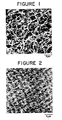
- the fine structural features and various properties of the porous membrane obtained are as follows:
- the mean pore size of the porous membrane obtained by regenerating a cellulose derivative is lower than the porous membrane of this invention, the dynamic modulus at 30°C measured with a frequency of 110 Hz is at most one third'of that of the porous membrane of this invention and the T max is also lower than that of the porous membrane of this invention.
- the mechanical strength and the thermal resistance of the porous membrane obtained by regenerating the cellulose derivative are remarkably inferior to the porous membrane of this invention.
- Example 2 In the same cuprammonium solution as employed in Example 1 was dissolved cellulose linter having an average molecular weight of 2.30x10 5 at a concentration set forth in Table 2, and the solution obtained was added with 10% by weight of acetone of 100% purity and, after stirring, cast on a glass plate placed in an atmosphere where the concentration of acetone vapor atmosphere at 30°C was 80% of the saturated vapor pressure by an applicator having a thickness of 250 Ilm and left to stand for 60 minutes in the above described atmosphere. After occurrence of micro-phase separation was confirmed, the membrane formed on the glass plate was immersed in a 2% by weight aqueous sulfuric acid solution at 20°C for 15 minutes and then washed with water.
- Cellulose linter having an average molecular weight of 2.30x10 5 was dissolved in the same cuprammonium solution as employed in Example 1 at a concentration of 7% by weight, and the solution obtained was added with 10% by weight of methyl ethyl ketone of 99% purity and, after stirring, cast on a glass plate placed in an atmosphere where the concentration of methyl ethyl ketone vapor atmosphere at 45°C was 75% of the saturated vapor pressure by an applicator having a thickness of 250 um and left to stand in the above described atmosphere for 30 minutes. After occurrence of micro-phase separation was confirmed, the membrane formed on the glass plate was immersed in a 2% by weight aqueous sulfuric acid solution at 20°C for 15 minutes and then washed with water.
- the membrane was immersed in acetone of 100% purity at 20°C for 15 minutes to exchange the water in the membrane with acetone, and then dried by inserting the membrane between two sheets of filter paper at 30°C in the air.
- Cellulose linter having an average molecular weight of 2.30x10⁵ was dissolved in the same cuprammonium solution as employed in Example at a concentration of 7% by weight, and then the solution obtained was added with 10% by weight of trimethylamine of 70% purity and, after stirring, cast on a glass plate placed in an atmosphere where the concentration of trimethylamine vapor atmosphere at 30°C was 85% of the saturated vapor pressure by an applicator having a thickness of 250 um and left to stand in the above described atmosphere for 30 minutes. After occurrence of micro-phase separation was confirmed, the membrane formed on the glass plate was immersed in a 2% by weight aqueous sulfuric acid solution at 20°C for 15 minutes and then washed with water.
- the membrane was immersed in acetone of 100% purity at 20°C for 15 minutes to exchange the water in the membrane with acetone and then dried by the membrane between two sheets of filter paper at 30°C in the air.
- Cellulose linter having an average molecular weight of 2.3xlO 5 was dissolved in the same cuprammonium solution as employed in Example 1 at a concentration of 7% by weight, and the solution obtained was cast on a glass plate placed in an atmosphere where the concentration of methanol vapor atmosphere was 75% of the saturated vapor pressure by an applicator having a thickness of 250 pm and left to stand for 60 minutes in the above described atmosphere. After occurrence of micro-phase separation was confirmed, the membrane formed on the glass plate was immersed in a 2% by weight aqueous sulfuric acid solution at 20°C for 15 minutes and then washed with water.
- Cellulose linter having an average molecular weight of 2.33x10 5 was dissolved in the same cuprammonium solution as employed in Example 1 at a concentration of 6% by weight, and the solution obtained was cast on a glass. plate placed in an atmosphere where the concentration of acetone vapor atmosphere at 30°C was 80% of the saturated vapor pressure at a rate of 0.2 meter per minute by an applicator having a thickness of 300 Ilm and left to stand in the above described atmosphere for 8 minutes.
- the membrane formed on the glass plate was immersed in a mixed solution of acetone, ammonia and water having a mixing weight ratio set forth in Table 3 for 15 minutes, then immersed in a 2% by weight aqueous sulfuric acid at 20°C for 10 minutes and washed with water. After the water was removed from the membrane peeled off from the glass plate during washing with water with a sheet of filter paper, the membrane was immersed in acetone of 100% purity at 20°C for 15 minutes to exchange the water in the membrane with acetone and drie ⁇ by inserting the membrane between two sheets of filter paper at 30°C in the air.
- Table 3 The properties of the porous membranes thus obtained are shown in Table 3.
- Cellulose linter having an average molecular weight of 2.33x10 5 was dissolved in the same cuprammonium solution as employed in Example 1 at a concentration set forth in Table 3, and the solution obtained was cast on a glass plate placed in an atmosphere where the concentration of acetone vapor atmosphere at 30°C was 80% of the saturated vapor pressure at a rate of 0.2 meter per minute by an applicator having a thickness of 300 pm and left to stand in the above described atmosphere for 8 minutes during which occurrence of micro-phase separation was confirmed and a polymer lean phase did not exude to the surface of the membrane.
- the membrane formed on the glass plate was immersed in a mixed solution of acetone, ammonia and water where the weight ratio of acetone to water was 33.6% and that of ammonia to water was 0.8% at 20°C for 15 minutes, then immersed in a 2% by weight aqueous sulfuric acid at 20°C for 10 minutes and washed with water.
- the membrane was immersed in acetone of 100% purity at 20°C for 15 minutes to exchange the water in the membrane with acetone and dried by inserting the membrane between two sheets of filter paper at 30°C in the air.
- Table 3 The properties of the porous membranes thus obtained are shown in Table 3.
- Cellulose linter having an average molecular weight of 2.33x10 5 was dissolved in the same cuprammonium solution as employed in Example 1 at a concentration of 6% by weight, and the solution obtained was added with 10% by weight of acetone of 100% purity and, after stirring, cast on a glass plate placed in an atmosphere where the concentration of acetone vapor atmosphere at 30°C was 80% of the saturated vapor pressure at a rate of 0.2 meter per minute by an applicator having a thickness of 300 um and left to stand in the above described atmosphere for 5 minutes and as a result, micro-phase separation occurred and a polymer lean phase did not exude to the surface of the membrane.
- the membrane formed on the glass plate was immersed in a mixed solution of acetone, ammonia and water where the weight ratio of acetone to water was 33.6% and that of ammonia to water was 0.8% at 20°C for 10 minutes, then immersed in a 2% by weight aqueous sulfuric acid at 20°C for 10 minutes and washed with water.
- the membrane was immersed in acetone of 100% purity at 20°C for 15 minutes to exchange the water in the membrane with acetone and dried by inserting the membrane between two sheets of filter paper at 30°C in the air.
- Table 3 The properties of the porous membrane thus obtained are shown in Table 3.
- Cellulose linter having an average molecular weight of 2.33x10° was dissolved in the same cuprammonium solution as employed in Example 1 at a concentration of 6% by weight, and the solution obtained was cast on a glass plate placed in an atmosphere where the concentration of methyl ethyl ketone vapor atmosphere at 30°C was 75% of the saturated vapor pressure at a rate of 0.2 meter per minute by an applicator having a thickness of 300 pm and left to stand for 8 minutes in the above described atmosphere and as a result, micro-phase separation occurred in the membrane and a polymer lean phase did not exude to the surface of the membrane.
- the membrane formed on the glass plate was immersed in a mixed solution of methyl ethyl ketone, ammonia and water where the weight ratio of methyl ethyl ketone to water was 33.6% and that of ammonia to water was 0.8% at 20°C for 15 minutes, then immersed in a 2% by weight aqueous sulfuric acid solution at 20°C for 10 minutes and washed with water.
- the membrane was immersed in acetone of 100% purity at 20°C for 15 minutes to exchange the water in the membrane with acetone and dried by inserting the membrane between two sheets of filter paper at 30°C in the air.
- Table 3 The properties of the porous membrane thus obtained are shown in Table 3.
- Cellulose linter having an average molecular weight of 2.33x10 5 was dissolved in a cuprammonium solution prepared by the conventional method at a concentration of 6% by weight, and the solution obtained was cast on a glass plate placed in an atmosphere where the concentration of methanol vapor atmosphere at 30°C was 75% by the saturated vapor pressure at a rate of 0.2 meter per minute by an applicator having a thickness of 300 pm and left to stand in the above described atmosphere for 8 minutes during which micro-phase separation did not occur.
- the membrane formed on the glass plate was immersed in a mixed solution of methanol, ammonia and water where the weight ratio of methanol to water was 33.6% and that of ammonia to water was 0.8% at 20°C for 15 minutes, then immersed in a 2% by weight aqueous sulfuric acid solution at 20°C for 10 minutes and washed with water.
- the membrane was immersed in acetone of 100% purity at 20°C for 15 minutes to exchange the water in the membrane with acetone and dried by inserting the membrane between two sheets of filter paper at 30°C in the air.
- Table 3 The properties of the membrane obtained are shown in Table 3.
- Cellulose linter having an average molecular weight of 2.30x10 5 was dissolved in the same cuprammonium solution as employed in Example 1 at a concentration of 6% by weight, and the solution obtained was cast on a glass plate by an applicator having a thickness of 300 um at 30°C in the air. Then immediately the cast on the glass plate was immersed in a mixed solution of acetone, ammonia and water having a mixing weight ratio set forth in Table 4 for 15 minutes during which micro-phase separation occurred. Subsequently the membrane formed on the glass plate was immersed in a 2% by weight aqueous sulfuric acid solution at 20°C for 15 minutes and washed with water.
- Cellulose linter having an average molecular weight of 2.30x10 5 was dissolved in the same cuprammonium solution as employed in Example 1 at a concentration set forth in Table 4, and the solution obtained was cast on a glass plate by an applicator having a thickness of 300 um at 30°C in the air. Then immediately the cast on the glass plate was immersed in a mixed solution of acetone, ammonia and water having a mixing weight ratio set forth in Table 4 for 15 minutes during which micro-phase separation occurred. Subsequently the membrane formed on the glass plate was immersed in a 2% by weight aqueous sulfuric acid solution at 20°C for 15 minutes and washed with water.
- Cellulose linter having an average molecular weight of 2.30x10 5 was dissolved in the same cuprammonium solution as employed in Example 1 at a concentration 6% by weight, and the solution obtained was added with 10% by weight of acetone of 100% purity and, after stirring, cast on a glass plate by an applicator having a thickness of 300 pm at 30°C in the air. Then immediately the cast on the glass plate was immersed in a mixed solution of acetone, ammonia and water having a mixing weight ratio set forth in Table 4 for 8 minutes during which micro-phase separation occurred. Subsequently the membrane formed on the glass plate was immersed in a 2% by weight aqueous sulfuric acid solution at 20°C for 15. minutes and washed with water.
- Cellulose linter having an average molecular weight of 2.30x10⁵ was dissolved in the same cuprammonium solution as employed in Example 1 at a concentration of 6% by weight, and the solution obtained was cast on a glass plate by an applicator having a thickness of 300 pm at 30°C in the air. Then immediately the cast on the glass plate was immersed in a mixed solution of methyl ethyl ketone, ammonia and water having a mixing weight ratio set forth in Table 4 for 15 minutes during which micro-separation occurred. Subsequently the membrane formed on the glass plate was immersed in a 2% by weight aqueous sulfuric acid solution at 20°C for 15 minutes and washed with water.
- Cellulose linter having an average molecular weight of 2.30x10 5 was dissolved in the same cuprammonium solution as employed in Example 1 at a concentration of 6% by weight, and the solution obtained was extruded from a linear slit having a slit width of 300 um into a mixed solution of acetone, ammonia and water having a mixing weight ratio set forth in Table 4 and the membrane formed was immersed in the above described mixed solution for 15 minutes during which micro-phase separation occurred, subsequently immersed in a 2% by weight aqueous sulfuric acid solution at 20°C for 15 minutes and washed with water.
- the membrane was immersed in acetone of 100% purity at 20°C for 15 minutes to exchange the water in the membrane with the acetone and dried by inserting the membrane between two sheets of filter paper at 30°C in the air.
- the proeprties of the porous membrane thus obtained are shown in Table 4.
- Cellulose linter having an average molecular weight of 2.30x10 5 was dissolved in the same cuprammonium solution as employed in Example 1 at a concentration of 6% by weight, and the solution obtained was cast on a glass plate by an applicator having a thickness of 300 um in the air at 30°C. Then immediately the cast on the glass plate was immersed in a mixed solution of methanol, ammonia and water having a mixing weight ratio set forth in Table 4 for 15 minutes during which a thin film was formed on the surface of the membrane. Subsequently the membrane formed on the glass plate was immersed in a 2% by weight aqueous sulfuric acid solution at 20°C for 15 minutes and washed with water.
- the membrane was immersed in acetone of 100% purity at 20°C for 15 minutes to exchange the water in the membrane with acetone and dried by inserting the membrane between two sheets of filter paper at 30°C in the air.
- the properties of the membrane obained are shown in Table 4.
- the porous membranes obtained in Example 4 were rolled up so as to provide a cylindrical filter module.
- a human blood having 38% of hematocrit value, 7.2 g/dl of total protein, 16 mg/dl of blood urea nitrogen (BUN) and 6.0 mg/dl of uric acid was supplied to the module so as to cause a parallel flow on the surface of the porous membranes at a flow rate of 50 ml/min.
- the filtration was conducted by circulating 200 ml of the blood. During the filtration, the blood pressures at the inlet and the outlet of the module were maintained at 135 mmHg and 90 mmHg, respectively.
- the blood composition and the filtrate composition obtained after 2 hours were as follows:
Landscapes
- Chemical & Material Sciences (AREA)
- Chemical Kinetics & Catalysis (AREA)
- Health & Medical Sciences (AREA)
- Medicinal Chemistry (AREA)
- Polymers & Plastics (AREA)
- Organic Chemistry (AREA)
- Separation Using Semi-Permeable Membranes (AREA)
- Manufacture Of Porous Articles, And Recovery And Treatment Of Waste Products (AREA)
Claims (21)
Applications Claiming Priority (12)
| Application Number | Priority Date | Filing Date | Title |
|---|---|---|---|
| JP18779781A JPS5889627A (ja) | 1981-11-25 | 1981-11-25 | 再生セルロ−ス微多孔膜 |
| JP18779881A JPS5889628A (ja) | 1981-11-25 | 1981-11-25 | 再生セルロ−ス多孔膜 |
| JP187795/81 | 1981-11-25 | ||
| JP187797/81 | 1981-11-25 | ||
| JP56187795A JPS5889625A (ja) | 1981-11-25 | 1981-11-25 | 強靭な再生セルロ−ス多孔膜の製造方法 |
| JP56187796A JPS5889626A (ja) | 1981-11-25 | 1981-11-25 | 強靭な再生セルロ−ス多孔膜 |
| JP187798/81 | 1981-11-25 | ||
| JP187796/81 | 1981-11-25 | ||
| JP155106/82 | 1982-09-08 | ||
| JP155107/82 | 1982-09-08 | ||
| JP15510682A JPS5945333A (ja) | 1982-09-08 | 1982-09-08 | 再生セルロ−ス多孔膜の製造方法 |
| JP15510782A JPS5945334A (ja) | 1982-09-08 | 1982-09-08 | 再生セルロ−ス微多孔膜の製法 |
Publications (3)
| Publication Number | Publication Date |
|---|---|
| EP0080206A2 EP0080206A2 (fr) | 1983-06-01 |
| EP0080206A3 EP0080206A3 (en) | 1983-08-31 |
| EP0080206B1 true EP0080206B1 (fr) | 1985-11-06 |
Family
ID=27553155
Family Applications (1)
| Application Number | Title | Priority Date | Filing Date |
|---|---|---|---|
| EP82110793A Expired EP0080206B1 (fr) | 1981-11-25 | 1982-11-23 | Membrane poreuse de cellulose régénérée et procédé de sa fabrication |
Country Status (6)
| Country | Link |
|---|---|
| US (1) | US4581140A (fr) |
| EP (1) | EP0080206B1 (fr) |
| KR (1) | KR880000511B1 (fr) |
| CA (1) | CA1216110A (fr) |
| DE (1) | DE3267317D1 (fr) |
| DK (1) | DK158707C (fr) |
Families Citing this family (15)
| Publication number | Priority date | Publication date | Assignee | Title |
|---|---|---|---|---|
| DE3265896D1 (en) * | 1981-11-30 | 1985-10-03 | Asahi Chemical Ind | Membrane filtration using ultrafiltration membrane |
| CA1236956A (fr) * | 1983-05-02 | 1988-05-24 | Seiichi Manabe | Fibre de cellulose cuprammonium poreuse obtenue a l'aide d'un orifice annulaire et d'un circuit central de coagulation |
| US4808315A (en) * | 1986-04-28 | 1989-02-28 | Asahi Kasei Kogyo Kabushiki Kaisha | Porous hollow fiber membrane and a method for the removal of a virus by using the same |
| JPS63248405A (ja) * | 1986-05-30 | 1988-10-14 | Mitsubishi Rayon Co Ltd | 多孔質膜 |
| EP0474267A2 (fr) * | 1987-08-08 | 1992-03-11 | Asahi Kasei Kogyo Kabushiki Kaisha | Membrane de fibre creuse poreuse et procédé pour l'élimination d'un virus par son utilisation |
| US5569198A (en) * | 1995-01-23 | 1996-10-29 | Cortrak Medical Inc. | Microporous catheter |
| US6955661B1 (en) * | 1999-01-25 | 2005-10-18 | Atrium Medical Corporation | Expandable fluoropolymer device for delivery of therapeutic agents and method of making |
| US6295986B1 (en) * | 2000-01-12 | 2001-10-02 | Aradigm Corporation | Reactive ion etching method of fabricating nozzles for aerosolized delivery of therapeutic or diagnostic agents |
| RU2187360C1 (ru) * | 2000-11-23 | 2002-08-20 | Дочернее общество ОАО Полимерсинтез - закрытое акционерное общество Научно-технический центр "ВЛАДИПОР" | Пористая ацетатцеллюлозная мембрана на подложке и способ ее получения |
| RU2228216C1 (ru) * | 2003-04-25 | 2004-05-10 | Федеральное государственное унитарное предприятие "Московское машиностроительное производственное предприятие "Салют" | Способ изготовления мембраны с криволинейной формой поверхности |
| AU2011235954B2 (en) * | 2006-03-02 | 2013-06-13 | Sei-Ichi Manabe | Regenerated cellulose porous membrane |
| AU2007223448B2 (en) * | 2006-03-02 | 2011-10-20 | Sei-Ichi Manabe | Pore diffusion type flat membrane separating apparatus, flat membrane concentrating apparatus, regenerated cellulose porous membrane for pore diffusion, and method of non-destructive inspection of flat membrane |
| KR102106410B1 (ko) * | 2016-03-31 | 2020-05-04 | 아사히 가세이 메디컬 가부시키가이샤 | 바이러스 제거막 및 바이러스 제거막의 제조 방법 |
| CN114540853B (zh) * | 2017-03-22 | 2025-04-01 | 旭化成株式会社 | 层积体、电解槽及其制造方法、电极的更新方法、层积体的更新方法以及卷绕体的制造方法 |
| US20200102662A1 (en) * | 2017-03-22 | 2020-04-02 | Asahi Kasei Kabushiki Kaisha | Electrode for electrolysis, laminate, wound body, electrolyzer, method for producing electrolyzer, method for renewing electrode, method for renewing laminate, and method for producing wound body |
Family Cites Families (6)
| Publication number | Priority date | Publication date | Assignee | Title |
|---|---|---|---|---|
| US3592953A (en) * | 1967-10-02 | 1971-07-13 | Gen Electric | Preparation of high flow cellulose derivative reverse osmosis membrane |
| DE2823985C2 (de) * | 1978-06-01 | 1986-01-02 | Akzo Gmbh, 5600 Wuppertal | Dialysemembran |
| DE2835890A1 (de) * | 1978-08-16 | 1980-02-28 | Toray Industries | Membran fuer umgekehrte osmose, verfahren zu deren herstellung und giessloesung zur durchfuehrung des verfahrens |
| EP0008536B1 (fr) * | 1978-08-22 | 1984-08-01 | Mitsubishi Rayon Co., Ltd. | Procédé pour la fabrication de fibres creuses de cellulose régénérée |
| CA1141114A (fr) * | 1978-11-24 | 1983-02-15 | Masamichi Ishida | Fibre creuse en cellulose regeneree et procede de fabrication |
| DE3042110A1 (de) * | 1980-11-07 | 1982-06-16 | Akzo Gmbh, 5600 Wuppertal | Mikroporoese cellulosemembran |
-
1982
- 1982-11-19 US US06/443,074 patent/US4581140A/en not_active Expired - Lifetime
- 1982-11-23 DE DE8282110793T patent/DE3267317D1/de not_active Expired
- 1982-11-23 EP EP82110793A patent/EP0080206B1/fr not_active Expired
- 1982-11-24 CA CA000416225A patent/CA1216110A/fr not_active Expired
- 1982-11-24 DK DK523282A patent/DK158707C/da not_active IP Right Cessation
- 1982-11-25 KR KR8205319A patent/KR880000511B1/ko not_active Expired
Also Published As
| Publication number | Publication date |
|---|---|
| DK158707B (da) | 1990-07-09 |
| DK523282A (da) | 1983-05-26 |
| EP0080206A2 (fr) | 1983-06-01 |
| KR880000511B1 (ko) | 1988-04-09 |
| DE3267317D1 (en) | 1985-12-12 |
| US4581140A (en) | 1986-04-08 |
| CA1216110A (fr) | 1987-01-06 |
| DK158707C (da) | 1990-11-26 |
| EP0080206A3 (en) | 1983-08-31 |
| KR840002296A (ko) | 1984-06-25 |
Similar Documents
| Publication | Publication Date | Title |
|---|---|---|
| EP0080206B1 (fr) | Membrane poreuse de cellulose régénérée et procédé de sa fabrication | |
| EP1007195B1 (fr) | Membranes de filtration en polyethersulfone hautement asymetriques | |
| US4286015A (en) | Polyaryl ether sulfone semipermeable membrane and process for producing same | |
| EP0126994B1 (fr) | Fibre poreuse et creuse à base de cellulose régénérée et procédé pour sa préparation | |
| EP0946354B1 (fr) | Membranes de microfiltration hydrophyles hautement asymetriques a grands diametres de pores | |
| US4610791A (en) | Dialysis membrane and method of making | |
| US4134837A (en) | Ethylene-vinyl alcohol copolymer membranes having improved permeability characteristics and a method for producing the same | |
| EP0747113A2 (fr) | Membrane sous forme de fibre creuse à base d'alcool polyvinylique et procédé pour fabriquer cette membrane | |
| CA1073822A (fr) | Membranes de copolymeres d'ethylene de vinylalcool a permeabilite amelioree; leur production | |
| CN114130373A (zh) | 一种硝酸纤维素膜及其制备方法 | |
| GB2086798A (en) | Microporous cellulose membrane | |
| Kuo et al. | A new method for cellulose membrane fabrication and the determination of its characteristics | |
| JPS5889627A (ja) | 再生セルロ−ス微多孔膜 | |
| JPS61274707A (ja) | 微生物分離用再生セルロ−ス多孔膜 | |
| JPS6244018B2 (fr) | ||
| EP0860199B1 (fr) | Procédé de fabrication d'une membrane | |
| JPH041015B2 (fr) | ||
| US4879036A (en) | Asymmetrical membrane of polyester-amide and process for preparing it | |
| JPS61254202A (ja) | 微生物粒子分離用中空繊維 | |
| JPS6245893B2 (fr) | ||
| JPH0246608B2 (fr) | ||
| EP4721779A1 (fr) | Membrane poreuse à fibres creuses et module de purification du sang | |
| JPS6244019B2 (fr) | ||
| CN121669007A (zh) | 一种中空纤维膜制备方法及中空纤维膜 | |
| JPH0638899B2 (ja) | 膜処理法 |
Legal Events
| Date | Code | Title | Description |
|---|---|---|---|
| PUAI | Public reference made under article 153(3) epc to a published international application that has entered the european phase |
Free format text: ORIGINAL CODE: 0009012 |
|
| 17P | Request for examination filed |
Effective date: 19830128 |
|
| AK | Designated contracting states |
Designated state(s): DE FR GB IT NL |
|
| PUAL | Search report despatched |
Free format text: ORIGINAL CODE: 0009013 |
|
| AK | Designated contracting states |
Designated state(s): DE FR GB IT NL |
|
| GRAA | (expected) grant |
Free format text: ORIGINAL CODE: 0009210 |
|
| ITF | It: translation for a ep patent filed | ||
| AK | Designated contracting states |
Designated state(s): DE FR GB IT NL |
|
| REF | Corresponds to: |
Ref document number: 3267317 Country of ref document: DE Date of ref document: 19851212 |
|
| ET | Fr: translation filed | ||
| PLBE | No opposition filed within time limit |
Free format text: ORIGINAL CODE: 0009261 |
|
| STAA | Information on the status of an ep patent application or granted ep patent |
Free format text: STATUS: NO OPPOSITION FILED WITHIN TIME LIMIT |
|
| 26N | No opposition filed | ||
| ITTA | It: last paid annual fee | ||
| PGFP | Annual fee paid to national office [announced via postgrant information from national office to epo] |
Ref country code: FR Payment date: 20011113 Year of fee payment: 20 |
|
| PGFP | Annual fee paid to national office [announced via postgrant information from national office to epo] |
Ref country code: GB Payment date: 20011121 Year of fee payment: 20 |
|
| PGFP | Annual fee paid to national office [announced via postgrant information from national office to epo] |
Ref country code: NL Payment date: 20011129 Year of fee payment: 20 |
|
| PGFP | Annual fee paid to national office [announced via postgrant information from national office to epo] |
Ref country code: DE Payment date: 20011210 Year of fee payment: 20 |
|
| REG | Reference to a national code |
Ref country code: GB Ref legal event code: IF02 |
|
| PG25 | Lapsed in a contracting state [announced via postgrant information from national office to epo] |
Ref country code: GB Free format text: LAPSE BECAUSE OF EXPIRATION OF PROTECTION Effective date: 20021122 |
|
| PG25 | Lapsed in a contracting state [announced via postgrant information from national office to epo] |
Ref country code: NL Free format text: LAPSE BECAUSE OF EXPIRATION OF PROTECTION Effective date: 20021123 |
|
| REG | Reference to a national code |
Ref country code: GB Ref legal event code: PE20 Effective date: 20021122 |
|
| NLV7 | Nl: ceased due to reaching the maximum lifetime of a patent |
Effective date: 20021123 |