EP0080529B1 - Dérivés de 1,3-dioxolane et de 1,3-dioxanne 2-cyano substitués - Google Patents
Dérivés de 1,3-dioxolane et de 1,3-dioxanne 2-cyano substitués Download PDFInfo
- Publication number
- EP0080529B1 EP0080529B1 EP81110046A EP81110046A EP0080529B1 EP 0080529 B1 EP0080529 B1 EP 0080529B1 EP 81110046 A EP81110046 A EP 81110046A EP 81110046 A EP81110046 A EP 81110046A EP 0080529 B1 EP0080529 B1 EP 0080529B1
- Authority
- EP
- European Patent Office
- Prior art keywords
- hydrogen
- mixture
- hydroxy
- dioxane
- cyanoethyl
- Prior art date
- Legal status (The legal status is an assumption and is not a legal conclusion. Google has not performed a legal analysis and makes no representation as to the accuracy of the status listed.)
- Expired
Links
- -1 2-cyano-substituted 1,3-dioxane Chemical class 0.000 title claims description 17
- 150000004862 dioxolanes Chemical class 0.000 title description 2
- 150000001875 compounds Chemical class 0.000 claims description 32
- 239000000203 mixture Substances 0.000 claims description 26
- 239000001257 hydrogen Substances 0.000 claims description 21
- 229910052739 hydrogen Inorganic materials 0.000 claims description 21
- 125000002887 hydroxy group Chemical group [H]O* 0.000 claims description 14
- UFHFLCQGNIYNRP-UHFFFAOYSA-N Hydrogen Chemical compound [H][H] UFHFLCQGNIYNRP-UHFFFAOYSA-N 0.000 claims description 11
- 125000004423 acyloxy group Chemical group 0.000 claims description 11
- 125000005386 organosiloxy group Chemical group 0.000 claims description 10
- 150000002431 hydrogen Chemical group 0.000 claims description 7
- 125000002947 alkylene group Chemical group 0.000 claims description 6
- 125000000217 alkyl group Chemical group 0.000 claims description 5
- 125000002496 methyl group Chemical group [H]C([H])([H])* 0.000 claims description 4
- VMAOJJWOEFXATB-UHFFFAOYSA-N 3-(5-hydroxy-1,3-dioxan-2-yl)propanenitrile Chemical compound OC1COC(CCC#N)OC1 VMAOJJWOEFXATB-UHFFFAOYSA-N 0.000 claims description 3
- TYPFFDAGSUYVNH-UHFFFAOYSA-N 3-[4-(hydroxymethyl)-1,3-dioxolan-2-yl]propanenitrile Chemical group OCC1COC(CCC#N)O1 TYPFFDAGSUYVNH-UHFFFAOYSA-N 0.000 claims description 3
- 125000003545 alkoxy group Chemical group 0.000 claims description 3
- 125000004435 hydrogen atom Chemical group [H]* 0.000 claims description 3
- 125000001997 phenyl group Chemical group [H]C1=C([H])C([H])=C(*)C([H])=C1[H] 0.000 claims description 3
- UCJJSRUXEVGTHE-UHFFFAOYSA-N 3-(5-trimethylsilyloxy-1,3-dioxan-2-yl)propanenitrile Chemical compound C[Si](C)(C)OC1COC(CCC#N)OC1 UCJJSRUXEVGTHE-UHFFFAOYSA-N 0.000 claims description 2
- PENBMJBIKOSPOU-UHFFFAOYSA-N 3-[4-(trimethylsilyloxymethyl)-1,3-dioxolan-2-yl]propanenitrile Chemical group C[Si](C)(C)OCC1COC(CCC#N)O1 PENBMJBIKOSPOU-UHFFFAOYSA-N 0.000 claims description 2
- GJOAFZRBTKFDGE-UHFFFAOYSA-N 4-[4-(hydroxymethyl)-2-methyl-1,3-dioxolan-2-yl]butanenitrile Chemical group N#CCCCC1(C)OCC(CO)O1 GJOAFZRBTKFDGE-UHFFFAOYSA-N 0.000 claims description 2
- OOMRBLPFPHAKLH-UHFFFAOYSA-N [2-(2-cyanoethyl)-1,3-dioxan-5-yl] acetate Chemical compound CC(=O)OC1COC(CCC#N)OC1 OOMRBLPFPHAKLH-UHFFFAOYSA-N 0.000 claims description 2
- YDHGBCDBRJNCRB-UHFFFAOYSA-N [2-(2-cyanoethyl)-1,3-dioxolan-4-yl]methyl acetate Chemical group CC(=O)OCC1COC(CCC#N)O1 YDHGBCDBRJNCRB-UHFFFAOYSA-N 0.000 claims description 2
- 125000001495 ethyl group Chemical group [H]C([H])([H])C([H])([H])* 0.000 claims description 2
- YJAKBMWNRRXCTA-UHFFFAOYSA-N 4-[4-(hydroxymethyl)-1,3-dioxolan-2-yl]-4-methylpentanenitrile Chemical group N#CCCC(C)(C)C1OCC(CO)O1 YJAKBMWNRRXCTA-UHFFFAOYSA-N 0.000 claims 1
- OKTJSMMVPCPJKN-UHFFFAOYSA-N Carbon Chemical compound [C] OKTJSMMVPCPJKN-UHFFFAOYSA-N 0.000 claims 1
- 229910052799 carbon Inorganic materials 0.000 claims 1
- PEDCQBHIVMGVHV-UHFFFAOYSA-N Glycerine Chemical compound OCC(O)CO PEDCQBHIVMGVHV-UHFFFAOYSA-N 0.000 description 20
- 238000006243 chemical reaction Methods 0.000 description 17
- RTZKZFJDLAIYFH-UHFFFAOYSA-N Diethyl ether Chemical compound CCOCC RTZKZFJDLAIYFH-UHFFFAOYSA-N 0.000 description 14
- 239000000376 reactant Substances 0.000 description 13
- 239000000047 product Substances 0.000 description 12
- 239000002904 solvent Substances 0.000 description 11
- ATUOYWHBWRKTHZ-UHFFFAOYSA-N Propane Chemical compound CCC ATUOYWHBWRKTHZ-UHFFFAOYSA-N 0.000 description 10
- 235000011187 glycerol Nutrition 0.000 description 10
- YXFVVABEGXRONW-UHFFFAOYSA-N Toluene Chemical compound CC1=CC=CC=C1 YXFVVABEGXRONW-UHFFFAOYSA-N 0.000 description 9
- ZMANZCXQSJIPKH-UHFFFAOYSA-N Triethylamine Chemical compound CCN(CC)CC ZMANZCXQSJIPKH-UHFFFAOYSA-N 0.000 description 9
- 238000000034 method Methods 0.000 description 8
- 235000013849 propane Nutrition 0.000 description 8
- 235000013350 formula milk Nutrition 0.000 description 7
- OKKJLVBELUTLKV-UHFFFAOYSA-N Methanol Chemical compound OC OKKJLVBELUTLKV-UHFFFAOYSA-N 0.000 description 6
- 239000002253 acid Substances 0.000 description 6
- IJOOHPMOJXWVHK-UHFFFAOYSA-N chlorotrimethylsilane Chemical compound C[Si](C)(C)Cl IJOOHPMOJXWVHK-UHFFFAOYSA-N 0.000 description 6
- 238000009835 boiling Methods 0.000 description 5
- 150000001923 cyclic compounds Chemical class 0.000 description 5
- 239000001294 propane Substances 0.000 description 5
- 125000001424 substituent group Chemical group 0.000 description 5
- XLYOFNOQVPJJNP-UHFFFAOYSA-N water Substances O XLYOFNOQVPJJNP-UHFFFAOYSA-N 0.000 description 5
- HGINCPLSRVDWNT-UHFFFAOYSA-N Acrolein Chemical compound C=CC=O HGINCPLSRVDWNT-UHFFFAOYSA-N 0.000 description 4
- HEDRZPFGACZZDS-UHFFFAOYSA-N Chloroform Chemical compound ClC(Cl)Cl HEDRZPFGACZZDS-UHFFFAOYSA-N 0.000 description 4
- UHOVQNZJYSORNB-UHFFFAOYSA-N Benzene Chemical compound C1=CC=CC=C1 UHOVQNZJYSORNB-UHFFFAOYSA-N 0.000 description 3
- IAYPIBMASNFSPL-UHFFFAOYSA-N Ethylene oxide Chemical group C1CO1 IAYPIBMASNFSPL-UHFFFAOYSA-N 0.000 description 3
- VEXZGXHMUGYJMC-UHFFFAOYSA-N Hydrochloric acid Chemical compound Cl VEXZGXHMUGYJMC-UHFFFAOYSA-N 0.000 description 3
- 238000005481 NMR spectroscopy Methods 0.000 description 3
- 125000005529 alkyleneoxy group Chemical group 0.000 description 3
- 238000004458 analytical method Methods 0.000 description 3
- 230000015572 biosynthetic process Effects 0.000 description 3
- 239000007795 chemical reaction product Substances 0.000 description 3
- 238000004821 distillation Methods 0.000 description 3
- 239000012530 fluid Substances 0.000 description 3
- 239000007788 liquid Substances 0.000 description 3
- 238000003756 stirring Methods 0.000 description 3
- 239000005051 trimethylchlorosilane Substances 0.000 description 3
- 238000005292 vacuum distillation Methods 0.000 description 3
- ARXKVVRQIIOZGF-UHFFFAOYSA-N 1,2,4-butanetriol Chemical compound OCCC(O)CO ARXKVVRQIIOZGF-UHFFFAOYSA-N 0.000 description 2
- AEVMBQIIZGKQRB-UHFFFAOYSA-N 5-oxohexanenitrile Chemical compound CC(=O)CCCC#N AEVMBQIIZGKQRB-UHFFFAOYSA-N 0.000 description 2
- LSNNMFCWUKXFEE-UHFFFAOYSA-M Bisulfite Chemical compound OS([O-])=O LSNNMFCWUKXFEE-UHFFFAOYSA-M 0.000 description 2
- AFVFQIVMOAPDHO-UHFFFAOYSA-N Methanesulfonic acid Chemical compound CS(O)(=O)=O AFVFQIVMOAPDHO-UHFFFAOYSA-N 0.000 description 2
- OFBQJSOFQDEBGM-UHFFFAOYSA-N Pentane Chemical compound CCCCC OFBQJSOFQDEBGM-UHFFFAOYSA-N 0.000 description 2
- JUJWROOIHBZHMG-UHFFFAOYSA-N Pyridine Chemical compound C1=CC=NC=C1 JUJWROOIHBZHMG-UHFFFAOYSA-N 0.000 description 2
- DHKHKXVYLBGOIT-UHFFFAOYSA-N acetaldehyde Diethyl Acetal Natural products CCOC(C)OCC DHKHKXVYLBGOIT-UHFFFAOYSA-N 0.000 description 2
- 150000001241 acetals Chemical class 0.000 description 2
- WETWJCDKMRHUPV-UHFFFAOYSA-N acetyl chloride Chemical compound CC(Cl)=O WETWJCDKMRHUPV-UHFFFAOYSA-N 0.000 description 2
- 239000012346 acetyl chloride Substances 0.000 description 2
- OSGAYBCDTDRGGQ-UHFFFAOYSA-L calcium sulfate Chemical compound [Ca+2].[O-]S([O-])(=O)=O OSGAYBCDTDRGGQ-UHFFFAOYSA-L 0.000 description 2
- 239000003054 catalyst Substances 0.000 description 2
- KXZJHVJKXJLBKO-UHFFFAOYSA-N chembl1408157 Chemical compound N=1C2=CC=CC=C2C(C(=O)O)=CC=1C1=CC=C(O)C=C1 KXZJHVJKXJLBKO-UHFFFAOYSA-N 0.000 description 2
- 238000009833 condensation Methods 0.000 description 2
- 230000005494 condensation Effects 0.000 description 2
- 125000004122 cyclic group Chemical group 0.000 description 2
- 229960004132 diethyl ether Drugs 0.000 description 2
- 238000001914 filtration Methods 0.000 description 2
- IXCSERBJSXMMFS-UHFFFAOYSA-N hydrogen chloride Substances Cl.Cl IXCSERBJSXMMFS-UHFFFAOYSA-N 0.000 description 2
- 229910000041 hydrogen chloride Inorganic materials 0.000 description 2
- 239000010410 layer Substances 0.000 description 2
- 150000002825 nitriles Chemical group 0.000 description 2
- AOJFQRQNPXYVLM-UHFFFAOYSA-N pyridin-1-ium;chloride Chemical compound [Cl-].C1=CC=[NH+]C=C1 AOJFQRQNPXYVLM-UHFFFAOYSA-N 0.000 description 2
- 230000035484 reaction time Effects 0.000 description 2
- 239000011347 resin Substances 0.000 description 2
- 229920005989 resin Polymers 0.000 description 2
- 238000000926 separation method Methods 0.000 description 2
- 239000000126 substance Substances 0.000 description 2
- JOXIMZWYDAKGHI-UHFFFAOYSA-N toluene-4-sulfonic acid Chemical compound CC1=CC=C(S(O)(=O)=O)C=C1 JOXIMZWYDAKGHI-UHFFFAOYSA-N 0.000 description 2
- JMAUXGPDSZGZAJ-UHFFFAOYSA-N (2-ethenyl-1,3-dioxolan-4-yl)methanol Chemical compound OCC1COC(C=C)O1 JMAUXGPDSZGZAJ-UHFFFAOYSA-N 0.000 description 1
- 125000004178 (C1-C4) alkyl group Chemical group 0.000 description 1
- LMMTVYUCEFJZLC-UHFFFAOYSA-N 1,3,5-pentanetriol Chemical compound OCCC(O)CCO LMMTVYUCEFJZLC-UHFFFAOYSA-N 0.000 description 1
- VDFVNEFVBPFDSB-UHFFFAOYSA-N 1,3-dioxane Chemical compound C1COCOC1 VDFVNEFVBPFDSB-UHFFFAOYSA-N 0.000 description 1
- 150000000093 1,3-dioxanes Chemical class 0.000 description 1
- WNXJIVFYUVYPPR-UHFFFAOYSA-N 1,3-dioxolane Chemical compound C1COCO1 WNXJIVFYUVYPPR-UHFFFAOYSA-N 0.000 description 1
- KMZHZAAOEWVPSE-UHFFFAOYSA-N 2,3-dihydroxypropyl acetate Chemical compound CC(=O)OCC(O)CO KMZHZAAOEWVPSE-UHFFFAOYSA-N 0.000 description 1
- UFQMBTOIRUYCJA-UHFFFAOYSA-N 2,3-dihydroxypropyl trimethyl silicate Chemical compound CO[Si](OC)(OC)OCC(O)CO UFQMBTOIRUYCJA-UHFFFAOYSA-N 0.000 description 1
- JSULTRPLLUGKIV-UHFFFAOYSA-N 2-(2,3-dihydroxypropoxy)ethyl benzoate Chemical compound OCC(O)COCCOC(=O)C1=CC=CC=C1 JSULTRPLLUGKIV-UHFFFAOYSA-N 0.000 description 1
- KDWOJNLAVFQOAA-UHFFFAOYSA-N 2-(2-chloroethyl)-1,3-dioxan-5-ol Chemical compound OC1COC(CCCl)OC1 KDWOJNLAVFQOAA-UHFFFAOYSA-N 0.000 description 1
- BVYFLKAWQNLDST-UHFFFAOYSA-N 2-(2-hydroxyethoxy)propane-1,3-diol Chemical compound OCCOC(CO)CO BVYFLKAWQNLDST-UHFFFAOYSA-N 0.000 description 1
- XNWFRZJHXBZDAG-UHFFFAOYSA-N 2-METHOXYETHANOL Chemical compound COCCO XNWFRZJHXBZDAG-UHFFFAOYSA-N 0.000 description 1
- WHNJUKUMMAOLNU-UHFFFAOYSA-N 2-[2-(2,3-dihydroxypropoxy)propoxy]ethyl acetate Chemical compound OCC(O)COC(C)COCCOC(C)=O WHNJUKUMMAOLNU-UHFFFAOYSA-N 0.000 description 1
- YHXNHYKKDRMEEH-UHFFFAOYSA-N 3-(2-hydroxyethoxy)propane-1,2-diol Chemical compound OCCOCC(O)CO YHXNHYKKDRMEEH-UHFFFAOYSA-N 0.000 description 1
- PDRUNYLIVGCPOB-UHFFFAOYSA-N 3-trimethylsilyloxypropane-1,2-diol Chemical compound C[Si](C)(C)OCC(O)CO PDRUNYLIVGCPOB-UHFFFAOYSA-N 0.000 description 1
- XJHNCGVHPLDMRK-UHFFFAOYSA-N 4,4-dimethoxybutanenitrile Chemical compound COC(OC)CCC#N XJHNCGVHPLDMRK-UHFFFAOYSA-N 0.000 description 1
- LFQSCWFLJHTTHZ-UHFFFAOYSA-N Ethanol Chemical compound CCO LFQSCWFLJHTTHZ-UHFFFAOYSA-N 0.000 description 1
- AALUCPRYHRPMAG-UHFFFAOYSA-N Glycerol 1-propanoate Chemical compound CCC(=O)OCC(O)CO AALUCPRYHRPMAG-UHFFFAOYSA-N 0.000 description 1
- 238000004566 IR spectroscopy Methods 0.000 description 1
- CDBYLPFSWZWCQE-UHFFFAOYSA-L Sodium Carbonate Chemical class [Na+].[Na+].[O-]C([O-])=O CDBYLPFSWZWCQE-UHFFFAOYSA-L 0.000 description 1
- XNIURMJSKUDSTK-UHFFFAOYSA-N [2-(2-chloroethyl)-1,3-dioxolan-4-yl]methanol Chemical compound OCC1COC(CCCl)O1 XNIURMJSKUDSTK-UHFFFAOYSA-N 0.000 description 1
- 238000010521 absorption reaction Methods 0.000 description 1
- 230000002378 acidificating effect Effects 0.000 description 1
- 150000007824 aliphatic compounds Chemical class 0.000 description 1
- 125000001931 aliphatic group Chemical group 0.000 description 1
- 125000003118 aryl group Chemical group 0.000 description 1
- 239000010426 asphalt Substances 0.000 description 1
- 239000006227 byproduct Substances 0.000 description 1
- CBVJWBYNOWIOFJ-UHFFFAOYSA-N chloro(trimethoxy)silane Chemical compound CO[Si](Cl)(OC)OC CBVJWBYNOWIOFJ-UHFFFAOYSA-N 0.000 description 1
- 239000012043 crude product Substances 0.000 description 1
- 125000004093 cyano group Chemical group *C#N 0.000 description 1
- 125000004966 cyanoalkyl group Chemical group 0.000 description 1
- GYZLOYUZLJXAJU-UHFFFAOYSA-N diglycidyl ether Chemical class C1OC1COCC1CO1 GYZLOYUZLJXAJU-UHFFFAOYSA-N 0.000 description 1
- 150000002012 dioxanes Chemical group 0.000 description 1
- 238000007700 distillative separation Methods 0.000 description 1
- 150000002148 esters Chemical group 0.000 description 1
- 125000001033 ether group Chemical group 0.000 description 1
- 150000002170 ethers Chemical class 0.000 description 1
- 239000000945 filler Substances 0.000 description 1
- 239000000706 filtrate Substances 0.000 description 1
- 239000012467 final product Substances 0.000 description 1
- 238000004508 fractional distillation Methods 0.000 description 1
- 238000007306 functionalization reaction Methods 0.000 description 1
- 238000004817 gas chromatography Methods 0.000 description 1
- 150000004820 halides Chemical class 0.000 description 1
- 238000010438 heat treatment Methods 0.000 description 1
- 230000002363 herbicidal effect Effects 0.000 description 1
- 239000004922 lacquer Substances 0.000 description 1
- 238000004949 mass spectrometry Methods 0.000 description 1
- 229940098779 methanesulfonic acid Drugs 0.000 description 1
- 239000012044 organic layer Substances 0.000 description 1
- 150000001282 organosilanes Chemical class 0.000 description 1
- MOIOWCZVZKHQIC-UHFFFAOYSA-N pentane-1,2,4-triol Chemical compound CC(O)CC(O)CO MOIOWCZVZKHQIC-UHFFFAOYSA-N 0.000 description 1
- WEAYWASEBDOLRG-UHFFFAOYSA-N pentane-1,2,5-triol Chemical compound OCCCC(O)CO WEAYWASEBDOLRG-UHFFFAOYSA-N 0.000 description 1
- 239000003208 petroleum Substances 0.000 description 1
- 238000003822 preparative gas chromatography Methods 0.000 description 1
- UMJSCPRVCHMLSP-UHFFFAOYSA-N pyridine Natural products COC1=CC=CN=C1 UMJSCPRVCHMLSP-UHFFFAOYSA-N 0.000 description 1
- 239000011541 reaction mixture Substances 0.000 description 1
- 238000010992 reflux Methods 0.000 description 1
- 150000003839 salts Chemical class 0.000 description 1
- 239000002002 slurry Substances 0.000 description 1
- 229910000030 sodium bicarbonate Inorganic materials 0.000 description 1
- 239000012258 stirred mixture Substances 0.000 description 1
- 239000000725 suspension Substances 0.000 description 1
- ILWRPSCZWQJDMK-UHFFFAOYSA-N triethylazanium;chloride Chemical compound Cl.CCN(CC)CC ILWRPSCZWQJDMK-UHFFFAOYSA-N 0.000 description 1
Classifications
-
- C—CHEMISTRY; METALLURGY
- C10—PETROLEUM, GAS OR COKE INDUSTRIES; TECHNICAL GASES CONTAINING CARBON MONOXIDE; FUELS; LUBRICANTS; PEAT
- C10M—LUBRICATING COMPOSITIONS; USE OF CHEMICAL SUBSTANCES EITHER ALONE OR AS LUBRICATING INGREDIENTS IN A LUBRICATING COMPOSITION
- C10M105/00—Lubricating compositions characterised by the base-material being a non-macromolecular organic compound
- C10M105/56—Lubricating compositions characterised by the base-material being a non-macromolecular organic compound containing nitrogen
-
- C—CHEMISTRY; METALLURGY
- C07—ORGANIC CHEMISTRY
- C07D—HETEROCYCLIC COMPOUNDS
- C07D317/00—Heterocyclic compounds containing five-membered rings having two oxygen atoms as the only ring hetero atoms
- C07D317/08—Heterocyclic compounds containing five-membered rings having two oxygen atoms as the only ring hetero atoms having the hetero atoms in positions 1 and 3
- C07D317/10—Heterocyclic compounds containing five-membered rings having two oxygen atoms as the only ring hetero atoms having the hetero atoms in positions 1 and 3 not condensed with other rings
- C07D317/14—Heterocyclic compounds containing five-membered rings having two oxygen atoms as the only ring hetero atoms having the hetero atoms in positions 1 and 3 not condensed with other rings with substituted hydrocarbon radicals attached to ring carbon atoms
- C07D317/18—Radicals substituted by singly bound oxygen or sulfur atoms
- C07D317/22—Radicals substituted by singly bound oxygen or sulfur atoms etherified
-
- C—CHEMISTRY; METALLURGY
- C07—ORGANIC CHEMISTRY
- C07D—HETEROCYCLIC COMPOUNDS
- C07D317/00—Heterocyclic compounds containing five-membered rings having two oxygen atoms as the only ring hetero atoms
- C07D317/08—Heterocyclic compounds containing five-membered rings having two oxygen atoms as the only ring hetero atoms having the hetero atoms in positions 1 and 3
- C07D317/10—Heterocyclic compounds containing five-membered rings having two oxygen atoms as the only ring hetero atoms having the hetero atoms in positions 1 and 3 not condensed with other rings
- C07D317/14—Heterocyclic compounds containing five-membered rings having two oxygen atoms as the only ring hetero atoms having the hetero atoms in positions 1 and 3 not condensed with other rings with substituted hydrocarbon radicals attached to ring carbon atoms
- C07D317/30—Radicals substituted by carbon atoms having three bonds to hetero atoms with at the most one bond to halogen, e.g. ester or nitrile radicals
-
- C—CHEMISTRY; METALLURGY
- C07—ORGANIC CHEMISTRY
- C07D—HETEROCYCLIC COMPOUNDS
- C07D317/00—Heterocyclic compounds containing five-membered rings having two oxygen atoms as the only ring hetero atoms
- C07D317/08—Heterocyclic compounds containing five-membered rings having two oxygen atoms as the only ring hetero atoms having the hetero atoms in positions 1 and 3
- C07D317/10—Heterocyclic compounds containing five-membered rings having two oxygen atoms as the only ring hetero atoms having the hetero atoms in positions 1 and 3 not condensed with other rings
- C07D317/32—Heterocyclic compounds containing five-membered rings having two oxygen atoms as the only ring hetero atoms having the hetero atoms in positions 1 and 3 not condensed with other rings with hetero atoms or with carbon atoms having three bonds to hetero atoms with at the most one bond to halogen, e.g. ester or nitrile radicals, directly attached to ring carbon atoms
- C07D317/34—Oxygen atoms
-
- C—CHEMISTRY; METALLURGY
- C07—ORGANIC CHEMISTRY
- C07D—HETEROCYCLIC COMPOUNDS
- C07D319/00—Heterocyclic compounds containing six-membered rings having two oxygen atoms as the only ring hetero atoms
- C07D319/04—1,3-Dioxanes; Hydrogenated 1,3-dioxanes
- C07D319/06—1,3-Dioxanes; Hydrogenated 1,3-dioxanes not condensed with other rings
-
- C—CHEMISTRY; METALLURGY
- C07—ORGANIC CHEMISTRY
- C07F—ACYCLIC, CARBOCYCLIC OR HETEROCYCLIC COMPOUNDS CONTAINING ELEMENTS OTHER THAN CARBON, HYDROGEN, HALOGEN, OXYGEN, NITROGEN, SULFUR, SELENIUM OR TELLURIUM
- C07F7/00—Compounds containing elements of Groups 4 or 14 of the Periodic Table
- C07F7/02—Silicon compounds
- C07F7/08—Compounds having one or more C—Si linkages
- C07F7/18—Compounds having one or more C—Si linkages as well as one or more C—O—Si linkages
- C07F7/1804—Compounds having Si-O-C linkages
-
- C—CHEMISTRY; METALLURGY
- C10—PETROLEUM, GAS OR COKE INDUSTRIES; TECHNICAL GASES CONTAINING CARBON MONOXIDE; FUELS; LUBRICANTS; PEAT
- C10M—LUBRICATING COMPOSITIONS; USE OF CHEMICAL SUBSTANCES EITHER ALONE OR AS LUBRICATING INGREDIENTS IN A LUBRICATING COMPOSITION
- C10M105/00—Lubricating compositions characterised by the base-material being a non-macromolecular organic compound
- C10M105/76—Lubricating compositions characterised by the base-material being a non-macromolecular organic compound containing silicon
-
- C—CHEMISTRY; METALLURGY
- C10—PETROLEUM, GAS OR COKE INDUSTRIES; TECHNICAL GASES CONTAINING CARBON MONOXIDE; FUELS; LUBRICANTS; PEAT
- C10M—LUBRICATING COMPOSITIONS; USE OF CHEMICAL SUBSTANCES EITHER ALONE OR AS LUBRICATING INGREDIENTS IN A LUBRICATING COMPOSITION
- C10M2215/00—Organic non-macromolecular compounds containing nitrogen as ingredients in lubricant Compositions
- C10M2215/16—Nitriles
-
- C—CHEMISTRY; METALLURGY
- C10—PETROLEUM, GAS OR COKE INDUSTRIES; TECHNICAL GASES CONTAINING CARBON MONOXIDE; FUELS; LUBRICANTS; PEAT
- C10M—LUBRICATING COMPOSITIONS; USE OF CHEMICAL SUBSTANCES EITHER ALONE OR AS LUBRICATING INGREDIENTS IN A LUBRICATING COMPOSITION
- C10M2227/00—Organic non-macromolecular compounds containing atoms of elements not provided for in groups C10M2203/00, C10M2207/00, C10M2211/00, C10M2215/00, C10M2219/00 or C10M2223/00 as ingredients in lubricant compositions
- C10M2227/04—Organic non-macromolecular compounds containing atoms of elements not provided for in groups C10M2203/00, C10M2207/00, C10M2211/00, C10M2215/00, C10M2219/00 or C10M2223/00 as ingredients in lubricant compositions having a silicon-to-carbon bond, e.g. organo-silanes
-
- C—CHEMISTRY; METALLURGY
- C10—PETROLEUM, GAS OR COKE INDUSTRIES; TECHNICAL GASES CONTAINING CARBON MONOXIDE; FUELS; LUBRICANTS; PEAT
- C10N—INDEXING SCHEME ASSOCIATED WITH SUBCLASS C10M RELATING TO LUBRICATING COMPOSITIONS
- C10N2040/00—Specified use or application for which the lubricating composition is intended
- C10N2040/08—Hydraulic fluids, e.g. brake-fluids
Definitions
- GB-A-1,406,849 discloses certain herbicidal dioxane derivatives substituted at the 5-position by phenylmethyloxy, furylmethyloxy, thienylmethyloxy or 2-pyridylmethyloxy and eventually substituted at the 2-position by cyanoalkyl.
- the present invention is a compound of the formula wherein
- organosiloxy designates the well-known lower alkyl or phenyl-substituted siloxy radicals as well as lower alkoxy- or phenoxy-substituted siloxy radicals.
- acyloxy designates a radical of the formula R a ⁇ CO ⁇ O ⁇ wherein R a denotes alkyl or aryl.
- the compounds have been found to be particularly suited for use as components for functional fluids such as hydraulic fluids and heat-transfer fluids.
- novel 1,3-dioxane and dioxolane derivatives of the invention are suitably produced by reaction of a polyhydroxyl compound as defined below with reactive cyano-substituted compounds of a formula corresponding to the desired cyclic compound.
- reactive cyano-substituted compounds may include reactive carbonyl- or dialkoxy-containing compounds of the formula wherein B is as previously defined, R 2 is hydrogen, phenyl, or a monovalent radical of from 1 to 10 carbons selected from branched or linear alkyl and cyano- or hydroxy-substituted derivatives thereof, and R 3 is C 1 - 4 alkyl.
- R 2 is hydrogen or methyl
- B is C 2 - 6 straight or branched alkylene.
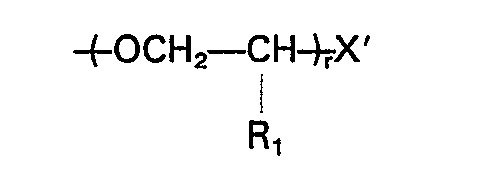
- polyhydroxyl compounds for use in forming the compounds of the invention correspond to either of the following formulaes: wherein R' and R" are as previously defined and in the left formula at least one of both R' is not hydrogen and in the right formula at least one of R' or R" is not hydrogen.
- Such compounds are e.g. 1,2- or 1,3-dihydroxysubstituted aliphatic compounds additionally substituted with hydroxyalkyl substituents or derivatives thereof.
- Suitable derivatives of hydroxyalkyl substituents are those formed by reaction of the hydroxy moiety with common reactive substances capable of replacing the hydrogen. Included are substituents wherein the hydroxy is replaced by acyloxy, organosiloxy, as well as (poly)alkylene oxide extended ether derivatives thereof terminating with the previously mentioned hydroxy, acyloxy or organosiloxy substituents. Such compounds and the processes for making them are well-known in the art.
- a preferred polyhydroxyl compound is glycerine, which in view of its widespread commercial availability is a preferred polyhydroxyl reactant.
- polyhydroxyl compounds are illustrative of those suitably employed in forming the instant invented compounds.
- the reaction may suitably be carried out in the presence of a catalytically effective amount of an acidic catalyst, for example, sulfonic acid, sulfonic acid resin or other strong acid or strong acid resin that adequately catalyzes this type of reaction.
- an acidic catalyst for example, sulfonic acid, sulfonic acid resin or other strong acid or strong acid resin that adequately catalyzes this type of reaction.
- Molar ratios of catalyst to reactive cyano-substituted reactant from about 0.0001/1.0 to about 0.1/1.0, preferably from about 0.001/1.0 to about 0.05/1.0 may be used.
- a solvent preferably such a solvent that readily forms an azeotropic mixture with water or lower alkanols allowing for the rapid removal of the by-product water or lower alkanol formed during the reaction.
- solvents that additionally do not form such azeotropic mixtures with either of the reactants.
- suitable solvents include benzene, toluene, petroleum ether, and chlorinated aliphatic solvents.
- the reaction may also be conducted without a solvent in which case the water or lower alcohol formed during the reaction may be removed by direct distillation, preferably at reduced pressure and temperature to limit the formation of oligomers which may form at elevated temperatures.
- the reaction is conducted at temperatures from about 0°C to about 200°C depending on the reactants, pressures, and other process conditions employed.
- reaction time will vary depending on the reactants and process conditions employed. Generally reaction times from about 1 to about 48 hours suffice to convert substantially all of one starting reactant employed in limiting quantities.
- Either reactant may be employed in large excess.
- Molar ratios of cyano-substituted reactant to polyhydroxyl compound ranging from about 20/1 to about 1/20 are operable.
- the reactants are combined in nearly equal molar proportions, for example in a molar range from about 2/1 to about 1/2. Most preferred is a range from about 1.2/1.0 to about 1.0/1.2.
- An excess of the lower boiling reactant whether polyhydroxyl compound or cyano-substituted reactant may be employed to insure substantially complete reaction of the higher boiling reactant. This procedure simplifies later distillative separation of the cyclic product from reactants by providing a mixture of components having the maximum difference in boiling points.
- nitrile substituent to a previously formed cyclic compound to produce the desired substituted compounds.
- a compound containing terminal ethylenic unsaturation instead of a cyano substituent but otherwise similar to the previously identified reactive carbonyl- or dialkyl-containing compound may be reacted with one of the previously identified polyhydroxyl compounds.
- Contacting the cyclic reaction product which contains an unsaturated alkyl substituent with hydrogen chloride results in formation of the corresponding chloroalkyl-substituted cyclic compound which may then be reacted with sodium cyanide to form the desired product.
- This alternate procedure is further illustrated in Example 3.
- reaction may produce a mixture of products.
- glycerine contains three reactive hydroxyl substituents in close proximity, both of the corresponding 1,3-dioxolane and 1,3-dioxane derivatives may be produced. Separation of such a mixture of products, if desired, may be accomplished by careful fractional distillation.
- a further alternative procedure for forming the above compounds wherein R' or R" is not hydrogen is to first produce the desired cyanoalkyl-substituted cylic compound that is further ring-substituted with hydroxy or hydroxy-alkyl substituents.
- the hydrogen of these reactive hydroxy-containing substituents is replaced with X, the remnant of a reactive substance capable of replacing hydrogen by well-known techniques.
- reactions with alkylene oxides, glycidyl ethers or mixtures thereof may be used to form an ether functionality producing hydroxy-substituted alkoxy or polyalkyeneoxy substituents.
- substituents are, for example, acyloxy moieties formed by condensation of the hydroxyl-substituted cyclic compounds with an acid halide such as acetyl chloride and organosiloxy derivatives such as those formed by condensation of the hydroxyl-substituted cyclic compound with a halo-substituted organosilane, e.g., trimethylchlorosilane or trimethoxychlorosilane.
- organosiloxy and acyloxy functionality may be introduced into substituent R by functionalization of a hydroxyl moiety of R 2 .
- a 200-ml flask was charged with 819 g of 4,4-dimethoxybutane nitrile and 584 g of glycerine.
- the mixture was acidified with methane sulfonic acid (3.2 g) and stirred at 20°C until homogeneous.
- the mixture was heated to about 56°C under vacuum (about 1 Torr) to remove methanol. Heating was continued until no further methanol was collected (about 1 hour).
- the acid was neutralized by adding triethylamine (7.6 g) and the reaction mixture distilled under vacuum.
- Product fractions having a boiling point range from 117°C to 137°C (0.1 Torr) were obtained.
- Total distilled yield was 938 g.
- Anhydrous hydrogen chloride was bubbled into a solution of about 368 g of glycerine in 300 ml chloroform cooled to a temperature of -14°C. While maintaining a slight positive pressure, 168 g of acrolein was added dropwise with stirring over a 90-minute period. The temperature was maintained below -10°C and hydrogen chloride addition continued with stirring for an additional hour.
- the reaction was allowed to warm to room temperature whereupon a cloudy suspension remained which upon standing separated into two layers.
- the lower layer containing the glycerine reaction product was drawn off, neutralized with about 3 ml of triethylamine and washed with about 50 ml of saturated sodium carbonate solution.
- the organic layer was again separated, dried over calcium sulfate and heated in vacuo to remove residual acrolein and chloroform.
- Final vacuum distillation yielded a mixture of 2-(2-chloroethyl)-4-hydroxymethyl-1,3-dioxolane and 2-(2-chloroethyl)-5-hydroxy-1,3-dioxane.
- Trimethylchlorosilane (109 g) was added dropwise to a stirred solution containing 116 g of the acetal mixture produced in Example 2, 79 g of pyridine acid acceptor and 454 g of diethylether solvent. The temperature was maintained at 20°C-25°C with an ice bath. The trimethylchlorosilane was added over a period of 1 hour. After 30 minutes additional stirring the reaction products were cooled to about -10°C and the pyridine hydrochloride formed during the reaction was removed by filtration. The remaining liquor was washed with two 100-ml volumes of water and the ether stripped under vacuum.
Landscapes
- Chemical & Material Sciences (AREA)
- Organic Chemistry (AREA)
- Chemical Kinetics & Catalysis (AREA)
- General Chemical & Material Sciences (AREA)
- Oil, Petroleum & Natural Gas (AREA)
- Lubricants (AREA)
Claims (8)

avec la condition que, si s vaut zéro, au moins l'un des radicaux R' n'est pas un atome d'hydrogène, ou bien, si s vaut un, au moins l'un des radicaux R' ou R" n'est pas un atome d'hydrogène.
Priority Applications (2)
| Application Number | Priority Date | Filing Date | Title |
|---|---|---|---|
| DE8181110046T DE3176532D1 (de) | 1981-12-01 | 1981-12-01 | 2-cyano-substituted 1,3-dioxane and dioxolane derivatives |
| EP81110046A EP0080529B1 (fr) | 1981-12-01 | 1981-12-01 | Dérivés de 1,3-dioxolane et de 1,3-dioxanne 2-cyano substitués |
Applications Claiming Priority (1)
| Application Number | Priority Date | Filing Date | Title |
|---|---|---|---|
| EP81110046A EP0080529B1 (fr) | 1981-12-01 | 1981-12-01 | Dérivés de 1,3-dioxolane et de 1,3-dioxanne 2-cyano substitués |
Publications (2)
| Publication Number | Publication Date |
|---|---|
| EP0080529A1 EP0080529A1 (fr) | 1983-06-08 |
| EP0080529B1 true EP0080529B1 (fr) | 1987-11-19 |
Family
ID=8188047
Family Applications (1)
| Application Number | Title | Priority Date | Filing Date |
|---|---|---|---|
| EP81110046A Expired EP0080529B1 (fr) | 1981-12-01 | 1981-12-01 | Dérivés de 1,3-dioxolane et de 1,3-dioxanne 2-cyano substitués |
Country Status (2)
| Country | Link |
|---|---|
| EP (1) | EP0080529B1 (fr) |
| DE (1) | DE3176532D1 (fr) |
Family Cites Families (2)
| Publication number | Priority date | Publication date | Assignee | Title |
|---|---|---|---|---|
| NL231224A (fr) * | 1957-09-10 | 1900-01-01 | ||
| BE789105A (fr) * | 1971-09-21 | 1973-03-21 | Fmc Corp | Dioxannes substitues et leur application comme |
-
1981
- 1981-12-01 DE DE8181110046T patent/DE3176532D1/de not_active Expired
- 1981-12-01 EP EP81110046A patent/EP0080529B1/fr not_active Expired
Also Published As
| Publication number | Publication date |
|---|---|
| EP0080529A1 (fr) | 1983-06-08 |
| DE3176532D1 (de) | 1987-12-23 |
Similar Documents
| Publication | Publication Date | Title |
|---|---|---|
| US4465866A (en) | Preparation process of 2-hydroxy-3-alkoxypropylglyceryl ether | |
| CA2044499C (fr) | Methode de preparation de 4-acetoxystyrene | |
| CA1314900C (fr) | Preparation de .gamma.-bytyrolactones-.beta.-substitues | |
| EP0080529B1 (fr) | Dérivés de 1,3-dioxolane et de 1,3-dioxanne 2-cyano substitués | |
| US4365073A (en) | Derivatives of cyano-substituted ketones and aldehydes | |
| US3436403A (en) | Methylenation method | |
| FI91959B (fi) | Menetelmä valmistaa alkoksimetyylieetteri- ja alkoksimetyyliesterijohdoksia | |
| CA1165766A (fr) | Derives de cetones et d'aldehydes substitues par le groupe cyano | |
| US4931568A (en) | Process for the preparation of thiophene ethers | |
| US4534910A (en) | Method of preparing acetals and enol ethers from acyloxymethylene compounds | |
| US4754082A (en) | Process for the preparation of perfluoroalkylalkenols | |
| EP0260300A1 (fr) | Procede de preparation d'hydroquinone styrene. | |
| Massing et al. | New optically pure dimethylacetals of glyceraldehydes and their application for lipid and phospholipid synthesis | |
| US4025539A (en) | Process for preparing 2-substituted or unsubstituted geranyl acetic acids and esters thereof | |
| JPS58103384A (ja) | 新規組成物としてのシアノ−置換ケトン類およびアルデヒド類の誘導体類 | |
| US3970673A (en) | Process for preparing bicyclic γ-lactone | |
| Ikeda et al. | Synthesis of cyclic aminimines with perfluoroalkyl groups. | |
| US4760169A (en) | Process for the preparation of hydroxymethylenealkoxyacetic acid esters | |
| US4346042A (en) | Preparation of epihalohydrin enantiomers | |
| KR900001179B1 (ko) | 4-아미노-5-디알콕시메틸피리미딘 유도체의 제조방법 | |
| US4503239A (en) | Process for the preparation of ethylenic halogenoacetals | |
| US1968032A (en) | Preparation of monoethers of glycols | |
| US4568759A (en) | Preparation of epoxides | |
| US5852208A (en) | Method of producing compounds containing acyloxyalkoxy groups from alcohols | |
| US4294991A (en) | Process for monoalkylation of dihydric phenols |
Legal Events
| Date | Code | Title | Description |
|---|---|---|---|
| PUAI | Public reference made under article 153(3) epc to a published international application that has entered the european phase |
Free format text: ORIGINAL CODE: 0009012 |
|
| AK | Designated contracting states |
Designated state(s): BE DE FR GB IT NL SE |
|
| 17P | Request for examination filed |
Effective date: 19831208 |
|
| GRAA | (expected) grant |
Free format text: ORIGINAL CODE: 0009210 |
|
| AK | Designated contracting states |
Kind code of ref document: B1 Designated state(s): BE DE FR GB IT NL SE |
|
| REF | Corresponds to: |
Ref document number: 3176532 Country of ref document: DE Date of ref document: 19871223 |
|
| ET | Fr: translation filed | ||
| ITF | It: translation for a ep patent filed | ||
| PLBE | No opposition filed within time limit |
Free format text: ORIGINAL CODE: 0009261 |
|
| STAA | Information on the status of an ep patent application or granted ep patent |
Free format text: STATUS: NO OPPOSITION FILED WITHIN TIME LIMIT |
|
| 26N | No opposition filed | ||
| ITTA | It: last paid annual fee | ||
| PGFP | Annual fee paid to national office [announced via postgrant information from national office to epo] |
Ref country code: FR Payment date: 19930831 Year of fee payment: 13 |
|
| PGFP | Annual fee paid to national office [announced via postgrant information from national office to epo] |
Ref country code: SE Payment date: 19930903 Year of fee payment: 13 |
|
| PGFP | Annual fee paid to national office [announced via postgrant information from national office to epo] |
Ref country code: DE Payment date: 19930906 Year of fee payment: 13 |
|
| PGFP | Annual fee paid to national office [announced via postgrant information from national office to epo] |
Ref country code: BE Payment date: 19930916 Year of fee payment: 13 |
|
| PGFP | Annual fee paid to national office [announced via postgrant information from national office to epo] |
Ref country code: GB Payment date: 19931001 Year of fee payment: 13 |
|
| PGFP | Annual fee paid to national office [announced via postgrant information from national office to epo] |
Ref country code: NL Payment date: 19931231 Year of fee payment: 13 |
|
| PG25 | Lapsed in a contracting state [announced via postgrant information from national office to epo] |
Ref country code: GB Effective date: 19941201 |
|
| PG25 | Lapsed in a contracting state [announced via postgrant information from national office to epo] |
Ref country code: SE Effective date: 19941202 |
|
| PG25 | Lapsed in a contracting state [announced via postgrant information from national office to epo] |
Ref country code: BE Effective date: 19941231 |
|
| EAL | Se: european patent in force in sweden |
Ref document number: 81110046.0 |
|
| BERE | Be: lapsed |
Owner name: THE DOW CHEMICAL CY Effective date: 19941231 |
|
| PG25 | Lapsed in a contracting state [announced via postgrant information from national office to epo] |
Ref country code: NL Effective date: 19950701 |
|
| GBPC | Gb: european patent ceased through non-payment of renewal fee |
Effective date: 19941201 |
|
| PG25 | Lapsed in a contracting state [announced via postgrant information from national office to epo] |
Ref country code: FR Effective date: 19950831 |
|
| NLV4 | Nl: lapsed or anulled due to non-payment of the annual fee |
Effective date: 19950701 |
|
| PG25 | Lapsed in a contracting state [announced via postgrant information from national office to epo] |
Ref country code: DE Effective date: 19950901 |
|
| EUG | Se: european patent has lapsed |
Ref document number: 81110046.0 |
|
| REG | Reference to a national code |
Ref country code: FR Ref legal event code: ST |