EP0084796A2 - Procédé pour la caractérisation de HLA et sondes de cADN pour sa mise en oeuvre - Google Patents
Procédé pour la caractérisation de HLA et sondes de cADN pour sa mise en oeuvre Download PDFInfo
- Publication number
- EP0084796A2 EP0084796A2 EP83100175A EP83100175A EP0084796A2 EP 0084796 A2 EP0084796 A2 EP 0084796A2 EP 83100175 A EP83100175 A EP 83100175A EP 83100175 A EP83100175 A EP 83100175A EP 0084796 A2 EP0084796 A2 EP 0084796A2
- Authority
- EP
- European Patent Office
- Prior art keywords
- hla
- locus
- dna
- pattern
- individual
- Prior art date
- Legal status (The legal status is an assumption and is not a legal conclusion. Google has not performed a legal analysis and makes no representation as to the accuracy of the status listed.)
- Granted
Links
Images




Classifications
-
- C—CHEMISTRY; METALLURGY
- C12—BIOCHEMISTRY; BEER; SPIRITS; WINE; VINEGAR; MICROBIOLOGY; ENZYMOLOGY; MUTATION OR GENETIC ENGINEERING
- C12Q—MEASURING OR TESTING PROCESSES INVOLVING ENZYMES, NUCLEIC ACIDS OR MICROORGANISMS; COMPOSITIONS OR TEST PAPERS THEREFOR; PROCESSES OF PREPARING SUCH COMPOSITIONS; CONDITION-RESPONSIVE CONTROL IN MICROBIOLOGICAL OR ENZYMOLOGICAL PROCESSES
- C12Q1/00—Measuring or testing processes involving enzymes, nucleic acids or microorganisms; Compositions therefor; Processes of preparing such compositions
- C12Q1/68—Measuring or testing processes involving enzymes, nucleic acids or microorganisms; Compositions therefor; Processes of preparing such compositions involving nucleic acids
- C12Q1/6876—Nucleic acid products used in the analysis of nucleic acids, e.g. primers or probes
- C12Q1/6881—Nucleic acid products used in the analysis of nucleic acids, e.g. primers or probes for tissue or cell typing, e.g. human leukocyte antigen [HLA] probes
-
- C—CHEMISTRY; METALLURGY
- C07—ORGANIC CHEMISTRY
- C07K—PEPTIDES
- C07K14/00—Peptides having more than 20 amino acids; Gastrins; Somatostatins; Melanotropins; Derivatives thereof
- C07K14/435—Peptides having more than 20 amino acids; Gastrins; Somatostatins; Melanotropins; Derivatives thereof from animals; from humans
- C07K14/705—Receptors; Cell surface antigens; Cell surface determinants
- C07K14/70503—Immunoglobulin superfamily
- C07K14/70539—MHC-molecules, e.g. HLA-molecules
-
- C—CHEMISTRY; METALLURGY
- C12—BIOCHEMISTRY; BEER; SPIRITS; WINE; VINEGAR; MICROBIOLOGY; ENZYMOLOGY; MUTATION OR GENETIC ENGINEERING
- C12Q—MEASURING OR TESTING PROCESSES INVOLVING ENZYMES, NUCLEIC ACIDS OR MICROORGANISMS; COMPOSITIONS OR TEST PAPERS THEREFOR; PROCESSES OF PREPARING SUCH COMPOSITIONS; CONDITION-RESPONSIVE CONTROL IN MICROBIOLOGICAL OR ENZYMOLOGICAL PROCESSES
- C12Q1/00—Measuring or testing processes involving enzymes, nucleic acids or microorganisms; Compositions therefor; Processes of preparing such compositions
- C12Q1/68—Measuring or testing processes involving enzymes, nucleic acids or microorganisms; Compositions therefor; Processes of preparing such compositions involving nucleic acids
- C12Q1/6813—Hybridisation assays
- C12Q1/6827—Hybridisation assays for detection of mutation or polymorphism
- C12Q1/683—Hybridisation assays for detection of mutation or polymorphism involving restriction enzymes, e.g. restriction fragment length polymorphism [RFLP]
-
- C—CHEMISTRY; METALLURGY
- C12—BIOCHEMISTRY; BEER; SPIRITS; WINE; VINEGAR; MICROBIOLOGY; ENZYMOLOGY; MUTATION OR GENETIC ENGINEERING
- C12Q—MEASURING OR TESTING PROCESSES INVOLVING ENZYMES, NUCLEIC ACIDS OR MICROORGANISMS; COMPOSITIONS OR TEST PAPERS THEREFOR; PROCESSES OF PREPARING SUCH COMPOSITIONS; CONDITION-RESPONSIVE CONTROL IN MICROBIOLOGICAL OR ENZYMOLOGICAL PROCESSES
- C12Q2600/00—Oligonucleotides characterized by their use
- C12Q2600/156—Polymorphic or mutational markers
-
- C—CHEMISTRY; METALLURGY
- C12—BIOCHEMISTRY; BEER; SPIRITS; WINE; VINEGAR; MICROBIOLOGY; ENZYMOLOGY; MUTATION OR GENETIC ENGINEERING
- C12Q—MEASURING OR TESTING PROCESSES INVOLVING ENZYMES, NUCLEIC ACIDS OR MICROORGANISMS; COMPOSITIONS OR TEST PAPERS THEREFOR; PROCESSES OF PREPARING SUCH COMPOSITIONS; CONDITION-RESPONSIVE CONTROL IN MICROBIOLOGICAL OR ENZYMOLOGICAL PROCESSES
- C12Q2600/00—Oligonucleotides characterized by their use
- C12Q2600/172—Haplotypes
Definitions
- the invention is in the fields of genetic engineering and human genotyping. More specifically the invention concerns methods for HLA typing based on HLA DNA restriction fragment length polymorphism and to novel complementary DNA (cDNA) probes that are used in such methods.
- cDNA complementary DNA
- HLA Human Leukocyte Antigen
- HLA-A Human Leukocyte Antigen
- HLA-B Human Leukocyte Antigen
- HLA-C human Leukocyte Antigen
- HLA-D Human Leukocyte Antigen
- HLA-DR human Leukocyte Antigen
- A, B, and C loci are single gene loci.
- the D and DR loci are multi-gene loci.
- the A, B, and C loci encode the classical transplantation antigens, whereas the D and DR loci encode products that control immune responsiveness.
- Class I encompasses the products of the HLA-A, HLA-B, and HLA-C loci and the Qa/TL region.
- the products of the HLA-D and HLA-DR related genes fall in Class II.
- the Class II antigens are believed to be heterodimers composed of an a (-34,000 daltons) glycopeptide and a ⁇ (-29,000 daltons) glycopeptide.
- the number of loci and the gene order of Class II are tentative.
- Class II currently includes loci designated DRa, DRB, DS8, DC(a or ⁇ ), and SB. It is likely that future investigation will reveal additional Class II loci.
- the third class, Class III includes components of complement.
- HLA is intended to include the above described loci as well as loci that are closely linked thereto.
- the products encoded by the HLA loci are currently typed serologically or by mixed lymphocyte culture methods. Such typing is used in paternity determinations, transplant and transfusion compatibility testing, blood component therapy, anthropological studies and in disease association correlation to diagnose diseases or predict susceptibility to diseases.
- the major drawbacks to such HLA typing, particularly of the Class II loci are the complexity of the sera and the lack of widespread availability of standard sera necessary to conduct the tests. Also, since serological typing is based on reactions of sera with-the HLA gene products it may not be useful for fetal HLA typing in the early stages of pregnancy when those products have not yet been expressed. Further, the lymphocytotoxicity test often gives results that do not provide an adequate basis for recognizing Class II locus specificities.
- Kan and Dozy, PNAS (1978) 75:5631-5635 report RFLPs produced by HpaI cleavage of human p-globin genes and an apparent association between a 13.0 kb variant of the normal 7.6 kb fragment and sickle hemoglobin mutation. These RFLPs were detected by comparing Southern blots of Hpal restricted cellular DNA from individuals with normal hemoglobin, sickle cell trait, and sickle cell anemia probed with a radiolabeled ⁇ -globin cDNA probe.
- Sood, et al, PNAS (1981) 78:616-620 (also PCT application 8202060 published 24 June 1982); describe the isolation of cDNA clones for HLA-B antigens. These clones were prepared by synthesizing cDNA from an mRNA mix containing mRNA coding for the desired HLA antigen, inserting the cDNA into a vector, transforming a bacterial host and isolating transformant clones that contain the desired DNA segment by probing with an oligonucleotide probe that is specific for the desired DNA sequence. Ploegh, et al PNAS (1980) 77:6081-6085 have also reported cloning a cDNA probe for an HLA gene sequence.
- Another aspect of the invention is an alternative embodiment of the above described method in which the blotting step is replaced by a solution hybridization of the digest with the probe followed by resolution of the hybridizate.
- This alternative method is characterized by the following steps:
- the method involves:
- Another aspect of the invention is an HLA cDNA probe characterized in that the probe is specific to a single HLA locus and comprises a labeled DNA sequence that is complementary to the DNA sequence at said locus.
- Another aspect of the invention is an HLA cDNA sequence characterized in that the sequence is complementary to a single HLA locus.
- the initial step in typing an individual's HLA by the invention method is to obtain a sample of the individual's HLA DNA.
- the term "individual" is intended to include beings that are in a fetal stage. All nucleated cells contain HLA DNA and, therefore, are potential sources for the required DNA.
- peripheral blood cells will typically be used rather than tissue samples. As little as 10 to 100 cc of peripheral blood provide sufficient HLA DNA for typing.
- placental cells or amniotic fluid may be used.
- the DNA is isolated from nucleated cells under conditions that preclude DNA degradation.
- Such isolation involves digesting the cells with a protease that does not attack DNA at a temperature and pH that reduces the likelihood of DNase activity followed by extraction of the digest with a DNA solvent.
- DNA isolation from nucleated cells is described by Kan, et al, N Eng J Med (1977) 297:1080-1084 and Nature (1974) 251:392-393, and Kan and Dozy, supra.
- the extracted DNA may be purified by dialysis, chromatography, or other known methods for purifying polynucleotides.
- the isolated DNA is restricted with a restriction endonuclease that cleaves or cuts DNA hydrolytically at a specific nucleotide sequence. Sequences so recognized by the enzymes are called restriction sites. Restriction endonucleases that recognize and cleave at specific sites are sometimes referred to as class II restriction enzymes (class I enzymes cleave randomly rather than at specific sites). Enzymes that produce blunt end DNA fragments (hydrolysis of the phosphodiester bonds on both DNA strands occur at the same site) as well as enzymes that produce sticky ended fragments (the hydrolysis sites on the strands are separated by a few nucleotides from each other) may be used.
- restriction endonuclease it is essential that the restriction endonuclease be one that produces a polymorphic digestion pattern associated with the HLA locus or loci under investigation. Determinations of which enzymes produce RFLPs at which loci may be made experimentally using various enzymes in conjunction with various specific HLA cDNA probes in the invention method. Table 1 lists the RFLPs that have been identified to date in this manner.
- the digestion of the DNA with the endonuclease may be carried out in an aqueous medium under conditions favoring endonuclease activity.
- the medium is buffered to a pH of 6.5 to 8.0. Mild temperatures, 20°C to 45°C, preferably physiological temperatures, are employed.
- Restriction endonucleases normally require magnesium ions and, in some instances cofactors (ATP and S-adenosyl methionine) or other agents for their activity. Therefore, a source of such ions, for instance inorganic magnesium salts, and other agents, when required, will be present in the medium.
- the amount of DNA in the digestion mixture will typically be in the range of 1% to 20% by weight.
- the third step of the process is analyzing the restriction digest by genomic blotting or solution hybridization and resolution for the presence of one or more HLA gene sequences.
- the analysis is directed to detecting a DNA sequence that uniquely characterizes that gene.
- the analysis does not necessarily involve identifying a specific locus or loci but may be done by comparing single or multilocus patterns of one individual with that of another individual using the same restriction endonuclease and an equivalent probe to determine similarities and differences between the patterns.
- a single locus probe will identify RFLPs associated with a single HLA locus whereas a multilocus probe will identify RFLPs associated with two or more HLA loci.
- Three basic steps are involved in the analysis: (1) resolving or separating the fragments by size; (2) annealing the fragments with a labeled cDNA probe that is complementary to the desired HLA DNA sequence(s); and (3) detecting the presence of labeled hybrids.
- the genomic blotting embodiment uses the indicated sequence.
- the analysis method known as "Southern blotting" that is described by Southern, E.M.
- J Mol Biol 98:503-517 is currently a preferred analysis method.
- Southern blotting the digestion products are electrophoresed, transferred and affixed to a support which binds nucleic acid, and hybridized with an appropriate labeled cDNA probe. Labeled hybrids are detected by autoradiography.
- Electrophoresis is the separation of the digestion products contained in a supporting medium by size under the influence of an applied electric field.
- Gel sheets or slabs eg agarose or agarose-acrylamide, are typically used as the supporting medium in Southern blotting.
- the electrophoresis conditions are such as to effect the desired degree of resolution of the fragments. A degree of resolution that separates fragments that differ in size from one another by as little as 100 base pairs will usually be sufficient. Size markers are run on the same gel to permit estimation of the size of the restriction fragments.
- the digestion products are loaded onto one end of the gel slab (commonly called the "origin") and the fragments separate by electrically facilitated transport through the gel, with the shortest fragment electrophoresing from the origin towards the other (anode) end of the slab fastest.
- the gel slab commonly called the "origin”
- the fragments separate by electrically facilitated transport through the gel, with the shortest fragment electrophoresing from the origin towards the other (anode) end of the slab fastest.
- the gel After electrophoresis the gel is readied for annealing by placing it in a DNA denaturing solution, conveniently a mild base, generally about 0.2 to 1 M hydroxide, preferably 0.5 M NaOH, to dissociate the DNA strands. After denaturation, the gel is placed in a neutralizing solution and neutralized to a mildly acid pH. The DNA is then transferred to the substrate, which is typically made from materials such as nitrocellulose paper or diazobenzyloxymethyl paper, by contacting the gel with the paper in the presence of reagents, eg buffer, and under conditions, eg light weight and 0°C to 25°C, that promote transfer and covalent or noncovalent binding of the DNA (particularly guanosine and uridine bases) to the sheets.
- a DNA denaturing solution conveniently a mild base, generally about 0.2 to 1 M hydroxide, preferably 0.5 M NaOH, to dissociate the DNA strands.
- the gel After denaturation, the gel is placed in a
- Hybridization annealing of the resolved single strand DNA on the paper to an HLA cDNA probe is effected by incubating the paper with the -probe under hybridizing conditions.
- the hybridization will typically be conducted in an aqueous buffer solution containing a polar solvent such as formamide.
- hybridization medium Other additives that enhance the hybridization such as sodium chloride, sodium citrate, serum albumin and sonicated denatured DNA such as denatured salmon sperm DNA may be included in the hybridization medium. See Southern, supra, Kan and Dozy, supra and US Pat No 4,302,204, col 5, line 8 et seq.
- Locus specific cDNA probes may be made by identifying desired HLA cDNA clones in cDNA libraries constructed from membrane-bound mRNA using synthetic oligonucleotide probes that hybridize to specific HLA cDNA clones. The clones are made detectable by labeling them with a detectable atom, radical or ligand using known labeling techniques. Radiolabels, preferably 32 P, will typically be used.
- the identified clones may be labeled with 32 P by nick translation with an a- 32 P-dNTP (Rigby, et al, J Mol Biol (1977) 113:237) or other available procedures to make the locus specific probes for use in the invention methods.
- the base sequences for the synthetic oligonucleotide probes used to screen the cDNA libraries are determined from HLA antigen amino acid sequences using the genetic code.
- the amino acid sequences may be determined experimentally or from published data eg, Ploegh, et al, supra and Sood, et al, supra. Amino acids with minimal codon degeneracy are used whenever possible. If the amino acid sequence suggests more than one possible oligonucleotide sequence, all possible oligonucleotide sequences that code for the amino acid sequence are made and tested to determine which results in the best probe.
- Oligonucleotides'having the desired base sequences may be prepared using the known phosphate diester, phosphate triester, or phosphite triester techniques.
- Blocked nucleotide reagents used in this method are available commercially.
- the specificity of a synthetic oligonucleotide may be determined by primer extension analysis or by using it as a hybridization probe in "Northern" blot analysis (a technique analogous to the Southern blot method for analyzing mRNA instead of DNA that was developed by Alwine, et al, PNAS (1977) 74:5350) of poly(A + ) mRNA from a B cell line.
- Potential locus specific probes may also be identified by hybridizing cDNA library clones with multilocus probes and determining the specificity of the clones that anneal with the multilocus probes.
- the final step in the method is identifying labeled hybrids on the paper (or gel in the solution hybridization embodiment).
- Autoradiography is currently used to detect radiolabel-containing hybrids. It involves laying the paper on a piece of radiation- sensitive film (X-ray film). The disintegration of the label results in the deposition of a silver grain in the film. The film is developed and the pattern of labeled fragments is identified. The specificity of the probe and the particular restriction endonuclease used will determine the number of fragments that appear in the pattern. Locus specific probes will typically give patterns with fewer bands than the patterns produced using multilocus probes.
- these autoradiographs are used to determine HLA type or, in the case of paternity testing, transplant or transfusion compatibility, and disease association to determine similarities in the autoradiograph patterns of different individuals or similarities between an individual's pattern and a standard pattern, as the case may be.
- paternity testing and transplant or transfusion compatibility may also be carried out by HLA typing the individuals by the invention method and comparing their HLA types.
- HLA typing the fragment(s) appearing on the test autoradiograph is/are compared to the fragment(s) that characterize a particular HLA type to determine correspondence therebetween and thus whether the test subject is that HLA type.
- HLA DNA RFLP patterns for individuals of known (by conventional HLA typing) HLA type it is possible to assign specific restriction fragments to a given HLA locus. It is also expected that practice of the invention method will identify hitherto unidentified HLA genes, particularly in Class II. In this manner correlations between restriction fragment patterns and HLA type may and will be made. Such correlations may be used in deciphering test autoradiographs.
- the method also provides a technique for defining subdivisions of serologically defined HLA types. The use of HLA types in paternity tests, transplantation or transfusion testing and in disease diagnosis and prognosis is described in Basic & Clinical Immunology, 3rd Ed (1980) Lange Medical Publications, pp 187-190.
- HLA cDNAs identified as potential probes may also be useful in making recombinant clones expressing human HLA antigens.
- cDNA that encodes a given HLA antigen is inserted into an appropriate cloning vehicle (vector) and hosts are transformed with the vehicles. Transformants are isolated and those that produce the desired antigen are cloned.
- the antigen may be harvested from the clones by conventional methods. Such antigens may be useful for diagnostic purposes, for making anti-HLA antibodies, or for therapy to induce tolerance to HLA antigens.
- Example 1 Preparation of Hybridization Probe for
- HLA-Dp34 HLA-DRa
- oligonucleotides were prepared based on the known NH 2 -terminal amino acid sequence (Glu, Phe, Tyr, Leu) of positions 11-14 of HLA-Dp34 antigen.
- the base sequences for the four oligonucleotides were as follows: (1) AGGTAAAATTC, (2) AGGTAGAATTC, (3) AGGTAAAACTC, and (4) AGGTAGAACTC. These sequences are all complementary to the codons for the indicated peptide sequence and were chosen to minimize degeneracy. The ambiguities are-located at sequence positions 2, 3, 6, and 9.
- a G at positions 2 and 3 was chosen to minimize the destabilizing effect of potential mismatched bases (G is capable of forming a wobble pair with U).
- oligonucleotide primed cDNA synthesis on HLA-Dp34 mRNA was expected to generate a product of about 150-200 nucleotides. This estimate was based on a leader sequence of "75 nucleotides and assumes a 5' untranslated region of 75-125 nucleotides.
- the specificities of the four 11-mers were compared by using them individually as primers in cDNA synthesis reactions using membrane-bound B cell mRNA, free B cell mRNA, and T cell mRNA as template. Only the AGGTAGAACTC oligonucleotide primed a cDNA band of 175 nucleotides which was enriched in reactions on B cell membrane-bound mRNA template.
- this 11-mer oligonucleotide was confirmed by exten- ; ding the primer in a cDNA synthesis reaction in the presence of a single dideoxy triphosphate and three deoxy triphosphates, an approach which has proved successful in the isolation of the HLA-B7 cDNA clone (Sood, et al, supra). In the presence of dideoxy dATP, a minor cDNA band corresponding to a predicted 18-nucleotide primer extension product was observed. The additional seven nucleotides were determined by the wandering spot sequencing technique to be GGCCTGA. The following two additional nucleotides, AT, were inferred from the Ile codon, giving a nine nucleotide sequence that corresponded to the HLA-Dp34 antigen amino acids at positions 8, 9, and 10.
- a 20-nucleotide fragment having the above determined sequence was then synthesized by the triester method.
- the specificity of the 20-mer as a primer was examined in a cDNA synthesis reaction on poly(A + ) mRNA from a B cell line.
- the specificity of the 20-nucleotide fragment as a hybridization probe was analyzed on a Northern blot of poly(A + ) mRNA. A unique band, at 1200-1300 nucleotides resulted from probing B cell mRNA but not T cell mRNA with the 32 P-labeled 20-mer nucleotide probe. Membrane-bound mRNA was enriched for the mRNA which hybridized to the 20-nucleotide probe.
- HLA-Dp34 cDNA clone was identified in a cDNA library with the above described 20-mer probe as follows.
- Membrane-bound RNA and free RNA was prepared, using phenol-chloroform extraction in the presence of Vanadyl complexes, from the human lymphoblastoid B cell line, CA.
- Poly(A + ) mRNA isolated by affinity chromatography with Poly U-Sepharose, was translated in an in vitro rabbit reticulocyte system. The partition of specific mRNA's into the membrane-bound and free fractions was monitored by 2D gel analysis of the 35 S-labeled products of in vitro translation.
- a double-stranded cDNA library was prepared from the membrane-bound mRNA using reverse transcrip- tase, DNA Polymerase I, and Sl nuclease. Following tailing with dCTP using terminal transferase, the cDNA was inserted and ligated to preparations of the plasmid pBR322 which had been digested with Pst and tailed with dGTP.
- Plasmid DNA was prepared from 25 pools, each consisting of 5 candidate cDNA clones and analyzed by dot hybridization with the 32 P-labeled 20-nucleotide probe. Pool 14 plasmid DNA hybridized specifically with the probe. Subsequently, the individual members of the pool were tested; cDNA sequences complementary to the hybridization probe were restricted to the clone identified as 18C7.
- the 32 P-labeled 18C7 nick translated probe hybridizes to a B cell mRNA of the same length (about 1200 to about 1300 nucleotides) as the band complementary to the 20-nucleotide probe.
- genomic blots with DNA from a hamster-human hybrid containing the human chromosomes 6 and 3 the 18C7 probe hybridizes to a unique restriction fragment absent in the hamster parent, mapping the 18C7 DNA sequences to chromosome 6.
- the human HLA-D locus is homologous to the mouse I region.
- genomic blots with DNA from mouse congenic lines inbred lines which differ only at the I region, the 18C7 probe hybridized to a restriction fragment that was different with each congenic line. This result maps DNA sequences complementary to the 18C7 clone to the mouse I region and therefore to the human HLA-D locus.
- the 18C7 clone was confirmed as being HLA-Dp34 (HLA-DRa) by analyzing its DNA sequence by the Maxam-Gilbert technique (Methods in Enzymology (1980) 65:499-560) using the endonucleases PstI, HinfI, TaqI, Sau3A, AvaII, and BglI.
- a 32 P-labeled HLA-Dp34 probe was made from the clone by nick translation.
- the HLA-DR ⁇ related or human Ia like clone, p29G8, was identified by screening the cDNA library of Example 1. with the nick-translated HLA-Dp34 (DRa) probe under hybridization conditions of reduced stringency to allow detection of related but distinct DNA sequences.
- the hybridization conditions were as follows.
- HLA-DR ⁇ related cDNA clones were identified. Among them was a clone designated p29G8. Under conditions of high stringency (wash at 0.1 x SSPE, 65°C), p29G8 hybridizes strongly only to itself.
- the partial sequence is distinct from the sequence for HLA-Dp34 (DRa) and differs from the recently published nucleotide sequence for the HLA-DC1 clone (Auffrey, et al, (1982) PNAS Vol 79:6637-6341) both in sequence and length of the 3' untranslated region.
- genomic Southern blots the p29G8 probe hybridizes to genomic restriction fragments distinct from those which hybridize to the HLA-Dp34 (DRa) probe in DNA from an HLA hemizygous cell line (6.3.6). This observation indicates that p29G8 represents a different (new) locus and not simply another allele.
- the genomic blot pattern with DNA from the cell line T5-1 and its HLA hemizygous derivative 6.3.6 indicates that the p29G8 locus maps within the HLA region.
- Example 2 fourteen other DR ⁇ -related cDNA clones were identified. Four of these clones are very strongly homologous to the HLA-Dp34 (DRa) clone and are probably identical or allelic copies. Thus, ten clones represent candidates for new HLA-DRa related loci. These ten clones are listed below.
- pl4A9 hybridizes to genomic restriction fragments distinct from those that hybridize to the HLA-Dp34 (DRa) and p29G8 probes. Thus, pl4A9 represents a third DRa related locus. By comparing the pattern of cross-hybridization of these HLA-DR ⁇ related clones, it was estimated that these 10 HLA-DR ⁇ related clones represent a minimum of two and a maximum of 10 different HLA-DR ⁇ related loci.
- An 18-mer having the base sequence CCCTGTCTCGCGCACGCA was prepared for use in screening a cDNA library of HLA-DR ⁇ clones.
- the sequence of the 18 - mer was based on the published amino acid sequence for the conserved amino acids 20-25 of the HLA-DR ⁇ chain.
- the specific 18-nucleotide sequence was chosen from the published sequence of an HLA-DR ⁇ cDNA clone from the Raji cell line (Wiman et al (1982) PNAS 79:1703-1707). The specificity of the kinased 18-mer probe was tested by hybridization to an RNA blot.
- the probe hybridized to an RNA species about 1100-1300 nucleotides long present in B cell RNA and absent from T cell RNA, as expected for the HLA-DR6 mRNA.
- Hybridization conditions were for 36 h at 37°C in 4 x SSPE with 5 x Denhardt's solution, 0.2 mM ethylene diaminetetraacetic acid (EDTA), and 0.1% SDS. Filters were washed in 2 x SSPE, 0.1% SDS at room temperature.
- the 18-mer probe was hybridized to a cDNA bank derived from mRNA from the ⁇ lymphoblastoid cell line, LG2.
- the cDNA bank was constructed by inserting the duplex cDNA ligated to EcoRI linkers into the EcoRI site of the ⁇ gt 10 vector.
- cDNA inserts from eight 18-mer reactive ⁇ cDNA clones were isolated and subcloned into the EcoRI site of the plasmid vector, pBR328 (Soberon, X., et al, Gene (1980) 9:287-305).
- the clones designated DR ⁇ -4 and DR ⁇ -8 hybridize to sequences in the HLA region using the genomic blotting technique with the 6.3.6 HLA hemizygous deletion variant described in Example 1.
- the products of in vitro translation of mRNA which hybridize to DR ⁇ chains have the electrophoretic mobility expected of HLA-DRP chains.
- the translation products of specifically hybridizing mRNAs associate with the translation products of HLA-DR ⁇ and HLA-DR ⁇ mRNAs.
- these clones encode HLA-DRP or DR ⁇ like proteins.
- the genomic blot patterns obtained with the HLA-DRP-4 and HLA-DR ⁇ -8 probes are different indicating these clones represent different loci.
- Example 4 Determination of HLA-DRa Restriction Fragment Length Polymorphism Using BglII and HLA-Dp34 Hybridization Probe.
- Samples of DNA were obtained from nucleated cells of five unrelated individuals and four children of two of the individuals. Five to ten ⁇ g of each DNA sample were digested for 1-2 hr at 37°C with 4(15') units of BglII per ⁇ g of DNA.
- the buffer was 60 mM NaCl, 6 mM Tris HC1 (pH 7.5), 6 mM MgCl 2 , 6 mM 2-mercaptoethanol.
- the nitrocellulose filter was placed in a heat sealable plastic bag and was prehybridized for 8 hr at 42°C in a solution composed of 50% formamide, 5 x SSPE, 200 ⁇ g/ml sheared denatured salmon sperm DNA, 0.1% SDS, and 2 x Denhardt's solution. After 8 hr, the prehybridization solution was removed from the bag and replaced with a solution composed of 50% formamide, 5 x SSPE, 100 ⁇ g/ml sheared denatured salmon sperm DNA, 0.1% SDS, 2 x Denhardt's solution, 10% sodium dextran sulphate, and 1-5 x 10 6 cpm denatured 32 P labelled HLA-Dp34 probe.
- the probe was labeled using the nick translation reaction of Rigby, et al, supra, to specific activities of 5 x 10 8 -1 x 10 9 cpm/pg.
- the bag was resealed and the nitrocellulose filter was hybridized with the probe for 18-24 hr at 42°C.
- the nitrocellulose filter was removed from the bag and washed in 4 successive changes (15' each) of 2 x SSPE, 0.17% SDS at room temperature. The filter was then washed in 4 successive changes (15' each) of 0.1 x SSPE, 0.1% SDS at 50°C.
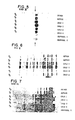
- Fig 1 is a copy of the resulting autoradiograph.
- the autoradiograph shows that BglII produced three different restriction fragments in the tests: 3.8, 4.2, and 4.5 kb in length. This clearly evidences that the HLA-Dp34 locus is polymorphic and that there are at least three alleles of this gene.
- Lane 1 of the autoradiograph is a blot of the cell line CA.
- Lanes 3 and 2 of the autoradiograph are blots of the cell line 6.3.6 and its parent T5-1, respectively. These are the blots discussed in Example 1 that map the HLA-Dp34 gene to chromosome 6 at the site defined by the 6.3.6 deletion.
- Lanes 4 and 5 are blots of the mother and father of a family and lanes 6-9 are blots of the children of those parents.
- Lane 4 is the father's blot and his haplotype is designated A/B. Both chromosome A and chromosome B have the same restriction fragment (4.2 kb).
- Lane 5 is the mother's blot and her haplotype is designated C/D. Each chromosome C and D has a different restriction fragment (4.2 kb and 4.5 kb, respectively).
- the maternal 4:2 kb genomic fragment segregates with the serologically defined D haplotype.
- a sample of peripheral blood is obtained from an individual and the HLA DNA is extracted therefrom using the methods described in Example 4.
- the DNA is digested using BglII and a genomic blot of the digest is made using the HLA-Dp34 as described in Example 4.
- the restriction fragment pattern of the resulting autoradiograph is compared to the restriction fragment patterns described in Example 4 (Fig. 1) for HLA-Dp34 to determine the individual's HLA-Dp34 type.
- Fig 3 is a map diagram- ming the location of the polymorphic restriction sites for BglII (Example 4) and EcoRV detected with the HLA-Dp34 probe.
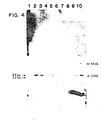
- Fig 4 is an autoradiograph of the resulting genomic blotting patterns. Lanes 1-5 are the patterns for the five individuals of the first family and Lanes 6-10 are the patterns of the five individuals of the second family. As seen in Fig 4 three types ("alleles") were observed in the samples characterized by 2.2 kb, 2.4 kb, and 4.4 kb fragments. In the HLA typed families of this example the polymorphic BglII fragments segregate with serologically defined parental haplotypes.
- HLA-B7 cDNA clone was obtained from Sherman M. Weissman, Dept of Human Genetics, Yale University School of Medicine. This clone is described in Sood, et al, supra.
- DNA samples from the father, mother, and four children of an HLA typed family and in two instances DNA from one or two individuals (designated X and Y) unrelated to that family were digested according to Example 4 with either HindIII, PvuII, or BamHl.
- Genomic blots of the digests were made as in Example 4 using the 32 P nick translated HLA-B7 clone as a hybridization probe.
- Figs 5, 6 and 7 are copies of the resulting autoradiographs.
- the father's haplotype is designated A/D and the mother's haplotype is designated E/F.
- These autoradiographs indicate that the probe is a multilocus probe that hybridizes to more than one HLA locus. Nonetheless, several polymorphic bands, segregating in the pedigree, are present for each enzyme used. Moreover, the bands segregate with the serologically defined HLA loci so that given fragments may be assigned to an individual chromosome.
- Exclusionary paternity determinations may be made using autoradiographs such as Figs 5, 6 and - 7.
- An exclusionary pattern would involve a restriction fragment pattern which could not be inherited from the mother and the alleged father. Such a pattern would be one in which the child has a fragment that neither the mother nor the alleged father has.
- Positive paternity determinations using RFLPs will depend upon the frequency of the RFLPs in the general population. In such determinations one calculates the probability that the putative father contributed the RFLP that is observed and compares it with the probability that any random male would contribute the RFLP to the child.
- Example 9 Use of BglII and HLA-Dp34 (DR a ) Probe to Evaluate Linkage and Association Between HLA-DR A and Insulin Dependent Diabetes Mellitus (IDDM) in Six Families
- Fig 8 is an autoradiograph of eight individuals of one of the families.
- the father's pattern appears in Lane 1, the mother's in Lane 2 and six children in Lanes 3-8.
- the father has the 4.2 kb fragment (derived from chromosome 6 haplotype A) and the 3.8 kb fragment from haplotype B.
- the mother has the 4.2 kb fragment (haplotype C) and the 4.5 kb fragment (haplotype D).
- the three affected'(IDDM) children have either two copies of the 4.2 kb fragment (haplotype A/C, Lanes 3 and 5) or one copy of the 4.2 kb fragments (haplotype A) and one copy of the 4.5 kb fragment (haplotype D) in Lane 4.
- One unaffected child has two copies of the 4.2 kb fragment (haplotype A/C).
- the two unaffected children both have the 3.8 kb fragment (haplotype B) and the 4.5 kb fragment (haplotype D).
- the 4.2 kb fragment is linked in this family to a disease susceptibility gene for IDDM.
- Three of the four children with the 4.2 kb fragment exhibit IDDM, indicating an incomplete penetrance (genetic predisposition) of the disease allele.
- Fig 9 is an autoradiograph of five individuals of the sixth family.
- the father's pattern appears in Lane 5, the mother's in Lane 4 and the three children in Lanes 1-3.
- disease susceptibility appeared to be linked to the 4.5 kb BglII fragment.
- the affected father has a 4.5 kb fragment (haplotype A) and 4.2 kb fragment (haplotype B) and the mother has a 4.5 kb fragment (haplotype D) and a 3.8 kb fragment (Haplotype C).
- IDDM Leane 3
- he ingerited the 4.5 kb fragment from the father and the 3.8 kb fragment from the mother Therefore, in this family the 4.5 kb BglII fragment is linked to the disease susceptibility allele on the paternal haplotype A.
Landscapes
- Chemical & Material Sciences (AREA)
- Life Sciences & Earth Sciences (AREA)
- Health & Medical Sciences (AREA)
- Organic Chemistry (AREA)
- Proteomics, Peptides & Aminoacids (AREA)
- Immunology (AREA)
- Zoology (AREA)
- Engineering & Computer Science (AREA)
- Wood Science & Technology (AREA)
- Biophysics (AREA)
- Genetics & Genomics (AREA)
- Biochemistry (AREA)
- General Health & Medical Sciences (AREA)
- Molecular Biology (AREA)
- Analytical Chemistry (AREA)
- Bioinformatics & Cheminformatics (AREA)
- Physics & Mathematics (AREA)
- General Engineering & Computer Science (AREA)
- Microbiology (AREA)
- Biotechnology (AREA)
- Cell Biology (AREA)
- Toxicology (AREA)
- Gastroenterology & Hepatology (AREA)
- Medicinal Chemistry (AREA)
- Measuring Or Testing Involving Enzymes Or Micro-Organisms (AREA)
- Investigating Or Analysing Biological Materials (AREA)
- Magnetic Resonance Imaging Apparatus (AREA)
- Vending Machines For Individual Products (AREA)
- Saccharide Compounds (AREA)
- Analysing Materials By The Use Of Radiation (AREA)
- Other Investigation Or Analysis Of Materials By Electrical Means (AREA)
- Preparation Of Compounds By Using Micro-Organisms (AREA)
- Nitrogen And Oxygen Or Sulfur-Condensed Heterocyclic Ring Systems (AREA)
- Photoreceptors In Electrophotography (AREA)
- Eye Examination Apparatus (AREA)
Priority Applications (1)
| Application Number | Priority Date | Filing Date | Title |
|---|---|---|---|
| AT83100175T ATE53862T1 (de) | 1982-01-22 | 1983-01-11 | Verfahren zur charakterisierung von hla und die darin benutzten cdns-testmittel. |
Applications Claiming Priority (2)
| Application Number | Priority Date | Filing Date | Title |
|---|---|---|---|
| US34190282A | 1982-01-22 | 1982-01-22 | |
| US341902 | 1982-01-22 |
Publications (3)
| Publication Number | Publication Date |
|---|---|
| EP0084796A2 true EP0084796A2 (fr) | 1983-08-03 |
| EP0084796A3 EP0084796A3 (en) | 1983-08-10 |
| EP0084796B1 EP0084796B1 (fr) | 1990-05-02 |
Family
ID=23339484
Family Applications (1)
| Application Number | Title | Priority Date | Filing Date |
|---|---|---|---|
| EP83100175A Expired - Lifetime EP0084796B1 (fr) | 1982-01-22 | 1983-01-11 | Procédé pour la caractérisation de HLA et sondes de cADN pour sa mise en oeuvre |
Country Status (10)
| Country | Link |
|---|---|
| EP (1) | EP0084796B1 (fr) |
| JP (1) | JP2859874B2 (fr) |
| AT (1) | ATE53862T1 (fr) |
| AU (1) | AU553235B2 (fr) |
| CA (1) | CA1205400A (fr) |
| DE (1) | DE3381518D1 (fr) |
| DK (1) | DK24583A (fr) |
| ES (1) | ES8407208A1 (fr) |
| IL (1) | IL67716A (fr) |
| ZA (1) | ZA83232B (fr) |
Cited By (107)
| Publication number | Priority date | Publication date | Assignee | Title |
|---|---|---|---|---|
| DE3407196A1 (de) * | 1983-02-28 | 1984-08-30 | Actagen, Inc., Elmsford, N.Y. | Verfahren zur identifizierung einzelner mitglieder einer spezies von organismen |
| EP0103960A3 (en) * | 1982-07-30 | 1985-05-29 | Biogen N.V. | Dna sequences coding for the dr beta-chain locus of the human lymphocyte antigen complex and polypeptides, diagnostic typing processes and products related thereto |
| WO1986007464A1 (fr) * | 1985-06-14 | 1986-12-18 | Genetic Systems Corporation | Procedes d'identification d'alleles associes a un risque accru de diabete |
| EP0221633A1 (fr) * | 1985-08-05 | 1987-05-13 | Collaborative Research Inc. | Caractérisation génétique utilisant les polymorphismes de restriction-longueur de fragment |
| EP0204522A3 (fr) * | 1985-05-30 | 1987-09-16 | Genetic Systems Corporation | Série d'anticorps monoclonaux pour la caractérisation de la compatibilité histologique |
| GB2188323A (en) * | 1986-03-19 | 1987-09-30 | Ici Plc | Improvements in genetic probes |
| EP0103000B1 (fr) * | 1982-03-11 | 1988-01-07 | PETERSON, Per Arthur | Procede de determination du type de tissus codes par des genes mhc |
| WO1988002783A1 (fr) * | 1986-10-16 | 1988-04-21 | Nordisk Insulinlaboratorium | Procede et agent de detection des structures genetiques de patients ayant une grande tendance a developper un iddm |
| EP0234095A3 (fr) * | 1985-10-24 | 1988-06-15 | Biotechnology Research Partners, Ltd. | Essais sanguins diagnostiques pour l'hypertension |
| WO1989004875A3 (fr) * | 1987-11-17 | 1989-06-15 | Cetus Corp | Caracterisation et detection de sequences associees a des maladies autoimmunes |
| EP0226288A3 (fr) * | 1985-10-09 | 1989-06-28 | Collaborative Research Inc. | Moyens et procédé de dosage de fibrose cystique à base d'une liaison génétique |
| EP0342717A3 (fr) * | 1984-11-12 | 1990-04-25 | THE LISTER INSTITUTE OF PREVENTIVE MEDICINE Royal National Orthopaedic Hospital | Sondes polynucléotides |
| EP0383129A3 (fr) * | 1989-02-17 | 1991-07-31 | Bayer Corporation | Antigènes de cellules islet pancréatiques obtenus par clonage moléculaire |
| US5110920A (en) * | 1982-01-22 | 1992-05-05 | Cetus Corporation | HLA typing method and DNA probes used therein |
| EP0459532A3 (en) * | 1986-03-13 | 1992-08-12 | Cetus Corporation | Primers and probes for nucleic acid detection |
| US5413908A (en) * | 1984-11-12 | 1995-05-09 | Lister Institute Of Preventive Medicine | Method of characterizing genomic DNA by reference to a genetic variable |
| US5593832A (en) * | 1983-02-28 | 1997-01-14 | Lifecodes Corporation | Method for forensic analysis |
| US6103468A (en) * | 1997-10-07 | 2000-08-15 | Labatt Brewing Company Limited | Rapid two-stage polymerase chain reaction method for detection of lactic acid bacteria in beer |
| US6171788B1 (en) | 1997-01-28 | 2001-01-09 | The Regents Of The University Of California | Methods for the diagnosis, prognosis and treatment of glaucoma and related disorders |
| US6251639B1 (en) | 1999-09-13 | 2001-06-26 | Nugen Technologies, Inc. | Methods and compositions for linear isothermal amplification of polynucleotide sequences, using a RNA-DNA composite primer |
| US6277592B1 (en) | 1996-07-31 | 2001-08-21 | Purina Mills, Inc. | Porcine leptin protein, nucleic acid sequences coding therefor and uses thereof |
| US6297027B1 (en) | 1996-07-31 | 2001-10-02 | Purina Mills, Inc. | Bovine leptin protein, nucleic acid sequences coding therefor and uses thereof |
| US6475724B1 (en) | 1997-01-28 | 2002-11-05 | The Regents Of The University Of California | Nucleic acids, kits, and methods for the diagnosis, prognosis and treatment of glaucoma and related disorders |
| WO2002090506A2 (fr) | 2001-05-09 | 2002-11-14 | Monsanto Technology Llc | Transporteurs de metabolites |
| WO2003096797A2 (fr) | 2002-05-15 | 2003-11-27 | Monsanto Technology Llc | Methode pour augmenter le calibre des organes ou des graines d'une plante |
| US6686156B2 (en) | 2000-06-26 | 2004-02-03 | Nugen Technologies, Inc. | Methods and compositions for transcription-based nucleic acid amplification |
| US6692918B2 (en) | 1999-09-13 | 2004-02-17 | Nugen Technologies, Inc. | Methods and compositions for linear isothermal amplification of polynucleotide sequences |
| US6794141B2 (en) | 2000-12-22 | 2004-09-21 | Arcturus Bioscience, Inc. | Nucleic acid amplification |
| US6818393B1 (en) | 1982-07-30 | 2004-11-16 | Biomirieux Sa | DNA sequences coding for the DR beta-chain locus of the human lymphocyte antigen complex and polypeptides, diagnostic typing processes and products related thereto |
| US6830902B1 (en) | 1999-07-02 | 2004-12-14 | Invitrogen Corporation | Compositions and methods for enhanced sensitivity and specificity of nucleic acid synthesis |
| WO2005060664A2 (fr) | 2003-12-10 | 2005-07-07 | Monsanto Technology Llc | Plantes tolerantes de stress et leurs procedes |
| US6919189B2 (en) | 2000-12-11 | 2005-07-19 | Alexion Pharmaceuticals, Inc. | Nested oligonucleotides containing a hairpin for nucleic acid amplification |
| US7067285B2 (en) | 2001-01-25 | 2006-06-27 | Abbott Laboratories | Desaturase genes and uses thereof |
| US7138511B1 (en) | 1997-01-28 | 2006-11-21 | The Regents Of The University Of California | Nucleic acids, kits and methods for the diagnosis, prognosis and treatment of glaucoma and related disorders |
| US7273730B2 (en) | 2002-05-24 | 2007-09-25 | Invitrogen Corporation | Nested PCR employing degradable primers |
| US7285388B1 (en) | 2006-04-07 | 2007-10-23 | Merlogen, Llc | Methods for identification of alport syndrome |
| US7306906B2 (en) | 2001-09-19 | 2007-12-11 | Alexion Pharmaceuticals, Inc. | Engineered templates and their use in single primer amplification |
| US7351557B2 (en) | 2001-03-09 | 2008-04-01 | Nugen Technologies, Inc. | Amplification of RNA sequences using composite RNA-DNA primers and strand displacement |
| US7354717B2 (en) | 2001-03-09 | 2008-04-08 | Nugen Technologies, Inc. | Methods and kits for amplification of RNA sequences using composite primers |
| EP1950305A1 (fr) | 2001-05-09 | 2008-07-30 | Monsanto Technology, LLC | Gènes tyr et utilisations associées |
| US7414111B2 (en) | 2001-09-19 | 2008-08-19 | Alexion Pharmaceuticals, Inc. | Engineered templates and their use in single primer amplification |
| US7456270B2 (en) | 2004-09-01 | 2008-11-25 | Abbott Laboratories | Δ6-desaturase genes and uses thereof |
| US7537886B1 (en) | 1999-06-22 | 2009-05-26 | Life Technologies Corporation | Primers and methods for the detection and discrimination of nucleic acids |
| EP2063272A1 (fr) | 2005-02-07 | 2009-05-27 | Abbott Laboratories | Facteur porcin intrinsèque |
| EP2067783A1 (fr) | 2002-10-02 | 2009-06-10 | Abbott Laboratories | Antigène P30 génétiquement créé, cocktail d'antigènes amélioré et leurs utilisations |
| WO2009111599A2 (fr) | 2008-03-06 | 2009-09-11 | Abbott Laboratories | Gènes de plasmodium malariae et de plasmodium ovale, et utilisations associées |
| WO2009132089A2 (fr) | 2008-04-24 | 2009-10-29 | Monsanto Technology Llc | Procédé pour identifier des locus de caractères quantitatifs résistant à la rouille asiatique du soja et compositions associées |
| US7723503B2 (en) | 2002-01-30 | 2010-05-25 | Abbott Laboratories | Desaturase genes, enzymes encoded thereby, and uses thereof |
| US7736884B2 (en) | 2004-06-04 | 2010-06-15 | Fluxome Sciences A/S | Metabolically engineered Saccharomyces cells for the production of polyunsaturated fatty acids |
| WO2010068738A1 (fr) | 2008-12-10 | 2010-06-17 | Dana-Farber Cancer Institute, Inc. | Mutations de mek conférant une résistance aux inhibiteurs de mek |
| WO2010093742A1 (fr) | 2009-02-11 | 2010-08-19 | Abbott Laboratories | Procédés et compositions pour identifier, classer et surveiller un sujet atteint de tumeurs et de cancers résistants aux inhibiteurs de la famille bcl-2 |
| WO2010111220A1 (fr) | 2009-03-27 | 2010-09-30 | Abbott Laboratories | Séquences d'acides aminés et séquences nucléotidiques codant une protéine 1 exportée issue de plasmodium vivax et leurs utilisations |
| US7807370B2 (en) | 2005-08-16 | 2010-10-05 | Merlogen, Llc | Methods for identification of merle gene |
| EP2246444A1 (fr) | 2004-09-14 | 2010-11-03 | The Regents of the University of Colorado, A Body Corporate | Procédé de traitement faisant intervenir du bucindolol fondé sur le ciblage génétique |
| WO2010132817A1 (fr) | 2009-05-14 | 2010-11-18 | Cancer Prevention Pharmaceuticals, Llc | Diagnostic et traitements du carcinome sur la base du génotype odc1 |
| WO2011002936A2 (fr) | 2009-06-30 | 2011-01-06 | Abbott Laboratories | Marqueurs d'infection par le virus xmrv et utilisations afférentes |
| WO2011008803A2 (fr) | 2009-07-17 | 2011-01-20 | Abbott Laboratories | Nouvelle δ9-élongase pour produire des huiles enrichies en acides gras polyinsaturés |
| WO2011068863A1 (fr) | 2009-12-04 | 2011-06-09 | Abbott Laboratories | Polythérapie pour le traitement du cancer et dosages diagnostiques destinés à être utilisés dans celle-ci |
| EP2339006A2 (fr) | 1999-12-16 | 2011-06-29 | Monsanto Technology LLC | Nouvelles constructions d'expression de plantes |
| WO2011079273A2 (fr) | 2009-12-23 | 2011-06-30 | Arca Biopharma, Inc. | Procédés et compositions pour maladies et affections cardiovasculaires |
| EP2345738A1 (fr) | 2002-08-05 | 2011-07-20 | Quanta Biosciences, Inc. | Compositions améliorées pour l'amplification in vitro d'acides nucléiques |
| WO2011106298A1 (fr) | 2010-02-25 | 2011-09-01 | Dana-Farber Cancer Institute, Inc. | Mutations de braf conférant une résistance aux inhibiteurs de braf |
| US8030471B2 (en) | 2008-03-06 | 2011-10-04 | Abbott Laboratories | Plasmodium malariae and Plasmodium ovale genes and uses thereof |
| EP2380900A1 (fr) | 2002-09-23 | 2011-10-26 | E. I. du Pont de Nemours and Company | Isolement et utilisation de récepteurs de la ryanodine |
| WO2011143579A2 (fr) | 2010-05-14 | 2011-11-17 | Arizona Board Of Regents On Behalf Of University Of Arizona | Méthodes de prévention et de traitement du cancer fondées sur la teneur en polyamines provenant de l'alimentation |
| WO2011156588A1 (fr) | 2010-06-09 | 2011-12-15 | Dana-Farber Cancer Institute, Inc. | Mutation de mek 1 conférant une résistance aux inhibiteurs de raf et de mek |
| WO2012024518A1 (fr) | 2010-08-18 | 2012-02-23 | Abbott Laboratories | Détection moléculaire d'une infection par le xmrv |
| WO2012024513A2 (fr) | 2010-08-18 | 2012-02-23 | Abbott Laboratories | Détection moléculaire d'une infection par le xmrv |
| EP2455491A2 (fr) | 2006-05-25 | 2012-05-23 | Monsanto Technology LLC | Procédé pour identifier des locus de traits quantitatifs résistants aux maladies dans le soja et compositions correspondantes |
| EP2476763A2 (fr) | 2007-08-29 | 2012-07-18 | Monsanto Technology LLC | Procédés et compositions pour la reproduction de traits préférés |
| EP2479288A1 (fr) | 2009-01-31 | 2012-07-25 | Abbott Laboratories | Marqueurs pour prédire et surveiller la réponse à une thérapie par inhibiteur de la kinase B d'Aurora |
| US8288124B2 (en) | 2008-11-20 | 2012-10-16 | Abbott Laboratories | Cloning, expression and purification of recombinant porcine intrinsic factor for use in diagnostic assay |
| WO2012149193A2 (fr) | 2011-04-29 | 2012-11-01 | Monsanto Technology Llc | Marqueurs moléculaires de diagnostic pour des caractères de pureté de lot de graines chez le soja |
| WO2013033611A1 (fr) | 2011-08-31 | 2013-03-07 | Monsanto Technology Llc | Procédés et compositions assurant la fermeté des pastèques |
| US8394609B2 (en) | 2001-10-23 | 2013-03-12 | Life Technologies Corporation | Primers and methods for the detection and discrimination of nucleic acids |
| EP2586787A1 (fr) | 2006-04-26 | 2013-05-01 | Abbott Laboratories | DEP2 et ses utilisations dans le trouble dépressif majeur et autres troubles associés |
| EP2740350A2 (fr) | 2012-12-04 | 2014-06-11 | Seminis Vegetable Seeds, Inc. | Procédés et compositions pour l'expression de sexe de pastèque |
| EP2878192A2 (fr) | 2013-11-27 | 2015-06-03 | Seminis Vegetable Seeds, Inc. | Locus de résistance aux maladies dans les oignons |
| EP2912940A1 (fr) | 2014-02-27 | 2015-09-02 | Seminis Vegetable Seeds, Inc. | Compositions et procédés permettant la résistance des épinards aux peronospora |
| EP2959771A1 (fr) | 2014-06-27 | 2015-12-30 | Seminis Vegetable Seeds, Inc. | Procédés et dosages pour pastèque stérile mâle |
| EP3005862A1 (fr) | 2014-10-10 | 2016-04-13 | Seminis Vegetable Seeds, Inc. | Plants de melon présentant une meilleure tolérance aux maladies |
| EP3138392A1 (fr) | 2015-09-03 | 2017-03-08 | Seminis Vegetable Seeds, Inc. | Plants de laitue résistants au mildiou |
| EP3199642A1 (fr) | 2016-02-01 | 2017-08-02 | Fraunhofer-Gesellschaft zur Förderung der angewandten Forschung e.V. | Sélection de plantes à l'aide de séquençage haut débit |
| WO2017165732A1 (fr) | 2016-03-24 | 2017-09-28 | Tragara Pharmaceuticals, Inc. | Traitement du cancer avec tg02 |
| WO2017180417A1 (fr) | 2016-04-12 | 2017-10-19 | The Regents Of The University Of Michigan | Agents de dégradation de protéine bet |
| US9822171B2 (en) | 2010-04-15 | 2017-11-21 | AbbVie Deutschland GmbH & Co. KG | Amyloid-beta binding proteins |
| WO2018052945A1 (fr) | 2016-09-13 | 2018-03-22 | The Regents Of The University Of Michigan | 1,4-oxazépines fusionnées utilisées comme agents de dégradation de protéines bet |
| WO2018052949A1 (fr) | 2016-09-13 | 2018-03-22 | The Regents Of The University Of Michigan | 1,4-diazépines fusionnées en tant qu'agents de dégradation de protéines bet |
| EP3300591A1 (fr) | 2016-09-30 | 2018-04-04 | Seminis Vegetable Seeds, Inc. | Brassica oleracea résistante à l'infection par xanthomonas |
| US10059999B2 (en) | 2013-06-10 | 2018-08-28 | Monsanto Technology Llc | Molecular markers associated with soybean tolerance to low iron growth conditions |
| WO2019035985A1 (fr) | 2017-08-18 | 2019-02-21 | Tragara Pharmaceuticals, Inc. | Forme polymorphe de tg02 |
| WO2019055444A1 (fr) | 2017-09-13 | 2019-03-21 | The Regents Of The University Of Michigan | Agents de dégradation de protéine de bromodomaine bet avec des lieurs clivables |
| US10294489B2 (en) | 2013-03-15 | 2019-05-21 | Board Of Trustees Of Southern Illinois University | Soybean resistant to cyst nematodes |
| US10464976B2 (en) | 2003-01-31 | 2019-11-05 | AbbVie Deutschland GmbH & Co. KG | Amyloid β(1-42) oligomers, derivatives thereof and antibodies thereto, methods of preparation thereof and use thereof |
| EP3632202A1 (fr) | 2014-02-21 | 2020-04-08 | Syngenta Participations Ag | Loci génétiques associés à la fertilité accrue dans le maïs |
| WO2020076660A1 (fr) | 2018-10-08 | 2020-04-16 | The Regents Of The University Of Michigan | Agents de dégradation de protéine mdm2 à petites molécules |
| EP3682733A1 (fr) | 2019-01-15 | 2020-07-22 | Seminis Vegetable Seeds, Inc. | Plants de haricots verts présentant une meilleure résistance aux maladies |
| WO2020252336A1 (fr) | 2019-06-12 | 2020-12-17 | Vanderbilt University | Dibenzylamines utilisables comme inhibiteurs du transport des acides aminés |
| WO2020252353A1 (fr) | 2019-06-12 | 2020-12-17 | Vanderbilt University | Inhibiteurs de transport d'acides aminés et utilisations associées |
| EP3797582A1 (fr) | 2019-09-26 | 2021-03-31 | Seminis Vegetable Seeds, Inc. | Plantes de laitue ayant une résistance à ribisnigri nasonovia biotype 1 |
| EP3939416A1 (fr) | 2020-07-15 | 2022-01-19 | Seminis Vegetable Seeds, Inc. | Plants de haricots verts présentant une meilleure résistance aux maladies |
| EP4193830A2 (fr) | 2021-12-10 | 2023-06-14 | Seminis Vegetable Seeds, Inc. | Plantes de laitue résistantes au mildiou |
| EP4298896A1 (fr) | 2022-06-21 | 2024-01-03 | Seminis Vegetable Seeds, Inc. | Nouveaux qtl conférant une résistance au virus de la mosaïque du concombre |
| US11952572B2 (en) | 2017-08-14 | 2024-04-09 | Epizyme, Inc. | Methods of treating cancer by inhibiting SETD2 |
| US12116358B2 (en) | 2018-08-14 | 2024-10-15 | Epizyme, Inc. | Substituted indoles and methods of use thereof |
| EP4445723A1 (fr) | 2023-04-14 | 2024-10-16 | Seminis Vegetable Seeds, Inc. | Procédés et compositions pour la résistance au peronospora dans l'épinard |
| WO2026059956A1 (fr) | 2024-09-11 | 2026-03-19 | Seminis Vegetable Seeds, Inc. | Qtls conférant une résistance au virus de la jaunisse des cucurbitacées transmis par les pucerons |
Families Citing this family (18)
| Publication number | Priority date | Publication date | Assignee | Title |
|---|---|---|---|---|
| CA1223831A (fr) * | 1982-06-23 | 1987-07-07 | Dean Engelhardt | Nucleotides modifies, methodes de preparation et d'utilisation et composes les contenant |
| US4492760A (en) * | 1983-04-19 | 1985-01-08 | The Wistar Institute Of Anatomy And Biology | HLA D Typing assay |
| JPH02174699A (ja) * | 1988-09-27 | 1990-07-06 | Nichirei Corp | Hla型判別法及び試薬 |
| US5702885A (en) * | 1990-06-27 | 1997-12-30 | The Blood Center Research Foundation, Inc. | Method for HLA typing |
| US7846733B2 (en) | 2000-06-26 | 2010-12-07 | Nugen Technologies, Inc. | Methods and compositions for transcription-based nucleic acid amplification |
| CA2430329A1 (fr) | 2000-12-13 | 2002-06-20 | Nugen Technologies, Inc. | Methodes et compositions de generation de copies multiples de sequences d'acides nucleiques et methodes de detection correspondantes |
| US7402386B2 (en) | 2003-04-14 | 2008-07-22 | Nugen Technologies, Inc. | Global amplification using random priming by a composite primer |
| CA2621267A1 (fr) | 2005-09-07 | 2007-03-15 | Nugen Technologies, Inc. | Procedure d'amplication d'acide nucleique amelioree |
| HRP20140240T4 (hr) | 2005-11-30 | 2017-02-24 | Abbvie Inc. | Monoklonalna antitijela protiv amiloidnih beta proteina i njihova upotreba |
| US8691224B2 (en) | 2005-11-30 | 2014-04-08 | Abbvie Inc. | Anti-Aβ globulomer 5F7 antibodies |
| US8455626B2 (en) | 2006-11-30 | 2013-06-04 | Abbott Laboratories | Aβ conformer selective anti-aβ globulomer monoclonal antibodies |
| US8895004B2 (en) | 2007-02-27 | 2014-11-25 | AbbVie Deutschland GmbH & Co. KG | Method for the treatment of amyloidoses |
| US8034568B2 (en) | 2008-02-12 | 2011-10-11 | Nugen Technologies, Inc. | Isothermal nucleic acid amplification methods and compositions |
| WO2009117698A2 (fr) | 2008-03-21 | 2009-09-24 | Nugen Technologies, Inc. | Procédés d'amplification d'arn en présence d'adn |
| CA2739836A1 (fr) | 2008-10-06 | 2010-04-15 | Tapas Das | Genes de delta-8 desaturase, enzymes codees par ceux-ci et utilisations de ceux-ci |
| US9512481B2 (en) | 2009-09-11 | 2016-12-06 | The Regents Of The University Of Colorado, A Body Corporate | Polymorphisms in the PDE3A gene |
| BR112012022801B8 (pt) | 2010-03-09 | 2019-10-29 | Dana Farber Cancer Inst Inc | método de identificar um indivíduo que tem câncer que é provável beneficiar-se do tratamento com uma terapia de combinação com um inibidor de raf e um segundo inibidor e uso de um inibidor de raf e um segundo inibidor para a fabricação de um medicamento para tratar câncer |
| EP3533803B1 (fr) | 2010-08-14 | 2021-10-27 | AbbVie Inc. | Anticorps anti-bêta-amyloïde |
Family Cites Families (1)
| Publication number | Priority date | Publication date | Assignee | Title |
|---|---|---|---|---|
| US4394443A (en) * | 1980-12-18 | 1983-07-19 | Yale University | Method for cloning genes |
-
1983
- 1983-01-11 AT AT83100175T patent/ATE53862T1/de not_active IP Right Cessation
- 1983-01-11 DE DE8383100175T patent/DE3381518D1/de not_active Expired - Lifetime
- 1983-01-11 EP EP83100175A patent/EP0084796B1/fr not_active Expired - Lifetime
- 1983-01-12 AU AU10309/83A patent/AU553235B2/en not_active Expired
- 1983-01-13 ZA ZA83232A patent/ZA83232B/xx unknown
- 1983-01-14 CA CA000419467A patent/CA1205400A/fr not_active Expired
- 1983-01-19 IL IL67716A patent/IL67716A/xx not_active IP Right Cessation
- 1983-01-21 DK DK24583A patent/DK24583A/da not_active Application Discontinuation
- 1983-01-21 ES ES519170A patent/ES8407208A1/es not_active Expired
- 1983-01-22 JP JP58009254A patent/JP2859874B2/ja not_active Expired - Lifetime
Cited By (150)
| Publication number | Priority date | Publication date | Assignee | Title |
|---|---|---|---|---|
| US5110920A (en) * | 1982-01-22 | 1992-05-05 | Cetus Corporation | HLA typing method and DNA probes used therein |
| EP0103000B1 (fr) * | 1982-03-11 | 1988-01-07 | PETERSON, Per Arthur | Procede de determination du type de tissus codes par des genes mhc |
| US5169941A (en) * | 1982-07-30 | 1992-12-08 | Mach Bernard F | DNA sequences coding for the DR β-chain locus of the human lymphocyte antigen complex and polypeptides, diagnostic typing processes and products related thereto |
| EP0103960A3 (en) * | 1982-07-30 | 1985-05-29 | Biogen N.V. | Dna sequences coding for the dr beta-chain locus of the human lymphocyte antigen complex and polypeptides, diagnostic typing processes and products related thereto |
| US5503976A (en) * | 1982-07-30 | 1996-04-02 | Biomerieux Sa | DNA sequences coding for the DR β-chain locus of the human lymphocyte antigen complex and diagnostic typing processes and products related thereto |
| US6818393B1 (en) | 1982-07-30 | 2004-11-16 | Biomirieux Sa | DNA sequences coding for the DR beta-chain locus of the human lymphocyte antigen complex and polypeptides, diagnostic typing processes and products related thereto |
| DE3407196A1 (de) * | 1983-02-28 | 1984-08-30 | Actagen, Inc., Elmsford, N.Y. | Verfahren zur identifizierung einzelner mitglieder einer spezies von organismen |
| GB2135774A (en) * | 1983-02-28 | 1984-09-05 | Actagen Inc | Identification of individual members of a species |
| US5593832A (en) * | 1983-02-28 | 1997-01-14 | Lifecodes Corporation | Method for forensic analysis |
| FR2541774A1 (fr) * | 1983-02-28 | 1984-08-31 | Actagen Inc | Essai pour la determination de la paternite et pour l'etablissement de l'identite genetique individuelle |
| US5413908A (en) * | 1984-11-12 | 1995-05-09 | Lister Institute Of Preventive Medicine | Method of characterizing genomic DNA by reference to a genetic variable |
| EP0342717A3 (fr) * | 1984-11-12 | 1990-04-25 | THE LISTER INSTITUTE OF PREVENTIVE MEDICINE Royal National Orthopaedic Hospital | Sondes polynucléotides |
| EP0204522A3 (fr) * | 1985-05-30 | 1987-09-16 | Genetic Systems Corporation | Série d'anticorps monoclonaux pour la caractérisation de la compatibilité histologique |
| WO1986007464A1 (fr) * | 1985-06-14 | 1986-12-18 | Genetic Systems Corporation | Procedes d'identification d'alleles associes a un risque accru de diabete |
| EP0221633A1 (fr) * | 1985-08-05 | 1987-05-13 | Collaborative Research Inc. | Caractérisation génétique utilisant les polymorphismes de restriction-longueur de fragment |
| EP0226288A3 (fr) * | 1985-10-09 | 1989-06-28 | Collaborative Research Inc. | Moyens et procédé de dosage de fibrose cystique à base d'une liaison génétique |
| EP0234095A3 (fr) * | 1985-10-24 | 1988-06-15 | Biotechnology Research Partners, Ltd. | Essais sanguins diagnostiques pour l'hypertension |
| EP0459532A3 (en) * | 1986-03-13 | 1992-08-12 | Cetus Corporation | Primers and probes for nucleic acid detection |
| EP0459533A3 (en) * | 1986-03-13 | 1992-09-02 | Cetus Corporation | Probe groups for the detection of nucleotide variations and genetic polymorphisms |
| GB2188323B (en) * | 1986-03-19 | 1990-06-06 | Ici Plc | Improvements in genetic probes |
| EP0238329A3 (en) * | 1986-03-19 | 1988-11-30 | Imperial Chemical Industries Plc | Improvements in genetic probes |
| US5175082A (en) * | 1986-03-19 | 1992-12-29 | Imperial Chemical Industries Plc | Method of characterizing genomic dna |
| GB2188323A (en) * | 1986-03-19 | 1987-09-30 | Ici Plc | Improvements in genetic probes |
| WO1988002783A1 (fr) * | 1986-10-16 | 1988-04-21 | Nordisk Insulinlaboratorium | Procede et agent de detection des structures genetiques de patients ayant une grande tendance a developper un iddm |
| WO1989004875A3 (fr) * | 1987-11-17 | 1989-06-15 | Cetus Corp | Caracterisation et detection de sequences associees a des maladies autoimmunes |
| EP0383129A3 (fr) * | 1989-02-17 | 1991-07-31 | Bayer Corporation | Antigènes de cellules islet pancréatiques obtenus par clonage moléculaire |
| US6277592B1 (en) | 1996-07-31 | 2001-08-21 | Purina Mills, Inc. | Porcine leptin protein, nucleic acid sequences coding therefor and uses thereof |
| US6297027B1 (en) | 1996-07-31 | 2001-10-02 | Purina Mills, Inc. | Bovine leptin protein, nucleic acid sequences coding therefor and uses thereof |
| US6171788B1 (en) | 1997-01-28 | 2001-01-09 | The Regents Of The University Of California | Methods for the diagnosis, prognosis and treatment of glaucoma and related disorders |
| US7138511B1 (en) | 1997-01-28 | 2006-11-21 | The Regents Of The University Of California | Nucleic acids, kits and methods for the diagnosis, prognosis and treatment of glaucoma and related disorders |
| US6475724B1 (en) | 1997-01-28 | 2002-11-05 | The Regents Of The University Of California | Nucleic acids, kits, and methods for the diagnosis, prognosis and treatment of glaucoma and related disorders |
| US6103468A (en) * | 1997-10-07 | 2000-08-15 | Labatt Brewing Company Limited | Rapid two-stage polymerase chain reaction method for detection of lactic acid bacteria in beer |
| US7537886B1 (en) | 1999-06-22 | 2009-05-26 | Life Technologies Corporation | Primers and methods for the detection and discrimination of nucleic acids |
| US8043816B2 (en) | 1999-07-02 | 2011-10-25 | Life Technologies Corporation | Compositions and methods for temperature-dependent nucleic acid synthesis |
| US6830902B1 (en) | 1999-07-02 | 2004-12-14 | Invitrogen Corporation | Compositions and methods for enhanced sensitivity and specificity of nucleic acid synthesis |
| US6692918B2 (en) | 1999-09-13 | 2004-02-17 | Nugen Technologies, Inc. | Methods and compositions for linear isothermal amplification of polynucleotide sequences |
| US6251639B1 (en) | 1999-09-13 | 2001-06-26 | Nugen Technologies, Inc. | Methods and compositions for linear isothermal amplification of polynucleotide sequences, using a RNA-DNA composite primer |
| EP2339005A2 (fr) | 1999-12-16 | 2011-06-29 | Monsanto Technology LLC | Nouvelles constructions d'expression de plantes |
| EP2944695A1 (fr) | 1999-12-16 | 2015-11-18 | Monsanto Technology LLC | Nouvelles constructions d'expréssion végétales |
| EP2339006A2 (fr) | 1999-12-16 | 2011-06-29 | Monsanto Technology LLC | Nouvelles constructions d'expression de plantes |
| US6686156B2 (en) | 2000-06-26 | 2004-02-03 | Nugen Technologies, Inc. | Methods and compositions for transcription-based nucleic acid amplification |
| US7294461B2 (en) | 2000-06-26 | 2007-11-13 | Nugen Technologies, Inc. | Methods and compositions for transcription-based nucleic acid amplification |
| US6919189B2 (en) | 2000-12-11 | 2005-07-19 | Alexion Pharmaceuticals, Inc. | Nested oligonucleotides containing a hairpin for nucleic acid amplification |
| USRE41365E1 (en) | 2000-12-11 | 2010-06-01 | Alexion Pharmaceuticals, Inc. | Nested oligonucleotides containing a hairpin for nucleic acid amplification |
| US6794141B2 (en) | 2000-12-22 | 2004-09-21 | Arcturus Bioscience, Inc. | Nucleic acid amplification |
| US10036060B2 (en) | 2000-12-22 | 2018-07-31 | Life Technologies Corporation | Nucleic acid amplification |
| US8143486B2 (en) | 2001-01-25 | 2012-03-27 | Abbott Laboratories | Delta-5 desaturase and uses thereof |
| EP2325300A1 (fr) | 2001-01-25 | 2011-05-25 | Abbott Laboratories | Gènes codants pour des désaturases et leur utilisation |
| US8143383B2 (en) | 2001-01-25 | 2012-03-27 | Abbott Laboratories | Δ-6 desaturase and uses thereof |
| EP2333052A1 (fr) | 2001-01-25 | 2011-06-15 | Abbott Laboratories | Gènes codants pour des désaturases et leur utilisation |
| US7067285B2 (en) | 2001-01-25 | 2006-06-27 | Abbott Laboratories | Desaturase genes and uses thereof |
| US7354717B2 (en) | 2001-03-09 | 2008-04-08 | Nugen Technologies, Inc. | Methods and kits for amplification of RNA sequences using composite primers |
| US7351557B2 (en) | 2001-03-09 | 2008-04-01 | Nugen Technologies, Inc. | Amplification of RNA sequences using composite RNA-DNA primers and strand displacement |
| US7771946B2 (en) | 2001-03-09 | 2010-08-10 | Nugen Technologies, Inc. | Methods, kits and compositions for single primer linear isothermal amplification of nucleic acid sequences |
| EP1950305A1 (fr) | 2001-05-09 | 2008-07-30 | Monsanto Technology, LLC | Gènes tyr et utilisations associées |
| WO2002090506A2 (fr) | 2001-05-09 | 2002-11-14 | Monsanto Technology Llc | Transporteurs de metabolites |
| US7306906B2 (en) | 2001-09-19 | 2007-12-11 | Alexion Pharmaceuticals, Inc. | Engineered templates and their use in single primer amplification |
| US7414111B2 (en) | 2001-09-19 | 2008-08-19 | Alexion Pharmaceuticals, Inc. | Engineered templates and their use in single primer amplification |
| US8394609B2 (en) | 2001-10-23 | 2013-03-12 | Life Technologies Corporation | Primers and methods for the detection and discrimination of nucleic acids |
| US10041117B2 (en) | 2001-10-23 | 2018-08-07 | Life Technologies Corporation | Primers and methods for the detection and discrimination of nucleic acids |
| US7723503B2 (en) | 2002-01-30 | 2010-05-25 | Abbott Laboratories | Desaturase genes, enzymes encoded thereby, and uses thereof |
| US8067674B2 (en) | 2002-01-30 | 2011-11-29 | Abbott Laboratories | Desaturase genes, enzymes encoded thereby, and uses thereof |
| WO2003096797A2 (fr) | 2002-05-15 | 2003-11-27 | Monsanto Technology Llc | Methode pour augmenter le calibre des organes ou des graines d'une plante |
| US7273730B2 (en) | 2002-05-24 | 2007-09-25 | Invitrogen Corporation | Nested PCR employing degradable primers |
| EP2345738A1 (fr) | 2002-08-05 | 2011-07-20 | Quanta Biosciences, Inc. | Compositions améliorées pour l'amplification in vitro d'acides nucléiques |
| EP2380900A1 (fr) | 2002-09-23 | 2011-10-26 | E. I. du Pont de Nemours and Company | Isolement et utilisation de récepteurs de la ryanodine |
| EP2380899A1 (fr) | 2002-09-23 | 2011-10-26 | E. I. du Pont de Nemours and Company | Isolement et utilisation de récepteurs de la ryanodine |
| EP2383280A1 (fr) | 2002-09-23 | 2011-11-02 | E. I. du Pont de Nemours and Company | Système d'expression pour les canaux d'ion toxiques, par example de récepteurs de la ryanodine |
| EP2067783A1 (fr) | 2002-10-02 | 2009-06-10 | Abbott Laboratories | Antigène P30 génétiquement créé, cocktail d'antigènes amélioré et leurs utilisations |
| US10464976B2 (en) | 2003-01-31 | 2019-11-05 | AbbVie Deutschland GmbH & Co. KG | Amyloid β(1-42) oligomers, derivatives thereof and antibodies thereto, methods of preparation thereof and use thereof |
| WO2005060664A2 (fr) | 2003-12-10 | 2005-07-07 | Monsanto Technology Llc | Plantes tolerantes de stress et leurs procedes |
| US7736884B2 (en) | 2004-06-04 | 2010-06-15 | Fluxome Sciences A/S | Metabolically engineered Saccharomyces cells for the production of polyunsaturated fatty acids |
| US7456270B2 (en) | 2004-09-01 | 2008-11-25 | Abbott Laboratories | Δ6-desaturase genes and uses thereof |
| US8778632B2 (en) | 2004-09-01 | 2014-07-15 | Abbott Laboratories | Δ6-desaturase genes and uses thereof |
| EP2246444A1 (fr) | 2004-09-14 | 2010-11-03 | The Regents of the University of Colorado, A Body Corporate | Procédé de traitement faisant intervenir du bucindolol fondé sur le ciblage génétique |
| US7790363B2 (en) | 2005-02-07 | 2010-09-07 | Abbott Laboratories Inc. | Diagnostic test for vitamin B12 |
| EP2063272A1 (fr) | 2005-02-07 | 2009-05-27 | Abbott Laboratories | Facteur porcin intrinsèque |
| US7932369B2 (en) | 2005-02-07 | 2011-04-26 | Abbott Lab | Diagnostic test for vitamin B12 |
| US7807370B2 (en) | 2005-08-16 | 2010-10-05 | Merlogen, Llc | Methods for identification of merle gene |
| US7285388B1 (en) | 2006-04-07 | 2007-10-23 | Merlogen, Llc | Methods for identification of alport syndrome |
| EP2586787A1 (fr) | 2006-04-26 | 2013-05-01 | Abbott Laboratories | DEP2 et ses utilisations dans le trouble dépressif majeur et autres troubles associés |
| US8933209B2 (en) | 2006-04-26 | 2015-01-13 | Abbvie Inc. | Dep2 and its uses in major depressive disorder and other related disorders |
| EP2455489A2 (fr) | 2006-05-25 | 2012-05-23 | Monsanto Technology LLC | Procédé pour identifier des locus de traits quantitatifs résistants aux maladies dans le soja et compositions correspondantes |
| EP2455490A2 (fr) | 2006-05-25 | 2012-05-23 | Monsanto Technology LLC | Procédé pour identifier des locus de traits quantitatifs résistants aux maladies dans le soja et compositions correspondantes |
| EP2455491A2 (fr) | 2006-05-25 | 2012-05-23 | Monsanto Technology LLC | Procédé pour identifier des locus de traits quantitatifs résistants aux maladies dans le soja et compositions correspondantes |
| EP2476763A2 (fr) | 2007-08-29 | 2012-07-18 | Monsanto Technology LLC | Procédés et compositions pour la reproduction de traits préférés |
| US8268981B2 (en) | 2008-03-06 | 2012-09-18 | Abbott Laboratories | Plasmodium malariae and plasmodium ovale genes and uses thereof |
| WO2009111599A2 (fr) | 2008-03-06 | 2009-09-11 | Abbott Laboratories | Gènes de plasmodium malariae et de plasmodium ovale, et utilisations associées |
| US8030471B2 (en) | 2008-03-06 | 2011-10-04 | Abbott Laboratories | Plasmodium malariae and Plasmodium ovale genes and uses thereof |
| WO2009132089A2 (fr) | 2008-04-24 | 2009-10-29 | Monsanto Technology Llc | Procédé pour identifier des locus de caractères quantitatifs résistant à la rouille asiatique du soja et compositions associées |
| US8288124B2 (en) | 2008-11-20 | 2012-10-16 | Abbott Laboratories | Cloning, expression and purification of recombinant porcine intrinsic factor for use in diagnostic assay |
| WO2010068738A1 (fr) | 2008-12-10 | 2010-06-17 | Dana-Farber Cancer Institute, Inc. | Mutations de mek conférant une résistance aux inhibiteurs de mek |
| EP2479288A1 (fr) | 2009-01-31 | 2012-07-25 | Abbott Laboratories | Marqueurs pour prédire et surveiller la réponse à une thérapie par inhibiteur de la kinase B d'Aurora |
| WO2010093742A1 (fr) | 2009-02-11 | 2010-08-19 | Abbott Laboratories | Procédés et compositions pour identifier, classer et surveiller un sujet atteint de tumeurs et de cancers résistants aux inhibiteurs de la famille bcl-2 |
| WO2010111220A1 (fr) | 2009-03-27 | 2010-09-30 | Abbott Laboratories | Séquences d'acides aminés et séquences nucléotidiques codant une protéine 1 exportée issue de plasmodium vivax et leurs utilisations |
| WO2010132817A1 (fr) | 2009-05-14 | 2010-11-18 | Cancer Prevention Pharmaceuticals, Llc | Diagnostic et traitements du carcinome sur la base du génotype odc1 |
| WO2011002931A2 (fr) | 2009-06-30 | 2011-01-06 | Abbott Laboratories | Marqueurs d'infection du virus xmrv et leurs utilisations |
| WO2011002936A2 (fr) | 2009-06-30 | 2011-01-06 | Abbott Laboratories | Marqueurs d'infection par le virus xmrv et utilisations afférentes |
| WO2011008803A2 (fr) | 2009-07-17 | 2011-01-20 | Abbott Laboratories | Nouvelle δ9-élongase pour produire des huiles enrichies en acides gras polyinsaturés |
| WO2011068863A1 (fr) | 2009-12-04 | 2011-06-09 | Abbott Laboratories | Polythérapie pour le traitement du cancer et dosages diagnostiques destinés à être utilisés dans celle-ci |
| WO2011079273A2 (fr) | 2009-12-23 | 2011-06-30 | Arca Biopharma, Inc. | Procédés et compositions pour maladies et affections cardiovasculaires |
| EP3028699A1 (fr) | 2010-02-25 | 2016-06-08 | Dana-Farber Cancer Institute, Inc. | Mutations braf conférant une résistance aux inhibiteurs de braf |
| WO2011106298A1 (fr) | 2010-02-25 | 2011-09-01 | Dana-Farber Cancer Institute, Inc. | Mutations de braf conférant une résistance aux inhibiteurs de braf |
| US9822171B2 (en) | 2010-04-15 | 2017-11-21 | AbbVie Deutschland GmbH & Co. KG | Amyloid-beta binding proteins |
| WO2011143579A2 (fr) | 2010-05-14 | 2011-11-17 | Arizona Board Of Regents On Behalf Of University Of Arizona | Méthodes de prévention et de traitement du cancer fondées sur la teneur en polyamines provenant de l'alimentation |
| EP3333259A1 (fr) | 2010-06-09 | 2018-06-13 | Dana Farber Cancer Institute, Inc. | Mutation de mek1 conférant une résistance à des inhibiteurs de raf et de mek |
| WO2011156588A1 (fr) | 2010-06-09 | 2011-12-15 | Dana-Farber Cancer Institute, Inc. | Mutation de mek 1 conférant une résistance aux inhibiteurs de raf et de mek |
| EP3889254A1 (fr) | 2010-06-09 | 2021-10-06 | Dana-Farber Cancer Institute, Inc. | Mutation de mek1 conférant une résistance à des inhibiteurs de raf et de mek |
| WO2012024513A2 (fr) | 2010-08-18 | 2012-02-23 | Abbott Laboratories | Détection moléculaire d'une infection par le xmrv |
| WO2012024518A1 (fr) | 2010-08-18 | 2012-02-23 | Abbott Laboratories | Détection moléculaire d'une infection par le xmrv |
| WO2012149193A2 (fr) | 2011-04-29 | 2012-11-01 | Monsanto Technology Llc | Marqueurs moléculaires de diagnostic pour des caractères de pureté de lot de graines chez le soja |
| EP3517615A1 (fr) | 2011-08-31 | 2019-07-31 | Seminis Vegetable Seeds, Inc. | Procédés et compositions assurant la fermeté des pastèques |
| WO2013033611A1 (fr) | 2011-08-31 | 2013-03-07 | Monsanto Technology Llc | Procédés et compositions assurant la fermeté des pastèques |
| EP3363284A1 (fr) | 2012-12-04 | 2018-08-22 | Seminis Vegetable Seeds, Inc. | Procédés et compositions pour l'expression de sexe de pastèque |
| EP2740350A2 (fr) | 2012-12-04 | 2014-06-11 | Seminis Vegetable Seeds, Inc. | Procédés et compositions pour l'expression de sexe de pastèque |
| US10294489B2 (en) | 2013-03-15 | 2019-05-21 | Board Of Trustees Of Southern Illinois University | Soybean resistant to cyst nematodes |
| US10662486B2 (en) | 2013-06-10 | 2020-05-26 | Monsanto Technology Llc | Molecular markers associated with soybean tolerance to low iron growth conditions |
| US10059999B2 (en) | 2013-06-10 | 2018-08-28 | Monsanto Technology Llc | Molecular markers associated with soybean tolerance to low iron growth conditions |
| EP2878192A2 (fr) | 2013-11-27 | 2015-06-03 | Seminis Vegetable Seeds, Inc. | Locus de résistance aux maladies dans les oignons |
| EP3632202A1 (fr) | 2014-02-21 | 2020-04-08 | Syngenta Participations Ag | Loci génétiques associés à la fertilité accrue dans le maïs |
| EP4324930A2 (fr) | 2014-02-27 | 2024-02-21 | Seminis Vegetable Seeds, Inc. | Compositions et procédés pour la résistance au peronospora dans l'épinard |
| EP2912940A1 (fr) | 2014-02-27 | 2015-09-02 | Seminis Vegetable Seeds, Inc. | Compositions et procédés permettant la résistance des épinards aux peronospora |
| EP2959771A1 (fr) | 2014-06-27 | 2015-12-30 | Seminis Vegetable Seeds, Inc. | Procédés et dosages pour pastèque stérile mâle |
| EP3524049A1 (fr) | 2014-06-27 | 2019-08-14 | Seminis Vegetable Seeds, Inc. | Procédés et dosages pour pastèque stérile mâle |
| EP3005862A1 (fr) | 2014-10-10 | 2016-04-13 | Seminis Vegetable Seeds, Inc. | Plants de melon présentant une meilleure tolérance aux maladies |
| EP3138392A1 (fr) | 2015-09-03 | 2017-03-08 | Seminis Vegetable Seeds, Inc. | Plants de laitue résistants au mildiou |
| EP3199642A1 (fr) | 2016-02-01 | 2017-08-02 | Fraunhofer-Gesellschaft zur Förderung der angewandten Forschung e.V. | Sélection de plantes à l'aide de séquençage haut débit |
| WO2017165732A1 (fr) | 2016-03-24 | 2017-09-28 | Tragara Pharmaceuticals, Inc. | Traitement du cancer avec tg02 |
| WO2017180417A1 (fr) | 2016-04-12 | 2017-10-19 | The Regents Of The University Of Michigan | Agents de dégradation de protéine bet |
| EP3858837A1 (fr) | 2016-09-13 | 2021-08-04 | The Regents of The University of Michigan | 1,4-diazépines fusionnées comme dégradeurs de la protéine bet |
| WO2018052945A1 (fr) | 2016-09-13 | 2018-03-22 | The Regents Of The University Of Michigan | 1,4-oxazépines fusionnées utilisées comme agents de dégradation de protéines bet |
| WO2018052949A1 (fr) | 2016-09-13 | 2018-03-22 | The Regents Of The University Of Michigan | 1,4-diazépines fusionnées en tant qu'agents de dégradation de protéines bet |
| EP3300591A1 (fr) | 2016-09-30 | 2018-04-04 | Seminis Vegetable Seeds, Inc. | Brassica oleracea résistante à l'infection par xanthomonas |
| US11952572B2 (en) | 2017-08-14 | 2024-04-09 | Epizyme, Inc. | Methods of treating cancer by inhibiting SETD2 |
| EP4364741A2 (fr) | 2017-08-18 | 2024-05-08 | Cothera Bioscience, Inc. | Forme polymorphe de tg02 |
| WO2019035985A1 (fr) | 2017-08-18 | 2019-02-21 | Tragara Pharmaceuticals, Inc. | Forme polymorphe de tg02 |
| US11267822B2 (en) | 2017-09-13 | 2022-03-08 | The Regents Of The University Of Michigan | BET bromodomain protein degraders with cleavable linkers |
| WO2019055444A1 (fr) | 2017-09-13 | 2019-03-21 | The Regents Of The University Of Michigan | Agents de dégradation de protéine de bromodomaine bet avec des lieurs clivables |
| US12116358B2 (en) | 2018-08-14 | 2024-10-15 | Epizyme, Inc. | Substituted indoles and methods of use thereof |
| WO2020076660A1 (fr) | 2018-10-08 | 2020-04-16 | The Regents Of The University Of Michigan | Agents de dégradation de protéine mdm2 à petites molécules |
| US11046703B2 (en) | 2018-10-08 | 2021-06-29 | The Regents Of The University Of Michigan | Small molecule MDM2 protein degraders |
| EP3682733A1 (fr) | 2019-01-15 | 2020-07-22 | Seminis Vegetable Seeds, Inc. | Plants de haricots verts présentant une meilleure résistance aux maladies |
| WO2020252353A1 (fr) | 2019-06-12 | 2020-12-17 | Vanderbilt University | Inhibiteurs de transport d'acides aminés et utilisations associées |
| WO2020252336A1 (fr) | 2019-06-12 | 2020-12-17 | Vanderbilt University | Dibenzylamines utilisables comme inhibiteurs du transport des acides aminés |
| EP3797582A1 (fr) | 2019-09-26 | 2021-03-31 | Seminis Vegetable Seeds, Inc. | Plantes de laitue ayant une résistance à ribisnigri nasonovia biotype 1 |
| EP3939416A1 (fr) | 2020-07-15 | 2022-01-19 | Seminis Vegetable Seeds, Inc. | Plants de haricots verts présentant une meilleure résistance aux maladies |
| EP4193830A2 (fr) | 2021-12-10 | 2023-06-14 | Seminis Vegetable Seeds, Inc. | Plantes de laitue résistantes au mildiou |
| EP4298896A1 (fr) | 2022-06-21 | 2024-01-03 | Seminis Vegetable Seeds, Inc. | Nouveaux qtl conférant une résistance au virus de la mosaïque du concombre |
| EP4445723A1 (fr) | 2023-04-14 | 2024-10-16 | Seminis Vegetable Seeds, Inc. | Procédés et compositions pour la résistance au peronospora dans l'épinard |
| WO2026059956A1 (fr) | 2024-09-11 | 2026-03-19 | Seminis Vegetable Seeds, Inc. | Qtls conférant une résistance au virus de la jaunisse des cucurbitacées transmis par les pucerons |
Also Published As
| Publication number | Publication date |
|---|---|
| JP2859874B2 (ja) | 1999-02-24 |
| DK24583D0 (da) | 1983-01-21 |
| AU1030983A (en) | 1983-07-28 |
| ES519170A0 (es) | 1984-08-16 |
| JPS58130000A (ja) | 1983-08-03 |
| IL67716A0 (en) | 1983-05-15 |
| ES8407208A1 (es) | 1984-08-16 |
| ATE53862T1 (de) | 1990-06-15 |
| AU553235B2 (en) | 1986-07-10 |
| IL67716A (en) | 1985-12-31 |
| DE3381518D1 (de) | 1990-06-07 |
| EP0084796A3 (en) | 1983-08-10 |
| DK24583A (da) | 1983-07-23 |
| ZA83232B (en) | 1983-10-26 |
| EP0084796B1 (fr) | 1990-05-02 |
| CA1205400A (fr) | 1986-06-03 |
Similar Documents
| Publication | Publication Date | Title |
|---|---|---|
| EP0084796B1 (fr) | Procédé pour la caractérisation de HLA et sondes de cADN pour sa mise en oeuvre | |
| US4582788A (en) | HLA typing method and cDNA probes used therein | |
| US5110920A (en) | HLA typing method and DNA probes used therein | |
| Steinmetz et al. | Three cDNA clones encoding mouse transplantation antigens: homology to immunoglobulin genes | |
| Bronson et al. | Isolation and characterization of yeast artificial chromosome clones linking the HLA-B and HLA-C loci. | |
| Koller et al. | Chromosomal organization of the human major histocompatibility complex class I gene family. | |
| Liu et al. | Identification of polymorphisms and sequence variants in the human homologue of the mouse natural resistance–associated macrophage protein gene | |
| Bahram et al. | A second lineage of mammalian major histocompatibility complex class I genes. | |
| Antonarakis et al. | Genetic diseases: diagnosis by restriction endonuclease analysis | |
| US5576178A (en) | Method of detecting genetic deletions and mutations associated with DiGeorge syndrome, Velocardiofacial syndrome, charge association, conotruncal cardiac defect, and cleft palate and probes useful therefor | |
| Chardon et al. | Analysis of the sheep MHC using HLA class I, II, and C4 cDNA probes | |
| Koch-Nolte et al. | Defects in the structure and expression of the genes for the T cell marker Rt6 in NZW and (NZB× NZW) F1 mice | |
| Page et al. | The parental origin of X chromosomes in XX males determined using restriction fragment length polymorphisms | |
| Ito et al. | Association of HLA-DR Phenotypes and T-Lymphocyte–Receptor β-Chain–Region RFLP With IDDM in Japanese | |
| Bulting et al. | Molecular definition of the Prader—Willi syndrome chromosome region and orientation of the SNRPN gene | |
| US5780223A (en) | Molecular diagnosis of autosomal dominant Charcot-Marie-Tooth disease | |
| EP0958376A4 (fr) | Gene de recepteur de la prolactine utilise comme marqueur genetique pour l'augmentation de la taille de la portee chez les cochons | |
| Park et al. | Genetic mapping of F13A to BTA23 by sperm typing: difference in recombination rate between bulls in the DYA-PRL interval | |
| US6303294B1 (en) | Methods of detecting genetic deletions and mutations associated with Digeorge syndrome, Velocardiofacial syndrome, CHARGE association, conotruncal cardiac defect, and cleft palate and probes useful therefore | |
| CA2429275C (fr) | Test genetique pour l'identification de betail porteur de malformations vertebrales complexes | |
| Remmers et al. | Linkage map of nine loci defined by polymorphic DNA markers assigned to rat chromosome 13 | |
| Falus et al. | DNA polymorphism of MHC III genes in inbred and wild mouse strains | |
| US5556786A (en) | Anhidrotic ectodermal dysplasia gene and method of detecting same | |
| Leelayuwat et al. | Differences in the central major histocompatibility complex between humans and chimpanzees implications for development of autoimmunity and acquired immune deficiency syndrome | |
| Arnot et al. | Inter-Locus and intea-allelic polymorphisms of HLA class I antigen gene mRNA |
Legal Events
| Date | Code | Title | Description |
|---|---|---|---|
| PUAI | Public reference made under article 153(3) epc to a published international application that has entered the european phase |
Free format text: ORIGINAL CODE: 0009012 |
|
| PUAL | Search report despatched |
Free format text: ORIGINAL CODE: 0009013 |
|
| AK | Designated contracting states |
Designated state(s): AT BE CH DE FR GB IT LI LU NL SE |
|
| AK | Designated contracting states |
Designated state(s): AT BE CH DE FR GB IT LI LU NL SE |
|
| 17P | Request for examination filed |
Effective date: 19840203 |
|
| RAP1 | Party data changed (applicant data changed or rights of an application transferred) |
Owner name: CETUS CORPORATION |
|
| GRAA | (expected) grant |
Free format text: ORIGINAL CODE: 0009210 |
|
| AK | Designated contracting states |
Kind code of ref document: B1 Designated state(s): AT BE CH DE FR GB IT LI LU NL SE |
|
| REF | Corresponds to: |
Ref document number: 53862 Country of ref document: AT Date of ref document: 19900615 Kind code of ref document: T |
|
| ITF | It: translation for a ep patent filed | ||
| REF | Corresponds to: |
Ref document number: 3381518 Country of ref document: DE Date of ref document: 19900607 |
|
| ET | Fr: translation filed | ||
| PG25 | Lapsed in a contracting state [announced via postgrant information from national office to epo] |
Ref country code: AT Effective date: 19910111 |
|
| PG25 | Lapsed in a contracting state [announced via postgrant information from national office to epo] |
Ref country code: SE Effective date: 19910112 |
|
| PG25 | Lapsed in a contracting state [announced via postgrant information from national office to epo] |
Ref country code: LU Free format text: LAPSE BECAUSE OF NON-PAYMENT OF DUE FEES Effective date: 19910131 Ref country code: LI Effective date: 19910131 Ref country code: CH Effective date: 19910131 Ref country code: BE Effective date: 19910131 |
|
| PLBE | No opposition filed within time limit |
Free format text: ORIGINAL CODE: 0009261 |
|
| STAA | Information on the status of an ep patent application or granted ep patent |
Free format text: STATUS: NO OPPOSITION FILED WITHIN TIME LIMIT |
|
| 26N | No opposition filed | ||
| PG25 | Lapsed in a contracting state [announced via postgrant information from national office to epo] |
Ref country code: NL Effective date: 19910801 |
|
| NLV4 | Nl: lapsed or anulled due to non-payment of the annual fee | ||
| REG | Reference to a national code |
Ref country code: CH Ref legal event code: PL |
|
| REG | Reference to a national code |
Ref country code: GB Ref legal event code: 732 |
|
| REG | Reference to a national code |
Ref country code: FR Ref legal event code: TP |
|
| EUG | Se: european patent has lapsed |
Ref document number: 83100175.5 Effective date: 19910805 |
|
| REG | Reference to a national code |
Ref country code: GB Ref legal event code: IF02 |
|
| PGFP | Annual fee paid to national office [announced via postgrant information from national office to epo] |
Ref country code: GB Payment date: 20020109 Year of fee payment: 20 |
|
| PGFP | Annual fee paid to national office [announced via postgrant information from national office to epo] |
Ref country code: FR Payment date: 20020110 Year of fee payment: 20 |
|
| PGFP | Annual fee paid to national office [announced via postgrant information from national office to epo] |
Ref country code: DE Payment date: 20020212 Year of fee payment: 20 |
|
| PG25 | Lapsed in a contracting state [announced via postgrant information from national office to epo] |
Ref country code: GB Free format text: LAPSE BECAUSE OF EXPIRATION OF PROTECTION Effective date: 20030110 |
|
| REG | Reference to a national code |
Ref country code: GB Ref legal event code: PE20 Effective date: 20030110 |