EP0094595A1 - Neue Aziridin- und Phenäthanolaminderivate - Google Patents
Neue Aziridin- und Phenäthanolaminderivate Download PDFInfo
- Publication number
- EP0094595A1 EP0094595A1 EP83104589A EP83104589A EP0094595A1 EP 0094595 A1 EP0094595 A1 EP 0094595A1 EP 83104589 A EP83104589 A EP 83104589A EP 83104589 A EP83104589 A EP 83104589A EP 0094595 A1 EP0094595 A1 EP 0094595A1
- Authority
- EP
- European Patent Office
- Prior art keywords
- formula
- hydrogen
- compounds
- hydroxy
- lower alkyl
- Prior art date
- Legal status (The legal status is an assumption and is not a legal conclusion. Google has not performed a legal analysis and makes no representation as to the accuracy of the status listed.)
- Granted
Links
- 0 C*(C)C(*)N1C(*)C1 Chemical compound C*(C)C(*)N1C(*)C1 0.000 description 1
Classifications
-
- C—CHEMISTRY; METALLURGY
- C07—ORGANIC CHEMISTRY
- C07D—HETEROCYCLIC COMPOUNDS
- C07D295/00—Heterocyclic compounds containing polymethylene-imine rings with at least five ring members, 3-azabicyclo [3.2.2] nonane, piperazine, morpholine or thiomorpholine rings, having only hydrogen atoms directly attached to the ring carbon atoms
- C07D295/22—Heterocyclic compounds containing polymethylene-imine rings with at least five ring members, 3-azabicyclo [3.2.2] nonane, piperazine, morpholine or thiomorpholine rings, having only hydrogen atoms directly attached to the ring carbon atoms with hetero atoms directly attached to ring nitrogen atoms
- C07D295/26—Sulfur atoms
-
- C—CHEMISTRY; METALLURGY
- C07—ORGANIC CHEMISTRY
- C07D—HETEROCYCLIC COMPOUNDS
- C07D203/00—Heterocyclic compounds containing three-membered rings with one nitrogen atom as the only ring hetero atom
- C07D203/04—Heterocyclic compounds containing three-membered rings with one nitrogen atom as the only ring hetero atom not condensed with other rings
- C07D203/06—Heterocyclic compounds containing three-membered rings with one nitrogen atom as the only ring hetero atom not condensed with other rings having no double bonds between ring members or between ring members and non-ring members
- C07D203/08—Heterocyclic compounds containing three-membered rings with one nitrogen atom as the only ring hetero atom not condensed with other rings having no double bonds between ring members or between ring members and non-ring members with only hydrogen atoms, hydrocarbon or substituted hydrocarbon radicals, directly attached to the ring nitrogen atom
-
- C—CHEMISTRY; METALLURGY
- C07—ORGANIC CHEMISTRY
- C07D—HETEROCYCLIC COMPOUNDS
- C07D295/00—Heterocyclic compounds containing polymethylene-imine rings with at least five ring members, 3-azabicyclo [3.2.2] nonane, piperazine, morpholine or thiomorpholine rings, having only hydrogen atoms directly attached to the ring carbon atoms
- C07D295/04—Heterocyclic compounds containing polymethylene-imine rings with at least five ring members, 3-azabicyclo [3.2.2] nonane, piperazine, morpholine or thiomorpholine rings, having only hydrogen atoms directly attached to the ring carbon atoms with substituted hydrocarbon radicals attached to ring nitrogen atoms
- C07D295/12—Heterocyclic compounds containing polymethylene-imine rings with at least five ring members, 3-azabicyclo [3.2.2] nonane, piperazine, morpholine or thiomorpholine rings, having only hydrogen atoms directly attached to the ring carbon atoms with substituted hydrocarbon radicals attached to ring nitrogen atoms substituted by singly or doubly bound nitrogen atoms
- C07D295/135—Heterocyclic compounds containing polymethylene-imine rings with at least five ring members, 3-azabicyclo [3.2.2] nonane, piperazine, morpholine or thiomorpholine rings, having only hydrogen atoms directly attached to the ring carbon atoms with substituted hydrocarbon radicals attached to ring nitrogen atoms substituted by singly or doubly bound nitrogen atoms with the ring nitrogen atoms and the substituent nitrogen atoms separated by carbocyclic rings or by carbon chains interrupted by carbocyclic rings
-
- C—CHEMISTRY; METALLURGY
- C07—ORGANIC CHEMISTRY
- C07D—HETEROCYCLIC COMPOUNDS
- C07D333/00—Heterocyclic compounds containing five-membered rings having one sulfur atom as the only ring hetero atom
- C07D333/02—Heterocyclic compounds containing five-membered rings having one sulfur atom as the only ring hetero atom not condensed with other rings
- C07D333/04—Heterocyclic compounds containing five-membered rings having one sulfur atom as the only ring hetero atom not condensed with other rings not substituted on the ring sulphur atom
- C07D333/06—Heterocyclic compounds containing five-membered rings having one sulfur atom as the only ring hetero atom not condensed with other rings not substituted on the ring sulphur atom with only hydrogen atoms, hydrocarbon or substituted hydrocarbon radicals, directly attached to the ring carbon atoms
- C07D333/22—Radicals substituted by doubly bound hetero atoms, or by two hetero atoms other than halogen singly bound to the same carbon atom
-
- C—CHEMISTRY; METALLURGY
- C07—ORGANIC CHEMISTRY
- C07D—HETEROCYCLIC COMPOUNDS
- C07D333/00—Heterocyclic compounds containing five-membered rings having one sulfur atom as the only ring hetero atom
- C07D333/02—Heterocyclic compounds containing five-membered rings having one sulfur atom as the only ring hetero atom not condensed with other rings
- C07D333/04—Heterocyclic compounds containing five-membered rings having one sulfur atom as the only ring hetero atom not condensed with other rings not substituted on the ring sulphur atom
- C07D333/06—Heterocyclic compounds containing five-membered rings having one sulfur atom as the only ring hetero atom not condensed with other rings not substituted on the ring sulphur atom with only hydrogen atoms, hydrocarbon or substituted hydrocarbon radicals, directly attached to the ring carbon atoms
- C07D333/24—Radicals substituted by carbon atoms having three bonds to hetero atoms with at the most one bond to halogen, e.g. ester or nitrile radicals
-
- C—CHEMISTRY; METALLURGY
- C07—ORGANIC CHEMISTRY
- C07D—HETEROCYCLIC COMPOUNDS
- C07D333/00—Heterocyclic compounds containing five-membered rings having one sulfur atom as the only ring hetero atom
- C07D333/02—Heterocyclic compounds containing five-membered rings having one sulfur atom as the only ring hetero atom not condensed with other rings
- C07D333/04—Heterocyclic compounds containing five-membered rings having one sulfur atom as the only ring hetero atom not condensed with other rings not substituted on the ring sulphur atom
- C07D333/26—Heterocyclic compounds containing five-membered rings having one sulfur atom as the only ring hetero atom not condensed with other rings not substituted on the ring sulphur atom with hetero atoms or with carbon atoms having three bonds to hetero atoms with at the most one bond to halogen, e.g. ester or nitrile radicals, directly attached to ring carbon atoms
- C07D333/38—Carbon atoms having three bonds to hetero atoms with at the most one bond to halogen, e.g. ester or nitrile radicals
-
- C—CHEMISTRY; METALLURGY
- C07—ORGANIC CHEMISTRY
- C07D—HETEROCYCLIC COMPOUNDS
- C07D405/00—Heterocyclic compounds containing both one or more hetero rings having oxygen atoms as the only ring hetero atoms, and one or more rings having nitrogen as the only ring hetero atom
- C07D405/02—Heterocyclic compounds containing both one or more hetero rings having oxygen atoms as the only ring hetero atoms, and one or more rings having nitrogen as the only ring hetero atom containing two hetero rings
- C07D405/06—Heterocyclic compounds containing both one or more hetero rings having oxygen atoms as the only ring hetero atoms, and one or more rings having nitrogen as the only ring hetero atom containing two hetero rings linked by a carbon chain containing only aliphatic carbon atoms
Definitions
- the present invention relates to new aziridine derivatives, processes for their preparation, new intermediates therefor and pharmaceutical preparations based on the new compounds.
- Alkyl and alkoxy groups can be straight-chain or branched, examples are methyl, ethyl, propyl, isopropyl, n-butyl and isobutyl or methoxy, ethoxy, propoxy, isopropoxy, butoxy and isobutoxy.
- Acyl radicals are derived from aliphatic, araliphatic or aromatic carboxylic acids, for example lower alkane carboxylic acids, such as formic acid, acetic acid, propionic acid and butyric acid; or phenyl-lower alkane carboxylic acids, such as phenylacetic acid; or benzoic acid.
- Examples of alcohol residues R 10 are lower alkoxy groups; Cyclohexyloxy and cyclopentyloxy; and benzyloxy and substituted benzyloxy groups such as p-methoxybenzyloxy.
- Halogen is preferably chlorine or bromine.
- the compounds of formula I form salts with acids, which are also the subject of the invention.
- salts are salts with physiologically compatible mineral acids, such as hydrochloric acid, hydrobromic acid, sulfuric acid, phosphoric acid; or with organic acids such as methanesulfonic acid, acetic acid, propionic acid, citric acid, succinic acid, malic acid, fumaric acid, phenylacetic acid or salicylic acid.
- Carboxylic acids of formula I can be present as salts.
- Examples of such salts are alkali metal, alkaline earth metal, ammonium and alkylammonium salts, such as Na, K, Ca, trimethylammonium and ethanolammonium salts.
- the compounds of formula I contain one or more asymmetric carbon atoms and can thus exist as optically active enantiomers, as diastereomers or as racemates.
- the compounds of the formula I and their salts can be obtained by adding a compound of the formula wherein Z, Z, R 1 , R and n have the meaning given above, dehydrated, if desired functionally modifying a reactive substituent contained in the radical R 2 and / or converting the reaction product into a physiologically tolerable salt.
- the dehydration of a compound of formula II can be carried out using triphenylphosphine / carbon tetrachloride as the dehydration reagent (Chem. Ber. 107, 1974, 5).
- This reaction is convenient in one inert organic solvents, such as acetonitrile, in the presence of a base, for example an amine, such as triethylamine.
- a base for example an amine, such as triethylamine.
- the reaction temperature is not critical; it is expedient to work at temperatures between room temperature and the boiling point of the reaction mixture, room temperature or slightly elevated temperature, for example 50 ° C., being preferred.
- the dehydration of a compound of formula II can also be carried out in two stages by the methods of Gabriel or Wenker, by replacing the hydroxyl group with a halogen atom, e.g. by treatment with a halogenating agent such as thionyl chloride or phosphorus trichloride; or into a cleavable group, e.g. into a sulfuric acid ester, and then the ß-haloamine or the ß-aminohydrogen sulfate thus obtained is treated with alkali, e.g. Alkali metal hydroxides, such as sodium hydroxide, are treated.
- a halogenating agent such as thionyl chloride or phosphorus trichloride
- a cleavable group e.g. into a sulfuric acid ester
- a functional modification of a substituent contained in the Z 2 radical of the compounds of the formula I include, for example, the esterification of a carboxy group, the saponification of an ester group, which may be present, for example, as a substituent -C (0) R, and the conversion of a carbamoyl group R 6 into Nitrile or aminomethyl group into consideration.
- the esterification can be carried out in a manner known per se, e.g. using alkyl halides, such as methyl iodide, and a base.
- the saponification of an ester group is conveniently carried out under alkaline conditions, e.g. by means of aqueous-alcoholic alkali hydroxide, e.g. aqueous-methanolic potassium hydroxide.
- aqueous-alcoholic alkali hydroxide e.g. aqueous-methanolic potassium hydroxide.
- a carbamoyl group R 6 can be dehydrated to the cyano group using triphenylphosphine / carbon tetrachloride in the presence of a base, for example an amine such as triethylamine, in a solvent such as acetonitrile.
- a base for example an amine such as triethylamine
- a carbamoyl group R 6 can be reduced to the aminomethyl group, for example by means of lithium aluminum hydride in a solvent such as tetrahydrofuran.
- Z 21 is a radical R 61 is -CH 2 R 11 or -SO 2 R 10 ; R 11 is Pi peridino, M orpholino, Thiamorpholino or Piperazino, and Z 1 , R, R, R and R 10 have the meaning given earlier, and their physiologically tolerable salts are new and also a subject of the invention.
- the present invention further relates to pharmaceutical preparations based on the compounds of the formula II-1 and to a process for the preparation of these compounds.
- reaction of a compound of formula III with a compound of formula IV can be carried out in an inert organic solvent, suitably a protic solvent such as a lower alkanol, e.g. Ethanol.
- a protic solvent such as a lower alkanol, e.g. Ethanol.
- the reaction temperature is not critical, it can be between room temperature and the reflux temperature of the reaction mixture.
- the reduction of a compound of formula V can be carried out by catalytic hydrogenation, for example in the presence of noble metal catalysts, such as Pd or Pt catalysts, or by treatment with a complex metal hydride, such as NaBH 4 .
- the reaction conditions customary for such reductions can be used here.
- the catalytic hydrogenation is expediently carried out in an inert organic solvent, such as a lower alkanol, for example ethanol, at room temperature or at a slightly elevated temperature, for example at 20-80 ° C.
- the reduction with a complex metal hydride is expediently carried out in a lower alkanol, for example methanol, at temperatures of 20-30 ° C.
- the compounds of the formulas VI, VII, VIII and IX can be reduced with a complex metal hydride in analogy to the compounds of the formula V.
- a suitable complex metal hydride for the reduction of compounds VI and VII is NaBH 4 .
- the compounds VIII are expediently reduced with LiAlH 4 .
- Preferred compounds of the formulas I and II-1 are those in which R1 is hydrogen and R 2 is hydrogen or methyl, in particular methyl; and / or wherein R is hydrogen, lower alkyl, lower alkoxy, halogen or trifluoromethyl; R 4 is hydrogen or halogen, and R 5 is hydrogen. Particularly preferred are those compounds in which R is hydrogen, chlorine or trifluoromethyl, in particular in the meta position, and R 4 and R 5 are hydrogen.
- Preferred compounds of formula I are those in which R 6 is a group -CH 2 R 10 , -C (O) R 10 or -SO 2 R 10 , with C (O) R 10 , in particular carbamoyl, being particularly preferred.
- Examples of such compounds are the p - [(S) -3 - [(S) -2-phenyl-1-aziridinyl] butyl] benzamide and the physiologically tolerable salts thereof.
- the compounds of the formula I and II-1 and their salts can be used as active ingredients in pharmaceutical preparations for the treatment of obesity and / or diabetes mellitus, in particular of the above adult diabetic.
- an increased catabolism, especially of fats was observed when compounds of the formula I and II-1 were administered.
- the compounds of the formula I and II-1 stimulate the formation of brown adipose tissue in rats and obes-hyperglycemic mice. Defects in brown adipose tissue are known to play an essential role in the development of obesity.
- the compounds of the formulas I and II-1 have a pronounced antidiabetic effect on obes hyperglycemic mice, in that they have a hypoglycemic effect and reduce glucosuria.
- the compounds of the formula I and II-1 show only a slight effect on cardiac activity and circulation.
- the dosage can be 0.5-1000 mg, preferably 2-200 mg per day for an adult, depending on the potency of the individual compounds and the individual needs of the patient, the dose being administered as a single dose or in multiple doses throughout the day can be.
- the pharmaceutical preparations contain the active ingredient together with a compatible pharmaceutical, organic or inorganic carrier material, such as water, gelatin, gum arabic, lactose, starch, magnesium stearate, talc, vegetable oils, polyalkylene glycols or petroleum jelly.
- a compatible pharmaceutical, organic or inorganic carrier material such as water, gelatin, gum arabic, lactose, starch, magnesium stearate, talc, vegetable oils, polyalkylene glycols or petroleum jelly.
- the pharmaceutical preparations are preferably administered orally, e.g. administered in the form of tablets, capsules, pills, powder, granules, solutions, syrups, suspensions or elixirs. However, administration can also be done parenterally, e.g. in the form of sterile solutions, suspensions or emulsions.
- the pharmaceutical preparations can be sterilized and / or contain components such as preservatives, stabilizers, wetting agents, emulsifiers, salts to vary the
- mice Male albino rats weighing 160-180 g were placed in metabolic cages after fasting for 24 hours. The cages were aerated with a constant 6 liters of room air / hour, which was equilibrated at a dew point of 11 ° C. After re-equilibration, samples were collected from the exhaust air over periods of 14 minutes each and the oxygen and CO 2 content were analyzed. After an adaptation time of 4 hours, the animals divided into groups of 6 received either placebo (5% gum arabic) or the test substance (suspended in 5% gum arabic) per os. The determinations were then carried out for 12 hours. Table I shows the percentage of mean oxygen consumption after medication during the first 3 hours and the entire duration of the experiment (12 hours) of the oxygen consumption during the adjustment period, taking into account corrections for changes in the placebo group.
- mice Female hyperglycemic fat mice were adjusted to a feed amount limited to 3 g / day / animal.
- the test compounds (suspended in 5% gum arabic) or placebo (5% gum arabic) were administered orally twice daily for 15 days.
- Urine was collected weekly for 6 days and urine glucose was determined. Blood glucose and the weight of the interscapular brown adipose tissue were determined at the end of the experiment.
- Example 1 p- [3 - [(R) -2-phenyl-1-aziridinyl] propyl] benzamide was obtained from p- [3 - [[(S) -ß-hydroxyphenyl] amino] propyl] benzamide .
- Example 1 p - [(S) -3 - [[(S) - ⁇ -hydroxyphenethyl] amino] butyl] benzamide was converted into p - [(S) -3 - [(R) -2-phenyl- Obtained 1-aziridinyl] butyl] benzamide.
- ⁇ 226 16220.
- Example 1 p - [(S) -3 - [[(R) -ß-hydroxyphenethyl] amino] butyl] phenol was converted into p - [(S) -3 - [(S) -2-phenyl- 1-aziridinyl] butyl] phenol obtained.
- ⁇ 220 14880.
- Example 1 p- [3- [2- (m-methoxyphenyl) -1-aziridinyl] propyl] benzamide was obtained from p- [3 - [( ⁇ -hydroxy-m-methoxy-phenethyl) amino] propyl] benzamide .
- Example 1 the p- [3- [2- (m-trifluoromethylphenyl) -1-aziridinyl] propyl] benzamide was obtained from p- [3 - [( ⁇ -hydroxy-m-trifluoromethyl-phenethyl) amino] propyl] benzamide .
- Example 1 p- [3- [2- (m-chlorophenyl) -1-aziridinyl] propyl] benzamide was obtained from p- [3 - [( ⁇ -hydroxy-m-chlorophenethyl) amino] propyl] benzamide, mp 124-125 ° (from acetone-hexane).
- Example 1 According to Example 1, p- [3 - [( ⁇ -hydroxy-3,5-dichlorophenethyl) amino] propyl] benzamide was converted to p- [3- [2- (3 ', 5'-dichlorophenyl) -1-aziridinyl] obtained propyl] benzamide; Mp 155-156 ° (from acetone-hexane).
- Example 1 p- [3 - [[(R) - ⁇ -hydroxyphenethyl] amino] propyl] benzenesulfonamide was converted to p- [3 - [(S) -2-phenyl-1-aziridinyl] propyl] benzenesulfonamide from S mp. Get 161-163 °.
- Example 27 the p - [(S) -3 - [[(R) - ⁇ -hydroxyphenethyl] amino] butyl] benzenesulfonamide was obtained from R-styrene oxide and SI-methyl-3- (4-aminosulfonylphenyl) propylamine.
- the starting amine was prepared as follows:
- Example 27 the p - [(R) -3 - [[(R) - ⁇ -hydroxyphenethyl] amino] -3-butyl] benzenesulfonamide was obtained from R-styrene oxide and Rl-methyl-3- (4-aminosulfonylphenyl) propylamine .
- the 5- (3-aminopropyl) -2-thiophenecarboxylic acid methyl ester used to prepare the aziridine in paragraph c) can be prepared by esterifying the 5- (3-azidopropyl) -2-thiophenecarboxylic acid with methyl iodide and thereby 5- (3-Azidopropyl) -2-thiophenecarboxylic acid methyl ester obtained catalytically hydrogenated.
- the 5- (2-aminoethyl) -2-thiophenecarboxamide used to prepare the alcohol in paragraph c) can be prepared as follows.
- the 2-acetyl-5 - [(RS) -2-aminopropyl] thiophene used for the preparation of the alcohol in paragraph j) can be prepared by the 5 - [(RS) -2-azidopropyl] -2- reacted thienyl methyl ketone with triphenylphosphine and then hydrolyzed with aqueous ammonia.
Landscapes
- Chemical & Material Sciences (AREA)
- Organic Chemistry (AREA)
- Pharmaceuticals Containing Other Organic And Inorganic Compounds (AREA)
- Plural Heterocyclic Compounds (AREA)
- Hydrogenated Pyridines (AREA)
Abstract
Description
- Die vorliegende Erfindung betrifft neue Aziridinderivate, Verfahren zu ihrer Herstellung, neue Zwischenprodukte dazu und pharmazeutische Präparate auf der Basis der neuen Verbindungen.
- Die erfindungsgemässen Aziridinderivate sind Verbindungen der Formel

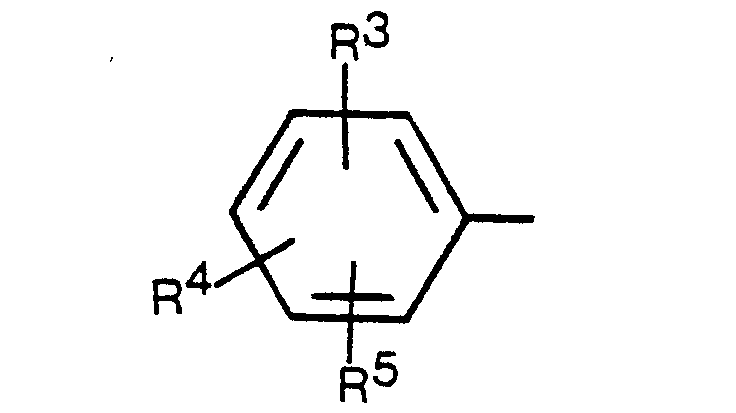

- Der hier verwendete Ausdruck "nieder" bezeichnet Reste mit 1-6 Kohlenstoffatomen, wobei Reste mit 1-4 Kohlenstoffatomen bevorzugt sind. Alkyl- und Alkoxygruppen können geradkettig oder verzweigt sein, Beispiele sind Methyl, Aethyl, Propyl, Isopropyl, n-Butyl und Isobutyl bzw. Methoxy, Aethoxy, Propoxy, Isopropoxy, Butoxy und Isobutoxy. Acylreste leiten sich von aliphatischen, araliphatischen oder aromatischen Carbonsäuren ab, z.B. nieder-Alkancarbonsäuren, wie Ameisensäure, Essigsäure, Propionsäure und Buttersäure; oder Phenyl-nieder-alkancarbonsäuren, wie Phenylessigsäure; oder Benzoesäure. Beispiele von Alkoholresten R10 sind nieder-Alkoxygruppen; Cyclohexyloxy und Cyclopentyloxy; sowie Benzyloxy und substituierte Benzyloxygruppen,wie p-Methoxybenzyloxy. Halogen ist vorzugsweise Chlor oder Brom.
- Die Verbindungen der Formel I bilden mit Säuren Salze, die ebenfalls Gegenstand der Erfindung sind. Beispiele solcher Salze sind Salze mit physiologisch verträglichen Mineralsäuren, wie Salzsäure, Bromwasserstoffsäure, Schwefelsäure, Phosphorsäure; oder mit organischen Säuren, wie Methansulfonsäure, Essigsäure, Propionsäure, Zitronensäure, Bernsteinsäure, Aepfelsäure, Fumarsäure, Phenylessigsäure oder Salicylsäure. Carbonsäuren der Formel I können als Salze vorliegen. Beispiele für solche Salze sind Alkalimetall-, Erdalkalimetall-, Ammonium- und Alkylammoniumsalze, wie Na-, K-, Ca-, Trimethylammonium- und Aethanolammoniumsalze.
- Die Verbindungen der Formel I enthalten ein oder mehrere asymmetrische Kohlenstoffatome und können somit als optisch aktive Enantiomere, als Diastereomere oder als Racemate vorliegen.
- Die Verbindungen der Formel I uhd ihre Salze können erfindungsgemäss dadurch erhalten werden, dass man eine Verbindung der Formel

- Die Dehydratisierung einer Verbindung der Formel II kann mittels Triphenylphosphin/Tetrachlorkohlenstoff als Dehydratisierungsreagenz (Chem. Ber. 107, 1974, 5) vorgenommen werden. Diese Reaktion wird zweckmässig in einem inerten organischen Lösungsmittel, wie Acetonitril, in Gegenwart einer Base, z.B. einem Amin, wie Triäthylamin, durchgeführt. Die Reaktionstemperatur ist nicht kritisch, zweckmässig arbeitet man bei Temperaturen zwischen Raumtemperatur und dem Siedepunkt des Reaktionsgemisches, wobei Raumtemperatur oder leicht erhöhte Temperatur, z.B. 50°C, bevorzugt ist.
- Die Dehydratisierung einer Verbindung der Formel II kann auch zweistufig nach den Methoden von Gabriel bzw. Wenker erfolgen, indem man die Hydroxygruppe durch ein Halogenatom ersetzt, z.B. durch Behandlung mit einem Halogenierungsmittel wie Thionylchlorid oder Phosphortrichlorid; oder in eine abspaltbare Gruppe, z.B. in einen Schwefelsäureester, überführt und worauf man das so erhaltene ß-Haloamin bzw. das ß-Aminohydrogensulfat mit Alkali, z.B. Alkalimetallhydroxiden, wie Natriumhydroxid, behandelt.
- Als funktionelle Abwandlung eines im Rest Z2 der Verbindungen der Formel I enthaltenen Substituenten kommen z.B. die Veresterung einer Carboxygruppe, die Verseifung einer Estergruppe, die z.B. als Substituent -C(0)R anwesend sein kann, und die Umwandlung einer Carbamoylgruppe R6 in eine Nitril- oder Aminomethylgruppe in Betracht.
- Die Veresterung kann in an sich bekannter Weise, z.B. mittels Alkylhalogeniden, wie Methyljodid, und einer Base, vorgenommen werden.
- Die Verseifung einer Estergruppe wird zweckmässig unter alkalischen Bedingungen, z.B. mittels wässrig-alkoholischem Alkalihydroxid, z.B. wässrig-methanolischem Kaliumhydroxid, vorgenommen.
- Eine Carbamoylgruppe R6 kann mittels Triphenylphosphin/ Tetrachlorkohlenstoff in Gegenwart einer Base, z.B. einem Amin, wie Triäthylamin, in einem Lösungsmittel, wie Acetonitril, zur Cyangruppe dehydratisiert werden.
- Eine Carbamoylgruppe R6 kann z.B. mittels Lithiumaluminiumhydrid in einem Lösungsmittel, wie Tetrahydrofuran, zur Aminomethylgruppe reduziert werden.
- Gewisse Ausgangsstoffe der Formel II sind bekannt, z.B. aus den europäischen Patentanmeldungen 21636 A1 und 6735 Al.
- Die Verbindungen der Formel


- Die Verbindungen der Formel II-1 können dadurch erhalten werden, dass man
- a) eine Verbindung der Formel


- b) eine Verbindung einer der Formeln

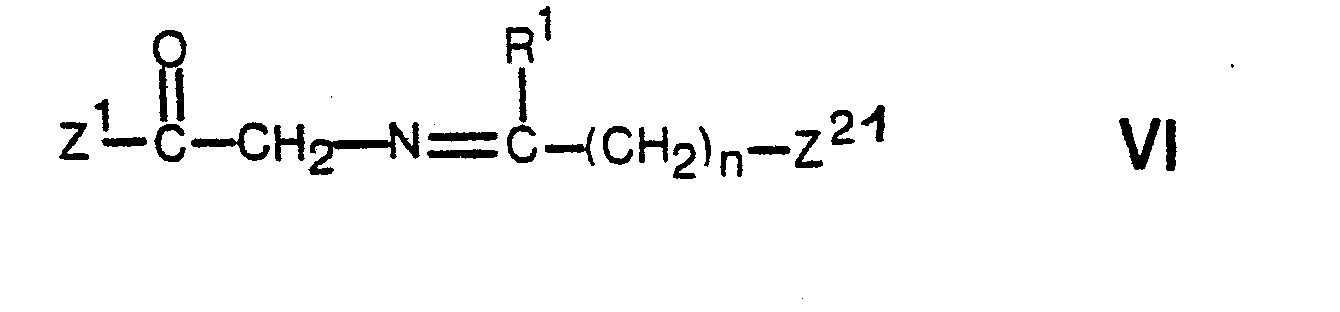


- Die Umsetzung einer Verbindung der Formel III mit einer Verbindung der Formel IV kann in einem inerten organischen Lösungsmittel, zweckmässig einem protischen Lösungsmittel, wie einem niederen Alkanol, z.B. Aethanol, vorgenommen werden. Die Reaktionstemperatur ist nicht kritisch, sie kann zwischen Raumtemperatur und der Rückflusstemperatur des Reaktionsgemisches liegen.
- Die Reduktion einer Verbindung der Formel V kann durch katalytische Hydrierung, z.B. in Gegenwart von Edelmetallkatalysatoren, wie Pd- oder Pt-Katalysatoren oder durch Behandlung mit einem komplexen Metallhydrid, wie NaBH4,vorgenommen werden. Hierbei können die für derartige Reduktionen üblichen Reaktionsbedingungen angewandt werden. Die katalytische Hydrierung wird zweckmässig in einem inerten organischen Lösungsmittel,wie einem niederen Alkanol, z.B. Aethanol, bei Raumtemperatur oder schwach erhöhter Temperatur, z.B. bei 20-80°C durchgeführt. Die Reduktion mit einem komplexen Metallhydrid wird zweckmässig in einem niederen Alkanol, z.B. Methanol, bei Temperaturen von 20-30°C durchgeführt.
- Die Verbindungen der Formeln VI, VII, VIII und IX können mit einem komplexen Metallhydrid in Analogie zu den Verbindungen der Formel V reduziert werden. Ein geeignetes komplexes Metallhydrid für die Reduktion der Verbindungen VI und VII ist NaBH4. Die Verbindungen VIII werden zweckmässig mit LiAlH4 reduziert.
- Bevorzugte Verbindungen der Formeln I und II-1 sind diejenigen, worin R1 Wasserstoff und R2 Wasserstoff oder Methyl, insbesondere Methyl; und/oder worin R Wasserstoff, nieder-Alkyl, nieder-Alkoxy, Halogen oder Trifluormethyl; R4 Wasserstoff oderHalogen,und R5 Wasserstoff sind. Besonders bevorzugt sind solche Verbindungen, worin R Wasserstoff, Chlor oder Trifluormethyl, insbesondere in meta-Stellung, und R4 und R 5 Wasserstoff sind.
- Bevorzugte Verbindungen der Formel I sind diejenigen, worin R 6 eine Gruppe -CH2R10, -C(O)R10 oder -SO2R10 ist, wobei C(O)R10, insbesondere Carbamoyl, besonders bevorzugt ist. Beispiele von solchen Verbindungen sind das p-[(S)-3-[(S)-2-Phenyl-1-aziridinyl]-butyl]benzamid und die physiologisch verträglichen Salze davon.
- Bevorzugte Verbindungen der Formel II-1 sind diejenigen, worin R 61 Sulfamoyl oder worin R6 eine Gruppe. -CH2R10, -C(O)R10, -SO2R10 oder -C(R 7)=C(R 8)COOR 9 ist, Besonders bevorzugt sind solche Verbindungen, worin R6 eine Gruppe -C(O)R 10 oder -C(R7)=C(R8)COOR9 ist, worin R 7 und R9 nieder-Alkyl und R8 Wasserstoff sind, insbesondere Carbamoyl oder 2-Aethoxycarbonyl-l-methylvinyl.
- Die Verbindungen der Formel I und II-1 und ihre Salze können als Wirkstoffe in pharmazeutischen Präparaten zur Behandlung der Fettsucht und/oder des Diabetes mellitus, insbesondere des obesen Erwachsenendiabetikers verwendet werden. Im Tierexperiment wurde auf Verabreichung von Verbindungen der Formel I und II-1 ein gesteigerter Katabolismus, vor allem der Fette, beobachtet. Weiterhin wurde beobachtet, dass die Verbindungen der Formel I und II-1 die Bildung von braunem Fettgewebe bei Ratten und obes-hyperglykämischen Mäusen stimulieren. Bekanntlich wird Defekten des braunen Fettgewebes eine wesentliche Rolle bei der Entstehung der Fettsucht zugeschrieben. An obes-hyperglykämischen Mäusen haben die Verbindungen der Formeln I und II-1 einen ausgeprägten antidiabetischen Effekt, indem sie hypoglykämisch wirken und die Glukosurie vermindern. Die Verbindungen der Formel I und II-1 zeigen nur eine geringe Wirkung auf Herztätigkeit und Kreislauf. Die Dosierung kann in Abhängigkeit von der Wirkungsstärke der einzelnen Verbindungen und den individuellen Bedürfnissen des Patienten 0,5-1000 mg, vorzugsweise 2-200 mg pro Tag für einen Erwachsenen betragen, wobei die Dosis als Einzeldosis oder in mehreren Dosen über den Tag verteilt verabreicht werden kann.
- Die pharmazeutischen Präparate enthalten den Wirkstoff zusammen mit einem verträglichen pharmazeutischen, organischen oder anorganischen Trägermaterial, wie Wasser, Gelatine, Gummi arabicum, Lactose, Stärke, Magnesiumstearat, Talk, pflanzliche Oele, Polyalkylenglykole oder Vaseline. Die pharmazeutischen Präparate werden vorzugsweise oral, z.B. in Form von Tabletten, Kapseln, Pillen, Pulver, Granulaten, Lösungen, Sirupen, Suspensionen oder Elixiren verabreicht. Die Verabreichung kann aber auch parenteral, z.B. in Form von sterilen Lösungen, Suspensionen oder Emulsionen, erfolgen. Die pharmazeutischen Präparate können sterilisiert sein und/oder Bestandteile enthalten, wie Konservierungsmittel, Stabilisatoren, Netzmittel, Emulgatoren, Salze, um den osmotischen Druck zu variieren, und Puffersubstanzen.
- Die Aktivität der neuen Verbindungen der Formeln I und II-1 wird aus den nachstehenden Versuchsresultaten deutlich:
- Männliche Albinoratten im Gewicht von 160-180 g wurden nach 24 Stunden Fasten in Stoffwechselkäfige gesetzt. Die Käfige wurden mit konstant 6 Liter Raumluft/Stunde, die bei einem Taupunkt von 11°C äquilibriert wurde, belüftet. Von der Abluft wurden nach erneuter Aequilibrierung während Perioden von jeweils 14 Minuten Proben gesammelt und der Sauerstoff- und C02-Gehalt analysiert. Nach einer Anpassungszeit von 4 Stunden erhielten die in Gruppen zu 6 aufgeteilten Tiere entweder Placebo (5% Gummi arabicum) oder die Testsubstanz (suspendiert in 5% Gummi arabicum) per os. Danach wurden 12 Stunden lang die Bestimmungen durchgeführt. In Tabelle I ist der Prozentsatz des gemittelten Sauerstoffverbrauchs nach Medikation während der ersten 3 Stunden und der gesamten Versuchsdauer (12 Stunden) vom Sauerstoffverbrauch der Anpassungsperiode angegeben, wobei entsprechende Korrekturen für Aenderungen in der Placebo-Gruppe berücksichtigt wurden.

- Gruppen von 4 männlichen Albinoratten im Gewicht von 320-360 g wurden ohne Zugang zu Futter in Stoffwechselkäfigen gehalten. Sauerstoffverbrauch und Co2-Produktion wurde während 12 Stunden gemessen. Nach 4 Stunden erhielten die Tiere Placebo (5% Gummi arabicum) oder die Testsubstanz (suspendiert in Gummi arabicum) per os. In der Tabelle II ist die gemittelte Abnahme des respiratorischen Quotienten (C02/02) während 8 Stunden nach Verabreichung der Testsubstanz im Vergleich zu den letzten 3 Stunden vor Verabreichung der Testsubstanz angegeben. In den Placebo-Gruppen aufgetretene Aenderungen wurden bei der Berechnung berücksichtigt.

- Weibliche hyperglykämische Fettmäuse wurden an eine auf 3 g/Tag/Tier begrenzte Futtermenge angepasst. Die Testverbindungen (suspendiert in 5% Gummi arabicum) oder Placebo (5% Gummi arabicum) wurden während 15 Tagen zweimal täglich oral verabreicht. Harn wurde während 6 Tagen wöchentlich gesammelt und Harnglucose bestimmt. Blutglucose und das Gewicht des interskapulären braunen Fettgewebes wurde am Versuchsende bestimmt.
- Die Versuchsresultate sind in Tabelle III als Prozentsätze der Kontrollwerte angegeben.

- Die folgenden Beispiele erläutern die Erfindung weiter.
- Eine Mischung von 1,70 g rac-p-[3-(ß-Hydroxyphen- äthyl)amino]propyl]benzamid, 0,8 ml Triäthylamin, 0,6 ml Tetrachlorkohlenstoff, 1,65 g Triphenylphosphin und 12 ml Acetonitril wurde 2 1/2 Stunden unter Rühren auf 50° erwärmt. Zur Aufarbeitung wurde auf Eiswasser gegossen, mit Methylenchlorid extrahiert, der Methylenchloridextrakt mit Wasser gewaschen, mit Na2SO4 getrocknet und im Vakuum eingedampft. Der Rückstand wurde auf 150 g Silicagel chromatographiert. Mit einem Gemisch von Chloroform, n-Propanol und 25% wässrigem Ammoniak (800:40:2) konnte 1,0 g reines p-[3-(2-Phenyl-1-aziridinyl)propyl]benzamid vom Schmelzpunkt 89-90° (CH2Cl2-Aether) isoliert werden. ε227 = 14860; ε236 = 14300.
- Gemäss Beispiel 1 wurde aus p-[3-[[(R)-ß-Hydroxy- phenäthyl]amino]propyl]benzamid das p-[3-[(S)-2-Propyl-l-aziridinyl]propyl]benzamid vom Schmelzpunkt 101-106° erhalten. [α]28 D= +89° (c = 0,5 in Methanol); ε224 = 15900.
- Gemäss Beispiel 1 wurde aus p-[3-[[(S)-ß-Hydroxy- phenäthyl]amino]propyl]benzamid das p-[3-[(R)-2-Phenyl-1- aziridinyl]propyl]benzamid erhalten. Smp. 106-108°; [α]20 D= -95,5° (c = 1,0 in Methanol); ε222 = 16000, ε236 = 14700.
- Gemäss Beispiel 1 wurde aus p-[(S)-3-[[(R)-ß-Hydroxy- phenäthyl]amino]butyl]benzamid das p-[S-3-[(S)-2-Phenyl-l-aziridinyl]butyl]benzamid erhalten. Smp. 129-130°; [α]20 D = +125,5° (c = 1,0 in Methanol); E222 = 15570, ε236 = 14150 (Schulter).
- Zu einer Lösung von 3,1 g p-[(S)-3-[(S)-2-Phenyl-1- aziridinyl]butyl]benzamid in 150 ml Aethylacetat tropfte man bei 5° unter Rühren eine Lösung von 0,87 g Chlorwasserstoff in 20 ml Aethylacetat. Der ausgefallene Niederschlag wurde abgenutscht und aus Methanol-Aether umkristallisiert. Man erhielt reines p-[(S)-3-[(S)-2-Phenyl-1-aziridinyl]-butyl]benzamid-dihydrochlorid, Smp. 186-188°.
- Gemäss Beispiel 1 wurde aus p-[(S)-3-[[(S)-β-Hydroxy- phenäthyl]amino]butyl]benzamid das p-[(S)-3-[(R)-2-Phenyl- l-aziridinyl]butyl]benzamid erhalten. Smp. 145-146°.

- Gemäss Beispiel 1 wurde aus p-[(S)-3-[[(R)-ß-Hydroxy- phenäthyl]amino]butyl]phenol das p-[(S)-3-[(S)-2-Phenyl-1- aziridinyl]butyl]phenol erhalten. Smp. 135-1360 (Aether).

- Gemäss Beispiel 1 wurde aus p-[(R)-3-[[(R)-ß-Hydroxy- phenäthyl]amino7butyl]benzamid das p-[(R)-3-[(S)-2-Phenyl-1-aziridinyl]butyl]benzamid erhalten. Smp. 145-146° (Aceton-Hexan).

- Gemäss Beispiel 1 wurde aus p-[3-[(β-Hydroxy-m-methoxy- phenäthyl)amino]propyl]benzamid das p-[3-[2-(m-Methoxyphenyl)-1-aziridinyl]propyl]benzamid erhalten. Smp. 130-132° (aus Aceton-Hexan); ε226 = 18750; ε274 = 2800; ε280 = 2240.
- 1,73 g Triphenylphosphin, 1,83 g (R,S)-5-[3-[(ß-Hydroxyphenäthyl)amino]propyl]-2-thiophen-carbonsäureamid, 0,84 ml Triäthylamin, 0,58 ml Tetrachlorkohlenstoff und 12 ml Acetonitril wurden 18 Stunden bei 25° gerührt. Das Reaktionsgemisch wurde im Vakuum eingedampft. Der Rückstand wurde in Methylenchlorid gelöst und dreimal mit eiskalter 2N Salzsäure extrahiert. Die sauren Lösungen wurden mit Natronlauge basisch gestellt und dreimal mit Methylenchlorid extrahiert. Die Methylenchloridlösungen wurden mit Wasser neutralgewaschen, getrocknet und im Vakuum eingedampft. Chromatographie des Rückstandes an Kieselgel mit Aether-Aceton 9:1 gab 800 mg (R,S)-5-[3-(2-Phenyl-l-aziri- dinyl)propyl]-2-thiophencarbonsäureamid, Smp. 117-119° (aus Acetonitril), UV: ε217 = 12290, ε256 = 8470, ε275 = 10620.
- Gemäss Beispiel 10 wurde aus (R)-5-[3-[(ß-Hydroxy- phenäthyl)amino]propyl]-2-thiophencarbonsäureamid das (S)-5-[3-(2-Phenyl-1-aziridinyl)propyl]-2-thiophencarbon- säureamid erhalten. Smp. 95-98°;

- Eine Mischung von 2,98 g p-[3-[[(R)-ß-Hydroxyphen- äthyl]amino]propyl]benzamid, 3,0 ml Triäthylamin, 2,2 ml Tetrachlorkohlenstoff, 5,5 g Triphenylphosphin und 100 ml Acetonitril wurde 1 Stunde zum Rückfluss erhitzt. Zur Aufarbeitung wurde das Reaktionsgemisch auf Eiswasser gegossen, mit Aethylacetat extrahiert, der Extrakt mit Wasser gewaschen, mit Na2S04 getrocknet und im Vakuum eingedampft. Der Rückstand wurde auf 400 g Silicagel chromatographiert. Mit Hexan-Aceton (9:1) konnten 1,8 g reines P-[3-[(S)-2-Phenyl-1-aziridinyl]propyl]phenylcyanid als farbloses Oel eluiert werden.

- Gemäss Beispiel 1 wurde aus p-[(S) -3-[[(R) -β-Hydroxy- phenäthyl]amino]butyl]benzamid das p-[(S)-3-[(S)-2-Phenyl-1-aziridinyl]butyl]benzamid erhalten.
- Gemäss Beispiel 1 wurde aus p-[3-[(ß-Hydroxy-m-trifluormethyl-phenäthyl)amino]propyl]benzamid das p-[3-[2-(m-Trifluormethylphenyl)-1-aziridinyl]propyl]benzamid erhalten. Smp. 135-138° (aus Aceton-Hexan).
- Gemäss Beispiel 1 wurde aus p-[3-[(ß-Hydroxy-m-chlorphenäthyl) amino]propyl]benzamid das p-[3-[2-(m-chlorphenyl)-1-aziridinyl]propyl]benzamid erhalten, Smp. 124-125° (aus Aceton-Hexan).
- Gemäss Beispiel 1 wurde aus rac-p-[3-[(ß-Hydroxy- phenäthyl)amino]propyl]benzoesäure-methylester der p-[3-(2-Phenyl-1-aziridinyl)propyl]benzoesäure-methylester erhalten. Oel; ε214 = 11040; ε239 = 17330; ε270 = 1230.
- Gemäss Beispiel 1 wurde aus p-[(R)-3-[[(S)-ß-Hydroxy- phenäthyl]amino]butyl]benzamid das p-[(R)-3[(R)-2-Phenyl-1-aziridinyl]butyl]benzamid erhalten. Smp. 122-123° (aus Aceton-Hexan). ε222 = 15630; ε236 = 14400.
- Gemäss Beispiel 1 wurde aus p-[3-[(ß-Hydroxy-3,5-dichlorphenäthyl)amino]propyl]benzamid das p-[3-[2-(3',5'-Dichlorphenyl)-1-aziridinyl]propyl]benzamid erhalten; Smp. 155-156° (aus Aceton-Hexan).
- Gemäss Beispiel 1 wurden aus p-[(S)-2-[(R,S)-ß-Hydroxy-m-(trifluormethyl)phenäthyl]amino]propyl]-β-methyl-zimtsäure-methylester der ß-Methyl-p-[(S)-2-[(R)-2-(α,α,α-trifluor-m-tolyl)-1-aziridinyl]propyl]zimtsäuremethylester als gelbes Oel,


- Gemäss Beispiel 1 wurden aus p-[(R)-2-[[(R,S)-ß-Hydroxy-m-(trifluormethyl)phenäthyl]amino]propyl]-β-methyl-zimtsäure-methylester der β-Methyl-p-[(R)-2-[(S)-2-(α,α,α-trifluor-m-tolyl)-1-aziridinyl]propyl]zimtsäure-methylester als gelbes Oel,


- Gemäss Beispiel 1 wurde aus p-[(R,S)-3-[[(R)-ß-Hydroxy-phenäthyl]amino]butyl]-N,N-dimethylbenzamid das p-[(R,S)-3-[(S)-2-Phenyl-1-aziridinyl]butyl]-N,N-dimethyl- benzamid erhalten; amorph, ε218 = 18700 (1:3 Diastereomeren-Gemisch).
- Eine Mischung von 2,8 g p-[3-[(S)-2-Phenyl-1-aziri- dinyl]propyl]benzamid und 1,5 g LiAlH4 in 400 ml absolutem Tetrahydrofuran wurde 6 Stunden bei Raumtemperatur gerührt. Dann wurde tropfenweise mit 3 ml gesättigter Na2SO4-Lösung versetzt und anschliessend der weisse Niederschlag abfiltriert und mit Methylenchlorid nachgewaschen. Das Filtrat wurde im Vakuum eingedampft und der Rückstand auf 200 g Kieselgel chromatographiert. Mit Chloroform-n-Propanol-ges. NH3-Lösung (800:50:3) konnten 1,95 g reines p-[3-[(S)-2-Phenyl-1-aziridinyl]propyl]benzylamin als farblose Flüssigkeit eluiert werden.
- Gemäss Beispiel 1 wurde aus p-[(S)-3-[[(R)-ß-Hydroxy- phenäthyl]amino]butyl]N-methylbenzamid das p-[(S)-3[(S)-2-Phenyl-1-aziridinyl]butyl]-N-methylbenzamid erhalten. Smp. 113-114°.

- Gemäss Beispiel 1 wurde aus p-[3-[[(R)-ß-Hydroxy- phenäthyl]amino]propyl]toluol das p-[3[(S)-2-Phenyl-l-aziridinyl]propyl]toluol als farblose Flüssigkeit erhalten.

- Gemäss Beispiel 1 wurde aus p-[3-[[(R)-B-Hydroxy- phenäthyl]amino]propyl]benzol das p-[3-[(S)-2-Phenyl-1- aziridinyl]propyl]benzol als farblose Flüssigkeit erhalten.

- Gemäss Beispiel 1 wurde aus p-[3-[[(R)-ß-Hydroxy- phenäthyl]amino]propyl]benzolsulfonamid das p-[3-[(S)-2-Phenyl-1-aziridinyl]propyl]benzolsulfonamid vom Smp. 161-163° erhalten.
- Eine Mischung von 20,0 g 3-(4-Aminosulfonylphenyl)-propylamin, 16,8 g (R)-Styroloxyd und 500 ml Acetonitril wurde 40 Stunden unter Rückfluss erhitzt. Das Lösungsmittel wurde dann im Vakuum abgedampft und der Rückstand auf 1 kg Kieselgel chromatographiert. Mit Chloroform/ n-Propanol/25% NH3 (1600:100:4) konnten 8,3'g reines p-[3-[[(R)-ß-Hydroxyphenäthyl]amino]propyl]-benzolsulfonamid vom Schmelzpunkt 165-166° (aus Acetonitril) isoliert werden.

- Das Ausgangsamin wurde wie folgt hergestellt:
- p-Aminosulfonylbenzaldehyd wurde mit Diäthyl-cyanomethyl-phosphonat/NaH in Tetrahydrofuran zu 1-Cyano-2-(4-aminosulfonylphenyl)-äthan umgesetzt, welches in Methanol mit Raney-Cobalt als Katalysator zum 3-(4-Aminosulfonyl- phenyl)-propylamin hydriert wurde.
- Gemäss Beispiel 27 wurde aus R-Styroloxid und S-l-Methyl-3-(4-aminosulfonylphenyl)propylamin das p-[(S)-3-[[(R)-β-Hydroxyphenäthyl]amino]butyl]benzolsulfonamid erhalten. Smp. 134-135° (Aceton-Hexan),

- Das Ausgangsamin wurde wie folgt hergestellt:
- 4-(4-Aminosulfonylphenyl)butanon-2 wurde mit S-(-)-a-Phenyläthylamin und p-Toluolsulfonsäure als Katalysator in Toluol unter Wasserabscheidung zur Schiff'schen Base S-N-(a-Methylbenzyl)-1-methyl-3-(4-aminosulfonylphenyl)-propylimin umgesetzt. Das Imin wurde in Methanol in Gegenwart von Raney-Nickel zu einem Gemisch der optischen Isomeren von N-(a-Methylbenzyl)-1-methyl-3-(4-aminosulfonyl- phenyl)propylamin hydriert. Das Amin wurde mit Oxalsäure in ein Gemisch der Oxalate übergeführt, aus dem durch zweimalige Kristallisation reines S-1-Methyl-3-(4-amino- sulfonylphenyl)propylamin-oxalat, Smp. 123-127°,

- Gemäss Beispiel 27 wurde aus R-Styroloxid und R-l-Methyl-3-(4-aminosulfonylphenyl)propylamin das p-[(R)-3-[[(R)-β-Hydroxyphenäthyl]amino]-3-butyl]benzolsulfonamid erhalten. Smp. 135-138° (Aceton-Hexan);

- 10 g 5-(3-Aminopropyl)-2-thiophen-carbonsäureamid und 6,8 ml (R,S)-Phenyläthylenoxid wurden in 136 ml DMSO 18 Stunden auf 95° erwärmt. Das Reaktionsgemisch wurde mit Wasser und Methylenchlorid verdünnt, die wässerige Phase wurde zweimal mit Methylenchlorid extrahiert; die Methylenchloridphasen wurden mit Wasser gewaschen, über Natriumsulfat getrocknet und im Vakuum eingedampft. Chromatographie des Rückstandes mit Methanol an Kieselgel gab 7,85 g (R,S)-5-[3-[(ß-Hydroxyphenäthyl)amino]propyl]-2-thiophencarbonsäureamid, Smp. 116-117° (aus Methanol-Aether). UV: ε257 = 8830, ε276 = 10990.
- Analog Beispiel 30 wurde aus 5-(3-Aminopropyl)-2-thiophencarbonsäureamid und (R)-Phenyläthylenoxid das (R)-5-[3-[(ß-Hydroxyphenäthyl)amino]propyl]-2-thiophencar- bonsäureamid erhalten. Smp. 89-93°, [a]589 = -19° (c = 0,1% in Dioxan), UV: ε256 = 8600, ε276 = 10790.
- Analog Beispiel 30 wurde aus 5-(3-Aminopropyl)-2-thiophencarbonsäureamid und (S)-Phenyläthylenoxid das (S)-5-[3-[(β-Hydroxyphenäthyl)amino]propyl]-2-thiophencar- bonsäureamid erhalten. Smp. 94-96°, [α]589 = +19° (c = 0,1% in Dioxan); UV: ε256 = 8490, ε275 = 10780.
- Das Ausgangsamid kann wie folgt hergestellt werden:
- 2-(p-Toluolsulfonyloxy)propylthiophen (J. Org. Chem. 36, 1971, 2236) wurde mit Acetylchlorid und Aluminiumtrichlorid in Methylenchlorid zu 5-Acetyl-2-(p-toluolsul- fonyloxy)propylthiophen umgesetzt. Mit Natriumazid in DMSO wurde daraus 5-(3-Azidopropyl)-2-thienyl-methylketon erhalten. Oxidation mit Hypobromid gab 5-(3-Azidopropyl)-2-thiophen-carbonsäure, Smp. 71-72°.
- Umsetzen dieser Säure mit Thionylchlorid und anschliessende Behandlung mit konz. Ammoniak führte zum 5-(3-Azidopropyl)-2-thiophencarbonsäureamid, Smp. 85-87°. Daraus erhält man nach Behandlung mit Triphenylphosphin und Hydrolyse (J. Org. Chem. 40, 1975, 1659) 5-(3-Aminopropyl)-2-thiophen- carbonsäureamid, Smp. 143,5-144° (aus Wasser).
- 2,58 g 5-[3-[[(R)-ß-Hydroxyphenäthyl]amino]propyl]-2-thiophencarbonsäureamid wurden in 129 ml Tetrahydrofuran unter Argon portionenweise mit 1,29 g Lithiumaluminiumhydrid versetzt und 3 1/4 Stunden am Rückfluss gekocht.
- Dann wurden unter Kühlung vorsichtig 34 ml 2N Natronlauge und anschliessend 400 ml Wasser zugegeben und dreimal mit Chloroform extrahiert. Die Chloroformlösungen wurden mit Wasser und verdünnter Kochsalzlösung neutral gewaschen, getrocknet und im Vakuum eingedampft. Chromatographie an Kieselgel mit Methanol und 0,5% konz. Ammoniak und Kristallisation aus Acetonitril-Aether gab 914 mg (R)-a-[[[3-[5-(Aminomethyl)-2-thienyl]propyl]amino]methyl]benzylalkohol, Smp. 64-65°, [a] = -18° (in Dioxan, c = 0,1%), UV: ε240 =9080.
- Analog Beispiel 33 wurde aus (R,S)-5-[3-[(ß-Hydroxy- phenäthyl-)amino]propyl]-2-thiophencarbonsäureamid der (R,S)-α-[[[3-[5-(Aminomethyl)-2-thienyl]propyl]amino]-methyl]benzylalkohol erhalten, Smp. 89-90°, UV: ε240 = 8320.
- 9,91 g (R,S)-5-(3-Aminobutyl)-2-thiophencarbonsäure- amid und 5,7 ml (R)-Phenyläthylenoxid wurden in 100 ml DMSO 47 Stunden auf 100° erwärmt. Das Reaktionsgemisch wurde auf Wasser gegossen und dreimal mit Methylenchlorid extrahiert; die Methylenchloridlösungen wurden mit Wasser und verdünnter Kochsalzlösung gewaschen, getrocknet und im Vakuum eingedampft. Chromatographie des Rückstands an Kieselgel mit Aether-MeOH 4:1 gab 7,35 g 5-[(R,S)-3-[[(R)-β-Hydroxyphenäthyl]amino]butyl]-2-thiophencarbonsäureamid, Smp. 124-125° (aus Acetonitril); [α]D = -24° (in Dioxan, c = 0,1%); UV: ε256 = 8500, ε275 = 10830.
- Das Ausgangsmaterial kann wie folgt hergestellt werden:
- 4-(5-Acetyl-2-thienyl)-2-butanon (Tetrahedron 35, 1979, 329) wurde mit Aethylenglykol, o-Ameisensäuretriäthylester und p-Toluolsulfonsäure in Methylenchlorid selektiv zu Methyl 5-[2-(2-methyl-1,3-dioxolan-2-yl)äthyl]-2-thienyl- keton umgesetzt. Oxidation mit Natriumhypobromit und anschliessende Hydrolyse gab 5-(3-Oxobutyl)-2-thiophencar- bonsäure. Mit NaBH4 wurde daraus 5-(3-Hydroxybutyl)-2-thiophencarbonsäure erhalten, welche in Dimethylacetamid mit Methyljodid und Natriumbicarbonat in den Methylester übergeführt wurde. Behandlung mit p-Toluolsulfochlorid in Pyridin und Reaktion mit Natriumazid in DMSO gab 5-(3-Azidobutyl)-2-thiophencarbonsäuremethylester, aus welchem durch Verseifung die entsprechende Säure erhalten wurde. Mit Thionylchlorid wurde deren Säurechlorid hergestellt, aus dem mit konz. Ammoniak in Aether 5-(3-Azidobutyl)-2-thiophencarbonsäureamid erhalten wurde. Reduktion der Azidogruppe mit Triphenylphosphin und anschliessende Hydrolyse gab (R,S)-5-(3-Aminobutyl)-2-thiophencarbon- säureamid, Smp. 65-75°, UV: E256 = 7780, ε275 = 9900.
- In zu Beispiel 10 analoger Weise wurden hergestellt:
- a) 5-[(RS)-3-[(S)-2-Phenyl-1-aziridinyl]butyl]-2-thio- phencarbonsäureamid, Smp. 76-78°,

- b) p-[2-[(S)-2-Phenyl-1-aziridinyl]äthyl]benzamid, Smp. 121-122°,

- c) 5-[3-(S)-(2-Phenyl-1-aziridinyl)propyl]-2-thiophen- carbonsäuremethylester,

- Der zur Herstellung des Aziridins in Absatz c) verwendete 5-(3-Aminopropyl)-2-thiophencarbonsäure-methylester kann dadurch hergestellt werden, dass man die 5-(3-Azido- propyl)-2-thiophencarbonsäure mit Methyljodid verrestert und den dabei erhaltenen 5-(3-Azidopropyl)-2-thiophencar- bonsäuremethylester katalytisch hydriert.
- In zu Beispiel 30 analoger Weise wurden hergestellt:
- a) 5-[3-[[(R)-β-Hydroxyphenäthyl]amino]propyl]-2-thiophen- carbonsäuremethylester, Smp. 81-82°,

- b) (E)-S-[(RS)-3-[[(R)-β-Hydroxyphenäthyl]amino]butyl]-ß-methyl-2-thiophenacrylsäureäthylester, Smp. 72°,

- c) 5-[2-[[(R)-ß-Hydroxyphenäthyl]amino]äthyl]-2-thiophen- carbonsäureamid, Smp. 95-97°;

- d) 5-[(RS)-2-[[(R)-ß-Hydroxyphenäthyl]amino]propyl]-2-thiophencarbonsäureamid,

- e) (e)-5-[(RS)-3-[[(RS)-ß-Hydroxy-m-(trifluormethyl)-phenäthyl]amino]butyl]-β-methyl-2-thiophenacrylsäureäthyl- ester, ε321 = 16730,
- f) 5-[(RS)-3-[[(RS)-β-Hydroxy-m-(trifluormethyl)phen- äthyl]amino]butyl]-2-thiophencarbonsäureamid, Smp. 165-1660, ε275 = 11000,
- g) (E)-5-[(RS)-2-[[(R)-β-Hydroxyphenäthyl]amino]propyl]-ß-methyl-2-thiophencarbonsäureäthylester,

- h) (E)-5-[(RS)-2-[[(RS)-ß-Hydroxy-m-(trifluormethyl)-phenäthyl]amino]propyl]-β-methyl-2-thiophenacrylsäureäthyl- ester, Smp. 101-102°, ε321 = 19140,
- i) S-[(RS)-3-[[(R)-β-Hydroxyphenäthyl]amino]butyl]-2-thienylmethylketon, Smp. 66-68°,

- j) 5-[(RS)-2-[[(R)-β-Hydroxyphenäthyl]amino]propyl]-2-thienylmethylketon,

- k) 5-[(RS)-3-[[(R)-β-Hydroxyphenäthyl]amino]butyl]-2-thiophencarbonsäuremethylester, Smp. 102-103°, [α]D = -27° (c = 0,1% in MeOH), ε255 = 9500, ε279 = 12620.
- Der zur Herstellung der Alkohole in den Absätzen b) und e) verwendete (E)-5-[(RS)-3-Aminobutyl]-β-methyl-2-thiophenacrylsäureäthylester kann wie folgt hergestellt werden:
- (RS)-4-(2-Thienyl)-2-butanol (Coll. Czech. Chem. Comm. 41, 1976, 479), Acetylchlorid und Aluminiumchlorid wurden in Methylenchlorid zu (RS)-3-(5-Acetyl-2-thienyl)-1-methyl- propylacetat umgesetzt. Mit NaOH in Methanol wurde dieses zu (RS)-5-(3-Hydroxybutyl)-2-thienylmethylketon verseift. Dieses reagierte in Alkohol in Gegenwart von Natriumalkoholat mit Triäthylphosphonoacetat zu (E)-5-[(RS)-3-Hydroxybutyl]-ß-methyl-2-thiophenacrylsäureäthylester. Umsetzen mit p-Toluolsulfochlorid und anschliessende Behandlung mit Natriumazid gab (E)-5 -[(RS)-3-Azidobutyl]-β-methyl-2-thio- phenacrylsäureäthylester. Daraus wurde durch Reduktion mit Triphenylphosphin und anschliessende Hydrolyse (E)-5-[(RS)-3-Aminobutyl]-ß-methyl-2-thiophenacrylsäureäthylester erhalten, ε320 = 17465.
- Das zur Herstellung des Alkohols im Absatz c) verwendete 5-(2-Aminoäthyl)-2-thiophencarbonsäureamid kann wie folgt hergestellt werden.
- 2-(2-Thienyl)äthyl-p-toluolsulfonat (J.A.C.S. 95, 1973, 1247), Acetylchlorid und Aluminiumchlorid wurden in Methylenchlorid zu 2-[(5-Acetyl-2-thienyl)äthyl]-p-toluolsulfonat umgesetzt (Smp. 111-112°, aus Aethanol). Dieses wurde mit Natriumazid in DMSO in das 5-(2-Azidoäthyl)-2-thienylmethylketon übergeführt. Oxidation mit Natriumhypobromit lieferte die 5-(2-Azidoäthyl)-2-thiophencarbonsäure vom Smp. 53-55°, die mit Thionylchlorid das entsprechende Säurechlorid ergab, welches mit Ammoniak zum 5-(2-Azido- äthyl)-2-thiophencarbonsäureamid umgesetzt wurde (Smp. 104-105°, aus Aethanol). Reaktion mit Triphenylphosphin und Hydrolyse (J. Org. Chem. 40, 1975, 1659) gab 5-(2-Aminoäthyl)-2-thiophencarbonsäureamid, Smp. 134-136°, aus Acetonitril.
- Das zur Herstellung des Alkohols im Absatz d) verwendete 5-[(RS)-2-Aminopropyl]-2-thiophencarbonsäureamid kann wie folgt hergestellt werden:
- a-Methyl-2-thiophenäthanol (J.A.C.S. 64, 1942, 477), Acetylchlorid und Aluminiumchlorid wurden in Methylenchlorid zu (RS)-2-(5-Acetyl-2-thienyl)-1-methyläthylacetat umgesetzt. Mit Natronlauge in Methanol wurde dieses zu 5-[(RS)-2-Hydroxypropyl]-2-thienylmethylketon verseift und anschliessend mit p-Toluolsulfochlorid zu (RS)-2-(5-Acetyl-2-thienyl)-1-methyläthyl-p-toluolsulfonat umgesetzt, Smp. 101-103°. Mit Natriumazid in DMSO wurde daraus 5-[(RS)-2-Azidopropyl]-2-thienylmethylketon erhalten, welches mit Brom in Natronlauge zur 5-[(RS)-2-Azidopropyl]-2-thiophen- carbonsäure oxidiert wurde. Mit SOCl2 wurde daraus das entsprechende Säurechlorid, und aus diesem mit Ammoniak 5-[(RS)-2-Azidopropyl]-2-thiophencarbonsäureamid hergestellt, Smp. 79-80°C, aus Aether. Behandlung mit Triphenylphosphin und Hydrolyse gab 5-[(RS)-2-AminopropylJ-2-thio- phencarbonsäureamid, Smp. 91-92° aus Acetonitril.
- Der zur Herstellung der Alkohole in den Absätzen g) und h) verwendete (E)-5-[(RS)-2-Aminopropyl]-ß-methyl-2-thiophenacrylsäureäthylester kann wie folgt hergestellt werden:
- 5-[(RS)-2-Hydroxypropyl]-2-thienylmethylketon und rriäthylphosphonoacetat wurden in Alkohol in Gegenwart von Natriumäthylat zu (E)-5-[(RS)-2-Hydroxypropyl]-β-methyl-2-thiophenacrylsäureäthylester umgesetzt. Mit p-Toluolsulfochlorid wurde daraus der (E)-ß-Methyl-5-[(RS)-2-[(p-toluolsulfonyl)oxy]propyl]-2-thiophenacrylsäureäthylester erhalten (Smp. 221°, aus Methylenchlorid-Alkohol). Reaktion mit Natriumazid in DMSO gab den (E)-5-[(RS)-2-Azidopropyl]-ß-methyl-2-thiophenacrylsäureäthylester. Reduktion mit Triphenylphosphin und Hydrolyse führte zum (E)-5-[(RS)-2-Aminopropyl]-ß-methyl-2-thiophenacrylsäureäthylester, ε320 = 17970.
- Das zur Herstellung des Alkohols im Absatz i) verwendete 2-Acetyl-5-[(RS)-3-aminobutyl]thiophen kann wie folgt hergestellt werden:
- (RS)-5-(3-Hydroxybutyl)-2-thienylmethylketon wird mit p-Toluolsulfochlorid zum (RS)-3-(5-Acetyl-2-thienyl)-1-methylpropyl-p-toluolsulfonat, Smp. 61-63° umgesetzt. Mit Natriumazid erhält man daraus Methyl-(RS)-5-(3-azidobutyl)-2-thienylketon, welches katalytisch zu 2-Acetyl-5-[(RS)-3-aminobutyl]thiophen hydriert wird.
- Das zur Herstellung des Alkohols im Absatz j) verwendete 2-Acetyl-5-[(RS)-2-aminopropyl]thiophen kann dadurch hergestellt werden, dass man das 5-[(RS)-2-Azido- propyl]-2-thienylmethylketon mit Triphenylphosphin umsetzt und anschliessend mit wässerigem Ammoniak hydrolysiert.
- Das zur Herstellung des Alkohols im Absatz k) verwendete 5-[(RS)-3-Aminobutyl]-2-thiophencarbonsäuremethyl- ester kann dadurch hergestellt werden, dass man den 5-(3-Azidobutyl)-2-thiophencarbonsäuremethylester mit Triphenylphosphin in Pyridin umsetzt und mit konz. Ammoniak zum 5-[(RS)-3-Aminobutyl]-2-thiophencarbonsäuremethylester, ε278 = 11280, ε254 = 8760 hydrolysiert.
- Gemäss Beispiel 1 wurde aus p-[3-[[(R)-ß-Hydroxy- phenäthyl]amino]propyl]benzoesäuremethylester der p-[3-[(S)-2-Phenyl-1-aziridinyl]propyl]benzoesäuremethyl- ester als Oel erhalten, e238 = 17130, [a]D = +85° (c = 0,8 in Methanol).
- Gemäss Beispiel 1 wurde aus p-[3-(S)-[[(RS)-ß-Hydroxy- m-(trifluormethyl)phenäthyl]amino]butyl]-ß-methylzimtsäure- methylester der
- (E)-β-Methyl-p-[(S)-3-[(R)-2-(α,α,α-trifluor-m-tolyl)-1-aziridinyl]butyl]zimtsäuremethylester als farbloses Oel,

- (E)-β-Methyl-p-[(S)-3-[(S)-2-(α,α,α-trifluor-m-tolyl)-1-aziridinyl]butyl]zimtsäuremethylester als farbloses Oel,

- Gemäss Beispiel 1 wurde aus p-[3-(R)-[[(RS)-ß-Hydroxy- m-(trifluormethyl)phenäthyl]amino]butyl]-β-methylzimtsäure- methylester der
- (E)-β-Methyl-p-[(R)-3-[(S)-2-(α,α,α-trifluor-m-tolyl)-l-aziridinyl]butyl]zimtsäuremethylester als farbloses Oel,

- (E)-β-Methyl-p-[(R)-3-[(R)-2-(α,α,α-trifluor-m-tolyl)-1-aziridinyl]butyl]zimtsäuremethylester als farbloses Oel,

- Gemäss Beispiel 1 wurde aus p-[(R)-3-[[(RS)-ß-Hydroxy- m-(trifluormethyl)-phenäthyl)amino]butyl]benzamid das p-[(R)-3-[2-(α,α,α-Trifluor-m-tolyl)-1-aziridinyl)butyl]-benzamid in Form eines etwa 1:4-Gemisches der 2-R- und 2-S-Form, Smp. 149-153° (aus Aether),

- Es werden in üblicher Weise Tabletten folgender Zusammensetzung hergestellt:

Claims (29)


Priority Applications (1)
| Application Number | Priority Date | Filing Date | Title |
|---|---|---|---|
| AT83104589T ATE24897T1 (de) | 1982-05-14 | 1983-05-10 | Neue aziridin- und phenaethanolaminderivate. |
Applications Claiming Priority (4)
| Application Number | Priority Date | Filing Date | Title |
|---|---|---|---|
| CH301382 | 1982-05-14 | ||
| CH3013/82 | 1982-05-14 | ||
| CH1434/83 | 1983-03-16 | ||
| CH143483 | 1983-03-16 |
Publications (2)
| Publication Number | Publication Date |
|---|---|
| EP0094595A1 true EP0094595A1 (de) | 1983-11-23 |
| EP0094595B1 EP0094595B1 (de) | 1987-01-14 |
Family
ID=25687635
Family Applications (1)
| Application Number | Title | Priority Date | Filing Date |
|---|---|---|---|
| EP83104589A Expired EP0094595B1 (de) | 1982-05-14 | 1983-05-10 | Neue Aziridin- und Phenäthanolaminderivate |
Country Status (14)
| Country | Link |
|---|---|
| US (1) | US4652679A (de) |
| EP (1) | EP0094595B1 (de) |
| AU (1) | AU1442483A (de) |
| CA (1) | CA1219865A (de) |
| DE (1) | DE3369130D1 (de) |
| DK (1) | DK209383A (de) |
| ES (1) | ES8407004A1 (de) |
| FI (1) | FI831617A7 (de) |
| HU (1) | HU191523B (de) |
| IL (1) | IL68635A (de) |
| MC (1) | MC1516A1 (de) |
| NO (1) | NO831727L (de) |
| NZ (1) | NZ204177A (de) |
| PT (1) | PT76688B (de) |
Cited By (5)
| Publication number | Priority date | Publication date | Assignee | Title |
|---|---|---|---|---|
| WO1988007038A1 (en) * | 1987-03-12 | 1988-09-22 | Nippon Shokubai Kagaku Kogyo Co., Ltd. | Process for producing aziridines |
| WO1993004067A1 (en) * | 1991-08-22 | 1993-03-04 | Pliva Handels Gmbh | Hypoglycemic n-sulfonyl-tetrahydro-[1,3]-dioxepino[5,6-b]azirines |
| EP0649838A1 (de) * | 1993-10-20 | 1995-04-26 | MERCK PATENT GmbH | N-Phenylalkyl/Phenoxyalkyl-Azetidin/Pyrrozidin/Piperidin/Hexahydroazepin-Derivate als antiarrhythmische Wirkstoffe |
| EP0669335A1 (de) * | 1994-02-21 | 1995-08-30 | PLIVA, farmaceutska, kemijska, prehrambena i kozmeticka industrija, dionicko drustvo | N-Sulfonyl-tetrahydro 1,3 -dioxepino 5,6 azirine mit hypoglykämischen Eigenschaften |
| US7812035B2 (en) | 2001-12-11 | 2010-10-12 | Sepracor Inc. | 4-substituted piperidines, and methods of use thereof |
Families Citing this family (9)
| Publication number | Priority date | Publication date | Assignee | Title |
|---|---|---|---|---|
| CA1258454A (en) * | 1982-08-10 | 1989-08-15 | Leo Alig | Phenethanolamines |
| CA1292747C (en) * | 1983-11-21 | 1991-12-03 | John Robert Carson | Aralykyl (arylethynyl) aralkyl amines and their use as vasodilators and antihypertensives |
| US5321036A (en) * | 1993-02-10 | 1994-06-14 | Bristol-Myers Squibb Company | Thiazole and oxazole-based β3 adrenergic receptor agonists |
| US5563171A (en) * | 1993-11-05 | 1996-10-08 | American Cyanamid Company | Treatment of glaucoma and ocular hypertension with β3-adrenergic agonists |
| US5578638A (en) * | 1993-11-05 | 1996-11-26 | American Cyanamid Company | Treatment of glaucoma and ocular hypertension with β3 -adrenergic agonists |
| ZA967892B (en) * | 1995-09-21 | 1998-03-18 | Lilly Co Eli | Selective β3 adrenergic agonists. |
| US6075040A (en) * | 1996-09-05 | 2000-06-13 | Eli Lilly And Company | Selective β3 adrenergic agonists |
| ES2171839T3 (es) | 1996-09-05 | 2002-09-16 | Lilly Co Eli | Analogos de carbazol como agonistas adrenergicos selectivos de beta3. |
| CO5011072A1 (es) * | 1997-12-05 | 2001-02-28 | Lilly Co Eli | Etanolaminas pirazinil substituidas como agfonistas de los receptores |
Citations (4)
| Publication number | Priority date | Publication date | Assignee | Title |
|---|---|---|---|---|
| DE2145894A1 (de) * | 1970-09-14 | 1972-03-16 | Smith Kline & French Laboratories, Philadelphia, Pa. (V.StA.) | N-Thienyl-beta-alkoxytrifluormethylphenyläthylamine und ihre pharmakologisch verträglichen Säureadditionssalze, Verfahren zu ihrer Herstellung und Arzneipräparate |
| DD108532A1 (de) * | 1973-02-15 | 1974-09-20 | ||
| DE2843016A1 (de) * | 1977-10-12 | 1979-04-26 | Yamanouchi Pharma Co Ltd | Neue phenylaethanolaminderivate, verfahren zu ihrer herstellung sowie ihre verwendung |
| EP0006735A1 (de) * | 1978-06-28 | 1980-01-09 | Beecham Group Plc | Sekundäre Amine, ihre Herstellung, pharmazeutische Zusammensetzungen, die sie enthalten, und deren Verwendung |
Family Cites Families (32)
| Publication number | Priority date | Publication date | Assignee | Title |
|---|---|---|---|---|
| DD45721A (de) * | ||||
| DE108532C (de) * | ||||
| US3092636A (en) * | 1959-10-21 | 1963-06-04 | Upjohn Co | Alpha-[2-(1-alkyleneimino) ethylamino]-alkanophenones and the corresponding alcohols |
| US3732300A (en) * | 1966-09-23 | 1973-05-08 | Allen & Hanburys Ltd | Phenylaminoethanol derivatives |
| GB1200886A (en) * | 1966-09-23 | 1970-08-05 | Allen & Hanburys Ltd | Phenylaminoethanol derivatives |
| US3514465A (en) * | 1966-12-30 | 1970-05-26 | Degussa | Certain thiazolyl- and pyridinylaminoketones |
| DE1593837A1 (de) * | 1967-06-29 | 1970-10-29 | Degussa | Verfahren zur Herstellung von neuen Aminoketonen |
| DE1593836A1 (de) * | 1967-06-29 | 1971-08-19 | Degussa | Verfahren zur Herstellung von neuen Aminoketonen |
| US3867455A (en) * | 1970-06-02 | 1975-02-18 | Allen & Hanburys Ltd | Preparation of phenylaminoethanols |
| US3803173A (en) * | 1971-04-26 | 1974-04-09 | Degussa | 3-(3-(1-(4-hydroxyphenyl)-1-hydroxypropyl-(2)-amino)-propionyl)-thiophene |
| CA1030146A (en) * | 1974-04-18 | 1978-04-25 | American Home Products Corporation | Thiophene ethanolamines |
| GB1540463A (en) * | 1976-10-07 | 1979-02-14 | Ici Ltd | Alkanolamine derivatives |
| GB1593651A (en) * | 1977-02-03 | 1981-07-22 | Allen & Hanburys Ltd | Amides |
| US4374149A (en) * | 1977-06-03 | 1983-02-15 | Sterling Drug Inc. | α-{[(Arylalkyl)amino]alkyl}-4-hydroxy-3-(lower-alkylsulfinyl)benzenemethanols |
| CA1120058A (en) * | 1978-07-03 | 1982-03-16 | Jack Mills | Phenethanolamines, formulations and potentiation of oncolytic drugs |
| DK269079A (da) * | 1978-07-03 | 1980-02-01 | Lilly Co Eli | Fremgangsmaade til fremstilling af phenethanolaminer |
| IL57671A (en) * | 1978-07-03 | 1982-11-30 | Lilly Co Eli | Phenethanolamines,process for their preparation and pharmaceutical and animal feed compositions containing the same |
| US4338333A (en) * | 1979-06-16 | 1982-07-06 | Beecham Group Limited | Ethanamine derivatives their preparation and use in pharmaceutical compositions |
| ATE1899T1 (de) * | 1979-06-16 | 1982-12-15 | Beecham Group Plc | Sekundaere amine, ihre herstellung und verwendung in pharmazeutischen zusammensetzungen. |
| EP0025331B1 (de) * | 1979-09-06 | 1983-03-02 | Beecham Group Plc | Zimtsäurederivate, ihre Herstellung und sie enthaltende pharmazeutische Zusammensetzungen |
| EP0028105B1 (de) * | 1979-10-25 | 1983-01-19 | Beecham Group Plc | Sekundäre Amine, ihre Herstellung und Verwendung in pharmazeutischen Zusammensetzungen |
| ATE14222T1 (de) * | 1979-11-15 | 1985-07-15 | Beecham Group Plc | Sekundaere aethanolamine, ihre herstellung und ihre verwendung in pharmazeutischen zusammensetzungen. |
| EP0040000B1 (de) * | 1980-05-08 | 1983-10-12 | Beecham Group Plc | Arylethanolamin-Derivate, ihre Herstellung und Verwendung in pharmazeutischen Zusammensetzungen |
| DE3162756D1 (en) * | 1980-05-22 | 1984-04-26 | Beecham Group Plc | Arylethanolamine derivatives, their preparation and use in pharmaceutical compositions |
| GB2084577B (en) * | 1980-09-26 | 1984-05-02 | Beecham Group Ltd | Secondary amines |
| IT1149846B (it) * | 1980-10-16 | 1986-12-10 | Blasinachim Spa | Processo per la sintesi di 1-ammino-3-p(b-metossi-etil)-fenosi-2-propanolo |
| EP0052963B1 (de) * | 1980-11-20 | 1985-02-20 | Beecham Group Plc | Sekundäre Amine |
| EP0068699A1 (de) * | 1981-06-22 | 1983-01-05 | Beecham Group Plc | Decahydrochinolylbenzamide, Verfahren zu ihrer Herstellung, und diese enthaltende pharmazeutische Zusammensetzungen |
| US4379166A (en) * | 1981-08-03 | 1983-04-05 | Schering Corporation | Arylmethoxy-, arylmethylthio-, heteroarylmethoxy-, and heteroarylmethylthio-alkylaminoalcohols |
| EP0091749A3 (de) * | 1982-04-08 | 1984-12-05 | Beecham Group Plc | Ethanolamin-Derivate, Verfahren zu ihrer Herstellung und diese enthaltende pharmazeutische Zusammensetzungen |
| DE3360426D1 (en) * | 1982-04-08 | 1985-08-29 | Beecham Group Plc | N-substituted derivatives of ethanol amine |
| CA1258454A (en) * | 1982-08-10 | 1989-08-15 | Leo Alig | Phenethanolamines |
-
1983
- 1983-05-04 CA CA000427392A patent/CA1219865A/en not_active Expired
- 1983-05-09 IL IL68635A patent/IL68635A/xx unknown
- 1983-05-09 US US06/492,981 patent/US4652679A/en not_active Expired - Fee Related
- 1983-05-09 NZ NZ204177A patent/NZ204177A/en unknown
- 1983-05-10 FI FI831617A patent/FI831617A7/fi not_active Application Discontinuation
- 1983-05-10 EP EP83104589A patent/EP0094595B1/de not_active Expired
- 1983-05-10 DE DE8383104589T patent/DE3369130D1/de not_active Expired
- 1983-05-10 AU AU14424/83A patent/AU1442483A/en not_active Abandoned
- 1983-05-10 DK DK209383A patent/DK209383A/da not_active Application Discontinuation
- 1983-05-10 MC MC821634A patent/MC1516A1/fr unknown
- 1983-05-11 HU HU831627A patent/HU191523B/hu unknown
- 1983-05-13 PT PT76688A patent/PT76688B/pt unknown
- 1983-05-13 ES ES522403A patent/ES8407004A1/es not_active Expired
- 1983-05-13 NO NO831727A patent/NO831727L/no unknown
Patent Citations (4)
| Publication number | Priority date | Publication date | Assignee | Title |
|---|---|---|---|---|
| DE2145894A1 (de) * | 1970-09-14 | 1972-03-16 | Smith Kline & French Laboratories, Philadelphia, Pa. (V.StA.) | N-Thienyl-beta-alkoxytrifluormethylphenyläthylamine und ihre pharmakologisch verträglichen Säureadditionssalze, Verfahren zu ihrer Herstellung und Arzneipräparate |
| DD108532A1 (de) * | 1973-02-15 | 1974-09-20 | ||
| DE2843016A1 (de) * | 1977-10-12 | 1979-04-26 | Yamanouchi Pharma Co Ltd | Neue phenylaethanolaminderivate, verfahren zu ihrer herstellung sowie ihre verwendung |
| EP0006735A1 (de) * | 1978-06-28 | 1980-01-09 | Beecham Group Plc | Sekundäre Amine, ihre Herstellung, pharmazeutische Zusammensetzungen, die sie enthalten, und deren Verwendung |
Non-Patent Citations (1)
| Title |
|---|
| CHEMISCHE BERICHTE, 107. Jahrgang, 1974, Weinheim R. APPEL, R. KLEINSTUCK, "Eine neue Aziridin-Synthese" Seiten 5-12 * |
Cited By (6)
| Publication number | Priority date | Publication date | Assignee | Title |
|---|---|---|---|---|
| WO1988007038A1 (en) * | 1987-03-12 | 1988-09-22 | Nippon Shokubai Kagaku Kogyo Co., Ltd. | Process for producing aziridines |
| WO1993004067A1 (en) * | 1991-08-22 | 1993-03-04 | Pliva Handels Gmbh | Hypoglycemic n-sulfonyl-tetrahydro-[1,3]-dioxepino[5,6-b]azirines |
| CN1035766C (zh) * | 1991-08-22 | 1997-09-03 | 普利瓦贸易有限公司 | N-磺酰基-四氢-[1,3]-二噁庚并[5,6-b]-氮杂环丙因的制备方法 |
| EP0649838A1 (de) * | 1993-10-20 | 1995-04-26 | MERCK PATENT GmbH | N-Phenylalkyl/Phenoxyalkyl-Azetidin/Pyrrozidin/Piperidin/Hexahydroazepin-Derivate als antiarrhythmische Wirkstoffe |
| EP0669335A1 (de) * | 1994-02-21 | 1995-08-30 | PLIVA, farmaceutska, kemijska, prehrambena i kozmeticka industrija, dionicko drustvo | N-Sulfonyl-tetrahydro 1,3 -dioxepino 5,6 azirine mit hypoglykämischen Eigenschaften |
| US7812035B2 (en) | 2001-12-11 | 2010-10-12 | Sepracor Inc. | 4-substituted piperidines, and methods of use thereof |
Also Published As
| Publication number | Publication date |
|---|---|
| CA1219865A (en) | 1987-03-31 |
| DK209383A (da) | 1983-11-15 |
| NZ204177A (en) | 1986-04-11 |
| EP0094595B1 (de) | 1987-01-14 |
| PT76688A (en) | 1983-06-01 |
| IL68635A0 (en) | 1983-09-30 |
| PT76688B (en) | 1986-03-27 |
| AU1442483A (en) | 1983-11-17 |
| FI831617L (fi) | 1983-11-15 |
| NO831727L (no) | 1983-11-15 |
| DK209383D0 (da) | 1983-05-10 |
| ES522403A0 (es) | 1984-08-16 |
| ES8407004A1 (es) | 1984-08-16 |
| IL68635A (en) | 1986-10-31 |
| DE3369130D1 (en) | 1987-02-19 |
| FI831617A0 (fi) | 1983-05-10 |
| HU191523B (en) | 1987-03-30 |
| MC1516A1 (fr) | 1984-02-10 |
| US4652679A (en) | 1987-03-24 |
| FI831617A7 (fi) | 1983-11-15 |
Similar Documents
| Publication | Publication Date | Title |
|---|---|---|
| EP0101069B1 (de) | Neue Phenäthanolamine | |
| EP0140243B1 (de) | Phenoxypropanolamine | |
| EP0254856B1 (de) | Pyridinäthanolaminderivate | |
| EP0094595B1 (de) | Neue Aziridin- und Phenäthanolaminderivate | |
| DE19943635A1 (de) | Neuartige Aminodicarbonsäurederivate mit pharmazeutischen Eigenschaften | |
| GB2096988A (en) | Aromatic hydroxyamines | |
| US4743604A (en) | Oxazolidines and compositions containing the same | |
| EP0198412B1 (de) | Phenäthanolaminderivate | |
| DE3613573A1 (de) | Cyclopentylether und ihre herstellung sowie pharmazeutische formulierung | |
| US5166218A (en) | Phenoxypropanolamines and pharmaceutical compositions thereof | |
| DE3884363T2 (de) | Ethanolaminderivate. | |
| MC2042A1 (fr) | Derives de propanolamine | |
| EP0275024A1 (de) | Neue Carbonsäurederivate, Verfahren zu ihrer Herstellung sowie Arzneimittel, die diese Verbindungen enthalten | |
| DE3217206A1 (de) | Thienyl- und benzothienyl-tert.-butyl-aminopropanole, verfahren zu deren herstellung und pharmazeutische mittel, die diese verbindungen enthalten | |
| CH655931A5 (en) | Oxazolidines |
Legal Events
| Date | Code | Title | Description |
|---|---|---|---|
| PUAI | Public reference made under article 153(3) epc to a published international application that has entered the european phase |
Free format text: ORIGINAL CODE: 0009012 |
|
| 17P | Request for examination filed |
Effective date: 19830510 |
|
| AK | Designated contracting states |
Designated state(s): AT BE CH DE FR GB IT LI LU NL SE |
|
| GRAA | (expected) grant |
Free format text: ORIGINAL CODE: 0009210 |
|
| AK | Designated contracting states |
Kind code of ref document: B1 Designated state(s): AT BE CH DE FR GB IT LI LU NL SE |
|
| REF | Corresponds to: |
Ref document number: 24897 Country of ref document: AT Date of ref document: 19870115 Kind code of ref document: T |
|
| ITF | It: translation for a ep patent filed | ||
| REF | Corresponds to: |
Ref document number: 3369130 Country of ref document: DE Date of ref document: 19870219 |
|
| ET | Fr: translation filed | ||
| PG25 | Lapsed in a contracting state [announced via postgrant information from national office to epo] |
Ref country code: LU Free format text: LAPSE BECAUSE OF NON-PAYMENT OF DUE FEES Effective date: 19870531 |
|
| PGFP | Annual fee paid to national office [announced via postgrant information from national office to epo] |
Ref country code: NL Payment date: 19870531 Year of fee payment: 5 |
|
| PLBE | No opposition filed within time limit |
Free format text: ORIGINAL CODE: 0009261 |
|
| STAA | Information on the status of an ep patent application or granted ep patent |
Free format text: STATUS: NO OPPOSITION FILED WITHIN TIME LIMIT |
|
| 26N | No opposition filed | ||
| PG25 | Lapsed in a contracting state [announced via postgrant information from national office to epo] |
Ref country code: AT Effective date: 19880510 |
|
| PG25 | Lapsed in a contracting state [announced via postgrant information from national office to epo] |
Ref country code: SE Effective date: 19880511 |
|
| PG25 | Lapsed in a contracting state [announced via postgrant information from national office to epo] |
Ref country code: LI Effective date: 19880531 Ref country code: CH Effective date: 19880531 |
|
| BERE | Be: lapsed |
Owner name: F. HOFFMANN-LA ROCHE & CO. A.G. Effective date: 19880531 |
|
| PG25 | Lapsed in a contracting state [announced via postgrant information from national office to epo] |
Ref country code: NL Effective date: 19881201 |
|
| NLV4 | Nl: lapsed or anulled due to non-payment of the annual fee | ||
| PG25 | Lapsed in a contracting state [announced via postgrant information from national office to epo] |
Ref country code: FR Free format text: LAPSE BECAUSE OF NON-PAYMENT OF DUE FEES Effective date: 19890131 |
|
| REG | Reference to a national code |
Ref country code: CH Ref legal event code: PL |
|
| PG25 | Lapsed in a contracting state [announced via postgrant information from national office to epo] |
Ref country code: DE Effective date: 19890201 |
|
| REG | Reference to a national code |
Ref country code: FR Ref legal event code: ST |
|
| PG25 | Lapsed in a contracting state [announced via postgrant information from national office to epo] |
Ref country code: GB Effective date: 19890510 |
|
| PG25 | Lapsed in a contracting state [announced via postgrant information from national office to epo] |
Ref country code: BE Effective date: 19890531 |
|
| GBPC | Gb: european patent ceased through non-payment of renewal fee | ||
| EUG | Se: european patent has lapsed |
Ref document number: 83104589.3 Effective date: 19890517 |