EP0095830A2 - Amorphe Legierungen und daraus hergestellte Gegenstände - Google Patents
Amorphe Legierungen und daraus hergestellte Gegenstände Download PDFInfo
- Publication number
- EP0095830A2 EP0095830A2 EP83301711A EP83301711A EP0095830A2 EP 0095830 A2 EP0095830 A2 EP 0095830A2 EP 83301711 A EP83301711 A EP 83301711A EP 83301711 A EP83301711 A EP 83301711A EP 0095830 A2 EP0095830 A2 EP 0095830A2
- Authority
- EP
- European Patent Office
- Prior art keywords
- alloy
- less
- atomic percentages
- boron
- chromium
- Prior art date
- Legal status (The legal status is an assumption and is not a legal conclusion. Google has not performed a legal analysis and makes no representation as to the accuracy of the status listed.)
- Granted
Links
Images



Classifications
-
- C—CHEMISTRY; METALLURGY
- C22—METALLURGY; FERROUS OR NON-FERROUS ALLOYS; TREATMENT OF ALLOYS OR NON-FERROUS METALS
- C22C—ALLOYS
- C22C38/00—Ferrous alloys, e.g. steel alloys
-
- H—ELECTRICITY
- H01—ELECTRIC ELEMENTS
- H01F—MAGNETS; INDUCTANCES; TRANSFORMERS; SELECTION OF MATERIALS FOR THEIR MAGNETIC PROPERTIES
- H01F1/00—Magnets or magnetic bodies characterised by the magnetic materials therefor; Selection of materials for their magnetic properties
- H01F1/01—Magnets or magnetic bodies characterised by the magnetic materials therefor; Selection of materials for their magnetic properties of inorganic materials
- H01F1/03—Magnets or magnetic bodies characterised by the magnetic materials therefor; Selection of materials for their magnetic properties of inorganic materials characterised by their coercivity
- H01F1/12—Magnets or magnetic bodies characterised by the magnetic materials therefor; Selection of materials for their magnetic properties of inorganic materials characterised by their coercivity of soft-magnetic materials
- H01F1/14—Magnets or magnetic bodies characterised by the magnetic materials therefor; Selection of materials for their magnetic properties of inorganic materials characterised by their coercivity of soft-magnetic materials metals or alloys
- H01F1/147—Alloys characterised by their composition
- H01F1/153—Amorphous metallic alloys, e.g. glassy metals
- H01F1/15341—Preparation processes therefor
-
- C—CHEMISTRY; METALLURGY
- C22—METALLURGY; FERROUS OR NON-FERROUS ALLOYS; TREATMENT OF ALLOYS OR NON-FERROUS METALS
- C22C—ALLOYS
- C22C45/00—Amorphous alloys
- C22C45/02—Amorphous alloys with iron as the major constituent
-
- Y—GENERAL TAGGING OF NEW TECHNOLOGICAL DEVELOPMENTS; GENERAL TAGGING OF CROSS-SECTIONAL TECHNOLOGIES SPANNING OVER SEVERAL SECTIONS OF THE IPC; TECHNICAL SUBJECTS COVERED BY FORMER USPC CROSS-REFERENCE ART COLLECTIONS [XRACs] AND DIGESTS
- Y10—TECHNICAL SUBJECTS COVERED BY FORMER USPC
- Y10T—TECHNICAL SUBJECTS COVERED BY FORMER US CLASSIFICATION
- Y10T428/00—Stock material or miscellaneous articles
- Y10T428/12—All metal or with adjacent metals
- Y10T428/12431—Foil or filament smaller than 6 mils
Definitions
- This invention relates to amorphous metal alloys.
- the invention relates to iron-boron-silicon amorphous metals and articles made thereof having improved magnetic properties and physical properties.
- Amorphous metals may be made by rapidly solidifying alloys from their molten state to a solid state.
- Various methods known in rapid solidification technology include spin casting and draw casting, among others.
- Vapour and electrodeposition can also be used to make amorphous metals.
- Amorphous metals provided by any of the above methods have distinctive properties associated with their non-crystalline structure. Such materials have been known, for example, to provide improved mechanical, electrical, magnetic and acoustical properties over counterpart metal alloys having a crystalline structure.
- the amorphous nature of the metal alloy can be determined by metallographic techniques or by X-ray diffraction. As used herein, an alloy is considered “amorphous" if the alloy is substantially amorphous, being at least 75% amorphous.
- 4,219,355 discloses an iron-boron-silicon alloy with crystallization temperature (the temperature at which the amorphous metal reverts to its crystalline state) of at least 608°F (320°C), a coercivity of less than 0.03 oersteds, and a saturation magnetization of at least 174 emu/g (approximately 17,000 G).
- the alloy contains 80 or more atomic percent iron, 10 or more atomic percent boron and no more than about 6 atomic percent silicon.
- amorphous metal alloy strip greater than 1-inch (2.54cm) wide and less than 0.003-inch (.00762cm) thick, having specific magnetic properties, and made of an alloy consisting essentially of 77-80% iron, 12-16% boron and 5-10% silicon, all atomic percentages, is disclosed in U.S. Patent Application Serial No. 235,064, by the common Assignee of the present application.
- United States Patent No. 4,217,.135 discloses an iron-boron-silicon alloy having 1.5 to 2.5 atomic percent carbon to enhance the magnetic properties.
- United States Patent No. 4,190,438. discloses an iron-boron-silicon magnetic alloy containing 2-20 atomic percent rughenium.
- Chromium in amorphous alloys is also known for other reasons.
- United States Patent No. 3,986,867 relates to iron-chromium completely amorphous alloys having 1-40% Cr and 7-35% of at least one element of boron, carbon and phosphorus for improving mechanical properties, heat resistance and corrosion resistance.
- United States Patent No. 4,052,201 discloses amorphous iron alloys containing 5-20% chromium for the purpose of improving resistance to embrittlement of the alloy.
- an amorphous alloy and article are provided which overcome those problems of the known iron-boron-silicon amorphous metals.
- An amorphous metal alloy is provided consisting of 6-10% boron, 14-17% silicon and 0.1-4.0% chromium, by atomic percentages, no more than incidental impurities and the balance iron.
- the chromium improves the fluidity characteristics and amorphousness of the alloy and was found to unexpectedly improve the molten metal puddle control during casting and hence the castability of the alloy.
- An article made from the amorphous metal alloy of the present invention is provided, being at least singularly ductile (as herein defined) and having a core loss competitive with commercial Ni-Fe alloys, such as AL 4750, and particularly a core loss of less than 0.163 watts per pound (WPP) at 12.6 kilogauss (1.26 tesla) at 60 Hertz.
- the article of the alloy has a saturation magnetization measured at 75 oersteds (B 75H ) of at least 13.5 kilogauss (1.35 tesla) and a coercive force (H ) of less than 0.045 oersteds and may be in the form of a thin strip or ribbon material product.
- the alloy and resulting product have improved thermal stability characterised by a crystallization temperature of not less than 914°F (490°C).
- an amophous alloy of the present invention consists of 6-10% boron, 14-17% silicon and 0.1-4.0% chromium, and the balance iron.
- the compositions lying in side the lettered area defining the relationships expressed by points A, B, C and D are within the broad range of this invention, wherein the chromium content is from 0.1 to 4.0%.
- the points B, E, G and I express relationships for compositions which lie within a preferred range of this invention wherein chromium is restricted to from 0.5 to 3.0.
- the line between points F and H crossing through and extending outside the composition area relationships herein defined, represents the locus of eutectic points (lowest melting temperatures) for the eutectic valley in this region of interest for the case when chromium is near zero % in the Fe-B-Si ternary diagram.
- the alloy of the present invention is rich in iron.
- the iron contributes to the overall magnetic saturation of the alloy.
- the iron content makes up the balance of the alloy constituents.
- the iron may range from about 73-80% and preferably about 73-78%, however, the actual amount is somewhat dependent upon the amount of other constituents in the alloy of the present invention.
- the preferred composition ranges of the invention are shown in Figure 1, along with the eutectic line or trough. All alloys of the present invention are close enough to the eutectic trough to be substantially amorphous as cast.
- the boron content is critical to the amorphousness of the alloy. The higher the boron content, the greater the tendency for the alloy to be amorphous. Also the thermal stability is improved. However, as boron increases, the alloys become more costly.
- the boron content may range from 6-10%, preferably 6 to less than 10%.and, more preferably, 7 to less than 10%, by atomic percentages, lower cost alloys of less than 7% boron are included in the invention, but are more difficult to cast with good amorphous quality.
- Silicon in the alloy primarily affects the thermal stability of the alloy to at least the same extent as boron and in a small degree affects the amorphousness. Silicon has mu.ch less effect on the amorphousness of the alloy than does boron and may range from 14 to 17%, preferably from more than 15% to 17%.
- the alloy composition of the present invention is considered to provide an optimization of the requisite properties of the Fe-B-Si alloys for electrical applications at reduced cost.
- the composition of the present invention is found to be an ideal balance between these properties. It has been found that the iron content does not have to exceed 80% to attain the requisite; magnetic saturation. By keeping the iron content below 80%, the other major constituents, namely boron and silicon, can be provided in varied amounts. To obtain an article made of the alloy of the present invention having increased thermal stability, the silicon amount is maximized. Greater amounts of silicon raise the crystallization temperature permitting the strip material to be heat treated at higher temperatures without causing crystallization.. Being able to heat treat to higher temperatures is useful in relieving internal stresses in the article produced, which improves the magnetic properties. Also, higher crystallization temperatures should extend the useful temperatures range over which optimum magnetic properties are maintained for articles made thereform.
- Chromium content is critical to the amorphousness and magnetic properties of the Fe-B-Si alloys, such as that disclosed in our co-pending European Patent Application No. of even date which claims priority from U.S. Patent Application Serial No. 382,824 filed may 27, 1982, which application is incorporated herein by reference. Chromium content is critical for it has been found to greatly enhance the amorphounsess while maintaining the magnetic properties of such Fe-B-Si alloys.
- chromium drastically improves the castability and thus the amorphousness of the alloy. Without intending to be limited to the reason for such improved castability, it appears that the chromium depresses the eutectic temperature of the Fe-B-Si alloys which tends to make the alloy easier to make amorphous and less brittle. It has also been found that the corrosion resistance of the Fe-B-Si alloys is improved by the addition of chromium. This is an advantage for transformer core materials, for the commonly- used Fe-Si wrought transformer core materials and Fe-B-Si amorphous alloys, such as those described in co-pending U.S. Patent Application Serial No. 235,064 by the common Assignee of the present invention, are quite susceptible to damaging rust formation at ambient temperature and humidity conditions, particularly in storage and during fabrication. The following shows the improvements realized in the Cr-bearing alloys:
- incidental impurities may be present in the alloy of the present invention.
- incidental impurities together shold not exceed 0.83 atomic percent of the alloy composition.
- the following is a tabulation of typical residuals which can be tolerated in the alloys of the present invention.
- Alloys of the present invention are capable of being cast amorphous from molten metal using spin or draw casting techniques.
- the following example is presented:
- Alloys were cast at three levels of silicon using conventional spin casting techniques as are well known in the art.
- alloys were also "draw cast” (herein later explained) at widths of 1.0 inch (2.54 cm).
- Figures 2-4 show preferred ranges of this invention.
- All the alloys cast in developing this invention, either by spin casting or by draw casting, are shown in Figures 2-4.
- the circles represent spin-cast heats and the triangles draw-cast heats.
- the draw casts are further identified by the appropriate heat numbers shown to the right of the triangle in perentheses.
- the solid lines drawn in the diagram represent a preferred range of our invention. While spin casting techniques indicate that certain alloys may tend to be amorphous, certain other casting techniques, such as draw casting of wider widths of material, may not be, for the quench rates are reduced to about 1 x 10 °C per second.
- the high boron-low iron alloys at each silicon level are amorphous and ductile, regardless of chromium content.
- the ductility begins to deteriorate and as cast crystallinity begins to appear which coincidently make manufacture by draw casting techniques more difficult.
- the accepted measurement is the temperature at which crystallization occur and is given the symbol T. It is often determined by Differential Scanning Calorimetry (DSC) whereby the sample is heated at a pre-determined rate and a temperature arrest indicates the onset of crystallization.
- DSC Differential Scanning Calorimetry
- Table I are examples of various alloys all heated at 20 C/minute in the DSC. It is important that the heating rate is stipulated for the rate will affect the measured temperature.
- Bend tests conducted on the "spin-cast” and "draw-cast” alloys determined that the alloys were at least singularly ductile.
- the bend tests include bending the fiber or strip transversely upon itself in a 180° bend in either direction to determine the brittleness. If the strip can be bent upon itself along a bend line extending across the strip (i.e., perpendicular to the casting direction) into a non- recoverable permanent bend without fracturing, then the strip exhibits ductility.
- the strip is double ductile if it can be bent 180° in both directions without fracture, and single or singularly ductile if it bends 180° only in one direction without fracture. Singular ductility is a minimum requirement for an article made of the alloy of the present invention. Double ductility is an optimum condition for an article made of the alloy of the present invention.
- a draw casting technique may include continuously delivering a molten stream or pool of metal through a slotted nozzle located within less than. 0.025 inch (0.035 cm) of a casting surface which may be moving at a rate of about 200 to 10,000 linear surface feet per minute (61 to 3048 m/minute) past the nozzle to produce an amorphous strip material.
- the casting surface is typically the outer peripheral surface of a water-cooled metal wheel, made, for example, of copper. Rapid movement of the casting surface draws a continuous thin layer of the metal from the pool or puddle.
- alloys of the present invention are cast at a temperature above about 2400°F (1315°C) onto a casting surface having an initial. temperature that may range from about 35 to 90°F (1.6 to 32°C).
- the strip is quenched to below solidification temperature and to below the crystallization temperature and after being solidified on the casting surface it it separated therefrom.
- such strip may have a width of 1 inch (2.54 cm) or more and a thickness of less than 0.003 inch (0.00762 cm), and a ratio of width-to-thickness of at least 10:1 and preferably at least 250:1.
- the data of Table III demonstrates that the core loss, which should be as low as possible, is less than 0.163 watts per pound at 60 Hertz, at 12.6 kilogauss (1.26 tesla), typical of Ni-Fe alloy AL 4750. More preferably, such core loss value should be below 0.100 watts per pound and most of the alloys shown in Table II are below that value. Furthermore, the magnetic saturation, measured at 75 oersteds (B 75H ) which should be as high as possible, is shown to be in excess of 14,000 G. The alloys were found to be amorphous and easily cast into a ductile strip material. Furthermore, the strip was thermally stable and permitted stress relieving to optimize magnetic properties.
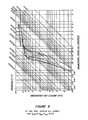
- Figure 5 is a graph of magnetization, permeability and saturation curves for the chromium-bearing Fe75Cr1B8.5Si15.5 alloy of the present invention at DC and higher frequencies.
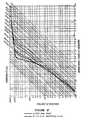
- the present alloy with chromium additions has been shown to have DC induction properties superior to AL 4750 at above 300 Gauss. As better shown in Figure 6, the slightly squarer properties result in a higher DC permeability.
- Figure 6 is a graph of magnetization, permeability and saturation curves for the same chromium-bearing alloy of the present invention at DC magnetizing force in comparison with AL 4750 alloys at DC and higher frequencies. At inductions lower than 300 Gauss, the properties are still within the range of the AL 4750 alloy, althoughfor60 Hertz service the permeability at 4 Gauss is only 7500, which is lower than normally required of AL 4750 alloys.
- Figure 7 is a graph of core loss and apparent core loss versus induction for AL 4750 alloy and the same chromium-bearing alloy of the present invention. Core losses of the alloy compare very favourably and are nominally one-half that of AL 4750, a very important feature, especially for transformer core applications.
- Fe-B-Si alloys containing chromium for alloys disclosed in pending U.S. Patent Application Serial No. 235,064, filed February 17, 1981 by the common Assignee of the present invention.
- Those alloys generally contain 77-80% iron, 12-16% boron and 5-10% silicon.
- two compositions, Fe 79 B 14.5 Cr 0.5 Si 6 , Fe 81 B 12.5 Cr 0.5 Si 6 were draw cast in the same manner as were the other alloys mentioned herein.
- Chromium also improved the castability of these alloys. The molten puddle, stripping from the casting wheel surface and surface quality of the strip were improved as desired with regard to alloys of the present invention.
- Magnetic properties of the alloys set forth in Table IV show good core loss and hysterisis loop squareness with a minor loss in magnetic saturation when compared to similar alloys without chromium.
- the present invention provides alloys useful for electrical applications and articles made from those alloys having good magnetic properties.
- the chromium-containing alloys of the present invention can be made less expensively because they use lower amounts of costly boron.
- the alloys are amorphous, ductile and have a thermal stability greater than those iron-boron-silicon alloys having more than 10% B and less than 15% Si.
- additions of chromium to Fe-B-Si alloys are critical to improve the castability of the alloys, as well as enhancing the amorphousness and maintaining good magnetic properties.
Landscapes
- Chemical & Material Sciences (AREA)
- Engineering & Computer Science (AREA)
- Materials Engineering (AREA)
- Mechanical Engineering (AREA)
- Metallurgy (AREA)
- Organic Chemistry (AREA)
- Physics & Mathematics (AREA)
- Electromagnetism (AREA)
- Dispersion Chemistry (AREA)
- Power Engineering (AREA)
- Soft Magnetic Materials (AREA)
- Laminated Bodies (AREA)
- Continuous Casting (AREA)
- Refinement Of Pig-Iron, Manufacture Of Cast Iron, And Steel Manufacture Other Than In Revolving Furnaces (AREA)
- Manufacturing Of Steel Electrode Plates (AREA)
- Heat Treatment Of Sheet Steel (AREA)
- Glass Compositions (AREA)
- Manufacture Of Alloys Or Alloy Compounds (AREA)
- Materials For Medical Uses (AREA)
- Golf Clubs (AREA)
- Polishing Bodies And Polishing Tools (AREA)
Applications Claiming Priority (2)
| Application Number | Priority Date | Filing Date | Title |
|---|---|---|---|
| US382823 | 1982-05-27 | ||
| US06/382,823 US4450206A (en) | 1982-05-27 | 1982-05-27 | Amorphous metals and articles made thereof |
Publications (3)
| Publication Number | Publication Date |
|---|---|
| EP0095830A2 true EP0095830A2 (de) | 1983-12-07 |
| EP0095830A3 EP0095830A3 (en) | 1984-07-04 |
| EP0095830B1 EP0095830B1 (de) | 1986-07-30 |
Family
ID=23510542
Family Applications (1)
| Application Number | Title | Priority Date | Filing Date |
|---|---|---|---|
| EP83301711A Expired EP0095830B1 (de) | 1982-05-27 | 1983-03-28 | Amorphe Legierungen und daraus hergestellte Gegenstände |
Country Status (15)
| Country | Link |
|---|---|
| US (1) | US4450206A (de) |
| EP (1) | EP0095830B1 (de) |
| JP (1) | JPS58210154A (de) |
| KR (1) | KR870002021B1 (de) |
| AT (1) | ATE21124T1 (de) |
| AU (1) | AU553728B2 (de) |
| BR (1) | BR8207586A (de) |
| CA (1) | CA1223755A (de) |
| DE (1) | DE3364853D1 (de) |
| ES (1) | ES520111A0 (de) |
| MX (1) | MX158174A (de) |
| NO (1) | NO158581C (de) |
| PL (1) | PL242231A1 (de) |
| RO (1) | RO86182B (de) |
| YU (1) | YU2383A (de) |
Cited By (2)
| Publication number | Priority date | Publication date | Assignee | Title |
|---|---|---|---|---|
| EP0713925A1 (de) * | 1994-11-22 | 1996-05-29 | Kawasaki Steel Corporation | Amorphe Legierung auf Eisenbasis und Verfahren zu deren Herstellung |
| CN102737802A (zh) * | 2012-07-02 | 2012-10-17 | 浙江嘉康电子股份有限公司 | 线圈磁粉一体成型式电感及其制作方法 |
Families Citing this family (9)
| Publication number | Priority date | Publication date | Assignee | Title |
|---|---|---|---|---|
| JPS60106949A (ja) * | 1983-11-15 | 1985-06-12 | Unitika Ltd | 疲労特性と靭性に優れた非晶質鉄基合金 |
| DE3442009A1 (de) * | 1983-11-18 | 1985-06-05 | Nippon Steel Corp., Tokio/Tokyo | Amorphes legiertes band mit grosser dicke und verfahren zu dessen herstellung |
| AU576431B2 (en) * | 1985-06-27 | 1988-08-25 | Standard Oil Company, The | Corrosion resistant amorphous ferrous alloys |
| JPH0834154B2 (ja) * | 1986-11-06 | 1996-03-29 | ソニー株式会社 | 軟磁性薄膜 |
| CN1025931C (zh) * | 1992-06-05 | 1994-09-14 | 冶金工业部钢铁研究总院 | 铁镍基高导磁非晶态合金 |
| US6273967B1 (en) | 1996-01-31 | 2001-08-14 | Kawasaki Steel Corporation | Low boron amorphous alloy and process for producing same |
| US7057489B2 (en) * | 1997-08-21 | 2006-06-06 | Metglas, Inc. | Segmented transformer core |
| JP3929327B2 (ja) * | 2002-03-01 | 2007-06-13 | 独立行政法人科学技術振興機構 | 軟磁性金属ガラス合金 |
| CN110010208B (zh) * | 2019-04-22 | 2023-02-28 | 东北大学 | V2O5-CaO-Cr2O3三元系相图的建立方法 |
Family Cites Families (15)
| Publication number | Priority date | Publication date | Assignee | Title |
|---|---|---|---|---|
| CH461715A (fr) * | 1966-07-06 | 1968-08-31 | Battelle Development Corp | Procédé de fabrication d'un produit continu à partir d'une matière en fusion |
| US3940293A (en) * | 1972-12-20 | 1976-02-24 | Allied Chemical Corporation | Method of producing amorphous cutting blades |
| US3856513A (en) * | 1972-12-26 | 1974-12-24 | Allied Chem | Novel amorphous metals and amorphous metal articles |
| GB1505841A (en) * | 1974-01-12 | 1978-03-30 | Watanabe H | Iron-chromium amorphous alloys |
| US4052201A (en) * | 1975-06-26 | 1977-10-04 | Allied Chemical Corporation | Amorphous alloys with improved resistance to embrittlement upon heat treatment |
| US4030892A (en) * | 1976-03-02 | 1977-06-21 | Allied Chemical Corporation | Flexible electromagnetic shield comprising interlaced glassy alloy filaments |
| US4142571A (en) * | 1976-10-22 | 1979-03-06 | Allied Chemical Corporation | Continuous casting method for metallic strips |
| US4188211A (en) * | 1977-02-18 | 1980-02-12 | Tdk Electronics Company, Limited | Thermally stable amorphous magnetic alloy |
| JPS5949299B2 (ja) * | 1977-09-12 | 1984-12-01 | ソニー株式会社 | 非晶質磁性合金 |
| US4225339A (en) * | 1977-12-28 | 1980-09-30 | Tokyo Shibaura Denki Kabushiki Kaisha | Amorphous alloy of high magnetic permeability |
| US4231816A (en) * | 1977-12-30 | 1980-11-04 | International Business Machines Corporation | Amorphous metallic and nitrogen containing alloy films |
| US4236946A (en) * | 1978-03-13 | 1980-12-02 | International Business Machines Corporation | Amorphous magnetic thin films with highly stable easy axis |
| US4217135A (en) * | 1979-05-04 | 1980-08-12 | General Electric Company | Iron-boron-silicon ternary amorphous alloys |
| US4219355A (en) * | 1979-05-25 | 1980-08-26 | Allied Chemical Corporation | Iron-metalloid amorphous alloys for electromagnetic devices |
| JPS56257A (en) * | 1979-06-13 | 1981-01-06 | Hitachi Ltd | Amorphous alloy |
-
1982
- 1982-05-27 US US06/382,823 patent/US4450206A/en not_active Expired - Lifetime
- 1982-12-24 AU AU91862/82A patent/AU553728B2/en not_active Ceased
- 1982-12-30 BR BR8207586A patent/BR8207586A/pt not_active IP Right Cessation
-
1983
- 1983-01-05 CA CA000418948A patent/CA1223755A/en not_active Expired
- 1983-01-06 RO RO109628A patent/RO86182B/ro unknown
- 1983-01-06 YU YU00023/83A patent/YU2383A/xx unknown
- 1983-01-07 KR KR1019830000040A patent/KR870002021B1/ko not_active Expired
- 1983-01-10 MX MX195864A patent/MX158174A/es unknown
- 1983-01-14 NO NO830121A patent/NO158581C/no unknown
- 1983-02-25 ES ES520111A patent/ES520111A0/es active Granted
- 1983-03-02 JP JP58034311A patent/JPS58210154A/ja active Granted
- 1983-03-28 AT AT83301711T patent/ATE21124T1/de not_active IP Right Cessation
- 1983-03-28 EP EP83301711A patent/EP0095830B1/de not_active Expired
- 1983-03-28 DE DE8383301711T patent/DE3364853D1/de not_active Expired
- 1983-05-27 PL PL24223183A patent/PL242231A1/xx unknown
Cited By (2)
| Publication number | Priority date | Publication date | Assignee | Title |
|---|---|---|---|---|
| EP0713925A1 (de) * | 1994-11-22 | 1996-05-29 | Kawasaki Steel Corporation | Amorphe Legierung auf Eisenbasis und Verfahren zu deren Herstellung |
| CN102737802A (zh) * | 2012-07-02 | 2012-10-17 | 浙江嘉康电子股份有限公司 | 线圈磁粉一体成型式电感及其制作方法 |
Also Published As
| Publication number | Publication date |
|---|---|
| AU553728B2 (en) | 1986-07-24 |
| EP0095830A3 (en) | 1984-07-04 |
| ATE21124T1 (de) | 1986-08-15 |
| US4450206A (en) | 1984-05-22 |
| KR870002021B1 (ko) | 1987-11-30 |
| CA1223755A (en) | 1987-07-07 |
| RO86182A (ro) | 1985-03-15 |
| ES8500341A1 (es) | 1984-10-16 |
| JPS58210154A (ja) | 1983-12-07 |
| PL242231A1 (en) | 1984-02-13 |
| KR840003295A (ko) | 1984-08-20 |
| MX158174A (es) | 1989-01-13 |
| NO830121L (no) | 1983-11-28 |
| NO158581B (no) | 1988-06-27 |
| BR8207586A (pt) | 1984-04-17 |
| RO86182B (ro) | 1985-04-02 |
| ES520111A0 (es) | 1984-10-16 |
| NO158581C (no) | 1988-10-05 |
| DE3364853D1 (en) | 1986-09-04 |
| AU9186282A (en) | 1983-12-01 |
| EP0095830B1 (de) | 1986-07-30 |
| JPH0317893B2 (de) | 1991-03-11 |
| YU2383A (en) | 1986-02-28 |
Similar Documents
| Publication | Publication Date | Title |
|---|---|---|
| US5370749A (en) | Amorphous metal alloy strip | |
| US4152144A (en) | Metallic glasses having a combination of high permeability, low magnetostriction, low ac core loss and high thermal stability | |
| US7935196B2 (en) | Soft magnetic ribbon, magnetic core, magnetic part and process for producing soft magnetic ribbon | |
| US5200002A (en) | Amorphous low-retentivity alloy | |
| GB1578654A (en) | Magnetic devices including amorphous alloys | |
| EP0095830B1 (de) | Amorphe Legierungen und daraus hergestellte Gegenstände | |
| EP0072893B1 (de) | Metallische Gläser mit einer Kombination folgender Eigenschaften: hohe Permeabilität, niedrige Koerzitivkraft, niedriger Kernverlust bei Wechselstrom, niedrige Erregerkraft, hohe thermische Stabilität | |
| US6077367A (en) | Method of production glassy alloy | |
| JP2552274B2 (ja) | パ−ミンバ−特性を備えたガラス質合金 | |
| JP2550449B2 (ja) | 磁束密度の大きなトランス鉄心用非晶質合金薄帯 | |
| EP0084138B1 (de) | Metallegierungen mit Glasstruktur, einer Magnetostriktion in der Nähe von Null und hoher thermischer und magnetischer Stabilität | |
| US4501316A (en) | Method of casting amorphous metals | |
| JP2823203B2 (ja) | Fe基軟磁性合金 | |
| AU2024354536A1 (en) | Fe-Based Amorphous Alloy and Fe-Based Amorphous Alloy Ribbon | |
| JPS5834162A (ja) | 良好な耐磁気時効性を有する非晶質合金及びその薄帯の製造法 | |
| US4834814A (en) | Metallic glasses having a combination of high permeability, low coercivity, low AC core loss, low exciting power and high thermal stability | |
| EP0095831A2 (de) | Amorphe Legierungen und daraus hergestellte Gegenstände | |
| JPS6052557A (ja) | 低損失非晶質磁性合金 | |
| US4938267A (en) | Glassy metal alloys with perminvar characteristics | |
| JPH02500788A (ja) | 高周波使用のための磁歪がほぼ0のガラス質合金 | |
| JP3058675B2 (ja) | 超微結晶磁性合金 | |
| JP2791173B2 (ja) | 磁 心 | |
| JPH01290746A (ja) | 軟磁性合金 | |
| JPS6122023B2 (de) | ||
| JPH01180944A (ja) | チョークコイル用非晶質磁性合金とその製造方法 |
Legal Events
| Date | Code | Title | Description |
|---|---|---|---|
| PUAI | Public reference made under article 153(3) epc to a published international application that has entered the european phase |
Free format text: ORIGINAL CODE: 0009012 |
|
| AK | Designated contracting states |
Designated state(s): AT BE CH DE FR GB IT LI LU NL SE |
|
| PUAL | Search report despatched |
Free format text: ORIGINAL CODE: 0009013 |
|
| AK | Designated contracting states |
Designated state(s): AT BE CH DE FR GB IT LI LU NL SE |
|
| 17P | Request for examination filed |
Effective date: 19841015 |
|
| ITF | It: translation for a ep patent filed | ||
| GRAA | (expected) grant |
Free format text: ORIGINAL CODE: 0009210 |
|
| AK | Designated contracting states |
Kind code of ref document: B1 Designated state(s): AT BE CH DE FR GB IT LI LU NL SE |
|
| REF | Corresponds to: |
Ref document number: 21124 Country of ref document: AT Date of ref document: 19860815 Kind code of ref document: T |
|
| REF | Corresponds to: |
Ref document number: 3364853 Country of ref document: DE Date of ref document: 19860904 |
|
| ET | Fr: translation filed | ||
| PLBE | No opposition filed within time limit |
Free format text: ORIGINAL CODE: 0009261 |
|
| STAA | Information on the status of an ep patent application or granted ep patent |
Free format text: STATUS: NO OPPOSITION FILED WITHIN TIME LIMIT |
|
| 26N | No opposition filed | ||
| ITTA | It: last paid annual fee | ||
| EPTA | Lu: last paid annual fee | ||
| EAL | Se: european patent in force in sweden |
Ref document number: 83301711.4 |
|
| PGFP | Annual fee paid to national office [announced via postgrant information from national office to epo] |
Ref country code: LU Payment date: 19950201 Year of fee payment: 13 |
|
| PGFP | Annual fee paid to national office [announced via postgrant information from national office to epo] |
Ref country code: FR Payment date: 19950210 Year of fee payment: 13 Ref country code: CH Payment date: 19950210 Year of fee payment: 13 |
|
| PGFP | Annual fee paid to national office [announced via postgrant information from national office to epo] |
Ref country code: SE Payment date: 19950213 Year of fee payment: 13 |
|
| PGFP | Annual fee paid to national office [announced via postgrant information from national office to epo] |
Ref country code: BE Payment date: 19950221 Year of fee payment: 13 |
|
| PGFP | Annual fee paid to national office [announced via postgrant information from national office to epo] |
Ref country code: GB Payment date: 19950228 Year of fee payment: 13 |
|
| PGFP | Annual fee paid to national office [announced via postgrant information from national office to epo] |
Ref country code: NL Payment date: 19950331 Year of fee payment: 13 |
|
| PG25 | Lapsed in a contracting state [announced via postgrant information from national office to epo] |
Ref country code: LU Free format text: LAPSE BECAUSE OF NON-PAYMENT OF DUE FEES Effective date: 19960328 Ref country code: GB Effective date: 19960328 |
|
| PG25 | Lapsed in a contracting state [announced via postgrant information from national office to epo] |
Ref country code: SE Effective date: 19960329 |
|
| PG25 | Lapsed in a contracting state [announced via postgrant information from national office to epo] |
Ref country code: LI Effective date: 19960331 Ref country code: CH Effective date: 19960331 Ref country code: BE Effective date: 19960331 |
|
| BERE | Be: lapsed |
Owner name: ALLEGHENY LUDLUM STEEL CORP. Effective date: 19960331 |
|
| PG25 | Lapsed in a contracting state [announced via postgrant information from national office to epo] |
Ref country code: NL Effective date: 19961001 |
|
| REG | Reference to a national code |
Ref country code: CH Ref legal event code: PL |
|
| GBPC | Gb: european patent ceased through non-payment of renewal fee |
Effective date: 19960328 |
|
| PG25 | Lapsed in a contracting state [announced via postgrant information from national office to epo] |
Ref country code: FR Effective date: 19961129 |
|
| NLV4 | Nl: lapsed or anulled due to non-payment of the annual fee |
Effective date: 19961001 |
|
| EUG | Se: european patent has lapsed |
Ref document number: 83301711.4 |
|
| REG | Reference to a national code |
Ref country code: FR Ref legal event code: ST |
|
| PGFP | Annual fee paid to national office [announced via postgrant information from national office to epo] |
Ref country code: AT Payment date: 19970217 Year of fee payment: 15 |
|
| PGFP | Annual fee paid to national office [announced via postgrant information from national office to epo] |
Ref country code: DE Payment date: 19970225 Year of fee payment: 15 |
|
| PG25 | Lapsed in a contracting state [announced via postgrant information from national office to epo] |
Ref country code: AT Free format text: LAPSE BECAUSE OF NON-PAYMENT OF DUE FEES Effective date: 19980328 |
|
| PG25 | Lapsed in a contracting state [announced via postgrant information from national office to epo] |
Ref country code: DE Free format text: LAPSE BECAUSE OF NON-PAYMENT OF DUE FEES Effective date: 19981201 |