EP0097952B1 - Mehrschichtiges Element für Analyse - Google Patents
Mehrschichtiges Element für Analyse Download PDFInfo
- Publication number
- EP0097952B1 EP0097952B1 EP83106271A EP83106271A EP0097952B1 EP 0097952 B1 EP0097952 B1 EP 0097952B1 EP 83106271 A EP83106271 A EP 83106271A EP 83106271 A EP83106271 A EP 83106271A EP 0097952 B1 EP0097952 B1 EP 0097952B1
- Authority
- EP
- European Patent Office
- Prior art keywords
- sheet
- analytical element
- labelled
- multilayer analytical
- reaction
- Prior art date
- Legal status (The legal status is an assumption and is not a legal conclusion. Google has not performed a legal analysis and makes no representation as to the accuracy of the status listed.)
- Expired
Links
- 238000006243 chemical reaction Methods 0.000 claims description 138
- 239000000126 substance Substances 0.000 claims description 109
- 239000012491 analyte Substances 0.000 claims description 93
- 239000007788 liquid Substances 0.000 claims description 86
- 238000003892 spreading Methods 0.000 claims description 59
- 230000007480 spreading Effects 0.000 claims description 58
- 108090000623 proteins and genes Proteins 0.000 claims description 44
- 102000004169 proteins and genes Human genes 0.000 claims description 43
- 238000005259 measurement Methods 0.000 claims description 31
- 238000000926 separation method Methods 0.000 claims description 30
- 239000000463 material Substances 0.000 claims description 25
- 239000002657 fibrous material Substances 0.000 claims description 17
- 239000010419 fine particle Substances 0.000 claims description 13
- 238000007421 fluorometric assay Methods 0.000 claims description 12
- 239000002245 particle Substances 0.000 claims description 11
- 239000000853 adhesive Substances 0.000 claims description 8
- 239000000427 antigen Substances 0.000 claims description 8
- 102000036639 antigens Human genes 0.000 claims description 8
- 108091007433 antigens Proteins 0.000 claims description 8
- 230000001070 adhesive effect Effects 0.000 claims description 7
- 150000004676 glycans Chemical class 0.000 claims description 4
- 229920001282 polysaccharide Polymers 0.000 claims description 4
- 239000005017 polysaccharide Substances 0.000 claims description 4
- 238000001179 sorption measurement Methods 0.000 claims description 4
- 230000004927 fusion Effects 0.000 claims description 2
- 230000005855 radiation Effects 0.000 claims 3
- 238000004040 coloring Methods 0.000 claims 1
- 238000000034 method Methods 0.000 description 30
- -1 polyethylene terephthalate Polymers 0.000 description 21
- 238000009739 binding Methods 0.000 description 17
- 239000003153 chemical reaction reagent Substances 0.000 description 16
- 239000003795 chemical substances by application Substances 0.000 description 16
- 210000002966 serum Anatomy 0.000 description 16
- 239000000243 solution Substances 0.000 description 16
- 238000003556 assay Methods 0.000 description 14
- 230000008859 change Effects 0.000 description 14
- 239000004744 fabric Substances 0.000 description 14
- 229920000936 Agarose Polymers 0.000 description 11
- 239000003365 glass fiber Substances 0.000 description 11
- 239000000872 buffer Substances 0.000 description 10
- 239000010410 layer Substances 0.000 description 10
- 239000000843 powder Substances 0.000 description 10
- XEKOWRVHYACXOJ-UHFFFAOYSA-N Ethyl acetate Chemical compound CCOC(C)=O XEKOWRVHYACXOJ-UHFFFAOYSA-N 0.000 description 9
- OKKJLVBELUTLKV-UHFFFAOYSA-N Methanol Chemical compound OC OKKJLVBELUTLKV-UHFFFAOYSA-N 0.000 description 9
- 239000000835 fiber Substances 0.000 description 9
- 239000000047 product Substances 0.000 description 9
- XUIIKFGFIJCVMT-GFCCVEGCSA-N D-thyroxine Chemical compound IC1=CC(C[C@@H](N)C(O)=O)=CC(I)=C1OC1=CC(I)=C(O)C(I)=C1 XUIIKFGFIJCVMT-GFCCVEGCSA-N 0.000 description 8
- WYURNTSHIVDZCO-UHFFFAOYSA-N Tetrahydrofuran Chemical compound C1CCOC1 WYURNTSHIVDZCO-UHFFFAOYSA-N 0.000 description 8
- ZMANZCXQSJIPKH-UHFFFAOYSA-N Triethylamine Chemical compound CCN(CC)CC ZMANZCXQSJIPKH-UHFFFAOYSA-N 0.000 description 8
- 230000002860 competitive effect Effects 0.000 description 8
- 230000008569 process Effects 0.000 description 8
- 229940034208 thyroxine Drugs 0.000 description 8
- XUIIKFGFIJCVMT-UHFFFAOYSA-N thyroxine-binding globulin Natural products IC1=CC(CC([NH3+])C([O-])=O)=CC(I)=C1OC1=CC(I)=C(O)C(I)=C1 XUIIKFGFIJCVMT-UHFFFAOYSA-N 0.000 description 8
- 239000000203 mixture Substances 0.000 description 7
- XLYOFNOQVPJJNP-UHFFFAOYSA-N water Substances O XLYOFNOQVPJJNP-UHFFFAOYSA-N 0.000 description 7
- 230000027455 binding Effects 0.000 description 6
- 150000001875 compounds Chemical class 0.000 description 6
- 238000003018 immunoassay Methods 0.000 description 6
- 229920000139 polyethylene terephthalate Polymers 0.000 description 6
- 239000005020 polyethylene terephthalate Substances 0.000 description 6
- 238000002360 preparation method Methods 0.000 description 6
- 238000011088 calibration curve Methods 0.000 description 5
- 238000001514 detection method Methods 0.000 description 5
- 239000006185 dispersion Substances 0.000 description 5
- 238000011534 incubation Methods 0.000 description 5
- 239000002207 metabolite Substances 0.000 description 5
- 229920000642 polymer Polymers 0.000 description 5
- 238000012207 quantitative assay Methods 0.000 description 5
- DHMQDGOQFOQNFH-UHFFFAOYSA-N Glycine Chemical compound NCC(O)=O DHMQDGOQFOQNFH-UHFFFAOYSA-N 0.000 description 4
- 241000283973 Oryctolagus cuniculus Species 0.000 description 4
- 230000009471 action Effects 0.000 description 4
- 150000001413 amino acids Chemical class 0.000 description 4
- 230000009137 competitive binding Effects 0.000 description 4
- 229940079593 drug Drugs 0.000 description 4
- 239000003814 drug Substances 0.000 description 4
- 230000008105 immune reaction Effects 0.000 description 4
- 229910052751 metal Inorganic materials 0.000 description 4
- 239000002184 metal Substances 0.000 description 4
- 102000004196 processed proteins & peptides Human genes 0.000 description 4
- 108090000765 processed proteins & peptides Proteins 0.000 description 4
- 239000004094 surface-active agent Substances 0.000 description 4
- 229920002994 synthetic fiber Polymers 0.000 description 4
- 239000012209 synthetic fiber Substances 0.000 description 4
- YLQBMQCUIZJEEH-UHFFFAOYSA-N tetrahydrofuran Natural products C=1C=COC=1 YLQBMQCUIZJEEH-UHFFFAOYSA-N 0.000 description 4
- CSCPPACGZOOCGX-UHFFFAOYSA-N Acetone Chemical compound CC(C)=O CSCPPACGZOOCGX-UHFFFAOYSA-N 0.000 description 3
- 108010088751 Albumins Proteins 0.000 description 3
- 102000009027 Albumins Human genes 0.000 description 3
- 108091003079 Bovine Serum Albumin Proteins 0.000 description 3
- 229920002284 Cellulose triacetate Polymers 0.000 description 3
- 229920000742 Cotton Polymers 0.000 description 3
- PEDCQBHIVMGVHV-UHFFFAOYSA-N Glycerine Chemical compound OCC(O)CO PEDCQBHIVMGVHV-UHFFFAOYSA-N 0.000 description 3
- 229920000297 Rayon Polymers 0.000 description 3
- HEMHJVSKTPXQMS-UHFFFAOYSA-M Sodium hydroxide Chemical compound [OH-].[Na+] HEMHJVSKTPXQMS-UHFFFAOYSA-M 0.000 description 3
- NNLVGZFZQQXQNW-ADJNRHBOSA-N [(2r,3r,4s,5r,6s)-4,5-diacetyloxy-3-[(2s,3r,4s,5r,6r)-3,4,5-triacetyloxy-6-(acetyloxymethyl)oxan-2-yl]oxy-6-[(2r,3r,4s,5r,6s)-4,5,6-triacetyloxy-2-(acetyloxymethyl)oxan-3-yl]oxyoxan-2-yl]methyl acetate Chemical compound O([C@@H]1O[C@@H]([C@H]([C@H](OC(C)=O)[C@H]1OC(C)=O)O[C@H]1[C@@H]([C@@H](OC(C)=O)[C@H](OC(C)=O)[C@@H](COC(C)=O)O1)OC(C)=O)COC(=O)C)[C@@H]1[C@@H](COC(C)=O)O[C@@H](OC(C)=O)[C@H](OC(C)=O)[C@H]1OC(C)=O NNLVGZFZQQXQNW-ADJNRHBOSA-N 0.000 description 3
- 238000004458 analytical method Methods 0.000 description 3
- TZCXTZWJZNENPQ-UHFFFAOYSA-L barium sulfate Inorganic materials [Ba+2].[O-]S([O-])(=O)=O TZCXTZWJZNENPQ-UHFFFAOYSA-L 0.000 description 3
- 229940098773 bovine serum albumin Drugs 0.000 description 3
- 229920002678 cellulose Polymers 0.000 description 3
- 238000001035 drying Methods 0.000 description 3
- MHMNJMPURVTYEJ-UHFFFAOYSA-N fluorescein-5-isothiocyanate Chemical compound O1C(=O)C2=CC(N=C=S)=CC=C2C21C1=CC=C(O)C=C1OC1=CC(O)=CC=C21 MHMNJMPURVTYEJ-UHFFFAOYSA-N 0.000 description 3
- 238000005227 gel permeation chromatography Methods 0.000 description 3
- 230000001965 increasing effect Effects 0.000 description 3
- 125000000956 methoxy group Chemical group [H]C([H])([H])O* 0.000 description 3
- 239000000049 pigment Substances 0.000 description 3
- 229920003023 plastic Polymers 0.000 description 3
- 239000004033 plastic Substances 0.000 description 3
- 239000011148 porous material Substances 0.000 description 3
- 239000003755 preservative agent Substances 0.000 description 3
- 230000000717 retained effect Effects 0.000 description 3
- 238000012360 testing method Methods 0.000 description 3
- LJCWRJYVPJJTMB-UHFFFAOYSA-N (2,5-dioxopyrrolidin-1-yl) 2-[(2-methylpropan-2-yl)oxycarbonylamino]acetate Chemical compound CC(C)(C)OC(=O)NCC(=O)ON1C(=O)CCC1=O LJCWRJYVPJJTMB-UHFFFAOYSA-N 0.000 description 2
- 241000186046 Actinomyces Species 0.000 description 2
- 229920001817 Agar Polymers 0.000 description 2
- 241000283707 Capra Species 0.000 description 2
- 108010010803 Gelatin Proteins 0.000 description 2
- 102000006395 Globulins Human genes 0.000 description 2
- 108010044091 Globulins Proteins 0.000 description 2
- 239000004471 Glycine Substances 0.000 description 2
- 229920002292 Nylon 6 Polymers 0.000 description 2
- 239000004952 Polyamide Substances 0.000 description 2
- 239000004698 Polyethylene Substances 0.000 description 2
- 239000004743 Polypropylene Substances 0.000 description 2
- 239000004793 Polystyrene Substances 0.000 description 2
- 229920002684 Sepharose Polymers 0.000 description 2
- 108010071390 Serum Albumin Proteins 0.000 description 2
- 102000007562 Serum Albumin Human genes 0.000 description 2
- PXIPVTKHYLBLMZ-UHFFFAOYSA-N Sodium azide Chemical compound [Na+].[N-]=[N+]=[N-] PXIPVTKHYLBLMZ-UHFFFAOYSA-N 0.000 description 2
- 241000700605 Viruses Species 0.000 description 2
- 238000010521 absorption reaction Methods 0.000 description 2
- 239000002253 acid Substances 0.000 description 2
- 239000008272 agar Substances 0.000 description 2
- 239000003905 agrochemical Substances 0.000 description 2
- 230000000890 antigenic effect Effects 0.000 description 2
- 239000010425 asbestos Substances 0.000 description 2
- 230000001588 bifunctional effect Effects 0.000 description 2
- 239000011230 binding agent Substances 0.000 description 2
- IISBACLAFKSPIT-UHFFFAOYSA-N bisphenol A Chemical compound C=1C=C(O)C=CC=1C(C)(C)C1=CC=C(O)C=C1 IISBACLAFKSPIT-UHFFFAOYSA-N 0.000 description 2
- 239000007853 buffer solution Substances 0.000 description 2
- RYYVLZVUVIJVGH-UHFFFAOYSA-N caffeine Chemical compound CN1C(=O)N(C)C(=O)C2=C1N=CN2C RYYVLZVUVIJVGH-UHFFFAOYSA-N 0.000 description 2
- OROGSEYTTFOCAN-DNJOTXNNSA-N codeine Chemical compound C([C@H]1[C@H](N(CC[C@@]112)C)C3)=C[C@H](O)[C@@H]1OC1=C2C3=CC=C1OC OROGSEYTTFOCAN-DNJOTXNNSA-N 0.000 description 2
- 239000000470 constituent Substances 0.000 description 2
- 238000007796 conventional method Methods 0.000 description 2
- 238000001816 cooling Methods 0.000 description 2
- 238000002425 crystallisation Methods 0.000 description 2
- 230000008025 crystallization Effects 0.000 description 2
- 238000004090 dissolution Methods 0.000 description 2
- 239000000975 dye Substances 0.000 description 2
- 238000000605 extraction Methods 0.000 description 2
- 239000007850 fluorescent dye Substances 0.000 description 2
- 239000011888 foil Substances 0.000 description 2
- 238000004108 freeze drying Methods 0.000 description 2
- 239000008273 gelatin Substances 0.000 description 2
- 229920000159 gelatin Polymers 0.000 description 2
- 235000019322 gelatine Nutrition 0.000 description 2
- 235000011852 gelatine desserts Nutrition 0.000 description 2
- 239000011521 glass Substances 0.000 description 2
- 229940088597 hormone Drugs 0.000 description 2
- 239000005556 hormone Substances 0.000 description 2
- GPRLSGONYQIRFK-UHFFFAOYSA-N hydron Chemical compound [H+] GPRLSGONYQIRFK-UHFFFAOYSA-N 0.000 description 2
- NOESYZHRGYRDHS-UHFFFAOYSA-N insulin Chemical compound N1C(=O)C(NC(=O)C(CCC(N)=O)NC(=O)C(CCC(O)=O)NC(=O)C(C(C)C)NC(=O)C(NC(=O)CN)C(C)CC)CSSCC(C(NC(CO)C(=O)NC(CC(C)C)C(=O)NC(CC=2C=CC(O)=CC=2)C(=O)NC(CCC(N)=O)C(=O)NC(CC(C)C)C(=O)NC(CCC(O)=O)C(=O)NC(CC(N)=O)C(=O)NC(CC=2C=CC(O)=CC=2)C(=O)NC(CSSCC(NC(=O)C(C(C)C)NC(=O)C(CC(C)C)NC(=O)C(CC=2C=CC(O)=CC=2)NC(=O)C(CC(C)C)NC(=O)C(C)NC(=O)C(CCC(O)=O)NC(=O)C(C(C)C)NC(=O)C(CC(C)C)NC(=O)C(CC=2NC=NC=2)NC(=O)C(CO)NC(=O)CNC2=O)C(=O)NCC(=O)NC(CCC(O)=O)C(=O)NC(CCCNC(N)=N)C(=O)NCC(=O)NC(CC=3C=CC=CC=3)C(=O)NC(CC=3C=CC=CC=3)C(=O)NC(CC=3C=CC(O)=CC=3)C(=O)NC(C(C)O)C(=O)N3C(CCC3)C(=O)NC(CCCCN)C(=O)NC(C)C(O)=O)C(=O)NC(CC(N)=O)C(O)=O)=O)NC(=O)C(C(C)CC)NC(=O)C(CO)NC(=O)C(C(C)O)NC(=O)C1CSSCC2NC(=O)C(CC(C)C)NC(=O)C(NC(=O)C(CCC(N)=O)NC(=O)C(CC(N)=O)NC(=O)C(NC(=O)C(N)CC=1C=CC=CC=1)C(C)C)CC1=CN=CN1 NOESYZHRGYRDHS-UHFFFAOYSA-N 0.000 description 2
- BQJCRHHNABKAKU-KBQPJGBKSA-N morphine Chemical compound O([C@H]1[C@H](C=C[C@H]23)O)C4=C5[C@@]12CCN(C)[C@@H]3CC5=CC=C4O BQJCRHHNABKAKU-KBQPJGBKSA-N 0.000 description 2
- 239000000813 peptide hormone Substances 0.000 description 2
- 239000012466 permeate Substances 0.000 description 2
- 239000002985 plastic film Substances 0.000 description 2
- 229920002647 polyamide Polymers 0.000 description 2
- 229920000573 polyethylene Polymers 0.000 description 2
- 229920001184 polypeptide Polymers 0.000 description 2
- 229920001155 polypropylene Polymers 0.000 description 2
- 229920002223 polystyrene Polymers 0.000 description 2
- 239000004800 polyvinyl chloride Substances 0.000 description 2
- 229920000915 polyvinyl chloride Polymers 0.000 description 2
- 239000011541 reaction mixture Substances 0.000 description 2
- 230000009257 reactivity Effects 0.000 description 2
- 238000011160 research Methods 0.000 description 2
- 229910052895 riebeckite Inorganic materials 0.000 description 2
- YGSDEFSMJLZEOE-UHFFFAOYSA-N salicylic acid Chemical compound OC(=O)C1=CC=CC=C1O YGSDEFSMJLZEOE-UHFFFAOYSA-N 0.000 description 2
- 230000035945 sensitivity Effects 0.000 description 2
- 239000002904 solvent Substances 0.000 description 2
- 239000000725 suspension Substances 0.000 description 2
- 229920001059 synthetic polymer Polymers 0.000 description 2
- ZFXYFBGIUFBOJW-UHFFFAOYSA-N theophylline Chemical compound O=C1N(C)C(=O)N(C)C2=C1NC=N2 ZFXYFBGIUFBOJW-UHFFFAOYSA-N 0.000 description 2
- 238000005406 washing Methods 0.000 description 2
- KMFADWSLCJBFMN-UHFFFAOYSA-N (2,5-dioxopyrrolidin-1-yl) 2-[[2-[(2-methylpropan-2-yl)oxycarbonylamino]acetyl]amino]acetate Chemical compound CC(C)(C)OC(=O)NCC(=O)NCC(=O)ON1C(=O)CCC1=O KMFADWSLCJBFMN-UHFFFAOYSA-N 0.000 description 1
- UCTWMZQNUQWSLP-VIFPVBQESA-N (R)-adrenaline Chemical compound CNC[C@H](O)C1=CC=C(O)C(O)=C1 UCTWMZQNUQWSLP-VIFPVBQESA-N 0.000 description 1
- 229930182837 (R)-adrenaline Natural products 0.000 description 1
- KWTSXDURSIMDCE-QMMMGPOBSA-N (S)-amphetamine Chemical compound C[C@H](N)CC1=CC=CC=C1 KWTSXDURSIMDCE-QMMMGPOBSA-N 0.000 description 1
- FTOAOBMCPZCFFF-UHFFFAOYSA-N 5,5-diethylbarbituric acid Chemical compound CCC1(CC)C(=O)NC(=O)NC1=O FTOAOBMCPZCFFF-UHFFFAOYSA-N 0.000 description 1
- USSIQXCVUWKGNF-UHFFFAOYSA-N 6-(dimethylamino)-4,4-diphenylheptan-3-one Chemical compound C=1C=CC=CC=1C(CC(C)N(C)C)(C(=O)CC)C1=CC=CC=C1 USSIQXCVUWKGNF-UHFFFAOYSA-N 0.000 description 1
- MGKOJZBNNSRXRO-UHFFFAOYSA-N 6-(n-methylanilino)naphthalene-2-sulfonic acid Chemical compound C=1C=C2C=C(S(O)(=O)=O)C=CC2=CC=1N(C)C1=CC=CC=C1 MGKOJZBNNSRXRO-UHFFFAOYSA-N 0.000 description 1
- CJIJXIFQYOPWTF-UHFFFAOYSA-N 7-hydroxycoumarin Natural products O1C(=O)C=CC2=CC(O)=CC=C21 CJIJXIFQYOPWTF-UHFFFAOYSA-N 0.000 description 1
- 102000007469 Actins Human genes 0.000 description 1
- 108010085238 Actins Proteins 0.000 description 1
- 241000321096 Adenoides Species 0.000 description 1
- 241000228212 Aspergillus Species 0.000 description 1
- 241000193830 Bacillus <bacterium> Species 0.000 description 1
- 241000193738 Bacillus anthracis Species 0.000 description 1
- 244000063299 Bacillus subtilis Species 0.000 description 1
- 235000014469 Bacillus subtilis Nutrition 0.000 description 1
- 102000006734 Beta-Globulins Human genes 0.000 description 1
- 108010087504 Beta-Globulins Proteins 0.000 description 1
- 229920002799 BoPET Polymers 0.000 description 1
- 240000008564 Boehmeria nivea Species 0.000 description 1
- BTBUEUYNUDRHOZ-UHFFFAOYSA-N Borate Chemical compound [O-]B([O-])[O-] BTBUEUYNUDRHOZ-UHFFFAOYSA-N 0.000 description 1
- 240000006248 Broussonetia kazinoki Species 0.000 description 1
- 241000222120 Candida <Saccharomycetales> Species 0.000 description 1
- 244000025254 Cannabis sativa Species 0.000 description 1
- 235000012766 Cannabis sativa ssp. sativa var. sativa Nutrition 0.000 description 1
- 235000012765 Cannabis sativa ssp. sativa var. spontanea Nutrition 0.000 description 1
- OKTJSMMVPCPJKN-UHFFFAOYSA-N Carbon Chemical compound [C] OKTJSMMVPCPJKN-UHFFFAOYSA-N 0.000 description 1
- 244000146553 Ceiba pentandra Species 0.000 description 1
- 235000003301 Ceiba pentandra Nutrition 0.000 description 1
- 229920008347 Cellulose acetate propionate Polymers 0.000 description 1
- 229920001747 Cellulose diacetate Polymers 0.000 description 1
- 229930186147 Cephalosporin Natural products 0.000 description 1
- 241000193449 Clostridium tetani Species 0.000 description 1
- 241001478240 Coccus Species 0.000 description 1
- 102000008186 Collagen Human genes 0.000 description 1
- 108010035532 Collagen Proteins 0.000 description 1
- 102400000739 Corticotropin Human genes 0.000 description 1
- 101800000414 Corticotropin Proteins 0.000 description 1
- 229920002307 Dextran Polymers 0.000 description 1
- IIUZTXTZRGLYTI-UHFFFAOYSA-N Dihydrogriseofulvin Natural products COC1CC(=O)CC(C)C11C(=O)C(C(OC)=CC(OC)=C2Cl)=C2O1 IIUZTXTZRGLYTI-UHFFFAOYSA-N 0.000 description 1
- 241001265525 Edgeworthia chrysantha Species 0.000 description 1
- 102000016942 Elastin Human genes 0.000 description 1
- 108010014258 Elastin Proteins 0.000 description 1
- 241000196324 Embryophyta Species 0.000 description 1
- 102000004190 Enzymes Human genes 0.000 description 1
- 108090000790 Enzymes Proteins 0.000 description 1
- 102400000921 Gastrin Human genes 0.000 description 1
- 108010052343 Gastrins Proteins 0.000 description 1
- 102400000321 Glucagon Human genes 0.000 description 1
- 108060003199 Glucagon Proteins 0.000 description 1
- 102000003886 Glycoproteins Human genes 0.000 description 1
- 108090000288 Glycoproteins Proteins 0.000 description 1
- 108010086677 Gonadotropins Proteins 0.000 description 1
- 102000006771 Gonadotropins Human genes 0.000 description 1
- UXWOXTQWVMFRSE-UHFFFAOYSA-N Griseoviridin Natural products O=C1OC(C)CC=C(C(NCC=CC=CC(O)CC(O)C2)=O)SCC1NC(=O)C1=COC2=N1 UXWOXTQWVMFRSE-UHFFFAOYSA-N 0.000 description 1
- 108010051696 Growth Hormone Proteins 0.000 description 1
- 102000018997 Growth Hormone Human genes 0.000 description 1
- UFHFLCQGNIYNRP-UHFFFAOYSA-N Hydrogen Chemical compound [H][H] UFHFLCQGNIYNRP-UHFFFAOYSA-N 0.000 description 1
- XQFRJNBWHJMXHO-RRKCRQDMSA-N IDUR Chemical compound C1[C@H](O)[C@@H](CO)O[C@H]1N1C(=O)NC(=O)C(I)=C1 XQFRJNBWHJMXHO-RRKCRQDMSA-N 0.000 description 1
- DGAQECJNVWCQMB-PUAWFVPOSA-M Ilexoside XXIX Chemical compound C[C@@H]1CC[C@@]2(CC[C@@]3(C(=CC[C@H]4[C@]3(CC[C@@H]5[C@@]4(CC[C@@H](C5(C)C)OS(=O)(=O)[O-])C)C)[C@@H]2[C@]1(C)O)C)C(=O)O[C@H]6[C@@H]([C@H]([C@@H]([C@H](O6)CO)O)O)O.[Na+] DGAQECJNVWCQMB-PUAWFVPOSA-M 0.000 description 1
- 108060003951 Immunoglobulin Proteins 0.000 description 1
- 102000018071 Immunoglobulin Fc Fragments Human genes 0.000 description 1
- 108010091135 Immunoglobulin Fc Fragments Proteins 0.000 description 1
- 108090001061 Insulin Proteins 0.000 description 1
- 102000004877 Insulin Human genes 0.000 description 1
- LPHGQDQBBGAPDZ-UHFFFAOYSA-N Isocaffeine Natural products CN1C(=O)N(C)C(=O)C2=C1N(C)C=N2 LPHGQDQBBGAPDZ-UHFFFAOYSA-N 0.000 description 1
- 239000005909 Kieselgur Substances 0.000 description 1
- 241000589902 Leptospira Species 0.000 description 1
- NNJVILVZKWQKPM-UHFFFAOYSA-N Lidocaine Chemical compound CCN(CC)CC(=O)NC1=C(C)C=CC=C1C NNJVILVZKWQKPM-UHFFFAOYSA-N 0.000 description 1
- 235000004431 Linum usitatissimum Nutrition 0.000 description 1
- 240000006240 Linum usitatissimum Species 0.000 description 1
- 102000004895 Lipoproteins Human genes 0.000 description 1
- 108090001030 Lipoproteins Proteins 0.000 description 1
- 239000004472 Lysine Substances 0.000 description 1
- KDXKERNSBIXSRK-UHFFFAOYSA-N Lysine Natural products NCCCCC(N)C(O)=O KDXKERNSBIXSRK-UHFFFAOYSA-N 0.000 description 1
- CSNNHWWHGAXBCP-UHFFFAOYSA-L Magnesium sulfate Chemical compound [Mg+2].[O-][S+2]([O-])([O-])[O-] CSNNHWWHGAXBCP-UHFFFAOYSA-L 0.000 description 1
- OFOBLEOULBTSOW-UHFFFAOYSA-N Malonic acid Chemical compound OC(=O)CC(O)=O OFOBLEOULBTSOW-UHFFFAOYSA-N 0.000 description 1
- NPPQSCRMBWNHMW-UHFFFAOYSA-N Meprobamate Chemical compound NC(=O)OCC(C)(CCC)COC(N)=O NPPQSCRMBWNHMW-UHFFFAOYSA-N 0.000 description 1
- 241001465754 Metazoa Species 0.000 description 1
- 102000001621 Mucoproteins Human genes 0.000 description 1
- 108010093825 Mucoproteins Proteins 0.000 description 1
- HRIGDSUXHLRUMR-UQKRIMTDSA-N N=C=S.IC1=CC(C[C@@H](C(=O)OC)NC(=O)CN)=CC(I)=C1OC1=CC(I)=C(O)C(I)=C1 Chemical compound N=C=S.IC1=CC(C[C@@H](C(=O)OC)NC(=O)CN)=CC(I)=C1OC1=CC(I)=C(O)C(I)=C1 HRIGDSUXHLRUMR-UQKRIMTDSA-N 0.000 description 1
- DDUHZTYCFQRHIY-UHFFFAOYSA-N Negwer: 6874 Natural products COC1=CC(=O)CC(C)C11C(=O)C(C(OC)=CC(OC)=C2Cl)=C2O1 DDUHZTYCFQRHIY-UHFFFAOYSA-N 0.000 description 1
- 241000187654 Nocardia Species 0.000 description 1
- 102000011931 Nucleoproteins Human genes 0.000 description 1
- 108010061100 Nucleoproteins Proteins 0.000 description 1
- 229920000305 Nylon 6,10 Polymers 0.000 description 1
- 229920002302 Nylon 6,6 Polymers 0.000 description 1
- 229910019142 PO4 Inorganic materials 0.000 description 1
- 229930182555 Penicillin Natural products 0.000 description 1
- JGSARLDLIJGVTE-MBNYWOFBSA-N Penicillin G Chemical compound N([C@H]1[C@H]2SC([C@@H](N2C1=O)C(O)=O)(C)C)C(=O)CC1=CC=CC=C1 JGSARLDLIJGVTE-MBNYWOFBSA-N 0.000 description 1
- 102000007982 Phosphoproteins Human genes 0.000 description 1
- 108010089430 Phosphoproteins Proteins 0.000 description 1
- 239000002202 Polyethylene glycol Substances 0.000 description 1
- 239000004372 Polyvinyl alcohol Substances 0.000 description 1
- 102000007327 Protamines Human genes 0.000 description 1
- 108010007568 Protamines Proteins 0.000 description 1
- 206010037688 Q fever Diseases 0.000 description 1
- 206010039207 Rocky Mountain Spotted Fever Diseases 0.000 description 1
- 108010086019 Secretin Proteins 0.000 description 1
- 102100037505 Secretin Human genes 0.000 description 1
- 229920005654 Sephadex Polymers 0.000 description 1
- 102000005686 Serum Globulins Human genes 0.000 description 1
- 108010045362 Serum Globulins Proteins 0.000 description 1
- VYPSYNLAJGMNEJ-UHFFFAOYSA-N Silicium dioxide Chemical compound O=[Si]=O VYPSYNLAJGMNEJ-UHFFFAOYSA-N 0.000 description 1
- 241000589973 Spirochaeta Species 0.000 description 1
- 241000191940 Staphylococcus Species 0.000 description 1
- 241000194017 Streptococcus Species 0.000 description 1
- 101710172711 Structural protein Proteins 0.000 description 1
- CZMRCDWAGMRECN-UGDNZRGBSA-N Sucrose Chemical compound O[C@H]1[C@H](O)[C@@H](CO)O[C@@]1(CO)O[C@@H]1[C@H](O)[C@@H](O)[C@H](O)[C@@H](CO)O1 CZMRCDWAGMRECN-UGDNZRGBSA-N 0.000 description 1
- 229930006000 Sucrose Natural products 0.000 description 1
- 239000004098 Tetracycline Substances 0.000 description 1
- RYYWUUFWQRZTIU-UHFFFAOYSA-N Thiophosphoric acid Chemical class OP(O)(S)=O RYYWUUFWQRZTIU-UHFFFAOYSA-N 0.000 description 1
- AUYYCJSJGJYCDS-LBPRGKRZSA-N Thyrolar Chemical compound IC1=CC(C[C@H](N)C(O)=O)=CC(I)=C1OC1=CC=C(O)C(I)=C1 AUYYCJSJGJYCDS-LBPRGKRZSA-N 0.000 description 1
- 241000589886 Treponema Species 0.000 description 1
- 210000002534 adenoid Anatomy 0.000 description 1
- 239000002390 adhesive tape Substances 0.000 description 1
- 229930013930 alkaloid Natural products 0.000 description 1
- 229910052782 aluminium Inorganic materials 0.000 description 1
- XAGFODPZIPBFFR-UHFFFAOYSA-N aluminium Chemical compound [Al] XAGFODPZIPBFFR-UHFFFAOYSA-N 0.000 description 1
- 125000003277 amino group Chemical group 0.000 description 1
- 229940126575 aminoglycoside Drugs 0.000 description 1
- 229940025084 amphetamine Drugs 0.000 description 1
- JYPVVOOBQVVUQV-CGHBYZBKSA-N angiotensinamide Chemical compound C([C@H](NC(=O)[C@@H](NC(=O)[C@H](CCCN=C(N)N)NC(=O)[C@@H](N)CC(N)=O)C(C)C)C(=O)N[C@@H](C(C)C)C(=O)N[C@@H](CC=1N=CNC=1)C(=O)N1[C@@H](CCC1)C(=O)N[C@@H](CC=1C=CC=CC=1)C(O)=O)C1=CC=C(O)C=C1 JYPVVOOBQVVUQV-CGHBYZBKSA-N 0.000 description 1
- 125000000129 anionic group Chemical group 0.000 description 1
- 239000003242 anti bacterial agent Substances 0.000 description 1
- 229940088710 antibiotic agent Drugs 0.000 description 1
- 239000007864 aqueous solution Substances 0.000 description 1
- 229940065181 bacillus anthracis Drugs 0.000 description 1
- 244000052616 bacterial pathogen Species 0.000 description 1
- 229940125717 barbiturate Drugs 0.000 description 1
- 238000003287 bathing Methods 0.000 description 1
- 239000011324 bead Substances 0.000 description 1
- 230000003851 biochemical process Effects 0.000 description 1
- 230000015572 biosynthetic process Effects 0.000 description 1
- 235000010290 biphenyl Nutrition 0.000 description 1
- 150000004074 biphenyls Chemical class 0.000 description 1
- 210000004369 blood Anatomy 0.000 description 1
- 239000008280 blood Substances 0.000 description 1
- 210000001124 body fluid Anatomy 0.000 description 1
- 239000010839 body fluid Substances 0.000 description 1
- QXZGBUJJYSLZLT-FDISYFBBSA-N bradykinin Chemical compound NC(=N)NCCC[C@H](N)C(=O)N1CCC[C@H]1C(=O)N1[C@H](C(=O)NCC(=O)N[C@@H](CC=2C=CC=CC=2)C(=O)N[C@@H](CO)C(=O)N2[C@@H](CCC2)C(=O)N[C@@H](CC=2C=CC=CC=2)C(=O)N[C@@H](CCCNC(N)=N)C(O)=O)CCC1 QXZGBUJJYSLZLT-FDISYFBBSA-N 0.000 description 1
- 229960001948 caffeine Drugs 0.000 description 1
- VJEONQKOZGKCAK-UHFFFAOYSA-N caffeine Natural products CN1C(=O)N(C)C(=O)C2=C1C=CN2C VJEONQKOZGKCAK-UHFFFAOYSA-N 0.000 description 1
- 235000009120 camo Nutrition 0.000 description 1
- 229910052799 carbon Inorganic materials 0.000 description 1
- 125000003178 carboxy group Chemical group [H]OC(*)=O 0.000 description 1
- 150000003943 catecholamines Chemical class 0.000 description 1
- 210000000170 cell membrane Anatomy 0.000 description 1
- 239000001913 cellulose Substances 0.000 description 1
- 235000010980 cellulose Nutrition 0.000 description 1
- 229920002301 cellulose acetate Polymers 0.000 description 1
- 238000005119 centrifugation Methods 0.000 description 1
- 229940124587 cephalosporin Drugs 0.000 description 1
- 150000001780 cephalosporins Chemical class 0.000 description 1
- 235000005607 chanvre indien Nutrition 0.000 description 1
- AOXOCDRNSPFDPE-UKEONUMOSA-N chembl413654 Chemical compound C([C@H](C(=O)NCC(=O)N[C@H](CC=1C2=CC=CC=C2NC=1)C(=O)N[C@H](CCSC)C(=O)N[C@H](CC(O)=O)C(=O)N[C@H](CC=1C=CC=CC=1)C(N)=O)NC(=O)[C@@H](C)NC(=O)[C@@H](CCC(O)=O)NC(=O)[C@@H](CCC(O)=O)NC(=O)[C@@H](CCC(O)=O)NC(=O)[C@H](CCC(O)=O)NC(=O)[C@H](CCC(O)=O)NC(=O)[C@H](CC(C)C)NC(=O)[C@H](CC=1C2=CC=CC=C2NC=1)NC(=O)[C@H]1N(CCC1)C(=O)CNC(=O)[C@@H](N)CCC(O)=O)C1=CC=C(O)C=C1 AOXOCDRNSPFDPE-UKEONUMOSA-N 0.000 description 1
- 238000001311 chemical methods and process Methods 0.000 description 1
- 239000012295 chemical reaction liquid Substances 0.000 description 1
- 229960001076 chlorpromazine Drugs 0.000 description 1
- ZPEIMTDSQAKGNT-UHFFFAOYSA-N chlorpromazine Chemical compound C1=C(Cl)C=C2N(CCCN(C)C)C3=CC=CC=C3SC2=C1 ZPEIMTDSQAKGNT-UHFFFAOYSA-N 0.000 description 1
- 239000011247 coating layer Substances 0.000 description 1
- 229960004126 codeine Drugs 0.000 description 1
- 229920001436 collagen Polymers 0.000 description 1
- 239000002131 composite material Substances 0.000 description 1
- 230000010485 coping Effects 0.000 description 1
- 238000007334 copolymerization reaction Methods 0.000 description 1
- QKSIFUGZHOUETI-UHFFFAOYSA-N copper;azane Chemical compound N.N.N.N.[Cu+2] QKSIFUGZHOUETI-UHFFFAOYSA-N 0.000 description 1
- IDLFZVILOHSSID-OVLDLUHVSA-N corticotropin Chemical compound C([C@@H](C(=O)N[C@@H](CO)C(=O)N[C@@H](CCSC)C(=O)N[C@@H](CCC(O)=O)C(=O)N[C@@H](CC=1NC=NC=1)C(=O)N[C@@H](CC=1C=CC=CC=1)C(=O)N[C@@H](CCCNC(N)=N)C(=O)N[C@@H](CC=1C2=CC=CC=C2NC=1)C(=O)NCC(=O)N[C@@H](CCCCN)C(=O)N1[C@@H](CCC1)C(=O)N[C@@H](C(C)C)C(=O)NCC(=O)N[C@@H](CCCCN)C(=O)N[C@@H](CCCCN)C(=O)N[C@@H](CCCNC(N)=N)C(=O)N[C@@H](CCCNC(N)=N)C(=O)N1[C@@H](CCC1)C(=O)N[C@@H](C(C)C)C(=O)N[C@@H](CCCCN)C(=O)N[C@@H](C(C)C)C(=O)N[C@@H](CC=1C=CC(O)=CC=1)C(=O)N1[C@@H](CCC1)C(=O)N[C@@H](CC(N)=O)C(=O)NCC(=O)N[C@@H](C)C(=O)N[C@@H](CCC(O)=O)C(=O)N[C@@H](CC(O)=O)C(=O)N[C@@H](CCC(O)=O)C(=O)N[C@@H](CO)C(=O)N[C@@H](C)C(=O)N[C@@H](CCC(O)=O)C(=O)N[C@@H](C)C(=O)N[C@@H](CC=1C=CC=CC=1)C(=O)N1[C@@H](CCC1)C(=O)N[C@@H](CC(C)C)C(=O)N[C@@H](CCC(O)=O)C(=O)N[C@@H](CC=1C=CC=CC=1)C(O)=O)NC(=O)[C@@H](N)CO)C1=CC=C(O)C=C1 IDLFZVILOHSSID-OVLDLUHVSA-N 0.000 description 1
- 229960000258 corticotropin Drugs 0.000 description 1
- 230000002950 deficient Effects 0.000 description 1
- 238000011161 development Methods 0.000 description 1
- LTMHDMANZUZIPE-PUGKRICDSA-N digoxin Chemical compound C1[C@H](O)[C@H](O)[C@@H](C)O[C@H]1O[C@@H]1[C@@H](C)O[C@@H](O[C@@H]2[C@H](O[C@@H](O[C@@H]3C[C@@H]4[C@]([C@@H]5[C@H]([C@]6(CC[C@@H]([C@@]6(C)[C@H](O)C5)C=5COC(=O)C=5)O)CC4)(C)CC3)C[C@@H]2O)C)C[C@@H]1O LTMHDMANZUZIPE-PUGKRICDSA-N 0.000 description 1
- 229960005156 digoxin Drugs 0.000 description 1
- LTMHDMANZUZIPE-UHFFFAOYSA-N digoxine Natural products C1C(O)C(O)C(C)OC1OC1C(C)OC(OC2C(OC(OC3CC4C(C5C(C6(CCC(C6(C)C(O)C5)C=5COC(=O)C=5)O)CC4)(C)CC3)CC2O)C)CC1O LTMHDMANZUZIPE-UHFFFAOYSA-N 0.000 description 1
- 201000010099 disease Diseases 0.000 description 1
- 208000037265 diseases, disorders, signs and symptoms Diseases 0.000 description 1
- 239000012153 distilled water Substances 0.000 description 1
- 238000009826 distribution Methods 0.000 description 1
- 229920002549 elastin Polymers 0.000 description 1
- 230000002708 enhancing effect Effects 0.000 description 1
- 238000006911 enzymatic reaction Methods 0.000 description 1
- 208000028104 epidemic louse-borne typhus Diseases 0.000 description 1
- 229960005139 epinephrine Drugs 0.000 description 1
- 239000002024 ethyl acetate extract Substances 0.000 description 1
- 238000001704 evaporation Methods 0.000 description 1
- 230000008020 evaporation Effects 0.000 description 1
- 239000000284 extract Substances 0.000 description 1
- 239000000945 filler Substances 0.000 description 1
- 238000011049 filling Methods 0.000 description 1
- 239000012530 fluid Substances 0.000 description 1
- GNBHRKFJIUUOQI-UHFFFAOYSA-N fluorescein Chemical compound O1C(=O)C2=CC=CC=C2C21C1=CC=C(O)C=C1OC1=CC(O)=CC=C21 GNBHRKFJIUUOQI-UHFFFAOYSA-N 0.000 description 1
- 125000000524 functional group Chemical group 0.000 description 1
- MASNOZXLGMXCHN-ZLPAWPGGSA-N glucagon Chemical compound C([C@@H](C(=O)N[C@H](C(=O)N[C@@H](CCC(N)=O)C(=O)N[C@@H](CC=1C2=CC=CC=C2NC=1)C(=O)N[C@@H](CC(C)C)C(=O)N[C@@H](CCSC)C(=O)N[C@@H](CC(N)=O)C(=O)N[C@@H]([C@@H](C)O)C(O)=O)C(C)C)NC(=O)[C@H](CC(O)=O)NC(=O)[C@H](CCC(N)=O)NC(=O)[C@H](C)NC(=O)[C@H](CCCNC(N)=N)NC(=O)[C@H](CCCNC(N)=N)NC(=O)[C@H](CO)NC(=O)[C@H](CC(O)=O)NC(=O)[C@H](CC(C)C)NC(=O)[C@H](CC=1C=CC(O)=CC=1)NC(=O)[C@H](CCCCN)NC(=O)[C@H](CO)NC(=O)[C@H](CC=1C=CC(O)=CC=1)NC(=O)[C@H](CC(O)=O)NC(=O)[C@H](CO)NC(=O)[C@@H](NC(=O)[C@H](CC=1C=CC=CC=1)NC(=O)[C@@H](NC(=O)CNC(=O)[C@H](CCC(N)=O)NC(=O)[C@H](CO)NC(=O)[C@@H](N)CC=1NC=NC=1)[C@@H](C)O)[C@@H](C)O)C1=CC=CC=C1 MASNOZXLGMXCHN-ZLPAWPGGSA-N 0.000 description 1
- 229960004666 glucagon Drugs 0.000 description 1
- 239000002622 gonadotropin Substances 0.000 description 1
- DDUHZTYCFQRHIY-RBHXEPJQSA-N griseofulvin Chemical compound COC1=CC(=O)C[C@@H](C)[C@@]11C(=O)C(C(OC)=CC(OC)=C2Cl)=C2O1 DDUHZTYCFQRHIY-RBHXEPJQSA-N 0.000 description 1
- 229960002867 griseofulvin Drugs 0.000 description 1
- 239000011487 hemp Substances 0.000 description 1
- 208000006454 hepatitis Diseases 0.000 description 1
- 231100000283 hepatitis Toxicity 0.000 description 1
- OROGSEYTTFOCAN-UHFFFAOYSA-N hydrocodone Natural products C1C(N(CCC234)C)C2C=CC(O)C3OC2=C4C1=CC=C2OC OROGSEYTTFOCAN-UHFFFAOYSA-N 0.000 description 1
- 229920001477 hydrophilic polymer Polymers 0.000 description 1
- 239000000960 hypophysis hormone Substances 0.000 description 1
- 102000018358 immunoglobulin Human genes 0.000 description 1
- 238000010348 incorporation Methods 0.000 description 1
- 229910010272 inorganic material Inorganic materials 0.000 description 1
- 239000011147 inorganic material Substances 0.000 description 1
- 229910052500 inorganic mineral Inorganic materials 0.000 description 1
- 229940125396 insulin Drugs 0.000 description 1
- SBUJHOSQTJFQJX-NOAMYHISSA-N kanamycin Chemical compound O[C@@H]1[C@@H](O)[C@H](O)[C@@H](CN)O[C@@H]1O[C@H]1[C@H](O)[C@@H](O[C@@H]2[C@@H]([C@@H](N)[C@H](O)[C@@H](CO)O2)O)[C@H](N)C[C@@H]1N SBUJHOSQTJFQJX-NOAMYHISSA-N 0.000 description 1
- 150000003951 lactams Chemical class 0.000 description 1
- 239000004816 latex Substances 0.000 description 1
- 229920000126 latex Polymers 0.000 description 1
- 229960004194 lidocaine Drugs 0.000 description 1
- 238000004519 manufacturing process Methods 0.000 description 1
- 238000001819 mass spectrum Methods 0.000 description 1
- 238000013208 measuring procedure Methods 0.000 description 1
- 239000012528 membrane Substances 0.000 description 1
- 229960004815 meprobamate Drugs 0.000 description 1
- 229960001797 methadone Drugs 0.000 description 1
- ZTSGDCMQRKBJKC-ZDUSSCGKSA-N methyl (2s)-2-amino-3-[4-(4-hydroxy-3,5-diiodophenoxy)-3,5-diiodophenyl]propanoate Chemical compound IC1=CC(C[C@H](N)C(=O)OC)=CC(I)=C1OC1=CC(I)=C(O)C(I)=C1 ZTSGDCMQRKBJKC-ZDUSSCGKSA-N 0.000 description 1
- MLBBKTFJGPTWFM-ZOWNYOTGSA-N methyl (2s)-2-amino-3-[4-(4-hydroxy-3,5-diiodophenoxy)-3,5-diiodophenyl]propanoate;hydrochloride Chemical compound Cl.IC1=CC(C[C@H](N)C(=O)OC)=CC(I)=C1OC1=CC(I)=C(O)C(I)=C1 MLBBKTFJGPTWFM-ZOWNYOTGSA-N 0.000 description 1
- XELZGAJCZANUQH-UHFFFAOYSA-N methyl 1-acetylthieno[3,2-c]pyrazole-5-carboxylate Chemical compound CC(=O)N1N=CC2=C1C=C(C(=O)OC)S2 XELZGAJCZANUQH-UHFFFAOYSA-N 0.000 description 1
- 150000004702 methyl esters Chemical class 0.000 description 1
- 235000019813 microcrystalline cellulose Nutrition 0.000 description 1
- 239000008108 microcrystalline cellulose Substances 0.000 description 1
- 229940016286 microcrystalline cellulose Drugs 0.000 description 1
- 239000011707 mineral Substances 0.000 description 1
- 235000010755 mineral Nutrition 0.000 description 1
- 229960005181 morphine Drugs 0.000 description 1
- 239000004745 nonwoven fabric Substances 0.000 description 1
- 102000039446 nucleic acids Human genes 0.000 description 1
- 108020004707 nucleic acids Proteins 0.000 description 1
- 150000007523 nucleic acids Chemical class 0.000 description 1
- ADIMAYPTOBDMTL-UHFFFAOYSA-N oxazepam Chemical compound C12=CC(Cl)=CC=C2NC(=O)C(O)N=C1C1=CC=CC=C1 ADIMAYPTOBDMTL-UHFFFAOYSA-N 0.000 description 1
- 229960004535 oxazepam Drugs 0.000 description 1
- 229940094443 oxytocics prostaglandins Drugs 0.000 description 1
- FJKROLUGYXJWQN-UHFFFAOYSA-N papa-hydroxy-benzoic acid Natural products OC(=O)C1=CC=C(O)C=C1 FJKROLUGYXJWQN-UHFFFAOYSA-N 0.000 description 1
- 229940049954 penicillin Drugs 0.000 description 1
- NBIIXXVUZAFLBC-UHFFFAOYSA-K phosphate Chemical compound [O-]P([O-])([O-])=O NBIIXXVUZAFLBC-UHFFFAOYSA-K 0.000 description 1
- 239000010452 phosphate Substances 0.000 description 1
- 150000003014 phosphoric acid esters Chemical class 0.000 description 1
- 238000005375 photometry Methods 0.000 description 1
- 210000002381 plasma Anatomy 0.000 description 1
- 229920006255 plastic film Polymers 0.000 description 1
- 229920003229 poly(methyl methacrylate) Polymers 0.000 description 1
- 229920002401 polyacrylamide Polymers 0.000 description 1
- 239000004417 polycarbonate Substances 0.000 description 1
- 229920000515 polycarbonate Polymers 0.000 description 1
- 229920000728 polyester Polymers 0.000 description 1
- 229920001223 polyethylene glycol Polymers 0.000 description 1
- 238000006116 polymerization reaction Methods 0.000 description 1
- 239000004926 polymethyl methacrylate Substances 0.000 description 1
- 229920000098 polyolefin Polymers 0.000 description 1
- 229920001343 polytetrafluoroethylene Polymers 0.000 description 1
- 239000004810 polytetrafluoroethylene Substances 0.000 description 1
- 229920002451 polyvinyl alcohol Polymers 0.000 description 1
- 239000002244 precipitate Substances 0.000 description 1
- 239000002243 precursor Substances 0.000 description 1
- 150000003180 prostaglandins Chemical class 0.000 description 1
- 229940048914 protamine Drugs 0.000 description 1
- 150000003212 purines Chemical class 0.000 description 1
- 238000004445 quantitative analysis Methods 0.000 description 1
- 239000002964 rayon Substances 0.000 description 1
- 239000000985 reactive dye Substances 0.000 description 1
- 230000004044 response Effects 0.000 description 1
- 229960004889 salicylic acid Drugs 0.000 description 1
- 210000003296 saliva Anatomy 0.000 description 1
- 229960002101 secretin Drugs 0.000 description 1
- OWMZNFCDEHGFEP-NFBCVYDUSA-N secretin human Chemical compound C([C@@H](C(=O)N[C@H](C(=O)N[C@@H](CO)C(=O)N[C@@H](CCC(O)=O)C(=O)N[C@@H](CC(C)C)C(=O)N[C@@H](CO)C(=O)N[C@@H](CCCNC(N)=N)C(=O)N[C@@H](CC(C)C)C(=O)N[C@@H](CCCNC(N)=N)C(=O)N[C@@H](CCC(O)=O)C(=O)NCC(=O)N[C@@H](C)C(=O)N[C@@H](CCCNC(N)=N)C(=O)N[C@@H](CC(C)C)C(=O)N[C@@H](CCC(N)=O)C(=O)N[C@@H](CCCNC(N)=N)C(=O)N[C@@H](CC(C)C)C(=O)N[C@@H](CC(C)C)C(=O)N[C@@H](CCC(N)=O)C(=O)NCC(=O)N[C@@H](CC(C)C)C(=O)N[C@@H](C(C)C)C(N)=O)[C@@H](C)O)NC(=O)[C@@H](NC(=O)CNC(=O)[C@H](CC(O)=O)NC(=O)[C@H](CO)NC(=O)[C@@H](N)CC=1NC=NC=1)[C@@H](C)O)C1=CC=CC=C1 OWMZNFCDEHGFEP-NFBCVYDUSA-N 0.000 description 1
- 239000011734 sodium Substances 0.000 description 1
- 229910052708 sodium Inorganic materials 0.000 description 1
- 239000007787 solid Substances 0.000 description 1
- 230000009870 specific binding Effects 0.000 description 1
- 239000005720 sucrose Substances 0.000 description 1
- 239000006228 supernatant Substances 0.000 description 1
- 208000006379 syphilis Diseases 0.000 description 1
- 229960002180 tetracycline Drugs 0.000 description 1
- 229930101283 tetracycline Natural products 0.000 description 1
- 235000019364 tetracycline Nutrition 0.000 description 1
- 150000003522 tetracyclines Chemical class 0.000 description 1
- 229960000278 theophylline Drugs 0.000 description 1
- RTKIYNMVFMVABJ-UHFFFAOYSA-L thimerosal Chemical compound [Na+].CC[Hg]SC1=CC=CC=C1C([O-])=O RTKIYNMVFMVABJ-UHFFFAOYSA-L 0.000 description 1
- 229940033663 thimerosal Drugs 0.000 description 1
- 239000005495 thyroid hormone Substances 0.000 description 1
- 229940036555 thyroid hormone Drugs 0.000 description 1
- 229940035722 triiodothyronine Drugs 0.000 description 1
- 206010061393 typhus Diseases 0.000 description 1
- ORHBXUUXSCNDEV-UHFFFAOYSA-N umbelliferone Chemical compound C1=CC(=O)OC2=CC(O)=CC=C21 ORHBXUUXSCNDEV-UHFFFAOYSA-N 0.000 description 1
- HFTAFOQKODTIJY-UHFFFAOYSA-N umbelliferone Natural products Cc1cc2C=CC(=O)Oc2cc1OCC=CC(C)(C)O HFTAFOQKODTIJY-UHFFFAOYSA-N 0.000 description 1
- 239000000984 vat dye Substances 0.000 description 1
- 239000011782 vitamin Substances 0.000 description 1
- 229940088594 vitamin Drugs 0.000 description 1
- 235000013343 vitamin Nutrition 0.000 description 1
- 229930003231 vitamin Natural products 0.000 description 1
- 239000011800 void material Substances 0.000 description 1
- 238000009941 weaving Methods 0.000 description 1
- 239000000080 wetting agent Substances 0.000 description 1
- 210000002268 wool Anatomy 0.000 description 1
Images

Classifications
-
- G—PHYSICS
- G01—MEASURING; TESTING
- G01N—INVESTIGATING OR ANALYSING MATERIALS BY DETERMINING THEIR CHEMICAL OR PHYSICAL PROPERTIES
- G01N33/00—Investigating or analysing materials by specific methods not covered by groups G01N1/00 - G01N31/00
- G01N33/48—Biological material, e.g. blood, urine; Haemocytometers
- G01N33/50—Chemical analysis of biological material, e.g. blood, urine; Testing involving biospecific ligand binding methods; Immunological testing
- G01N33/74—Chemical analysis of biological material, e.g. blood, urine; Testing involving biospecific ligand binding methods; Immunological testing involving hormones or other non-cytokine intercellular protein regulatory factors such as growth factors, including receptors to hormones and growth factors
- G01N33/78—Thyroid gland hormones, e.g. T3, T4, TBH, TBG or their receptors
-
- G—PHYSICS
- G01—MEASURING; TESTING
- G01N—INVESTIGATING OR ANALYSING MATERIALS BY DETERMINING THEIR CHEMICAL OR PHYSICAL PROPERTIES
- G01N33/00—Investigating or analysing materials by specific methods not covered by groups G01N1/00 - G01N31/00
- G01N33/48—Biological material, e.g. blood, urine; Haemocytometers
- G01N33/50—Chemical analysis of biological material, e.g. blood, urine; Testing involving biospecific ligand binding methods; Immunological testing
- G01N33/52—Use of compounds or compositions for colorimetric, spectrophotometric or fluorometric investigation, e.g. use of reagent paper and including single- and multilayer analytical elements
- G01N33/525—Multi-layer analytical elements
-
- G—PHYSICS
- G01—MEASURING; TESTING
- G01N—INVESTIGATING OR ANALYSING MATERIALS BY DETERMINING THEIR CHEMICAL OR PHYSICAL PROPERTIES
- G01N33/00—Investigating or analysing materials by specific methods not covered by groups G01N1/00 - G01N31/00
- G01N33/48—Biological material, e.g. blood, urine; Haemocytometers
- G01N33/50—Chemical analysis of biological material, e.g. blood, urine; Testing involving biospecific ligand binding methods; Immunological testing
- G01N33/53—Immunoassay; Biospecific binding assay; Materials therefor
- G01N33/543—Immunoassay; Biospecific binding assay; Materials therefor with an insoluble carrier for immobilising immunochemicals
- G01N33/54366—Apparatus specially adapted for solid-phase testing
- G01N33/54386—Analytical elements
- G01N33/54387—Immunochromatographic test strips
- G01N33/54391—Immunochromatographic test strips based on vertical flow
-
- G—PHYSICS
- G01—MEASURING; TESTING
- G01N—INVESTIGATING OR ANALYSING MATERIALS BY DETERMINING THEIR CHEMICAL OR PHYSICAL PROPERTIES
- G01N33/00—Investigating or analysing materials by specific methods not covered by groups G01N1/00 - G01N31/00
- G01N33/48—Biological material, e.g. blood, urine; Haemocytometers
- G01N33/50—Chemical analysis of biological material, e.g. blood, urine; Testing involving biospecific ligand binding methods; Immunological testing
- G01N33/58—Chemical analysis of biological material, e.g. blood, urine; Testing involving biospecific ligand binding methods; Immunological testing involving labelled substances
- G01N33/582—Chemical analysis of biological material, e.g. blood, urine; Testing involving biospecific ligand binding methods; Immunological testing involving labelled substances with fluorescent label
Definitions
- This invention relates to a multilayer analytical element for fluorometric assay or fluorometric quantitative analysis of an analyte contained in a sample liquid. More particularly, this invention relates to a multilayer analytical element appropriately employable for fluorometric measurement of concentration of substances which play important roles in biochemical process or of various substances derived from the living body or organisms (referred to hereinafter as "specific component") using proteins specifically bindable to the substances through competitive binding reactions. This invention further relates to a fluorometric assay employing said multilayer analytical element.
- the present inventors already invented a multilayer analytical element comprising an integrated detection member which comprises a reaction layer for carrying out a reaction between a specific component (analyte) and a protein specifically bindable to the analyte, and a detection layer receiving a product showing a signal modified in response to the concentration of the analyte.
- This invention was applied for European Patent under Application Number 81108365.8 on October 15, 1981 (published under EP 0 066 648 A1).
- the multilayer analytical element according to the above-mentioned invention has successively solved the problem with respect to holding the sample liquid within the element.
- a competitive antigen-antibody reaction is carried out in the reaction layer.
- the resulting bound labelled complex (B) remains in the reaction layer, while the unreated free labelled substance (F) diffuses into the detection layer placed under the reaction layer, in which the free substance (F) is photometrically detected.
- the above-mentioned analytical element enables a sufficient amount of a sample liquiud to participate in the competitive antigen-antibody reaction as compared with the conventional multilayer analytical films, and thus assures high analytical reproducibility at high sensitivity. Accordingly, this element has been thought to solve the aforementioned problems, that is, difficulty in providing a rapid and simple analytical means, inherently attached to the immunoassay in the dry system, by enabling separation between the bound labelled complex (B) and the free labelled substance (F), namely B/F separation, simultaneously with the progress of the antigen-antibody reaction in the multilayer analytical element.
- 53(1978)-70924 and 53(1978)-38619 disclose analytical processes in which the fluorescence of the labelled substance is determined in the reaction mixture without B/N separation, that is, no separation between the bound labelled complex (B) and the free labelled substance (F) is involved.
- these analytical processes are only applicable to a specific system where the fluorescence of the bound labelled complex (B) is substantially stronger or weaker than that of the free labelled substance (F), and are not widely applicable to the normal or ordinary antigen-antibody reaction.
- Other disadvantageous features of these analytical processes comprising no B/F separation resides in the detection of background fluorescence, thereby lowering the S/N ratio.
- disadvantageous is a need of trained high skills in, for instance, measuring the reagent solutions involved. Although such measuring procedure can be incorporated into the automated apparatus to simplify the total procedure, such apparatus becomes highly expensive.
- the present inventors have discovered that the defective features of the conventional arts can be effectively overcome by a multilayer analytical element comprising specifically arranged members so as to carrying out the B/F separation within the analytical element.
- a primary object of the present invention is to provide a multilayer analytical element with reduced noise, namely, with high S/N ratio.
- Another object of the invention is to provide a multilayer analytical element for fluorometric assay in which the B/F separation is done within the element and the signal of the bound labelled complex (B) can be directly determined.
- the present invention provides a
- the invention is directed to a fluorometric assay of an analyte contained in an aqueous sample liquid which is characterized by employing said multilayer analytical element and accomplishing a substantial separation of the bound fluorescent-labelled complex (B) from the free fluorescent-labelled analyte substance or analogue thereof (F) through sharing of the free fluorescent-labelled analyte substance or analogue thereof (F) between the reaction sheet and a space other than the reaction sheet.
- analyte substance means the same substance as an analyte.
- analyte in the sample liquid is thyroxine
- a predetermined amount of a fluorescent-labelled analyte substance that is, a fluorescent-labelled thyroxine
- an analogue of the analyte substance can also be subjected to the antigen-antibody reaction in the same manner to carry out the fluorometric immunoassay.
- analyte substance used hereinunder is meant to include an analyte substance and an analogue thereof, unless otherwise specified.
- bound fluorescent-labelled complex (B) used in the following shall be understood as a complex formed on a fluorescence-labelled compound with its receptor under formation of a fluorescing complex.
- the analytical element of the present invention is employable for fluorometric assay of an analyte contained in an aqueous sample liquid, in which the assay comprises
- the abovementioned substantial separation of the bound fluorescent-labelled complex (B) of the protein from the free fluorescent-labelled analyte substance (F), namely B/F separation, is achieved by the porous sharing sheet (b), occasionally referred to simply as sharing sheet, provided therein.
- the sharing sheet functions for sharing the free fluorescent-labelled substance (F) into other space than the space of a reaction sheet containing a predetermined amount of the protein specifically bindable to the analyte fixed therein.
- the term “sharing” means "introducing the free fluorescent-labelled substance (F) into a space other than the space of the reaction sheet".
- the multiple layers of the analytical element of the invention can be so designed that the free fluorescent-labelled substance (F) can be distributed in the sharing sheet as much as possible, whereby most of the free fluorescent-labelled substance (F) is introduced into a space other than the space of the reaction sheet, while the reaction sheet contains substantially only the bound fluorescent-labelled complex (B). Therefore, the B/F separation is sufficiently achieved, and the fluorescence strength of the bound fluorescent-labelled complex (B) can be independently measured.
- separation used in the present invention means the separation of bound fluorescent-labelled complex (B) from a free fluorescent-labelled substance (F) resulting from:
- the reaction sheet provides a space for carrying out the competitive reaction between the fluorescent-labelled analyte substance and the analyte for the specifically bindable protein fixed therein.
- photometrically detectable bound fluorescent-labelled complex (B) is produced in the reaction sheet.
- the complex (B) is thus produced under substantial separation from the free (unreacted) fluorescent-labelled substance (F) shared in the sharing sheet, namely, a space different from the reaction sheet.
- substantially separation includes a case in which the bound fluorescent-labelled complex (B) is present only in the reaction sheet and most of the free fluorescent-labelled substance (F) is present in a space other than the reaction sheet, such as the spreading sheet and the sharing sheet upon sharing, while a portion of the substance (F) still remains in the reaction sheet. Accordingly, the fluorescence strength value measured on the reaction sheet includes not only the fluorescence strength of the bound complex (B), but also that of the free fluorescent-labelled substance. (F) present in the reaction sheet. Thus measured fluorescence strength value is plotted against a predetermined calibration curve to determine the amount of the analyte.
- the analytical element is so designed as to increase the sharing ratio for space other than the reaction sheet, the influence on the fluorescence strength given by the free fluorescent-labelled substance (F) can be reduced to a neglectable level. Accordingly, the so designed element is a preferred embodiment of the ) present invention.
- the sharing ratio of the free fluorescent-labelled substance (F) between the reaction sheet and other space than the reaction sheet depends upon nature of the material, thickness and thickness ratio of the reaction sheet and one or more sheets providing the space other than the reaction sheet, affinity of the analyte and the fluorescent-labelled analyte substance to the material constituting each sheet. For instance, i the sharing ratio can be adjusted by such a simple manner that each sheet is prepared to have a controlled liquid holding capacity which means a volume of a liquid which can be held within the sheet.
- the liquid holding capacity is determined by multiplying the volume of the sheet by a void ratio.
- the abovementioned substantial separation is accomplished by adjusting the liquid capacity ratio between the sharing sheet and the reaction sheet to a value in the range of from 10: to 0.5:1. If the liquid holding capacity of the sharing sheet increase relative to that of the reaction sheet, the amount shared into the sharing sheet increases.
- the above-mentioned liquid holding capacity ratio preferably is in the range of from 5:1 to 1:1. If the liquid holding capacity is less than 1, the B/F separation is not effectively accomplished and the S/N ratio is kept at a low level.
- various difficulties reside in preparation of a multilayer analytical element having a liquid holding capacity i more than 10.'
- the liquid holding capacity ratio is generally determined according to the thickness of each sheet. However, even if the ratio in thickness between the sharing sheet and the reaction sheet is equivalent to 1:1, the sharing degree can be increased to provide a greater amount of the free fluorescent-labelled substance (F) into the sharing sheet by, for instance, increasing the liquid holding capacity per thickness of the sharing sheet as compared with that of the reaction sheet, or incorporating a protein having a lower binding constant which is different from the protein fixed in the reaction sheet, into the sharing sheet.
- the sharing sheet is provided between the spreading sheet and the reaction sheet and made of a porous fibrous material.
- porous fibrous material examples include natural fibers such as pulp, cotton, silk, and wool: semisynthetic fibers such as cellulose esters and viscose rayon; synthetic fibers such as polyamides (e.g., nylon 6, nylon 66, and nylon 610), polyesters (e.g., polyethylene terephthalate), and polyolefins (e.g., polypropylene); and fibrous inorganic materials such as glass fibers, colored glass fibers, and asbestos. These materials can be employed in such forms as fabrics (woven or knitted), felts, and non-woven fabrics. I Also employable are water permeable papers.
- semisynthetic fibers such as cellulose esters and viscose rayon
- synthetic fibers such as polyamides (e.g., nylon 6, nylon 66, and nylon 610), polyesters (e.g., polyethylene terephthalate), and polyolefins (e.g., polypropylene)
- fibrous inorganic materials such as glass fibers, colored
- the fabrics and others employable for the sharing sheet can be made of a variety of materials including natural fibers such as plant origin fibers, animal origin fibers and mineral origin fibers and synthetic fibers such as inorganic, regenerated, semisynthetic and synthetic fibers.
- natural fibers such as plant origin fibers, animal origin fibers and mineral origin fibers
- synthetic fibers such as inorganic, regenerated, semisynthetic and synthetic fibers.
- a plain weave which is produced by weaving alternatively warp and weft yarns is preferably employed.
- the warp and weft both are preferably in the count ranges of from 20 to 120.
- Particularly preferred are cotton fabrics such as so-named close cloth, canequim, broadcloth and poplin.
- mixed fabrics composed of cotton and other natural fibers (e.g., kapok, flax, hemp, ramie, and silk) or synthetic fibers (e.g., viscose rayon, copper-ammonia rayon, cellulose acetate, cellulose triacetate, polyvinyl alcohol and polyethylene terephthalate) in the above-mentioned woven forms.
- synthetic fibers e.g., viscose rayon, copper-ammonia rayon, cellulose acetate, cellulose triacetate, polyvinyl alcohol and polyethylene terephthalate
- fabrics of chemical fibers in these woven forms are also employable.
- the paper employable as the sharing sheet may be any of various water permeable papers.
- a filter paper can be employed, and a thick filter paper being loose in weave is preferred.
- the Indian paper and Japanese paper such as paper mulberry or Mitsumata can be also employed.
- the sharing sheet can be a water permeable synthetic paper prepared from synthetic polymer fibers, an asbestos sheet, a glass fiber sheet.
- the above-described material can be employed as the sharing sheet after incorporating fine particles therein.
- These fine particles serve as fillers for filling in part the voids of the porous fibrous material to render the manner of permeation of a liqud anisotropic.
- the fine particles employable for these purposes include fine particles of non-fibrous polymers of polysaccharides such as agar, agarose, Sepharose°, Sephadex @ and dextran, polyacrylamide, cellulose (powder), and latex prepared by polymerization or copolymerization of polymerizable ethylenic polymers.
- Such non-fibrous fine particles as agar, agarose, and sepharose are able to increase the liquid holding capacity per thickness of the sheet, thereby enabling enhancement of the sharing ability without increase of the thickness of the sharing sheet.
- the fine particles can be incorporated into the sharing sheet in an amount of up to approximately 90% by weight based on the total amount of the so incorporated sheet
- a protein such as serum albumin or serum globulin having a binding power to the fluorescent-labelled substance such as in a binding constant ranging from 10 to 10' 1/mol which is less than the binding power of the protein fixed in the reaction sheet is physically or chemically fixed in the sharing sheet, thereby increasing sharing of the free fluorescent-labelled substance (F) into the sharing sheet.
- the procedure for fixing the protein in the sharing sheet can be carried out in the same manner as in the procedure for fixing the protein in the reaction sheet.
- the thickness of the sharing sheet is determined according to the desired distribution degree, and simply determined in view of the liquid holding capacity. Generally, the thickness of the sharing sheet ranges from approx. 100 um to approx. 2,000 um, preferably from 200 pm to 1,000 pm.
- the spreading sheet is made of a porous fibrous or non-fibrous material and provided on the sharing sheet.
- the spreading sheet can contain a certain amount of a fluorescent-labelled analyte substance.
- the spreading sheet serves for spreading substantially uniformly a sample liquid containing an anafyte and simultaneously for spreading uniformly the fluorescent-labelled analyte substance dissolved in the sample liquid.
- the sample liquid containing the dissolved fluorescent-labelled substance For introducing the sample liquid containing the dissolved fluorescent-labelled substance into the adjoining sharing sheet and reaction sheet, the following is required:
- the sample liquid applied or spotted on the spreading sheet is spread rapidly over the surface of the spreading sheet, and at the same time, a variety of reagents contained in the spreading sheet such as a fluorescent-labelled analyte substance and a buffer agent are dissolved in the sample liquid.
- the sample liquid gradually permeates into the adjoining sharing sheet and reaction sheet through capillary action provided by these porous material sheets. If the liquid absorbing power through the capillary action provided by the sharing sheet and reaction sheet is too strong, the reagent dissolved in the sample liquid as above is not uniformly shared within the sharing sheet and the reaction sheet.
- the above-mentioned function of the spreading sheet can be obtained if a porous material sheet having an absorbing power via the capillary action higher than those of the sharing sheet and reaction sheet is employed as the spreading sheet.
- the uniform sharing (or spreading) of the fluorescent-labelled substance within the sharing sheet and reaction sheet is easily attained if a predetermined amount of the fluorescent-labelled substance is dissolved in a predetermined amount of the sample liquid in advance of the applying or spotting of the sample liquid.
- the applied or spotted liquid is preferably supplied into the reaction sheet without being retained in the spreading sheet.
- the amount of the liquid retained in the spreading sheet is preferably reduced to a level as low as possible.
- at least 70% of the applied or spotted sample liquid is preferably supplied into the sharing sheet and reaction sheet.
- the amount of the sample liquid retained in the spreading sheet preferably is not more than 30% of the whole liquid.
- Representative examples of the material employable for the spreading sheet satisfying the above- mentioned conditions include an isotropically porous non-fibrous material and a porous fibrous material.
- isotropically porous non-fibrous material examples include blushed polymers (generally called “membrane filter”); materials containing micro porous particles such as diatomaceous earth and micro-crystalline particles (e.g., micro-crystalline cellulose); porous materials containing micro spherical beads of glass and synthetic polymers under point-to-point contact with binder; and blushed polymers containing fine powder of Ti0 2 or BaS0 4 substantially uniformly dispersed therein.
- porous fibrous material As the examples of the porous fibrous material, there are mentioned the materials described hereinbefore for the sharing sheet.
- Preferred materials for the spreading sheet are fabrics belonging to the porous fibrous material. Particularly, water-washed fabrics and hydrophilically processed fabrics are preferred for the spreading sheet material.
- the hydrophilically processed fabrics may be fabrics treated with water-washing, defatting and drying procedures; or fabrics treated with water-washing, defatting and drying procedures and then impregnated with a small amount of a surface active agent, a wetting agent, a hydrophilic polymer of a fine .powder such as Ti0 2 or BaS0 4 .
- the arts for employing the hydrophilically processed fabrics as the spreading sheet and details of the fabrics are described in Japanese Patent Provisional Publication No. 55(1980)-164356 (corresponding to U.S. Patent 4,292,272) and these arts can be applied to the present invention.
- the spreading sheet generally has a thickness in the range of from approx. 50 pm to approx. 500 um, preferably from approx. 80 pm to approx. 300 pm.
- a predetermined amount of the fluorescent-labelled analyte substance can be incorporated into the spreading sheet in the following manner:
- the spreading sheet is immersed in an aqueous solution containing a predetermined amount of the analyte substance (the amount is determined depending mainly upon nature of the analyte under assay) - that is, so-called bathing treatment -, and dried under atmospheric conditions or freeze-dried.
- a fluorescent-labelled substance solution of a predetermined concentration can be dropped on a spreading sheet, allowed to impregnate within the sheet, and dried in a conventional manner such as atmospheric drying or freeze-drying.
- the fluorescent-labelled analyte substance incorporated into the spreading sheet in the above-described manners can be easily released upon contact with the sample liquid to be introduced in the sample liquid, and then supplied under the uniform-spreading action of the spreading sheet into the sharing sheet and reaction sheet together with the analyte. Subsequently, the analyte and the fluorescent-labelled analyte substance supplied into the reaction sheet are reacted competitively with the specifically bindable protein fixed in the reaction sheet.
- the fluorescent-labelled analyte substance can be prepared in a conventional manner by combining the analyte substance with a fluorescent compound directly or indirectly through a bifunctional compound such as an amino acid, a dicarboxylic acid, or a diamino compound.
- a bifunctional compound such as an amino acid, a dicarboxylic acid, or a diamino compound.
- Such combining processes have been heretofore reported with respect to a variey of analytes, and are well known to those skilled in the art. For instance, the details are given in CLINICAL TEST TECHNIQUE, Vol. 4, Immunoserological Test, edited by Tadashi Kawai (Igaku Shoin, Japan), 1977, pp. 97-102; Japanese Patent Provisional Publications Nos. 53(1978)-79024 and 53(1978)-142522; Biochem, Biophys. Res. Commun. 74, 538(1977); and Clin. Chim. Acta, 83, 161 (1978).
- the fluorescent-labelled analyte substance can be prepared in any of the conventional processes, provided that the analyte substance still retains the reactivity to the protein fixed in the reaction sheet.
- the indirect combination between the analyte substance and the fluorescent substance through the above- mentioned bifunctional compound is frequently utilized to assure the fixed protein of satisfactory reactivity.
- fluorescent-labelled analyte analogue are named "fluorescent-labelled analyte analogue”.
- fluorescent-labelled analyte analogue Further known in the art is a technique in which a variety of appropriate functional groups can be introduced into the fluorescent-labelled substance at sites not participating in the binding reaction so as to effectively carry out the competition with the analyte in the binding reaction to the protein fixed in the reaction sheet, or to improve the solubility.
- the substance modified as above is also called "fluorescent-labelled analyte analogue".
- fluorescent compound examples include fluorescein isothiocyanate (FITC), methylrhodamine, umbelliferone, N-methyl-2-anilino-6-naphthalenesulfonate, and s-[5-(dimethylamino)-naphthalene-1-sulfonyl]lysine.
- FITC fluorescein isothiocyanate
- methylrhodamine methylrhodamine
- umbelliferone N-methyl-2-anilino-6-naphthalenesulfonate
- s-[5-(dimethylamino)-naphthalene-1-sulfonyl]lysine examples include fluorescein isothiocyanate (FITC), methylrhodamine, umbelliferone, N-methyl-2-anilino-6-naphthalenesulfonate, and s-[5-(dimethylamino)-naphthalene
- the fluorescent-labelled analyte substance is bound to the specifically bindable protein fixed in the reaction sheet in the course of the competitive binding reaction to produce a bound fluorescent-labelled complex (B).
- fluorescence strength of the bound fluorescent-labelled complex (B) or the free fluorescent-labelled substance (F) is measured.
- the quantitative assay of an analyte can be carried out through measurement of change of the fluorescence strength between before and after the antigen-antibody reaction.
- the fluorescence strength of a bound fluorescent-labelled complex (B) increases after an antigen-antibody reaction in a certain system (e.g., system described in Japanese Patent Provisional Publication No. 53(1978)-79024).
- a reverse system in which the fluorescence strength decrease after an antigen-antibody reaction (e.g., system described in Japanese Patent Provisional Publication No. 53(1978)-38619 corresponding to U.S. Patent 4,150,949 and DE-A-27 16 276).
- the spreading sheet may contain the following known reagents required or preferred in fluoroimmunoassay or other reagents, in addition to the fluorescent-labelled analyte substance.
- an analyte to be assayed is under engagement with polymer substances such as albumin and globulin in the serum so that the desired- reaction (e.g. specific binding reaction) hardly takes place.
- thyroxine (T 4 ) is generally bound to albumin.
- a fluorescent-labelled analyte substance is engaged with serum components so that the specifically bindable ability in the antigen-antibody reaction is reduced.
- a reagent generally called "blocker agent" may be incorporated.
- blocker agent examples include 8-anilino-1-naphtharenesulfonic acid (ANS), Thimerosal, and salicylic acid.
- Various buffer agents may be incorporated to provide a pH range suitable for allowing the maximum function of the blocker agent (pH 6-11); a pH range suitable for the binding reaction and the fluorometric measurement (pH 7-10); a pH range suitable for efficiently sharing the fluorescent-labelled analyte substance (pH 7-10); and others.
- the buffer agent employable in the invention examples include known buffer agents described in CHEMICAL HANDBOOK, FUNDAMENTAL EDITION edited by the Chemical Society of Japan (Maruzen, Tokyo, 1966), pp. 1312-1320; Biochemistry, 5(2), 467-477(1966) "Hydrogen Ion Buffers for Biological Research” by N. E. Good et al.; Analytical Chemistry, 104, 300-310(1980) "Hydrogen Ion Buffers for Biological Research” by W. J. Ferguson et al. More concretely, the buffer agent may be glycine, a borate, a phosphate or diethylbarbiturate.
- the preserving agent is incorporated for keeping the specifically bindable protein from rotting, preventing moisture absorption and controlling the hygroscopic degree.
- sodium azide can be mentioned.
- Water soluble solids such as sucrose, amino acids and glycerol, or various surface active agents such as anionic surface active agents (e.g., sodium alkylbenzenesulfonate) and nonionic surface active agents (e.g., polyethylene glycol) may be incorporated for assisting dissolution of the above-mentioned reagents and further for assisting spreading of these reagents quickly and uniformly.
- anionic surface active agents e.g., sodium alkylbenzenesulfonate
- nonionic surface active agents e.g., polyethylene glycol
- Bovine serum albumin (BSA), rabbit serum albumin (RSA) and gelatin are preferably incorporated for preventing pseudo reactions to assist smooth and stable progress of antigen-antibody reactions, whereby improving the accuracy and repeatability of the measurements.
- the blocker agent is preferably incorporated into the spreading sheet, while the buffer agent, preserving agent and spreading agent may be incorporated into the sharing and/or the reaction sheet according to the analytical object.
- reaction sheet Under the sharing sheet is provided a reaction sheet.
- the reaction sheet contains a predetermined amount of a specifically bindable protein fixed therein to cause a binding reaction occuring competitively between the analyte and the fluorescent-labelled analyte substance.
- the material of the reaction sheet is generally selected from the material given hereinbefore for the sharing sheet.
- the specifically bindable protein is a protein capable of participating in the competitive binding reaction between the analyte and the fluorescent-labelled analyte substance.
- a representative example of the specifically bindable protein is an antibody.
- the specifically bindable protein is automatically determined to correspond to the analyte in view of the specific reaction concerned, and is physically (e.g., through adsorption) or chemically (e.g. through covalent or noncovalent bonding) fixed in a material constituting the reaction sheet in a conventional manner.
- the protein fixed in the reaction sheet generally has a binding constant in the range of 10'to 10 9 I/mol, and is automatically determined to correspond to the analyte in view of the binding reaction to the analyte.
- the protein fixed in the reaction sheet shows its specifically bindable property to an analyte or a fluorescent-labelled analyte substance upon contact with a sample liquid.
- the thickness of the reaction sheet generally ranges from approx. 100 pm to approx. 1,000 pm, preferably from 200 pm to 500 pm.
- the multilayer analytical element of the present invention may comprise a distributor between the spreading sheet and the sharing sheet for enhancing or assisting the spreading function, in addition to the aforementioned essential three layers structure.
- the distributor is a water-impermeable film having openings for supplying almost evenly the sample liquid into the lower sharing sheet and reaction sheet.
- the size of the opening for supply of the liquid is generally not more than 0.05 cm 2 , preferably in the range of from 0.0001 cm 2 to 0.005 cm 2 .
- the water-impermeable film examples include films of plastic materials such as cellulose esters (e.g., cellulose diacetate, cellulose triacetate, and cellulose acetate propionate), polycarbonate of bisphenol A, polyethylene terephthalate, polystyrene, polymethyl methacrylate, polyvinyl chloride, poly(vinylidene chloride - vinyl chloride), polytetrafluoroethylene, polyethylene, polypropylene, and polyamide (e.g., nylon 6); metal foils; composite films of the plastic film and a metal foil or paper; and glass plate.
- the thickness of the distributor generally is in the range of from approx. 20 pm to approx. 1 mm, preferably from 80 pm to 300 pm.
- the multilayer analytical element of the present invention may further comprise a light shielding substance to improve the accuracy of the fluorometric measurement.
- a porous fibrous material mentioned previously as materials of the sharing sheet can be incorporated after colored with a dye having absorption band in a wavelength region of the exciting light and/or radiating fluorescence (e.g., a reactive dye, or a vat dye).
- a dye having absorption band in a wavelength region of the exciting light and/or radiating fluorescence e.g., a reactive dye, or a vat dye.
- pigment particles of white or black or colored pigments can be incorporated into the sharing sheet.
- the above-mentioned dye can be fixed to the non-fibrous particles mentioned previously as materials of the sharing sheet. Also applicable is the non-fibrous particles containing the colored pigment.
- the light shielding substance include white fine powders such as Ti0 2 fine powder, ZnO fine powder and BaS0 4 fine powder, and white or pale glossy metal fine powder such as aluminum fine powder.
- the fluorescence emitted by the serum components is absorbed to reduce the blank value stemmed from the serum component.
- the light shielding subsance can be provided in the form of a independent coating layer between the sharing sheet and the reaction sheet by applying therebetween a dispersion of the light shielding substance in a binder such as a gelatin.
- the light shielding layer preferably has a thickness ranging from 100 pm to 300 !-1m.
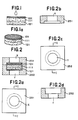
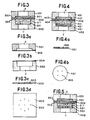
- the multilayer analytical element of the present invention can be enclosed with a frame and employed in the form of a slide for fluoroimmunoassay.
- the frame has an opening for introduction (or application) of the sample liquid on one side, as well as an opening for the measurment of fluorescence strength on another side.
- the frame comprises a member having the opening for the introduction and a member having the opening for the fluorometric measurement. Both members are united through an adhesive or direct fusion therewith.
- the slide can be prepared as follows: A plurality of parts constituting the frame are independently produced from a injection-mouldable plastic material such as polyethylene, polyvinyl chloride, polyethylene terephthalate or polystyrene, and the so prepared parts are combined with an adhesive agent or an adhesive tape after receiving the analytical element therein.
- the adhesion of the frame parts can be done by fusing the respective surfaces under application of suppersonic waves to prepare a slide. Otherwise, whole or a,part of the frame members are cut out of appropriate sheets or plates such as plastic plates, papers laminated with plastic sheets, or metal plates or sheets to correspond to the shape of the analytical element, and then these frame members are combined through adhesion to form a frame.
- the frame comprises a couple of frames; one has an opening for introduction of the sample liquid, and another has an opening for measurement of the fluorescence strength.
- the opening for the liquid introduction (or application) or fluorometric measurement generally has a diameter in the range of from 3 mm to 1 cm.
- the space between a surface of the frame member facing a sharing sheet and the surface of the sharing sheet is preferably not more than 1 mm. This is because at least 70% of a spotted or applied sample liquid ought to be introduced and spreaded into the analytical element.
- the analyte which can be assayed by the use of the multilayer analytical element of the invention is a high molecular or low molecular substance present in a biochemical component-containing liquid or a body fluid such as blood, plasma, serum, spinal fluid and saliva.
- analyte is as follows:
- Complexes are bacilla, viruses, cell membranes, genes and nuclei.
- the molecular weight of these complexes is at least 5,000, generally 10,000 or more.
- Polypeptides and proteins generally have a molecular weight of from 5,000 to 5,000,000, ordinarily 20,000 to 1,000,000. In the case of peptide hormones, the molecular weight generally ranges from 5,000 to 60,000.
- Antigenic low molecular weight substances having a molecular weight of generally from 100 to 2,000, ordinarily 125 to 1,000.
- Examples include the following drugs, agricultural chemicals, small peptides, amino acids, low molecular weight hormones, and metabolites thereof:
- the spreading sheet 501 is prepared by immersing a pulp paper in a buffer solution containing a FITC-labelled analyte substance and then freeze-drying the so immersed paper.
- the dry thickness of the spreading sheet is 200 ⁇ m.
- the distributor 502 is a polyethylene terephthalate (PET) sheet (thickness: 105 pm) having nine openings 503 (diameter: 240 Ilm).
- PET polyethylene terephthalate
- the sharing sheet 511 is prepared from a glass fiber suspension containing red colored agarose (light shielding agent) and has a dry thickness of 450 Ilm.
- the reaction sheet 521 is prepared as follows: A glass fiber suspension containing agarose particles onto the surface of which is fixed on IgG fraction of anti-rabbit IgG goat sera is processed to prepare a paper having a dry thickness of 350 ⁇ m. A dilute solution of a rabbit antiserum (analyte) is dropped on the so prepared paper, and the antiserum-incorporated paper is freeze-dried to obtain the reaction sheet.
- the support 531 is a cellulose triacetate sheet (thickness: 135 ⁇ m) having vents 555 (diameter: 240 pm).
- the procedure is as follows: To the opening X of the slide illustrated in Figure 5 is applied 150 pl. of an analyte(antibody)-containing serum, and then the slide is subjected to incubation at 35°C for 15 min. The sample liquid is spread over the spreading sheet 501 immediately upon the application of the sample liquid. In this stage, approximately 20 pl. out of the 150 ul. of the sample liquid remains in the spreading sheet 501. The sample liquid gradually permeates the sharing sheet 511 and the reaction sheet 521 through the openings 503 of the distributor 502. Finally, the sample liquid is shared uniformly over the whole portion.
- the FITC-labelled substance contained in the spreading sheet 501 is dissolved in the serum solution, and then supplied into the sharing sheet 511 and the reaction sheet 521 together with a buffer agent and other substances.
- the so supplied substances are subjected to a competitive antigen-antibody reaction in the reaction sheet in the course of the incubation.
- a free FITC-labelled substance is shared between the reaction sheet 521 and the sharing sheet 511.
- approximately 60% of the free FITC-labelled substance remains in the sharing sheet 511.
- the ratio of the free FITC-labelled substance shared between the sharing sheet 511 and the reaction sheet 521 finally corresponds to a ratio of the liquid holding capacity therebetween.
- exciting rays of wavelength 498 nm are impinged upon the reaction sheet 521 through the support 531 at an angle of incidence 45° via the opening Y.
- a fluorescence emitted by the FITC-labelled substance (free FITC-substance shared as above + reacted FITC-labelled substance + antibody complex-originated substance) contained in the reaction sheet 521 is caught at an angle of 90° for the measurement.
- the FITC-labelled substance contained in the sharing sheet 511 does not emit a fluorescence because the red colored agarose contained in the sheet absorbs the exciting rays.
- a calibration curve is prepared by a use of a calibration-purpose serum containing a predetermined amount of the analyte substance.
- the amount of the analyte can be determined.
- the assay according to the present invention does not involve measurement of whole fluorescence strength of an antigen-antibody reaction mixture that is contained in the element without having been subjected to B/F separation and that thus includes all of bound fluorescent-labelled complex (B) produced on reaction as well as all of free fluorescent-labelled substance (F), the measurement of such whole fluorescence strength being described in Japanese Patent Provisional Publication No. 53(1978)-79024.
- the assay according to the present invention does not involve measurement on only a free fluorescent-labelled substance (F) separated by B/F separation as in the prior application of the present applicant.
- the assay according to the present invention comprises measurement of fluorescence strength of a bound fluorescent-labelled complex (B) separated through the B/N separation based on the sharing. For this reason, possible noise is greatly reduced in the measurement according to the present invention, and therefore the assay according to the present invention is prominently advantageous in comparison with the assays of the above-cited two prior art disclosures, particularly the assay disclosed in Japanese Patent Provisional Publication No. 53(1978)-79024.
- the assay according to the present invention can be applied to any competitive antigen-antibody reaction so far as said reaction is detectable in fluoroimmunoassay, while the art disclosed in Japanese Patent Provisional Publication No. 53(1978)-79024 can be utilized only in a detection system having the aforementioned specific relationship on the fluorescence strength and accordingly is applicable only to antigen-antibody reaction involving thyroid hormones.
- FITC ⁇ T 4 having the following structure was prepared by a series of the procedures i), ii) and iii) given below.
- the dry extract was concentrated in a rotary evaporator and subjected to gel chromatography using a column filled with Sephadex LH-20 0 (tradename of Pharmacia Corp.). In this procedure, a mixture of acetone and methanol in a volume ratio of 4:1 was employed as the solvent. After confirming by TLC, the fractions containing the desired product were collected and concentrated under reduced pressure to obtain a crystalline product. There was thus obtained 950 mg. (yield 82.5%) of the desired product.
- FITC-T 4 prepared as above was a labelled substance which was able to participate in a competitive antigen-antibody reaction in conjunction with thyroxine (T Q ).
- T Q thyroxine
- B a bound FITC-labelled antigen-antibody complex
- a filter paper 5C (tradename, produced by Toyo Filter Paper Co., Ltd., Japan) was cut into a disk having a diameter of 15 mm.
- FITC-T 4 prepared in the above i) was dissolved in 0.5 N aqueous sodium hydroxide solution in a concentration of 100 ⁇ g/ml. After 1 min., the resulting solution was diluted with 0.1 M glycine buffer solution (pH 9) containing 0.1% BSA to obtain a solution in a concentration of 1.28 ⁇ g/ml. The so diluted solution was mixed with 40 mM aqueous 8-anilino-1-naphtalene-sulfonic acid solution in a volume ratio of 1:1, and 20 pl. of the resulting mixture was dropped- on the above-mentioned filter paper disk. Immediately after the mixture was permeated into the filter paper disk, the disk was freeze-dried in a conventional manner to obtain a spreading sheet having a dry thickness of 200 um.
- a transparent PET film (thickness: 105 pm) was cut into a disk having a diameter of 15 mm. The disk was then provided with 9 openings (diameter: 230 ⁇ m) for introduction of a sample liquid to obtain a distributor.
- a glass fiber filter paper (Glass Fiber Filter Paper GA-100, produced by Toyo Filter Paper Co., Ltd., Japan) was cut into a 10 mm x 5 mm piece, and then dispersed in water. After addition of red colored agarose, the glass fiber dispersion was processed to obtain a sharing sheet.
- Reaction sheets (I), (II), and (III) were prepared by the methods given below.
- Each of the reaction sheets (I) and (II) was a constituent sheet of a multilayer analytical element of the present invention, while the reaction sheet (III) was a constituent sheet of a comparison multilayer analytical element. Since the comparison multilayer analytical element did not comprise a sharing sheet, the reaction sheet (III) was prepared to have a thickness corresponding to a thickness of an assumed thickness of a sharing sheet in addition to that of the reaction sheet (I) or (II).
- a glass fiber filter paper (Glass Fiber Filter Paper GA-100, produced by Toyo Filter Paper Co., Ltd., Japan) was dispersed in water. Independently, an anti-T 4 rabbit serum was fixed to surfaces of agarose particles in a conventional manner and the so treated agarose particles were mixed with the above- mentioned aqueous dispersion. The resulting mixture was processed and dried to prepare a reaction sheet (I) having a dry thickness of 350 pm.
- aqueous glass fiber dispersion was prepared in the same manner as above. Independently, an IgG fraction of an anti-rabbit IgG goat serum was fixed to surfaces of agarose particles in a conventional manner and the so treated agarose particles were mixed with the above-mentioned aqueous dispersion. The resulting mixture was processed and dried to prepare a sheet. A diluted antibody-T 4 rabbit serum was dropped on the sheet and permeated thereinto. The sheet was then freeze-dried to prepare a reaction sheet (II) having a dry thickness of 350 ⁇ m.
- II reaction sheet having a dry thickness of 350 ⁇ m.
- a reaction sheet (III) was prepared in the same manner as in the preparation of the reaction sheet (I) so as to contain the antibody in the same amount based on the surface area, but to have a dry thickness of 800 ⁇ m.
- a multilayer analytical element (III) was prepared in the same manner, using the reaction sheet (III) but not comprising a sharing sheet.
- thyrozine (T 4 )-containing serums for calibration purpose prepared by treating a serum with active carbon to obtain a T 4 free serum and adding a predetermined amount of thyroxine to the serum) of different predetermined concentrations.
- the multilayer analytical element was incubated at 35°C for 15 min. After the incubation was complete, reflective fluorometric measurement was done on the side of the reaction sheet. The reflective fluorometric measurement was carried out at exciting rays of a wavelength 495 nm and a fluoroscence of a wavelength 525 nm by the use of a fluorophotometer 650-10(S) (manufactured by Hitachi, Ltd., Japan).
- each of the multilayer analytical elements (I) and (II) comprising a sharing sheet according to the present invention showed a change of the fluorescence strength in relation to a change of the T 4 concentration.
- the comparison multilayer analytical element (III) comprising no sharing sheet likewise showed a change of the fluorescence strength in relation to a change of the T 4 concentration
- the change of the fluoroscence strength was at a reduced level.
- This reduced level in the fluorescence strength change means that the multilayer analytical element (III) is disadvantageous in showing a measurement range inferior to (i.e., narrowerthan) that of the element (I) or (II) of the present invention.
- the measurement procedure was repeated ten times under the same conditions, using T 4 at a concentration of 8 ⁇ g/dl and a scatter of the measured values was checked through determination of the coefficient of variation (CV).
- the CV values on the multilayer analytical elements (I) and (II) were 4.5% and 4.8%, respectively, while the CV value on the multilayer analytical element (III) was 9.3%. Thus, it was observed that the CV value of the multilayer analytical element (III) was extremely far from the CV values of the multilayer analytical elements (I) and (II).
- the assay of T 4 was carried out in the same manner as in Example 1, using each of the multilayer analytical elements (I) and (III) and the compound having the structure given below as a fluorescent-labelled T 4 .
- Example (1 )-i The above-illustrated compound was prepared in the same manner as in Example (1 )-i), except that t-butoxycarbonylglycine succinyl ester was replaced with t-butoxycarbonylglycylglycine succinyl ester (Boc-Gly-Gly-OSu).
- This fluorescent-labelled T 4 did not show the increase of fluorescence strength upon subjected to an antigen-antibody reaction, which was different from the fluorescent-labelled substance employed in Example 1. This means that the reaction using the above-mentioned labelled substance is not applicable to the assay described in Japanese Patent Provisional Publication No. 53(1978)-79024.
- the comparison multilayer analytical elements (III) did not show a change of the fluorescence strength in relation to a change of the T 4 concentration, and mere random fluorescence strength values were observed. This means that no calibration curve can be prepared in this assay system, and therefore a quantitative assay of T 4 is not accomplished.
- the multilayer analytical element (I) comprising a sharing sheet showed a change of the fluorescence strength in relation to a change of the T 4 concentration, and this means that a calibration curve for the quantitative assay of T 4 can be successfully prepared.
- the present invention utilizing a sharing phenomenon by the use of a sharing sheet enables to carry out a fluoroimmunoassay with little noise and high accuracy on a variety of competitive antigen-antibody reactions, irrespective of whether the bound fluorescent-labelled complex (B) prepared by a binding reaction with an antibody shows change or no change in the fluorescence strength, and further with no necessity of complicated B/F separation.
Landscapes
- Health & Medical Sciences (AREA)
- Life Sciences & Earth Sciences (AREA)
- Immunology (AREA)
- Engineering & Computer Science (AREA)
- Molecular Biology (AREA)
- Hematology (AREA)
- Biomedical Technology (AREA)
- Chemical & Material Sciences (AREA)
- Urology & Nephrology (AREA)
- Biotechnology (AREA)
- Biochemistry (AREA)
- Cell Biology (AREA)
- Food Science & Technology (AREA)
- Medicinal Chemistry (AREA)
- Physics & Mathematics (AREA)
- Analytical Chemistry (AREA)
- Microbiology (AREA)
- General Health & Medical Sciences (AREA)
- General Physics & Mathematics (AREA)
- Pathology (AREA)
- Endocrinology (AREA)
- Investigating Or Analysing Biological Materials (AREA)
- Investigating Or Analyzing Non-Biological Materials By The Use Of Chemical Means (AREA)
Claims (21)
Applications Claiming Priority (2)
| Application Number | Priority Date | Filing Date | Title |
|---|---|---|---|
| JP114359/82 | 1982-06-30 | ||
| JP57114359A JPS5977356A (ja) | 1982-06-30 | 1982-06-30 | 螢光アツセイ用多層分析要素およびそれを用いる螢光アツセイ法 |
Publications (3)
| Publication Number | Publication Date |
|---|---|
| EP0097952A2 EP0097952A2 (de) | 1984-01-11 |
| EP0097952A3 EP0097952A3 (en) | 1984-02-22 |
| EP0097952B1 true EP0097952B1 (de) | 1986-11-12 |
Family
ID=14635746
Family Applications (1)
| Application Number | Title | Priority Date | Filing Date |
|---|---|---|---|
| EP83106271A Expired EP0097952B1 (de) | 1982-06-30 | 1983-06-28 | Mehrschichtiges Element für Analyse |
Country Status (3)
| Country | Link |
|---|---|
| EP (1) | EP0097952B1 (de) |
| JP (1) | JPS5977356A (de) |
| DE (1) | DE3367677D1 (de) |
Cited By (2)
| Publication number | Priority date | Publication date | Assignee | Title |
|---|---|---|---|---|
| US7109042B2 (en) | 1987-04-27 | 2006-09-19 | Inverness Medical Switzerland Gmbh | Assays |
| US7238537B2 (en) | 1989-02-17 | 2007-07-03 | Inverness Medical Switzerland Gmbh | Assays |
Families Citing this family (34)
| Publication number | Priority date | Publication date | Assignee | Title |
|---|---|---|---|---|
| US4459358A (en) * | 1982-12-29 | 1984-07-10 | Polaroid Corporation | Multilayer element for analysis |
| JPS59170768A (ja) * | 1983-03-17 | 1984-09-27 | Fuji Photo Film Co Ltd | 非アイソト−プアツセイ用多層分析要素およびそれを用いるアツセイ方法 |
| DE3484505D1 (de) * | 1983-12-19 | 1991-05-29 | Daiichi Pure Chemicals Co Ltd | Immuntest. |
| JPS60222769A (ja) * | 1984-04-19 | 1985-11-07 | Fuji Photo Film Co Ltd | 一体型多層分析要素 |
| JPS60222770A (ja) * | 1984-04-19 | 1985-11-07 | Fuji Photo Film Co Ltd | 一体型多層分析要素 |
| DE3445816C1 (de) | 1984-12-15 | 1986-06-12 | Behringwerke Ag, 3550 Marburg | Flaechenfoermiges diagnostisches Mittel |
| US4703002A (en) * | 1985-05-01 | 1987-10-27 | Eastman Kodak Company | Method for preparing coating compositions containing an immunologically reactive species and elements containing same |
| IL78854A (en) | 1985-05-31 | 1991-11-21 | Murex Corp | Biological fluid diagnostic device |
| US4806312A (en) * | 1985-08-28 | 1989-02-21 | Miles Inc. | Multizone analytical element having detectable signal concentrating zone |
| US4618475A (en) * | 1985-08-30 | 1986-10-21 | Miles Laboratories, Inc. | Reagent test device containing hydrophobic barriers |
| DE3530993A1 (de) * | 1985-08-30 | 1987-03-05 | Miles Lab | Teststreifen mit festlegbarer probenaufnahmekapazitaet |
| DE3543749A1 (de) * | 1985-12-11 | 1987-06-19 | Boehringer Mannheim Gmbh | Verfahren zur herstellung eines reagenzpapieres fuer die immunologische analyse |
| CA1289872C (en) * | 1986-06-18 | 1991-10-01 | David L. Woodrum | Reversible immobilization of assay reagents in a multizone test device |
| US5763262A (en) * | 1986-09-18 | 1998-06-09 | Quidel Corporation | Immunodiagnostic device |
| DE3783920T2 (de) * | 1986-09-18 | 1993-05-19 | Pacific Biotech Inc | Verfahren zum impraegnieren einer matrix mit antikoerpern oder antigenen. |
| EP0264804B1 (de) * | 1986-10-23 | 1993-08-04 | BEHRINGWERKE Aktiengesellschaft | Bioaffine poröse Festphasen, ein Verfahren zur Herstellung von bioaffinen porösen Festphasen und ihre Verwendung |
| DE3636060C3 (de) * | 1986-10-23 | 1994-04-07 | Behringwerke Ag | Bioaffine poröse Festphase, Verfahren zu deren Herstellung und ihre Verwendung |
| AU586552B2 (en) * | 1987-02-25 | 1989-07-13 | Genesis Labs, Inc. | Dry test strip for devices using oxygen demanding detection system |
| JPH0721455B2 (ja) * | 1988-12-01 | 1995-03-08 | 株式会社京都第一科学 | 液体試料中の特定成分を分析するための用具および方法 |
| JPH02179450A (ja) * | 1988-12-29 | 1990-07-12 | Terumo Corp | 試験具 |
| US5364796A (en) * | 1989-07-11 | 1994-11-15 | Pb Diagnostics Systems, Inc. | Diagnostic assay system |
| US5166079A (en) * | 1989-07-19 | 1992-11-24 | Pb Diagnostic Systems, Inc. | Analytical assay method |
| DE69023476T2 (de) * | 1990-02-22 | 1996-03-21 | Editek Inc | Mehrschicht-Testvorrichtung zur Bestimmung von Substanzen in Flüssigkeiten. |
| US5212060A (en) * | 1990-04-27 | 1993-05-18 | Genesis Labs, Inc. | Dry test strip comprising a dextran barrier for excluding erythrocytes |
| WO1991019187A1 (en) * | 1990-06-04 | 1991-12-12 | Pb Diagnostic Systems, Inc. | Analytical assay |
| JPH04324347A (ja) * | 1991-04-24 | 1992-11-13 | Terumo Corp | 試験具 |
| GB9225354D0 (en) * | 1992-12-04 | 1993-01-27 | Univ Manchester | Immunoassay |
| DE19512484A1 (de) * | 1995-04-04 | 1996-10-17 | Bayer Ag | Kohlenhydratmodifizierte Cytostatika |
| US6287595B1 (en) * | 1998-06-10 | 2001-09-11 | Delsys Pharmaceuticals Corporation | Biomedical assay device |
| US6395483B1 (en) * | 1999-09-02 | 2002-05-28 | 3M Innovative Properties Company | Arrays with mask layers |
| US9903858B2 (en) | 2014-07-23 | 2018-02-27 | Ortho-Clinical Diagnostics, Inc. | Multiplexing with single sample metering event to increase throughput |
| AU2018355575A1 (en) | 2017-10-27 | 2020-05-21 | Juno Diagnostics, Inc. | Devices, systems and methods for ultra-low volume liquid biopsy |
| CA3095030A1 (en) | 2018-03-30 | 2019-10-03 | Juno Diagnostics, Inc. | Deep learning-based methods, devices, and systems for prenatal testing |
| JP2022525953A (ja) | 2019-03-27 | 2022-05-20 | ジュノ ダイアグノスティックス,インク. | 最適化された超微量リキッドバイオプシーの方法、システム、およびデバイス |
Family Cites Families (11)
| Publication number | Priority date | Publication date | Assignee | Title |
|---|---|---|---|---|
| US446110A (en) | 1891-02-10 | Binding-strap | ||
| US3992158A (en) | 1973-08-16 | 1976-11-16 | Eastman Kodak Company | Integral analytical element |
| USRE30267E (en) * | 1975-06-20 | 1980-05-06 | Eastman Kodak Company | Multilayer analytical element |
| US4042335A (en) | 1975-07-23 | 1977-08-16 | Eastman Kodak Company | Integral element for analysis of liquids |
| GB1573212A (en) | 1976-04-15 | 1980-08-20 | Technicon Instr | Immunoassay for gentamicin |
| CA1095819A (en) | 1977-01-14 | 1981-02-17 | Eastman Kodak Company | Element for analysis of liquids |
| JPS5533651A (en) * | 1978-08-31 | 1980-03-08 | Fuji Photo Film Co Ltd | Laminated plate of multi-layered chemical analysis material and using method thereof |
| US4258001A (en) | 1978-12-27 | 1981-03-24 | Eastman Kodak Company | Element, structure and method for the analysis or transport of liquids |
| JPS55164356A (en) | 1979-06-08 | 1980-12-22 | Fuji Photo Film Co Ltd | Multi-layer analysis sheet for liquid sample analysis |
| JPS5767860A (en) * | 1980-10-15 | 1982-04-24 | Fuji Photo Film Co Ltd | Material for multilayer analysis |
| JPS57200862A (en) | 1981-06-05 | 1982-12-09 | Fuji Photo Film Co Ltd | Mutilayer analysis element utilizing unique binding reaction |
-
1982
- 1982-06-30 JP JP57114359A patent/JPS5977356A/ja active Pending
-
1983
- 1983-06-28 EP EP83106271A patent/EP0097952B1/de not_active Expired
- 1983-06-28 DE DE8383106271T patent/DE3367677D1/de not_active Expired
Cited By (4)
| Publication number | Priority date | Publication date | Assignee | Title |
|---|---|---|---|---|
| US7109042B2 (en) | 1987-04-27 | 2006-09-19 | Inverness Medical Switzerland Gmbh | Assays |
| US7238537B2 (en) | 1989-02-17 | 2007-07-03 | Inverness Medical Switzerland Gmbh | Assays |
| US7384796B2 (en) | 1989-02-17 | 2008-06-10 | Inverness Medical Switzerland Gmbh | Assays |
| US7407813B2 (en) | 1989-02-17 | 2008-08-05 | Inverness Medical Switzerland Gmbh | Assays |
Also Published As
| Publication number | Publication date |
|---|---|
| JPS5977356A (ja) | 1984-05-02 |
| EP0097952A2 (de) | 1984-01-11 |
| DE3367677D1 (en) | 1987-01-02 |
| EP0097952A3 (en) | 1984-02-22 |
Similar Documents
| Publication | Publication Date | Title |
|---|---|---|
| EP0097952A2 (de) | Mehrschichtiges Element für Analyse | |
| EP0119623B1 (de) | Mehrschichtiges analytisches Element für nicht-isotopischen Test | |
| EP0066648B2 (de) | Mehrschichtiges Element für Analyse mittels Verwendung einer spezifischen bindenden Reaktion | |
| US4461829A (en) | Homogeneous specific binding assay element and lyophilization production method | |
| US4613567A (en) | Immunoassay method for measuring immunological antigen in fluid sample | |
| US4390343A (en) | Multilayer analytical element having an impermeable radiation diffusing and blocking layer | |
| Paek et al. | Development of rapid one-step immunochromatographic assay | |
| US6514773B1 (en) | Method of detecting surface contamination by an analyte | |
| US7384796B2 (en) | Assays | |
| CA2005564C (en) | Test carrier for the analytical investigation of a sample liquid with the help of a specific binding reaction of two bioaffine binding partners and a corresponding test process | |
| US5081013A (en) | Immunodiagnostic device and method | |
| US4870005A (en) | Multilayer analysis element | |
| US4517288A (en) | Solid phase system for ligand assay | |
| JP2786438B2 (ja) | 分析検査装置及び方法 | |
| US20100323450A1 (en) | System for quantitative measurement of glycohemoglobin and method for measuring glycohemoglobin | |
| CA1183450A (en) | Homogeneous specific binding assay device and method | |
| KR20090006999A (ko) | 당화헤모글로빈의 정량분석을 위한 시스템 및 이를 이용한당화헤모글로빈 측정 방법 | |
| KR960016717B1 (ko) | 검체의 검출방법 및 시약 | |
| US5266460A (en) | Method of preparing immunological analytical element | |
| JP4437211B2 (ja) | 免疫クロマトグラフィーを用いた測定方法およびそれに用いる検体分析用具 | |
| CN113721034B (zh) | 一种检测s100b蛋白的时间分辨免疫层析试纸条、试剂盒及其制备方法和应用 | |
| WO1997038312A1 (en) | Diagnostic test device utilizing filaments containing reagents | |
| JPS6348312B2 (de) | ||
| CA1337174C (en) | Biological diagnostic assay system | |
| CN220932986U (zh) | 一种荧光免疫层析检测试剂盒 |
Legal Events
| Date | Code | Title | Description |
|---|---|---|---|
| PUAI | Public reference made under article 153(3) epc to a published international application that has entered the european phase |
Free format text: ORIGINAL CODE: 0009012 |
|
| PUAL | Search report despatched |
Free format text: ORIGINAL CODE: 0009013 |
|
| AK | Designated contracting states |
Designated state(s): DE GB |
|
| AK | Designated contracting states |
Designated state(s): DE GB |
|
| 17P | Request for examination filed |
Effective date: 19840615 |
|
| GRAA | (expected) grant |
Free format text: ORIGINAL CODE: 0009210 |
|
| AK | Designated contracting states |
Kind code of ref document: B1 Designated state(s): DE GB |
|
| REF | Corresponds to: |
Ref document number: 3367677 Country of ref document: DE Date of ref document: 19870102 |
|
| PLBI | Opposition filed |
Free format text: ORIGINAL CODE: 0009260 |
|
| 26 | Opposition filed |
Opponent name: EASTMAN KODAK COMPANY Effective date: 19870811 |
|
| RDAG | Patent revoked |
Free format text: ORIGINAL CODE: 0009271 |
|
| STAA | Information on the status of an ep patent application or granted ep patent |
Free format text: STATUS: PATENT REVOKED |
|
| GBPR | Gb: patent revoked under art. 102 of the ep convention designating the uk as contracting state | ||
| 27W | Patent revoked |
Effective date: 19880521 |