EP0099667A1 - Procédé pour augmenter l'efficacité des insecticides synthétiques, organiques, solubles dans l'huile - Google Patents
Procédé pour augmenter l'efficacité des insecticides synthétiques, organiques, solubles dans l'huile Download PDFInfo
- Publication number
- EP0099667A1 EP0099667A1 EP83303731A EP83303731A EP0099667A1 EP 0099667 A1 EP0099667 A1 EP 0099667A1 EP 83303731 A EP83303731 A EP 83303731A EP 83303731 A EP83303731 A EP 83303731A EP 0099667 A1 EP0099667 A1 EP 0099667A1
- Authority
- EP
- European Patent Office
- Prior art keywords
- insecticide
- polypropylene glycol
- formulation
- molecular weight
- average molecular
- Prior art date
- Legal status (The legal status is an assumption and is not a legal conclusion. Google has not performed a legal analysis and makes no representation as to the accuracy of the status listed.)
- Granted
Links
- 239000002917 insecticide Substances 0.000 title claims abstract description 69
- 229920001451 polypropylene glycol Polymers 0.000 claims abstract description 47
- XLYOFNOQVPJJNP-UHFFFAOYSA-N water Substances O XLYOFNOQVPJJNP-UHFFFAOYSA-N 0.000 claims abstract description 26
- -1 polybutylene Polymers 0.000 claims abstract description 16
- LYCAIKOWRPUZTN-UHFFFAOYSA-N Ethylene glycol Chemical compound OCCO LYCAIKOWRPUZTN-UHFFFAOYSA-N 0.000 claims abstract description 10
- 229920001748 polybutylene Polymers 0.000 claims abstract description 10
- PNKUSGQVOMIXLU-UHFFFAOYSA-N Formamidine Chemical compound NC=N PNKUSGQVOMIXLU-UHFFFAOYSA-N 0.000 claims abstract description 5
- WGCNASOHLSPBMP-UHFFFAOYSA-N hydroxyacetaldehyde Natural products OCC=O WGCNASOHLSPBMP-UHFFFAOYSA-N 0.000 claims abstract description 5
- KXDHJXZQYSOELW-UHFFFAOYSA-M Carbamate Chemical compound NC([O-])=O KXDHJXZQYSOELW-UHFFFAOYSA-M 0.000 claims abstract 4
- 239000002728 pyrethroid Substances 0.000 claims abstract 4
- 239000000203 mixture Substances 0.000 claims description 126
- 238000009472 formulation Methods 0.000 claims description 115
- 230000000749 insecticidal effect Effects 0.000 claims description 52
- SBPBAQFWLVIOKP-UHFFFAOYSA-N chlorpyrifos Chemical compound CCOP(=S)(OCC)OC1=NC(Cl)=C(Cl)C=C1Cl SBPBAQFWLVIOKP-UHFFFAOYSA-N 0.000 claims description 41
- 239000005944 Chlorpyrifos Substances 0.000 claims description 35
- 239000000654 additive Substances 0.000 claims description 32
- 238000000034 method Methods 0.000 claims description 21
- 230000000996 additive effect Effects 0.000 claims description 17
- 239000005945 Chlorpyrifos-methyl Substances 0.000 claims description 8
- XJFIKRXIJXAJGH-UHFFFAOYSA-N 5-chloro-1,3-dihydroimidazo[4,5-b]pyridin-2-one Chemical group ClC1=CC=C2NC(=O)NC2=N1 XJFIKRXIJXAJGH-UHFFFAOYSA-N 0.000 claims description 7
- 241000238631 Hexapoda Species 0.000 claims description 7
- 229920001577 copolymer Polymers 0.000 claims description 6
- 239000002671 adjuvant Substances 0.000 claims description 3
- 239000003085 diluting agent Substances 0.000 claims 1
- 238000011282 treatment Methods 0.000 description 22
- 241000196324 Embryophyta Species 0.000 description 20
- 239000007921 spray Substances 0.000 description 19
- 241000256244 Heliothis virescens Species 0.000 description 16
- YMWUJEATGCHHMB-UHFFFAOYSA-N Dichloromethane Chemical compound ClCCl YMWUJEATGCHHMB-UHFFFAOYSA-N 0.000 description 12
- 239000002904 solvent Substances 0.000 description 12
- 239000003995 emulsifying agent Substances 0.000 description 10
- 239000004615 ingredient Substances 0.000 description 10
- 230000000694 effects Effects 0.000 description 9
- 229920000742 Cotton Polymers 0.000 description 8
- 241000219146 Gossypium Species 0.000 description 8
- 240000002024 Gossypium herbaceum Species 0.000 description 8
- 235000004341 Gossypium herbaceum Nutrition 0.000 description 8
- 206010061217 Infestation Diseases 0.000 description 6
- 241001454293 Tetranychus urticae Species 0.000 description 6
- 241000607479 Yersinia pestis Species 0.000 description 6
- 235000013601 eggs Nutrition 0.000 description 6
- 239000000839 emulsion Substances 0.000 description 6
- 230000005484 gravity Effects 0.000 description 6
- 244000105624 Arachis hypogaea Species 0.000 description 5
- 239000003905 agrochemical Substances 0.000 description 5
- 150000001875 compounds Chemical class 0.000 description 5
- 150000002334 glycols Chemical class 0.000 description 5
- 235000017060 Arachis glabrata Nutrition 0.000 description 4
- 235000010777 Arachis hypogaea Nutrition 0.000 description 4
- 235000018262 Arachis monticola Nutrition 0.000 description 4
- 239000004480 active ingredient Substances 0.000 description 4
- 235000020232 peanut Nutrition 0.000 description 4
- 238000005507 spraying Methods 0.000 description 4
- UHOVQNZJYSORNB-UHFFFAOYSA-N Benzene Chemical compound C1=CC=CC=C1 UHOVQNZJYSORNB-UHFFFAOYSA-N 0.000 description 3
- 229940126062 Compound A Drugs 0.000 description 3
- NLDMNSXOCDLTTB-UHFFFAOYSA-N Heterophylliin A Natural products O1C2COC(=O)C3=CC(O)=C(O)C(O)=C3C3=C(O)C(O)=C(O)C=C3C(=O)OC2C(OC(=O)C=2C=C(O)C(O)=C(O)C=2)C(O)C1OC(=O)C1=CC(O)=C(O)C(O)=C1 NLDMNSXOCDLTTB-UHFFFAOYSA-N 0.000 description 3
- ZMXDDKWLCZADIW-UHFFFAOYSA-N N,N-Dimethylformamide Chemical compound CN(C)C=O ZMXDDKWLCZADIW-UHFFFAOYSA-N 0.000 description 3
- CTQNGGLPUBDAKN-UHFFFAOYSA-N O-Xylene Chemical compound CC1=CC=CC=C1C CTQNGGLPUBDAKN-UHFFFAOYSA-N 0.000 description 3
- DNIAPMSPPWPWGF-UHFFFAOYSA-N Propylene glycol Chemical compound CC(O)CO DNIAPMSPPWPWGF-UHFFFAOYSA-N 0.000 description 3
- 239000003963 antioxidant agent Substances 0.000 description 3
- 235000021186 dishes Nutrition 0.000 description 3
- 239000004495 emulsifiable concentrate Substances 0.000 description 3
- 239000007764 o/w emulsion Substances 0.000 description 3
- 230000000361 pesticidal effect Effects 0.000 description 3
- 230000000885 phytotoxic effect Effects 0.000 description 3
- 230000010076 replication Effects 0.000 description 3
- 239000008096 xylene Substances 0.000 description 3
- 241000238876 Acari Species 0.000 description 2
- 241000254175 Anthonomus grandis Species 0.000 description 2
- NLZUEZXRPGMBCV-UHFFFAOYSA-N Butylhydroxytoluene Chemical compound CC1=CC(C(C)(C)C)=C(O)C(C(C)(C)C)=C1 NLZUEZXRPGMBCV-UHFFFAOYSA-N 0.000 description 2
- STUSTWKEFDQFFZ-UHFFFAOYSA-N Chlordimeform Chemical compound CN(C)C=NC1=CC=C(Cl)C=C1C STUSTWKEFDQFFZ-UHFFFAOYSA-N 0.000 description 2
- 241001414720 Cicadellidae Species 0.000 description 2
- 241001414662 Macrosteles fascifrons Species 0.000 description 2
- 240000007594 Oryza sativa Species 0.000 description 2
- 241000256247 Spodoptera exigua Species 0.000 description 2
- 239000002518 antifoaming agent Substances 0.000 description 2
- 239000012141 concentrate Substances 0.000 description 2
- SHFGJEQAOUMGJM-UHFFFAOYSA-N dialuminum dipotassium disodium dioxosilane iron(3+) oxocalcium oxomagnesium oxygen(2-) Chemical compound [O--].[O--].[O--].[O--].[O--].[O--].[O--].[O--].[Na+].[Na+].[Al+3].[Al+3].[K+].[K+].[Fe+3].[Fe+3].O=[Mg].O=[Ca].O=[Si]=O SHFGJEQAOUMGJM-UHFFFAOYSA-N 0.000 description 2
- 238000009826 distribution Methods 0.000 description 2
- 230000008020 evaporation Effects 0.000 description 2
- 238000001704 evaporation Methods 0.000 description 2
- 230000002349 favourable effect Effects 0.000 description 2
- NYPJDWWKZLNGGM-UHFFFAOYSA-N fenvalerate Chemical compound C=1C=C(Cl)C=CC=1C(C(C)C)C(=O)OC(C#N)C(C=1)=CC=CC=1OC1=CC=CC=C1 NYPJDWWKZLNGGM-UHFFFAOYSA-N 0.000 description 2
- HJOVHMDZYOCNQW-UHFFFAOYSA-N isophorone Chemical compound CC1=CC(=O)CC(C)(C)C1 HJOVHMDZYOCNQW-UHFFFAOYSA-N 0.000 description 2
- 239000000463 material Substances 0.000 description 2
- RLBIQVVOMOPOHC-UHFFFAOYSA-N parathion-methyl Chemical compound COP(=S)(OC)OC1=CC=C([N+]([O-])=O)C=C1 RLBIQVVOMOPOHC-UHFFFAOYSA-N 0.000 description 2
- 235000019362 perlite Nutrition 0.000 description 2
- 239000010451 perlite Substances 0.000 description 2
- 239000004094 surface-active agent Substances 0.000 description 2
- PUPZLCDOIYMWBV-UHFFFAOYSA-N (+/-)-1,3-Butanediol Chemical compound CC(O)CCO PUPZLCDOIYMWBV-UHFFFAOYSA-N 0.000 description 1
- UOCLXMDMGBRAIB-UHFFFAOYSA-N 1,1,1-trichloroethane Chemical compound CC(Cl)(Cl)Cl UOCLXMDMGBRAIB-UHFFFAOYSA-N 0.000 description 1
- WJFKNYWRSNBZNX-UHFFFAOYSA-N 10H-phenothiazine Chemical compound C1=CC=C2NC3=CC=CC=C3SC2=C1 WJFKNYWRSNBZNX-UHFFFAOYSA-N 0.000 description 1
- 244000068988 Glycine max Species 0.000 description 1
- 235000010469 Glycine max Nutrition 0.000 description 1
- 239000005949 Malathion Substances 0.000 description 1
- 231100000674 Phytotoxicity Toxicity 0.000 description 1
- GOOHAUXETOMSMM-UHFFFAOYSA-N Propylene oxide Chemical compound CC1CO1 GOOHAUXETOMSMM-UHFFFAOYSA-N 0.000 description 1
- IDCBOTIENDVCBQ-UHFFFAOYSA-N TEPP Chemical compound CCOP(=O)(OCC)OP(=O)(OCC)OCC IDCBOTIENDVCBQ-UHFFFAOYSA-N 0.000 description 1
- 101150108962 TEPP gene Proteins 0.000 description 1
- WYURNTSHIVDZCO-UHFFFAOYSA-N Tetrahydrofuran Chemical compound C1CCOC1 WYURNTSHIVDZCO-UHFFFAOYSA-N 0.000 description 1
- 240000008042 Zea mays Species 0.000 description 1
- 235000005824 Zea mays ssp. parviglumis Nutrition 0.000 description 1
- 235000002017 Zea mays subsp mays Nutrition 0.000 description 1
- 230000002730 additional effect Effects 0.000 description 1
- 150000001298 alcohols Chemical class 0.000 description 1
- 230000003042 antagnostic effect Effects 0.000 description 1
- 230000000844 anti-bacterial effect Effects 0.000 description 1
- 239000003849 aromatic solvent Substances 0.000 description 1
- 239000003899 bactericide agent Substances 0.000 description 1
- VEMKTZHHVJILDY-UXHICEINSA-N bioresmethrin Chemical compound CC1(C)[C@H](C=C(C)C)[C@H]1C(=O)OCC1=COC(CC=2C=CC=CC=2)=C1 VEMKTZHHVJILDY-UXHICEINSA-N 0.000 description 1
- 150000004657 carbamic acid derivatives Chemical class 0.000 description 1
- 239000000969 carrier Substances 0.000 description 1
- 239000003795 chemical substances by application Substances 0.000 description 1
- 230000000052 comparative effect Effects 0.000 description 1
- 235000005822 corn Nutrition 0.000 description 1
- 239000007822 coupling agent Substances 0.000 description 1
- 230000008021 deposition Effects 0.000 description 1
- 230000001627 detrimental effect Effects 0.000 description 1
- OEBRKCOSUFCWJD-UHFFFAOYSA-N dichlorvos Chemical compound COP(=O)(OC)OC=C(Cl)Cl OEBRKCOSUFCWJD-UHFFFAOYSA-N 0.000 description 1
- 229950001327 dichlorvos Drugs 0.000 description 1
- JXSJBGJIGXNWCI-UHFFFAOYSA-N diethyl 2-[(dimethoxyphosphorothioyl)thio]succinate Chemical compound CCOC(=O)CC(SP(=S)(OC)OC)C(=O)OCC JXSJBGJIGXNWCI-UHFFFAOYSA-N 0.000 description 1
- 238000007865 diluting Methods 0.000 description 1
- 150000002148 esters Chemical class 0.000 description 1
- 238000011156 evaluation Methods 0.000 description 1
- 239000003337 fertilizer Substances 0.000 description 1
- 239000000417 fungicide Substances 0.000 description 1
- 239000004009 herbicide Substances 0.000 description 1
- 229930195733 hydrocarbon Natural products 0.000 description 1
- 150000002430 hydrocarbons Chemical class 0.000 description 1
- 239000003317 industrial substance Substances 0.000 description 1
- 239000000543 intermediate Substances 0.000 description 1
- 150000002576 ketones Chemical class 0.000 description 1
- 150000002596 lactones Chemical class 0.000 description 1
- 239000000314 lubricant Substances 0.000 description 1
- 229960000453 malathion Drugs 0.000 description 1
- XDOTVMNBCQVZKG-OXAWKVHCSA-N methyl (1z)-n-[methyl-[methyl-[(z)-1-methylsulfanylethylideneamino]oxycarbonylamino]sulfanylcarbamoyl]oxyethanimidothioate Chemical compound CS\C(C)=N/OC(=O)N(C)SN(C)C(=O)O\N=C(\C)SC XDOTVMNBCQVZKG-OXAWKVHCSA-N 0.000 description 1
- 239000011785 micronutrient Substances 0.000 description 1
- 235000013369 micronutrients Nutrition 0.000 description 1
- 230000003129 miticidal effect Effects 0.000 description 1
- 230000001069 nematicidal effect Effects 0.000 description 1
- 239000005645 nematicide Substances 0.000 description 1
- 239000003921 oil Substances 0.000 description 1
- 235000019198 oils Nutrition 0.000 description 1
- 239000003960 organic solvent Substances 0.000 description 1
- 230000035515 penetration Effects 0.000 description 1
- 239000000575 pesticide Substances 0.000 description 1
- 239000003208 petroleum Substances 0.000 description 1
- 229950000688 phenothiazine Drugs 0.000 description 1
- 231100000208 phytotoxic Toxicity 0.000 description 1
- 239000004033 plastic Substances 0.000 description 1
- 238000001228 spectrum Methods 0.000 description 1
- 239000000126 substance Substances 0.000 description 1
- JXHJNEJVUNHLKO-UHFFFAOYSA-N sulprofos Chemical compound CCCSP(=S)(OCC)OC1=CC=C(SC)C=C1 JXHJNEJVUNHLKO-UHFFFAOYSA-N 0.000 description 1
- 238000010998 test method Methods 0.000 description 1
- 230000002110 toxicologic effect Effects 0.000 description 1
- 231100000027 toxicology Toxicity 0.000 description 1
- 238000009827 uniform distribution Methods 0.000 description 1
- 235000015112 vegetable and seed oil Nutrition 0.000 description 1
- 239000008158 vegetable oil Substances 0.000 description 1
Images
Classifications
-
- A—HUMAN NECESSITIES
- A01—AGRICULTURE; FORESTRY; ANIMAL HUSBANDRY; HUNTING; TRAPPING; FISHING
- A01N—PRESERVATION OF BODIES OF HUMANS OR ANIMALS OR PLANTS OR PARTS THEREOF; BIOCIDES, e.g. AS DISINFECTANTS, AS PESTICIDES OR AS HERBICIDES; PEST REPELLANTS OR ATTRACTANTS; PLANT GROWTH REGULATORS
- A01N25/00—Biocides, pest repellants or attractants, or plant growth regulators, characterised by their forms, or by their non-active ingredients or by their methods of application, e.g. seed treatment or sequential application; Substances for reducing the noxious effect of the active ingredients to organisms other than pests
- A01N25/02—Biocides, pest repellants or attractants, or plant growth regulators, characterised by their forms, or by their non-active ingredients or by their methods of application, e.g. seed treatment or sequential application; Substances for reducing the noxious effect of the active ingredients to organisms other than pests containing liquids as carriers, diluents or solvents
Definitions
- the present invention is directed to a method of increasing the effectiveness of synthetic, organic, oil-soluble insecticides and to improved insecticidal compositions.
- insecticidal activity of ultra low volume (ULV) insecticidal formulations and of emulsion insecticidal formulations is increased.
- Insecticides are commercially important agricultural and industrial chemicals that are generally effective in killing, preventing or controlling the growth of undesirable insects.
- One important function that insecticides serve is to allow for an increased yield of valuable crops.
- Vast amounts of time and money are expended worldwide in search of new compounds that are effective insecticidal agents. Of the thousands of compounds screened each year for insecticidal activity, relatively very few ever become commercial products.
- Improving the activity of known pesticides offers advantages of working with compounds having known physical, insecticidal, and toxicological characteristics. Improving the activity of insecticides results in lesser amounts needed to achieve desired effects, and, in turn, lesser amounts available to contaminate the environment.
- Insecticides are commonly applied to foliage as U LV sprays or as more dilute emulsion sprays.
- Problems associated with spraying insecticides include loss of solvent, i.e., water, xylene, etc., by evaporation which greatly reduces the spray droplet size, causing loss of the active ingredients to spray drift; uneven coverage of treated areas or uneven distribution on the plants; and evaporation of the active insecticidal ingredients themselves, especially highly volatile insecticides.
- solvent i.e., water, xylene, etc.
- the present invention sets out to remedy the above problems encountered in the known insecticidal arts by providing a method of increasing the insecticidal effectiveness of insecticidal formulations. Additionally, the present invention provides (a) insecticidal formulations having lower volatilities when compared to known formulations resulting in an increased residual activity and (b) insecticidal formulations having increased deposition properties, both of these additional effects resulting in the use of lesser amounts of active insecticidal ingredients per acre.
- Polypropylene glycols are known materials with a wide variety of uses, such as, for example solvents, coupling agents, antifoam agents, intermediates and lubricants. Polypropylene glycols have been present in pesticidal formulations in small quantities as defoaming agents.
- the present invention provides a method for increasing the effectiveness of insecticides by adding an effective amount of an additive to insecticides or insecticidal formulations.
- Effective additives include (a) polypropylene glycols having an average molecular weight of from 1,000 to 5,000; (b) water insoluble polybutylene glycols; and (c) mixtures or copolymers of (a) and (b).
- the present invention is also directed to insecticidal formulations containing the above additives.
- insecticide insecticidal and active are meant to refer to synthetic, organic, oil-soluble insecticides selected from the group consisting of organophosphates, carbamates, pyrethroids and formamidines, and biologically active compositions containing these insecticides which are effective in killing, preventing or controlling the growth of undesirable pests, i.e., insects.
- insecticidal formulation refers to any composition containing an insecticide and a carrier system therefore, and includes concentrates, which are to be diluted before'use, such as emulsifiable concentrates, and ready-to-use compositions, such as ULV formulations.
- Carrier systems include water, organic solvents, such as, xylene, benzene, methylene chloride, isophorone, dimethyl formamide, paraffinic hydrocarbons and vegetable oils; and other formulation ingredients, such as, surfactants, antioxidants and emulsifiers.
- the amount of additive required to increase the effectiveness of insecticides will vary but generally is an amount at least equal to the volume of insecticide present in the insecticidal formulation. It is preferable to add the present additives in amounts in the range of from 1 to lb times the volumetric amount of insecticide present in the insecticidal formulation and even more preferable in the range of from 1 to 5.
- Preferred additives are the polypropylene glycols, having an average molecular weight between 2,000 and 4,000.
- An especially preferred polypropylene glycol is a polypropylene glycol having an average molecular weight of about 2,000.
- Another preferred polypropylene glycol is one that has an average molecular weight of about 4,000.
- the polypropylene glycol additives are known compounds and commercially available. They are generally prepared by adding propylene oxide to water or to propylene glycol: The commercially available products are generally identified by a number indicating the average molecular weight.
- the polybutylene glycols are known compounds and are generally prepared by adding butylene oxide to water or to butylene glycol.
- suitable polybutylene glycols are water insoluble. Mixtures and copolymers of the above additives are known and readily made employing well known procedures.
- Insecticides which are acceptable in the practice of the present invention are those substantially water-insoluble (oil-soluble) insecticides having a vapor pressure of at least 10 -7 mmHg or higher at commonly encountered growing season or use temperatures, i.e., 15°-40°C. Additionally, the insecticides are those which will not react with the present polypropylene glycol or polybutylene glycol additives.
- Suitable insecticides include chlorpyrifos (a preferred insecticide), sulprofos, methyl parathion, malathion, chlorpyrifos-methyl, dichlorvos, chlordimeform (as the oil-soluble base), fenvalerate and 0,0-dimethyl O-(5-methyl-1-(2-pyridyl)-1H-1,2,4--triazol-3-yl)phosphorothioic acid ester.
- the above additives i.e., polypropylene glycols and/or poly butylene glycols
- insecticides whereby the effectiveness of the insecticides is increased.
- the insecticides are then applied to insects or their habitats for insect control.
- the insecticides are applied to valuable plants, for example, crops, ornamentals, pastures or turf for the control of undesirable pests. It is especially preferred to apply the present insecticidal formulations to crops.
- the additives are mixed with insecticides alone, and thereafter applied using well known application techniques, or the additive/insecticide combination is further admixed with known agricultural solvents and known agricultural formulating aids before application.
- the additives may also be mixed with commercially available insecticidal formulations before use.
- the agricultural solvents are advantageously added to obtain a pesticidal formulation with a desirable viscosity to aid in the sprayability of the insecticidal formulations.
- the optimum viscosity for aninsecticidal formulation is readily determinable by one skilled in the art and depends on a variety of factors such as, for example, the particular insecticide(s) employed in the formulation, the additive present in the formulation, the solvents present in the formulation, the type of equipment being employed in applying the formulation, and the mode of application, i.e., ULV, emulsion or solution by aerial or ground application.
- Suitable agricultural solvents are generally water, petroleum solvents, esters, ketones and alcohols, lactones, and include xylene, xylene-range aromatic solvents, methylene chloride, 1,1,1-trichloroethane or combinations of solvents.
- emulsifiable concentrates i.e., formulations that are to be mixed with water and applied as an emulsion
- emulsifiers such as the usual commercially available products.
- Emulsifiers are added to the present insecticidal formulations that are emulsifiable concentrates to ensure uniform distribution of the concentrates in water at the time of application.
- the emulsifiers are added in effective quantities and proportions which are readily determinable to one skilled in the art.
- antioxidants such as 2,6-di-tert-butyl-para-cresol (BHT) and phenothiazine, are added in effective quantities and proportions.which are readily determinable to one skilled in the art.
- Insecticides are commercially available generally as formulations containing agricultural carriers, solvents and adjuvants. As a practical matter these commercially available formulations are admixed with the hereinbefore defined additives to provide improved insecticidal formulations according to the present invention.
- insecticides are obtained in substantially pure chemical form, i.e., bulk, technical grade, etc.,-and formulated by admixing with the present additives and known agricultural solvents and adjuvants.
- the combination of additive and insecticide should be substantially free of any detrimental, i.e., phytotoxic, effects on the crops.
- polypropylene glycol having an average molecular weight of about 2,000 is an acceptable additive for chlorpyrifos which is applied to cotton crops, while on the other hand, it has been found unacceptable as an additive for chlorpyrifos which is applied to peanut crops because of the phytotoxic effects exhibited by the peanut plants to the combination of chlorpyrifos and polypropylene glycol having an average molecular weight of about 2,000.
- Polypropylene glycol having an average molecular weight of about 4,000 is an acceptable additive for chlorpyrifos which is to be applied to peanut crops.
- the choice of an acceptable additive as far as phytotoxicity to target crops is concerned is readily determinable by one skilled in the art.
- a synthetic organic, oil-soluble insecticide useful in controlling pests in a valuable crop
- an additive wherein the additive is present in an amount that is at least equal to the volumetric amount of the insecticide.
- the insecticidal formulation is then applied, neat, as a foliar spray to the crop by aircraft or by ground equipment.
- an emulsifier is added to the formulation and then the formulation is mixed with water and applied to the crop as an emulsion by employing aircraft or ground equipment.
- the formulation is mixed with oil and applied employing known techniques.
- the herein-described additives in combination with an emulsifying agent, are provided as emulsifiable tank mix additives which are to be separately added to the water carrier in the field tanks prior to application of the insecticidal formulations to crops.
- a synthetic, organic, oil-soluble insecticide useful in controlling pests in valuable crops, is mixed with a polypropylene glycol having an average molecular weight of from 1,000 to 5,000, wherein the polypropylene glycol is present in an-amount that is at least equal to the volumetric amount of insecticide.
- the pesticidal formulation is then applied, neat, as an ULV foliar spray to the crop by aircraft or by ground equipment.
- an emulsifier is added to the formulation and then the formulation is mixed with water and applied to the crop as an emulsion by employing aircraft or ground equipment.
- polypropylene glycol having an average molecular weight of about 2,000 is combined with chlorpyrifos wherein the polypropylene glycol is present in a volumetric amount at least about equal to the volume of chlorpyrifos.
- This formulation is then sprayed on a cotton crop by aircraft or ground equipment to provide up to about 1.12 kgs of chlorpyrifos per hectare of cotton crop.
- This formulation may be sprayed as an ULV spray, optionally containing a solvent such as, methylene chloride, or as an oil-in--water emulsion by adding an emulsifying agent to the formulation and then-adding it to water.
- polypropylene glycol having an average molecular weight of about 4,000 is combined with chlorpyrifos wherein the polypropylene glycol is present in an amount at least about equal to the volume of chlorpyrifos.
- This formulation is then sprayed on a peanut, soybean or corn crop by aircraft or ground equipment to provide up to about 1.12 kgs of chlorpyrifos per hectare of peanut crop.
- This formulation may be sprayed as an ULV spray, optionally containing a solvent such as, methylene chloride, or as an oil-in-water emulsion by adding an emulsifying agent to the formulation and then adding it to water.
- ULV formulation The volume ratio of polypropylene glycol to chlorpyrifos is in the range of from 1:1 to 12:1. Chlorpyrifos density is taken as 1.428 g/ml for calculations used in this specification.
- Percent control is expressed as' the total number of mobile forms found in the treatment divided by the total number of live mites in the control. Additional plants, not pre-infested with mites, were also sprayed with the same formulations, so as to define residual activity. These plants were maintained in the greenhouse for a period of five days, at which time they were infested with two-spotted spider mites. Percent mortality for these treatments was determined five days post-infestation using the same criteria as previously described. The results of these tests are listed in Table 1 under the "intial” and "residual" columns for percent 2-SSM control.
- Example 2 Substantially the same procedures of Example 2 were employed to test Formulations A, B and C against Formulations 3, 4 and 5 for control of TBW (initial and two day residual control) and 2-SSM (initial and five day residual). Additionally, the control of 2-SSM eggs was evaluated by using cotton plants pre-infested with adults of two-spotted_spider mites which were allowed sufficient time to lay eggs. Plants were then treated with tetra-ethyl pyrophosphate (tepp) (500 ppm) so as to kill the mobile forms while leaving viable mite eggs on the plants. These plants infested with viable mite eggs were then sprayed with the above formulations in a manner substantially similar to the other treatments. The results of the control of mite eggs was determined in five days and the results are listed in Table 2 under "eggs" column for initial percent control of 2-SSM. All of the above treatments utilized three replications and are listed in Table 2 as the average percent control.
- tepp tetra-eth
- Example 2 Substantially the same procedures of Example 2 were employed to test Formulations A, B, C and D against Formulations 4, 6, 7, 8 and 9 for control of TBW and 2-SSM. All of the treatments utilized three replications and are listed in Table 3 as the average percent control.
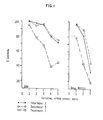
- a field trial was conducted in Wayside, Mississippi, to determine the effectiveness of various insecticidal formulations when applied as ULV sprays. Seven formulations plus an untreated check were included in the trial, each in replicate. Each plot was 1 row (3.048 meters) and was covered by a 1.8 x 2.1 x 3.7 meter cage. The five or six plants in each cage were trimmed to leave only the top 1/3 branches. Eight days before treating, thirty tobacco budworm moths were released in each cage. The plots were treated with the formulations listed at the bottom of Table 4 at a rate of 1.12 kg of active ingredient per hectare. Each cage was removed just prior to treatment. Treatments were applied by MICRO-MAX controlled droplet rotary atomizers mounted on a high--clearance sprayer.
- Compound A 0,0-dimethyl 0-(5-methyl-l-(2-pyridyl)-lH-1,2,4-triazol-3-yl)phosphorothioic acid ester, hereinafter referred to as'"Compound A", was applied to cotton previously infested with all ages of tobacco budworm larvae, primarily late second to third instar. Compound A was applied to the cotton as an oil-in-water emulsion by mixing the treatments described in Table 6 with enough water to apply either 0.28 or 0.56 kgs compound A/hectare at a spray volume of 93.54 L/hectare. Three plants from each plot were examined 48-72 hours post-treatment for the number of live and dead larvae. These results are listed in Table 6 under "Field Control (%)".
- the above formulation has a specific gravity of 1.05 at 20°C and contains 24 kgs chlorpyrifos per lite. This formulation is useful for application to cotton crops for the control of undesirable pests.
- the above formulation has a specific gravity of 1.034 at 20°C and contains 0.24 kg chlorpyrifos per lite. This formulation is useful for application to plants for the control of undesirable pests.
- insecticidal spray formulations were prepared by:
- Additional plants were infested with 10 2-SSM at various time intervals after spraying to determine residual control.
- the activity of methyl parathion was also evaluated for activity on the aster leafhopper (Macrosteles fascifrons). Young rice plants were sprayed in a similar manner as described above. Two days later plastic cylinders were placed around each of the plants and 10 adult leafhoppers were placed in each cylinder. The cylinders were then capped. The plants were incubated in the greenhouse and percent mortality readings were made 24 hours post-infestation. Additional plants were infested with leafhoppers 3 days after spraying. The results are listed in Table 7. Control formulations consisted of water only (no insecticide).
- the improved insecticidal formulations of the present invention may contain additional agricultural chemicals to increase the spectrum of activity.
- additional agricultural chemicals may be water-soluble insecticides, nematocides, arthropodicides, herbicides, fertilizers, micronutrients, fungicides or bactericides that are compatible with the formulations of the present invention'and not antagonistic to the insecticidal activity of the present formulations.
- the agricultural chemicals in combination can generally be present in the ratio of from 1 to 100 parts of the insecticides of the present invention with from 100 to 1 parts of the additional agricultural chemicals.
Landscapes
- Life Sciences & Earth Sciences (AREA)
- General Health & Medical Sciences (AREA)
- Health & Medical Sciences (AREA)
- Toxicology (AREA)
- Pest Control & Pesticides (AREA)
- Plant Pathology (AREA)
- Agronomy & Crop Science (AREA)
- Engineering & Computer Science (AREA)
- Dentistry (AREA)
- Wood Science & Technology (AREA)
- Zoology (AREA)
- Environmental Sciences (AREA)
- Agricultural Chemicals And Associated Chemicals (AREA)
Applications Claiming Priority (2)
| Application Number | Priority Date | Filing Date | Title |
|---|---|---|---|
| US39357182A | 1982-06-30 | 1982-06-30 | |
| US393571 | 1982-06-30 |
Publications (2)
| Publication Number | Publication Date |
|---|---|
| EP0099667A1 true EP0099667A1 (fr) | 1984-02-01 |
| EP0099667B1 EP0099667B1 (fr) | 1986-10-01 |
Family
ID=23555285
Family Applications (1)
| Application Number | Title | Priority Date | Filing Date |
|---|---|---|---|
| EP83303731A Expired EP0099667B1 (fr) | 1982-06-30 | 1983-06-28 | Procédé pour augmenter l'efficacité des insecticides synthétiques, organiques, solubles dans l'huile |
Country Status (11)
| Country | Link |
|---|---|
| EP (1) | EP0099667B1 (fr) |
| JP (1) | JPS5962501A (fr) |
| AU (1) | AU554134B2 (fr) |
| BR (1) | BR8303588A (fr) |
| CA (1) | CA1187408A (fr) |
| DE (1) | DE3366581D1 (fr) |
| GB (1) | GB2122493B (fr) |
| IL (1) | IL69085A (fr) |
| MY (1) | MY100969A (fr) |
| NZ (1) | NZ204710A (fr) |
| ZA (1) | ZA834706B (fr) |
Cited By (2)
| Publication number | Priority date | Publication date | Assignee | Title |
|---|---|---|---|---|
| FR2582481A1 (fr) * | 1985-06-03 | 1986-12-05 | Sumitomo Chemical Co | Compositions pyrethroides et procede pour lutter contre les insectes nuisibles et/ou les mites a l'aide de ces compositions |
| WO1988008248A1 (fr) * | 1987-04-30 | 1988-11-03 | A/S Cheminova | Preparation d'huile dans l'eau destinee a etre utilisee comme composition pesticide et procede de lutte contre les parasites au moyen de cette preparation |
Families Citing this family (4)
| Publication number | Priority date | Publication date | Assignee | Title |
|---|---|---|---|---|
| US5618547A (en) * | 1985-05-20 | 1997-04-08 | British Technology Group Limited | Control of ectoparasites |
| JPH07524B2 (ja) * | 1985-06-03 | 1995-01-11 | 住友化学工業株式会社 | ピレスロイド系農薬組成物 |
| JPH07100641B2 (ja) * | 1990-11-06 | 1995-11-01 | 大日本除蟲菊株式会社 | 加熱蒸散用水性殺虫剤の効力増強剤 |
| US10645924B2 (en) | 2016-04-20 | 2020-05-12 | The United States Of America As Represented By The Secretary Of The Navy | Dispersal composition |
Citations (2)
| Publication number | Priority date | Publication date | Assignee | Title |
|---|---|---|---|---|
| FR2081844A1 (en) * | 1970-03-11 | 1971-12-10 | Schloesing Sa | Pesticide compn dispersion |
| GB2024626A (en) * | 1978-06-30 | 1980-01-16 | Stafford Miller Ltd | Propoxylate toxicans for ectoparasites |
Family Cites Families (5)
| Publication number | Priority date | Publication date | Assignee | Title |
|---|---|---|---|---|
| DE1719417B2 (de) * | 1965-08-04 | 1973-05-17 | Dispergiermittel | |
| JPS5555103A (en) * | 1978-10-20 | 1980-04-22 | Sumitomo Chem Co Ltd | Stabilizing process |
| JPS55147201A (en) * | 1979-03-28 | 1980-11-17 | Hokko Chem Ind Co Ltd | Improved agricultural insecticidal emulsion |
| US4351753A (en) * | 1980-10-24 | 1982-09-28 | Basf Wyandotte Corporation | Liquified normally solid polyoxyalkylene block copolymers |
| US4317940A (en) * | 1980-12-23 | 1982-03-02 | Olin Corporation | Biodegradable surfactants |
-
1983
- 1983-06-24 AU AU16218/83A patent/AU554134B2/en not_active Expired
- 1983-06-27 IL IL69085A patent/IL69085A/xx not_active IP Right Cessation
- 1983-06-27 NZ NZ204710A patent/NZ204710A/en unknown
- 1983-06-28 DE DE8383303731T patent/DE3366581D1/de not_active Expired
- 1983-06-28 EP EP83303731A patent/EP0099667B1/fr not_active Expired
- 1983-06-28 ZA ZA834706A patent/ZA834706B/xx unknown
- 1983-06-28 GB GB08317506A patent/GB2122493B/en not_active Expired
- 1983-06-29 CA CA000431501A patent/CA1187408A/fr not_active Expired
- 1983-06-30 BR BR8303588A patent/BR8303588A/pt not_active IP Right Cessation
- 1983-06-30 JP JP58119485A patent/JPS5962501A/ja active Pending
-
1987
- 1987-09-18 MY MYPI87001740A patent/MY100969A/en unknown
Patent Citations (2)
| Publication number | Priority date | Publication date | Assignee | Title |
|---|---|---|---|---|
| FR2081844A1 (en) * | 1970-03-11 | 1971-12-10 | Schloesing Sa | Pesticide compn dispersion |
| GB2024626A (en) * | 1978-06-30 | 1980-01-16 | Stafford Miller Ltd | Propoxylate toxicans for ectoparasites |
Cited By (2)
| Publication number | Priority date | Publication date | Assignee | Title |
|---|---|---|---|---|
| FR2582481A1 (fr) * | 1985-06-03 | 1986-12-05 | Sumitomo Chemical Co | Compositions pyrethroides et procede pour lutter contre les insectes nuisibles et/ou les mites a l'aide de ces compositions |
| WO1988008248A1 (fr) * | 1987-04-30 | 1988-11-03 | A/S Cheminova | Preparation d'huile dans l'eau destinee a etre utilisee comme composition pesticide et procede de lutte contre les parasites au moyen de cette preparation |
Also Published As
| Publication number | Publication date |
|---|---|
| CA1187408A (fr) | 1985-05-21 |
| NZ204710A (en) | 1986-04-11 |
| MY100969A (en) | 1991-06-15 |
| JPS5962501A (ja) | 1984-04-10 |
| IL69085A0 (en) | 1983-10-31 |
| EP0099667B1 (fr) | 1986-10-01 |
| ZA834706B (en) | 1984-11-28 |
| GB2122493A (en) | 1984-01-18 |
| DE3366581D1 (en) | 1986-11-06 |
| AU554134B2 (en) | 1986-08-07 |
| GB2122493B (en) | 1987-03-18 |
| AU1621883A (en) | 1984-01-05 |
| GB8317506D0 (en) | 1983-08-03 |
| IL69085A (en) | 1987-11-30 |
| BR8303588A (pt) | 1984-02-14 |
Similar Documents
| Publication | Publication Date | Title |
|---|---|---|
| US4735939A (en) | Insecticidal activity of staurosporine | |
| EP0350079B1 (fr) | Combinaisons herbicides synergiques et méthode d'application | |
| Lešnik et al. | Comparison of the effectiveness of standard and drift-reducing nozzles for control of some pests of apple | |
| SK757788A3 (en) | Multicomponent pesticidal agent | |
| EP0099667A1 (fr) | Procédé pour augmenter l'efficacité des insecticides synthétiques, organiques, solubles dans l'huile | |
| JPS6324483B2 (fr) | ||
| Dobrin et al. | The antifeeding activity of selected pyrethroids towards the Mexican bean beetle (Coleoptera: Coccinellidae) | |
| JP4578943B2 (ja) | 農薬組成物 | |
| WO2006060551A2 (fr) | Procede de lutte contre les parasites du sol s'attaquant aux cultures transplantees | |
| CA1219526A (fr) | Accroissement de l'efficacite des insecticides organo-synthetiques solubles a l'huile | |
| US5010068A (en) | Oxadiazinyl organophosphorus pesticides | |
| JP2813993B2 (ja) | 殺ダニ剤組成物 | |
| Guthrie et al. | Distribution and control of cyclodiene-resistant wireworms attacking tobacco in North Carolina | |
| Pasqualini et al. | Studies on side effects of some insecticides on aphid-feeding Coccinellidae in Emilia-Romagna fruit crops | |
| KR100417794B1 (ko) | 농약용옥사디아진 | |
| Zidan et al. | Ovicidal activity of certain mineral oils, organic insecticides and their mixtures against the cotton leafworm, spodoptera littoralis: BOISD: lepidoptera: noctuidae | |
| Wolfenbarger | Brief history of aphid control on potatoes in South Florida, 1946-59 | |
| Munson et al. | Insecticides applied at planting time for control of corn rootworm larvae in Nebraska | |
| Jeppson et al. | Cycloheximide derivatives and mite control, with special reference to mites on citrus | |
| US4216213A (en) | Acaricidal and insecticidal compositions | |
| Asquith | Mite and apple aphid control on apple trees following soil applications of Temik | |
| Pielou et al. | Diazinon: A summary of recent work on a new orchard insecticide | |
| Dunning et al. | 9. EARLY SPRAYS ON SUGAR BEET. THE EFFECT OF INSECTICIDE APPLICATIONS TO THE SUGAR BEET CROP EARLY IN THE SEASON ON APHID AND YELLOWS INCIDENCE. | |
| Cameron et al. | Chemical control of the “annual bluegrass weevil,” Hyperodes sp. nr. anthracinus | |
| KR840001227B1 (ko) | 살충제 조성물 |
Legal Events
| Date | Code | Title | Description |
|---|---|---|---|
| PUAI | Public reference made under article 153(3) epc to a published international application that has entered the european phase |
Free format text: ORIGINAL CODE: 0009012 |
|
| AK | Designated contracting states |
Designated state(s): BE DE FR IT NL |
|
| 17P | Request for examination filed |
Effective date: 19840517 |
|
| GRAA | (expected) grant |
Free format text: ORIGINAL CODE: 0009210 |
|
| AK | Designated contracting states |
Kind code of ref document: B1 Designated state(s): BE DE FR IT NL |
|
| REF | Corresponds to: |
Ref document number: 3366581 Country of ref document: DE Date of ref document: 19861106 |
|
| ITF | It: translation for a ep patent filed | ||
| ET | Fr: translation filed | ||
| PLBE | No opposition filed within time limit |
Free format text: ORIGINAL CODE: 0009261 |
|
| STAA | Information on the status of an ep patent application or granted ep patent |
Free format text: STATUS: NO OPPOSITION FILED WITHIN TIME LIMIT |
|
| 26N | No opposition filed | ||
| PGFP | Annual fee paid to national office [announced via postgrant information from national office to epo] |
Ref country code: FR Payment date: 19900301 Year of fee payment: 8 |
|
| PGFP | Annual fee paid to national office [announced via postgrant information from national office to epo] |
Ref country code: DE Payment date: 19900309 Year of fee payment: 8 |
|
| PGFP | Annual fee paid to national office [announced via postgrant information from national office to epo] |
Ref country code: BE Payment date: 19900402 Year of fee payment: 8 |
|
| ITTA | It: last paid annual fee | ||
| PGFP | Annual fee paid to national office [announced via postgrant information from national office to epo] |
Ref country code: NL Payment date: 19900630 Year of fee payment: 8 |
|
| PG25 | Lapsed in a contracting state [announced via postgrant information from national office to epo] |
Ref country code: BE Effective date: 19910630 |
|
| BERE | Be: lapsed |
Owner name: THE DOW CHEMICAL CY Effective date: 19910630 |
|
| PG25 | Lapsed in a contracting state [announced via postgrant information from national office to epo] |
Ref country code: NL Effective date: 19920101 |
|
| NLV4 | Nl: lapsed or anulled due to non-payment of the annual fee | ||
| PG25 | Lapsed in a contracting state [announced via postgrant information from national office to epo] |
Ref country code: FR Effective date: 19920228 |
|
| PG25 | Lapsed in a contracting state [announced via postgrant information from national office to epo] |
Ref country code: DE Effective date: 19920401 |