EP0101818A2 - Chirurgisches Nahtmaterial aus einem Kunststoffmonofil - Google Patents
Chirurgisches Nahtmaterial aus einem Kunststoffmonofil Download PDFInfo
- Publication number
- EP0101818A2 EP0101818A2 EP83106143A EP83106143A EP0101818A2 EP 0101818 A2 EP0101818 A2 EP 0101818A2 EP 83106143 A EP83106143 A EP 83106143A EP 83106143 A EP83106143 A EP 83106143A EP 0101818 A2 EP0101818 A2 EP 0101818A2
- Authority
- EP
- European Patent Office
- Prior art keywords
- monofilament
- tensile strength
- surgical suture
- threads
- knot
- Prior art date
- Legal status (The legal status is an assumption and is not a legal conclusion. Google has not performed a legal analysis and makes no representation as to the accuracy of the status listed.)
- Granted
Links
- 239000002033 PVDF binder Substances 0.000 claims abstract description 12
- 229920002981 polyvinylidene fluoride Polymers 0.000 claims abstract description 12
- 239000004033 plastic Substances 0.000 claims description 13
- 229920003023 plastic Polymers 0.000 claims description 13
- 239000003356 suture material Substances 0.000 claims description 9
- 239000000463 material Substances 0.000 description 5
- 239000004743 Polypropylene Substances 0.000 description 4
- 239000003795 chemical substances by application Substances 0.000 description 4
- 239000004952 Polyamide Substances 0.000 description 3
- 239000002729 catgut Substances 0.000 description 3
- 229920002647 polyamide Polymers 0.000 description 3
- 229920000728 polyester Polymers 0.000 description 2
- 229920000098 polyolefin Polymers 0.000 description 2
- -1 polypropylene Polymers 0.000 description 2
- 229920001155 polypropylene Polymers 0.000 description 2
- ZCYVEMRRCGMTRW-UHFFFAOYSA-N 7553-56-2 Chemical compound [I] ZCYVEMRRCGMTRW-UHFFFAOYSA-N 0.000 description 1
- VYZAMTAEIAYCRO-UHFFFAOYSA-N Chromium Chemical compound [Cr] VYZAMTAEIAYCRO-UHFFFAOYSA-N 0.000 description 1
- 229920000742 Cotton Polymers 0.000 description 1
- 206010061218 Inflammation Diseases 0.000 description 1
- 229920000954 Polyglycolide Polymers 0.000 description 1
- 229910000831 Steel Inorganic materials 0.000 description 1
- 230000015556 catabolic process Effects 0.000 description 1
- 238000006243 chemical reaction Methods 0.000 description 1
- 229910052804 chromium Inorganic materials 0.000 description 1
- 239000011651 chromium Substances 0.000 description 1
- 238000001816 cooling Methods 0.000 description 1
- 230000007123 defense Effects 0.000 description 1
- 238000006731 degradation reaction Methods 0.000 description 1
- 238000010586 diagram Methods 0.000 description 1
- 230000000694 effects Effects 0.000 description 1
- 239000004744 fabric Substances 0.000 description 1
- 239000000835 fiber Substances 0.000 description 1
- 238000009499 grossing Methods 0.000 description 1
- 230000036512 infertility Effects 0.000 description 1
- 230000004054 inflammatory process Effects 0.000 description 1
- 229910052740 iodine Inorganic materials 0.000 description 1
- 239000011630 iodine Substances 0.000 description 1
- 229910052751 metal Inorganic materials 0.000 description 1
- 239000002184 metal Substances 0.000 description 1
- 238000000034 method Methods 0.000 description 1
- 239000004633 polyglycolic acid Substances 0.000 description 1
- 239000010959 steel Substances 0.000 description 1
- 229910052715 tantalum Inorganic materials 0.000 description 1
- GUVRBAGPIYLISA-UHFFFAOYSA-N tantalum atom Chemical compound [Ta] GUVRBAGPIYLISA-UHFFFAOYSA-N 0.000 description 1
Images



Classifications
-
- A—HUMAN NECESSITIES
- A61—MEDICAL OR VETERINARY SCIENCE; HYGIENE
- A61L—METHODS OR APPARATUS FOR STERILISING MATERIALS OR OBJECTS IN GENERAL; DISINFECTION, STERILISATION OR DEODORISATION OF AIR; CHEMICAL ASPECTS OF BANDAGES, DRESSINGS, ABSORBENT PADS OR SURGICAL ARTICLES; MATERIALS FOR BANDAGES, DRESSINGS, ABSORBENT PADS OR SURGICAL ARTICLES
- A61L17/00—Materials for surgical sutures or for ligaturing blood vessels ; Materials for prostheses or catheters
- A61L17/04—Non-resorbable materials
Definitions
- the invention relates to a surgical suture made from a plastic monofilament.
- the absorbable suture materials such as chromium catgut, iodine catgut, catgutplain
- non-absorbable suture materials made from linen thread, cotton thread, silk, polyamides, polyesters, polyolefins, polyglycolic acid, tantalum or steel are known.
- polyamide threads For example, the tensile strength of polyamide threads is 30% higher than that of silk or twine. Polyester threads have an even higher tear strength.
- the surface quality, elasticity and swellability are also important for knot reliability.
- the properties of sterility and tissue compatibility must be guaranteed.
- Multifilament threads have therefore also been developed to improve the manageability and reduce the elongation of plastic surgical sutures.
- a braided or multifilament thread is more supple than a monofilament thread, but it has a certain sawing effect on the tissue when used as a surgical suture. Therefore, in many cases, this disadvantageous roughness of multifilament threads is counteracted by applying an additional smoothing agent.
- the invention has for its object to provide a monofilament suture made of plastic, which has a low elongation and thus an improved handling.
- This object is achieved with the invention. It consists of using a stretched plastic monofilament made of polyvinylidene fluoride (PVCF) for a surgical suture.
- PVCF polyvinylidene fluoride
- the monofilament threads made of PVDF according to the invention have a high tensile strength and suppleness however, compared to known plastic monofilaments, it has a lower elasticity and therefore less elongation. This combination of properties improves handling as a surgical suture material. Furthermore, such monofilament threads made of PVDF are distinguished, for example, from materials made from polypropylene by a reduced tendency to unravel.
- the thread according to the invention is thus easier to handle and in the knot seat.
- the thread thicknesses are preferably between 0.07 and 0.5 mm.
- the material can be strengthened in the usual way by adjusting the degree of crystallinity, e.g. by means of the cooling conditions after extruding the monofilament. Knot tensile strength and elongation at break of a knotted thread can be determined as a function of the degree of stretching and adjusted accordingly.
- the monofilament according to the invention preferably has an axial extension in the ratio of 1: 3 to 1: 8, preferably 1: 4 to 1: 6, as the suture material. It is essential that the tensile strength or knot tensile strength, which of course depends on the thickness of the monofilament, meets the requirements placed on the suture material, which are met by two to three times.
- the knot elongation in the monofilaments according to the invention is only 8 to 20%, preferably 8 to 18%. It is on average 50% lower than the comparable monofilament for suture made from polyolefins or polyamide.
- a PVDF monofilament 1 is 0 shown in knotted form.
- the PVDF monofilament has a very high tensile strength, knot tensile strength, slip resistance, relatively small riding elongation, very high smoothness, smooth surface, no splicing and good diameter consistency.
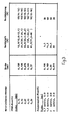
- FIGS. 3 and 4 the measured values of the knot tensile strength, tensile strength and elongation at break of PVDF monofilaments according to the invention and commercially available polypropylene monofilaments of various thicknesses are listed. The clear improvement in all values regarding the use as surgical suture material from PVDF compared to PP can be seen.
- the setpoint of the tearing force for surgical suture material is also given in FIG. FIG.
- Curve 1 shows the tensile strength of a PVDF monofilament
- curve 1a the knot tensile strength of the PVDF monofilament
- curve 2 the tensile strength of a PP monofilament
- curve 3 the nominal value of the knot tensile strength.
Landscapes
- Health & Medical Sciences (AREA)
- Chemical & Material Sciences (AREA)
- Engineering & Computer Science (AREA)
- Materials Engineering (AREA)
- Surgery (AREA)
- Vascular Medicine (AREA)
- Epidemiology (AREA)
- Life Sciences & Earth Sciences (AREA)
- Animal Behavior & Ethology (AREA)
- General Health & Medical Sciences (AREA)
- Public Health (AREA)
- Veterinary Medicine (AREA)
- Materials For Medical Uses (AREA)
- Artificial Filaments (AREA)
Abstract
Description
- Die Erfindung betrifft ein chirurgisches Nahtmaterial aus einem Kunststoffmonofil.
- Für chirurgisches Nahtmittel werden eine Reihe unterschied licher Materialien eingesetzt, die den daraus hergestellte Nahtmitteln ihre charakteristischen Anwendungsmöglichkeite verleihen. Bekannt sind einerseits die resorbierbaren Naht materialien, wie Chromcatgut, Jodcatgut, Catgutplain und zum anderen die nicht resorbierbaren Nahtmaterialien aus Leinenzwirn, Baumwollzwirn, Seide, Polyamide, Polyester, Polyolefine, Polyglykolsäure, Tantal oder Stahl.
- Die herausragenden Eigenschaften von z.B. Seide aus Nahtmaterial sind ihre hohe Reißkraft, Geschmeidigkeit, gute Knüpfbarkei t und Nichtresorbierbarkeit. Nachteile sind Dochtwi.rkung, die zu einer Abwehrreaktion des görpergewebe als Folge führt und Abbauung des Nahtmaterials im Gewebe und damit einhergehende Festigkeitsverminderung der Gewebenaht. Leinenzwirn hat ähnliche Nachteile und Vorteile 'wie Seide und konnte sich aber aufgrund des geringeren Preises sehr lange behaupten.
- Eine Übersicht über die unterschiedlichen Nahtmittel und ihre Vor- und Nachteile sowie ihre Einsatzmöglichkeiten findet sich beispielsweise bei P. F. Nockemann "Die chirurgische Naht", Georg Thieme Verlag Stuttgart. New York 1980.
- Chirurgische Nahtmaterialien aus Kunststoffen übertreffen Nahtmaterialien aus Naturfasern sowie Catgut in ihren Eigenschaften in vieler Hinsicht. Die am meisten herausragende Eigenschaft ist deren deutlich größere Reißkraft. In diesem Punkte werden Kunststoffäden nur noch von Metallfäden übertroffen. Dabei behalten Fäden aus Kunststoff im Gegensatz zu Fäden aus Naturstoffen ihre Festigkeit auch im Gewebe nahezu unverändert bei.
- Beispielsweise liegt die Reißkraft von Polyamidfäden um 30 % über der von Seide oder Zwirn. Polyesterfäden weisen eine noch höhere Reißkraft auf.
- Neben der Reißkraft, die von der Fadenstärke abhängt und die ein Ma3 für die Knotenfestigkeit des Nahtmittels ist, sind auch die Oberflächenbeschaffenheit, Elastizität und Quellbarkeit von Bedeutung für die Knotenzuverlässigkeit. Ferner müssen die Eigenschaften der Sterilität und der Gewebeverträglichkeit gewährleistet sein.
- Bei der hohen Reißkraft von Kunststoffäden ist ihre gleichzeitige Geschmeidigkeit von besonderem Vorteil. Allerdings ist die Geschmeidigkeit mit hoher Elastizität gekoppelt. Eine hohe Elastizität, gepaart mit der hohen Reißkraft, bedingt bei den synthetischen monofilen Nahtmitteln einen wesentlichen Nachteil. Für den Operateur erweist sich die hohe Elastizität der Kunststoffäden beim Knoten als störend. Er kann nur schwer die richtige Nahtspannung abschätzen. Darüber hina besteht die Gefahr, daß die abgeschnittenen Enden des bei
- Anziehen gedehnten Fadens in den Knoten zurückschlüpfen und so der Knoten geöffnet wird. Diese geringe Knotensicherheit macht bei allen Kunststoffäden in mehr oder weniger starkem Maße eine spezielle Knotentechnik erforderlich. Wegen der elastischen Dehnbarkeit müssen die Fäden vor und während des Knotens besonders stark angezogen werden. Dies ist andererseits wegen der hohen Fadenfestigkeit noch mit Kräften möglich, die andere Fäden bereits zerreißen würden. Das bei der Naht gefaßte Gewebe gerät auf diese Weise aber leicht unter überhöhten Druck, so daß es geschädigt wird.
- Zur Yerbesserung der Handhabbarkeit und Herabsetzung der Dehnung von chirurgischen Nahtmitteln aus Kunststoff sind daher auch multifile Fäden entwickelt worden. Ein geflochtener oder multifiler Faden ist zwar geschmeidiger al ein monofiler Faden, hat dafür aber bei der Verwendung als chirurgische Nahtmittel eine gewisse Sägewirkung auf das Gewebe. Daher wird in vielen Fällen dieser nachteiliger Rauhigkeit multifiler Fäden durch Aufbringen eines zusätzlichen Glättemittels entgegengewirkt.
- Der Erfindung liegt die Aufgabe zugrunde, ein monofiles chirurgisches Nahtmaterial aus Kunststoff zur Verfügung zu stellen, das eine geringe Dehnung und damit eine verbesserte Handhabbarkeit aufweist.
- Diese Aufgabe wird mit der Erfindung gelöst. Sie besteht darin, bei einem chirurgischen Nahtmaterial ein verstrecktes Kunststoffmonofil aus Polyvinylidenfluorid (PVCF) zu verwenden.
- Die monofilen Fäden aus PVDF gemäß der Erfindung besitzen eine hohe Reißkraft und Geschmeidigkeit, weisen jedoch gegenüber bekannten Kunststoffmonofilen eine niedrigere Elastizität und damit geringere Dehnung auf. Diese Eigenschaften-Kombination verbessert die Handhabbarkeit als chirurgisches Nahtmaterial. Ferner zeichnen sich solche monofilen Fäden aus PVDF z.B. gegenüber Materialien aus Polypropylen durch eine verringerte Neigung zum Aufspleißen aus.
- Der erfindungsgemäBe Faden ist somit besser in der Handhabbarkeit und im Knotensitz.
- Zur Unterscheidung von anderen Materialien kann er mit einem geeigneten Farbstoff eingefärbt werden. Die Fadenstärken liegen vorzugsweise zwischen 0,07 und 0,5 mm. Das Material kann in üblicher Weise in seiner Festigkeit durch Einstellung des Kristallinitätsgrades, z.B. mittels der Kühlbedingungen nach dem Extrudieren des Monofilaments, optimiert werden. Knotenreißkraft und Reißdehnung eines geknoteten Fadens können als Funktion des Verstreckun.gs- grades ermittelt und entsprechend eingestellt werden.
- Bevorzugt weist das erfindungsgemäBe Monofil als Nahtmaterial eine axiale Yerstreckung im Verhältnis von 1:3 bis 1:8 vorzugsweise 1:4 bis 1:6 auf. Wesentlich ist, daß die Reißkraft bzw. KnotenreiBkraft, die natürlich von der Dicke des Monofils abhängt, den an das Nahtmaterial gestellten Anforderungen genügt, wobei diese um das zweibis dreifache eingehalten werden. Die Knoten-ReiBdehnung beträgt bei den erfindungsgemäBen Monofilen nur 8 bis 20 % vorzugsweise 8 bis 18 %. Sie liegt damit im Durchschnitt um 50 % niedriger als die vergleichbaren Monofile für Naht material aus Polyolefinen oder Polyamid.
- Darüber hinaus haben Testversuche ergeben, das PVDF-Monofile eine sehr gute Gewebeverträglichkeit aufweisen und keine Entzündungen hervorrufen.
- In der Zeichnung ist in Figur 1 ein PVDF-Monofil 10 in geknoteter Form gezeigt. Das PVDF-Monofil weist eine sehr hohe Reißfestigkeit, Knotenreißfestigkeit, Rutschfestigkeit relative kleine ReitBdehnung, sehr hohe Geschmeidigkeit, glatte Oberfläche, kein Spleißen und gute Durchmesserkonstanz auf. In den beigefügten Tabellen der Figur 3 und 4 sind die gemessenen Werte der Knotenreißkraft, Reißkraft und Reil3d.ehnung von PVDF-Monofilen gemäß der Erfindung und handelsüblichen Polypropylenmonofilen verschiedener Dicke aufgeführt. Die deutliche Yerbesserung in allen Werten bezüglich des Einsatzes als chirurgisches Nahtmaterial von PVDF gegenüber PP ist ersichtlich. Auch ist in Figur 4 noch der Sollwert der Knotenreißkraft für chirurgisches Nahtmaterial angegeben. In Figur 2 ist ein Diagramm der Reißkraft in Abhä.ngigkeit von der Dicke des Monofiles dargestellt. Hierbei zeigt die Kurve 1 die Reißkraft eines PVDF-Monofils, Kurve 1a die Knotenreißkraft des PVDF-Monofils, Kurve 2 die ReiBkraft eines PP-Monofils und Kurve 3 den Sollwert der Knotenreißkraft.
Claims (3)
Priority Applications (1)
| Application Number | Priority Date | Filing Date | Title |
|---|---|---|---|
| AT83106143T ATE37789T1 (de) | 1982-07-30 | 1983-06-23 | Chirurgisches nahtmaterial aus einem kunststoffmonofil. |
Applications Claiming Priority (2)
| Application Number | Priority Date | Filing Date | Title |
|---|---|---|---|
| DE3228428 | 1982-07-30 | ||
| DE3228428A DE3228428C2 (de) | 1982-07-30 | 1982-07-30 | Verwendung eines chirurgischen Nahtmaterials aus einem Kunststoffmonofil |
Publications (3)
| Publication Number | Publication Date |
|---|---|
| EP0101818A2 true EP0101818A2 (de) | 1984-03-07 |
| EP0101818A3 EP0101818A3 (en) | 1986-01-02 |
| EP0101818B1 EP0101818B1 (de) | 1988-10-12 |
Family
ID=6169671
Family Applications (1)
| Application Number | Title | Priority Date | Filing Date |
|---|---|---|---|
| EP83106143A Expired EP0101818B1 (de) | 1982-07-30 | 1983-06-23 | Chirurgisches Nahtmaterial aus einem Kunststoffmonofil |
Country Status (5)
| Country | Link |
|---|---|
| EP (1) | EP0101818B1 (de) |
| JP (1) | JPS5950333B2 (de) |
| AT (1) | ATE37789T1 (de) |
| DE (2) | DE3228428C2 (de) |
| ES (1) | ES8404190A1 (de) |
Cited By (1)
| Publication number | Priority date | Publication date | Assignee | Title |
|---|---|---|---|---|
| EP0165500A3 (en) * | 1984-05-24 | 1986-01-08 | Ethicon Inc. | Surgical filaments from vinylidene fluoride copolymers |
Families Citing this family (4)
| Publication number | Priority date | Publication date | Assignee | Title |
|---|---|---|---|---|
| JPS612863A (ja) * | 1984-06-15 | 1986-01-08 | 住友電気工業株式会社 | 手術用縫合糸およびその製造方法 |
| JPS6185947A (ja) * | 1984-10-03 | 1986-05-01 | 住友電気工業株式会社 | 手術用縫合糸およびその製造方法 |
| DE9014598U1 (de) * | 1990-10-22 | 1991-01-03 | Krahmer, Gerhard M., 5064 Rösrath | Haarimplantat aus Kunststoffäden |
| DE4134320C2 (de) * | 1990-10-22 | 1993-10-28 | Gerhard M Krahmer | Künstliches Haar |
Family Cites Families (4)
| Publication number | Priority date | Publication date | Assignee | Title |
|---|---|---|---|---|
| DE8221647U1 (de) * | 1982-11-25 | Dynamit Nobel Ag, 5210 Troisdorf | Chirurgisches Nahtmaterial aus einem Kunststoffmonofil | |
| US4034763A (en) * | 1976-06-10 | 1977-07-12 | Frazier Calvin H | Ligament forming suture |
| DE2914606B2 (de) * | 1979-04-11 | 1981-06-11 | Dynamit Nobel Ag, 5210 Troisdorf | Saite aus Kunststoff, Verfahren zu deren Herstellung und Verwendung einer Saite mit bestimmten Eigenschaften |
| JPS56151055A (en) * | 1980-03-26 | 1981-11-21 | Daikin Ind Ltd | Suturing gut for operation |
-
1982
- 1982-07-30 DE DE3228428A patent/DE3228428C2/de not_active Expired
-
1983
- 1983-06-23 AT AT83106143T patent/ATE37789T1/de active
- 1983-06-23 EP EP83106143A patent/EP0101818B1/de not_active Expired
- 1983-06-23 DE DE8383106143T patent/DE3378186D1/de not_active Expired
- 1983-07-27 JP JP58136038A patent/JPS5950333B2/ja not_active Expired
- 1983-07-29 ES ES524586A patent/ES8404190A1/es not_active Expired
Cited By (1)
| Publication number | Priority date | Publication date | Assignee | Title |
|---|---|---|---|---|
| EP0165500A3 (en) * | 1984-05-24 | 1986-01-08 | Ethicon Inc. | Surgical filaments from vinylidene fluoride copolymers |
Also Published As
| Publication number | Publication date |
|---|---|
| DE3228428A1 (de) | 1984-02-09 |
| JPS5940861A (ja) | 1984-03-06 |
| EP0101818A3 (en) | 1986-01-02 |
| EP0101818B1 (de) | 1988-10-12 |
| ES524586A0 (es) | 1984-05-01 |
| ES8404190A1 (es) | 1984-05-01 |
| ATE37789T1 (de) | 1988-10-15 |
| DE3228428C2 (de) | 1984-10-18 |
| DE3378186D1 (en) | 1988-11-17 |
| JPS5950333B2 (ja) | 1984-12-07 |
Similar Documents
| Publication | Publication Date | Title |
|---|---|---|
| DE69923552T2 (de) | Chirurgischer faden für operationen in der plastischen chirurgie | |
| DE2723217C2 (de) | ||
| DE2552098C2 (de) | Nadel-Nahtmaterial-Kombination | |
| DE69410937T2 (de) | Prothesische Vorrichtung zum Reparieren von Septumschäden zwischen den Vorhöfen | |
| DE69209262T2 (de) | Vorrichtung zum verstärken eines ligamenttransplantats in der wiederherstellungschirurgie | |
| EP0201667A1 (de) | Künstliches Band aus textilen Schlauchgebilden | |
| DE2617211A1 (de) | Chirurgisches befestigungsmaterial | |
| DE69413982T2 (de) | Kettengestrickter stützverbandstoff, kettengestrickter stützverband und verfahren zur herstellung von stützverband | |
| DE2807467A1 (de) | Herzklappenprothese | |
| DE2627619A1 (de) | Lineare rueckfuehreinrichtung fuer die valvuloplastik | |
| DE1735033A1 (de) | Verfahren und Vorrichtung zum Verspleissen von Zwirnen,Schnueren oder Seilen | |
| DE3016870A1 (de) | Planenmaterial | |
| DE2542381A1 (de) | Nadel-nahtmaterial-kombination und verfahren zu ihrer herstellung | |
| DE3011520C2 (de) | Künstliches Haar aus thermoplatischem Harz | |
| AT407406B (de) | Rundballennetz | |
| DE4129191C2 (de) | Verfahren zur Herstellung eines wasserdichten Reißverschlusses | |
| EP0101818B1 (de) | Chirurgisches Nahtmaterial aus einem Kunststoffmonofil | |
| CH617471A5 (de) | ||
| DE3884699T2 (de) | Bänder- und Sehnenprothese und Vorrichtung zur Herstellung derselben. | |
| EP3146105B1 (de) | Elastische binde | |
| DE1642079A1 (de) | Mehrfaseriges nichtabsorbierbares chirurgisches Naehmaterial und Verfahren zur Herstellung desselben | |
| AT408766B (de) | Fibrillationsarmer formkörper | |
| DE8221647U1 (de) | Chirurgisches Nahtmaterial aus einem Kunststoffmonofil | |
| US5219659A (en) | Suture material made of synthetic resin monofil | |
| EP0509547B1 (de) | Chirurgisches Nahtmaterial |
Legal Events
| Date | Code | Title | Description |
|---|---|---|---|
| PUAI | Public reference made under article 153(3) epc to a published international application that has entered the european phase |
Free format text: ORIGINAL CODE: 0009012 |
|
| AK | Designated contracting states |
Designated state(s): AT BE CH DE FR GB IT LI LU NL SE |
|
| ITCL | It: translation for ep claims filed |
Representative=s name: BARZANO' E ZANARDO ROMA S.P.A. |
|
| TCNL | Nl: translation of patent claims filed | ||
| EL | Fr: translation of claims filed | ||
| RIN1 | Information on inventor provided before grant (corrected) |
Inventor name: KRAHMER, GERHARD Inventor name: SCHRICK, HANS-JUERGEN Inventor name: FENSKE, JUERGEN Inventor name: SPIELAU, PAUL, DR. Inventor name: WEBER, JOSEF |
|
| RAP1 | Party data changed (applicant data changed or rights of an application transferred) |
Owner name: KRAHMER, GERHARD M. Owner name: MONOFIL-TECHNIK GESELLSCHAFT FUER SYNTHESE MONOFIL |
|
| PUAL | Search report despatched |
Free format text: ORIGINAL CODE: 0009013 |
|
| AK | Designated contracting states |
Designated state(s): AT BE CH DE FR GB IT LI LU NL SE |
|
| 17P | Request for examination filed |
Effective date: 19860204 |
|
| 17Q | First examination report despatched |
Effective date: 19870721 |
|
| GRAA | (expected) grant |
Free format text: ORIGINAL CODE: 0009210 |
|
| AK | Designated contracting states |
Kind code of ref document: B1 Designated state(s): AT BE CH DE FR GB IT LI LU NL SE |
|
| PG25 | Lapsed in a contracting state [announced via postgrant information from national office to epo] |
Ref country code: SE Effective date: 19881012 |
|
| REF | Corresponds to: |
Ref document number: 37789 Country of ref document: AT Date of ref document: 19881015 Kind code of ref document: T |
|
| REF | Corresponds to: |
Ref document number: 3378186 Country of ref document: DE Date of ref document: 19881117 |
|
| ITF | It: translation for a ep patent filed | ||
| GBT | Gb: translation of ep patent filed (gb section 77(6)(a)/1977) | ||
| ET | Fr: translation filed | ||
| PG25 | Lapsed in a contracting state [announced via postgrant information from national office to epo] |
Ref country code: AT Effective date: 19890623 |
|
| PG25 | Lapsed in a contracting state [announced via postgrant information from national office to epo] |
Ref country code: LU Free format text: LAPSE BECAUSE OF NON-PAYMENT OF DUE FEES Effective date: 19890630 Ref country code: LI Effective date: 19890630 Ref country code: CH Effective date: 19890630 |
|
| PLBE | No opposition filed within time limit |
Free format text: ORIGINAL CODE: 0009261 |
|
| STAA | Information on the status of an ep patent application or granted ep patent |
Free format text: STATUS: NO OPPOSITION FILED WITHIN TIME LIMIT |
|
| 26N | No opposition filed | ||
| REG | Reference to a national code |
Ref country code: CH Ref legal event code: PL |
|
| ITTA | It: last paid annual fee | ||
| PGFP | Annual fee paid to national office [announced via postgrant information from national office to epo] |
Ref country code: NL Payment date: 19960630 Year of fee payment: 14 |
|
| PG25 | Lapsed in a contracting state [announced via postgrant information from national office to epo] |
Ref country code: NL Effective date: 19980101 |
|
| NLV4 | Nl: lapsed or anulled due to non-payment of the annual fee |
Effective date: 19980101 |
|
| REG | Reference to a national code |
Ref country code: GB Ref legal event code: IF02 |
|
| PGFP | Annual fee paid to national office [announced via postgrant information from national office to epo] |
Ref country code: FR Payment date: 20020611 Year of fee payment: 20 |
|
| PGFP | Annual fee paid to national office [announced via postgrant information from national office to epo] |
Ref country code: GB Payment date: 20020618 Year of fee payment: 20 |
|
| PGFP | Annual fee paid to national office [announced via postgrant information from national office to epo] |
Ref country code: BE Payment date: 20020619 Year of fee payment: 20 |
|
| PGFP | Annual fee paid to national office [announced via postgrant information from national office to epo] |
Ref country code: DE Payment date: 20020814 Year of fee payment: 20 |
|
| PG25 | Lapsed in a contracting state [announced via postgrant information from national office to epo] |
Ref country code: GB Free format text: LAPSE BECAUSE OF EXPIRATION OF PROTECTION Effective date: 20030622 |
|
| BE20 | Be: patent expired |
Owner name: *KRAHMER GERHARD M. Effective date: 20030623 Owner name: *MONOFIL-TECHNIK G- FUR SYNTHESE MONOFILE M.B.H. Effective date: 20030623 |
|
| REG | Reference to a national code |
Ref country code: GB Ref legal event code: PE20 |