EP0101877B1 - Procédé de préparation de N-allyle-o-alcoyle-thionocarbamates - Google Patents
Procédé de préparation de N-allyle-o-alcoyle-thionocarbamates Download PDFInfo
- Publication number
- EP0101877B1 EP0101877B1 EP19830107025 EP83107025A EP0101877B1 EP 0101877 B1 EP0101877 B1 EP 0101877B1 EP 19830107025 EP19830107025 EP 19830107025 EP 83107025 A EP83107025 A EP 83107025A EP 0101877 B1 EP0101877 B1 EP 0101877B1
- Authority
- EP
- European Patent Office
- Prior art keywords
- allyl
- alkyl
- reaction
- thionocarbamate
- isothiocyanate
- Prior art date
- Legal status (The legal status is an assumption and is not a legal conclusion. Google has not performed a legal analysis and makes no representation as to the accuracy of the status listed.)
- Expired
Links
- 238000000034 method Methods 0.000 title claims description 49
- 238000002360 preparation method Methods 0.000 title claims description 19
- ZOJBYZNEUISWFT-UHFFFAOYSA-N allyl isothiocyanate Chemical compound C=CCN=C=S ZOJBYZNEUISWFT-UHFFFAOYSA-N 0.000 claims description 113
- 238000006243 chemical reaction Methods 0.000 claims description 65
- 235000016720 allyl isothiocyanate Nutrition 0.000 claims description 58
- 239000003054 catalyst Substances 0.000 claims description 56
- -1 allyl halide Chemical class 0.000 claims description 36
- XLYOFNOQVPJJNP-UHFFFAOYSA-N water Substances O XLYOFNOQVPJJNP-UHFFFAOYSA-N 0.000 claims description 34
- LFQSCWFLJHTTHZ-UHFFFAOYSA-N Ethanol Chemical compound CCO LFQSCWFLJHTTHZ-UHFFFAOYSA-N 0.000 claims description 31
- 239000011541 reaction mixture Substances 0.000 claims description 27
- 229910052783 alkali metal Inorganic materials 0.000 claims description 26
- 150000001340 alkali metals Chemical class 0.000 claims description 23
- 125000000217 alkyl group Chemical group 0.000 claims description 23
- 239000012074 organic phase Substances 0.000 claims description 22
- NINIDFKCEFEMDL-UHFFFAOYSA-N Sulfur Chemical compound [S] NINIDFKCEFEMDL-UHFFFAOYSA-N 0.000 claims description 19
- 229910052717 sulfur Inorganic materials 0.000 claims description 19
- 239000011593 sulfur Substances 0.000 claims description 19
- 239000003444 phase transfer catalyst Substances 0.000 claims description 18
- 239000008346 aqueous phase Substances 0.000 claims description 17
- 239000000203 mixture Substances 0.000 claims description 15
- 238000010438 heat treatment Methods 0.000 claims description 13
- 239000000243 solution Substances 0.000 claims description 13
- ICAIHGOJRDCMHE-UHFFFAOYSA-O ammonium cyanide Chemical compound [NH4+].N#[C-] ICAIHGOJRDCMHE-UHFFFAOYSA-O 0.000 claims description 12
- 239000007864 aqueous solution Substances 0.000 claims description 12
- JOYRKODLDBILNP-UHFFFAOYSA-N Ethyl urethane Chemical compound CCOC(N)=O JOYRKODLDBILNP-UHFFFAOYSA-N 0.000 claims description 11
- 125000004432 carbon atom Chemical group C* 0.000 claims description 11
- 229910052751 metal Inorganic materials 0.000 claims description 11
- 239000002184 metal Substances 0.000 claims description 11
- 238000010992 reflux Methods 0.000 claims description 11
- 125000003118 aryl group Chemical group 0.000 claims description 9
- 229910052739 hydrogen Inorganic materials 0.000 claims description 9
- 239000001257 hydrogen Substances 0.000 claims description 9
- RTAQQCXQSZGOHL-UHFFFAOYSA-N Titanium Chemical compound [Ti] RTAQQCXQSZGOHL-UHFFFAOYSA-N 0.000 claims description 8
- IFVYHJRLWCUVBB-UHFFFAOYSA-N allyl thiocyanate Chemical compound C=CCSC#N IFVYHJRLWCUVBB-UHFFFAOYSA-N 0.000 claims description 8
- SOIFLUNRINLCBN-UHFFFAOYSA-N ammonium thiocyanate Chemical compound [NH4+].[S-]C#N SOIFLUNRINLCBN-UHFFFAOYSA-N 0.000 claims description 8
- ZMZDMBWJUHKJPS-UHFFFAOYSA-M Thiocyanate anion Chemical compound [S-]C#N ZMZDMBWJUHKJPS-UHFFFAOYSA-M 0.000 claims description 7
- ZMZDMBWJUHKJPS-UHFFFAOYSA-N hydrogen thiocyanate Natural products SC#N ZMZDMBWJUHKJPS-UHFFFAOYSA-N 0.000 claims description 7
- 150000003839 salts Chemical class 0.000 claims description 6
- 150000003138 primary alcohols Chemical class 0.000 claims description 5
- UFHFLCQGNIYNRP-UHFFFAOYSA-N Hydrogen Chemical compound [H][H] UFHFLCQGNIYNRP-UHFFFAOYSA-N 0.000 claims description 4
- 239000007810 chemical reaction solvent Substances 0.000 claims description 4
- 125000004435 hydrogen atom Chemical group [H]* 0.000 claims description 4
- 230000000737 periodic effect Effects 0.000 claims description 4
- 239000012071 phase Substances 0.000 claims description 4
- 125000002496 methyl group Chemical group [H]C([H])([H])* 0.000 claims description 2
- QGZKDVFQNNGYKY-UHFFFAOYSA-O Ammonium Chemical compound [NH4+] QGZKDVFQNNGYKY-UHFFFAOYSA-O 0.000 claims 1
- QCWXUUIWCKQGHC-UHFFFAOYSA-N Zirconium Chemical compound [Zr] QCWXUUIWCKQGHC-UHFFFAOYSA-N 0.000 claims 1
- 125000005843 halogen group Chemical group 0.000 claims 1
- 150000002431 hydrogen Chemical class 0.000 claims 1
- 238000000926 separation method Methods 0.000 claims 1
- 229910052719 titanium Inorganic materials 0.000 claims 1
- 239000010936 titanium Substances 0.000 claims 1
- 229910052726 zirconium Inorganic materials 0.000 claims 1
- ZXEKIIBDNHEJCQ-UHFFFAOYSA-N isobutanol Chemical compound CC(C)CO ZXEKIIBDNHEJCQ-UHFFFAOYSA-N 0.000 description 34
- 229940035429 isobutyl alcohol Drugs 0.000 description 16
- OKKJLVBELUTLKV-UHFFFAOYSA-N Methanol Chemical compound OC OKKJLVBELUTLKV-UHFFFAOYSA-N 0.000 description 12
- 150000002540 isothiocyanates Chemical class 0.000 description 11
- DNIAPMSPPWPWGF-GSVOUGTGSA-N (R)-(-)-Propylene glycol Chemical compound C[C@@H](O)CO DNIAPMSPPWPWGF-GSVOUGTGSA-N 0.000 description 10
- 125000003903 2-propenyl group Chemical group [H]C([*])([H])C([H])=C([H])[H] 0.000 description 9
- CDVAIHNNWWJFJW-UHFFFAOYSA-N 3,5-diethoxycarbonyl-1,4-dihydrocollidine Chemical compound CCOC(=O)C1=C(C)NC(C)=C(C(=O)OCC)C1C CDVAIHNNWWJFJW-UHFFFAOYSA-N 0.000 description 9
- OSDWBNJEKMUWAV-UHFFFAOYSA-N Allyl chloride Chemical compound ClCC=C OSDWBNJEKMUWAV-UHFFFAOYSA-N 0.000 description 8
- BDERNNFJNOPAEC-UHFFFAOYSA-N propan-1-ol Chemical compound CCCO BDERNNFJNOPAEC-UHFFFAOYSA-N 0.000 description 8
- 239000000047 product Substances 0.000 description 7
- IJGRMHOSHXDMSA-UHFFFAOYSA-N Atomic nitrogen Chemical compound N#N IJGRMHOSHXDMSA-UHFFFAOYSA-N 0.000 description 6
- AMQJEAYHLZJPGS-UHFFFAOYSA-N N-Pentanol Chemical compound CCCCCO AMQJEAYHLZJPGS-UHFFFAOYSA-N 0.000 description 6
- KXZJHVJKXJLBKO-UHFFFAOYSA-N chembl1408157 Chemical compound N=1C2=CC=CC=C2C(C(=O)O)=CC=1C1=CC=C(O)C=C1 KXZJHVJKXJLBKO-UHFFFAOYSA-N 0.000 description 6
- UKLDJPRMSDWDSL-UHFFFAOYSA-L [dibutyl(dodecanoyloxy)stannyl] dodecanoate Chemical compound CCCCCCCCCCCC(=O)O[Sn](CCCC)(CCCC)OC(=O)CCCCCCCCCCC UKLDJPRMSDWDSL-UHFFFAOYSA-L 0.000 description 5
- 150000001875 compounds Chemical class 0.000 description 5
- 239000012975 dibutyltin dilaurate Substances 0.000 description 5
- 230000000630 rising effect Effects 0.000 description 4
- JRMUNVKIHCOMHV-UHFFFAOYSA-M tetrabutylammonium bromide Chemical compound [Br-].CCCC[N+](CCCC)(CCCC)CCCC JRMUNVKIHCOMHV-UHFFFAOYSA-M 0.000 description 4
- OHXAOPZTJOUYKM-UHFFFAOYSA-N 3-Chloro-2-methylpropene Chemical compound CC(=C)CCl OHXAOPZTJOUYKM-UHFFFAOYSA-N 0.000 description 3
- HEMHJVSKTPXQMS-UHFFFAOYSA-M Sodium hydroxide Chemical compound [OH-].[Na+] HEMHJVSKTPXQMS-UHFFFAOYSA-M 0.000 description 3
- 125000005595 acetylacetonate group Chemical group 0.000 description 3
- YHWCPXVTRSHPNY-UHFFFAOYSA-N butan-1-olate;titanium(4+) Chemical compound [Ti+4].CCCC[O-].CCCC[O-].CCCC[O-].CCCC[O-] YHWCPXVTRSHPNY-UHFFFAOYSA-N 0.000 description 3
- 229910052799 carbon Inorganic materials 0.000 description 3
- 238000001816 cooling Methods 0.000 description 3
- MTHSVFCYNBDYFN-UHFFFAOYSA-N diethylene glycol Chemical compound OCCOCCO MTHSVFCYNBDYFN-UHFFFAOYSA-N 0.000 description 3
- 238000004821 distillation Methods 0.000 description 3
- 150000004820 halides Chemical class 0.000 description 3
- 229910052757 nitrogen Inorganic materials 0.000 description 3
- 229920001223 polyethylene glycol Polymers 0.000 description 3
- 230000035484 reaction time Effects 0.000 description 3
- 239000002904 solvent Substances 0.000 description 3
- XNWFRZJHXBZDAG-UHFFFAOYSA-N 2-METHOXYETHANOL Chemical compound COCCO XNWFRZJHXBZDAG-UHFFFAOYSA-N 0.000 description 2
- UJMZZAZBRIPOHZ-UHFFFAOYSA-N 2-ethylhexan-1-ol;titanium Chemical compound [Ti].CCCCC(CC)CO UJMZZAZBRIPOHZ-UHFFFAOYSA-N 0.000 description 2
- SFCQVEDGNZVACI-UHFFFAOYSA-N 3-isothiocyanato-2-methylprop-1-ene Chemical compound CC(=C)CN=C=S SFCQVEDGNZVACI-UHFFFAOYSA-N 0.000 description 2
- OKTJSMMVPCPJKN-UHFFFAOYSA-N Carbon Chemical compound [C] OKTJSMMVPCPJKN-UHFFFAOYSA-N 0.000 description 2
- VEXZGXHMUGYJMC-UHFFFAOYSA-M Chloride anion Chemical compound [Cl-] VEXZGXHMUGYJMC-UHFFFAOYSA-M 0.000 description 2
- LRHPLDYGYMQRHN-UHFFFAOYSA-N N-Butanol Chemical compound CCCCO LRHPLDYGYMQRHN-UHFFFAOYSA-N 0.000 description 2
- FAPWRFPIFSIZLT-UHFFFAOYSA-M Sodium chloride Chemical compound [Na+].[Cl-] FAPWRFPIFSIZLT-UHFFFAOYSA-M 0.000 description 2
- WQDUMFSSJAZKTM-UHFFFAOYSA-N Sodium methoxide Chemical compound [Na+].[O-]C WQDUMFSSJAZKTM-UHFFFAOYSA-N 0.000 description 2
- ATJFFYVFTNAWJD-UHFFFAOYSA-N Tin Chemical compound [Sn] ATJFFYVFTNAWJD-UHFFFAOYSA-N 0.000 description 2
- 238000013019 agitation Methods 0.000 description 2
- 150000001298 alcohols Chemical class 0.000 description 2
- 230000015572 biosynthetic process Effects 0.000 description 2
- UABDRQGIRJTVHT-UHFFFAOYSA-N butan-1-ol butan-1-olate zirconium(4+) Chemical compound [Zr+4].CCCCO.CCCC[O-].CCCC[O-].CCCC[O-].CCCC[O-] UABDRQGIRJTVHT-UHFFFAOYSA-N 0.000 description 2
- KBPLFHHGFOOTCA-UHFFFAOYSA-N caprylic alcohol Natural products CCCCCCCCO KBPLFHHGFOOTCA-UHFFFAOYSA-N 0.000 description 2
- 239000007795 chemical reaction product Substances 0.000 description 2
- SCXCDVTWABNWLW-UHFFFAOYSA-M decyl-dimethyl-octylazanium;chloride Chemical compound [Cl-].CCCCCCCCCC[N+](C)(C)CCCCCCCC SCXCDVTWABNWLW-UHFFFAOYSA-M 0.000 description 2
- 238000004817 gas chromatography Methods 0.000 description 2
- ZSIAUFGUXNUGDI-UHFFFAOYSA-N hexan-1-ol Chemical compound CCCCCCO ZSIAUFGUXNUGDI-UHFFFAOYSA-N 0.000 description 2
- 230000007062 hydrolysis Effects 0.000 description 2
- 238000006460 hydrolysis reaction Methods 0.000 description 2
- 239000012535 impurity Substances 0.000 description 2
- PHTQWCKDNZKARW-UHFFFAOYSA-N isoamylol Chemical compound CC(C)CCO PHTQWCKDNZKARW-UHFFFAOYSA-N 0.000 description 2
- 229910052746 lanthanum Inorganic materials 0.000 description 2
- FZLIPJUXYLNCLC-UHFFFAOYSA-N lanthanum atom Chemical group [La] FZLIPJUXYLNCLC-UHFFFAOYSA-N 0.000 description 2
- 238000004519 manufacturing process Methods 0.000 description 2
- 229910052758 niobium Inorganic materials 0.000 description 2
- 239000010955 niobium Chemical group 0.000 description 2
- GUCVJGMIXFAOAE-UHFFFAOYSA-N niobium atom Chemical group [Nb] GUCVJGMIXFAOAE-UHFFFAOYSA-N 0.000 description 2
- 230000000269 nucleophilic effect Effects 0.000 description 2
- ZRPRNLNEYWYWLO-UHFFFAOYSA-N o-ethyl n-prop-2-enylcarbamothioate Chemical compound CCOC(=S)NCC=C ZRPRNLNEYWYWLO-UHFFFAOYSA-N 0.000 description 2
- RLJWTAURUFQFJP-UHFFFAOYSA-N propan-2-ol;titanium Chemical compound [Ti].CC(C)O.CC(C)O.CC(C)O.CC(C)O RLJWTAURUFQFJP-UHFFFAOYSA-N 0.000 description 2
- 239000000376 reactant Substances 0.000 description 2
- 238000011084 recovery Methods 0.000 description 2
- 238000003756 stirring Methods 0.000 description 2
- VXUYXOFXAQZZMF-UHFFFAOYSA-N tetraisopropyl titanate Substances CC(C)O[Ti](OC(C)C)(OC(C)C)OC(C)C VXUYXOFXAQZZMF-UHFFFAOYSA-N 0.000 description 2
- 229910052720 vanadium Inorganic materials 0.000 description 2
- GPPXJZIENCGNKB-UHFFFAOYSA-N vanadium Chemical group [V]#[V] GPPXJZIENCGNKB-UHFFFAOYSA-N 0.000 description 2
- OAYXUHPQHDHDDZ-UHFFFAOYSA-N 2-(2-butoxyethoxy)ethanol Chemical compound CCCCOCCOCCO OAYXUHPQHDHDDZ-UHFFFAOYSA-N 0.000 description 1
- SBASXUCJHJRPEV-UHFFFAOYSA-N 2-(2-methoxyethoxy)ethanol Chemical compound COCCOCCO SBASXUCJHJRPEV-UHFFFAOYSA-N 0.000 description 1
- MPNXSZJPSVBLHP-UHFFFAOYSA-N 2-chloro-n-phenylpyridine-3-carboxamide Chemical compound ClC1=NC=CC=C1C(=O)NC1=CC=CC=C1 MPNXSZJPSVBLHP-UHFFFAOYSA-N 0.000 description 1
- ZNQVEEAIQZEUHB-UHFFFAOYSA-N 2-ethoxyethanol Chemical compound CCOCCO ZNQVEEAIQZEUHB-UHFFFAOYSA-N 0.000 description 1
- 229940093475 2-ethoxyethanol Drugs 0.000 description 1
- WBBPRCNXBQTYLF-UHFFFAOYSA-N 2-methylthioethanol Chemical compound CSCCO WBBPRCNXBQTYLF-UHFFFAOYSA-N 0.000 description 1
- USEGQJLHQSTGHW-UHFFFAOYSA-N 3-bromo-2-methylprop-1-ene Chemical compound CC(=C)CBr USEGQJLHQSTGHW-UHFFFAOYSA-N 0.000 description 1
- HVSJHYFLAANPJS-UHFFFAOYSA-N 3-iodo-2-methylprop-1-ene Chemical compound CC(=C)CI HVSJHYFLAANPJS-UHFFFAOYSA-N 0.000 description 1
- XFXPMWWXUTWYJX-UHFFFAOYSA-N Cyanide Chemical compound N#[C-] XFXPMWWXUTWYJX-UHFFFAOYSA-N 0.000 description 1
- 229910021578 Iron(III) chloride Inorganic materials 0.000 description 1
- AFVFQIVMOAPDHO-UHFFFAOYSA-N Methanesulfonic acid Chemical compound CS(O)(=O)=O AFVFQIVMOAPDHO-UHFFFAOYSA-N 0.000 description 1
- OPKOKAMJFNKNAS-UHFFFAOYSA-N N-methylethanolamine Chemical compound CNCCO OPKOKAMJFNKNAS-UHFFFAOYSA-N 0.000 description 1
- UCKMPCXJQFINFW-UHFFFAOYSA-N Sulphide Chemical compound [S-2] UCKMPCXJQFINFW-UHFFFAOYSA-N 0.000 description 1
- 230000001476 alcoholic effect Effects 0.000 description 1
- 125000001931 aliphatic group Chemical group 0.000 description 1
- 150000001350 alkyl halides Chemical class 0.000 description 1
- BHELZAPQIKSEDF-UHFFFAOYSA-N allyl bromide Chemical compound BrCC=C BHELZAPQIKSEDF-UHFFFAOYSA-N 0.000 description 1
- HFEHLDPGIKPNKL-UHFFFAOYSA-N allyl iodide Chemical compound ICC=C HFEHLDPGIKPNKL-UHFFFAOYSA-N 0.000 description 1
- 238000004458 analytical method Methods 0.000 description 1
- 150000001450 anions Chemical class 0.000 description 1
- 239000002585 base Substances 0.000 description 1
- HQABUPZFAYXKJW-UHFFFAOYSA-N butan-1-amine Chemical compound CCCCN HQABUPZFAYXKJW-UHFFFAOYSA-N 0.000 description 1
- 230000003197 catalytic effect Effects 0.000 description 1
- 125000002091 cationic group Chemical group 0.000 description 1
- WOWHHFRSBJGXCM-UHFFFAOYSA-M cetyltrimethylammonium chloride Chemical compound [Cl-].CCCCCCCCCCCCCCCC[N+](C)(C)C WOWHHFRSBJGXCM-UHFFFAOYSA-M 0.000 description 1
- 150000001805 chlorine compounds Chemical class 0.000 description 1
- 230000007812 deficiency Effects 0.000 description 1
- 230000002950 deficient Effects 0.000 description 1
- DDXLVDQZPFLQMZ-UHFFFAOYSA-M dodecyl(trimethyl)azanium;chloride Chemical compound [Cl-].CCCCCCCCCCCC[N+](C)(C)C DDXLVDQZPFLQMZ-UHFFFAOYSA-M 0.000 description 1
- 230000000694 effects Effects 0.000 description 1
- 230000008030 elimination Effects 0.000 description 1
- 238000003379 elimination reaction Methods 0.000 description 1
- 238000005188 flotation Methods 0.000 description 1
- 229910052735 hafnium Inorganic materials 0.000 description 1
- VBJZVLUMGGDVMO-UHFFFAOYSA-N hafnium atom Chemical group [Hf] VBJZVLUMGGDVMO-UHFFFAOYSA-N 0.000 description 1
- 125000005842 heteroatom Chemical group 0.000 description 1
- RXPAJWPEYBDXOG-UHFFFAOYSA-N hydron;methyl 4-methoxypyridine-2-carboxylate;chloride Chemical compound Cl.COC(=O)C1=CC(OC)=CC=N1 RXPAJWPEYBDXOG-UHFFFAOYSA-N 0.000 description 1
- 238000011065 in-situ storage Methods 0.000 description 1
- RBTARNINKXHZNM-UHFFFAOYSA-K iron trichloride Chemical compound Cl[Fe](Cl)Cl RBTARNINKXHZNM-UHFFFAOYSA-K 0.000 description 1
- 238000002955 isolation Methods 0.000 description 1
- 150000002576 ketones Chemical class 0.000 description 1
- SORGMJIXNUWMMR-UHFFFAOYSA-N lanthanum(3+);propan-2-olate Chemical compound [La+3].CC(C)[O-].CC(C)[O-].CC(C)[O-] SORGMJIXNUWMMR-UHFFFAOYSA-N 0.000 description 1
- TVMXDCGIABBOFY-UHFFFAOYSA-N n-Octanol Natural products CCCCCCCC TVMXDCGIABBOFY-UHFFFAOYSA-N 0.000 description 1
- ZCNDFHXTXLMYDM-UHFFFAOYSA-I niobium(5+);pentaphenoxide Chemical compound [Nb+5].[O-]C1=CC=CC=C1.[O-]C1=CC=CC=C1.[O-]C1=CC=CC=C1.[O-]C1=CC=CC=C1.[O-]C1=CC=CC=C1 ZCNDFHXTXLMYDM-UHFFFAOYSA-I 0.000 description 1
- 150000002825 nitriles Chemical class 0.000 description 1
- 238000006053 organic reaction Methods 0.000 description 1
- 239000003960 organic solvent Substances 0.000 description 1
- 229940096992 potassium oleate Drugs 0.000 description 1
- ZNNZYHKDIALBAK-UHFFFAOYSA-M potassium thiocyanate Chemical compound [K+].[S-]C#N ZNNZYHKDIALBAK-UHFFFAOYSA-M 0.000 description 1
- 229940116357 potassium thiocyanate Drugs 0.000 description 1
- MLICVSDCCDDWMD-KVVVOXFISA-M potassium;(z)-octadec-9-enoate Chemical compound [K+].CCCCCCCC\C=C/CCCCCCCC([O-])=O MLICVSDCCDDWMD-KVVVOXFISA-M 0.000 description 1
- ZSBJCQGJFPHZRC-UHFFFAOYSA-N prop-2-enyl 4-methylbenzenesulfonate Chemical compound CC1=CC=C(S(=O)(=O)OCC=C)C=C1 ZSBJCQGJFPHZRC-UHFFFAOYSA-N 0.000 description 1
- SUDMKGNNRMLBMF-UHFFFAOYSA-N prop-2-enyl methanesulfonate Chemical compound CS(=O)(=O)OCC=C SUDMKGNNRMLBMF-UHFFFAOYSA-N 0.000 description 1
- 229910052706 scandium Inorganic materials 0.000 description 1
- SIXSYDAISGFNSX-UHFFFAOYSA-N scandium atom Chemical group [Sc] SIXSYDAISGFNSX-UHFFFAOYSA-N 0.000 description 1
- 238000007086 side reaction Methods 0.000 description 1
- 239000011780 sodium chloride Substances 0.000 description 1
- MNWBNISUBARLIT-UHFFFAOYSA-N sodium cyanide Chemical compound [Na+].N#[C-] MNWBNISUBARLIT-UHFFFAOYSA-N 0.000 description 1
- VGTPCRGMBIAPIM-UHFFFAOYSA-M sodium thiocyanate Chemical compound [Na+].[S-]C#N VGTPCRGMBIAPIM-UHFFFAOYSA-M 0.000 description 1
- 239000003760 tallow Substances 0.000 description 1
- 229910052715 tantalum Chemical group 0.000 description 1
- GUVRBAGPIYLISA-UHFFFAOYSA-N tantalum atom Chemical group [Ta] GUVRBAGPIYLISA-UHFFFAOYSA-N 0.000 description 1
- 150000003512 tertiary amines Chemical class 0.000 description 1
- NHGXDBSUJJNIRV-UHFFFAOYSA-M tetrabutylammonium chloride Chemical compound [Cl-].CCCC[N+](CCCC)(CCCC)CCCC NHGXDBSUJJNIRV-UHFFFAOYSA-M 0.000 description 1
- 150000003567 thiocyanates Chemical class 0.000 description 1
- JOXIMZWYDAKGHI-UHFFFAOYSA-N toluene-4-sulfonic acid Chemical compound CC1=CC=C(S(O)(=O)=O)C=C1 JOXIMZWYDAKGHI-UHFFFAOYSA-N 0.000 description 1
- IMFACGCPASFAPR-UHFFFAOYSA-N tributylamine Chemical compound CCCCN(CCCC)CCCC IMFACGCPASFAPR-UHFFFAOYSA-N 0.000 description 1
- ZIBGPFATKBEMQZ-UHFFFAOYSA-N triethylene glycol Chemical compound OCCOCCOCCO ZIBGPFATKBEMQZ-UHFFFAOYSA-N 0.000 description 1
- 229910052727 yttrium Inorganic materials 0.000 description 1
- VWQVUPCCIRVNHF-UHFFFAOYSA-N yttrium atom Chemical group [Y] VWQVUPCCIRVNHF-UHFFFAOYSA-N 0.000 description 1
Classifications
-
- C—CHEMISTRY; METALLURGY
- C07—ORGANIC CHEMISTRY
- C07C—ACYCLIC OR CARBOCYCLIC COMPOUNDS
- C07C333/00—Derivatives of thiocarbamic acids, i.e. compounds containing any of the groups, the nitrogen atom not being part of nitro or nitroso groups
- C07C333/02—Monothiocarbamic acids; Derivatives thereof
Definitions
- the present invention relates to a simple and efficient process for the preparation of N-atiyi-0-aikyi thionocarbamates which are useful promoters for sulfide ore flotation, as described in a commonly assigned, copending application, serial number 06/309,851, filed October 8, 1981.
- the present invention provides many improvements over the prior art disclosed processes in that (1) water is used as a solvent for the preparation of the allyl isothiocyanate, (2) the alkali metal or ammonium thiocyanate solution is readily prepared in situ by the use of a phase transfer catalyst, which additionally provides high yields of the allyl isothiocyanate without distillation, (3) salt formed in the reaction is readily removed, (4) the allyl isothiocyanate need not be isolated from the reaction vessel in which it is prepared, thus eliminating the need for handling an irritating lacrymater, and (5) the preparation of the N-allyl-O-alkyl thionocarbamate is readily prepared in high yields by the addition of an aliphatic alcohol to the allyl isothiocyanate and reaction under the influence of a suitable catalyst.
- Applicants have discovered a process whereby an aqueous solution of an alkali metal or ammonium cyanide compound is reacted with a slight excess of sulfur in the presence of a phase transfer catalyst (PTC) to provide an aqueous solution of an alkali metal or ammonium thiocyanate, which is then reacted with an allyl or substituted allyl halide and heated to reflux to produce an allyl or substituted allyl isothiocyanate and an aqueous solution of salt.
- PTC phase transfer catalyst
- the two phases are separated and the allyl or substituted allyl isothiocyanate is then reacted with an aliphatic alcohol in the presence of a suitable catalyst at an elevated temperature to provide the desired product.
- M represents an alkali metal or NH 4 '
- X represents a halide atom
- R, R', R" are hydrogen, alkyl or aryl
- R'" is alkyl.
- the instant process is particularly amenable to situations wherein when R, R' and R" are alkyl the alkyl group is a lower alkyl of 1 to 4 carbons and wherein R'" is an alkyl of 1 to 8 carbons.
- the first step of the instant process comprises reacting in the presence of a phase transfer catalyst, an alkali metal or ammonium cyanide, sulfur and an allyl halide in water as the reaction solvent to produce a reaction mixture comprising an organic phase containing an allyl isothiocyanate and an aqueous phase. While the undertaking of this first step is subject to variations of technique, it preferably comprises the following protocol:
- Phase transfer catalysts have been used for many nucleophilic substituted reactions.
- the technique involves the use of an organic cationic species which can act to transfer a nucleophilic anion from the aqueous phase into the organic phase where it can react.
- phase transfer catalysts are tetraalkyl ammonium halides and tetraalkyl phosphonium halides.
- Useful compounds are those in which, broadly, the alkyl groups may contain from 1 to 20 carbon atoms and a total carbon content of up to about 40 carbon atoms.
- the alkyl groups will contain from 1 to 10 carbon atoms and a total carbon content of about 16 to about 22 carbon atoms.
- Especially preferred species are tetra-n-butyl ammonium chloride and octyldecyl dimethyl ammonium chloride.
- catalysts include, but are not limited to, tallow trimethylammonium chloride, dodecyltrimethylammonium chloride,, ditallowdimethylammonium chloride, hexadecyltrimethylammonium chloride, dicocodimethylammonium chloride, and the like.
- the phase transfer catalyst is used in the process in an amount of from about 0.05 to 4 mole percent, based on the alkali metal or ammonium cyanide used.
- the catalyst usage is 0.1 to about 1.0 mole percent.
- Sulfur is added portionwise to the aqueous solution of alkali metal or ammonium cyanide and phase transfer catalyst over a period of time, with external cooling to maintain the temperature, which rises rapidly to about 110°C, in the range of about 60-80°C and a slight excess of sulfur over that amount stoichiometrically required is preferably used to assure that the aqueous phase contains a low cyanide content following completion of the reaction.
- an excess of 0.5 to 1.0 mole percent used in the amide salt is sufficient. If greater than about one percent excess is used, difficulty is encountered in separating the phases in the subsequent reaction.
- the thiocyanate solution is cooled to a suitable temperature, for example, below 40°C, and an allyl or substituted allyl halide is added rapidly.
- the allyl halide may be used in any reasonable amount; it is preferable to use an amount ranging from about 1.0 to about 1.1 moles per mole of thiocyanate, and more desirably about 1.05 to 1.1 moles. It has been observed that a slight excess of the allyl halide provides higher yields and reduced reaction times.
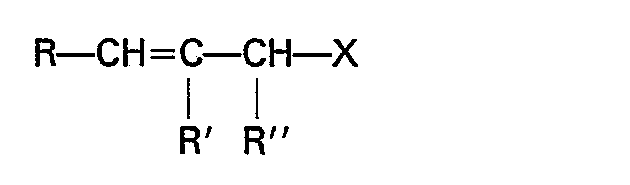
- allyl compounds including, but not limited to, substituted allyl compounds, such as C, to C 4 alkyl substituted allyl and aryl substituted allyl derivatives, represented by the formula: wherein R, R' and R" are hydrogen, C l -C 4 alkyl or aryl, for example, N-crotyl and N-cinnamyl. Allyl halides wherein the halide moiety is Cl, Br, or I are preferred reactants, especially the chlorides.
- Other compounds which may be used include the tosylate and mesylate or any other good leaving group.
- Such compounds include allyl chloride, allyl bromide, allyl iodide, methallyl chloride, methallyl bromide, methallyl iodide, allyl tosylate, allyl mesylate, methallyl tosylate, methallyl mesylate, and the like.
- the reaction mixture is then slowly heated to reflux (90-95°C) and a gentle reflux is maintained for about 3 to 5 hours.
- the resulting alkali metal or ammonium thiocyanate reaction mixture will comprise an organic phase and aqueous phase the mixture preferably having a thiocyanate concentration of about 50 percent.
- the second step of the instant process comprises separating the aqueous phase from the organic phase. While the undertaking of this second step is subject to variations of technique it preferably comprises the following protocol:
- the water content of the subsequent reaction of the allyl isothiocyanate and aliphatic alcohol be as low as possible to preclude problems with hydrolysis of the catalysts to be used therein. In general, the water content of this reaction should be below about 0.25%. Therefore, it is desirable to remove as much residual water from the allyl isothiocyanate as possible.
- the third step of the instant invention comprises reacting the allyl isothiocyanate as produced above with an alcohol in the presence of a urethane catalyst to produce the N-allyi-O-alkyl thionocarbamate. While the undertaking of this third step is subject to variations of technique, it preferably comprises the following protocol:
- the urethane catalyst be selected from the group consisting of tetraalkyl titanates, tetraalkyl zirconates, metal acetylacetonates, and dialkyl tin dicarboxylates.
- a particular advantage of the instant invention is that the allyl isothiocyanate need not be isolated from the vessel in which it is produced. Therefore, an aliphatic alcohol is merely added thereto, along with a suitable catalyst. The reaction mixture may then be heated to a temperature and period sufficient to complete the formation of the N-allyl-O-alkyl thionocarbamates. General temperatures of about 100°C to 120°C are suitable with about 110°C to 120°C being preferred. Heating to these temperatures for a period of about 3 to 6 hours generally will be sufficient. Any excess alcohol may then be removed, preferably by application of a vacuum and yields of the product in excess of 85 percent have been experienced.
- aliphatic alcohols which are C, to C s linear or branched chain primary alcohols, preferably C, to C s primary alcohols, and especially C 3 and C 4 primary alcohols.
- the aliphatic chain may be interrupted by a hetero atom, such as -0-, -S-, or -NH-.
- alcohols examples include methanol, ethanol, n-propanol, n-butanol, isobutanol, n-amyl alcohol, isoamyl alcohol, n-hexanol, n-octanol, 2-methoxyethanol, 2-ethoxyethanol, 2-(methylamino)ethanol, 2-(methylthio)ethanol, and the like.
- Products may also be obtained using butyl carbitol, methyl cellosolve, Carbowax 200, methyl carbitol, diethylene glycol, triethylene glycol, Carbowax 400, Carbowax 600, and the like.
- the amount of aliphatic alcohol used in the reaction to produce the N-allyi-O-alkyl thionocarbamate in general will range from about equimolar up to about 100 percent molar excess, based on the alkali metal cyanide charged in the initial reaction. It is preferred to utilize as close to an equimolar amount of alcohol as possible to avoid the necessity of having to remove and recover the excess.
- a suitable catalyst forthe reaction is added to the reaction mixture in an amount of from about 0.01 to 4 mole percent, preferably 0.1 to 1.0 mole percent, based on the cyanide salt.
- Known catalysts for the reaction of alkyl isothiocyanates with alcohols include metallic acetyl acetonates such as ferric acetyl acetonate and dialkyl tin dicarboxylates and dibutyl tin dilaurate, which are recognized as good urethane catalysts.
- urethane catalysts such as ferric chloride, potassium oleate, bismuth nitrate, and tertiary amines are poor catalysts for the thionocarbamate reaction; strong bases, such as sodium methoxide, are good catalysts but produce large amounts of impurities and are not practical.
- Tetraalkyl titanates and tetraalkylzirconates have been found to be significantly better catalysts than either ferric acetyl acetonate or dibutyl tin dilaurate. At lower concentrations, especially at 1:1 1 mole ratio of isothiocyanate to alcohol, they provide higher yields and purity. These catalysts are therefore preferred, particularly the tetraalkyl titanates.
- a preferred process contemplated hereunder comprises the use of an improved catalyst represented by the general formula: wherein R 1' R 2 , R 3 , R 4 , and R 5 are individually selected from alkyl or aryl or a mixture thereof, M represents a metal selected from Group IIIB, IVB, or VB of the Periodic Table of the Elements, and n is the integer 0 or 1, provided that the sum of n 1' n 2 , n 3 , n 4 , and n 5 equals the valance of said metal.
- an allyl isothiocyanate is reacted with an alcohol in the presence of a catalytic amount of the catalyst compound, generally by heating the reaction mixture at a temperature and for a period of time sufficient to convert the allyl isothiocyanate to the N-allyl-O-alkyl thionocarbamate.
- the temperature is in the range of about 100°C to 120°C.
- Allyl isothiocyanates which are preferably employed in the process of the instant invention are those represented by the formula: wherein R, R', and R" are individually selected from hydrogen, alkyl (preferably 1 to 20 carbon atoms), aryl or alkyl substituted aryl.
- R, R' and R" are individually selected from hydrogen and lower (C, to C 4 ) alkyl groups, and in an especially preferred embodiment, R, R', and R" are individually selected from hydrogen and methyl.
- Particularly preferred species of isothiocyanate are allyl isothiocyanate and methallyl isothiocyanate.
- allyl isothiocyanates may be prepared by known methods disclosed in the literature; see, for example, Searles, U.S. Patent 2,462,433; Bentz et al, German Offen. 2,711,956; Reeves et al, Synthetic Communications 6 (7), 509-514 (1976), or according to the improved process which utilizes a phase transfer catalyst in the reaction of an aqueous solution of an alkali metal or ammonium thiocyanate with an allyl halide, described herein.
- tetraalkyl titanates and tetraalkyl zirconates afford the thionocarbamates in significantly higher purity, indicating that side reactions are reduced or eliminated.
- higher conversion to thionocarbamate and higher purity thereof are realized with a lower catalyst concentration of the tetraalkyl titanate or tetraalkyl zirconate catalysts than with the known catalysts, particularly when the mole ratio of allyl isothiocyanate to alcohol is equimolar.
- the increased efficiency of the catalysts provide the additional advantage that the need for the use of excess alcohol is eliminated; therefore, the need for recovery of the alcohol thereby simplifies the process.
- the catalyst compounds which are usefully employed in the present invention, are those represented by the formula: wherein R l , R 2 , R 3 , R 4 , and R 5 are individually selected from alkyl or aryl or mixtures thereof, M represents a metal from Group IIIB, IVB, or VB of the Periodic Table of the Elements, and n is the integer 0 or 1, provided that the sum of n 1 , n 2 , n 3 , n 4 and n s equals the valance of said metal.
- M is a metal from Group IVB of the Periodic Table
- n is 4 and the R groups are alkyl of 1 to 8 carbon atoms.
- Especially preferred catalysts includes tetraalkyl titanates and tetraalkyl zirconates, and particularly preferred catalysts are the tetraalkyl titanates, examples of which include tetra-n-butyl titanate, tetraisopropyl titanate, and tetra-2-ethylhexyl titanate.
- catalysts which may be used are those wherein M is scandium, yttrium, lanthanum, hafnium, vanadium, niobium and tantalum and wherein n may have a value from 2 to 5.
- the metal is niobium, vanadium and lanthanum, for example, niobium phenoxide, lanthanum isopropoxide, and vanadyl-n-butylate.
- the catalysts may be used in the reaction in an amount ranging from about 0.01 to 4 mole percent, based on the isothiocyanate. Preferably, the catalysts are used in an amount of from about 0.1 to 1.0 mole percent, same basis.
- the present invention can relate to improvements in the process for the preparation of N-allyl-O-alkyl thionocarbamates by the reaction of an allyl isothiocyanate and an aliphatic alcohol and although the allyl isothiocyanate source is unimportant, it is preferred that the preparation of the N-allyl-O-alkyl thionocarbamates be prepared according to the unitary process whereby the allyl isothiocyanate is initially prepared by reaction of an allyl halide with an aqueous solution of an alkali metal or ammonium thiocyanate under the influence of a phase transfer catalyst.
- the allyl isothiocyanate produced may be dried and azeotropically distilling trace amounts of water and the reaction is continued, as described herein, without isolation of the isothiocyanate, by the addition thereto of an aliphatic alcohol and an improved catalyst of the invention, preferably a tetraalkyl titanate or tetraalkyl zirconate catalyst.
- an aliphatic alcohol and an improved catalyst of the invention preferably a tetraalkyl titanate or tetraalkyl zirconate catalyst.
- the reaction mixture is then heated, generally to a temperature of about 100°C to about 120°C, preferably 110°C to 120°C, for a period of about 3 to 6 hours.
- any unreacted alcohol is stripped in vacuo.
- the water content of both reactants should be as low as possible to preclude hydrolysis of the catalyst.
- the amount of water present in the reaction mixture should be less than about 0.25%.
- any catalyst providing adequate yields of thionocarbamate may be employed providing they do not result in the production of large amounts of impurities and such catalysts have been collectively referred to herein as "urethane catalysts" for convenience with the understanding that not all catalysts traditionally useful in urethane production will be in this definition.
- urethane catalysts include but are not limited to tetraalkyl titanates, tetraalkyl zirconates, metal acetyl acetonates, and dialkyl tin carboxylates.
- Preferred catalysts include ferric acetyl acetonate, dibutyl tin dilaurate and tetraalkyl titanates.
- the tetraalkyl titanates which are useful in the invention are represented by the formula: in which R is an alkyl group containing from 1 to 20 carbon atoms or an aryl group.
- the R groups may be the same or different.
- a preferred class of tetraalkyl titanates are those wherein R is alkyl of 1 to 10 carbon atoms.
- a reaction kettle was charged with 1100 gallons of water and the pH was brought above 12 by the addition of 50% sodium hydroxide solution.
- Sodium cyanide (4900 pounds, 100 pound-moles) and octyldecyldimethylammonium chloride (Bardac 2050, 160 pounds, 0.24 pound-mole) were then added to the kettle.
- Sulfur (3225 pounds, 100.8 pound-moles) was added, with agitation, keeping the temperature at approximately 60°C. When all the sulfur was added, the reaction mixture was agitated for 30 minutes and then cooled to 40°C. Allyl chloride (8420 pounds, 110 pound-moles) was added to the reaction mixture rapidly and then the temperature was raised to bring the reaction mixture to a reflux.
- the batch was cooled to 80°C and the vacuum broken (with nitrogen). Isobutyl alcohol (less than 0.15% H 2 0, 7413 pounds, 100 pound-moles) and 60 pounds (0.18 pound-mole) of tetra-n-butyl titanate were added and the reaction mixture was heated with agitation to 110°C and stirred at that temperature for 8.5 hours. Conversion was 96%. A vacuum was then applied and excess alcohol was stripped. There was obtained 14.496 pounds (83.6% yield) of N-allyl-O-isobutyl thionocarbamate having a purity of 84%.
- a stirred solution of 70 ml water, 38.25 grams, (0.765 mole) of sodium cyanide and 0.15 gram (0.00046 mole) of tetra-n-butyl ammonium bromide was treated with 24.65 grams of sulfur portionwise over a period of 10 minutes, the temperature rising to reflux.
- the solution was cooled to less than 40°C and 57.37 grams (0.75 mole) of allyl chloride was added over 20 minutes.
- the reaction mixture was heated to a gentle reflux, the temperature rising to 100°C over 4 hours. After cooling to room temperature, 75 ml of water was added and the aqueous phase separated from the organic phase. The organic phase is stripped of allyl chloride and traces of water by heating in vacuo (20 in.
- Example 3 The procedure of Example 3 is followed except that n-propyl alcohol is used instead of methanol. After refluxing for 5.5 hours at 105°C, a similar yield of N-allyl-O-n-propyl thionocarbamate is obtained.
- the aqueous phase was separated from the organic phase and the excess allyl chloride and trace amounts of water were stripped in vacuo (22 in. Hg) to a temperature of 100°C. Water content at this point was 0.02%.
- Isobutyl alcohol (1136 grams, 15 moles) and tetra-n-butyl titanate (9 grams, 0.026 mole) were added and the mixture was heated at 110°C for 6.5 hours to a conversion of 96.1 %. Unreacted isobutyl alcohol was stripped, yielding 2280 grams (87.9% yield) of N-allyl-O-isobutyl thionocarbamate having a purity of 87%.
- Example 5 The procedure of Example 5 was followed except that 1.2 grams/mole of allyl isothiocyanate of a zirconium n-butoxide butanol complex was used. Reaction with isobutyl alcohol at 110°C gave a 96.7% conversion after 3.5 hours and 98.4% conversion after 5.5 hours to N-allyl-O-isobutyl thionocarbamate having a purity of 86.6%.
- Example 7 The procedure of Example 7 was followed except that the mole ratio of allyl isothiocyanate to isobtuyl alcohol was 1:1, and the effect of catalyst and catalyst concentration was evaluated. Data are given in Table II.
- the data given in Table II illustrate the following: at a mole ratio of allyl isothiocyanate to isobutyl alcohol of 1:1, the tetralkyl titanate catalysts provide 1) higher conversion, 2) higher purity product in 3) a shorter reaction time using 4) lower catalyst concentration than either of the known catalysts-ferric acetylacetonate or dibutyl tin dilaurate.
- the data also show that even at higher concentration the known catalysts provide the N-allyl-O-isobutyl thionocarbamate in very low purity.
- Example 8 The procedure of Example 8 was followed except that 0.25 mole of n-propyl alcohol was used instead of 0.25 mole of isobutyl alcohol. Tetra-n-butyl titanate was used at a concentration of 0.1 gram (0.4 gram per mole of allyl isothiocyanate). After heating for 6 hours at 110°C, a conversion of 97.3% to N-allyl-O-n-propyl thionocarbamate, having a purity of 90.2%, was realized.
- Example 8 The procedure of Example 8 was followed except that 0.25 mole of 1-pentanol was used instead of 0.25 mole of isobutyl alcohol. Tetra-n-butyl titanate was used at a concentration of 0.1 gram (0.4 grams/mole of allyl isothiocyanate). After heating for 6 hours at 110°C, a conversion of 97% to N-allyl-O-pentyl thionocarbamate, having a purity of 77.5%, was realized.
- Example 8 The procedure of Example 8 was followed except 0.25 mole of ethanol was used instead of 0.25 mole of isobutyl alcohol. Tetra-n-butyl titanate was used at a concentration of 0.3 gram (1.2 grams/mole of allyl isothiocyanate). After heating at reflux (87°C) for 13.5 hours, the reaction afforded a 93.3% conversion to N-allyl-O-ethyl thionocarbamate, having a purity of 81.9%.
- Example 11 The reaction of Example 11 was repeated except that ethanol was slowly added, over a period of 3 hours, to the allyl isothiocyanate and tetrabutyl titanate at 110°C. The reaction mixture was heated for an additional 2.5 hours following the addition of the ethanol, giving a conversion of 96.6% to N-allyl-O-ethyl thionocarbamate, having a purity of 85.4%.
- the aqueous phase was separated from the organic phase and the excess allyl chloride and trace amounts of water were stripped in vacuo (22 in. Hg) to a temperature of 100°C. Water content at this point was 0.02%.
- Isobutyl alcohol (1136 grams, 15 moles) and tetra-n-butyl titanate (9 grams, 0.026 mole) were added and the mixture was heated at 110°C for 6.5 hours to a conversion of 96.1%. Unreacted isobutyl alcohol was stripped, yielding 2280 grams (87.9% yield) of N-allyl-O-isobutyl thionocarbamate having a purity of 87%.
- Example 14 The procedure of Example 14 was followed except that 1.2 grams/mole of allyl isothiocyanate of a zirconium n-butoxide butanol complex was used. Reaction with isobutyl alcohol at 110°C gave a 96.7% conversion after 3.5 hours and 98.4% conversion after 5.5 hours to N-allyl-O-isobutyl thionocarbamate having a purity of 86.6%.
- Examples 14 and 15 illustrate the preparation of N-allyl-O-alkyl thionocarbamates according to a unitary process, described hereinabove, which includes the initial preparation of an allyl isothiocyanate in high yield by the reaction of an allyl halide with an aqueous solution of an alkali metal or ammonium thiocyanate.
- Example 15 illustrates the use of a tetraalkyl zirconate catalyst.
Landscapes
- Chemical & Material Sciences (AREA)
- Organic Chemistry (AREA)
- Organic Low-Molecular-Weight Compounds And Preparation Thereof (AREA)
Claims (10)


à la condition que la somme de n1, n2, n3, n4 et n5 soit égale à la valence du métal; ledit perfectionnement procurant ainsi une catalyse améliorée de ladits réaction.
Applications Claiming Priority (4)
| Application Number | Priority Date | Filing Date | Title |
|---|---|---|---|
| US410689 | 1982-08-23 | ||
| US06/410,773 US4456560A (en) | 1982-08-23 | 1982-08-23 | Process for the preparation of N-allyl-O-alkyl thionocarbamates |
| US410773 | 1982-08-23 | ||
| US06/410,689 US4482500A (en) | 1982-08-23 | 1982-08-23 | Process for the preparation of N-allyl-O-alkyl thionocarbamates |
Publications (2)
| Publication Number | Publication Date |
|---|---|
| EP0101877A1 EP0101877A1 (fr) | 1984-03-07 |
| EP0101877B1 true EP0101877B1 (fr) | 1986-11-26 |
Family
ID=27021100
Family Applications (1)
| Application Number | Title | Priority Date | Filing Date |
|---|---|---|---|
| EP19830107025 Expired EP0101877B1 (fr) | 1982-08-23 | 1983-07-18 | Procédé de préparation de N-allyle-o-alcoyle-thionocarbamates |
Country Status (4)
| Country | Link |
|---|---|
| EP (1) | EP0101877B1 (fr) |
| CA (1) | CA1212121A (fr) |
| DE (1) | DE3367912D1 (fr) |
| ES (1) | ES8502681A1 (fr) |
Cited By (1)
| Publication number | Priority date | Publication date | Assignee | Title |
|---|---|---|---|---|
| CN103691570A (zh) * | 2013-12-06 | 2014-04-02 | 西北矿冶研究院 | 一种硫化铜镍矿捕收剂 |
Families Citing this family (5)
| Publication number | Priority date | Publication date | Assignee | Title |
|---|---|---|---|---|
| CN104693083B (zh) * | 2013-12-06 | 2017-03-29 | 沈阳有色金属研究院 | 一种改进的烯丙基硫代氨基甲酸酯的制备方法 |
| CN105061276B (zh) * | 2015-08-14 | 2017-05-24 | 沈阳有研矿物化工有限公司 | 一种n—烯丙基—o—异丁基硫氨酯合成工艺 |
| CN105693578B (zh) * | 2016-01-15 | 2017-08-04 | 中南大学 | 一种双酰基双异硫氰酸酯衍生物及其制备方法和应用 |
| JP7236029B2 (ja) * | 2017-11-16 | 2023-03-09 | 田村製薬株式会社 | 消毒用製剤、並びに消毒方法 |
| CN115337961B (zh) * | 2022-05-26 | 2023-08-15 | 重庆康普化学工业股份有限公司 | 一种用于n-烯丙基硫氨酯类化合物合成的催化剂及其合成方法 |
Family Cites Families (1)
| Publication number | Priority date | Publication date | Assignee | Title |
|---|---|---|---|---|
| US2462433A (en) * | 1946-05-15 | 1949-02-22 | Du Pont | Preparation of organic thiocyanates and isothiocyanates |
-
1983
- 1983-07-18 EP EP19830107025 patent/EP0101877B1/fr not_active Expired
- 1983-07-18 DE DE8383107025T patent/DE3367912D1/de not_active Expired
- 1983-08-22 CA CA000435096A patent/CA1212121A/fr not_active Expired
- 1983-08-22 ES ES525085A patent/ES8502681A1/es not_active Expired
Cited By (1)
| Publication number | Priority date | Publication date | Assignee | Title |
|---|---|---|---|---|
| CN103691570A (zh) * | 2013-12-06 | 2014-04-02 | 西北矿冶研究院 | 一种硫化铜镍矿捕收剂 |
Also Published As
| Publication number | Publication date |
|---|---|
| ES525085A0 (es) | 1985-01-16 |
| CA1212121A (fr) | 1986-09-30 |
| DE3367912D1 (en) | 1987-01-15 |
| ES8502681A1 (es) | 1985-01-16 |
| EP0101877A1 (fr) | 1984-03-07 |
Similar Documents
| Publication | Publication Date | Title |
|---|---|---|
| US4482500A (en) | Process for the preparation of N-allyl-O-alkyl thionocarbamates | |
| US5091556A (en) | Process for producing carbamates | |
| US4479903A (en) | Process for the preparation of N-allyl-O-alkyl thionocarbamates | |
| EP0101877A1 (fr) | Procédé de préparation de N-allyle-o-alcoyle-thionocarbamates | |
| US4268456A (en) | Process for preparing chlorothiolformates | |
| EP0277642B1 (fr) | Procédé de préparation d'oximosilanes | |
| KR920002265B1 (ko) | 2-히드라지노-1,3-디아자시클로알크-2-엔 히드로할라이드의 제조방법 | |
| US4456560A (en) | Process for the preparation of N-allyl-O-alkyl thionocarbamates | |
| US4273725A (en) | Process for preparing chlorothiolformates | |
| US3547965A (en) | Process for preparing trialkyltin halides | |
| EP0403952B1 (fr) | Procédé respectueux de l'environnement pour la préparation d'une certaine dialkylamine | |
| US5258531A (en) | Process for the direct synthesis of organotin compounds and their use | |
| US2872484A (en) | Preparation of tetraalkyl-isothioureas | |
| US2862944A (en) | Process for the preparation of high purity alkyltin compounds | |
| JP2814002B2 (ja) | アルキレングリコールエーテルの製造方法 | |
| JPH0433784B2 (fr) | ||
| EP0156728B1 (fr) | Procédé de préparation de thiocarbamates | |
| US4820856A (en) | Process for the production of alkyl thiochloroformates | |
| EP0403929B1 (fr) | Procédé de préparation d'éthers phénoxy utiles comme produits intermédiaires agrochimiques | |
| JP2814005B2 (ja) | アルキレングリコールエーテルの製造法 | |
| US3374278A (en) | Preparation of alkyl iodides from alkyl alcohols and organotin iodides | |
| JPH0353298B2 (fr) | ||
| JPS6312862B2 (fr) | ||
| JP2000264855A (ja) | ハロプロピルエーテル類の製造方法 | |
| JPH02115171A (ja) | 環式n,n’―ジメチル尿素の製造方法 |
Legal Events
| Date | Code | Title | Description |
|---|---|---|---|
| PUAI | Public reference made under article 153(3) epc to a published international application that has entered the european phase |
Free format text: ORIGINAL CODE: 0009012 |
|
| AK | Designated contracting states |
Designated state(s): DE GB IT NL |
|
| 17P | Request for examination filed |
Effective date: 19840727 |
|
| GRAA | (expected) grant |
Free format text: ORIGINAL CODE: 0009210 |
|
| AK | Designated contracting states |
Kind code of ref document: B1 Designated state(s): DE GB IT NL |
|
| REF | Corresponds to: |
Ref document number: 3367912 Country of ref document: DE Date of ref document: 19870115 |
|
| ITF | It: translation for a ep patent filed | ||
| PGFP | Annual fee paid to national office [announced via postgrant information from national office to epo] |
Ref country code: NL Payment date: 19870731 Year of fee payment: 5 |
|
| PLBE | No opposition filed within time limit |
Free format text: ORIGINAL CODE: 0009261 |
|
| STAA | Information on the status of an ep patent application or granted ep patent |
Free format text: STATUS: NO OPPOSITION FILED WITHIN TIME LIMIT |
|
| 26N | No opposition filed | ||
| PG25 | Lapsed in a contracting state [announced via postgrant information from national office to epo] |
Ref country code: NL Effective date: 19900201 |
|
| NLV4 | Nl: lapsed or anulled due to non-payment of the annual fee | ||
| PG25 | Lapsed in a contracting state [announced via postgrant information from national office to epo] |
Ref country code: DE Effective date: 19900403 |
|
| PGFP | Annual fee paid to national office [announced via postgrant information from national office to epo] |
Ref country code: GB Payment date: 19990614 Year of fee payment: 17 |
|
| PG25 | Lapsed in a contracting state [announced via postgrant information from national office to epo] |
Ref country code: GB Free format text: LAPSE BECAUSE OF NON-PAYMENT OF DUE FEES Effective date: 20000718 |
|
| GBPC | Gb: european patent ceased through non-payment of renewal fee |
Effective date: 20000718 |