EP0106665A1 - Mit Borhydrid stabilisierte Polysaccharidlösungen verwendbar bei der Tertiärölgewinnung bei hoher Temperatur - Google Patents
Mit Borhydrid stabilisierte Polysaccharidlösungen verwendbar bei der Tertiärölgewinnung bei hoher Temperatur Download PDFInfo
- Publication number
- EP0106665A1 EP0106665A1 EP83306187A EP83306187A EP0106665A1 EP 0106665 A1 EP0106665 A1 EP 0106665A1 EP 83306187 A EP83306187 A EP 83306187A EP 83306187 A EP83306187 A EP 83306187A EP 0106665 A1 EP0106665 A1 EP 0106665A1
- Authority
- EP
- European Patent Office
- Prior art keywords
- borohydride
- ppm
- solution
- oil recovery
- biopolymer
- Prior art date
- Legal status (The legal status is an assumption and is not a legal conclusion. Google has not performed a legal analysis and makes no representation as to the accuracy of the status listed.)
- Granted
Links
Images

Classifications
-
- C—CHEMISTRY; METALLURGY
- C09—DYES; PAINTS; POLISHES; NATURAL RESINS; ADHESIVES; COMPOSITIONS NOT OTHERWISE PROVIDED FOR; APPLICATIONS OF MATERIALS NOT OTHERWISE PROVIDED FOR
- C09K—MATERIALS FOR MISCELLANEOUS APPLICATIONS, NOT PROVIDED FOR ELSEWHERE
- C09K8/00—Compositions for drilling of boreholes or wells; Compositions for treating boreholes or wells, e.g. for completion or for remedial operations
- C09K8/60—Compositions for stimulating production by acting on the underground formation
- C09K8/84—Compositions based on water or polar solvents
- C09K8/86—Compositions based on water or polar solvents containing organic compounds
- C09K8/88—Compositions based on water or polar solvents containing organic compounds macromolecular compounds
- C09K8/90—Compositions based on water or polar solvents containing organic compounds macromolecular compounds of natural origin, e.g. polysaccharides, cellulose
- C09K8/905—Biopolymers
-
- Y—GENERAL TAGGING OF NEW TECHNOLOGICAL DEVELOPMENTS; GENERAL TAGGING OF CROSS-SECTIONAL TECHNOLOGIES SPANNING OVER SEVERAL SECTIONS OF THE IPC; TECHNICAL SUBJECTS COVERED BY FORMER USPC CROSS-REFERENCE ART COLLECTIONS [XRACs] AND DIGESTS
- Y10—TECHNICAL SUBJECTS COVERED BY FORMER USPC
- Y10S—TECHNICAL SUBJECTS COVERED BY FORMER USPC CROSS-REFERENCE ART COLLECTIONS [XRACs] AND DIGESTS
- Y10S507/00—Earth boring, well treating, and oil field chemistry
- Y10S507/935—Enhanced oil recovery
- Y10S507/936—Flooding the formation
Definitions
- This invention concerns a method of stabilizing polysaccharide biopolymer solutions employed in tertiary oil recovery at elevated temperature.
- Tertiary oil recovery is commonly used today to recover the oil which remains in a subterranean petroleum-containing formation after primary and secondary recovery techniques have been exhausted.
- polymer flooding One approach to tertiary oil recovery is polymer flooding.
- certain organic polymers are added to at least a portion of the fluid injected into the formation to thicken the fluid and thereby improve the mobility of the entrapped oil as the fluid is driven from the injection site to the production well.
- these polymers are the xanthan gums, hydrophilic polysaccarides produced by fermentation using bacteria of the genus Xanthomonas.
- the biopolymer may be used in the form of the fermentation broth itself, as exemplified in U.S. Patent 4,119,546, or in isolated and reconstituted form, as disclosed in U.S. Patent 3,305,016.
- Xanthan gums are particularly desirable for polymer flooding since they are good displacing agents; give useful viscosities at low concentrations (5 to 90 centipoises at 100 to 3,000 ppm); are not lost by extensive adsorption on the porous rock formations; are relatively insensitive to salts, not precipitating or losing viscosity under normal conditions; and are reasonably shear stable and viscosity stable over a wide pH range.
- Other polysaccharide biopolymers include such as those derived from the genus Sclerotium and from the genus Alcaligenes, the use of which in enhanced oil recovery is described, for example, in U.S. Patent 3,372,749 and British Patent Specification 2,082,189, respectively.
- xanthan polysaccharide biopolymer solutions have proven to be effective in tertiary oil recovery, one problem which has arisen with their use is in oil reservoirs at elevated temperatures of about 60-150°C. There, the polymer solution tends to be unstable with significant loss in viscosity in a few days, particularly in low-saline (500 ppm or less total dissolved solids) waters.
- the polymer solution includes a C 3 to c 5 aliphatic alcohol to stabilize the polysaccharide.
- the stability of the solution viscosity is improved by initially deoxygenating the aqueous liquid with agents such as sodium hydrosulphite (sodium dithionite) and then adding a sulfur-containing antioxidant, a readily oxidizable water-soluble alcohol or glycol, and the polymer.
- agents such as sodium hydrosulphite (sodium dithionite)
- aqueous solutions of polymeric mobility control agents are stabilized with an alkylene polyamine, alkanolamine or alicyclic polyamine; the solutions may also contain an oxygen scavenger such as sodium hydrosulfite.
- the present invention therefore entails a method of oil recovery from a subterranean petroleum-containing formation at elevated temperature penetrated by at least one injection well and by one production well in fluid communication with the formation, which comprises injecting into the formation a substantially oxygen-free aqueous saline solution of a water-soluble polysaccharide biopolymer which has been treated in solution at a pH of at least about 5 by the addition of an effective amount of alkali metal borohydride as viscosity stabilizer.
- the polymer is preferably derived from a fermentation broth containing cells of an organism belonging to the genus Xanthomonas, while the borohydride is preferably added in the amount of from about 5 to 100 ppm, especially as sodium borohydride in the amount of from about 10 to 50 ppm, and the saline solution preferably has a dissolved salt content of at least about 20,000 ppm.
- the polysaccharide biopolymer employed in the method can be any water-soluble polysaccharide useful in polymer floods.
- Such biopolymers may include, for example, polysaccharides derived from the genus Sclerotium or related organisms and polysaccharides derived from the genus Alcaligenes or related organisms.
- the biopolymer is xanthan, a polysaccharide derived from fermentation of carbohydrate by the bacteria of the genus Xanthomonas, especially the species Xanthomonas campestris.
- Suitable polysaccharide broth preparations include, for example, those disclosed in U.S.
- the polymer may be employed in the form of unreconstituted broth or may be reconstituted after isolation from the broth.
- concentration of the polymer in the flood control solution is from about 100 to 2,000 ppm, preferably from about 300 to 1,500 ppm, by weight to provide a solution viscosity of from about 2 to 50 centipoises.
- the polysaccharide biopolymer is dissolved in aqueous saline solution at a pH of about 5 or greater.
- this salinity defined as the soluble salt or ion content present in a saline solution expressed in milligrams total salt per kilogram brine solution, will be about 1,000 ppm or greater.
- the high temperature stability of the control solution improves with salinity, saline solutions with a dissolved salt content of 20,000 ppm or greater being especially effective.
- the pH of the saline polymer solution at the time of preparation should be 5 or greater to prevent the deterioration of the stabilizing agent and the acid catalyzed hydrolysis of the polysaccharide, a pH of from about 7 to 8 being preferred.
- the stability of the polysaccharide solution is provided by the inclusion of alkali metal borohydride at a level which results in reduction of oxidizing species in the polymer solution prior to exposure to high temperatures.
- This normally requires the addition of borohydride to the solution in the amount of from about 5 to 100 ppm, preferably 10 to 50 ppm, by weight of the control solution, whereby undesirable oxidizing species or transition metals are believed to be rapidly reduced.
- the oxidizing species may be dissolved oxygen or peroxy species generated in the broth by air required in the aerobic processing of the broth in the presence of trace amounts of transition metals. It is desirable to have a- low dissolved oxygen content when the stabilizer is . used, and this is most readily accomplished by use of separated recycled brine produced from the reservoir where anerobic conditions exist. Natural gas or other cheap inert gas blankets may be used in surface handling to maintain anerobic conditions.
- the borohydride addition may occur either before or after the polymer addition to the saline solution.
- the treatment may also be applied to the fermentation broth before dilution in field brine or other processing.
- Any alkali metal borohydride or substituted borohydride such as sodium cyanoboride may be used. Of particular value is sodium borohydride.
- substantially oxygen-free solution a solution which indicates a dissolved oxygen content of 0.5 ppm or less when tested with the dissolved oxygen test kit supplied by Chemetrics, Inc., Warrenton, Virginia.
- Such components may also be incorporated in the mobility control solution.
- Such components might include, for example, biocides such as formaldehyde to prevent microbial deterioration of the polysaccharide biopolymer and chelating agents such as sodium citrate to sequester polyvalent ions such as iron.
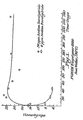
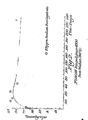
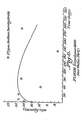
- Example 2 The procedure of Example 1 was repeated with the exception that 0.0188 g of solid sodium borohydride was used, the biopolymer solution thereby initially containing 747 ppm xanthan and 25 ppm sodium borohydride. Results of this testing are shown in FIG. 2.
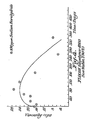
- Example 2 The procedure of Example 1 was repeated with the exception that 0.0076 g of sodium borohydride was utilized and the.sealed ampules were placed in the 90°C oil bath on the same day that the sealing process was carried put, the biopolymer solution initially containing 750 ppm of xanthan and 10 ppm of sodium borohydride. Results of this testing are shown in FIG. 3.
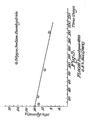
- Example 2 A mixture of 16 g of the commercial liquid form of xanthan used in Example 1 and 734 g of 0.3 percent sodium chloride solution was mechanically stirred under nitrogen for 1 hour. To the stirred mixture was added 0.0375 g of solid sodium borohydride. A series of ampules was prepared and tested as in Example 1, with the results shown in FIG. 5.
Landscapes
- Chemical & Material Sciences (AREA)
- Life Sciences & Earth Sciences (AREA)
- General Life Sciences & Earth Sciences (AREA)
- Engineering & Computer Science (AREA)
- Materials Engineering (AREA)
- Organic Chemistry (AREA)
- Preparation Of Compounds By Using Micro-Organisms (AREA)
- Production Of Liquid Hydrocarbon Mixture For Refining Petroleum (AREA)
- Polysaccharides And Polysaccharide Derivatives (AREA)
Applications Claiming Priority (2)
| Application Number | Priority Date | Filing Date | Title |
|---|---|---|---|
| US434669 | 1982-10-15 | ||
| US06/434,669 US4458753A (en) | 1982-10-15 | 1982-10-15 | Stabilizing polysaccharide solutions for tertiary oil recovery at elevated temperature with borohydride |
Publications (2)
| Publication Number | Publication Date |
|---|---|
| EP0106665A1 true EP0106665A1 (de) | 1984-04-25 |
| EP0106665B1 EP0106665B1 (de) | 1986-04-09 |
Family
ID=23725175
Family Applications (1)
| Application Number | Title | Priority Date | Filing Date |
|---|---|---|---|
| EP83306187A Expired EP0106665B1 (de) | 1982-10-15 | 1983-10-13 | Mit Borhydrid stabilisierte Polysaccharidlösungen verwendbar bei der Tertiärölgewinnung bei hoher Temperatur |
Country Status (7)
| Country | Link |
|---|---|
| US (1) | US4458753A (de) |
| EP (1) | EP0106665B1 (de) |
| JP (1) | JPS5991295A (de) |
| CA (1) | CA1206739A (de) |
| DE (1) | DE3362945D1 (de) |
| NO (1) | NO163501C (de) |
| RO (1) | RO88691A (de) |
Cited By (3)
| Publication number | Priority date | Publication date | Assignee | Title |
|---|---|---|---|---|
| FR2574082A1 (fr) * | 1984-12-05 | 1986-06-06 | Rhone Poulenc Spec Chim | Procede de stabilisation thermique de solutions aqueuses de polysaccharides |
| RU2313665C1 (ru) * | 2006-05-15 | 2007-12-27 | Закрытое акционерное общество "Технология-99" | Способ разработки неоднородных нефтяных пластов |
| CN110965973A (zh) * | 2018-09-29 | 2020-04-07 | 北京市捷博特能源技术有限公司 | 一种油田微生物泡沫吞吐技术 |
Families Citing this family (14)
| Publication number | Priority date | Publication date | Assignee | Title |
|---|---|---|---|---|
| US4573533A (en) * | 1984-06-21 | 1986-03-04 | American Cyanamid Company | Method for using thermally stable mobility control agents for harsh environmental reservoirs |
| US4658898A (en) * | 1985-05-24 | 1987-04-21 | Mobil Oil Corporation | Oil reservoir permeability control using polymeric gels |
| RU2135756C1 (ru) * | 1998-03-11 | 1999-08-27 | Газизов Алмаз Шакирович | Способ разработки неоднородных пластов |
| RU2133825C1 (ru) * | 1998-05-29 | 1999-07-27 | Доброскок Борис Евлампиевич | Способ разработки продуктивного пласта |
| RU2128768C1 (ru) * | 1998-08-13 | 1999-04-10 | О.Р.С. Ойл Рекавери Сервисез Лимитед | Способ разработки послойно-неоднородных нефтяных месторождений |
| RU2128769C1 (ru) * | 1998-08-13 | 1999-04-10 | О.Р.С. Ойл Рекавери Сервисез Лимитед | Способ разработки нефтяных месторождений на стадии их обводнения |
| RU2169257C1 (ru) * | 2000-10-10 | 2001-06-20 | Общество с ограниченной ответственностью Научно-производственное предприятие "Нефтегеотехнология" | Способ разработки обводненного неоднородного нефтяного пласта |
| RU2195548C1 (ru) * | 2001-07-16 | 2002-12-27 | Поляков Владимир Николаевич | Способ разработки обводненной нефтяной залежи (варианты) |
| MX2010001972A (es) * | 2007-08-21 | 2010-08-30 | Archer Daniels Midland Co | Composiciones de goma hidrocoloide, metodos para formar las mismas y productos formados a partir de las mismas. |
| US8662171B2 (en) * | 2010-03-25 | 2014-03-04 | Montgomery Chemicals, Llc | Method and composition for oil enhanced recovery |
| EP2694616A4 (de) * | 2011-04-05 | 2014-09-03 | Montgomery Chemicals Llc | Verfahren und zusammensetzung für verbesserte ölgewinnung |
| RU2528183C1 (ru) * | 2013-07-02 | 2014-09-10 | Газизов Айдар Алмазович | Способ разработки нефтяной залежи |
| US9663703B2 (en) * | 2014-04-25 | 2017-05-30 | James George Clements | Method and compositions for enhanced oil recovery |
| US11130904B2 (en) * | 2015-03-25 | 2021-09-28 | Halliburton Energy Services, Inc. | Gravel packing fluids with enhanced thermal stability |
Citations (2)
| Publication number | Priority date | Publication date | Assignee | Title |
|---|---|---|---|---|
| US3908760A (en) * | 1973-10-09 | 1975-09-30 | Phillips Petroleum Co | Method of treating subterranean formations with aqueous gels |
| US4218327A (en) * | 1976-04-05 | 1980-08-19 | Shell Oil Company | Stabilizing the viscosity of an aqueous solution of polysaccharide polymer |
Family Cites Families (5)
| Publication number | Priority date | Publication date | Assignee | Title |
|---|---|---|---|---|
| US3096293A (en) * | 1959-12-30 | 1963-07-02 | Allene R Jeanes | Method of increasing the viscosity of an aqueous solution of a deacetylated polysaccharide |
| US4141842A (en) * | 1977-03-28 | 1979-02-27 | Mobil Oil Corporation | Waterflood oil recovery process employing stabilized biopolymers |
| US4256590A (en) * | 1977-05-09 | 1981-03-17 | Exxon Research & Engineering Co. | Modified heteropolysaccharides and their preparation |
| CA1097056A (en) * | 1977-06-15 | 1981-03-10 | Joseph E. Glass, Jr. | Treatment of water thickened systems |
| US4232739A (en) * | 1978-05-12 | 1980-11-11 | Texaco Inc. | Aqueous polysaccharide-containing fluid having superior filterability and stability and their use in recovering oil |
-
1982
- 1982-10-15 US US06/434,669 patent/US4458753A/en not_active Expired - Fee Related
-
1983
- 1983-10-13 CA CA000438932A patent/CA1206739A/en not_active Expired
- 1983-10-13 DE DE8383306187T patent/DE3362945D1/de not_active Expired
- 1983-10-13 EP EP83306187A patent/EP0106665B1/de not_active Expired
- 1983-10-13 RO RO83112323A patent/RO88691A/ro unknown
- 1983-10-14 JP JP58192288A patent/JPS5991295A/ja active Granted
- 1983-10-14 NO NO833746A patent/NO163501C/no unknown
Patent Citations (2)
| Publication number | Priority date | Publication date | Assignee | Title |
|---|---|---|---|---|
| US3908760A (en) * | 1973-10-09 | 1975-09-30 | Phillips Petroleum Co | Method of treating subterranean formations with aqueous gels |
| US4218327A (en) * | 1976-04-05 | 1980-08-19 | Shell Oil Company | Stabilizing the viscosity of an aqueous solution of polysaccharide polymer |
Non-Patent Citations (1)
| Title |
|---|
| CHEMICAL ABSTRACTS, vol. 95, no. 9, November 1981, page 98, no. 152472e, Columbus, Ohio, US & JP - B - 81 29 996 (SANSHO CO., LTD.) 25-03-1981 * |
Cited By (4)
| Publication number | Priority date | Publication date | Assignee | Title |
|---|---|---|---|---|
| FR2574082A1 (fr) * | 1984-12-05 | 1986-06-06 | Rhone Poulenc Spec Chim | Procede de stabilisation thermique de solutions aqueuses de polysaccharides |
| EP0187074A1 (de) * | 1984-12-05 | 1986-07-09 | Rhone-Poulenc Chimie | Verfahren zum thermischen Stabilisieren von wässrigen Polysaccharidlösungen |
| RU2313665C1 (ru) * | 2006-05-15 | 2007-12-27 | Закрытое акционерное общество "Технология-99" | Способ разработки неоднородных нефтяных пластов |
| CN110965973A (zh) * | 2018-09-29 | 2020-04-07 | 北京市捷博特能源技术有限公司 | 一种油田微生物泡沫吞吐技术 |
Also Published As
| Publication number | Publication date |
|---|---|
| RO88691A (ro) | 1986-02-28 |
| DE3362945D1 (en) | 1986-05-15 |
| US4458753A (en) | 1984-07-10 |
| JPH0127239B2 (de) | 1989-05-26 |
| NO163501C (no) | 1990-06-06 |
| NO833746L (no) | 1984-04-16 |
| CA1206739A (en) | 1986-07-02 |
| NO163501B (no) | 1990-02-26 |
| JPS5991295A (ja) | 1984-05-25 |
| EP0106665B1 (de) | 1986-04-09 |
Similar Documents
| Publication | Publication Date | Title |
|---|---|---|
| US4458753A (en) | Stabilizing polysaccharide solutions for tertiary oil recovery at elevated temperature with borohydride | |
| US4218327A (en) | Stabilizing the viscosity of an aqueous solution of polysaccharide polymer | |
| EP0073599B1 (de) | Chelatoren für mehrwertige Metallionen in Xanthanlösungen | |
| US4658898A (en) | Oil reservoir permeability control using polymeric gels | |
| US4463806A (en) | Method for surfactant waterflooding in a high brine environment | |
| CA1046260A (en) | Oil recovery by alkaline-sulfonate waterflooding | |
| US4457372A (en) | Method of recovering petroleum from underground formations | |
| CA1158428A (en) | Method of inhibiting crosslinking of aqueous xanthan gums in the presence of ferric acid | |
| US5358043A (en) | Gelling compositions useful for oil field applications | |
| US3476188A (en) | Aqueous fluid drive process using minute solids in suspension | |
| US4977960A (en) | Sodium hydroxide treatment of field water in a biopolymer complex | |
| CA1085600A (en) | Waterflood oil recovery process employing stabilized biopolymers | |
| US4249608A (en) | Polymer-containing fluid and an oil recovery method using the fluid | |
| NO871270L (no) | Stabiliserte vandige blandinger av vannopploeselige polymerer og deres anvendelse ved petroleumutvinning. | |
| CA1279315C (en) | Stabilizing polysaccharide solutions for tertiary oil recovery at elevated temperature | |
| US4638865A (en) | Bioresistant water-soluble alkyl substituted acrylamide polymers and enhanced oil recovery method employing same | |
| EP0106666B1 (de) | Mit Dithionit stabilisierte Polysaccharid-Lösungen bei der Tertiärölgewinnung bei hoher Temperatur verwendbar | |
| US4607099A (en) | Stabilization of xanthan gum in aqueous solution | |
| US4006058A (en) | Biopolymer production process | |
| US4104193A (en) | Imparting superior viscosity to aqueous polysaccharide solutions | |
| US4898819A (en) | Heteropolysaccharide solutions stabilized against viscosity loss over temperature and time | |
| CA1070492A (en) | Stabilizing the viscosity of an aqueous solution of polysaccharide polymer | |
| US4004637A (en) | Oil recovery by improved surfactant flooding | |
| US4395341A (en) | Use of metronidazole in oil recovery | |
| GB2086960A (en) | Improved Polymer-containing Fluid and an Oil Recovery Method using the Fluid |
Legal Events
| Date | Code | Title | Description |
|---|---|---|---|
| PUAI | Public reference made under article 153(3) epc to a published international application that has entered the european phase |
Free format text: ORIGINAL CODE: 0009012 |
|
| 17P | Request for examination filed |
Effective date: 19831019 |
|
| AK | Designated contracting states |
Designated state(s): BE DE FR GB IT NL |
|
| GRAA | (expected) grant |
Free format text: ORIGINAL CODE: 0009210 |
|
| AK | Designated contracting states |
Kind code of ref document: B1 Designated state(s): BE DE FR GB IT NL |
|
| REF | Corresponds to: |
Ref document number: 3362945 Country of ref document: DE Date of ref document: 19860515 |
|
| ET | Fr: translation filed | ||
| ITF | It: translation for a ep patent filed | ||
| PLBE | No opposition filed within time limit |
Free format text: ORIGINAL CODE: 0009261 |
|
| STAA | Information on the status of an ep patent application or granted ep patent |
Free format text: STATUS: NO OPPOSITION FILED WITHIN TIME LIMIT |
|
| 26N | No opposition filed | ||
| PGFP | Annual fee paid to national office [announced via postgrant information from national office to epo] |
Ref country code: GB Payment date: 19910916 Year of fee payment: 9 |
|
| PGFP | Annual fee paid to national office [announced via postgrant information from national office to epo] |
Ref country code: DE Payment date: 19910917 Year of fee payment: 9 |
|
| PGFP | Annual fee paid to national office [announced via postgrant information from national office to epo] |
Ref country code: FR Payment date: 19910918 Year of fee payment: 9 |
|
| PGFP | Annual fee paid to national office [announced via postgrant information from national office to epo] |
Ref country code: BE Payment date: 19911022 Year of fee payment: 9 |
|
| ITTA | It: last paid annual fee | ||
| PGFP | Annual fee paid to national office [announced via postgrant information from national office to epo] |
Ref country code: NL Payment date: 19911031 Year of fee payment: 9 |
|
| PG25 | Lapsed in a contracting state [announced via postgrant information from national office to epo] |
Ref country code: GB Effective date: 19921013 |
|
| PG25 | Lapsed in a contracting state [announced via postgrant information from national office to epo] |
Ref country code: BE Effective date: 19921031 |
|
| BERE | Be: lapsed |
Owner name: PFIZER INC. Effective date: 19921031 |
|
| PG25 | Lapsed in a contracting state [announced via postgrant information from national office to epo] |
Ref country code: NL Effective date: 19930501 |
|
| GBPC | Gb: european patent ceased through non-payment of renewal fee |
Effective date: 19921013 |
|
| NLV4 | Nl: lapsed or anulled due to non-payment of the annual fee | ||
| PG25 | Lapsed in a contracting state [announced via postgrant information from national office to epo] |
Ref country code: FR Effective date: 19930630 |
|
| PG25 | Lapsed in a contracting state [announced via postgrant information from national office to epo] |
Ref country code: DE Effective date: 19930701 |
|
| REG | Reference to a national code |
Ref country code: FR Ref legal event code: ST |