EP0110281A1 - Vinylencarbonat-Polymerisate, Verfahren zu ihrer Herstellung und ihre Anwendung - Google Patents
Vinylencarbonat-Polymerisate, Verfahren zu ihrer Herstellung und ihre Anwendung Download PDFInfo
- Publication number
- EP0110281A1 EP0110281A1 EP83111616A EP83111616A EP0110281A1 EP 0110281 A1 EP0110281 A1 EP 0110281A1 EP 83111616 A EP83111616 A EP 83111616A EP 83111616 A EP83111616 A EP 83111616A EP 0110281 A1 EP0110281 A1 EP 0110281A1
- Authority
- EP
- European Patent Office
- Prior art keywords
- polymer
- vinylene carbonate
- vinyl
- copolymer
- monomers
- Prior art date
- Legal status (The legal status is an assumption and is not a legal conclusion. Google has not performed a legal analysis and makes no representation as to the accuracy of the status listed.)
- Granted
Links
- 229920000642 polymer Polymers 0.000 title claims abstract description 79
- VAYTZRYEBVHVLE-UHFFFAOYSA-N 1,3-dioxol-2-one Chemical compound O=C1OC=CO1 VAYTZRYEBVHVLE-UHFFFAOYSA-N 0.000 title claims abstract description 72
- 238000000034 method Methods 0.000 title claims description 28
- 230000008569 process Effects 0.000 title claims description 12
- 238000002360 preparation method Methods 0.000 title claims description 6
- 239000011324 bead Substances 0.000 claims abstract description 27
- 239000013543 active substance Substances 0.000 claims abstract description 18
- 239000006185 dispersion Substances 0.000 claims abstract description 18
- 239000003381 stabilizer Substances 0.000 claims abstract description 17
- 239000000178 monomer Substances 0.000 claims description 62
- 229920001577 copolymer Polymers 0.000 claims description 61
- 238000006116 polymerization reaction Methods 0.000 claims description 40
- 125000004432 carbon atom Chemical group C* 0.000 claims description 39
- FPYJFEHAWHCUMM-UHFFFAOYSA-N maleic anhydride Chemical compound O=C1OC(=O)C=C1 FPYJFEHAWHCUMM-UHFFFAOYSA-N 0.000 claims description 27
- 239000005662 Paraffin oil Substances 0.000 claims description 22
- 238000006243 chemical reaction Methods 0.000 claims description 19
- 238000004132 cross linking Methods 0.000 claims description 19
- 125000006850 spacer group Chemical group 0.000 claims description 18
- QJJDJWUCRAPCOL-UHFFFAOYSA-N 1-ethenoxyoctadecane Chemical group CCCCCCCCCCCCCCCCCCOC=C QJJDJWUCRAPCOL-UHFFFAOYSA-N 0.000 claims description 15
- YXFVVABEGXRONW-UHFFFAOYSA-N Toluene Chemical compound CC1=CC=CC=C1 YXFVVABEGXRONW-UHFFFAOYSA-N 0.000 claims description 15
- 229930195733 hydrocarbon Natural products 0.000 claims description 15
- 239000000203 mixture Substances 0.000 claims description 15
- 239000011148 porous material Substances 0.000 claims description 15
- 102000004190 Enzymes Human genes 0.000 claims description 14
- 108090000790 Enzymes Proteins 0.000 claims description 14
- RTZKZFJDLAIYFH-UHFFFAOYSA-N ether Substances CCOCC RTZKZFJDLAIYFH-UHFFFAOYSA-N 0.000 claims description 12
- 239000004215 Carbon black (E152) Substances 0.000 claims description 11
- 239000002270 dispersing agent Substances 0.000 claims description 11
- 239000002245 particle Substances 0.000 claims description 11
- 229920001567 vinyl ester resin Polymers 0.000 claims description 11
- 239000007788 liquid Substances 0.000 claims description 10
- 125000005670 ethenylalkyl group Chemical group 0.000 claims description 9
- 239000004711 α-olefin Substances 0.000 claims description 9
- 125000000217 alkyl group Chemical group 0.000 claims description 7
- 125000005587 carbonate group Chemical group 0.000 claims description 7
- 239000003999 initiator Substances 0.000 claims description 7
- CCCMONHAUSKTEQ-UHFFFAOYSA-N octadecene Natural products CCCCCCCCCCCCCCCCC=C CCCMONHAUSKTEQ-UHFFFAOYSA-N 0.000 claims description 7
- 239000000126 substance Substances 0.000 claims description 7
- BRLQWZUYTZBJKN-UHFFFAOYSA-N Epichlorohydrin Chemical group ClCC1CO1 BRLQWZUYTZBJKN-UHFFFAOYSA-N 0.000 claims description 6
- 150000002430 hydrocarbons Chemical class 0.000 claims description 6
- 125000002843 carboxylic acid group Chemical group 0.000 claims description 4
- 239000002612 dispersion medium Substances 0.000 claims description 4
- 238000004519 manufacturing process Methods 0.000 claims description 4
- 229920005603 alternating copolymer Polymers 0.000 claims description 3
- 238000010348 incorporation Methods 0.000 claims 1
- 230000000379 polymerizing effect Effects 0.000 claims 1
- 239000012876 carrier material Substances 0.000 abstract description 7
- WHNWPMSKXPGLAX-UHFFFAOYSA-N N-Vinyl-2-pyrrolidone Chemical compound C=CN1CCCC1=O WHNWPMSKXPGLAX-UHFFFAOYSA-N 0.000 description 25
- ZMXDDKWLCZADIW-UHFFFAOYSA-N N,N-Dimethylformamide Chemical compound CN(C)C=O ZMXDDKWLCZADIW-UHFFFAOYSA-N 0.000 description 24
- -1 antibodies Proteins 0.000 description 19
- 229960000834 vinyl ether Drugs 0.000 description 17
- OZAIFHULBGXAKX-UHFFFAOYSA-N 2-(2-cyanopropan-2-yldiazenyl)-2-methylpropanenitrile Chemical compound N#CC(C)(C)N=NC(C)(C)C#N OZAIFHULBGXAKX-UHFFFAOYSA-N 0.000 description 16
- OKKJLVBELUTLKV-UHFFFAOYSA-N Methanol Chemical compound OC OKKJLVBELUTLKV-UHFFFAOYSA-N 0.000 description 15
- CSCPPACGZOOCGX-UHFFFAOYSA-N Acetone Chemical compound CC(C)=O CSCPPACGZOOCGX-UHFFFAOYSA-N 0.000 description 14
- VLKZOEOYAKHREP-UHFFFAOYSA-N n-Hexane Chemical compound CCCCCC VLKZOEOYAKHREP-UHFFFAOYSA-N 0.000 description 14
- 230000000694 effects Effects 0.000 description 13
- 238000003756 stirring Methods 0.000 description 13
- IJGRMHOSHXDMSA-UHFFFAOYSA-N Atomic nitrogen Chemical compound N#N IJGRMHOSHXDMSA-UHFFFAOYSA-N 0.000 description 12
- 239000000243 solution Substances 0.000 description 12
- 229940088623 biologically active substance Drugs 0.000 description 11
- 229940088598 enzyme Drugs 0.000 description 11
- ZIUHHBKFKCYYJD-UHFFFAOYSA-N n,n'-methylenebisacrylamide Chemical compound C=CC(=O)NCNC(=O)C=C ZIUHHBKFKCYYJD-UHFFFAOYSA-N 0.000 description 9
- 229920001223 polyethylene glycol Polymers 0.000 description 9
- XLYOFNOQVPJJNP-UHFFFAOYSA-N water Substances O XLYOFNOQVPJJNP-UHFFFAOYSA-N 0.000 description 9
- IAZDPXIOMUYVGZ-UHFFFAOYSA-N Dimethylsulphoxide Chemical compound CS(C)=O IAZDPXIOMUYVGZ-UHFFFAOYSA-N 0.000 description 8
- YCZVNBQAIZENBU-UHFFFAOYSA-N NC(=O)N.C(=C)C=CC=C Chemical compound NC(=O)N.C(=C)C=CC=C YCZVNBQAIZENBU-UHFFFAOYSA-N 0.000 description 8
- 239000002202 Polyethylene glycol Substances 0.000 description 8
- 239000000463 material Substances 0.000 description 8
- 229910052757 nitrogen Inorganic materials 0.000 description 8
- URAYPUMNDPQOKB-UHFFFAOYSA-N triacetin Chemical compound CC(=O)OCC(OC(C)=O)COC(C)=O URAYPUMNDPQOKB-UHFFFAOYSA-N 0.000 description 8
- XTXRWKRVRITETP-UHFFFAOYSA-N Vinyl acetate Chemical compound CC(=O)OC=C XTXRWKRVRITETP-UHFFFAOYSA-N 0.000 description 7
- 239000003795 chemical substances by application Substances 0.000 description 7
- 239000000047 product Substances 0.000 description 7
- 125000000391 vinyl group Chemical group [H]C([*])=C([H])[H] 0.000 description 7
- LYCAIKOWRPUZTN-UHFFFAOYSA-N Ethylene glycol Chemical compound OCCO LYCAIKOWRPUZTN-UHFFFAOYSA-N 0.000 description 6
- HEMHJVSKTPXQMS-UHFFFAOYSA-M Sodium hydroxide Chemical compound [OH-].[Na+] HEMHJVSKTPXQMS-UHFFFAOYSA-M 0.000 description 6
- WYURNTSHIVDZCO-UHFFFAOYSA-N Tetrahydrofuran Chemical compound C1CCOC1 WYURNTSHIVDZCO-UHFFFAOYSA-N 0.000 description 6
- 102000004169 proteins and genes Human genes 0.000 description 6
- 108090000623 proteins and genes Proteins 0.000 description 6
- PEDCQBHIVMGVHV-UHFFFAOYSA-N Glycerine Chemical compound OCC(O)CO PEDCQBHIVMGVHV-UHFFFAOYSA-N 0.000 description 5
- 239000000427 antigen Substances 0.000 description 5
- 102000036639 antigens Human genes 0.000 description 5
- 108091007433 antigens Proteins 0.000 description 5
- 150000001875 compounds Chemical class 0.000 description 5
- 239000002609 medium Substances 0.000 description 5
- 238000010992 reflux Methods 0.000 description 5
- 230000008961 swelling Effects 0.000 description 5
- 229920002554 vinyl polymer Polymers 0.000 description 5
- 239000011837 N,N-methylenebisacrylamide Substances 0.000 description 4
- 239000000969 carrier Substances 0.000 description 4
- 235000013773 glyceryl triacetate Nutrition 0.000 description 4
- 229910052736 halogen Inorganic materials 0.000 description 4
- 150000002367 halogens Chemical class 0.000 description 4
- 239000000758 substrate Substances 0.000 description 4
- 229960002622 triacetin Drugs 0.000 description 4
- HRPVXLWXLXDGHG-UHFFFAOYSA-N Acrylamide Chemical compound NC(=O)C=C HRPVXLWXLXDGHG-UHFFFAOYSA-N 0.000 description 3
- IMNFDUFMRHMDMM-UHFFFAOYSA-N N-Heptane Chemical compound CCCCCCC IMNFDUFMRHMDMM-UHFFFAOYSA-N 0.000 description 3
- 238000004873 anchoring Methods 0.000 description 3
- 238000009835 boiling Methods 0.000 description 3
- CDQSJQSWAWPGKG-UHFFFAOYSA-N butane-1,1-diol Chemical compound CCCC(O)O CDQSJQSWAWPGKG-UHFFFAOYSA-N 0.000 description 3
- MTHSVFCYNBDYFN-UHFFFAOYSA-N diethylene glycol Chemical compound OCCOCCO MTHSVFCYNBDYFN-UHFFFAOYSA-N 0.000 description 3
- 238000001035 drying Methods 0.000 description 3
- 239000005556 hormone Substances 0.000 description 3
- 229940088597 hormone Drugs 0.000 description 3
- 239000003112 inhibitor Substances 0.000 description 3
- 230000007935 neutral effect Effects 0.000 description 3
- 238000007127 saponification reaction Methods 0.000 description 3
- YLQBMQCUIZJEEH-UHFFFAOYSA-N tetrahydrofuran Natural products C=1C=COC=1 YLQBMQCUIZJEEH-UHFFFAOYSA-N 0.000 description 3
- OYWRDHBGMCXGFY-UHFFFAOYSA-N 1,2,3-triazinane Chemical compound C1CNNNC1 OYWRDHBGMCXGFY-UHFFFAOYSA-N 0.000 description 2
- MYRTYDVEIRVNKP-UHFFFAOYSA-N 1,2-Divinylbenzene Chemical compound C=CC1=CC=CC=C1C=C MYRTYDVEIRVNKP-UHFFFAOYSA-N 0.000 description 2
- RYHBNJHYFVUHQT-UHFFFAOYSA-N 1,4-Dioxane Chemical compound C1COCCO1 RYHBNJHYFVUHQT-UHFFFAOYSA-N 0.000 description 2
- LAYAKLSFVAPMEL-UHFFFAOYSA-N 1-ethenoxydodecane Chemical class CCCCCCCCCCCCOC=C LAYAKLSFVAPMEL-UHFFFAOYSA-N 0.000 description 2
- GFFGJBXGBJISGV-UHFFFAOYSA-N Adenine Chemical compound NC1=NC=NC2=C1N=CN2 GFFGJBXGBJISGV-UHFFFAOYSA-N 0.000 description 2
- CURLTUGMZLYLDI-UHFFFAOYSA-N Carbon dioxide Chemical compound O=C=O CURLTUGMZLYLDI-UHFFFAOYSA-N 0.000 description 2
- 239000004971 Cross linker Substances 0.000 description 2
- 239000004593 Epoxy Substances 0.000 description 2
- KMTRUDSVKNLOMY-UHFFFAOYSA-N Ethylene carbonate Chemical compound O=C1OCCO1 KMTRUDSVKNLOMY-UHFFFAOYSA-N 0.000 description 2
- IAYPIBMASNFSPL-UHFFFAOYSA-N Ethylene oxide Chemical compound C1CO1 IAYPIBMASNFSPL-UHFFFAOYSA-N 0.000 description 2
- ZHNUHDYFZUAESO-UHFFFAOYSA-N Formamide Chemical compound NC=O ZHNUHDYFZUAESO-UHFFFAOYSA-N 0.000 description 2
- VEXZGXHMUGYJMC-UHFFFAOYSA-N Hydrochloric acid Chemical compound Cl VEXZGXHMUGYJMC-UHFFFAOYSA-N 0.000 description 2
- NHTMVDHEPJAVLT-UHFFFAOYSA-N Isooctane Chemical compound CC(C)CC(C)(C)C NHTMVDHEPJAVLT-UHFFFAOYSA-N 0.000 description 2
- CERQOIWHTDAKMF-UHFFFAOYSA-N Methacrylic acid Chemical compound CC(=C)C(O)=O CERQOIWHTDAKMF-UHFFFAOYSA-N 0.000 description 2
- VVQNEPGJFQJSBK-UHFFFAOYSA-N Methyl methacrylate Chemical compound COC(=O)C(C)=C VVQNEPGJFQJSBK-UHFFFAOYSA-N 0.000 description 2
- 208000005647 Mumps Diseases 0.000 description 2
- 241000283973 Oryctolagus cuniculus Species 0.000 description 2
- 239000004365 Protease Substances 0.000 description 2
- UIIMBOGNXHQVGW-UHFFFAOYSA-M Sodium bicarbonate Chemical compound [Na+].OC([O-])=O UIIMBOGNXHQVGW-UHFFFAOYSA-M 0.000 description 2
- FAPWRFPIFSIZLT-UHFFFAOYSA-M Sodium chloride Chemical compound [Na+].[Cl-] FAPWRFPIFSIZLT-UHFFFAOYSA-M 0.000 description 2
- PPBRXRYQALVLMV-UHFFFAOYSA-N Styrene Chemical compound C=CC1=CC=CC=C1 PPBRXRYQALVLMV-UHFFFAOYSA-N 0.000 description 2
- 102000004142 Trypsin Human genes 0.000 description 2
- 108090000631 Trypsin Proteins 0.000 description 2
- 230000002378 acidificating effect Effects 0.000 description 2
- 239000003463 adsorbent Substances 0.000 description 2
- 230000008901 benefit Effects 0.000 description 2
- 239000000872 buffer Substances 0.000 description 2
- 239000007853 buffer solution Substances 0.000 description 2
- 150000001732 carboxylic acid derivatives Chemical class 0.000 description 2
- HOKIDJSKDBPKTQ-GLXFQSAKSA-N cephalosporin C Chemical compound S1CC(COC(=O)C)=C(C(O)=O)N2C(=O)[C@@H](NC(=O)CCC[C@@H](N)C(O)=O)[C@@H]12 HOKIDJSKDBPKTQ-GLXFQSAKSA-N 0.000 description 2
- 238000001816 cooling Methods 0.000 description 2
- 238000007334 copolymerization reaction Methods 0.000 description 2
- SBZXBUIDTXKZTM-UHFFFAOYSA-N diglyme Chemical compound COCCOCCOC SBZXBUIDTXKZTM-UHFFFAOYSA-N 0.000 description 2
- JVSWJIKNEAIKJW-UHFFFAOYSA-N dimethyl-hexane Natural products CCCCCC(C)C JVSWJIKNEAIKJW-UHFFFAOYSA-N 0.000 description 2
- 125000005678 ethenylene group Chemical group [H]C([*:1])=C([H])[*:2] 0.000 description 2
- 229940052303 ethers for general anesthesia Drugs 0.000 description 2
- 125000000524 functional group Chemical group 0.000 description 2
- 239000011521 glass Substances 0.000 description 2
- 235000011187 glycerol Nutrition 0.000 description 2
- 208000006454 hepatitis Diseases 0.000 description 2
- 231100000283 hepatitis Toxicity 0.000 description 2
- 125000002887 hydroxy group Chemical group [H]O* 0.000 description 2
- 206010022000 influenza Diseases 0.000 description 2
- NOESYZHRGYRDHS-UHFFFAOYSA-N insulin Chemical compound N1C(=O)C(NC(=O)C(CCC(N)=O)NC(=O)C(CCC(O)=O)NC(=O)C(C(C)C)NC(=O)C(NC(=O)CN)C(C)CC)CSSCC(C(NC(CO)C(=O)NC(CC(C)C)C(=O)NC(CC=2C=CC(O)=CC=2)C(=O)NC(CCC(N)=O)C(=O)NC(CC(C)C)C(=O)NC(CCC(O)=O)C(=O)NC(CC(N)=O)C(=O)NC(CC=2C=CC(O)=CC=2)C(=O)NC(CSSCC(NC(=O)C(C(C)C)NC(=O)C(CC(C)C)NC(=O)C(CC=2C=CC(O)=CC=2)NC(=O)C(CC(C)C)NC(=O)C(C)NC(=O)C(CCC(O)=O)NC(=O)C(C(C)C)NC(=O)C(CC(C)C)NC(=O)C(CC=2NC=NC=2)NC(=O)C(CO)NC(=O)CNC2=O)C(=O)NCC(=O)NC(CCC(O)=O)C(=O)NC(CCCNC(N)=N)C(=O)NCC(=O)NC(CC=3C=CC=CC=3)C(=O)NC(CC=3C=CC=CC=3)C(=O)NC(CC=3C=CC(O)=CC=3)C(=O)NC(C(C)O)C(=O)N3C(CCC3)C(=O)NC(CCCCN)C(=O)NC(C)C(O)=O)C(=O)NC(CC(N)=O)C(O)=O)=O)NC(=O)C(C(C)CC)NC(=O)C(CO)NC(=O)C(C(C)O)NC(=O)C1CSSCC2NC(=O)C(CC(C)C)NC(=O)C(NC(=O)C(CCC(N)=O)NC(=O)C(CC(N)=O)NC(=O)C(NC(=O)C(N)CC=1C=CC=CC=1)C(C)C)CC1=CN=CN1 NOESYZHRGYRDHS-UHFFFAOYSA-N 0.000 description 2
- JGEMYUOFGVHXKV-UPHRSURJSA-N malealdehyde Chemical compound O=C\C=C/C=O JGEMYUOFGVHXKV-UPHRSURJSA-N 0.000 description 2
- QSHDDOUJBYECFT-UHFFFAOYSA-N mercury Chemical compound [Hg] QSHDDOUJBYECFT-UHFFFAOYSA-N 0.000 description 2
- 229910052753 mercury Inorganic materials 0.000 description 2
- 208000010805 mumps infectious disease Diseases 0.000 description 2
- TVMXDCGIABBOFY-UHFFFAOYSA-N octane Chemical compound CCCCCCCC TVMXDCGIABBOFY-UHFFFAOYSA-N 0.000 description 2
- 239000003921 oil Substances 0.000 description 2
- 229910052760 oxygen Inorganic materials 0.000 description 2
- XNGIFLGASWRNHJ-UHFFFAOYSA-L phthalate(2-) Chemical compound [O-]C(=O)C1=CC=CC=C1C([O-])=O XNGIFLGASWRNHJ-UHFFFAOYSA-L 0.000 description 2
- 239000011780 sodium chloride Substances 0.000 description 2
- 238000010557 suspension polymerization reaction Methods 0.000 description 2
- LWIHDJKSTIGBAC-UHFFFAOYSA-K tripotassium phosphate Chemical compound [K+].[K+].[K+].[O-]P([O-])([O-])=O LWIHDJKSTIGBAC-UHFFFAOYSA-K 0.000 description 2
- 239000012588 trypsin Substances 0.000 description 2
- 238000001291 vacuum drying Methods 0.000 description 2
- YRZDEQWWBMFRED-JTQLQIEISA-N (2S)-2-amino-5-[benzoyl(carbamimidoyl)amino]pentanoic acid Chemical compound N[C@@H](CCCN(C(N)=N)C(=O)c1ccccc1)C(O)=O YRZDEQWWBMFRED-JTQLQIEISA-N 0.000 description 1
- CRSBERNSMYQZNG-UHFFFAOYSA-N 1 -dodecene Natural products CCCCCCCCCCC=C CRSBERNSMYQZNG-UHFFFAOYSA-N 0.000 description 1
- HMYBDZFSXBJDGL-UHFFFAOYSA-N 1,3-bis(ethenyl)imidazolidin-2-one Chemical compound C=CN1CCN(C=C)C1=O HMYBDZFSXBJDGL-UHFFFAOYSA-N 0.000 description 1
- MWZJGRDWJVHRDV-UHFFFAOYSA-N 1,4-bis(ethenoxy)butane Chemical compound C=COCCCCOC=C MWZJGRDWJVHRDV-UHFFFAOYSA-N 0.000 description 1
- UICXTANXZJJIBC-UHFFFAOYSA-N 1-(1-hydroperoxycyclohexyl)peroxycyclohexan-1-ol Chemical compound C1CCCCC1(O)OOC1(OO)CCCCC1 UICXTANXZJJIBC-UHFFFAOYSA-N 0.000 description 1
- WNQJZQMIEZWFIN-UHFFFAOYSA-N 1-(benzenesulfonyl)-4-(2-chlorobenzoyl)piperazine Chemical compound ClC1=CC=CC=C1C(=O)N1CCN(S(=O)(=O)C=2C=CC=CC=2)CC1 WNQJZQMIEZWFIN-UHFFFAOYSA-N 0.000 description 1
- NSOAQRMLVFRWIT-UHFFFAOYSA-N 1-ethenoxydecane Chemical class CCCCCCCCCCOC=C NSOAQRMLVFRWIT-UHFFFAOYSA-N 0.000 description 1
- XXCVIFJHBFNFBO-UHFFFAOYSA-N 1-ethenoxyoctane Chemical class CCCCCCCCOC=C XXCVIFJHBFNFBO-UHFFFAOYSA-N 0.000 description 1
- SBAPKYXYDFVHKP-UHFFFAOYSA-N 2,7-dimethylocta-2,6-dienedioic acid Chemical class OC(=O)C(C)=CCCC=C(C)C(O)=O SBAPKYXYDFVHKP-UHFFFAOYSA-N 0.000 description 1
- XNWFRZJHXBZDAG-UHFFFAOYSA-N 2-METHOXYETHANOL Chemical compound COCCO XNWFRZJHXBZDAG-UHFFFAOYSA-N 0.000 description 1
- ICBJBNAUJWZPBY-UHFFFAOYSA-N 2-hydroxyethyl 3-methylbut-2-enoate Chemical compound CC(=CC(=O)OCCO)C ICBJBNAUJWZPBY-UHFFFAOYSA-N 0.000 description 1
- TURITJIWSQEMDB-UHFFFAOYSA-N 2-methyl-n-[(2-methylprop-2-enoylamino)methyl]prop-2-enamide Chemical compound CC(=C)C(=O)NCNC(=O)C(C)=C TURITJIWSQEMDB-UHFFFAOYSA-N 0.000 description 1
- YEYKMVJDLWJFOA-UHFFFAOYSA-N 2-propoxyethanol Chemical compound CCCOCCO YEYKMVJDLWJFOA-UHFFFAOYSA-N 0.000 description 1
- FRIBMENBGGCKPD-UHFFFAOYSA-N 3-(2,3-dimethoxyphenyl)prop-2-enal Chemical compound COC1=CC=CC(C=CC=O)=C1OC FRIBMENBGGCKPD-UHFFFAOYSA-N 0.000 description 1
- DBCAQXHNJOFNGC-UHFFFAOYSA-N 4-bromo-1,1,1-trifluorobutane Chemical compound FC(F)(F)CCCBr DBCAQXHNJOFNGC-UHFFFAOYSA-N 0.000 description 1
- NLHHRLWOUZZQLW-UHFFFAOYSA-N Acrylonitrile Chemical compound C=CC#N NLHHRLWOUZZQLW-UHFFFAOYSA-N 0.000 description 1
- 229930024421 Adenine Natural products 0.000 description 1
- 102000009027 Albumins Human genes 0.000 description 1
- 108010088751 Albumins Proteins 0.000 description 1
- 102000007698 Alcohol dehydrogenase Human genes 0.000 description 1
- 108010021809 Alcohol dehydrogenase Proteins 0.000 description 1
- 101710171801 Alpha-amylase inhibitor Proteins 0.000 description 1
- 108010024976 Asparaginase Proteins 0.000 description 1
- 102000015790 Asparaginase Human genes 0.000 description 1
- 239000004156 Azodicarbonamide Substances 0.000 description 1
- 239000010755 BS 2869 Class G Substances 0.000 description 1
- OMPJBNCRMGITSC-UHFFFAOYSA-N Benzoylperoxide Chemical compound C=1C=CC=CC=1C(=O)OOC(=O)C1=CC=CC=C1 OMPJBNCRMGITSC-UHFFFAOYSA-N 0.000 description 1
- 102100026189 Beta-galactosidase Human genes 0.000 description 1
- 108020004256 Beta-lactamase Proteins 0.000 description 1
- 102000015081 Blood Coagulation Factors Human genes 0.000 description 1
- 108010039209 Blood Coagulation Factors Proteins 0.000 description 1
- BVKZGUZCCUSVTD-UHFFFAOYSA-L Carbonate Chemical compound [O-]C([O-])=O BVKZGUZCCUSVTD-UHFFFAOYSA-L 0.000 description 1
- 102000005367 Carboxypeptidases Human genes 0.000 description 1
- 108010006303 Carboxypeptidases Proteins 0.000 description 1
- 241000511343 Chondrostoma nasus Species 0.000 description 1
- 108090000317 Chymotrypsin Proteins 0.000 description 1
- XDTMQSROBMDMFD-UHFFFAOYSA-N Cyclohexane Chemical compound C1CCCCC1 XDTMQSROBMDMFD-UHFFFAOYSA-N 0.000 description 1
- 102000004674 D-amino-acid oxidase Human genes 0.000 description 1
- 108010003989 D-amino-acid oxidase Proteins 0.000 description 1
- 101710088194 Dehydrogenase Proteins 0.000 description 1
- 108090000204 Dipeptidase 1 Proteins 0.000 description 1
- SNRUBQQJIBEYMU-UHFFFAOYSA-N Dodecane Natural products CCCCCCCCCCCC SNRUBQQJIBEYMU-UHFFFAOYSA-N 0.000 description 1
- LFQSCWFLJHTTHZ-UHFFFAOYSA-N Ethanol Chemical compound CCO LFQSCWFLJHTTHZ-UHFFFAOYSA-N 0.000 description 1
- 239000004366 Glucose oxidase Substances 0.000 description 1
- 108010015776 Glucose oxidase Proteins 0.000 description 1
- 108010056771 Glucosidases Proteins 0.000 description 1
- 102000004366 Glucosidases Human genes 0.000 description 1
- 102000001554 Hemoglobins Human genes 0.000 description 1
- 108010054147 Hemoglobins Proteins 0.000 description 1
- 208000031220 Hemophilia Diseases 0.000 description 1
- 208000009292 Hemophilia A Diseases 0.000 description 1
- 102000005548 Hexokinase Human genes 0.000 description 1
- 108700040460 Hexokinases Proteins 0.000 description 1
- 102000004877 Insulin Human genes 0.000 description 1
- 108090001061 Insulin Proteins 0.000 description 1
- 108010059881 Lactase Proteins 0.000 description 1
- 102000004856 Lectins Human genes 0.000 description 1
- 108090001090 Lectins Proteins 0.000 description 1
- FCSHMCFRCYZTRQ-UHFFFAOYSA-N N,N'-diphenylthiourea Chemical group C=1C=CC=CC=1NC(=S)NC1=CC=CC=C1 FCSHMCFRCYZTRQ-UHFFFAOYSA-N 0.000 description 1
- 108010006232 Neuraminidase Proteins 0.000 description 1
- 102000005348 Neuraminidase Human genes 0.000 description 1
- 229910019142 PO4 Inorganic materials 0.000 description 1
- 108090000526 Papain Proteins 0.000 description 1
- 229930182555 Penicillin Natural products 0.000 description 1
- 108010073038 Penicillin Amidase Proteins 0.000 description 1
- JGSARLDLIJGVTE-MBNYWOFBSA-N Penicillin G Chemical compound N([C@H]1[C@H]2SC([C@@H](N2C1=O)C(O)=O)(C)C)C(=O)CC1=CC=CC=C1 JGSARLDLIJGVTE-MBNYWOFBSA-N 0.000 description 1
- 108091005804 Peptidases Proteins 0.000 description 1
- 102000035195 Peptidases Human genes 0.000 description 1
- 102000003992 Peroxidases Human genes 0.000 description 1
- 102000004160 Phosphoric Monoester Hydrolases Human genes 0.000 description 1
- 108090000608 Phosphoric Monoester Hydrolases Proteins 0.000 description 1
- 102000006877 Pituitary Hormones Human genes 0.000 description 1
- 108010047386 Pituitary Hormones Proteins 0.000 description 1
- 208000000474 Poliomyelitis Diseases 0.000 description 1
- ZLMJMSJWJFRBEC-UHFFFAOYSA-N Potassium Chemical compound [K] ZLMJMSJWJFRBEC-UHFFFAOYSA-N 0.000 description 1
- 102000013009 Pyruvate Kinase Human genes 0.000 description 1
- 108020005115 Pyruvate Kinase Proteins 0.000 description 1
- 102000006382 Ribonucleases Human genes 0.000 description 1
- 108010083644 Ribonucleases Proteins 0.000 description 1
- BQCADISMDOOEFD-UHFFFAOYSA-N Silver Chemical compound [Ag] BQCADISMDOOEFD-UHFFFAOYSA-N 0.000 description 1
- 238000006887 Ullmann reaction Methods 0.000 description 1
- QYKIQEUNHZKYBP-UHFFFAOYSA-N Vinyl ether Chemical class C=COC=C QYKIQEUNHZKYBP-UHFFFAOYSA-N 0.000 description 1
- 108700040099 Xylose isomerases Proteins 0.000 description 1
- 239000002253 acid Substances 0.000 description 1
- NIXOWILDQLNWCW-UHFFFAOYSA-N acrylic acid group Chemical group C(C=C)(=O)O NIXOWILDQLNWCW-UHFFFAOYSA-N 0.000 description 1
- 239000012190 activator Substances 0.000 description 1
- 239000011149 active material Substances 0.000 description 1
- 229960000643 adenine Drugs 0.000 description 1
- WNLRTRBMVRJNCN-UHFFFAOYSA-L adipate(2-) Chemical compound [O-]C(=O)CCCCC([O-])=O WNLRTRBMVRJNCN-UHFFFAOYSA-L 0.000 description 1
- 125000001931 aliphatic group Chemical group 0.000 description 1
- 108090000637 alpha-Amylases Proteins 0.000 description 1
- 102000004139 alpha-Amylases Human genes 0.000 description 1
- XYLMUPLGERFSHI-UHFFFAOYSA-N alpha-Methylstyrene Chemical compound CC(=C)C1=CC=CC=C1 XYLMUPLGERFSHI-UHFFFAOYSA-N 0.000 description 1
- 229940024171 alpha-amylase Drugs 0.000 description 1
- 239000003392 amylase inhibitor Substances 0.000 description 1
- 238000004458 analytical method Methods 0.000 description 1
- 150000008064 anhydrides Chemical class 0.000 description 1
- 239000003242 anti bacterial agent Substances 0.000 description 1
- 229940088710 antibiotic agent Drugs 0.000 description 1
- 150000005840 aryl radicals Chemical class 0.000 description 1
- 229960003272 asparaginase Drugs 0.000 description 1
- DCXYFEDJOCDNAF-UHFFFAOYSA-M asparaginate Chemical compound [O-]C(=O)C(N)CC(N)=O DCXYFEDJOCDNAF-UHFFFAOYSA-M 0.000 description 1
- QVGXLLKOCUKJST-UHFFFAOYSA-N atomic oxygen Chemical compound [O] QVGXLLKOCUKJST-UHFFFAOYSA-N 0.000 description 1
- XOZUGNYVDXMRKW-AATRIKPKSA-N azodicarbonamide Chemical compound NC(=O)\N=N\C(N)=O XOZUGNYVDXMRKW-AATRIKPKSA-N 0.000 description 1
- 235000019399 azodicarbonamide Nutrition 0.000 description 1
- PXXJHWLDUBFPOL-UHFFFAOYSA-N benzamidine Chemical compound NC(=N)C1=CC=CC=C1 PXXJHWLDUBFPOL-UHFFFAOYSA-N 0.000 description 1
- 235000019400 benzoyl peroxide Nutrition 0.000 description 1
- 125000001797 benzyl group Chemical group [H]C1=C([H])C([H])=C(C([H])=C1[H])C([H])([H])* 0.000 description 1
- 108010051210 beta-Fructofuranosidase Proteins 0.000 description 1
- 108010005774 beta-Galactosidase Proteins 0.000 description 1
- 102000006635 beta-lactamase Human genes 0.000 description 1
- 239000011942 biocatalyst Substances 0.000 description 1
- 239000003114 blood coagulation factor Substances 0.000 description 1
- 229940019700 blood coagulation factors Drugs 0.000 description 1
- 229960000182 blood factors Drugs 0.000 description 1
- 238000004364 calculation method Methods 0.000 description 1
- 239000001569 carbon dioxide Substances 0.000 description 1
- 229910002092 carbon dioxide Inorganic materials 0.000 description 1
- 150000001244 carboxylic acid anhydrides Chemical class 0.000 description 1
- 150000001731 carboxylic acid azides Chemical class 0.000 description 1
- 150000001735 carboxylic acids Chemical class 0.000 description 1
- 239000003054 catalyst Substances 0.000 description 1
- 238000012512 characterization method Methods 0.000 description 1
- 239000007795 chemical reaction product Substances 0.000 description 1
- 229960002376 chymotrypsin Drugs 0.000 description 1
- 239000000470 constituent Substances 0.000 description 1
- 230000008878 coupling Effects 0.000 description 1
- 238000010168 coupling process Methods 0.000 description 1
- 238000005859 coupling reaction Methods 0.000 description 1
- 125000001511 cyclopentyl group Chemical group [H]C1([H])C([H])([H])C([H])([H])C([H])(*)C1([H])[H] 0.000 description 1
- LSXWFXONGKSEMY-UHFFFAOYSA-N di-tert-butyl peroxide Chemical compound CC(C)(C)OOC(C)(C)C LSXWFXONGKSEMY-UHFFFAOYSA-N 0.000 description 1
- 150000004985 diamines Chemical class 0.000 description 1
- XPPKVPWEQAFLFU-UHFFFAOYSA-J diphosphate(4-) Chemical compound [O-]P([O-])(=O)OP([O-])([O-])=O XPPKVPWEQAFLFU-UHFFFAOYSA-J 0.000 description 1
- 235000011180 diphosphates Nutrition 0.000 description 1
- 238000009826 distribution Methods 0.000 description 1
- SAHUUEFGZPTRHE-UHFFFAOYSA-N dodecanoic acid;ethenyl acetate Chemical compound CC(=O)OC=C.CCCCCCCCCCCC(O)=O SAHUUEFGZPTRHE-UHFFFAOYSA-N 0.000 description 1
- 229940069096 dodecene Drugs 0.000 description 1
- 239000012636 effector Substances 0.000 description 1
- 230000008030 elimination Effects 0.000 description 1
- 238000003379 elimination reaction Methods 0.000 description 1
- 238000006911 enzymatic reaction Methods 0.000 description 1
- IGBZOHMCHDADGY-UHFFFAOYSA-N ethenyl 2-ethylhexanoate Chemical class CCCCC(CC)C(=O)OC=C IGBZOHMCHDADGY-UHFFFAOYSA-N 0.000 description 1
- QDKVISHXLLZBKS-UHFFFAOYSA-N ethenyl 7-methyloctanoate Chemical class CC(C)CCCCCC(=O)OC=C QDKVISHXLLZBKS-UHFFFAOYSA-N 0.000 description 1
- MEGHWIAOTJPCHQ-UHFFFAOYSA-N ethenyl butanoate Chemical compound CCCC(=O)OC=C MEGHWIAOTJPCHQ-UHFFFAOYSA-N 0.000 description 1
- AFSIMBWBBOJPJG-UHFFFAOYSA-N ethenyl octadecanoate Chemical compound CCCCCCCCCCCCCCCCCC(=O)OC=C AFSIMBWBBOJPJG-UHFFFAOYSA-N 0.000 description 1
- BLCTWBJQROOONQ-UHFFFAOYSA-N ethenyl prop-2-enoate Chemical compound C=COC(=O)C=C BLCTWBJQROOONQ-UHFFFAOYSA-N 0.000 description 1
- 150000002170 ethers Chemical class 0.000 description 1
- YQDHCCVUYCIGSW-LBPRGKRZSA-N ethyl (2s)-2-benzamido-5-(diaminomethylideneamino)pentanoate Chemical compound NC(=N)NCCC[C@@H](C(=O)OCC)NC(=O)C1=CC=CC=C1 YQDHCCVUYCIGSW-LBPRGKRZSA-N 0.000 description 1
- 125000001495 ethyl group Chemical group [H]C([H])([H])C([H])([H])* 0.000 description 1
- STVZJERGLQHEKB-UHFFFAOYSA-N ethylene glycol dimethacrylate Substances CC(=C)C(=O)OCCOC(=O)C(C)=C STVZJERGLQHEKB-UHFFFAOYSA-N 0.000 description 1
- 238000001704 evaporation Methods 0.000 description 1
- 230000008020 evaporation Effects 0.000 description 1
- 238000001914 filtration Methods 0.000 description 1
- 239000012634 fragment Substances 0.000 description 1
- 108010074605 gamma-Globulins Proteins 0.000 description 1
- 239000007789 gas Substances 0.000 description 1
- 229940116332 glucose oxidase Drugs 0.000 description 1
- 235000019420 glucose oxidase Nutrition 0.000 description 1
- 150000004676 glycans Chemical class 0.000 description 1
- 125000003827 glycol group Chemical group 0.000 description 1
- 150000002334 glycols Chemical class 0.000 description 1
- 125000001188 haloalkyl group Chemical group 0.000 description 1
- 238000010438 heat treatment Methods 0.000 description 1
- OLKPQHUYDPCYRA-UHFFFAOYSA-N heptane;methanol;propan-2-one Chemical compound OC.CC(C)=O.CCCCCCC OLKPQHUYDPCYRA-UHFFFAOYSA-N 0.000 description 1
- 125000005842 heteroatom Chemical group 0.000 description 1
- 230000007062 hydrolysis Effects 0.000 description 1
- 238000006460 hydrolysis reaction Methods 0.000 description 1
- 229920001600 hydrophobic polymer Polymers 0.000 description 1
- 125000002768 hydroxyalkyl group Chemical group 0.000 description 1
- 239000000960 hypophysis hormone Substances 0.000 description 1
- 238000000338 in vitro Methods 0.000 description 1
- 238000001727 in vivo Methods 0.000 description 1
- 239000011261 inert gas Substances 0.000 description 1
- 229940125396 insulin Drugs 0.000 description 1
- 239000001573 invertase Substances 0.000 description 1
- 235000011073 invertase Nutrition 0.000 description 1
- 150000002500 ions Chemical class 0.000 description 1
- 125000001449 isopropyl group Chemical group [H]C([H])([H])C([H])(*)C([H])([H])[H] 0.000 description 1
- 150000003951 lactams Chemical group 0.000 description 1
- 229940116108 lactase Drugs 0.000 description 1
- 239000002523 lectin Substances 0.000 description 1
- 239000011159 matrix material Substances 0.000 description 1
- 229910021645 metal ion Inorganic materials 0.000 description 1
- 125000005397 methacrylic acid ester group Chemical group 0.000 description 1
- 125000002496 methyl group Chemical group [H]C([H])([H])* 0.000 description 1
- 230000004048 modification Effects 0.000 description 1
- 238000012986 modification Methods 0.000 description 1
- 125000000896 monocarboxylic acid group Chemical group 0.000 description 1
- 125000003136 n-heptyl group Chemical group [H]C([H])([H])C([H])([H])C([H])([H])C([H])([H])C([H])([H])C([H])([H])C([H])([H])* 0.000 description 1
- 238000006386 neutralization reaction Methods 0.000 description 1
- 239000012454 non-polar solvent Substances 0.000 description 1
- 150000002894 organic compounds Chemical class 0.000 description 1
- 150000001451 organic peroxides Chemical class 0.000 description 1
- 239000003960 organic solvent Substances 0.000 description 1
- 239000001301 oxygen Substances 0.000 description 1
- 229940055729 papain Drugs 0.000 description 1
- 235000019834 papain Nutrition 0.000 description 1
- 229940049954 penicillin Drugs 0.000 description 1
- 108040007629 peroxidase activity proteins Proteins 0.000 description 1
- 239000003208 petroleum Substances 0.000 description 1
- 125000001997 phenyl group Chemical group [H]C1=C([H])C([H])=C(*)C([H])=C1[H] 0.000 description 1
- 239000010452 phosphate Substances 0.000 description 1
- 150000003904 phospholipids Chemical class 0.000 description 1
- 229940068918 polyethylene glycol 400 Drugs 0.000 description 1
- 229920001184 polypeptide Polymers 0.000 description 1
- 229920001282 polysaccharide Polymers 0.000 description 1
- 239000005017 polysaccharide Substances 0.000 description 1
- 238000002459 porosimetry Methods 0.000 description 1
- 150000004032 porphyrins Chemical group 0.000 description 1
- 229910052700 potassium Inorganic materials 0.000 description 1
- 239000011591 potassium Substances 0.000 description 1
- 229910000160 potassium phosphate Inorganic materials 0.000 description 1
- 239000008057 potassium phosphate buffer Substances 0.000 description 1
- 235000011009 potassium phosphates Nutrition 0.000 description 1
- 230000001376 precipitating effect Effects 0.000 description 1
- 238000001556 precipitation Methods 0.000 description 1
- 238000012673 precipitation polymerization Methods 0.000 description 1
- 102000004196 processed proteins & peptides Human genes 0.000 description 1
- 108090000765 processed proteins & peptides Proteins 0.000 description 1
- FBCQUCJYYPMKRO-UHFFFAOYSA-N prop-2-enyl 2-methylprop-2-enoate Chemical compound CC(=C)C(=O)OCC=C FBCQUCJYYPMKRO-UHFFFAOYSA-N 0.000 description 1
- RGBXDEHYFWDBKD-UHFFFAOYSA-N propan-2-yl propan-2-yloxy carbonate Chemical compound CC(C)OOC(=O)OC(C)C RGBXDEHYFWDBKD-UHFFFAOYSA-N 0.000 description 1
- 238000000746 purification Methods 0.000 description 1
- 150000003254 radicals Chemical class 0.000 description 1
- 230000000630 rising effect Effects 0.000 description 1
- 229920002477 rna polymer Polymers 0.000 description 1
- 238000009666 routine test Methods 0.000 description 1
- 238000004062 sedimentation Methods 0.000 description 1
- 229910052709 silver Inorganic materials 0.000 description 1
- 239000004332 silver Substances 0.000 description 1
- 229910000030 sodium bicarbonate Inorganic materials 0.000 description 1
- 235000017557 sodium bicarbonate Nutrition 0.000 description 1
- MWNQXXOSWHCCOZ-UHFFFAOYSA-L sodium;oxido carbonate Chemical compound [Na+].[O-]OC([O-])=O MWNQXXOSWHCCOZ-UHFFFAOYSA-L 0.000 description 1
- 239000007787 solid Substances 0.000 description 1
- 238000001179 sorption measurement Methods 0.000 description 1
- 239000012798 spherical particle Substances 0.000 description 1
- 230000000638 stimulation Effects 0.000 description 1
- 238000003860 storage Methods 0.000 description 1
- 125000001424 substituent group Chemical group 0.000 description 1
- 229910052717 sulfur Inorganic materials 0.000 description 1
- 239000006228 supernatant Substances 0.000 description 1
- 229950001790 tendamistat Drugs 0.000 description 1
- 108010037401 tendamistate Proteins 0.000 description 1
- 125000003944 tolyl group Chemical group 0.000 description 1
- 239000011782 vitamin Substances 0.000 description 1
- 229940088594 vitamin Drugs 0.000 description 1
- 229930003231 vitamin Natural products 0.000 description 1
- 235000013343 vitamin Nutrition 0.000 description 1
- 238000010626 work up procedure Methods 0.000 description 1
- 229910052727 yttrium Inorganic materials 0.000 description 1
Classifications
-
- C—CHEMISTRY; METALLURGY
- C08—ORGANIC MACROMOLECULAR COMPOUNDS; THEIR PREPARATION OR CHEMICAL WORKING-UP; COMPOSITIONS BASED THEREON
- C08F—MACROMOLECULAR COMPOUNDS OBTAINED BY REACTIONS ONLY INVOLVING CARBON-TO-CARBON UNSATURATED BONDS
- C08F2/00—Processes of polymerisation
- C08F2/04—Polymerisation in solution
- C08F2/06—Organic solvent
- C08F2/08—Organic solvent with the aid of dispersing agents for the polymer
-
- C—CHEMISTRY; METALLURGY
- C08—ORGANIC MACROMOLECULAR COMPOUNDS; THEIR PREPARATION OR CHEMICAL WORKING-UP; COMPOSITIONS BASED THEREON
- C08F—MACROMOLECULAR COMPOUNDS OBTAINED BY REACTIONS ONLY INVOLVING CARBON-TO-CARBON UNSATURATED BONDS
- C08F34/00—Homopolymers and copolymers of cyclic compounds having no unsaturated aliphatic radicals in a side chain and having one or more carbon-to-carbon double bonds in a heterocyclic ring
- C08F34/02—Homopolymers and copolymers of cyclic compounds having no unsaturated aliphatic radicals in a side chain and having one or more carbon-to-carbon double bonds in a heterocyclic ring in a ring containing oxygen
-
- C—CHEMISTRY; METALLURGY
- C12—BIOCHEMISTRY; BEER; SPIRITS; WINE; VINEGAR; MICROBIOLOGY; ENZYMOLOGY; MUTATION OR GENETIC ENGINEERING
- C12N—MICROORGANISMS OR ENZYMES; COMPOSITIONS THEREOF; PROPAGATING, PRESERVING, OR MAINTAINING MICROORGANISMS; MUTATION OR GENETIC ENGINEERING; CULTURE MEDIA
- C12N11/00—Carrier-bound or immobilised enzymes; Carrier-bound or immobilised microbial cells; Preparation thereof
- C12N11/02—Enzymes or microbial cells immobilised on or in an organic carrier
- C12N11/08—Enzymes or microbial cells immobilised on or in an organic carrier the carrier being a synthetic polymer
- C12N11/082—Enzymes or microbial cells immobilised on or in an organic carrier the carrier being a synthetic polymer obtained by reactions only involving carbon-to-carbon unsaturated bonds
-
- C—CHEMISTRY; METALLURGY
- C12—BIOCHEMISTRY; BEER; SPIRITS; WINE; VINEGAR; MICROBIOLOGY; ENZYMOLOGY; MUTATION OR GENETIC ENGINEERING
- C12N—MICROORGANISMS OR ENZYMES; COMPOSITIONS THEREOF; PROPAGATING, PRESERVING, OR MAINTAINING MICROORGANISMS; MUTATION OR GENETIC ENGINEERING; CULTURE MEDIA
- C12N11/00—Carrier-bound or immobilised enzymes; Carrier-bound or immobilised microbial cells; Preparation thereof
- C12N11/02—Enzymes or microbial cells immobilised on or in an organic carrier
- C12N11/08—Enzymes or microbial cells immobilised on or in an organic carrier the carrier being a synthetic polymer
- C12N11/098—Enzymes or microbial cells immobilised on or in an organic carrier the carrier being a synthetic polymer formed in the presence of the enzymes or microbial cells
-
- Y—GENERAL TAGGING OF NEW TECHNOLOGICAL DEVELOPMENTS; GENERAL TAGGING OF CROSS-SECTIONAL TECHNOLOGIES SPANNING OVER SEVERAL SECTIONS OF THE IPC; TECHNICAL SUBJECTS COVERED BY FORMER USPC CROSS-REFERENCE ART COLLECTIONS [XRACs] AND DIGESTS
- Y10—TECHNICAL SUBJECTS COVERED BY FORMER USPC
- Y10T—TECHNICAL SUBJECTS COVERED BY FORMER US CLASSIFICATION
- Y10T428/00—Stock material or miscellaneous articles
- Y10T428/29—Coated or structually defined flake, particle, cell, strand, strand portion, rod, filament, macroscopic fiber or mass thereof
- Y10T428/2982—Particulate matter [e.g., sphere, flake, etc.]
Definitions
- biologically active substances such as enzymes, antibodies, antigens, hormones and the like. While maintaining their activity on polymeric support materials via covalent bonds in order to stabilize, for example, enzymes in this way, or to make them water-insoluble.
- Biologically active substances immobilized in this way offer considerable advantages over the soluble form: on the one hand, the separability is simplified by sedimentation after the end of a reaction, and on the other hand, the stability and reusability of the preparations are increased many times over, since any proteases present are also fixed.
- DE-AS 2 237 316 describes swellable, crosslinked bead polymers as carrier substances, which are obtained by copolymerization of monomers containing reactive groups, crosslinking monomers and hydrophilic monomers.
- the haloalkyl, epoxy, carboxylic acid chloride, carboxylic acid anhydride, carboxylic acid azide, carboxylic acid phenyl ester and hydroxanoic acid groups are disclosed as reactive groups.
- these carrier materials have a number of disadvantages: the fixation of the biologically active substances in some of them is rather lengthy and often takes several days; when using the anhydride variants, charges are also introduced.
- polymers and copolymers of vinylene carbonate are used to bind biologically active substances.
- copolymers of vinylene carbonate can also be used for this purpose will.
- the cyclocarbonate groups still present after fixation of the biologically active substance are converted into hydroxy groups according to a variant of the process described therein.
- the polymer carriers based on vinylene carbonate as a reactive monomer unit disclosed in these two publications have the advantage over other carrier materials of less non-specific adsorption of biologically active substances, for example when used as an affinity adsorbent; they are also easy to modify. However, they lack the pearl-shaped morphology and the required porosity. As a result, they cannot be used, for example, for column processes.
- Irregularly shaped copolymers of vinylene carbonate are obtained according to the procedure described in DE-OS 25 56 759, according to which the polymerization takes place in an organic nonpolar dispersant in the presence of certain nonionic dispersion stabilizers. These polymers also have no pearl shape and also do not have the necessary degree of porosity.
- the object of the present invention was therefore to provide a polymeric material, in particular carrier material for biologically active substances based on vinylene carbonate, which does not have the disadvantages of the prior art and in particular has a pearl shape and has sufficient porosity. Another task was to develop a suitable method for this.
- the invention therefore proposes a polymer consisting essentially of units which differ from or from vinylene carbonate derive monovalent hydrocarbon radical with up to 8 carbon atoms substituted derivative and at least one further monomer copolymerizable therewith, the average particle size of the polymer particles being in the range from 20 to 800 ⁇ m, characterized in that the polymer particles have an essentially spherical shape and an average pore diameter of 5 to 1000 nm.
- such a bead polymer is prepared by a process in which vinylene carbonate or a derivative substituted by a monovalent hydrocarbon radical having up to 8 carbon atoms is polymerized with at least one monomer copolymerizable with vinylene carbonate in a liquid dispersing medium which, under the polymerization conditions, monomers, the polymer and preferably also the initiator does not dissolve, in the presence of a free-radical initiator and a dispersion stabilizer, characterized in that a copolymer of maleic anhydride and a vinyl alkyl ether having 6 to 30 carbon atoms in the alkyl group or a vinyl ester having 6 to 30 as the dispersion stabilizer C atoms in the carboxylic acid group or a longer-chain ⁇ -olefin with 8 to 30 C atoms is used.
- the invention furthermore relates to the use of the polymers thus obtained as carrier materials for the production of carrier-bound biologically active substances
- the bead polymer according to the invention advantageously contains the units derived from vinylene carbonate or its derivatives in amounts of 5 to 90 mol%, preferably 10 to 80 mol%, based on the total polymer. Larger and smaller amounts than those given above are in principle possible, however, this is usually associated with disadvantages.
- the optimal amount of vinylene itself carbonate or units derived from its derivatives within the ranges specified above depends, inter alia, on the desired population density, on the molecular weight of the biologically active substance and the like.
- Vinylene carbonate is preferred according to the invention as a monomer which imparts reactive groups to the bead polymer.
- Its derivatives which can likewise be used according to the invention, are those of the formula wherein R stands for a monovalent hydrocarbon radical with up to 8 carbon atoms, preferably for an alkyl radical with 1 to 6 carbon atoms and in particular one with 1 to 4 carbon atoms. Examples include: the. Methyl, ethyl, isopropyl, 2-ethylhexyl, n-heptyl, cyclopentyl, alkyl, phenyl, tolyl, benzyl or xylyl radical,
- the bead polymer according to the invention contains, in addition to unchanged vinylene carbonate units according to (I) or vinylendiol (1,2) units (in the case of a prior saponification) also corresponding units modified with the spacer.
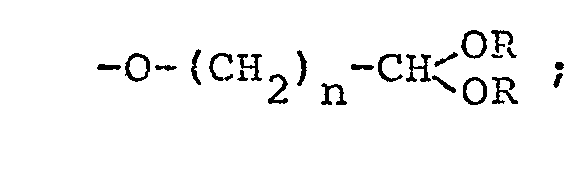
- R has the above meaning and ⁇ Spacer> stands for where A is 0 or OCONH, B is an organic radical (the spacer in the narrower sense), in particular a hydrocarbon radical having 1 to 12 carbon atoms, which may optionally be interrupted by heteroatoms such as 0, NH, S etc., and C represents a functional group that can form a covalent bond with the biologically active compound.
- A is preferably O
- B is an aliphatic, in particular unbranched, hydrocarbon radical having 1 to 6 C atoms, an aryl radical or an alkylaryl radical and and C is NH 2
- the amount indicated in mole% of monomer units of (II) or to spacers, based on all-derived from vinylene carbonate units is up to 1 mol% Y, and in particular s o ther Y 2 mol% wherein and and X is the number of mol% of all units derived from vinylene carbonate in
- the minimum amount, stated in mol%, of monomer units according to (II) or of spacers is 0.01 mol%, preferably 0.5 mol%, based on the total monomers. In general, the maximum amount of these monomer units is approximately 35 mol%, based on the total monomers, do not exceed.
- the bead polymer contains at least one further monomer unit which is derived from a monomer copolymerizable with vinylene carbonate. These are preferably two further monomer units which are different from one another.
- One of these is preferably a monomer with hydrophilic groups, which gives the polymer used as the carrier sufficient hydrophilicity and thus swellability. This is important insofar as the anchoring reaction with the biologically active substance is mostly carried out in the aqueous system and the must be able to diffuse hydrophilic biologically active substance onto the carrier material.
- These monomers include, for example, the monomers listed as component c) in DE-OS 2,237,316.
- N-vinylpyrrolidone preference is given to: N-vinylpyrrolidone, (meth) acrylic acid, (meth) acrylic amide, (meth) acrylic acid alkyl esters each having 2 to 4 carbon atoms in the alkyl group, hydroxyalkyl esters of (meth) acrylic acid having 2 up to 6 carbon atoms in the alkyl group, N-vinyl-N-alkylacetamide (C 1 -C 4 alkyl) and vinyl acetate. If necessary, several of these hydrophilic monomer units can also be present.
- the ratio of vinylene carbonate to hydrophilic component also depends on the type of enzyme to be bound. In the case of very high molecular weights of the enzyme or of the substrate which is to react with the enzyme, it is advisable to increase the molar ratio in favor of the hydrophilic component since, for steric reasons, neighboring bindable carbonate groups do not react, and may even have a disruptive effect .
- the amount of hydrophilic component also depends on the amount of the crosslinking component which is preferably present according to the invention. The larger the amount, the greater the amount of hydrophilic component required to impart sufficient hydrophilicity and swellability to the carrier polymer. In general, the amount of hydrophilic monomer unit (s) in the polymer is 5 to 70 mol%, preferably 20 to 50 mol%, based on the polymer.
- the polymer according to the invention preferably contains crosslinking monomer units, as are known from the prior art and are described, for example, in DE-OS 2 237 316 as component b).
- Typical representatives here are: divinyl ethers of glycols such as ⁇ thylenglykoldivinylveslther, Butandioldivinyläther, Hexandioldivinyläther, N, N'-methylenebisacrylamide, N, N'-methylene bis methacrylamide, ethylene-bis-methacrylic acid esters, Butandiolbismethacrylklar, triallyl, Trisacryloylperhydrotriazin, divinylbenzene, adipate, N, N'-Divinyläthylenharnstoff, vinyl acrylate, allyl methacrylate, among others.
- crosslinking monomer units can also be present. Some of these crosslinkers, for example the N, N'-divinylethyleneurea or the N, N'-methylenebisacrylamide, can also contribute to the hydrophilicity of the polymer.
- the amount of crosslinking monomer unit and thus the crosslinking density depends on the application. In the case of enzyme reactions in the stirred kettle or for diagnostics, a low crosslinking density can be advantageous; if, on the other hand, a column is filled, a high dimensional stability of the bead polymers and thus a high crosslinking density is a prerequisite.
- the amount of crosslinking monoser unit can therefore be up to 60 mol%, based on the polymer. It is preferably between 5 and 40 mol%.
- the amount of crosslinking component is in a certain relationship with that of the hydrophilic component.
- the amount of crosslinking monomer is usually chosen so that the bead polymer in tetrahydrofuran swells up to 14 times, preferably 0 to 8 times its original bulk volume.
- Uncrosslinked carriers are of interest if the carrier is to be reacted with the biologically active substance in a solution of the carrier.
- an uncrosslinked carrier polymer can also be produced in a known manner by subsequent chemical reaction can be cross-linked, for example by diamines.
- the polymer should contain a somewhat higher proportion of vinylene carbonate groups.
- non-hydrophilic and non-crosslinking monomer units may be present, for example, which are derived from: acrylic and methacrylic acid esters with 5-12 C atoms in the alkyl radical, (meth) acrylonitrile, vinyl esters with 4 - 18 C atoms in the carboxylic acid, such as vinyl butyrate, vinyl stearate and vinyl ester of branched carboxylic acids with 10-12 C atoms; also vinyl aromatics, such as styrene or ⁇ -methylstyrene.
- These monomer units can be present in the polymer in amounts of 4 to 40 mol%, preferably 8 to 20 mol%, based on the polymer.
- the bead polymer according to the invention consists of predominantly spherical particles, the mean particle size of which in the dry, unswollen state is 20 to 800 ⁇ m, preferably 50 to 300 ⁇ m, and which preferably have a narrow particle size distribution.
- the particular optimum of the particle size depends primarily on the specific area of application. With a column process carried out without pressure, for example, the particle size within the above-mentioned limits can be chosen to be correspondingly larger than with a pressure process.
- the beads of the bead polymer according to the invention are predominantly formed as hollow beads, which necessitates high porosity. This is expressed in the resulting average pore diameter according to the invention in the range from 5 to 1000 nm, preferably 10 to 500 nm and in particular 20 to 200 nm.
- the determination of the pore diameter (pore volume) is carried out in such a way that the pore volume according to the Capillary pressure method (mercury porosimetry) is determined (cf. "Ullmanns Encyklopadie der Technische Chemie", Vol. 5 (1980), pp. 751-752). This then gives the mean pore diameter by calculation according to the equation given on page 752, left column above this reference.
- the bead polymers according to the invention are particularly suitable as carriers for biologically active substances. However, they can also be used for other purposes, for example as ion exchangers, adsorbents for chromatographic processes and the like.
- alternating copolymers of maleic hydride and a vinyl alkyl ether preferably a vinyl n-alkyl ether with 6 to 30 C atoms, preferably 10 to 20 C atoms in the alkyl group, or a vinyl ester with 6 to 30 C atoms Atoms, preferably 10 to 20 carbon atoms in the carboxylic acid group or a longer-chain ⁇ -olefin with 8 to 30 carbon atoms, preferably 10 to 20 carbon atoms.
- vinyl alkyl ethers examples include vinyl octyl ethers, vinyl decyl ethers, vinyl dodecyl ethers, vinyl steaxyl ethers, vinyl myrylates, ethylhexanoic acid vinyl esters, isononanoic acid vinyl esters, vinyl acetate-laurate, vinylate versatate, vinyl ester of vinyl ester with 10 to 12 carbon atoms; Octen- (1), Decen- (1), Dodecen- (1), Tetradecen- (1), Octadecen- (1), Tricosen- (1).
- dispersion stabilizers are already effective in amounts of 0.001% by weight, based on the total amount of monomers. In most cases, amounts of 0.005 to 10% by weight, preferably 0.01 to 5% by weight (based on the total amount of homonomers) are used.
- the reduced specific viscosity (RSV) of these copolymers used as dispersion stabilizers is generally between 0.01 and 1.0 [dl / g] (determined in 0.6% solution in toluene at 25 ° C.).
- the corresponding preferred range for the copolymers of maleic anhydride and vinyl alkyl ether or vinyl ester is 0.05 to 1.0 [dl / g] and for the copolymers of maleic anhydride and longer-chain ⁇ -olefin 0.01 to 0.1 [dl / g].
- the molar ratio between maleic anhydride and the vinyl alkyl ether or vinyl ester or the longer-chain ⁇ -olefin is preferably 1: 1
- Suitable free-radical initiators according to the invention are those which are good in the monomer phase and as little soluble in the liquid dispersing medium as possible.
- examples include organic peroxides, such as di-tert-butyl peroxide, dibenzoyl peroxide, cumene hydroperoxide, cyclohexanone peroxide or aliphatic azo compounds, such as ⁇ , ⁇ '-azodiisobutyronitrile, azo-bis-cyanovaleric acid, 1,1'-azo-cyclo-hexane-1, 1'-dicarboxylic acid dinitrile and azodicarbonamide. If necessary, appropriate redox systems can also be used.
- the amount of initiator is usually 0.01-5, preferably 0.1-2,% by weight (based on the total amount of monomers).
- Suitable liquid dispersion media for carrying out the suspension polymerization according to the invention serve in particular those organic compounds which are liquid under normal conditions, a boiling point of above 60 o C, preferably in the range 85-300 ° C, and which have the monomers, the polymer and preferably also the Do not, or at any rate, only dissolve initiator under the polymerization conditions in order to prevent the undesired precipitation polymerization.
- organic compounds which are liquid under normal conditions, a boiling point of above 60 o C, preferably in the range 85-300 ° C, and which have the monomers, the polymer and preferably also the Do not, or at any rate, only dissolve initiator under the polymerization conditions in order to prevent the undesired precipitation polymerization.
- hydrocarbons with 6-20, preferably 12-16, carbon atoms, in particular paraffins are particularly suitable.
- a mixture of different compounds can also be used as a dispersing agent.
- Suitable hydrocarbons or hydrocarbon mixtures are, for example, n-hexane, n-heptane, n-octane, cyclohexane, iso-octane, gasoline fractions with boiling ranges between 90 and 170 ° C and paraffin oil thin (German Pharmacopoeia, 7th edition, DAB 7).
- the ratio of the to the dispersant phase can vary within wide limits, for example between 0.5: 1 to 1:50, preferably 1: 1 to 1:15 (weight ratio).
- certain inert, liquid components are preferably added to the polymerization system or, preferably, to the monomers. These are to be understood as meaning those substances in which the honomers dissolve well or which dissolve well in the monomers or which are miscible with them, but on the other hand practically insoluble in the dispersing medium and therefore immiscible with it.
- the inert components can be divided into swelling and / or precipitating agents according to their behavior towards the corresponding copolymers.
- polar inert agents will generally favor swelling, such as, for example, dimethylformamide, dimethyl sulfoxide, dioxane, water to a certain extent, etc., while nonpolar substances, such as glycerol triacetate, etc., have proven to be precipitation agents for the copolymer.
- nonpolar substances such as glycerol triacetate, etc.
- the optimal inert agent or mixture of inert agents can be found easily determined by a few simple routine tests. In particular, if pearl polymers with a relatively low degree of crosslinking are desired, it should be advisable to use a mixture of polar and non-polar inert agent.
- the inert components do not take part in the polymerization, but are encased in the polymer and released again during processing. This creates permanent pores.
- the pore size can be influenced by the type and amount of the inert component, but also depends on the amount of crosslinking component.
- the inert components can be used alone or in a mixture.
- examples include: methanol and its higher homologues, ethylene glycol, methyl glycol, propyl glycol, diethylene glycol, butanediol (1,4), glycerin, polyethylene glycols, diethylene glycol dimethyl ether, glycerol triacetate, ethylene carbonate, formamide, dimethylformamide, dimethyl sulfoxide, dioxane, water in certain Scope etc.
- the amount of inert component added is largely variable. It hangs among other things on the monomer composition of the carrier, in particular its crosslinker content, the desired porosity (pore size) and on the exact intended use of the carrier polymer. With a high degree of crosslinking, a correspondingly large amount of inert component is recommended in order to achieve a certain porosity (pore size). With the same degree of crosslinking, the more inert components are used, the greater the porosity (pore size). Naturally, this can only be increased within certain limits, since otherwise the wall thickness of the hollow beads and thus their mechanical strength will be too low. In most cases, an amount of inert which is 0.02 to 5 times, preferably 0.04 to 3 times the amount of monomers used will give satisfactory results.
- the vinylene carbonate and the further (or the further) comonomer (s) are used in amounts such that a polymer with the amounts of monomer units indicated above results.
- the vinylene carbonate is generally used in amounts of 5 to 95 mol%, preferably 10 to 85 mol%, based on the total monomer mixture.
- the amount of hydrophilic monomers is usually 3 to 60 mol%, preferably 15 to 35 mol%, based on the total monomer mixture, and the amount of crosslinking monomer - if used - up to 60 mol%, preferably 2 up to 35 mol%, based on the total amount of monomers.
- the process according to the invention is expediently carried out in a reaction vessel provided with a stirring device at temperatures of mostly 20-150 ° C., preferably 65-125 ° C.
- the particle size of the bead polymer is adjusted in a known manner by the stirring speed and the phase ratio. It is particularly advantageous to use a vertical, cylindrical vessel with a flat bottom, which is provided with a coaxial stirrer, the shaft of which extends almost to the bottom of the vessel.
- the reaction vessel is preferably vacuum-tight and can be provided with a reflux condenser, feed funnel, gas inlet tube and temperature measuring device.
- the vessel is generally heated and cooled by a liquid bath, e.g. an oil bath or water bath.
- reaction vessel is therefore flushed with an inert gas, preferably nitrogen, before starting.
- the unreacted monomers are removed from the reaction vessel, for example by evaporation under reduced pressure, preferably at a pressure of 0.1-15 torr.
- the dispersant is separated from the solid polymer, for example by decanting, filtering or suctioning off the supernatant.
- the polymer is then washed with low-boiling organic solvents, for example a hydrocarbon, a lower alcohol or acetone, and finally dried.
- the polymer is dried at a temperature of usually 20-100 ° C, preferably 40-80 ° C; drying under reduced pressure is recommended.
- the biologically active substance to be anchored with the bead polymers according to the invention is the known in vivo or in vitro effective natural or artificially produced substances, such as enzymes, activators, inhibitors, antigens, antibodies, vitamins, hormones, effectors, antibiotics, proteins and the like .
- the latter term also includes proteins with certain non-protein substituents such as metal ions, polysaccharides, porphyrin groups, adenine dinucleotide, ribonucleic acid, phospholipids, etc.
- polypeptide fragments, e.g. the active parts of enzyme molecules fall under the term biologically active substances.
- the enzymes are preferred according to the invention.
- enzymes are adenyl desaminase, alcohol dehydrogenase, asparaginase, carboxypeptidase, chymotrypsin, diphosphoesterase, glucosidase, glucose isomerase, glucose oxidase, clucose-6-phosphate dehydrogenase, hexokinase, invertase, ⁇ -lactamase, lactase , various lectins, NAD-Kj nase, neuraminidase, papain, peroxidase, phosphatases (alkaline and acidic), 5'-phosphodiesterase, pyruvate kinase, ribonuclease, trypsin.
- hormones such as insulin and a wide variety of pituitary hormones, proteins of the gamma-globulin fraction, e.g. Class G, M, A, D and E antibodies, other blood factors e.g. the anti-hemophilia factor, the blood coagulation factors, special antibodies, e.g.
- the anchoring reaction between the biologically active substance is carried out in a known manner, as described, for example, in DE-OS 2 407 340 or in DE-PS 2 215 687, 2 421 789 and 2 552 510.
- the reaction is usually carried out at room temperature or below.
- the latter in particular when the biologically active substance to be anchored is inherently unstable; in this case the temperatures are below + 10 ° C, preferably 0 to + 5 ° C.
- the anchoring reaction is preferably carried out in the vicinity of a neutral pH, for example at pH 5-9, since most of the biologically active substances are most stable here. In general, it is also not necessary to maintain more acidic or alkaline conditions, since the macroporous bead polymers according to the invention react quickly with most of the substances in question even in the neutral range. The resulting bond offers sufficient stability for long storage and high operational stability.
- the polymer containing vinylene carbonate groups or the saponification product can be used directly as a carrier. In many cases, however, it will be expedient to use the polymer modified with "spacarn".
- "Spacer” is understood to mean compounds which react both with the carrier polymer and with the biologically active substance and to a certain extent form a bridge between the two.
- the bead polymer according to the invention can be reacted with the spacer either directly or preferably after the carbonate groups have been saponified beforehand. The degree of sales depends, among other things, on on the bulkiness of the spacer and the accessibility of the carbonate group or the secondary hydroxyl groups resulting therefrom.
- Suitable spacers according to the invention are the known homo- and hetero-bifunctional compounds, the second functional group of which takes over the coupling with the biologically active substance to be fixed (cf. DE patents 2,421,789 and 2,552,510, and Ullmann's Encyclopedia of technical chemistry, 4th edition, vol. 10, p. 540 and "Characterization of Immobilized Biocatalysts, Verlag Chemie, Weinheim, 1979, p. 53).
- the bead polymer is reacted, for example, with epichlorohydrin.
- Per 1 part by weight of the biologically active substance to be anchored about 10 to 80 parts by weight of the carrier polymer, in particular one containing at least 50 mol% of vinylene carbonate units, are preferably used. Larger amounts of the carrier polymer can expediently be used in cases in which the vinylene arbonate units make up less than 50 mol% of the polymer.
- the molar ratio of the two monomers in the copolymer was 1: 1; the RSV was 0.224 measured in 0.6% solution in toluene at 25 ° C).
- the vinylene carbonate used here and for the following examples was distilled before use over a 1 m long column of silver jacket filled with Raschig glass rings at 75 ° / 33 Torr.
- the distilled vinylene carbonate was stored in dark glass bottles over nitrogen in the cold room at approx. 10 °.
- the present mixture was then slowly heated while stirring.
- the exothermic polymerization reaction began at approximately 65 °, the temperature rising to approximately 80 °. This temperature was kept for 2 hours by means of a thermostatted oil bath, then the bath temperature was raised to 90 ° for one hour for polymerization.
- the heating bath was then removed and the batch was allowed to cool to 40 while stirring.
- the stirring was then switched off, whereupon the pearl-shaped polymer settled out after some time.
- the majority of the paraffin oil was then siphoned off and the rest was then suctioned off through a suction filter.
- the polymer obtained was then treated with petroleum ether with stirring to obtain the remove adhering paraffin oil.
- the mixture was then stirred with methanol and then with acetone in order to dissolve out the unreacted monomers and the dispersant. Finally, the polymer was dried in a vacuum drying cabinet at 50-60 ° overnight.
- paraffin oil (DAB 7), 0.2 g of the copolymer of maleic anhydride and vinyl stearyl ether described under a), 4 ml of polyethylene glycol 400, 43 g of vinylene carbonate, 55.5 g of N were placed in a cylindrical vessel with a cross-bar stirrer, reflux condenser, thermometer and nitrogen inlet tube -Vinylpyrrolidone, 20 g of butanediol-1,4-divinyl ether and 2 g of azo-diisobutyronitrile. While introducing nitrogen, the bath temperature was slowly raised to 65 °, then polymerized and worked up as described in Example 1.
- a substantially the same product is obtained if a corresponding copolymer of maleic acid hydride and vinyl dodecyl ether is used as the dispersant.
- Copolymer of vinylene carbonate, acrylamide and butanediol-1,4-divinyl ether Copolymer of vinylene carbonate, acrylamide and butanediol-1,4-divinyl ether.
- Example 1 In the apparatus described in Example 1, the following system of polymerization was subjected to the conditions described in Example 1:
- the polymerization time was 3 hours at 60 ° and one hour at 70 °.
- Working up was carried out as in Example 5.
- the polymerization time was one hour at 80 ° and three hours at 90 °.
- the polymerization time was one hour at 80 ° and 3 hours at 90 °.
- the work-up was carried out by stirring for five hours with hexane to remove the paraffin oil, stirring for five hours with methanol to remove the unreacted monomers and the dispersant and stirring for two hours with acetone to remove the remaining constituents.
- the product was then dried in a vacuum drying cabinet at 50-60 ° for 24 hours.
- the polymerization time was one hour at 80 ° and 3 hours at 90 °.
- Example 2 In the apparatus of Example 2, the following system was subjected to the polymerization under the conditions of Example 1:
- the polymerization time was 2 hours at 80 ° and 2 hours at 90 °.
- Example 2 In the apparatus of Example 2, the following system was subjected to the polymerization under the conditions of Example 1:
- Example 2 In the apparatus of Example 2, the following system was subjected to the polymerization under the conditions of Example 1:
- the polymerization time was one hour at 80 ° and 4 hours at 90 °.
- Copolymer of vinylene carbonate, N-vinyl pyrrolidone and trisacryloyl perhydrotriazine is a copolymer of vinylene carbonate, N-vinyl pyrrolidone and trisacryloyl perhydrotriazine.
- Example 2 In the apparatus of Example 2, the following system was subjected to the polymerization under the conditions of Example 1:
- the polymerization time was 2 hours at 80 ° and 2 hours at 90 °.
- the polymerization time was one hour at 80 ° and 3 hours at 90 °.
- Example 2 In the apparatus of Example 2, the following system was subjected to the polymerization under the conditions of Example 1:
- the polymerization time was one hour at 80 ° and 3 hours to 90 °.
- Example 2 In the apparatus of Example 2, the following system was subjected to the polymerization under the conditions of Example 1:
- the polymerization time was three hours at 80 ° and one hour at 90 °.
- Pore volume 0.52 (cm 3 / g) (mercury porosimetric)
- the apparatus was used to determine the swelling; which is described in Dechema Honographie Vol. 84 (1979) on pages 73 and 74.
- the initial weight was 100 mg of carrier with 5 ml of tetrahydrofuran.
- Example 2 In the apparatus of Example 2, the following system was subjected to the polymerization under the conditions of Example 1:
- The. Polymerization time was four hours at 80 ° and one hour at 90 °.
- the support material was washed as in the previous example; approximately 7.5 grams of nutsch moist, highly active material with at least 1,300 units / g or 5,000 units / g, based on dry matter, were obtained.
- the carrier-bound inhibitor was able to bind ⁇ -amylase.
Landscapes
- Chemical & Material Sciences (AREA)
- Health & Medical Sciences (AREA)
- Organic Chemistry (AREA)
- Genetics & Genomics (AREA)
- Zoology (AREA)
- Wood Science & Technology (AREA)
- Life Sciences & Earth Sciences (AREA)
- Engineering & Computer Science (AREA)
- Bioinformatics & Cheminformatics (AREA)
- General Engineering & Computer Science (AREA)
- Biotechnology (AREA)
- Biomedical Technology (AREA)
- Microbiology (AREA)
- Biochemistry (AREA)
- General Health & Medical Sciences (AREA)
- Polymers & Plastics (AREA)
- Medicinal Chemistry (AREA)
- Chemical Kinetics & Catalysis (AREA)
- Addition Polymer Or Copolymer, Post-Treatments, Or Chemical Modifications (AREA)
- Polyesters Or Polycarbonates (AREA)
- Polymerisation Methods In General (AREA)
- Manufacturing Of Micro-Capsules (AREA)
- Organic Low-Molecular-Weight Compounds And Preparation Thereof (AREA)
- Absorbent Articles And Supports Therefor (AREA)
- Multicomponent Fibers (AREA)
- Compounds Of Alkaline-Earth Elements, Aluminum Or Rare-Earth Metals (AREA)
- Prostheses (AREA)
- Materials For Medical Uses (AREA)
- Macromolecular Compounds Obtained By Forming Nitrogen-Containing Linkages In General (AREA)
- Polymers With Sulfur, Phosphorus Or Metals In The Main Chain (AREA)
- Treatment Of Liquids With Adsorbents In General (AREA)
- Immobilizing And Processing Of Enzymes And Microorganisms (AREA)
- Medicines Containing Antibodies Or Antigens For Use As Internal Diagnostic Agents (AREA)
- Peptides Or Proteins (AREA)
Abstract
Description
- Es ist bekannt, biologisch aktive Substanzen, wie Enzyme, Antikörper, Antigene, Hormone udgl. unter Erhalt ihrer Aktivität an polymere Trägermaterialien über kovalente Bindungen zu fixieren, um auf diesem Weg beispielsweise Enzyme zu stabilisieren, zu reinigen oder wasserunlöslich zu machen. Solchermaßen immobilisierte biologisch aktive Substanzen bieten erhebliche Vorteile gegenüber der löslichen Form: Zum einen ist die Abtrennbarkeit durch Sedimentation nach Beendigung einer Reaktion vereinfacht, zum anderen ist die Stabilität und Wiederverwendbarkeit der Präparate um ein Vielfaches erhöht, da eventuell vorhandene Proteasen mit fixiert werden.
- In der DE-AS 2 237 316 werden als Trägersubstanzen quellbare, vernetzte Perlpolymerisate beschrieben, die durch Copolymerisation von reaktiven Gruppen enthaltenden Monomeren, vernetzenden Monomeren und hydrophilen Monomeren erhalten werden. Als reaktive Gruppen werden dabei die Halogenalkyl-, die Epoxid-, die Carbonsäurechlorid-, Carbonsäureanhydrid-, Carbonsäureazid-, Carbonsäurepnenylester-und Hydroxansäure-Gruppe offenbart. Diese Trägermaterialien haben jedoch eine Reihe von Nachteilen;so ist die Fixierung der biologisch aktiven Substanzen bei einigen von ihnen ziemlich langwierig und dauert häufig mehrere Tage; bei Verwendung der Anhydridvarianten kommt es außerdem zur Einführung von Ladungen.
- Gemäß der DE-OS 2.407.340 werden Polymere und Copolymere des Vinylencarbonats zur Bindung von biologisch aktiven Substanzen verwendet. Auch nach der DE-AS 2.552.510 können Copolymerisate des Vinylencarbonats für diesen Zweck eingesetzt werden. Die nach Fixierung der biologisch aktiven Substanz noch vorhandenen Cyclocarbonatgruppen werden nach einer Variante des darin beschriebenen Verfahrens in Hydroxygruppen übergeführt.
- Die in diesen beiden Druckschriften offenbarten Polymerträger auf Basis von Vinylencarbonat als reaktive Monomer- einheit haben zwar gegenüber anderen Trägermaterialien den Vorteil geringer unspezifischer Adsorption biologisch aktiver Substanzen, beispielsweise bei Einsatz als Affinitätsadsorbens; außerdem sind sie leicht modifizierbar. Ihnen fehlt jedoch die perlförmige Morphologie und die erforderliche Porosität. Dadurch sind sie beispielsweise für Säulenverfahren nicht anwendbar.
- Unregelmäßig geformte Copolymerisate des Vinylencarbonats fallen nach der in der DE-OS 25 56 759 beschriebenen Verfahrensweise an, wonach die Polymerisation in einem organischen unpolaren Dispergiermittel in Gegenwart von bestimmten nichtionogenen Dispersionsstabilisatoren erfolgt. Auch diese Polymerisate besitzen keine Perlform und auch nicht das notwendige Maß an Porosität.
- Die Aufgabe vorliegender Erfindung bestand daher darin, ein polymeres Material, insbesondere Trägermaterial für biologisch aktive Substanzen auf Basis von Vinylencarbonat bereitzustellen, das die Nachteile des Standes der Technik nicht besitzt und insbesondere Perlform und eine ausreichende Porosität aufweist. Eine weitere Aufgabe bestand darin, ein hierfür geeignetes Verfahren zu entwickeln.
- Zur Lösung dieser Aufgabe schlägt die Erfindung daher ein Polymerisat vor, bestehend im wesentlichen aus Einheiten, die sich vom Vinylencarbonat oder dessen durch einen einwertigen Kohlenwasserstoffrest mit bis zu 8 Kohlenstoffatomen substituiertes Derivat und mindestens einem weiteren damit copolymerisierbaren Monomeren ableiten, wobei die mittlere Teilchengröße der Polymerteilchen im Bereich von 20 bis 800 µm liegt, dadurch gekennzeichnet, daß die Polymerteilchen im wesentlichen kugelförmige Gestalt und einen mittleren Porendurchmesser von 5 bis 1000 nm aufweisen.
- Die Herstellung eines derartigen Perlpolymerisates erfolgt nach der Erfindung durch ein Verfahren, bei dem Vinylencarbonat oder ein durch einen einwertigen Kohlenwasserstoffrest mit bis zu 8 Kohlenstoffatomen substituiertes Derivat mit mindestens einem mit Vinylencarbonat copolymerisierbaren Monomeren in einem flüssigen Dispergiermedium polymerisiert wird, das unter den Polymerisationsbedingungen die Monomeren, das Polymerisat und vorzugsweise auch den Initiator nicht löst, in Gegenwart eines radikalisch wirksamen Initiators und eines Dispersionsstabilisators, dadurch gekennzeichnet, daß als Dispersionsstabilisator ein Copolymerisat aus Maleinsäureanhydrid und einem Vinylalkyläther mit 6 bis 30 C- Atomen in der Alkylgruppe oder einem Vinylester mit 6 bis 30 C-Atomen in der Carbonsäuregruppe oder einem längerkettigen α-Olefin mit 8 bis 30 C-Atomen verwendet wird.
- Die Erfindung hat weiterhin die Verwendung der so erhaltenen Polymeren als Trägermaterialien zur Herstellung von trägergebundener biologisch aktiver Substanzen zum Gegenstand
- Das erfindungsgemäße Perlpolymerisat enthält die sich vom Vinylencarbonat oder dessen Derivaten ableitenden Einheiten zweckmäßigerweise in Mengen von 5 bis 90 Mol.-%, vorzugsweise 10 bis 80 Mol.-%, bezogen auf das Gesamtpolymere Größere und kleinere Mengen als die vorstehend angegebenen sind grundsätzlich möglich, jedoch ist dies im Regelfall mit Nachteilen verbunden. Die optimale Menge an sich vom Vinylencarbonat oder sich von dessen Derivaten ableitenden Einheiten innerhalb der vorstehend angegebenen Bereiche hängt u.a. ab von der angestrebten Besetzungsdichte, von dem Molekulargewicht der biologisch aktiven Substanz udgl..
- Vinylencarbonat ist erfindungsgemäß als Monomeres, das dem Perlpolymerisat reaktive Gruppen verleiht, bevorzugt. Bei dessen erfindungsgemäß ebenfalls einsetzbaren Derivaten handelt es sich um solche der Formel

- Falls vor dem Einsatz als Trägermaterial eine Modifizierung mit sogenannten Spacern erfolgt (siehe hierzu weiter unten), so enthält das erfindungsgemäße Perlpolymerisat neben unveränderten Vinylencarbonat-Einheiten gemäß (I) bzw. Vinylendiol(1,2)-Einheiten (im Falle einer vorherigen Verseifung) auch entsprechende mit dem Spacer modifizierte Einheiten. Diese werden zumeist der nachstehenden Formel (II) entsprechen, d.h. es wird im Regelfall an benachbarten C-Atomen in der Polymerkette nur eine Spacereinheit vorhanden sein:


- Vorzugsweise bedeutet A gleich O, B einen aliphatischen, insbesondere unverzweigten Kohlenwasserstoffrest mit 1 bis 6 C-Atomen, einen Arylrest oder einen Alkylarylrest und und C gleich NH2,




- Das Perlpolymerist enthält erfindungsgemäß noch mindestens eine weitere Monomereinheit, die sich von einem mit Vinylencarbonat copolymerisierbaren Monomeren ableitet. Vorzugsweise handelt es sich hierbei um zwei weitere voneinander verschiedene Monomereinheiten.
- Eine davon ist vorzugsweise ein Monomeres mit hydrophilen Gruppen, welche dem als Träger eingesetzten Polymeren ausreichende Hydrophilie und damit Quellbarkeit verleiht. Dies ist insofern von Bedeutung, als die Verankerungsreaktion mit der biologisch aktiven Substanz zumeist im wässrigen System durchgeführt wird und die hydrophile biologisch aktive Substanz an das Trägermaterial herandiffundieren können muß. Zu diesen Monomeren gehören beispielsweise die in der DE-OS 2.237 316 als Komponente c) aufgeführten Monomeren. Im Rahmen der vorliegenden Erfindung werden dabei bevorzugt: N-Vinylpyrrolidon, (Meth)-Acrylsäure, (Meth)-Acrylamid, (Meth)-Acrylsäurealkylester mit jeweils 2 bis 4 C-Atomen in der Alkylgruppe, Hydroxyalkylester der (Meth)acrylsäure mit 2 bis 6 C-Atomen in der Alkylgruppe, N-Vinyl-N-alkylacetamid (C1-C4-Alkyl) und Vinylacetat. Gegebenenfalls können auch mehrere dieser hydrophilen Monomer-Einheiten vorhanden sein.
- Das Verhältnis von Vinylencarbonat zu hydrophiler Komponente ist dabei auch abhängig von der Art des zu bindenden Enzyms. Bei sehr hohen Molekulargewichten des Enzyms bzw. des Substrates, das mit dem Enzym reagieren soll, ist es zweckmäßig, das Molverhaltnis zu Gunsten der hydrophilen Komponente zu erhöhen, da aus sterischen Gründen benachbarte bindungsfähige Carbonatgruppen nicht zur Reaktion gelangen, evtl. sogar störend wirken können. Weiterhin richtet sich die Menge an hydrophiler Komponente auch nach der Menge der erfindungsgemäß bevorzugt vorhandenen vernetzenden Komponente. Je größer deren Menge ist, desto größer wird in der Regel auch die erforderliche Menge an hydrophiler Komponente sein, um dem Trägerpolymeren ausreichende Hydrophilie und Quellbarkeit zu vermitteln. Im allgemeinen beträgt erfindungsgemäß die Menge an hydrophiler (n) Monomer-Einheit (en) im Polymeren 5 bis 70 Mol.-%, vorzugsweise 20 bis 50 Mol.-%, bezogen auf das Polymere.
- Als weitere mit den Vinylencarbonat copolymerisierbare Verbindung enthält das erfindungsgemäße Polymere bevorzugt vernetzende Monomer-Einheiten, wie sie aus dem Stand der Technik bekannt sind und beispiels weise in der DE-OS 2 237 316 als Komponente b) beschrieben sind. Als typische Vertreter seien hier genannt: Divinyläther von Glykolen wie Äthylenglykoldivinylälther, Butandioldivinyläther, Hexandioldivinyläther, N,N'-Methylenbisacrylamid, N,N'-Methylenbis- methacrylamid, Äthylenglykol-bis-methacrylsäureester, Butandiolbismethacrylsäureester, Triallylcyanurat, Trisacryloylperhydrotriazin, Divinylbenzol, Adipinsäuredivinylester, N,N'-Divinyläthylenharnstoff, Vinylacrylat, Allylmethacrylat u.a.. Es können auch mehrere verschiedene vernetzende Monomereinheiten vorhanden sein. Einzelne dieser Vernetzer, z.B. der N,N'-Divinylethylenharnstoff oder das N,N'-Methylenbisacrylamid können auch zur Hydrophilie des Polymeren beitragen.
- Die Menge an vernetzender Monomer-Einheit und damit die Vernetzungsdichte hängt dabei von der Anwendung ab. Bei Enzymreaktionen im Rührkessel oder für Diagnostika kann eine geringe Vernetzungsdichte vorteilhaft sein; wird dagegen eine Säulenfüllung vorgenommen, ist eine hohe Formstabilität der Perlpolymerisate und damit eine hohe Vernetzungsdichte Voraussetzung. Je nach Anwendungsart kann daher die Menge an vernetzender Monoser-Einheit bis zu 60 Mol.-%, bezogen auf das Polymere, betragen. Vorzugsweise liegt sie zwischen 5 und 40 Mol.-%. Wie hierzu bereits weiter oben ausgeführt, steht die Menge an vernetzender Komponente mit der der hydrophilen Komponente in gewisser Relation. Zumeist wird man die Menge an vernetzendem Monomeren so wählen, daß das Perlpolymerisat in Tetrahydrofuran bis auf das 14-fache, vorzugsweise das 0-bis 8-fache seines ursprünglichen Schüttvolumens aufquillt.
- Unvernetzte Träger sind dann von Interesse, wenn die Um- setzung des Trägers mit der biologisch aktiven Substanz in einer Lösung des Trägers vorgenommen werden soll.
- Gegebenenfalls kann ein unvernetztes Trägerpolymeres in bekannter Weise auch durch nachträgliche chemische Umsetzung vernetzt werden, z.B. durch Diamine. Das Polymere sollte in diesem Fall einen etwas höheren Anteil an Vinylencarbonatgruppen enthalten.
- Als gegebenenfalls weitere nicht hydrophile und nichtvernetzende Monomer-Einheiten können beispielsweise solche vorhanden sein, die sich ableiten von: Acryl- und Methacrylsäureester mit 5-12 C-Atomen im Alkylrest, (Meth)-Acrylnitril, Vinylester mit 4 - 18 C-Atomen in der Carbonsäure, wie Vinylbutyrat, Vinylstearat und Vinylester verzweigter Carbonsäuren mit 10-12 C-Atomen; weiterhin Vinylaromaten, wie Styrol oder α-Methylstyrol. Diese Monomer-Einheiten können im Polymeren in Mengen von 4 bis 40 Mol.-%, vorzugsweise 8 bis 20 Mol.-%, bezogen auf das Polymere, vorhanden sein.
- Das erfindungsgemäße Perlpolymere besteht aus überwiegend kugelförmigen Teilchen, deren mittlere Teilchengröße im trockenen, ungequollenen Zustand 20 bis 800 µm, vorzugsweise 50 bis 300 µm beträgt und die vorzugsweise eine enge Teilchengrößenverteilung aufweisen. Das jeweilige Optimum der Teilchengröße hängt dabei vor allem von dem speziellen Einsatzgebiet ab. Bei einem ohne Druck durchgeführten Säulenverfahren wird man beispielsweise die Teilchengröße innerhalb der vorstehend genannten Grenzen entsprechend größer wählen können als bei einem Druck-Verfahren. Die Perlen des erfindungsgemäßen Perlpolymerisates sind überwiegend als Hohlperlen ausgebildet, was eine hohe Porosität bedingt. Dies drückt sich in dem sich daraus ergebenden erfindungsgemäßen mittleren Porendurchmesser im Bereich von 5 bis 1000 nm, vorzugsweise 10.bis 500 nm und insbesondere 20 bis 200 nm aus.
- Die Bestimmung des Porendurchmessers (Porenvolumens) erfolgt in der Weise, daß zunächst das Porenvolumen gemäß der Kapillardruckmethode (Quecksilberporosimetrie) bestimmt wird (vgl. hierzu "Ullmanns Encyklopädie der technischen Chemie", Bd. 5 (1980), S. 751-752). Daraus ergibt sich dann der mittlere Porendurchmesser durch Berechnung nach der auf Seite 752, linke Spalte oben dieser Literaturstelle angegebenen Gleichung.
- Die erfindungsgemäßen Perlpolymerisate eignen sich insbesondere als Träger für biologisch aktive Substanzen. Sie können aber auch für andere Zwecke eingesetzt werden, beispielsweise als Ionenaustauscher, Adsorptionsmittel für chromatographisehe Verfahren udgl.
- Das erfindungsgemäße Verfahren zur Herstellung dieser Perlpolymeren wird unter den üblichen bekannten Bedingungen der Perlpolymerisation durchgeführt, wie sie beispielsweise in der DE-OS 2 237 316 oder der DE-OS 2 556 759 beschrieben sind; jedoch mit der Neuerung, daß spezielle Dispersionsstabilisatoren zum Einsatz kommen..
- Bei diesen handelt es sich um vorzugsweise alternierende Copolynere aus Maleinsäurenhydrid und einem Vinylalkyläther, vorzugsweise einem Vinyl-n-alkyläther mit 6 bis 30 C-Atomen, vorzugsweise 10 bis 20 C-Atomen in der Alkylgruppe, oder einem Vinylester mit 6 bis 30 C-Atomen, vorzugsweise 10 bis 20 C-Atomen in der Carbonsäuregruppe oder einem längerkettigen α-Olefen mit 8 bis 30 C-Atomen, vorzugsweise 10 bis 20 C-Atomen. Als Beispiele für derartige Vinylalkyläther, Vinylester bzw, längerkettigen α-Olefinen seien hier genannt: Vinyloctyläther, Vinyldecyläther, Vinyldodecyläther, Vinylsteaxyläther, Vinylmyricyläther, Ethylhexansäure-Vinylester, Isononansäure-Vinylester, Versatiesäure-Vinylester, Laurinsäure-Vinylester, Stearinsäure-Vinylester und Vinylester verzweigter Carbonsäuren mit 10 bis 12 C-Atomen; Octen-(1), Decen-(1), Dodecen-(1), Tetradecen-(1), Octadecen-(1), Tricosen-(1).
- Diese Dispersionsstabilisatoren sind bereits in Mengen von 0,001 Gew.-%, bezogen auf die Gesamtmenge an Monomeren, wirksam. Zumeist werden Mengen von 0,005 bis 10 Gew.-%, vorzugsweise 0,01 - 5 Gew.-%(bezogen auf Gesamtmenge an Honomeren) verwendet.
- Die reduzierte spezifische Viskosität (RSV) dieser als Dispersionsstabilisatoren eingesetzten Copolymeren liegt in der Regel zwischen 0,01 und 1,0 [dl/g], (bestimmt in 0,6%iger Lösung in Toluol bei 25°C). Der entsprechende Vorzugsbereich beträgt bei den Copolymeren aus Maleinsäureanhydrid und Vinylalkyläther bzw. Vinylester 0,05 bis 1,0 [dl/g] und bei den Copolymeren aus Maleinsäureanhydrid und längerkettigem α-Olefin 0,01 bis 0,1 [dl/g]. Das Molverhältnis zwischen Maleinsäureanhydrid und dem Vinylalkyläther bzw. Vinylester oder dem längerkettigen α-Olefin liegt vorzugsweise bei 1 : 1
- Als radikalisch wirksame Initiatoren kommen erfindungsgemäß solche in Betracht, die in der Monomerphase gut und in dem flüssigen Dispergiermedium möglichst wenig löslich sind. Beispiele hierfür sind organische Peroxide, wie Di-tert.-butylperoxid, Dibenzoylperoxid, Cumolhydroperoxid, Cyclohexanonperoxid oder aliphatische Azoverbindungen, wie α, α' -Azodiisobuttersäurenitril, Azo-bis-cyanvalerinsäure,1,1'-Azo-cyclo-hexan-1,1'-dicarbonsäuredinitril und Azodicarbonamid. Gegebenenfalls können auch entsprechende Redoxsysteme Verwendung finden. Die Menge an Initiator beträgt zumeist 0,01-5, vorzugsweise 0,1-2 Gew.-% (bezogen auf die Gesamt. menge der Monomeren).
- Als flüssige Dispergiermedien zur Durchführung der erfindungsgemäßen Perlpolymerisation dienen vor allem solche organischen Verbindungen, die unter Normalbedingungen flüssig sind, einen Siedepunkt von oberhalb 60oC , vorzugsweise im Bereich von 85 - 300°C, aufweisen und welche die Monomeren, das Polymere und vorzugsweise auch den Initiator unter den Polymerisationsbedingungen nicht oder jedenfalls nur spurenweise lösen, um die unerwünschte Fällungspolymerisation zu unterbinden. Gut geeignet sind beispielsweise Kohlenwasserstoffe mit 6-20, vorzugsweise 12-16 Kohlenstoffatomen, insbesondere Paraffine. Auch ein Gemisch von verschiedenen Verbindungen kann als Dispersionsmittel eingesetzt werden. Geeignete Kohlenwasserstoffe oder Kohlenwsserstoffgemische sind z.B. n-Hexan, n-Heptan, n-Oktan, Cyclohexan, iso-Oktan, Benzinfraktionen mit Siedebereichen zwischen 90 und 170° C und Paraffinöl dünnflüssig (Deutsches Arzneibuch, 7. Ausgabe, DAB 7). Das Verhältnis der zur Dispergiermittelphase kann in weiten Grenzen variieren, beispielsweise zwischen 0,5 : 1 bis 1 : 50, vorzugsweise 1:1 bis 1:15 (Gewichtsverhältnis).
- Um eine möglichst hohe Porosität der Perlpolymerisate zu erreichen, werden den Polymerisationssystem oder vorzugsweise den Monomeren vorzugsweise bestimmte inerte, flüssige Komponenten zugesetzt. Hierunter sollen solche Stoffe verstanden sein, in denen sich die Honomeren gut lösen oder die sich in den Monomeren gut auflösen oder mit ihnen mischbar, andererseits aber im Dispergiermedium praktisch unlöslich und damit mit diesem nicht mischbar sind. Nach ihren Verhalten zu den entsprechenden Copolymeren kann man die inerten Komponenten in Quellungs- und/oder Fällungsmittel einteilen. Bei einer hydrophilen Matrix werden polare Inertmittel in der Regel eine Quellung begünstigen, wie z.B Dimethylformamid, Dimethylsulfoxid, Dioxan, Wasser in gewissem Umfang etc., während sich unpolare Substanzen, wie Glycerintriacetat etc. als Fällungsmittel für das Copolymerisat erweisen. Dasselbe gilt auch für den umgekehrten Fall, d.h. bei hydrophoben Polymeren werden unpolare Lösungsmittel als Quellmittel dienen. Das optimale Inertmittel bzw. Inertmittelgemisch läßt sich durch einige einfache Routineversuche leicht ermitteln. Insbesondere, wenn Perlpolymere mit relativ geringem Vernetzungsgrad angestrebt werden, dürfte es sich empfehlen, eine Mischung aus polarem und un polarem Inertmittel einzusetzen. Die inerten Komponenten nehmen an der Polymerisation nicht teil, werden jedoch vom Polymerisat umhüllt und bei der Aufarbeitung wieder herausgelöst. Dadurch entstehen permanente Poren. Die Porengröße ist durch Art und Menge der Inertkomponente beeinflußbar, hängt aber auch von der Menge an vernetzender Komponente ab.
- Die Inertkomponenten können allein oder in Mischung eingesetzt werden. Als Beispiele seien genannt: Methanol und seine höheren Homologen, Äthylenglykol, Methylglykol, Propylglykol, Diäthylenglykol, Butandiol-(1,4), Glycerin, Polyäthylenglykole, Diäthylenglykol-dimethylether, Glycerintriacetat, Ethylencarbonat, Formamid, Dimethylformamid, Dimethylsulfoxid, Dioxan, Wasser in gewissem Umfang usw.
- Die Menge an zugesetzter Inertkomponente ist weitgehend variabel. Sie hängt u.a. von der Monomerzusammensetzung des Trägers, insbesondere seines Gehaltes an Vernetzer, der erwünschten Porosität (Porengröße) sowie vom genauen Verwendungszweck des Trägerpolymeren ab. So wird sich bei einem hohen Vernetzungsgrad eine entsprechend große Menge an Inertkomponente empfehlen, um eine bestimmte Porosität (Porengröße) zu erreichen. Bei ein und demselben Vernetzungsgrad wird die Porosität (Porengröße) gleichfalls umso größer sein, je mehr an Inertkonponente eingesetzt wird. Naturgemäß läßt sich dies nur innerhalb bestimmter Grenzen steigern, da ansonsten die Wandstärke der Hohlperlen und damit deren mechanische Festigkeit zu gering wird. In den meisten Fällen wird eine Menge an Inertmittel, die dem 0,02- bis 5-fachen, vorzugsweise dem 0,04- bis 3-fachen der Menge an eingesetzten Monomeren entspricht, zufriedenstellende Ergebnisse liefern.
- Das Vinylencarbonat sowie das weitere (bzw. die weiteren) Comonomere(n) werden in solchen Mengen eingesetzt, daß ein Polymeres mit den weiter oben angegebenen Mengen an Monomer- Einheiten resultiert. Hierzu wird das Vinylencarbonat in der Regel in Mengen von 5 bis 95 Mol.-%, vorzugsweise 10 bis 85 Mol.-%, bezogen auf das Gesamtmonomerengemisch verwendet. Die Menge an hydrophilen Monomeren beträgt demgegenüber zumeist 3 bis 60 Mol.-%, vorzugsweise 15 bis 35 Mol.-%, bezogen auf das Gesamtmonomerengemisch, und die Menge an vernetzendem Monomeren- falls eingesetzt - bis zu 60 Mol.-%, vorzugsweise 2 bis 35 Mol.-%, bezogen auf die Gesamtmonomerenmenge.
- Das erfindunsgemäße Verfahren wird zweckmäßigerweise in einem mit einer Rührvorrichtung versehenen Reaktionsgefäß bei Temperaturen von zumeist 20-150°C, vorzugsweise 65-125°C durchgeführt. Die Teilchengröße des Perlpolymerisates wird in bekannter Weise durch die Rührgeschwindigkeit und das Phasenverhältnis eingestellt. Besonders vorteilhaft ist die Verwendung einer senkrecht stehenden, zylindrischen Gefäßes mit flachem Boden, das mit einem koaxial angebrachten Rührer versehen ist, dessen Welle bis fast auf den Gefäßboden reicht. Das Reaktionsgefäß ist vorzugsweise vakuumfest und kann mit Rückflußkühler, Zulauftrichter, Gaseinleitungsrohr und Temperaturmeßgerät versehen werden. Die Beheizung und Kühlung des Gefäßes erfolgt im allgemeinen durch ein Flüssigkeitsbad, z.B. ein Ölbad oder Wasserbad.
- Es ist vorteilhaft, das erfindungsgemäße Verfahren unter Ausschluß von Luftsauerstoff durchzuführen. Das Reaktionsgefäß wird daher vor Beginn mit einem inerten Gas, vorzugsweise Stickstoff, gespült.
- Nach Beendigung der Polymerisastionsreaktion werden die nicht umgesetzten Monomeren aus dem Reaktionsgefäß entfernt, z.B. durch Verdampfen bei vermindertem Druck, vorzugsweise bei einem Druck von 0,1 - 15 Torr. Nach der Entfernung der Restmonomeren wird das Dispersionsmittel vom festen Polymeren abgetrennt, z.B. durch Dekantieren, Filtrieren oder Absaugen des Überstandes. Anschließend wird das Polymerisat, falls erforderlich, mit leichtsiedenden organischen Lösungsmitteln, z.B. einem Kohlenwasserstoff, einem niederen Alkohol oder Aceton gewaschen und schließlich getrocknet. Die Trocknung des Polymerisates erfolgt bei einer Temperatur von zumeist 20-100°C, vorzugsweise von 40 - 80°C; eine Trocknung unter vermindertem Druck ist dabei empfehlenswert.
- Bei der mit den erfindungsgemäßen Perlpolymeren zu verankernden biologisch aktiven Substanz handelt es sich um die bekannten in vivo oder in vitro wirksamen natürlichen oder künstlich hergestellten Stoffe, wie Enzyme, Aktivatoren, Inhibitoren, Antigene, Antikörper, Vitamine, Hormone, Effektoren, Antibiotika, Proteine udgl. Der letzere Begriff umfaßt dabei auch Proteine mit bestimmten Nicht-Proteinsubstituenten wie Metallionen, Polysacchariden, Porphyringruppen, Adenindinucleotid, Ribonucleinsäure, Phospholipide etc..Auch Polypeptidfragmente, z.B. die aktiven Teile von Enzymmolekülen, fallen unter den Begriff biologisch aktive Substanzen.
- Von den vorstehend genannten biologisch aktiven Substanzen sind erfindungsgemäß die Enzyme bevorzugt.
- Beispiele für Enzyme sind Adenyldesaminase, Alkohol-Dehydrogenase, Asparaginase, Carboxypeptidase, Chymotrypsin, Diphosphoesterase, -Glucosidase, Glucose-Isomerase, Glucose-Oxidase, Clucose-6-phosphat-Dehydrogenase, Hexokinase, Invertase, ß-Lactamase, Lactase, Lactat-Dehydrogenase, versch. Lectine, NAD-Kj nase, Neuraminidase, Papain, Peroxidase, Phosphatasen (alkalisch und sauer), 5'-Phosphodiesterase, Pyruvat Kinase, Ribonuclease, Trypsin.
- Beispiele für andere biologisch aktive Substanzen sind Hormone, wie Insulin und die verschiedensten Hypophysen-Hormone, Proteine der gamma-Globulinfraktion, z.B. Antikörper der Klasse G, M, A, D und E, andere Blutfaktoren, z.B. der Antihämophiliefaktor, die Blutgerinnungsfaktoren, spezielle Antikörper, z.B. Hepatitis-, Poliomyelitis-, Finnen-, Mumps-, Influenza- oder Kaninehenantikörper, Antigene, wie Hepatitis-, Polyomyelitis-, Finnen-, Mumps-, Influenza- oder Kaninchenantigen zur Reinigung oer Stimulierung geeigneter Antikörperreaktionen, wobei das Antigen (nach dem Unlöslichmachen) in der unlöslichen Form verbleibt und folglich nicht in den Körper eindringen und diesen schädigen kann, sowie allgemeine Körperproteine, wie Hämoglobin oder Albumin.
- Die Verankerungsreaktion zwischen der biologisch aktiven Substanz wird in bekannter Weise durchgeführt, wie etwa in der DE-OS 2 407 340 oder in den DE-PSen 2 215 687, 2 421 789 und 2 552 510 beschrieben. Zumeist wird die Umsetzung bei Raumtemperatur oder darunter liegenden Temperaturen durchgeführt. Letzteres insbesondere dann, wenn die zu verankernde biologisch aktive Substanz von Hause aus instabil ist; in diesem Fall liegen dann die Temperaturen unterhalb von +10°C, vorzugsweise bei 0 bis +5°C.
- Die Verankerungsreaktion erfolgt vorzugsweise in der Umgebung eines neutralen pH-Wertes, beispielsweise bei pH-Werten von 5-9, da hier die meisten biologisch aktiven Substanzen am stabilsten sind. In der Regel ist es auch nicht erforderlich, stärker saure oder alkalische Bedingungen einzuhalten, da die erfindungsgemäßen makroporösen Perlpolymerisate auch bereits im Neutralbereich mit den meisten der in Frage kommenden Substanzen schnell reagieren. Die dabei entstehende Bindung bietet genügend Stabilität für lange Lagerungen und hohe Operationsstabilität.
- Als Träger kann dabei unmittelbar das Vinylencarbonatgruppen enthaltende Polymere oder das Verseifungsprodukt verwendet werden. In vielen Fällen wird es aber zweckmäßig sein, das mit sog. "Spacarn" modifizierte Polymer einzusetzen. Unter "Spacer" versteht man dabei Verbindungen, die sowohl mit dem Trägerpolymeren als auch mit der biologisch aktiven Substanz reagieren und zwischen beiden gewissermaßen eine Brücke bilden. Die Umsetzung des erfindungsgemäßen Perlpolymerisates mit dem Spacer kann entweder direkt oder vorzugsweise nach vorheriger Verseifung der Carbonatgruppen erfolgen. Der Umsatzgrad hängt dabei u.a. von der Sperrigkeit des Spacers und der Zugänglichkeit der Carbonatgruppe bzw. der daraus entstandenen sekundären Hydroxylgruppen ab. Als Spacer kommen erfindungsgemäß die hierfür bekannten homo- und hetero-bifunktionellen Verbindungen in Frage, deren zweite funktionelle Gruppe die Kopplung mit der zu fixierenden biologisch aktiven Substanz übernimmt (vgl. die DE- Patentschrift 2.421.789 und 2.552.510, sowie Ullmanns Encyclopädie der technischen Chemie, 4. Auflage, Bd. 10, S. 540 und "Characterization of Immobilized Biocatalysts, Verlag Chemie, Weinheim, 1979, S. 53).
- Bei den erfindungsgemäß bevorzugten Spacern handelt es sich um solche, welche die nachstehenden Gruppen einführen:
- - (CH2) n-NH2; n = 2-12


- Gemäß einer so erfindungsgemäß bevorzugten Ausführungsform wird das Perlpolymere nach Verseifung der Carbonatgruppen beispielsweise mit Epichlorhydrin umgesetzt.
- Pro 1 Gewichtsteil der zu verankernden biologisch aktiven Substanz werden vorzugsweise etwa 10 bis 80 Gewichtsteile des Trägerpolymeren insbesondere eines solchen, in welchem mindestens 50 Mol.-% Vinylencarbonateinheiten enthalten sind, verwendet. Größere Mengen des Trägerpolymeren können zweekmäßigerweise in den Fällen eingesetzt werden, n denen die Vinylenearbonateinheiten weniger als 50 Mol.-% des Polymeren ausmachen.
- Die Erfindung wird nachfolgend anhand von Beispielen näher erläutert.
- In einem Rührkolben wurden 98 g Maleinsäureanhydrid (1 Mol) und 296 g Vinylstearyläther (1 Mol) in 250 ml Aceton vorgelegt, 5 ml Diisapropylperkarbonat (40 %-ige Lösung in Phthalat) zugesetzt und das Gemisch unter Rühren und Stickstoff 5 Stunden bei 60° polymerisiert. Nach Abkühlen wuede das ausgefallene Produkt abgesaugt und mehrmals mit Aceton gewaschen.
- Das Molverhältnis der beiden Monomeren im Copolymeren betrug 1:1; der RSV-Wert lag bei 0,224

- In einem Rundkolben mit Rüher, Thermometer, Stickstoffein leitrohr und Rückflußkühler wurden 900 ml dünnflüssiges Paraffinöl DAB 7 (Dispergiermedium) 0,8 g eines Copolymerisates aus Maleinsäureanhydrid und Octadecen-(1), (Molverhältnis 1:1; RSV-Wert 0,064

- Das vorliegende Gemisch wurde dann unter Rühren langsam hochgeheizt. Bei ca. 65° begann die exotherme Polymerisationsreaktion, wobei die Temperatur auf ca. 80° anstieg. Diese Temperatur wurde mittels eines thermostatisierten Ölbades 2 Stunden gehalten, dann wurde zur Auspolymerisation die Badtemperatur eine Stunde auf 90° erhöht. Anschließend wurde das Heizbad entfernt und der Ansastz unter Rühren auf 40 abkühlen gelassen. Danach wurde die Rührung abgestellt, worauf sich nach einiger Zeit das perlförmige Polymerisat absetzte. Die Hauptmenge des Paraffinöls wurde dann abgehebbert und anschließend der Rest über eine Nutsche abgesaugt. Das erhaltehe Polymerisat wurde anschließend unter Rühren mit Petrolether behandelt, um das anhaftende Paraffinöl zu entfernen. Anschließend wurde mit Methanol, dann mit Aceton ausgerührt, um die nicht umgesetzten Monomeren sowie den Dispergator herauszulösen. Schließlich wurde das Polymerisat im Vakuumtrockenschrank über Nacht bei 50-60° getrocknet.
- Die Ausbeute betrug 82,8 g vernetztes Copolymerisat (= 80 der Theorie).
- Im wesentlichen das gleiche Produkt wird erhalten, wenn ein entsprechendes Dispergiermittel aus Maleinsäureanhydrid und Dodecen eingesetzt wird.
- Copolymerisat aus Vinylencarbonat, N-Vinylpyrrolidon und Butandiol-1,4-divinylether.
- In einem zylindrischen Gefäß, mit Kreuzbalkenrührer, Rückflußkühler, Thermometer und Stickstoffeinleitrohr wurden 900 g Paraffinöl (DAB 7), 0,2 g des unter a) beschriebenen Copolymerisates aus Maleinsäureanhydrid und Vinylstearylether 4 ml Polyethylenglykol 400, 43 g Vinylencarbonat, 55,5 g N-Vinylpyrrolidon, 20 g Butandiol-1,4-divinylether und 2 g Azo-diisobuttersäurenitril vorgelegt. Unter Einleiten von Stickstoff wurde die Badtemperatur langsam auf 65° hochgeheizt, dann wie im Beispiel 1 beschrieben polymerisiert und aufgearbeitet.
- Die Ausbeute betrug 92,4 g vernetztes Produkt (= 78 % der Theorie).
- Ein im wesentlichen gleiches Produkt wird erhalten, wenn als Dispergiermittel ein entsprechendes Copolymerisat aus Maleinsäuresnhydrid und Vinyldodecylether eingesetzt wird.
- Copolymerisat aus Vinylencarbonat, Acrylamid und Butandiol-1,4-divinylether.
- In der in Beispiel 1 beschriebenen Apparatur wurde unter den in diesem Beispiel 1 beschriebenen Bedingungen folgendes System der Polymerisation unterworfen:
- 700 ml Paraffinöl, 1,8 g des in Beispiel 2 verwendeten Copolymerisats aus Maleinsäureanhydrid und Vinylstearylether, 114,6 g Vinylencarbonat, 47,3 g Acrylamid, 16,2 g Butandiol-1,4-divinylether, 1,8 g Azo-diisobuttersäurenitril und 100 ml Ethylenglykol.
- Die Aufarbeitung erfolgte gleichfalls wie in Beispiel 1 beschrieben.
- Die Ausbeute betrug 110 g vernetztes Copolymerisat (= 62 % der Theorie).
- In der Apparatur gemäß Beispiel 2 wurde unter den Bedingungen von Beispiel 1 folgendes System der Polymerisation unterworfen:
- 800 ml Paraffinöl, 0,18 g Copolymerisat aus Maleinsäureanhydrid und Cetadecen-(1) gemäß Beispiel 1,103,2 g Vinylencarbonat, 44,4 g N-Vinylpyrrolidon, 29,5 g Ethylenglykoldimethacrylat, 1,8 g Azo-diisobuttersäurenitril, 10 ml Polyethylenglykol (Molgewicht 400).
- Die Aufarbeitung erfolgte wie in Beispiel 1 beschrieben. Ausbeute: 120 g (67 % der Theorie).
- Copolymerisat aus Vinylencarbonat, Vinylacetat und Butandiol-1,4-divinylether
- In der Apparatur gemäß Beispiel 2 wurde unter den Bedingungen von Beispiel 1 folgendes System der Polymerisation unterworfen:
- 900 ml Isooctan, 1,25 g Copolymerisat aus Maleinsäureanhydrid und Vinylstcarylether (wie in Beispiel 2), 43 g Vinylencarbonat, 43 g Vinylacetat; 12 g Butandiol-1,4-divinylether, 1,3 g Azo-diisobuttersäurenitril, 20 ml Polyethylenglykol (Molgewicht 400)
- Die Aufarbeitung erfolgte wie in Beispiel 1 mit Ausnahme der Hexanwäsche, die hier wegfiel.
- Ausbeute: 52 g = 53 % der Theorie.
- Copolymerisat aus Vinylencarbonat, Vinylacetat und Butandiol-1,4-divinylether.
- In der Apparatur gemäß Beispiel 2 wurde unter den Bedingungen von Beispiel 1 folgendes System der Polymerisation unter worfen:
- 400 ml Hexan, 0,5 g Copolymerisat aus Maleinsäureanhydrid und Vinylstearylether (wie in Beispiel 2), 22 g Vinylencarbonat, 22 g Vinylacetat, 6 g Butandiol-1,4-divinylether; 5 ml Diisopropylpercarbonat (40 % in Phthalat), 20 ml Polyethylenglykol (Molgewicht 400).
- Die Polymerisationszeit betrug 3 Stunden bei 60° und eine Stunde bei 70°. Die Aufarbeitung erfolgte wie in Beispiel 5.
- Ausbeute: 30 g (= 60 % der Theorie).
- Copolymerisat aus Vinylencarbonat, Vinylacetat und Butandiol-1,4-divinylether
- In der Apparatur gemäß Beispiel 2 wurde unter den Bedingungen von Beispiel 1 folgendes Sysem der Polymerisation unterworfen:
- 900 ml Paraffinöl, 0,1 g Copolymerisat aus Maleinsäureanhydrid und Vinylstearylether (wie in Beispiel 2), 43 g Vinylencarbonat, 43g Vinylacetat, 20 g Butandiol-1,4-divinyl- ether, 20 ml Dimethylsulfoxid, ml Polyethylenglykol (Molgewicht 400), 2 g Azo-diisobuttersäurenitril.
- Die Polymerisationszeot betrung eine Stunde bei 80° und 3 Stunden bei 90°.
- Die Aufarbeitung erfolgte wie in Beispiel 1.
- Ausbeute: 76 g (= 71 % der Theorie).
- Copolymerisat aus Vinylencarbonat, N-Vinylpyrrolidon und N,N-Methylenbisacrylamid
- In der Apparatur gemäß Beispiel 2 wurde unter den Bedingungen von Beispiel 1 folgendes System der Polymerisation unterworfen:
- 900 ml Paraffinöl, 1 g Copolymerisat aus Maleinsäureanhydrid und Octadecen-(1) (wie in Beispiel 4), 36,4 g Vinylencarbonat, 46,9 g N-Vinylpyrrolidon, 16,6 g Methylenbisacrylamid, 100 ml Dimethylformamid, 2 g Azo-diisobuttersäurenitril.
- Die Polymerisationszeit betrug eine Stunde bei 80° und 3 Stunden bei 90°.
- Die Aufarbeitung erfolgte durch fünfsbündiges Ausrühren mit Hexan zur Entfernung des Paraffinöles, fünfstündiges Ausrühren mit Methanol zur Entfernung der nicht umgesetzten Monomeren und des Dispergators und zweistündiges Ausrühren mit Aceton zur Entfernung der Restbestandteile. Anschließend wurde das Produkt 24 Stunden bei 50 - 60° im Vakuumtrockenschrank getrocknet.
- Ausbeute: 65 g (= 65 % der Theorie).
- Copolymerisat aus Vinylencarbonat, Methacrylsäuremethylester und Butandiol-1;4-divinylether
- In der Apparatur gemäß Beispiel 2 wurde unter den Bedingungen von Beispiel 1 folgendes System der Polymerisation unterworfen:
- 900 ml Paraffinöl, 0,2 g Copolymerisat aus Maleinsäureanhydrid und Vinylstearylether (gemäß Beispiel 2), 43 g Vinylencarbonat, 50 g Methacrylsäuremethylester, 20 g Butandiol-1,4-divinylether, 4 ml Polyethylenglykol (Molgewicht 400), 2 g Azo-diisobuttersäurenitril.
- Die Polymerisationszeit betrug eine Stunde bei 80° und 3 Stunden bei 90°.
- Die Aufarbeitung erfolgte wie in Beispiel 8.
- Ausbeute: 80 g (= 70 % der Theorie).
- Copolymerisat aus Vinylencarbonat, N-Vinylpyrrolidon und Butandiol-1,4-divinylether
- In der Apparatur von Beispiel 2 wurde unter den Bedingungen von Beispiel 1 folgendes System der Polymerisation unterworfen:
- 800 ml Paraffinöl; 1,5 g Copolymerisat aus Maleinsäureanhydrid und Octadecen-(1) (gemäß Beispiel 1), 43g Vinylencarbonat, 55,5 g N-Vinylpyrrolidon, 52 g Butandiol-1,4- divinylether, 100 ml Ethylencarbonat, 1,5 g Azo-diisobuttersäurenitril.
- Die Polymerisationszeit betrug 2 Stunden bei 80° und 2 Stunden bei 90°.
- Die Aufarbeitung erfolgte wie in Beispiel 8.
- Ausbeute: 92g (= 61 % der Theorie).
- Copolymerisat aus Vinylencarbonat, Vinylpyrrolidon und Butandiol-1,4-divinylether.
- In der Apparatur von Beispiel 2 wurde unter den Bedingungen von Beispiel 1 folgendes System der Polymerisation unterworfen:
- 900 ml Paraffinöl, 0,2 g Copolymerisat aus Maleinsäureanhydrid und Vinylstearylether (gemäß Beispiel 2), 43 g Vinylenoarbonat, 55,5 g K-Vinylpyrrolidon, 20 g Butandiol-1,4-divinylether, 4 ml Polyethylenglykol (Molgewicht 400), 3 g Azo-diisobuttersäurenitril (in 2 Portionen zugesetzt) Die Polymerisationszeit betrug 30 Stunden bei 700. Die erste Portion von 1,5 g Katalysator wurde zu Beginn, die zweite Portion von 1,5 g nach 15 Stunden Polymerisationszeit zugegeben.
- Die Aufarbeitung erfolgte wie in Beispiel 8.
- Ausbeute: 91 g (= 77 % der Theorie).
- Copolymerisat aus Vinylencarbonat, N-Vinylpyrrolidon und N,N-Methylenbisacrylamid
- In der Apparatur von Beispiel 2 wurde unter den Bedingungen von Beispiel 1 folgendes System der Polymerisation unterworfen:
- 900 ml Paraffinöl, 0',2g Copolymerisat aus Maleinsäureanhydrid und Vinyl-stearylether (gemäß Beispiel 2), 37 g Vinylencarbonat, 48 g N-Vinylpyrrolidon, 15 g N,N-Methylenbisacrylamid, 106 ml Dimethylsulfoxid, 4 ml Polyethylenglykol (Molgewicht 400), 2 g Azo-diisobuttersäurenitril.
- Die Polymerisationszeit betrug eine Stunde bei 80° und 4 Stunden bei 90°.
- Die Aufarbeitung erfolgte wie in Beispiel 8.
- Ausbeute: 79 g (79 % der Theorie).
- Copolymerisat aus Vinylencarbonat, N-Vinylpyrrolidon und Trisacryloylperhydrotriazin.
- In der Apparatur von Beispiel 2 wurde unter den Bedingungen von Beispiel 1 folgendes System der Polymerisation unterworfen:
- 900 ml Paraffinöl, 0,4 g Copolymerisat aus Maleinsäureanhydrid und Vinylstearylether (gemäß Beispiel 2), 42 g Vinylencarbonat, 54,5 g N-Vinylpyrrolidon, 3,5 g Trisacryloylperhydrotriazin, 50 ml Diethylenglykoldimethylether, 2 g Azo-diisobuttersäurenitril.
- Die Polymerisationszeit betrug 2 Stunden bei 80° und 2 Stunden bei 90°.
- Die Aufarbeitung erfolgte wie in Beispiel 8.
- Ausbeute: 69 g (= 69 % der Theorie).
- Copolymerisat aus Vinylencarbonat, N-Vinylpyrrolidon und N,N'-Methylenbisacrylamid
- In der Apparatur von Beispiel 2 wurde unter den Bedingungen von Beispiel 1 folgendes Sysem der Polymerisation unterworfen:
- 900 ml Paraffinöl, 1 g Copolymerisat aus Maleinsäureanhydrid und Octadecen-(1) (gemäß Beispiel 4), 23 g Vinylencarbonat, 60 g N-Vinylpyrrolidon, 17 g N,N-Methylenbisacrylamid, 100 ml Dimethylformamid, 2g Azo-diisobuttersäurenitril.
- Die Polymerisationszeit betrug eine Stunde bei 80° und 3 Stunden bei 90°.
- Die Aufarbeitung erfolgte wie in Beispiel 8.
- Ausbeute: 55 g (= 55 % der Theorie).
- Copolymerisat aus Vinylencarbonat, N-Vinylpyrrolidon und Divinylethylenharnstoff
- In der Apparatur von Beispiel 2 wurde unter den Bedingungen von Beispiel 1 folgendes System der Polymerisation unterworfen:
- 900 ml Paraffinöl, 1 g Copolymerisat aus Maleinsäureanhydrid und Octadecen-(1) (gemäß Beispiel 1), 26 g Vinylencarbonat, 34 g N-Vinylpyrrolidon, 40 g Divinylethylenharnstoff, 100 ml Dimethylformamid, 100 ml Glycerin, 2 g Azo-diisobuttersäurenitril.
- Die Polymerisationszeit betrug eine Stunde bei 80° und 3 Stunden bci 90°.
- Die Aufarbeitung erfolgte wie in Beispiel 8 beschrieben. Ausbeute: 92 g (= 92 % der Theorie).
- Copolymerisat aus Vinylencarbonat, N-Vinylpyrrolidon und Divinylethylenharnstoff
- In der Apparatur von Beispiel 2 wurde unter den Bedingungen von Beispiel 1 folgendes System der Polymerisation unterworfen:
- 900 ml Paraffinöl, 0,1g Copolymerisat aus Maleinsäureanhydrid und Vinylstearylether (gemäß Beispiel 2), 26 g Vinylencarbonat, 34 g N-Vinylpyrrolidon, 40 g Divinylethylenharnstoff, 30 ml Dimethylformamid, 70 ml Glycerintriacetat, 2 g Azo-diisobuttersäurenitril.
- Die Polymerisationszeit betrug drei Stunden bei 80° und eine Stunde bei 90°.
- Die Aufarbeitung erfolgte durch achtstündiges Ausrühren mit Hexan und anschließendem einstündigen Ausrühren mit Aceton. Ausbeute: 78 g (= 78 % der Theorie).
- Schüttgewicht: 444 (g/l)
- Schüttdichte: 2,2 (ml/g)
- Quellung: 3,8 (ml/g): (18 Stunden in Tetrahydrofuran bei 20°C)
- Porenvolumen: 0,52 (cm3/g) (Quecksilberporosimetric)
- Mittlerer Poren-
- durchmesser: 34 (nm)
- Zur Bestimmung der Quellung wurde die Apparatur benutzt; die in der Dechema-Honographie Bd. 84 (1979) auf Seiten 73 und 74 beschrieben ist. Die Einwaage betrug 100 mg Träger bei 5 ml Tetrahydrofuran.
- Copolymerisat aus Vinylencarbonat, N-Vinylpyrrolidon und Divinylethylenharnstoff
- In der Apparatur von Beispiel 2 wurde unter den Bedingungen von Beispiel 1 folgendes System der Polymerisation unterworfen:
- 900 ml Paraffinöl, 0,1 g Copolymerisat aus Maleinsaureanhydrid und Vinylstearylether (gemäß Beispiel 2), 30,5 g Vinylencarbonat, 39.5 g N-Vinylpyrrolidon, 30 g Divinylethylenharnstoff, 20 ml Dimethylformamid, 80 ml Glycerintriacetat, 2 g Azo-diisobuttersäurenitril.
- Die. Polymerisationszeit betrug vier Stunden bei 80° und eine Stunde bei 90°.
- Die Aufarbeitung erfolgte wie in Beispiel 16 beschrieben. Ausbeute: 91 g (= 91 % der Theorie).

- Copolymerisat aus Vinylencarbonat, N-Vinylpyrrolidon und Divinylethylenharnstoff
- In der in Beispiel 2 beschriebenen Apparatur wurde die folgende Copolymerisation durchgeführt:
- Zunächst wurden im Reaktionskolben 900 g Paraffinöl (dünnflüssig), 0,2g Copolymerisat aus Maleinsäureanhydrid und Vinylstearylether gemäß Beispiel 2 vorgelegt .
- In einem Becherglas wurde dann ein Gemisch aus 30,6 g Vinylencarbonat, 39,4 g N'-Vinylpyrrolidon, 30 g Divinylethylenharnstoff, 120 ml Dimethylformamid und 2, g Azo- diisobuttersäurenitril homogen verrührt und dann 60 ml entsalztes Wasser zugefügt. Diese Mischung wurde dem Reaktionskolben zugesetzt und unter Rühren der Ansatz auf 70° hochgeheizt, 1 Stunde bei dieser Temperatur gehalten und dann 4 Stunden bei 80° auspolymerisiert. Nach Abkühlen auf ca 50° wurde das Copolymerisat abgesaugt, und dann in folgender Reihenfolge gewaschen: Heptan - Methanol - Aceton. Nach Trocknung unter Vakuum wurden 80 g (80 % der Theorie) Polymerisat erhalten.
- Hydrolyse des Copolymerisates aus Vinylencarbonat, N-Vinylpyrrolidon und N,N' -Methylenbisacrylamid
- In einem 3-Halskolben mit Rührer, Rückflußkühler und Thermometer wurden 30 g des obigen Copolymerisates gemäß Beispiel 14 in 150 ml Methanol und 50 ml 2 n-Natronlauge ca. 4 Stunden bei Rückflußtemperatur gerührt. Unter Abspaltung von Kohlendioxid wurde die Carbonatgruppe in eine Glykolgruppe überführt. Nach Neutralisation mit verdünnter Salzsäure wurde das Copolymerisat abgesaugt und mit Wasser/ Methanol neutral gewaschen. Nach Trocknung im Vakuumschrank bei 60° wurden 22 g des hydrolysierten Copolymerisates erhalten.
- 20 g des oben genannten Produktes wurden in derselben Apparatur unter Rühren 5 Stunden bei 113 - 115° mit 150 ml Epichlorhydrin behandelt. Nach Absaugen des nicht umgesetzten Epichlorhydrins wurde mehrmals mit Aceton gewaschen und dann bei 50° im Vakuumschrank getrocknet. Es wurden 25 g eines oxiranhaltigen, schwach gelb gefärbten Copolymerisates erhalten. Die Analyse des Umsetzungsproduktes ergab 364 µMol/g an Epoxy-Einheiten.
- Zu 3 Gramm eines nach Beispiel 1 hergestellten Trägers wurden 12 ml einer Trypsin-Lösung (6,25 mg/ml, 345 U/ml), die 1,6 x 10⁻² molar an Benzamidin und 1 molar an Kaliumphosphat (Puffer) war und einen pH-Wert von 7,8 aufwies, gegeben. Nach der Fixierung über Nacht (16 h) wurden die Perlen mit 1 molarer Kochsalzlösung und mit Puffer-Lösung gründlich gewaschen. Die Ausbeute an nutschenfeuchtem Material betrug 8,2 Gramm mit 270 Units/g, gemessen am Autotitrator bei 37°C und einem pH-Wert von 8,1 mit N'-Benzoyl-L-argininäthylesterhydrochlorid (BAEE) als Substrat. Bezogen auf Trockengewicht waren das 745 Units/g. Nach Bilanzierung von Ausgangs- und Waschwasseraktivität . blieb eine Fixierungsausbeute (= Aktivität auf Trägere: angebotene Aktivität)von 54 %. Der n-Wert betrug 0,56 (n= gefundene Aktivität/(angebotene Aktivität minus Waschwasser-Aktivität)).
- Zu 2 Gramm eines nach Beispiel 1 hergestellten Trägers wurden 8 ml einer Cephalosporinase-Lösung gegeben, die 1 500 Units/ml enthielt, wobei 1 Unit die Bildung von 1 µMol geöffnetem Laktamring pro Minute bei einem pH-Wert von 7,8 und 37°C entsprach. Die Reaktion wurde am Autotitrator über die Natronlaugezugabe verfolgt.
- Nach einem Tag Fixierung wurde das Trägermaterial wie im vorhergehenden Beispiel gewaschen; man erhielt ca. 7,5 Gramm nutschenfeuchtes hochaktives Material mit mind. 1 300 Units/g bzw. 5 000 Units/g bezogen auf Trockenmasse. Die Fixierungsausbeute betrug nach Bilanzierung 81%. (n=1).
- Zu 0,1 Gramm Träger nach Beispiel 15 wurden 0,4 ml D-Aminosäureoxidase-Lösung mit 7 Units/ml bzw. 0,6 Units/mg Protein gegeben, gemessen mit Cephalosporin C als Substrat über die Freisetzung von H2O2 nach DE-OS 22 19 454 bei einem pH-Wert von 8,1 und einer Temperatur von 37°C in 0,1 molarem Pyrophosphatpuffer,
- Nach 16 Stunden Bindungszeit wurde das trägerfixierte Enzym gewaschen und die Aktivität bestimmt. Es wurden 1,25 Units/g nutschenfeuchtes Material bzw. 5,4 Units/g trockenes Material bestimmt. Die Fixierungsausbeute betrug 19 % (n = 0,24).
- Zu 1 g eines nach Beispiel 8 hergestellten Trägers wurden 22 mg α-Amylase-Inhibitor (Tendamistat), das sind 374 000 int. Inhibitoreinheiten = 100 %, gelöst in 5 ml 1 molarer Natriumbikarbonat-Lösung gegeben. Nach 16 Stunden Bindungszeit wurde das Trägermaterial mit dem fixierten Enzym gewaschen. Das Waschwasser enthielt noch 60 % der eingesetzten Aktivität.
- Der trägergebundene Inhibitor war in der Lage, α-Amylase zu binden.
- Zu 0,2 g des oxiranhaltigen Copolymerisates gemäß Beispiel 19 wurden 1200 µl einer Penicillin-Acylase-Lösung (40 mg/ml; 287 U/ml) in 1 molarem Kaliumphosphatpuffer mit einem pH-Wert von 8,0 zugesetzt. Nach einer Fixierungszeit von 72 Stunden wurde der Träger mit 1-molarer Kochsalzlösung und vorstehender Pufferlösung gut ausgewaschen. Die Ausbeute an nutschenfeuchtem Material betrug 840 mg mit 315 U/g, gemessen mit dem Autotitrator bei 37° und einem pH-Wert von 7,8 mit penicillinsaurem Kalium als Substrat. Umgerechnet auf Trockengewicht erhielt man 1365 U/g. Nach Bilanzierung von Ausgangs- und Waschwasseraktivität ergab sich eine Fixierungsausbeute von 79 % (Aktivität auf Trägerangebotene Aktivität). Der n-Wert betrug 0.,81.
Claims (27)
Priority Applications (1)
| Application Number | Priority Date | Filing Date | Title |
|---|---|---|---|
| AT83111616T ATE22096T1 (de) | 1982-11-25 | 1983-11-21 | Vinylencarbonat-polymerisate, verfahren zu ihrer herstellung und ihre anwendung. |
Applications Claiming Priority (2)
| Application Number | Priority Date | Filing Date | Title |
|---|---|---|---|
| DE19823243591 DE3243591A1 (de) | 1982-11-25 | 1982-11-25 | Vinylencarbonat-polymerysate, verfahren zu ihrer herstellung und ihre anwendung |
| DE3243591 | 1982-11-25 |
Publications (2)
| Publication Number | Publication Date |
|---|---|
| EP0110281A1 true EP0110281A1 (de) | 1984-06-13 |
| EP0110281B1 EP0110281B1 (de) | 1986-09-10 |
Family
ID=6178990
Family Applications (1)
| Application Number | Title | Priority Date | Filing Date |
|---|---|---|---|
| EP83111616A Expired EP0110281B1 (de) | 1982-11-25 | 1983-11-21 | Vinylencarbonat-Polymerisate, Verfahren zu ihrer Herstellung und ihre Anwendung |
Country Status (19)
| Country | Link |
|---|---|
| US (1) | US4542069A (de) |
| EP (1) | EP0110281B1 (de) |
| JP (1) | JPS59105005A (de) |
| KR (1) | KR840007092A (de) |
| AT (1) | ATE22096T1 (de) |
| AU (1) | AU564387B2 (de) |
| BR (1) | BR8306468A (de) |
| CA (1) | CA1211597A (de) |
| DE (2) | DE3243591A1 (de) |
| DK (1) | DK535383A (de) |
| ES (1) | ES8503696A1 (de) |
| FI (1) | FI72985C (de) |
| GR (1) | GR81288B (de) |
| IL (1) | IL70321A (de) |
| NO (1) | NO834321L (de) |
| NZ (1) | NZ206369A (de) |
| PH (1) | PH19642A (de) |
| PT (1) | PT77717B (de) |
| ZA (1) | ZA838765B (de) |
Cited By (3)
| Publication number | Priority date | Publication date | Assignee | Title |
|---|---|---|---|---|
| EP0186347A3 (en) * | 1984-12-11 | 1987-08-19 | Pristroje Lab N P | Method for producing high-active biologically efficient compounds immobilized on a carrier |
| EP0161464A3 (en) * | 1984-04-13 | 1989-01-04 | Hoechst Aktiengesellschaft | Polymers based on polyvinylene carbonate and/or polyhydroxymethylene, process for their preparation and their use |
| RU2271356C2 (ru) * | 1999-11-19 | 2006-03-10 | Мерк Патент Гмбх | Виниленкарбонатная смесь и способ ее получения |
Families Citing this family (13)
| Publication number | Priority date | Publication date | Assignee | Title |
|---|---|---|---|---|
| DE3423936A1 (de) * | 1984-06-29 | 1986-01-02 | Hoechst Ag, 6230 Frankfurt | Verfahren zur herstellung von l-phenylalanin |
| DE3521684A1 (de) * | 1985-06-18 | 1986-12-18 | Dr. Müller-Lierheim KG, Biologische Laboratorien, 8033 Planegg | Verfahren zur beschichtung von polymeren |
| JPS6263508A (ja) * | 1985-09-13 | 1987-03-20 | Kao Corp | 毛髪化粧料 |
| US5955109A (en) * | 1985-12-18 | 1999-09-21 | Advanced Polymer Systems, Inc. | Methods and compositions for topical delivery of retinoic acid |
| US5879716A (en) * | 1985-12-18 | 1999-03-09 | Advanced Polymer Systems, Inc. | Methods and compositions for topical delivery of benzoyl peroxide |
| US5145675A (en) * | 1986-03-31 | 1992-09-08 | Advanced Polymer Systems, Inc. | Two step method for preparation of controlled release formulations |
| DE3752311D1 (de) * | 1986-06-04 | 2000-04-27 | Hoechst Schering Agrevo Gmbh | Verfahren zur Herstellung von L-tertiär-Leucin durch Transaminierung |
| DE3789956T2 (de) * | 1986-08-15 | 1994-11-10 | Advanced Polymer Systems Inc | Polymere trägerzubereitungen, herstellung und verwendung. |
| DE3629176A1 (de) * | 1986-08-28 | 1988-03-17 | Hoechst Ag | Vernetzte polymerisate mit carbonatestergruppen und verfahren zu ihrer herstellung |
| ZA886284B (en) * | 1987-08-31 | 1990-04-25 | Advanced Polymer Systems Inc | Controlled release formulations |
| ZA892859B (en) * | 1988-04-22 | 1989-12-27 | Advanced Polymer Systems Inc | Porous particles in preparations involving immiscible phases |
| US6562922B1 (en) * | 1999-03-23 | 2003-05-13 | Cryovac, Inc | Vicinal hydroxyl group containing copolymer and articles formed therefrom |
| GB2432160A (en) * | 2005-11-14 | 2007-05-16 | Sun Chemical Ltd | Energy curable cyclic carbonate compositions |
Citations (4)
| Publication number | Priority date | Publication date | Assignee | Title |
|---|---|---|---|---|
| GB1009004A (en) * | 1961-09-07 | 1965-11-03 | Rohm & Haas | Polymer dispersions |
| DE2014242A1 (de) * | 1969-03-27 | 1970-10-08 | Gaf Corp., New York, N.Y. (V.St.A.) | Verfahren zur Herstellung von Intet*polymeren aus Maleinsäureanhydrid und Vinyläthern |
| DE2407340A1 (de) * | 1973-03-01 | 1974-09-05 | Baxter Laboratories Inc | Substanz und verfahren zu ihrer herstellung |
| FR2335532A1 (fr) * | 1975-12-17 | 1977-07-15 | Hoechst Ag | Procede de preparation de polymeres du carbonate de vinylene |
Family Cites Families (7)
| Publication number | Priority date | Publication date | Assignee | Title |
|---|---|---|---|---|
| US2932629A (en) * | 1955-03-28 | 1960-04-12 | Dow Chemical Co | Quiescent suspension polymerization |
| GB899205A (en) * | 1960-04-28 | 1962-06-20 | Ici Ltd | The purification and polymerisation of vinylene carbonate |
| DE2237316C3 (de) * | 1972-07-29 | 1985-08-29 | Roehm Gmbh, 6100 Darmstadt | Verfahren zur Herstellung perlförmiger, vernetzter, wasserunlöslicher Mischpolymerisate und ihre Verwendung |
| US4070348A (en) * | 1973-07-25 | 1978-01-24 | Rohm Gmbh | Water-swellable, bead copolymer |
| JPS5844688B2 (ja) * | 1974-09-21 | 1983-10-05 | 関西ペイント株式会社 | ヒスイケイフホウワジユシブンサンエキ |
| DE2552510C3 (de) * | 1975-11-22 | 1981-02-19 | Behringwerke Ag, 3550 Marburg | Biologisch aktive Verbindungen und Verfahren zu ihrer Herstellung |
| JPS6021683B2 (ja) * | 1979-12-27 | 1985-05-29 | 株式会社トクヤマ | カ−ボネ−ト重合体よりなる硬質レジン用充填剤 |
-
1982
- 1982-11-25 DE DE19823243591 patent/DE3243591A1/de not_active Withdrawn
-
1983
- 1983-11-21 AT AT83111616T patent/ATE22096T1/de not_active IP Right Cessation
- 1983-11-21 DE DE8383111616T patent/DE3366134D1/de not_active Expired
- 1983-11-21 EP EP83111616A patent/EP0110281B1/de not_active Expired
- 1983-11-23 NZ NZ206369A patent/NZ206369A/en unknown
- 1983-11-23 ES ES527484A patent/ES8503696A1/es not_active Expired
- 1983-11-23 KR KR1019830005540A patent/KR840007092A/ko not_active Withdrawn
- 1983-11-23 US US06/554,637 patent/US4542069A/en not_active Expired - Fee Related
- 1983-11-23 PH PH29879A patent/PH19642A/en unknown
- 1983-11-23 GR GR73046A patent/GR81288B/el unknown
- 1983-11-23 FI FI834296A patent/FI72985C/fi not_active IP Right Cessation
- 1983-11-23 DK DK535383A patent/DK535383A/da not_active Application Discontinuation
- 1983-11-24 BR BR8306468A patent/BR8306468A/pt unknown
- 1983-11-24 AU AU21673/83A patent/AU564387B2/en not_active Ceased
- 1983-11-24 JP JP58219652A patent/JPS59105005A/ja active Pending
- 1983-11-24 PT PT77717A patent/PT77717B/de unknown
- 1983-11-24 IL IL70321A patent/IL70321A/xx unknown
- 1983-11-24 ZA ZA838765A patent/ZA838765B/xx unknown
- 1983-11-24 NO NO834321A patent/NO834321L/no unknown
- 1983-11-24 CA CA000441885A patent/CA1211597A/en not_active Expired
Patent Citations (4)
| Publication number | Priority date | Publication date | Assignee | Title |
|---|---|---|---|---|
| GB1009004A (en) * | 1961-09-07 | 1965-11-03 | Rohm & Haas | Polymer dispersions |
| DE2014242A1 (de) * | 1969-03-27 | 1970-10-08 | Gaf Corp., New York, N.Y. (V.St.A.) | Verfahren zur Herstellung von Intet*polymeren aus Maleinsäureanhydrid und Vinyläthern |
| DE2407340A1 (de) * | 1973-03-01 | 1974-09-05 | Baxter Laboratories Inc | Substanz und verfahren zu ihrer herstellung |
| FR2335532A1 (fr) * | 1975-12-17 | 1977-07-15 | Hoechst Ag | Procede de preparation de polymeres du carbonate de vinylene |
Cited By (4)
| Publication number | Priority date | Publication date | Assignee | Title |
|---|---|---|---|---|
| EP0161464A3 (en) * | 1984-04-13 | 1989-01-04 | Hoechst Aktiengesellschaft | Polymers based on polyvinylene carbonate and/or polyhydroxymethylene, process for their preparation and their use |
| US4906570A (en) * | 1984-04-13 | 1990-03-06 | Hoechst Aktiengesellschaft | Polymers based on polyvinylene carbonate and/or polyhydroxymethylene as carriers for biologically active substances |
| EP0186347A3 (en) * | 1984-12-11 | 1987-08-19 | Pristroje Lab N P | Method for producing high-active biologically efficient compounds immobilized on a carrier |
| RU2271356C2 (ru) * | 1999-11-19 | 2006-03-10 | Мерк Патент Гмбх | Виниленкарбонатная смесь и способ ее получения |
Also Published As
| Publication number | Publication date |
|---|---|
| IL70321A (en) | 1987-01-30 |
| ES527484A0 (es) | 1985-03-16 |
| DE3366134D1 (en) | 1986-10-16 |
| AU2167383A (en) | 1984-05-31 |
| US4542069A (en) | 1985-09-17 |
| ATE22096T1 (de) | 1986-09-15 |
| DK535383D0 (da) | 1983-11-23 |
| DK535383A (da) | 1984-05-26 |
| FI72985B (fi) | 1987-04-30 |
| JPS59105005A (ja) | 1984-06-18 |
| NZ206369A (en) | 1986-05-09 |
| FI834296L (fi) | 1984-05-26 |
| PH19642A (en) | 1986-06-04 |
| AU564387B2 (en) | 1987-08-13 |
| DE3243591A1 (de) | 1984-05-30 |
| BR8306468A (pt) | 1984-06-26 |
| IL70321A0 (en) | 1984-02-29 |
| EP0110281B1 (de) | 1986-09-10 |
| FI72985C (fi) | 1987-08-10 |
| PT77717B (de) | 1986-06-11 |
| NO834321L (no) | 1984-05-28 |
| PT77717A (de) | 1983-12-01 |
| CA1211597A (en) | 1986-09-16 |
| GR81288B (de) | 1984-12-11 |
| FI834296A0 (fi) | 1983-11-23 |
| ZA838765B (en) | 1984-07-25 |
| ES8503696A1 (es) | 1985-03-16 |
| KR840007092A (ko) | 1984-12-05 |
Similar Documents
| Publication | Publication Date | Title |
|---|---|---|
| EP0129719B1 (de) | Makroporöse Perlpolymerisate, Verfahren zu ihrer Herstellung und ihre Anwendung | |
| EP0110281B1 (de) | Vinylencarbonat-Polymerisate, Verfahren zu ihrer Herstellung und ihre Anwendung | |
| EP0075815B1 (de) | Wasserunlösliches Proteinmaterial, dessen Herstellung und Verwendung | |
| EP0088964B1 (de) | Verfahren zur Herstellung von unlöslichen, nur wenig quellbaren Polymerisaten von basischen Vinylheterocyclen und deren Verwendung | |
| DE3116995C2 (de) | ||
| WO2004039854A2 (de) | Makroporöses kunststoffperlenmaterial | |
| DE2215687C3 (de) | Neue wasserunlösliche Proteinpräparate | |
| DE2722751C2 (de) | Perlpolymerisat mit einem Teilchendurchmesser von 5 bis 1000 μm und innerem Hohlraum | |
| EP0150350B1 (de) | Vernetzte Polymerisate, Verfahren zu ihrer Herstellung und ihre Anwendung | |
| DE68919942T2 (de) | Verfahren zum Trocknen von biologischen Produkten. | |
| DE69412651T2 (de) | Vernetzte Isocyanatgruppen enthaltende Polymer-Träger | |
| EP0266503B1 (de) | Vernetzte Polymerisate und Verfahren zu ihrer Herstellung | |
| DE19804518C2 (de) | Verfahren zur Herstellung von perlförmigen Mischpolymerisaten auf Acrylatbasis, danach hergestellte Trägerpolymermaterialien und deren Verwendung | |
| EP0161464B1 (de) | Polymerisate auf Basis von Polyvinylencarbonat und/oder Polyhydroxymethylen, Verfahren zur ihrer Herstellung und ihre Anwendung | |
| EP0257632B1 (de) | Vernetzte Polymerisate mit Carbonatestergruppen und Verfahren zu ihrer Herstellung | |
| DE2315508C2 (de) | ||
| DE2237316A1 (de) | Perlfoermiges, in wasser quellbares mischpolymerisat als traeger fuer biologisch aktive substanzen | |
| DE3714276C2 (de) | Hydrophile, vernetzte Polymerisate, Verfahren zu ihrer Herstellung und ihre Verwendung | |
| DE2215539C2 (de) | Neue wasserunlösliche Enzym-, insbesondere Penicillinacylase-oder Enzyminhibitor-Präparate | |
| DE2805607C3 (de) | Herstellung von Bio-Katalysatoren durch Polymereinschluß von Mikroorganismen | |
| AT331972B (de) | Durchfuhrung von durch wasserunlosliche proteinpraparate katalysierbarenreaktionen | |
| WO2006084490A1 (de) | Makroporöses kunststoffperlenmaterial | |
| DE3910966A1 (de) | Mit enzymen beschichtetes traegermaterial |
Legal Events
| Date | Code | Title | Description |
|---|---|---|---|
| PUAI | Public reference made under article 153(3) epc to a published international application that has entered the european phase |
Free format text: ORIGINAL CODE: 0009012 |
|
| AK | Designated contracting states |
Designated state(s): AT BE CH DE FR GB IT LI LU NL SE |
|
| 17P | Request for examination filed |
Effective date: 19840714 |
|
| GRAA | (expected) grant |
Free format text: ORIGINAL CODE: 0009210 |
|
| AK | Designated contracting states |
Kind code of ref document: B1 Designated state(s): AT BE CH DE FR GB IT LI LU NL SE |
|
| REF | Corresponds to: |
Ref document number: 22096 Country of ref document: AT Date of ref document: 19860915 Kind code of ref document: T |
|
| REF | Corresponds to: |
Ref document number: 3366134 Country of ref document: DE Date of ref document: 19861016 |
|
| ITF | It: translation for a ep patent filed | ||
| PG25 | Lapsed in a contracting state [announced via postgrant information from national office to epo] |
Ref country code: LU Free format text: LAPSE BECAUSE OF NON-PAYMENT OF DUE FEES Effective date: 19861130 |
|
| ET | Fr: translation filed | ||
| PLBE | No opposition filed within time limit |
Free format text: ORIGINAL CODE: 0009261 |
|
| STAA | Information on the status of an ep patent application or granted ep patent |
Free format text: STATUS: NO OPPOSITION FILED WITHIN TIME LIMIT |
|
| 26N | No opposition filed | ||
| NLR1 | Nl: opposition has been filed with the epo |
Opponent name: KAYSERSBERG S.A. Opponent name: GENERAL ELECTRIC COMPANY |
|
| PGFP | Annual fee paid to national office [announced via postgrant information from national office to epo] |
Ref country code: FR Payment date: 19901023 Year of fee payment: 8 |
|
| PGFP | Annual fee paid to national office [announced via postgrant information from national office to epo] |
Ref country code: LU Payment date: 19901025 Year of fee payment: 8 |
|
| PGFP | Annual fee paid to national office [announced via postgrant information from national office to epo] |
Ref country code: SE Payment date: 19901026 Year of fee payment: 8 Ref country code: GB Payment date: 19901026 Year of fee payment: 8 |
|
| PGFP | Annual fee paid to national office [announced via postgrant information from national office to epo] |
Ref country code: AT Payment date: 19901031 Year of fee payment: 8 |
|
| PGFP | Annual fee paid to national office [announced via postgrant information from national office to epo] |
Ref country code: BE Payment date: 19901113 Year of fee payment: 8 |
|
| ITTA | It: last paid annual fee | ||
| PGFP | Annual fee paid to national office [announced via postgrant information from national office to epo] |
Ref country code: NL Payment date: 19901130 Year of fee payment: 8 |
|
| PGFP | Annual fee paid to national office [announced via postgrant information from national office to epo] |
Ref country code: DE Payment date: 19910117 Year of fee payment: 8 |
|
| PGFP | Annual fee paid to national office [announced via postgrant information from national office to epo] |
Ref country code: CH Payment date: 19910121 Year of fee payment: 8 |
|
| EPTA | Lu: last paid annual fee | ||
| PG25 | Lapsed in a contracting state [announced via postgrant information from national office to epo] |
Ref country code: GB Effective date: 19911121 Ref country code: AT Effective date: 19911121 |
|
| PG25 | Lapsed in a contracting state [announced via postgrant information from national office to epo] |
Ref country code: SE Effective date: 19911122 |
|
| PG25 | Lapsed in a contracting state [announced via postgrant information from national office to epo] |
Ref country code: LI Effective date: 19911130 Ref country code: CH Effective date: 19911130 Ref country code: BE Effective date: 19911130 |
|
| BERE | Be: lapsed |
Owner name: HOECHST A.G. Effective date: 19911130 |
|
| PG25 | Lapsed in a contracting state [announced via postgrant information from national office to epo] |
Ref country code: NL Effective date: 19920601 |
|
| GBPC | Gb: european patent ceased through non-payment of renewal fee | ||
| NLV4 | Nl: lapsed or anulled due to non-payment of the annual fee | ||
| PG25 | Lapsed in a contracting state [announced via postgrant information from national office to epo] |
Ref country code: FR Effective date: 19920731 |
|
| REG | Reference to a national code |
Ref country code: CH Ref legal event code: PL |
|
| PG25 | Lapsed in a contracting state [announced via postgrant information from national office to epo] |
Ref country code: DE Effective date: 19920801 |
|
| REG | Reference to a national code |
Ref country code: FR Ref legal event code: ST |
|
| EUG | Se: european patent has lapsed |
Ref document number: 83111616.5 Effective date: 19920604 |