EP0121159A2 - Futter für Wiederkäuer und Verfahren zu seiner Herstellung - Google Patents
Futter für Wiederkäuer und Verfahren zu seiner Herstellung Download PDFInfo
- Publication number
- EP0121159A2 EP0121159A2 EP84102794A EP84102794A EP0121159A2 EP 0121159 A2 EP0121159 A2 EP 0121159A2 EP 84102794 A EP84102794 A EP 84102794A EP 84102794 A EP84102794 A EP 84102794A EP 0121159 A2 EP0121159 A2 EP 0121159A2
- Authority
- EP
- European Patent Office
- Prior art keywords
- cal
- calcium sulfate
- sediment
- mixture
- calcium
- Prior art date
- Legal status (The legal status is an assumption and is not a legal conclusion. Google has not performed a legal analysis and makes no representation as to the accuracy of the status listed.)
- Withdrawn
Links
Images

Classifications
-
- C—CHEMISTRY; METALLURGY
- C07—ORGANIC CHEMISTRY
- C07C—ACYCLIC OR CARBOCYCLIC COMPOUNDS
- C07C59/00—Compounds having carboxyl groups bound to acyclic carbon atoms and containing any of the groups OH, O—metal, —CHO, keto, ether, groups, groups, or groups
- C07C59/01—Saturated compounds having only one carboxyl group and containing hydroxy or O-metal groups
- C07C59/08—Lactic acid
-
- A—HUMAN NECESSITIES
- A23—FOODS OR FOODSTUFFS; TREATMENT THEREOF, NOT COVERED BY OTHER CLASSES
- A23K—FODDER
- A23K10/00—Animal feeding-stuffs
- A23K10/20—Animal feeding-stuffs from material of animal origin
- A23K10/26—Animal feeding-stuffs from material of animal origin from waste material, e.g. feathers, bones or skin
- A23K10/28—Animal feeding-stuffs from material of animal origin from waste material, e.g. feathers, bones or skin from waste dairy products
-
- A—HUMAN NECESSITIES
- A23—FOODS OR FOODSTUFFS; TREATMENT THEREOF, NOT COVERED BY OTHER CLASSES
- A23K—FODDER
- A23K20/00—Accessory food factors for animal feeding-stuffs
- A23K20/20—Inorganic substances, e.g. oligoelements
- A23K20/24—Compounds of alkaline earth metals, e.g. magnesium
-
- A—HUMAN NECESSITIES
- A23—FOODS OR FOODSTUFFS; TREATMENT THEREOF, NOT COVERED BY OTHER CLASSES
- A23K—FODDER
- A23K50/00—Feeding-stuffs specially adapted for particular animals
- A23K50/10—Feeding-stuffs specially adapted for particular animals for ruminants
-
- A—HUMAN NECESSITIES
- A23—FOODS OR FOODSTUFFS; TREATMENT THEREOF, NOT COVERED BY OTHER CLASSES
- A23K—FODDER
- A23K50/00—Feeding-stuffs specially adapted for particular animals
- A23K50/10—Feeding-stuffs specially adapted for particular animals for ruminants
- A23K50/15—Feeding-stuffs specially adapted for particular animals for ruminants containing substances which are metabolically converted to proteins, e.g. ammonium salts or urea
-
- Y—GENERAL TAGGING OF NEW TECHNOLOGICAL DEVELOPMENTS; GENERAL TAGGING OF CROSS-SECTIONAL TECHNOLOGIES SPANNING OVER SEVERAL SECTIONS OF THE IPC; TECHNICAL SUBJECTS COVERED BY FORMER USPC CROSS-REFERENCE ART COLLECTIONS [XRACs] AND DIGESTS
- Y02—TECHNOLOGIES OR APPLICATIONS FOR MITIGATION OR ADAPTATION AGAINST CLIMATE CHANGE
- Y02P—CLIMATE CHANGE MITIGATION TECHNOLOGIES IN THE PRODUCTION OR PROCESSING OF GOODS
- Y02P60/00—Technologies relating to agriculture, livestock or agroalimentary industries
- Y02P60/80—Food processing, e.g. use of renewable energies or variable speed drives in handling, conveying or stacking
- Y02P60/87—Re-use of by-products of food processing for fodder production
-
- Y—GENERAL TAGGING OF NEW TECHNOLOGICAL DEVELOPMENTS; GENERAL TAGGING OF CROSS-SECTIONAL TECHNOLOGIES SPANNING OVER SEVERAL SECTIONS OF THE IPC; TECHNICAL SUBJECTS COVERED BY FORMER USPC CROSS-REFERENCE ART COLLECTIONS [XRACs] AND DIGESTS
- Y10—TECHNICAL SUBJECTS COVERED BY FORMER USPC
- Y10S—TECHNICAL SUBJECTS COVERED BY FORMER USPC CROSS-REFERENCE ART COLLECTIONS [XRACs] AND DIGESTS
- Y10S426/00—Food or edible material: processes, compositions, and products
- Y10S426/807—Poultry or ruminant feed
Definitions
- the present invention relates to a ruminant animal feed, and a method of making the same. More specifically, it relates to a method of producing a solid, granular form of calcium ammonium lactate (hereinafter referred to as "CAL").
- CAL calcium ammonium lactate
- CAL is a crystalline substance which is formed in the manufacture of fermented ammoniated condensed whey (hereinafter referred to as "FACW"). Further information on both CAL and FACW may be obtained from U.S. patent of Juengst et al 4,333,956 granted June 8, 1982.
- CAL separates from FACW and crystalline CAL can be collected.
- the CAL collected is in the form of a sediment usually, containing small amounts of FACW. Therefore, it is not a free-flowing powder. The handling of the CAL sediment is therefore difficult, increasing its cost and limiting the ways in which it can be put to use.
- the present invention provides a method for converting CAL sediment, derived from FACW, into a free-flowing solid material. Briefly, the process consists of mixing CAL sediment with calcium sulfate and air drying the mixture.
- the raw material for the practice of the present invention is CAL sediment derived from FACW.
- the FACW is obtained as a.hot liquid after it has been concentrated by evaporating water, using heat.
- the FACW is cooled to allow formation of CAL crystals to be completed.
- the mixture is decanted, for example in a continuous centrifuge such as the Sharples P-3400 Super-D-Canter.
- the product should be decanted promptly after the crystals have formed, as the recovery of crystals by decantation is more efficient when the product is fresh. For example, a sample stored for two days gave a higher recovery of CAL solids than a three month old sample.
- the product obtained at this stage is a semi-dry crystalline material.
- the second raw material used in the present invention is calcium sulfate.
- the product is calcium sulfate dihydrate or calcium sulfate hemihydrate.
- the hemihydrate was found to be somewhat more effective, in that the rate of drying was somewhat higher. For instance, in an experiment with comparable feeds and drying conditions, the hemihydrate produced a dry product in 5-6 minutes whereas the dihydrate required 7-8 minutes.
- the salt should be in the form of a granular or finely divided material.
- Other potential drying materials have been evaluated, including calcium chloride, calcium carbonate, dicalcium phosphate, soluble starch and shredded cellulose, but none was found to be as effective as calcium sulfate.
- the amount of calcium sulfate utilized varies in accordance with the nature of the CAL sediment. In general, the amount used is about 2-30% of the total amount of mixture, and it depends upon the amount of FACW in the sediment.
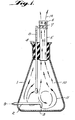
- the exact amount to be used for a particular CAL sediment can be determined by a simple experiment, using the apparatus illustrated in FIGURE 1. Mixtures of the sediment with various amounts of calcium salt are dried in that apparatus or a similar apparatus. Incomplete drying can be detected by adherence of the feed to the walls of the drying vessel. Excessive drying can be detected by a massive buildup of particles on the filter at the exit of the drying vessel, or by fine particles blowing through the filter. In general, acceptable levels' for calcium sulfate dihydrate have been found to correspond to the following equations.
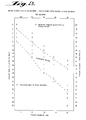
- FIGURE 2 is a graph recording the results of experiments in which various mixtures were dried.
- the mixtures contained a sediment which in turn contained 92% CAL (balance FACW).
- This sediment was then mixed with various amounts of decanted FACW to provide mixtures for drying.
- Across the top of the graph the percentage of CAL sediment (containing 92% CAL) is indicated whereas across the bottom of the graph the corresponding amounts of FACW added to the mixtures are indicated.
- the percentages of calcium sulfate dihydrate mixed with the sediment/FACW mixtures is indicated at the left, and at the right there is given the percentage of the sediment-FACW mixture which was combined with the calcium sulfate.
- the two lines plotted along the graph indicate upper and lower limits on the amount of calcium sulfate found to be acceptable.
- the amounts of calcium sulfate corresponding to the area between the lines gave acceptable drying. Higher amounts, indicated by the area below the lines in the graph, gave excessive dusting whereas smaller amounts of calcium sulfate caused the material to adhere excessively to the drying vessel.
- FIGURE 3 is another graph, based upon the same experiments.
- the horizontal axis indicates the proportions of CAL and FACW (in total) and the vertical axis indicates the proportions of sediment and calcium sulfate in the mixtures which were dried.
- the hatched area in the center of the graph indicates appropriate amounts of calcium sulfate to be used, in accordance with the composition of the material being dried.
- Various forms of apparatus can be used to dry the mixtures of CAL sediment and calcium sulfate.
- a fluidized bed or other conventional air drying equipment may be used.
- the product also may be dried by simply spreading it out on a flat surface and letting it stand, for example overnight.
- the air used to dry the apparatus is conveniently at room temperature. Temperatures up to 30°C, or a little higher, have been found to be satisfactory. At temperatures of 40°C or above, it was found that the product tended to form into clumps and not dry evenly.
- FIGURE 1 A suitable laboratory apparatus for carrying out the invention is illustrated in FIGURE 1. This apparatus was found to be suitable for drying 25 gram quantities of sediment.
- reference numeral 1 indicates a 500 ml Erlenmeyer flask having an air inlet tube 2 extending horizontally through the lower portion of the side of the flask. At the inner end of the air inlet tube 2, the tube is bent downwardly and narrowed to give a 2 mm diameter orifice 3.
- the top of the flask is sealed by a rubber stopper 4, and an exit tube 5 is inserted through the stopper, having an internal diameter of 10 mm and a height of 200 mm.
- At the upper end of the exit tube there is a fine gauze 6 covering the exit, held in place by a rubberband 7.
- thermometer 8 also is inserted through the rubber stopper 4, to observe the temperature of the air flowing through the flask.
- the numeral 9 indicates the inward flow of air to the flask, at a rate of 12 liters per minute.
- the arrows 10 indicate the air flow through the flask and the arrows 11 indicate the circulation of the sediment as it is being dried.
- composition of the product obtained using 4% calcium sulfate in the foregoing experiment is as follows:
- the product is useful as a nitrogen supplement for ruminant animals on high energy rations.
- the following is a brief description of a trial which was conducted using CAL sediment, that is the raw material used in accordance with the present invention.
- the product of the present invention can be used in essentially the same way, making an appropriate adjustment for the amount of sulfur introduced with the CAL.
- Composition of CAL used in the trial was 8.6% Ca, 6.3% N, 74.4% lactic acid and 11.1% water.
- two trials were conducted. In trial 1, 18 steers (9 per pen) were fed increasing levels of CAL, (.36, .40, .46, .50, 76 and 1.01 kg) in complete rations. For an additional 2 days, steers were offered CAL free choice separate from the complete ration. In trial 2, 32 steers (1 per pen) were fed cornsilage ad libitum and 1% of their dry matter as ground corn.
Landscapes
- Chemical & Material Sciences (AREA)
- Life Sciences & Earth Sciences (AREA)
- Polymers & Plastics (AREA)
- Engineering & Computer Science (AREA)
- Food Science & Technology (AREA)
- Zoology (AREA)
- Animal Husbandry (AREA)
- Organic Chemistry (AREA)
- Birds (AREA)
- Inorganic Chemistry (AREA)
- Health & Medical Sciences (AREA)
- Biomedical Technology (AREA)
- Biotechnology (AREA)
- Molecular Biology (AREA)
- Physiology (AREA)
- Fodder In General (AREA)
Applications Claiming Priority (2)
| Application Number | Priority Date | Filing Date | Title |
|---|---|---|---|
| US06/480,234 US4456623A (en) | 1983-03-30 | 1983-03-30 | Ruminant animal feed and method of making same |
| US480234 | 1983-03-30 |
Publications (2)
| Publication Number | Publication Date |
|---|---|
| EP0121159A2 true EP0121159A2 (de) | 1984-10-10 |
| EP0121159A3 EP0121159A3 (de) | 1987-02-25 |
Family
ID=23907189
Family Applications (1)
| Application Number | Title | Priority Date | Filing Date |
|---|---|---|---|
| EP84102794A Withdrawn EP0121159A3 (de) | 1983-03-30 | 1984-03-14 | Futter für Wiederkäuer und Verfahren zu seiner Herstellung |
Country Status (9)
| Country | Link |
|---|---|
| US (1) | US4456623A (de) |
| EP (1) | EP0121159A3 (de) |
| AU (1) | AU546193B2 (de) |
| CA (1) | CA1213165A (de) |
| DK (1) | DK171084A (de) |
| ES (1) | ES8601662A1 (de) |
| GR (1) | GR81858B (de) |
| NZ (1) | NZ207517A (de) |
| ZA (1) | ZA841820B (de) |
Family Cites Families (3)
| Publication number | Priority date | Publication date | Assignee | Title |
|---|---|---|---|---|
| DE2731877A1 (de) * | 1977-07-14 | 1979-02-01 | Rudolf Schanze | Verfahren zur herstellung von ammoniumlactat enthaltenden mischungen aus waessrigen milchverarbeitungsrueckstaenden |
| US4333956A (en) * | 1979-11-13 | 1982-06-08 | Calor Agriculture Research, Inc. | Calcium ammonium lactate and solidified fermented ammoniated condensed whey |
| US4420636A (en) * | 1980-01-04 | 1983-12-13 | Calor Agriculture Research, Inc. | Calcium ammonium lactate |
-
1983
- 1983-03-30 US US06/480,234 patent/US4456623A/en not_active Expired - Lifetime
-
1984
- 1984-03-12 ZA ZA841820A patent/ZA841820B/xx unknown
- 1984-03-14 EP EP84102794A patent/EP0121159A3/de not_active Withdrawn
- 1984-03-15 NZ NZ207517A patent/NZ207517A/en unknown
- 1984-03-16 AU AU25803/84A patent/AU546193B2/en not_active Ceased
- 1984-03-28 GR GR74232A patent/GR81858B/el unknown
- 1984-03-28 DK DK171084A patent/DK171084A/da active IP Right Grant
- 1984-03-29 ES ES531092A patent/ES8601662A1/es not_active Expired
- 1984-03-29 CA CA000450876A patent/CA1213165A/en not_active Expired
Also Published As
| Publication number | Publication date |
|---|---|
| US4456623A (en) | 1984-06-26 |
| GR81858B (de) | 1984-12-12 |
| ES531092A0 (es) | 1985-11-01 |
| AU546193B2 (en) | 1985-08-22 |
| ES8601662A1 (es) | 1985-11-01 |
| DK171084D0 (da) | 1984-03-28 |
| AU2580384A (en) | 1984-10-04 |
| ZA841820B (en) | 1984-10-31 |
| DK171084A (da) | 1984-10-01 |
| NZ207517A (en) | 1986-09-10 |
| CA1213165A (en) | 1986-10-28 |
| EP0121159A3 (de) | 1987-02-25 |
Similar Documents
| Publication | Publication Date | Title |
|---|---|---|
| US3541204A (en) | Encapsulated biologically active materials for feeding to ruminants and process for the production thereof | |
| McDonald et al. | The conversion of casein into microbial proteins in the rumen | |
| EP0615693B2 (de) | Tierfuttermittel-Additiv auf Fermentationsbrühe-Basis, Verfahren zu dessen Herstellung und dessen Verwendung | |
| US4996065A (en) | Molasses-free chemically reactive binder for animal feed | |
| CA1054436A (en) | Process for preparing a lactulose-containing powder for feed | |
| DE69825024T2 (de) | Verfahren zur Herstellung von granuliertem L-Lysin enthaltendem Futterzusatz | |
| EP2865274B1 (de) | L-Aminosäure enthaltendes Futtermitteladditiv | |
| JPS633763A (ja) | ペレット化されたフィード助剤及びその製造法 | |
| US3076700A (en) | Fertilizer compositions and process | |
| US4976963A (en) | Ruminant feed antacid containing potassium, sodium and chlorine | |
| SU700094A1 (ru) | Кормова добавка дл жвачных животных | |
| US4456623A (en) | Ruminant animal feed and method of making same | |
| Rees et al. | Fertilizer calcium as a factor affecting the voluntary intake, digestibility and retention time of pangola grass (Digitaria decumbens) by sheep | |
| Jadhao et al. | Effect of dietary calcium and phosphorus concentrations on retention of these nutrients by caged layers | |
| US5213826A (en) | Whey permeate-derived sweetener | |
| US2170713A (en) | Stock food and method of producing the same | |
| GB2191379A (en) | Animal feed block and packaging method for block | |
| JPH03117461A (ja) | ホエーパーミエート由来の甘味料 | |
| CN109393164A (zh) | 一种新型过瘤胃叶酸及其制备方法与应用 | |
| CH641937A5 (de) | Diaetetisches lebensmittel und verfahren zu seiner herstellung. | |
| Stinson et al. | Ammonium Metaphosphate Fertilizer, Pilot Plant Production and Greenhouse Tests of Fertilizer from Ammonia and Phosphorus Pentoxide Vapors | |
| DE69624272T2 (de) | Verbesserung des Schüttgewichts und der Energieeinsparung beim Trocknungsverfahren von Aminosäuren | |
| DE60030945T2 (de) | Verfahren zur Herstellung verschiedener L-lysinehaltiger Nahrungszusätze | |
| RU2720620C1 (ru) | Минеральная балансирующая кормовая добавка для лактирующих коров и способ ее получения | |
| SU1375232A1 (ru) | Способ обработки соломы |
Legal Events
| Date | Code | Title | Description |
|---|---|---|---|
| PUAI | Public reference made under article 153(3) epc to a published international application that has entered the european phase |
Free format text: ORIGINAL CODE: 0009012 |
|
| AK | Designated contracting states |
Designated state(s): BE DE FR GB IT LU NL SE |
|
| RIN1 | Information on inventor provided before grant (corrected) |
Inventor name: DIKA, JOHNS ANTON Inventor name: JUENGST, FREDERICK WILLIAM |
|
| PUAL | Search report despatched |
Free format text: ORIGINAL CODE: 0009013 |
|
| AK | Designated contracting states |
Kind code of ref document: A3 Designated state(s): BE DE FR GB IT LU NL SE |
|
| 17P | Request for examination filed |
Effective date: 19870424 |
|
| 17Q | First examination report despatched |
Effective date: 19880825 |
|
| STAA | Information on the status of an ep patent application or granted ep patent |
Free format text: STATUS: THE APPLICATION IS DEEMED TO BE WITHDRAWN |
|
| 18D | Application deemed to be withdrawn |
Effective date: 19890728 |
|
| RIN1 | Information on inventor provided before grant (corrected) |
Inventor name: JUENGST, FREDERICK WILLIAM Inventor name: DIKA, JOHNS ANTON |