EP0125615A2 - Schwanniomyces Castellii-Stämme und Brauverfahren - Google Patents
Schwanniomyces Castellii-Stämme und Brauverfahren Download PDFInfo
- Publication number
- EP0125615A2 EP0125615A2 EP84105216A EP84105216A EP0125615A2 EP 0125615 A2 EP0125615 A2 EP 0125615A2 EP 84105216 A EP84105216 A EP 84105216A EP 84105216 A EP84105216 A EP 84105216A EP 0125615 A2 EP0125615 A2 EP 0125615A2
- Authority
- EP
- European Patent Office
- Prior art keywords
- enzymes
- enzyme
- strain
- schwanniomyces castellii
- amylolytic
- Prior art date
- Legal status (The legal status is an assumption and is not a legal conclusion. Google has not performed a legal analysis and makes no representation as to the accuracy of the status listed.)
- Granted
Links
- 0 CCC*1=C(CC2)*[C@@]2C(C)CC(C)ICCCCC1 Chemical compound CCC*1=C(CC2)*[C@@]2C(C)CC(C)ICCCCC1 0.000 description 1
Images


Classifications
-
- C—CHEMISTRY; METALLURGY
- C12—BIOCHEMISTRY; BEER; SPIRITS; WINE; VINEGAR; MICROBIOLOGY; ENZYMOLOGY; MUTATION OR GENETIC ENGINEERING
- C12C—BEER; PREPARATION OF BEER BY FERMENTATION; PREPARATION OF MALT FOR MAKING BEER; PREPARATION OF HOPS FOR MAKING BEER
- C12C12/00—Processes specially adapted for making special kinds of beer
- C12C12/002—Processes specially adapted for making special kinds of beer using special microorganisms
- C12C12/004—Genetically modified microorganisms
-
- C—CHEMISTRY; METALLURGY
- C12—BIOCHEMISTRY; BEER; SPIRITS; WINE; VINEGAR; MICROBIOLOGY; ENZYMOLOGY; MUTATION OR GENETIC ENGINEERING
- C12C—BEER; PREPARATION OF BEER BY FERMENTATION; PREPARATION OF MALT FOR MAKING BEER; PREPARATION OF HOPS FOR MAKING BEER
- C12C11/00—Fermentation processes for beer
- C12C11/003—Fermentation of beerwort
-
- C—CHEMISTRY; METALLURGY
- C12—BIOCHEMISTRY; BEER; SPIRITS; WINE; VINEGAR; MICROBIOLOGY; ENZYMOLOGY; MUTATION OR GENETIC ENGINEERING
- C12C—BEER; PREPARATION OF BEER BY FERMENTATION; PREPARATION OF MALT FOR MAKING BEER; PREPARATION OF HOPS FOR MAKING BEER
- C12C12/00—Processes specially adapted for making special kinds of beer
- C12C12/02—Beer with low calorie content
-
- C—CHEMISTRY; METALLURGY
- C12—BIOCHEMISTRY; BEER; SPIRITS; WINE; VINEGAR; MICROBIOLOGY; ENZYMOLOGY; MUTATION OR GENETIC ENGINEERING
- C12C—BEER; PREPARATION OF BEER BY FERMENTATION; PREPARATION OF MALT FOR MAKING BEER; PREPARATION OF HOPS FOR MAKING BEER
- C12C5/00—Other raw materials for the preparation of beer
- C12C5/004—Enzymes
-
- C—CHEMISTRY; METALLURGY
- C12—BIOCHEMISTRY; BEER; SPIRITS; WINE; VINEGAR; MICROBIOLOGY; ENZYMOLOGY; MUTATION OR GENETIC ENGINEERING
- C12C—BEER; PREPARATION OF BEER BY FERMENTATION; PREPARATION OF MALT FOR MAKING BEER; PREPARATION OF HOPS FOR MAKING BEER
- C12C7/00—Preparation of wort
- C12C7/28—After-treatment, e.g. sterilisation
-
- C—CHEMISTRY; METALLURGY
- C12—BIOCHEMISTRY; BEER; SPIRITS; WINE; VINEGAR; MICROBIOLOGY; ENZYMOLOGY; MUTATION OR GENETIC ENGINEERING
- C12C—BEER; PREPARATION OF BEER BY FERMENTATION; PREPARATION OF MALT FOR MAKING BEER; PREPARATION OF HOPS FOR MAKING BEER
- C12C9/00—Methods specially adapted for the making of beerwort
-
- C—CHEMISTRY; METALLURGY
- C12—BIOCHEMISTRY; BEER; SPIRITS; WINE; VINEGAR; MICROBIOLOGY; ENZYMOLOGY; MUTATION OR GENETIC ENGINEERING
- C12N—MICROORGANISMS OR ENZYMES; COMPOSITIONS THEREOF; PROPAGATING, PRESERVING, OR MAINTAINING MICROORGANISMS; MUTATION OR GENETIC ENGINEERING; CULTURE MEDIA
- C12N1/00—Microorganisms; Compositions thereof; Processes of propagating, maintaining or preserving microorganisms or compositions thereof; Processes of preparing or isolating a composition containing a microorganism; Culture media therefor
- C12N1/14—Fungi; Culture media therefor
- C12N1/145—Fungi isolates
-
- C—CHEMISTRY; METALLURGY
- C12—BIOCHEMISTRY; BEER; SPIRITS; WINE; VINEGAR; MICROBIOLOGY; ENZYMOLOGY; MUTATION OR GENETIC ENGINEERING
- C12N—MICROORGANISMS OR ENZYMES; COMPOSITIONS THEREOF; PROPAGATING, PRESERVING, OR MAINTAINING MICROORGANISMS; MUTATION OR GENETIC ENGINEERING; CULTURE MEDIA
- C12N9/00—Enzymes; Proenzymes; Compositions thereof; Processes for preparing, activating, inhibiting, separating or purifying enzymes
- C12N9/14—Hydrolases (3)
- C12N9/24—Hydrolases (3) acting on glycosyl compounds (3.2)
- C12N9/2402—Hydrolases (3) acting on glycosyl compounds (3.2) hydrolysing O- and S- glycosyl compounds (3.2.1)
- C12N9/2405—Glucanases
- C12N9/2408—Glucanases acting on alpha -1,4-glucosidic bonds
- C12N9/2411—Amylases
- C12N9/2414—Alpha-amylase (3.2.1.1.)
- C12N9/2417—Alpha-amylase (3.2.1.1.) from microbiological source
- C12N9/242—Fungal source
-
- C—CHEMISTRY; METALLURGY
- C12—BIOCHEMISTRY; BEER; SPIRITS; WINE; VINEGAR; MICROBIOLOGY; ENZYMOLOGY; MUTATION OR GENETIC ENGINEERING
- C12N—MICROORGANISMS OR ENZYMES; COMPOSITIONS THEREOF; PROPAGATING, PRESERVING, OR MAINTAINING MICROORGANISMS; MUTATION OR GENETIC ENGINEERING; CULTURE MEDIA
- C12N9/00—Enzymes; Proenzymes; Compositions thereof; Processes for preparing, activating, inhibiting, separating or purifying enzymes
- C12N9/14—Hydrolases (3)
- C12N9/24—Hydrolases (3) acting on glycosyl compounds (3.2)
- C12N9/2402—Hydrolases (3) acting on glycosyl compounds (3.2) hydrolysing O- and S- glycosyl compounds (3.2.1)
- C12N9/2405—Glucanases
- C12N9/2408—Glucanases acting on alpha -1,4-glucosidic bonds
- C12N9/2411—Amylases
- C12N9/2428—Glucan 1,4-alpha-glucosidase (3.2.1.3), i.e. glucoamylase
-
- C—CHEMISTRY; METALLURGY
- C12—BIOCHEMISTRY; BEER; SPIRITS; WINE; VINEGAR; MICROBIOLOGY; ENZYMOLOGY; MUTATION OR GENETIC ENGINEERING
- C12R—INDEXING SCHEME ASSOCIATED WITH SUBCLASSES C12C - C12Q, RELATING TO MICROORGANISMS
- C12R2001/00—Microorganisms ; Processes using microorganisms
- C12R2001/645—Fungi ; Processes using fungi
Definitions
- the present invention relates generally to improvements in the brewing of beer and more particularly, to yeast strains of the species Schwanniomyces castellii and to thermo sensitive enzymes produced by those strains.
- Starch is the principal carbohydrate constituent of all brewers' grains including malt, unmalted barley and non-malted cereal adjuncts, including corn and rice.
- the starch regardless of the source, is a high molecular weight polymer consisting of glucose units joined primarily by alpha-1,4 glucosidic bonds but also including a smaller number of alpha-1,6 glucosidic bonds.
- the former type of bond occurs in the linear chains of glucose units while the latter type result in inter-chain branch points that are characteristic of a particular sub-group of starch known as amylopectins.
- Most starches comprise about 25% amylose and about 75% amylopectin.
- starch is first broken down during the mashing stages by alpha and beta amylases. As a result of this enzymatic activity, a spectrum of non-fermentable soluble dextrins and fermentable sugars are formed. The majority of these dextrins are alpha-1,6 linked carbohydrates.
- the soluble starch hydrolysates are then extracted from the spent grains as a wort solution which can subsequently be fermented to produce beer.
- the fermentable carbohydrates such as glucose, maltose and maltotriose are fermented by the brewers' yeast to produce ethanol while the higher molecular weight dextrins, being non-fermentable, remain substantially unchanged in the final beer and contribute to its body and smoothness.
- One such process involves the breakdown of the carbohydrate into fermentable sugars through the enzymatic hydrolysis of the alpha-1,4 and alpha-1,6 glucosidic linkages.
- the non-fermentable carbohydrates may be effectively and economically utilized towards the production of ethanol.
- amyloglucosidase- containing preparation is obtained as a culture filtrate from a fungal species, Aspergillus niger. This species of fungus has long been recognized as the principal source of commercial amyloglucosidase enzymes.
- Amyloglucosidase derived from Aspergillus niger species are commonly employed in the commercial production of starch hydrolysates such as dextrose syrups wherein the reaction millieu is typically held at about 60°C for periods of around seventy-two hours in duration.
- a mylolytic enzymes which term hereinafter includes only alpha-amylase and amyloglucosidase produced by Schwanniomyces cast e llii, have been found to be sensitive to beer pasteurization conditions.
- a culture filtrate having thermo sensitive amylolytic enzyme activity which filtrate is derived from cultures of viable yeasts of the species Schwanniomyces castellii, when cultured on amylolytic enzyme-inducing nutrient media.
- ancil- lar y to the provision of said filtrate the present invention also provides for the amylolytic enzymes alpha-amylase and amyloglucosi- da se, as can be derived from said culture filtrate and particularly, from concentrated forms thereof.
- the above-mentioned culture filtrate is derived from strains of Schwanniomyces castellii which are derepressed amylolytic enzyme producing mutant strains which are produced by the following process:
- a novel mutant strain of Schwanniomyces castellii having the ascession No. NCYC 1461 and which is further characterized as being a derepressed producer of thermolabile amylolytic enzymes.
- the present invention also relates to brewing processes adapted for the production of pasteurized beers wherein worts are prepared in accordance with processes generally recognized in the art and wherein the improvement comprises the addition of amylolytic enzymes derived from Schwanniomyces castellii to the cooled wort subsequent to kettle boiling but prior to pasteurization.
- This process is particularly suited to the production of low carbohydrate beers and, more particularly, and again in accordance with known procedures, the process is readily adapted to the production of low calorie beers.
- the present invention relates, in part, to culture filtrates having thermosensitive amylolytic enzyme activity which culture filtrates are derived from amylolytic enzyme producing yeasts of the species Schwanniomyces castellii, such as for example, strain ATCC 26077 and strain NCYC 1461.
- the culture filtrate may be obtained by propagating the selected Schwanniomyces castellii strain on any suitable amylolytic enzyme inducing medium.
- the selection of media will influence the respective yields of each of the enzymes of interest. Perhaps more important, however, is the engineering of a production mash which does not include undesirable enzyme production.
- a peptone-yeast extract medium supplemented with maltose has been found to be an excellent enzyme-inducing medium.
- the maltose may be replaced with a less expensive corn syrup, known as high-maltose syrup, which comprises 40% to 50% maltose, 15% to 20% maltotriose, 10% to 15% glucose and about 25% dextrins.
- high-maltose syrup comprises 40% to 50% maltose, 15% to 20% maltotriose, 10% to 15% glucose and about 25% dextrins.
- the substitution of high-maltose syrup reduces the cost of the nutrient medium but at the same time maintains satisfactory levels of enzyme production relative to those obtained with the use of maltose.
- Casein or soya bean hydrolysates have been found to substantially increase the production of the enzymes.
- high-maltose syrup, corn steep liquor and soya bean or casein hydrolysates are, respectively, 1% weight by volume, 1% weight by volume, and 0.5% weight by volume. It is noted that neither high-maltose syrup nor corn steep liquor contain ferulate decarboxylase inducing substrates.
- the culture medium is filtered to remove the microbial cells.
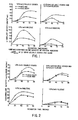
- the time required to achieve optimal enzyme production varies depending on the substrate being used. The effect of various substrates on the time required is illustrated in Figures 1 and 2 for alpha-amylase and amyloglucosidase, respectively. Generally, between forty-eight and seventy-two hours is preferred.
- both the alpha-amylase and the amyloglucosidase enzymes that are produced by the Schwanniomyces castellii strains are extra-cellular enzymes and therefore cellular disruption is not necessary to enhance the enzyme yield.
- the filtrate does not exhibit any proteolytic activity (unlike filtrates derived from Aspergillus species) and the amyloglucosidase of the present invention has been discovered to have debranching activity unlike the amyloglucosidase produced by Schwanniomyces diastaticus strains.
- the resultant clarified liquor may be concentrated, as for example by means of vacuum evaporators operated at suitably low temperatures and for a duration suitable to enhance the concentration of the crude enzyme solution.
- concentration steps are limited by either the final vicosity of the resulting concentrate or by the precipitation of solids from the concentrate.
- Purer forms of the enzymes are then recoverable, for example, by means of either adsorbtion or precipitation techniques. While adsorbtion techniques, including the use of chromatographic columns, are often applied in the laboratory-scale recovery of enzymes, precipitation techniques are better adapted to the economics of commercial-scale recovery.
- Examples of applied commercial precipitation techniques are generally well known and include those utilized in the recovery of amylolytic enzymes from Bacillus subtilis filtrates obtained using submerged fermentation processes, or those employed in precipitating amylase enzymes obtained from the mould Aspergillus oryzae grown by way of semi-solid culture processes.
- the enzymes obtained from culture filtrates of the present invention may, if desired, be standardized on the basis of its rate of substrate activity.
- the general considerations applicable to the production of microbial enzymes are discussed in an article by E. J. Beckhorn, entitled “Production of Microbial Enzymes" which article appears on page 366 of Microbial Technology edited by H.J. Peppler and published by Reinhold Publishing Corporation.
- the culture filtrate of the present invention is a source of relatively heat sensitive alpha-amylase and glucoamylase.
- the amlyloglucosidase of the present invention is an alpha-1-6-debranching enzyme, as has already been indicated supra.
- the amylolytic system of Schwanniomyces castellii has been isolated and purified by means of ultrafiltration followed by polyacrylamide gel electrophoresis. There follows, immediately hereinbelow, a detailed description of one such isolation and purification of the above-mentioned amylolytic system which is intended to show, by way of example, one of the means by which the enzymes of the present invention can be obtained.
- An inoculum consisting of Schwanniomyces castellii strain ATCC 26077 was introduced into 100 ml. aliquots of 2% weight by volume soluble starch containing the peptone-yeast extract nutrient medium of Ogur and St. John, which was prepared in accordance with the method disclosed in J.Bacteriol, 1956, 92, 500-504.
- the inoculated medium was incubated in 300 ml. flasks at 21°C for forty-eight hours on a gyrorotary shaker at 160 rpm. Subsequently, the 100 ml.
- cultures were aseptically transferred to respective 2 litre flasks, each containing one additional litre of the nutrient medium mentioned above, and incubated under the same cultural conditions.
- the yeast cells were removed by centrifugation at 2000 gravities for 15 minutes and the resulting 1 litre supernatents were concentrated 200 to 250 fold by ultrafiltration at 2°C under 60 psi pressure with a stirred ultrafiltration cell fitted with an ultrafilter having a 30,000 dalton cut off.
- the resulting 5 ml. crude preparation was further concentrated using a concentrator having a 15,000 dalton cut off, until the resulting preparation contained a protein concentration of 1.5 to 2 mg. per millilitre.
- alpha-amylase activity was defined as the quantity of protein required to produce a f51 550 cm, , of 0.1 with a soluble starch/iodine system.
- the amyloglucosidase assay was carried out by measuring the glucose concentration released by the enzyme in a cell-free system, using 2% weight by volume dextrin as a substrate in a 0.1 molar citrate-phosphate buffer at pH 5.5.
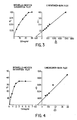
- FIG. 3 of the drawings there is shown the characteristic kinetic perameters of the Schwanniomyces castellii alpha-amylase enzyme as represented by both Michaelis-Menten saturation and Lineweaver Burk enzyme kinetic plots.
- the K m and the V -max values for the alpha-amylase are, respectively, 1.1 5 mg. per ml., and 36 units per minute per miligram protein.
- FIG. 5b of the drawings there is shown a graphical representation which depicts the enzyme activity profile over a range of pH's.
- the optimal p H for the alpha-amylase activity was between pH 5.5 and 6.5, however, the amyloglucosidase activity gave an optimal pH at a slightly more acidic range of between 4.2 to 5.5.
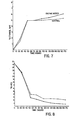
- FIG. 6a there is shown a graphic representation of the rates of thermal inactivation for various temperatures of the alpha-amylase enzyme derived from Schwanniomyces castellii.
- Incubation at 50°C resulted in a significant reduction in activity, 32% after 30 minutes, however, incubation at 40°C had no effect on the activity of this enzyme.
- FIG. 6b there is depicted a graphical representation of the thermal inactivation rate at various temperatures of the amyloglucosidase enzyme derived from Schwanniomyces castellii.
- the amyloglucosidase enzyme showed a higher temperature tolerance than the alpha-amylase enzyme mentioned above. Incubation of the amyloglucosidase enzyme at 50°C for 30 minutes did not shown any decrease in its activity. At 60°C the amyloglucosidase was inactivated in 15 minutes and at 70°C, in 5 minutes.
- the relative hydrolytic rates of the alpha-amylase of the present invention were measured for various carbohydrates as are reproduced below in Table I for comparison purposes.
- maltose was a very good substrate for this enzyme and isomaltose was hydrolyzed almost to the same extent indicating that the enzyme possessed the ability to cleave alpha-1,4 as well as alpha-1,6 glucosidic linkages.
- This debranching activity was confirmed by the ability of the enzyme to hydrolyze pullulan which is a long chain polymer consisting of maltotriosyl units joined by alpha - 1,6-glucosidic linkages.
- the various starches were not utilized as readily as were the maltose or isomaltose substrates and the amyloglucosidase activity against the dextrins was considerably slower than against the larger molecular weight starches.
- the present invention also relates to the production of a novel strain of Schwanniomyces castellii.
- the mutant strain Schwanniomyces castellii NCYC 1461 was produced by treating a known strain, Schwanniomyces castellii ATTC 26077 with known mutagenic agents. The survivors were cultured on potato starch agar in the presence of concentrations of deoxyglucose at least as high as 10- 3 molar. Viable colonies produced on this medium were sampled and were found to be derepressed, mutant producers of the alpha-amylase enzyme. Accordingly, the selection of the mutant strain is particularly desirable in the production of the above-mentioned culture filtrate having amylolytic enzyme activity.
- the present invention also relates to an improved brewing process wherein amylolytic enzymes derived from strains of Schwanniomyces castellii are added to the wort once it has cooled subsequent to kettle boiling. These enzymes may act throughout the fermentation of the wort but, by their very nature, are destroyed or inactivated during the pasteurization of the beer.
- both the above-mentioned alpha-amylase enzyme and the amyloglucosidase enzyme are available throughout a prolonged period of time during which they act on the full range of dextrin material present in the wort.
- This has the incidental advantage of not requiring as high an enzyme concentration as would be required for an enzyme of similar activity when used in the rela-tively shorter mashing process.
- the Schwanniomyces castellii amylolytic enzymes are sensitive to the pasteurization process, they do not survive in the packaged product, a result which is achieved in the absence of commercialized, immobilized enzyme technology.
- the optimum temperature for the combined alpha-amylase and amyloglucosidase enzymes produced by Schwanniomyces castellii strains was about 40°C, a temperature more compatible with those encountered during the fermentation process than that of a similar combined enzyme system derived from Aspergillus species for which the optimum temperature is usually higher.
- the use of these Schwanniomyces castellii enzymes whether as a culture filtrate or alternatively in more concentrated forms, is particularly suited to the production of low carbohydrate beers. Suitable modifications of such process, such as dilution, for example, can be utilized to produce low-calorie beers.
- the enzymes of the present invention are most preferably added to the cooled wort at about the same time that the readily-fermentable carbohydrate sources, originally present in the wort, are exhausted in the course of fermentation. It was found, in this regard, that for a given quantity of those enzymes (or culture filtrate having a specified enzymatic activity) the degree of apparent attenuation of the final product was enhanced by delaying the addition of the enzymes until about forty to fifty hours of fermentation had passed. Thus, when the enzymes were added at the beginning of the fermentation, the increase in the degree of apparent attenuation as compared against a control brew to which no enzyme had been added, was about 5.0%.
- the degree of apparent attenuation was about 6.0% higher than that observed for the control brew.
- the degree of apparent attenuation of the product was increased 8.4% over the above-mentioned control brew.
- the actual time of addition will, of course, depend on the particulars of the recipe being used and the characteristics of the yeast in question. A good estimator of the preferred time for addition of these enzymes, however, is, as indicated above, the concentration of the readily-fermentable carbohydrates present in the wort. Thus, it is preferred that these enzymes be added only after the concentration of such readily-fermentable carbohydrates have been substantially depleted by the yeasts present in the fermenting wort.
- the amount of enzyme to be added in any given instance this will also depend on the particulars of the recipe and the yeast being utilized, and accordingly, that amount is best determined by way of routine experiment. It will be appreciated, however, that there exists a direct co-relation between the amounts of the enzymes added and the resulting degree of apparent attenuation. More specifically, the larger the amount of enzyme that is added, the greater the degree of apparent attenuation that results. It will also be noted that.when 80% of the amount of enzyme required to produce an apparent attenuation of 100% is added to the wort, the resultant degree of apparent attenuation is as high as 99.4%.
- an amount of enzyme ranging between about 60% and 80% of the amount required to produce a 100% apparent attenuation in the wort is preferred.
- the addition of an excess of the enzymes of the present invention to an experiment of brew has been found to result in the production of almost 20% more ethanol in that brew as compared with a control brew.
- Both of the brews in question were fermented with a production lager strain of Saccharomyces uvarrum (carlsbergensis).
- brewers' wort Four litres of brewers' wort were prepared using conventional brewing techniques such that 70% of the extract in the wort was derived from brewers' malt and 30% derived from corn grits. This wort had an original gravity of 14.4° Plato.
- the wort was added into 4 fleakers containing one litre each and pitched with 0.3 g. of pressed yeast of a production lager strain of Saccaromyces uvarrum (carlsbergensis). Fermentation was allowed to proceed at a controlled temperature of 70°C under anaerobic conditions and with mechanical stirring (required due to the small volume of fermentation). After 44 hours of fermentation, 20 mg. of enzymes prepared from Schwanniomyces castellii as indicated previously were added to 2 fleakers and the fermentation proceeded for a total of 168 hours.
- the beer was centrifuged, bottled and some samples were pasteurized. It was determined that in the non-pasteurized samples, both alpha-amylase and glucoamylase activity could be detected, however, no trace of activity could be detected in the pasteurized beer.
- Comparative, pilot-scale fermentations using respectively, a wild type Schwanniomyces castellii strain and Schwanniomyces castellii NCYC 1461 were carried out in a New Brunswick skid-mounted, open-frame fermenter, Model IF-40, having a nominal capacity of 40 litres.
- the production growth medium utilized contained 1% volume by volume high maltose syrup (a corn syrup composed of maltose, 40% to 50%; maltotriose, 15% to 20%; glucose, 10% to 15%; and, dextrin, 25%, obtained from the Zymaize Company Limited, London, Ontario, Canada), 1% volume by volume corn steep liquor and .5% weight by volume casein hydrolysate.
- the growth medium was introduced into the ferment and innoculated in each case to a final concentration of 1% weight by volume of wet yeast.
- the pilot-scale fermentations were carried out at 25°C in the above-described growth medium which was maintained at a pH of 5.5 plus or minus 0.1 under conditions of constant agitation (150 rpm) and aeration.
- strain NCYC 1461 produced 4 times more alpha-amylase activity than did the wild type strain and the alpha-amylase activity of the NCYC 1461 strain remained stable from 36 hours to 72 hours after the commencement of the fermentation.
- the glucoamylase activity of NCYC 1461 stain was almost twice that produced by the wild type strain and, moreover, the activity of the glucoamylase produced by strain NCYC 1461, like that of the alpha-amylase, remained stable from 36 to 72 hours following commencement pf the fermentation. Biomass determinations carried out at the completion of the fermentation (ie. 72 hours) indicated that the NCYC 1461 strain had produced 34 grams of biomass per litre of nutrient medium and that the wild type strain had produced only 26 grams of biomass per litre of nutrient medium.
- the alpha-amylase activity and glucoamylase activity of the NCYC 1461 and the wild type strain over the period of the above-described fermentation are summarized in Figure 9 of the drawings.
Landscapes
- Life Sciences & Earth Sciences (AREA)
- Chemical & Material Sciences (AREA)
- Engineering & Computer Science (AREA)
- Organic Chemistry (AREA)
- Health & Medical Sciences (AREA)
- Genetics & Genomics (AREA)
- Zoology (AREA)
- Wood Science & Technology (AREA)
- Bioinformatics & Cheminformatics (AREA)
- Biochemistry (AREA)
- General Health & Medical Sciences (AREA)
- General Engineering & Computer Science (AREA)
- Microbiology (AREA)
- Food Science & Technology (AREA)
- Biotechnology (AREA)
- Biomedical Technology (AREA)
- Medicinal Chemistry (AREA)
- Molecular Biology (AREA)
- Mycology (AREA)
- Botany (AREA)
- Tropical Medicine & Parasitology (AREA)
- Virology (AREA)
- Micro-Organisms Or Cultivation Processes Thereof (AREA)
- Enzymes And Modification Thereof (AREA)
- Distillation Of Fermentation Liquor, Processing Of Alcohols, Vinegar And Beer (AREA)
- Soy Sauces And Products Related Thereto (AREA)
- Alcoholic Beverages (AREA)
Priority Applications (1)
| Application Number | Priority Date | Filing Date | Title |
|---|---|---|---|
| AT84105216T ATE50285T1 (de) | 1983-05-11 | 1984-05-08 | Schwanniomyces castellii-staemme und brauverfahren. |
Applications Claiming Priority (2)
| Application Number | Priority Date | Filing Date | Title |
|---|---|---|---|
| US49352683A | 1983-05-11 | 1983-05-11 | |
| US493526 | 1983-05-11 |
Publications (3)
| Publication Number | Publication Date |
|---|---|
| EP0125615A2 true EP0125615A2 (de) | 1984-11-21 |
| EP0125615A3 EP0125615A3 (en) | 1986-08-27 |
| EP0125615B1 EP0125615B1 (de) | 1990-02-07 |
Family
ID=23960603
Family Applications (1)
| Application Number | Title | Priority Date | Filing Date |
|---|---|---|---|
| EP84105216A Expired - Lifetime EP0125615B1 (de) | 1983-05-11 | 1984-05-08 | Schwanniomyces Castellii-Stämme und Brauverfahren |
Country Status (6)
| Country | Link |
|---|---|
| EP (1) | EP0125615B1 (de) |
| JP (3) | JPH074213B2 (de) |
| AT (1) | ATE50285T1 (de) |
| AU (1) | AU581171B2 (de) |
| CA (1) | CA1203765A (de) |
| DE (1) | DE3481319D1 (de) |
Cited By (6)
| Publication number | Priority date | Publication date | Assignee | Title |
|---|---|---|---|---|
| FR2586701A1 (fr) * | 1985-08-27 | 1987-03-06 | Pierre Lerminet | Procede pour l'obtention d'ethanol a partir d'amidon ou de matieres premieres contenant de l'amidon et moyens en vue de la mise en oeuvre de ce procede |
| US4666718A (en) * | 1984-08-15 | 1987-05-19 | Miller Brewing Company | Preparation of low calorie beer |
| EP0215306A3 (en) * | 1985-08-22 | 1987-05-27 | Rohm Gmbh | Beer-production process |
| EP0257115A1 (de) * | 1986-08-21 | 1988-03-02 | Heineken Technisch Beheer B.V. | Durch rekombinante DNS-Technologie konstruierte amylolytische enzymproduzierende Mikroorganismen und ihre Verwendung in Gärungsverfahren |
| EP0260404A3 (en) * | 1986-08-21 | 1988-07-06 | Heineken Technisch Beheer B.V. | Amylolytic enzymes producing microorganisms constructed by recombinant dna technology and their use for fermentation processes |
| WO2021038048A1 (en) * | 2019-08-30 | 2021-03-04 | Carlsberg A/S | Yeast for preparing beverages without phenolic off-flavors |
Families Citing this family (3)
| Publication number | Priority date | Publication date | Assignee | Title |
|---|---|---|---|---|
| CA1315340C (en) * | 1987-05-06 | 1993-03-30 | David Wynford Faulkner | Control of optical systems |
| JP4628552B2 (ja) * | 2001-01-05 | 2011-02-09 | 独立行政法人酒類総合研究所 | 発酵麦芽飲料の製造方法 |
| CN105264060A (zh) * | 2013-06-03 | 2016-01-20 | 朝日啤酒株式会社 | 发酵麦芽饮料及其制造方法 |
Family Cites Families (1)
| Publication number | Priority date | Publication date | Assignee | Title |
|---|---|---|---|---|
| GB1421955A (en) * | 1973-05-24 | 1976-01-21 | Abm Ind Products Ltd | Beer production |
-
1984
- 1984-04-26 CA CA000452919A patent/CA1203765A/en not_active Expired
- 1984-05-08 DE DE8484105216T patent/DE3481319D1/de not_active Expired - Fee Related
- 1984-05-08 EP EP84105216A patent/EP0125615B1/de not_active Expired - Lifetime
- 1984-05-08 AT AT84105216T patent/ATE50285T1/de active
- 1984-05-11 JP JP59095471A patent/JPH074213B2/ja not_active Expired - Lifetime
- 1984-05-14 AU AU27993/84A patent/AU581171B2/en not_active Ceased
-
1993
- 1993-09-29 JP JP5242637A patent/JPH07112427B2/ja not_active Expired - Lifetime
-
1995
- 1995-04-17 JP JP7090704A patent/JP2506569B2/ja not_active Expired - Lifetime
Cited By (6)
| Publication number | Priority date | Publication date | Assignee | Title |
|---|---|---|---|---|
| US4666718A (en) * | 1984-08-15 | 1987-05-19 | Miller Brewing Company | Preparation of low calorie beer |
| EP0215306A3 (en) * | 1985-08-22 | 1987-05-27 | Rohm Gmbh | Beer-production process |
| FR2586701A1 (fr) * | 1985-08-27 | 1987-03-06 | Pierre Lerminet | Procede pour l'obtention d'ethanol a partir d'amidon ou de matieres premieres contenant de l'amidon et moyens en vue de la mise en oeuvre de ce procede |
| EP0257115A1 (de) * | 1986-08-21 | 1988-03-02 | Heineken Technisch Beheer B.V. | Durch rekombinante DNS-Technologie konstruierte amylolytische enzymproduzierende Mikroorganismen und ihre Verwendung in Gärungsverfahren |
| EP0260404A3 (en) * | 1986-08-21 | 1988-07-06 | Heineken Technisch Beheer B.V. | Amylolytic enzymes producing microorganisms constructed by recombinant dna technology and their use for fermentation processes |
| WO2021038048A1 (en) * | 2019-08-30 | 2021-03-04 | Carlsberg A/S | Yeast for preparing beverages without phenolic off-flavors |
Also Published As
| Publication number | Publication date |
|---|---|
| DE3481319D1 (de) | 1990-03-15 |
| EP0125615B1 (de) | 1990-02-07 |
| AU2799384A (en) | 1984-11-15 |
| JPH06189735A (ja) | 1994-07-12 |
| JP2506569B2 (ja) | 1996-06-12 |
| ATE50285T1 (de) | 1990-02-15 |
| JPH07265060A (ja) | 1995-10-17 |
| CA1203765A (en) | 1986-04-29 |
| EP0125615A3 (en) | 1986-08-27 |
| JPH074213B2 (ja) | 1995-01-25 |
| AU581171B2 (en) | 1989-02-16 |
| JPS6037971A (ja) | 1985-02-27 |
| JPH07112427B2 (ja) | 1995-12-06 |
Similar Documents
| Publication | Publication Date | Title |
|---|---|---|
| US4514496A (en) | Process for producing alcohol by fermentation without cooking | |
| EP0171218B1 (de) | Enzymatische Hydrolyse von körniger Stärke direkt bis zu Glukose | |
| GB1503760A (en) | Method for manufacturing alcohol or alcoholic beverage | |
| EP0135138A2 (de) | Thermostabile Glukoamylase und Verfahren zu deren Herstellung | |
| Van Der Walt | Kaffircorn malting and brewing studies. II.—Studies on the microbiology of Kaffir beer | |
| EP0125615B1 (de) | Schwanniomyces Castellii-Stämme und Brauverfahren | |
| EP0131253A1 (de) | Thermostabile, saure alpha-Amylase und Verfahren zu ihrer Herstellung | |
| EP0184019B1 (de) | Thermostabile alpha-Amylase produzierende thermostabile anaerobe Bakterie, thermostabile alpha-Amylase und Verfahren zur deren Herstellung | |
| US5188956A (en) | Thermostable amylase | |
| US4211842A (en) | Starch-degrading benzymes derived from Clacosporium resinae | |
| US4528198A (en) | Preparation of low calorie beer with malt extract free of yeast lethal factors | |
| US4676986A (en) | Schwanniomyces castellii strains and brewing process | |
| US3868307A (en) | Production of distillers yeast | |
| EP0219673B1 (de) | Verfahren zur Herstellung einer thermostabilen Transglucosidase | |
| Stewart et al. | Biochemistry and genetics of carbohydrate utilization by industrial yeast strains | |
| EP0860500B1 (de) | Gereinigte säurestabile Alpha-Amylase von schimmeliger Herkunft | |
| US3418211A (en) | Process of producing glucamylase and an alcohol product | |
| CA1108077A (en) | High potency glucamylase and alapha amylase enzyme system by cultivation of aspergillus niger | |
| Sills et al. | Production of amylolytic enzymes by yeasts and their utilization in brewing | |
| Stewart et al. | The selection and modification of brewer's yeast strains | |
| AU667100B2 (en) | Method of sake making from non-cooked rice grain | |
| AU620412B2 (en) | Thermostable amylase and use thereof | |
| EP0528612A2 (de) | Amylase, die rohe Stärke abbauen kann | |
| JP2790320B2 (ja) | 耐熱性アミラーゼ並びにその製造及び使用方法 | |
| Stewart | New developments in ethanol fermentation |
Legal Events
| Date | Code | Title | Description |
|---|---|---|---|
| PUAI | Public reference made under article 153(3) epc to a published international application that has entered the european phase |
Free format text: ORIGINAL CODE: 0009012 |
|
| AK | Designated contracting states |
Designated state(s): AT BE CH DE FR GB IT LI LU NL SE |
|
| PUAL | Search report despatched |
Free format text: ORIGINAL CODE: 0009013 |
|
| RHK1 | Main classification (correction) |
Ipc: C12N 9/30 |
|
| AK | Designated contracting states |
Kind code of ref document: A3 Designated state(s): AT BE CH DE FR GB IT LI LU NL SE |
|
| 17P | Request for examination filed |
Effective date: 19860930 |
|
| 17Q | First examination report despatched |
Effective date: 19880328 |
|
| GRAA | (expected) grant |
Free format text: ORIGINAL CODE: 0009210 |
|
| AK | Designated contracting states |
Kind code of ref document: B1 Designated state(s): AT BE CH DE FR GB IT LI LU NL SE |
|
| REF | Corresponds to: |
Ref document number: 50285 Country of ref document: AT Date of ref document: 19900215 Kind code of ref document: T |
|
| ITF | It: translation for a ep patent filed | ||
| REF | Corresponds to: |
Ref document number: 3481319 Country of ref document: DE Date of ref document: 19900315 |
|
| ET | Fr: translation filed | ||
| PLBE | No opposition filed within time limit |
Free format text: ORIGINAL CODE: 0009261 |
|
| STAA | Information on the status of an ep patent application or granted ep patent |
Free format text: STATUS: NO OPPOSITION FILED WITHIN TIME LIMIT |
|
| 26N | No opposition filed | ||
| ITTA | It: last paid annual fee | ||
| EPTA | Lu: last paid annual fee | ||
| EAL | Se: european patent in force in sweden |
Ref document number: 84105216.0 |
|
| PGFP | Annual fee paid to national office [announced via postgrant information from national office to epo] |
Ref country code: LU Payment date: 19950401 Year of fee payment: 12 |
|
| PGFP | Annual fee paid to national office [announced via postgrant information from national office to epo] |
Ref country code: GB Payment date: 19950427 Year of fee payment: 12 |
|
| PGFP | Annual fee paid to national office [announced via postgrant information from national office to epo] |
Ref country code: DE Payment date: 19950509 Year of fee payment: 12 |
|
| PGFP | Annual fee paid to national office [announced via postgrant information from national office to epo] |
Ref country code: SE Payment date: 19950522 Year of fee payment: 12 |
|
| PGFP | Annual fee paid to national office [announced via postgrant information from national office to epo] |
Ref country code: CH Payment date: 19950526 Year of fee payment: 12 |
|
| PGFP | Annual fee paid to national office [announced via postgrant information from national office to epo] |
Ref country code: AT Payment date: 19950530 Year of fee payment: 12 |
|
| PGFP | Annual fee paid to national office [announced via postgrant information from national office to epo] |
Ref country code: NL Payment date: 19950531 Year of fee payment: 12 |
|
| PG25 | Lapsed in a contracting state [announced via postgrant information from national office to epo] |
Ref country code: LU Free format text: LAPSE BECAUSE OF NON-PAYMENT OF DUE FEES Effective date: 19960508 Ref country code: GB Effective date: 19960508 Ref country code: AT Effective date: 19960508 |
|
| PG25 | Lapsed in a contracting state [announced via postgrant information from national office to epo] |
Ref country code: SE Effective date: 19960509 |
|
| PG25 | Lapsed in a contracting state [announced via postgrant information from national office to epo] |
Ref country code: LI Effective date: 19960531 Ref country code: CH Effective date: 19960531 |
|
| PGFP | Annual fee paid to national office [announced via postgrant information from national office to epo] |
Ref country code: FR Payment date: 19960531 Year of fee payment: 13 |
|
| PGFP | Annual fee paid to national office [announced via postgrant information from national office to epo] |
Ref country code: BE Payment date: 19960625 Year of fee payment: 13 |
|
| PG25 | Lapsed in a contracting state [announced via postgrant information from national office to epo] |
Ref country code: NL Effective date: 19961201 |
|
| GBPC | Gb: european patent ceased through non-payment of renewal fee |
Effective date: 19960508 |
|
| REG | Reference to a national code |
Ref country code: CH Ref legal event code: PL |
|
| PG25 | Lapsed in a contracting state [announced via postgrant information from national office to epo] |
Ref country code: DE Effective date: 19970201 |
|
| EUG | Se: european patent has lapsed |
Ref document number: 84105216.0 |
|
| NLV4 | Nl: lapsed or anulled due to non-payment of the annual fee |
Effective date: 19961201 |
|
| PG25 | Lapsed in a contracting state [announced via postgrant information from national office to epo] |
Ref country code: BE Effective date: 19970531 |
|
| BERE | Be: lapsed |
Owner name: LABATT BREWING CY LTD Effective date: 19970531 |
|
| PG25 | Lapsed in a contracting state [announced via postgrant information from national office to epo] |
Ref country code: FR Free format text: LAPSE BECAUSE OF NON-PAYMENT OF DUE FEES Effective date: 19980130 |
|
| REG | Reference to a national code |
Ref country code: FR Ref legal event code: ST |