EP0126145B1 - Erhöhung der tetracyclinwirkung - Google Patents
Erhöhung der tetracyclinwirkung Download PDFInfo
- Publication number
- EP0126145B1 EP0126145B1 EP83903900A EP83903900A EP0126145B1 EP 0126145 B1 EP0126145 B1 EP 0126145B1 EP 83903900 A EP83903900 A EP 83903900A EP 83903900 A EP83903900 A EP 83903900A EP 0126145 B1 EP0126145 B1 EP 0126145B1
- Authority
- EP
- European Patent Office
- Prior art keywords
- tetracycline
- blocking agent
- resistant
- pharmaceutical preparation
- efflux
- Prior art date
- Legal status (The legal status is an assumption and is not a legal conclusion. Google has not performed a legal analysis and makes no representation as to the accuracy of the status listed.)
- Expired - Lifetime
Links
- 239000004098 Tetracycline Substances 0.000 title claims abstract description 179
- 235000019364 tetracycline Nutrition 0.000 title claims abstract description 178
- 150000003522 tetracyclines Chemical class 0.000 title claims abstract description 177
- 229960002180 tetracycline Drugs 0.000 title claims abstract description 160
- 229930101283 tetracycline Natural products 0.000 title claims abstract description 159
- 239000002981 blocking agent Substances 0.000 claims abstract description 45
- 238000000034 method Methods 0.000 claims abstract description 22
- 230000001580 bacterial effect Effects 0.000 claims abstract description 6
- FFTVPQUHLQBXQZ-KVUCHLLUSA-N (4s,4as,5ar,12ar)-4,7-bis(dimethylamino)-1,10,11,12a-tetrahydroxy-3,12-dioxo-4a,5,5a,6-tetrahydro-4h-tetracene-2-carboxamide Chemical compound C1C2=C(N(C)C)C=CC(O)=C2C(O)=C2[C@@H]1C[C@H]1[C@H](N(C)C)C(=O)C(C(N)=O)=C(O)[C@@]1(O)C2=O FFTVPQUHLQBXQZ-KVUCHLLUSA-N 0.000 claims description 37
- 229960004023 minocycline Drugs 0.000 claims description 37
- 230000003115 biocidal effect Effects 0.000 claims description 30
- 241000894006 Bacteria Species 0.000 claims description 23
- 229910052739 hydrogen Inorganic materials 0.000 claims description 15
- 239000001257 hydrogen Substances 0.000 claims description 15
- 150000002431 hydrogen Chemical group 0.000 claims description 11
- 239000000825 pharmaceutical preparation Substances 0.000 claims description 9
- 150000001875 compounds Chemical class 0.000 claims description 7
- 125000002887 hydroxy group Chemical group [H]O* 0.000 claims description 6
- 241000282414 Homo sapiens Species 0.000 claims description 5
- 239000003795 chemical substances by application Substances 0.000 claims description 5
- 125000000325 methylidene group Chemical group [H]C([H])=* 0.000 claims description 5
- -1 B-chelocardin Chemical compound 0.000 claims description 4
- 241001465754 Metazoa Species 0.000 claims description 4
- 229910052736 halogen Inorganic materials 0.000 claims description 4
- 150000002367 halogens Chemical group 0.000 claims description 4
- XIYOPDCBBDCGOE-IWVLMIASSA-N (4s,4ar,5s,5ar,12ar)-4-(dimethylamino)-1,5,10,11,12a-pentahydroxy-6-methylidene-3,12-dioxo-4,4a,5,5a-tetrahydrotetracene-2-carboxamide Chemical compound C=C1C2=CC=CC(O)=C2C(O)=C2[C@@H]1[C@H](O)[C@H]1[C@H](N(C)C)C(=O)C(C(N)=O)=C(O)[C@@]1(O)C2=O XIYOPDCBBDCGOE-IWVLMIASSA-N 0.000 claims description 3
- 239000003937 drug carrier Substances 0.000 claims description 3
- 125000004435 hydrogen atom Chemical group [H]* 0.000 claims description 3
- 229960004196 lymecycline Drugs 0.000 claims description 3
- AHEVKYYGXVEWNO-UEPZRUIBSA-N lymecycline Chemical compound C1=CC=C2[C@](O)(C)[C@H]3C[C@H]4[C@H](N(C)C)C(O)=C(C(=O)NCNCCCC[C@H](N)C(O)=O)C(=O)[C@@]4(O)C(O)=C3C(=O)C2=C1O AHEVKYYGXVEWNO-UEPZRUIBSA-N 0.000 claims description 3
- 229940042016 methacycline Drugs 0.000 claims description 3
- 125000002496 methyl group Chemical group [H]C([H])([H])* 0.000 claims description 3
- 125000002924 primary amino group Chemical group [H]N([H])* 0.000 claims description 3
- 230000008261 resistance mechanism Effects 0.000 claims description 3
- 229960005009 rolitetracycline Drugs 0.000 claims description 3
- HMEYVGGHISAPJR-IAHYZSEUSA-N rolitetracycline Chemical compound O=C([C@@]1(O)C(O)=C2[C@@H]([C@](C3=CC=CC(O)=C3C2=O)(C)O)C[C@H]1[C@@H](C=1O)N(C)C)C=1C(=O)NCN1CCCC1 HMEYVGGHISAPJR-IAHYZSEUSA-N 0.000 claims description 3
- 238000002560 therapeutic procedure Methods 0.000 claims description 3
- XXYRJHQJYSUIJA-YABKDXSZSA-N (2s,5r,6r)-6-[[(2r)-2-[[[(4s,4as,5as,6s,12ar)-4-(dimethylamino)-1,6,10,11,12a-pentahydroxy-6-methyl-3,12-dioxo-4,4a,5,5a-tetrahydrotetracene-2-carbonyl]amino]methylamino]-2-phenylacetyl]amino]-3,3-dimethyl-7-oxo-4-thia-1-azabicyclo[3.2.0]heptane-2-carboxy Chemical compound C1([C@H](C(=O)N[C@@H]2C(N3[C@H](C(C)(C)S[C@@H]32)C(O)=O)=O)NCNC(=O)C2=C(O)[C@@]3(O)C(=O)C=4[C@@H]([C@](C5=CC=CC(O)=C5C=4O)(C)O)C[C@H]3[C@@H](C2=O)N(C)C)=CC=CC=C1 XXYRJHQJYSUIJA-YABKDXSZSA-N 0.000 claims description 2
- SGKRLCUYIXIAHR-AKNGSSGZSA-N (4s,4ar,5s,5ar,6r,12ar)-4-(dimethylamino)-1,5,10,11,12a-pentahydroxy-6-methyl-3,12-dioxo-4a,5,5a,6-tetrahydro-4h-tetracene-2-carboxamide Chemical compound C1=CC=C2[C@H](C)[C@@H]([C@H](O)[C@@H]3[C@](C(O)=C(C(N)=O)C(=O)[C@H]3N(C)C)(O)C3=O)C3=C(O)C2=C1O SGKRLCUYIXIAHR-AKNGSSGZSA-N 0.000 claims description 2
- MTCQOMXDZUULRV-ADOAZJKMSA-N (4s,4as,5ar,12ar)-4-(dimethylamino)-1,10,11,12a-tetrahydroxy-3,12-dioxo-4a,5,5a,6-tetrahydro-4h-tetracene-2-carboxamide Chemical compound C1C2=CC=CC(O)=C2C(O)=C2[C@@H]1C[C@H]1[C@H](N(C)C)C(=O)C(C(N)=O)=C(O)[C@@]1(O)C2=O MTCQOMXDZUULRV-ADOAZJKMSA-N 0.000 claims description 2
- 208000035143 Bacterial infection Diseases 0.000 claims description 2
- BZUKDLNEDCDORL-ULRSWZSCSA-N C1=CC=C2[C@](O)(C)[C@H]3C[C@H]4[C@H](N(C)C)C(O)=C(C(=O)NCN(C)CCN(C)CNC(=O)C=5C([C@@]6(O)C(O)=C7[C@@H]([C@](C8=CC=CC(O)=C8C7=O)(C)O)C[C@H]6[C@@H](C=5O)N(C)C)=O)C(=O)[C@@]4(O)C(O)=C3C(=O)C2=C1O Chemical compound C1=CC=C2[C@](O)(C)[C@H]3C[C@H]4[C@H](N(C)C)C(O)=C(C(=O)NCN(C)CCN(C)CNC(=O)C=5C([C@@]6(O)C(O)=C7[C@@H]([C@](C8=CC=CC(O)=C8C7=O)(C)O)C[C@H]6[C@@H](C=5O)N(C)C)=O)C(=O)[C@@]4(O)C(O)=C3C(=O)C2=C1O BZUKDLNEDCDORL-ULRSWZSCSA-N 0.000 claims description 2
- 208000022362 bacterial infectious disease Diseases 0.000 claims description 2
- 229960003722 doxycycline Drugs 0.000 claims description 2
- 229950004798 etamocycline Drugs 0.000 claims description 2
- 229960003187 penimepicycline Drugs 0.000 claims description 2
- MEGKRPMNPGTIIG-VNYBMUHKSA-N penimepicycline Chemical compound N([C@H]1[C@H]2SC([C@@H](N2C1=O)C(O)=O)(C)C)C(=O)COC1=CC=CC=C1.O=C([C@@]1(O)C(O)=C2[C@@H]([C@](C3=CC=CC(O)=C3C2=O)(C)O)C[C@H]1[C@@H](C=1O)N(C)C)C=1C(=O)NCN1CCN(CCO)CC1 MEGKRPMNPGTIIG-VNYBMUHKSA-N 0.000 claims description 2
- 229950005777 penimocycline Drugs 0.000 claims description 2
- 229950001465 pipacycline Drugs 0.000 claims description 2
- XATZHCXBMKRRDO-REHNUXHNSA-N pipacycline Chemical compound O=C([C@@]1(O)C(O)=C2[C@@H]([C@](C3=CC=CC(O)=C3C2=O)(C)O)C[C@H]1[C@@H](C=1O)N(C)C)C=1C(=O)NCN1CCN(CCO)CC1 XATZHCXBMKRRDO-REHNUXHNSA-N 0.000 claims description 2
- 229950000614 sancycline Drugs 0.000 claims description 2
- 239000013612 plasmid Substances 0.000 abstract description 19
- 239000003242 anti bacterial agent Substances 0.000 abstract description 16
- 229940088710 antibiotic agent Drugs 0.000 abstract description 16
- 230000001404 mediated effect Effects 0.000 abstract description 11
- 230000001965 increasing effect Effects 0.000 abstract description 7
- 230000002401 inhibitory effect Effects 0.000 abstract description 5
- 206010034133 Pathogen resistance Diseases 0.000 abstract description 2
- 230000035945 sensitivity Effects 0.000 abstract description 2
- 229940040944 tetracyclines Drugs 0.000 description 19
- 229940079593 drug Drugs 0.000 description 15
- 239000003814 drug Substances 0.000 description 15
- 239000000203 mixture Substances 0.000 description 14
- 238000009472 formulation Methods 0.000 description 13
- 244000005700 microbiome Species 0.000 description 12
- 239000004480 active ingredient Substances 0.000 description 11
- 108090000623 proteins and genes Proteins 0.000 description 9
- 238000009825 accumulation Methods 0.000 description 7
- 230000032258 transport Effects 0.000 description 7
- 241000588724 Escherichia coli Species 0.000 description 6
- 230000000903 blocking effect Effects 0.000 description 6
- 239000004615 ingredient Substances 0.000 description 6
- 239000007788 liquid Substances 0.000 description 6
- 102000004169 proteins and genes Human genes 0.000 description 6
- 239000004599 antimicrobial Substances 0.000 description 5
- 239000003112 inhibitor Substances 0.000 description 5
- 239000000243 solution Substances 0.000 description 5
- 239000011550 stock solution Substances 0.000 description 5
- 230000009471 action Effects 0.000 description 4
- 239000000969 carrier Substances 0.000 description 4
- 238000002512 chemotherapy Methods 0.000 description 4
- 230000001419 dependent effect Effects 0.000 description 4
- 108020001580 protein domains Proteins 0.000 description 4
- 230000002829 reductive effect Effects 0.000 description 4
- 230000014616 translation Effects 0.000 description 4
- 102000014914 Carrier Proteins Human genes 0.000 description 3
- 108010078791 Carrier Proteins Proteins 0.000 description 3
- PEDCQBHIVMGVHV-UHFFFAOYSA-N Glycerine Chemical compound OCC(O)CO PEDCQBHIVMGVHV-UHFFFAOYSA-N 0.000 description 3
- 201000010099 disease Diseases 0.000 description 3
- 208000037265 diseases, disorders, signs and symptoms Diseases 0.000 description 3
- 239000002552 dosage form Substances 0.000 description 3
- 238000002474 experimental method Methods 0.000 description 3
- 230000005764 inhibitory process Effects 0.000 description 3
- 239000000314 lubricant Substances 0.000 description 3
- 230000000813 microbial effect Effects 0.000 description 3
- 238000001243 protein synthesis Methods 0.000 description 3
- 229920006395 saturated elastomer Polymers 0.000 description 3
- 239000000126 substance Substances 0.000 description 3
- 239000003826 tablet Substances 0.000 description 3
- 241000196324 Embryophyta Species 0.000 description 2
- LFQSCWFLJHTTHZ-UHFFFAOYSA-N Ethanol Chemical compound CCO LFQSCWFLJHTTHZ-UHFFFAOYSA-N 0.000 description 2
- 108010052285 Membrane Proteins Proteins 0.000 description 2
- 101710120203 Tetracycline resistance determinant Proteins 0.000 description 2
- 239000007864 aqueous solution Substances 0.000 description 2
- 230000003385 bacteriostatic effect Effects 0.000 description 2
- 230000008901 benefit Effects 0.000 description 2
- 239000011230 binding agent Substances 0.000 description 2
- 239000008280 blood Substances 0.000 description 2
- 210000004369 blood Anatomy 0.000 description 2
- 230000037396 body weight Effects 0.000 description 2
- 230000001413 cellular effect Effects 0.000 description 2
- CYDMQBQPVICBEU-UHFFFAOYSA-N chlorotetracycline Natural products C1=CC(Cl)=C2C(O)(C)C3CC4C(N(C)C)C(O)=C(C(N)=O)C(=O)C4(O)C(O)=C3C(=O)C2=C1O CYDMQBQPVICBEU-UHFFFAOYSA-N 0.000 description 2
- CYDMQBQPVICBEU-XRNKAMNCSA-N chlortetracycline Chemical compound C1=CC(Cl)=C2[C@](O)(C)[C@H]3C[C@H]4[C@H](N(C)C)C(O)=C(C(N)=O)C(=O)[C@@]4(O)C(O)=C3C(=O)C2=C1O CYDMQBQPVICBEU-XRNKAMNCSA-N 0.000 description 2
- 235000019365 chlortetracycline Nutrition 0.000 description 2
- 230000007423 decrease Effects 0.000 description 2
- 238000009792 diffusion process Methods 0.000 description 2
- 239000003085 diluting agent Substances 0.000 description 2
- 239000000839 emulsion Substances 0.000 description 2
- 230000002708 enhancing effect Effects 0.000 description 2
- 239000008187 granular material Substances 0.000 description 2
- 230000002779 inactivation Effects 0.000 description 2
- 230000001939 inductive effect Effects 0.000 description 2
- 230000004941 influx Effects 0.000 description 2
- 238000007918 intramuscular administration Methods 0.000 description 2
- 238000001990 intravenous administration Methods 0.000 description 2
- 230000007246 mechanism Effects 0.000 description 2
- 239000012528 membrane Substances 0.000 description 2
- 238000000465 moulding Methods 0.000 description 2
- 239000008194 pharmaceutical composition Substances 0.000 description 2
- 239000000843 powder Substances 0.000 description 2
- 238000009877 rendering Methods 0.000 description 2
- 238000011160 research Methods 0.000 description 2
- 230000000717 retained effect Effects 0.000 description 2
- 150000003839 salts Chemical group 0.000 description 2
- 238000007920 subcutaneous administration Methods 0.000 description 2
- 239000004094 surface-active agent Substances 0.000 description 2
- 238000012360 testing method Methods 0.000 description 2
- XLYOFNOQVPJJNP-UHFFFAOYSA-N water Substances O XLYOFNOQVPJJNP-UHFFFAOYSA-N 0.000 description 2
- RTXXZBOFRSQDMC-FUUYDGDCSA-N (4s,4as,5as,6s,12ar)-4-(dimethylamino)-1,6,10,11,12a-pentahydroxy-6-methyl-3,12-dioxo-n-[[[(2r,3r,4r,5s,6r)-2,4,5-trihydroxy-6-(hydroxymethyl)oxan-3-yl]amino]methyl]-4,4a,5,5a-tetrahydrotetracene-2-carboxamide Chemical compound OC([C@@]1(O)C(=O)C=2[C@@H]([C@](C3=CC=CC(O)=C3C=2O)(C)O)C[C@H]1[C@@H](C1=O)N(C)C)=C1C(=O)NCN[C@H]1[C@H](O)O[C@H](CO)[C@@H](O)[C@@H]1O RTXXZBOFRSQDMC-FUUYDGDCSA-N 0.000 description 1
- GUXHBMASAHGULD-SEYHBJAFSA-N (4s,4as,5as,6s,12ar)-7-chloro-4-(dimethylamino)-1,6,10,11,12a-pentahydroxy-3,12-dioxo-4a,5,5a,6-tetrahydro-4h-tetracene-2-carboxamide Chemical compound C1([C@H]2O)=C(Cl)C=CC(O)=C1C(O)=C1[C@@H]2C[C@H]2[C@H](N(C)C)C(=O)C(C(N)=O)=C(O)[C@@]2(O)C1=O GUXHBMASAHGULD-SEYHBJAFSA-N 0.000 description 1
- FAMUIRDLAWWMCQ-AQFAATAFSA-N (4s,4as,5as,6s,12ar)-n-[[4-[n-(diaminomethylidene)carbamimidoyl]piperazin-1-yl]methyl]-4-(dimethylamino)-1,6,10,11,12a-pentahydroxy-6-methyl-3,12-dioxo-4,4a,5,5a-tetrahydrotetracene-2-carboxamide Chemical compound OC([C@@]1(O)C(=O)C=2[C@@H]([C@](C3=CC=CC(O)=C3C=2O)(C)O)C[C@H]1[C@@H](C1=O)N(C)C)=C1C(=O)NCN1CCN(C(=N)N=C(N)N)CC1 FAMUIRDLAWWMCQ-AQFAATAFSA-N 0.000 description 1
- UFBJCMHMOXMLKC-UHFFFAOYSA-N 2,4-dinitrophenol Chemical compound OC1=CC=C([N+]([O-])=O)C=C1[N+]([O-])=O UFBJCMHMOXMLKC-UHFFFAOYSA-N 0.000 description 1
- WTJXVDPDEQKTCV-UHFFFAOYSA-N 4,7-bis(dimethylamino)-1,10,11,12a-tetrahydroxy-3,12-dioxo-4a,5,5a,6-tetrahydro-4h-tetracene-2-carboxamide;hydron;chloride Chemical compound Cl.C1C2=C(N(C)C)C=CC(O)=C2C(O)=C2C1CC1C(N(C)C)C(=O)C(C(N)=O)=C(O)C1(O)C2=O WTJXVDPDEQKTCV-UHFFFAOYSA-N 0.000 description 1
- 241001133760 Acoelorraphe Species 0.000 description 1
- ZAMOUSCENKQFHK-UHFFFAOYSA-N Chlorine atom Chemical compound [Cl] ZAMOUSCENKQFHK-UHFFFAOYSA-N 0.000 description 1
- 239000004099 Chlortetracycline Substances 0.000 description 1
- XFXPMWWXUTWYJX-UHFFFAOYSA-N Cyanide Chemical compound N#[C-] XFXPMWWXUTWYJX-UHFFFAOYSA-N 0.000 description 1
- FMTDIUIBLCQGJB-UHFFFAOYSA-N Demethylchlortetracyclin Natural products C1C2C(O)C3=C(Cl)C=CC(O)=C3C(=O)C2=C(O)C2(O)C1C(N(C)C)C(O)=C(C(N)=O)C2=O FMTDIUIBLCQGJB-UHFFFAOYSA-N 0.000 description 1
- 241000282412 Homo Species 0.000 description 1
- UFHFLCQGNIYNRP-UHFFFAOYSA-N Hydrogen Chemical compound [H][H] UFHFLCQGNIYNRP-UHFFFAOYSA-N 0.000 description 1
- 241000124008 Mammalia Species 0.000 description 1
- 102000018697 Membrane Proteins Human genes 0.000 description 1
- 239000004100 Oxytetracycline Substances 0.000 description 1
- 229910019142 PO4 Inorganic materials 0.000 description 1
- 229930182555 Penicillin Natural products 0.000 description 1
- JGSARLDLIJGVTE-MBNYWOFBSA-N Penicillin G Chemical compound N([C@H]1[C@H]2SC([C@@H](N2C1=O)C(O)=O)(C)C)C(=O)CC1=CC=CC=C1 JGSARLDLIJGVTE-MBNYWOFBSA-N 0.000 description 1
- 206010041925 Staphylococcal infections Diseases 0.000 description 1
- 241001505901 Streptococcus sp. 'group A' Species 0.000 description 1
- 238000002835 absorbance Methods 0.000 description 1
- 230000002411 adverse Effects 0.000 description 1
- 125000000217 alkyl group Chemical group 0.000 description 1
- 125000002947 alkylene group Chemical group 0.000 description 1
- 230000000845 anti-microbial effect Effects 0.000 description 1
- 239000003963 antioxidant agent Substances 0.000 description 1
- 235000006708 antioxidants Nutrition 0.000 description 1
- 229950008405 apicycline Drugs 0.000 description 1
- HRWVXKVRSNICJQ-GMJIGYHYSA-N apicycline Chemical compound O=C([C@@]1(O)C(O)=C2[C@@H]([C@](C3=CC=CC(O)=C3C2=O)(C)O)C[C@H]1[C@@H](C=1O)N(C)C)C=1C(=O)NC(C(O)=O)N1CCN(CCO)CC1 HRWVXKVRSNICJQ-GMJIGYHYSA-N 0.000 description 1
- 230000015572 biosynthetic process Effects 0.000 description 1
- 210000001124 body fluid Anatomy 0.000 description 1
- 239000000872 buffer Substances 0.000 description 1
- 239000002775 capsule Substances 0.000 description 1
- 230000015556 catabolic process Effects 0.000 description 1
- 230000008859 change Effects 0.000 description 1
- 238000006243 chemical reaction Methods 0.000 description 1
- 229910052801 chlorine Inorganic materials 0.000 description 1
- 239000000460 chlorine Substances 0.000 description 1
- 229960004475 chlortetracycline Drugs 0.000 description 1
- 229960004094 clomocycline Drugs 0.000 description 1
- BXVOHUQQUBSHLD-XCTBDMBQSA-N clomocycline Chemical compound C1=CC(Cl)=C2[C@](O)(C)[C@H]3C[C@H]4[C@H](N(C)C)C(=O)C(=C(/O)NCO)/C(=O)[C@@]4(O)C(=O)C3=C(O)C2=C1O BXVOHUQQUBSHLD-XCTBDMBQSA-N 0.000 description 1
- 238000004891 communication Methods 0.000 description 1
- 239000007891 compressed tablet Substances 0.000 description 1
- 238000007906 compression Methods 0.000 description 1
- 230000006835 compression Effects 0.000 description 1
- HCAJEUSONLESMK-UHFFFAOYSA-N cyclohexylsulfamic acid Chemical compound OS(=O)(=O)NC1CCCCC1 HCAJEUSONLESMK-UHFFFAOYSA-N 0.000 description 1
- 230000002939 deleterious effect Effects 0.000 description 1
- 229960002398 demeclocycline Drugs 0.000 description 1
- 238000001514 detection method Methods 0.000 description 1
- 239000012895 dilution Substances 0.000 description 1
- 238000010790 dilution Methods 0.000 description 1
- 125000002147 dimethylamino group Chemical group [H]C([H])([H])N(*)C([H])([H])[H] 0.000 description 1
- 239000002270 dispersing agent Substances 0.000 description 1
- MOTZDAYCYVMXPC-UHFFFAOYSA-N dodecyl hydrogen sulfate Chemical compound CCCCCCCCCCCCOS(O)(=O)=O MOTZDAYCYVMXPC-UHFFFAOYSA-N 0.000 description 1
- 229940043264 dodecyl sulfate Drugs 0.000 description 1
- 239000000796 flavoring agent Substances 0.000 description 1
- 235000013355 food flavoring agent Nutrition 0.000 description 1
- 238000003167 genetic complementation Methods 0.000 description 1
- 230000002068 genetic effect Effects 0.000 description 1
- 229950007488 guamecycline Drugs 0.000 description 1
- 238000000338 in vitro Methods 0.000 description 1
- 238000001727 in vivo Methods 0.000 description 1
- 239000003701 inert diluent Substances 0.000 description 1
- 239000002054 inoculum Substances 0.000 description 1
- 230000002452 interceptive effect Effects 0.000 description 1
- 230000003834 intracellular effect Effects 0.000 description 1
- 230000037041 intracellular level Effects 0.000 description 1
- 238000011835 investigation Methods 0.000 description 1
- 230000001050 lubricating effect Effects 0.000 description 1
- 229950008037 meglucycline Drugs 0.000 description 1
- 230000002503 metabolic effect Effects 0.000 description 1
- 229960002421 minocycline hydrochloride Drugs 0.000 description 1
- 230000035772 mutation Effects 0.000 description 1
- 239000007922 nasal spray Substances 0.000 description 1
- 229940097496 nasal spray Drugs 0.000 description 1
- 230000003287 optical effect Effects 0.000 description 1
- 239000007800 oxidant agent Substances 0.000 description 1
- 229960000625 oxytetracycline Drugs 0.000 description 1
- IWVCMVBTMGNXQD-PXOLEDIWSA-N oxytetracycline Chemical compound C1=CC=C2[C@](O)(C)[C@H]3[C@H](O)[C@H]4[C@H](N(C)C)C(O)=C(C(N)=O)C(=O)[C@@]4(O)C(O)=C3C(=O)C2=C1O IWVCMVBTMGNXQD-PXOLEDIWSA-N 0.000 description 1
- 235000019366 oxytetracycline Nutrition 0.000 description 1
- 238000007911 parenteral administration Methods 0.000 description 1
- 229940049954 penicillin Drugs 0.000 description 1
- NBIIXXVUZAFLBC-UHFFFAOYSA-K phosphate Chemical compound [O-]P([O-])([O-])=O NBIIXXVUZAFLBC-UHFFFAOYSA-K 0.000 description 1
- 239000010452 phosphate Substances 0.000 description 1
- 238000011533 pre-incubation Methods 0.000 description 1
- 238000002360 preparation method Methods 0.000 description 1
- 239000003755 preservative agent Substances 0.000 description 1
- 230000008569 process Effects 0.000 description 1
- 238000012545 processing Methods 0.000 description 1
- 238000005086 pumping Methods 0.000 description 1
- 230000003362 replicative effect Effects 0.000 description 1
- 239000011347 resin Substances 0.000 description 1
- 229920005989 resin Polymers 0.000 description 1
- 210000002345 respiratory system Anatomy 0.000 description 1
- 238000012552 review Methods 0.000 description 1
- 238000009738 saturating Methods 0.000 description 1
- 238000007493 shaping process Methods 0.000 description 1
- 239000007787 solid Substances 0.000 description 1
- 241000894007 species Species 0.000 description 1
- 239000007921 spray Substances 0.000 description 1
- 125000005415 substituted alkoxy group Chemical group 0.000 description 1
- SEEPANYCNGTZFQ-UHFFFAOYSA-N sulfadiazine Chemical compound C1=CC(N)=CC=C1S(=O)(=O)NC1=NC=CC=N1 SEEPANYCNGTZFQ-UHFFFAOYSA-N 0.000 description 1
- 229960004306 sulfadiazine Drugs 0.000 description 1
- 230000003319 supportive effect Effects 0.000 description 1
- 239000000829 suppository Substances 0.000 description 1
- 239000000725 suspension Substances 0.000 description 1
- 238000003786 synthesis reaction Methods 0.000 description 1
- IWVCMVBTMGNXQD-UHFFFAOYSA-N terramycin dehydrate Natural products C1=CC=C2C(O)(C)C3C(O)C4C(N(C)C)C(O)=C(C(N)=O)C(=O)C4(O)C(O)=C3C(=O)C2=C1O IWVCMVBTMGNXQD-UHFFFAOYSA-N 0.000 description 1
- 229940072172 tetracycline antibiotic Drugs 0.000 description 1
- 230000001225 therapeutic effect Effects 0.000 description 1
- 239000002562 thickening agent Substances 0.000 description 1
- 230000003442 weekly effect Effects 0.000 description 1
Classifications
-
- A—HUMAN NECESSITIES
- A61—MEDICAL OR VETERINARY SCIENCE; HYGIENE
- A61K—PREPARATIONS FOR MEDICAL, DENTAL OR TOILETRY PURPOSES
- A61K31/00—Medicinal preparations containing organic active ingredients
- A61K31/65—Tetracyclines
-
- A—HUMAN NECESSITIES
- A61—MEDICAL OR VETERINARY SCIENCE; HYGIENE
- A61P—SPECIFIC THERAPEUTIC ACTIVITY OF CHEMICAL COMPOUNDS OR MEDICINAL PREPARATIONS
- A61P31/00—Antiinfectives, i.e. antibiotics, antiseptics, chemotherapeutics
- A61P31/04—Antibacterial agents
Definitions
- This invention relates to methods and products for enhancing the effectiveness of antibiotics, are particularly, to methods and products for overcoming bacterial resistance to antibiotics of the tetracycline family.
- the tetracyclines are bacteriostatic antibiotics used to treat a broad spectrum of microbial disease agents in humans, animals and plants.
- Tetracycline was one of the real wonder drugs when introduced into the clinical world in 1948. However, many microorganisms have developed resistance to tetracycline. More alarming is the emergence of organisms with resistance to the newer tetracycline analogs. Resistant bacteria are also appearing among individuals who have not consciously ingested the drug. It has therefore become increasingly important to determine the mode of resistance and to develop a method of circumvention. Since the mechanism does not degrade the drug and breakdown in nature is small, tetracycline remains in the environment to continue to promote emergence of resistant organisms. Thus determination of a method that would overcome this resistance would provide a substantial increase in the effectiveness of tetracyclines, while reducing the present large increase in tetracycline resistant microbial diseases.
- resistance does not promote inactivation of the tetracycline molecule. Rather, the total efflux rate is increased and the steady state accumulation by the cell is obtained at a lower, biologically ineffective concentration of drug.
- Resistance to the tetracyclines in most bacterial species is specified by extra-chromosomal, autonomously replicating and often transmissible plasmids, called R factors, which carry genes which mediate tetracycline resistance.
- R factors transmissible plasmids
- Two kinds of tetracycline resistance determinants among plasmids have been described: those with resistance to tetracycline alone and those with resistance to tetracycline and its lipophilic analogs. It has been shown that at least four different genetic elements encode the tetracycline resistance phenotype. See Mendez et al., "Heterogeneity of Tetracycline Resistance Determinants," Plasmid , 3:99-108, 1980.
- Plasmid mediated resistance is inducible in many bacteria.
- the resistance level can be experimentally increased by preincubation of the cells in subinhibitory amounts of tetracycline. It was found that coincident with induced resistance was the induced synthesis of a plasmid-encoded inner membrane protein, which was designated "TET" protein. See Levy and McMurry, "Detection of an Inducible Membrane Protein Associated with R-Factor-Mediated Tetracycline Resistance.” Biochemical and Biophysical Research Communications , 56(4):1060-68, (1974). Moreover, accumulation of drug by resistant cells was dramatically different from that accumulation in sensitive cells.
- the method of the invention operates, it is believed, by inhibition of the function of the plasmid-mediated active efflux system for tetracylcline-type antibiotics in the bacterial cell, wherein tetracycline-type antibiotics are administered to the cell in combination with tetracycline efflux system inhibitory or blocking agents.
- the active efflux system in resistant cells is thus inhibited, and the tetracycline type antibiotic is effective at lower concentration to terminate cellular protein synthesis in previously tetracycline-resistant microorganisms.
- the use of such combinatins provides a process for enhancing the bacteriocidal and bacteriostatic effects of the tetracyclines. When the efflux system of the resistant cell is blocked, the resistant cell converts to sensitive cell characteristics.
- a method which excludes the method of treatment of the human or animal body by therapy, of converting tetracycline resistant bacteria to tetracycline sensitive bacteria comprising contacting the resistant bacteria with a subinhibitory amount of a blocking agent which interferes with the resistance mechanism of the resistant bacteria, the tetracycline type antibiotic having the structure: which R1 is hydrogen or hydroxy, R2 is hydrogen, hydroxy or, together with R3, is methylene, R3 is hydrogen, methyl or, together with R2, is methylene, R4 is hydrogen, halogen or amino, and R5 is hydrogen, N-methyl pyrole, or and the blocking agent is a compound containing a sufficient part of the molecular structure of tetracycline to be bound to at least one of the TEA or TEB proteins associated with tetracycline resistance, the blocking agent being different from the tetracycline type antibiotic and being employed in an amount which is sufficient to make the bacteria susceptible to a pharmaceutically acceptable amount of the t
- a pharmaceutical preparation for converting tetracycline resistant bacteria to tetracycline sensitive bacteria comprising a tetracycline-type antibiotic, a subinhibitory amount of a blocking agent which interferes with a bacterial tetracycline efflux system, and a pharmaceutically acceptable carrier.
- a method of blocking the tetracycline efflux system of tetracycline resistant cells is obtained by treating tetracycline resistant cells with an efflux blocking agent, i.e., a tetracycline analog or another type of agent which interferes with the action of the TET A and/or TET B proteins or protein domains and thus decreases efflux of tetracyclines from the cell.
- an efflux blocking agent i.e., a tetracycline analog or another type of agent which interferes with the action of the TET A and/or TET B proteins or protein domains and thus decreases efflux of tetracyclines from the cell.
- This method renders formerly resistant cells non-resistant, i.e., sensitive to tetracycline.
- Inhibition of the tetracycline efflux system may be demonstrated by a comparison of the transport of tetracycline with and without an efflux blocking agent by susceptible cells and by resistant cells.
- tetracycline-type antibiotic tetracyclines, or the tetracycline family, as used herein, is meant tetracycline and its analogs, which are compounds having the structural formula: wherein R1 to R5 may be hydrogen, hydroxy, alkyl, substituted alkoxy, alkylene, halogen, etc. See Korolkovas et al., Essentials of Medicinal Chemistry (John Wiley & Son, Inc., 1976), at 512-17.
- R1 and R2 are hydrogen or hydroxy
- R3 is hydrogen or methyl
- R4 is hydrogen, halogen, preferably chlorine, or amino, preferably dimethylamino
- R5 is hydrogen, N-methyl pyrole, (as in rolitetracycline) or (as in lymecycline).
- R2 and R3 together may be methylene, as in methacycline.
- tetracycline is accumulated so that the intracellular concentration of tetracyclines exceeds the extracellular level.
- Part of the uptake occurs via an initial energy-independent phase of antibiotic uptake as detailed in Antimicrobial Agents 14(2), supra at 201. However, at least half of the uptake occurs via an energy dependent system sensitive to metabolic inhibitors.
- an additional energy-demanding and carrier-mediated active efflux system is incorporated by the presence of resistance-determinator genetic material, such as a TET resistant gene encoded by a plasmid. Resistance does not occur by means of inactivation of the tetracycline molecule. Rather the total efflux rate is increased, so that, at a steady state, the resistant organism has a low intracellular level of tetracycline.
- This resistance mechanism is an active system for pumping the drug out of the cell.
- efflux of tetracycline type antibiotics can be blocked by use of a blocking agent which binds, associates with, or otherwise deactivates the carrier protein(s) which are active in effluxing tetracyclines from the cell.
- a blocking agent which binds, associates with, or otherwise deactivates the carrier protein(s) which are active in effluxing tetracyclines from the cell.
- the proteins or protein domains known as TET A and TET B, or other similar carrier proteins e.g. from other tetracycline resistance determinants, actively instill resistance in microorganisms by binding to or otherwise associating with the tetracycline type antibiotic and transporting the antibiotic out of the cell.
- TET A and TET B proteins or protein domains have a critical and supportive role in affecting the efflux system, and thus it is possible to block the efflux system and convert resistant microorganisms to sensitive microorganisms, by use of a blocking agent which binds or associates with either TET A and/or TET B proteins.
- the preferred blocking agents are analogs or derivatives of tetracyclines, or compounds which contain a sufficient part of the tetracycline structure such that they are recognized by and bound to or otherwise associated with at least one of the carrier protein molecules or domains which are responsible for effluxing tetracycline-type antibiotics, and thus are efficient in disrupting the efflux system of the microorganism involved.
- Suitable blocking agents include but are not limited to the known tetracycline antibiotics, including oxytetracycline, chlorotetracycline, demeclocycline, doxycycline, B-chelocardin, minocycline, rolitetracycline, lymecycline, sancycline and methacycline, and other compounds including latent forms of tetracycline, such as apicycline, clomocycline, guamecycline, meglucycline; mepycycline, penimepicycline, pipacycline, etamocycline and penimocycline.
- Tetracycline(s) may also be used in salt form, e.g. as a tetracycline lactate, t. lauryl sulfate, t. phosphate complex, t. cyclohexyl sulfamate, or other pharmaceutically acceptable salts.
- the amount of blocking agent to be used varies with the efficiency of its blocking activity, its absorbance by the organism being treated, and the degree of resistance of the microorganism. Sufficient amounts of the blocking agent should be used to make the microorganism susceptible to a pharmaceutically acceptable level of tetracycline in the man, animal or plant being treated.
- the molar ratio of blocking agent to tetracycline or tetracycline type antibiotic which is administered may generally be from 0.01 to 100, preferably from 0.05 to 2.0 and more preferably 0.05 to 1.0. In in vivo treatment, the blocking agent may be administered in amounts which are sufficient to exhibit blocking effect, but which do not adversely affect the subject.
- the daily dosage of blocking agent for treatment of disease in mammals may range from 0.01 to 100 mg/Kg normal body weight, preferably in an amount of about 0.1 to 50 mg/Kg body weight.
- the blocking agent may be administered separately from the tetracycline type antibiotic, but preferably is administered simultaneously with the tetracycline type antibiotic.
- tetracycline-type antibiotics will be administered in a regular daily course of treatment, to attain and maintain a concentration in the blood or the bodily fluids which will inhibit the microorganism being treated. Since the presence of the blocking agent deactivates the resistance of the microorganism to the tetracycline type antibiotic, the blocking agent should also be utilized in a continuing treatment to render the antibiotic treatment effective.
- Non-tetracycline based compounds may be utilized as blocking agents, provided that their structure is such as to interact with the carriers which cause antibiotic efflux so as to prevent or decrease that efflux.
- the efficiency of blocking agents in reducing efflux of tetracycline type antibiotics can be determined by testing against a tetracycline resistant bacteria.
- the bacteria used may be naturally occurring tetracycline resistant bacteria, or may be made by incorporating plasmids which code for tetracycline resistance into other bacteria hosts.
- the blocking agent and a tetracycline type antibiotic are combined in a pharmaceutical composition with a pharmaceutically acceptable carrier.
- the active ingredients may be administered by any route appropriate to the condition to be treated, suitable routes including oral, nasal (e.g., by spray) and parenteral (including subcutaneous, intramuscular and intravenous). It will be appreciated that the preferred route will vary with the condition to be treated.
- the blocking agent While it is possible for the blocking agent to be administered as the raw chemical, it is preferable to present it as a pharmaceutical formulation preparation.
- the formulations, for veterinary, agricultural and human use, of the present invention comprise the active ingredient, e.g. blocking agent plus tetracycline family drug, as above defined, together with one or more acceptable carriers therefore and optionally other therapeutic ingredients.
- the carrier(s) must be "acceptable” in the sense of being compatible with the other ingredients of the formulation and not deleterious to the recipient thereof.
- the formulation should not include oxidizing agents and other substances with which these antibiotics and their derivatives and blocking agents are known to be incompatible.
- the formulations include those suitable for oral or parenteral (including subcutaneous, intramuscular and intravenous) administration, although the most suitable route in any given case will depend upon for example, the active ingredient and the condition to be treated.
- the formulations may conveniently be presented in unit dosage form and may be prepared by any of the methods well known in the art of pharmacy. All methods include the step of bringing into association the active ingredient with the carrier which constitutes one or more accessory ingredients. In general the formulations are prepared by uniformly and intimately bringing into association the active ingredients with liquid carriers or finely divided solid carriers or both, and then, if necessary, shaping the product into the desired formulation.
- Formulations of the present invention suitable for oral administration may be presented as discrete units such as capsules, cachets or tablets each containing a predetermined amount of the active ingredient; as a powder or granules; or as a solution or a suspension in an aqueous liquid or a non-aqueous liquid; or as an oil-in-water liquid emulsion or a water-in-oil liquid emulsion.
- the active ingredient may also be presented as a bolus, nasal spray, suppository, electuary or paste.
- a tablet may be made by compression or moulding, optionally with one or more accessory ingredients.
- Compressed tablets may be prepared by compressing in a suitable machine, the active ingredient in a free-flowing form such as a powder or granules, optionally mixed with a binder, lubricant, inert diluent, lubricating, surface active or dispersing agent.
- Moulded tablets may be made by moulding in a suitable machine, a mixture of the powdered compound moistened with an inert liquid diluent.
- Formulations suitable for parenteral administration conveniently comprise sterile aqueous solutions of the active ingredient which solutions are preferably isotonic with the blood of the recipient. Such formulations may be conveniently prepared by dissolving the active ingredient in water to produce an aqueous solution, and rendering said solution sterile. These formulations may be presented in unit or multi-dose containers, for example sealed ampoules or vials.
- the formulations of this invention may include one or more additional ingredients such as diluents, buffers, flavouring agents, binders, surface active agents, thickeners, lubricants and preservatives (including anti-oxidants)
- each unit thereof conveniently contains the active ingredient (as above defined) in an amount in the range of 1 mg to 1000 mg.
- a sensitive cell is constantly accumulating tetracycline via an active uptake system and a passive diffusion mechanism.
- the resistant cell there is an active efflux in addition to the active and passive uptake of the drug.
- the present invention overcomes the problems associated with the plasmid mediated tetracycline resistance by blocking the efflux system with an inhibitor administered in combination with tetracycline analogs. It has been discovered that by blocking the active efflux, the resistant cell accumulates the tetracycline analog just the same as does the sensitive cell.
- the present invention teaches that if the efflux system of the resistant cell is blocked, the resistant cell reverts to sensitive cell characteristics. Since the TET proteins are an expression of resistance mediated by the plasmid, blocking the action of the TET A and/or B protein or protein domain(s) will block the action of the efflux system thereby rendering the resistant cell sensitive to tetracycline analogs once again.
- the effectiveness of a particular blocking agent can simply be determined by testing for minimum inhibitory concentration (MIC) of the tetracycline type antibiotic of choice, and comparing the MIC of that antibiotic alone, with its MIC when used in combination with the blocking agent.
- MIC minimum inhibitory concentration
- the MIC of the antibiotic or antibiotic blocking agent combination can be determined for example by following the procedure outlined in Antimicrobial Agents , 14(2) supra at 202. Other methods of measuring MIC's are well known in the art.
- Uptake and/or efflux of tetracycline-type antibiotics or other agents may also be directly measured by counting the amount of radiolabeled drug in whole cells.
- the advantage of the whole cell method is that transport system saturation can be directly demonstrated. There is a point where the amount of tetracycline influx is greater than simple diffusion or the amount of tetracycline lost via active efflux.
- vesicle method Another method of assaying the effectiveness of blocking agents is the vesicle method, which utilizes everted inner membrane vesicles. Pro. Nat. Acad. Sci. USA , 77(7), supra at 3974-5; McMurry et al., "Active Uptake of Tetracycline by Membrane Vesicles from Susceptible Escherichia coli , Antimicrobial Agents and Chemotherapy 20(3): 307-13 (1981). Using the everted vesicles, the normal efflux system may be observed as an influx system.
- the vesicle method has the advantage of measuring competition or binding with the efflux system when increasing amounts of tetracycline-type analogs or other agents are employed.
- the invention was demonstrated by use of minocycline, a semisysnthetic analog of tetracycline, to interfere with the efflux system of a resistant cell, allowing the formerly tetracycline resistant cell to accumulate tetracycline actively.
- This example demonstrates that both analogs were effluxed by the same carrier in resistant cells and that by saturating the efflux system with the analog minocycline, tetracycline net efflux from the resistant cell was stopped.
- the significance of this observation is combined with the further observation that addition of the efflux blocking agent does not affect the active uptake system for tetracycline.
- tetracycline continues to accumulate in the resistant cell.
- the presence of a blocking agent reduces the necessary extracellular concentration of tetracycline to achieve a MIC.
- Minocycline is a semisynthetic analog of tetracycline and is much more lipophilic than tetracycline. Plasmids which specify resistance to tetracycline offer much less resistance to its more lipophilic analog minocycline. The level of minocycline resistance is generally 1% to 10% that of tetracycline.
- Plasmid R222 contains the class B tetracycline resistance determinant on Tn10. Minocycline resistance of R222 is only 6% of the tetracycline resistance level. Minocycline resistance for another R plasmid, pIP7, which bears the class A tetracycline resistance determinant, is only 1% of the tetracycline resistance level. These plasmids were utilized to compare the transport of the two tetracyclines by susceptible and by two different resistant cells.
- minocycline hydrochloride (received from Lederle Laboratories, N.Y. and described above) and thiatetracycline (received from E. Merck of Darmstadt, Germany), an analog or tetracycline, were employed.
- the level of thiatetracycline resistance in resistant cells is generally 1% that of tetracycline.
- E. coli strain D1-209 (described in Proc. Natl. Acad. Sci. 77(7), supra at 3974) was employed for this example.
- Example III has confirmed the results of Example I by using a subinhibitory concentration of another tetracycline analog in combination with tetracycline.
- the plasmid-mediated tetracycline-resistance efflux system transports more than one kind of tetracycline.
- Different tetracycline analogs have been demonstrated to have been transported at different rates in Example I. Since tetracycline is being constantly accumulated within the sensitive or resistant cell, it is only necessary to block the efflux system. Similarly, addition of blocking agents such as minocycline and thiatetracycline greatly enhances the effectiveness of tetracyclines on previously resistant microorganisms.
Landscapes
- Health & Medical Sciences (AREA)
- Veterinary Medicine (AREA)
- Chemical & Material Sciences (AREA)
- Medicinal Chemistry (AREA)
- Pharmacology & Pharmacy (AREA)
- Life Sciences & Earth Sciences (AREA)
- Animal Behavior & Ethology (AREA)
- General Health & Medical Sciences (AREA)
- Public Health (AREA)
- Epidemiology (AREA)
- Communicable Diseases (AREA)
- Oncology (AREA)
- Chemical Kinetics & Catalysis (AREA)
- General Chemical & Material Sciences (AREA)
- Nuclear Medicine, Radiotherapy & Molecular Imaging (AREA)
- Organic Chemistry (AREA)
- Pharmaceuticals Containing Other Organic And Inorganic Compounds (AREA)
- Agricultural Chemicals And Associated Chemicals (AREA)
Claims (10)
- Verfahren unter Ausschluß des Verfahrens zur Behandlung des menschlichen oder tierischen Körpers durch eine Therapie zur Umwandlung tetracyclinresistenter Bakterien in tetracyclinsensitive Bakterien, bei dem die resistenten Bakterien mit einer unterhalb der Hemmungsgrenze liegenden Menge eines blockierenden Wirkstoffes in Berührung gebracht werden, der den Resistenzmechanismus der resistenten Bakterie stört, wobei das Antibiotikum des Tetracyclintyps die folgende Struktur aufweist

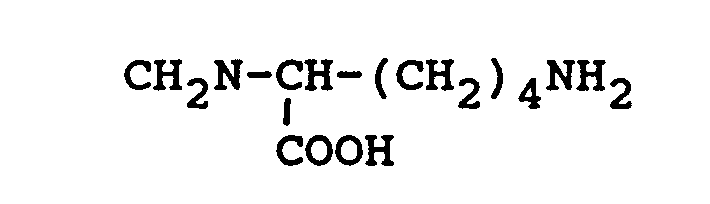
- Verfahren nach Anspruch 1 zur Behandlung bakterieller Infektionen von Pflanzen, das die Verabreichung eines Antibiotikums des Tetracyclintyps und die Verabreichung wenigstens eines Wirkstoffes, der das Tetracyclinausstoßsystem der Bakterie hemmt, umfaßt.
- Pharmazeutisches Präparat zum Umwandeln tetracyclinresistenter Bakterien in tetracyclinsensitive Bakterien, das ein Antibiotikum des Tetracyclintyps, eine unterhalb der Hemmungsgrenze liegende Menge eines blockierenden Wirkstoffes, der das Tetracyclinausstoßsystem der Bakterie stört, und einem pharmazeutisch annehmbaren Träger umfaßt.
- Pharmazeutisches Präparat nach Anspruch 3, bei dem der blockierende Wirkstoff Doxicyclin, B-Chelocardin, Minocyclin, Rolitetracyclin, Lymecyclin, Sancyclin, Methacyclin, Mepycyclin, Penimepicyclin, Pipacyclin, Etamocyclin oder Penimocyclin ist.
- Pharmazeutisches Präparat nach Anspruch 3 oder 4, bei dem der blockierende Wirkstoff in einer Konzentration verwendet wird, die ausreicht, um das aktive Ausstoßsystem der resistenten Zelle zu sättigen.
- Pharmazeutisches Präparat nach einem der Ansprüche 3 bis 5, wobei der blockierende Wirkstoff Minocyclin ist.
- Pharmazeutisches Präparat nach einem der Ansprüche 3 bis 6, wobei der blockierende Wirkstoff Thiatetracyclin ist.
- Pharmazeutisches Präparat gemäß einem der Ansprüche 3 bis 7, wobei das Verhältnis des Antibiotikums des Tetracyclintyps zum blockierenden Wirkstoff von 0,01 bis 100 ist.
- Pharmazeutisches Präparat nach Anspruch 8, das. Tetracyclin und Minocyclin enthält.
- Pharmazeutisches Präparat nach Anspruch 8, das Tetracyclin und Thiatetracyclin enthält.
Applications Claiming Priority (2)
| Application Number | Priority Date | Filing Date | Title |
|---|---|---|---|
| US06/442,688 US4806529A (en) | 1982-11-18 | 1982-11-18 | Tetracycline activity enhancement |
| US442688 | 1982-11-18 |
Publications (3)
| Publication Number | Publication Date |
|---|---|
| EP0126145A1 EP0126145A1 (de) | 1984-11-28 |
| EP0126145A4 EP0126145A4 (de) | 1985-06-06 |
| EP0126145B1 true EP0126145B1 (de) | 1992-01-29 |
Family
ID=23757747
Family Applications (1)
| Application Number | Title | Priority Date | Filing Date |
|---|---|---|---|
| EP83903900A Expired - Lifetime EP0126145B1 (de) | 1982-11-18 | 1983-11-17 | Erhöhung der tetracyclinwirkung |
Country Status (8)
| Country | Link |
|---|---|
| US (2) | US4806529A (de) |
| EP (1) | EP0126145B1 (de) |
| JP (1) | JPH0780774B2 (de) |
| AT (1) | ATE72116T1 (de) |
| AU (1) | AU2342284A (de) |
| CA (1) | CA1225332A (de) |
| DE (1) | DE3382503D1 (de) |
| WO (1) | WO1984001895A1 (de) |
Families Citing this family (49)
| Publication number | Priority date | Publication date | Assignee | Title |
|---|---|---|---|---|
| US5064821A (en) * | 1982-11-18 | 1991-11-12 | Trustees Of Tufts College | Method and compositions for overcoming tetracycline resistance within living cells |
| US5589470A (en) * | 1990-02-26 | 1996-12-31 | Trustees Of Tufts College | Reducing tetracycline resistance in living cells |
| USRE40183E1 (en) | 1991-10-04 | 2008-03-25 | Wyeth Holdings Corporation | 7-Substituted-9-substituted amino-6-demethyl-6-deoxytetracyclines |
| US5494903A (en) * | 1991-10-04 | 1996-02-27 | American Cyanamid Company | 7-substituted-9-substituted amino-6-demethyl-6-deoxytetracyclines |
| US5281628A (en) * | 1991-10-04 | 1994-01-25 | American Cyanamid Company | 9-amino-7-(substituted)-6-demethyl-6-deoxytetracyclines |
| US6756365B2 (en) | 1991-11-06 | 2004-06-29 | Trustees Of Tufts College | Reducing tetracycline resistance in living cells |
| AU2907192A (en) * | 1991-11-06 | 1993-06-07 | Trustees Of Tufts College | Reducing tetracycline resistance in living cells |
| TW318189B (de) * | 1991-12-06 | 1997-10-21 | American Cyanamid Co | |
| US5420272A (en) * | 1992-08-13 | 1995-05-30 | American Cyanamid Company | 7-(substituted)-8-(substituted)-9-](substituted glycyl)amido]-6-demethyl-6-deoxytetracyclines |
| US5328902A (en) * | 1992-08-13 | 1994-07-12 | American Cyanamid Co. | 7-(substituted)-9-[(substituted glycyl)amido]-6-demethyl-6-deoxytetracyclines |
| SG47520A1 (en) * | 1992-08-13 | 1998-04-17 | American Cyanamid Co | New method for the production of 9-amino-6-demethyl-6-deoxytetracycline |
| US5284963A (en) * | 1992-08-13 | 1994-02-08 | American Cyanamid Company | Method of producing 7-(substituted)-9-[(substituted glycyl)-amidol]-6-demethyl-6-deoxytetra-cyclines |
| US5371076A (en) * | 1993-04-02 | 1994-12-06 | American Cyanamid Company | 9-[(substituted glycyl)amido]-6-(substituted)-5-hydroxy-6-deoxytetracyclines |
| US5989832A (en) * | 1995-04-21 | 1999-11-23 | Microcide Pharmaceuticals, Inc. | Method for screening for non-tetracycline efflux pump inhibitors |
| JP2002501026A (ja) * | 1998-01-23 | 2002-01-15 | トルスティーズ オブ トゥフツ カレッジ | 薬学的に活性の化合物及びその利用法 |
| US6346391B1 (en) | 1999-07-22 | 2002-02-12 | Trustees Of Tufts College | Methods of reducing microbial resistance to drugs |
| WO2001098236A2 (en) * | 2000-06-16 | 2001-12-27 | Trustees Of Tufts College | 7-phenyl-substituted tetracycline compounds |
| US20020132798A1 (en) * | 2000-06-16 | 2002-09-19 | Nelson Mark L. | 7-phenyl-substituted tetracycline compounds |
| US20040224927A1 (en) * | 2000-06-16 | 2004-11-11 | Trustees Of Tufts College | 7-N-substituted phenyl tetracycline compounds |
| SI1301467T1 (sl) | 2000-07-07 | 2007-02-28 | Tufts College | 9-substituirane minociklinske spojine |
| AU2002250331A1 (en) | 2001-03-13 | 2002-09-24 | Paratek Pharmaceuticals, Inc. | 7-pyrollyl tetracycline compounds and methods of use thereof |
| JP2004537544A (ja) | 2001-07-13 | 2004-12-16 | パラテック ファーマシューティカルズ インコーポレイテッド | 標的治療活性を有するテトラサイクリン化合物 |
| RU2230563C1 (ru) * | 2003-02-10 | 2004-06-20 | ЗАО "Курорт Усть-Качка" | Средство для повышения чувствительности микроорганизмов к антимикробным препаратам |
| US20060287283A1 (en) * | 2003-07-09 | 2006-12-21 | Paratek Pharmaceuticals, Inc. | Prodrugs of 9-aminomethyl tetracycline compounds |
| EP1648859B1 (de) | 2003-07-09 | 2013-02-27 | Paratek Pharmaceuticals, Inc. | Substituierte tetracyclinverbindungen |
| UA83266C2 (en) | 2003-12-08 | 2008-06-25 | Уайет | Oxazole derivatives of tetracyclines |
| RU2255746C1 (ru) * | 2004-01-08 | 2005-07-10 | ЗАО "Курорт Усть-Качка" | Средство для повышения чувствительности микроорганизмов к антимикробным препаратам |
| EP2269991A3 (de) * | 2004-10-25 | 2011-09-21 | Paratek Pharmaceuticals, Inc. | Substituierte Tetracyclinverbindungen |
| WO2006084265A1 (en) * | 2005-02-04 | 2006-08-10 | Paratek Pharmaceuticals, Inc. | 11a, 12-DERIVATIVES OF TETRACYCLINE COMPOUNDS |
| AU2006214543A1 (en) | 2005-02-15 | 2006-08-24 | Wyeth | 9-substituted tetracyclines |
| US9192615B2 (en) | 2008-08-06 | 2015-11-24 | Medicis Pharmaceutical Corporation | Method for the treatment of acne and certain dosage forms thereof |
| US8722650B1 (en) | 2005-06-24 | 2014-05-13 | Medicis Pharmaceutical Corporation | Extended-release minocycline dosage forms |
| US7541347B2 (en) * | 2007-04-02 | 2009-06-02 | Medicis Pharmaceutical Coropration | Minocycline oral dosage forms for the treatment of acne |
| US20080241235A1 (en) * | 2007-04-02 | 2008-10-02 | Medicis Pharmaceutical Corporation | Minocycline oral dosage forms for the treatment of acne |
| US20080242642A1 (en) * | 2007-04-02 | 2008-10-02 | Medicis Pharmaceutical Corporation | Minocycline oral dosage forms for the treatment of acne |
| US7919483B2 (en) * | 2005-06-24 | 2011-04-05 | Medicis Pharmaceutical Corporation | Method for the treatment of acne |
| US7544373B2 (en) * | 2007-04-02 | 2009-06-09 | Medicis Pharmaceutical Corporation | Minocycline oral dosage forms for the treatment of acne |
| US8252776B2 (en) | 2007-04-02 | 2012-08-28 | Medicis Pharmaceutical Corporation | Minocycline oral dosage forms for the treatment of acne |
| JP2009502809A (ja) * | 2005-07-21 | 2009-01-29 | パラテック ファーマシューティカルズ インコーポレイテッド | 10−置換テトラサイクリンおよびその使用方法 |
| BRPI0615300A2 (pt) * | 2005-08-31 | 2009-07-14 | Wyeth Corp | composto; composição farmacêutica; método para a preparação, tratamento ou controle de infecções bacterianas em animais de sangue quente; uso de um composto; e método para a preparação de compostos representados pela fórmula (i) |
| CA2652347A1 (en) | 2006-05-15 | 2007-11-22 | Paratek Pharmaceuticals, Inc. | Methods of regulating expression of genes or of gene products using substituted tetracycline compounds |
| PT2120963T (pt) | 2006-12-21 | 2018-12-17 | Paratek Pharm Innc | Compostos tetraciclina substituídos para tratamento de distúrbios inflamatórios da pele |
| EP2450347B1 (de) | 2006-12-21 | 2015-06-24 | Paratek Pharmaceuticals, Inc. | Tetracyxlin-Derivate zur Behandlung bakterieller, viraler und parasitärer Infektionen |
| US20080241197A1 (en) * | 2007-04-02 | 2008-10-02 | Medicis Pharmaceutical Corporation | Minocycline dosage forms for the treatment of acne |
| WO2008127722A1 (en) * | 2007-04-12 | 2008-10-23 | Paratek Pharmaceuticals, Inc. | Methods for treating spinal muscular atrophy using tetracycline compounds |
| US20090253660A1 (en) | 2008-03-05 | 2009-10-08 | Paratek Pharmaceuticals, Inc. | Minocycline Compounds and Methods of Use Thereof |
| JP2011517697A (ja) * | 2008-04-14 | 2011-06-16 | パラテック ファーマシューティカルズ インコーポレイテッド | 置換テトラサイクリン化合物 |
| US9561241B1 (en) | 2011-06-28 | 2017-02-07 | Medicis Pharmaceutical Corporation | Gastroretentive dosage forms for minocycline |
| SG10201913599RA (en) | 2016-11-01 | 2020-02-27 | Paratek Pharm Innc | 9-aminomethyl minocycline compounds and use thereof in treating community-acquired bacterial pneumonia (cabp) |
Family Cites Families (5)
| Publication number | Priority date | Publication date | Assignee | Title |
|---|---|---|---|---|
| US3454697A (en) * | 1965-06-08 | 1969-07-08 | American Cyanamid Co | Tetracycline antibiotic compositions for oral use |
| NL7306746A (de) * | 1972-05-24 | 1973-11-27 | ||
| DE2442829A1 (de) * | 1974-09-06 | 1976-03-18 | Merck Patent Gmbh | Tetracyclische verbindungen und verfahren zu ihrer herstellung |
| US4126680A (en) * | 1977-04-27 | 1978-11-21 | Pfizer Inc. | Tetracycline antibiotic compositions |
| AU522973B2 (en) * | 1978-03-02 | 1982-07-08 | Karl Kristian Kobs Kroyer | Preparing dry-laid fibrous products |
-
1982
- 1982-11-18 US US06/442,688 patent/US4806529A/en not_active Expired - Lifetime
-
1983
- 1983-11-17 WO PCT/US1983/001825 patent/WO1984001895A1/en not_active Ceased
- 1983-11-17 JP JP59500096A patent/JPH0780774B2/ja not_active Expired - Lifetime
- 1983-11-17 AT AT83903900T patent/ATE72116T1/de not_active IP Right Cessation
- 1983-11-17 DE DE8383903900T patent/DE3382503D1/de not_active Expired - Lifetime
- 1983-11-17 AU AU23422/84A patent/AU2342284A/en not_active Abandoned
- 1983-11-17 EP EP83903900A patent/EP0126145B1/de not_active Expired - Lifetime
- 1983-11-18 CA CA000441466A patent/CA1225332A/en not_active Expired
-
1986
- 1986-04-11 US US06/850,843 patent/US5021407A/en not_active Expired - Lifetime
Non-Patent Citations (2)
| Title |
|---|
| CHEMICAL ABSTRACTS, vol. 85, no. 11 September 13, 1976, page 105, abstract 72836e Columbus, Ohio, US B.H. JOLY et al.: "Antibacterial activity of minocycline alone and associated with other antibiotics" * |
| N.Grassi et al., "Tetracyclines", New Trends in Antibiotics: Research and Therapy, Symposia of the Giovanni Lorenzini Foundation, Vol. 10, pp. 3-55 (1981) * |
Also Published As
| Publication number | Publication date |
|---|---|
| EP0126145A4 (de) | 1985-06-06 |
| US4806529A (en) | 1989-02-21 |
| ATE72116T1 (de) | 1992-02-15 |
| WO1984001895A1 (en) | 1984-05-24 |
| JPH0780774B2 (ja) | 1995-08-30 |
| CA1225332A (en) | 1987-08-11 |
| JPS60500257A (ja) | 1985-02-28 |
| US5021407A (en) | 1991-06-04 |
| DE3382503D1 (de) | 1992-03-12 |
| EP0126145A1 (de) | 1984-11-28 |
| AU2342284A (en) | 1984-06-04 |
Similar Documents
| Publication | Publication Date | Title |
|---|---|---|
| US4806529A (en) | Tetracycline activity enhancement | |
| US5258372A (en) | Tetracycline activity enhancement using doxycycline or sancycline | |
| EP0139535B1 (de) | Zusammensetzungen zur Bekämpfung von Toxaemia | |
| EP2529723A2 (de) | Zusammensetzungen und Verfahren zur Behandlung von Vaginalinfektionen und pathogener Vaginalbiofilme | |
| CN102697784B (zh) | 一种兽用恩诺沙星注射液及其制备方法 | |
| EP1200463B1 (de) | Histon h1 enthaltende antimikrobielle zusammensetzung und verfahren zu ihrer anwendung | |
| Westenfelder et al. | Vancomycin-streptomycin synergism in enterococcal endocarditis | |
| Kirby et al. | Theory and applications of pulse dosing: a summary of the symposium | |
| US6884423B1 (en) | Antimicrobial histone H1 compositions, kits, and methods of use thereof | |
| US6110971A (en) | Fungicide composition comprising a benzoylphenylurea | |
| CA1285226C (en) | Compositions containing a 2,4-diamino-pyrimidine and sulphadimidine | |
| CN115990148B (zh) | α-侧柏酮在制备治疗碳青霉烯类抗生素耐药菌感染药物中的应用 | |
| RU2083207C1 (ru) | Способ лечения экспериментального сапа у золотистых хомячков | |
| JPH04506056A (ja) | ペプチド組合せ組成物及びその用法 | |
| EP4426312B1 (de) | Medizinische zusammensetzung mit ribose und aminosäuren | |
| CN105456281A (zh) | 一种兽用药物组合物及其制备方法和用途 | |
| EP1296703B1 (de) | Nicht-antibakterielle tetrazykline als anti-pilz medikamente | |
| RU2228742C2 (ru) | Способ лечения рецидивирующего иридоциклохориоидита лошадей | |
| RU2223756C1 (ru) | Способ лечения рецидивирующего иридоциклохориоидита лошадей | |
| US4123522A (en) | Control of bloat in ruminants | |
| CN1256982C (zh) | 达福普汀/奎奴普丁与头孢匹罗的组合形式 | |
| RU2277418C1 (ru) | Препарат для лечения бронхопневмонии у телят | |
| JPH06145066A (ja) | 化学療法剤の作用増強並びに感染症予防及び治療用の医薬組 成物 | |
| RU2228741C2 (ru) | Способ лечения рецидивирующего иридоциклохориоидита лошадей | |
| CN120114429A (zh) | Ndna或其药学上可接受的盐和trpm4-in-1或其药学上可接受的盐联用的用途 |
Legal Events
| Date | Code | Title | Description |
|---|---|---|---|
| PUAI | Public reference made under article 153(3) epc to a published international application that has entered the european phase |
Free format text: ORIGINAL CODE: 0009012 |
|
| AK | Designated contracting states |
Designated state(s): AT BE CH DE FR GB LI LU NL SE |
|
| 17P | Request for examination filed |
Effective date: 19841105 |
|
| 17Q | First examination report despatched |
Effective date: 19860618 |
|
| GRAA | (expected) grant |
Free format text: ORIGINAL CODE: 0009210 |
|
| AK | Designated contracting states |
Kind code of ref document: B1 Designated state(s): AT BE CH DE FR GB LI LU NL SE |
|
| REF | Corresponds to: |
Ref document number: 72116 Country of ref document: AT Date of ref document: 19920215 Kind code of ref document: T |
|
| REF | Corresponds to: |
Ref document number: 3382503 Country of ref document: DE Date of ref document: 19920312 |
|
| ET | Fr: translation filed | ||
| PLBE | No opposition filed within time limit |
Free format text: ORIGINAL CODE: 0009261 |
|
| STAA | Information on the status of an ep patent application or granted ep patent |
Free format text: STATUS: NO OPPOSITION FILED WITHIN TIME LIMIT |
|
| 26N | No opposition filed | ||
| EPTA | Lu: last paid annual fee | ||
| EAL | Se: european patent in force in sweden |
Ref document number: 83903900.5 |
|
| REG | Reference to a national code |
Ref country code: GB Ref legal event code: IF02 |
|
| PGFP | Annual fee paid to national office [announced via postgrant information from national office to epo] |
Ref country code: GB Payment date: 20021002 Year of fee payment: 20 Ref country code: AT Payment date: 20021002 Year of fee payment: 20 |
|
| PGFP | Annual fee paid to national office [announced via postgrant information from national office to epo] |
Ref country code: NL Payment date: 20021011 Year of fee payment: 20 |
|
| PGFP | Annual fee paid to national office [announced via postgrant information from national office to epo] |
Ref country code: LU Payment date: 20021024 Year of fee payment: 20 |
|
| PGFP | Annual fee paid to national office [announced via postgrant information from national office to epo] |
Ref country code: FR Payment date: 20021105 Year of fee payment: 20 |
|
| PGFP | Annual fee paid to national office [announced via postgrant information from national office to epo] |
Ref country code: SE Payment date: 20021106 Year of fee payment: 20 |
|
| PGFP | Annual fee paid to national office [announced via postgrant information from national office to epo] |
Ref country code: DE Payment date: 20021127 Year of fee payment: 20 |
|
| PGFP | Annual fee paid to national office [announced via postgrant information from national office to epo] |
Ref country code: BE Payment date: 20021213 Year of fee payment: 20 |
|
| PGFP | Annual fee paid to national office [announced via postgrant information from national office to epo] |
Ref country code: CH Payment date: 20021223 Year of fee payment: 20 |
|
| PG25 | Lapsed in a contracting state [announced via postgrant information from national office to epo] |
Ref country code: LI Free format text: LAPSE BECAUSE OF EXPIRATION OF PROTECTION Effective date: 20031116 Ref country code: GB Free format text: LAPSE BECAUSE OF EXPIRATION OF PROTECTION Effective date: 20031116 Ref country code: CH Free format text: LAPSE BECAUSE OF EXPIRATION OF PROTECTION Effective date: 20031116 |
|
| PG25 | Lapsed in a contracting state [announced via postgrant information from national office to epo] |
Ref country code: NL Free format text: LAPSE BECAUSE OF EXPIRATION OF PROTECTION Effective date: 20031117 Ref country code: LU Free format text: LAPSE BECAUSE OF EXPIRATION OF PROTECTION Effective date: 20031117 Ref country code: AT Free format text: LAPSE BECAUSE OF EXPIRATION OF PROTECTION Effective date: 20031117 |
|
| BE20 | Be: patent expired |
Owner name: *TUFTS UNIVERSITY Effective date: 20031117 |
|
| NLV7 | Nl: ceased due to reaching the maximum lifetime of a patent |
Effective date: 20031117 |
|
| REG | Reference to a national code |
Ref country code: GB Ref legal event code: PE20 |
|
| REG | Reference to a national code |
Ref country code: CH Ref legal event code: PL |
|
| EUG | Se: european patent has lapsed |