EP0129268A2 - Verbesserungen in der Expression von neu eingeführten Genen in Hefezellen - Google Patents
Verbesserungen in der Expression von neu eingeführten Genen in Hefezellen Download PDFInfo
- Publication number
- EP0129268A2 EP0129268A2 EP84200735A EP84200735A EP0129268A2 EP 0129268 A2 EP0129268 A2 EP 0129268A2 EP 84200735 A EP84200735 A EP 84200735A EP 84200735 A EP84200735 A EP 84200735A EP 0129268 A2 EP0129268 A2 EP 0129268A2
- Authority
- EP
- European Patent Office
- Prior art keywords
- ala
- leu
- yeast
- dna
- dna sequence
- Prior art date
- Legal status (The legal status is an assumption and is not a legal conclusion. Google has not performed a legal analysis and makes no representation as to the accuracy of the status listed.)
- Granted
Links
- 108090000623 proteins and genes Proteins 0.000 title claims abstract description 189
- 230000014509 gene expression Effects 0.000 title abstract description 42
- 210000005253 yeast cell Anatomy 0.000 title description 8
- 239000013612 plasmid Substances 0.000 claims abstract description 127
- 240000004808 Saccharomyces cerevisiae Species 0.000 claims abstract description 110
- 108020004445 glyceraldehyde-3-phosphate dehydrogenase Proteins 0.000 claims abstract description 90
- 108091028043 Nucleic acid sequence Proteins 0.000 claims abstract description 84
- 239000002773 nucleotide Substances 0.000 claims abstract description 57
- 125000003729 nucleotide group Chemical group 0.000 claims abstract description 57
- 102000004169 proteins and genes Human genes 0.000 claims abstract description 40
- 108090000765 processed proteins & peptides Proteins 0.000 claims abstract description 28
- 108020004705 Codon Proteins 0.000 claims abstract description 24
- 229920001184 polypeptide Polymers 0.000 claims abstract description 23
- 102000004196 processed proteins & peptides Human genes 0.000 claims abstract description 23
- 230000035897 transcription Effects 0.000 claims abstract description 23
- 238000013518 transcription Methods 0.000 claims abstract description 23
- 241000235070 Saccharomyces Species 0.000 claims abstract description 10
- 101710203193 Thaumatin-like protein Proteins 0.000 claims abstract description 9
- 241000235649 Kluyveromyces Species 0.000 claims abstract description 8
- 108090000746 Chymosin Proteins 0.000 claims description 34
- 230000008488 polyadenylation Effects 0.000 claims description 26
- 238000000034 method Methods 0.000 claims description 25
- 239000000892 thaumatin Substances 0.000 claims description 24
- 235000010436 thaumatin Nutrition 0.000 claims description 23
- 229940080701 chymosin Drugs 0.000 claims description 22
- GNOLWGAJQVLBSM-UHFFFAOYSA-N n,n,5,7-tetramethyl-1,2,3,4-tetrahydronaphthalen-1-amine Chemical compound C1=C(C)C=C2C(N(C)C)CCCC2=C1C GNOLWGAJQVLBSM-UHFFFAOYSA-N 0.000 claims description 21
- 239000002243 precursor Substances 0.000 claims description 20
- 108020004999 messenger RNA Proteins 0.000 claims description 19
- 238000003776 cleavage reaction Methods 0.000 claims description 14
- 230000007017 scission Effects 0.000 claims description 14
- 230000000977 initiatory effect Effects 0.000 claims description 12
- 210000000349 chromosome Anatomy 0.000 claims description 11
- 238000003780 insertion Methods 0.000 claims description 11
- 230000037431 insertion Effects 0.000 claims description 11
- 108091008146 restriction endonucleases Proteins 0.000 claims description 11
- 230000008569 process Effects 0.000 claims description 10
- 238000011144 upstream manufacturing Methods 0.000 claims description 10
- 230000004543 DNA replication Effects 0.000 claims description 9
- 102000009572 RNA Polymerase II Human genes 0.000 claims description 9
- 108010009460 RNA Polymerase II Proteins 0.000 claims description 9
- 108020004511 Recombinant DNA Proteins 0.000 claims description 9
- GZCWLCBFPRFLKL-UHFFFAOYSA-N 1-prop-2-ynoxypropan-2-ol Chemical compound CC(O)COCC#C GZCWLCBFPRFLKL-UHFFFAOYSA-N 0.000 claims description 7
- 102000013563 Acid Phosphatase Human genes 0.000 claims description 7
- 108010051210 beta-Fructofuranosidase Proteins 0.000 claims description 7
- 238000004519 manufacturing process Methods 0.000 claims description 7
- 238000012545 processing Methods 0.000 claims description 7
- 108010051457 Acid Phosphatase Proteins 0.000 claims description 6
- 241000222120 Candida <Saccharomycetales> Species 0.000 claims description 6
- 239000001573 invertase Substances 0.000 claims description 6
- 235000011073 invertase Nutrition 0.000 claims description 6
- 230000014621 translational initiation Effects 0.000 claims description 5
- 230000005945 translocation Effects 0.000 claims description 4
- 241000235035 Debaryomyces Species 0.000 claims description 3
- 241000235648 Pichia Species 0.000 claims description 3
- 206010053567 Coagulopathies Diseases 0.000 claims description 2
- 241000223252 Rhodotorula Species 0.000 claims description 2
- 125000000539 amino acid group Chemical group 0.000 claims description 2
- 238000010348 incorporation Methods 0.000 claims description 2
- 239000013598 vector Substances 0.000 abstract description 28
- 241001138401 Kluyveromyces lactis Species 0.000 abstract description 13
- 230000009466 transformation Effects 0.000 abstract description 8
- 230000010076 replication Effects 0.000 abstract description 5
- 230000003362 replicative effect Effects 0.000 abstract description 3
- 102100031181 Glyceraldehyde-3-phosphate dehydrogenase Human genes 0.000 abstract 1
- 239000012634 fragment Substances 0.000 description 119
- 102000006602 glyceraldehyde-3-phosphate dehydrogenase Human genes 0.000 description 78
- 108020004414 DNA Proteins 0.000 description 74
- 235000014680 Saccharomyces cerevisiae Nutrition 0.000 description 73
- 230000033228 biological regulation Effects 0.000 description 49
- 235000018102 proteins Nutrition 0.000 description 30
- 230000005030 transcription termination Effects 0.000 description 30
- 108010054576 Deoxyribonuclease EcoRI Proteins 0.000 description 27
- 210000004027 cell Anatomy 0.000 description 27
- 230000029087 digestion Effects 0.000 description 17
- 238000011534 incubation Methods 0.000 description 16
- 241000588724 Escherichia coli Species 0.000 description 12
- LFQSCWFLJHTTHZ-UHFFFAOYSA-N Ethanol Chemical compound CCO LFQSCWFLJHTTHZ-UHFFFAOYSA-N 0.000 description 12
- JUJWROOIHBZHMG-UHFFFAOYSA-N Pyridine Chemical compound C1=CC=NC=C1 JUJWROOIHBZHMG-UHFFFAOYSA-N 0.000 description 12
- 239000011543 agarose gel Substances 0.000 description 12
- 238000010276 construction Methods 0.000 description 12
- 238000003786 synthesis reaction Methods 0.000 description 12
- 230000014616 translation Effects 0.000 description 12
- 102000012410 DNA Ligases Human genes 0.000 description 11
- 108010061982 DNA Ligases Proteins 0.000 description 11
- 108020005091 Replication Origin Proteins 0.000 description 11
- 150000001413 amino acids Chemical group 0.000 description 11
- 239000000203 mixture Substances 0.000 description 11
- 102000039446 nucleic acids Human genes 0.000 description 11
- 108020004707 nucleic acids Proteins 0.000 description 11
- 150000007523 nucleic acids Chemical class 0.000 description 11
- 238000013519 translation Methods 0.000 description 11
- 108010076504 Protein Sorting Signals Proteins 0.000 description 10
- 238000002955 isolation Methods 0.000 description 10
- 229920002477 rna polymer Polymers 0.000 description 10
- 101150028074 2 gene Proteins 0.000 description 9
- 102000053602 DNA Human genes 0.000 description 9
- 101150006914 TRP1 gene Proteins 0.000 description 9
- 230000035800 maturation Effects 0.000 description 9
- UXVMQQNJUSDDNG-UHFFFAOYSA-L Calcium chloride Chemical compound [Cl-].[Cl-].[Ca+2] UXVMQQNJUSDDNG-UHFFFAOYSA-L 0.000 description 8
- 102000004190 Enzymes Human genes 0.000 description 8
- 108090000790 Enzymes Proteins 0.000 description 8
- 235000001014 amino acid Nutrition 0.000 description 8
- 230000015572 biosynthetic process Effects 0.000 description 8
- 239000001110 calcium chloride Substances 0.000 description 8
- 229910001628 calcium chloride Inorganic materials 0.000 description 8
- 229940088598 enzyme Drugs 0.000 description 8
- 230000010354 integration Effects 0.000 description 8
- 108010086093 Mung Bean Nuclease Proteins 0.000 description 7
- 229960000723 ampicillin Drugs 0.000 description 7
- AVKUERGKIZMTKX-NJBDSQKTSA-N ampicillin Chemical compound C1([C@@H](N)C(=O)N[C@H]2[C@H]3SC([C@@H](N3C2=O)C(O)=O)(C)C)=CC=CC=C1 AVKUERGKIZMTKX-NJBDSQKTSA-N 0.000 description 7
- 230000000694 effects Effects 0.000 description 7
- 244000005700 microbiome Species 0.000 description 7
- 108010014303 DNA-directed DNA polymerase Proteins 0.000 description 6
- 102000016928 DNA-directed DNA polymerase Human genes 0.000 description 6
- 101150112014 Gapdh gene Proteins 0.000 description 6
- FAPWRFPIFSIZLT-UHFFFAOYSA-M Sodium chloride Chemical compound [Na+].[Cl-] FAPWRFPIFSIZLT-UHFFFAOYSA-M 0.000 description 6
- 238000001962 electrophoresis Methods 0.000 description 6
- 238000002474 experimental method Methods 0.000 description 6
- 239000003550 marker Substances 0.000 description 6
- 108010064037 prorennin Proteins 0.000 description 6
- UMJSCPRVCHMLSP-UHFFFAOYSA-N pyridine Natural products COC1=CC=CN=C1 UMJSCPRVCHMLSP-UHFFFAOYSA-N 0.000 description 6
- 239000013605 shuttle vector Substances 0.000 description 6
- 108091081024 Start codon Proteins 0.000 description 5
- DRTQHJPVMGBUCF-XVFCMESISA-N Uridine Chemical compound O[C@@H]1[C@H](O)[C@@H](CO)O[C@H]1N1C(=O)NC(=O)C=C1 DRTQHJPVMGBUCF-XVFCMESISA-N 0.000 description 5
- 238000005516 engineering process Methods 0.000 description 5
- 239000000499 gel Substances 0.000 description 5
- 239000000463 material Substances 0.000 description 5
- 239000000047 product Substances 0.000 description 5
- HEDRZPFGACZZDS-UHFFFAOYSA-N Chloroform Chemical compound ClC(Cl)Cl HEDRZPFGACZZDS-UHFFFAOYSA-N 0.000 description 4
- 108700010070 Codon Usage Proteins 0.000 description 4
- 241000196324 Embryophyta Species 0.000 description 4
- 108700039691 Genetic Promoter Regions Proteins 0.000 description 4
- ISWSIDIOOBJBQZ-UHFFFAOYSA-N Phenol Chemical compound OC1=CC=CC=C1 ISWSIDIOOBJBQZ-UHFFFAOYSA-N 0.000 description 4
- 102000004160 Phosphoric Monoester Hydrolases Human genes 0.000 description 4
- 108090000608 Phosphoric Monoester Hydrolases Proteins 0.000 description 4
- 239000004793 Polystyrene Substances 0.000 description 4
- 108020005038 Terminator Codon Proteins 0.000 description 4
- 239000013604 expression vector Substances 0.000 description 4
- 230000001965 increasing effect Effects 0.000 description 4
- 229920002223 polystyrene Polymers 0.000 description 4
- 239000011541 reaction mixture Substances 0.000 description 4
- 238000005406 washing Methods 0.000 description 4
- WEVYAHXRMPXWCK-UHFFFAOYSA-N Acetonitrile Chemical compound CC#N WEVYAHXRMPXWCK-UHFFFAOYSA-N 0.000 description 3
- 230000006820 DNA synthesis Effects 0.000 description 3
- 108091034117 Oligonucleotide Proteins 0.000 description 3
- 229920005654 Sephadex Polymers 0.000 description 3
- 239000012507 Sephadex™ Substances 0.000 description 3
- LVTKHGUGBGNBPL-UHFFFAOYSA-N Trp-P-1 Chemical compound N1C2=CC=CC=C2C2=C1C(C)=C(N)N=C2C LVTKHGUGBGNBPL-UHFFFAOYSA-N 0.000 description 3
- JLCPHMBAVCMARE-UHFFFAOYSA-N [3-[[3-[[3-[[3-[[3-[[3-[[3-[[3-[[3-[[3-[[3-[[5-(2-amino-6-oxo-1H-purin-9-yl)-3-[[3-[[3-[[3-[[3-[[3-[[5-(2-amino-6-oxo-1H-purin-9-yl)-3-[[5-(2-amino-6-oxo-1H-purin-9-yl)-3-hydroxyoxolan-2-yl]methoxy-hydroxyphosphoryl]oxyoxolan-2-yl]methoxy-hydroxyphosphoryl]oxy-5-(5-methyl-2,4-dioxopyrimidin-1-yl)oxolan-2-yl]methoxy-hydroxyphosphoryl]oxy-5-(6-aminopurin-9-yl)oxolan-2-yl]methoxy-hydroxyphosphoryl]oxy-5-(6-aminopurin-9-yl)oxolan-2-yl]methoxy-hydroxyphosphoryl]oxy-5-(6-aminopurin-9-yl)oxolan-2-yl]methoxy-hydroxyphosphoryl]oxy-5-(6-aminopurin-9-yl)oxolan-2-yl]methoxy-hydroxyphosphoryl]oxyoxolan-2-yl]methoxy-hydroxyphosphoryl]oxy-5-(5-methyl-2,4-dioxopyrimidin-1-yl)oxolan-2-yl]methoxy-hydroxyphosphoryl]oxy-5-(4-amino-2-oxopyrimidin-1-yl)oxolan-2-yl]methoxy-hydroxyphosphoryl]oxy-5-(5-methyl-2,4-dioxopyrimidin-1-yl)oxolan-2-yl]methoxy-hydroxyphosphoryl]oxy-5-(5-methyl-2,4-dioxopyrimidin-1-yl)oxolan-2-yl]methoxy-hydroxyphosphoryl]oxy-5-(6-aminopurin-9-yl)oxolan-2-yl]methoxy-hydroxyphosphoryl]oxy-5-(6-aminopurin-9-yl)oxolan-2-yl]methoxy-hydroxyphosphoryl]oxy-5-(4-amino-2-oxopyrimidin-1-yl)oxolan-2-yl]methoxy-hydroxyphosphoryl]oxy-5-(4-amino-2-oxopyrimidin-1-yl)oxolan-2-yl]methoxy-hydroxyphosphoryl]oxy-5-(4-amino-2-oxopyrimidin-1-yl)oxolan-2-yl]methoxy-hydroxyphosphoryl]oxy-5-(6-aminopurin-9-yl)oxolan-2-yl]methoxy-hydroxyphosphoryl]oxy-5-(4-amino-2-oxopyrimidin-1-yl)oxolan-2-yl]methyl [5-(6-aminopurin-9-yl)-2-(hydroxymethyl)oxolan-3-yl] hydrogen phosphate Polymers Cc1cn(C2CC(OP(O)(=O)OCC3OC(CC3OP(O)(=O)OCC3OC(CC3O)n3cnc4c3nc(N)[nH]c4=O)n3cnc4c3nc(N)[nH]c4=O)C(COP(O)(=O)OC3CC(OC3COP(O)(=O)OC3CC(OC3COP(O)(=O)OC3CC(OC3COP(O)(=O)OC3CC(OC3COP(O)(=O)OC3CC(OC3COP(O)(=O)OC3CC(OC3COP(O)(=O)OC3CC(OC3COP(O)(=O)OC3CC(OC3COP(O)(=O)OC3CC(OC3COP(O)(=O)OC3CC(OC3COP(O)(=O)OC3CC(OC3COP(O)(=O)OC3CC(OC3COP(O)(=O)OC3CC(OC3COP(O)(=O)OC3CC(OC3COP(O)(=O)OC3CC(OC3COP(O)(=O)OC3CC(OC3COP(O)(=O)OC3CC(OC3CO)n3cnc4c(N)ncnc34)n3ccc(N)nc3=O)n3cnc4c(N)ncnc34)n3ccc(N)nc3=O)n3ccc(N)nc3=O)n3ccc(N)nc3=O)n3cnc4c(N)ncnc34)n3cnc4c(N)ncnc34)n3cc(C)c(=O)[nH]c3=O)n3cc(C)c(=O)[nH]c3=O)n3ccc(N)nc3=O)n3cc(C)c(=O)[nH]c3=O)n3cnc4c3nc(N)[nH]c4=O)n3cnc4c(N)ncnc34)n3cnc4c(N)ncnc34)n3cnc4c(N)ncnc34)n3cnc4c(N)ncnc34)O2)c(=O)[nH]c1=O JLCPHMBAVCMARE-UHFFFAOYSA-N 0.000 description 3
- 238000013459 approach Methods 0.000 description 3
- 238000006243 chemical reaction Methods 0.000 description 3
- 238000009585 enzyme analysis Methods 0.000 description 3
- 238000000855 fermentation Methods 0.000 description 3
- 230000004151 fermentation Effects 0.000 description 3
- 238000009396 hybridization Methods 0.000 description 3
- 125000005524 levulinyl group Chemical group 0.000 description 3
- 230000004048 modification Effects 0.000 description 3
- 238000012986 modification Methods 0.000 description 3
- 239000013600 plasmid vector Substances 0.000 description 3
- 230000001105 regulatory effect Effects 0.000 description 3
- 238000000926 separation method Methods 0.000 description 3
- 239000011780 sodium chloride Substances 0.000 description 3
- HRPVXLWXLXDGHG-UHFFFAOYSA-N Acrylamide Chemical compound NC(=O)C=C HRPVXLWXLXDGHG-UHFFFAOYSA-N 0.000 description 2
- 102000002260 Alkaline Phosphatase Human genes 0.000 description 2
- 108020004774 Alkaline Phosphatase Proteins 0.000 description 2
- 101100309712 Arabidopsis thaliana SD11 gene Proteins 0.000 description 2
- 108091026890 Coding region Proteins 0.000 description 2
- 108010008286 DNA nucleotidylexotransferase Proteins 0.000 description 2
- 102100029764 DNA-directed DNA/RNA polymerase mu Human genes 0.000 description 2
- 102000004163 DNA-directed RNA polymerases Human genes 0.000 description 2
- 108090000626 DNA-directed RNA polymerases Proteins 0.000 description 2
- KCXVZYZYPLLWCC-UHFFFAOYSA-N EDTA Chemical compound OC(=O)CN(CC(O)=O)CCN(CC(O)=O)CC(O)=O KCXVZYZYPLLWCC-UHFFFAOYSA-N 0.000 description 2
- 241001524679 Escherichia virus M13 Species 0.000 description 2
- 102000003960 Ligases Human genes 0.000 description 2
- 108090000364 Ligases Proteins 0.000 description 2
- 241000235347 Schizosaccharomyces pombe Species 0.000 description 2
- VMHLLURERBWHNL-UHFFFAOYSA-M Sodium acetate Chemical compound [Na+].CC([O-])=O VMHLLURERBWHNL-UHFFFAOYSA-M 0.000 description 2
- 101710135323 Thaumatin II Proteins 0.000 description 2
- 241000234568 Thaumatococcus Species 0.000 description 2
- 108091036066 Three prime untranslated region Proteins 0.000 description 2
- IQFYYKKMVGJFEH-XLPZGREQSA-N Thymidine Chemical compound O=C1NC(=O)C(C)=CN1[C@@H]1O[C@H](CO)[C@@H](O)C1 IQFYYKKMVGJFEH-XLPZGREQSA-N 0.000 description 2
- 108020004566 Transfer RNA Proteins 0.000 description 2
- 241000209140 Triticum Species 0.000 description 2
- 235000021307 Triticum Nutrition 0.000 description 2
- 229940117913 acrylamide Drugs 0.000 description 2
- 238000004458 analytical method Methods 0.000 description 2
- DRTQHJPVMGBUCF-PSQAKQOGSA-N beta-L-uridine Natural products O[C@H]1[C@@H](O)[C@H](CO)O[C@@H]1N1C(=O)NC(=O)C=C1 DRTQHJPVMGBUCF-PSQAKQOGSA-N 0.000 description 2
- 238000010367 cloning Methods 0.000 description 2
- SUYVUBYJARFZHO-RRKCRQDMSA-N dATP Chemical compound C1=NC=2C(N)=NC=NC=2N1[C@H]1C[C@H](O)[C@@H](COP(O)(=O)OP(O)(=O)OP(O)(O)=O)O1 SUYVUBYJARFZHO-RRKCRQDMSA-N 0.000 description 2
- 230000001419 dependent effect Effects 0.000 description 2
- 238000011161 development Methods 0.000 description 2
- 230000018109 developmental process Effects 0.000 description 2
- 239000000539 dimer Substances 0.000 description 2
- XBDQKXXYIPTUBI-UHFFFAOYSA-N dimethylselenoniopropionate Natural products CCC(O)=O XBDQKXXYIPTUBI-UHFFFAOYSA-N 0.000 description 2
- 235000013399 edible fruits Nutrition 0.000 description 2
- 238000012869 ethanol precipitation Methods 0.000 description 2
- 238000001704 evaporation Methods 0.000 description 2
- 238000000605 extraction Methods 0.000 description 2
- 230000002349 favourable effect Effects 0.000 description 2
- 238000001914 filtration Methods 0.000 description 2
- 235000021472 generally recognized as safe Nutrition 0.000 description 2
- 230000006801 homologous recombination Effects 0.000 description 2
- 238000002744 homologous recombination Methods 0.000 description 2
- 238000001114 immunoprecipitation Methods 0.000 description 2
- 230000001939 inductive effect Effects 0.000 description 2
- 230000003993 interaction Effects 0.000 description 2
- -1 levulinyl ester Chemical class 0.000 description 2
- 230000002503 metabolic effect Effects 0.000 description 2
- 230000000813 microbial effect Effects 0.000 description 2
- 238000002360 preparation method Methods 0.000 description 2
- 238000000746 purification Methods 0.000 description 2
- 230000022532 regulation of transcription, DNA-dependent Effects 0.000 description 2
- 239000001632 sodium acetate Substances 0.000 description 2
- 235000017281 sodium acetate Nutrition 0.000 description 2
- 239000007787 solid Substances 0.000 description 2
- 241000894007 species Species 0.000 description 2
- 238000012360 testing method Methods 0.000 description 2
- 238000012546 transfer Methods 0.000 description 2
- 230000032258 transport Effects 0.000 description 2
- DRTQHJPVMGBUCF-UHFFFAOYSA-N uracil arabinoside Natural products OC1C(O)C(CO)OC1N1C(=O)NC(=O)C=C1 DRTQHJPVMGBUCF-UHFFFAOYSA-N 0.000 description 2
- 229940045145 uridine Drugs 0.000 description 2
- 239000011800 void material Substances 0.000 description 2
- JIAARYAFYJHUJI-UHFFFAOYSA-L zinc dichloride Chemical compound [Cl-].[Cl-].[Zn+2] JIAARYAFYJHUJI-UHFFFAOYSA-L 0.000 description 2
- YCICLRBTJMLLGG-UHFFFAOYSA-N (2-chlorophenyl) dihydrogen phosphate Chemical group OP(O)(=O)OC1=CC=CC=C1Cl YCICLRBTJMLLGG-UHFFFAOYSA-N 0.000 description 1
- NWZSZGALRFJKBT-KNIFDHDWSA-N (2s)-2,6-diaminohexanoic acid;(2s)-2-hydroxybutanedioic acid Chemical compound OC(=O)[C@@H](O)CC(O)=O.NCCCC[C@H](N)C(O)=O NWZSZGALRFJKBT-KNIFDHDWSA-N 0.000 description 1
- YCCILVSKPBXVIP-UHFFFAOYSA-N 2-(4-hydroxyphenyl)ethanol Chemical compound OCCC1=CC=C(O)C=C1 YCCILVSKPBXVIP-UHFFFAOYSA-N 0.000 description 1
- 101150090724 3 gene Proteins 0.000 description 1
- 108020005065 3' Flanking Region Proteins 0.000 description 1
- SFYDWLYPIXHPML-UHFFFAOYSA-N 3-nitro-1-(2,4,6-trimethylphenyl)sulfonyl-1,2,4-triazole Chemical compound CC1=CC(C)=CC(C)=C1S(=O)(=O)N1N=C([N+]([O-])=O)N=C1 SFYDWLYPIXHPML-UHFFFAOYSA-N 0.000 description 1
- QTBSBXVTEAMEQO-UHFFFAOYSA-M Acetate Chemical compound CC([O-])=O QTBSBXVTEAMEQO-UHFFFAOYSA-M 0.000 description 1
- 229930024421 Adenine Natural products 0.000 description 1
- GFFGJBXGBJISGV-UHFFFAOYSA-N Adenine Chemical compound NC1=NC=NC2=C1N=CN2 GFFGJBXGBJISGV-UHFFFAOYSA-N 0.000 description 1
- VHUUQVKOLVNVRT-UHFFFAOYSA-N Ammonium hydroxide Chemical compound [NH4+].[OH-] VHUUQVKOLVNVRT-UHFFFAOYSA-N 0.000 description 1
- 241000894006 Bacteria Species 0.000 description 1
- DWRXFEITVBNRMK-UHFFFAOYSA-N Beta-D-1-Arabinofuranosylthymine Natural products O=C1NC(=O)C(C)=CN1C1C(O)C(O)C(CO)O1 DWRXFEITVBNRMK-UHFFFAOYSA-N 0.000 description 1
- 241000283690 Bos taurus Species 0.000 description 1
- 108091035707 Consensus sequence Proteins 0.000 description 1
- XUJNEKJLAYXESH-UHFFFAOYSA-N Cysteine Chemical compound SCC(N)C(O)=O XUJNEKJLAYXESH-UHFFFAOYSA-N 0.000 description 1
- FBPFZTCFMRRESA-FSIIMWSLSA-N D-Glucitol Natural products OC[C@H](O)[C@H](O)[C@@H](O)[C@H](O)CO FBPFZTCFMRRESA-FSIIMWSLSA-N 0.000 description 1
- 101100010343 Drosophila melanogaster lobo gene Proteins 0.000 description 1
- 238000002965 ELISA Methods 0.000 description 1
- 241001131785 Escherichia coli HB101 Species 0.000 description 1
- 108700007698 Genetic Terminator Regions Proteins 0.000 description 1
- 241000282414 Homo sapiens Species 0.000 description 1
- 244000285963 Kluyveromyces fragilis Species 0.000 description 1
- 108010059881 Lactase Proteins 0.000 description 1
- 241000124008 Mammalia Species 0.000 description 1
- 241001465754 Metazoa Species 0.000 description 1
- 101800000135 N-terminal protein Proteins 0.000 description 1
- 101100285000 Neurospora crassa (strain ATCC 24698 / 74-OR23-1A / CBS 708.71 / DSM 1257 / FGSC 987) his-3 gene Proteins 0.000 description 1
- 101710163270 Nuclease Proteins 0.000 description 1
- 108700026244 Open Reading Frames Proteins 0.000 description 1
- 101800001452 P1 proteinase Proteins 0.000 description 1
- 108010021757 Polynucleotide 5'-Hydroxyl-Kinase Proteins 0.000 description 1
- 102000008422 Polynucleotide 5'-hydroxyl-kinase Human genes 0.000 description 1
- 235000014443 Pyrus communis Nutrition 0.000 description 1
- 241000235346 Schizosaccharomyces Species 0.000 description 1
- 238000012300 Sequence Analysis Methods 0.000 description 1
- 238000002105 Southern blotting Methods 0.000 description 1
- 108700026226 TATA Box Proteins 0.000 description 1
- 239000011358 absorbing material Substances 0.000 description 1
- 239000002253 acid Substances 0.000 description 1
- 150000007513 acids Chemical class 0.000 description 1
- 229960000643 adenine Drugs 0.000 description 1
- QGZKDVFQNNGYKY-UHFFFAOYSA-N ammonia Natural products N QGZKDVFQNNGYKY-UHFFFAOYSA-N 0.000 description 1
- 150000001450 anions Chemical class 0.000 description 1
- 239000003242 anti bacterial agent Substances 0.000 description 1
- 229940088710 antibiotic agent Drugs 0.000 description 1
- 239000000427 antigen Substances 0.000 description 1
- 102000036639 antigens Human genes 0.000 description 1
- 108091007433 antigens Proteins 0.000 description 1
- 239000008346 aqueous phase Substances 0.000 description 1
- 238000000376 autoradiography Methods 0.000 description 1
- 125000003236 benzoyl group Chemical group [H]C1=C([H])C([H])=C(C([H])=C1[H])C(*)=O 0.000 description 1
- 108010005774 beta-Galactosidase Proteins 0.000 description 1
- IQFYYKKMVGJFEH-UHFFFAOYSA-N beta-L-thymidine Natural products O=C1NC(=O)C(C)=CN1C1OC(CO)C(O)C1 IQFYYKKMVGJFEH-UHFFFAOYSA-N 0.000 description 1
- 230000027455 binding Effects 0.000 description 1
- 244000309464 bull Species 0.000 description 1
- 244000309466 calf Species 0.000 description 1
- 238000005119 centrifugation Methods 0.000 description 1
- 238000001311 chemical methods and process Methods 0.000 description 1
- 239000007795 chemical reaction product Substances 0.000 description 1
- 238000004587 chromatography analysis Methods 0.000 description 1
- 239000013611 chromosomal DNA Substances 0.000 description 1
- 230000000295 complement effect Effects 0.000 description 1
- 239000012141 concentrate Substances 0.000 description 1
- 239000000470 constituent Substances 0.000 description 1
- 238000001816 cooling Methods 0.000 description 1
- 230000009089 cytolysis Effects 0.000 description 1
- SUYVUBYJARFZHO-UHFFFAOYSA-N dATP Natural products C1=NC=2C(N)=NC=NC=2N1C1CC(O)C(COP(O)(=O)OP(O)(=O)OP(O)(O)=O)O1 SUYVUBYJARFZHO-UHFFFAOYSA-N 0.000 description 1
- 230000002950 deficient Effects 0.000 description 1
- 238000012217 deletion Methods 0.000 description 1
- 230000037430 deletion Effects 0.000 description 1
- 238000000432 density-gradient centrifugation Methods 0.000 description 1
- 229940009976 deoxycholate Drugs 0.000 description 1
- KXGVEGMKQFWNSR-LLQZFEROSA-N deoxycholic acid Chemical compound C([C@H]1CC2)[C@H](O)CC[C@]1(C)[C@@H]1[C@@H]2[C@@H]2CC[C@H]([C@@H](CCC(O)=O)C)[C@@]2(C)[C@@H](O)C1 KXGVEGMKQFWNSR-LLQZFEROSA-N 0.000 description 1
- 238000001514 detection method Methods 0.000 description 1
- 239000003480 eluent Substances 0.000 description 1
- 238000010828 elution Methods 0.000 description 1
- 229960005542 ethidium bromide Drugs 0.000 description 1
- 230000008020 evaporation Effects 0.000 description 1
- 238000012262 fermentative production Methods 0.000 description 1
- 238000001502 gel electrophoresis Methods 0.000 description 1
- 230000002068 genetic effect Effects 0.000 description 1
- 239000011521 glass Substances 0.000 description 1
- 230000002414 glycolytic effect Effects 0.000 description 1
- 239000001963 growth medium Substances 0.000 description 1
- 230000036541 health Effects 0.000 description 1
- 229920001519 homopolymer Polymers 0.000 description 1
- 229940088597 hormone Drugs 0.000 description 1
- 239000005556 hormone Substances 0.000 description 1
- IKDUDTNKRLTJSI-UHFFFAOYSA-N hydrazine monohydrate Substances O.NN IKDUDTNKRLTJSI-UHFFFAOYSA-N 0.000 description 1
- AFQIYTIJXGTIEY-UHFFFAOYSA-N hydrogen carbonate;triethylazanium Chemical compound OC(O)=O.CCN(CC)CC AFQIYTIJXGTIEY-UHFFFAOYSA-N 0.000 description 1
- 230000002209 hydrophobic effect Effects 0.000 description 1
- 125000002887 hydroxy group Chemical group [H]O* 0.000 description 1
- 238000000338 in vitro Methods 0.000 description 1
- 239000000411 inducer Substances 0.000 description 1
- 230000000968 intestinal effect Effects 0.000 description 1
- 238000011835 investigation Methods 0.000 description 1
- 239000002609 medium Substances 0.000 description 1
- 239000012528 membrane Substances 0.000 description 1
- 238000010369 molecular cloning Methods 0.000 description 1
- PSHKMPUSSFXUIA-UHFFFAOYSA-N n,n-dimethylpyridin-2-amine Chemical compound CN(C)C1=CC=CC=N1 PSHKMPUSSFXUIA-UHFFFAOYSA-N 0.000 description 1
- 235000006180 nutrition needs Nutrition 0.000 description 1
- 229920002113 octoxynol Polymers 0.000 description 1
- 210000000056 organ Anatomy 0.000 description 1
- YBYRMVIVWMBXKQ-UHFFFAOYSA-N phenylmethanesulfonyl fluoride Chemical compound FS(=O)(=O)CC1=CC=CC=C1 YBYRMVIVWMBXKQ-UHFFFAOYSA-N 0.000 description 1
- 231100000614 poison Toxicity 0.000 description 1
- 230000003389 potentiating effect Effects 0.000 description 1
- 239000002244 precipitate Substances 0.000 description 1
- 238000001556 precipitation Methods 0.000 description 1
- 230000000644 propagated effect Effects 0.000 description 1
- 235000019260 propionic acid Nutrition 0.000 description 1
- 125000006239 protecting group Chemical group 0.000 description 1
- 238000001243 protein synthesis Methods 0.000 description 1
- 230000017854 proteolysis Effects 0.000 description 1
- IUVKMZGDUIUOCP-BTNSXGMBSA-N quinbolone Chemical compound O([C@H]1CC[C@H]2[C@H]3[C@@H]([C@]4(C=CC(=O)C=C4CC3)C)CC[C@@]21C)C1=CCCC1 IUVKMZGDUIUOCP-BTNSXGMBSA-N 0.000 description 1
- 230000002285 radioactive effect Effects 0.000 description 1
- 238000010839 reverse transcription Methods 0.000 description 1
- 230000028327 secretion Effects 0.000 description 1
- 239000000600 sorbitol Substances 0.000 description 1
- 108010068698 spleen exonuclease Proteins 0.000 description 1
- 230000004936 stimulating effect Effects 0.000 description 1
- 210000002784 stomach Anatomy 0.000 description 1
- 239000000126 substance Substances 0.000 description 1
- 230000002194 synthesizing effect Effects 0.000 description 1
- 229940104230 thymidine Drugs 0.000 description 1
- 239000003440 toxic substance Substances 0.000 description 1
- 108700026220 vif Genes Proteins 0.000 description 1
- 239000012138 yeast extract Substances 0.000 description 1
- 239000011592 zinc chloride Substances 0.000 description 1
- 235000005074 zinc chloride Nutrition 0.000 description 1
- 108010082737 zymolyase Proteins 0.000 description 1
- DGVVWUTYPXICAM-UHFFFAOYSA-N β‐Mercaptoethanol Chemical compound OCCS DGVVWUTYPXICAM-UHFFFAOYSA-N 0.000 description 1
Images












Classifications
-
- C—CHEMISTRY; METALLURGY
- C12—BIOCHEMISTRY; BEER; SPIRITS; WINE; VINEGAR; MICROBIOLOGY; ENZYMOLOGY; MUTATION OR GENETIC ENGINEERING
- C12N—MICROORGANISMS OR ENZYMES; COMPOSITIONS THEREOF; PROPAGATING, PRESERVING, OR MAINTAINING MICROORGANISMS; MUTATION OR GENETIC ENGINEERING; CULTURE MEDIA
- C12N9/00—Enzymes; Proenzymes; Compositions thereof; Processes for preparing, activating, inhibiting, separating or purifying enzymes
- C12N9/14—Hydrolases (3)
- C12N9/48—Hydrolases (3) acting on peptide bonds (3.4)
- C12N9/50—Proteinases, e.g. Endopeptidases (3.4.21-3.4.25)
- C12N9/64—Proteinases, e.g. Endopeptidases (3.4.21-3.4.25) derived from animal tissue
- C12N9/6421—Proteinases, e.g. Endopeptidases (3.4.21-3.4.25) derived from animal tissue from mammals
- C12N9/6478—Aspartic endopeptidases (3.4.23)
- C12N9/6481—Pepsins (3.4.23.1; 3.4.23.2; 3.4.23.3)
-
- C—CHEMISTRY; METALLURGY
- C07—ORGANIC CHEMISTRY
- C07K—PEPTIDES
- C07K14/00—Peptides having more than 20 amino acids; Gastrins; Somatostatins; Melanotropins; Derivatives thereof
- C07K14/415—Peptides having more than 20 amino acids; Gastrins; Somatostatins; Melanotropins; Derivatives thereof from plants
- C07K14/43—Sweetening agents, e.g. thaumatin, monellin
-
- C—CHEMISTRY; METALLURGY
- C12—BIOCHEMISTRY; BEER; SPIRITS; WINE; VINEGAR; MICROBIOLOGY; ENZYMOLOGY; MUTATION OR GENETIC ENGINEERING
- C12N—MICROORGANISMS OR ENZYMES; COMPOSITIONS THEREOF; PROPAGATING, PRESERVING, OR MAINTAINING MICROORGANISMS; MUTATION OR GENETIC ENGINEERING; CULTURE MEDIA
- C12N15/00—Mutation or genetic engineering; DNA or RNA concerning genetic engineering, vectors, e.g. plasmids, or their isolation, preparation or purification; Use of hosts therefor
- C12N15/09—Recombinant DNA-technology
- C12N15/11—DNA or RNA fragments; Modified forms thereof; Non-coding nucleic acids having a biological activity
- C12N15/62—DNA sequences coding for fusion proteins
- C12N15/625—DNA sequences coding for fusion proteins containing a sequence coding for a signal sequence
-
- C—CHEMISTRY; METALLURGY
- C12—BIOCHEMISTRY; BEER; SPIRITS; WINE; VINEGAR; MICROBIOLOGY; ENZYMOLOGY; MUTATION OR GENETIC ENGINEERING
- C12N—MICROORGANISMS OR ENZYMES; COMPOSITIONS THEREOF; PROPAGATING, PRESERVING, OR MAINTAINING MICROORGANISMS; MUTATION OR GENETIC ENGINEERING; CULTURE MEDIA
- C12N15/00—Mutation or genetic engineering; DNA or RNA concerning genetic engineering, vectors, e.g. plasmids, or their isolation, preparation or purification; Use of hosts therefor
- C12N15/09—Recombinant DNA-technology
- C12N15/63—Introduction of foreign genetic material using vectors; Vectors; Use of hosts therefor; Regulation of expression
- C12N15/79—Vectors or expression systems specially adapted for eukaryotic hosts
- C12N15/80—Vectors or expression systems specially adapted for eukaryotic hosts for fungi
- C12N15/81—Vectors or expression systems specially adapted for eukaryotic hosts for fungi for yeasts
-
- C—CHEMISTRY; METALLURGY
- C12—BIOCHEMISTRY; BEER; SPIRITS; WINE; VINEGAR; MICROBIOLOGY; ENZYMOLOGY; MUTATION OR GENETIC ENGINEERING
- C12N—MICROORGANISMS OR ENZYMES; COMPOSITIONS THEREOF; PROPAGATING, PRESERVING, OR MAINTAINING MICROORGANISMS; MUTATION OR GENETIC ENGINEERING; CULTURE MEDIA
- C12N15/00—Mutation or genetic engineering; DNA or RNA concerning genetic engineering, vectors, e.g. plasmids, or their isolation, preparation or purification; Use of hosts therefor
- C12N15/09—Recombinant DNA-technology
- C12N15/63—Introduction of foreign genetic material using vectors; Vectors; Use of hosts therefor; Regulation of expression
- C12N15/79—Vectors or expression systems specially adapted for eukaryotic hosts
- C12N15/80—Vectors or expression systems specially adapted for eukaryotic hosts for fungi
- C12N15/81—Vectors or expression systems specially adapted for eukaryotic hosts for fungi for yeasts
- C12N15/815—Vectors or expression systems specially adapted for eukaryotic hosts for fungi for yeasts for yeasts other than Saccharomyces
-
- C—CHEMISTRY; METALLURGY
- C07—ORGANIC CHEMISTRY
- C07K—PEPTIDES
- C07K2319/00—Fusion polypeptide
-
- C—CHEMISTRY; METALLURGY
- C07—ORGANIC CHEMISTRY
- C07K—PEPTIDES
- C07K2319/00—Fusion polypeptide
- C07K2319/01—Fusion polypeptide containing a localisation/targetting motif
- C07K2319/02—Fusion polypeptide containing a localisation/targetting motif containing a signal sequence
Definitions
- the present invention relates to improvements in the expression of newly introduced genes in yeast cells.
- the invention relates to a DNA sequence capable of initiating transcription by yeast RNA polymerase II which includes at least part of the regulon region of one of the GAPDH genes of S. cerevisiae.
- DNA Deoxyribonucleic Acid
- RNA RiboNucleic Acid
- GAPDH GlycerAldehyde-3-Phosphate DeHydrogenase
- mRNA messenger RNA
- the invention further relates to the use of a DNA sequence capable of both termination of the transcription by yeast RNA polymerase II and effecting polyadenylation of the mRNA, which includes at least part of the termination/polyadenylation region belonging to one of the GAPDH genes of S. cerevisiae.
- the invention also relates to a larger rDNA sequence which contains at least the above-indicated regulon region of one of the GAPDH genes of S. cerevisiae and one or more structural genes different from the GAPDH genes of S. cerevisiae, which DNA sequence can be inserted into a recombinant DNA plasmid or into a yeast chromosome in order to transform yeasts so that they become able to produce the desired proteins encoded by the structural genes.
- the invention relates to a process for preparing a protein by cultivating a yeast containing the above-mentioned larger rDNA sequences under conditions whereby the protein is formed and isolating the protein from that yeast culture, as well as the proteins produced by such a process.
- a rDNA recombinant DNA
- a rDNA recombinant DNA
- the transferred gene is replicated and propagated.as the transformed microorganism replicates.
- the transformed microorganism may become endowed with the capacity to make whatever protein the transferred gene or gene fragment encodes whether it is an enzyme, a hormone, an antigen, an antibody, or a portion thereof.
- the microorganism passes on this capability to its progeny, so that in effect, the transfer has resulted in a new microbial strain, having the described capability.
- DNA of all living organisms is chemically similar, being composed of the same four nucleotides.
- the same nucleotide sequence which codef for the amino acid sequence specifying preprochymosin in stomach cells of newborn mammals will, when transferred to a microorganism, be recognized as coding for the same amino acid sequence.
- the basic constituents of the recombinant DNA technology are formed by:
- the plasmid vector and the host organism have to be selected.
- the selection of a host organism which is unsuspected with regard to the production of toxic substances i.e. a microorganism mentioned in the GRAS (Generally Recognized As Safe) list, will be highly important.
- GRAS Generally Recognized As Safe
- yeast species notably Saccharomyces, Kluyveromyces, Debaryomyces, Hansenula, Candida, Torulopsis and Rhodotorula, can be regarded as very promising host organisms for genetically engineered DNA molecules.
- plasmid vectors that can be stably maintained within yeasts and, most importantly, contain the appropriate regulons to bring about a high level of expression of newly introduced genes.
- yeast Saccharomyces cerevisiae Several plasmid vectors are known nowadays which can be used for the transformation of the yeast Saccharomyces cerevisiae [C.P.Hollenberg, Current Topics in Microb. and Immunol. 96, 119-144 (1982)and A. Hinnen and B. Meyhack, Current Topics in Microb. and Immunol. 96, 101-117 (1982)J.
- These vectors rely on either autonomous replication sequences (ARS) isolated from the chromosomal DNA of particular yeast species or the replicating ability of the 2 micron DNA plasmid found in Saccharomyces cerevisiae to maintain the vector and the inserted gene within the host cell. Additionally these yeast vectors contain a marker by which transformants can be selected.
- ARS autonomous replication sequences
- markers are the leu 2 gene [A. Hinnen et al., Proc.Natl.Acad.Sci. USA, 75, 1929-1933(1978)], the trp 1 gene [K.'Struhl et al., Proc.Natl.Acad.Sci.USA, 76, 1035-1039(1979)], the lactase gene [R.C. Dickson, Gene,10, 347-356 (1980)], and genes which confer resistance of the host cell against certain antibiotics.
- yeasts belonging to genera other than Saccharomyces or Schizosaccharomyces will be dependent in most cases upon the availability of other DNA replication origins such as ARS isolated from the organism to be transformed or upon the integration of the foreign gene into the yeast genome.
- yeast species which can serve as a host for recombinant DNA molecules is limited to Saccharomyces cerevisiae and Schizosaccharomyces pombe.
- RNA initiation/regulation and the RNA termination/ polyadenylation signals of a glyceraldehyde-3-phosphate dehydrogenase (GAPDH) gene of S. cerevisiae were isolated.
- RNA initiation site of a GAPDH gene is a very efficient promoter in S. cerevisiae [M.J. Holland et al. Biochemistry 17, 4900-4907 (1978)]
- the promoter according to the present invention was isolated and applied after it was realized that GAPDH is a metabolic key enzyme in many different organisms, suggesting a certain conservatism during evolution with regard to the nucleotide sequence regulating its expression. On this basis further experiments were carried out. It was observed (i) that the isolated and radioactively labelled GAPDH regulon fragment hybridized with colonies of various yeast species, (ii) the S. cerevisiae GAPDH regulon expressed foreign genes in K.
- the present invention provides a DNA sequence capable of initiating transcription by yeast RNA polymerase II which includes at least part of the regulon region of one of the GAPDH genes of S. cerevisiae, characterized in that it comprises a DNA sequence essentially as given in Fig. 2, and wherein the regulon region is optionally modified to include at least one restriction enzyme cleavage site, to facilitate manipulation of the nucleotide sequence region for protein synthesis initiation.
- the invention further provides a DNA sequence capable of both termination of the transcription by yeast RNA polymerase II and effecting polyadenylation of the mRNA, which includes at least part of the termination/ polyadenylation region belonging to one of the GAPDH genes of S. cerevisiae, characterised in that it comprises a DNA sequence essentially as given in Fig. 3.
- the invention also provides a DNA sequence, which can be inserted into a recombinant DNA plasmid or into a yeast chromosome, comprising:
- the structural gene of (b) encodes thaumatin or chymosin, or their various allelic or modified forms, which modified forms do not impair the sweet- tasting properties of thaumatin or the milk-clotting properties of chymosin, respectively, or precursors of these thaumatin-like or chymosin-like proteins, since such DNA sequence will assist in giving an increased expression of these genes.
- the DNA sequence of (f) encoding a signal polypeptide can be selected from the group consisting of DNA sequences encoding
- the DNA sequences described above are not a purpose in themselves. They will be used in a process for preparing yeasts containing these DNA sequences by introducing these rDNA sequences into Saccharomyces, Kluyveromyces, Debaryomyces, Hansenula, Candida, Torulopsis or Rhodotorulayeasts, either in the form of plasmids or by incorporation in the yeast genome.
- the invention further provides yeasts containing such rDNA sequences, either in the form of a plasmid or incorporated in the yeast genome and their use in a process for preparing a protein by cultivation of such yeast, whereby the rDNA sequence incorporated in the yeast contains a structural gene encoding that protern or a precursor thereof, which precursor can form the relevant protein during processing.
- the invention provides the proteins produced by this novel process.
- constructions in which the GAPDH promoter/ regulation region was combined with structural genes encoding either preprothaumatin or preprochymosin or some of the various maturation products have been made and synthesis of thaumatin-like proteins in yeast have been demonstrated.
- Preferred constructions contained structural genes encoding either preprothaumatin or prethaumatin.
- the original codons can be replaced by codons which are abundantly present in highly expressed genes.
- the DNA sequence encoding the signal sequence of preprochymosin can be replaced by DNA sequences encoding signal sequences of products excreted by yeasts, such as the signal sequences invertase and acid phosphatase produced by S. cerevisiae.
- the DNA sequences according to the invention may comprise nucleotide sequences which regulate DNA replication in yeasts belonging to the genera Saccharomyces and Kluyveromyces. If the replication origin is inserted into an rDNA plasmid, the following combinations are preferred for Saccharomyces: a combination of the replication origin of the 2 micron DNA with the leu 2 gene as is present on plasmid pMP81 [C.P. Hollenberg, Current Topics in Microbiol. and Immunol. 96, 119-144 (1982)J and a combination of the replication origin of the 2 micron DNA in combination with the trp 1 gen ⁇ . present on plasmid YRp7 [D.T.
- a preferred replication origin for Kluyveromyces consists of the KARS-2 sequence in combination with the trp 1 gene as is present on plasmid pEK 2-7 described in European Patent Application N° 0096430(A1) on pages 21 and 25 and in Fig. 2 If the DNA sequence has to be inserted into a yeast genome, it is preferable that the DNA sequence contains the termination region of Fig. 3 downstream of the structural gene besides the regulon region of Fig. 2 upstream of the foreign structural gene, which combination will be inserted by homologous recombination at the position of the GAPDH gene in the yeast genome (cf. Fig. 19).
- Structural genes are DNA sequences which encode through a template (mRNA) a sequence of amino acids characteristic for a specific polypeptide.
- a promoter is a DNA sequence within the regulon to which RNA polymerase binds for the initiation of the transcription.
- a terminator is a DNA sequence within the operon comprising amongst others particular DNA sequences involved in the polyadenylation of mRNA and particular DNA sequences involved in the termination of the transcription of DNA by RNA-polymerase.
- Reading frame The grouping of triplets of nucleotides (codons) into such a frame that at mRNA level a proper translation of the codons into the polypeptide takes place.
- signal sequence also called signal polypeptide or leader sequence
- signal sequence that part of the pre(pro)-protein which has a high affinity to biomembranes or special receptor-proteins in biomembranes and/or which is involved in the transport/translocation of pre(pro)-protein.
- These transport/translocation processes are often accompanied by processing of the pre(pro)protein into one of the mature forms of the protein.
- Allelic form One of the two or more naturally occurring alternative forms of a gene product.
- Chromosome Thread-like structures into which the hereditary material of cells is associated.
- Genome The total genetic information of cells organised in the chromosomes.
- Maturation form One of two or more naturally occurring forms of a gene product procured by specific processing, e.g. specific proteolysis.
- preprochymosin prochymosin, pseudo-chymosin and chymosin (EP-PA 77109).
- DNA strand whose nucleotide sequence is identical with the mRNA sequence, with the proviso that uridine is replaced by thymidine.
- the microbial cloning vehicles - containing (a) the various forms of the regulons and terminators (indicated with the suffix -01, -02, etc. in the plasmids described in the specification) of the glyceraldehyde-3-phosphate dehydrogenase (GAPDH) operon of S. cerevisiae, (b) structural genes encoding prepro- thaumatin and preprochymosin and their various maturation forms, (c) various hybrid forms of said structural genes encoding maturation forms of prepro- thaumatin or preprochymosin with special signal sequences and (d) various chemically synthesized DNA- sequences - are produced by a number of steps, the most essential of which are:
- GPDH glyceraldehyde-3-phosphate dehydrogenase
- a DNA pool of the yeast S. cerevisiae was prepared in the hybrid E. coli-yeast plasmid * pFl 1 [M. Chevallier et al. Gene 11, 11-10 (1980)] by a method similar to the one described by M. Carlson and D. Botstein, Cell 28, 145-154 (1982).
- Purified yeast DNA was partially digested with restriction endonuclease Sau 3A and the resulting DNA fragments (with an average length of 5 kb) were ligated by T4 DNA ligase in the dephosphorylated Bam HI site of pFl 1. After transformation of CaCl 2 -treated E. coli cells with the ligated material a pool of about 30.000 ampicillin resistant clones was obtained.
- this oligomer is complementary with the DNA sequence encoding aminoacids 306-310 (the wobble base of the last amino acid was omitted from the oligomer) of the GAPDH gene.
- hybridization conditions decribed by R.B. Wallace et al., Nucleic Acid Res. 9, 879-894 (1981) six positive transformants could be identified.
- the latter plasmid contained the GAPDH gene including its promoter/regulation region and its transcription termination/polyadenylation region.
- the approximately 9 kb long insert of pFl 1-33 has been characterized by restriction enzyme analysis (Fig. 1) and partial nucleotide sequence analysis (Figs. 2 and 3).
- RNA initiation regulation region of the GAPDH gene was isolated as an 800 nucleotides long Dde I fragment.
- plasmid pFl 1-33 was digested with Sal I and the three resulting DNA fragments were subjected to a Southern hybridization test with the chemically synthesized oligomer [E.M. Southern, J.Mol.Biol. 98, 503-517 (1975)].
- a positively hybridizing 4.3 kb long restriction fragment was isolated on a preparative scale by electroelu- tion from a 0.7% agarose gel and was then cleaved with Dde I.
- Dde I fragments Of the resulting Dde I fragments only the largest one had a recognition site for Pvu II, a cleavage site located within the GAPDH promoter region (Fig. 1). The largest Dde I fragment was isolated and incubated with Klenow DNA polymerase and four dNTP's (A.R. Davis et al., Gene 10, 205-218 (1980)) to generate a blunt-ended DNA molecule.
- the DNA fragment was equipped with the 32 P -labelled Eco RI linker 5'GGAATTCC3' by incubation with T4 DNA ligase. Owing to the Klenow DNA polymerase reaction and the subsequent ligation of the Eco RI linker, the original Dde I sites were reconstructed at the ends of the promoter fragment. To inactivate the ligase the reaction mixture was heated to 65°C for 10 minutes, then sodium chloride was added (final concentration 50 mmol/1) and the whole mix was incubated with Eco RI.
- the latter plasmids were obtained by cleavage of pUR 528, pUR 523 and pUR 522 with Eco RI, treatment of the linearized plasmid molecules with (calf intestinal) alkaline phosphatase to prevent self- ligation and incubation of each of these vector molecules, as well as the purified Dde I promotor fragment, with T4 DNA ligase. Transformation of the various ligation mixes in CaCl 2 -treated E. coli HB101 cells yielded several ampicillin resistant colonies. From some of these colonies plasmid DNA was isolated [H.C. Birnboim and J. Doly, Nucleic Acids Res. 7, 1513-1523 (1979)J and incubated with Pvu II to test the orientation of the insert.
- plasmids containing the Eco RI (Dde I) GAPDH promoter fragment in the correct orientation are indicated by the addendum-01 to the original code of the plasmid (for example pUR 528 is changed into pUR 528-01; see Fig. 4).
- plasmid DNA e.g. pUR 528-01
- 5 units Mung bean nuclease obtained from P.L. Biochemicals Inc.
- 0.05 moles per 1 sodium acetate pH 5.0
- 0.05 moles/I sodium chloride 0.05 moles/I sodium chloride
- 0.001 moles/1 zinc chloride for 30 minutes at room temperature to remove sticky ends.
- the nuclease was inactivated by addition of SDS to a final concentration of 0.1% [D. Kowalski et al., Biochemistry 15, 4457-4463 (1976)] and the DNA was precipitated by the addition of 2 volumes of ethanol (in this case the addition of 0.1 volume of 3 moles/I sodium acetate was omitted).
- Linearized DNA molecules were then religated by incubation with T4 DNA ligase and used to transform CaCl 2 - treated E. coli cells. Plasmid DNA isolated from ampicillin resistant colonies was tested by cleavage with Eco RI and Mlu I for the presence of a single Eco RI site adjacent to the thaumatin gene (cf Fig. 4).
- Plasmids containing the GAPDH promoter fragment, but having only a single Eco RI recognition site adjacent to the ATG initiation codon of a downstream located structural gene, are referred to as -02 type plasmids (for example: pUR 528-01 is changed into pUR 528-02: see Fig. 4).
- Restriction fragments containing the intact and isolated gene were extracted from the 1% agarose gel and added to a T4 DNA ligation mix together with the vector.
- the vector was prepared by digesting pUR 528-02 with Hind III and Eco RI, treating the resulting fragments with phosphatase and isolation of the largest fragment from a 0.7% agarose gel. After transformation of CaCl 2 -treated E. coli cells with the ligation mix and selection for ampicillin resistant colonies, plasmids containing the GAPDH promoter/ regulation fragment adjacent to the (pre)(pro)-(pseudo)chymosin encoding structural genes in the appropriate orientation could be isolated. In a similar way, plasmid pUR 1522 can be converted into plasmid puR 1522-02.
- Plasmids containing the GAPDH promoter fragment and the genes coding for prepro-, pro-, pseudochymosin and chymosin are referred to as pUR 1524-02, pUR 1523-02, pUR 1521-02 and pUR 1522-02, respectively.
- the Eco RI (Dde I) GAPDH promoter fragment contains the nucleotides -844 to -39 of the original GAPDH promoter/regulation region. Not contained in this promoter fragment are the 38 nucleotides preceding the ATG initiation codon of the GAPDH encoding gene.
- the latter (38) nucleotide fragment contains the PuCACACA sequence, which is found in several yeast genes. Said PuCACACA sequence located about 20 bp upstream of the translation start site [M.J. Dobson et al., Nucleic Acid Res., 10, 2625-2637 (1982)] provides the nucleotide sequence which is optimal for protein initiation [M. Kozak, Nucleic Acids Res. 9, 5233-5252 (1981)3.
- these 38 nucleotides allow the formation of a small loop structure which might be involved in the regulation of expression of the GAPDH gene.
- the missing DNA fragment was obtained by the chemical synthesis of two partially overlapping oligomers.
- the Sac I site present in the overlapping part of the two oligonucleotides was introduced for two reasons: (i) to enable manipulation of the nucleotide sequence immediately upstream of the ATG codon including the construction of poly A-tailed yeast expression vectors (see 11); (ii) to give a cleavage site for an enzyme generating 3'-protruding ends that can easily and reproducibly be removed by incubation with T4 DNA polymerase in the presence of the four dNTP's. Equimolar amounts of the two purified oligomers were phosphorylated at their 5'-termini, hybridized [J.J.
- the DNA was then phosphorylated by incubation with polynucleotide kinase and digested with Dde I. To remove the nucleotides cleaved off in the latter reaction, the reacton mix was subjected to two precipitations with ethanol.
- cloning of the resulting synthetic DNA fragment was carried out by the simultaneous ligation of this fragment and a Bgl II-Dde I GAPDH promoter regulation fragment in a vector molecule from which the Eco RI site preceding the ATG initiation codon was removed by Mung bean nuclease digestion (cf. 2).
- the Bgl II-Dde I promoter/regulation fragment was obtained by digestion of plasmid pUR 528-02 with Dde I and Bgl II. Separation of the resulting restriction fragments by electrophoresis through a 2% agarose gel and subsequent isolation of the fragment from the gel yielded the purified 793 nucleotides long promoter/regulation fragment.
- the nucleotide sequence preceding the ATG codon is 5'-GAATTCATG- 3' (EP-PA 54330 and EP-PA 54331),which is different from the favourable nucleotide sequence given by M. Kozak [Nucieic Acids Res. 9, 5233-5252 (1981)]. Since our aim was to reconstitute the original GAPDH promoter/regula- tion/protein initiation region as accurately as possible, the Eco RI site was removed in order to ligate the synthetic DNA fragment to the resulting blunt-end. Removal of the Eco RI site was accomplished by Mung bean nuclease digestion of Eco RI- cleaved pUR528-02 DNA (see 2).
- the plasmid DNA was digested with Bgl II and incubated with phosphatase. After separation of the two DNA fragments by electrophoresis through a 0.7% agarose gel, the largest fragment was isolated and used as the vector in which the Bgl II-Dde I promoter fragment as well as the -Dde I-treated- synthetic DNA fragment were ligated. Plasmids in which the Dde I promoter/regulation fragment together with the Sac I recognition site containing the synthetic DNA fragment are introduced are indicated by the addendum -03 (for example: pUR 528-02 is changed into pUR 528-03).
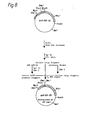
- the Sac I site was removed from plasmid pUR 528-03. (Fig. 9). This was accomplished by digestion or tne plasmid DNA with sac 1 to generate a linearized plasmid molecule with protruding 3' ends. These ends were then made blunt-ended using the 3'-exonuclease activity of T4 DNA polymerase in the presence of the four dNTP's [T. Maniatis et al. in Molecular Cloning; Cold Spring Harbor Laboratory 117-120 (1982)3. Circularisation of the linear plasmid was accomplished by using T4 DNA ligase.
- Plasmids from which the Sac I site present in the synthetic DNA fragment is removed are referred to as -04 type plasmids (for example: pUR 528-03 is changed into pUR 528-04; see Fig. 9).
- plasmids containing a structural gene for one of the maturation forms of preprothaumatin i.e. prethaumatin, prothaumatin and thaumatin, which will result in e.g. plasmids pUR 522-04, pUR 523-04 and pUR 520-04, respectively.
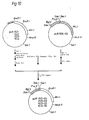
- (pre)(pro)(pseudo)chymosin encoding plasmids containing the -03 type GAPDH promoter/ regulation region use can be made of plasmid pUR 528-03 digested with Sac I and Hind III as a vector molecule in which the various structural genes were inserted together with a synthetic DNA fragment (Fig. 10).
- the (pre)(pro)(pseudo)chymosin encoding genes can be isolated from the plasmids pUR 1524, pUR 1523, pUR 1521 and pUR 1522 (cf.
- EP PA 77109 respectively by incubation with Sal I in combination with a partial Eco RI digestion to overcome cleavage of the additional Eco RI site in in the chymosin gene (cf 3).
- the resulting DNA fragments can then be incubated with Mung bean nuclease (cf 2) followed by a digestion with Hind III.
- Restriction fragments containing the intact and isolated gene can be purified by electrophoresis through a 1% agarose gel and then extracted from the gel.
- the synthetic DNA fragment to be used in the constructions is depicted in Fig. 7B.
- the vector molecule can be prepared by digestion of plasmid pUR 528-03 with Sac I and Hind III followed by a phosphatase treatment of the restriction fragments and isolation of the largest fragment from the 0.7% agarose gel.
- Vector molecule, synthetic DNA fragment (Sac I-treated) and the DNA fragment containing the (pre)(pro)(pseudo)chymosin encoding nucleotide sequence can be incubated with T4 DNA ligase and transformed in CaCl 2 -treated E. coli cells. Plasmid DNA obtained from ampicillin-resistant colonies can be tested by incubation with various restriction enzymes.
- the nomenclature of the newly created plasmids is similar to the nomenclature of the (pre)(pro)-thaumatin-encoding plasmids (pUR 1524-03, pUR 1523-03, pUR 1521-03 and pUR 1522-03). Removal of the Sac I site has been described also (see 4). Removal of the Sac I sites will result in the plasmids pUR 1524-04, pUR 1523-04, pUR 1521-04 and pUR 1522-04, respectively (see Fig. 10).
- Desired oligonucleotides were synthesized on a polystyrene support using phosphotriester methodology and a library of dimers. [G.A. van der Marel et al., Recl.Trav.Chim. Pays-Bas 101, 234-241 (1982)]. Chloromethylated polystyrene (1.34 mmoles/gram) was functionalized with 2-(4-hydroxylphenyl) ethanol CSu-Sun Wang, J.Am.'Chem. Soc. 95, 1325-1333 (1973)] and then coupled with 5' phosphorylated uridine protected as a mixture of 2' and 3' acetate and levulinyl groups (analogously to G.A.
- TATA or TATAAA sequences are believed to play an important role in positioning RNA initiation sites in eucaryotic promoter structures which are recognized by RNA polymerase II [C. Breathnach and P. Chambon, Annu. Rev. Biochem. 50, 349-384 (1981)]. Usually transcription is initiated 25 to 30 nucleotides 3' to such sequences although for yeast varying distances (up to 70 nucleotides; M.J. Dobson etal., Nucleic Acids Res. 10, 2625-2637 (1982)) have been described.
- this structure contains two additional sets of TATA and TATAAA sequences which are located towards the ends of the promoter fragment (Fig. 2). Most likely the clustered 5'TATATAA 3'sequence occurring around position -130 is responsible for transcription of the GAPDH encoding gene. The two other TATA and TATAAA sequences present around positions -608 and -770 are possibly involved in regulation of GAPDH expression (see below; P.K. Maitra and Z. Lobo, J. Biol. Chem., 246, 489-499 (1971)).
- the GAPDH promoLer/re g ula- tion fragment contains various nucleotide sequences which are implicated in transcription termination.
- K.S. Zaret and F. Sherman [Cell 28, 563-573 (1982)] found the sequences TAG-N-TAGT-N'-TTT or TAG-N"-TATGT-N"'-TTT, in which N,N',N" and N"' represent the variable distances between the groups, in the 3' flanking sequences of a majority of yeast genes examined.
- Identical or similar sequences occur in the GAPDH promoter/regulation fragment around position -625 (TAT-N 4 -TAGT-N S -TTT), around position -324 (TAC-N 13 -TAGT-N 17 -TTA, around position -192 (TAC-N 9 -TATGT-N 1 -TTT) and around position -180 (TAT-N 17 -TAGT-N 23 -TTT).
- these postulated termination signals are represented by slashes.
- the largest open translation reading frame present on the GAPDH promoter/regulation fragment extends from position -450 to -337 and encodes a peptide of 38 amino acids long.
- plasmid pFl-33 was cleaved with restriction enzyme Afl II. Digestion with this enzyme yielded two fragments, the smaller of which has a length of 1307 nucleotides and encompasses the GAPDH termination/ polyadenylation region from position 11 to 1317 (Fig. 12). The latter fragment was isolated, incubated with Mung bean nuclease to generate blunt ends (cf 2) and then equipped with the Bam HI linker (5'CCGGATCCGG3') using T4 DNA ligase.
- M13 RF was digested with Taq I and the resulting fragments were made blunt end by incubation with Mung bean nuclease. The fragments were then equipped with a Hind III linker (5'AGAAGCTTCT3') using T4 DNA ligase followed by a digestion with Hind III. The DNA was precipitated from the reaction mix by the addition of two volumes ethanol. The precipitate was resuspended and the various restriction fragments were separated by electrophoresis through a 4% acryl-amide gel.From this gel the 441 nucleotides long fragment containing the central transcription termination signal was isolated.
- plasmid pUR 1521-02 was isolated from an E. coli strain deficient in adenine methylase and cleaved with restriction endonuclease Bcl I. This enzyme recognizes the (un- methylated) sequence 5'TGATCA 3' and cleaves the (pre)(pro)(pseudo)chymosin encoding genes within their translation termination codon TGA.
- the Bcl I-cleaved plasmid molecules were incubated first with Sal I, followed by alkaline phosphatase. The larger of the two restriction fragments generated was isolated from the 0.7% agarose gel.
- plasmid 294-17 was digested with Hind III and cleaved partially with Bam HI. The 1020 nucleotides long Hind III-Bam HI fragment containing the Hpa I site was obtained by electro-elution from the 1% agarose gel.
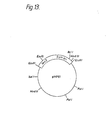
- the E. coli-yeast shuttle vector pMP81 [Fig.l3 ; C.P. Hollenberg, Current Topics in Microbiol. and Immunol., 96, 119-144, (1982)] consists of plasmid pCRI [C. Covey et al., MGG, 145, 155-158 (1976)] and a double Eco RI fragment of pJDB 219 [J.D. Beggs, Nature, 275, 104-109 (1978)] carrying both the leu 2 gene and the yeast 2 micron DNA replication origin. The latter two functions can be excised from pMP81 by a digestion with Hind III and Sal I.
- the resulting 4.4 kb long restriction fragment was introduced into the various pBR 322 derivatives containing genes encoding thaumatin-precursors in combination with the various forms of the GAPDH promoter region of S. cerevisiae.
- a similar procedure was used to introduce the 4.4 kb long restriction fragment into the various pBR322 derivatives containing genes encoding chymosin-precursors in combination with the GAPDH promoter region of S. cerevisiae.
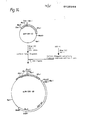
- the introduction of the 2 micron replication origin and leu 2 gene containing Hind III-Sal I fragment into the various plasmids was accomplished by cleavage of the E. coli plasmids with Hind III and Sal I (cf. Fig. 14) and a subsequent treatment of the resulting fragments with phosphatase. After separation of the fragments by electrophoresis through a 1% agarose gel, the largest fragment was isolated, mixed with the purified Hind III-Sal I fragment obtained from pMP81, ligated with T4 DN A ligase and transformed to CaCl 2 -treated E. coli cells.
- Plasmids containing the correct insert were purified by CsCl-ethidium bromide density gradient centrifugation and used to transform S. cerevisiae AH22 (A. Hinnen et al., Proc.Natl.Acad.Sci.USA 75, 1929-1933 (1978)) according to the procedure of J.D. Beggs, Nature 275, 104-109 (1978).
- plasmids pUR 522-02, pUR 523-02, pUR 1524-02, pUR 1523-02 and pUR 1521-02 were converted into their corresponding pURY plasmids.
- yeast is able to correctly process the plant signal sequence.
- Recently obtained data on the amino-terminal amino acid sequence of yeast-synthesized thaumatin have provided definite evidence for this notion.
- transcription termination fragment A (cf. Fig. 12) can be carried out as follows. Cleavage of plasmid pURY 528-03 with Hind III and a subsequent Mung bean nuclease digestion (cf. 2) will yield a linearized and blunt-ended plasmid molecule (cf. Fig 14).
- Derivatives of the E. coli-yeast shuttle vectors described under 5 and 9, useful as generally applicable yeast expression vectors, can be prepared.
- the GAPDH promoter/regulation region including a chemically synthesized DNA fragment can be used for DNA initiation, whereas transcription termination can be effected by the transcription termination/polyadenylation region of the "Able" operon of the 2 micron DNA.
- Insertion of foreign genes in these expression vectors can be accomplished by homopolymer (poly dA) tailing of the Sac I site in the promoter and the Hind III site present in the "Able" operon in combination with poly dT tailing of the nucleotide sequence to be inserted.
- plasmid pURY 528-03 can be cleaved with Hind III and then incubated with Klenow DNA polymerase and the four dNTP's to generate a blunt-ended, linearized DNA molecule (Fig. 15). Subsequently this DNA molecule can be cleaved with Sac I and of the two resulting DNA fragments the larger can be isolated from a 0.7% agarose gel and incubated with terminal transferase and dATP under conditions described by G. Deng and R. Wu [Nucleic Acids Res. 9, 4173-4188 (1981)]. The time of incubation has to be such that the tail added to the 3'end generated by cleavage with Sac I has a length of about 20 dATP residues.
- the introduction of a foreign gene into the poly dA-tailed expression vector can be carried out by incubating the DNA containing this gene with a set of restriction enzymes such that the desired gene can be cleaved as close as possible upstream of the translation initiation codon and downstream of the translation termination codon of this gene. Since promoter regions can be preceded by transcription termination signals, it is important that the original promoter is not contained within the resulting DNA fragment. After purification, the trimmed DNA fragment can be equipped with poly dT tails.
- the poly dT tails can be directly added to the Sl nuclease- treated double-stranded DNA molecule. In all cases the time of incubation with terminal transferase must be chosen such that poly dT tails with a length of about 20 nucleotides are generated.
- the DNA to be inserted and the poly dA-tailed vector molecule can then be hybridized by incubation at 65°C for 10 minutes, followed by cooling down the hybridization mixture slowly to room temperature. The mixture can be subsequently transformed into CaCl 2 -treated E. coli cells. Plasmid DNA isolated from ampicillin-resistant transformants can then be used to transform yeast cells.
- the E. coli-yeast shuttle vector pEK 2-7 consists of plasmid YRp7 [D.T. Stinchcomb et al., Nature 282, 39-43 (1979)] containing the 1.2 kb KARS-2 fragment. Owing to the presence of the yeast trp 1 gene, plasmid pEK 2-7 can be maintained in K. lactis SD11 (lac 4, trp 1; cf. pages 18 and 19 of European Patent Application N° 0 096 910: A1).
- plasmid pUR 528-03 (Fig. 8) has been equipped with both KARS-2 and the trp 1 gene.
- the latter two functions were excised from pEK 2-7 by a digestion with Bgl II followed by the isolation from a 0.7% agarose gel of the smallest fragment generated.
- This purified fragment was then inserted in the dephosphorylated Bgl II cleavage site of pUR 528-03 by incubation with T4 DNA ligase. Transformation of the ligation mix in CaCl 2 -treated E. coli cells yielded plasmid pURK 528-03 (Fig. 16).
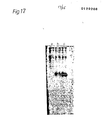
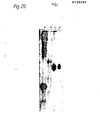
- Transformants generated by the introduction of the latter plasmid into K. lactis SD 11 cells by the procedure described in European Patent Application N° 0 096 910; Al could be shown to synthesize preprothaumatin (Fig. 17).
- plasmid pURY 528-03 was also equipped with KARS-2 and the yeast trp 1 gene and introduced into K. lactis SD 11 (Fig. 16 ).
- K. lactis cells carrying pURK 528-33 could also be shown to synthesize preprothaumatin (Fig. 17).
- Preprothaumatin production in cells containing pURK 528-33 was, however, slightly higher than in cells containing pURK 528-03. Since similar observations have been made by C. Gerbaud et al.
- Integration of DNA sequences encoding either a heterologous or homologous structural gene under transcriptional control of the GAPDH promoter/ regulation region and, optionally, the GAPDH termination/polyadenylation region into the yeast genome can be achieved on the basis of techniques described by R.J. Rothstein [in Methods in Enzymology 101, 202-211 (1983)] and K. Struhl [Nature 305, 391-397 (1983)].
- the criteria to apply these techniques are the availability of (i) suitable marker genes, (ii) cloned DNA sequences homologous with DNA sequences present on the yeast genome and (iii) the availability of an intact, homologous or heterologous, protein-encoding DNA sequence.
- the latter sequences can be integrated into the yeast genome by homologous recombination events either between GAPDH promoter and terminator sequences (cf. Fig. 19) or between the marker genes.
- the foreign protein encoding DNA sequence is integrated within the "wild type" marker gene, hereby destroying the function of this gene.
- the synthesis can be carried out by making small (up to 30 nucleotides) single strand DNA fragments with partial overlapping sequences.
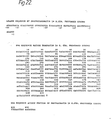
- This method makes it possible that also the various maturation forms of both genes are obtained simultaneously (cf. Fig. 21-22).
- the approach adopted is suitable for making changes in parts of the sequences.
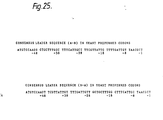
- Two typical yeast leader sequences are that of acid phosphatase [K. Arima et al., Nucleic Acids Res. 11, 1657-1672 (1983)] and that of invertase [R. Taussig and M.
Landscapes
- Life Sciences & Earth Sciences (AREA)
- Health & Medical Sciences (AREA)
- Genetics & Genomics (AREA)
- Engineering & Computer Science (AREA)
- Chemical & Material Sciences (AREA)
- Organic Chemistry (AREA)
- Biomedical Technology (AREA)
- Zoology (AREA)
- Bioinformatics & Cheminformatics (AREA)
- Wood Science & Technology (AREA)
- Biotechnology (AREA)
- General Engineering & Computer Science (AREA)
- Molecular Biology (AREA)
- Biochemistry (AREA)
- General Health & Medical Sciences (AREA)
- Biophysics (AREA)
- Microbiology (AREA)
- Mycology (AREA)
- Plant Pathology (AREA)
- Physics & Mathematics (AREA)
- Medicinal Chemistry (AREA)
- Botany (AREA)
- Gastroenterology & Hepatology (AREA)
- Proteomics, Peptides & Aminoacids (AREA)
- Micro-Organisms Or Cultivation Processes Thereof (AREA)
- Preparation Of Compounds By Using Micro-Organisms (AREA)
- Saccharide Compounds (AREA)
- Peptides Or Proteins (AREA)
Priority Applications (1)
| Application Number | Priority Date | Filing Date | Title |
|---|---|---|---|
| AT84200735T ATE46921T1 (de) | 1983-05-19 | 1984-05-21 | Verbesserungen in der expression von neu eingefuehrten genen in hefezellen. |
Applications Claiming Priority (2)
| Application Number | Priority Date | Filing Date | Title |
|---|---|---|---|
| EP83200713 | 1983-05-19 | ||
| EP83200713 | 1983-05-19 |
Publications (3)
| Publication Number | Publication Date |
|---|---|
| EP0129268A2 true EP0129268A2 (de) | 1984-12-27 |
| EP0129268A3 EP0129268A3 (en) | 1985-06-19 |
| EP0129268B1 EP0129268B1 (de) | 1989-10-04 |
Family
ID=8190955
Family Applications (1)
| Application Number | Title | Priority Date | Filing Date |
|---|---|---|---|
| EP84200735A Expired EP0129268B1 (de) | 1983-05-19 | 1984-05-21 | Verbesserungen in der Expression von neu eingeführten Genen in Hefezellen |
Country Status (5)
| Country | Link |
|---|---|
| EP (1) | EP0129268B1 (de) |
| JP (1) | JPS60501290A (de) |
| DE (1) | DE3480006D1 (de) |
| DK (1) | DK24785A (de) |
| WO (1) | WO1984004538A1 (de) |
Cited By (7)
| Publication number | Priority date | Publication date | Assignee | Title |
|---|---|---|---|---|
| EP0173668A1 (de) * | 1984-08-31 | 1986-03-05 | Smithkline Beecham Corporation | Rekombinanter Mikroorganismus der Art Saccharomyces |
| EP0139501A3 (de) * | 1983-10-11 | 1986-10-15 | Beatrice Companies, Inc. | Herstellung und Expression von Genen für Thaumatin |
| WO1987007641A1 (en) * | 1986-06-03 | 1987-12-17 | Unilever Nv | Production of guar alpha-galactosidase by hosts transformed with recombinant dna methods |
| EP0183272A3 (en) * | 1984-11-30 | 1988-01-20 | Suntory Limited | Vector capable of efficient gene expression and utilization of such vector |
| EP0255153A1 (de) * | 1986-06-03 | 1988-02-03 | Unilever N.V. | Herstellung von Guar-alpha-galactosidase mit durch rekombinante DNS-Verfahren transformierten Wirtzellen |
| EP0225887A4 (de) * | 1985-04-08 | 1989-07-26 | Amgen | Verfahren und hybridpromotor zur steuerung der exogenen gentranskription. |
| EP0374913A1 (de) * | 1988-12-22 | 1990-06-27 | Phillips Petroleum Company | Pichia pastoris-Glyceraldehyd-3-Phosphat Dehydrogenase-Gen |
Families Citing this family (8)
| Publication number | Priority date | Publication date | Assignee | Title |
|---|---|---|---|---|
| US5104795A (en) * | 1985-11-13 | 1992-04-14 | Zoma Corporation | Shortened phosphoglycerate kinase promoter |
| EP0245479B1 (de) * | 1985-11-13 | 1993-02-17 | Xoma Corporation | Verkürzter phosphoglycerat-kinase-promotor |
| US5013652A (en) * | 1986-10-14 | 1991-05-07 | Genex Corporation | Composite yeast vectors |
| US5049493A (en) * | 1987-10-23 | 1991-09-17 | California Institute Of Technology | Enhancement of cell growth by expression of a cloned hemoglobin gene |
| US5864028A (en) * | 1992-11-03 | 1999-01-26 | Gene Shears Pty. Limited | Degradation resistant mRNA derivatives linked to TNF-α ribozymes |
| DE10060133B4 (de) * | 2000-11-27 | 2006-07-13 | Institut für Pflanzengenetik und Kulturpflanzenforschung | Wirts-Vektor-System für die heterologe Genexpression in der Hefe Debaryomyces |
| EP2287326A1 (de) | 2003-08-08 | 2011-02-23 | Arriva Pharmaceuticals, Inc. | Verfahren zur Protein-Produktion in Hefe |
| JP4460876B2 (ja) * | 2003-11-07 | 2010-05-12 | 株式会社豊田中央研究所 | 有機酸存在下におけるプロモーター及びその利用 |
Family Cites Families (9)
| Publication number | Priority date | Publication date | Assignee | Title |
|---|---|---|---|---|
| NL7811040A (nl) * | 1977-11-08 | 1979-05-10 | Genentech Inc | Synthetische dna en werkwijze ter bereiding daarvan. |
| IE53166B1 (en) * | 1980-08-05 | 1988-08-03 | Searle & Co | Synthetic urogastrone gene,corresponding plasmid recombinants,transformed cells,production thereof and urogastrone expression |
| DE3175357D1 (en) * | 1980-12-12 | 1986-10-23 | Unilever Nv | Dna sequences encoding various allelic forms of mature thaumatin, recombinant plasmids comprising said dna's and a process for their preparation, bacterial cultures comprising said recombinant plasmids, and method for producing mature thaumatin |
| US4666847A (en) * | 1981-01-16 | 1987-05-19 | Collaborative Research, Inc. | Recombinant DNA means and method |
| NZ199722A (en) * | 1981-02-25 | 1985-12-13 | Genentech Inc | Dna transfer vector for expression of exogenous polypeptide in yeast;transformed yeast strain |
| US4615974A (en) * | 1981-08-25 | 1986-10-07 | Celltech Limited | Yeast expression vectors |
| JPS58146281A (ja) * | 1981-10-19 | 1983-08-31 | Suntory Ltd | 酵母細胞の形質転換法 |
| US4446235A (en) * | 1982-03-22 | 1984-05-01 | Genentech, Inc. | Method for cloning human growth hormone varient genes |
| JPS59501572A (ja) * | 1982-05-19 | 1984-09-06 | ユニリーバー ナームローゼ ベンノートシヤープ | クルイベロミセス属酵母およびその製造法 |
-
1984
- 1984-05-21 DE DE8484200735T patent/DE3480006D1/de not_active Expired
- 1984-05-21 EP EP84200735A patent/EP0129268B1/de not_active Expired
- 1984-05-21 JP JP59502035A patent/JPS60501290A/ja active Pending
- 1984-05-21 WO PCT/EP1984/000153 patent/WO1984004538A1/de not_active Ceased
-
1985
- 1985-01-18 DK DK24785A patent/DK24785A/da unknown
Cited By (8)
| Publication number | Priority date | Publication date | Assignee | Title |
|---|---|---|---|---|
| EP0139501A3 (de) * | 1983-10-11 | 1986-10-15 | Beatrice Companies, Inc. | Herstellung und Expression von Genen für Thaumatin |
| EP0173668A1 (de) * | 1984-08-31 | 1986-03-05 | Smithkline Beecham Corporation | Rekombinanter Mikroorganismus der Art Saccharomyces |
| EP0183272A3 (en) * | 1984-11-30 | 1988-01-20 | Suntory Limited | Vector capable of efficient gene expression and utilization of such vector |
| EP0225887A4 (de) * | 1985-04-08 | 1989-07-26 | Amgen | Verfahren und hybridpromotor zur steuerung der exogenen gentranskription. |
| WO1987007641A1 (en) * | 1986-06-03 | 1987-12-17 | Unilever Nv | Production of guar alpha-galactosidase by hosts transformed with recombinant dna methods |
| EP0255153A1 (de) * | 1986-06-03 | 1988-02-03 | Unilever N.V. | Herstellung von Guar-alpha-galactosidase mit durch rekombinante DNS-Verfahren transformierten Wirtzellen |
| US5082778A (en) * | 1986-06-03 | 1992-01-21 | Unilever Patent Holdings B.V. | Production of guar alpha-galactosidase by hosts transformed with recombinant dna. methods |
| EP0374913A1 (de) * | 1988-12-22 | 1990-06-27 | Phillips Petroleum Company | Pichia pastoris-Glyceraldehyd-3-Phosphat Dehydrogenase-Gen |
Also Published As
| Publication number | Publication date |
|---|---|
| EP0129268B1 (de) | 1989-10-04 |
| DK24785D0 (da) | 1985-01-18 |
| DK24785A (da) | 1985-01-18 |
| WO1984004538A1 (fr) | 1984-11-22 |
| DE3480006D1 (en) | 1989-11-09 |
| EP0129268A3 (en) | 1985-06-19 |
| JPS60501290A (ja) | 1985-08-15 |
Similar Documents
| Publication | Publication Date | Title |
|---|---|---|
| EP0096910B1 (de) | Hefe des Genus Kluyveromyces, modifiziert zur Expression von Preprothaumatin oder seinen verschiedenen allelischen und modifizierten Formen oder Maturationsformen | |
| US4943529A (en) | Kluyveromyces as a host strain | |
| EP0129268B1 (de) | Verbesserungen in der Expression von neu eingeführten Genen in Hefezellen | |
| RU2069694C1 (ru) | Способ получения прореннина, способ получения штамма дрожжей - продуцента прореннина, способ получения рекомбинантной плазмидной днк рхх-33, способ получения рекомбинантной плазмидной днк рхх-22, способ получения рекомбинантной плазмидной нк рхх-11 | |
| JP3068139B2 (ja) | 酵母よりヒト血清アルブミンおよびその他の異種蛋白質を微生物学的に生産する方法 | |
| HU208553B (en) | Process for producing polypeptides, plasmides coding them and transformed kluyveromyces | |
| JPH07222595A (ja) | 置換されたプロモーターを使用する宿主による異種起源蛋白質の製造方法 | |
| JPH07110233B2 (ja) | リプレツシブルイ−ストプロモ−タ− | |
| JPS61181398A (ja) | 形質転換酵母におけるグルカゴンの製造方法 | |
| EP0288435B1 (de) | Verfahren zur Herstellung von Proteinen | |
| US5741674A (en) | Recombinant production of proteins in yeast | |
| US5672487A (en) | Recombinant production of proteins in yeast | |
| RU2198923C2 (ru) | Нуклеотидная последовательность гена leu2 yarrowia lipolytica (варианты), рекомбинантный днк-материал (варианты), штамм дрожжей yarrowia lipolytica (варианты) | |
| JPH07241196A (ja) | アルブミンおよびヒトアポリポプロテインe様遺伝子を有する融合遺伝子、それを挿入したプラスミド並びにその用途 | |
| Oshima et al. | Expression of Chemically Synthesized α-Neo-endorphin Genes under the Control of the PH05 Gene of Saccharomyces cerevisiae |
Legal Events
| Date | Code | Title | Description |
|---|---|---|---|
| PUAI | Public reference made under article 153(3) epc to a published international application that has entered the european phase |
Free format text: ORIGINAL CODE: 0009012 |
|
| AK | Designated contracting states |
Designated state(s): AT BE CH DE FR GB IT LI NL SE |
|
| PUAL | Search report despatched |
Free format text: ORIGINAL CODE: 0009013 |
|
| AK | Designated contracting states |
Designated state(s): AT BE CH DE FR GB IT LI NL SE |
|
| 17P | Request for examination filed |
Effective date: 19850628 |
|
| 17Q | First examination report despatched |
Effective date: 19870114 |
|
| GRAA | (expected) grant |
Free format text: ORIGINAL CODE: 0009210 |
|
| AK | Designated contracting states |
Kind code of ref document: B1 Designated state(s): AT BE CH DE FR GB IT LI NL SE |
|
| PG25 | Lapsed in a contracting state [announced via postgrant information from national office to epo] |
Ref country code: SE Effective date: 19891004 Ref country code: NL Effective date: 19891004 Ref country code: IT Free format text: LAPSE BECAUSE OF FAILURE TO SUBMIT A TRANSLATION OF THE DESCRIPTION OR TO PAY THE FEE WITHIN THE PRESCRIBED TIME-LIMIT;WARNING: LAPSES OF ITALIAN PATENTS WITH EFFECTIVE DATE BEFORE 2007 MAY HAVE OCCURRED AT ANY TIME BEFORE 2007. THE CORRECT EFFECTIVE DATE MAY BE DIFFERENT FROM THE ONE RECORDED. Effective date: 19891004 Ref country code: FR Free format text: THE PATENT HAS BEEN ANNULLED BY A DECISION OF A NATIONAL AUTHORITY Effective date: 19891004 Ref country code: BE Effective date: 19891004 Ref country code: AT Effective date: 19891004 |
|
| REF | Corresponds to: |
Ref document number: 46921 Country of ref document: AT Date of ref document: 19891015 Kind code of ref document: T |
|
| REF | Corresponds to: |
Ref document number: 3480006 Country of ref document: DE Date of ref document: 19891109 |
|
| EN | Fr: translation not filed | ||
| NLV1 | Nl: lapsed or annulled due to failure to fulfill the requirements of art. 29p and 29m of the patents act | ||
| PG25 | Lapsed in a contracting state [announced via postgrant information from national office to epo] |
Ref country code: GB Effective date: 19900521 |
|
| PLBE | No opposition filed within time limit |
Free format text: ORIGINAL CODE: 0009261 |
|
| STAA | Information on the status of an ep patent application or granted ep patent |
Free format text: STATUS: NO OPPOSITION FILED WITHIN TIME LIMIT |
|
| PGFP | Annual fee paid to national office [announced via postgrant information from national office to epo] |
Ref country code: CH Payment date: 19900810 Year of fee payment: 7 |
|
| 26N | No opposition filed | ||
| GBPC | Gb: european patent ceased through non-payment of renewal fee | ||
| PG25 | Lapsed in a contracting state [announced via postgrant information from national office to epo] |
Ref country code: DE Effective date: 19910201 |
|
| PG25 | Lapsed in a contracting state [announced via postgrant information from national office to epo] |
Ref country code: LI Effective date: 19910531 Ref country code: CH Effective date: 19910531 |
|
| REG | Reference to a national code |
Ref country code: CH Ref legal event code: PL |