EP0131121B1 - Particules d'oxyde ou de silicate, dont les groupes hydroxyles situés à la surface sont remplacés au moins en partie par des groupes organiques, le procédé de leur préparation et leur utilisation pour la déstabilisation d'émulsions et pour la destruction de mousses - Google Patents
Particules d'oxyde ou de silicate, dont les groupes hydroxyles situés à la surface sont remplacés au moins en partie par des groupes organiques, le procédé de leur préparation et leur utilisation pour la déstabilisation d'émulsions et pour la destruction de mousses Download PDFInfo
- Publication number
- EP0131121B1 EP0131121B1 EP84105728A EP84105728A EP0131121B1 EP 0131121 B1 EP0131121 B1 EP 0131121B1 EP 84105728 A EP84105728 A EP 84105728A EP 84105728 A EP84105728 A EP 84105728A EP 0131121 B1 EP0131121 B1 EP 0131121B1
- Authority
- EP
- European Patent Office
- Prior art keywords
- radical
- carbon atoms
- optionally
- oxide
- silicate particles
- Prior art date
- Legal status (The legal status is an assumption and is not a legal conclusion. Google has not performed a legal analysis and makes no representation as to the accuracy of the status listed.)
- Expired
Links
- 239000002245 particle Substances 0.000 title claims description 38
- 239000000839 emulsion Substances 0.000 title claims description 16
- 239000006260 foam Substances 0.000 title claims description 14
- 238000002360 preparation method Methods 0.000 title claims description 14
- BPQQTUXANYXVAA-UHFFFAOYSA-N Orthosilicate Chemical compound [O-][Si]([O-])([O-])[O-] BPQQTUXANYXVAA-UHFFFAOYSA-N 0.000 title claims description 11
- 125000000962 organic group Chemical group 0.000 title claims description 10
- 125000002887 hydroxy group Chemical group [H]O* 0.000 title claims description 8
- 238000000034 method Methods 0.000 title claims description 8
- 230000008569 process Effects 0.000 title claims description 4
- 230000006378 damage Effects 0.000 title 1
- 230000001687 destabilization Effects 0.000 title 1
- 125000004432 carbon atom Chemical group C* 0.000 claims description 22
- 239000007788 liquid Substances 0.000 claims description 9
- 150000001875 compounds Chemical class 0.000 claims description 8
- 229910052801 chlorine Inorganic materials 0.000 claims description 4
- 239000000460 chlorine Substances 0.000 claims description 4
- 229930195733 hydrocarbon Natural products 0.000 claims description 4
- 239000004215 Carbon black (E152) Substances 0.000 claims description 3
- DGAQECJNVWCQMB-PUAWFVPOSA-M Ilexoside XXIX Chemical compound C[C@@H]1CC[C@@]2(CC[C@@]3(C(=CC[C@H]4[C@]3(CC[C@@H]5[C@@]4(CC[C@@H](C5(C)C)OS(=O)(=O)[O-])C)C)[C@@H]2[C@]1(C)O)C)C(=O)O[C@H]6[C@@H]([C@H]([C@@H]([C@H](O6)CO)O)O)O.[Na+] DGAQECJNVWCQMB-PUAWFVPOSA-M 0.000 claims description 3
- 125000001309 chloro group Chemical group Cl* 0.000 claims description 3
- 230000000368 destabilizing effect Effects 0.000 claims description 3
- 239000001301 oxygen Substances 0.000 claims description 3
- 229910052760 oxygen Inorganic materials 0.000 claims description 3
- 239000011734 sodium Substances 0.000 claims description 3
- 229910052708 sodium Inorganic materials 0.000 claims description 3
- ZLMJMSJWJFRBEC-UHFFFAOYSA-N Potassium Chemical group [K] ZLMJMSJWJFRBEC-UHFFFAOYSA-N 0.000 claims description 2
- YZCKVEUIGOORGS-IGMARMGPSA-N Protium Chemical group [1H] YZCKVEUIGOORGS-IGMARMGPSA-N 0.000 claims description 2
- TUJKJAMUKRIRHC-UHFFFAOYSA-N hydroxyl Chemical compound [OH] TUJKJAMUKRIRHC-UHFFFAOYSA-N 0.000 claims description 2
- WKBOTKDWSSQWDR-UHFFFAOYSA-N Bromine atom Chemical group [Br] WKBOTKDWSSQWDR-UHFFFAOYSA-N 0.000 claims 1
- VYPSYNLAJGMNEJ-UHFFFAOYSA-N Silicium dioxide Chemical compound O=[Si]=O VYPSYNLAJGMNEJ-UHFFFAOYSA-N 0.000 description 59
- YXFVVABEGXRONW-UHFFFAOYSA-N Toluene Chemical compound CC1=CC=CC=C1 YXFVVABEGXRONW-UHFFFAOYSA-N 0.000 description 51
- -1 alkyl radical Chemical class 0.000 description 27
- 239000000377 silicon dioxide Substances 0.000 description 24
- XLYOFNOQVPJJNP-UHFFFAOYSA-N water Substances O XLYOFNOQVPJJNP-UHFFFAOYSA-N 0.000 description 14
- 150000003254 radicals Chemical class 0.000 description 13
- 229910052799 carbon Inorganic materials 0.000 description 11
- 239000013530 defoamer Substances 0.000 description 11
- 239000010779 crude oil Substances 0.000 description 10
- 239000000243 solution Substances 0.000 description 9
- 229910021485 fumed silica Inorganic materials 0.000 description 7
- 239000000203 mixture Substances 0.000 description 7
- 239000011164 primary particle Substances 0.000 description 7
- 239000011521 glass Substances 0.000 description 6
- 238000010992 reflux Methods 0.000 description 6
- 239000007787 solid Substances 0.000 description 6
- 238000003756 stirring Methods 0.000 description 6
- GWEVSGVZZGPLCZ-UHFFFAOYSA-N Titan oxide Chemical compound O=[Ti]=O GWEVSGVZZGPLCZ-UHFFFAOYSA-N 0.000 description 5
- 238000009835 boiling Methods 0.000 description 5
- 238000001816 cooling Methods 0.000 description 5
- 125000005843 halogen group Chemical group 0.000 description 5
- 230000002209 hydrophobic effect Effects 0.000 description 5
- 239000003921 oil Substances 0.000 description 5
- TWNQGVIAIRXVLR-UHFFFAOYSA-N oxo(oxoalumanyloxy)alumane Chemical compound O=[Al]O[Al]=O TWNQGVIAIRXVLR-UHFFFAOYSA-N 0.000 description 5
- 239000003208 petroleum Substances 0.000 description 5
- 229920002545 silicone oil Polymers 0.000 description 5
- OKTJSMMVPCPJKN-UHFFFAOYSA-N Carbon Chemical compound [C] OKTJSMMVPCPJKN-UHFFFAOYSA-N 0.000 description 4
- BLRPTPMANUNPDV-UHFFFAOYSA-N Silane Chemical compound [SiH4] BLRPTPMANUNPDV-UHFFFAOYSA-N 0.000 description 4
- 238000000921 elemental analysis Methods 0.000 description 4
- 238000012986 modification Methods 0.000 description 4
- 239000004033 plastic Substances 0.000 description 4
- 229920003023 plastic Polymers 0.000 description 4
- 229910000077 silane Inorganic materials 0.000 description 4
- 239000004094 surface-active agent Substances 0.000 description 4
- 239000000725 suspension Substances 0.000 description 4
- PNEYBMLMFCGWSK-UHFFFAOYSA-N Alumina Chemical compound [O-2].[O-2].[O-2].[Al+3].[Al+3] PNEYBMLMFCGWSK-UHFFFAOYSA-N 0.000 description 3
- OKKJLVBELUTLKV-UHFFFAOYSA-N Methanol Chemical compound OC OKKJLVBELUTLKV-UHFFFAOYSA-N 0.000 description 3
- WNROFYMDJYEPJX-UHFFFAOYSA-K aluminium hydroxide Chemical compound [OH-].[OH-].[OH-].[Al+3] WNROFYMDJYEPJX-UHFFFAOYSA-K 0.000 description 3
- 239000000969 carrier Substances 0.000 description 3
- 230000000694 effects Effects 0.000 description 3
- 150000002191 fatty alcohols Chemical class 0.000 description 3
- 230000004048 modification Effects 0.000 description 3
- 235000012239 silicon dioxide Nutrition 0.000 description 3
- 229920000742 Cotton Polymers 0.000 description 2
- XUIMIQQOPSSXEZ-UHFFFAOYSA-N Silicon Chemical group [Si] XUIMIQQOPSSXEZ-UHFFFAOYSA-N 0.000 description 2
- 238000004458 analytical method Methods 0.000 description 2
- 239000006185 dispersion Substances 0.000 description 2
- 125000004435 hydrogen atom Chemical group [H]* 0.000 description 2
- 229910003480 inorganic solid Inorganic materials 0.000 description 2
- 239000000463 material Substances 0.000 description 2
- 239000003607 modifier Substances 0.000 description 2
- 150000001282 organosilanes Chemical class 0.000 description 2
- RVTZCBVAJQQJTK-UHFFFAOYSA-N oxygen(2-);zirconium(4+) Chemical compound [O-2].[O-2].[Zr+4] RVTZCBVAJQQJTK-UHFFFAOYSA-N 0.000 description 2
- 229920001296 polysiloxane Polymers 0.000 description 2
- 238000000926 separation method Methods 0.000 description 2
- 229910052710 silicon Inorganic materials 0.000 description 2
- 239000000758 substrate Substances 0.000 description 2
- 239000004408 titanium dioxide Substances 0.000 description 2
- 238000002604 ultrasonography Methods 0.000 description 2
- XINQFOMFQFGGCQ-UHFFFAOYSA-L (2-dodecoxy-2-oxoethyl)-[6-[(2-dodecoxy-2-oxoethyl)-dimethylazaniumyl]hexyl]-dimethylazanium;dichloride Chemical compound [Cl-].[Cl-].CCCCCCCCCCCCOC(=O)C[N+](C)(C)CCCCCC[N+](C)(C)CC(=O)OCCCCCCCCCCCC XINQFOMFQFGGCQ-UHFFFAOYSA-L 0.000 description 1
- PBRXKNKPUMMYPO-UHFFFAOYSA-N 1-$l^{1}-oxidanyl-2-methylpropane Chemical compound CC(C)C[O] PBRXKNKPUMMYPO-UHFFFAOYSA-N 0.000 description 1
- WBIQQQGBSDOWNP-UHFFFAOYSA-N 2-dodecylbenzenesulfonic acid Chemical compound CCCCCCCCCCCCC1=CC=CC=C1S(O)(=O)=O WBIQQQGBSDOWNP-UHFFFAOYSA-N 0.000 description 1
- KSCAZPYHLGGNPZ-UHFFFAOYSA-N 3-chloropropyl(triethoxy)silane Chemical group CCO[Si](OCC)(OCC)CCCCl KSCAZPYHLGGNPZ-UHFFFAOYSA-N 0.000 description 1
- 229910014559 C-Si-O Inorganic materials 0.000 description 1
- CQEXROJAJIAKFV-UHFFFAOYSA-N CC(C)C1C(CN)C1 Chemical compound CC(C)C1C(CN)C1 CQEXROJAJIAKFV-UHFFFAOYSA-N 0.000 description 1
- IAYPIBMASNFSPL-UHFFFAOYSA-N Ethylene oxide Chemical compound C1CO1 IAYPIBMASNFSPL-UHFFFAOYSA-N 0.000 description 1
- MCMNRKCIXSYSNV-UHFFFAOYSA-N ZrO2 Inorganic materials O=[Zr]=O MCMNRKCIXSYSNV-UHFFFAOYSA-N 0.000 description 1
- 230000009471 action Effects 0.000 description 1
- 239000004480 active ingredient Substances 0.000 description 1
- 239000013543 active substance Substances 0.000 description 1
- 230000002776 aggregation Effects 0.000 description 1
- 238000004220 aggregation Methods 0.000 description 1
- 239000003513 alkali Substances 0.000 description 1
- 239000002518 antifoaming agent Substances 0.000 description 1
- 239000007864 aqueous solution Substances 0.000 description 1
- 150000005840 aryl radicals Chemical class 0.000 description 1
- 229920001400 block copolymer Polymers 0.000 description 1
- 125000001246 bromo group Chemical group Br* 0.000 description 1
- 230000015556 catabolic process Effects 0.000 description 1
- 238000012512 characterization method Methods 0.000 description 1
- 229920001577 copolymer Polymers 0.000 description 1
- 150000001990 dicarboxylic acid derivatives Chemical class 0.000 description 1
- KPUWHANPEXNPJT-UHFFFAOYSA-N disiloxane Chemical class [SiH3]O[SiH3] KPUWHANPEXNPJT-UHFFFAOYSA-N 0.000 description 1
- 229940060296 dodecylbenzenesulfonic acid Drugs 0.000 description 1
- 230000007717 exclusion Effects 0.000 description 1
- 238000002474 experimental method Methods 0.000 description 1
- 238000000605 extraction Methods 0.000 description 1
- 238000000855 fermentation Methods 0.000 description 1
- 230000004151 fermentation Effects 0.000 description 1
- 239000000945 filler Substances 0.000 description 1
- 239000010419 fine particle Substances 0.000 description 1
- 239000007789 gas Substances 0.000 description 1
- 239000003365 glass fiber Substances 0.000 description 1
- 150000004820 halides Chemical class 0.000 description 1
- 150000002430 hydrocarbons Chemical class 0.000 description 1
- 150000003949 imides Chemical class 0.000 description 1
- 239000012442 inert solvent Substances 0.000 description 1
- 239000010954 inorganic particle Substances 0.000 description 1
- WCYWZMWISLQXQU-UHFFFAOYSA-N methyl Chemical compound [CH3] WCYWZMWISLQXQU-UHFFFAOYSA-N 0.000 description 1
- 239000002808 molecular sieve Substances 0.000 description 1
- 125000001400 nonyl group Chemical group [H]C([*])([H])C([H])([H])C([H])([H])C([H])([H])C([H])([H])C([H])([H])C([H])([H])C([H])([H])C([H])([H])[H] 0.000 description 1
- 125000002347 octyl group Chemical group [H]C([*])([H])C([H])([H])C([H])([H])C([H])([H])C([H])([H])C([H])([H])C([H])([H])C([H])([H])[H] 0.000 description 1
- 150000003961 organosilicon compounds Chemical class 0.000 description 1
- 125000005702 oxyalkylene group Chemical group 0.000 description 1
- 239000003973 paint Substances 0.000 description 1
- 230000005501 phase interface Effects 0.000 description 1
- 229920000435 poly(dimethylsiloxane) Polymers 0.000 description 1
- 229920000728 polyester Polymers 0.000 description 1
- 238000012545 processing Methods 0.000 description 1
- 230000001698 pyrogenic effect Effects 0.000 description 1
- 230000035484 reaction time Effects 0.000 description 1
- 230000009467 reduction Effects 0.000 description 1
- 239000004576 sand Substances 0.000 description 1
- 229910002027 silica gel Inorganic materials 0.000 description 1
- 239000000741 silica gel Substances 0.000 description 1
- 239000010703 silicon Substances 0.000 description 1
- URGAHOPLAPQHLN-UHFFFAOYSA-N sodium aluminosilicate Chemical compound [Na+].[Al+3].[O-][Si]([O-])=O.[O-][Si]([O-])=O URGAHOPLAPQHLN-UHFFFAOYSA-N 0.000 description 1
- 159000000000 sodium salts Chemical class 0.000 description 1
- 239000002904 solvent Substances 0.000 description 1
- 238000001179 sorption measurement Methods 0.000 description 1
- 239000000126 substance Substances 0.000 description 1
- 238000012360 testing method Methods 0.000 description 1
- 239000004753 textile Substances 0.000 description 1
- 229920001169 thermoplastic Polymers 0.000 description 1
- 229920001187 thermosetting polymer Polymers 0.000 description 1
- 239000004416 thermosoftening plastic Substances 0.000 description 1
- 229910001928 zirconium oxide Inorganic materials 0.000 description 1
Classifications
-
- C—CHEMISTRY; METALLURGY
- C10—PETROLEUM, GAS OR COKE INDUSTRIES; TECHNICAL GASES CONTAINING CARBON MONOXIDE; FUELS; LUBRICANTS; PEAT
- C10G—CRACKING HYDROCARBON OILS; PRODUCTION OF LIQUID HYDROCARBON MIXTURES, e.g. BY DESTRUCTIVE HYDROGENATION, OLIGOMERISATION, POLYMERISATION; RECOVERY OF HYDROCARBON OILS FROM OIL-SHALE, OIL-SAND, OR GASES; REFINING MIXTURES MAINLY CONSISTING OF HYDROCARBONS; REFORMING OF NAPHTHA; MINERAL WAXES
- C10G33/00—Dewatering or demulsification of hydrocarbon oils
- C10G33/04—Dewatering or demulsification of hydrocarbon oils with chemical means
-
- B—PERFORMING OPERATIONS; TRANSPORTING
- B01—PHYSICAL OR CHEMICAL PROCESSES OR APPARATUS IN GENERAL
- B01D—SEPARATION
- B01D17/00—Separation of liquids, not provided for elsewhere, e.g. by thermal diffusion
- B01D17/02—Separation of non-miscible liquids
- B01D17/04—Breaking emulsions
- B01D17/047—Breaking emulsions with separation aids
-
- B—PERFORMING OPERATIONS; TRANSPORTING
- B01—PHYSICAL OR CHEMICAL PROCESSES OR APPARATUS IN GENERAL
- B01D—SEPARATION
- B01D19/00—Degasification of liquids
- B01D19/02—Foam dispersion or prevention
- B01D19/04—Foam dispersion or prevention by addition of chemical substances
- B01D19/0404—Foam dispersion or prevention by addition of chemical substances characterised by the nature of the chemical substance
- B01D19/0409—Foam dispersion or prevention by addition of chemical substances characterised by the nature of the chemical substance compounds containing Si-atoms
-
- C—CHEMISTRY; METALLURGY
- C01—INORGANIC CHEMISTRY
- C01B—NON-METALLIC ELEMENTS; COMPOUNDS THEREOF; METALLOIDS OR COMPOUNDS THEREOF NOT COVERED BY SUBCLASS C01C
- C01B33/00—Silicon; Compounds thereof
- C01B33/113—Silicon oxides; Hydrates thereof
- C01B33/12—Silica; Hydrates thereof, e.g. lepidoic silicic acid
- C01B33/18—Preparation of finely divided silica neither in sol nor in gel form; After-treatment thereof
- C01B33/181—Preparation of finely divided silica neither in sol nor in gel form; After-treatment thereof by a dry process
-
- C—CHEMISTRY; METALLURGY
- C09—DYES; PAINTS; POLISHES; NATURAL RESINS; ADHESIVES; COMPOSITIONS NOT OTHERWISE PROVIDED FOR; APPLICATIONS OF MATERIALS NOT OTHERWISE PROVIDED FOR
- C09C—TREATMENT OF INORGANIC MATERIALS, OTHER THAN FIBROUS FILLERS, TO ENHANCE THEIR PIGMENTING OR FILLING PROPERTIES ; PREPARATION OF CARBON BLACK ; PREPARATION OF INORGANIC MATERIALS WHICH ARE NO SINGLE CHEMICAL COMPOUNDS AND WHICH ARE MAINLY USED AS PIGMENTS OR FILLERS
- C09C1/00—Treatment of specific inorganic materials other than fibrous fillers; Preparation of carbon black
- C09C1/28—Compounds of silicon
- C09C1/30—Silicic acid
- C09C1/3081—Treatment with organo-silicon compounds
-
- C—CHEMISTRY; METALLURGY
- C01—INORGANIC CHEMISTRY
- C01P—INDEXING SCHEME RELATING TO STRUCTURAL AND PHYSICAL ASPECTS OF SOLID INORGANIC COMPOUNDS
- C01P2006/00—Physical properties of inorganic compounds
- C01P2006/80—Compositional purity
-
- Y—GENERAL TAGGING OF NEW TECHNOLOGICAL DEVELOPMENTS; GENERAL TAGGING OF CROSS-SECTIONAL TECHNOLOGIES SPANNING OVER SEVERAL SECTIONS OF THE IPC; TECHNICAL SUBJECTS COVERED BY FORMER USPC CROSS-REFERENCE ART COLLECTIONS [XRACs] AND DIGESTS
- Y10—TECHNICAL SUBJECTS COVERED BY FORMER USPC
- Y10T—TECHNICAL SUBJECTS COVERED BY FORMER US CLASSIFICATION
- Y10T428/00—Stock material or miscellaneous articles
- Y10T428/29—Coated or structually defined flake, particle, cell, strand, strand portion, rod, filament, macroscopic fiber or mass thereof
- Y10T428/2982—Particulate matter [e.g., sphere, flake, etc.]
- Y10T428/2991—Coated
- Y10T428/2993—Silicic or refractory material containing [e.g., tungsten oxide, glass, cement, etc.]
- Y10T428/2995—Silane, siloxane or silicone coating
-
- Y—GENERAL TAGGING OF NEW TECHNOLOGICAL DEVELOPMENTS; GENERAL TAGGING OF CROSS-SECTIONAL TECHNOLOGIES SPANNING OVER SEVERAL SECTIONS OF THE IPC; TECHNICAL SUBJECTS COVERED BY FORMER USPC CROSS-REFERENCE ART COLLECTIONS [XRACs] AND DIGESTS
- Y10—TECHNICAL SUBJECTS COVERED BY FORMER USPC
- Y10T—TECHNICAL SUBJECTS COVERED BY FORMER US CLASSIFICATION
- Y10T428/00—Stock material or miscellaneous articles
- Y10T428/31504—Composite [nonstructural laminate]
- Y10T428/31652—Of asbestos
- Y10T428/31663—As siloxane, silicone or silane
Definitions
- the invention further relates to methods for producing these modified particles and the use of the particles for destabilizing water-in-oil emulsions and for destroying foams in aqueous systems.
- oxidic or silicate particles with organosilicon compounds in order to modify the surface of these particles. This can influence the affinity of the treated particles for the surrounding medium.
- the particles can be modified either physically by adsorption or chemically by the fact that the modifiers react with groups on the surface of the particles, in particular hydroxyl groups.
- an aluminum hydroxide which has been treated on the surface with an excessive amount of silane, its hydrolyzate or condensate, the silane having 2 or 3 hydrolyzable groups on silicon and an organo group with a polyoxyalkylene radical.
- a mixture of this treated aluminum hydroxide with untreated aluminum hydroxide can be a plastic mass, e.g. As thermoplastics, are added and causes a reduction in the viscosity of the plastic mass and reduces the flammability or flammability of this plastic mass.
- organopolysiloxanes and their use as anti-foaming agents are also known which have Si-C-bonded alkoxypolyoxyalkylene groups.
- antifoams based on siloxane / oxyalkylene copolymers with a weight fraction of up to 10% of highly disperse silica are also known.
- the present invention has for its object to modify oxidic or silicate particles so that they are able to have a destabilizing effect on emulsions, especially water-in-oil emulsions, and foams of aqueous systems in order to split the emulsions and separate them the phases or cause a breakdown of the foams.
- the desired oxidic or silicate particles should be able to separate the water contained in petroleum emulsions, in particular freshly extracted petroleum emulsions, optionally in cooperation with other known demulsifiers.
- the silicatic particles used are preferably those of finely divided, in particular pyrolytically produced, silica with a specific surface area of at least 50 m 2 / g and a particle size of 9 40 nm.
- the specification of the particle size relates to the size of the particles before the modification, that is to say the primary particles present.
- the modified particles can deviate from this primary particle size due to aggregation.
- the R 1 radical is preferably an alkyl radical with 10 to 22 carbon atoms derived from a fatty alcohol. However, it can also be an optionally branched alkyl radical, as can be obtained, for example, using oxosynthesis.
- the radical R 1 can furthermore be an alkylphenyl radical, in particular the octyl, isooctyl, nonyl, dodecylphenyl radical.
- the radical R 2 is a divalent hydrocarbon radical which can also be branched at a content of 3 and more carbon atoms. It is preferably the - (CH 2 ) 3 radical.
- the group C n H 2n O is an oxyalkylene group whose oxyalkylene radical is preferably the oxyethylene radical. However, up to 10 mol% of the oxyalkylene radicals can be oxypropylene radicals.
- the chain length of this oxyethylene radical, expressed by the index x, is 1 to 50, preferably 2 to 30.
- the radicals R 3 and R 4 are the same or different. They mean a lower alkyl radical with 1 to 4 carbon atoms, preferably the methyl radical. You can also a hydrolyzable radical, in particular a chlorine atom, an alkoxy radical having 1 to 4 carbon atoms, such as. B. the methoxy, ethoxy, propoxy, butoxy or iso-butoxy radical, or the radical -NR 8 2 , where R 8 may be the same or different within the group and is a hydrogen atom or an alkyl radical having 1 to 4 carbon atoms , mean. However, they can also have the meaning of a proportionate oxygen radical 0 , 5 or a hydroxyl group.
- the groups modifying the particles accordingly consist of hydrophilic and hydrophobic components.
- the resulting surface-active properties are to be regarded as an essential characteristic of these groups. Although they become insoluble as a result of their grafting onto the substrate and thus lose an essential property of surface-active compounds, their chemical bonding to a solid support gives them surprising, special properties and effects at phase interfaces.
- the modifying organic groups are linked to the substrate via a C-Si-O bridge.
- the polyoxyalkylene chain is connected to the silicon atom of the organic group via a carbon bridge. This ensures that the organic groups are hydrolytically stable bonded to the inorganic carrier.
- Suitable inorganic carriers are, for. As silicon dioxide, aluminum oxide, titanium dioxide and zirconium dioxide, among which silicon dioxide is preferred.
- the particles should generally not be larger than 3 mm in diameter, which is of particular importance if the specific surface area of the particles is directly related to their size.
- Ligroin, toluene, gasoline or other hydrocarbons can be used as the inert liquid medium.
- the reaction of the modifier with the hydroxyl groups of the inorganic carriers is already underway relatively low temperatures, such as B. 40 ° C, from. However, the reaction time can be shortened by increasing the temperature up to about 150 ° C.
- the alkali halide formed during the reaction is expediently removed by extraction with water.
- the inorganic particles modified in accordance with the invention show the desired demulsifying and foam-breaking properties.
- Particles which, because of their size, are not suitable for forming a sufficiently stable dispersion will preferably be used in the form of a filter bed in which these particles can also be present in a mixture with other, unmodified material, such as sand. So that these particles modified according to the invention can develop their effectiveness, it is necessary to pass the emulsion to be treated through the filter bed. It has proven to be advantageous to add an organic demulsifier known per se to the emulsion. Particles that cannot be distributed into a sufficiently stable dispersion are less suitable for destroying a foam.
- a finely divided silica for the modification, the particle size of which is not more than 10 ⁇ m.
- a pyrogenic silica is preferably used, the primary particle size 9 40 nm and the specific surface area is at least 50 m Z / g.
- pyrogenic silicas whose primary particle size is 14 nm and their specific surface area ⁇ 150 m 2 / g.
- the effect of the silica modified according to the invention increases in accordance with the degree of its distribution, which is largely determined by the primary particle size of the silica. It is preferred to use the finely divided silica modified according to the invention in the emulsion to be treated in the form of a suspension in an inert solvent, e.g. B. toluene. Particularly good results are obtained if, during the preparation of the stock suspension, the fine distribution of the silica is promoted by a high-speed stirrer or by the action of ultrasound. To demulsify crude oil, 1 to 10 ppm of the modified, finely divided silica are generally sufficient.
- the finely divided silica modified according to the invention is furthermore outstandingly suitable for foams formed from aqueous systems, e.g. B. to remove foams from surfactant solutions, foams from textile treatment liquors or fermentation media.
- the modified silica is distributed in liquid carriers, e.g. B. silicone oils, and adds these suspensions to the foam system.
- liquid carriers e.g. B. silicone oils
- 1 to 10 ppm of modified silica are also sufficient here.
- the silica added for defoaming does not interfere with the further processing or use of the defoamed products.
- 50 g of a finely divided fumed silica with a specific surface area of 200 m 2 / g are in 600 ml of ligroin (boiling range 90 to 100 ° C) together with 10 g of an alkylaryloxypolyoxyalkylene trialkoxysilane of the middle formula heated under reflux with vigorous stirring for 10 h. After cooling, it is filtered. The residue is extracted with toluene in a Soxhlet for 24 h. The product is dried at 15 torr (20-10 2 Pa) and 60 ° C. The elemental analysis shows a carbon content of 8.3% C.
- a finely divided fumed silica with a specific surface area of 200 m 2 / g are in 600 ml ligroin (boiling range 90 to 100 ° C) together with 12.5 g of the silane of the middle formula heated under reflux with vigorous stirring for 48 h. After cooling, it is filtered. The residue is extracted with toluene in a Soxhlet for 24 h. The product is dried at 15 torr and 60 ° C. The elemental analysis shows a carbon content of 7.6% C.
- 100 g of an aluminum oxide dried at 180 ° C with a particle size of 0.063 to 0.2 mm are in 800 ml ligroin (boiling range 90 to 100 ° C) together with 3.3 g of the silane of the middle formula heated with intensive stirring under reflux and exclusion of moisture for 20 h. After cooling, it is filtered. The residue is extracted with toluene in a Soxhlet for 24 h. The product is dried at 60 ° C and 15 torr (20.10 2 Pa). The elementary analysis shows a carbon content of 1.7% C.
- the water-containing crude oils come from northern German sources, they contain 32% (crude oil I) and 48% (crude oil II) water.
- Glass tubes with an inner diameter of 5 mm are pulled out at one end.
- a wad of cotton is inserted into the glass tube and pushed until it tapers; the cotton plug finally has a length of 5 mm.
- the glass tubes are either filled with 1.8 g of the modified aluminum oxide described in Example 5 or with 1.7 g of an untreated aluminum oxide and also pulled out to a tip at the other end, so that the length of the tubes is 6 to 7 cm. In addition to the solids, they hold about 2 ml of liquid.
- the glass tubes are inserted vertically into a tube which has an inner diameter of 12 mm, is provided with two tube attachments and is sealed at the top and bottom with a rubber ring against the inner tube. This device enables the solid pack to be tempered using a thermostat.
- Example 6 50 ppm of the organosilicon splitter, as described in Example 6, in the form of its solution in toluene are added to a water-containing crude oil from a North German source, which contains 35% water, at room temperature.
- both crude oil containing splitter and non-splitted crude oil are pumped at a rate of 3 ml / h both through a package with untreated aluminum oxide and through a package with modified aluminum oxide.
- the packs are tempered to 50 ° C.
- the quantities of separated water are determined in ml in a calibrated collecting vessel and related to the total amount of water as a percentage. The following results are obtained:
- the hydrophobic silica used for the comparison is a pyrogenic silica which is characterized by a specific surface area of 120 m 2 / g and an average primary particle size of 16 nm.
- the representation and characterization of the silica according to the invention used is described in Example 3.
- the defoamer preparations are diluted with toluene, so that 1% solutions are formed.
- a 2-liter measuring cylinder is equipped with a gas inlet tube that ends in a glass frit at the bottom.
- 1 l of a 0.1% aqueous solution of a surfactant mixture of 3 parts of a fatty alcohol mixture reacted with 10 mol of ethylene oxide and 1 part of dodecylbenzenesulfonic acid are placed in this measuring cylinder rem sodium.
- the defoamer solution is dosed so that the foam just breaks down. The amount of defoamer required for this is shown in the table in the second column. In the following 60 minutes, an even air flow of 6 I / min. passed through the surfactant solution.
Landscapes
- Chemical & Material Sciences (AREA)
- Organic Chemistry (AREA)
- Chemical Kinetics & Catalysis (AREA)
- Oil, Petroleum & Natural Gas (AREA)
- Toxicology (AREA)
- Dispersion Chemistry (AREA)
- Health & Medical Sciences (AREA)
- Engineering & Computer Science (AREA)
- General Chemical & Material Sciences (AREA)
- Inorganic Chemistry (AREA)
- Physics & Mathematics (AREA)
- Thermal Sciences (AREA)
- Silicon Compounds (AREA)
- Compositions Of Macromolecular Compounds (AREA)
Claims (3)


éventuellement en présence d'un milieu liquide inerte et éventuellement à des températures inférieures ou égales à 150°C, ou bien
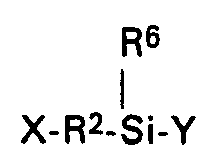
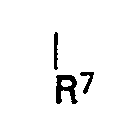
éventuellement en présence d'un milieu liquide inerte et éventuellement à des températures inférieures ou égales à 150° C, et qu'on fait réagir le produit obtenu sur des quantités équimolaires d'un composé de formule générale

Applications Claiming Priority (2)
| Application Number | Priority Date | Filing Date | Title |
|---|---|---|---|
| DE3319788 | 1983-06-01 | ||
| DE3319788A DE3319788A1 (de) | 1983-06-01 | 1983-06-01 | Mit organischen gruppen modifizierte kieselsaeure, deren herstellung und verwendung zur spaltung von emulsionen |
Publications (3)
| Publication Number | Publication Date |
|---|---|
| EP0131121A2 EP0131121A2 (fr) | 1985-01-16 |
| EP0131121A3 EP0131121A3 (en) | 1988-02-03 |
| EP0131121B1 true EP0131121B1 (fr) | 1989-08-02 |
Family
ID=6200369
Family Applications (1)
| Application Number | Title | Priority Date | Filing Date |
|---|---|---|---|
| EP84105728A Expired EP0131121B1 (fr) | 1983-06-01 | 1984-05-19 | Particules d'oxyde ou de silicate, dont les groupes hydroxyles situés à la surface sont remplacés au moins en partie par des groupes organiques, le procédé de leur préparation et leur utilisation pour la déstabilisation d'émulsions et pour la destruction de mousses |
Country Status (3)
| Country | Link |
|---|---|
| US (1) | US4844980A (fr) |
| EP (1) | EP0131121B1 (fr) |
| DE (2) | DE3319788A1 (fr) |
Families Citing this family (16)
| Publication number | Priority date | Publication date | Assignee | Title |
|---|---|---|---|---|
| US5013585A (en) * | 1989-06-13 | 1991-05-07 | Shin-Etsu Chemical Co., Ltd. | Method for the preparation of surface-modified silica particles |
| DE4116396C2 (de) * | 1991-05-18 | 1996-04-25 | Grace Gmbh | Modifizierte amorphe Kieselsäure, Verfahren zu deren Herstellung und Antiblockingmittel |
| DE4124579A1 (de) * | 1991-07-24 | 1993-01-28 | Metzeler Gimetall Ag | Elektrorheologische fluessigkeit |
| DE19742761A1 (de) | 1997-09-27 | 1999-04-01 | Gerd Dr Rossmy | An ihrer Oberfläche anisotrop verteilte überwiegend hydrophile und überwiegend hydrophobe Domänen aufweisende amphiphile Teilchen oder Moleküle |
| DE19805358A1 (de) * | 1998-02-12 | 1999-08-19 | Grace Gmbh | Integrierte Additivzusammensetzung, Verfahren zu ihrer Herstellung und ihre Verwendung |
| US6353037B1 (en) | 2000-07-12 | 2002-03-05 | 3M Innovative Properties Company | Foams containing functionalized metal oxide nanoparticles and methods of making same |
| US6586483B2 (en) | 2001-01-08 | 2003-07-01 | 3M Innovative Properties Company | Foam including surface-modified nanoparticles |
| ES2247321T3 (es) * | 2001-04-30 | 2006-03-01 | Unilever N.V. | Composiciones de cuidado de tejidos. |
| US6790904B2 (en) * | 2002-06-03 | 2004-09-14 | Ppg Industries Ohio, Inc. | Liquid coating of film-forming resin and particles chemically modified to lower surface tension |
| US7141618B2 (en) * | 2002-06-03 | 2006-11-28 | Ppg Industries Ohio, Inc. | Coating compositions with modified particles and methods of using the same |
| DE102004049427A1 (de) * | 2004-10-08 | 2006-04-13 | Degussa Ag | Polyetherfunktionelle Siloxane, polyethersiloxanhaltige Zusammensetzungen, Verfahren zu deren Herstellung und deren Verwendung |
| DE102012203274A1 (de) | 2012-03-01 | 2013-09-05 | Wacker Chemie Ag | Organosiliciumverbindungen und deren Verwendung |
| DE102012203273A1 (de) * | 2012-03-01 | 2013-09-05 | Wacker Chemie Ag | Vernetzbare Massen auf der Basis von Organosiliciumverbindungen |
| US9090851B2 (en) | 2013-03-13 | 2015-07-28 | Hydrite Chemical Co. | Oil extraction method and composition for use in the method |
| US9816050B2 (en) | 2014-10-27 | 2017-11-14 | Dean Blankenburg | Oil extraction method and composition for use in the method |
| EP3954743A1 (fr) | 2020-08-12 | 2022-02-16 | Evonik Operations GmbH | Utilisation de dioxyde de silicium pour améliorer la conductivité des revêtements |
Family Cites Families (17)
| Publication number | Priority date | Publication date | Assignee | Title |
|---|---|---|---|---|
| GB802467A (en) * | 1956-05-23 | 1958-10-08 | Midland Silicones Ltd | Organopolysiloxanes |
| US3408306A (en) * | 1959-07-20 | 1968-10-29 | Hercules Inc | Method of controlling foaming |
| BE626473A (fr) * | 1961-12-30 | |||
| DE1545268A1 (de) * | 1966-07-22 | 1969-11-27 | Degussa | Verfahren zur Aufbereitung von hochwertigen OElen |
| GB1348372A (en) * | 1970-02-16 | 1974-03-13 | Ici Ltd | Foam-compatible powder compositions |
| ZA712929B (en) * | 1970-05-12 | 1972-01-26 | Ici Ltd | Antifoam compositions |
| US3810843A (en) * | 1971-05-28 | 1974-05-14 | Gen Electric | Silicone-silica compositions |
| BE794875A (fr) * | 1972-02-02 | 1973-08-01 | Rhone Poulenc Sa | Procede de desaeration de composes liquides |
| DE2227146A1 (de) * | 1972-06-03 | 1973-12-13 | Bayer Ag | Verfahren zur oberflaechenbehandlung hochdisperser kieselsaeuren |
| US4029596A (en) * | 1973-11-08 | 1977-06-14 | Th. Goldschmidt Ag | De-emulsifier for breaking petroleum emulsions |
| JPS5834167B2 (ja) * | 1974-03-29 | 1983-07-25 | 信越化学工業株式会社 | スイヨウセイシヨウホウザイ |
| US4062693A (en) * | 1976-09-29 | 1977-12-13 | Union Carbide Corporation | Dry liquid alumina trihydrate concentrates |
| CA1110930A (fr) * | 1976-09-29 | 1981-10-20 | Union Carbide Corporation | Preparation d'alumine hydratee |
| US4225456A (en) * | 1978-11-06 | 1980-09-30 | Diamond Shamrock Corporation | Water-in-oil emulsion defoamer compositions, their preparation and use |
| GB2038300B (en) * | 1978-11-22 | 1982-10-13 | British Petroleum Co | Coalescing medium |
| DE2946727A1 (de) * | 1978-11-22 | 1980-06-04 | British Petroleum Co | Zur trennung von wasser-oel-gemischen dienendes produkt und seine verwendung |
| DE3235256A1 (de) * | 1982-09-23 | 1984-03-29 | Wacker Chemie Gmbh | In wasser leicht verteilbare antischaummittel |
-
1983
- 1983-06-01 DE DE3319788A patent/DE3319788A1/de not_active Withdrawn
-
1984
- 1984-05-19 EP EP84105728A patent/EP0131121B1/fr not_active Expired
- 1984-05-19 DE DE8484105728T patent/DE3479203D1/de not_active Expired
-
1987
- 1987-04-24 US US07/043,100 patent/US4844980A/en not_active Expired - Fee Related
Also Published As
| Publication number | Publication date |
|---|---|
| EP0131121A2 (fr) | 1985-01-16 |
| US4844980A (en) | 1989-07-04 |
| DE3479203D1 (en) | 1989-09-07 |
| DE3319788A1 (de) | 1984-12-06 |
| EP0131121A3 (en) | 1988-02-03 |
Similar Documents
| Publication | Publication Date | Title |
|---|---|---|
| EP0156270B1 (fr) | Particules modifiées en surface par des groupes hydrophiles et hydrophobes | |
| EP0131121B1 (fr) | Particules d'oxyde ou de silicate, dont les groupes hydroxyles situés à la surface sont remplacés au moins en partie par des groupes organiques, le procédé de leur préparation et leur utilisation pour la déstabilisation d'émulsions et pour la destruction de mousses | |
| DE69730417T2 (de) | Dieseltreibstoff mit antischaummittel und verwendungsmethoden | |
| DE69906895T2 (de) | Verfahren zur Herstellung von hydrophober nicht aggregierter kolloidaler Kieselsäure | |
| DE1619859B2 (de) | Verfahren zum verhindern und/oder vermindern der schaumbildung in waesserigen systemen | |
| DE3807247C1 (fr) | ||
| DE102005002163A1 (de) | Entschäumerzusammensetzungen | |
| EP0662334A2 (fr) | Utilisation de polysiloxanes modifiés par des organofonctions pour le traitement des anti mousses de gazole | |
| EP0023533A1 (fr) | Agent pour le traitement anti-moussant de milieux liquides | |
| EP1017745B1 (fr) | Particules ou molecules amphiphiles presentant des domaines principalement hydrophiles et principalement hydrophobes a distribution anisotrope sur leur surface | |
| DE69224889T2 (de) | Schaumkontrollierende Zusammensetzungen für wässrige Zusammensetzungen | |
| DE2550277A1 (de) | Schaumverhuetungsmittel und verfahren zu dessen herstellung | |
| DE2427294A1 (de) | Schaumbildungsverhinderungsmittel | |
| EP1052005A2 (fr) | Utilisation de copolymères séquencés de polyoxyalkylene-polysiloxane insolubles dans l'eau comme agents anti-mousse pour milieu aqueux | |
| EP0658361B1 (fr) | Emulsion anti-mousse à base d'organopolysiloxanes modifiés à fonctions organiques | |
| EP1053774B1 (fr) | Utilisation de polyoxyarylene-polysiloxane-copolymères en masse insolubles dans l'eau pour le démoussage des milieux aqueux | |
| DE2626994A1 (de) | Verfahren zum herstellen waessriger schaumverhuetungsmittel | |
| DE3872241T2 (de) | Verfahren zur herstellung eines in einem organischen loesungsmittel dispergierten kieselsaeuresols. | |
| DE2149329A1 (de) | Verfahren zur Behandlung von Emulsionen | |
| WO2003029338A1 (fr) | Composes a base de polyorganosiloxanes, procedes de production et utilisation desdits composes | |
| EP0849352B1 (fr) | Utilisation de copolymères silicone-polyether pour le traitement des anti mousses de gazole | |
| DE4237754C1 (de) | Schutzkolloid enthaltende Entschäumeremulsion | |
| EP0100036B1 (fr) | Polymères de diènes modifiés par un composé organo-silicium, leur procédé de préparation et leur utilisation comme desémulsifiant d'émulsions de pétrole | |
| DE3804462A1 (de) | Verfahren zur demulgierung von emulsionen aus wasser und rohoel | |
| DE19742759A1 (de) | Verfahren zur Herstellung amphiphiler anisotroper Teilchen |
Legal Events
| Date | Code | Title | Description |
|---|---|---|---|
| PUAI | Public reference made under article 153(3) epc to a published international application that has entered the european phase |
Free format text: ORIGINAL CODE: 0009012 |
|
| 17P | Request for examination filed |
Effective date: 19840524 |
|
| AK | Designated contracting states |
Designated state(s): BE DE FR GB IT NL |
|
| PUAL | Search report despatched |
Free format text: ORIGINAL CODE: 0009013 |
|
| AK | Designated contracting states |
Kind code of ref document: A3 Designated state(s): BE DE FR GB IT NL |
|
| 17Q | First examination report despatched |
Effective date: 19890104 |
|
| ITF | It: translation for a ep patent filed | ||
| GRAA | (expected) grant |
Free format text: ORIGINAL CODE: 0009210 |
|
| AK | Designated contracting states |
Kind code of ref document: B1 Designated state(s): BE DE FR GB IT NL |
|
| GBT | Gb: translation of ep patent filed (gb section 77(6)(a)/1977) | ||
| REF | Corresponds to: |
Ref document number: 3479203 Country of ref document: DE Date of ref document: 19890907 |
|
| ET | Fr: translation filed | ||
| PLBE | No opposition filed within time limit |
Free format text: ORIGINAL CODE: 0009261 |
|
| STAA | Information on the status of an ep patent application or granted ep patent |
Free format text: STATUS: NO OPPOSITION FILED WITHIN TIME LIMIT |
|
| 26N | No opposition filed | ||
| ITTA | It: last paid annual fee | ||
| PGFP | Annual fee paid to national office [announced via postgrant information from national office to epo] |
Ref country code: GB Payment date: 19970512 Year of fee payment: 14 |
|
| PGFP | Annual fee paid to national office [announced via postgrant information from national office to epo] |
Ref country code: FR Payment date: 19970513 Year of fee payment: 14 |
|
| PGFP | Annual fee paid to national office [announced via postgrant information from national office to epo] |
Ref country code: DE Payment date: 19970523 Year of fee payment: 14 |
|
| PGFP | Annual fee paid to national office [announced via postgrant information from national office to epo] |
Ref country code: NL Payment date: 19970529 Year of fee payment: 14 |
|
| PGFP | Annual fee paid to national office [announced via postgrant information from national office to epo] |
Ref country code: BE Payment date: 19970711 Year of fee payment: 14 |
|
| PG25 | Lapsed in a contracting state [announced via postgrant information from national office to epo] |
Ref country code: GB Free format text: LAPSE BECAUSE OF NON-PAYMENT OF DUE FEES Effective date: 19980519 |
|
| PG25 | Lapsed in a contracting state [announced via postgrant information from national office to epo] |
Ref country code: FR Free format text: LAPSE BECAUSE OF NON-PAYMENT OF DUE FEES Effective date: 19980531 Ref country code: BE Free format text: LAPSE BECAUSE OF NON-PAYMENT OF DUE FEES Effective date: 19980531 |
|
| BERE | Be: lapsed |
Owner name: TH. GOLDSCHMIDT A.G. Effective date: 19980531 |
|
| PG25 | Lapsed in a contracting state [announced via postgrant information from national office to epo] |
Ref country code: NL Free format text: LAPSE BECAUSE OF NON-PAYMENT OF DUE FEES Effective date: 19981201 |
|
| GBPC | Gb: european patent ceased through non-payment of renewal fee |
Effective date: 19980519 |
|
| NLV4 | Nl: lapsed or anulled due to non-payment of the annual fee |
Effective date: 19981201 |
|
| PG25 | Lapsed in a contracting state [announced via postgrant information from national office to epo] |
Ref country code: DE Free format text: LAPSE BECAUSE OF NON-PAYMENT OF DUE FEES Effective date: 19990302 |
|
| REG | Reference to a national code |
Ref country code: FR Ref legal event code: ST |