EP0132981A2 - Hypotriglyceridemisch aktive Polysaccharide - Google Patents
Hypotriglyceridemisch aktive Polysaccharide Download PDFInfo
- Publication number
- EP0132981A2 EP0132981A2 EP84304791A EP84304791A EP0132981A2 EP 0132981 A2 EP0132981 A2 EP 0132981A2 EP 84304791 A EP84304791 A EP 84304791A EP 84304791 A EP84304791 A EP 84304791A EP 0132981 A2 EP0132981 A2 EP 0132981A2
- Authority
- EP
- European Patent Office
- Prior art keywords
- ferm
- polysaccharide
- active polysaccharide
- hypotriglyceridemically
- microorganism
- Prior art date
- Legal status (The legal status is an assumption and is not a legal conclusion. Google has not performed a legal analysis and makes no representation as to the accuracy of the status listed.)
- Granted
Links
Images



Classifications
-
- A—HUMAN NECESSITIES
- A61—MEDICAL OR VETERINARY SCIENCE; HYGIENE
- A61K—PREPARATIONS FOR MEDICAL, DENTAL OR TOILETRY PURPOSES
- A61K31/00—Medicinal preparations containing organic active ingredients
- A61K31/70—Carbohydrates; Sugars; Derivatives thereof
- A61K31/715—Polysaccharides, i.e. having more than five saccharide radicals attached to each other by glycosidic linkages; Derivatives thereof, e.g. ethers, esters
-
- A—HUMAN NECESSITIES
- A61—MEDICAL OR VETERINARY SCIENCE; HYGIENE
- A61P—SPECIFIC THERAPEUTIC ACTIVITY OF CHEMICAL COMPOUNDS OR MEDICINAL PREPARATIONS
- A61P1/00—Drugs for disorders of the alimentary tract or the digestive system
- A61P1/16—Drugs for disorders of the alimentary tract or the digestive system for liver or gallbladder disorders, e.g. hepatoprotective agents, cholagogues, litholytics
-
- A—HUMAN NECESSITIES
- A61—MEDICAL OR VETERINARY SCIENCE; HYGIENE
- A61P—SPECIFIC THERAPEUTIC ACTIVITY OF CHEMICAL COMPOUNDS OR MEDICINAL PREPARATIONS
- A61P3/00—Drugs for disorders of the metabolism
- A61P3/06—Antihyperlipidemics
-
- A—HUMAN NECESSITIES
- A61—MEDICAL OR VETERINARY SCIENCE; HYGIENE
- A61P—SPECIFIC THERAPEUTIC ACTIVITY OF CHEMICAL COMPOUNDS OR MEDICINAL PREPARATIONS
- A61P3/00—Drugs for disorders of the metabolism
- A61P3/08—Drugs for disorders of the metabolism for glucose homeostasis
-
- A—HUMAN NECESSITIES
- A61—MEDICAL OR VETERINARY SCIENCE; HYGIENE
- A61P—SPECIFIC THERAPEUTIC ACTIVITY OF CHEMICAL COMPOUNDS OR MEDICINAL PREPARATIONS
- A61P9/00—Drugs for disorders of the cardiovascular system
- A61P9/10—Drugs for disorders of the cardiovascular system for treating ischaemic or atherosclerotic diseases, e.g. antianginal drugs, coronary vasodilators, drugs for myocardial infarction, retinopathy, cerebrovascula insufficiency, renal arteriosclerosis
-
- A—HUMAN NECESSITIES
- A61—MEDICAL OR VETERINARY SCIENCE; HYGIENE
- A61P—SPECIFIC THERAPEUTIC ACTIVITY OF CHEMICAL COMPOUNDS OR MEDICINAL PREPARATIONS
- A61P9/00—Drugs for disorders of the cardiovascular system
- A61P9/12—Antihypertensives
-
- C—CHEMISTRY; METALLURGY
- C08—ORGANIC MACROMOLECULAR COMPOUNDS; THEIR PREPARATION OR CHEMICAL WORKING-UP; COMPOSITIONS BASED THEREON
- C08B—POLYSACCHARIDES; DERIVATIVES THEREOF
- C08B37/00—Preparation of polysaccharides not provided for in groups C08B1/00 - C08B35/00; Derivatives thereof
-
- C—CHEMISTRY; METALLURGY
- C12—BIOCHEMISTRY; BEER; SPIRITS; WINE; VINEGAR; MICROBIOLOGY; ENZYMOLOGY; MUTATION OR GENETIC ENGINEERING
- C12N—MICROORGANISMS OR ENZYMES; COMPOSITIONS THEREOF; PROPAGATING, PRESERVING, OR MAINTAINING MICROORGANISMS; MUTATION OR GENETIC ENGINEERING; CULTURE MEDIA
- C12N1/00—Microorganisms; Compositions thereof; Processes of propagating, maintaining or preserving microorganisms or compositions thereof; Processes of preparing or isolating a composition containing a microorganism; Culture media therefor
- C12N1/20—Bacteria; Culture media therefor
- C12N1/205—Bacterial isolates
-
- C—CHEMISTRY; METALLURGY
- C12—BIOCHEMISTRY; BEER; SPIRITS; WINE; VINEGAR; MICROBIOLOGY; ENZYMOLOGY; MUTATION OR GENETIC ENGINEERING
- C12P—FERMENTATION OR ENZYME-USING PROCESSES TO SYNTHESISE A DESIRED CHEMICAL COMPOUND OR COMPOSITION OR TO SEPARATE OPTICAL ISOMERS FROM A RACEMIC MIXTURE
- C12P19/00—Preparation of compounds containing saccharide radicals
- C12P19/04—Polysaccharides, i.e. compounds containing more than five saccharide radicals attached to each other by glycosidic bonds
-
- C—CHEMISTRY; METALLURGY
- C12—BIOCHEMISTRY; BEER; SPIRITS; WINE; VINEGAR; MICROBIOLOGY; ENZYMOLOGY; MUTATION OR GENETIC ENGINEERING
- C12R—INDEXING SCHEME ASSOCIATED WITH SUBCLASSES C12C - C12Q, RELATING TO MICROORGANISMS
- C12R2001/00—Microorganisms ; Processes using microorganisms
- C12R2001/01—Bacteria or Actinomycetales ; using bacteria or Actinomycetales
- C12R2001/46—Streptococcus ; Enterococcus; Lactococcus
Definitions
- the present invention relates to a novel hypotriglyceridemically active polysaccharide (i.e., triglyceride-reducing polysaccharide, "TRS”), a process for preparing the same, a hypotriglyceridemically active and/or antiatherosclerotic pharmaceutical composition containing the same, and a method for reducing blood triglyceride in mammals.
- TRS triglyceride-reducing polysaccharide
- an object of the present invention is to provide a novel hypotriglyceridemically active polysaccharide, TRS, which can be safely administered to mammals.
- Another object of the present invention is to provide a process for preparing a novel triglyceridemi- cally active polysaccharide capable of effectively reducing the blood triglyceride in mammals.
- a further object of the present invention is to provide a hypotriglyceridemic or antiatherosclerotic pharmaceutical composition containing, as an active ingredient, a novel polysaccharide, TRS.
- a still further object of the present invention is to provide a method for reducing the blood triglyceride in mammals.
- hypotriglyceridemically active polysaccharide having the following characteristics:
- This hypotriglyceridemically active polysaccharide can be prepared by cultivating a microorganism belonging to the genus Streptococcus in an adequate culture medium therefor; and collecting the hypotriglyceridemically active polysaccharide from the cultured cells of the microorganism and/or the supernatant of the culture broth.
- the present hypotriglyceridemically active polysaccharide can be used as an active ingredient of a hypotriglyceridemic or antiatherosclerotic pharmaceutical composition together with a pharmaceutically acceptable carrier therefor, to form a hypotriglyceridemic or antiatherosclerotic pharmaceutical composition, which is suitable for oral administration to mammals.
- the present inventors found that the novel polysaccharides obtained from microorganisms belonging to the genus Streptococcus and/or the supernatant of culture broth can effectively reduce the blood triglyceride, and that this constituent extracted from these so-called gastrointestinal bacteria and the supernatant of culture broth is substantially nontoxic when orally administered.
- microbiological characteristics of the microorganisms in the present invention are the same as those of known microorganisms belonging to the identical class. That is, the general microbiological characteristics, cultivation methods and other properties correspond to those described in the following articles:
- microorganisms can be cultivated in a conventional,manner.
- the bacterial cells can be collected by stationary cultivation in a R ogosa broth medium having the following composition under an aerobic condition, and can be harvested by centrifugation of the culture.
- Each of the microbial strains shown above is inoculated into a Rogosa broth medium and incubated without agitation at 37°C for 5 to 10 hours under an aerobic condition, to yield a subsequent culture broth at a certain viable bacterial cell concentration.
- the culture broth is continuously centrifuged at 12,000 rpm, and the harvested bacterial cells are then washed in saline (0.85% NaCl) 2 to 3 times.
- the disrupted cell suspension is mixed with chloroform-methanol (2:1, v/v).
- the components extractable by the organic solvent are then completely removed by centrifugation at 3,000 rpm for 10 min and the chloroform layer is discarded.
- proteolytic enzymes such as pronase, trypsin, and pepsin under ordinary procedures.
- pronase is most useful for the purpose.
- the conditions of the treatment with this enzyme are referred to in "Methods in Enzymology", Vol. VIII, p. 26 (1966).
- the centrifugal supernatant of the proteolytic reaction mixture is added with precipitants such as trichloroacetic acid or ammonium sulfate to precipitate and to remove the protein fraction.
- the supernatant fraction is then treated with appropriate nucleases or proteolytic enzymes to remove nucleic acid constituents such as DNA and RNA or proteins in the fraction. Dialysis is repeatedly made after such enzymatic treatments.
- the partly purified fraction is then subjected to the repetition of further purification procedures such as gel filtration and column chromatography, and finally, a pure preparation of polysaccharide designated as the TRS polysaccharide is obtained.
- this TRS polysacqaride can be prepared according to its physicochemical characteristics, mentioned below, by many of the isolation and purification procedures already widely employed in the field concerned, such as precipitation-dissolution and extraction, solvent extraction, dialysis, column chromatography, electrophoresis, gel filtration, or any combination of these procedures. Therefore, the present invention is by no means limited to a specified procedure.
- the preparation of the present invention is related to the preparation methods of hypotriglyceridemically active products, which are composed of polysaccharide and obtained from microorganisms belonging to the genus Streptococcus, because the pharmacological activity is found in the polysaccharide fraction. This is described in detail in each example hereinbelow.
- hypotriglyceridemic activity in the supernatant of the culture broth is about 1/5 of that in the bacterial cell.
- TRS polysaccharide of the present invention The physicochemical and physiological characteristics of the TRS polysaccharide of the present invention are as follows.
- the powdered sample obtained after desalting and freeze-drying was a non-deliquescent white powder and was highly soluble ( % 100 mg/ml) in water, but only partly soluble in ethanol, methanol, and acetone, and insoluble in ether and chloroform.
- the molecular weight of the TRS polysaccharide was estimated at 14,000 + 3,000 by gel filtration, with several dextrans of different molecular weight as indices, using a Toyopearl HW 55 column (Toyosoda Co., L td.) equilibrated with a 25 mM tris-HCl buffer containing 0.3 M NaCl (pH 7.5).
- the specific rotatory power of the said TRS polysaccharide in 1.8 w/v% solution, [ ⁇ ] D 29 , is +190.1 (dextrorotation), as determined by a polarimeter (model DIP-4, Japan Spectroscopic Co., Ltd.).
- the pH of the 0.1 and 0.5% solution of the TRS polysaccharide was 6.71.
- the infrared absorption spectrum of the TRS polysaccharide measured by an infrared spectrometer (model JASCO A-302, Japan Spectroscopic Co., Ltd.) is shown in Fig. 1, in which the abscissa and ordinate show the wave number and percent transmission, respectively.
- the melting point of the TRS polysaccharide was 235 % 241°C, measured with a melting point apparatus (model Yanaco MP-3, Yanagimoto Seisakusho, Japan).
- the TRS polysaccharide is active in reducing the blood triglyceride level in mammals when administered orally.
- This activity is stable within the range of at least -80°C to 115°C and at pH 4.1 to 11, when the TRS polysaccharide is stored.
- the present antiatherosclerotic drug composed of the TRS polysaccharide of the present invention is extremely effective in reducing the blood triglyceride level in mammals. Accordingly, this drug is useful as a therapeutic or preventive medicine for diseases closely related to atherosclerosis, hyperlipidemia, hyperlipo- proteinemia, xanthomatosis, cholecystolithiasis, hypertension, diabetes, and others.
- the preparation of the present invention can be administered to mammals via oral, intraperitoneal, and intravenous, and other administration routes.
- the amount per dosage is about 1 ⁇ g to 0.5 g/kg body weight.
- the oral administration of about 0.01 mg to 100 mg/kg body weight is preferred.
- Any drug form of the present invention can be chosen and used as a solution in physiological saline and others, injections, powder made by lyophilization, etc., suppository, enteric-coated tablets, sublingual tablets, granules, tablets, capsules, etc. with appropriate carriers, diluent bases, diluents, etc.
- an LD 50 of the TRS polysaccharide according to the present invention is more than 1,200 mg/kg body weight, administered intraperitoneally to mice.
- the substance is substantially nontoxic on oral administration.
- Streptococcus faecium FERM BP-296 was inoculated into 2 t of Rogosa broth medium at a final concentration of 1 x 10 6 bacteria/ml.
- the inoculated medium was incubated at 37°C for 10 hrs without agitation under an aerobic condition to yield 10 9 bacteria/ml of culture broth.
- the bacterial cells were harvested by continuous centrifugation at 12,000 rpm, washed with physiological saline (0.85% NaCl), and suspended in the same solution to obtain 100 ml of the cell suspension at a concentration of 2 x 10 10 /ml:
- the above bacterial cell suspension was heat-treated at 115°C for 10 minutes and treated 3 times with chloroform-methanol (2:1, v/v) to remove fats.
- the defatted bacterial suspension was centrifuged at 3,000 rpm for 10 minutes and the lower layer, i.e., the chloroform layer, was discarded.
- the aqueous layer was employed as a starting material in the following purification steps.
- the starting material was then treated with 20 mg pronase (Sigma protease type XIV) in 100 ml of phosphate buffer (pH 7.8) containing 0.0015 M CaCl 2 at 47°C for 24 hrs, and further treatment with 10 mg of pronase was carried out under the same conditions.
- the experimental conditions of the treatment with pronase are referred to in 'Methods in Enzymology', Vol. VIII, p. 26 (1966).
- the material treated with pronase was divided into the precipitation and supernatant fractions by centrifugation at 3,000 rpm for 10 minutes.
- the supernatant fraction was added with 1/9 volume of 100% (w/v) trichloroacetic acid (TCA), stood at 4°C for 3 hrs with agitation, and then centrifuged at 3,000 rpm for 10 minutes to obtain the precipitation and supernatant fractions.
- the precipitation fraction was added with the same volume of 10% TCA and the same process was repeated.
- the obtained supernatant was washed 3 times with ethyl ether to remove TCA, dissolved in 50 ml of distilled water, neutralized with 1 N NaOH, dialyzed to remove TCA completely, and finally lyophilized to yield 258 mg (dry weight) of the supernatant fraction.
- the obtained supernatant fraction was treated with the pronase described above, and dialyzed to yield 176 mg (dry weight) of the dialyzed fraction (MW > 3,500).
- the dialyzed fraction was designated as Purified fraction I.
- the above Purified fraction I was fractionated by Sephadex G-100 (Pharmacia) column chromatograph equilibrated with 0.05 M Tris-HC1 buffer.
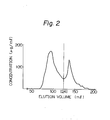
- the column chromatogram of the Purified fraction I at an elution rate of 1 ml/min is shown in Fig. 2; the abscissa shows the elution volume (ml), and the ordinate shows the concentration of eluted substance (yg/ml).
- a fraction after 124 ml was collected and designated as Purified fraction II (93.6 mg dry weight).
- Figure 3 shows a column chromatogram of the purified fraction II determined by a Toyopearl HW-55F column equilibrated with a 25 mM Tris-HCl buffer containing 0.3 M NaCl. The elution rate was 1 ml/min.
- lines 1, 2, and 3 show the elution profiles of sugar, protein, and nucleic acid, respectively.
- the purified TRS polysaccharide (87.9 mg dry weight) was isolated by collecting the portion eluted in 80 ⁇ 100 ml fractions.
- Figure 4 shows the column chromatogram of TRS polysaccharide under the same experimental conditions as shown in Fig. 3.
- TRS polysaccharide The physicochemical characteristics of the TRS polysaccharide were as shown above.
- Table 3 shows the yield and the amounts of protein determined by the Lowry method, RNA by the orcinol method, DNA by the diphenylamine method, and sugar by the phenol-H 2 SO 4 method in each preparation process.
- the values in the table indicate the dry weight (mg) of the yield and the weight % of the chemical components.
- TRS polysaccharide can be separated and purified from other bacterial strains; listed in Table 1, as well as in this example, but with little variety in the yield.
- Physiological saline samples containing the equivalent of 16 mg/kg body weight of the lyophilized TRS polysaccharide were prepared. These samples were orally administered at a daily dosage of 1 ml to conventional rats (18 week-old, male, average body weight 246 g, 10 rats per group) and conventional and germfree mice (18 week-old, male, average body weight 30 g, 10 mice per group). The rats and mice were bred for 8 to 12 weeks. Arterial blood was then collected from the abdominal aorta of these animals and serum samples were separated by centrifugation from the whole blood. The triglyceride level was determined by using Triglyceride TG WAKO (Wako Junyake Co., Ltd., Acetyl acetone method).
- Table 4 The results are summarized in Table 4. The values listed in the table are reduction rate (%) from the values in the control groups to which no sample is dosed. The composition (% by weight) of the diet, given ad libitum, is shown in Table 5.
- mice were orally administered at a daily dosage of 1 ml to conventional rats (18 week-old, male, average body weight 238 g, 15 rats per group) and conventional and germfree mice (18 week-old, male, average body weight 31 g, 10 mice per group) for 4 weeks.
- the blood triglyceride level was determined as mentioned above. The results are shown in Table 6.
- cholesterol-loaded and fructose- loaded in the table mean the addition of 1% cholesterol into the above-mentioned diet and the substitution of fructose for the total amount of wheat starch in the above-mentioned diet, respectively.
- the values in the table are the reduction rate (%) from the values of the no dosage control group.
- Physiological saline samples containing 4 mg/ml of the TRS polysaccharide were orally administered at a daily dosage of 1 ml per rat for 2 weeks to hyperlipidemic rats (18 week-old, male, average body weight 250 g, 5 rats per group) fed with a cholesterol-loaded diet.
- the blood triglyceride level was determined as mentioned above. The results are shown in Table 7.
- the value of the administration group is the triglyceride reduction rate (%) to the no dosage control group.
- Physiological saline samples containing 0.1 mg ⁇ 20 mg/ml of the TRS polysaccharide were orally administered at a daily dosage of 1 ml per to conventional rats (6 week-old, male, average body weight 216 g, 5 rats per group) for 4 weeks.
- the blood triglyceride level was determined as mentioned above (control group was no dosed group). The results are shown in Table 8.
- Physiological saline samples (0.5 ml/mouse) containing 1, 10, and 100 mg of the TRS polysaccharide were intraperitoneally administered to ICR mice (6 week-old male, average body weight 31.6 + 0.6 g, 10 mice per group). The thanatobiologic observation of mice was carried out for 14 days. The control material was physiological saline.
- the LD50 value calculated according to the B ehrens-Karber method was more than 1,200 mg/kg body weight.
- the substance was substantially nontoxic on oral administration.
- a 25 mg amount of the purified TRS polysaccharide was uniformly mixed with 275 mg of purified starch powder, and the tablets for oral administration were then formed. Each tablet corresponds to a dosage of 10 10 heat-treated cells/kg body weight for an adult having a body weight of 50 kg.
Landscapes
- Health & Medical Sciences (AREA)
- Chemical & Material Sciences (AREA)
- Life Sciences & Earth Sciences (AREA)
- Engineering & Computer Science (AREA)
- Organic Chemistry (AREA)
- General Health & Medical Sciences (AREA)
- Bioinformatics & Cheminformatics (AREA)
- Medicinal Chemistry (AREA)
- Chemical Kinetics & Catalysis (AREA)
- Zoology (AREA)
- Wood Science & Technology (AREA)
- General Chemical & Material Sciences (AREA)
- Pharmacology & Pharmacy (AREA)
- Animal Behavior & Ethology (AREA)
- Public Health (AREA)
- Veterinary Medicine (AREA)
- Biochemistry (AREA)
- Genetics & Genomics (AREA)
- Biotechnology (AREA)
- Nuclear Medicine, Radiotherapy & Molecular Imaging (AREA)
- Molecular Biology (AREA)
- General Engineering & Computer Science (AREA)
- Microbiology (AREA)
- Diabetes (AREA)
- Obesity (AREA)
- Heart & Thoracic Surgery (AREA)
- Epidemiology (AREA)
- Hematology (AREA)
- Materials Engineering (AREA)
- Polymers & Plastics (AREA)
- Biomedical Technology (AREA)
- Virology (AREA)
- Tropical Medicine & Parasitology (AREA)
- Cardiology (AREA)
- Endocrinology (AREA)
- Gastroenterology & Hepatology (AREA)
- Vascular Medicine (AREA)
- Urology & Nephrology (AREA)
- Emergency Medicine (AREA)
- Pharmaceuticals Containing Other Organic And Inorganic Compounds (AREA)
Applications Claiming Priority (2)
| Application Number | Priority Date | Filing Date | Title |
|---|---|---|---|
| JP135982/83 | 1983-07-27 | ||
| JP58135982A JPS6028401A (ja) | 1983-07-27 | 1983-07-27 | トリグリセリド低下活性多糖類 |
Publications (3)
| Publication Number | Publication Date |
|---|---|
| EP0132981A2 true EP0132981A2 (de) | 1985-02-13 |
| EP0132981A3 EP0132981A3 (en) | 1986-01-29 |
| EP0132981B1 EP0132981B1 (de) | 1989-10-18 |
Family
ID=15164420
Family Applications (1)
| Application Number | Title | Priority Date | Filing Date |
|---|---|---|---|
| EP84304791A Expired EP0132981B1 (de) | 1983-07-27 | 1984-07-13 | Hypotriglyceridemisch aktive Polysaccharide |
Country Status (12)
| Country | Link |
|---|---|
| US (1) | US4687764A (de) |
| EP (1) | EP0132981B1 (de) |
| JP (1) | JPS6028401A (de) |
| AU (1) | AU563995B2 (de) |
| CA (1) | CA1239364A (de) |
| DD (1) | DD222895A5 (de) |
| DE (1) | DE3480217D1 (de) |
| ES (1) | ES534629A0 (de) |
| HU (1) | HU191697B (de) |
| MX (1) | MX7693E (de) |
| PL (1) | PL147734B1 (de) |
| SU (1) | SU1732815A3 (de) |
Cited By (5)
| Publication number | Priority date | Publication date | Assignee | Title |
|---|---|---|---|---|
| EP0207700A3 (en) * | 1985-07-03 | 1988-11-17 | Kabushiki Kaisya Advance | Hypocholesterolemically and/or hypotriclyceridemically active rna fractions |
| US4797278A (en) * | 1982-08-06 | 1989-01-10 | Kabushiki Kaisya Advance Kaihatsu Kenkyujo | Hypocholesterolemically and/or hypotriglyceridemically active products and their use |
| US4812441A (en) * | 1982-12-28 | 1989-03-14 | Kabushiki Kaisya Advance Kaihatsu Kenkyujo | Hypocholesterolemically active protein derived from streptococcus |
| WO1999018996A1 (en) * | 1997-10-14 | 1999-04-22 | Nabi | Enterococcus antigens and vaccines |
| CN103012615A (zh) * | 2013-01-08 | 2013-04-03 | 广东海洋大学 | 一种高效提取乌贼墨酸性多糖的方法 |
Families Citing this family (4)
| Publication number | Priority date | Publication date | Assignee | Title |
|---|---|---|---|---|
| JPS61151128A (ja) * | 1984-12-24 | 1986-07-09 | Advance Res & Dev Co Ltd | コレステロ−ル低下活性rna画分 |
| US5202431A (en) * | 1985-07-08 | 1993-04-13 | Fidia, S.P.A. | Partial esters of hyaluronic acid |
| US4851521A (en) * | 1985-07-08 | 1989-07-25 | Fidia, S.P.A. | Esters of hyaluronic acid |
| JP2009149523A (ja) * | 2006-03-01 | 2009-07-09 | Ucc Ueshima Coffee Co Ltd | 免疫賦活剤とその製造方法 |
Family Cites Families (6)
| Publication number | Priority date | Publication date | Assignee | Title |
|---|---|---|---|---|
| JPS52117492A (en) * | 1975-12-11 | 1977-10-01 | Hayashibara Biochem Lab Inc | Preparation of water-insoluble glucan |
| US4251519A (en) * | 1979-07-30 | 1981-02-17 | Anheuser-Busch, Incorporated | Process for the prevention and reduction of elevated blood cholesterol and triglycerides levels |
| JPS5943929B2 (ja) * | 1979-08-13 | 1984-10-25 | サッポロビール株式会社 | 多糖体rbs物質,その製法およびそれを有効成分とする抗腫瘍性剤 |
| JPS601877B2 (ja) * | 1981-01-14 | 1985-01-17 | 明治乳業株式会社 | 高分子多糖類物質mps−80及びその製造法 |
| DE3305047A1 (de) * | 1982-02-19 | 1983-09-22 | Terumo Kabushiki Kaisha trading as Terumo Corp., Tokyo | Polysaccharide, ihre herstellung und diese enthaltende therapeutische zusammensetzungen |
| JPS5927833A (ja) * | 1982-08-06 | 1984-02-14 | Advance Res & Dev Co Ltd | コレステロール乃至トリグリセリド低下剤 |
-
1983
- 1983-07-27 JP JP58135982A patent/JPS6028401A/ja active Granted
-
1984
- 1984-07-11 AU AU30488/84A patent/AU563995B2/en not_active Ceased
- 1984-07-13 CA CA000458891A patent/CA1239364A/en not_active Expired
- 1984-07-13 EP EP84304791A patent/EP0132981B1/de not_active Expired
- 1984-07-13 DE DE8484304791T patent/DE3480217D1/de not_active Expired
- 1984-07-20 US US06/632,844 patent/US4687764A/en not_active Expired - Fee Related
- 1984-07-20 MX MX841039U patent/MX7693E/es unknown
- 1984-07-26 ES ES534629A patent/ES534629A0/es active Granted
- 1984-07-26 HU HU842873A patent/HU191697B/hu not_active IP Right Cessation
- 1984-07-26 SU SU843770904A patent/SU1732815A3/ru active
- 1984-07-26 DD DD84265684A patent/DD222895A5/de not_active IP Right Cessation
- 1984-07-27 PL PL1984248970A patent/PL147734B1/pl unknown
Cited By (11)
| Publication number | Priority date | Publication date | Assignee | Title |
|---|---|---|---|---|
| US4797278A (en) * | 1982-08-06 | 1989-01-10 | Kabushiki Kaisya Advance Kaihatsu Kenkyujo | Hypocholesterolemically and/or hypotriglyceridemically active products and their use |
| US4812441A (en) * | 1982-12-28 | 1989-03-14 | Kabushiki Kaisya Advance Kaihatsu Kenkyujo | Hypocholesterolemically active protein derived from streptococcus |
| EP0207700A3 (en) * | 1985-07-03 | 1988-11-17 | Kabushiki Kaisya Advance | Hypocholesterolemically and/or hypotriclyceridemically active rna fractions |
| US4833129A (en) * | 1985-07-03 | 1989-05-23 | Kabushiki Kaisya Advance Kaihatsu Kenkyujo | Hypocholesterolemically and/or hypotriglyceridemically active RNA fractions |
| WO1999018996A1 (en) * | 1997-10-14 | 1999-04-22 | Nabi | Enterococcus antigens and vaccines |
| US6756361B1 (en) | 1997-10-14 | 2004-06-29 | Nabi | Enterococcus antigens and vaccines |
| US7291343B2 (en) | 1997-10-14 | 2007-11-06 | Nabi Biopharmaceuticals | Enterococcus antigens and vaccines |
| EP1970073A1 (de) * | 1997-10-14 | 2008-09-17 | Nabi Biopharmaceuticals | Enterokokken-Antigene und -Impfstoffe |
| EP2269635A1 (de) * | 1997-10-14 | 2011-01-05 | Nabi Biopharmaceuticals | Enterokokken-Antigene und -Impfstoffe |
| CN103012615A (zh) * | 2013-01-08 | 2013-04-03 | 广东海洋大学 | 一种高效提取乌贼墨酸性多糖的方法 |
| CN103012615B (zh) * | 2013-01-08 | 2015-02-25 | 广东海洋大学 | 一种高效提取乌贼墨酸性多糖的方法 |
Also Published As
| Publication number | Publication date |
|---|---|
| CA1239364A (en) | 1988-07-19 |
| MX7693E (es) | 1990-08-24 |
| DE3480217D1 (en) | 1989-11-23 |
| US4687764A (en) | 1987-08-18 |
| PL248970A1 (en) | 1985-04-09 |
| HUT34773A (en) | 1985-04-28 |
| PL147734B1 (en) | 1989-07-31 |
| ES8505722A1 (es) | 1985-06-01 |
| EP0132981B1 (de) | 1989-10-18 |
| SU1732815A3 (ru) | 1992-05-07 |
| EP0132981A3 (en) | 1986-01-29 |
| DD222895A5 (de) | 1985-05-29 |
| JPH0365362B2 (de) | 1991-10-11 |
| AU563995B2 (en) | 1987-07-30 |
| JPS6028401A (ja) | 1985-02-13 |
| HU191697B (en) | 1987-03-30 |
| AU3048884A (en) | 1985-01-31 |
| ES534629A0 (es) | 1985-06-01 |
Similar Documents
| Publication | Publication Date | Title |
|---|---|---|
| US4699787A (en) | Nitrogen-containing polysaccharide | |
| IL42545A (en) | Water-soluble extracts of mycobacteria their preparation and pharmaceutical compositions containing them | |
| EP0115157B1 (de) | Hypocholesterolemisch wirksame Proteine | |
| US4010258A (en) | Microbial amylase inhibitor and preparation thereof with the use of streptomyces diasticus var. amylostaticus | |
| EP0132981B1 (de) | Hypotriglyceridemisch aktive Polysaccharide | |
| EP0459367B1 (de) | Verfahren zur Herstellung von Antitumordextran | |
| KR100197446B1 (ko) | 펠리누스 린테우스로부터 분리된 항암 면역활성 다당류 및 이의 제조 방법 | |
| US4614733A (en) | Polysaccharides pharmaceutical compositions and the use thereof | |
| US4851395A (en) | Nitrogen-containing polysaccharide | |
| GB1567106A (en) | Microbial fractions | |
| KR970007906B1 (ko) | 항궤양제 및 그 제조법 | |
| JPS6326088B2 (de) | ||
| US4001395A (en) | Hydrosoluble extracts of mycobacteria | |
| CA1276897C (en) | Hypocholesterolemically active rna fractions | |
| EP0196858B1 (de) | Mittel zur Verbesserung der Lebensfunktion und Mittel zur Senkung des Blutdrucks | |
| EP0207700B1 (de) | Hypocholesttrinämisch und/oder hypotriglyceridämisch aktive RNS-Fraktionen | |
| JPS6147515B2 (de) | ||
| PL91664B1 (de) | ||
| KR860001213B1 (ko) | 제암 및 면역자극 작용을 갖는 물질의 제조방법 | |
| JPH03170503A (ja) | 細胞外エキソポリマー、その調製方法及び該エキソポリマーを含む薬剤組成物 | |
| KR20020010242A (ko) | 느릅나무로부터 분리된 신규의 미생물 및 그를 이용한항암 면역활성의 세포밖 당화합물의 제조방법 | |
| CA2009194A1 (en) | Method for producing biologically active polysaccharide ron substance | |
| JPH06256200A (ja) | 抗腫瘍剤及びその製造方法 | |
| JPH1099072A (ja) | アスペルギルス・アワモリの変異株及び植物組織の崩壊方法 | |
| JPH11116577A (ja) | 新規化合物am6898e及びその製法 |
Legal Events
| Date | Code | Title | Description |
|---|---|---|---|
| PUAI | Public reference made under article 153(3) epc to a published international application that has entered the european phase |
Free format text: ORIGINAL CODE: 0009012 |
|
| AK | Designated contracting states |
Designated state(s): CH DE FR GB IT LI NL SE |
|
| PUAL | Search report despatched |
Free format text: ORIGINAL CODE: 0009013 |
|
| AK | Designated contracting states |
Designated state(s): CH DE FR GB IT LI NL SE |
|
| 17P | Request for examination filed |
Effective date: 19860224 |
|
| 17Q | First examination report despatched |
Effective date: 19870909 |
|
| RAP1 | Party data changed (applicant data changed or rights of an application transferred) |
Owner name: KABUSHIKI KAISYA ADVANCE |
|
| GRAA | (expected) grant |
Free format text: ORIGINAL CODE: 0009210 |
|
| AK | Designated contracting states |
Kind code of ref document: B1 Designated state(s): CH DE FR GB IT LI NL SE |
|
| ITF | It: translation for a ep patent filed | ||
| REF | Corresponds to: |
Ref document number: 3480217 Country of ref document: DE Date of ref document: 19891123 |
|
| ET | Fr: translation filed | ||
| PLBE | No opposition filed within time limit |
Free format text: ORIGINAL CODE: 0009261 |
|
| STAA | Information on the status of an ep patent application or granted ep patent |
Free format text: STATUS: NO OPPOSITION FILED WITHIN TIME LIMIT |
|
| 26N | No opposition filed | ||
| ITTA | It: last paid annual fee | ||
| PGFP | Annual fee paid to national office [announced via postgrant information from national office to epo] |
Ref country code: GB Payment date: 19930702 Year of fee payment: 10 |
|
| PGFP | Annual fee paid to national office [announced via postgrant information from national office to epo] |
Ref country code: SE Payment date: 19930727 Year of fee payment: 10 |
|
| PGFP | Annual fee paid to national office [announced via postgrant information from national office to epo] |
Ref country code: FR Payment date: 19930730 Year of fee payment: 10 |
|
| PGFP | Annual fee paid to national office [announced via postgrant information from national office to epo] |
Ref country code: NL Payment date: 19930731 Year of fee payment: 10 |
|
| PGFP | Annual fee paid to national office [announced via postgrant information from national office to epo] |
Ref country code: DE Payment date: 19930827 Year of fee payment: 10 |
|
| PGFP | Annual fee paid to national office [announced via postgrant information from national office to epo] |
Ref country code: CH Payment date: 19931027 Year of fee payment: 10 |
|
| PG25 | Lapsed in a contracting state [announced via postgrant information from national office to epo] |
Ref country code: GB Effective date: 19940713 |
|
| PG25 | Lapsed in a contracting state [announced via postgrant information from national office to epo] |
Ref country code: SE Effective date: 19940714 |
|
| PG25 | Lapsed in a contracting state [announced via postgrant information from national office to epo] |
Ref country code: LI Effective date: 19940731 Ref country code: CH Effective date: 19940731 |
|
| EUG | Se: european patent has lapsed |
Ref document number: 84304791.1 Effective date: 19950210 |
|
| PG25 | Lapsed in a contracting state [announced via postgrant information from national office to epo] |
Ref country code: NL Effective date: 19950201 |
|
| GBPC | Gb: european patent ceased through non-payment of renewal fee |
Effective date: 19940713 |
|
| NLV4 | Nl: lapsed or anulled due to non-payment of the annual fee | ||
| PG25 | Lapsed in a contracting state [announced via postgrant information from national office to epo] |
Ref country code: FR Effective date: 19950331 |
|
| REG | Reference to a national code |
Ref country code: CH Ref legal event code: PL |
|
| PG25 | Lapsed in a contracting state [announced via postgrant information from national office to epo] |
Ref country code: DE Effective date: 19950401 |
|
| EUG | Se: european patent has lapsed |
Ref document number: 84304791.1 |
|
| REG | Reference to a national code |
Ref country code: FR Ref legal event code: ST |