EP0133191A2 - Verfahren und Vorrichtung zum Legieren - Google Patents
Verfahren und Vorrichtung zum Legieren Download PDFInfo
- Publication number
- EP0133191A2 EP0133191A2 EP84101011A EP84101011A EP0133191A2 EP 0133191 A2 EP0133191 A2 EP 0133191A2 EP 84101011 A EP84101011 A EP 84101011A EP 84101011 A EP84101011 A EP 84101011A EP 0133191 A2 EP0133191 A2 EP 0133191A2
- Authority
- EP
- European Patent Office
- Prior art keywords
- alloy
- making
- alloy according
- mass
- aluminum
- Prior art date
- Legal status (The legal status is an assumption and is not a legal conclusion. Google has not performed a legal analysis and makes no representation as to the accuracy of the status listed.)
- Ceased
Links
Images


Classifications
-
- C—CHEMISTRY; METALLURGY
- C22—METALLURGY; FERROUS OR NON-FERROUS ALLOYS; TREATMENT OF ALLOYS OR NON-FERROUS METALS
- C22C—ALLOYS
- C22C47/00—Making alloys containing metallic or non-metallic fibres or filaments
- C22C47/08—Making alloys containing metallic or non-metallic fibres or filaments by contacting the fibres or filaments with molten metal, e.g. by infiltrating the fibres or filaments placed in a mould
-
- B—PERFORMING OPERATIONS; TRANSPORTING
- B22—CASTING; POWDER METALLURGY
- B22F—WORKING METALLIC POWDER; MANUFACTURE OF ARTICLES FROM METALLIC POWDER; MAKING METALLIC POWDER; APPARATUS OR DEVICES SPECIALLY ADAPTED FOR METALLIC POWDER
- B22F3/00—Manufacture of workpieces or articles from metallic powder characterised by the manner of compacting or sintering; Apparatus specially adapted therefor ; Presses and furnaces
- B22F3/24—After-treatment of workpieces or articles
- B22F3/26—Impregnating
-
- B—PERFORMING OPERATIONS; TRANSPORTING
- B22—CASTING; POWDER METALLURGY
- B22F—WORKING METALLIC POWDER; MANUFACTURE OF ARTICLES FROM METALLIC POWDER; MAKING METALLIC POWDER; APPARATUS OR DEVICES SPECIALLY ADAPTED FOR METALLIC POWDER
- B22F2998/00—Supplementary information concerning processes or compositions relating to powder metallurgy
Definitions
- the present invention relates to a method of producing an alloy, and to an apparatus for practicing said method; and more particularly relates to a method of producing an alloy of two materials such as metals or mixtures thereof which have substantially different melting points, and to an apparatus for practicing such a method.
- the present invention will be described in terms of manufacturing an alloy of two metals, and the terms "the first metal” and “the second metal” will be utilized hereinafter freely, this is not intended to restrict the scope of the present invention to less than that of the claims appended to this specification: in particular, the two materials an alloyed mixture of which is formed according to the method of the present invention by the apparatus of the present invention can be elemental metals as a particular case and some of the particular exemplary embodiments which will be described later relate to such cases, but this is not an essential feature of the present invention, and notwithstanding the language utilized hereinafter for purposes of conciseness of description each of these constituents may in fact alternatively be a metal-like element, an alloy of metals, or an alloy of metals and/or metal-like elements. All such variations are to be understood as coming within the scope of the present invention.
- both the first and the second metal have been melted, and then the molten first and second metals have been mixed together and stirred together so as to be intimately compounded, the resultant mixture then being cooled and solidified.
- the first metal has been melted, and the second metal has been added thereto in powder form or the like and stirred thereinto.
- the method of the present invention can secure good and uniform mixing of the first and second materials, and can produce an alloy which has a acceptably uniform composition. Even if when melted the first material would be subject to combination with gases in the atmosphere such as oxidization, since said first material is not required to be melted, thus no risk of such combination occurs, and the method according to the present invention is thus suitable for making an alloy of such a first material, and does not require modification of the working atmosphere such as establishment of a vacuum.
- step (a) additionally: (e) said body formed from said first material is preheated to a temperature higher than ambient temperature.
- the preheating of the interstice ridden body made of the first material is very helpful in helping with the penetration of the molten second material thereinto, since the molten second material is thereby less quickly solidified during this penetration than would otherwise be the case, and since also the wettability together of the first material and the second material is thereby improved.
- step (e) said temperature higher than ambient to which said body formed from said first material is preheated is a temperature higher than the melting point of said second material, then said penetration of the molten second material into the interstice ridden body made of the first material is aided even more, since effectively there is produced no immediate tendency at all for the molten second material to solidify as it is being penetrated into the interstices of the body made of the first material, and since the wettability together of the first and the secon ⁇ material is thereby even more improved.
- the interstice ridden body made of the first material may be made by compacting powder of said first material; and in this case the average particle size is desirably less than about 100 microns, and even more desirably is less than about 50 microns, in view of the desirability of making a resultant alloy with a smooth and fine and uniform composition.
- said interstice ridden body made of the first material may alternatively be formed by compacting a mass of discontinuous fibers of said first material, or a mass of fine rods thereof, or a mass of chips, or a sheaf of fibers, or particularly by laminating together multiple layers of said first material.
- the first material may desirably be, for example, tungsten (W), cobalt (Co), chromium (Cr), titanium (Ti), iron (Fe), nickel (Ni), silicon (Si), manganese (Mn), copper (Cu), niobium (Nb), tantalum (Ta), vanadium (V), gold (Au), silver (Ag), aluminum (Al), molybdenum (Mo), zirconium (Zr), or zinc (Zn); and the second material may desirably be, for example, aluminum (Al), magnesium (Mg), copper (Cu), lead (Pb), tin (Sn), or zinc (Zn).
- the first and/or the second material may be an alloy containing one or more of these various elements.
- An important application of the method of producing an alloy according to the present invention is as follows. If some of the outer parts of the composite mass solidified in the casting mold which were composed of substantially pure second material are not machined off in their entirety, but are left as attached to the part of the solidified composite mass which is made of alloy of the first and the second material, then 9 resultant object is manufactured which has one or more of its parts made of alloy of the first and the second material and its remainder parts made substantially only of the second material. This may be very convenient for some particular application. Further, if the casting mold is made in a particular shape so as to yield a desired cast object, i.e.
- a first such apparatus can comprise a casting mold for receiving therein a body formed from said first material which has multiple fine interstices, and a plunger for pressurizing a molten mass of said second material around said body in said casting mold.
- a second such apparatus can comprise a movable die for receiving therein a body formed from said first material which has multiple fine interstices, and a fixed die, arranged to cooperate selectively with said movable die according to the movement of said movable die, including a means for pressurizing a molten mass of said second material so as to inject said molten mass into said movable die around said body in said movable die.
- a third such apparatus can comprise a spinnable mold chamber for receiving therein a body formed from said first material which has multiple fine interstices, and a means for supplying a molten mass of said second material into said spinnable mold chamber around said body in said spinnable mold chamber.
- a fourth such apparatus can comprise a vacuum chamber for receiving therein a body formed from said first material which has multiple fine interstices, and a means for sucking into said vacuum chamber a molten mass of said second material around said body in said vacuum chamber.
- a fifth such apparatus can comprise a chamber for receiving therein a body formed from said first material which has multiple fine interstices, and a means for moving by blowing by gas pressure into said chamber a molten mass of said second material around said body in said chamber.
- Fig. 1 is a longitudinal cross sectional view of a high pressure casting apparatus according to the first preferred embodiment of the apparatus of the present invention, used for practicing the first preferred embodiment of the method of the present invention.
- the reference numeral 1 denotes a casting mold, which is formed with a mold cavity 4 for receiving a body of porous material 2, which has many fine interstices, and is made of the first metal to be alloyed.
- a molten mass 3 of the second metal to be alloyed is poured into said mold cavity 4 around said porous material body 2, and the upper side of this molten second metal mass 3 is pressurized by a plunger 5, which closely fits into and slides in the upper part of the mold cavity 4.
- a knock out pin 6 which slides in and closely cooperates with a hole in the bottom of the casting mold 1.
- an alloy of a first metal which was titanium (Ti, melting point 1668 0 C +/- 10°C) and a second metal which was aluminum (Al, melting point approximately 660°C) was manufactured as follows. First, 6.94 grams of pure Ti powder, which had a mean particle size of approximately 40 microns, was compression molded to form a porous titanium cylinder 2 (as seen in Fig. 1), of approximately 14 mm in diameter and approximately 20 mm in length, which had a bulk density of approximately 2.25 gm/cm . This titanium cylinder 2 was preheated to a temperature of approximately 600°C, and was then placed into the cavity 4 of the casting mold 1, which was preheated to a temperature of approximately 300 0 C.
- the molten aluminum penetrated into the many fine interstices of the porous titanium cylinder under the influence of this pressure, which was considered to substantially aid in this penetration, and the titanium of the cylinder and the molten aluminum diffused into one another to form a Ti-Al alloy mass, of course only in the region of the composite mass in which the porous titanium cylinder 2 was originally located. It is further considered that the preheating of the porous titanium cylinder 2 was very helpful in helping this penetration, since the molten aluminum was thereby less quickly solidified than would otherwise have been the case, and since this preheating also improves the wetting between the titanium and the molten aluminum.
- Fig. 2 is an optical mierophotograph of a central section thereof, enlarged at 100X magnification. From Fig. 2, it will be seen that according to this first preferred embodiment of the present invention it is possible to produce Ti-Al alloy which has uniform and relatively fine composition. Further, this Ti-Al alloy mass was analysed by EPMA. Figs. 3 to 5 are electron micrographs of central sections of the Ti-Al mass, enlarged at 500X magnification.
- the Ti-Al alloy was composed of nuclei of substantially pure Ti, with layers of Ti 3 Al surrounding these nuclei, and with layers of TiAl 3 surrounding these layers of Ti 3 Al. Portions consisting substantially only of pure aluminum were not to be found. Thus it was verified that the diffusion process had well and sufficiently alloyed the titanium and the aluminum to form a fine structured Ti-Al alloy mass.
- an important application of the method of producing an alloy according to the present invention is as follows. Although in the above shown and described first preferred embodiment the outer parts of the composite mass solidified in the casting mold which were composed of substantially pure second metal were machined off in their entirety, so as to leave the part which was composed of alloy of the first metal and the second metal for the purposes of testing, in fact this is not essential to the practice of the present invention, and in fact if some of these parts consisting of second metal only are left then a resultant object is manufactured which has one or more of its parts made of alloy and its remainder parts made substantially only of one of the metals constituting said alloy. This may be very convenient for some particular application.
- the casting mold is made in a particular shape so as to yield a desired cast object, i.e. a finished product
- a desired cast object i.e. a finished product
- Fig. 6 is similar to Fig. 1, and is a longitudinal partial cross sectional view of a cold chamber die casting machine according to the second preferred embodiment of the apparatus of the present invention, used for practicing the second preferred embodiment of the method of the present invention.
- the reference numeral 8 denotes a die mounting plate, to which are mounted a casting sleeve 9 and a fixed die 10.
- the fixed die 10 cooperates with a movable die 11, which is reciprocated in the left and right directions in the figure by a ram means or the like not specifically shown in the figure, via two members 18.
- the movable die 11 is formed with a mold cavity 12 for receiving a body of porous material 13 made of the first metal to be alloyed.
- a molten mass 17 of the second metal to be alloyed is poured through an inlet bore 16 into a cylinder bore defined inside the casting sleeve 9, and is pressurized by a plunger 15, mounted at the end of a plunger rod 14 and reciprocated by a means such as a piston and cylinder assembly or the like not shown in the drawing, which closely fits into and slides in said cylinder bore, so as to be injected into the mold cavity 12 around the porous first metal body 13.
- knock out pins not shown in the figure for pushing the resulting solidified mass out of the mold cavity 12.
- an alloy of a first metal which was silver (Ag, melting point approximately 960.8 0 C) and a second metal which was aluminum (Al, melting point approximately 660°C) was manufactured as follows. First, a number of about twenty thousand silver rods were lined up together and tied into a bundle by silver wires, so as to be formed into a silver cylinder 13 (as seen in Fig. 6) of total mass 16.18 grams, and of approximately 14 mm in diameter and approximately 20 mm in length, which had a bulk density of approximately 5.25 gm/cm 3 , and which, although not strictly speaking porous, had many interstices between the rods, both longitudinally and transversely.
- This silver cylinder 13 was preheated to a temperature of approximately 600°C, and was then placed into the cavity 12 of the movable die 11, which was preheated to a temperature of approximately 300°C. Then a molten mass 17 of approximately 300 cm 3 of substantially pure Al heated to approximately 750 0 C was poured through the inlet bore 16 into the cylinder bore defined inside the casting sleeve 9, and as shown in Fig. 6, the plunger 15 was slid into this cylinder bore and was pressed thereinto so as to pressurize the molten aluminum metal mass 17 to a pressure of approximately 500 kg/em2, so as to squirt this molten aluminum into the movable die cavity 12 and around and over the silver cylinder 13.
- the movable die 11 was removed from the fixed die 10, and the composite mass was removed from the cavity 12 of said movable die 11 by pushing the knock out pins (not shown), and then the outer parts of the composite mass which were only composed of pure aluminum were machined off, so as to leave the part which was composed of Ag-Al alloy manufactured as explained above.
- This Ag-Al alloy mass was then examined. Its macro-composition by weight was found to be approximately 79.5% Ag and approximately 20.5% Al.
- Fig. 7, which is similar to Fig. 2, is an optical microphotograph of a central section thereof, enlarged at 100X magnification. From Fig. 7, it will be seen that according to this second preferred embodiment of the present invention it is possible to produce Ag-Al alloy which has uniform and relatively fine composition. Further, this Ag-Al alloy mass was analysed by EPMA. It was found that the Ag-Al alloy was composed of linear nuclei of Ag 2 Al with layers of AgAl surrounding these nuclei, and with layers of AgAl 3 surrounding these layers of AgAl. Portions consisting substantially only of pure aluminum were not to be found. Thus it was verified that the diffusion process had well and sufficiently alloyed the silver and the aluminum to form a fine structured Ag-Al alloy mass.
- an alloy of a first metal which was aluminum (Al, melting point approximately 660°C) and a second metal which was lead (Pb, melting point 327.4°C) was manufactured as follows. First, 5.4 grams of pure Al powder, which had a mean particle size of approximately 35 microns, was compression molded to form a porous rectangular parallelepiped 26 (as seen in Fig. 8), of dimensions approximately 10 mm x 10 mm x 40 mm, which had a bulk density of approximately 1.35 gmicm 3 . This aluminum parallelepiped 26 was preheated to a temperature of approximately 400°C, and was then placed into the cavity of the casting mold 22, which was preheated to a temperature of approximately 100 0 C.
- a molten mass of approximately 500 cm 3 of substantially pure Pb heated to approximately 400°C was poured into the mold cavity while it was spinning at a speed of about 200 revolutions per minute, and was collected around and over the aluminum parallelepiped 26. 2.
- the molten lead metal mass 28 was pressurized to a considerable pressure around the aluminum parallelepiped 26 by the effect of centrifugal force. The spinning was maintained while the molten lend mass 28 and the aluminum parallelepiped 26 cooled, until the composite mass had completely solidified.
- the molten lead penetrated into the many fine interstices of the porous aluminum mass under the influence of this pressure due to centrifugal force, which is considered to have substantially aided in this penetration, and the aluminum of the parallelepiped 26 and the molten lead diffused into one another to form a Al-Pb alloy mass, of course only in the region of the composite mass in which the porous aluminum parallelepiped 26 was originally located.
- the preheating of the aluminum parallelepiped 26 was very helpful in helping this penetration, since the molten lead was thereby less quickly solidified than would otherwise have been the case; and particularly it is considered that the preheating of the aluminum parallelepiped 26 to a temperature (of approximately 400 0 C) which was substantially higher than the melting point of the lead second metal (approximately 327.4 0 C) was particularly helpful in this penetration, since effectively there is produced no immediate tendency at all for the molten lead to solidify as it is being penetrated into the interstices of the aluminum parallelepiped 26.
- Fig. 9 is similar to Figs. 2 and 7, and is an optical microphotograph of a central section thereof, enlarged at 100X magnification. From Fig. 9, it will be seen that according to this third preferred embodiment of the present invention it is possible to produce Al-Pb alloy which has uniform and relatively fine composition. This is difficult to do by the conventional methods outlined in the portion of this specification entitled "BACKGROUND OF THE INVENTION", because of the great difference between the specific gravity of aluminum, which is approximately 2.699, and the specific gravity of lead, which is approximately 11.36: Further, this Al-Pb alloy mass was analysed by EPMA.
- the Al-Pb alloy was found to be composed of nuclei of substantially pure Al, with layers of Al 3 Pb surrounding these nuclei, and with layers of AIPb 2 surrounding these layers of Al 3 Pb. Portions consisting substantially only of pure lead were not to be found. Thus it was verified that the diffusion process had well and sufficiently alloyed the aluminum and the lead to form a fine structured Al-Pb alloy mass.
- the Al-Pb alloy produced according to this third preferred embodiment of the method of the present invention was found to be suitable for being soldered, and also, due to the per se well known self lubricating properties of Pb, this Al-Pb alloy was found to be very suitable for use as bearing material.
- Fig. 10 is a longitudinal partial cross sectional view of a vacuum casting apparatus according to the fourth preferred embodiment of the apparatus of the present invention, used for practicing the fourth preferred embodiment of the method of the present invention.
- the reference numeral 29 denotes a sealed alloying chamber, the upper end of which in the figure is connected to an air exhausting pipe 31 which leads to a means for providing vacuum which is not shown in the figures, and the lower end of which is communicated to a molten metal pickup pipe 30 which extends downwards.
- the alloying chamber 29 is formed with a mold cavity for receiving a body of porous material 32, which has many fine interstices, and is made of the first metal to be alloyed.
- a molten mass 34 of the second metal to be alloyed is poured into a molten metal storage tank 33 so as to surround the lower end of the molten metal pickup pipe 30 which dips thereinto, and the means for providing vacuum sucks air through the exhausting pipe 31 out of the inside of the alloying chamber 29 and through and out of the interstices of the porous body 32 made of the first metal, so as to suck up said molten second metal from the storage tank 33 to be penetrated into said interstices.
- an alloy of a first metal which was silicon (Si, melting point approximately 1410°C) and a second metal which was copper (Cu, melting point approximately 1083°C) was manufactured as follows. First, 3.6 grams of pure Si powder, which had a mean particle size of approximately 60 microns, was compression molded to form a porous silicon cylinder 32 (as seen in Fig. 10), of approximately 14 mm in diameter and approximately 20 mm in length, which had a bulk density of approximately 1.17 gm/cm 3 . This silicon cylinder 32 was then press fitted into the cavity of the alloying chamber 29 (which was made of stainless steel), and the whole was preheated to a temperature of approximately 800°C.
- This Si-Cu alloy mass was then examined. Its macro-composition by weight was found to be approximately 20.7% Si and approximately 79.3% Cu.
- Fig. 11 is an optical microphotograph of a central section thereof, enlarged at 100X magnification. From Fig. 11, it will be seen that according to this fourth preferred embodiment of the present invention it is possible to produce Si-Cu alloy which has uniform and relatively fine composition. Further, this Si-Cu alloy mass was analysed by EPMA. It was found that the Si-Cu alloy was composed of nuclei of substantially pure Si, with layers of SiCu surrounding these nuclei, and with layers of Si2 Cu 9 surrounding these layers of SiCu. Portions consisting substantially only of pure copper were not to be found. Thus it was verified that the diffusion process had well and sufficiently alloyed the silicon and the copper to form a fine structured Si-Cu alloy mass.
- Fig. 12 is a longitudinal partial cross sectional view of a low pressure casting apparatus according to the fifth preferred embodiment of the apparatus of the present invention, used for practicing the fifth preferred embodiment of the method of the present invention.
- the reference numerals 36 and 37 respectively denote upper and lower molds, which by their cooperation define a mold cavity 39 of about one liter capacity which is sealed when the upper and lower molds 36 and 37 are pressed together;
- the lower mold 37 is fixed to a die base 46, and the upper mold 36 is fixed to a die plate 47 which is slidably mounted to said die base 46 by sliding on rods 50;
- the die plate 47 and the upper mold 36 fixed thereto are moved upwards and downwards in the drawing as required by an actuator 48 of a per se well known sort.
- the lower side of the mold cavity 39 is communicated to a molten metal pickup pipe 40 which extends downwards.
- the mold cavity 39 is adapted to receive a body of porous material 38, which has many fine interstices, and is made of the first metal to be alloyed.
- a molten mass 44 of the second metal to be alloyed is poured into a closed space 43 defined within a molten metal storage crucible 41 (the top of which is closed by a lid 42) so as to surround the lower end of the molten metal pickup pipe 40 which dips thereinto, and a means for providing compressed air injects such compressed air through a supply pipe 45 to the part of the space 43 not filled with such molted metal 44, i.e.
- said porous body 38 may be laid, in the mold cavity 39, over the upper end of the pipe 40, so that as the gas originally present in the mold cavity 39 is compressed the stream of molten second metal emerging from said upper end of said pipe 40 is positively made to flow through the interstices of said porous body 38.
- an alloy of a first metal which was cobalt (Co, melting point approximately 1495 0 C) and a second metal which was aluminum (Al, melting point approximately 660°C) was manufactured as follows. First, 13.64 grams of pure Co powder, which had a mean particle size of approximately 1 micron, was compression molded to form a porous cobalt cylinder 38 (as seen in Fig. 12), of approximately 14 mm in diameter and approximately 20 mm in length, which had. a bulk density of approximately 4.43 gm/cm 3 .
- This cobalt cylinder 38 was preheated to a temperature of about 800°C, and was then placed into the mold cavity 39, the upper and lower molds 36 and 37 having first been preheated to a temperature of approximately 400 0 C. Then a mass of substantially pure aluminum was heated in the molten metal storage crucible 41 to approximately 800°C and melted, and then the compressed air supply means (not shown) was operated, so as to raise the pressure within the space 43 to a pressure of about 1.5 kg/cm . Thus, with some of said molten aluminum mass 44 flowing in the upwards direction as seen in the figure, some of it was propelled through the tube 40 upwards into the mold cavity 39 so as to surround and cover the cobalt cylinder 38, and so as to penetrate into the interstices thereof.
- the molten aluminum penetrated into the many fine interstices of the porous cobalt cylinder under the influence of this pressure, which was considered to substantially aid in this penetration, and the cobalt of the cylinder and the molten aluminum diffused into one another to form a Co-Al alloy mass, of course only in the region of the composite mass in which the porous cobalt cylinder 38 was originally located.
- the preheating of the porous cobalt cylinder 3a was vcry helpful in helping this penetration, since the molten aluminum was thereby less quickly solidified than would otherwise have been the case; and particularly it is considered that the preheating of the porous cobalt cylinder 38 to a temperature (of approximately 800 0 C) which was substantially higher than the melting point of the aluminum second metal (approximately 6GO O C) was particularly helpful in this penetration, since effectively there is produced no immediate tendency at all for the molten aluminum to solidify as it is being penetrated into the interstices of the porous cobalt cylinder 38. Finally, after the composite mass had completely solidified, it was removed from the mold cavity 39, and then the parts of the composite mass which were only composed of pure aluminum were machined off, so as to leave the part which was composed of Co-Al alloy manufactured as explained above.
- This Co-Al alloy mass was then examined. Its macro-composition by weight was found to be approximately 76.6% Co and approximately 23.4% Al.
- Fig. 13 is an optical microphotograph of a central section thereof, enlarged at 100X magnification. From Fig. 13, it will be seen that according to this fifth preferred embodiment of the present invention it is possible to produce Co-Al alloy which has uniform and relatively fine composition. Further, this Co-Al alloy mass was analysed by EPMA. It was found that the Co-Al alloy was composed of nuclei of substantially pure Co, with layers of CoAl surrounding these nuclei, and with layers of Co 3 Al 8 surrounding these layers of CoAl. Portions consisting substantially only of pure aluminum were not to be found. Thus it was verified that the diffusion process had well and sufficiently alloyed the cobalt and the aluminum to form a fine structured Co-Al alloy mass.
- a high pressure casting apparatus substantially the same as that utilized in the first preferred embodiment of the method of the present invention described above and illustrated in Fig. 1 was used for practicing this sixth preferred embodiment, in which nickel (Ni, whose melting point is about 1453 0 C) was chosen as the first metal to be alloyed, and magnesium (Mg, whose melting point is about 650°C +/- 2 0 C) was chosen as the second metal to be alloyed.
- Ni nickel
- Mg magnesium
- a porous or interstice-ridden cylinder of substantially the same dimensions as before was made from the first metal to be alloyed, i.e. nickel, by being compression molded from about 13.7 gm of substantially pure nickel powder of mean particle size about 1.0 micron, so that the bulk density of the cylinder was approximately 4.45 gm/cm 3 .
- this molded nickel powder cylinder was preheated to a temperature of approximately 800°C, and was then placed in the mold cavity of the casting mold, which was itself preheated to a temperature of approximately 300°C. Then a quantity of about 450 cm of substantially pure molten magnesium at a temperature of about 750°C was poured into the mold cavity over and around the porous nickel cylinder.
- a pressure plunger was used, as in the practice of the first preferred embodiment, to pressurize the molten magnesium to a pressure of about 1000 kg/cm 2 , so as to infiltrate said molten magnesium into the interstices of the nickel cylinder in order to form an Ni-Mg alloy mass by diffusion of the two metals into one another; and this pressure was maintained until the composite mass had cooled down and completely solidified. Then, as before, the composite mass was removed from the apparatus, and the portions thereof consisting substantially only of magnesium were machined away, so as to leave an Ni-Mg alloy mass.
- Ni-Mg alloy mass was then examined. Its macro-composition by weight was found to be approximately 83.6% Ni and 16.4% Mg.
- Fig. 14 is an optical photomicrograph of a central section thereof, enlarged at 100X magnification. From Fig. 14, it will be seen that according to this sixth preferred embodiment of the present invention it is possible to produce Ni-Mg alloy which has uniform and relatively fine composition. Further, this Ni-Mg alloy mass was examined by EPMA. From this examination, it was found that the alloy was composed of nuclei of substantially pure Ni, layers of NiMg surrounding these nuclei, and other layers of NiMg 2 surrounding these layers of NiMg; and portions consisting substantially only of Mg were not to be found.
- a porous or interstice-ridden cylinder of substantially the same dimensions as before was made from the first metal to be alloyed, i.e. copper, by being compression molded from about 13.8 gm of substantially pure copper powder of mean particle size about 60 microns, so that the bulk density of the cylinder was approximately 4.48 gm/cm 3 .
- this molded copper powder cylinder was preheated to a temperature of approximately 600°C, and was then placed in the mold cavity of the casting mold,. which was itself preheated to a temperature of approximately 100°C. Then a quantity of about 200 cm 3 of substantially pure molten tin at a temperature of about 350°C was poured into the mold cavity over and around the porous copper cylinder.
- a pressure plunger was used, as in the practice of the first preferred embodiment, to pressurize the molten tin to a pressure of about 1000 kg/cm 2 , so as to infiltrate said molten tin into the interstices of the copper cylinder in order to form a Cu-Sn alloy mass by diffusion of the two metals into one another; and this pressure was maintained until the composite mass had cooled down and completely solidified. Then, as before, the composite mass was removed from the apparatus, and the portions thereof consisting substantially only of tin were machined away, so as to leave a Cu-Sn alloy mass.
- a high pressure casting apparatus substantially the same as that utilized in the first preferred embodiment of the method of the present invention described above and illustrated in Fig. 1 was used for practicing this eighth preferred embodiment, in which tantalum (Ta, whose melting point is about 2996 0 C) was chosen as the first metal to be alloyed, and aluminum (Al, whose melting point is about 660°C) was chosen as the second metal to be alloyed.
- Ta-Al alloy was manufactured, in a generally similar fashion to that employed for the practice of the first preferred embodiment described above, in the following way.
- a porous or interstice-ridden cylinder of substantially the same dimensions as before was made from the first metal to be alloyed, i.e. tantalum, by being compression molded from about 25.56 gm of substantially pure tantalum powder of mean particle size about 3 microns, so that the bulk density of the cylinder was approximately 8.3 gm/cm 3 . Then this molded tantalum powder cylinder was preheated to a temperature of approximately 800°C, and was then placed in the mold cavity of the casting mold, which was itself preheated to a temperature of approximately 300°C.
- a quantity of about 450 cm 3 of substantially pure molten aluminum at a temperature of about 800°C was poured into the mold cavity over and around the porous tantalum cylinder.
- a pressure plunger was used, as in the practice of the first preferred embodiment, to pressurize the molten aluminum to a pressure of about 1000 kg/cm 2 , so as to infiltrate said molten aluminum into the interstices of the tantalum cylinder in order to form a Ta-Al alloy mass by diffusion of the two metals into one another; and this pressure was maintained until the composite mass had cooled down and completely solidified.
- the composite mass was removed from the apparatus, and the portions thereof consisting substantially only of aluminum were machined away, so as to leave a Ta-Al alloy mass.
- This Ta-Al alloy mass was then examined. Its macro-composition by weight was found to be approximately 86.0% Ta and 14.0% Al.
- Fig. 16 is an optical photomicrograph of a central section thereof, enlarged at 100X magnification. From Fig. 16, it will be seen that according to this eighth preferred embodiment of the present invention it is possible to produce Ta-Al alloy which has uniform and relatively fine composition. Further, this Ta-Al alloy mass was examined by EPMA. From this examination, it was found that the alloy was composed of nuclei of substantially pure Ta, layers of Ta 2 AL surrounding these nuclei, and other layers of TaAl 3 surrounding these layers of Ta 3 Al; and portions consisting substantially only of Al were not to be found.
- a porous or interstice-ridden cylinder of substantially the same dimensions as before was made from the first metal to be alloyed, i.e. iron, by being compression molded from about 12.02 gm of substantially pure iron powder of mean particle size about 35 microns, so that the bulk density of the cylinder was approximately 3.9 gm/cm 3 .
- this molded iron powder cylinder was preheated to a temperature of approximately 750°C, and was then placed in the mold cavity of the casting mold, which was itself preheated to a temperature of approximately 300°C. Then a quantity of about 450 cm 3 of substantially pure molten aluminum at a temperature of about 750°C was poured into the mold cavity over and around the porous iron cylinder.
- a pressure plunger was used, as in the practice of the first preferred embodiment, to pressurize the molten aluminum to a pressure of about 1000 kg/cm 2 , so as to infiltrate said molten aluminum into the interstices of the iron cylinder in order to form an Fe-Al alloy mass by diffusion of the two metals into one another; and this pressure was maintained until the composite mass had cooled down and completely solidified. Then, as before, the composite mass was removed from the apparatus, and the portions thereof consisting substantially only of aluminum were machined away, so as to leave an Fe-Al alloy mass.
- This Fe-Al alloy mass was then examined. Its macro-composition by weight was found to be approximately 74.5% Fe and 25.5% Al.
- Fig. 17 is an optical photomicrograph of a central section thereof, enlarged at 100X magnification. From Fig. 17, it will be seen that according to this ninth preferred embodiment of the present invention it is possible to produce Fe-Al alloy which has uniform and relatively fine composition. Further, this Fe-Al alloy mass was examined by EPMA. From this examination, it was found that the alloy was composed of nuclei of substantially pure Fe, layers of Fe 2 Al 3 surrounding these nuclei, and other layers of FeAl 2 surrounding these layers of Fe 2 Al 3 ; and portions consisting substantially only of Al were not to be found.
- a quantity of about 450 cm of substantially pure molten aluminum at a temperature of about 800°C was poured into the mold cavity over and around the porous niobium cylinder.
- a pressure plunger was used, as in the practice of the first preferred embodiment, to pressurize the molten aluminum to a pressure of about 1000 kg/cm 2 , so as to infiltrate said molten aluminum into the interstices of the niobium cylinder in order to form an Nb-Al alloy mass by diffusion of the two metals into one another; and this pressure was maintained until the composite mass had cooled down and completely solidified.
- the composite mass was removed from the apparatus, and the portions thereof consisting substantially only of aluminum were machined away, so as to leave an Nb-Al alloy mass.
- a porous or interstice-ridden cylinder of substantially the same dimensions as before was made from the first metal to be alloyed, i.e. vanadium, by being compression molded from about 9.4 gm of substantially pure vanadium powder of mean particle size about 35 microns, so that the bulk density of the cylinder was approximately 3.06 gm/cm 3 . Then this molded vanadium powder cylinder was preheated to a temperature of approximately 800°C, and was then placed in the mold cavity of the casting mold, which was itself preheated to a temperature of approximately 300°C.
- a quantity of about 450 cm 3 of substantially pure molten aluminum at a temperature of about 800°C was poured into the mold cavity over and around the porous vanadium cylinder.
- a pressure plunger was used, as in the practice of the first preferred embodiment, to pressurize the molten aluminum to a pressure of about 1000 kg/cm 2 , so as to infiltrate said molten aluminum into the interstices of the vanadium cylinder in order to form a V-Al alloy mass by diffusion of the two metals into one another; and this pressure was maintained until tne composite mass had cooled down and completely solidified.
- the composite mass was removed from the apparatus, and the portions thereof consisting substantially only of aluminum were machined away, so as to leave a V-Al alloy mass.
- This V-A1 alloy mass was then examined. Its macro-composition by weight was found to be approximately 69.3% V and 30.7% Al. No particular photomicrograph relating to this eleventh preferred embodiment is provided, but it was found that, similarly to the other preferred embodiments described above, according to this eleventh preferred embodiment of the present invention it is possible to produce V-Al alloy which has uniform and relatively fine composition. Further, this V-Al alloy mass was examined by EPMA. From this examination, it was found that the alloy was composed of nuclei of substantially pure V, layers of Al 5 V 8 surrounding these nuclei, and other layers of Al 3 V surrounding these layers of Al 5 V 8 ; and portions consisting substantially only of Al were not to be found.
- a high pressure casting apparatus substantially the same as that utilized in the first preferred embodiment of the method of the present invention described above and illustrated in Fig. 1 was also used for practicing this twelfth preferred embodiment likewise, in which aluminum (Al, whose melting point is about 660°C) was chosen as the first metal to be alloyed, and tin (Sn, whose melting point is about 231.9°C) was chosen as the second metal to be alloyed.
- Al Al, whose melting point is about 660°C
- Sn whose melting point is about 231.9°C
- a porous or interstice-ridden cylinder of substantially the same dimensions as before was made from the first metal to be alloyed, i.e. aluminum, by being compression molded from about 4.16 gm of substantially pure aluminum powder of mean particle size about 44 microns, so that the bulk density of the cylinder was approximately 1.35 gm/cm 3 .
- this molded aluminum powder cylinder was preheated to a temperature of approximately 400°C, and was then placed in the mold cavity of the casting mold, which was itself preheated to a temperature of approximately 100°C. Then a quantity of about 200 cm of substantially pure molten tin at a temperature of about 350°C was poured into the mold cavity over and around the porous aluminum cylinder.
- a pressure plunger was used, as in the practice of the first preferred embodiment, to pressurize the molten tin to a pressure of about 1000 kg/cm 2 , so as to infiltrate said molten tin into the interstices of the aluminum cylinder in order to form an Al-Sn alloy mass by diffusion of the two metals into one another; and this pressure was maintained until the composite mass had cooled down and completely solidified. Then, as before, the composite mass was removed from the apparatus, and the portions thereof consisting substantially only of tin were machined away, so as to leave an Al-Sn alloy mass.
- This Al-Sn alloy mass was then examined. Its macro-composition by weight was found to be approximately 27.0% Al and 73.0% Sn. No particular photomicrograph relating to this twelfth preferred embodiment is provided either, but it was found that, similarly to the other preferred embodiments described above, according to this twelfth preferred embodiment of the present invention it is possible to produce Al-Sn alloy which has uniform and relatively fine composition. Further, this Al-Sn alloy mass was examined by EPMA. From this examination, it was found that the alloy was composed of nuclei of substantially pure Al, layers of AlSn 3 surrounding these nuclei, and other layers of Al 3 Sn surrounding these layers of AlSn 3 ; and portions consisting substantially only of Sn were not to be found.
- a high pressure casting apparatus substantially the same as that utilized in the first preferred embodiment of the method of the present invention described above and illustrated in Fig. 1 was also used for practicing this thirteenth preferred embodiment likewise, in which zinc (Zn, whose melting point is about 419.5°C) was chosen as the first metal to be alloyed, and tin (Sn, whose melting point is about 231.9°C) was chosen as the second metal to be alloyed.
- Zn-Sn alloy was manufactured, in a generally similar fashion to that employed for the practice of the first preferred embodiment described above, in the following way.
- a pressure plunger was used, as in the practice of the first preferred embodiment, to pressurize the molten tin to a pressure of about 1000 kg/cm 2 , so as to infiltrate said molten tin into the interstices of the zinc cylinder in order to form a Zn-Sn alloy mass by diffusion of the two metals into one another; and this pressure was maintained until the composite mass had cooled down and completely solidified. Then, as before, the composite mass was removed from the apparatus, and the portions thereof consisting substantially only of tin were machined away, so as to leave a Zn-Sn alloy mass.
- This Zn-Sn alloy mass was then examined. Its macro-composition by weight was found to be approximately 49.6% Zn and 50.4% Sn. No particular photomicrograph relating to this thirteenth preferred embodiment is provided either, but it was found that, similarly to the other preferred embodiments described above, according to this thirteenth preferred embodiment of the present invention it is possible to produce Zn-Sn alloy which has uniform and relatively fine composition. Further, this Zn-Sn alloy mass was examined by EPMA. From this examination, it was found that the alloy was composed of nuclei of substantially pure Zn, layers of Zn 7 Sn 2 surrounding these nuclei, and other layers of Zn 3 Sn surrounding these layers of Zn 7 Sn 2 ; and portions consisting substantially only of Sn were not to be found.
- a high pressure casting apparatus substantially the same as that utilized in the first preferred embodiment of the method of the present invention described above and illustrated in Fig. 1 was also used for practicing this fourteenth preferred embodiment likewise, in which tungsten (W, whose melting point is about 3410°C) was chosen as the first metal to be alloyed, and aluminum (Al, whose melting point is about 660°C) was chosen as the second metal to be alloyed.
- W tungsten
- Al aluminum
- a porous or interstice-ridden cylinder of substantially the same dimensions as before was made from the first metal to be alloyed, i.e. tungsten, by being compression molded from about 14.9 gm of substantially pure tungsten powder of mean particle size about 0.5 microns, so that the bulk density of the cylinder was approximately 4.83 gm/cm 3 . Then this molded tungsten powder cylinder was preheated to a temperature of approximately 800°C, and was then placed in the mold cavity of the casting mold, which was itself preheated to a temperature of approximately 300°C.
- a quantity of about 450 cm 3 of substantially pure molten aluminum at a temperature of about 800°C was poured into the mold cavity over and around the porous tungsten cylinder.
- a pressure plunger was used, as in the practice of the first preferred embodiment, to pressurize the molten aluminum to a pressure of about 1000 kg/cm 2 , so as to infiltrate said molten aluminum into the interstices of the tungsten cylinder in order to form a W-Al alloy mass by diffusion of the two metals into one another; and this pressure was maintained until the composite mass had cooled down and completely solidified.
- the composite mass was removed from the apparatus, and the portions thereof consisting substantially only of aluminum were machined away, so as to leave a W-Al alloy mass.
- This W-A1 alloy mass was then examined. Its macro-composition by weight was found to be approximately 70.5% W and 29.5% Al. No particular photomicrograph relating to this fourteenth preferred embodiment is provided either, but it was found that, similarly to the other preferred embodiments described above, according to this fourteenth preferred embodiment of the present invention it is possible to produce W-Al alloy which has uniform and relatively fine composition. Further, this W-Al alloy mass was examined by EPMA. From this examination, it was found that the alloy was composed of nuclei of substantially pure W, layers of WAl surrounding these nuclei, and other layers of WAl 2 surrounding these layers of WAl; and portions consisting substantially only of Al were not to be found.
- a cold chamber die casting machine substantially the same as that utilized in the second preferred embodiment of the method of the present invention described above and illustrated in Fig. 6 was used for practicing this fifteenth preferred embodiment, in which molybdenum (Mo, whose melting point is about 2610°C) was chosen as the first metal to be alloyed, and zinc (Zn, whose melting point is about 419.5°C) was chosen as the second metal to be alloyed.
- Mo-Zn alloy was manufactured, in a generally similar fashion to that employed for the practice of the second preferred embodiment described above, in the following way.
- a porous or interstice-ridden cylinder of substantially the same dimensions as before was made from the first metal to be alloyed, i.e. molybdenum, by being compression molded from about 15.74 gm of substantially pure molybdenum powder of mean particle size about 2.85 microns, so that the bulk density of the cylinder was approximately 5.11 gm/cm 3 . Then this molded molybdenum powder cylinder was preheated to a temperature of approximately 800°C, and was then placed in the cavity of the movable die which was itself preheated to a temperature of approximately 200°C.
- This Mo-Zn alloy mass was then examined. Its macro-composition by weight was found to be approximately 58.9% Mo and 41.1% Zn.
- Fig. 19 is an optical photomicrograph of a central section thereof, enlarged at 100X magnification. From Fig. 19, it will be seen that according to this fifteenth preferred embodiment of the present invention it is possible to produce Mo-Zn alloy which has uniform and relatively fine composition. Further, this Mo-Zn alloy mass was examined by EPMA. From this examination, it was found that the alloy was composed of nuclei of substantially pure Mo, layers of Mo 2 Zn surrounding these nuclei, and other layers of MoZn 3 surrounding these layers of M 02 Zn; and portions consisting substantially only of Zn were not to be found.
- Au gold
- Mg magnesium
- a porous or interstice-ridden cylinder of substantially the same dimensions as before was made from the first metal to be alloyed, i.e. gold, by being compression molded from about 29.9 gm of substantially pure gold powder of mean particle size about 60 microns, so that the bulk density of the cylinder was approximately 9.66 gm/cm 3 . Then this molded gold powder cylinder was preheated to a temperature of approximately 600°C, and was then placed in the cavity of the movable die which was itself preheated to a temperature of approximately 300 0 C.
- This Au-Mg alloy mass was then examined. Its macro-composition by weight was found to be approximately 91.8% Au and 8.2% Mg. No particular photomicrograph relating to this sixteenth preferred embodiment is provided, but it was found that, similarly to the other preferred embodiments described above, according to this sixteenth preferred embodiment of the present invention it is possible to produce Au-Mg alloy which has uniform and relatively fine composition. Further, this Au-Mg alloy mass was examined by EPMA. From this examination, it was found that the alloy was composed of nuclei of substantially pure Au, layers of MgAu 3 surrounding these nuclei, and other layers of Mg 5 Au 2 surrounding these layers of MgAu 3 ; and portions consisting substantially only of Mg were not to be found.
- a cold chamber die casting machine substantially the same as that utilized in the second preferred embodiment of the method of the present invention described above and illustrated in Fig. 5 was again used for practicing this seventeenth preferred embodiment, in which zirconium (Zr, whose melting point is about 1852°C) was chosen as the first metal to be alloyed, and aluminum (Al, whose melting point is about 660°C) was chosen as the second metal to be alloyed.
- Zr-Al alloy was manufactured, in a generally similar fashion to that employed for the practice of the second preferred embodiment described above, in the following way.
- This Zr-Al alloy mass was then examined. Its macro-composition by weight was found to be approximately 70.5% Zr and 29.5% Al. No particular photomicrograph relating to this seventeenth preferred embodiment is provided, but it was found that, similarly to the other preferred embodiments described above, according to this seventeenth preferred embodiment of the present invention it is possible to produce Zr-Al alloy which has uniform and relatively fine composition. Further, this Zr-Al alloy mass was examined by EPMA. From this examination, it was found that the alloy was composed of nuclei of substantially pure Zr, layers of Zr 3 Al surrounding these nuclei, and other layers of ZrAl 2 surrounding these layers of Zr 3 Al; and portions consisting substantially only of Al were not to be found.
- a high pressure casting apparatus substantially the same as that utilized in the first preferred embodiment of the method of the present invention described above and illustrated in Fig. 1 was used for practicing this eighteenth preferred embodiment, in which manganese (Mn, whose melting point is about 1245°C) was chosen as the first metal to be alloyed, and aluminum alloy of JIS standard AC4C (containing Si as a principal constituent, and with a melting point of about 580°C) was chosen as the second metal to be alloyed.
- Mn manganese
- aluminum alloy of JIS standard AC4C containing Si as a principal constituent, and with a melting point of about 580°C
- a porous or interstice-ridden cylinder of substantially the same dimensions as before was made from the first metal to be alloyed, i.e. manganese, by being compression molded from about 11.46 gm of substantially pure manganese powder of mean particle size about 40 microns, so that the bulk density of the cylinder was approximately 3.72 gm/cm 3 . Then this molded manganese powder cylinder was preheated to a temperature of approximately 800°C, and was then placed in the mold cavity of the casting mold, which was itself preheated to a temperature of approximately 300°C.
- a quantity of about 450 cm 3 of substantially pure molten aluminum JIS AC4C alloy at a temperature of about 750°C was poured into the mold cavity over and around the porous manganese cylinder.
- a pressure plunger was used, as in the practice of the first preferred embodiment, to pressurize the molten aluminum alloy to a pressure of about 1000 kg/cm 2 , so as to infiltrate said molten aluminum alloy into the interstices of the manganese cylinder in order to form an Al-Mn-Si alloy mass by diffusion of the two metals into one another; and this pressure was maintained until the composite mass had cooled down and completely solidified.
- the composite mass was removed from the apparatus, and the portions thereof consisting substantially only of aluminum alloy were machined away, so as to leave an Al-Mn-Si alloy mass.
- Fig. 20 is an optical photomicrograph of a central section thereof, enlarged at 100X magnification. From Fig. 20, it will be seen that according to this eighteenth preferred embodiment of the present invention it is possible to produce Al-Mn-Si alloy which has uniform and relatively fine composition. Further, this Al-Mn-Si alloy mass was examined by EPMA.
- the alloy was composed of nuclei of substantially pure Mn, layers of MnAl surrounding these nuclei, and other layers of MnAl 3 surrounding these layers of MnAl; and portions consisting substantially only of Al alloy were not to be found.
- the diffusion process had well and sufficiently alloyed the manganese and the aluminum alloy to form a fine structured Al-Mn-Si alloy mass.
- the preheating of the porous manganese cylinder to a temperature substantially higher than the melting point of the aluminum alloy to be alloyed therewith is again considered to have been particularly helpful in aiding with the diffusion os the molten aluminum alloy and the manganese into one another to form a well mixed alloy.
- a high pressure casting apparatus substantially the same as that utilized in the first preferred embodiment of the method of the present invention described above and illustrated in Fig. 1 was used for practicing this nineteenth preferred embodiment, in which chromium (Cr, whose melting point is about 1875 0 C) was chosen as the first metal to be alloyed, and aluminum alloy of JIS standard AC4C (containing Si as a principal constituent, and with a melting point of about 580°C) was chosen as the second metal to be alloyed.
- Cr chromium
- Al alloy of JIS standard AC4C containing Si as a principal constituent, and with a melting point of about 580°C
- a porous or interstice-ridden cylinder of substantially the same dimensions as before was made from the first metal to be alloyed, i.e. chromium, by being compression molded from about 11.08 gm of substantially pure chromium powder of mean particle size about 2 microns, so that the bulk density of the cylinder was approximately 3.6 gm/cm 3. Then this molded chromium powder cylinder was preheated to a temperature of approximately 600°C, and was then placed in the mold cavity of the casting mold, which was itself preheated to a temperature of approximately 300°C.
- a quantity of about 450 cm of substantially pure molten aluminum JIS AC4C alloy at a temperature of about 750°C was poured into the mold cavity over and around the porous chromium cylinder.
- a pressure plunger was used, as in the practice of the first preferred embodiment, to pressurize the molten aluminum alloy to a pressure of about 1000 kg/cm 2 , so as to infiltrate said molten aluminum alloy into the interstices of the chromium cylinder in order to form an Al-Cr-Si alloy mass by diffusion of the two metals into one another; and this pressure was maintained until the composite mass had cooled down and completely solidified.
- the composite mass was removed from the apparatus, and the portions thereof consisting substantially only of aluminum alloy were machined away, so as to leave an Al-Cr-Si alloy mass.
- Fig. 21 is an optical photomicrograph of a central section thereof, enlarged at 100X magnification. From Fig. 21, it will be seen that according to this nineteenth preferred embodiment of the present invention it is possible to produce Al-Cr-Si alloy which has uniform and relatively fine composition. Further, this Al-Cr-Si alloy mass was examined by EPMA.
- the alloy was composed of nuclei of substantially pure Cr, layers of Cr 3 A1 surrounding these nuclei, and other layers of Cr 2 Al 5 surrounding these layers of Cr 3 Al; and portions consisting substantially only of Al alloy were not to be found.
- the diffusion process had well and sufficiently alloyed the chromium and the aluminum alloy to form a fine structured Al-Cr-Si alloy mass.
- the preheating of the porous chromium cylinder to a temperature higher (albeit only slightly higher) than the melting point of the aluminum alloy to be alloyed therewith is again considered to have been particularly helpful in aiding with the diffusion of the molten aluminum alloy and the chromium into one another to form a well mixed alloy.
- a high pressure casting apparatus substantially the same as that utilized in the first preferred embodiment of the method of the present invention described above and illustrated in Fig. 1 was used for practicing this twentieth preferred embodiment, in which silicon (Si, whose melting point is about 1410°C) was chosen as the first metal to be alloyed, and magnesium alloy of ASTM standard AZ91C (containing Si, Al, and Zn as principal additional constituents, and with a melting point of about 570°C) was chosen as the second metal to be alloyed.
- silicon Si, whose melting point is about 1410°C
- magnesium alloy of ASTM standard AZ91C containing Si, Al, and Zn as principal additional constituents, and with a melting point of about 570°C
- an Si-Mg-Al-Zn alloy was manufactured, in a generally similar fashion to that employed for the practice of the first preferred embodiment described above, in the following way.
- a porous or interstice-ridden cylinder of substantially the same dimensions as before was made from the first metal to be alloyed, i.e. silicon, by being compression molded from about 3.6 gm of substantially pure silicon powder of mean particle size about 60 microns, so that the bulk density of the cylinder was approximately 1.17 gm/cm 3 .
- this molded silicon powder cylinder was preheated to a temperature of approximately 600°C, and was then placed in the mold cavity of the casting mold, which was itself preheated to a temperature of approximately 300°C. Then a quantity of about 450 cm of substantially pure molten magnesium ASTM AZ91C alloy at a temperature of about 700°C was poured into the mold cavity over and around the porous silicon cylinder.
- a pressure plunger was used, as in the practice of the first preferred embodiment, to pressurize the molten magnesium alloy to a pressure of about 750 kg/cm 2 , so as to infiltrate said molten magnesium alloy into the interstices of the silicon cylinder in order to form an Si-Mg-Al-Zn alloy mass by diffusion of the two metals into one another; and this pressure was maintained until the composite mass had cooled down and completely solidified. Then, as before, the composite mass was removed from the apparatus, and the portions thereof consisting substantially only of the original magnesium alloy were machined away, so as to leave an Si-Mg-AI-Zn alloy mass.
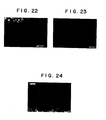
- Fig. 22 is an optical photomicrograph of a central section thereof, enlarged at 100X magnification. From Fig. 22, it will be seen that according to this twentieth preferred embodiment of the present invention it is possible to produce Si-Mg-Al-Zn alloy which has uniform and relatively fine composition. Further, this Si-Mg-Al-Zn alloy mass was examined by EPMA.
- the alloy was composed of nuclei of substantially pure Si, layers of Si 3 Mg 2 surrounding these nuclei, and other layers of SiMg 2 surrounding these layers of Si 3 Mg 2 ; and portions consisting substantially only of the original magnesium alloy were not to be found.
- the diffusion process had well and sufficiently alloyed the silicon and the magnesium alloy to form a fine structured Si-Mg-Al-Zn alloy mass.
- the preheating of the porous silicon cylinder to a temperature higher (albeit only slightly higher) than the melting point of the magnesium alloy to be alloyed therewith is again considered to have been particularly helpful in aiding with the diffusion of the molten magnesium alloy and the silicon into one another to form a well mixed alloy.
- a cold chamber die casting machine substantially the same as that utilized in the second preferred embodiment of the method of the present invention described above and illustrated in Fig. 6 was again used for practicing this twenty-first preferred embodiment, in which nickel (Ni, whose melting point is about 1453°C) was chosen as the first metal to be alloyed, and zinc alloy of JIS standard ZDC1 (with a melting point of about 410.5°C) was chosen as the second metal to be alloyed.
- nickel Ni, whose melting point is about 1453°C
- zinc alloy of JIS standard ZDC1 with a melting point of about 410.5°C
- a porous or interstice-ridden cylinder of substantially the same dimensions as before was made from the first metal to be alloyed, i.e. nickel, by being compression molded from about 13.7 gm of substantially pure nickel powder of mean particle size about 1 micron, so that the bulk density of the cylinder was approximately 4.45 gm/cm . Then this molded nickel powder cylinder was preheated to a temperature of approximately 400°C, and was then placed in the cavity of the movable die which was itself preheated to a temperature of approximately 200°C.
- Ni-Zn-Al-Cu alloy mass was then examined. Its macro-composition by weight was found to be approximately 55.5% Ni, 42.34% Zn, 1.71% Al, and 0.4596 Cu.
- Fig. 23 is an optical photomicrograph of a central section thereof, enlarged this time at 400X magnification. From Fig. 23, it will be seen that according to this twenty-first preferred embodiment of the present invention it is possible to produce Ni-Zn-Al-Cu alloy which has uniform and relatively fine composition. Further, this Ni-Zn-Al-Cu alloy mass was examined by EPMA.
- the alloy was composed of nuclei of substantially pure Ni, layers of Ni 3 Zn 2 surrounding these nuclei, and other layers of Ni 3 Zn 5 surrounding these layers of Ni 3 Zn 2 ; and portions consisting substantially only of the original zinc alloy were not to be found.
- the diffusion process had well and sufficiently alloyed the nickel and the zinc alloy to form a fine structured Ni-Zn-Al-Cu alloy mass.
- the preheating of the porous nickel cylinder albeit to a temperature lower than the melting point of the zinc alloy to be alloyed therewith, is again considered to have been particularly helpful in aiding with the diffusion of the molten zinc alloy and the nickel into one another to form a well mixed alloy.
- a horizontal centrifugal casting apparatus substantially the same as that utilized in the third preferred embodiment of the method of the present invention described above and illustrated in Fig. 8 was used for practicing this twenty-second preferred embodiment, in which copper and zinc alloy (containing about 60% copper and 40% zinc, with a melting point of about 900 o C) was chosen as the first metal to be alloyed, and aluminum (with a melting point of about 660°C) was chosen as the second metal to be alloyed.
- copper and zinc alloy containing about 60% copper and 40% zinc, with a melting point of about 900 o C
- aluminum with a melting point of about 660°C
- Fig. 24 is an optical photomicrograph of a central section thereof, enlarged at 100X magnification. From Fig. 24, it will be seen that according to this twenty-second preferred embodiment of the present invention it is possible to produce Cu-Zn-Al alloy which has uniform and relatively fine composition; however, it was also recognized that in this case, in which the first metal (the Cu-Zn alloy) was supplied in discontinuous fiber form, the composition and texture of the produced alloy were a little bit rough, as compared to the previously described cases in which the first metal was supplied in powder form.
- this Cu-Zn-Al alloy mass was examined by EPMA. From this examination, it was found that the alloy was composed of nuclei of substantially pure Cu 3 Zn 2 Al 8 , layers of CuZn + about 5.2 atomic % of Al surrounding these nuclei, and other layers of Cu 3 Al 10 + about 2.7 weight % of Zn surrounding these layers; and portions consisting substantially only of aluminum were not to be found. Thus it was verified that the diffusion process had well and sufficiently alloyed the copper and zinc alloy and the aluminum to form a fine structured Cu-Zn-Al alloy mass.
- the preheating of the porous copper and zinc alloy rectangular parallelepiped to a temperature substantially higher than the melting point of the aluminum to be alloyed therewith is again considered to have been particularly helpful in aiding with the diffusion of the molten aluminum and the copper and zinc alloy into one another to form a well mixed alloy.
- a high pressure casting apparatus substantially the same as that utilized in the first preferred embodiment of the method of the present invention described above and illustrated in Fig. 1 was used for practicing this twenty-third preferred embodiment, in which stainless steel iron alloy of JIS standard SUS-304 (with a melting point of 1480 0 C) was chosen as the first metal to be alloyed, and aluminum alloy of JIS standard AC4C (with a melting point of about 580°C) was chosen as the second metal to be alloyed.
- an Fe-Al alloy containing also other elements was manufactured, in a generally similar fashion to that employed for the practice of the first preferred embodiment described above, in the following way.
- a porous or interstice-ridden rectangular parallelepiped of dimensions about 30 mm x 10 mm x 10 mm was made from the first metal to be alloyed, i.e. stainless steel iron alloy of JIS standard SUS-304, by laminating together a large number of thin foil sheets of such stainless steel, each of mean thickness 50 microns and of dimensions 30 mm x 10 mm, so that the weight of the rectangular parallelepiped was about 11.82 gm and its bulk density was approximately 3.94 gm/cm 3 . Then this laminated iron alloy rectangular parallelepiped was preheated to a temperature of approximately 800°C, and was then placed in the mold cavity of the casting mold.
- the first metal to be alloyed i.e. stainless steel iron alloy of JIS standard SUS-304
- a quantity of substantially pure molten aluminum alloy at a temperature of about 750°C was poured into the mold cavity over and around the porous iron alloy rectangular parallelepiped.
- a pressure plunger was used, as in the practice of the first preferred embodiment, to pressurize the molten aluminum alloy, so as to infiltrate said molten aluminum alloy into the interstices of the iron alloy rectangular parallelepiped in order to form an Fe-Al alloy mass by diffusion of the two metals into one another; and this pressure was maintained until the composite mass had cooled down and completely solidified.
- the composite mass was removed from the apparatus, and the portions thereof consisting substantially only of the original aluminum alloy were machined away, so as to leave an Fe-Al alloy mass.
- This Fe-Al alloy mass was then examined. Its macro-composition by weight was found to be approximately 55.13% Fe, 25.5% Al, 13.41% Cr, and 5.96% Ni. No particular photomicrograph relating to this twenty-third preferred embodiment is provided, but it was found that, similarly to the other preferred embodiments described above, according to this twenty-third preferred embodiment of the present invention it is possible to produce Fe-Al alloy which has reasonably fine composition. However, it was recognized that in this case, in which the first metal (the stainless steel Fe alloy) was supplied in laminated sheet or foil form, the composition and texture of the produced alloy were comparatively rough, as compared to the previously described cases in which the first metal was supplied in powder form. But it is considered that the supplying of the first metal in such non-isotropic laminated form can be very helpful for giving non-isotropic physical properties to the resulting alloy, which in certain applications can be extremely useful.
- the first metal the stainless steel Fe alloy
- this Fe-Al alloy mass was examined by EPMA. From this examination, it was found that the alloy was composed of layers of laminated Fe alloy consisting substantially of Fe-18Cr-8Ni, with layers of Fe 3 Al on either side of these layers, and other layers of Fe 2 Al 3 surrounding these layers of Fe3Al; and portions consisting substantially only of aluminum alloy were not to be found. Thus it was verified that the diffusion process had well and sufficiently alloyed the iron alloy and the aluminum alloy to form a fine structured Fe-Al alloy mass.
- the preheating of the porous iron alloy rectangular parallelepiped to a temperature substantially higher than the melting point of the aluminum alloy to be alloyed therewith is again considered to have been particularly helpful in aiding with the diffusion of the molten aluminum alloy and the iron alloy into one another to form a well mixed alloy.
Landscapes
- Engineering & Computer Science (AREA)
- Mechanical Engineering (AREA)
- Chemical & Material Sciences (AREA)
- Manufacturing & Machinery (AREA)
- Materials Engineering (AREA)
- Metallurgy (AREA)
- Organic Chemistry (AREA)
- Manufacture Of Alloys Or Alloy Compounds (AREA)
- Manufacture Of Metal Powder And Suspensions Thereof (AREA)
Applications Claiming Priority (2)
| Application Number | Priority Date | Filing Date | Title |
|---|---|---|---|
| JP58138180A JPS6029431A (ja) | 1983-07-28 | 1983-07-28 | 合金の製造方法 |
| JP138180/83 | 1983-07-28 |
Publications (2)
| Publication Number | Publication Date |
|---|---|
| EP0133191A2 true EP0133191A2 (de) | 1985-02-20 |
| EP0133191A3 EP0133191A3 (de) | 1985-04-03 |
Family
ID=15215918
Family Applications (1)
| Application Number | Title | Priority Date | Filing Date |
|---|---|---|---|
| EP84101011A Ceased EP0133191A3 (de) | 1983-07-28 | 1984-02-01 | Verfahren und Vorrichtung zum Legieren |
Country Status (3)
| Country | Link |
|---|---|
| US (1) | US4708847A (de) |
| EP (1) | EP0133191A3 (de) |
| JP (1) | JPS6029431A (de) |
Cited By (5)
| Publication number | Priority date | Publication date | Assignee | Title |
|---|---|---|---|---|
| EP0257463A3 (de) * | 1986-08-16 | 1989-06-14 | DEMETRON Gesellschaft für Elektronik-Werkstoffe m.b.H. | Verfahren zur Herstellung von Targets |
| EP0408257A3 (en) * | 1989-07-10 | 1992-04-29 | Toyota Jidosha Kabushiki Kaisha | Method of manufacture of metal matrix composite material including intermetallic compounds with no micropores |
| US5236032A (en) * | 1989-07-10 | 1993-08-17 | Toyota Jidosha Kabushiki Kaisha | Method of manufacture of metal composite material including intermetallic compounds with no micropores |
| WO1999025885A1 (de) * | 1997-11-14 | 1999-05-27 | Nils Claussen | Metallverstärktes konstruktionselement |
| CN107304464A (zh) * | 2016-04-18 | 2017-10-31 | 宝钢特钢有限公司 | 一种改善钛合金成分均匀性的三元合金、其制备方法和用途 |
Families Citing this family (12)
| Publication number | Priority date | Publication date | Assignee | Title |
|---|---|---|---|---|
| JPS62120448A (ja) * | 1985-11-19 | 1987-06-01 | Nippon Carbon Co Ltd | 繊維強化金属複合材料の製造法 |
| JPS62209805A (ja) * | 1986-03-10 | 1987-09-16 | Agency Of Ind Science & Technol | Zn−22A1超塑性合金粉末を用いた複合磁性材料の成形方法 |
| JP2930591B2 (ja) * | 1987-08-28 | 1999-08-03 | 本田技研工業株式会社 | 鋳鉄部材における他部材との取付け部強化方法 |
| US5259442A (en) * | 1992-07-14 | 1993-11-09 | Specialty Metallurgical Products | Method of adding alloying materials and metallurgical additives to ingots and composite ingot |
| EP0732415A1 (de) * | 1995-03-14 | 1996-09-18 | Deritend Advanced Technology Limited | Verfahren zur Herstellung einer intermetallischen Verbindung |
| US6935405B2 (en) * | 2003-10-01 | 2005-08-30 | Loyalty Founder Enterprise Co., Ltd. | Sink compound laminate modeling process |
| RU2277457C2 (ru) * | 2004-05-19 | 2006-06-10 | "Центр Разработки Нефтедобывающего Оборудования" ("Црно") | Способ изготовления спеченных изделий |
| DE102010061960A1 (de) * | 2010-11-25 | 2012-05-31 | Rolls-Royce Deutschland Ltd & Co Kg | Verfahren zur endkonturnahen Fertigung von hochtemperaturbeständigen Triebwerksbauteilen |
| US8858869B2 (en) | 2011-02-04 | 2014-10-14 | Aerojet Rocketdyne Of De, Inc. | Method for treating a porous article |
| WO2012125516A2 (en) * | 2011-03-11 | 2012-09-20 | Kf Licensing, Inc. | Tarnish-resistant sterling silver alloys |
| CN110465643B (zh) * | 2019-09-12 | 2021-02-26 | 江西省鹰潭铜产业工程技术研究中心 | 一种铜铌复合材料的制备方法 |
| CN114507828B (zh) * | 2022-02-17 | 2022-12-02 | 贵溪奥泰铜业有限公司 | 一种导电优良的磷青铜合金及生产方法 |
Family Cites Families (24)
| Publication number | Priority date | Publication date | Assignee | Title |
|---|---|---|---|---|
| US3125441A (en) * | 1964-03-17 | Materials | ||
| GB564905A (en) * | 1943-03-17 | 1944-10-18 | Frederick Richard Sims | Improvements relating to metal compositions |
| US2612443A (en) * | 1947-12-26 | 1952-09-30 | Sintereast Corp Of America | Powder metallurgy |
| DE1021578B (de) * | 1956-05-03 | 1957-12-27 | Schmidt Gmbh Karl | Verfahren zur Herstellung von Sinter-Aluminium-Lagern |
| US3194656A (en) * | 1961-08-10 | 1965-07-13 | Crucible Steel Co America | Method of making composite articles |
| US3338687A (en) * | 1965-06-16 | 1967-08-29 | Gen Telephone & Elect | Infiltrated composite refractory material |
| DE1558647B2 (de) * | 1967-08-05 | 1972-03-09 | Siemens Ag | Heterogenes durchdringungsverbundmetall als kontaktwerkstoff fuer vakuumschalter |
| US3553806A (en) * | 1968-01-04 | 1971-01-12 | Clevite Corp | Bearing and method of making same |
| FR2011047A1 (en) * | 1968-06-17 | 1970-02-27 | Western Electric Co | Tantalum-aluminum alloys |
| NL6912700A (de) * | 1968-08-22 | 1970-02-24 | ||
| US3547180A (en) * | 1968-08-26 | 1970-12-15 | Aluminum Co Of America | Production of reinforced composites |
| AT320999B (de) * | 1970-03-07 | 1975-05-10 | Walter Dannoehl Dr | Plastisch verformbare mehrphasige metallische Werkstoffe und Verfahren zu ihrer Herstellung |
| FR2109254A5 (en) * | 1970-10-08 | 1972-05-26 | Inst Materia | Cermet prodn - by melt impregnation of a preheated porous ceramic body |
| US3699623A (en) * | 1970-10-20 | 1972-10-24 | United Aircraft Corp | Method for fabricating corrosion resistant composites |
| US3815224A (en) * | 1971-06-08 | 1974-06-11 | Atomic Energy Commission | Method of manufacturing a ductile superconductive material |
| US3827883A (en) * | 1972-10-24 | 1974-08-06 | Mallory & Co Inc P R | Electrical contact material |
| JPS5260222A (en) * | 1975-09-30 | 1977-05-18 | Honda Motor Co Ltd | Method of manufacturing fibre reinforced composite |
| JPS55152141A (en) * | 1979-05-14 | 1980-11-27 | Agency Of Ind Science & Technol | Hybrid metal material and preparation thereof |
| JPS5689373A (en) * | 1979-12-20 | 1981-07-20 | Toyota Motor Corp | Pressure type melting device of metal or the like |
| AT376920B (de) * | 1980-02-01 | 1985-01-25 | Uddeholms Ab | Verfahren zum herstellen eines gegenstandes aus einem sinterfaehigen material |
| FR2484871B1 (fr) * | 1980-06-18 | 1985-02-01 | Ultraseal International Ltd | Procede et appareillage pour l'impregnation d'articles poreux |
| US4492265A (en) * | 1980-08-04 | 1985-01-08 | Toyota Jidosha Kabushiki Kaisha | Method for production of composite material using preheating of reinforcing material |
| JPS5745002A (en) * | 1980-08-31 | 1982-03-13 | Matsushita Electric Works Ltd | Manufacture of aggregate decorative veneer |
| CA1213157A (en) * | 1981-12-02 | 1986-10-28 | Kohji Yamatsuta | Process for producing fiber-reinforced metal composite material |
-
1983
- 1983-07-28 JP JP58138180A patent/JPS6029431A/ja active Pending
-
1984
- 1984-02-01 EP EP84101011A patent/EP0133191A3/de not_active Ceased
-
1986
- 1986-01-17 US US06/820,886 patent/US4708847A/en not_active Expired - Fee Related
Cited By (6)
| Publication number | Priority date | Publication date | Assignee | Title |
|---|---|---|---|---|
| EP0257463A3 (de) * | 1986-08-16 | 1989-06-14 | DEMETRON Gesellschaft für Elektronik-Werkstoffe m.b.H. | Verfahren zur Herstellung von Targets |
| EP0408257A3 (en) * | 1989-07-10 | 1992-04-29 | Toyota Jidosha Kabushiki Kaisha | Method of manufacture of metal matrix composite material including intermetallic compounds with no micropores |
| US5236032A (en) * | 1989-07-10 | 1993-08-17 | Toyota Jidosha Kabushiki Kaisha | Method of manufacture of metal composite material including intermetallic compounds with no micropores |
| WO1999025885A1 (de) * | 1997-11-14 | 1999-05-27 | Nils Claussen | Metallverstärktes konstruktionselement |
| CN107304464A (zh) * | 2016-04-18 | 2017-10-31 | 宝钢特钢有限公司 | 一种改善钛合金成分均匀性的三元合金、其制备方法和用途 |
| CN107304464B (zh) * | 2016-04-18 | 2019-10-22 | 宝钢特钢有限公司 | 一种改善钛合金成分均匀性的三元合金、其制备方法和用途 |
Also Published As
| Publication number | Publication date |
|---|---|
| JPS6029431A (ja) | 1985-02-14 |
| EP0133191A3 (de) | 1985-04-03 |
| US4708847A (en) | 1987-11-24 |
Similar Documents
| Publication | Publication Date | Title |
|---|---|---|
| US4708847A (en) | Method for alloying substances | |
| US5897830A (en) | P/M titanium composite casting | |
| JP4451913B2 (ja) | Ti粒子分散マグネシウム基複合材料の製造方法 | |
| US4460541A (en) | Aluminum powder metallurgy | |
| Attia | Surface metal matrix composites | |
| EP1082578B1 (de) | Bleifreies geschoss hergestellt mittels eines flüssigmetallinfiltrationsverfahren | |
| JP2006328500A (ja) | カーボンナノ複合金属材料の製造方法及びカーボンナノ複合金属材料 | |
| EP2327808A1 (de) | Verbundmaterial auf magnesiumbasis mit darin dispergierten ti-partikeln sowie verfahren zu seiner herstellung | |
| CA1147522A (en) | Method of and apparatus for hot pressing particulates | |
| Gui M.-C. et al. | Microstructure and mechanical properties of cast (Al–Si)/SiCp composites produced by liquid and semisolid double stirring process | |
| JP3041421B1 (ja) | セラミックス強化金属基複合材料およびその製造方法 | |
| Lianxi et al. | Development of the technique of extrusion directly following infiltration for the manufacturing of metal-matrix composites | |
| KR101153859B1 (ko) | 금속-탄소나노튜브 복합재 제조 방법 및 그 복합재 | |
| KR100325421B1 (ko) | 벌크 비정질 마그네슘 합금 제조를 위한 성형장치 | |
| US6551373B2 (en) | Copper infiltrated ferro-phosphorous powder metal | |
| CH536672A (fr) | Procédé de fabrication d'un produit métallique et produit obtenu par ce procédé | |
| JP2576187B2 (ja) | 金属基複合材料の製造方法 | |
| JPH01279713A (ja) | 金属基複合材料の製造方法 | |
| JP2008200703A (ja) | 金属基複合材の製造方法 | |
| JP2576186B2 (ja) | 金属基複合材料の製造方法 | |
| JP4048581B2 (ja) | アルミニウムマトリックス複合材料の製造方法 | |
| WO2025177258A1 (en) | Scalable manufacturing process for manufacturing high-electrical conductivity aluminum-graphene (al-gr) and aluminum-carbon nanotube (al-cnt) metal matrix composites (mmcs) | |
| Chen et al. | Net-shape formation of hypereutectic Al–Si alloys by thixocasting of gas-atomised powder preforms | |
| Barbier et al. | In-situ process for producing aluminium matrix composites containing intermetallic material | |
| JPH07242914A (ja) | タングステン基合金及び該合金製慣性体並びに製造方法 |
Legal Events
| Date | Code | Title | Description |
|---|---|---|---|
| PUAI | Public reference made under article 153(3) epc to a published international application that has entered the european phase |
Free format text: ORIGINAL CODE: 0009012 |
|
| PUAL | Search report despatched |
Free format text: ORIGINAL CODE: 0009013 |
|
| AK | Designated contracting states |
Designated state(s): DE FR GB |
|
| AK | Designated contracting states |
Designated state(s): DE FR GB |
|
| 17P | Request for examination filed |
Effective date: 19850524 |
|
| 17Q | First examination report despatched |
Effective date: 19860324 |
|
| D17Q | First examination report despatched (deleted) | ||
| STAA | Information on the status of an ep patent application or granted ep patent |
Free format text: STATUS: THE APPLICATION HAS BEEN REFUSED |
|
| 18R | Application refused |
Effective date: 19890622 |
|
| RIN1 | Information on inventor provided before grant (corrected) |
Inventor name: TANAKA, ATSUO Inventor name: KUBO, MASAHIRO Inventor name: TATEMATSU, YOSHIAKI Inventor name: DONOMOTO, TADASHI |