EP0137262A1 - Mono- und bisfunktionelle Anthrachinon-(oxy-2,3-oxidopropane), Verfahren zu ihrer Herstellung und ihre Verwendung als Arzneimittel - Google Patents
Mono- und bisfunktionelle Anthrachinon-(oxy-2,3-oxidopropane), Verfahren zu ihrer Herstellung und ihre Verwendung als Arzneimittel Download PDFInfo
- Publication number
- EP0137262A1 EP0137262A1 EP84110092A EP84110092A EP0137262A1 EP 0137262 A1 EP0137262 A1 EP 0137262A1 EP 84110092 A EP84110092 A EP 84110092A EP 84110092 A EP84110092 A EP 84110092A EP 0137262 A1 EP0137262 A1 EP 0137262A1
- Authority
- EP
- European Patent Office
- Prior art keywords
- ppm
- formula
- oxy
- anthraquinone
- abx
- Prior art date
- Legal status (The legal status is an assumption and is not a legal conclusion. Google has not performed a legal analysis and makes no representation as to the accuracy of the status listed.)
- Granted
Links
Classifications
-
- C—CHEMISTRY; METALLURGY
- C07—ORGANIC CHEMISTRY
- C07D—HETEROCYCLIC COMPOUNDS
- C07D303/00—Compounds containing three-membered rings having one oxygen atom as the only ring hetero atom
- C07D303/02—Compounds containing oxirane rings
-
- C—CHEMISTRY; METALLURGY
- C07—ORGANIC CHEMISTRY
- C07D—HETEROCYCLIC COMPOUNDS
- C07D303/00—Compounds containing three-membered rings having one oxygen atom as the only ring hetero atom
- C07D303/02—Compounds containing oxirane rings
- C07D303/12—Compounds containing oxirane rings with hydrocarbon radicals, substituted by singly or doubly bound oxygen atoms
- C07D303/18—Compounds containing oxirane rings with hydrocarbon radicals, substituted by singly or doubly bound oxygen atoms by etherified hydroxyl radicals
- C07D303/20—Ethers with hydroxy compounds containing no oxirane rings
- C07D303/22—Ethers with hydroxy compounds containing no oxirane rings with monohydroxy compounds
-
- A—HUMAN NECESSITIES
- A61—MEDICAL OR VETERINARY SCIENCE; HYGIENE
- A61P—SPECIFIC THERAPEUTIC ACTIVITY OF CHEMICAL COMPOUNDS OR MEDICINAL PREPARATIONS
- A61P35/00—Antineoplastic agents
-
- C—CHEMISTRY; METALLURGY
- C07—ORGANIC CHEMISTRY
- C07D—HETEROCYCLIC COMPOUNDS
- C07D303/00—Compounds containing three-membered rings having one oxygen atom as the only ring hetero atom
- C07D303/02—Compounds containing oxirane rings
- C07D303/12—Compounds containing oxirane rings with hydrocarbon radicals, substituted by singly or doubly bound oxygen atoms
- C07D303/18—Compounds containing oxirane rings with hydrocarbon radicals, substituted by singly or doubly bound oxygen atoms by etherified hydroxyl radicals
- C07D303/20—Ethers with hydroxy compounds containing no oxirane rings
- C07D303/24—Ethers with hydroxy compounds containing no oxirane rings with polyhydroxy compounds
Definitions
- Suitable bases for the reaction are preferably inorganic bases, in particular sodium or potassium hydroxide or their methylates, ethylates or tert-butylates, and also sodium potassium and calcium carbonates or bicarbonates.
- DEWEX-1 OH form
- Inert solvents are preferably acetone, ethyl methyl ketone, dimethylformamide, acetonitrile, HMPT or alcohols, for example tert-butanol.
- the reaction is preferably carried out between 0 ° C. and the boiling points of the solvents used. Water generated during the etherification process is preferably removed using a reversible water cutter.
- a gentle and advantageous process variant consists in 1 to 480 hours of reflux cook in the presence of the hydrogen halide potassium arbonate in ethyl methyl ketone.
- this variant when using epichlorohydrin and when using dihydroxyanthraquinones with brief boiling, for example up to 48 hours or even longer, generally only one of the two hydroxyl groups is converted selectively into the glycidyl ether, while the reaction times are considerably extended for the reaction of the second hydroxy group need to be up to 500 hours or more.
- the bifunctional conversion of the dihydroxyanthraquinones into their bisglycidyl ether surprisingly proceeds with the more reactive epibromohydrin in a significantly better manner (approx. 60%) and also in a shorter reaction time than with epichlorohydrin.
- the reaction with epibromohydrin also proceeds more completely to oxy-2,3-oxidopropane groups than with epichlorohydrin, ie less or no primary product of the formula III is obtained.
- the halohydrins of the formula III are preferably formed by briefly heating mono- or dihydroxyanthraquinones according to process variant 1) with epichlorohydrin and epibromohydrin for about 1 to 12 hours. Furthermore, these are also obtained in good yields if the mono- or dihydroxyanthraquinones are mixed with 1 to 3 mol, preferably 1.1 to 1.4 mol, epibromo- preferably epichlorohydrin with catalytic amounts of piperidine for 1 to 16 hours, preferably 6-8 Hours, boiling at reflux. Subsequent treatment of the compounds of the formula III with alkalis, preferably 1 normal sodium hydroxide solution in tetrahydrofuran, at 30-70 ° C. for up to 1-3 hours, gives the compounds of the formula I after hydrogen halide elimination.
- alkalis preferably 1 normal sodium hydroxide solution in tetrahydrofuran
- thin-layer chromatography is used to monitor the course of the reaction.
- the hydroxyanthraquinones II are boiled with 1-chloro, 1-bromo or 1-iodo-2,3-propanediol, preferably in alcohols or dimethylformamide or dimethyloxyethane with alkalis, preferably alkali metal alcoholates, until the reaction is completed at reflux.
- alkalis preferably alkali metal alcoholates
- the hydroxyanthraquinones II are preferably 1-bromo, 1-iodo- or 1- (p-toluenesulfonato) -2,3-propanediol-2,3-acetonide in a manner analogous to process variant 4 for the free 1-halo-2, 3-propanediols, converted to compounds of formula VIII and then hydrolyzed to compounds of formula VII by treatment with mineral acids, preferably hydrochloric or sulfuric acid in alcohols or acetone / water.
- mineral acids preferably hydrochloric or sulfuric acid in alcohols or acetone / water.
- Diallyloxyanthraquinones X is carried out in an analogous manner described under procedure 1 for the implementation of I ⁇ II.
- allyl chloride, allyl bromide or allyl iodide are preferably used.
- the anthraquinone allyl ethers X are reacted in inert organic solvents, preferably dichloromethane, chloroform, ethyl acetate with corresponding molar equivalents of an organic alkyl or aryl percarboxylic acid, preferably with m-chloroperbenzoic acid at 0 ° C - 40 °, as a rule precipitates m-chlorobenzoic acid, which is filtered off.
- the compounds of formula 1 according to the invention can then be obtained from the filtrate by concentration and recrystallization.
- process products I can also be obtained from the anthraquinone allyl ethers by reaction with the oxidation complex of iodine and silver oxide (J2xAg20) in water / dioxane.
- 1- or 2-hydroxyanthraquinone 1,5-, 1,6-, 1,7-, 1,8-, 2,6- and 2,7-, 1,2-, 1,3-, 1,4- and 2,4-dihydroxyanthraquinone , also tri- and tetrahydroxyanthraquinones, these anthraquinones additionally being able to contain one or more identical or different substituents, which are preferably halogen, alkyl, alkoxy, acyloxy or nitro.
- the process products obtainable according to the invention are valuable intermediates for the production of cardiovascular agents of the structure type of the ⁇ -receptor blockers.
- the anthraquinone bis- (oxy-2,3-oxido propane) can be used as novel, not yet known cross-linking agents in the manufacture of polymers, e.g. Epoxy resins and lacquers used in the plastics and coatings industry.
- the process products surprisingly show in different in vitro and also in vivo test models a comparable or often superior antitumor activity to adriamycin.
- the acute toxicity of the compounds according to the invention is significantly lower than that of the reference standard adriamycin, i.e. the process products show a larger therapeutic index than adriamycin.
- the different test systems for determining the in vitro or in vivo antitumor effect and the acute toxicity are described in the following section.
- the cytotoxic activity of the compounds described in this patent is determined on L 1210 mouse leukemia cells. The following test systems were used:
- radioactive labeled DNA precursors e.g. C 14 labeled thymidine
- L 1210 cells in an exponential growth phase (5x10 3 / ml in RPMI1640) are incubated in a microtiter plate for 72 hours with different concentrations of the test substance (37 ° C, 5% CO 2 , 95% relative air humidity). Controls consist of cells that are only incubated with fresh medium. All determinations are carried out as 4-fold determinations. After 65 hours, 50 / ul C 14 thymidine (1.5 / uc / ml) is added to radioactively label the cell's DNA. After 7 hours of incubation, the cells are suctioned off, the DNA is precipitated with 5% trichloroacetic acid and washed successively with water or methanol.
- the results are given as the ratio of the scintillation indices after incubation with the test substance, based on the untreated control.
- the dose-response curve is determined from the measured values thus obtained and the IC 50 , ie the concentration which, under test conditions, reduces the incorporation of radioactive thymidine by 50% compared to the control.
- the IC 50 values of the compounds described in this patent compared to adriamycin (ADM) are summarized in Table 1.
- Table 1 shows that the products of the process surprisingly have an antitumor activity comparable to that of adriamycin or, depending on the structure, often on L 1210 leukemia cells of the mouse, depending on the structure.
- mice were injected intraperitoneally with different doses of the test substance suspended in 0.5 ml, 0.5% carboxymethyl cellulose on day 0.
- Control groups received only 0.5 ml of the carboxymethyl cellulose solution.
- 5 mice were used per concentration of test substance.
- the number of surviving mice is determined on day 14 and the LD 50 is determined using the Litchfield Wilcoxon method.
- the toxicity of the compounds described in this patent compared to adriamycin is summarized in Table 1.
- a solution of 27 g of 1-hydroxyanthraquinone in 630 ml of ethyl methyl ketone is mixed with 27 g of potassium carbonate and 135 ml of epibromohydrin and heated under reflux for 100 hours with stirring. Then filter through. Clarification layer filter, narrows i. Vac. the filtrate and recrystallized from ethyl methyl ketone with the addition of methylene chloride for complete dissolution and 13.5 g of anthraquinone-1- (oxy-2,3-oxido-propane), mp. 177-180 ° C., are obtained.
- the aromatic band pattern is between 7.25 and 8.3 ppm
- a solution of 60 g of 1,4-dihydroxyanthraquinone in 150 ml of ethyl methyl ketone is mixed with 61.5 g of potassium carbonate and 300 ml of epibromohydrin and refluxed for 100 hours with thorough stirring.
- the mixture is allowed to cool to room temperature and the insoluble constituents are filtered off.
- the filtrate is i. Vac. concentrated and the resulting oil brought to crystallization by rubbing with about 1 1 of diethyl ether. It is filtered off, the crystals are washed several times after diethyl ether, dried (64 g of dirty yellow-green crystals, which due to the TLC shows only moderate impurities) and dissolved in approx.
- reaction mixture is allowed to cool to room temperature after a reaction time of 110 hours, undissolved is filtered off and extracted as in b. indicated, on the Soxleth extraction apparatus with acetone, and after isolation of the precipitated at 20 ° C, the latter, we under b. indicated, extracted with methylene chloride on Soxleth.
- 24 g of anthraquinone-2,6-bis- (oxy-2,3-oxido-propane) are obtained, mp. 219-222 ° C, which in all spectral data and in the R F value in the DC with the after a. and b. obtained reaction product is completely identical.
- the filtrate optionally chromatographed the Residue with methylene chloride as a raising and eluting agent according to Example 4 on aluminum oxide and crystallized from ethyl methyl ketone, optionally with the addition of methylene chloride, to completely dissolve / and 11, og anthraquinone-1,5-bis- (oxy-2,3- oxido-propane) with a melting point of 205 ° C.
- a solution of 3 g of 1,8-dihydroxy-3-methylanthraquinone in 70 ml of ethyl methyl ketone is mixed with 3 g of potassium carbonate and 15 ml of epibromohydrin and heated under reflux for 100 hours with stirring. Then filter (still hot), evaporate down i.Vak. the filtrate and recrystallized from ethyl methyl ketone, optionally with the addition of methylene chloride to complete dissolution, and 1.6 g of anthraquinone-3-methyl-1,8-bis (oxy-2,3-oxicb-propane) of mp 198-209 ° C.
- a solution of 3 g of 1,4-dihydroxy-5,8-dichloroanthraquinone in 70 ml of ethyl methyl ketone is mixed with 3 g of potassium carbonate and 15 ml of epibromohydrin and heated under reflux for 100 hours with stirring. Then filter (still hot), evaporate down i.Vak. the filtrate and crystallizes from ethyl methyl ketone, optionally with the addition of methylene chloride to complete dissolution, and 1.1 g of anthraquinone-5,8-dichloro-1,4-bis (oxy-2,3-oxido-propane) are obtained from the mp . 201-212 ° C.
- a solution of 3 g of 1,4-dihydroxy-2-acetoxyanthraquinone in 70 ml of ethyl methyl ketone is mixed with 3 g of potassium carbonate and 15 ml of epibromohydrin and heated under reflux for 100 hours with stirring. Then it is filtered off, concentrated in vacuo. the filtrate and recrystallized from ethyl methyl ketone, optionally with the addition of methylene chloride to complete dissolution, and 1.0 g of amorphous anthraquinone-2-acetoxy-1,4-bis (oxy-2,3-oxido-propane) is obtained.
- a solution of 3 g of 1,4-dihydroxy-5-nitroanthraquinone in 70 ml of ethyl methyl ketone is mixed with 3 g of potassium carbonate and 15 ml of epibromohydrin and heated under reflux for 100 hours with stirring. Then filter (still hot), evaporate down i.Vak. the filtrate and recrystallized from ethyl methyl ketone, optionally with the addition of methylene chloride to complete dissolution, and 1 g of anthraquinone-5-nitro-1,4-bis (oxy-2,3-oxido-propane) of mp 171 is obtained -182 ° C.
Landscapes
- Chemical & Material Sciences (AREA)
- Organic Chemistry (AREA)
- Health & Medical Sciences (AREA)
- Life Sciences & Earth Sciences (AREA)
- General Health & Medical Sciences (AREA)
- Medicinal Chemistry (AREA)
- Nuclear Medicine, Radiotherapy & Molecular Imaging (AREA)
- Pharmacology & Pharmacy (AREA)
- Chemical Kinetics & Catalysis (AREA)
- Animal Behavior & Ethology (AREA)
- General Chemical & Material Sciences (AREA)
- Public Health (AREA)
- Veterinary Medicine (AREA)
- Organic Low-Molecular-Weight Compounds And Preparation Thereof (AREA)
- Acyclic And Carbocyclic Compounds In Medicinal Compositions (AREA)
- Pharmaceuticals Containing Other Organic And Inorganic Compounds (AREA)
- Medicines Containing Material From Animals Or Micro-Organisms (AREA)
- Epoxy Compounds (AREA)
- Nitrogen Condensed Heterocyclic Rings (AREA)
Abstract
Description
- Die vorliegende Erfindung betrifft neue mono- und bisfunktionelle Anthrachinon-(oxy-2,3-oxidopropane) der Formel I

- R1 und R1' gleich oder verschieden sind und Wasserstoff, Hydroxy oder den Rest

- R2 und R2' gleich oder verschieden sind und Wasserstoff oder eine oder mehrere Hydroxy-, C1-C4-Aalkyl-, C1-C4-Alkoxy-, C1-C4-Alkoxycarbonyl-, C1-C4-Alkanoyloxy-, Aryloxy-, Ar-C1-C4- alkyloxy-, Halogen- oder Nitrogruppen bedeuten, und
- R3 und R3' gleich oder verschieden sind und Wasserstoff oder den Rest

- Die Erfindung betrifft ferner ein Verfahren zur Herstellung von Verbindungen der Formel I, die dadurch gekennzeichnet sind, daß man ein Mono- oder Di- oder Polyhydroxyanthrachinon der Formel II
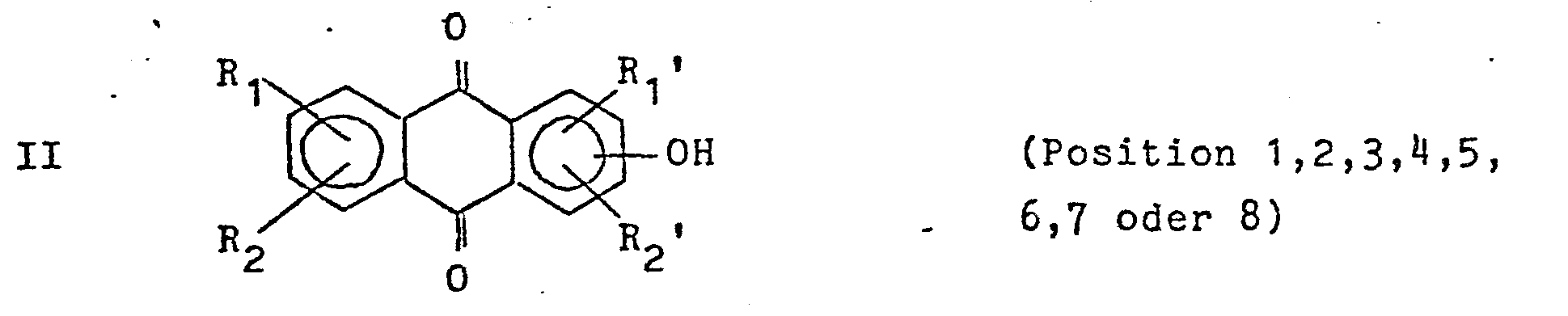
- worin R1 und R1' H und/oder OH bedeuten
- und R2 und R2' die oben angegebene Bedeutung haben, entweder
- 1. mit Epichlor- oder Epibromhydrin in Gegenwart von Basen, gegebenenfalls unter Zusatz eines inerten organischen Lösungsmittels bei Temperaturen von 0°C bis zum Siedepunkt des jeweiligen Reaktionsgemisches zu den erfindungsgemäßen Verbindungen der Formel I oder
- 2. mit Epichlor- oder Epibromhydrin in Gegenwart von Basen, gegebenenfalls unter Zusatz eines inerten organischen Lösungsmittels bei Temperaturen von 0°C bis zum Siedepunkt des jeweiligen Reaktionsgemisches zu Verbindungen der Formel III


- und R2 und R2' die oben angegebene Bedeutung haben umsetzt und diese durch Behandlung mit anorganischen oder organischen Basen, gegebenenfalls unter Zusatz eines inerten organischen Lösungsmittels und/oder Wasser unter Eliminierung von HalH zu den erfindungsgemäßen Verbindungen der Formel I umsetzt oder
- 3.a) mit Glycidol, der Formel IV

gegebenenfalls unter Zusatz einer Base, eines inerten organischen Lösungsmittels, gegebenenfalls unter Zugabe von Wasser zu Verbindungen der Formel V umsetzt

- und R2 und R2' sowie R4 die oben angegebenen Bedeutungen haben,
- und die Verbindungen der Formel V, wenn R4 Alkyl oder vorzugsweise Acyl bedeuten, zu Verbindungen der allgemeinen Formel V mit der Bedeutung R4= H hydrolysiert und diese durch Umsetzung mit einem Alkyl- oder Arylsulfonsäurehalogenid zu Verbindungen der Formel V, in der R4 einen Alkyl- oder Lrylsulfonsäurerest. bedeuten, umsetzt, und diese Verbindung, gegebenenfalls nach nucleophilem Austausch der Alkyl- oder Arylsulfonsäureestergruppe R4 gegen Halogen, wie F, CL, Br, J, durch Behandlung mit Basen, falls die Eliminierung nicht schon ohne diesen Zusatz abläuft, unter Eliminierung von Alkyl- oder Arylsulfonsäure oder Halogenwasserstoffsäure, wenn R4= F,C1, Br, J ist, zu den erfindungsgemäßen Verbindungen der Formel I umsetzt
- b) mit 1-Halogen-2,3-dihydroxypropan oder 1-Alkyl- bzw. 1-Arylsulfonato-2,3-dihydroxypropan der Formel VI

mit Basen, vorzugsweise mit starken anorganischen Alkalien , gegebenenfalls unter Zusatz von inerten organischen Lösungsmitteln zu Verbindungen der Formel VII umsetzt
- und R2 und R2' die oben angeführte Bedeutung haben,
- und diese dann gemäß 3.a) weiter zu den Verbindungen der Formel I umsetzt.
- c) mit einem Derivat des 1-Halogen- bzw. 1-Alkyl- oder 1-Arylsulfonato-2,3-dihydroxypropans der Formel VIII


oder - 4. mit Alkylchlorid, -bromid oder -jodid in Gegenwart von Basen, gegebenenfalls unter Zusatz eines inerten organischen Lösungsmittels bei Temperaturen von 0°C bis zum Siedepunkt des jeweiligen Reaktionsgemisches zu den Verbindungen der Formel X umsetzt

- Zur Umsetzung der Mono- oder Di- oder Polyhydrohyanthrachinone der Formel II zu mono- und bisfunktionellen Antlirachinon- (oxy-,2, 3- oxidopropanen) der Formel geht man wie folgt vor:
- Als Basen für die Umsetzung kommen vorzugsweise anorganische Basen, insbesondere Natrium-, Kaliumhydroxid bzw. deren methylate, Äthylate oder tert-Butylate, ferner Natrium-Kalium- und Calciumcarbonate oder -bicarbonate in Betracht. DEWEX-1 (OH-Form) kann anstelle von Basen benutzt werden. Als inerte Lösungsmittel dienen vorzugsweise Aceton, Äthylmethylketon, Dimethylformamid, Acetonitril, HMPT oder Alkohole, z.B. tert-Butanol. Die Reaktion wird vorzugsweise zwischen 0°C und den Siedepunkten der verwendeten Lösungsmittel durchgeführt. Beim Verätherungsvorgang entstehendes Wasser wird vorzugsweise über ein Reverswasserabsehneider ausgekreist. Das ist insbesondere dann der Fall, wenn ausschließlich in Epichlorhydrin oder Epibromhydrin ohne weiteren Lösungsmittelzusatz gearbeitet wird. Eine schonende und vorteilhafte Verfahrensvariante besteht in 1 bis 480 stündigem Rückflußkochen in Gegenwart der halogenwasserstoff-bindenden Kaliumearbonate in Äthylmethylketon. Bei dieser Variante wird bei Verwendung von Epichlorhydrin und bei Einsatz von Dihydroxyanthrachinonen bei kurzzeitigem Kochen, z.B. bis 48 Stunden oder auch darüber, in der Regel weitgehend selektiv nur eine der beiden Hydroxylgruppen in den Glycidyläther überführt, während zur Umsetzung der zweiten Hydroxygruppe die Reaktionszeiten wesentlich verlängert werden müssen, bis zu 500 Stunden oder darüber. Allerdings verläuft die bifunktionelle Überführung der Dihydroxyanthrachinone in deren Bisglycidyläther mit dem reaktiveren Epibromhydrin überraschenderweise ausbeutemäßig (ca. 60 %) wesentlich besser und auch in kürzerer Reaktionszeit als bei Epichlorhydrin. Darüber hinaus verläuft die Umsetzung mit Epibromhydrin auch vollständiger zu Oxy-2,3-oxidopropan- gruppen als bei Epichlorhydrin, d.h. es wird weniger oder auch gar kein Primärprodukt der Formel III erhalten. Fällt jedoch im Gemisch mit I noch Primärprodukt III als Reaktionsprodukt an, so wird dieses durch weiteres Rückflußkochen in organischen Lösungsmitteln mit Alkalien oder auch durch Behandeln mit Triäthylamin in Tetrahydrofuran vollständig zum Titelprodukt I unter Eliminierung von Chlor-oder Bromwasserstoff überführt. Eine Reinigung der erhaltenen Verfahrensprodukte kann durch Umkristallisation oder auch durch übliche Chromatographie an Aluminiumoxid oder Kieselgel erfolgen. Auch eine Auftrennung der Reaktionsprodukte in einem Reaktionsgemisch, z.B. von Mon- and Di- glycidyläther eines Di- oder Polyhydroxyanthrachinons, erfolgt zweckmäßigerweis durch Chromatographie. Zur Verlaufskontrolle der Reaktionsführungen verwendet man die Dünnschichtchromatographie, die eindeutig den Verlauf und den Selektivitätsgrad der Reaktionen, insbesondere bei Verwendung von Dihydroxyanthrachinonen, erkennen läßt. Die RF-Werte von Mono- und Diglycidyläther eines eingesetzten Di- oder Polyhydroxyanthrachinons liegen in der Regel weit auseinander. Die DC-Verlaufskontrolle bewährt sich insbesondere zur Darstellung von Hydroxyanthrachinonoxy-2,3-oxidopropanen, da dann die Reaktion vor Weiterreaktion zu den Anthraehinon- di(oxy-2,3- oxidopropanen) rechtzeitig abgebrochen werden muß. Aber auch zur Kontrolle der Bildung von Anthrachinon-di(oxy-2,3-oxido- propanen) hat sich die Dünnschichtverlaufskontrolle sehr bewährt.
- Die eben geschilderten praktischen Durchführungsbedingungen gelten in der Regel auch für analoge, durch Basen bzw. Alkalien bewirkte Ätherbildungsreaktionen, wie sie in den folgenden Verfahrensvarianten erläutert werden.
- Durch kurzzeitiges, etwa 1 bis 12-stündiges, Erhitzen von Mono- oder Dihydroxyanthrachinonen gemäß Verfahrensvariante 1) mit Epichlor- und Epibromhydrin werden vorzugsweise die Halogenhydrine der Formel III gebildet. Ferner werden diese auch in guten Ausbeuten erhalten, wenn man die Mono- bzw. Dihydroxyanthrachinone mit 1 bis 3 Mol, vorzugsweise 1,1 bis 1,4 Mol, Epibrom- vorzugsweise Epichlorhydrin mit katalytischen Mengen Piperidin 1 bis 16 Stunden, vorzugsweise 6 - 8 Stunden, am Rückfluß kocht. Durch anschließende Behandlung der Verbindungen der Formel III mit Alkalien, vorzugsweise 1 normaler Natronlauge in Tetrahydrofuran, bei 30 - 70°C bis zu 1 - 3 Stunden, erhält man nach Halogenwasserstoffeliminierung die Verbindungen der Formel I.
- Die Umsetzung der Anthrachinone II mit Glycidol IV oder seinen Derivaten (R4 in IV = CH3, COCH3, SO2CH3 usw.) erfolgt unter den gleichen Bedingungen wie für die Reaktion mit Epichlor- bzw. Epibromhydrin unter Verfahensvariante 1 beschrieben. Auch hier wird zur Verlaufskontrolle der Reaktionsführung die Dünnschichtchromatographie herangezogen. Zur weiteren Überführung von V in I wird V (R4= H) vorzugsweise mit Methan- oder p-Toluolsulfonsäurechlorid in Dioxan/Pyridin bei 0°C bis 20°C zu den entsprechenden Sulfonsäureesterderivaten (V:R4 = SO2CH3, SO2C6H4-p-CH3)umgesetzt und diese danach direkt oder nach nucleophilem Umsatz mit Alkalibromid bzw. -jodid in vorzugsweise Dimethylformamid, gegebenenfalls unter Zusatz von Alkalicarbonaten, zu den entsprechenden Halogeniden (V:R4 = Br oder J) umsetzt, die dann durch Kochen mit Alkalien in vorzugsweise Alkoholen oder Aceton oder Butanon-2 oder durch Behandlung mit tertiären organischen Basen, vorzugsweise Triäthylamin, in Äthern, z.B. Tetrahydrofuran oder Dioxan oder Dimethoxyglykol, oder in Xylol unter Epoxidbildung zu den Titelverbindungen der Formel I umgesetzt werden.
- Die Hydroxyanthrachinone II werden mit 1-Chlor-, 1-Brom-oder 1-Jod-2,3-propandiol vorzugsweise in Alkoholen oder Dimethylformamid oder Dimethyloxyäthan mit Alkalien, vorzugsweise Alkalialkoholaten bis zur Komplettierung der Reaktion am Rückfluß gekocht. Die weiteren Reaktionen zu I erfolgen analog, wie bei Verfahrensvariante 3 beschrieben.
- Die Hydroxyanthrachinone II werden mit vorzugsweise 1-Brom, 1-Jod- oder 1-(p- Toluölsulfonato)-2,3-propandiol-2,3-acetonid in analoger Weise wie bei Verfahrensvariante 4 für die freien 1-Halogen-2,3-propandiole beschrieben, zu Verbindungen der Formel VIII umgesetzt und anschließend durch Behandeln mit Mineralsäuren, vorzugsweise Salz- oder Schwefelsäure in Alkoholen bzw. Aceton/Wasser zu Verbindungen der Formel VII hydrolysiert. Die Umsetzung zu den Titelverbindungen I erfolgt analog Verfahrensvariante 4bzw. 3.
- Die Umsetzung von Hydroxyanthrachinonen zu den Mono- bzw.
- Diallyloxyanthrachinonen X erfolgt in analoger Weise wie unter Verfahrensweise 1 für die Umsetzung von I → II beschrieben. Anstatt Epichlor- oder Epibromhydrin werden vorzugsweise Allylchlorid, Allylbromid oder Allyljodid verwendet.
- Zur Überführung von X → I werden die Anthrachinonallyläther X in inerten organischen Lösungsmitteln, vorzugsweise Dichlormethan, Chloroform, Essigester mit entsprechenden Moläquivalenten einer organischen Alkyl- oder Arylpercarbonsäure, vorzugsweise mit m-Chlorperbenzoesäure bei 0°C - 40°, umgesetzt, wobei in der Regel m-Chlorbenzoesäure ausfällt, die abfiltriert wird. Aus dem Filtrat können dann die erfindungsgemäßen Verbindungen der Formel 1 durch Einengen und Umkristallisieren gewonnen werden.
- In einer alternativen Varinate können die Verfahrensprodukte I aus den Anthrachinonallyläthern auch durch Umsetzung mit dem Oxydationskomplex aus Jod und Silberoxid (J2xAg20) in Wasser/Dioxan erhalten werden.
- Das selektive, zu den erfindungsgemäßen Produkten führende Reaktionsverhalten muß als überraschend angesehen werden.
- Folgende Hydroxyanthrachinone, die in der Regel literaturbekannt sind, kommen als Ausgangsverbindungen für die Herstelng der erfindungsgemäßen Anthrachinon-mono- oder bis-(oxy-2,3-oxido-propane) I in Betracht
- 1- oder 2-Hydroxyanthrachinon; 1,5-, 1,6-, 1,7-, 1,8-, 2,6-und 2,7-, 1,2-, 1,3-, 1,4- und 2,4-Dihydroxyanthrachinon, ferner Tri- und Tetrahydroxyanthrachinone wobei diese Anthrachinone zusätzlich einen oder mehrere gleiche oder verschiedene Substituenten, die vorzugsweise Halogen, Alkyl, Alkoxy, Acyloxy oder Nitro bedeuten, enthalten können.
- Als erfindungsgemäße Verfahrensprodukte werden aus den Ausgangsanthraehinonen folgende Glycidyläther erhalten:
- Anthrachinon-1-oxy-(2,3-oxido-propan)
- Anthrachinon-2-oxy-(2,3-oxido-propan)
- 1-Hydroxyanthrachinon-5-oxy-(2,3-oxido-propan)
- Anthrachinon-1,5-bis-(oxy-2,3-oxido-propan)
 wobei diese Verfahrensprodukte zusätzlich einen oder mehrere gleiche oder verschiedene Substituenten, die vorzugsweise Halogen, Alkyl, Alkoxy, Hydroxy, Acyloxy oder Nitro bedeuten, enthalten können.
- Die gemäß der Erfindung erhältlichen Verfahrensprodukte stellen wertvolle Zwischenprodukte für die Herstellung von Herz-Kreislaufmitteln vom Strukturtyp der ß-Rezeptorenblocker dar. Ferner können die Anthrachinon-bis-(oxy-2,3-oxido-pro- pane) als neuartige bisher nicht bekannt gewordene quervernetzende Agenzien bei der Herstellung von Polymeren, z.B. Epoxydharzen und -lacken, in der Kunststoff- und Lackbranche eingesetzt werden.
- Darüberhinaus zeigen die Verfahrensprodukte überraschenderweise in verschiedenen in vitro und auch in vivo Testmodellen eine dem Adriamycin vergleichbare oder oft auch überlegene antitumorale Wirksamkeit. Die akute Toxizität der erfindungsgemäßen Verbindungen ist dabei signifikant niedriger als die des Vergleichstandard Adriamycin, d.h. die Verfahrensprodukte zeigen einen größeren therapeutischen Index als Adriamycin. Die unterschiedlichen Testsysteme zur Bestimmung der in vitro bzw. der in vivo Antitumorwirkung sowie der akuten Toxizität werden im folgenden Abschnitt beschrieben.
- Die Bestimmung der zytotoxischen Wirksamkeit der in diesem Patent,beschriebenen Verbindungen erfolgt an L 1210 Leukämiezellen der Maus. Im einzelnen wurden folgende Testsysteme verwendet:
- Bei dieser Methode wird in vitro nach Inkubation der Zellen mit unterschiedlichen Konzentrationen der Testsubstanz ermittelt, inwieweit die Zellen radioaktiv markierte DNA-Vorläufer (z.B. C 14 markiertes Thymidin) einbauen können.
- L 1210 Zellen in expotentieller Wachstumsphase (5x10³/ml in RPMI1640) werden in einer Mikrotiterplatte 72 Stunden mit unterschiedlichen Konzentrationen der Testsubstanz inkubiert (37°C, 5% C02, 95 % relative Luftfeuchte). Kontrollen bestehen aus Zellen, die lediglich mit frischem Medium inkubiert werden. Alle Bestimmungen werden als 4-fach Bestimmungen durchgeführt. Nach 65 Stunden werden 50 /ul C 14 Thymidin (1,5 /uc/ml) zugegeben, um die DNA der Zelle radioaktiv zu markieren. Nach 7 Stunden Inkubation werden die Zellen abgesaugt, die DNA mit 5 %iger Trichloressigsäure gefällt und nacheinander mit Wasser bzw. Methanol gewaschen.
- Nach Trocknung bei 50°C wird die in die DNA eingebaute Radioaktivität nach Zugabe von 5 ml Szinstilationsflüssigkeit ermittelt.
- Die Ergebnisse werden angegeben als Verhältnis der Szinstilationsindices nach Inkubation mit der Testsubstanz bezogen auf die unbehandelte Kontrolle. Aus den so erhaltenen Meßwerten wird die Dosiswirkungskurve ermittelt und grafisch die IC50, d.h. die Konzentration, die unter Testbedingungen den Einbau von radioaktivem Thymidin um 50 % gegenüber der Kontrolle erniedrigt ermittelt. Die IC50 Werte der in diesem Patent beschriebenen Verbindungen im Vergleich zu Adriamycin (ADM) werden in der Tabelle 1 zusammengefaßt.
- Diese Methode dient zum Nachweis eines Einflusses der Testsubstanzen auf das Wachstumsverhalten der Zellen über mehrere Generationen (bei einer Zellzykluszeit von 10 - 12 Stunden werden in der Testzeit von 7 Tagen ca. 14 aufeinanderfclgende Generationen beobachtet). Zytostatisch wirksame Substanzen bewirken in diesem Test eie Reduktion der zu beobachtenden Koloniezahl gegenüber einer unbehandelten Kontrolle. Im einzelnen wird der Test wie folgt durchgeführt:
- 500 Leukämiezellen pro Platte werden mit unterschiedlichen Konzentrationen von Testsubstanz 1 Stunde bei 37°C inkubiert. Anschließend werden die Zellen zweimal mit McCoy5a Medium gewaschen und schließlich in Petrischalen nach Zusatz von 0.3 % Agar ausgegossen. Kontrollen werden lediglich mit frischem tiedima inkubiert. 'Anstelle der 1-stündigen Inkubation werden in manchen Fällen unterschiedliche Konzentrationen und Testsubstanz der oberen Agarschicht zugemischt, um so eine kontinuierliche Exposition der Zellen über die gesamte Inkubationszeit zu erreichen. Nach Erstarren des Agars werden die Platten im Brutschrank 7 Tage bei 37°C inkubiert (5 % C02, 95 % relative Luftfeuchtigkeit).
- Anschließend wird die Anzahl der entstandenen Kolonien mit einem Durchmesser 60 /u gezählt. Die Ergebnisse werden angegeben als Koloniezahl in behandelten Agarplatten in Prozent der unbehandelten Kontrolle. Aus der so erhaltenen Dosiswirkungskurve wird die IC50 als Maß für die Wirksamkeit der Substanz ermittelt. Die Ergebnisse für die hier beschriebenen Verbindungen im Vergleich zu Adriamycin sind in Tabelle 1 zusammengefaßt.
- Die Tabelle 1 zeigt, daß die Verfahrensprodukte überraschenderweise unter in vitro Bedingungen an L 1210 Leukämiezellen der Maus eine dem Adriamycin vergleichbare oder in Abhängigkeit von der Struktur oft auch eine überlegene Antitumorwirksamkeit besitzen.
- Zur Ermittlung der akuten Toxizität wurden NMRI Mäusen am Tag 0 unterschiedliche Dosen der Testsubstanz suspendiert in 0.5 ml, 0.5 %iger Carboxymethylcellulose intraperitoneal injiziert. Kontrollgruppen erhielten lediglich 0.5 ml der Carboxymethylcellulose-Lösung. Pro Konzentration an Testsubstanz wurden 5 Mäuse eingesetzt. Am Tage 14 wird die Zahl der überlebenden Mäuse ermittelt und daraus nach der Litchfield Wilcoxon Methode die LD 50 ermittelt. Die Toxizität der in diesem Patent beschriebenen Verbindungen im Vergleich zu Adriamycin wird in Tabelle 1 zusammengestellt.

- Schmelzpunkte: Apparat nach Tottoli (Fa. Büchi), nicht korrigiert.- IR-Spektrum (in KBr):
- Gitterspektrophotometer Perkin-Elmer 521. Es werden jeweils nur charakteristischen Banden angeführt.-UV-Spektren (in Methanol): spektralphotometer Beckman DK 1A. - 1H-NMR-Spektren (wenn nicht anders erwähnt), in CDCl3 Tetramethylsilan als innerer Standard): Varian A 60 oder T 60. - Massenspektren (MS): Gerät MS9 (Fa. AEI). - Dünnschichtchromatographie (DC): Fertigplatten Kieselgel F254(Fa. Merck). Als Fließmittel wurde, wenn nicht anders angeführt, CH2Cl2/Essigester = 4:1, verwendet (Laufstrecke 15 cm; 1 mal entwickelt). Die Sichtbarmachung der Flecke erfolgt,wenn eine Identifizierung durch die Eigenfärbung der Anthrachinonverbindungen nicht exakt gewährleistet war, durch Bestrahlung mit UV-Licht.
- Für dieSäulenchromatographie wird, wenn nicht anders angegeben, Aluminiumoxid der Fa. Woelm, neutral, Aktivitätsstufe II, verwendet. - Wegen der Empfindlichkeit der Epoxidgruppen wurde stets streng säurefreies Methylenchlorid vervrcndet.
- a. In einer am Wasserabscheider lebhaft unter Rückfluß siedenden Lösung oder Suspension von 10 g 2-Hydroxy-anthrachinon in 100 ml Epichlorhydrin (Badtemperatur ca. 150°) wird innnerhalb von 30 Minuten.eine Lösung von 3 g Natriumhydroxyd in 7 ml Wasser unter starkem Rühren zugetropft. Anschließend wird 8 Stunden weiterhin unter Rückfluß und starkem Rühren am Wasserabschieder zum lebhaften Sieden erhitzt. Es wird von ausgefallenem Natriumchlorid abgesaugt. Der Filterrückstand wird mit ca. 100 ml säurefreiem Methylenchlorid gewaschen. Die vereinigten Filtrate werden zunächst unter leicht vermindertem Druck (80 - 100 mm Hg) von Lösungsmittel und überschüssigen Epichlorhydrin befreit. Anschließend wird der Destillationsrückstand in Methylenchlorid gelöst und über eine Säule von Aluminiumoxid (h = 10 cm, 0 = 3 cm) filtriert, wobei etwa 500 ml Methylenchlorid als Eluationsmittel verwendet werden. Nach dem Abdestillieren der Lösungsmittel wird der Rückstand aus Methylenchlcrid/ Methanol und Zusatz von Diäthyläther zum Zwecke der vollständigen AUskristallisation umkristalliert. Man erhält 4,2 g Anthrachinon-2-(oxy-2,3-oxido-propan) vom Schmp. 194 - 197°C.
- MS: m/e = 280 (M+) 1H-NMR-Spektrum (in DMSO):
- Charakteristisches Signalmuster für

- δ = 2,8 ppm (AB-Teil eines ABX-Spektrums, CH2-1)
- = 3,4 ppm (m, CH-2)
- δ = 4,3 ppm (AB-Teil eines AEX-Spektrums, CH2-3)
- IR-Spektrum: Banden bei 3080, 1675, 1590, 1580, 1500, 1330, 1300, 1240, 1150, 1030, 935 850, 775, 715 cm-1 DC (Laufmittel CH2Cl2 : CH3OH = 19 : 1) Rp = 0,6 (Ausgangsmaterial: RF = 0,8)
- b.3,5 g 2-Hydroxyanthrachinon werden in 29 ml Dioxan mit 21,9 ml Epibromhydrin und 29 ml 1-N wässriger Natronlauge versetzt und 2,5 Stunden bei 50°C gerührt. Danach wird eingeengt und der Rückstand mehrmals mit Methylenchlorid ausgezogen. Nach analoger Weiterbehandlung und Isolierung der Substanz, wie unter Beispiel 1 a. angegeben, werden 1,2 g Anthrachinon-2-(oxy-2,3-oxido-propan) mit den gleichen physikalischen und spektralen Daten wie dort angegeben erhalten.
- Eine Lösung von 27 g 1-Hydroxy-anthrachinon in 630 ml Äthylmethylketon wird mit 27 g Kaliumcarbonat sowie 135 ml Epibromhydrin versetzt und 100 Stunden unter Rühren am Rückfluß erhitzt. Danach filtriert man über ein. Klärschichtfilter ab, engt i. Vak. das Filtrat ein und kristallisiert aus Äthylmethylketon unter Zusatz von Methylenchlorid zur vollstaindigen Auflösung um und man erhält 13,5 g Anthrachinon-1-(oxy-2,3-oxido-propan) vom Schmp. 177 - 180 °C.
- MS : m/e = 280 (M+)
-
- Charakteristisches Siganlmuster für

- δ =3,0 ppm (AB-Teil eines ABX-Spektrums, CH2-3)
- δ = 3,45 ppm (m, CH-2)
- δ = 4,3 ppm (AB-Teil eines ABX-Spektrums, CH2-1)
- Das Aromatenbandemuster liegt zwischen 7,25 und 8,3 ppm
- a. Eine Lösung von 20 g 1,4-Dihydroxyanthrachinon in 500 ml Äthylmethylketon wird mit 20,5 g Kaliumcarbonat und 100 ml Epichlorhydrin versetzt und 20 Stunden unter Rühren am Rückfluß erhitzt. Danach filtriert man von dem unlöslichen Anteilen ab und sengt das Filtrat i. Vak. ein. Der Rückstand wird mehrmals aus Aceton (eventuell etwas Methylenchloridzugabe zur vollständigen Auflösung) umkristallisiert und ergibt 11,2 g ziegelrot gefärbtes 1-Hydroxy-anthrachinon-4-(oxy-2,3-oxido-propan) vom Schmp. 14S °C.
- MS: m/e = 296 (M+) (kein Molpeak für das Bisepoxid gemäß Beispiel 4- bei m/e = 352 (M+)).
- 1H-NMR-Spektrum (DCCl3):
- Charakteristisches Signalmuster für

- = 2,9 ppm (AB-Teil eines ABX-Spektrums, CH2-3)
- = 3,4 ppm (m, CH - 2)
- δ = 4,3 ppm (AB-Teil eines ABX-Spektrums, CH2-1)
- DC: RF = 0,8 (RF-Ausgangsmaterial: 0,95)
- b. Wird in gleicher Weise, wie unter Beispiel 3a.) angegeben, eine Lösung von 20 g 1,4-Dihydroxyanthrachinon in 500 ml Äthylmethylketon oder Aceton mit 20,5 g Kaliumcarbonat und 50 ml Epibromhydrin 8 Stunden unter Rühren am Rückfluß gekocht, weiter behandelt und aufgearbeitet, so erhält man nach nochmaligen Umkristallisieren aus Aceton das gleiche Reaktionsprodukt mit den gleichen Daten, wie unter Beispiel 3a.) angegeben.
- Allerdings kann im zuerst gewonnenen Rohprodukt aufgrund dcs DC bereits das in Beispiel 4 beschriebene 1,4-Bisepoxid als Nebenprodukt identifiziert werden, das aber durch fraktioniertes Umkristallisieren aus Aceton oder auch durch Chromatographie an neutralen Aluminiumoxid vom hier gewünschten Monoepoxid gemäß Beispiel 3a.) abgetrennt wird.
- DC: 1.) gereinigtes Verfahrensprodukt: RF = 0,8 (keine weiteren Flecke sichtbar)
- 2.) Rohprodukt: Hauptfleck RF = 0,8 Nebenfleck RF = 0,4
- 3 .) Ausgangs- RF = 0,95 material F
- Eine Lösung von 60 g 1,4-Dihydroxyanthrachinon in 150 ml Äthylmethylketon wird mit 61,5 g Kaliumcarbonat sowie 300 ml Epibromhydrin versetzt und 100 Stunden unter gutem Rühren am Rückfluß gekocht. Man läßt auf Zimmertemperatur abkühlen und filtriert die unlöslichen Anteile ab. Das Filtrat wird i. Vak. eingeengt und das resultierende Öl durch Anreiben mit ca. 1 1 Diäthyläther zur Kristallisation gebracht. Man filtert ab, wäscht das Kristallisat mehrfach Diäthyläther nach, trocknet es (64 g schmutziggelbgrünes Kristallisat, das aufgrund des DC nur noch mäßige Verunreinigungen zeigt) und löst dieses in ca. 200 - 300 ml säurefreiem Methylenchlorid. Diese Lösung wird auf eine Säule, die mit Aluminiumoaid,Woelm, neutral, Akt.-St. II (h = 10 cm, 0 = 8,5 cm) gefüllt ist, aufgezogen. Nach Durchsatz von ca. 200 ml Vorlauf, der nicht verwendet wird, wird mit Säurefreiem Methylenchlorid eluiert,bis eine Probe keine nenneswerten Anteile an Reaktionsprodukt mehr zeigt (Durchsatz etwa 1,5 - 4 1 Eluationsmittel).Man destilliert das Eluationsmittel i. Vak. ab und kristallisiert den kristallinen, gelben Rückstand aus Aceton/Methylenchlorid (Lösen in der Siedehitze und Abdestillieren des Methylenchlorids) und Zusatz von Diäthyläther zur noch warmen Lösung um. Nach dem Abfiltrieren und Waschen mit Diäthyläther erhält man nach dem Trocknen etwa 20 g Anthrachinon-1,4-bis-(oxy-2,3-oxidoropan) vom Schmg. 168°C
-
- Charakteristisches Signalmuster für
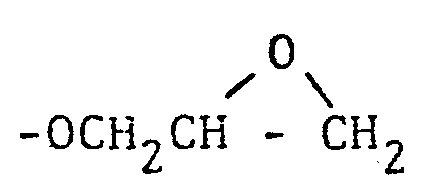
- = 2,8 ppm (AB-Teil eines ABX-Spektrums, CH2-3)
- δ = 3,45 ppm (m, CH - 2)
- 4,3 ppm (AB-Teil eines ABX-Spektrums, CH2-1)
- MS: m/2 = 352 (M+)
- DC: RF = 0,4
- a. Eine Lösung bzw. Suspension von 40 g 2,6-Dihydroxy- anthrachinon in 1000 ml Butanon-(2) wird mit 40,8 g Kaliumcarbonat und 200 ml Epibromhydrin versetzt und 110 Stunden unter Rühren am Rückfluß erhitzt. Man filtriert von dem unlöslichen Anteilen ab, engt i. Vak. das Filtrat ein, löst den Rückstand in Äthylmethylketon, ggf. unter Zusatz von Methylenchlorid, behandelt kurz mit Aktiv-Kohle, filtriert und läßt das Reaktionsprodukt auskristallisieren, nachdem man ein Teil der Lösungsmittel abdestilliert hat. Man kristallisiert zweckmäßigerweise noch mehrmals aus Butanon-(2) und/ oder Aceton um, und erhält 5 bis 10 g hellgelbgefärbtes Anthrachinon-2,6-bis-(oxy-2,3-oxido-propan) vom Schmp. 188-191°C. Dieses Reaktionsprodukt fällt während der Umkristallisation zuweilen auch in einer höherschmelzenden Form, nämlich mit dem Schmp. 218-220°C an.
- b. Die oben angefallene abfiltrierten unlöslichen Anteile werden mit absolutem Aceton am Soxleth-Extraktionsgefäß erschöpfend extrahiert. Das nach dem Erkalten des Extraktionsmittels ausgefallene gelbgrüne Kristallisat wird abfiltriert (ca. 20 g) und erneut, jetzt mit absolutem Methylenchlorid, am Soxleth-Extraktionsgerät erschöpfend extrahiert. Nach dem Abdestillieren des Lösungsmittels wird aus Aceton oder Butanon-(2), unter Zusatz von Methylenchlorid, umkristallisiert. Man erhält etwa 10 g der Titelverbindung vom Schmp. 218-220°C. Beide Formen der Titelverbindung, sowohl die niedrig- als auch die hochschmelzenden Form, zeigen identische 1R-, NMR- und MS-Spektren sowie einen identischen RF-Wert im Dünnschichtchromatogramm.
- MS: m/e = 352 (M+)
- Charakteristische Signalmuster für

- = 2,8 ppm (AB-Teil eines ABX-Spektrums, CH2-1)
- = 3,4 ppm (m, CH-2)
- = 4,3 ppm (AB-Teil eines ABX-Spektrums, CH2-3)
- DC RF = 0,78
- (RF Ausgangsmaterial = 0,37)
- c. In einem zweiten analog durchgeführten Reaktionsansatz läßt man das Reaktionsgemisch nach 110 Stunden Reaktionszeit auf Zimmertemperatur abkühlen, filtriert von Ungelösten ab und extrahiert dieses wie unter b. angegebenen, an der Soxleth -Extrationsapparatur mit Aceton, und nach Isolierung des bei 20°C ausgefallenen Kristallisats wird letzteres, wir unter b. angegeben, mit Methylenchlorid am Soxleth extrahiert. Nach analoger Isolierungstechnik, wie bei b. angegebenen, werden 24 g Anthrachinon-2,6- bis-(oxy-2,3-oxido-propan) vom Schmp. 219-222°C erhalten, das in allen spektralen Daten und im RF-Wert im DC mit dem nach a. und b. erhaltenen Reaktionsprodukt vollkommen identisch ist.
- Eine Lösung von 30 g 2,7-Hydroxy-anthrachinon in 700 ml Äthylmethylketon wird mit 30,6gKaliumcarbonat sowie 150 ml Epibromhydrin versetzt und 120 Stunden unter Rühren am Rückfluß erhitzt. Danach filtriert man (noch heiß) über ein Klärschichtfilter ab, engt in Vak. das Filtrat ein, chromatographiertden Rückstand mit Methylenchlorid gemäß Beispiel 4 an Aluminiumoxid. und kristallisiert aus Äthylmethylketon unter Zusatz von Methylenchlorid zur vollständigen Auflösung, un und man erhält 10,8 g Anthrachinon-2,7-bis-(oxy-2,3-oxido-propan) vom Schmp. 208-212°C
- MS: m/e = 352 (M+)
- Charakteristisches Signalmuster für

- δ = 2,δ ppm (AB-Teil eines ABX-Spektrums, CH2-3)
- δ = 3,45 ppm (m, CH-2)
- δ = 4,3 ppm (AB-Teil eines ABX-Spextrums, CH2-1)
- Ein Lösung von 30 g 1,2- dihydroxy-anthrachinon in 700 ml Äthylmethylketon wird mit 30,6 g Kaliumcarbonat sowie 150 ml Epibromhydrin versetzt und 100 Stunden unter Rühren am Rückfluß erhitzt. Danach filtriert man (noch heiß) ab, engt i. Vak. das Filtrat ein und kristallisiert aus Äthylmethylketon, ggf. unter Zusatz von Methylenchlorid zur vollständigen Auflösung im udn men erhält 13,0 g Anthrachinon-1,2-bis-(öxy-2,3-oxido-propan) vom Schmp. 220°C.
- MS: m/e = 352 (M+)
- Charakteristisches Signalmuster für
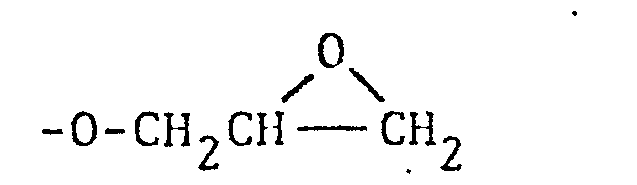
- δ = 2,8 ppm (AB-Teil eines ABX-Spektrums, CH2-3)
- δ = 3,45 ppm (m, CH-2)
- = 4,3 ppm (AB-Teil eines ABX-Spektrums, CH2-1)
- Eine Lösung von 30 g 1,8-Di-hydroxy-anthrachinon in 700 ml Äthylmcthylketon wird mit 30,6 g Kaliumcarbonat sowie 150 ml Epibromhydrin versetzt und 100 Stunden unter Rühren am Rückfluß erhitzt. Danach filtriert man (noch heiß) ab, engt i. Vak. das Filtrat ein und kristallisiert aus Äthylmethylketon, ggf. unter Zusatz von Methylenchlorid zur vollständigen Auflösung in udn man erhält 10,5 g Anthrachinon-1,8-bis-(oxy-2,3-oxid-propan) vom Schmp. 187-1G9°C.
- MS: m/e = 352 (M+)
- Charakteristische Signalmuster für

- δ = 2,8 ppm (AB-Teil eines ABX-Spektrums, CH2-3)
- δ = 3,45 ppm (m, CH-2)
- δ = 4,3 ppm (AB-Teil eines ABX-Spektrums, CH2-1)
- Eine Lösung von 30 g 1,5- dihydroxy-anthrachinon in 700 ml Äthylmethylheton wird mit 30,6 g Kaliumcarbonat sowie 150 ml Epibromhydrin versetzt und 100 Stunden unter Rühren am Rückfluß erhitzt. Danach filtriert man (noch heiß) ab, engt i. Vak. das Filtrat ein, chromatographiert gegebenenfalls den Rückstand mit Methylenchlorid als Aufzieh- und Eluationsmittel gemäß Beispiel 4 an Aluminumoxid und kristallisiert aus Äthylmethylketon, ggf. unter Zusatz von Methylenchlorid zur vollständigen Auflösung um/und man erhält 11,o g Anthrachinon-1,5-bis-(oxy-2,3-oxido-propan) vom Schmp. 205°C.
- MS: m/e = 352 (M+)
- Charakteristisches Signalmuster für

- = 2,8 ppm (AB-Teil eines ABX-Spektrums, CH2-3)
- = 3,45 ppm (m, CH-2)
- = 4,3 ppm (AB-Teil eines ABX-Spektrums, CH2-1)
- Eine Lösung von 3 g 1,4-Di-hydroxy-6-methoxycarbonyl- anthrachinon in 70 ml (absol.) Äthylmethylketon wrird mit 3 g Kaliumcarbonat sowie 15 ml Epibromhydrin versetzt und 100 Stunden unter Rühren am Rückfluß unter strengem Feuchtigkeitsausschluß erhitzt. Danach filtriert man (noch heiß) ab, engt i. Vak. das Filtrat ein und kristallisiert aus Äthylmethylketon, ggf. unter Zusatz von riethylenchlorid zur vollständigen Auflösung um und man erhält 1,2 g amorphes Anthrachinon-6-methexycarbonyl-1-1,4-bis-(oxy-2,3-oxido-propan).
- MS: m/e = 410 (M+)
- Charakteristische Signalmuster für

- = 2,8 ppm (AB-Teil eines ABX-Spektrums, CH2-3)
- δ = 3,45 ppm (m, CH-2)
- δ = 4,3 (AB-Teil eines ABX-Spektrums, CH2-1)
- Eine Lösung von 3 g 1,8-Dihydroxy-3-methyl-anthrachinon in 70 ml Äthylmethylketon wird mit 3 g Kaliumcarbonat sowie 15 ml Epibromhydrin versetzt und 100 Stunden unter Rühren am Rückfluß erhitzt. Danach filtriert man (noch heiß) ab, engt i.Vak. das Filtrat ein und kristallisiert aus Äthylmethylketon, ggf. unter Zusatz von Methylenchlorid zur vollständigen Auflösung um und man erhält 1,6 g Anthrachinon-3-methyl-1,8-bis-(oxy-2,3-oxicb-propan) vom Schmp. 198 - 209°C.
- MS: m/e = 368 (M )
- Charakteristische Signalmuster für

- = 2,8 ppm (AB-Teil eines ABX-Spektrums, CH2-3)
- = 3,45 ppm (m, CH-2)
- δ = 4,3 ppm (AB-Teil eines ABX-Spektrums, CH2-1)
- Anthrachinon-5,8-dichlor-1,4-bis-(oxy-2,3-oxido-propan)
- Eine Lösung von 3 g 1,4-Dihydroxy-5,8-dichlor-anthrachinon in 70 ml Äthylmethylketon wird mit 3 g Kaliumcarbonat sowie 15 ml Epibromhydrin versetzt und 100 Stunden unter Rühren am Rückfluß erhitzt. Danach filtriert man (noch heiß) ab, engt i.Vak. das Filtrat ein und kristallisiert aus Äthylmethylketon, ggf. unter Zusatz von Methylenchlorid zur vollständigen Auflösung um und man erhält 1,1 g Anthrachinon-5,8-dichlor-1,4- bis-(oxy-2,3-oxido-propan) vom Schmp. 201-212°C.
- MS: m/e = 421 (M+)
- Charakteristische Signalmuster für

- δ = 2,8 ppm (AB-Teil eines ABX-Spektrums, CH2-3)
- δ = 3,45 ppm (m, CH-2)
- δ = 4,3 ppm (AB-Teil eines ABX-Spektrums, CH2-1)
- Eine Lösung von 3 g 1,4-Dihydroxy-2-acetoxy-anthrachinon in 70 ml Äthylmethylketon wird mit 3 g Kaliumcarbonat sowie 15 ml Epibromhydrin versetzt und 100 Stunden unter Rühren am Rückfluß erhitzt. Danach filtriert man ab, engt i.Vak. das Filtrat ein und kristallisiert aus Äthylmethylketon, ggf. unter Zusatz von Methylenchlorid zur vollständigen Auflösung um und man erhält 1,0 g amorphes Anthrachinon-2-acetoxy-1,4-bis-(oxy-2,3-oxido-propan).
- MS: m/e = 410 (M+)
- Charaktersitsische Signalmuster für

- δ = 2,8 ppm (AB-Teil eines ABX-Spektrums, CH2-3)
- δ = 3,45 ppm (m, CH-2)
- δ = 4,3 ppm (AB-Teil eines ABX-Spektrums, CH2-1)
- Eine Lösung von 3 g 1,4-Dihydroxy-5-nitro-anthrachinon in 70 ml Äthylmethylketon wird mit 3 g Kaliumcarbonat sowie 15 ml Epibromhydrin versetzt und 100 Stunden unter Rühren am Rückfluß erhitzt. Danach filtriert man (noch heiß) ab, engt i.Vak. das Filtrat ein und kristallisiert aus Äthylmethylketon, ggf. unter Zusatz von Methylenchlorid zur vollständigen Auflösung um und man erhält 1 g Anthrachinon-5-nitro-1,4-bis-(oxy-2,3-oxido-propan) vom Schmp. 171-182°C.
- Charakteristische Signalmuster für

- = 2,8 ppm (AB-Teil eines ABX-Spektrums, CH2-3)
- = 3,45 ppm (m, CH-2)
- = 4,3 ppm (AB-Teil eines ABX-Spektrums, CH2-1)
- Eine Lösung von 3 g 1,8-Dihydroxy-3-methoxy-anthrachinon in 70 ml Äthylmethylketon wird mit 3,0 g Kaliumcarbonat sowie 15 ml Epibromhydrin versetzt und 100 Stunden unter Rühren am Rückfluß erhitzt. Danach filtriert man (noch heiß) ab, engt i.Vak. das Filtrat ein und kristallisiert aus Äthylmethylketon, ggf. unter Zusatz von Methylenchlorid zur vollständigen Auflösung um und man erhält 1,0 g Anthrachinon-3-methoxy-1,8-bis-(oxy-2,3-oxido-propan) vom Schmp. 160-185°C (unscharf).
- MS: m/e = 382 (M+)
- Charakteristische Signalmuster für

- = 2,8 ppm (AB-Teil eines ABX-Spektrums, CH2-3)
- = 3,45 ppm (m, CH-2)
- = 4,3 ppm (AB-Teil eines ABX-Spektrums, CH2-1)
- Eine Lösung von 6 g 1,4,6-Trihydroxy-anthrachinon in 150 ml Äthylmethylketon wird mit 6,15 g Kaliumcarbonat sowie 30 ml Epibromhydrin versetzt und solange unter gutem Rühren am Rückfluß gekocht, bis eine entnommene Probe im MS einen deutlichen Molekulargewichtspeak bei m/e ≅ 368 (M+) zeigt. Die höhermolekularen MS-Peaks bei > 368 sollten vergleichsweise klein ausfallen. Die Reaktionszeit beträgt hierbei in der Regel 2 bis 4 Tage.
- Man läßt auf Zimmertemperatur abkühlen und filtriert die unlöslichen Anteile ab. Das Filtrat wird i. Vak. eingeengt und das resultierende ö1 durch Anreiben mit ca. 20 ml Diäthyläther zur Kristallisation gebracht. Man filtriert ab, wäscht das Kristallisat mehrfach mit Diäthyläther nach, trocknet es: 10 g schmutzig-rotes Kristallisat, das mehrmals aus Methylenclulorid/Aceton/ Diäthyläther umkristallisiert wird. Ausbeute: 2,9 g rötliches Verfahrensprodukt vom Schmp. 198 - 214°C (sehr unscharf, was auf das Vorliegen eines Isomerengemisches von Anthrachinon-hydroxy-bis-(oxy-2,3-oxido- propan) zurückgeführt wird).
- Charakteristisches Signalmuster für

- = 2,8 ppm (AB-Teil eines ABX-Spektrums, CH2-3)
- = 3,45 ppm (m, CH-2)
- = 4,3 ppm (AB-Teil eines ABX-Spektrums, CH2-1)
- MS: m/e = 368 (M+)
- Eine Lösung von 6 g 1,4,5,8-Tetrahydroxy-anthrachinon in 150 ml Äthvlmethylketon wird mit 6,15 g Kaliumcarbonat sowie 30 ml Epibromhydrin versetzt und solange unter gutem Rühren am Rückfluß gekocht, bis eine entnommene Probe im MS-Spektrum einen deutlichen Molekulargewichtspeak bei m/e = 384 (M ) zeigt. Die höhermolekularen MS-Peaks bei>384 sollten vergleichsweise klein ausfallen. Die Reaktionszeit beträgt hierbei in der Regel 3 bis 5 Tage.
- Man läßt auf Zimmertemperatur abkühlen und filtriert die unlöslichen Anteile ab. Das Filtrat wird i.Vak. eingeengt und das resultierende ö1 durch Anreiben mit ca. 20 ml Diäthyläther zur Kristallisation gebracht. Man filtriert ab, wäscht das Kristallisat mehrfach mit Diäthyläther nach, trocknet es: 11 g schmutzig-rotes Kristallisat, das mehrmals aus Methylenchlorid/Aceton/ Diäthyläther umkristallisiert wird. Ausbeute 2,4 g rotes Verfahrensprodukt vom Schmp. 194 - 212°C (sehr unscharf, was auf das Vorliegen eines Isomerengemisches von Anthrachinon-dihydroxy-bis-(oxy-2,3- oxido-propan) zurückgeführt wird).
- Charakteristisches Signalmuster für

- δ = 2,8 ppm (AB-Teil eines ABX-Spektrums, CH2-3)
- δ = 3,45 ppm (m CH-2)
- δ = 4,3 ppm (AB-Teil eines ABX-Spektrums, CH2-1)
- MS-Spektrum: m/e = 348 (M+)
Claims (8)
- Verfahren zur Herstellung von Verbindungen der Formel I
 R1 und R1' gleich oder verschieden sind und Wasserstoff, Hydroxy oder den Rest
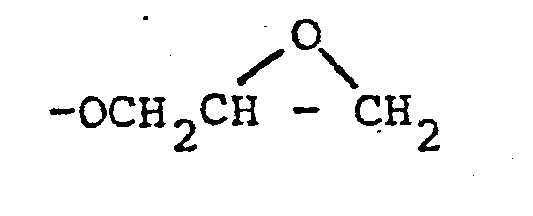 R2 und R2' gleich oder verschieden sind und Wasserstoff oder eine oder mehrere Hydroxy-, C1-C4-Alkyl-, C1-C4-Alkoxy-, C1-C4-Alkoxycarbonyl-, C1-C4-Alkanoyloxy-, Aryloxy-, Ar-C1-C4-alkyloxy-, Halogen- oder Nitrogruppen bedeuten, undR3 und R3' gleich oder verschieden sind und Wasserstoff oder den Rest
 a) eine Verbindung der Formel II
 b) eine Verbindung der Formel III

mit anorganischen oder organischen Basen zu einer Verbindung der Formel I umsetzt, oderc) in einer Verbindung der Formel V

gegebenenfalls nach nucleophilem Austausch der Alkyl-oder Arylsulfonsäureestergruppe gegen Halogen, durch Behandlung mit Basen Alkylsulfonsäure oder
Arylsulfonsäure oder gegebenenfalls Halogenwasserstoff abspaltet, wodurch eine Verbindung der Formel I entsteht, oderd) eine Verbindung der Formel X
Priority Applications (1)
| Application Number | Priority Date | Filing Date | Title |
|---|---|---|---|
| AT84110092T ATE40824T1 (de) | 1983-08-31 | 1984-08-24 | Mono- und bisfunktionelle anthrachinon-(oxy-2,3- oxidopropane), verfahren zu ihrer herstellung und ihre verwendung als arzneimittel. |
Applications Claiming Priority (2)
| Application Number | Priority Date | Filing Date | Title |
|---|---|---|---|
| DE3331296 | 1983-08-31 | ||
| DE3331296A DE3331296A1 (de) | 1983-08-31 | 1983-08-31 | Mono- und bisfunktionelle anthrachinon-(oxy-2,3-oxidopropane), verfahren zu ihrer herstellung und ihre verwendung |
Publications (2)
| Publication Number | Publication Date |
|---|---|
| EP0137262A1 true EP0137262A1 (de) | 1985-04-17 |
| EP0137262B1 EP0137262B1 (de) | 1989-02-15 |
Family
ID=6207827
Family Applications (1)
| Application Number | Title | Priority Date | Filing Date |
|---|---|---|---|
| EP84110092A Expired EP0137262B1 (de) | 1983-08-31 | 1984-08-24 | Mono- und bisfunktionelle Anthrachinon-(oxy-2,3-oxidopropane), Verfahren zu ihrer Herstellung und ihre Verwendung als Arzneimittel |
Country Status (15)
| Country | Link |
|---|---|
| US (1) | US4762648A (de) |
| EP (1) | EP0137262B1 (de) |
| JP (1) | JPS6078974A (de) |
| KR (1) | KR850002262A (de) |
| AT (1) | ATE40824T1 (de) |
| AU (1) | AU581623B2 (de) |
| CA (1) | CA1230598A (de) |
| DE (2) | DE3331296A1 (de) |
| DK (1) | DK414984A (de) |
| ES (2) | ES8602730A1 (de) |
| GR (1) | GR80256B (de) |
| HU (1) | HU196197B (de) |
| IL (1) | IL72811A0 (de) |
| PT (1) | PT79159B (de) |
| ZA (1) | ZA846784B (de) |
Families Citing this family (6)
| Publication number | Priority date | Publication date | Assignee | Title |
|---|---|---|---|---|
| US4975459A (en) * | 1989-12-13 | 1990-12-04 | Rohm And Haas Company | Microbicidal and plant growth regulating compounds |
| CA2072889A1 (en) * | 1990-11-02 | 1992-05-03 | Jack B. Jiang | Bis-(hydroxyalkylamino)-anthraquinone inhibitors of protein kinase c |
| US5204370A (en) * | 1990-11-05 | 1993-04-20 | Sphinx Pharmaceuticals Corporation | Bis-(hydroxyalkylamino)-anthraquinone inhibitors of protein kinase C |
| US5141957A (en) * | 1990-11-02 | 1992-08-25 | Sphinx Pharmaceuticals Corporation | 1,4-bis-(amino-hydroxyalkylamino)-anthraquinones for inhibiting protein kinase c |
| US5436243A (en) * | 1993-11-17 | 1995-07-25 | Research Triangle Institute Duke University | Aminoanthraquinone derivatives to combat multidrug resistance |
| GB9417102D0 (en) * | 1994-08-24 | 1994-10-12 | Lilly Industries Ltd | Pharmaceutical compounds |
Family Cites Families (4)
| Publication number | Priority date | Publication date | Assignee | Title |
|---|---|---|---|---|
| US3096349A (en) * | 1963-07-02 | Production of diglycidyl ethers | ||
| GB1512969A (en) * | 1975-11-04 | 1978-06-01 | Ciba Geigy Ag | Photopolymerisable ketones |
| US4304724A (en) * | 1980-12-22 | 1981-12-08 | The Dow Chemical Company | Process for the manufacture of anthraquinone |
| EP0112798B1 (de) * | 1982-11-25 | 1987-05-13 | Ciba-Geigy Ag | Zu Kondensations- oder Additionsreaktionen befähigte lichtempfindliche und gegebenenfalls vernetzbare Stoffgemische, daraus herstellbare Reaktionsprodukte und deren Verwendung |
-
1983
- 1983-08-31 DE DE3331296A patent/DE3331296A1/de not_active Withdrawn
-
1984
- 1984-08-24 EP EP84110092A patent/EP0137262B1/de not_active Expired
- 1984-08-24 HU HU843191A patent/HU196197B/hu unknown
- 1984-08-24 DE DE8484110092T patent/DE3476753D1/de not_active Expired
- 1984-08-24 AT AT84110092T patent/ATE40824T1/de not_active IP Right Cessation
- 1984-08-29 US US06/645,266 patent/US4762648A/en not_active Expired - Fee Related
- 1984-08-29 ES ES535483A patent/ES8602730A1/es not_active Expired
- 1984-08-30 GR GR80256A patent/GR80256B/el unknown
- 1984-08-30 CA CA000462182A patent/CA1230598A/en not_active Expired
- 1984-08-30 JP JP59179473A patent/JPS6078974A/ja active Pending
- 1984-08-30 IL IL72811A patent/IL72811A0/xx unknown
- 1984-08-30 DK DK414984A patent/DK414984A/da not_active Application Discontinuation
- 1984-08-30 AU AU32565/84A patent/AU581623B2/en not_active Ceased
- 1984-08-30 KR KR1019840005307A patent/KR850002262A/ko not_active Ceased
- 1984-08-30 PT PT79159A patent/PT79159B/de not_active IP Right Cessation
- 1984-08-30 ZA ZA846784A patent/ZA846784B/xx unknown
-
1985
- 1985-07-01 ES ES544750A patent/ES8607269A1/es not_active Expired
Non-Patent Citations (10)
| Title |
|---|
| CHEMICAL ABSTRACTS, Vol. 90, No. 11, 12. Marz 1979, Columbus, Ohio, USA BUDZIAREK, RICHARD "The reaction of sodium sulfite and bisulfite with nitro- and hydroxylaminoanthraquinones" Seite 591, Spalte 1, Abstract-No. 87118z * |
| CHEMICAL ABSTRACTS, Vol. 90, No. 4, 12. Marz 1979, Columbus, Ohio, USA BELL, KEVIN A.; FLATMAN, IVOR J.; GOLDBORN, PETER; PACHL, ANTONY; SCHEINMANN, FEODOR "Elimination of an allyloxy-group during the Claisen rearrangement of 1,2-diallyloxyanthraquinone" Seite 591, Spalte 1, Abstract-No. 87121v * |
| CHEMICAL ABSTRACTS, Vol. 93, No. 16, 20. Oktober 1980, Columbus, Ohio, USA CHEN, Ming-HO "Heat transfer printing of wool textiles" Seite 64, Spalte 2, Abstract-No. 151542z * |
| CHEMICAL ABSTRACTS, Vol. 95, No. 17, 26. Oktober 1981, Columbus, Ohio, USA CAMBIE, RICHARD C.; DUNLOP, MARK G.; NOALL, WENDY I.; RUTLEDGE, PETER S.; WOODGATE, PAUL D. "Experiments directed towards the synthesis of anthracycliones. VI. Claisen rearrangements of 1,4-bis(prop-2'-enyloxy)anthraquinone" Seite 628, Spalte 2, Abstract-No. 150252j * |
| CHEMICAL ABSTRACTS, Vol. 95, No. 4, 27. juli 1981, Columbus, Ohio, USA STAPLETON, IAN W.; WATERS, PETER J. "Dyeing of wool-polyester blends with reactive disperse dyes: variation of dye distribution and reactivity for wool" Seite 62, Spalte 2, Abstract-No. 26492y * |
| CHEMICAL ABSTRACTS, Vol. 96, No. 1, 4. Janner 1982, Columbus, Ohio, USA CAMBIE, RICHARD C.; HUANG, ZHENDONG; NOALL, WENDY I.; RUTLEDGE, PETER S.; WOODGATE, PAUL D. "Experiments directed towards the synthesis of anthracycliones. V. Double Claisen rearrangement of 1,4-bis(allyloxy)anthraquinones" Seite 535, Spalte 2, Abstract-No. 5890g * |
| CHEMICAL ABSTRACTS, Vol. 97, No. 5, 2. August 1982, Columbus, Ohio, USA POPOV, S.I.; VOLOSENKO, V.P. "Reactions of 1-acetoxy-9,10- anthraquinones with formation of 1,10-anthraquinones and 10-anthrones" Seite 543, Spalte 1, Abstract-No. 38637d * |
| CHEMICAL ABSTRACTS, Vol. 98, No. 11, 14. Marz 1983, Columbus, Ohio, USA BODDY, IAN k.; BONIFACE, PETER J.; CAMBIE, RICHARD C.; CRAW, PETER A.; LARSEN, DAVID S.; MC DONAL, HAMISH; RUTLEDGE, PETER S.; WOODGATER, PAUL D. "Reductive Claisen rearrangements of anthraquinone allyl ethers" Seite 516, Spalte 2, Abstract-No. 88942r * |
| CHEMICAL ABSTRACTS, Vol. 98, No. 9, 28. Februar 1983, Columbus, Ohio, USA SEGUCHI, KAZUYOSHI; OZASA, AKIKO "Synthesis of aromatic ether by phase transfer-catalyzed SNAr reaction" Seite 586, Spalte 1, Abstract-No. 71620m * |
| L. u. M. FIESER "Organische Chemie", 2. Auflage, 1982 VERLAG CHEMIE, Weinheim Seiten 1368-1379 * |
Also Published As
| Publication number | Publication date |
|---|---|
| AU3256584A (en) | 1985-03-07 |
| DK414984A (da) | 1985-03-01 |
| ES535483A0 (es) | 1985-12-01 |
| ATE40824T1 (de) | 1989-03-15 |
| HU196197B (en) | 1988-10-28 |
| PT79159A (de) | 1984-09-01 |
| CA1230598A (en) | 1987-12-22 |
| GR80256B (en) | 1985-01-02 |
| DE3331296A1 (de) | 1985-03-14 |
| AU581623B2 (en) | 1989-03-02 |
| KR850002262A (ko) | 1985-05-10 |
| DK414984D0 (da) | 1984-08-30 |
| JPS6078974A (ja) | 1985-05-04 |
| IL72811A0 (en) | 1984-11-30 |
| HUT36077A (en) | 1985-08-28 |
| ES544750A0 (es) | 1986-05-16 |
| EP0137262B1 (de) | 1989-02-15 |
| ZA846784B (en) | 1985-04-24 |
| ES8602730A1 (es) | 1985-12-01 |
| DE3476753D1 (en) | 1989-03-23 |
| PT79159B (de) | 1986-09-15 |
| ES8607269A1 (es) | 1986-05-16 |
| US4762648A (en) | 1988-08-09 |
Similar Documents
| Publication | Publication Date | Title |
|---|---|---|
| DE69011234T2 (de) | Diaryläther-Heterozyklen. | |
| DE69129345T2 (de) | Hydroxyalkylierung von Phenolen oder Thiophenolen mittels zyklisch organischer Kohlensäureester unter Verwendung von Triorganophosphinkatalysatoren | |
| DE2649605A1 (de) | Phenolaether, verfahren zu ihrer herstellung und sie enthaltende arzneimittel | |
| DE2760316C2 (de) | ||
| DE2130393A1 (de) | Tetrahydronaphthyloxyaminopropanole,Verfahren zu ihrer Herstellung sowie pharmazeutische Praeparate,welche diese Verbindungen als Wirkstoff enthalten | |
| DE1493374A1 (de) | 1,2-Diphenyl-3,4-dihydronaphthalin- und 2,3-Diphenylindenderivate sowie Verfahren zu ihrer Herstellung | |
| EP0006524A1 (de) | Neue Tetrahydropyridin- und Piperidinderivate und deren Säureadditionssalze, Verfahren zu deren Herstellung und solche enthaltende pharmazeutische Zusammensetzungen | |
| DE2816785C2 (de) | ||
| DE3419947C2 (de) | ||
| EP0495339A2 (de) | Verbessertes Verfahren zur Herstellung von Glycidylethern | |
| DD201793A5 (de) | Verfahren zur herstellung von 6-hydroxy-2-(4-hydroxy-phenyl) 3-(4-(2-aminoethoxy)benzoyl)benzo(b)thiophenen | |
| EP0137262B1 (de) | Mono- und bisfunktionelle Anthrachinon-(oxy-2,3-oxidopropane), Verfahren zu ihrer Herstellung und ihre Verwendung als Arzneimittel | |
| DE2333847A1 (de) | Tetrahydronaphthole, ihre salze und diese verbindungen enthaltende arzneimittel | |
| DE69126978T2 (de) | Derivate des 6-amino-octahydro-indolizintriols | |
| DE69315692T2 (de) | Alkohole als kaliumchannelöffner und zur behandlung der harnincontinenz | |
| PL164019B1 (pl) | Sposób wytwarzania nowych pochodnych fluoro-naftacenodionów PL PL | |
| DE2463173C2 (de) | Zwischenprodukte 1,3-Dithiolanyl(2)- und 1,3-Dithianyl(2)-Verbindungen | |
| DE2240197A1 (de) | Verfahren zur herstellung von epoxiden von verbindungen des leukaurintyps | |
| EP0129252A2 (de) | Verfahren zur Herstellung von optisch aktiven Hydrochinonderivaten sowie von d-alpha-Tocopherol | |
| DE2651201A1 (de) | Aether und antibiotika sowie verfahren zur herstellung derselben | |
| DE3008902C2 (de) | ||
| DE1695499A1 (de) | Phenoxyaminoalkanole und Verfahren zu deren Herstellung | |
| DE2729846C2 (de) | Verfahren zur Herstellung von in 3-Stellung alkylsubstituierten cis-1-Hydroxy-6,6-dimethyl-6,6a,7,8,10,10a-hexahydro-9H-dibenzo [b,d] pyran-9-onen | |
| EP0003316B1 (de) | Stereospezifisches Verfahren für die Herstellung von 2-Oxiranyl-1,4-benzodioxanen | |
| DE3028341A1 (de) | Verfahren zur herstellung von neuen anthracyclinglycosiden |
Legal Events
| Date | Code | Title | Description |
|---|---|---|---|
| PUAI | Public reference made under article 153(3) epc to a published international application that has entered the european phase |
Free format text: ORIGINAL CODE: 0009012 |
|
| AK | Designated contracting states |
Designated state(s): AT BE CH DE FR GB IT LI LU NL SE |
|
| RTI1 | Title (correction) | ||
| 17P | Request for examination filed |
Effective date: 19850620 |
|
| 17Q | First examination report despatched |
Effective date: 19870206 |
|
| GRAA | (expected) grant |
Free format text: ORIGINAL CODE: 0009210 |
|
| AK | Designated contracting states |
Kind code of ref document: B1 Designated state(s): AT BE CH DE FR GB IT LI LU NL SE |
|
| REF | Corresponds to: |
Ref document number: 40824 Country of ref document: AT Date of ref document: 19890315 Kind code of ref document: T |
|
| ITF | It: translation for a ep patent filed | ||
| REF | Corresponds to: |
Ref document number: 3476753 Country of ref document: DE Date of ref document: 19890323 |
|
| ET | Fr: translation filed | ||
| GBT | Gb: translation of ep patent filed (gb section 77(6)(a)/1977) | ||
| PG25 | Lapsed in a contracting state [announced via postgrant information from national office to epo] |
Ref country code: LU Free format text: LAPSE BECAUSE OF NON-PAYMENT OF DUE FEES Effective date: 19890831 |
|
| PLBE | No opposition filed within time limit |
Free format text: ORIGINAL CODE: 0009261 |
|
| STAA | Information on the status of an ep patent application or granted ep patent |
Free format text: STATUS: NO OPPOSITION FILED WITHIN TIME LIMIT |
|
| 26N | No opposition filed | ||
| PGFP | Annual fee paid to national office [announced via postgrant information from national office to epo] |
Ref country code: FR Payment date: 19900712 Year of fee payment: 7 |
|
| PGFP | Annual fee paid to national office [announced via postgrant information from national office to epo] |
Ref country code: SE Payment date: 19900719 Year of fee payment: 7 Ref country code: GB Payment date: 19900719 Year of fee payment: 7 |
|
| PGFP | Annual fee paid to national office [announced via postgrant information from national office to epo] |
Ref country code: AT Payment date: 19900720 Year of fee payment: 7 |
|
| PGFP | Annual fee paid to national office [announced via postgrant information from national office to epo] |
Ref country code: LU Payment date: 19900806 Year of fee payment: 7 |
|
| ITTA | It: last paid annual fee | ||
| PGFP | Annual fee paid to national office [announced via postgrant information from national office to epo] |
Ref country code: NL Payment date: 19900831 Year of fee payment: 7 |
|
| PGFP | Annual fee paid to national office [announced via postgrant information from national office to epo] |
Ref country code: BE Payment date: 19900919 Year of fee payment: 7 |
|
| PGFP | Annual fee paid to national office [announced via postgrant information from national office to epo] |
Ref country code: DE Payment date: 19901018 Year of fee payment: 7 |
|
| PGFP | Annual fee paid to national office [announced via postgrant information from national office to epo] |
Ref country code: CH Payment date: 19901025 Year of fee payment: 7 |
|
| PG25 | Lapsed in a contracting state [announced via postgrant information from national office to epo] |
Ref country code: GB Effective date: 19910824 Ref country code: AT Effective date: 19910824 |
|
| PG25 | Lapsed in a contracting state [announced via postgrant information from national office to epo] |
Ref country code: SE Effective date: 19910825 |
|
| PG25 | Lapsed in a contracting state [announced via postgrant information from national office to epo] |
Ref country code: LI Effective date: 19910831 Ref country code: CH Effective date: 19910831 Ref country code: BE Effective date: 19910831 |
|
| BERE | Be: lapsed |
Owner name: HOECHST A.G. Effective date: 19910831 |
|
| PG25 | Lapsed in a contracting state [announced via postgrant information from national office to epo] |
Ref country code: NL Effective date: 19920301 |
|
| NLV4 | Nl: lapsed or anulled due to non-payment of the annual fee | ||
| GBPC | Gb: european patent ceased through non-payment of renewal fee | ||
| PG25 | Lapsed in a contracting state [announced via postgrant information from national office to epo] |
Ref country code: FR Effective date: 19920430 |
|
| REG | Reference to a national code |
Ref country code: CH Ref legal event code: PL |
|
| PG25 | Lapsed in a contracting state [announced via postgrant information from national office to epo] |
Ref country code: DE Effective date: 19920501 |
|
| REG | Reference to a national code |
Ref country code: FR Ref legal event code: ST |
|
| EUG | Se: european patent has lapsed |
Ref document number: 84110092.8 Effective date: 19920306 |