EP0137375A2 - Mefloquin-Hydrochlorid - Google Patents
Mefloquin-Hydrochlorid Download PDFInfo
- Publication number
- EP0137375A2 EP0137375A2 EP84111231A EP84111231A EP0137375A2 EP 0137375 A2 EP0137375 A2 EP 0137375A2 EP 84111231 A EP84111231 A EP 84111231A EP 84111231 A EP84111231 A EP 84111231A EP 0137375 A2 EP0137375 A2 EP 0137375A2
- Authority
- EP
- European Patent Office
- Prior art keywords
- modification
- mefloquine hydrochloride
- hydrochloride
- mefloquine
- methanol
- Prior art date
- Legal status (The legal status is an assumption and is not a legal conclusion. Google has not performed a legal analysis and makes no representation as to the accuracy of the status listed.)
- Granted
Links
Images



Classifications
-
- C—CHEMISTRY; METALLURGY
- C07—ORGANIC CHEMISTRY
- C07D—HETEROCYCLIC COMPOUNDS
- C07D401/00—Heterocyclic compounds containing two or more hetero rings, having nitrogen atoms as the only ring hetero atoms, at least one ring being a six-membered ring with only one nitrogen atom
- C07D401/02—Heterocyclic compounds containing two or more hetero rings, having nitrogen atoms as the only ring hetero atoms, at least one ring being a six-membered ring with only one nitrogen atom containing two hetero rings
- C07D401/06—Heterocyclic compounds containing two or more hetero rings, having nitrogen atoms as the only ring hetero atoms, at least one ring being a six-membered ring with only one nitrogen atom containing two hetero rings linked by a carbon chain containing only aliphatic carbon atoms
-
- A—HUMAN NECESSITIES
- A61—MEDICAL OR VETERINARY SCIENCE; HYGIENE
- A61P—SPECIFIC THERAPEUTIC ACTIVITY OF CHEMICAL COMPOUNDS OR MEDICINAL PREPARATIONS
- A61P33/00—Antiparasitic agents
- A61P33/02—Antiprotozoals, e.g. for leishmaniasis, trichomoniasis, toxoplasmosis
-
- Y—GENERAL TAGGING OF NEW TECHNOLOGICAL DEVELOPMENTS; GENERAL TAGGING OF CROSS-SECTIONAL TECHNOLOGIES SPANNING OVER SEVERAL SECTIONS OF THE IPC; TECHNICAL SUBJECTS COVERED BY FORMER USPC CROSS-REFERENCE ART COLLECTIONS [XRACs] AND DIGESTS
- Y02—TECHNOLOGIES OR APPLICATIONS FOR MITIGATION OR ADAPTATION AGAINST CLIMATE CHANGE
- Y02A—TECHNOLOGIES FOR ADAPTATION TO CLIMATE CHANGE
- Y02A50/00—TECHNOLOGIES FOR ADAPTATION TO CLIMATE CHANGE in human health protection, e.g. against extreme weather
- Y02A50/30—Against vector-borne diseases, e.g. mosquito-borne, fly-borne, tick-borne or waterborne diseases whose impact is exacerbated by climate change
Definitions
- Mefloquine hydrochloride erythro-2-piperidyl-2,8- bis (trifluoromethyl) -4-quinoline-methanol hydrochloride
- erythro-2-piperidyl-2,8- bis (trifluoromethyl) -4-quinoline-methanol hydrochloride is a valuable active ingredient in the treatment of chloroquine-resistant form of malaria.
- a smaller amount always falls in addition to the biologically active erythro form (approx . 5-15%) of the inactive and therefore undesirable threo form.
- the threo form can be separated from the erythro form and the latter can be prepared in pure form in a first stage by mixing the mixture of erythro- and threo-a-2-piperidyl-2,8-bis- (Trifluoromethyl) -4-quinoline methanol hydrochloride treated with aqueous methanol or ethanol (approx. 60 to 95 vol% water), the threo form dissolving and the erythro form remaining.
- residues of the threo compound and other by-products can be purified further, for example by treatment with acetone (ie via acetone complex).
- tablets which contain mefloquine hydrochloride in modification E have better solubility and bioavailability than those which contain mefloquine hydrochloride in modification D, which, as already mentioned, is the most thermodynamically stable modification.
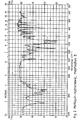
- the IR spectrum characteristic of the modification E is shown in FIG. 5.
- a comparison of the IR spectra shows that the differences between the modification E and the modifications A to D can be seen mainly in the wavenumber range 1100-1240 cm 1.
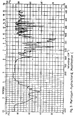
- the modification E is also characterized by the X-ray diffraction diagram according to FIG. 6, with both the Location, as well as the relative intensities of the lines are characteristic of the present crystal lattice and its composition.
- modification E can also be characterized using the x-ray diffraction diagram according to FIG. 6 of measured d values.
- the d-value can be represented by transforming the Bragg equation:
- the present invention therefore relates to mefloquine hydrochloride in the form of its modification E characterized by the IR spectrum according to FIG. 5 and / or the X-ray diffraction diagram according to FIG. 6, and / or the d values measured on the basis of this X-ray diffraction diagram.
- the present invention further relates to a process for the preparation of pure mefloquine hydrochloride in the form of its modification E, characterized in that mefloquine hydrochloride which is at least partially present in another modification, optionally in the presence of less than 30% by volume of water , treated with methanol and / or ethanol.
- Modification E is preferably produced by the process according to the invention at room temperature, a treatment for a few minutes usually being sufficient. For safety's sake, however, it is preferred to continue treatment for at least half an hour.
- Methanol and ethanol are particularly preferably used in pure form.
- the mefloquine hydrochloride used as the starting material which is at least partially in a different modification than the modification E, can be prepared by treating erythro- / threo- ⁇ -2-piperidyl-2,8-bis - (trifluoromethyl) -4- quinoline-methanol mixtures with aqueous methanol or ethanol, the threo form dissolving.
- the treatment can be carried out by stirring for 30 minutes to several hours at room temperature or by heating to about 80 ° C. and then cooling to about 5 ° C. (to increase the yield).
- the water content in the solvent mixture can be varied within wide limits and is expediently 60-95% by volume, preferably between 70 and 90% by volume.
- methanolic reaction solutions such as are obtained, for example, from the catalytic hydrogenation of 2-pyridyl-2,8-bis (trifluoromethyl) -4-quinolyl ketone in hydrochloric acid methanol
- a portion of the methanol is expediently first removed and then a corresponding amount Water added.
- the mefloquine hydrochloride (raw material) thus obtained which is expediently still washed with cold water and then dried, is then practically free of the undesirable threo form and is suitable as a starting material for the process according to the invention.
- the modification D can be produced by the raw material for a long time, ie at least about 6 hours up to about 12 hours with an alcohol, for example methanol, ethanol, Isopropanol, but preferably methanol, stirred in the presence of water (approx. 50-80 vol .-%).
- the treatment can be carried out at room temperature or with cooling to temperatures slightly above 0 ° C. to increase the yield.
- the modifications A to C can of course also serve as the starting material.
- Medicaments containing mefloquine hydrochloride in its modification E are also the subject of the present invention.
- they can also contain other therapeutically valuable substances, e.g. Sulfadoxine and pyrimethamine.
- a tablet containing 250 mg mefloquine hydrochloride in its modification E, 500 mg sulfadoxine and 25 mg pyrimethamine is a particularly valuable anti-malaria agent.
- the medicaments according to the invention which preferably contain less than 10% mefloquine hydrochloride in another form in comparison to mefloquine hydrochloride in the form of its modification E, can be used as pharmaceutical preparations with direct or delayed release of the active substances in a mixture with one suitable for oral administration organic or inorganic inert carrier material, such as Water, gelatin, gum arabic, milk sugar, starch, magnesium stearate, talc, vegetable oils, polyalkylene glycols, petroleum jelly, etc. can be used.
- the pharmaceutical preparations are preferably in solid form, e.g. as tablets, dragees, capsules.
- compositions are sterilized and / or contain further auxiliaries, such as preservatives, stabilizers, wetting agents or emulsifiers, agents for improving the taste, salts for changing the osmotic pressure or buffer substances.
- auxiliaries such as preservatives, stabilizers, wetting agents or emulsifiers, agents for improving the taste, salts for changing the osmotic pressure or buffer substances.
- the pharmaceutical preparations can be produced in the manner familiar to any person skilled in the art.
- a preferred dose unit for mefloquine hydrochloride in the form of modification E is between 1 and 15 mg / kg.
- novel pharmaceutical compositions are suitable for the curative treatment of malaria (all forms) with an E inzeldösis in the form of, for example, one or more tablets containing preferably 250 mg mefloquine, depending on the body weight of the patient and the instructions of the doctor, as well as for the prophylaxis and Suppressivtherapie in Intervals of 1-4 weeks.
- mefloquine hydrochloride (modification D) were suspended in 5 ml of pure methanol and equilibrated in a vibromixer at 25 ° C. for 30 minutes. After centrifuging and pipetting off the supernatant solution, it was dried in a vacuum dryer for two hours at room temperature. M efloquine hydrochloride was obtained in the form of its modification E.
- mefloquine hydrochloride (modification D ) were suspended in 5 ml of different ethanol / water mixtures and equilibrated in a vibromixer at 25 ° C. for 30 minutes, 24 hours or 72 hours. After centrifuging and pipetting off the supernatant solution, it was dried in a vacuum dryer for two hours at room temperature.
- mefloquine hydrochloride was obtained in the form of its modification E, the equilibration time depending on the water content in the solvent mixture.
- mefloquin hydrochloride (modification A) were suspended in 5 ml of pure ethanol and quilibriert for 30 minutes in a vibromixer at 25 ° C a e. After centrifuging and pipetting off the supernatant solution, it was dried in a vacuum dryer for two hours at room temperature. Mefloquine hydrochloride was obtained in the form of its modification E.
- mefloquine hydrochloride (modification C) were suspended in 5 ml of pure ethanol and equilibrated in a vibromixer at 25 ° C. for 30 minutes. After centrifuging and pipetting off the supernatant solution, it was dried in a vacuum dryer for two hours at room temperature. Mefloquine hydrochloride was obtained in the form of its modification E.
- Mefloquine hydrochloride (modification D) is moistened with a solution of poloxalkol in alcohol and kneaded; then it is dried and sieved. Granules containing mefloquine hydrochloride in modification E are obtained.
- the granulate is mixed with microcrystalline cellulose, lactose, corn starch, crosspovidone (part) and ammonium calcium alginate.
- the powder mixture is moistened with a water / alcohol mixture and kneaded. It is then granulated, dried and sieved.
- Crosspovidones (2nd part) and a sieved mixture of the talc and the magnesium stearate are added to the granules obtained; all powder components are mixed together and the material to be pressed is pressed into tablets of the appropriate size.
- Mefloquine hydrochloride (modification D) is moistened with alcohol and kneaded; then it is dried and sieved. M an receives a granulate containing mefloquine hydrochloride in the modification E.
- Sulfadoxin, pyrimethamine, sodium carboxymethyl starch and the granules of mefloquine hydrochloride are incorporated and kneaded in an aqueous solution of dioctyl sodium sulfosuccinate and methyl cellulose. It is then granulated, dried and sieved.
- Sieved microcrystalline cellulose and sieved magnesium stearate are added to the granulate; all powder components are mixed together and the material to be pressed is pressed into tablets.
Landscapes
- Organic Chemistry (AREA)
- Chemical & Material Sciences (AREA)
- Health & Medical Sciences (AREA)
- Veterinary Medicine (AREA)
- Chemical Kinetics & Catalysis (AREA)
- Animal Behavior & Ethology (AREA)
- Medicinal Chemistry (AREA)
- Nuclear Medicine, Radiotherapy & Molecular Imaging (AREA)
- Tropical Medicine & Parasitology (AREA)
- Pharmacology & Pharmacy (AREA)
- Life Sciences & Earth Sciences (AREA)
- General Chemical & Material Sciences (AREA)
- General Health & Medical Sciences (AREA)
- Public Health (AREA)
- Pharmaceuticals Containing Other Organic And Inorganic Compounds (AREA)
- Plural Heterocyclic Compounds (AREA)
- Organic Low-Molecular-Weight Compounds And Preparation Thereof (AREA)
- Nitrogen Condensed Heterocyclic Rings (AREA)
Abstract
Description
- Mefloquin-hydrochlorid, erythro-ä-2-Piperidyl-2,8- bis-(trifluormethyl)-4-chinolinmethanol-hydrochlorid, ist ein wertvoller Wirkstoff zur Behandlung der chloroquinresistenten Form der Malaria. Bei denjenigen Verfahren zur Herstellung von Mefloquin, deren letzte Stufe in der katalytischen Hydrierung des 2-Pyridyl-2,8-bis-(trifluormethyl)-4-chinolylketons besteht, fällt neben der biologisch aktiven erythro-Form auch stets eine geringere Menge (ca. 5-15%) der inaktiven und daher unerwünschten threo-Form an.
- Die Abtrennung der threo- von der erythro-Form und die Reindarstellung der letzteren kann dadurch erreicht werden, dass man in einer ersten Stufe das bei der Hydrierung anfallende Gemisch von erythro- und threo-a-2-Piperidyl-2,8-bis-(trifluormethyl)-4-chinolinmethanol-hydrochlorid mit wässrigem Methanol oder Aethanol (ca. 60 bis 95 Vol% Wasser) behandelt, wobei die threo-Form in Lösung geht und die erythro-Form zurückbleibt. In einer zweiten Stufe können Reste der threo-Verbindung sowie anderer Nebenprodukte durch weitere-Reinigung, beispielsweise durch Behandlung mit Aceton (d.h. via Aceton-Komplex), entfernt werden.
- Hierbei wurde festgestellt, dass reines Mefloquin-hydrochlorid in verschiedenen Modifikationen vorkommt, die sich kristallographisch oder aufgrund ihrer IR-Spektren voneinander unterscheiden lassen. So erhält man bei der Reinigung mittels Acetonitril eine Modifikation A, Mefloquin HCl, die durch das IR-Spektrum A (Figur 1) charakterisiert ist, während bei kurzzeitiger Behandlung mit Aceton die Modifikation B, Mefloquin HCl Aceton, und mit Wasser/ Alkohol-Gemischen die Modifikation C, Mefloquin HCl 1/2H20, erhalten wird (vgl. IR-Spektren B und C, Figuren 2 und 3). Bei längerer Behandlung von Mefloquin-hydrochlorid mit Alkohol/Wasser-Gemischen (ca. 50 bis 80 Vol%-Wasser) bildet sich die Modifikation D, Mefloquin HCl 1/2H20; die die thermodynamisch stabilste ist (vgl. IR-Spektrum D, Figur 4).
- Es wurde nun gefunden, dass durch Behandlung mit Methanol und/oder Aethanol enthaltend weniger als 30 Vol% Wasser Mefloquin-hydrochlorid in eine polymorphe Modifikation E mit besonders interessanten Eigenschaften übergeführt wird.
- So besitzen Tabletten, welche Mefloquin-hydrochlorid in der Modifikation E enthalten, eine bessere Löslichkeit und Bioverfügbarkeit als diejenigen, die Mefloquin-hydrochlorid in der Modifikation D enthalten, welches wie bereits erwähnt die thermodynamisch stabilste Modifikation ist.
- Das für die Modifikation E charakteristische IR-Spektrum wird in Figur 5 dargestellt. Ein Vergleich der IR-Spektren zeigt, dass die Unterschiede zwischen der Modifikation E und den Modifikationen A bis D hauptsächlich im Wellenzahl-Bereich 1100-1240 cm 1 ersichtlich sind.
- Die Modifikation E wird auch charakterisiert durch das Röntgenbeugungsdiagramm gemäss Figur 6, wobei sowohl der Ort, wie auch die relativen Intensitäten der Linien für das vorliegende Kristallgitter und dessen Zusammensetzung charakteristisch sind.
- Schliesslich kann die Modifikation E auch anhand des Röntgenbeugungsdiagramms gemäss Figur 6 gemessener d-Werte charakterisiert werden. Der d-Wert lässt sich durch Umformung der Bragg'schen Gleichung darstellen:
-

- Die Ergebnisse werden in Figur 6 aufgeführt.
- Die vorliegende Erfindung betrifft daher Mefloquin-hydrochlorid in Form seiner Modifikation E charakterisiert durch das IR-Spektrum gemäss Figur 5 und/oder das Röntgenbeugungsdiagramm gemäss Figur 6, und/oder die aufgrund dieses Röntgenbeugungsdiagramms gemessenen d-Werte.
- Weiter bezieht sich die vorliegende Erfindung auf ein Verfahren zur Herstellung von reinem Mefloquin-hydrochlorid in Form seiner Modifikation E, dadurch gekennzeichnet, dass man Mefloquin-hydrochlorid, das mindestens teilweise in einer anderen Modifikation vorliegt, gegebenenfalls in Gegenwart von weniger als 30 Vol% Wasser, mit Methanol und/oder Aethanol behandelt.
- Die Herstellung der Modifikation E nach dem erfindungsgemässen Verfahren erfolgt vorzugsweise bei Zimmertemperatur wobei eine Behandlung während einigen Minuten in der Regel schon ausreicht. Sicherheitshalber wird jedoch vorgezogen, die Behandlung während wenigstens einer halben Stunde fortzusetzen.
- Neben Methanol oder Aethanol bzw. einem Gemisch von Methanol und Aethanol können weniger als 30 Vol% Wasser, vorzugsweise weniger als 10 Vol% Wasser vorhanden sein. Besonders bevorzugt werden Methanol und Aethanol, ohne Zusatz von Wasser, in reiner Form verwendet.
- Das als Ausgangsmaterial eingesetzte Mefloquin-hydrochlorid, welches mindestens teilweise in einer anderen Modifikation vorliegt als die Modifikation E, kann hergestellt werden durch Behandlung von erythro-/threo-α-2-Piperidyl-2,8-bis-(trifluormethyl)-4-chinolin-methanol-Gemischen mit wässrigem Methanol oder Aethanol wobei die threo-Form in Lösung geht. Die Behandlung kann durch 30minütiges bis mehrstündiges Rühren bei Zimmertemperatur oder unter Erwärmen bis auf etwa 80°C und anschliessende Abkühlung auf ca. 5°C (zur Erhöhung der Ausbeute) erfolgen. Der Wasseranteil am Lösungsmittelgemisch kann in weiten Grenzen variiert werden und liegt zweckmässigerweise bei 60-95 Vol.-%, vorzugsweise zwischen 70 und 90 Vol.-%. Bei der Aufarbeitung methanolischer Reaktionslösungen, wie sie beispielsweise bei der katalytischen Hydrierung von 2-Pyridyl-2,8-bis-(trifluormethyl)-4-chinolylketon in salzsaurem Methanol erhalten werden, wird zweckmässigerweise zunächst ein Teil des Methanols abgezogen und dann eine entsprechende Menge Wasser zugesetzt. Das so erhaltene Mefloquin-hydrochlorid (Rohware) das zweckmässigerweise noch mit kaltem Wasser gewaschen und anschliessend getrocknet wird ist dann praktisch frei von der unerwünschten threo-Form und eignet sich als Ausgangsmaterial für das erfindungsgemässe Verfahren.
- Diese Rohware ist chemisch zwar praktisch einheitlich, liegt im allgemeinen aber weder in einer einheitlichen Kristallform noch in der als Ausgangsmaterial bevorzugten thermodynamisch stabilsten Form (Modifikation D) vor. Die Modifikation D kann hergestellt werden indem man die Rohware längere Zeit, d.h. mindestens etwa 6 Stunden bis zu etwa 12 Stunden mit einem Alkohol, z.B. Methanol, Aethanol, Isopropanol, vorzugsweise aber Methanol, in Gegenwart von Wasser (ca. 50-80 Vol.-%) verrührt. Die Behandlung kann bei Zimmertemperatur oder unter Kühlung auf Temperaturen etwas über 0°C - zur Erhöhung der Ausbeute - erfolgen. Die Modifikationen A bis C können selbstverständlich ebenfalls als Ausgangsmaterial dienen.
- Arzneimittel enthaltend Mefloquin-hydrochlorid in seiner Modifikation E sind ebenfalls Gegenstand der vorliegenden Erfindung. Sie können, neben pharmazeutisch akzeptablen Trägermaterialien, auch noch andere therapeutisch wertvolle Stoffe enthalten, wie z.B. Sulfadoxin und Pyrimethamin. So stellt eine Tablette enthaltend 250 mg Mefloquin-hydrochlorid in seiner Modifikation E, 500 mg Sulfadoxin und 25 mg Pyrimethamin ein besonders wertvolles Anti-malaria Mittel dar.
- Die erfindungsgemässen Arzneimittel, welche vorzugsweise im Vergleich zu Mefloquin-hydrochlorid in Form seiner Modifikation E weniger als 10% Mefloquin-hydrochlorid in einer anderen Form enthalten, können als pharmazeutische Präparate mit direkter oder verzögerter Freigabe der Wirkstoffe in Mischung mit einem für die orale Applikation geeigneten organischen oder anorganischen inerten Trägermaterial, wie z.B. Wasser, Gelatine, Gummi arabicum, Milchzucker, Stärke, Magnesiumstearat, Talk, pflanzlichen Oelen, Polyalkylenglykolen, Vaseline, usw. verwendet werden. Die pharmazeutischen Präparate liegen vorzugsweise in'fester Form, z.B. als Tabletten, Dragees, Kapseln, vor. Gegebenenfalls sind sie sterilisiert und bzw. oder enthalten weitere Hilfsstoffe, wie Konservierungs-, Stabilisierungs-, Netz- oder Emulgiermittel, Mittel zur geschmacklichen Verbesserung, Salze zur Veränderung des osmotischen Druckes oder Puffersubstanzen. Die Herstellung der pharmazeutischen Präparate kann in der jedem Fachmann geläufigen Weise erfolgen.
- Eine bevorzugte Dosiseinheit für Mefloquin-hydrochlorid in Form der Modifikation E liegt zwischen 1 und 15 mg/kg.
- Die erfindungsgemässen pharmazeutischen Präparate eignen sich zur kurativen Behandlung der Malaria (alle Formen) mit einer Einzeldösis in Form von beispielsweise einer oder mehreren Tabletten enthaltend vorzugsweise 250 mg Mefloquin, je nach Körpergewicht des Patienten und Anweisung des Arztes, als auch zur Prophylaxe und Suppressivtherapie in Intervallen von 1-4 Wochen.
- 1,5 g Mefloquin-hydrochlörid (Modifikation D) wurden in 5 ml reinem Aethanol suspendiert und während 30 Minuten in einem Vibromischer bei 25°C aequilibriert. Nach Zentri- fugieren und Abpipettieren der überstehenden Lösung wurde im Vakuumtrockner während zwei Stunden bei Raumtemperatur getrocknet. Man erhielt Mefloquin-hydrochlorid in Form seiner Modifikation E.
- 1,5 g Mefloquin-hydrochlorid (Modifikation D) wurden in 5 ml reinem Methanol suspendiert und während 30 Minuten in einem Vibromischer bei 25°C aequilibriert. Nach Zentrifugieren und Abpipettieren der überstehenden Lösung wurde im Vakuumtrockner während zwei Stunden bei Raumtemperatur getrocknet. Man erhielt Mefloquin-hydrochlorid in Form seiner Modifikation E.
- 1,5 g Mefloquin-hydrochlorid (Modifikation D) wurden in 5 ml verschiedenen Aethanol/Wasser-Gemischen suspendiert und während 30 Minuten, 24 Stunden oder 72 Stunden in einem Vibromischer bei 25°C aequilibriert. Nach Zentrifugieren und Abpipettieren der überstehenden Lösung wurde im Vakuumtrockner während zwei Stunden bei Raumtemperatur getrocknet. Wie aus der nachstehenden Tabelle 1 hervorgeht erhielt man Mefloquin-hydrochlorid in Form seiner Modifikation E, wobei die Aequilibrierungsdauer vom Wasseranteil im Lösungsmittelgemisch abhängt.
-

- 1,5 g Mefloquin-hydrochlorid (Modifikation A) wurden in 5 ml reinem Aethanol suspendiert und während 30 Minuten in einem Vibromischer bei 25°C aequilibriert. Nach Zentrifugieren und Abpipettieren der überstehenden Lösung wurde im Vakuumtrockner während zwei Stunden bei Raumtemperatur getrocknet. Man erhielt Mefloquin-hydrochlorid in Form seiner Modifikation E.
- 1,5 g Mefloquin-hydrochlorid (Modifikation C) wurden in 5 ml reinem Aethanol suspendiert und während 30 Minuten in einem Vibromischer bei 25°C aequilibriert. Nach Zentrifugieren und Abpipettieren der überstehenden Lösung wurde im Vakuumtrockner während zwei Stunden bei Raumtemperatur getrocknet. Man erhielt Mefloquin-hydrochlorid in Form seiner Modifikation E.
- Tablette enthaltend:

- Mefloquin-hydrochlorid (Modifikation D) wird mit einer Lösung von Poloxalkol in Alkohol befeuchtet und geknetet; sodann wird getrocknet und gesiebt. Man erhält ein Granulat, enthaltend Mefloquin-hydrochlorid in der Modifikation E.
- Das Granulat wird mit Mikrokristalliner Cellulose, Lactose, Maisstärke, Crosspovidone (Teil) sowie Ammonium-Calcium-Alginat gemischt. Die Pulvermischung wird mit einem Wasser/Alkohol-Gemisch befeuchtet und geknetet. Sodann wird granuliert, getrocknet und gesiebt.
- Dem erhaltenen Granulat werden Crosspovidone (2. Teil) sowie eine gesiebte Mischung aus dem Talk und dem Magnesiumstearat zugefügt; sämtliche Pulverbestandteile werden miteinander vermischt und das Pressgut wird zu Tabletten entsprechender Grösse verpresst.
-

- Mefloquin-hydrochlorid (Modifikation D) wird mit Alkohol befeuchtet und geknetet; sodann wird getrocknet und gesiebt. Man erhält ein Granulat, enthaltend Mefloquin-hydrochlorid in der Modifikation E.
- In eine wässrige Lösung von Dioctylnatriumsulfosuccinat und Methylcellulose werden Sulfadoxin, Pyrimethamin, Natriumcarboxymethylstärke und das Granulat von Mefloquin-hydrochlorid eingearbeitet und geknetet. Sodann wird granuliert, getrocknet und gesiebt.
- Dem Granulat werden gesiebte Mikrokristalline Cellulose und gesiebtes Magnesiumstearat zugesetzt; sämtliche Pulverbestandteile werden miteinander gemischt und das Pressgut wird zu Tabletten verpresst.
Claims (13)
Priority Applications (1)
| Application Number | Priority Date | Filing Date | Title |
|---|---|---|---|
| AT84111231T ATE55387T1 (de) | 1983-10-07 | 1984-09-20 | Mefloquin-hydrochlorid. |
Applications Claiming Priority (2)
| Application Number | Priority Date | Filing Date | Title |
|---|---|---|---|
| CH5459/83 | 1983-10-07 | ||
| CH545983 | 1983-10-07 |
Publications (3)
| Publication Number | Publication Date |
|---|---|
| EP0137375A2 true EP0137375A2 (de) | 1985-04-17 |
| EP0137375A3 EP0137375A3 (en) | 1988-02-03 |
| EP0137375B1 EP0137375B1 (de) | 1990-08-08 |
Family
ID=4293958
Family Applications (1)
| Application Number | Title | Priority Date | Filing Date |
|---|---|---|---|
| EP84111231A Expired - Lifetime EP0137375B1 (de) | 1983-10-07 | 1984-09-20 | Mefloquin-Hydrochlorid |
Country Status (6)
| Country | Link |
|---|---|
| US (1) | US4579855A (de) |
| EP (1) | EP0137375B1 (de) |
| JP (1) | JPS60105675A (de) |
| AT (1) | ATE55387T1 (de) |
| BG (1) | BG60836B2 (de) |
| DE (1) | DE3482926D1 (de) |
Families Citing this family (1)
| Publication number | Priority date | Publication date | Assignee | Title |
|---|---|---|---|---|
| GB0329236D0 (en) * | 2003-12-17 | 2004-01-21 | Arakis Ltd | Crystalline forms of (+)- and (-)- erthro-mefloquine hydrochloride |
Family Cites Families (4)
| Publication number | Priority date | Publication date | Assignee | Title |
|---|---|---|---|---|
| LU77364A1 (de) * | 1977-05-18 | 1979-01-19 | ||
| DE2940443A1 (de) * | 1979-10-05 | 1981-04-16 | Basf Ag, 6700 Ludwigshafen | Verfahren zur herstellung von erythro-(alpha)-2-piperidyl-2,8-bis-(trifluormethyl)-4-chinolin-methanol |
| DE3038504A1 (de) * | 1980-10-11 | 1982-06-03 | Basf Ag, 6700 Ludwigshafen | Neue 4-chinolinmethanderivate, ihre herstellung und verwendung zur darstellung von substanzen mit arzneimittelwirkung |
| US4507482A (en) * | 1982-04-14 | 1985-03-26 | Hoffmann-La Roche Inc. | Purification of mefloquin hydrochloride |
-
1984
- 1984-09-20 AT AT84111231T patent/ATE55387T1/de not_active IP Right Cessation
- 1984-09-20 EP EP84111231A patent/EP0137375B1/de not_active Expired - Lifetime
- 1984-09-20 DE DE8484111231T patent/DE3482926D1/de not_active Expired - Lifetime
- 1984-10-01 US US06/655,813 patent/US4579855A/en not_active Expired - Lifetime
- 1984-10-05 JP JP59208391A patent/JPS60105675A/ja active Granted
-
1994
- 1994-02-25 BG BG098581A patent/BG60836B2/bg unknown
Also Published As
| Publication number | Publication date |
|---|---|
| BG60836B2 (bg) | 1996-04-30 |
| JPS60105675A (ja) | 1985-06-11 |
| ATE55387T1 (de) | 1990-08-15 |
| DE3482926D1 (de) | 1990-09-13 |
| EP0137375B1 (de) | 1990-08-08 |
| JPH0255432B2 (de) | 1990-11-27 |
| US4579855A (en) | 1986-04-01 |
| EP0137375A3 (en) | 1988-02-03 |
Similar Documents
| Publication | Publication Date | Title |
|---|---|---|
| DE69811868T2 (de) | Neue kristalline Form von Omeprazol | |
| DE69915461T2 (de) | Neue kristalline formen einer antiviralen benzimidazolverbindung | |
| DD222495A5 (de) | Verfahren zur herstellung einer zweiphasigen festen arzneizubereitung | |
| DE3143219A1 (de) | Kristalline 1,1-dioxopenicillanoyloxymethyl-6-(d-(alpha)-amino-(alpha)-phenylacetamido)-penicillanat-p-toluol-sulfonat-hydrate, verfahren zu deren herstellung und diese enthaltende arzneimittel | |
| DD201974A5 (de) | Verfahren zur herstellung von festen arzneizubereitungen enthaltend nifedipin | |
| DE1802394C2 (de) | Arzneimittel mit antihypertensiver Wirkung, die [(2,6-Dichlorbenzyliden)-amino]-guanidin oder ein Säureadditionssalz davon enthalten | |
| DE69420776T2 (de) | Idebenone-haltige Zusammensetzungen zur Behandlung von M. Alzheimer | |
| DD150457A5 (de) | Verfahren zur herstellung der(r,r)optisch isomeren verbindungen von labetalol | |
| DE69908421T2 (de) | Pharmazeutische zusammensetzung enthaltend eine kombination der dextro- und laevo-isomeren von sotalol | |
| DD143605A5 (de) | Verfahren zur herstellung von 2,6-dialkoxybenzamiden | |
| EP0317855B1 (de) | Pharmazeutische Präparate | |
| EP0437415A2 (de) | Kristallform des 4-(5,6,7,8-Tetrahydroimidazo[1,5-a]pyridin-5-yl)-benzonitril-hydrochlorids | |
| EP0137375B1 (de) | Mefloquin-Hydrochlorid | |
| EP0163984A2 (de) | Dihydropyridinkombinationspräparate und Verfahren zu ihrer Herstellung | |
| DE2355262C3 (de) | 1-Piperidinsulfonylharnstoffe, Verfahren zu deren Herstellung und diese enthaltende pharmazeutische Präparate | |
| DE3736866A1 (de) | Mittel zur behandlung des bluthochdrucks und der herzinsuffizienz | |
| EP0092185B1 (de) | Mefloquin-hydrochlorid und Verfahren zu seiner Reindarstellung | |
| CH648562A5 (de) | Kristallines 1,1-dioxopenicillanoyloxymethyl-6-(d-alpha-amino-alpha-phenylacetamido)-penicillanat-napsylat und verfahren zu dessen herstellung. | |
| DE2755017C2 (de) | ||
| EP0192098B1 (de) | Verwendung des 2-Amino-6-allyl-5,6,7,8-tetrahydro-4H-thiazolo[4,5-d]azepins zur Herstellung eines zur Behandlung der Parkinsonschen Erkrankung bzw. des Parkinsonismus geeigneten Arzneimittels | |
| DE2360475C3 (de) | arzneimittel zur Behandlung von Herzrhytmusstörungen | |
| DE2501649C3 (de) | Thiophen-2-carbonsäuresalz des Papaverins, Verfahren zu seiner Herstellung und diese Verbindungen enthaltende Arzneimittel | |
| EP0165450A2 (de) | Nifedipinkombinationspräparate und Verfahren zu ihrer Herstellung | |
| DE69007352T2 (de) | (Alfa-t-butyl aminomethyl-3,4-dichlorobenzyl) thioacetamid, Verfahren zu ihrer Herstellung und ihre Verwendung. | |
| EP0098475A2 (de) | Pharmazeutische Zusammensetzung, ihre Herstellung und Verwendung |
Legal Events
| Date | Code | Title | Description |
|---|---|---|---|
| PUAI | Public reference made under article 153(3) epc to a published international application that has entered the european phase |
Free format text: ORIGINAL CODE: 0009012 |
|
| 17P | Request for examination filed |
Effective date: 19840920 |
|
| AK | Designated contracting states |
Designated state(s): AT BE CH DE FR GB IT LI NL |
|
| RTI1 | Title (correction) | ||
| PUAL | Search report despatched |
Free format text: ORIGINAL CODE: 0009013 |
|
| AK | Designated contracting states |
Kind code of ref document: A3 Designated state(s): AT BE CH DE FR GB IT LI NL |
|
| 17Q | First examination report despatched |
Effective date: 19890612 |
|
| RAP1 | Party data changed (applicant data changed or rights of an application transferred) |
Owner name: F. HOFFMANN-LA ROCHE AG |
|
| GRAA | (expected) grant |
Free format text: ORIGINAL CODE: 0009210 |
|
| AK | Designated contracting states |
Kind code of ref document: B1 Designated state(s): AT BE CH DE FR GB IT LI NL |
|
| REF | Corresponds to: |
Ref document number: 55387 Country of ref document: AT Date of ref document: 19900815 Kind code of ref document: T |
|
| ITF | It: translation for a ep patent filed | ||
| REF | Corresponds to: |
Ref document number: 3482926 Country of ref document: DE Date of ref document: 19900913 |
|
| GBT | Gb: translation of ep patent filed (gb section 77(6)(a)/1977) | ||
| ET | Fr: translation filed | ||
| PLBE | No opposition filed within time limit |
Free format text: ORIGINAL CODE: 0009261 |
|
| STAA | Information on the status of an ep patent application or granted ep patent |
Free format text: STATUS: NO OPPOSITION FILED WITHIN TIME LIMIT |
|
| 26N | No opposition filed | ||
| ITTA | It: last paid annual fee | ||
| MEDD | It: supplementary protection certificate for pharmaceutical products: granted |
Free format text: CCP 151, 19920424; F. HOFFMANN-LA ROCHE AG. |
|
| REG | Reference to a national code |
Ref country code: GB Ref legal event code: IF02 |
|
| PGFP | Annual fee paid to national office [announced via postgrant information from national office to epo] |
Ref country code: FR Payment date: 20030909 Year of fee payment: 20 |
|
| PGFP | Annual fee paid to national office [announced via postgrant information from national office to epo] |
Ref country code: AT Payment date: 20030911 Year of fee payment: 20 |
|
| PGFP | Annual fee paid to national office [announced via postgrant information from national office to epo] |
Ref country code: GB Payment date: 20030917 Year of fee payment: 20 |
|
| PGFP | Annual fee paid to national office [announced via postgrant information from national office to epo] |
Ref country code: NL Payment date: 20030922 Year of fee payment: 20 |
|
| PGFP | Annual fee paid to national office [announced via postgrant information from national office to epo] |
Ref country code: CH Payment date: 20030930 Year of fee payment: 20 |
|
| PGFP | Annual fee paid to national office [announced via postgrant information from national office to epo] |
Ref country code: DE Payment date: 20031002 Year of fee payment: 20 |
|
| PGFP | Annual fee paid to national office [announced via postgrant information from national office to epo] |
Ref country code: BE Payment date: 20031203 Year of fee payment: 20 |
|
| PG25 | Lapsed in a contracting state [announced via postgrant information from national office to epo] |
Ref country code: LI Free format text: LAPSE BECAUSE OF EXPIRATION OF PROTECTION Effective date: 20040919 Ref country code: GB Free format text: LAPSE BECAUSE OF EXPIRATION OF PROTECTION Effective date: 20040919 Ref country code: CH Free format text: LAPSE BECAUSE OF EXPIRATION OF PROTECTION Effective date: 20040919 |
|
| PG25 | Lapsed in a contracting state [announced via postgrant information from national office to epo] |
Ref country code: NL Free format text: LAPSE BECAUSE OF EXPIRATION OF PROTECTION Effective date: 20040920 Ref country code: AT Free format text: LAPSE BECAUSE OF EXPIRATION OF PROTECTION Effective date: 20040920 |
|
| BE20 | Be: patent expired |
Owner name: F. *HOFFMANN-LA ROCHE A.G. Effective date: 20040920 |
|
| REG | Reference to a national code |
Ref country code: GB Ref legal event code: PE20 |
|
| REG | Reference to a national code |
Ref country code: CH Ref legal event code: PL |
|
| NLV7 | Nl: ceased due to reaching the maximum lifetime of a patent |
Effective date: 20040920 |