EP0138357B1 - DNA marqué - Google Patents
DNA marqué Download PDFInfo
- Publication number
- EP0138357B1 EP0138357B1 EP84305989A EP84305989A EP0138357B1 EP 0138357 B1 EP0138357 B1 EP 0138357B1 EP 84305989 A EP84305989 A EP 84305989A EP 84305989 A EP84305989 A EP 84305989A EP 0138357 B1 EP0138357 B1 EP 0138357B1
- Authority
- EP
- European Patent Office
- Prior art keywords
- dna molecule
- adenine
- cytosine
- inclusive
- analogs
- Prior art date
- Legal status (The legal status is an assumption and is not a legal conclusion. Google has not performed a legal analysis and makes no representation as to the accuracy of the status listed.)
- Expired - Lifetime
Links
- OPTASPLRGRRNAP-UHFFFAOYSA-N cytosine Chemical compound NC=1C=CNC(=O)N=1 OPTASPLRGRRNAP-UHFFFAOYSA-N 0.000 claims abstract description 110
- 108020004414 DNA Proteins 0.000 claims abstract description 97
- 102000053602 DNA Human genes 0.000 claims abstract description 73
- GFFGJBXGBJISGV-UHFFFAOYSA-N Adenine Chemical compound NC1=NC=NC2=C1N=CN2 GFFGJBXGBJISGV-UHFFFAOYSA-N 0.000 claims abstract description 57
- 229930024421 Adenine Natural products 0.000 claims abstract description 56
- 229960000643 adenine Drugs 0.000 claims abstract description 56
- 229940104302 cytosine Drugs 0.000 claims abstract description 55
- 239000000523 sample Substances 0.000 claims abstract description 26
- 238000003556 assay Methods 0.000 claims abstract description 16
- 238000007899 nucleic acid hybridization Methods 0.000 claims abstract description 12
- 108020004682 Single-Stranded DNA Proteins 0.000 claims abstract description 9
- UYTPUPDQBNUYGX-UHFFFAOYSA-N guanine Chemical compound O=C1NC(N)=NC2=C1N=CN2 UYTPUPDQBNUYGX-UHFFFAOYSA-N 0.000 claims abstract description 8
- RWQNBRDOKXIBIV-UHFFFAOYSA-N thymine Chemical compound CC1=CNC(=O)NC1=O RWQNBRDOKXIBIV-UHFFFAOYSA-N 0.000 claims abstract description 8
- 229940113082 thymine Drugs 0.000 claims abstract description 4
- YBJHBAHKTGYVGT-ZKWXMUAHSA-N (+)-Biotin Chemical compound N1C(=O)N[C@@H]2[C@H](CCCCC(=O)O)SC[C@@H]21 YBJHBAHKTGYVGT-ZKWXMUAHSA-N 0.000 claims description 24
- 150000007523 nucleic acids Chemical group 0.000 claims description 22
- 108091028043 Nucleic acid sequence Proteins 0.000 claims description 20
- 238000000034 method Methods 0.000 claims description 14
- 229960002685 biotin Drugs 0.000 claims description 12
- 235000020958 biotin Nutrition 0.000 claims description 12
- 239000011616 biotin Substances 0.000 claims description 12
- 230000009870 specific binding Effects 0.000 claims description 10
- 125000001424 substituent group Chemical group 0.000 claims description 9
- 108090001008 Avidin Proteins 0.000 claims description 8
- 150000001875 compounds Chemical class 0.000 claims description 7
- 229910052736 halogen Inorganic materials 0.000 claims description 7
- 150000002367 halogens Chemical class 0.000 claims description 7
- 108090000790 Enzymes Proteins 0.000 claims description 6
- 102000004190 Enzymes Human genes 0.000 claims description 6
- 150000005829 chemical entities Chemical class 0.000 claims description 6
- 238000004519 manufacturing process Methods 0.000 claims description 6
- 239000000427 antigen Substances 0.000 claims description 4
- 102000036639 antigens Human genes 0.000 claims description 4
- 108091007433 antigens Proteins 0.000 claims description 4
- 230000001900 immune effect Effects 0.000 claims description 4
- 150000001615 biotins Chemical class 0.000 claims 1
- 125000000896 monocarboxylic acid group Chemical group 0.000 claims 1
- 125000005647 linker group Chemical group 0.000 abstract description 7
- 108010001336 Horseradish Peroxidase Proteins 0.000 description 29
- UIIMBOGNXHQVGW-UHFFFAOYSA-M Sodium bicarbonate Chemical compound [Na+].OC([O-])=O UIIMBOGNXHQVGW-UHFFFAOYSA-M 0.000 description 24
- 239000003298 DNA probe Substances 0.000 description 22
- 238000009396 hybridization Methods 0.000 description 19
- 239000000758 substrate Substances 0.000 description 13
- 238000006243 chemical reaction Methods 0.000 description 12
- 229910000030 sodium bicarbonate Inorganic materials 0.000 description 12
- 235000017557 sodium bicarbonate Nutrition 0.000 description 12
- CYDZPLALSVNVHA-UHFFFAOYSA-N (2,5-dioxopyrrolidin-1-yl) 3-(4-bromo-3-oxobutyl)sulfonylpropanoate Chemical compound BrCC(=O)CCS(=O)(=O)CCC(=O)ON1C(=O)CCC1=O CYDZPLALSVNVHA-UHFFFAOYSA-N 0.000 description 10
- HEMHJVSKTPXQMS-UHFFFAOYSA-M Sodium hydroxide Chemical compound [OH-].[Na+] HEMHJVSKTPXQMS-UHFFFAOYSA-M 0.000 description 9
- 238000001514 detection method Methods 0.000 description 9
- 239000000203 mixture Substances 0.000 description 9
- 108020003215 DNA Probes Proteins 0.000 description 8
- FAPWRFPIFSIZLT-UHFFFAOYSA-M Sodium chloride Chemical compound [Na+].[Cl-] FAPWRFPIFSIZLT-UHFFFAOYSA-M 0.000 description 8
- 239000000243 solution Substances 0.000 description 8
- IAZDPXIOMUYVGZ-UHFFFAOYSA-N Dimethylsulphoxide Chemical compound CS(C)=O IAZDPXIOMUYVGZ-UHFFFAOYSA-N 0.000 description 6
- VMHLLURERBWHNL-UHFFFAOYSA-M Sodium acetate Chemical compound [Na+].CC([O-])=O VMHLLURERBWHNL-UHFFFAOYSA-M 0.000 description 6
- 125000004432 carbon atom Chemical group C* 0.000 description 6
- 239000007787 solid Substances 0.000 description 6
- 239000004971 Cross linker Substances 0.000 description 5
- 230000000155 isotopic effect Effects 0.000 description 5
- 108010029942 microperoxidase Proteins 0.000 description 5
- IJGRMHOSHXDMSA-UHFFFAOYSA-N Atomic nitrogen Chemical compound N#N IJGRMHOSHXDMSA-UHFFFAOYSA-N 0.000 description 4
- 238000002835 absorbance Methods 0.000 description 4
- 229910052799 carbon Inorganic materials 0.000 description 4
- 238000001212 derivatisation Methods 0.000 description 4
- 238000010586 diagram Methods 0.000 description 4
- 238000000502 dialysis Methods 0.000 description 4
- 239000000047 product Substances 0.000 description 4
- 239000011780 sodium chloride Substances 0.000 description 4
- 0 C*(C**(N=C)=C)[N+](C)[O-] Chemical compound C*(C**(N=C)=C)[N+](C)[O-] 0.000 description 3
- LYCAIKOWRPUZTN-UHFFFAOYSA-N Ethylene glycol Chemical compound OCCO LYCAIKOWRPUZTN-UHFFFAOYSA-N 0.000 description 3
- MHAJPDPJQMAIIY-UHFFFAOYSA-N Hydrogen peroxide Chemical compound OO MHAJPDPJQMAIIY-UHFFFAOYSA-N 0.000 description 3
- ZMXDDKWLCZADIW-UHFFFAOYSA-N N,N-Dimethylformamide Chemical compound CN(C)C=O ZMXDDKWLCZADIW-UHFFFAOYSA-N 0.000 description 3
- 230000008033 biological extinction Effects 0.000 description 3
- -1 biotin Chemical class 0.000 description 3
- 239000000872 buffer Substances 0.000 description 3
- 239000003153 chemical reaction reagent Substances 0.000 description 3
- 238000004440 column chromatography Methods 0.000 description 3
- 239000012153 distilled water Substances 0.000 description 3
- 125000004185 ester group Chemical group 0.000 description 3
- 229920001519 homopolymer Polymers 0.000 description 3
- 238000002372 labelling Methods 0.000 description 3
- 239000012528 membrane Substances 0.000 description 3
- 238000002156 mixing Methods 0.000 description 3
- 239000000126 substance Substances 0.000 description 3
- XLYOFNOQVPJJNP-UHFFFAOYSA-N water Chemical compound O XLYOFNOQVPJJNP-UHFFFAOYSA-N 0.000 description 3
- GTTBHZGHAWBRMQ-UHFFFAOYSA-N (4-nitrophenyl) 3-(4-bromo-3-oxobutyl)sulfonylpropanoate Chemical compound [O-][N+](=O)C1=CC=C(OC(=O)CCS(=O)(=O)CCC(=O)CBr)C=C1 GTTBHZGHAWBRMQ-UHFFFAOYSA-N 0.000 description 2
- OKTJSMMVPCPJKN-UHFFFAOYSA-N Carbon Chemical compound [C] OKTJSMMVPCPJKN-UHFFFAOYSA-N 0.000 description 2
- HEDRZPFGACZZDS-UHFFFAOYSA-N Chloroform Chemical compound ClC(Cl)Cl HEDRZPFGACZZDS-UHFFFAOYSA-N 0.000 description 2
- ZHNUHDYFZUAESO-UHFFFAOYSA-N Formamide Chemical compound NC=O ZHNUHDYFZUAESO-UHFFFAOYSA-N 0.000 description 2
- DHMQDGOQFOQNFH-UHFFFAOYSA-N Glycine Chemical compound NCC(O)=O DHMQDGOQFOQNFH-UHFFFAOYSA-N 0.000 description 2
- TWRXJAOTZQYOKJ-UHFFFAOYSA-L Magnesium chloride Chemical compound [Mg+2].[Cl-].[Cl-] TWRXJAOTZQYOKJ-UHFFFAOYSA-L 0.000 description 2
- 241000607142 Salmonella Species 0.000 description 2
- 239000007983 Tris buffer Substances 0.000 description 2
- QVGXLLKOCUKJST-UHFFFAOYSA-N atomic oxygen Chemical compound [O] QVGXLLKOCUKJST-UHFFFAOYSA-N 0.000 description 2
- 238000004132 cross linking Methods 0.000 description 2
- 230000002255 enzymatic effect Effects 0.000 description 2
- 239000012634 fragment Substances 0.000 description 2
- NAQMVNRVTILPCV-UHFFFAOYSA-N hexane-1,6-diamine Chemical compound NCCCCCCN NAQMVNRVTILPCV-UHFFFAOYSA-N 0.000 description 2
- 125000004435 hydrogen atom Chemical class [H]* 0.000 description 2
- HWYHZTIRURJOHG-UHFFFAOYSA-N luminol Chemical compound O=C1NNC(=O)C2=C1C(N)=CC=C2 HWYHZTIRURJOHG-UHFFFAOYSA-N 0.000 description 2
- 239000000463 material Substances 0.000 description 2
- 230000004048 modification Effects 0.000 description 2
- 238000012986 modification Methods 0.000 description 2
- 229910052757 nitrogen Inorganic materials 0.000 description 2
- 102000039446 nucleic acids Human genes 0.000 description 2
- 108020004707 nucleic acids Proteins 0.000 description 2
- 238000007254 oxidation reaction Methods 0.000 description 2
- 229910052760 oxygen Inorganic materials 0.000 description 2
- 239000001301 oxygen Substances 0.000 description 2
- 230000002285 radioactive effect Effects 0.000 description 2
- 229920006395 saturated elastomer Polymers 0.000 description 2
- LENZDBCJOHFCAS-UHFFFAOYSA-N tris Chemical compound OCC(N)(CO)CO LENZDBCJOHFCAS-UHFFFAOYSA-N 0.000 description 2
- YMXHPSHLTSZXKH-RVBZMBCESA-N (2,5-dioxopyrrolidin-1-yl) 5-[(3as,4s,6ar)-2-oxo-1,3,3a,4,6,6a-hexahydrothieno[3,4-d]imidazol-4-yl]pentanoate Chemical compound C([C@H]1[C@H]2NC(=O)N[C@H]2CS1)CCCC(=O)ON1C(=O)CCC1=O YMXHPSHLTSZXKH-RVBZMBCESA-N 0.000 description 1
- UAIUNKRWKOVEES-UHFFFAOYSA-N 3,3',5,5'-tetramethylbenzidine Chemical compound CC1=C(N)C(C)=CC(C=2C=C(C)C(N)=C(C)C=2)=C1 UAIUNKRWKOVEES-UHFFFAOYSA-N 0.000 description 1
- HSTOKWSFWGCZMH-UHFFFAOYSA-N 3,3'-diaminobenzidine Chemical compound C1=C(N)C(N)=CC=C1C1=CC=C(N)C(N)=C1 HSTOKWSFWGCZMH-UHFFFAOYSA-N 0.000 description 1
- BYNPUHOKSBYIKF-UHFFFAOYSA-N 3-(4-bromo-3-oxobutyl)sulfonylpropanoic acid;1-hydroxypyrrolidine-2,5-dione Chemical compound ON1C(=O)CCC1=O.OC(=O)CCS(=O)(=O)CCC(=O)CBr BYNPUHOKSBYIKF-UHFFFAOYSA-N 0.000 description 1
- XZKIHKMTEMTJQX-UHFFFAOYSA-N 4-Nitrophenyl Phosphate Chemical compound OP(O)(=O)OC1=CC=C([N+]([O-])=O)C=C1 XZKIHKMTEMTJQX-UHFFFAOYSA-N 0.000 description 1
- BTJIUGUIPKRLHP-UHFFFAOYSA-N 4-nitrophenol Chemical compound OC1=CC=C([N+]([O-])=O)C=C1 BTJIUGUIPKRLHP-UHFFFAOYSA-N 0.000 description 1
- 102000002260 Alkaline Phosphatase Human genes 0.000 description 1
- 108020004774 Alkaline Phosphatase Proteins 0.000 description 1
- 240000003291 Armoracia rusticana Species 0.000 description 1
- 241000972773 Aulopiformes Species 0.000 description 1
- 108091003079 Bovine Serum Albumin Proteins 0.000 description 1
- JGMHEAGPULNIJS-UHFFFAOYSA-N CC(CC1)=CC([N+]([O-])=O)=C1[N+]([O-])=O Chemical compound CC(CC1)=CC([N+]([O-])=O)=C1[N+]([O-])=O JGMHEAGPULNIJS-UHFFFAOYSA-N 0.000 description 1
- 241000283707 Capra Species 0.000 description 1
- 229910021580 Cobalt(II) chloride Inorganic materials 0.000 description 1
- LFQSCWFLJHTTHZ-UHFFFAOYSA-N Ethanol Chemical compound CCO LFQSCWFLJHTTHZ-UHFFFAOYSA-N 0.000 description 1
- 229920001917 Ficoll Polymers 0.000 description 1
- WQZGKKKJIJFFOK-GASJEMHNSA-N Glucose Natural products OC[C@H]1OC(O)[C@H](O)[C@@H](O)[C@@H]1O WQZGKKKJIJFFOK-GASJEMHNSA-N 0.000 description 1
- 239000004471 Glycine Substances 0.000 description 1
- 229910004835 Na2B4O7 Inorganic materials 0.000 description 1
- 239000000020 Nitrocellulose Substances 0.000 description 1
- 239000004677 Nylon Substances 0.000 description 1
- MWFXNYYQALTOJH-UHFFFAOYSA-N ON(CC(CCCC1)=O)C1=O Chemical compound ON(CC(CCCC1)=O)C1=O MWFXNYYQALTOJH-UHFFFAOYSA-N 0.000 description 1
- 108010039918 Polylysine Proteins 0.000 description 1
- 229920005654 Sephadex Polymers 0.000 description 1
- 239000012507 Sephadex™ Substances 0.000 description 1
- SXEHKFHPFVVDIR-UHFFFAOYSA-N [4-(4-hydrazinylphenyl)phenyl]hydrazine Chemical compound C1=CC(NN)=CC=C1C1=CC=C(NN)C=C1 SXEHKFHPFVVDIR-UHFFFAOYSA-N 0.000 description 1
- 125000001931 aliphatic group Chemical group 0.000 description 1
- 125000000217 alkyl group Chemical group 0.000 description 1
- 238000005804 alkylation reaction Methods 0.000 description 1
- 150000001408 amides Chemical group 0.000 description 1
- 150000001412 amines Chemical class 0.000 description 1
- 150000001413 amino acids Chemical class 0.000 description 1
- 230000003321 amplification Effects 0.000 description 1
- 125000003710 aryl alkyl group Chemical group 0.000 description 1
- 125000003118 aryl group Chemical group 0.000 description 1
- 125000004429 atom Chemical group 0.000 description 1
- 230000001580 bacterial effect Effects 0.000 description 1
- HFACYLZERDEVSX-UHFFFAOYSA-N benzidine Chemical compound C1=CC(N)=CC=C1C1=CC=C(N)C=C1 HFACYLZERDEVSX-UHFFFAOYSA-N 0.000 description 1
- WQZGKKKJIJFFOK-VFUOTHLCSA-N beta-D-glucose Chemical compound OC[C@H]1O[C@@H](O)[C@H](O)[C@@H](O)[C@@H]1O WQZGKKKJIJFFOK-VFUOTHLCSA-N 0.000 description 1
- 230000027455 binding Effects 0.000 description 1
- 230000015572 biosynthetic process Effects 0.000 description 1
- 229940098773 bovine serum albumin Drugs 0.000 description 1
- 150000001649 bromium compounds Chemical group 0.000 description 1
- 244000309466 calf Species 0.000 description 1
- 150000001732 carboxylic acid derivatives Chemical class 0.000 description 1
- 239000003054 catalyst Substances 0.000 description 1
- 230000003197 catalytic effect Effects 0.000 description 1
- 238000004113 cell culture Methods 0.000 description 1
- 229920002678 cellulose Polymers 0.000 description 1
- 230000008859 change Effects 0.000 description 1
- 230000000295 complement effect Effects 0.000 description 1
- 238000007796 conventional method Methods 0.000 description 1
- 230000008878 coupling Effects 0.000 description 1
- 238000010168 coupling process Methods 0.000 description 1
- 238000005859 coupling reaction Methods 0.000 description 1
- 230000018044 dehydration Effects 0.000 description 1
- 238000006297 dehydration reaction Methods 0.000 description 1
- 229960000633 dextran sulfate Drugs 0.000 description 1
- 238000003745 diagnosis Methods 0.000 description 1
- UQGFMSUEHSUPRD-UHFFFAOYSA-N disodium;3,7-dioxido-2,4,6,8,9-pentaoxa-1,3,5,7-tetraborabicyclo[3.3.1]nonane Chemical compound [Na+].[Na+].O1B([O-])OB2OB([O-])OB1O2 UQGFMSUEHSUPRD-UHFFFAOYSA-N 0.000 description 1
- 230000000694 effects Effects 0.000 description 1
- 125000001495 ethyl group Chemical group [H]C([H])([H])C([H])([H])* 0.000 description 1
- 238000000605 extraction Methods 0.000 description 1
- 239000012467 final product Substances 0.000 description 1
- 239000007850 fluorescent dye Substances 0.000 description 1
- 235000013305 food Nutrition 0.000 description 1
- 238000002523 gelfiltration Methods 0.000 description 1
- 239000008103 glucose Substances 0.000 description 1
- 125000004404 heteroalkyl group Chemical group 0.000 description 1
- 125000001072 heteroaryl group Chemical group 0.000 description 1
- SYECJBOWSGTPLU-UHFFFAOYSA-N hexane-1,1-diamine Chemical compound CCCCCC(N)N SYECJBOWSGTPLU-UHFFFAOYSA-N 0.000 description 1
- 229910052739 hydrogen Inorganic materials 0.000 description 1
- 239000001257 hydrogen Substances 0.000 description 1
- 229910001629 magnesium chloride Inorganic materials 0.000 description 1
- 238000006386 neutralization reaction Methods 0.000 description 1
- 229920001220 nitrocellulos Polymers 0.000 description 1
- 238000003199 nucleic acid amplification method Methods 0.000 description 1
- 239000002773 nucleotide Substances 0.000 description 1
- 125000003729 nucleotide group Chemical group 0.000 description 1
- 229920001778 nylon Polymers 0.000 description 1
- 230000003647 oxidation Effects 0.000 description 1
- 102000013415 peroxidase activity proteins Human genes 0.000 description 1
- 108040007629 peroxidase activity proteins Proteins 0.000 description 1
- 125000001997 phenyl group Chemical group [H]C1=C([H])C([H])=C(*)C([H])=C1[H] 0.000 description 1
- NMHMNPHRMNGLLB-UHFFFAOYSA-N phloretic acid Chemical compound OC(=O)CCC1=CC=C(O)C=C1 NMHMNPHRMNGLLB-UHFFFAOYSA-N 0.000 description 1
- 229920000656 polylysine Polymers 0.000 description 1
- 239000001267 polyvinylpyrrolidone Substances 0.000 description 1
- 235000013855 polyvinylpyrrolidone Nutrition 0.000 description 1
- 229920000036 polyvinylpyrrolidone Polymers 0.000 description 1
- 239000002244 precipitate Substances 0.000 description 1
- 239000002243 precursor Substances 0.000 description 1
- 150000003141 primary amines Chemical class 0.000 description 1
- 230000008569 process Effects 0.000 description 1
- 102000004169 proteins and genes Human genes 0.000 description 1
- 108090000623 proteins and genes Proteins 0.000 description 1
- 239000000376 reactant Substances 0.000 description 1
- 230000003252 repetitive effect Effects 0.000 description 1
- 235000019515 salmon Nutrition 0.000 description 1
- 230000035945 sensitivity Effects 0.000 description 1
- JQWHASGSAFIOCM-UHFFFAOYSA-M sodium periodate Chemical compound [Na+].[O-]I(=O)(=O)=O JQWHASGSAFIOCM-UHFFFAOYSA-M 0.000 description 1
- 150000003573 thiols Chemical class 0.000 description 1
- 210000001541 thymus gland Anatomy 0.000 description 1
Images


Classifications
-
- C—CHEMISTRY; METALLURGY
- C12—BIOCHEMISTRY; BEER; SPIRITS; WINE; VINEGAR; MICROBIOLOGY; ENZYMOLOGY; MUTATION OR GENETIC ENGINEERING
- C12Q—MEASURING OR TESTING PROCESSES INVOLVING ENZYMES, NUCLEIC ACIDS OR MICROORGANISMS; COMPOSITIONS OR TEST PAPERS THEREFOR; PROCESSES OF PREPARING SUCH COMPOSITIONS; CONDITION-RESPONSIVE CONTROL IN MICROBIOLOGICAL OR ENZYMOLOGICAL PROCESSES
- C12Q1/00—Measuring or testing processes involving enzymes, nucleic acids or microorganisms; Compositions therefor; Processes of preparing such compositions
- C12Q1/68—Measuring or testing processes involving enzymes, nucleic acids or microorganisms; Compositions therefor; Processes of preparing such compositions involving nucleic acids
- C12Q1/6813—Hybridisation assays
- C12Q1/6816—Hybridisation assays characterised by the detection means
-
- C—CHEMISTRY; METALLURGY
- C07—ORGANIC CHEMISTRY
- C07H—SUGARS; DERIVATIVES THEREOF; NUCLEOSIDES; NUCLEOTIDES; NUCLEIC ACIDS
- C07H21/00—Compounds containing two or more mononucleotide units having separate phosphate or polyphosphate groups linked by saccharide radicals of nucleoside groups, e.g. nucleic acids
-
- C—CHEMISTRY; METALLURGY
- C12—BIOCHEMISTRY; BEER; SPIRITS; WINE; VINEGAR; MICROBIOLOGY; ENZYMOLOGY; MUTATION OR GENETIC ENGINEERING
- C12Q—MEASURING OR TESTING PROCESSES INVOLVING ENZYMES, NUCLEIC ACIDS OR MICROORGANISMS; COMPOSITIONS OR TEST PAPERS THEREFOR; PROCESSES OF PREPARING SUCH COMPOSITIONS; CONDITION-RESPONSIVE CONTROL IN MICROBIOLOGICAL OR ENZYMOLOGICAL PROCESSES
- C12Q1/00—Measuring or testing processes involving enzymes, nucleic acids or microorganisms; Compositions therefor; Processes of preparing such compositions
- C12Q1/68—Measuring or testing processes involving enzymes, nucleic acids or microorganisms; Compositions therefor; Processes of preparing such compositions involving nucleic acids
- C12Q1/6813—Hybridisation assays
- C12Q1/6816—Hybridisation assays characterised by the detection means
- C12Q1/6825—Nucleic acid detection involving sensors
-
- G—PHYSICS
- G01—MEASURING; TESTING
- G01N—INVESTIGATING OR ANALYSING MATERIALS BY DETERMINING THEIR CHEMICAL OR PHYSICAL PROPERTIES
- G01N33/00—Investigating or analysing materials by specific methods not covered by groups G01N1/00 - G01N31/00
- G01N33/48—Biological material, e.g. blood, urine; Haemocytometers
- G01N33/50—Chemical analysis of biological material, e.g. blood, urine; Testing involving biospecific ligand binding methods; Immunological testing
- G01N33/53—Immunoassay; Biospecific binding assay; Materials therefor
- G01N33/531—Production of immunochemical test materials
- G01N33/532—Production of labelled immunochemicals
- G01N33/535—Production of labelled immunochemicals with enzyme label or co-enzymes, co-factors, enzyme inhibitors or enzyme substrates
Definitions
- This invention relates to nucleic acid hybridization assays and to labelled DNA.
- Nucleic acid hybridization assays are well known, and are becoming increasingly important in the diagnosis of a wide variety of medical disorders.
- a labeled, single-stranded DNA probe which is at least partly homologous with the DNA or RNA of interest is reacted with the denatured nucleic acid of a sample suspected of containing the DNA or RNA of interest.
- Labeled hybrid complexes indicate the presence of such DNA or RNA.
- Probes can be labeled in any of a variety of ways. Some labeling methods are direct, i.e., the label, which is bonded to the probe, is itself detectable; examples are radioactive isotopes. Other labels are indirect, i.e., the label is not itself detectable until it undergoes one or more reactions following hybridization; an example, is a compound such as biotin, a label which is not itself detectable, but becomes detectable after it reacts with avidin bound to a detectable chemical entity such as a fluorophore.
- label refers to directly detectable entities such as radioactive isotopes, as well as to indirectly detectable entities such as biotin.
- entity e.g., avidin, to which an indirectly detectable entity bonds to become detectable, is referred to herein as an "indicator”.
- the present invention seeks to provide a means by which a DNA molecule can be labelled with any of a wide range of detectable entities, whereby such molecule is useful in DNA hybridization assays. Fink et al neither perceive this problem nor provide any solution therefor.
- a polymeric DNA molecule wherein at least some of the adenine and cytosine bases of said DNA molecule are derivatized to their respective etheno analogs, said analogs having the formula wherein n is between 0 and 10, inclusive; each p is between 1 and 10, inclusive; n a is N-1 of adenine or N-3 of cytosine; N b is N-6 of adenine or N-4 of cytosine; B is the remainder of the adenine or cytosine base; W is SO2-(CH2) q , q being between 1 and 10, inclusive; and G is X, X being NH-(CH2) r -Z wherein 1 ⁇ r ⁇ 10, Z being a detectable entity or X being In a second and alternative aspect of the present invention, we provide a polymeric DNA molecule wherein at least some of the adenine and cytosine basis of said DNA molecule are derivatized to their respective etheno analogs, said analogs having the
- a method of making a probe for use in a nucleic acid hybridization assay for a specific nucleic acid sequence comprising providing a single-stranded polymeric DNA molecule capable of specifically hybridizing with said nucleic acid sequence, reacting said DNA molecule with a compound of the formula wherein V is a halogen; n is between 0 and 10, inclusive; and each p and q, independently, is between 1 and 10, inclusive, whereby at least some of the adenine and cytosine bases of said DNA molecule are derivatized to their respective etheno analogs, said analogs having the formula wherein n is between 0 and 10, inclusive; each p and q, independently, is between 1 and 10, inclusive; N a is N-1 of adenine or N-3 of cytosine; N b is N-6 of adenine or N-4 of cytosine; and B is the remainder of the adenine or cytosine base,
- the invention provides in a fifth alternative aspect thereof, a method of making a probe for use in a nucleic acid hybridization assay for a specific nucleic acid sequence, said method comprising providing a single-stranded polymeric DNA molecule capable of specifically hybridizing with said nucleic acid sequence, reacting said DNA molecule with a compound of the formula wherein V is a halogen; n is between 0 and 10, inclusive; and each p and q, independently, is between 1 and 10, inclusive, whereby at least some of the adenine and cytosine bases of said DNA molecule are derivatized to etheno analogs, performing one or more steps to substitute, for on said analogs, a substituent G, where G is X, X being NH (CH2) r - Z wherein 1 ⁇ r ⁇ 10 and Z comprising a label which either is capable of being detected or is capable of selectively bonding to an indicatior to form a detectable complex, or X is
- the detectable entity Z can be, for
- an immunological, pair e.g., antigen/antibody or biotin/avidin
- a spectro photometrically, radioactively, or fluorescently detectable molecule or atom In the case of specific binding pairs such as biotin/avidin, the second member of the pair, e.g. avidin, is bonded to a detectable chemical entity such as a fluorophore, or an enzyme such as horseradish peroxidase (HRP).
- HRP horseradish peroxidase
- detection is accomplished via a substrate for HRP; a preferred such substrate is the chromogen diaminobenzidine.
- Z can be any detectable entity, the chemical composition of Z not being critical.
- the DNA molecule can, as described above, comprise a fragment in which bases which form part of the hybridizing fragment itself are labeled as aforesaid.
- the DNA molecule can comprise two portions, a first portion which is substantially unlabeled and which is capable of specifically binding to the specific nucleic acid sequence of interest, and in homo- or heteropolymeric tail portion which is labeled as described above.
- DNA molecules offer a number of advantages. Easy to handle non-isotopic labels such as catalytic labels are readily attached to the molecules and, furthermore, can be attached in numbers approaching half of the total number of bases (since half the bases are adenine and cytosine) or, if a homopolymeric tail is used, close to all of the bases in the tail, providing amplification and concommitant sensitivity. In the tail embodiment, only the tail is labeled, so that label will not interfere with the hybridization process.
- the starting DNA molecule is single-stranded DNA probe and capable of specifically hybridizing to a specific nucleotide (RNA or DNA) sequence; such probes are obtained or made using conventional, well-known techniques.
- RNA or DNA nucleotide sequence
- One example of a useful group of probes are the Salmonella-specific DNA probes described in Taber et al. U.S. Pat. Appln. entitled “Test for Salmonella in Food", filed on the same day as this application, assigned to the same assignee as this application, hereby incorporated by reference.
- the derivatization of at least some of the adenines and cytosines of the single-stranded DNA probe is carried out, using the heterofunctional cross-linker wherein n, p and q are as defined above, V is a halogen and R is one of: 1) an alkyl group, preferably having five or fewer carbon atoms, most preferably three or fewer carbon atoms (e.g.
- ethyl 2) a heteroalkyl group, preferably having five or fewer carbon atoms and containing only the elements oxygen, nitrogen, and carbon (e.g., N-hydroxysuccinimidyl); 3) an aryl group, preferably having twelve or fewer carbon atoms (e.g., phenyl); 4) an aralkyl group, preferably having fifteen or fewer carbon atoms (e.g., ethylphenyl); 5) a heteroaryl group, preferably having fifteen or fewer carbon atoms and containing only the elements oxygen, nitrogen, hydrogen, and carbon (e.g., p-nitrophenol); or 6) a hydrogen atom.
- the cross linker of formula (1) is made by the procedure of Fink et al. (1980) Anal. Biochem. 108 , 394-401.
- the reaction between the cross-linker and the DNA is carried out for about 1 hour at about 37°C, and excess cross-linker is removed, e.g. by organic extraction.
- Adenine and cytosine react with the cross-linker to form, after dehydration, a stable derivative.
- the alkylation reaction is illustrated below, in which adenine is shown reacting with the linker 3-(4-bromo 3-oxobutane 1-sulfonyl)-propionate N-hydroxy succinimide ("BSPSE"); i.e., in formula (5), n is 0, p is 2, q is 2, V is bromide, and OR is N-hydroxysuccinimidyl:
- BSPSE N-hydroxy succinimidyl
- Primary amines present on each of antigens, enzymes, haptens or substituted aliphatics, can react with the acyl carbon atom of the ester group to form an amide bond.
- additional linking functionalities can be bonded to the first linking group; e.g. diaminoalkanes, amino acids, or aminoalylthiols can react with the ester group to generate an amide bearing, respectively, an amine, carboxylic acid, or thiol available for derivatization with a label.
- the result is the attachment of a group NH-(CH2) r -Z to the acyl carbon atom.
- the attachment of an additional linking functionality is carried out at pH 7 to 8 in buffer, e.g. NaHCO3.
- the reactants are incubated together for an amount of time sufficient to allow the reaction to proceed to completion, e.g., 4-20 hours, at a suitable temperature, e.g., room temperature.
- the final product is purified, e.g. by gel filtration.
- HRP horseradish peroxidase
- BSPSE 1,6-hexane diamine
- Eight parts of the desired single-stranded DNA at a concentration of 1.25 mg/ml in distilled water are mixed with one part 1 M NaOAc, pH 6.
- the solution of DNA and NaOAc are pre-warmed to 37°C and then one part of 100 mM BSPSE in DMSO is added to the mixture.
- the final concentration of reagents is 1 mg/ml single-stranded DNA, 100 mM NaOAc, pH 6, 10 mM BSPSE and 10% (v/v) DMSO.
- the solution is incubated for 1 hour at 37°C and then extracted 3 times with chloroform to remove unreacted BSPSE.
- the resulting BSPSE-modified DNA next is incubated with hexane diamine-treated HRP.
- Treatment of HRP with 1,6-hexane diamine (HDA) allows efficient coupling of HRP to BSPSE-modified DNA.
- HDA treatment involves mixing together the following components: 4 parts of 4 mg/ml HRP (Sigma Chemical Company, St. Louis, MO., Type VI) in distilled water; 1 part 100 mM NaIO4 (same supplier as for HRP) The mixture is incubated at room temperature for 20 minutes. The oxidation reaction is then quenched by adding either glucose or ethylene glycol to 100 mM of the mixture. The low molecular weight redox products are then eliminated by dialysis against 1 mM NaOAc, pH 4, or by G-25 Sephadex column chromatography in 1 mM NaOAc, pH 4.
- the derivatized DNA is then labeled with HRP by mixing the following: 2 parts BSPSE-modified DNA (200 ug), 4 parts distilled water, 1 part fresh 1 M NaHCO3, 3 parts HDA-treated periodate-oxidized HRP (about 600-900 ug HRP) The mixture is incubated overnight at room temperature.
- Free and bound HDA-treated HRP are separated by Bio-Gel A0.5M or A5M column chromatography in 50 mM Na2B4O7, pH 8, 100 mM NaCl. The excluded fractions are recovered and pooled. The absorbance of the pooled material is measured at both 403 and 260 nm. The extent of modification is determined based on a molar extinction coefficient of HRP of 10,200 at 403 nm and of dNMP of 6,500 at 260 nm.
- the haptenic label dinitrophenyl (DNP) is attached to a DNA probe via the linking group BSPSE as follows.
- BSPSE-derivatized DNA is prepared, as described above. To 5 parts of BSPSE-derivatized DNA are added 1 part fresh 1 M NaHCO3 and 12 parts 11.3 mM N- ⁇ -Dinitrophenyl-L-lysine-HCl in 200 mM NaHCO3. The mixture is incubated overnight and then dialysed against 0.1 M NaHCO3. The absorbance of the product is measured at both 360 nm and at 260 nm. The extent of derivatization is determined based on a molar extinction coefficient of DNP of 16,000 at 360 nm and of dNMP of 6500 at 260 nm.
- the enzymatic label microperoxidase is attached to a DNA probe via the linking groups BSPSE and HDA, as follows:
- BSPSE-derivatized DNA is prepared, as described above. Three parts of the BSPSE-DNA are mixed with one part 1 M NaHCO3 and 5 parts of 20 mg/ml microperoxidase (Sigma Chemical Company at Louis, MO). The mixture is incubated overnight and then purified by column chromatography on Bio-Gel A0.5M. The excluded column fractions are pooled and the absorbance is measured at both 260 and 403 nm. The extent of modification is measured using the same extinction coefficients as used for HRP-DNA.
- the indirect label biotin is attached to a DNA probe via the linking groups BSPSE and HDA, as follows:
- BSPSE-derivatized DNA is prepared, as described above. Eight parts of BSPSE-derivatized DNA are mixed with 1 part 10% (v/v) HDA, pH 7.8 and 1 part 1 M NaHCO3. The mixture is incubated for at least 4 hours at room temperature and then unreacted HDA is removed by dialysis against 0.1 M NaHCO3.
- the resulting product is linked to biotin by mixing 8 parts of HDA-treated BSPSE-DNA with 1 part 40 mM N-Hydroxysuccinimidobiotin (in dimethylformamide) and 1 part 1 M NaHCO3. After incubating for more than 4 hours, unreacted biotin is eliminated by dialysis against 0.1 M NaHCO3.
- the polyadenine or polycytosine tail can be first labeled, as above, and then attached to the hybridizing portion of the DNA probe, so that only the tail is labeled.
- the tail can first be enzymatically attached to double stranded DNA, using conventional techniques, and then, because the double stranded DNA is non-reactive, the tailed double stranded DNA can be alkylated and labeled, as above, resulting in labeling only of the reactive tail.
- DNA probes constructed in accordance with the invention can be used in any test or assay in which the nucleic acid sequence to which they specifically hybridize is to be detected or quantified. Any conventional hybridization techniques can be used, e.g., those described in Grunstein et al. (1975) PNAS USA 72 , 3961 and Falkow et al. U.S. Pat. No. 4,358,535, the disclosure of both of which are to be regarded as hereby incorporated by reference.
- a specific example of a non-isotopic hybridization assay employing any of the DNA probes described above is as follows.
- the double-stranded DNA or bacterial cell culture to be assayed is applied and fixed to a solid support (e.g., nitrocellulose, mixed cellulose esters, or nylon) by spotting 1-5 ⁇ l of a sample onto the filter, allowing the filter to air dry, and then placing the filter on a square of Whatman 3MM paper saturated with 0.5 N NaOH, 1.5 M NaCl. After 5-15 minutes, the membrane filter is transferred to a square of Whatman 3MM saturated with 3 M NaCl, 1.5 M Tris, pH 7.5. After neutralization, the membrane containing the sample is immersed in absolute ethanol and then allowed to dry, to permanently fix the DNA to the solid support.
- a solid support e.g., nitrocellulose, mixed cellulose esters, or nylon
- the membrane is pre-hybridized at 37°C in pre-hybridization buffer which consists of the following components: 45% formamide, 25 mM NaPO4, pH 6.8, 5X Denhardt's Solution (1X is 0.02% (w/v) of each of bovine serum albumin, polyvinylpyrrolidone, and Ficoll 500), 250 ⁇ g/ml sonicated, denatured salmon sperm or calf thymus DNA. After 30 minutes the pre-hybridization solution is replaced with hybridization buffer containing 0.1-10 ⁇ g/ml of non-isotopic hybridization probe.
- pre-hybridization buffer which consists of the following components: 45% formamide, 25 mM NaPO4, pH 6.8, 5X Denhardt's Solution (1X is 0.02% (w/v) of each of bovine serum albumin, polyvinylpyrrolidone, and Ficoll 500), 250 ⁇ g/ml sonicated, denatured salmon sperm
- the hybridization cocktail is chemically equivalent to the pre-hybridization cocktail except that it also contains 10% (w/v) dextran sulfate and the non-isotopic hybridization probe.
- the hybridization reaction is allowed to proceed for 2 hours at 37°C.
- Non-hybridized probe is removed by repetitive washes of the solid support with an established wash regimen, e.g., 3 washes of 10 minutes each with 10 mM NaCl at 37°C.
- the label is detected or measured, using a technique appropriate for the particular label employed. If the label is detectable without being complexed to an indicator, hybrid complexes are simply detected using an appropriate means, e.g. by detecting fluorescence, light emission, radioactivity, or electron density. If the label must be complexed with an additional chemical entity, i.e. an indicator, before detection is possible, then the step of contacting hybrid complexes with the indicator is carried out and the resultant label/indicator complexes detected or measured. For example, if the label is one of a specific binding pair, e.g.
- the hybrid complex is contacted with the antibody of the pair, and immune complexes are then detected.
- the second of the specific binding pair i.e. the indicator
- the second of the specific binding pair can have attached to it a detectable entity, e.g. an enzyme, fluorescent compound, etc.
- the solid support is overlayed with any one of many chromogenic HRP substrates, e.g., 2,2' azino-di-(3-ethyl-benzthiazoline sulfonate) (ABTS), 3,3'-diaminobenzidine (DAB), or 3,3',5,5'-tetramethylbenzidine.
- ABTS 2,2' azino-di-(3-ethyl-benzthiazoline sulfonate)
- DAB 3,3'-diaminobenzidine
- the substrate solution consisting of 2 mM ABTS.
- oxidized ABTS is soluble, a more permanent record of the hybridization reaction can be obtained if a peroxidase substrate is used which generates an insoluble product upon oxidation.
- the benzidine substrates listed above satisfy this requirement. For example, 0.05% DAB, 0.02% H2O2, 0.02% CoCl2 in 10 mM Tris, pH 7.5 yields a convenient substrate solution which produces a purplish precipitate at the site of hybridization.
- the DNP is reacted with a detectable indicator to which it selectively (i.e., preferentially) binds.
- the indicator consists of the following: goat anti-DNP antibody, which selectively binds to the DNP-labeled hybrid complexes; biotinylated anti-goat antibody; biotin; avidin; HRP; and a substrate for HRP.
- the reactions involving the antibodies and biotin are followed by the ABC HRP detection method of Hsu et al. (1981) J. Histochem. and Cytochem. 29 , 577-580.
- an HRP-labeled anti-DNP antibody could be used to detect DNP-labeled complexes.
- Another alternative would be to use a double antibody system employing an enzyme rather than biotin.
- a chemiluminescent substrate, luminol, for microperoxidase is used.
- the solid support bearing the labeled hybrid complexes is placed in a borosilicate test tube to which is added luminol, NaOH, and hydrogen peroxide.
- the contents are mixed and then placed in a fluorometer with the incident light source off and the photomultiplier on. The amplitude of the signal is compared to that of known quantities of microperoxidase-labeled probe.
- the hybridized material can first be removed from the solid support using NaOH and then the other reagents added to the reaction, and the chemiluminescent activity measured as described above.
- alkaline phosphatase for example, can be used in place of HRP, and detected by the color change produced when contacted with the substrate 6mM p-nitrophenylphosphate in 1mM 2n Cl2, 1mM MgCl2, 100mM glycine (pH 10.4).
- the DNA is derivatized with BSPSE prior to attachment of label.
- the BPSE can be reacted with the label prior to the derivatization of the DNA.
Landscapes
- Chemical & Material Sciences (AREA)
- Health & Medical Sciences (AREA)
- Life Sciences & Earth Sciences (AREA)
- Engineering & Computer Science (AREA)
- Organic Chemistry (AREA)
- Immunology (AREA)
- Molecular Biology (AREA)
- Biochemistry (AREA)
- General Health & Medical Sciences (AREA)
- Biotechnology (AREA)
- Analytical Chemistry (AREA)
- Zoology (AREA)
- Wood Science & Technology (AREA)
- Proteomics, Peptides & Aminoacids (AREA)
- Genetics & Genomics (AREA)
- Physics & Mathematics (AREA)
- Microbiology (AREA)
- Hematology (AREA)
- Urology & Nephrology (AREA)
- General Engineering & Computer Science (AREA)
- Bioinformatics & Cheminformatics (AREA)
- Biomedical Technology (AREA)
- Biophysics (AREA)
- Pathology (AREA)
- Cell Biology (AREA)
- Medicinal Chemistry (AREA)
- General Physics & Mathematics (AREA)
- Food Science & Technology (AREA)
- Measuring Or Testing Involving Enzymes Or Micro-Organisms (AREA)
- Saccharide Compounds (AREA)
- Preparation Of Compounds By Using Micro-Organisms (AREA)
- Investigating Or Analysing Biological Materials (AREA)
- Lubrication Of Internal Combustion Engines (AREA)
Claims (28)
- Molécule d'ADN polymère dans laquelle au moins une partie des bases adénine et cytosine de ladite molécule d'ADN sont transformées en leurs analogues éthéno respectifs, lesdits analogues ayant la formule

- Molécule d'ADN selon la revendication 1, dans laquelle n est 0, p est 2, et W est SO₂-(CH₂) q , où q est 2.
- Molécule d'ADN selon la revendication 1, dans laquelle au moins la moitié des bases adénine et au moins la moitié des bases cytosine de ladite molécule d'ADN sont transformées.
- Molécule d'ADN selon la revendication 1, dans laquelle G est X, X comprenant un membre d'un couple de liaison spécifique.
- Molécule d'ADN selon la revendication 1, dans laquelle G est X, X comprenant une enzyme décelable.
- Molécule d'ADN selon la revendication 1, dans laquelle G est X, X comprenant un haptène décelable.
- Molécule d'ADN selon la revendication 1, dans laquelle G est X, X comprenant un atome décelable par radioactivité.
- Molécule d'ADN selon la revendication 1, dans laquelle G est X, X comprenant une molécule décelable par spectrophotométrie.
- Molécule d'ADN selon la revendication 1, dans laquelle G est X, X comprenant une molécule fluorescente.
- Molécule d'ADN selon la revendication 1, dans laquelle Z est la biotine ou un de ses dérivés à liaison spécifique à l'avidine.
- Molécule d'ADN selon la revendication 10, dans laquelle ledit dérivé de la biotine à liaison spécifique est

- Molécule d'ADN selon la revendication 4, dans laquelle ledit membre d'un couple de liaison spécifique est un membre d'un couple immunologique de liaison spécifique.
- Molécule d'ADN selon la revendication 12, dans laquelle ledit membre d'un couple immunologique de liaison spécifique est un membre d'un couple antigène/anticorps.
- Molécule d'ADN selon la revendication 1, dans laquelle Z est une molécule fluorescente.
- Molécule d'ADN selon la revendication 1, dans laquelle Z est une molécule décelable par spectrophotométrie.
- Molécule d'ADN selon la revendication 1, dans laquelle Z est est un atome décelable par radioactivité.
- Molécule d'ADN selon la revendication 1, dans laquelle lesdits analogues éthéno de ladite molécule d'ADN ont la formule

- Molécule d'ADN selon la revendication 1, dans laquelle lesdits analogues éthéno de ladite molécule d'ADN ont la formule
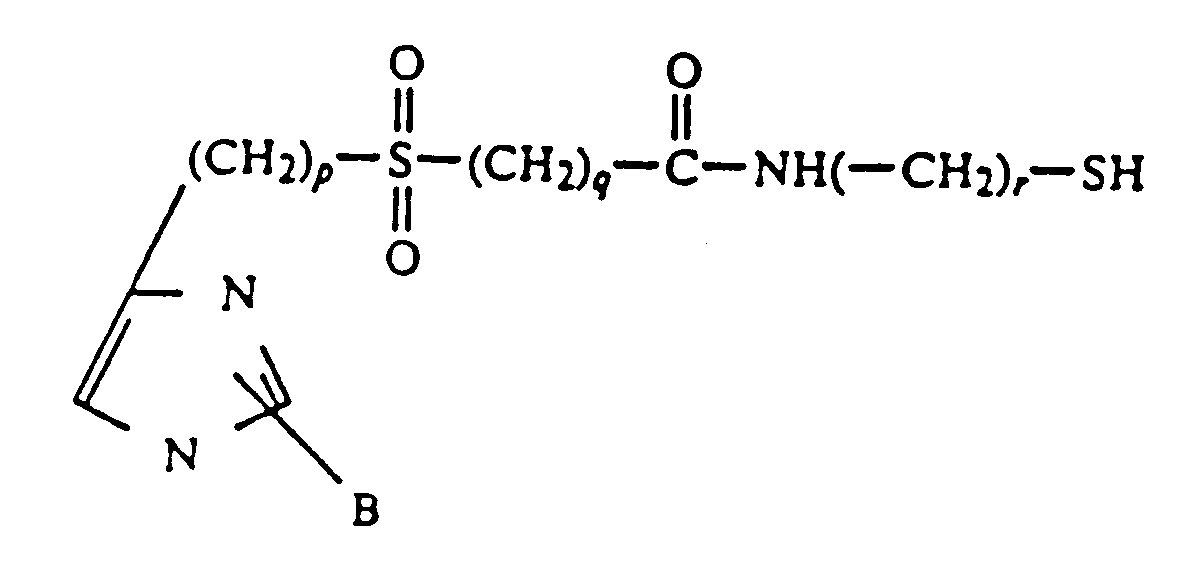
- Molécule d'ADN selon la revendication 1, dans laquelle lesdits analogues éthéno de ladite molécule d'ADN ont la formule

- Molécule d'ADN selon la revendication 1, dans laquelle lesdits analogues éthéno de ladite molécule d'ADN ont la formule
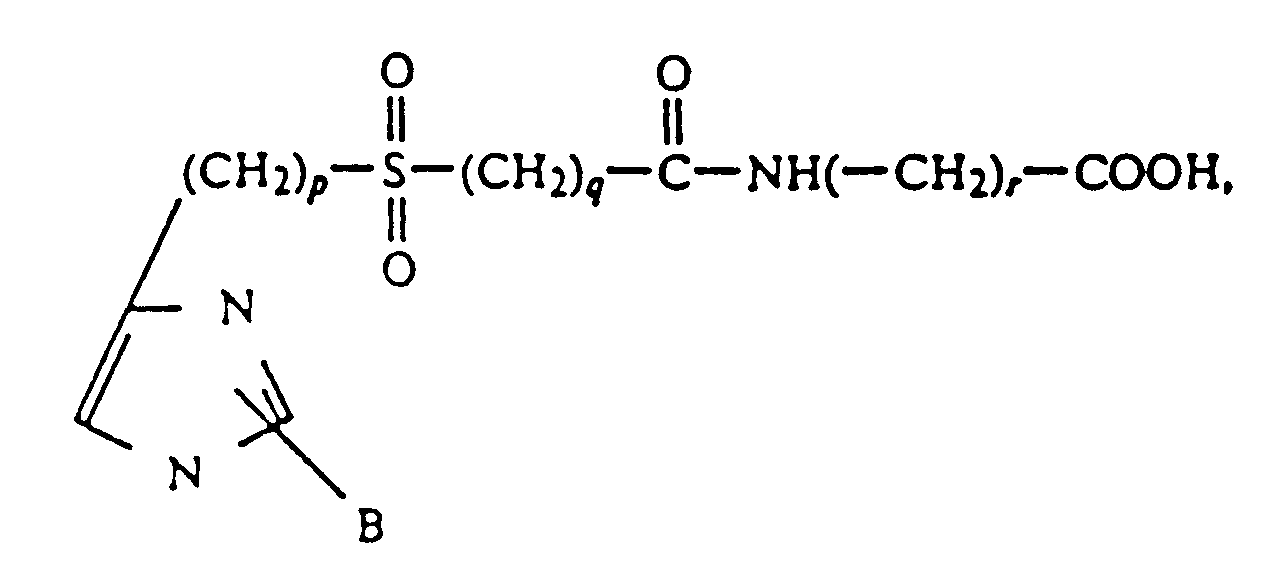
- Molécule d'ADN polymère dans laquelle au moins une partie des bases adénine et cytosine de ladite molécule d'ADN sont transformées en leurs analogues éthéno respectifs ayant la formule:

- Méthode de préparation d'une sonde à utiliser dans l'analyse d'une séquence spécifique d'acides nucléiques par hybridation d'acides nucléiques, ladite méthode comprenant:
la fourniture d'une molécule d'ADN polymère simple brin capable de s'hybrider de façon spécifique avec ladite séquence d'acides nucléiques,
la réaction de ladite molécule d'ADN avec un composé de formule

la réalisation d'une ou plusieurs étapes pour remplacer, dans lesdits analogues, le groupe
- Molécule d'ADN simple brin polymère adaptée à l'utilisation comme sonde dans l'analyse d'une séquence spécifique d'acides nucléiques par hybridation d'acides nucléiques, ladite molécule comprenant
une première portion capable de s'hybrider de façon spécifique avec ladite séquence spécifique d'acides nucléiques, et
une seconde portion de queue incapable d'une telle hybridation,
ladite portion de queue étant marquée avec une pluralité de marqueurs et ladite première portion étant essentiellement non marquée, et où ladite queue contient des bases adénine et cytosine et est essentiellement dépourvue de bases guanine et thymine, et
où au moins une partie desdites bases adénine ou cytosine ont une liaison à un substituant de formule
- Méthode de préparation d'une sonde à utiliser dans l'analyse d'une séquence spécifique d'acides nucléiques par hybridation d'acides nucléiques, ladite méthode comprenant:
la fourniture d'une molécule d'ADN polymère simple brin capable de s'hybrider de façon spécifique avec ladite séquence d'acides nucléiques,
la réaction de ladite molécule d'ADN avec un composé de formule
la réalisation d'une ou plusieurs étapes pour remplacer, dans lesdits analogues, le groupe
- Molécule d'ADN polymère dans laquelle au moins une partie des bases adénine et cytosine de ladite molécule d'ADN sont transformées en leurs analogues éthéno respectifs, lesdits analogues ayant la formule


- Méthode de préparation d'une sonde à utiliser dans l'analyse d'une séquence spécifique d'acides nucléiques par hybridation d'acides nucléiques, ladite méthode comprenant:
la fourniture d'une molécule d'ADN polymère simple brin capable de s'hybrider de façon spécifique avec ladite séquence d'acides nucléiques,
la réaction de ladite molécule d'ADN avec un composé de formule

la réalisation d'une ou plusieurs étapes pour remplacer, dans lesdits analogues, le groupe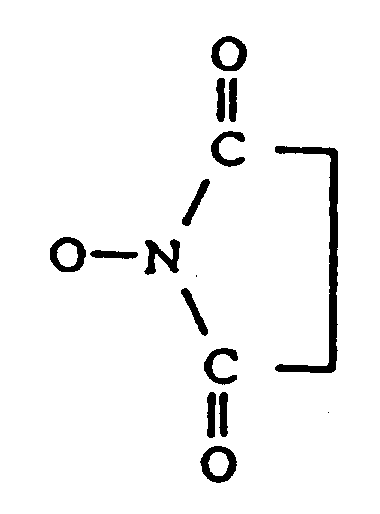

- Molécule d'ADN simple brin polymère adaptée à l'utilisation comme sonde dans l'analyse d'une séquence spécifique d'acides nucléiques par hybridation d'acides nucléiques, ladite molécule comprenant
une première portion capable de s'hybrider de façon spécifique avec ladite séquence spécifique d'acides nucléiques, et
une seconde portion de queue incapable d'une telle hybridation,
ladite portion de queue étant marquée avec une pluralité de marqueurs et ladite première portion étant essentiellement non marquée, et où ladite queue contient des bases adénine et cytosine et est essentiellement dépourvue de bases guanine et thymine, et
où au moins une partie desdites bases adénine ou cytosine ont une liaison à un substituant de formule

- Méthode de préparation d'une sonde à utiliser dans l'analyse d'une séquence spécifique d'acides nucléiques par hybridation d'acides nucléiques, ladite méthode comprenant:
la fourniture d'une molécule d'ADN polymère simple brin capable de s'hybrider de façon spécifique avec ladite séquence d'acides nucléiques,
la réaction de ladite molécule d'ADN avec un composé de formule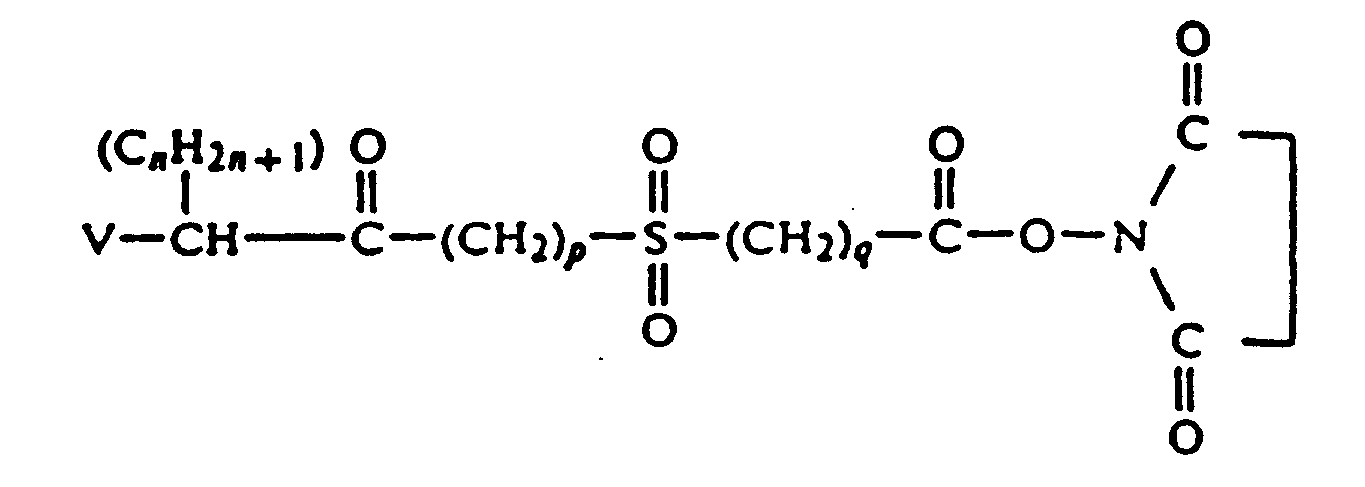
la réalisation d'une ou plusieurs étapes pour remplacer, dans lesdits analogues, le groupe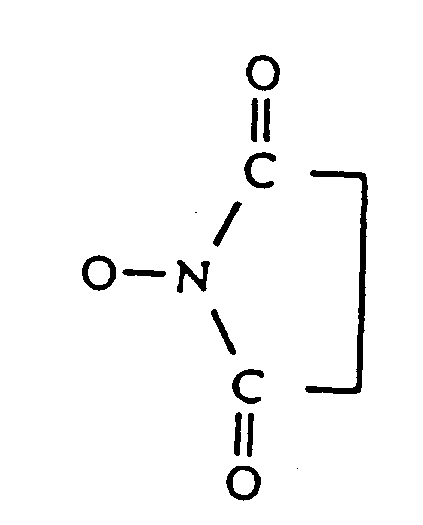

Applications Claiming Priority (2)
| Application Number | Priority Date | Filing Date | Title |
|---|---|---|---|
| US529044 | 1983-09-02 | ||
| US06/529,044 US4626501A (en) | 1983-09-02 | 1983-09-02 | Labeled DNA |
Publications (3)
| Publication Number | Publication Date |
|---|---|
| EP0138357A2 EP0138357A2 (fr) | 1985-04-24 |
| EP0138357A3 EP0138357A3 (en) | 1986-05-07 |
| EP0138357B1 true EP0138357B1 (fr) | 1994-12-21 |
Family
ID=24108275
Family Applications (1)
| Application Number | Title | Priority Date | Filing Date |
|---|---|---|---|
| EP84305989A Expired - Lifetime EP0138357B1 (fr) | 1983-09-02 | 1984-08-31 | DNA marqué |
Country Status (6)
| Country | Link |
|---|---|
| US (1) | US4626501A (fr) |
| EP (1) | EP0138357B1 (fr) |
| JP (1) | JPS60172994A (fr) |
| AT (1) | ATE115959T1 (fr) |
| CA (1) | CA1234061A (fr) |
| DE (1) | DE3486362T2 (fr) |
Families Citing this family (51)
| Publication number | Priority date | Publication date | Assignee | Title |
|---|---|---|---|---|
| US5200313A (en) * | 1983-08-05 | 1993-04-06 | Miles Inc. | Nucleic acid hybridization assay employing detectable anti-hybrid antibodies |
| US5002885A (en) * | 1984-01-30 | 1991-03-26 | Enzo Biochem, Inc. | Detectable molecules, method preparation and use |
| US4952685A (en) * | 1984-01-30 | 1990-08-28 | Enzo Biochem, Inc. | Detectable molecules, method of preparation and use |
| US4707440A (en) * | 1984-01-30 | 1987-11-17 | Enzo Biochem, Inc. | Nucleic acid hybridization assay and detectable molecules useful in such assay |
| US4957858A (en) * | 1986-04-16 | 1990-09-18 | The Salk Instute For Biological Studies | Replicative RNA reporter systems |
| DE3431536A1 (de) * | 1984-08-28 | 1986-03-13 | Boehringer Mannheim Gmbh, 6800 Mannheim | Derivatisierte nucleinsaeure-sequenz, verfahren zu deren herstellung sowie deren verwendung zum nachweis von nucleinsaeuren |
| US4828979A (en) * | 1984-11-08 | 1989-05-09 | Life Technologies, Inc. | Nucleotide analogs for nucleic acid labeling and detection |
| US4824775A (en) * | 1985-01-03 | 1989-04-25 | Molecular Diagnostics, Inc. | Cells labeled with multiple Fluorophores bound to a nucleic acid carrier |
| US5026840A (en) * | 1985-01-10 | 1991-06-25 | Molecular Diagnostics, Inc. | Photochemical nucleic acid-labeling reagent having a polyalklamine spacer |
| ATE40572T1 (de) * | 1985-01-10 | 1989-02-15 | Molecular Diagnostics Inc | Photochemisches verfahren zum markieren von nucleinsaeuren zum nachweis in hybridisationsproben. |
| DE3679690D1 (de) * | 1985-03-19 | 1991-07-18 | Abbott Lab | Diagnostische probe, die mikroperoxidase verwendet. |
| GB8509880D0 (en) * | 1985-04-17 | 1985-05-22 | Ici Plc | Testing device |
| EP0222889B1 (fr) * | 1985-05-15 | 1993-10-27 | Amoco Corporation | Analogues de cytidine |
| ATE65092T1 (de) * | 1985-05-31 | 1991-07-15 | Amoco Corp | Verstaerkung von hybridisierungssignalen durch verwendung von komplementarischen dns-straengen. |
| US4833251A (en) * | 1985-06-25 | 1989-05-23 | Siska Diagnostics, Inc. | Compounds for tagging nucleic acid probes |
| US5093232A (en) * | 1985-12-11 | 1992-03-03 | Chiron Corporation | Nucleic acid probes |
| US4882269A (en) * | 1985-12-13 | 1989-11-21 | Princeton University | Amplified hybridization assay |
| EP0232967B1 (fr) * | 1986-01-10 | 1993-04-28 | Amoco Corporation | Dosage homogène concomitant |
| US4925785A (en) * | 1986-03-07 | 1990-05-15 | Biotechnica Diagnostics, Inc. | Nucleic acid hybridization assays |
| GB8621337D0 (en) * | 1986-09-04 | 1986-10-15 | Agricultural Genetics Co | Non-radioactive nucleic acid hybridization probes |
| US5428163A (en) * | 1986-12-31 | 1995-06-27 | Mills; Randell L. | Prodrugs for selective drug delivery |
| IL86164A0 (en) * | 1987-04-28 | 1988-11-15 | Tamir Biotechnology Ltd | Improved dna probes |
| FR2618160B1 (fr) * | 1987-07-16 | 1990-03-09 | Ire Celltarg Sa | Technique enzymatique utilisant un chromogene lyophilise, trousse de reactif et procede de lyophilisation |
| FR2620122B1 (fr) * | 1987-09-03 | 1989-12-29 | Pasteur Institut | Procede d'obtention par voie chimique d'oligonucleotides marques et applications biologiques |
| US4962029A (en) * | 1987-10-02 | 1990-10-09 | Cetus Corporation | Covalent oligonucleotide-horseradish peroxidase conjugate |
| EP0372002A1 (fr) * | 1987-10-02 | 1990-06-13 | Cetus Oncology Corporation | Conjugue covalent d'oligonucleotide-peroxidase de raifort |
| US5656731A (en) * | 1987-10-15 | 1997-08-12 | Chiron Corporation | Nucleic acid-amplified immunoassay probes |
| CA1341077C (fr) * | 1988-03-31 | 2000-08-08 | Randell L. Mills | Compositions pharmaceutiques de classe luminide et macroluminide |
| US6326136B1 (en) | 1988-04-01 | 2001-12-04 | Digene Corporation | Macromolecular conjugate made using unsaturated aldehydes |
| US5109124A (en) * | 1988-06-01 | 1992-04-28 | Biogen, Inc. | Nucleic acid probe linked to a label having a terminal cysteine |
| FR2634211B1 (fr) * | 1988-07-13 | 1992-06-26 | Lebacq Philippe | Procede de marquage d'une sonde nucleique et trousse de reactifs pour la mise en oeuvre de ce procede |
| FR2644163B2 (fr) * | 1988-07-13 | 1994-09-30 | Bioprobe Systems Sa | Procede de marquage d'une sonde nucleique et trousse de reactifs pour la mise en oeuvre de ce procede |
| US5858652A (en) * | 1988-08-30 | 1999-01-12 | Abbott Laboratories | Detection and amplification of target nucleic acid sequences |
| US5082935A (en) * | 1988-12-15 | 1992-01-21 | Amoco Corporation | Diagnostic reagents made by attaching cytidine containing nucleic acid probes to amino functionalized solid supports by bisulfite mediated transamination |
| US5049489A (en) * | 1989-04-17 | 1991-09-17 | The Standard Oil Company | 16S rRNA oligonucleotide probes for the identification of sulfate-reducing bacteria |
| WO1991002040A1 (fr) * | 1989-08-04 | 1991-02-21 | Kosak Kenneth M | Etiquette de cyclodextrine pour acide nucleique et analyse biochimique |
| GB8927503D0 (en) * | 1989-12-04 | 1990-02-07 | Kronem Systems Inc | Enzyme-amplified lanthanide chelate luminescence |
| EP0541693B1 (fr) * | 1990-07-27 | 1998-12-09 | Chiron Corporation | Polynucleotides ramifies de type grand peigne |
| US5849481A (en) * | 1990-07-27 | 1998-12-15 | Chiron Corporation | Nucleic acid hybridization assays employing large comb-type branched polynucleotides |
| US5258507A (en) * | 1990-11-08 | 1993-11-02 | Amoco Corporation | Labeling reagents useful for the chemical attachment of nitrophenyl derivative ligands to DNA probes |
| US5512433A (en) * | 1990-11-08 | 1996-04-30 | Vysis, Inc. | Methods and compounds for labeling DNA with xanthine and lower alkyl substituted xanthine derivatives and reagents for the in situ detection of chromosomes |
| ZA936015B (en) * | 1992-08-24 | 1994-03-10 | Akzo Nv | Elimination of false negatives in nuleic acid detection. |
| JP3612534B2 (ja) * | 1998-09-04 | 2005-01-19 | 独立行政法人理化学研究所 | Dna固定支持方法およびdna固定支持体 |
| WO2001095944A2 (fr) * | 2000-06-12 | 2001-12-20 | Mills Randell L | Promedicaments destines a l'administration selective d'un medicament |
| GB0029154D0 (en) | 2000-11-30 | 2001-01-17 | Lee Helen | Signal enhancement with multiple labelled-antibodies |
| US7361310B1 (en) * | 2001-11-30 | 2008-04-22 | Northwestern University | Direct write nanolithographic deposition of nucleic acids from nanoscopic tips |
| US20050080260A1 (en) * | 2003-04-22 | 2005-04-14 | Mills Randell L. | Preparation of prodrugs for selective drug delivery |
| KR20100047843A (ko) * | 2007-06-20 | 2010-05-10 | 노쓰웨스턴유니버시티 | 보편적인 매트릭스 |
| WO2009020658A1 (fr) * | 2007-08-08 | 2009-02-12 | Northwestern University | Encrage à correction automatique, gérable indépendamment pour des réseaux de leviers |
| KR101935146B1 (ko) * | 2017-04-26 | 2019-01-03 | 아주대학교산학협력단 | 재귀반사 현상을 이용한 분자 비콘 기반의 광학 유전자 바이오센서 및 이를 이용한 핵산 분자의 정량 분석 방법 |
| GB201912866D0 (en) * | 2019-09-06 | 2019-10-23 | Cambridge Molecular Diagnostics Ltd | Miltiply labelled polymetric molecule for detection assays |
Family Cites Families (7)
| Publication number | Priority date | Publication date | Assignee | Title |
|---|---|---|---|---|
| US4139346A (en) * | 1977-11-28 | 1979-02-13 | Enzo Bio Chem Incorporated | Nucleic acid and protein binding paper |
| FR2422956A1 (fr) * | 1978-04-13 | 1979-11-09 | Pasteur Institut | Procede de detection et de caracterisation d'un acide nucleique ou d'une sequence de celui-ci, et reactif enzymatique pour la mise en oeuvre de ce procede |
| US4228237A (en) * | 1978-09-21 | 1980-10-14 | Calbiochem-Behring Corp. | Methods for the detection and determination of ligands |
| US4286964A (en) * | 1979-10-12 | 1981-09-01 | Seed Brian S | Polyfunctional epoxides and halohydrins used as bridging groups to bind aromatic amine group-containing alcohols and thiols to hydroxyl bearing substrates |
| US4282287A (en) * | 1980-01-24 | 1981-08-04 | Giese Roger W | Biochemical avidin-biotin multiple-layer system |
| US4358535A (en) * | 1980-12-08 | 1982-11-09 | Board Of Regents Of The University Of Washington | Specific DNA probes in diagnostic microbiology |
| FR2519005B1 (fr) * | 1981-12-29 | 1985-10-25 | Pasteur Institut | Fragments d'adn marques a l'une au moins de leurs extremites par des ribonucleotides modifies reconnaissables par des molecules affines et procede pour realiser une analyse de tels fragments d'adn |
-
1983
- 1983-09-02 US US06/529,044 patent/US4626501A/en not_active Expired - Fee Related
-
1984
- 1984-08-31 AT AT84305989T patent/ATE115959T1/de not_active IP Right Cessation
- 1984-08-31 DE DE3486362T patent/DE3486362T2/de not_active Expired - Fee Related
- 1984-08-31 CA CA000462205A patent/CA1234061A/fr not_active Expired
- 1984-08-31 EP EP84305989A patent/EP0138357B1/fr not_active Expired - Lifetime
- 1984-09-03 JP JP59184354A patent/JPS60172994A/ja active Pending
Non-Patent Citations (1)
| Title |
|---|
| Anal.Biochem.Vol 108(2), pp.394-401 (1980). * |
Also Published As
| Publication number | Publication date |
|---|---|
| DE3486362D1 (de) | 1995-02-02 |
| CA1234061A (fr) | 1988-03-15 |
| EP0138357A3 (en) | 1986-05-07 |
| ATE115959T1 (de) | 1995-01-15 |
| DE3486362T2 (de) | 1995-05-11 |
| EP0138357A2 (fr) | 1985-04-24 |
| US4626501A (en) | 1986-12-02 |
| JPS60172994A (ja) | 1985-09-06 |
Similar Documents
| Publication | Publication Date | Title |
|---|---|---|
| EP0138357B1 (fr) | DNA marqué | |
| US5985548A (en) | Amplification of assay reporters by nucleic acid replication | |
| EP0611828B1 (fr) | Composition pour l'utilisation dans un procédé de test utilisant des séquences polynucléotidiques | |
| AU597896B2 (en) | Method and kit for performing nucleic acid hybridization assays | |
| EP0117440B1 (fr) | Méthodes et structures utilisant des sondes de polynucléotides marqués chimiquement et non-radioactifs | |
| US5731148A (en) | Adduct protection assay | |
| EP0625211B1 (fr) | Amplification de rapporteurs d'analyse par replication d'une sequence d'acide nucleique | |
| AU599013B2 (en) | Solution-phase dual hybridization assay for detecting polynucleotide sequences | |
| US5948899A (en) | Compositions for homogenous protection assay | |
| US6096500A (en) | Multi-label complex for enhanced sensitivity in electrochemiluminescence assay | |
| US5332679A (en) | Method for specific binding assays using a releasable ligand | |
| WO1996041197A9 (fr) | Methode de dosage par protection contre la formation d'un produit d'addition | |
| US6326136B1 (en) | Macromolecular conjugate made using unsaturated aldehydes | |
| US4719176A (en) | Enzyme-free diagnostic binding reagents | |
| EP0835451A1 (fr) | Dosage par fixation specifique et par chimioluminescence, sans fractionnement | |
| US5384241A (en) | Specific binding assay compound with inhibitive self-quenching characteristics | |
| EP0739421B1 (fr) | Dosage par hybridation | |
| HK1003719B (en) | Amplification of assay reporters by nucleic acid replication | |
| US20140287949A1 (en) | Multiplex assay for members of binding pairs |
Legal Events
| Date | Code | Title | Description |
|---|---|---|---|
| PUAI | Public reference made under article 153(3) epc to a published international application that has entered the european phase |
Free format text: ORIGINAL CODE: 0009012 |
|
| AK | Designated contracting states |
Designated state(s): AT BE CH DE FR GB IT LI LU NL SE |
|
| PUAL | Search report despatched |
Free format text: ORIGINAL CODE: 0009013 |
|
| AK | Designated contracting states |
Kind code of ref document: A3 Designated state(s): AT BE CH DE FR GB IT LI LU NL SE |
|
| 17P | Request for examination filed |
Effective date: 19860714 |
|
| 17Q | First examination report despatched |
Effective date: 19870904 |
|
| RAP1 | Party data changed (applicant data changed or rights of an application transferred) |
Owner name: GENZYME CORPORATION |
|
| GRAA | (expected) grant |
Free format text: ORIGINAL CODE: 0009210 |
|
| AK | Designated contracting states |
Kind code of ref document: B1 Designated state(s): AT BE CH DE FR GB IT LI LU NL SE |
|
| PG25 | Lapsed in a contracting state [announced via postgrant information from national office to epo] |
Ref country code: AT Effective date: 19941221 |
|
| REF | Corresponds to: |
Ref document number: 115959 Country of ref document: AT Date of ref document: 19950115 Kind code of ref document: T |
|
| REF | Corresponds to: |
Ref document number: 3486362 Country of ref document: DE Date of ref document: 19950202 |
|
| ITF | It: translation for a ep patent filed | ||
| ET | Fr: translation filed | ||
| PG25 | Lapsed in a contracting state [announced via postgrant information from national office to epo] |
Ref country code: SE Effective date: 19950321 |
|
| PG25 | Lapsed in a contracting state [announced via postgrant information from national office to epo] |
Ref country code: LU Free format text: LAPSE BECAUSE OF NON-PAYMENT OF DUE FEES Effective date: 19950831 |
|
| PLBE | No opposition filed within time limit |
Free format text: ORIGINAL CODE: 0009261 |
|
| STAA | Information on the status of an ep patent application or granted ep patent |
Free format text: STATUS: NO OPPOSITION FILED WITHIN TIME LIMIT |
|
| 26N | No opposition filed | ||
| PGFP | Annual fee paid to national office [announced via postgrant information from national office to epo] |
Ref country code: FR Payment date: 19960816 Year of fee payment: 13 |
|
| PGFP | Annual fee paid to national office [announced via postgrant information from national office to epo] |
Ref country code: DE Payment date: 19960828 Year of fee payment: 13 |
|
| PGFP | Annual fee paid to national office [announced via postgrant information from national office to epo] |
Ref country code: BE Payment date: 19960910 Year of fee payment: 13 |
|
| PGFP | Annual fee paid to national office [announced via postgrant information from national office to epo] |
Ref country code: CH Payment date: 19961008 Year of fee payment: 13 |
|
| PGFP | Annual fee paid to national office [announced via postgrant information from national office to epo] |
Ref country code: NL Payment date: 19970625 Year of fee payment: 14 |
|
| PGFP | Annual fee paid to national office [announced via postgrant information from national office to epo] |
Ref country code: GB Payment date: 19970702 Year of fee payment: 14 |
|
| PG25 | Lapsed in a contracting state [announced via postgrant information from national office to epo] |
Ref country code: LI Free format text: LAPSE BECAUSE OF NON-PAYMENT OF DUE FEES Effective date: 19970831 Ref country code: CH Free format text: LAPSE BECAUSE OF NON-PAYMENT OF DUE FEES Effective date: 19970831 Ref country code: BE Free format text: LAPSE BECAUSE OF NON-PAYMENT OF DUE FEES Effective date: 19970831 |
|
| BERE | Be: lapsed |
Owner name: GENZYME CORP. Effective date: 19970831 |
|
| REG | Reference to a national code |
Ref country code: CH Ref legal event code: PL |
|
| PG25 | Lapsed in a contracting state [announced via postgrant information from national office to epo] |
Ref country code: FR Free format text: LAPSE BECAUSE OF NON-PAYMENT OF DUE FEES Effective date: 19980430 |
|
| PG25 | Lapsed in a contracting state [announced via postgrant information from national office to epo] |
Ref country code: DE Free format text: LAPSE BECAUSE OF NON-PAYMENT OF DUE FEES Effective date: 19980501 |
|
| REG | Reference to a national code |
Ref country code: FR Ref legal event code: ST |
|
| PG25 | Lapsed in a contracting state [announced via postgrant information from national office to epo] |
Ref country code: GB Free format text: LAPSE BECAUSE OF NON-PAYMENT OF DUE FEES Effective date: 19980831 |
|
| PG25 | Lapsed in a contracting state [announced via postgrant information from national office to epo] |
Ref country code: NL Free format text: LAPSE BECAUSE OF NON-PAYMENT OF DUE FEES Effective date: 19990301 |
|
| GBPC | Gb: european patent ceased through non-payment of renewal fee |
Effective date: 19980831 |
|
| NLV4 | Nl: lapsed or anulled due to non-payment of the annual fee |
Effective date: 19990301 |