EP0141366A2 - Procédé de frittage accéléré pour céramiques - Google Patents
Procédé de frittage accéléré pour céramiques Download PDFInfo
- Publication number
- EP0141366A2 EP0141366A2 EP84112755A EP84112755A EP0141366A2 EP 0141366 A2 EP0141366 A2 EP 0141366A2 EP 84112755 A EP84112755 A EP 84112755A EP 84112755 A EP84112755 A EP 84112755A EP 0141366 A2 EP0141366 A2 EP 0141366A2
- Authority
- EP
- European Patent Office
- Prior art keywords
- sintering process
- process recited
- temperature
- sintering
- heating
- Prior art date
- Legal status (The legal status is an assumption and is not a legal conclusion. Google has not performed a legal analysis and makes no representation as to the accuracy of the status listed.)
- Withdrawn
Links
Images

Classifications
-
- C—CHEMISTRY; METALLURGY
- C04—CEMENTS; CONCRETE; ARTIFICIAL STONE; CERAMICS; REFRACTORIES
- C04B—LIME, MAGNESIA; SLAG; CEMENTS; COMPOSITIONS THEREOF, e.g. MORTARS, CONCRETE OR LIKE BUILDING MATERIALS; ARTIFICIAL STONE; CERAMICS; REFRACTORIES; TREATMENT OF NATURAL STONE
- C04B35/00—Shaped ceramic products characterised by their composition; Ceramics compositions; Processing powders of inorganic compounds preparatory to the manufacturing of ceramic products
- C04B35/01—Shaped ceramic products characterised by their composition; Ceramics compositions; Processing powders of inorganic compounds preparatory to the manufacturing of ceramic products based on oxide ceramics
- C04B35/10—Shaped ceramic products characterised by their composition; Ceramics compositions; Processing powders of inorganic compounds preparatory to the manufacturing of ceramic products based on oxide ceramics based on aluminium oxide
- C04B35/111—Fine ceramics
- C04B35/117—Composites
-
- C—CHEMISTRY; METALLURGY
- C04—CEMENTS; CONCRETE; ARTIFICIAL STONE; CERAMICS; REFRACTORIES
- C04B—LIME, MAGNESIA; SLAG; CEMENTS; COMPOSITIONS THEREOF, e.g. MORTARS, CONCRETE OR LIKE BUILDING MATERIALS; ARTIFICIAL STONE; CERAMICS; REFRACTORIES; TREATMENT OF NATURAL STONE
- C04B35/00—Shaped ceramic products characterised by their composition; Ceramics compositions; Processing powders of inorganic compounds preparatory to the manufacturing of ceramic products
- C04B35/01—Shaped ceramic products characterised by their composition; Ceramics compositions; Processing powders of inorganic compounds preparatory to the manufacturing of ceramic products based on oxide ceramics
- C04B35/10—Shaped ceramic products characterised by their composition; Ceramics compositions; Processing powders of inorganic compounds preparatory to the manufacturing of ceramic products based on oxide ceramics based on aluminium oxide
- C04B35/111—Fine ceramics
-
- C—CHEMISTRY; METALLURGY
- C04—CEMENTS; CONCRETE; ARTIFICIAL STONE; CERAMICS; REFRACTORIES
- C04B—LIME, MAGNESIA; SLAG; CEMENTS; COMPOSITIONS THEREOF, e.g. MORTARS, CONCRETE OR LIKE BUILDING MATERIALS; ARTIFICIAL STONE; CERAMICS; REFRACTORIES; TREATMENT OF NATURAL STONE
- C04B35/00—Shaped ceramic products characterised by their composition; Ceramics compositions; Processing powders of inorganic compounds preparatory to the manufacturing of ceramic products
- C04B35/01—Shaped ceramic products characterised by their composition; Ceramics compositions; Processing powders of inorganic compounds preparatory to the manufacturing of ceramic products based on oxide ceramics
- C04B35/10—Shaped ceramic products characterised by their composition; Ceramics compositions; Processing powders of inorganic compounds preparatory to the manufacturing of ceramic products based on oxide ceramics based on aluminium oxide
- C04B35/111—Fine ceramics
- C04B35/117—Composites
- C04B35/119—Composites with zirconium oxide
-
- C—CHEMISTRY; METALLURGY
- C04—CEMENTS; CONCRETE; ARTIFICIAL STONE; CERAMICS; REFRACTORIES
- C04B—LIME, MAGNESIA; SLAG; CEMENTS; COMPOSITIONS THEREOF, e.g. MORTARS, CONCRETE OR LIKE BUILDING MATERIALS; ARTIFICIAL STONE; CERAMICS; REFRACTORIES; TREATMENT OF NATURAL STONE
- C04B35/00—Shaped ceramic products characterised by their composition; Ceramics compositions; Processing powders of inorganic compounds preparatory to the manufacturing of ceramic products
- C04B35/515—Shaped ceramic products characterised by their composition; Ceramics compositions; Processing powders of inorganic compounds preparatory to the manufacturing of ceramic products based on non-oxide ceramics
- C04B35/58—Shaped ceramic products characterised by their composition; Ceramics compositions; Processing powders of inorganic compounds preparatory to the manufacturing of ceramic products based on non-oxide ceramics based on borides, nitrides, i.e. nitrides, oxynitrides, carbonitrides or oxycarbonitrides or silicides
- C04B35/597—Shaped ceramic products characterised by their composition; Ceramics compositions; Processing powders of inorganic compounds preparatory to the manufacturing of ceramic products based on non-oxide ceramics based on borides, nitrides, i.e. nitrides, oxynitrides, carbonitrides or oxycarbonitrides or silicides based on silicon oxynitride, e.g. SIALONS
-
- C—CHEMISTRY; METALLURGY
- C04—CEMENTS; CONCRETE; ARTIFICIAL STONE; CERAMICS; REFRACTORIES
- C04B—LIME, MAGNESIA; SLAG; CEMENTS; COMPOSITIONS THEREOF, e.g. MORTARS, CONCRETE OR LIKE BUILDING MATERIALS; ARTIFICIAL STONE; CERAMICS; REFRACTORIES; TREATMENT OF NATURAL STONE
- C04B35/00—Shaped ceramic products characterised by their composition; Ceramics compositions; Processing powders of inorganic compounds preparatory to the manufacturing of ceramic products
- C04B35/622—Forming processes; Processing powders of inorganic compounds preparatory to the manufacturing of ceramic products
- C04B35/64—Burning or sintering processes
-
- C—CHEMISTRY; METALLURGY
- C04—CEMENTS; CONCRETE; ARTIFICIAL STONE; CERAMICS; REFRACTORIES
- C04B—LIME, MAGNESIA; SLAG; CEMENTS; COMPOSITIONS THEREOF, e.g. MORTARS, CONCRETE OR LIKE BUILDING MATERIALS; ARTIFICIAL STONE; CERAMICS; REFRACTORIES; TREATMENT OF NATURAL STONE
- C04B35/00—Shaped ceramic products characterised by their composition; Ceramics compositions; Processing powders of inorganic compounds preparatory to the manufacturing of ceramic products
- C04B35/622—Forming processes; Processing powders of inorganic compounds preparatory to the manufacturing of ceramic products
- C04B35/64—Burning or sintering processes
- C04B35/645—Pressure sintering
- C04B35/6455—Hot isostatic pressing
Definitions
- This invention relates to the provision of reliable, reproducible manufacturing methods for producing high-strength, fine-grain sintered ceramic bodies.
- the prime interest is in the preparation of alumina-base sintered bodies, the process of this invention appears to be broadly applicable to the sintering of ceramic powders.
- Ceramic cutting tools have been in use for a long time, but the relatively low strength of ceramic materials compared with other common tool materials, such as cemented carbides, and the resulting generally poor performance characteristics of ceramics has limited the application of tools prepared from these materials.
- the predominant manufacturing process for the preparation of dense polycrystalline ceramic bodies is hot pressing.
- ceramic particles are placed in a graphite mold and sintered under conditions of temperature ranging from 1500 to 1800°C with a simultaneous pressure application ranging from about 100 to 400 kg./sq.cm. Increases in rupture strength have been obtained through refinement of the grain size of the sintered product.
- This has required increasingly stringent process conditions encompassing the use of very fine starting powder, utilizing as low a process temperature as would be effective in bringing about the sintering, and the addition of sintering additives.
- alumina-base ceramic cutting tool technology has been the use of alumina-titanium carbide (Al 2 0 3 - TiC) composite material.
- Some of the early sintered ceramic cutting tools contained small amounts of carbides, including TiC as sintering additives (Ceramics in Machining Processes., by A.G. King and W.M. Wheildon, Academic Press, New York, 1966), but the first commercial dense polycrystalline ceramic cutting tool containing major amounts of TiC in addition to Al 2 0 3 is a relatively recent development. The production thereof is described in U.S. 3,5,80,708--Ogawa et al., and employs hot pressing. Experimental production of a similar composition material for hot pressing at higher temperatures (i.e., 1800-1850°C) was reported earlier (Preparation of Alumina-Titanium Carbide Bodies by Hot Pressing Techniques", H.N. Barr, G.D. Cremer and W.J. Koshuba; Powder Met. Bull, Vol. 5, No. 4, September 1950).
- Cutting tools containing a significant amount of metal in addition to A1 2 0 3 -TiC are described in U.S. 3,542,529--Bergna et al.
- the addition of titanium oxide to the A1 2 0 3 -TiC system is described in U.S. 4,063,908--ogawa et al, such addition making it possible to reduce the hot pressing temperature. All of the above rely upon hot pressing to accomplish densification.
- Another hot pressing patent is U.S. 4,204,873--Yamamoto et al., in which a different alumina-base system is employed; namely, alumina-tungsten carbide with an addition of titanium nitride.
- HOT PRESSING the combined application of heat and of pressure applied through the action of a mechanical piston on the powder-filled cavity of a die. Under such conditions the pressure on the powder compact is non-uni- formally applied due to die wall friction and the axial application of the piston force. Under proper conditions of temperature and pressure densification of the compact can result.
- HOT ISOSTATIC PRESSING The simultaneous application of isostatic pressure and heat to a sample body whose porosity is to be reduced. Pressure is applied uniformly to the sample body by an inert gas.
- the sample body may be (a) a powder compact encapsulated in a gas impermeable, but deformable, envelop such as a tantalum foil can or a glass coating or (b) any solid substantially devoid of open porosity.
- the sintered product of this invention is considered to be "substantially crystalline", because it is not atypical to encounter minor amounts of non-crystalline material (e.g. glasses) in the grain boundary phases.
- This invention addresses a particularly troublesome problem encountered in the sintering of multiphase systems.
- Such systems frequently contain components, which will chemically interact at elevated temperatures. If such chemical reaction proceeds fast enough to inhibit the desired densification or, if the nature of the reaction is such that it results in degradation of the system (i.e. undesirable solid, liquid or gaseous phases are produced), manufacture of the desired product cannot be successfully accomplished by sintering.
- This invention is primarily described herein in respect to the A1 2 0 3 -TiC system, because this particular material system presents the very problem in densification discussed herein above.
- the essential aspects of the sintering process disclosed herein are not dependent upon either the use of particular sintering additives, particular material proportions, or the nature of minor impurities.
- the process is expected to be broadly applicable to the sintering of powdered ceramic materials, that contain components which will chemically react at elevated temperatures to inhibit densification or degrade the system so that an undesirable sintered product results.
- a plurality of powdered ceramic materials are consolidated under pressure to produce a cold pressed green compact of some preselected shape and volume, the compact is heated to a maximum sintering temperature with at -least the final stage of heating in which the maximum sintering temperature is reached being accomplished at a heating rate in excess of about 100°C per minute, holding the compact at the maximum sintering temperature for at least the length of time needed to achieve uniform temperature distribution throughout the compact, and then permitting the sintered body so produced to cool.
- the starting powdered ceramic materials comprise, or contain, components that will react together chemically at elevated temperatures and either inhibit densification of the green body or degrade the system such that any resulting sintered product is undesirable - by utilizing sufficiently rapid rate heating
- bodies can now be satisfactorily sintered without reliance on sintering additives.
- the condition required to attain these results is the application of a heating rate during sintering that is fast enough to produce a rate of densification of the green body that exceeds the rate of the unwanted chemical reaction.
- a heating rate will exceed about 100°C per minute.
- sintering rates of 400°C per minute and hold periods of one minute or less are routinely employed in the practice of this invention.
- the green compact is heated to an intermediate transition temperature (ITT) using slow heating (i.e. less than about 50°C per minute) with subsequent rapid rate heating (i.e., greater than about 100°C per minute) to the maximum sintering temperature.
- ITT intermediate transition temperature
- rapid rate heating i.e., greater than about 100°C per minute
- more than one change in heating rate may be utilized.
- the compact after heating to the ITT, the compact can be permitted to cool and then this presintered body can subsequently be heated all the way to the maximum sintering temperature to accomplish the full sintering desired.
- presintering can be accomplished at one location, the presintered compacts can be transferred to another site, and the final sintering can be done at the second location.
- sintering operation in a resistance-heated furnace (e.g., molybdenum element) in a high-purity helium atmosphere, the heating rate of the furnace being scheduled over the desired temperature range by a programmable controller.
- Maximum sintering temperatures employed are typically in excess of 1800°C.
- This invention is the outgrowth of studies of the sintering characteristics of Al 2 0 3 -TiC and other ceramic materials, focusing on the rate of heating of the unconfined (i.e., as contrasted to being confined as in hot pressing) green compact as the primary parameter variable.
- rate of heating of the unconfined i.e., as contrasted to being confined as in hot pressing
- green samples are heated at a typical rate of from about 2 to about 5°C/min. to an isothermal hold at the maximum sintering temperature, which is chosen as low as possible to minimize grain growth
- both the heating rates and the sintering temperatures employed are much greater.
- a high-temperature furnace equipped with a precision dilatometer was used for the conduct of most of the experiments.
- This furnace was of the resistance heater type, employing a molybdenum heating element with the temperature being controlled by a Data-trak (Research, Inc.) programmable controller using a tungsten-rhenium thermocouple. With this equipment temperatures of over 2000°C could be maintained in the furnace with an accuracy within a few degrees of the desired value.
- the capability was also available to enable the application of a very wide range of heating rates ranging from less than one degree per minute to several hundreds of degrees per minute. Provisions were available for evacuating the furnace to 0.1 torr, however, high purity helium or high purity gas such as hydrogen, argon, nitrogen or carbon monoxide were used as the sintering environment during most of the studies.
- the dilatometer was made with two molybdenum bars as the reference rod and the push rod in contact with the sample, respectively.
- the molybdenum bars were mounted horizontally with the push rod cantilevered in a pair of precise bearings.
- About 10 grams of bias was applied to the sample push rod to compensate for any frictional resistance in the bearing assemblies against sliding movement. This counterweight eliminated occasional problems of sticking of the push rod, but was insufficient to cause any deformation of the sample.
- the relative position of the push rod and the reference rod was detected by a linear voltage differential transformer (LVDT).
- the LVDT of the dilatometer at its maximum sensitivity range of 322 volts/inch is linear in response over the range of ⁇ 13 volts.
- the digitized output of the LVDT as well as the furnace temperature and sintering times were recorded automatically by a North Star microcomputer.
- a second somewhat larger molybdenum heating element furnace similar in design to the above-described furnace but without a dilatometer was used in the conduct of sintering studies of larger samples to be used as cutting tools.
- An ASEA Pressure Systems, Inc. Mini Hipper was used for the treatment by HIP of sintered samples. In HIP studies, pressure and temperature were varied but the pressure medium for most of these studies was nitrogen.
- Powders for the sintering studies were ball milled, usually employing cemented tungsten carbide milling media.
- the milling of A1 2 0 3 -TiC powder for periods ranging from 24 to 48 hours in a carbide ball mill will leave as much as 4 wt % (w/o) of tungsten carbide and about 0.4 w/o of cobalt in the milled powder.
- Some controlled milling experiments were carried out using 99.5+ purity alumina milling media in a plastic container to eliminate residual cemented tungsten carbide contaminants. This work provided a comparison for determining the lack of effect of milling contaminants on sintering.
- the densification rate above 1600°C depended on the rate of heating of the samples reflecting the extent to which densification rate or rate of chemical reaction prevailed.
- HR heating rate necessary to achieve a desired fraction of theoretical density at a maximum sintering temperature of 1820°C is an exponential function of the fraction of theoretical density, which is
- Another important sintering parameter is sintering temperature.
- sintering temperature When heat is applied to an A1 2 0 3 -TiC green compact at a constant heating rate, the final sintered density thereof increases as the meximum sintering temperature is raised.
- the final densities obtained for sintered samples heated at 400°C/min. to temperatures from 1820 to 1950°C are shown as a function of sintering temperature in FIG. 2 (curve f). Each sample was held for two minutes at the preselected sintering temperature. As is manifest in curve f, the final density of the samples increased linearly with increasing sintering temperature within the range investigated. Sample densities greater than 99% of theoretical were obtained by sintering at 1950'C with a heating rate of greater than 200°C/min. As is shown by curve g, samples sintered at the higher temperetures have essentially no open porosity. This is of particular importance, because samples so prepared can, in a subsequent step after cooling, be hot isostatically
- the total sintering time at temperature (i.e., the isothermal hold) is still another important parameter.
- the degree of densification achieved by holding samples (i.e., consolidated powder ceramic materials as green compacts) at the sintering temperature for the same length of time is different depending upon the sample density at the beginning of the sintering hold. Samples heated at a slower rate underwent less shrinkage at the beginning of the holding period and somewhat more shrinkage during the holding period than did rapidly heated samples. However, as is shown in FIG. 1 by the total shrinkages displayed, the final densities achieved for the rapidly heated samples were still greater.
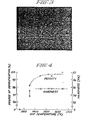
- FIG. 3 is an optical micrograph showing a microstructure produced by sintering at 1950°C. In spite of the high sintering temperature, the average particle diameter is smaller than about 2 micrometers.
- sintering begins about 1000°C (FIG. 1).
- densification of Al 2 0 3 -TiC green bodies as a function of temperature is essentially independent of the heating rate up to a temperature of about 1600°C.
- observable heating rate effects are apparent above about 1600°C.
- a high material density for sintered ceramic specimens can be achieved advantageously by heating the green bodies slowly up to some given ITT and then increasing the heating rate to reach the desired maximum sintering temperature.
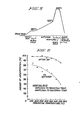
- a schematic description of a typical sintering cycle according to this invention for A1 2 0 3 -base ceramics is shown in FIG. 5.
- a series of experiments was conducted in helium in which the heating rate was changed abruptly from 20°C/min. to 400°C/min.
- the temperature (ITT) at which this change was made was increased by 100°C in each succeeding experiment.
- the effect that the ITT had on the final density in these experiments is shown in FIG. 6.
- Modifications in the heating cycle as represented in FIG. 5 may be made to accommodate green bodies of various thicknesses.
- the heating cycle of FIG. 5 (with perhaps a higher ITT) will be typical.
- the heating rate of ITT will usually be lower than the 40°C/min. shown, the proper value being routinely determinable.
- the hold at maximum sintering temperature can vary depending on the size of the body being sintered, but preferably the hold period will not exceed about 2 minutes.
- ITT ITT to be employed can be routinely accomplished with the understanding that selecting too high an ITT results in the samples being at high temperature for extended lengths of time and this contributes to the formation of surface scale in which there is a higher concentration of pores than in the body of the sample itself.
- Al 2 03-TiC not only the formation of porosity, but also loss of TiC from the surface layer due to chemical reaction can occur.
- the ITT is selected high enough to provide the sample with sufficient internal strength to counteract the thermal stresses that will be induced by heating at the high rate (i.e., at greater than 100°C/min.), the slow heating will have achieved its objective.
- the simplest approach to determining an optimum ITT is by the joint application of the teachings provided by FIGS. 1 and 6 and the description relative thereto. When the sintered product is to be used as a cutting tool, machining tests should also be included as a parameter in optimizing the heating sequence.
- Rockwell hardness of materials that have been subjected to HIP in FIG. 4 demonstrate that sintered material produced by the practice of this invention develops a hardness at least equal to, or harder than, the average hardness (a value of about 94 Rockwell A) of the best commercial hot pressed material of similar composition.
- Rockwell A and Rockwell C hardness as used and determined herein are in accordance with ASTM designation: EIS-74.
- Transverse rupture strength (TRS) of some of the as-sintered samples and of the sintered samples after being subjected to HIP was determined by the use of the 3-point bend test. The results are shown in Table II. As the data set forth therein will indicate, some individual samples of as-sintered bars have very high strength and the ASTM B406-70 value of TRS for the limited number of as-sintered samples tested is lower than that of bars subjected to HIP. However, scatter in the data is much less for the samples subjected to HIP than for the as-sintered bars.
- the HIP TRS value of about 98,000 psi average is in good agreement with reported TRS values of Al 2 0 3 -TiC composites.
- a number of cutting tools were produced in the following manner: alumina having an average particle diameter of less than 1 micrometer was mixed with 30 wt % TiC powder having an average particle diameter of less than 2 micrometers; the mixture was ball milled in a cemented tungsten carbide mill; isostatically pressed to the shape of a cylinder having a diameter of about 1/2"; discs about 3/8" thick were cut off the bar and these discs were sintered at 1950°C for about 1 minute as described herein.
- the heating rate was 40°C/min. up to about 1100°C after which the heating rate was raised to 400°C/min. to bring the discs to the maximum sintering temperature.
- a powder composition was prepared containing 59 w/0 Al 2 O 3 , 30 w/o TiC and 11 w/o Zr0 2 .
- Samples of this ternary composite powder were sintered in general accordance with the heating program of FIG. 5 after determining the temperature dependent sintering characteristics thereof by monitoring with the in-furnace dilatometer. Some of the samples were exposed to a maximum sintering temperature of 1935°C. These samples actually increased in dimension (i.e., swelled) after reaching maximum density. Optical micrographs of the cross-section of such a sintered sample revealed that fairly large random pores had resulted. By reducing the maximum sintering temperature to 1900°C, the swelling was eliminated.
- Sintered bodies were also prepared in which small quantities (about 0.5 w/o of cobalt) was added to the Al 2 0 3 -TiC. No apparent problem was encounted in either the rapid rate sintering of the A1 2 0 3 -TiC or in the subsequent HIP of the as-sintered bodies. Three point bend strength tests of the samples yielded values of 103 kpsi.. These strengths are comparable to the values obtained from the A1 2 0 3 -TiC powder mixture substantially free of impurities and clearly free of cobalt. The sintering atmosphere used for most experiments having the cobalt addition was high purity helium.
- the ceramic powders can be mixed by the use of any of the conventional techniques such as, for example, ball milling, laboratory milling or jet milling to produce a substantially uniform or homogeneous dispersion or mixture.
- the average particle diameter ranges from 0.1 ⁇ m to about 5 pm.
- An average particle size less than about 0.1 pm is not useful, since it is generally difficult or impractical to compact such powders to a density sufficient for handling purposes. Powders with an average particle size greater than about 5 ⁇ m will not produce a useful end product.
- the average particle size of the powder mixture ranges from about 0.3 pm to about 1 ⁇ m.
- a number of techniques can be used to shape the ceramic powder mixture into a green compact. For example, it can be extruded, injection molded, die-pressed, isostatically pressed or slip cast to produce a compact of desired shape. Any lubricants, binders or similar materials used in shaping the powder mixture should have no significant deteriorating effect on the resulting sintered body. Such materials are preferably of the type which evaporate on heating at relatively low temperatures preferably below about 350°C, leaving no significant residue.
- the green compact should have a density at least sufficient to enable handling thereof and, preferably, its density will be as high as can be obtained to promote the overall densification occurring during sintering.
- the present invention makes it possible to reproducibly and economically fabricate complex shaped ceramic articles directly.
- the sintered product of this invention can be produced in the form of a useful, simple, complex or hollow shaped article without machining.
- the dimensions of the sintered product would differ from those of the green compact by the extent of dimensional change occurring during shrinkage.
- the Al 2 O 3 -TiC system as sintered in the practice of this invention has particular utility in the preparation of tool inserts for machining operations.
- the invention is further illustrated by the following examples.
- the powders were prepressed isostatically to 50 Kpsi.
- the compacted plugs ( ⁇ 3/4" long by 1/4" diameter) so produced were processed in the dilatometer-equipped furnace.
- the furnace was evacuated to 50 pm vacuum, helium was introduced and was allowed to purge the furnace at one atmosphere pressure during the rest of the cycle.
- the sintering cycle used a heating rate of 40°C/min to reach 1120°C (ITT) including a 15 minute hold at 320°C to degas and stabilize the furnace and controller.
- the heating rate was immediately increased to the rapid rate of 400°C (except in EXAMPLE 1) and ramped to the preselected maximum temperature.
- the rapid rate heating was conducted at 350°C/min, because of an error in the programming of the controller. Natural furnace cooling was relied upon to reduce the temperature to room temperature.
- material density was determined by immersion density measurement.
- the sintered bodies had essentially no open pores. Microstructural observations were made in most instances.
- the starting powder mixture was 50 wt % Al203 (0.3 ⁇ m) and 50 wt % TiC (1-5 ⁇ m). This mixture was milled with WC balls for 24 hours using acetone solvent. The maximum sintering temperature was 1950°C and a sintered density of 4.5 g/cc was produced for the sintered body. HIP of the sintered body in argon followed with the temperature thereof being raised from room temperature to 1520°C at the rate of 30°C/min and then maintaining the temperature at 1520°C, a pressure of 15 Kpsi was applied for 20 minutes. The HIP treatment increased the density to 4.53 g/cc.
- the resulting body exhibited some residual porosity indicative of unsatisfactory sintering. It was concluded that the initial TiC grain size was too fine and was responsible for poor initial powder packing density.
- Al 2 0 3 and ZrO 2 powder (Al 2 O 3 - 12.7 ZrO 2 by weight) were attritor milled for 6 hours.
- the maximum sintering temperature was 1800°C resulting in a density of 4.244 g/cc (99.8% of theoretical).
- the body was well sintered as was evident from microstructural observation.
- Starting powder was A1 2 0 3 (0.3 ⁇ m)-30 wt % TiN (-325 mesh). This mix was milled for 172 hours using WC balls. During the sintering the maximum temperature of 1820°C was held for one minute. Sintered density was 4.396 g/cc.
- the powder used was A1 2 0 3 dopad with 500 ppm MgO. Sintering was carried to 1970°C with a hold of 30 seconds at this temperature. The measured density was 3.90 g/cc (98% of theoretical), which density increased to 95.5% of theoretical after HIP (1550°C/15 Kpsi for 15 minutes in argon).
- the starting ceramic powder mix was 62 wt % Al 2 O 3 (0.3 ⁇ m)-38 wt % (50 wt % WC-50 wt % TiC as a solid solution).
- the WC/TiC powder was -325 mesh.
- the WC/TiC was milled for 100 hours using WC balls; the Al 2 O 3 was added and milling proceeded for an additional 72 hours. During sintering the temperature was ramped to 1950°C and held for 30 seconds. Density of the sintered body was 4.97 g/cc; HIP produced further densification to 5.2 g/cc.
- Three powder compositions 70.3 wt % Al 2 O 3 (0.3 ⁇ m) - 24 wt % TiC (-325 mesh) - 5 wt % Cr 3 C 2 (-325 mesh) were processed in a carbide (i.e. WC balls) mill with the TiC and Ct 3 C 2 ball milled first for 120 hours after which the Al 2 O 3 bowder was added and milling proceeded for a further 11) hours. Sintering employed a maximum temperature of 1950°C with a hold period of one minute. Sintered density was found to be 4.626 g/cc. HIP raised the density to 4.63 gcc.
- the product exhibited very fine grain size. Some reaction between TiC and Cr 3 C 2 may have occurred.
- the ceramic powder mixture was Al 2 O 3 - 25 wt % Si 3 N 4 .
- Carbide milling was conducted for 16 hours. Maximum sintering temperature was 1775°C with no hold at temperature.
- the resulting body was well-sintered, dense and had a uniform microstructure. However, the body was very brittle and X-ray analysis indicated that some Al 2 O3 reacted with the Si 3 N 4 forming SiAlON compound.
- Sialon powder was mixed with 10 wt % YAG (yttrium-aluminum-garnet) and carbide milled for 15 hours.
- the temperature ramp from 320°C to 1810°C during sintering was at a heating rate of 200°C/min with a one minute hold at 1810°C.
- Sintered density was found to be 3.32 g/cc (98.8 % of theoretical).
Landscapes
- Chemical & Material Sciences (AREA)
- Engineering & Computer Science (AREA)
- Ceramic Engineering (AREA)
- Manufacturing & Machinery (AREA)
- Materials Engineering (AREA)
- Structural Engineering (AREA)
- Organic Chemistry (AREA)
- Composite Materials (AREA)
- Inorganic Chemistry (AREA)
- Compositions Of Oxide Ceramics (AREA)
- Inorganic Insulating Materials (AREA)
Applications Claiming Priority (2)
| Application Number | Priority Date | Filing Date | Title |
|---|---|---|---|
| US06/545,706 US4490319A (en) | 1983-10-26 | 1983-10-26 | Rapid rate sintering of ceramics |
| US545706 | 1983-10-26 |
Publications (2)
| Publication Number | Publication Date |
|---|---|
| EP0141366A2 true EP0141366A2 (fr) | 1985-05-15 |
| EP0141366A3 EP0141366A3 (fr) | 1987-09-02 |
Family
ID=24177241
Family Applications (1)
| Application Number | Title | Priority Date | Filing Date |
|---|---|---|---|
| EP84112755A Withdrawn EP0141366A3 (fr) | 1983-10-26 | 1984-10-23 | Procédé de frittage accéléré pour céramiques |
Country Status (4)
| Country | Link |
|---|---|
| US (1) | US4490319A (fr) |
| EP (1) | EP0141366A3 (fr) |
| JP (1) | JPS60127269A (fr) |
| CA (1) | CA1256275A (fr) |
Cited By (3)
| Publication number | Priority date | Publication date | Assignee | Title |
|---|---|---|---|---|
| EP0317147A3 (en) * | 1987-11-09 | 1989-07-05 | Ngk Insulators, Ltd. | Si3n4-al2o3 composite sintered bodies and method of producing the same |
| EP0435677A3 (en) * | 1989-12-28 | 1992-09-02 | Tosoh Corporation | Alumina-zirconia composite sintered product and method for making the same |
| US5173459A (en) * | 1987-11-09 | 1992-12-22 | Koichi Niihara | Si3 N4 -A12 O3 composite sintered bodies and method of producing the same |
Families Citing this family (34)
| Publication number | Priority date | Publication date | Assignee | Title |
|---|---|---|---|---|
| JPS61107609A (ja) * | 1984-10-30 | 1986-05-26 | 住友金属鉱山株式会社 | 高周波用誘電体磁器の製造方法 |
| JPH062615B2 (ja) * | 1984-12-29 | 1994-01-12 | ティーディーケイ株式会社 | 磁気ヘツドスライダ材料 |
| US4666775A (en) * | 1985-04-01 | 1987-05-19 | Kennecott Corporation | Process for sintering extruded powder shapes |
| US4695695A (en) * | 1985-04-03 | 1987-09-22 | The United States Of America As Represented By The United States Department Of Energy | Mixture for producing fracture-resistant, fiber-reinforced ceramic material by microwave heating |
| US4731349A (en) * | 1985-08-26 | 1988-03-15 | General Electric Company | Process of producing alumina-titanium carbide ceramic body |
| US4797238A (en) * | 1985-11-27 | 1989-01-10 | Gte Laboratories Incorporated | Rapid-sintering of alumina |
| US4762655A (en) * | 1985-11-27 | 1988-08-09 | Gte Laboratories Incorporated | Method of sintering translucent alumina |
| US4752424A (en) * | 1986-01-30 | 1988-06-21 | Kabushiki Kaisha Toshiba | Method of manufacturing a rare earth oxysulfide ceramic |
| JPH0816028B2 (ja) * | 1986-07-31 | 1996-02-21 | 日本特殊陶業株式会社 | 高靱性を有するセラミック焼結体及びセラミック工具と焼結体の製造方法 |
| US5254509A (en) * | 1987-01-13 | 1993-10-19 | Lanxide Technology Company, Lp | Production of metal carbide articles |
| US5082807A (en) * | 1987-01-13 | 1992-01-21 | Lanxide Technology Company, Lp | Production of metal carbide articles |
| US5401694A (en) * | 1987-01-13 | 1995-03-28 | Lanxide Technology Company, Lp | Production of metal carbide articles |
| GB8704907D0 (en) * | 1987-03-03 | 1987-04-08 | Schlumberger Electronics Uk | Ceramics |
| US4900700A (en) * | 1988-05-31 | 1990-02-13 | Carboloy Inc. | Silicon nitride-titanium nitride based ceramic composites and methods of preparing the same |
| US5021368A (en) * | 1988-09-29 | 1991-06-04 | The Dow Chemical Company | Novel ceramic-metal compounds |
| DE69208453T2 (de) * | 1991-12-31 | 1996-09-26 | Eastman Kodak Co | Zirkoniumkeramik und ein Verfahren für seine Herstellung |
| US5391339A (en) * | 1992-12-31 | 1995-02-21 | Valenite Inc. | Continuous process for producing alumina-titanium carbide composites |
| US5342564A (en) * | 1992-12-31 | 1994-08-30 | Valenite Inc. | Rapid sintering method for producing alumina-titanium carbide composites |
| DE19629993B4 (de) * | 1995-07-28 | 2008-04-03 | Cerasiv Gmbh Innovatives Keramik-Engineering | Mischkeramik auf Aluminiumoxidbasis, Verfahren zu deren Herstellung und deren Verwendung |
| WO1997018177A1 (fr) * | 1995-11-13 | 1997-05-22 | Kennametal Inc. | Outil de coupe ceramique arme de trichite et composition pour sa fabrication |
| US6204213B1 (en) | 1999-09-18 | 2001-03-20 | Kennametal Pc Inc. | Whisker reinforced ceramic cutting tool and composition thereof |
| US6629786B1 (en) * | 2001-04-30 | 2003-10-07 | Advanced Micro Devices, Inc. | Active control of developer time and temperature |
| US6620756B2 (en) | 2001-06-20 | 2003-09-16 | Ues, Inc. | Ceramic matrix composite cutting tool material |
| TW200535901A (en) * | 2004-02-17 | 2005-11-01 | Tdk Corp | Method for producing spacer for flat panel display |
| US7914728B2 (en) * | 2004-07-14 | 2011-03-29 | Ngk Insulators, Ltd. | Method for manufacturing porous honeycomb structure |
| US7607206B2 (en) * | 2005-12-29 | 2009-10-27 | Federal Mogul World Wide, Inc. | Method for forming layered heating element for glow plug |
| US7682557B2 (en) * | 2006-12-15 | 2010-03-23 | Smith International, Inc. | Multiple processes of high pressures and temperatures for sintered bodies |
| US20100104874A1 (en) * | 2008-10-29 | 2010-04-29 | Smith International, Inc. | High pressure sintering with carbon additives |
| JP5287869B2 (ja) | 2009-06-15 | 2013-09-11 | 株式会社村田製作所 | 積層セラミック電子部品およびその製造方法 |
| CN102473523B (zh) * | 2009-08-20 | 2014-07-23 | 株式会社村田制作所 | 层叠陶瓷电容器的制造方法以及层叠陶瓷电容器 |
| US8679378B2 (en) | 2011-08-18 | 2014-03-25 | The United States Of America As Represented By The Secretary Of The Air Force | Laser sintering of ceramic fibers |
| US9896384B2 (en) | 2014-06-17 | 2018-02-20 | University Of Utah Research Foundation | Methods of sintering dense zeta-phase tantalum carbide |
| EP3287857B1 (fr) * | 2016-08-26 | 2019-04-03 | The Swatch Group Research and Development Ltd. | Procédé d'obtention d'un article à base de zircone ayant un aspect métallique |
| CN109072417B (zh) * | 2017-03-31 | 2020-06-16 | Jx金属株式会社 | 溅镀靶及其制造方法 |
Family Cites Families (9)
| Publication number | Priority date | Publication date | Assignee | Title |
|---|---|---|---|---|
| DE696213C (de) * | 1937-07-22 | 1940-09-14 | Rosenthal Isolatoren G M B H | Brennverfahren zur Herstellung von keramischen Gegenstaenden |
| US3594456A (en) * | 1970-01-14 | 1971-07-20 | Peisya Iosifovich Berenshtein | Method of calcining ceramic articles |
| US4022584A (en) * | 1976-05-11 | 1977-05-10 | Erwin Rudy | Sintered cermets for tool and wear applications |
| US4108652A (en) * | 1976-08-17 | 1978-08-22 | Nippon Tungsten Co., Ltd. | Method for producing a sintered body of high density |
| DE2741295C2 (de) * | 1977-09-14 | 1989-12-14 | Fried. Krupp Gmbh, 4300 Essen | Keramischer Formkörper |
| US4255373A (en) * | 1979-06-08 | 1981-03-10 | Kalinin Viktor P | Method for manufacturing highly refractory aluminum and magnesium oxide ceramic items |
| FR2475533A1 (fr) * | 1980-02-08 | 1981-08-14 | Euroceral | Procede de fabrication de pieces, notamment de tubes, en alumine translucide |
| JPS56169182A (en) * | 1980-05-29 | 1981-12-25 | Sumitomo Electric Industries | Ceramic material sintering method |
| US4396724A (en) * | 1981-05-26 | 1983-08-02 | General Electric Co. | Ceramic composition |
-
1983
- 1983-10-26 US US06/545,706 patent/US4490319A/en not_active Expired - Fee Related
-
1984
- 1984-10-19 CA CA000465879A patent/CA1256275A/fr not_active Expired
- 1984-10-23 EP EP84112755A patent/EP0141366A3/fr not_active Withdrawn
- 1984-10-26 JP JP59224293A patent/JPS60127269A/ja active Pending
Cited By (3)
| Publication number | Priority date | Publication date | Assignee | Title |
|---|---|---|---|---|
| EP0317147A3 (en) * | 1987-11-09 | 1989-07-05 | Ngk Insulators, Ltd. | Si3n4-al2o3 composite sintered bodies and method of producing the same |
| US5173459A (en) * | 1987-11-09 | 1992-12-22 | Koichi Niihara | Si3 N4 -A12 O3 composite sintered bodies and method of producing the same |
| EP0435677A3 (en) * | 1989-12-28 | 1992-09-02 | Tosoh Corporation | Alumina-zirconia composite sintered product and method for making the same |
Also Published As
| Publication number | Publication date |
|---|---|
| US4490319A (en) | 1984-12-25 |
| CA1256275A (fr) | 1989-06-27 |
| JPS60127269A (ja) | 1985-07-06 |
| EP0141366A3 (fr) | 1987-09-02 |
Similar Documents
| Publication | Publication Date | Title |
|---|---|---|
| US4490319A (en) | Rapid rate sintering of ceramics | |
| US4923512A (en) | Cobalt-bound tungsten carbide metal matrix composites and cutting tools formed therefrom | |
| CA1314908C (fr) | Ceramique renforcee de trichites et methode de compression isostatique a chaud de ladite ceramique sous revetement protecteur | |
| CA1298321C (fr) | Carbure de silicium avec base d'alpha-sialon | |
| EP0339894B1 (fr) | Préparation d'articles en matériau composite comprenant une structure interne complexe | |
| Greil et al. | Sintering and HIPping of silicon nitride-silicon carbide composite materials | |
| KR100227879B1 (ko) | Ivb족 붕화물 베이스 절삭공구 | |
| Tennery et al. | Structure-property correlations for TiB2-based ceramics densified using active liquid metals | |
| US6613462B2 (en) | Method to form dense complex shaped articles | |
| EP0499223A1 (fr) | Cermet à ténacité élevée et sa méthode de préparation | |
| Cutard et al. | Microstructure and high temperature mechanical properties of TiC0. 7N0. 3Mo2CNi cermets | |
| EP0035777B1 (fr) | Articles résistant à l'abrasion à base de nitrure de silicium | |
| US2753261A (en) | Sintering process for forming a die | |
| US4732719A (en) | Superplastic forging nitride ceramics | |
| JPH0215139A (ja) | TiCN基サーメットおよびその製法 | |
| Crampon et al. | Creep behaviour of Si3N4/Y2O3/Al2O3/AIN alloys | |
| Alexandre et al. | Mechanical properties of hot isostatically pressed zirconium nitride materials | |
| US4731349A (en) | Process of producing alumina-titanium carbide ceramic body | |
| US4710425A (en) | Abrasion resistant articles and composition utilizing a boron-doped refractory particle | |
| US5261941A (en) | High strength and density tungsten-uranium alloys | |
| US5034187A (en) | Method of making carbide/fluoride/silver composites | |
| US3843375A (en) | Ceramic compositions and process of making same | |
| Castillo‐Rodríguez et al. | Correlation Between Microstructure and Creep Behavior in Liquid‐Phase‐Sintered α‐Silicon Carbide | |
| EP0484014A1 (fr) | Compositions métallo-céramiques de carbure de bore-métal réactif ayant une microstructure créée par un traitement thermique après densification | |
| CA1338970C (fr) | Outil de coupe pour elelements en ceramique, et procede de fabrication connexe |
Legal Events
| Date | Code | Title | Description |
|---|---|---|---|
| PUAI | Public reference made under article 153(3) epc to a published international application that has entered the european phase |
Free format text: ORIGINAL CODE: 0009012 |
|
| AK | Designated contracting states |
Designated state(s): AT BE DE FR GB IT SE |
|
| PUAL | Search report despatched |
Free format text: ORIGINAL CODE: 0009013 |
|
| AK | Designated contracting states |
Kind code of ref document: A3 Designated state(s): AT BE DE FR GB IT SE |
|
| 17P | Request for examination filed |
Effective date: 19871126 |
|
| RAP1 | Party data changed (applicant data changed or rights of an application transferred) |
Owner name: CARBOLOY INC. |
|
| 17Q | First examination report despatched |
Effective date: 19890123 |
|
| STAA | Information on the status of an ep patent application or granted ep patent |
Free format text: STATUS: THE APPLICATION IS DEEMED TO BE WITHDRAWN |
|
| 18D | Application deemed to be withdrawn |
Effective date: 19891011 |
|
| RIN1 | Information on inventor provided before grant (corrected) |
Inventor name: SZALA, LAWRENCE EDWARD Inventor name: BOROM, MARCUS PRESTON Inventor name: LEE, MINYOUNG |